Zeeman Eet in Cd
1 x Mn
x
Te Paraboli
and Half-Paraboli Quantum Wells
J. F. R. Cunha, F. A. P.Osorio, A. N. Borges,
Departamentode MatematiaeFsia,UniversidadeCatoliade Goias,
N uleode PesquisaemFsia,74605-010, Goi^ania(GO),Brazil
InstitutodeFsia,UniversidadeFederaldeGoias,
CaixaPostal131,74001-970, Goi^ania(GO),Brazil
and M. A. R.Souza
InstitutodeFsia,UniversidadeFederaldeGoias,
CaixaPostal131,74001-970, Goi^ania(GO),Brazil
Reeivedon23April,2001
We haveinvestigated theeletroni strutureof Cd1 xMnxTe paraboliquantumwells and
half-paraboliquantumwells heterostrutures inthe envelope funtionapproximation usingthe kp
method. We have onsidered an external magnetield appliedin two dierent ongurations:
inthe plane of the layerand inthe growth diretion. Theonned states have been alulated
takinginto aounttheeetivemass dependeneofthe Mnonentration andthestraineets.
In this work we analyze the giant Zeeman splitting due to applied magnetields and we have
omparedtheenergies ofthe exitoni transitionshh (lh) !elfor themagnetield inthe two
onsidered ongurations. Comparison of our results for the half-paraboli quantumwells with
availableexperimentaldataismade.
Inthelastfewyearstheinterestinthestudyofthe
optial properties of semiondutors heterostrutures
basedonCd
1 x Mn
x
Te, theso-alleddilutedmagneti
semiondutors(DMS),astheparaboliquantumwells
(PQWs),havereeivedmuhattentionduetotheir
un-ommon spin behavior in the presene of an applied
uniform magneti eld that leads to a giant Zeeman
splitting. The potential tehnologial appliations of
PQWsarefor onstrutionofhigh speeddevies[1,2℄
and infrared detetors with low leakage urrents and
low eletri eld sensitivity [3℄. Partiularly in these
heterostrutures the strain eets play afundamental
roleintheeletronistruture,sinethelattie
param-eterisstronglydependentoftheMnonentration.
In this work we present a alulation of the
ele-troni struture of a Cd
1 x Mn
x
Te PQW and
half-paraboli quantum well (HPQW) in the
envelope-funtion approximationwithin thekpmethod [4,5℄.
We have negleted the split-o band, resulting in a
66 Hamiltonian matrix with takes into aount the
valene-band{ondution-bandoupling. Themagneti
eld is applied in twodiretions: parallel and
perpen-diular to theinterfaes. Strainontributions due the
model[6℄. Theexhangeinterationbetweenthe
arri-ersspinandthemagnetimomentsofMnionsistreat
following the Gaj's model [7℄. A numerial method
based on the nite dierenes tehnique and the
in-verse powermethod were employed to solve the
ee-tivemassequationtoobtainthesubbandstrutureand
wavefuntions foreletronsand holesstates. The
en-ergiesoftheexitonitransitionsfromheavy-hole(hh;
j3=2>) and light-hole (lh; j1=2 >) to eletrons
(el;j1=2>)arealulatedforthetwomagnetield
ongurations.
In Fig. 1, theresults of the transition energiesas
afuntion ofthemagnetield appliedin the
perpen-diular diretion to the interfaes are presented for a
PQW. The sample is assumed to begrown in aInSb
substrate. Thequantum well width is 200
A and the
Mnonentrationdereasesfromx=0:1atthebarrier
to x=0 at theenter of the paraboliquantum well.
Thedashedlines and thesolidlines representsthe
re-sultswithoutanwiththeeetivemassdependene of
the Mn onentration and the strain eets. We an
notethat the eets ofthe strainandthe dependene
onen-from heavy holewith spindownto eletronwithspin
down (j 3=2 >! j 1=2 >). For the two
onsid-eredeetsthestrainismoreimportantthaneetive
massdependenewithMnonentrationandannotbe
negleted.
0
1
2
3
4
5
6
7
-12
-10
-8
-6
-4
-2
0
2
4
6
σ
-|+1/2>
σ
-|+1/2>
|-1/2>
σ
+
|+1/2>
|-1/2>
|-3/2>
σ
+
|-1/2>
|+3/2>
T
ransi
ti
on Ener
gy
-∆
E'
(
m
eV)
Magnetic Field (T)
Figure 1. Transition energiesversus anexternal magneti
eld applied in the growth diretion. In this gure E 0
standsforE 0
=E(B) E(0).
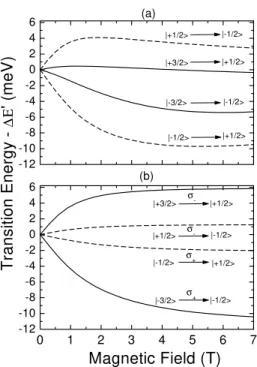
Fig.2showsthetransitionenergiesfortwodiretion
of theapplied magneti eld,parallel (Fig. 2(a)) and
perpendiular(Fig. 2(b)) totheinterfaes. Thestrain
eets and the dependene of the arrier mass of the
Mn onentration are onsidered in this alulations.
The solid (dashed) lines denotes the exitoni
transi-tionsenergiesbetweenheavy-hole(light-hole)and
ele-tronstates. Weanseeofthisresultsthatthehangeof
themagnetielddiretionleadstoastronganisotropy
oftheZeemansplitting.
We also have investigated the Cd
1 x Mn
x Te
HPQWs. This system was studied for the rst time
by Kutrowskiet al. [8℄. Inthis kindof struture the
energylevelsareverysensitivetothevaleneband
o-set. Thevaluesofband osetthat wehavebeenused
wasQ
=0:6andQ
v
=0:4. Theappearaneof
\nondi-agonals"(n=n n 0
6=0,where n 0
arethequantum
numbersofonnedlevelsforeletrons,el
n
,andnare
thequantumnumbersofonnedlevelsforheavy-holes,
hh
n
,orlight-holes,lh
n
)aswellas\diagonal"(n=0)
transitions are expeted to appear in HPQWs, whose
onningpotentialslakthereetionsymmetry. This
leads to an undetermined parity of the statesand, as
onsequene, to relaxationof the parity-related
sele-0
1
2
3
4
5
6
7
-12
-10
-8
-6
-4
-2
0
2
4
6
-12
-10
-8
-6
-4
-2
0
2
4
6
|-3/2>
|+3/2>
σ
+
|-1/2>
σ
+
|+1/2>
|+3/2>
σ
-|+1/2>
|-1/2>
|+1/2>
|-1/2>
|-3/2>
σ
Transi
ti
on Energy
-
∆Ε
' (
m
e
V
)
|+1/2>
|-1/2>
|+1/2>
|+1/2>
|-1/2>
|-1/2>
(b)
(a)
Magnetic Field (T)
Figure 2. (a) Transition energies versusan external
mag-netield appliedintheplaneof thelayer. (b)Transition
energies versus an external magneti eld applied in the
growthdiretion.
0
2
4
6
8
1620
1640
1660
1680
1700
1720
1740
hh
1
el
1
hh
2
el
1
hh
2
el
2
Magnetic Field (T)
Energy
(m
eV)
Figure3. Transitionenergiesonerningthehalf-paraboli
quantum wells, whenthe magnetield is appliedin the
growth diretion. Experimental data are points and the
linesomefromkptheory.
Fig.3showssuhenergiestransitionsversusthe
ex-ternalmagnetield strengthinaHPQW,withwidth
the barrier being x = 0:5 and the Mn onentration
at the bottom of well being x = 0. This result has
beenobtainedformagnetield appliedperpendiular
totheinterfaes. Comparisonofourtheoretialresults
(solidlines,wherethestraineetsandthedependene
of thearrier mass of the Mn onentration hasbeen
onsidered) and the experimental data (points) shows
good agreement between them. Reent Cd
1 x Mn
x Te
PQW heterostrutures ofhigh qualityhasbeen
possi-ble[9,10℄. Photoluminesenseexitationtehniquehas
beenused in the PQW strutures where non-diagonal
transitions anbe observed [10℄. However,only
mag-neti eld applied perpendiular to theinterfaes was
onsidered. ConerningthePQWwedon'thave
knowl-edge ofanyexperimental resultswithamagnetield
applied paralleltotheinterfaes.
Aknowledgments
This work was partially supported by CAPES
(Brazilianageny).
Referenes
[1℄ F.Capasso, Physis of Quantum Eletron Devies, vol
Verlag,Berlin, 1990.
[2℄ P.F.Bagwell,T.P.E.Broekaert,T.P.Orlando,andC.G.
Fonstad,J.Appl.Phys.,68,4634(1990).
[3℄ Wu-PenYuen,Phys.Rev.B,48,23(1993).
[4℄ E.O.Kane,J.Phys.Chem.Solids,1,82(1956).
[5℄ E.O.Kane,The kpMethod, in: Semiondutors and
Semimetals,vol1,AademiPress,1966.
[6℄ G.L.Bir,andG.E.Pikus,SymmetryandStrain-Indued
EfetsinSemiondutors.Wiley,NewYork,1974.
[7℄ J.A.Gaj,R.Planel,andG.Fishman,SolidState
Com-mun.,29,435(1979).
[8℄ M. Kutrowski, T. Wojtowiz, G. Cywinski, G.
Kar-zewski, E. Janik, E. Dynowska, and J. Kossut, Ata
PhysiaPoloniaA,92,887(1997).
[9℄ W. Ossau, R. Fiederling, B. Knig, T. Wojtowiz, M.
Kutrowski,G.Karzewski,andJ.Kossut,PhysiaE,2,
209(1998).
[10℄ T. Wojtowiz, M. Kutrowski, G. Cywinski, G.
Kar-zewski,E. Janik,E. Dynowska, J.Kossut, R.
Fieder-ling, A. Pfeuer-Jeshke, and W. Ossau, J. Cryst.