The effectiveness of aspirin for migraine prophylaxis:
a systematic review
Eicácia da aspirina na proilaxia da enxaqueca: uma revisão sistemática
Cristina Pellegrino Baena
I*, Raíssa Campos D’Amico
II*, Helena Slongo
III, André Russowsky Brunoni
IV,
Alessandra Carvalho Goulart
V, Isabela Benseñor
VIPontifícia Universidade Católica do Paraná (PUCPR), Curitiba (PR), and Universidade de São Paulo (USP), São Paulo (SP), Brazil
ABSTRACT
CONTEXT AND OBJECTIVE: Many researchers have suggested that aspirin prevents migraines. However, the evidence is unclear. The aim of this study was to analyze the available evidence on the efect of aspirin as a migraine prophylactic.
DESIGN AND SETTING: Systematic review, conducted at the Pontifícia Universidade Católica do Paraná, Brazil, and at the University of São Paulo, Brazil.
METHODS: We performed electronic searches in the databases of MEDLINE/PubMed, Embase, WEB OF SCIENCE, the World Health Organization, CENTRAL and OpenGrey, and we also searched manually for interventional studies published before April 2016 that compared the efects of aspirin with a control, in adults. Two authors independently extracted data on the publication, population recruited, intervention (aspirin dosage, follow-up and combined treatment) and main outcomes (frequency, severity and dura-tion of migraine). We evaluated the quality of the studies using the Cochrane risk-of-bias tool.
RESULTS: Our search retrieved 1,098 references, of which 8 met the selection criteria for this systematic review. The total population was 28,326 participants (18-64 years old); most (96%) were men. The dosage varied from 50 to 650 mg/day across the studies. The risk of bias was generally low or unclear. The only outcome for which most of the studies included (6/8) reported a signiicant reduction was frequency of migraine, which was reduced at an aspirin dosage of at least 325 mg/day.
CONCLUSION: Aspirin can reduce the frequency of migraines. However, the optimal dosage is unclear.
RESUMO
CONTEXTO E OBJETIVO: Muitos pesquisadores têm sugerido que a aspirina previne enxaquecas. No en-tanto, a evidência não é clara. O objetivo deste estudo foi analisar as evidências disponíveis para os efeitos da aspirina como um proilático da enxaqueca.
DESENHO E LOCAL: Revisão sistemática, realizada na Pontifícia Universidade Católica do Paraná, Brasil, bem como na Universidade de São Paulo, Brasil.
MÉTODOS: Foram realizadas buscas eletrônicas nas bases de dados MEDLINE/PubMed, Embase, WEB OF SCIENCE, Organização Mundial de Saúde, CENTRAL e OpenGrey. Nós buscamos manualmente estudos de intervenção publicados antes de abril de 2016, comparando efeitos da aspirina com um controle em adul-tos. Dois autores extraíram independentemente os dados de publicação, população recrutada, interven-ção (dose de aspirina, acompanhamento e tratamento combinado) e os resultados principais (frequência, gravidade e duração da enxaqueca). Foi avaliada a qualidade dos estudos com a ferramenta da Cochrane para risco de viés.
RESULTADOS: A nossa busca recuperou 1.098 referências, das quais 8 preencheram os critérios de seleção para esta revisão sistemática. A população total foi de 28,326 participantes (18-64 anos); a maioria (96%) de homens. A dosagem variou entre 50 a 650 mg/dia em todos os estudos. O risco de viés foi geralmente baixo ou pouco claro. O único desfecho para o qual a maioria dos estudos incluídos (6/8) relatou redução signiicativa foi a frequência de enxaqueca, que foi reduzida com uma dose de aspirina de pelo menos 325 mg/dia.
CONCLUSÃO: A aspirina pode reduzir a frequência das enxaquecas; no entanto, a dosagem ideal não é clara.
IMD, PhD. Professor, School of Medicine,
Pontifícia Universidade Católica do Paraná (PUCPR), Curitiba (PR), Brazil.
IIMedical Student, School of Medicine, Pontifícia
Universidade Católica do Paraná (PUCPR), Curitiba (PR), Brazil.
IIIMedical Student, Faculdade Evangélica do
Paraná (FEPAR), Curitiba (PR), Brazil.
IVMD. Professor, Hospital Universitário (HU),
Universidade de São Paulo (USP), and Coordinator, Service of Interdisciplinary Neuromodulation (SIN), Laboratory of Neurosciences (LIM-27), Department and Institute of Psychiatry, Universidade de São Paulo (USP), São Paulo (SP), Brazil.
VMD. Epidemiologist, Hospital Universitário
(HU), Universidade de São Paulo (USP), São Paulo (SP), Brazil.
VIMD, PhD. Professor, Hospital Universitário (HU),
Universidade de São Paulo (USP), São Paulo (SP), Brazil.
KEY WORDS:
Migraine disorders. Headache. Aspirin.
Platelet aggregation inhibitors. Therapeutics.
Review [publication type].
PALAVRAS-CHAVE:
Transtornos de enxaqueca. Cefaleia.
Aspirina.
Inibidores da agregação de plaquetas. Terapêutica.
Revisão.
INTRODUCTION
Migraine is a common and debilitating disorder,1,2 ranking as the
third most prevalent disorder and the seventh highest speciic cause of disability worldwide.3 In the Global Burden of Diseases
study, migraine was one of eight conditions that afected more than 10% of the population (11.7%) from 2006 to 2013.4 In Latin
America, a multicenter study conducted in Argentina, Brazil, Colombia, Mexico and Venezuela found that 62% of the par-ticipants sufered from headaches, and that the prevalence of migraine among women was 6.1% to 17.4%, while that among
men was 2.9% to 7.8%.5
Furthermore, several studies have identiied a subgroup of patients who experience chronic migraine,6, 7 in which headache
occurs on at least 15 days per month for more than 3 months,2, 8
with features of migraine headache on at least 8 days per month. Conversely, migraine with a headache burden of less than 15 days per month is deined as episodic migraine.2, 9 In both forms of
migraine, prophylaxis is indicated.2, 10
Several medications are used to prevent migraine. Speciically, beta-blockers (metoprolol and propranolol)11, 12 and
anticonvul-sants (valproic acid and topiramate) are considered to be level A treatments,10,12, 13 while antidepressants (amitriptyline)14,15 are
regarded as a level B treatment.11 Other medications, such as
angiotensin-converting-enzyme inhibitors, have not shown the same eicacy. Nonetheless, they have been advocated as second or third-line agents.16
Since the 1980s, aspirin has been considered to be a possible
migraine prophylactic.17 Despite some well-known side efects
(e.g. gastrointestinal and renal dysfunction),18 aspirin is a
pos-sible means for treating migraine, as it is less costly and safer than some other medications, such as beta-blockers and anti-convulsants.19, 20 However, few studies have explored the efects
of aspirin on migraine. Most investigations involving this drug have primarily been designed to evaluate its impact on cardio-vascular outcomes.17, 21 Nonetheless, several such investigations
have reported some beneits on migraine. For instance, in the
British Doctors’ Trial,17 5,000 healthy male doctors received
500 mg of aspirin daily; migraines were reported signiicantly less oten in the intervention group than in the control group. Similarly, the Physicians’ Health Study21 reported that migraine
recurrence was 20% lower among men who had received 325 mg of aspirin on alternate days than among those in a placebo group.
On the other hand, the Women’s Health Study,22 which was also
designed primarily to evaluate the cardiovascular outcomes of aspirin use, reported that low doses of aspirin (100 mg) had a small efect on the frequency, severity and duration of migraine among middle-aged women. However, this efect was not sig-niicant, perhaps precisely because the efects on migraine were not the focus of the study.23
OBJECTIVE
hese conlicting results indicate that the evidence regarding the efects of aspirin on migraines remains inconclusive. For this rea-son, we conducted a systematic review to analyze the efective-ness of aspirin for migraine prophylaxis.
METHODS
Search strategy
We conducted a systematic review of the current literature (pub-lished before April 2016) in the following databases: MEDLINE/ PubMed, Embase, WEB OF SCIENCE, WHO, CENTRAL and OpenGrey. We searched for studies that used aspirin as a pro-phylactic to treat migraine. hese computer-based searches com-bined search terms related to the intervention (“aspirin” OR “aspirin/therapeutic use”) and outcomes of interest (“migraine disorders” OR “migraine disorders/prevention and control”) without any language restriction. he search terms were inves-tigated both as controlled vocabulary (MeSH terms), and as free text words in the title and/or abstract. In addition to the elec-tronic searches, we searched the reference list of all studies included and we also searched manually for interventional stud-ies published before April 2016 that compared the efects of aspi-rin with a control in adults (Table 1).
Study identiication and selection
Two authors independently reviewed the title and abstract of each reference to determine whether the study should be included. hey based their decision on the following selection criteria. Studies had to:
1. report interventions in the adult population, as randomized controlled trials (RCT) or clinical trials in which an interven-tion was compared with a control group in a parallel or cross-over design;
2. be crossover studies that tested aspirin as a prophylactic treat-ment for migraine;
3. report the criteria for migraine; or
4. examine the efect of aspirin (acetylsalicylic acid [ASA] or simi-lar) on migraine prophylaxis, regardless of frequency and dose.
Since most studies were published before the hird Classiication
of the International Headache Society (IHS) deined migraine,8
we chose to retrieve all papers that included prophylaxis of migraine as an outcome, regardless of the deinition of migraine.
All the studies included reported outcomes within a few hours of the migraine attack. Studies were excluded when:
1. the migraine was described as acute;
2. headache was not diferentiated from migraine;
4. only cost-efectiveness was analyzed;
5. drug therapy was compared with non-pharmacological intervention;
6. pregnant women were included; or 7. animals were used.
Letters, abstracts and conference proceedings were also excluded. Any disagreements regarding article selection were resolved through discussion; a third author was available to resolve disagreements. he papers included were read fully ater an initial appraisal. hey were then assessed once more by two independent authors to ensure that they met the selection criteria.
Data extraction
We extracted data using a structured database that had been created prior to the literature search. Speciically, we extracted detailed, study-level characteristics; namely, study design (such as sample size and follow-up duration), population character-istics (age, gender and ethnicity), intervention (aspirin only or aspirin combined with other medications and compared with a control group in which only the other medications were used), outcome assessment (ascertainment criteria), analysis (statisti-cal method, measure of association and sensitivity analyses) and variance (standard error and conidence interval [CI]).
Quality scoring
Two reviewers independently evaluated the methodological qual-ity of each study. To do so, they used the Cochrane Collaboration tool for assessing the risk of bias in randomized trials,24 which
categorizes the following domains as “high risk”, “unclear” or “low risk”:
1. random sequence generation; 2. allocation concealment;
3. blinding of participants, personnel and outcome assessors; 4. incomplete outcome data;
5. selective reporting; and 6. other sources of bias.
Synthesis of results
We had originally intended to perform a meta-analysis that com-pared migraine frequency between aspirin-treated and placebo-treated patients. However, we were only able to summarize three studies that had reported comparable units of migraine frequency (Benseñor et al.,19 Buring et al.21 and Bousser et al.25). hese
stud-ies had high heterogeneity (I2 = 80.0%; P = 0.007) that could not
be explored. herefore, we chose not to perform a meta-analysis.
RESULTS
Study selection
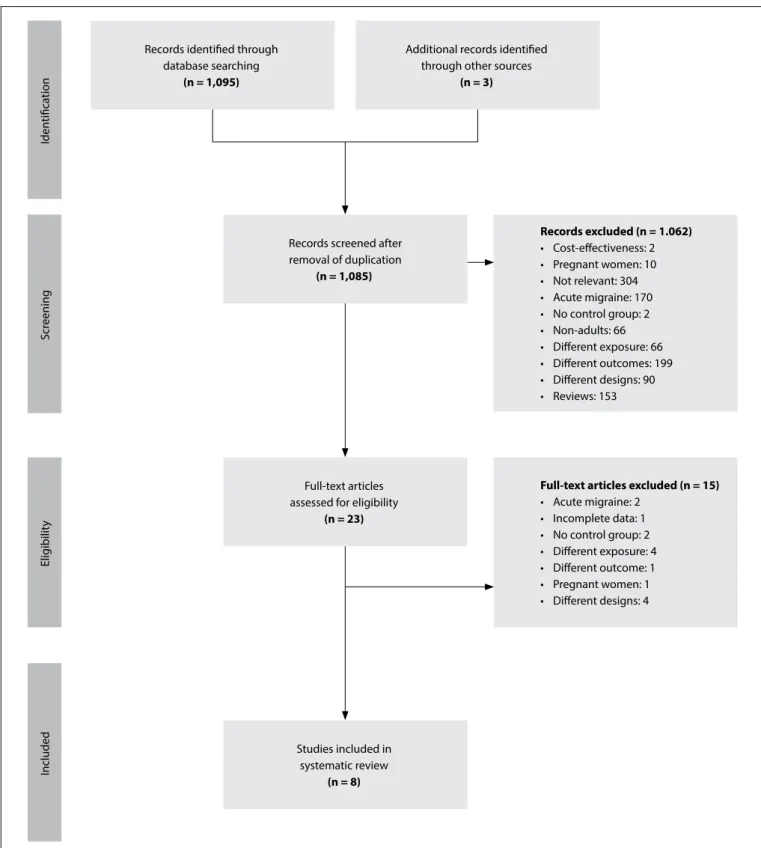
Overall, we identiied 1,098 papers, of which 1,062 were excluded on the basis of the title or abstract. he reasons for this exclusion are shown in Figure 1. Most prominently, several studies involved preg-nant women or children, some were based on acute migraine and others were designed as reviews, involved a diferent intervention or evaluated diferent outcomes. he remaining 23 articles were fully assessed, and eight studies were ultimately selected for data extraction.
Study characteristics
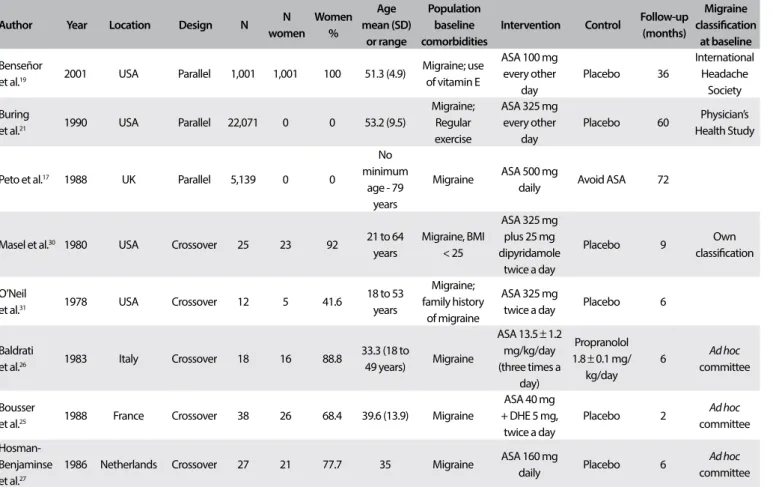
he characteristics of the eight studies included in this system-atic review are shown in Table 2. hey included a total of 28,326 participants (sample sizes ranged from 12 to 22,071 participants).
Table 1. Search strategies
Database Search terms Number of hits
PubMed
((“migraine disorders”[MeSH Terms] OR (“migraine”[All Fields] AND “disorders”[All Fields]) OR “migraine disorders”[All Fields]) AND ((“aspirin”[MeSH Terms] OR “aspirin”[tiab]) OR (“drug therapy, combination”[MeSH Terms] OR “combination drug therapy”[tiab] OR “aspirin/adverse efects”[Mesh Terms]) OR “aspirin/therapeutic use”[Mesh Terms])) AND ((((“primary prevention”[MeSH Terms] OR (“primary”[All Fields] AND “prevention”[All Fields]) OR “primary prevention”[All Fields]) OR “migraine disorders/prevention and control”[Mesh Terms] AND (“prevention and control”[Subheading] OR (“prevention”[All Fields] AND “control”[All Fields]) OR “prevention and control”[All Fields] OR “control”[All Fields])) OR (“secondary prevention”[MeSH Terms] OR (“secondary”[All Fields] AND “prevention”[All Fields]) OR “secondary prevention”[All Fields])) OR (“recurrence”[MeSH Terms] OR “recurrence”[All Fields]))
181
Embase
‘migraine disorders’/exp OR ( ‘migraine disorders’:de,ab,ti) AND aspirin/exp OR (aspirin) :ab,ti OR ‘drug therapy, combination’/exp OR (‘combination drug therapy’):ab,ti OR ‘aspirin/adverse efects’/exp OR ‘aspirin/ therapeutic use’/exp AND ‘primary prevention’/exp OR (primary :de,ab,ti) AND (prevention):de,ab,ti OR ( ‘primary prevention’):de,ab,ti OR ‘migraine disorders/prevention and control’/exp AND (‘prevention and control’) :de,lnk,ab,ti OR (prevention):de,ab,ti AND (control):de,ab,ti OR ( ‘prevention and control’):de,ab,ti OR (control):de,ab,ti OR ‘secondary prevention’/exp OR (secondary):de,ab,ti AND (prevention):de,ab,ti OR (‘secondary prevention’):de,ab,ti OR recurrence/exp OR (recurrence):de,ab,ti
121
WEB OF SCIENCE TS = (migraine OR migraine disorders) AND TS = (aspirin OR drug therapy, combination) AND TS = (prevention OR
Several studies lacked information regarding the number of migraine attacks and the type of migraine. Furthermore, migraine was deined using diferent criteria across the studies: three studies25-27 deined migraine using the criteria of the Ad Hoc
Committee on the Classiication of Migraine.28 Only one study19
classiied migraine according to the IHS criteria.29 Other studies
either used their own deinition of migraine30 or did not
men-tion at all how migraine was deined.17,21,24 Overall, the studies
Iden
tiica
tion
Scr
eening
Elig
ibilit
y
Included
Records screened after removal of duplication
(n = 1,085)
Full-text articles assessed for eligibility
(n = 23)
Studies included in systematic review
(n = 8)
Records excluded (n = 1.062)
• Cost-efectiveness: 2 • Pregnant women: 10 • Not relevant: 304 • Acute migraine: 170 • No control group: 2 • Non-adults: 66 • Diferent exposure: 66 • Diferent outcomes: 199 • Diferent designs: 90 • Reviews: 153
Full-text articles excluded (n = 15)
• Acute migraine: 2 • Incomplete data: 1 • No control group: 2 • Diferent exposure: 4 • Diferent outcome: 1 • Pregnant women: 1 • Diferent designs: 4 Records identiied through
database searching
(n = 1,095)
Additional records identiied through other sources
(n = 3)
Table 2. Characteristics of studies included
Author Year Location Design N N
women
Women %
Age mean (SD)
or range
Population baseline comorbidities
Intervention Control Follow-up (months)
Migraine classiication
at baseline
Benseñor
et al.19 2001 USA Parallel 1,001 1,001 100 51.3 (4.9)
Migraine; use of vitamin E
ASA 100 mg every other
day
Placebo 36
International Headache
Society
Buring
et al.21 1990 USA Parallel 22,071 0 0 53.2 (9.5)
Migraine; Regular exercise
ASA 325 mg every other
day
Placebo 60 Physician’s Health Study
Peto et al.17 1988 UK Parallel 5,139 0 0
No minimum
age - 79 years
Migraine ASA 500 mg
daily Avoid ASA 72
Masel et al.30 1980 USA Crossover 25 23 92 21 to 64 years
Migraine, BMI < 25
ASA 325 mg plus 25 mg dipyridamole
twice a day
Placebo 9 Own
classiication
O’Neil
et al.31 1978 USA Crossover 12 5 41.6
18 to 53 years
Migraine; family history
of migraine
ASA 325 mg
twice a day Placebo 6
Baldrati
et al.26 1983 Italy Crossover 18 16 88.8
33.3 (18 to
49 years) Migraine
ASA 13.5 ± 1.2 mg/kg/day (three times a
day)
Propranolol 1.8 ± 0.1 mg/ kg/day
6 Ad hoc committee
Bousser
et al.25 1988 France Crossover 38 26 68.4 39.6 (13.9) Migraine
ASA 40 mg + DHE 5 mg,
twice a day
Placebo 2 Ad hoc
committee
Hosman-Benjaminse et al.27
1986 Netherlands Crossover 27 21 77.7 35 Migraine ASA 160 mg
daily Placebo 6
Ad hoc
committee
were designed following two diferent models: parallel random-ized clinical trial17,19,21 and crossover randomized clinical trial. 25-27,30,31 Two studies reported an intervention that combined aspirin
with other medication (dipyridamole and dihydroergotamine, respectively) and compared this with a placebo.26,30 he
remain-ing studies reported interventions that compared the efects of aspirin with those of a placebo. he ASA dosage used in the stud-ies ranged from low (100 mg every other day)19 to high (650 mg
every day).30,31 Follow-up periods ranged from 225 to 7217 months,
with a mean follow-up time of 27.2 months. Five studies included women,19,24-27 but the two largest studies included in this review
only recruited men.17, 21
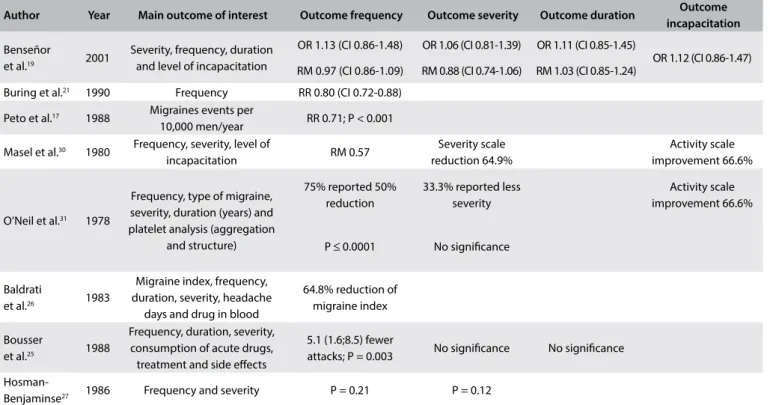
Table 3 shows the main outcomes reported in the studies included. Frequency, for example, was reported as “migraine attacks per month”,19,24,26,27 “migraine index”26 and “migraine events per
100,000 men in one year”.17 In one study, a migraine index was
calculated using the following formula: 1 x (F x D) + 2 x (F x D) + 3 x (F x D), where F is frequency of attacks per month and D is the mean duration of attack in hours.26 Severity was reported
using diferent subjective scales;19,27 for instance, 0 = no pain,
100 = severe pain. Two studies that used such scales of measure-ment also reported the duration of migraine attacks.19,25
Characteristics of study populations
Our systematic review included an adult population totaling 28,331 participants. he mean age across the studies ranged from 18 to 64 years, and 96% of the total population (27,218 participants) were men, mainly because two major studies included in the systematic review (the Physician’s Health Study and the British Male Doctors’ Study) consisted of solely male populations. On the other hand, ive of the studies recruited mostly women for the interventions.19,25,27,28
All the studies reported on otherwise healthy participants.
Quality assessment of the studies included
The efectiveness of aspirin for prophylaxis of migraine
Benseñor et al.,19 Buring et al.,21 Peto et al.,17 O’Neil et al.,31 Baldrati
et al.26 and Hosman-Benjaminse et al.27 reported on aspirin as a
single active treatment for migraine. All these studies, except for that of Benseñor et al.,19 reported that there was an inverse
association between aspirin use and migraine frequency.17, 21, 24, 25
In studies that found a reduction in migraine frequency, the dos-age ranged from 1,300 mg21 to 4,550 mg weekly.31
Benseñor et al.,19 Baldrati et al.26 and O’Neil et al.31 analyzed
the severity of migraine attacks. Only Baldrati et al.26 reported
that there was an inverse association between severity and aspirin use. Benseñor et al.19 and Baldrati et al.26 reported on the
dura-tion of migraine episodes as an outcome. Baldrati et al.26 found an
inverse association, while Benseñor et al.19 found a direct
associa-tion that was not signiicant. Benseñor et al.19 was the only study
that described incapacitation as an outcome; ater having restricted the analysis to women who fulilled the modiied IHS criteria for migraine, they reported that there was a signiicant improvement in incapacitation ater 12 months (OR = 1.45; 95% CI = 1.04 - 2.02).
Masel et al.30 reported on an intervention combining
dipyridam-ole and aspirin, while Bousser et al.25 combined dihydroergotamine
with aspirin as an active prophylactic treatment. Each study reported diferent doses of aspirin, and both compared the outcomes with those of a placebo group. Both studies reported a decrease in the frequency of migraine episodes. However, neither study showed that aspirin had any signiicant efect on the other outcomes, such
Figure 2. Risk of bias in the studies included.
Sequence generation Allocation concealment Blinding participant Incomplete outcome Selective outcome report Risk of other bias
Low risk Unclear High risk
Table 3. Main outcomes reported in the studies included
Author Year Main outcome of interest Outcome frequency Outcome severity Outcome duration Outcome incapacitation
Benseñor
et al.19 2001
Severity, frequency, duration and level of incapacitation
OR 1.13 (CI 0.86-1.48) OR 1.06 (CI 0.81-1.39) OR 1.11 (CI 0.85-1.45)
OR 1.12 (CI 0.86-1.47) RM 0.97 (CI 0.86-1.09) RM 0.88 (CI 0.74-1.06) RM 1.03 (CI 0.85-1.24)
Buring et al.21 1990 Frequency RR 0.80 (CI 0.72-0.88)
Peto et al.17 1988 Migraines events per
10,000 men/year RR 0.71; P < 0.001
Masel et al.30 1980 Frequency, severity, level of
incapacitation RM 0.57
Severity scale reduction 64.9%
Activity scale improvement 66.6%
O’Neil et al.31 1978
Frequency, type of migraine, severity, duration (years) and platelet analysis (aggregation
and structure)
75% reported 50% reduction
33.3% reported less severity
Activity scale improvement 66.6%
P ≤ 0.0001 No signiicance
Baldrati
et al.26 1983
Migraine index, frequency, duration, severity, headache
days and drug in blood
64.8% reduction of migraine index
Bousser
et al.25 1988
Frequency, duration, severity, consumption of acute drugs, treatment and side efects
5.1 (1.6;8.5) fewer
attacks; P = 0.003 No signiicance No signiicance
as severity and duration, and neither of them showed any wors-ening of any of the outcomes reported. Importantly, because the three studies that reported comparable units regarding frequency of migraine (Benseñor et al.,19 Buring et al.21 and Bousser et al.25)
had high heterogeneity (I2 = 80.0%; P = 0.007), we chose not to
perform a formal meta-analysis. he other studies included pre-sented frequency outcomes as a proportion of the study groups’ reported reduction in migraine attacks.
DISCUSSION
he present systematic review included a total of eight articles reporting the efects of aspirin on diferent migraine-related out-comes, including severity, frequency and duration. In total, we found consistent reports showing that continuous use of aspi-rin afects the frequency of migraine episodes. Additionally, we found that higher dosages were associated with better results.
he total weekly dose of aspirin (1,300 mg to 4,550 mg) was higher in studies17,21,24,25 that reported that there was an inverse
asso-ciation between migraine frequency and continuous use of the drug than in studies that reported that there was no signiicant efect.19
Frequency was the only outcome that was analyzed in all the studies included. Nevertheless, it was deined and interpreted dif-ferently among the studies, which hindered synthesis of our data.
Severity and duration were deined and registered diferently; thus, it was diicult to summarize the data. Disability level, neces-sity for relief drugs and days with headache were isolated outcomes that were only reported in some studies. herefore, we could not properly assess these data and include them in this systematic review. Finally, because the outcome measurements were so het-erogeneous, we were unable to perform a meta-analysis.
here was no signiicant association between aspirin and migraine. Neither aspirin dosage nor combination with other medications decreased the severity or duration of migraine attacks in the studies included. Nonetheless, few studies reported severity and duration as outcomes, so it is likely that the data were insuf-icient to address these questions.
The only study to report an inverse association between
aspirin and all three main outcomes26 also showed high risk
of bias. However, the three highest-quality studies showed a significant association17,21,24 between continuous use of aspirin
and reduction in the frequency of migraine attacks, with no significant effect on the duration and severity of outcomes. It is important to note that two of these studies17,21 were designed
to ascertain cardiovascular outcomes and that they used higher dosages of aspirin for this reason. This may explain the signifi-cant effect on migraine.
Despite earlier interest in aspirin as a possible prophylactic for migraine,20 studies comparing aspirin with a placebo in this regard
are rare. One strength of the present systematic review is that it gathered individual studies that have tested the prophylactic efect
of continuous aspirin use on migraine. Even though most studies had a primary outcome of interest other than migraine, we were able on the basis of the available evidence to identify the direction of association, as well as to ascertain a cutof dosage for the efect of aspirin on migraine frequency. Furthermore, given that most studies focused on cardiovascular outcomes, we expect that popu-lations using aspirin to prevent cardiovascular events have a lower frequency of migraine.
Our study had some limitations that should be considered. Most importantly, we were unable to classify the migraines that were reported in the studies included according to the recent
IHS8 definition: we only found primary studies that used very
different criteria to define migraine. Additionally, the report-ing of outcomes and dosage was not standardized across stud-ies, thus preventing us from performing a formal meta-analy-sis. Furthermore, because migraines were not classified in the studies included, we were unable to categorize the migraines. Therefore, our results should be applied to the general popula-tion with caupopula-tion. Finally, the use of diverse criteria to define migraine across studies may have introduced some misclassi-fications or misdiagnoses of migraine. However, we cannot be certain of this, and the prophylactic effect of aspirin on migraine may consequently have been underestimated.
Although we could not gather information regarding quantita-tive efects, it was possible to identify the direction of association in relation to migraine frequency. With regard to severity and dura-tion, no evidence supports prescription of aspirin for this purpose. Since other combinations of treatments involving aspirin have recently been tested32 as prophylactic treatment for migraine, we
believe that the efect of aspirin in isolation needs to be quanti-ied and made known. For efective prophylaxis, the dosage should be more than 325 mg/day: smaller doses did not show signiicant efects across all studies included. With regard to side efects in this area, dyspepsia, peptic ulcer, upper gastrointestinal bleeding and renal dysfunction should be assessed.
CONCLUSION
In conclusion, the present systematic review presented the avail-able evidence on the prophylactic efect of aspirin in relation to migraine. he efects on attack frequency were consistent across most of the populations studied, even though the investigations focused on cardiovascular outcomes. Aspirin can reduce the fre-quency of migraines. However, the optimal dosage is unclear.
REFERENCES
1. Global Burden of Disease Study 2013 Collaborators. Global, regional,
2. Diener HC, Solbach K, Holle D, Gaul C. Integrated care for chronic migraine patients: epidemiology, burden, diagnosis and treatment
options. Clin Med (Lond). 2015;15(4):344-50.
3. Steiner TJ, Stovner LJ, Birbeck GL. Migraine: the seventh disabler. Headache. 2013;53(2):227-9.
4. Vos T, Flaxman AD, Naghavi M, et al. Years lived with disability
(YLDs) for 1160 sequelae of 289 diseases and injuries 1990-2010: a systematic analysis for the Global Burden of Disease Study 2010. Lancet. 2012;380(9859):2163-96.
5. Morillo LE, Alarcon F, Aranaga N, et al. Prevalence of migraine in Latin
America. Headache. 2005;45(2):106-17.
6. Buse DC, Manack AN, Fanning KM, et al. Chronic migraine prevalence, disability, and sociodemographic factors: results from the American Migraine Prevalence and Prevention Study. Headache. 2012;52(10):1456-70.
7. Katsarava Z, Manack A, Yoon MS, et al. Chronic migraine: classiication and comparisons. Cephalalgia. 2011;31(5):520-9.
8. Headache Classiication Committee of the International Headache Society (IHS). The International Classiication of Headache Disorders,
3rd edition (beta version). Cephalalgia. 2013;33(9):629-808. 9. Loder E, Burch R, Rizzoli P. The 2012 AHS/AAN guidelines for prevention
of episodic migraine: a summary and comparison with other recent clinical practice guidelines. Headache. 2012;52(6):930-45.
10. Lipton RB, Silberstein SD. Episodic and chronic migraine headache: breaking down barriers to optimal treatment and prevention. Headache. 2015;55 Suppl 2:103-22; quiz 123-6.
11. Members of the task force: Evers S, Afra J, Frese A, et al. EFNS guideline
on the drug treatment of migraine - report of an EFNS task force. Eur J Neurol. 2006;13(6):560-72.
12. Silberstein SD, Neto W, Schmitt J, Jacobs D; MIGR-001 Study Group. Topiramate in migraine prevention: results of a large controlled trial.
Arch Neurol. 2004;61(4):490-5.
13. Young WB, Siow HC, Silberstein SD. Anticonvulsants in migraine. Curr Pain Headache Rep. 2004;8(3):244-50.
14. Couch JR; Amitriptyline Versus Placebo Study Group. Amitriptyline in
the prophylactic treatment of migraine and chronic daily headache. Headache. 2011;51(1):33-51.
15. Giacomozzi ARE, Vindas AP, Junior AAS, et al. Consenso latino-americano para as diretrizes de tratamento da migranea cronica [Latin American
consensus on guidelines for chronic migraine treatment]. Arq Neuropsiquiatr. 2013;71(7):478-86.
16. Gales BJ, Bailey EK, Reed AN, Gales MA. Angiotensin-converting enzyme inhibitors and angiotensin receptor blockers for the prevention of
migraines. Ann Pharmacother. 2010;44(2):360-6.
17. Peto R, Gray R, Collins R, et al. Randomised trial of prophylactic daily aspirin in British male doctors. Br Med J (Clin Res Ed). 1988;296(6618):313-6. 18. Harirforoosh S, Asghar W, Jamali F. Adverse efects of nonsteroidal
antiinlammatory drugs: an update of gastrointestinal, cardiovascular and renal complications. J Pharm Pharm Sci. 2013;16(5):821-47. 19. Benseñor IM, Cook NR, Lee IM, et al. Low-dose aspirin for migraine
prophylaxis in women. Cephalalgia. 2001;21(3):175-83.
20. Diener HC. Low-dose aspirin for migraine prophylaxis in women. Cephalalgia. 2001;21(3):167-8.
21. Buring JE, Peto R, Hennekens CH. Low-dose aspirin for migraine prophylaxis. JAMA. 1990;264(13):1711-3.
22. Kurth T, Gaziano JM, Cook NR, et al. Migraine and risk of cardiovascular disease in women. JAMA. 2006;296(3):283-91.
23. Diener HC. Low-dose aspirin for migraine prophylaxis in women. Cephalalgia. 2001;21(3):167-8.
24. Higgins JP, Altman DG, Gøtzsche PC, et al. The Cochrane Collaboration’s tool for assessing risk of bias in randomised trials. BMJ. 2011;343:d5928.
25. Bousser MG, Chick J, Fuseau E, Soisson T, Thevenet R. Combined low-dose acetylsalicylic acid and dihydroergotamine in migraine prophylaxis. A double-blind, placebo-controlled crossover study. Cephalalgia. 1988;8(3):187-92. 26. Baldrati A, Cortelli P, Procaccianti G, et al. Propranolol and acetylsalicylic
acid in migraine prophylaxis. Double-blind crossover study. Acta Neurol Scand. 1983;67(3):181-6.
27. Hosman-Benjaminse SL, Bolhuis PA. Migraine and platelet aggregation in patients treated with low dose acetylsalicylic acid. Headache.
1986;26(6):282-4.
28. Classiication of headache: The ad hoc committee on classiication of headache. Arch Neurol. 1962;6(3):173-6. Available from: http:// jamanetwork.com/journals/jamaneurology/article-abstract/563669.
Accessed in 2016 (Nov 16).
29. Classiication and diagnostic criteria for headache disorders, cranial neuralgias and facial pain. Headache Classiication Committee of the International Headache Society. Cephalalgia. 1988;8 Suppl 7:1-96.
30. Masel BE, Chesson AL, Peters BH, Levin HS, Alperin JB. Platelet antagonists in migraine prophylaxis. A clinical trial using aspirin and dipyridamole. Headache. 1980;20(1):13-18.
31. O’Neill BP, Mann JD. Aspirin prophylaxis in migraine. Lancet.
1978;2(8101):1179-81.
32. Schramm SH, Moebus S, Özyurt Kugumcu M, et al. Use of aspirin combinations with cafeine and increasing headache frequency: a prospective population-based study. Pain. 2015;156(9):1747-54.
Sources of funding: None
Conlict of interest: None
Date of irst submission: July 1, 2016
Last received: September 5, 2016
Accepted: September 14, 2016
Address for correspondence:
Cristina Baena
Escola de Medicina, Pontifícia Universidade Católica do Paraná (PUCPR) Rua Imaculada Conceição, 1.155 - Bloco CCBS
Prado Velho — Curitiba (PR) — Brasil CEP 80215-901