FACTORS ASSOCIATED WITH DURATION OF NAPS AMONG
COMMUNITY-DWELLING ELDERLY: DATA FROM THE MULTICENTER
STUDY FIBRA
1Ariene Angelini dos Santos-Orlandi2, Maria Filomena Ceolim3, Soia Cristina Iost Pavarini4, Simone Camargo de Oliveira-Rossignolo5, Aline Maino Pergola-Marconato6, Anita Liberalesso Neri7
1 Taken from the dissertation – Napping and frailty: a study involving elderly from FIBRA Unicamp, presented to the Graduate
Nursing Program at Universidade Estadual de Campinas (UNICAMP) in 2013.
2 Ph.D. in Health Sciences, School of Nursing, UNICAMP. Campinas, São Paulo, Brazil. E-mail: [email protected] 3 Ph.D. in Nursing, Associate Professor, School of Nursing, UNICAMP. Campinas, São Paulo, Brazil. E-mail: fceolim@fcm.
unicamp.br
4 Ph.D. in Education, Associate Professor, Gerontology Department, Universidade Federal de São Carlos. São Carlos, São Paulo, Brazil. E-mail: [email protected]
5 Doctoral Student in Health Sciences, School of Nursing, UNICAMP. Campinas, São Paulo, Brazil. E-mail: sicamargoo@yahoo.
com.br
6 Ph.D. in Health Sciences, School of Nursing, UNICAMP. Campinas, São Paulo, Brazil. E-mail: [email protected] 7 Ph.D. in Psychology, Full Professor, School of Education, UNICAMP. Campinas, São Paulo, Brazil. E-mail: [email protected]
ABSTRACT: This study aimed to analyze the association between the duration of the nap and the variables gender, age, education, family income, frailty levels and frailty criteria of community-dwelling elderly. This was a descriptive and cross-sectional study, an excerpt from the multicenter project Frailty in Elderly Brazilians. A total of 3,075 older adults were evaluated, aged 65 and over, using a sociodemographic questionnaire, question about nap (Minnesota Leisure Activity Questionnaire), phenotype of frailty proposed by Fried and screening test for cognitive impairment (Mini Mental State Examination). Descriptive analysis, Mann-Whitney and Kruskal-Wallis tests (p<0.05) and multiple linear regression were applied. Ethical principles were respected. Most of the elderly participants napped (61.7%), with an average of 53.4±42.7 min/day. There was an association between duration of naps and variables gender (p=0.002), frailty (p=0.022) and frailty criterion “hand grip strength” (p=0.008). It was observed that the length of the naps is greater for male and frail elderly.
DESCRIPTORS: Aged. Nursing. Sleep.
FATORES ASSOCIADOS À DURAÇÃO DOS COCHILOS ENTRE IDOSOS
COMUNITÁRIOS: DADOS DO ESTUDO MULTICÊNTRICO FIBRA
RESUMO: Objetivou-se analisar associação entre a duração do cochilo e as variáveis gênero, idade, escolaridade, renda familiar, níveis de fragilidade e os critérios de fragilidade de idosos comunitários. Estudo descritivo e transversal, recorte do projeto multicêntrico Fragilidade
em Idosos Brasileiros. Foram avaliados 3.075 idosos, com idade de 65 anos ou mais, utilizando-se questionário sociodemográico, questão
sobre cochilo (Minnesota Leisure Activity Questionnaire), fenótipo de fragilidade proposto por Fried e o teste de rastreio de alterações cognitivas (Mini Exame do Estado Mental). Realizaram-se análise descritiva, testes Mann-Whitney e Kruskal-Wallis (p<0,05) e regressão linear múltipla. Os princípios éticos foram respeitados. A maioria dos idosos participantes cochilava (61,7%), com valores médios de 53,4±42,7 minutos/ dia. Houve associação entre a duração dos cochilos e as variáveis gênero (p=0,002), fragilidade (p=0,022) e o critério de fragilidade “força de preensão manual” (p=0,008). Observou-se que a duração dos cochilos é maior entre idosos do gênero masculino e frágeis.
DESCRITORES: Idoso. Enfermagem. Sono.
FACTORES ASOCIADOS A LA DURACIÓN DE LAS SIESTAS DE LOS
ANCIANOS DE LA COMUNIDAD: DATOS DEL ESTUDIO MULTICÉNTRICO
FIBRA
RESUMEN: El objetivo fue analizar la asociación entre duración de la siesta y las variables género, edad, educación, ingreso familiar, niveles y criterios de fragilidad de los ancianos de la comunidad. El estudio fue descriptivo, transversal y parte del proyecto multicéntrico
Fragilidad en ancianos brasileños. Se evaluaron 3075 personas, con 65 años y más, mediante cuestionario sociodemográico, una pregunta
sobre la siesta (Minnesota Leisure Activity Questionnaire), el fenotipo de fragilidad propuesto por Fried y el Mini Mental State Examination. Se realizó análisis descriptivo, las pruebas de Mann-Whitney y de Kruskal-Wallis (p<0,05) y una regresión lineal múltiple. Se respetaron los principios éticos. La mayoría hacía la siesta (61,7%), con medias de 53,4±42,7 minutos/día. Se observó una asociación entre duración de las siestas y el género (p=0,002), la fragilidad (p=0,022) y el criterio de fragilidad “fuerza de prensión manual” (p=0,008). Se observó que la duración de las siestas es mayor entre los ancianos masculinos y frágiles.
DESCRIPTORES: Anciano. Enfermería. Sueño.
INTRODUCTION
Napping can be deined as a short rest pe -riod during which the activity decreases and the reactions to external stimuli are reduced.1 As age
advances, napping during the day may increase.2 Authors afirm that it is common for the elderly to nap, mainly in cultures with a warmer climate, as napping is part of the normal daily routine and is considered a healthy lifestyle.3
Researchers afirm that frequent, unplanned and lengthy (90 minutes or more) daily napping can negatively affect the quality of nighttime sleep and may be associated with negative con-sequences for health, such as increased risk of morbidity, cardiovascular disease, falls and cog-nitive problems.4-5
In contrast with these negative effects, short daily naps can demonstrate positive effects. Al-though this issue has received relatively little at-tention in the research literature, evidence exists that naps can be beneicial provided that they occur at the right time of day and with the appropriate length. Short naps (less than 30 minutes) can be more beneicial than no naps, for example, due to the enhanced vigilance and improved performance of daily tasks. In addition, it can be considered an important stress coping mechanism and therefore have a beneicial effect.6
The literature signals that the naps increase as age advances.4 Nevertheless, the results have
been inconsistent in terms of the variables gender, education and family income.
Studies appoint that napping is more preva-lent among men.7-8 On the other hand, some experts have found no signiicant results regarding sex.9
The inluence of education and family income on elderly napping seems to be unclear. Some re-searchers found that high levels of education may be associated with naps among community elderly10 and others have afirmed that naps are associated with low education and low income.11
As regards the association between naps and frailty, the literature is very scarce. No study has veriied such an association thus far. Rare studies on sleep in general have been found, with apparently inconsistent results.12-15
Sleep problems can aggravate the course of a mental comorbidity or illness, thus increasing the vulnerability to the development of frailty. Sleep disorders are characterized by biological processes similar to those observed in frailty.16 Authors afirm
that sleep disorders and the frailty syndrome are increasingly common as age advances.17-18
In view of the inconsistent results on the association between the variables of interest and napping and the lack of studies on the association between frailty and napping, the objective in this study was to analyze the association between the length of napping and the variables gender, age, education, family income, levels of frailty and the frailty criteria for community-dwelling elderly.
As napping might signal comorbidities,3
studies of this type are suggested to avoid late interventions.
METHOD
Brazil-ian cities and conducted by researchers from four hubs (University of São Paulo at Ribeirão Preto, Campinas State University, Federal University of Minas Gerais and Rio de Janeiro State University). A multicenter and multidisciplinary project was undertaken that investigates the characteristics and prevalence of the biological frailty syndrome and associated variables, in probabilistic samples of elderly aged 65 and over.
This study sample comprised the elderly from the database of six out of seven cities in the Fibra Project – Unicamp hub, excluding the elderly from Campina Grande-PB (n=389), for whom, due to operational dificulties, the nap data could not be collected. Thus, the inal sample included 3,075 elderly community-dwellers from the following cities: Belém-PA (n=721), Poços de Caldas-MG (n=389), Parnaíba-PI (n=484), Campi-nas -SP (n=900), Ivoti-RS (n=197) and Ermelino Matarazzo-SP (n=384).
These elderly were invited to participate in the research through home visits. The interviewers were previously trained in accordance with the rules established in a research manual. The inter-viewer presented him/herself and the research and, next, invited the elderly to participate. When (s)he) accepted to participate in the research, the interviewer agreed upon where to collected the data. The elderly received a card with the date, time and place where the data collection would take place.
For each city, simple random sampling was applied to the urban census sectors. The number of census sectors drafted corresponded to the ratio between the intended number of elderly in each location and the number of urban census sectors in each location. The sampling plan established that the minimum sample size estimated for a city with more than one million inhabitants was 601 elderly, for a 4% sampling error. For cities with less than one million inhabitants, the estimate was 385 el-derly for a 5% sampling error. In each city, quote of census sectors were preset for the interview-ers to visit. In each census sector, a sample was recruited whose size corresponded to its presence in the actual distribution of the elderly population across the sectors drafted, according to data by the Brazilian Institute for Geography and Statistics (IBGE). All samples should contain quota of men
and women belonging to the age groups from 65 till 69, 70 till 74, 75 till 79 and 80 years and over, respecting the proportionality of these segments’ distribution in the elderly population living in the urban region. For each census sector, an overs-ample 25% larger than the intended number of elderly was planned, respecting the sex and age criteria to compensate for possible losses during the data collection.
The participants complied with the following inclusion criteria: age 65 years or over, understand-ing the instructions and beunderstand-ing a permanent resident at the home and in the census sector. The exclusion criteria used, through observation, were the follow-ing: a) elderly with a severe cognitive deicit sug -gesting dementia, evidenced by problems related to memory, attention, orientation in time and space and communication or problems the interviewers observed; b) elderly using a wheelchair or tempo-rary or permanently bedridden; c) patients with severe sequelae due to Cerebrovascular Accidents, with localized loss of strength and/or aphasia; d) patients with severe or unstable Parkinson’s Disease with severe motility, speech or affection problems; e) patients with severe hearing or sight impairments that strongly hampered the communication; and f) end-of-life elderly.
The data collection started after the reading and signing of the Informed Consent Form, between September 2008 and June 2009. The interviewers were undergraduate and graduate students and health professionals who had received ten months of training. The data were collected during a single session, in schools, churches, primary health care services, community centers and clubs. The elderly’s sociodemographic characteristics were collected, as well as measures of cognitive status, frailty and napping.
The elderly’s cognition was assessed using the Mini Mental State Examination (MMSE), a test to screen for cognitive changes.19 Any elderly
scor-ing above the cut-off point, accordscor-ing to the level of education, participated in this study. The cut-off points used were: 17 for illiterate people; 22 for elderly with 1 to 4 years of education; 24 for those with 5 to 8 years of education, and 26 for elderly with 9 or more years of education.20
the elderly’s sociodemographic characteristics: gender, age, marital status, color/race, education, family income in minimum wages, family arrange-ment, current work and retirement. These data were collected using a tool developed by the researchers of the Fibra Study.
To assess the frailty, the deinition proposed by Linda Fried was used.17 The working deinition
of the frailty syndrome or phenotype contains ive elements: 1) unintentional weight loss equal to or higher than 4.5 kg or 5% of the body weight in the previous year; 2) self-reported fatigue. The assertion that the elderly felt that he had to make a lot of effort to cope with tasks or was unable to cope with him common tasks on three or more weekdays was considered a sign of fatigue; 3) low gripping strength measured using portable hydraulic dynamometer in dominant hand, ad-justed for sex and body mass index (BMI). Three manual gripping strength measures were taken, using the arithmetic average; 4) low level of en-ergy consumption measured in kilocalories and adjusted for sex, assessed based on self-reported exercising and housework in the previous seven days; 5) low walking speed indicated by mean time spent to move 4.6 m, with adjustments for sex and height. Three walking speed measures were taken, using the arithmetic average. According to the results obtained in the assessment of each of these ive elements, the elderly is considered “frail” or “non frail” on that speciic characteristic. The presence of three or more of the ive pheno -type characteristics mean frailty, one or two mean pre-frailty and no characteristic indicates a non frail elderly.
Concerning the naps, one question from the Minnesota Leisure Time Activities Questionnaire21
was part of the Fibra Study, with a view to the self-reported assessment of the naps. The elderly was asked whether he slept or napped during the day (yes or no). If yes, the elderly answered how much time per day he spent on the nap.
All ethical principles for research involving human beings were complied with, in accordance with National Health Council Resolution 196/96. The Fibra Study coordinator authorized the use of the data. This study received approval from the
UNICAMP Research Ethics Committee as an ad-dendum to the Fibra Study (opinion 208/2007) on September 27th 2011.
For the data analysis, the statistical software Statistical Analysis System for Windows version 9.2 was used. Descriptive statistics were applied, as well as non-parametric tests for inferential statistics, due to the non-adherence to the normal distribution of the variables, veriied by means of the Kolmogorov-Smirnov test. To compare the variables - levels of frailty, frailty criteria, gender, age range, education, income related to variable duration of naps – Mann-Whitney and Kruskal-Wallis’ non-parametric tests were applied. The Mann-Whitney test was used for comparison between two groups (categories), and the Kruskal-Wallis test among three or more groups (catego-ries). In the cases where the null hypothesis of the Kruskal-Wallis test was rejected, the post-test was applied.
Besides the comparisons involving the non-parametric tests, a multiple linear regression model was applied for the variable “duration of naps” with regard to the other co-variables, except for the frailty criteria. To use this model, the logarith-mic transformation was applied in the response variables to achieve the premises of the model. The level of signiicance adopted for the statistical tests was 5% (p≤0.05).
RESULTS
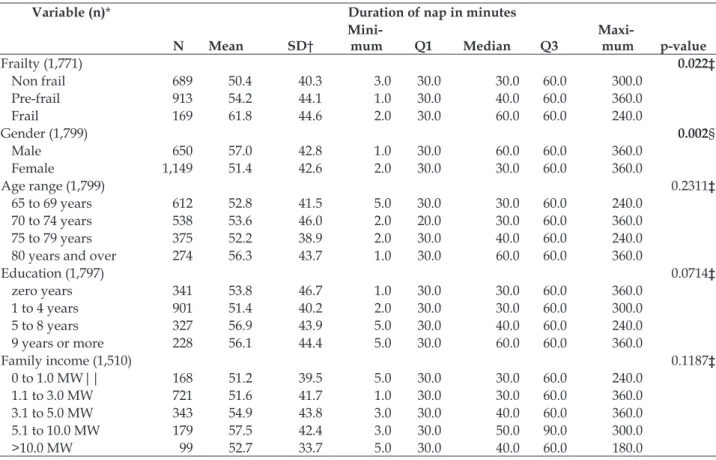
Table 1 – Comparative analysis of the variables frailty, gender, age, education and income according to the duration of the naps. Brazil, 2008/2009
Variable (n)* Duration of nap in minutes
N Mean SD†
Mini-mum Q1 Median Q3
Maxi-mum p-value
Frailty (1,771) 0.022‡
Non frail 689 50.4 40.3 3.0 30.0 30.0 60.0 300.0
Pre-frail 913 54.2 44.1 1.0 30.0 40.0 60.0 360.0
Frail 169 61.8 44.6 2.0 30.0 60.0 60.0 240.0
Gender (1,799) 0.002§
Male 650 57.0 42.8 1.0 30.0 60.0 60.0 360.0
Female 1,149 51.4 42.6 2.0 30.0 30.0 60.0 360.0
Age range (1,799) 0.2311‡
65 to 69 years 612 52.8 41.5 5.0 30.0 30.0 60.0 240.0
70 to 74 years 538 53.6 46.0 2.0 20.0 30.0 60.0 360.0
75 to 79 years 375 52.2 38.9 2.0 30.0 40.0 60.0 240.0
80 years and over 274 56.3 43.7 1.0 30.0 60.0 60.0 360.0
Education (1,797) 0.0714‡
zero years 341 53.8 46.7 1.0 30.0 30.0 60.0 360.0
1 to 4 years 901 51.4 40.2 2.0 30.0 30.0 60.0 300.0
5 to 8 years 327 56.9 43.9 5.0 30.0 40.0 60.0 240.0
9 years or more 228 56.1 44.4 5.0 30.0 60.0 60.0 360.0
Family income (1,510) 0.1187‡
0 to 1.0 MW|| 168 51.2 39.5 5.0 30.0 30.0 60.0 240.0
1.1 to 3.0 MW 721 51.6 41.7 1.0 30.0 30.0 60.0 360.0
3.1 to 5.0 MW 343 54.9 43.8 3.0 30.0 40.0 60.0 360.0
5.1 to 10.0 MW 179 57.5 42.4 3.0 30.0 50.0 90.0 300.0
>10.0 MW 99 52.7 33.7 5.0 30.0 40.0 60.0 180.0
*The different igures in the sample for each variable refer to the absence of responses in the research protocol; †SD=standard deviation; ‡p-value obtained through the Kruskal-Wallis test; § p-value obtained through the Mann-Whitney test; ||MW=the Minimum Wage in Brazil corresponded to R$ 415,00 in 2008 and R$ 465,00 in 2009.
Table 2 - Kruskal-Wallis post-test related to the duration of the naps. Brazil, 2008/2009
Variable Comparison Result
Frailty
Non frail - Pre-frail p>0.05 Non frail - Frail p<0.05
Pre-frail - Frail p>0.05
A signiicant association was veriied between the duration of the naps and the variables frailty and gender. For the frailty variable, the result of the Kruskal-Wallis post-test indicated a difference between non-frail and frail elderly. These differ-ences can be observed through the mean scores and mainly the medians, in which the difference observed between the frail and non-frail elderly corresponded to 30 minutes. The frail elderly pres-ent a longer duration of the naps when compared to the non-frail elderly. For the gender variable, a signiicant difference was also observed between the groups, mainly when considering the medians. Men nap longer than women. For the other variables, no signiicant differences were observed.
Linear regression analysis was applied to assess how the variables selected in the study in-luence the duration of the elderly’s naps. Table 3 displays these results.
Table 3 – Results of linear regression analysis for duration of naps. Brazil, 2008/2009
Parameter Coeficient p-value*
Intercept 4,05 <0,001
Frailty
Non frail -0,31 <0,001
Pre-frail -0,26 0,005
Frail (ref.)† -
-Gender
Male 0,12 0,045
Female (ref.) -
-Age range
65-69 years -0,05 0,4605
70-74 years -0,09 0,1556
75-79 years -0,02 0,7358
80 years and older (ref.) -
0 years -0,14 0,0835
1-4 years -0,13 0,0658
5-8 years 0,01 0,9496
9 years or older (ref.) -
-Income
0.0-1.1 minimum wages -0,02 0,8248
1.1-3.0 minimum wages -0,05 0,6280
3.1-5.0 minimum wages 0,01 0,9613
5.1-10.0 minimum wages 0,08 0,4347
> 10.0 minimum wages (ref.) -
-*The logarithmic transformation was applied; †ref.: reference cate-gory for the analysis.
The results appointed that the variables frailty and gender signiicantly affect the duration of the elderly community dweller. The estimated coef-icients suggest a drop in the duration of the naps among the non frail and pre-frail elderly when compared to the frail participants, and an increase in that duration among male when compared to female individuals. The model obtained showed an explanation coeficient (R²) of 2.76%. Table 4 pres -ents the results of the comparison among the ive frailty criteria and the duration of the naps.
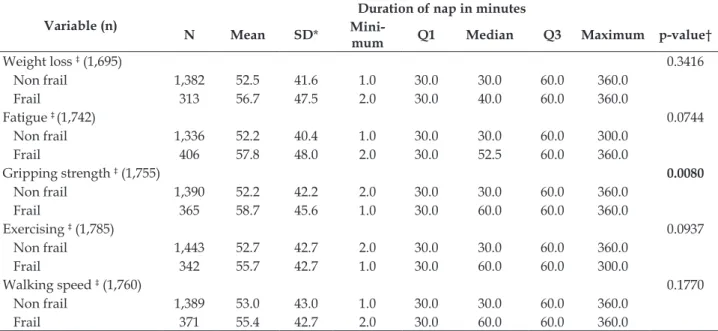
Table 4 – Comparative analysis of ive frailty criteria according to duration of naps. Brazil, 2008/2009
Variable (n)
Duration of nap in minutes
N Mean SD* Mini-mum Q1 Median Q3 Maximum p-value†
Weight loss ‡ (1,695) 0.3416
Non frail 1,382 52.5 41.6 1.0 30.0 30.0 60.0 360.0
Frail 313 56.7 47.5 2.0 30.0 40.0 60.0 360.0
Fatigue ‡ (1,742) 0.0744
Non frail 1,336 52.2 40.4 1.0 30.0 30.0 60.0 300.0
Frail 406 57.8 48.0 2.0 30.0 52.5 60.0 360.0
Gripping strength ‡ (1,755) 0.0080
Non frail 1,390 52.2 42.2 2.0 30.0 30.0 60.0 360.0
Frail 365 58.7 45.6 1.0 30.0 60.0 60.0 360.0
Exercising ‡ (1,785) 0.0937
Non frail 1,443 52.7 42.7 2.0 30.0 30.0 60.0 360.0
Frail 342 55.7 42.7 1.0 30.0 60.0 60.0 300.0
Walking speed ‡ (1,760) 0.1770
Non frail 1,389 53.0 43.0 1.0 30.0 30.0 60.0 360.0
Frail 371 55.4 42.7 2.0 30.0 60.0 60.0 360.0
*SD=standard deviation; †p-value through Mann-Whitney test; ‡According to the assessment results of each of these criteria, the elderly was considered “frail” or “non frail” for that speciic characteristic only.
A signiicant association was found between the criterion “Palmar gripping strength” and the du-ration of the elderly people’s naps. The elderly who were considered frail on this criterion, that is, elderly with low palmar gripping strength, napped longer than the participants without frailty on that factor.
DISCUSSION
Insufficient nighttime sleep can increase daytime sleepiness and negatively affect the elderly regarding the ability to stay alert during the entire day. It is hard to determine the sense of the causal relationship between the nap and the nighttime sleep disorder, and the sense of the relation can vary from person to person. Some individuals can start sleeping more during the
day to “compensate for” the sleep lost during the night. Others can nap during the day and, thus, develop nighttime sleep dificulties. Bad night -time sleep can be the precursor of a nap the next day instead of a consequence.4
Studies suggest that the duration of the naps exerts more inluence on the sleep aspects when compared to the frequency. The time spent on the daytime naps can be of inluence, both positive and negatively. Authors advise that the elderly’s naps should be short, not exceeding 90 minutes.22 Longer
naps contribute to frequent awakening at night, produce sleep inertia and worse quality of nighttime sleep.4 The short naps result in better functioning
better mood, besides being considered an important stress coping mechanism.6
Based on the linear regression, the results ap-pointed a signiicant effect of the variables frailty and gender on the duration of the participants’ naps. Elderly considered to be non-frail (correlation -0.31 and p<0.001) or pre-frail (correlation -0.26 and p=0.005) spent less time napping when compared to frail elderly. Male elderly (correlation 0.12 and p=0.045) presented longer naps when compared to the female elderly.
The model obtained showed an explanation coeficient (R²) of 2.76%. This coeficient demon -strates a model with limited explanatory power. The variables used were not that relevant to ex-plain the results found regarding the duration of the naps. There may be other variables inluencing the naps beyond the ones selected in this study. In that sense, other variables should be investigated in the future, such as depression, comorbidities, sleep disorders, neurological diseases and cogni-tive dysfunction.
Concerning the frailty, authors from a North American study veriied that the prevalence of ex -cessive daytime sleepiness was higher among frail men.15 Another study in the United States found an
association between daytime sleepiness and frailty, which stood out in the participants who reported sleep problems. For those authors, sleep disorders and frailty are highly prevalent, probably because of the advanced age and presence of multiple co-morbidities.14
Frail elderly generally present comorbidities and greater probability of developing sequelae and disabilities. To develop frailty, the presence of multiple chronic conditions can be considered a risk factor.24 It is also known that unintentional napping
may be a marker of some illness, physical and men-tal decline, to the extent that the time spent on naps increases.3 The association between sleep problems
and frailty can be considered two-way, in which the frailty can lead to ruptures in the activity/rest rhythm with irregular cycles, which are frequently observed in elderly with chronic conditions.25
In this study, the association between dura-tion of naps and gender (p=0.002), frailty levels (p=0.022) and the frailty criterion “manual gripping strength” (p=0.008) was clear. Being male, frail and with reduced gripping strength is associated with
longer duration of naps and perhaps with possible problems in elderly health.
Some authors explain that the association be-tween sleep problems and frailty can be mediated through different mechanisms. The sleep problems can be a marker of comorbidities, such as cardiovas-cular diseases, condition of pre-frailty, depressive symptoms, cognitive dysfunction and functional disability. These aspects by themselves impair the sleep and increase the probability of individuals getting frail. In addition, sleep disorders and frailty or its components were both linked to biochemical alterations, including low levels of endogenous testosterone, reduction of the renal function and rise in pro-inlammatory cytokines. Any combination, or one of these routes, can mediate the increased probability of frailty among elderly people with sleep disorders. Nevertheless, these aspects and other confounding factors do not fully explain the associations between sleep disorders and frailty. Sleep disorders can be a marker of unknown fac-tors that increase the probability of greater frailty.15
The longer time spent napping can indicate cultural habits and gender roles, and also be related to illnesses, frailty, physical and mental decline. According to the author, the personal choices and motivations, gender roles and social resources, in-teracting with health and behavioral competency, are determinants of the elderly people’s time use.26
In this study, a signiicant association was veriied between the criterion “Palmar gripping strength” and the duration of the elderly’s naps. North American researchers veriied that their study participants who scored on one or more frailty as-pects suffered from excessive daytime sleepiness. For the women, an association was found between respiratory problems during sleep and low manual gripping strength. This association between low manual gripping strength and respiratory problems during sleep can be explained. The post-menopause can be a factor predisposing to the drop in muscle strength, and this relation may be mediated by the increased incidence of respiratory problems during sleep among women. Physiopathological changes during respiratory sleep disorders include inlam -matory and hormonal routes, which can accelerate the drop in muscle mass and strength.13
of the airways, contributing to respiratory sleep disorders.15 In addition, the loss of muscle mass
and strength is provoked by the weight loss, largely due to changes in the senses of smell and taste and to dental problems, which are common among the elderly. This loss of muscle mass and strength can be called sarcopenia and increases after the age of 65 years, implies a drop in hormone levels, increase in inlammatory mediators, changes in the protein-calorie intake during ageing and functional disabil-ity.27 Sarcopenia results in the decrease and atrophy of the fast-twitch muscle ibers, with a consequent predominance of the slow-twitch ibers28 and causes
great impact on the functional ability.26
Sarcopenic elderly have reduced competence to accomplish activities of daily living, becoming in-active, less engaged in social, leisure and recreation activities and with less interpersonal contacts, which could cause changes in the circadian rhythms, lead-ing to highly irregular sleep and alert hours. Under that circumstance, they could nap for a long time.14,26
In addition, the low palmar gripping strength is associated with the presence of chronic conditions, low nutritional status, inlammatory conditions and low level of exercising, being responsible for increased functional disability and dependence and reduced mobility.27
When considering the study findings, the relevance is perceived of including sleep among the elderly’s health items to be assessed, especially the presence and duration of the naps, as they can directly inluence this population’s health and rep -resent a predictor of problems. On the other hand, programmed naps can offer beneits for the elderly and, thus, represent a health promotion and disease prevention intervention.
This study presents a series of strengths, including the original character of the theme, the large sample size, the nationwide range, the fact that the elderly are community dwellers and were not selected based on sleep disorders or frailty condi-tions and the validated frailty measures, identical to those used in the deinition proposed by Linda Fried. At the start of the study, elderly with cogni-tive deicits were excluded, which could inluence or even alter the indings.
On the other hand, the study also comes with some limitations. The results may not apply to other elderly groups in different contexts. The analyses
were adjusted to different factors, but the possibil-ity of residual confusion cannot be eliminated. Only objective sleep measures were used, which would reduce their stability. The research design was cross-sectional, and no causal relations can be established between the variables. In addition, excessive day-time sleepiness and the presence of comorbidities that can inluence the nap and/or frailty were not assessed in this study.
When relecting on the practical implications of these indings, the need is highlighted for an in-depth assessment of the elderly visiting the health services, aiming to study sleep-related issues, with a view to the early detection of problems and the de-velopment of actions that minimize the complaints, thus avoiding late interventions.
Also, the temporal clues should be strength-ened, involving activities that are meaningful to the elderly, in the attempt to minimize the changes re-lated to the circadian rhythm resulting from ageing. In addition, the sleep variable should be included in the frailty phenotype, as the sleep disorders/ napping can be an early marker of this syndrome.
CONCLUSION
An association was found between the dura-tion of the elderly’s naps and the variables gender, frailty levels and the frailty criterion “palmar grip-ping strength”. The duration of the naps was longer among male and frail elderly with low gripping strength.
The importance of the nurses should be high-lighted in the development of an expanded view on the relevance of frailty in the duration of the elderly’s naps, considering that napping can be a marker of an underlying pathology, physical and mental decline, to the extent that the time spent on naps increases.
Future studies on this theme should be devel-oped, in view of the lack of studies in the literature. Comorbidities should be included in this analysis, in view of their close relationship with napping and frailty.
ACKNOWLEDGEMENTS
Acknowledgements for the funding of the Coordination for the Improvement of Higher Edu-cation Personnel (CAPES) and to the coordinator of the Fibra Study, Prof. Anita Liberalesso Neri, for her generosity in making available the database, contributing to the publication of this article.
REFERENCES
1. Yilmaz H. Comparison of motor activity and sleep in patients with complex partial seizures on levetiracetam treatment and a group of healthy subjects. Behav Neurol. 2007; 18(3):165-70.
2. Santos AA, Ceolim MF, Neri AL. Sleep complaints among Brazilian senior citizens from municipalities with different Human Development Indices. Rev Latino-Am Enfermagem. 2012 Set-Out; 20(5):917-26. 3. Fang W, Li Z, Wu L, Cao Z, Liang Y, Yang H, et al.
Longer habitual afternoon napping is associated with a higher risk for impaired fasting plasma glucose and diabetes mellitus in older adults: results from the Dongfeng-Tongji cohort of retired workers. Sleep Med. 2013; 14(10):950-4.
4. Ficca G, Axelsson J, Mollicone DJ, Muto V, Vitiello MV. Naps, cognition and performance. Sleep Med Rev. 2010 Aug; 14(4):249-58.
5. Theadom A, Cropley M, Kantermann T. Daytime napping associated with increased symptom severity in fibromyalgia syndrome. BMC Musculoskelet Disord. 2015; 16(1):13.
6. Liu X, Zhang Q, Shang X. Meta-analysis of self-reported daytime napping and risk of cardiovascular or all-cause mortality. Med Sci Monit. 2015; 21:1269-75. 7. Jung KI, Song CH, Ancoli-Israel S, Barrett-Connor E.
Gender differences in nighttime sleep and daytime napping as predictors of mortality in older adults: the Rancho Bernardo Study. Sleep Med. 2013 Jan; 14(1):12-9.
8. Baoying H, Hongjie C, Changsheng W, Peijian W, Wingfei L, Yinghua L et al. Association of napping and night-time sleep with impaired glucose regulation, insulin resistance and glycated haemoglobin in Chinese middle-aged adults with no diabetes: a cross-sectional study. BMJ Open. 2014; 4(7):e004419. 9. Owens JF, Buysee DJ, Hall M, Kamarck TW, Lee
L, Strollo PJ et al. Napping, nighttime sleep, and cardiovascular risk factors in mid-life adults. J Clin
Sleep Med. 2010; 6(4):330-5.
10. Tanabe N, Iso H, Seki N, Suzuki H, Yatsuya H, Toyoshima H et al. Daytime napping and mortality, with a special reference to cardiovascular disease: the JACC study. Int J Epidemiol. 2010; 39(1):233-43. 11. Gu D, Sautter J, Pipkin R, Zeng Y. Sociodemographic
and health correlates of sleep quality and duration among very old Chinese. Sleep. 2010; 33(5):601-10. 12. Dam TT, Ewing S, Ancoli-Israel S, Ensrud K, Redline
S, Stone K. Association between sleep and physical function in older men: the osteoporotic fractures in men sleep study. J Am Geriatr Soc. 2008 Sep; 56(9):1665-73.
13. Endeshaw YW, Unruh ML, Kutner M, Newman AB, Bliwise DL. Sleep-disordered breathing and frailty in the Cardiovascular Health Study cohort. Am J Epidemiol. 2009 May; 170(2):193-202.
14. Fragoso CAV, Gahbauer EA, Ness PHV, Gill TM. Sleep–wake disturbances and frailty in community-living older persons. J Am Geriatr Soc. 2009 Nov; 57(11):2094-100.
15. Ensrud KE, Blackwell TL, Redline S, Ancoli-Israel S, Paudel ML, Cawthon PM, et al. Sleep disturbances and frailty status in older community-dwelling men. J Am Geriatr Soc. 2009 Nov; 57(11):2085-93.
16. Fragoso CAV, Gill TM. Sleep complaints in community-living older persons: a multifactiorial geriatric syndrome. J Am Geriatr Soc. 2007 Nov; 55(11):1853-66.
17. Fried LP, Tangen CM, Walston J, Newman AB, Hirsch C, Gottdiener J, et al. Frailty in older adults: evidence for a phenotype. J Gerontol Biol Sci Med Sci. 2001 Mar; 56(3):M146-56.
18. Oliveira LPBA, Menezes RMP. Representations of frailty for elderly within the family health strategy context. Texto Contexto Enferm. 2011 Abr-Jun; 20(2):301-9.
19. Folstein MF, Folstein SE, McHugh PR. Mini-Mental State. A practical method for grading the cognitive status of patients for the clinician. J Psychiatr Res. 1975 Nov; 12(3):189-98.
20. Brucki SMD, Nitrini R, Caramelli P, Bertolucci PHF, Okamoto IH. Sugestões para o uso do Mini-Exame do Estado Mental no Brasil. Arq Neuropsiquiatr. 2003; 61(3-B):777-81.
21. Taylor HL, Jacobs DR, Schucker B, Knudsen J, Leon AS, Debacker G. A questionnaire for the assessment of leisure time physical activities. J Chronic Disease. 1978 Dec; 31(12):741-55.
22. Monk TH, Buysse DJ, Carrier J, Billy BD, Rose LR. Effects of afternoon siesta naps on sleep, alertness, performance, and circadian rhythms in the elderly. Sleep. 2001 May; 24(6):680-7.
24. Ávila-Funes JA, Helmer C, Amieva H, Barberger-Gateau P, Goff ML, Ritchie K, et al. Frailty among community-dwelling elderly people in France: the three-city study. J Gerontol A Biol Sci Med Sci. 2008 Oct; 63A(10):1089-96.
25. Ensrud KE, Blackwell TL, Ancoli-Israel S, Redline S, Cawthon PM, Paudel ML, et al. Sleep disturbances and risk of frailty and mortality in older men. Sleep Med. 2012 Dec; 13(10):1217-25.
26. Marincolo JCS. Indicadores de fragilidade e tempo despendido em atividades em idosos: dados do FIBRA
Campinas [dissertação]. Campinas (SP): Universidade Estadual de Campinas. Programa de Pós-Graduação em Gerontologia; 2010.
27. Silva TAA, Junior AF, Pinheiro MM, Szejnfeld VL. Sarcopenia associada ao envelhecimento: aspectos etiológicos e opções terapêuticas. Rev Bras Reumatol. 2006 Nov-Dez; 46(6):391-7.
28. Miljkovic N, Lim JY, Miljkovic I, Frontera WR. Aging
of skeletal muscle ibers. Ann Rehabil Med. 2015 Apr;
39(2):155-62.
Correspondence: Ariene Angelini dos Santos Rua Luiz Turri, 47. Jardim Planalto
37800-000 - Guaxupé, MG, Brasil E-mail: [email protected]