INTRODUCTION
Address to: Dr. Augusto Bücker. Laboratório de Malária e Dengue/INPA. Caixa Postal 478. Av. André Araújo 2936, Aleixo, 69083-000 Manaus, AM, Brasil.
Phone: 55 92 3643-3364; Fax: 55 92 3642-3435 e-mail: [email protected]
Received 25 March 2013 Accepted 12 July 2013
Larvicidal effects of endophytic and basidiomycete
fungus extracts on Aedes and Anopheles larvae
(Diptera, Culicidae)
Augusto Bücker
[1],[2],
Nádia Cristina Falcão Bücker
[3],[4],
Antonia Queiroz Lima de Souza
[1],[5],
Auricélia Matos da Gama
[5],
Edson Rodrigues-Filho
[6],
Fábio Medeiros da Costa
[2],
Cecilia Veronica Nunez
[4],
Ademir Castro e Silva
[1]and Wanderli Pedro Tadei
[2][1]. Programa de Pós-Graduação em Biotecnologia, Universidade do Estado do Amazonas, Manaus, AM. [2]. Laboratório de Malária e Dengue, Instituto Nacional de Pesquisas da Amazônia, Manaus, AM. [3]. Laboratório de Bioquimica Experimental, Departamento de Bioquímica, Universidade Federal de Santa Catarina, Florianópolis, SC. [4]. Departamento de Produtos Naturais, Instituto Nacional de Pesquisas da Amazônia, Manaus, AM. [5]. Laboratório de Bioquimica e Biologia Molecular, Centro de Biotecnologia da Amazônia, Manaus, AM. [6]. Departamento de Química, Centro de Ciências Exatas e de Tecnologia, Universidade Federal de São Carlos, São Carlos, SP.
ABSTRACT
Introduction: In vitro bioassays were performed to access the larvicidal activity of crude extracts from the endophytic fungus Pestalotiopsis virgulata (Melanconiales, Amphisphaeriaceae) and the saprophytic fungus Pycnoporus sanguineus
(Basidiomycetes, Polyporaceae) against the mosquitoes Aedes aegypti and Anopheles nuneztovari.Methods: The extracts were tested at concentrations of 100, 200, 300, 400 and 500ppm. Ethyl acetate mycelia (EAM) extracts and liquid culture media (LCM) from Pe.virgulata and Py. sanguineus were tested against third instar larvae of Ae. aegypti and An. nuneztovari. Results: The larvicidal activity of the EAM extracts from Pe. virgulata against Ae. aegypti had an LC50=101.8ppm, and the extract from
the basidiomycete fungus Py. sanguineus had an LC50=156.8ppm against the Ae. aegypti larvae. The Pe. virgulata extract had
an LC50=16.3ppm against the An. nuneztovari larvae, and the Py. sanguineus extract had an LC50=87.2ppm against these larvae.
Conclusions: These results highlight the larvicidal effect of EAM extracts from the endophyte Pe. virgulata against the two larval mosquitoes tested. Thus, Pe. virgulata and Py. sanguineus have the potential for the production of bioactive substances against larvae of these two tropical disease vectors, with An. nuneztovari being more susceptible to these extracts.
Keywords: Endophytic fungi. Saprophytic fungi. Larvicidal. Tropical diseases.
Dengue and malaria are tropical diseases of major concern for worldwide public health, particularly in underdeveloped countries. The global expansion of Aedes aegypti L. (1762) and the spread of dengue virus are currently major public health problems1. Demographic and social factors contribute
to the epidemic levels of this disease2 in urban areas, as the
simultaneous circulation of all four dengue serotypes was
described for the fi rst time in the City of Manaus, State of
Amazonas, Brazil, in 20113. Additionally, malaria, which is
caused by protozoans of the genus Plasmodium, is transmitted by mosquito vectors of the genus Anopheles and is important in rural and natural areas. In the Brazilian Amazon, Anopheles
nuneztovari Gabaldón (1940) populations (cytotype A) are predominantly zoophilic and are not implicated as important malaria vectors4. However, in Colombia and Venezuela,
populations of the same species are highly anthropophilic and are the primary malaria vectors5,6. Malaria interferes with child
growth and affects the productivity of laborers, resulting in obstacles to socioeconomic development in affected countries7.
The search for practical uses for natural compounds is one of the oldest activities of civilization. Control of mosquito larvae could represent an effective tool for integrated vector management to reduce malaria transmission8,9. Thus, the extracellular secondary
metabolites produced by entomopathogenic fungi have been a focus of interest for insect pathologists9. Metabolites from fungal
genera, such as Metarhizium10, Trichophyton11, Chrysosporium12
and Lagenidium13, as well as some actinomycetes14 and several
basidiomycetes15, have shown potential insecticidal activity.
METHODS
by Py. sanguineus, has been shown to have antibacterial19,
cytotoxic and antiviral activities20. The genus Pestalotiopsis
has also received attention because members of this genus have been shown to produce secondary metabolites with potential antimicrobial activity21,22. Most recent Pestalotiopsis studies
have been based on endophytic isolates15,23,24. The aims of
the present study were to examine products of the Amazon biodiversity and to identify fungi with potential larvicidal activity to control mosquito-vectored diseases.
Mosquito culture and management
Aedes aegyptiLinnaeus 1762: eggs were obtained from colonies at the Laboratório de Malária e Dengue of Instituto Nacional de Pesquisas da Amazônia – INPA, and the mosquitos were kept in cages in the insectary. Mosquitoes were maintained for oviposition in the insectary at 26 ± 2ºC with a photoperiod of 12:12 (L/D) and 80 - 90% relative humidity25.
Anopheles nuneztovari Gabaldón 1940: collections of species from the genus Anopheles was conducted in the Manaus east area (Amazonas State, Brazil) near Farm Natan (03º04'10"S, 59º51'40"W). Catches were performed in cattle pens, and only feeding females were selected. Samples were obtained between the hours of 18 to 21h by manual capture. Mosquitoes were maintained for oviposition in the insectary, according to the criteria of Scarpassa and Tadei26. Females and eggs were
identifi ed according to a dichotomous key for the Culicidae family, generated by Faran27.
Fungus collections and extractions
Plant origin and endophytic fungi: crude extracts of mycelium and metabolic medium were donated by the Laboratório de Produtos Bioativos de Origem Microbiana (LPBOM/UFAM). The endophytic fungi were isolated from Murraya paniculata
(L.) Jack, Rutaceae, an exotic plant collected in São Paulo State, Brazil. And the endophytic fungus Pestalotiopsisvirgulata was isolated from Gustavia cf. elíptica (S.A.), the Mori fruit, which is a member of the Lecythidaceae family from the Brazilian Amazon, which was collected from Fazenda Experimental da Agronomia (UFAM) in October 2008 (02º38’58”S, 60º03’09”W) and was preserved at LPBOM/UFAM, using the methodology described by Castelanni28. Crude extracts were used to perform the screening
for larvicidal activity (data not shown).
Reactivation and culture of Pestalotiopsis virgulata: after preliminary test results to verify Ae. aegypti larva mortality (data not shown), the fungal stock and experimental cultures were grown at 26±2ºC in stationary conditions in Erlenmeyer
fl asks, containing 300mL of PDA (potato dextrose agar) growth medium with glucose (10g/L) as a carbon source and L-asparagine (2.5g/L) as a nitrogen source. The stock culture was inoculated with a section from the agar culture, and the stock culture was grown until the mycelia had totally covered the surface. The 47 experimental fl asks of liquid culture were inoculated with fl oating mycelium fragments (~4mm in diameter, aseptically cut from the stock culture) and were grown for 14 days.
Secondary metabolite extractions from Pe. virgulata: After 28 days, the mycelia from the liquid culture medium (LCM) of
Pe. virgulata were isolated by fi ltration through Whatman no. 4 Chr fi lter paper. Mycelia were added to ethanol for macerating,
and after 24h, the resulting mixture was fi ltered. This process
was repeated twice. The mycelia extracts obtained were then concentrated in a rotary evaporator at reduced pressure. After observing the boiling point of each solvent, the extracts were weighed to obtain yield. The LCM was extracted in solvents with different polarity: ethyl acetate (EtOAc) and water (aqueous extract).
Secondary metabolite extractions from Pycnoporus sanguineus: Pycnoporus sanguineus specimens were collected in Reserva Forestal Adolpho Ducke (02º58'30"S, 59º56'01"W) of Instituto Nacional de Pesquisas da Amazônia - INPA (Manaus-AM, Brazil). The criteria described by Smânia et al.29
were used for cultivating and obtaining crude extracts from
Py. sanguineus, with some modifi cations. The above protocol
was used to perform secondary metabolite extractions from
Py. sanguineus extracts.
Larvicidal selective bioassay
These experiments were performed following the results
of the fi rst stage and were aimed to calculate the LC50 of
selected extracts against the third instar larvae of the Ae. aegypti mosquito species. The selective bioassay results were used as a biological model for subsequent application of the extracts at the bioassay dose, to obtain the lethal concentrations (LC50 and LC90) for larvae of Ae. aegypti and An. nuneztovari. The trials were performed at two concentrations (250 and 500ppm). Two selected extracts were targeted in these trials (data not shown), and these extracts showed larval mortality of more than 50% after 24h of exposure. The experiment was repeated three times. The percentage mortality was calculated using the mortality formula, and corrections were made when necessary using Abbott’s30 formula.
Larvicidal bioassay dose
The larvicidal bioassay was performed according to the recommendations of the WHO31, with minor modifi cations.
The following criteria were considered: the mortality in the
control group should not exceed 10%, the confi dence limit was
set at 95%, and the bioassays were repeated on three alternate days. The bioassay dose experiments were performed using two selective bioassay extracts: GaFr3 2.3 Mycelium EtOAc (Pe. virgulata) and Pyc Mycelium EtOAc (Py. sanguineus) (data not shown). The larvicidal bioassay dose experiments
were performed using fi ve concentrations: 100, 200, 300,
400 and 500ppm. The negative control received only DMSO (dimethylsulfoxide) at the same concentrations, and the mortality rate of the control was not to exceed 10%.
Statistical analysis
The lethal concentrations (LC50 and LC90) were determined by a probit analysis using POLO-PC®32 LeOra Software,
RESULTS
TABLE 1 - Bioassay dose results of Aedes aegypti and Anopheles nuneztovari (third instar) larvae following 24h of treatment with different tested extracts.
LC50 ppm LC90 ppm χ2 Regression
Larvae species Extract codes (95% CI) (95% CI) (df = 3) equation
Ae. aegypti Pest LCM Aqueous Fr. n.s. n.s. 1.04 2.25x - 2.11
Ae. aegypti Pest Mycelium Aqueous Fr. n.s. n.s. 1.35 1.42x - 0.51
Ae. aegypti Pest LCM EtOAc 787.5 2879.1 1.56 2.27x - 1.59
(623.8 - 1199.1) (1699.3 - 7911.1)
Ae. aegypti Pyc LCM EtOAc 401.3 3448.8 0.65 1.37x + 1.43
(330.0 - 532.2) (1811.7 - 12162.0)
Ae. aegypti Pest Mycelium EtOAc 101.8 379.0 4.12 2.24x + 0.50
(54.7 - 138.2) (290.3 - 619.7)
Ae. aegypti Pyc Mycelium EtOAc 156.8 665.4 10.01 2.03x + 0.53
(55.5 - 228.0) (405.6 - 4877.6)
An. nuneztovari Pest LCM EtOAc 585.7 3777.5 1.46 1.58x + 0.62
(466.1 - 862.7) (1976.3 - 13756.0)
An. nuneztovari Pest LCM Aqueous Fr. 685.7 3360.1 1.06 1.85x - 0.26
(545.1 - 1025.1) (1868.8 - 10498.0)
An. nuneztovari Pest Mycelium EtOAc 16.3 74.4 1.69 1.94x + 2.65
(0.75 - 38.5) (24.7 - 108.1)
An. nuneztovari Pest Mycelium Aqueous Fr. 389.3 2289.3 0.92 1.66x + 0.69
(339.1 - 462.9) (1510.7 - 4455.8)
An. nuneztovari Pyc Mycelium 87.2 343.7 8.16 2.15x + 0.83
(16.5 - 137.9) (237.0 - 947.1)
LC50: median lethal concentration; CI: confi dence interval; LC90 90%: lethal concentration; n.s: not signifi cant; df: degree of freedom. Ae:Aedes;
An: Anopheles. Pest: Pestalotiopsis; LCM:Liquid culture medium; EtOAc: ethyl acetate; Pyc: Pycnoporus. Selective bioassay evaluation
The percentage mortality of Ae. aegypti following treatment with different concentrations of extracts from endophytic fungi and basidiomycetes fungi was analyzed in a selective bioassay evaluation (data not shown). The ethyl acetate mycelia (EAM) extract from Py. sanguineus was very effective against the third instar larvae of Ae. aegypti, promoting mortality of 67% of the larvae at a concentration of 250ppm and up to 98% of the larvae at a concentration of 500ppm. The EAM extract of the
Pe. virgulata endophyte caused 81% mortality of the larvae at 250ppm and up to 100% of the larvae at 500ppm, thus showing greater effectiveness than the extract from the basidiomycete.
Dose evaluation to obtain the lethal concentrations (LC50 - LC90)
Aedes aegypti. As shown in Table 1, three of six fungal extracts that were assessed to determine their lethal concentrations
against Ae. aegypti larvae showed toxicity values in which LC50 < 500ppm. The results calculated using the Polo-PC® program
indicate that the data fi t the probit model. The ethyl acetate mycelia extracts from Pe. virgulata and Py. sanguineus showed better mortality results against Ae. aegypti third instar larvae than the LCM extracts (Table 1, Figures 1 and 2).
Figure 1 shows the regression lines for the larval mortality induced by 24h of treatment with the mycelia or LCM EtOAc extracts from Pycnoporus and Pestalotiopsis. We fi rst compared
the results from the Pestalotiopsis extracts (Figure 1A). In this comparison between the LCM EtOAc-treated Ae. aegypti
larvae and the EAM-treated Ae. aegypti larvae, the value of X2
was signifi cant. This fi nding led us to reject the hypothesis
that the larvicidal effects of the two extracts would be equal
(Table 2). Therefore, the effective doses were qualitatively equal but quantitatively different. The relative potency of the larvicidal effects of the Pestalotiopsis LCM EtOAc extract (0.128) were less than those of the Pestalotiopsis EAM extract (7.769) (Table 2).
2.5 3.5 4.5 5.5 6.5
1.8 2 2.2 2.4 2.6 2.8
Pr
obi
t
of
ki
ll
Pestalotiopsis
2.5 3.5 4.5 5.5 6.5
1.8 2 2.2 2.4 2.6 2.8
Pr
obi
t
of
ki
ll
Pycnoporus
Pest LCM EtOAc
Pest EAM
Log Concentration (ppm) Log Concentration (ppm)
Pyc LCM EtOAc
Pyc EAM
FIGURE 2 - Graphical representations of the probit values following 24h of treatment with ethyl acetate mycelia (EAM) extract from Pestalotiopsis virgulata and
Pycnoporus sanguineus against third instar larvae of Aedes aegypti (A) and Anopheles nuneztovari (B). Pest: Pestalotiopsis; Pyc: Pycnoporus.
A
FIGURE 1 - Graphical representations of the probitvalues of mortality against the third instar larvae of Aedes aegypti following 24h of treatments with: A: ethyl acetate mycelia (EAM) extract and liquid culture medium (LCM) from Pestalotiopsis virgulata; and B: ethyl acetate mycelia (EAM) extract and liquid culture medium (LCM) from Pycnoporus sanguineus. Pyc: Pycnoporus; EtOAc: ethyl acetate.
3.0 4.5 6.0 7.5 9.0
1.8 2 2.2 2.4 2.6 2.8
Aedes aegypti
3.0 4.5 6.0 7.5 9.0
1.8 2 2.2 2.4 2.6 2.8
Anopheles nuneztovari
Pr
ob
it
of
ki
ll
Log Concentration (ppm)
Pest EAM
Pyc EAM
Pr
ob
it
of
ki
ll
Log Concentration (ppm)
Pest EAM
Pyc EAM
B
A B
between the mortality induced by the Pycnoporus EAM extract and that induced by the Pycnoporus LCM EtOAc extract, the hypothesis that the extracts would result in equal rates of mortality was rejected, while the hypothesis that the slopes of the mortality curves would be parallel was not rejected. These data suggest that the effective doses of these fungal extracts were qualitatively equal but quantitatively different. The greatest larvicidal effects were observed for the mycelia extract from
P. sanguineus, which also had the highest relative potency (Table 2). Comparing the data from the mycelia fungus extracts from the two fungal species, we observed that the greatest potential larvicidal effects against Ae. aegypti were obtained for the genus Pestalotiopsis. We obtained an LC50 value of 101.8ppm for the Pestalotiopsis EAM and 156.8ppm for
Pycnoporus EAM (Table 1 and Figure 2A). As shown in Table 2,
the relative potency (RP) values were also calculated, and the
Pestalotiopsis EAM (1.634) was shown to be more effective than the Pycnoporus EAM (0.612).
Anopheles nuneztovari
As shown in Table 1, three of fi ve fungal extracts that
were assessed to determine the lethal concentration against
An. nuneztovari larvae showed toxicity values in which LC50 < 500ppm. The results presented using the Polo-PC® program
indicated that the data fit the probit model. As shown in
TABLE 2 - The tests for equal effi cacy and parallel regression lines comparing the bioassays using Pestalotiopsisvirgulata and Pycnoporus
sanguineus extracts to treat against Aedes aegypti and Anopheles nuneztovari (third instar) larvae for 24h. The hypothesis for equal effi cacy or
parallel regression lines and values showing χ2, p-value, slope ± SE and RP.
Hypothesis
Extracts Hypothesis of χ2 of Parallel χ2
Larvae species Compared Equal Effi cacy (df = 2) P Regression Lines (df = 1) P Slope ± SE RP
Ae. aegypti Pest LCM EtOAc x rejected 541.8 < 0.001 not rejected 0.005 0.943 2.27 ± 0.37 0.128
Pest EAM 2.24 ± 0.25 7.769
Ae. aegypti Pyc LCM EtOAc x rejected 88.41 < 0.001 rejected 4.223 0.040 1.37 ± 0.23 0.387
Pyc EAM 2.03 ± 0.23 2.585
Ae. aegypti Pyc EAM x rejected 30.34 < 0.001 not rejected 0.371 0.542 2.03 ± 0.23 0.612
Pest EAM 2.24 ± 0.25 1.634
An. nuneztovari Pest Mycelium rejected 600.4 < 0.001 not rejected 0.277 0.599 1.66 ± 0.24 0.027
Aqueous Fr. x
Pest EAM 1.56 ± 0.46 36.221
An. nuneztovari Pest LCM Aqueous Fr. x rejected 6.47 0.039 not rejected 0.478 0.489 1.85 ± 0.31 0.758
Pest LCM EtOAc 1.58 ± 0.27 1.318
An. nuneztovari Pest LCM EtOAc rejected 679.7 < 0.001 not rejected 0.012 0.973 1.58 ± 0.27 0.019
Pest EAM 1.56 ± 0.46 47.981
An. nuneztovari Pyc EAM x rejected 117.0 < 0.001 not rejected 0.033 0.856 2.15 ± 0.26 0.209
Pest EAM 2.02 ± 0.65 4.770
LCM:Liquid culture medium; EAM: Ethyl acetate mycelia; EtOAc: ethyl acetate; df: degree of freedom; Pest: Pestalotiopsis; Pyc: Pycnoporus; χ2: chi-square; SE: standard error; RP: relative potency; Ae:Aedes; An: Anopheles.
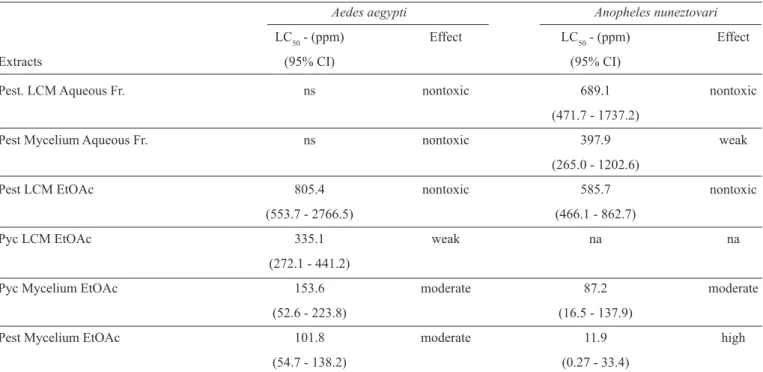
TABLE 3 - The ranking of the effective activity ranging LC50.
Aedes aegypti Anopheles nuneztovari
LC50 - (ppm) Effect LC50 - (ppm) Effect
Extracts (95% CI) (95% CI)
Pest. LCM Aqueous Fr. ns nontoxic 689.1 nontoxic
(471.7 - 1737.2)
Pest Mycelium Aqueous Fr. ns nontoxic 397.9 weak
(265.0 - 1202.6)
Pest LCM EtOAc 805.4 nontoxic 585.7 nontoxic
(553.7 - 2766.5) (466.1 - 862.7)
Pyc LCM EtOAc 335.1 weak na na
(272.1 - 441.2)
Pyc Mycelium EtOAc 153.6 moderate 87.2 moderate
(52.6 - 223.8) (16.5 - 137.9)
Pest Mycelium EtOAc 101.8 moderate 11.9 high
(54.7 - 138.2) (0.27 - 33.4)
EtOAc extract (PR = 0.019). However, the Pestalotiopsis
LCM EtOAc (PR = 1.318) extract was more effective than the Pestalotiopsis LCM Aqueous Fr. (PR = 0.758). The Pestalotiopsis LCM EtOAc was compared with the
Pestalotiopsis LCM Aqueous Fr., and statistical analysis led us to reject the hypothesis that the larvicidal effects of the two extracts would be equal, while the hypothesis that the slopes of the mortality curves would be parallel was not rejected. These data indicate that the effective doses of these extracts were qualitatively equal but quantitatively different.
The larvicidal activity of the Pestalotiopsis EAM extract against An. nuneztovari larvae was compared with the larvicidal effects of the Pycnoporus EAM extract against the same larval species, and the LC50 values were observed to be 16.3 and 87.2ppm, respectively, (Table 1 and Figure 2B)
while the LC90 values were observed to be 74.4 and 343.7ppm.
Table 2 shows that the Pestalotiopsis EAM extract (PR = 4.770) was more effective than the Pycnoporus EAM extract (PR = 0.209). Statistical analysis led us to reject the hypothesis that the larvicidal effects of the two extracts would be equal, while the hypothesis that the slopes of the mortality curves would be parallel was not rejected. These data indicate that the effective doses were qualitatively equal but quantitatively different. Probit results indicated that the hypothesis that the larvicidal effects of the two extracts would be equal could be rejected and that the regression lines were parallel and were
thus not signifi cantly different.
Classifi cation following the criteria of Komalamisra et al.33,
with minor modifi cations, classifi es plant larvicidal activities as
nontoxic when the LC50 is greater than 750ppm, weakly effective when the LC50 ranges from 200 to 750ppm, moderate when the LC50 is 50 - 100ppm and high when the LC50 is less than 50ppm. Thus, the activity of the ethyl acetate extract from Pe. virgulata
against Ae. aegypti was considered moderate, while the ethanol extract was considered effective, and the aqueous (alkaline hydroethanolic) extracts showed without/low activity. Among the extracts evaluated against Ae. aegypti larvae (Table 3), three of the fractions were nontoxic, one showed weak activity, and the other two fractions exhibited moderate toxicity. Among the extracts evaluated against An. nuneztovari larvae (Table 3), two of the fractions were nontoxic, one had weak activity, one displayed moderate activity, and one displayed high activity. Against Ae. aegypti larvae, the EAM extracts from Pe. virgulata
and Py. sanguineus showed weak toxicity, while the aqueous extracts were, for the most part, nontoxic. In contrast, against
An. nuneztovari larvae, the EAM extracts from Pe. virgulata
and Py. sanguineus had moderate to high toxicity, while the aqueous extracts showed without/low activity.
DISCUSSION
General
There is growing interest in the use of natural insecticides to reduce the use of synthetic pesticides and avoid environmental damage. The use of larvicidal compounds involves the application of chemicals to habitats to kill pre-adult mosquitoes.
This practice can reduce overall pesticide use in a control program, by reducing or eliminating the need for ground or aerial chemical applications to kill adult mosquitoes34. The
effi ciency in killing larval instars of important vector species and the lack of effects on non-target organisms, as well as the biological stability of extracellular metabolites, make this practice a promising alternative to mycelium- and conidial-based larvicides9. These products could be considered
fungal-based natural larvicides for vector control. Biological control of immature forms of Anopheles nuneztovari and Anopheles darlingi, which are species that are endemic to the Brazilian Amazon, under both laboratory and fi eld conditions, has been well-documented in the literature35,36.
The purpose of a general screen for bioactivity is to isolate as many potentially active constituents from a species as possible. This goal is achieved using two solvents: water, the most polar solvent, with a polarity index (PI) of 10.2; and an intermediary solvent, such as ethyl acetate (PI = 4.4)37. In this
study, the separated fractions were assessed for their ability to control two major species of mosquito larvae (Ae. aegypti and
An. nuneztovari). This experiment validated this approach and revealed the efficacies of the extracellular metabolites from
Py. sanguineus and Pe. virgulata that were extracted with ethyl acetate. Liquid culture medium
The insecticidal activity assessment of an aqueous extract allows for rapid and easy exploration of many species and compounds that are effective for the control of mosquito larvae38. In the first stage of this study, the aims were to
evaluate ethyl acetate extracts from the mycelia and LCM and to evaluate the aqueous fractions of the mycelia and LCM. Thus, the larvicidal activities of the secondary metabolites and extracellular metabolites in the LCM from Pe. virgulata and Py. sanguineus were not confi rmed, as our results showed weak/
nontoxic activity. As shown in Table 3, we verifi ed that, against
Ae. aegypti larvae, only the LCM extract from Py. sanguineus
showed weak toxicity (LC50 > 200ppm) at 24h. Unfortunately, it was not possible to perform a bioassay using the Pycnoporus
LCM against An. nuneztovari larvae, due to insuffi cient amounts
of the extract.
Liquid culture medium extracts from Pe. virgulata showed an LC50 > 500ppm in every assay; therefore, these extracts had weak/nontoxic activity against both vector species tested (Tables 1 and 3). However, this fungal species was relevant in the initial screening, as the aqueous extract caused larva mortality at high extract concentrations38. This relevance was
also evident using aqueous extracts from LCM, which did not have signifi cant larvicidal effects against any of the tested larvae.
The results observed showed that ethyl acetate extracts from the studied fungus mycelia presented better larvicidal activity and that the ethyl acetate extract from the LCM did not induce satisfactory results. Fungi secrete secondary metabolites into their external environment to perform several activities, including obtaining food and providing defense against microorganisms12,22. These results suggest that
that these metabolites were not produced by these fungi due to
other factors, such as the lack of the necessity to produce such compounds in the absence of competition from microbes in the LCM or the lack of some other compound that would induce a fungal response. Finally, it might not be possible to obtain these secondary metabolites from LCM using the methodology applied in this work. Vyas et al.13 used a different extract
protocol to obtain second metabolites, and they demonstrated that Lagenidium giganteum metabolites, when fi ltered through Whatman fi lter paper applied directly to third instar larvae of An. stephensi, Cx. quinquefasciatus and Ae. aegypti, had LC50 and LC90 values against An.stephensi of 7.21 and 24.29ppm, respectively and against Cx. quinquefasciatus of 4.09 and 12.12ppm. However, the Ae. aegypti larval instars and all non-target organisms were not found to be susceptible. Mohanty and Prakash11 demonstrated that fi ltrate extracellular metabolites
from Trichophyton ajelloi were effi cacious against larvae of
the mosquito species Cx. quinquefasciatus and An. stephensi. Further results of Mohanty and Prakash12 indicated that an
LC50 of secondary metabolites against third instar An. stephensi
of SDB-2.33mg/250mL, CB-1.28mg/250mL and against
Cx. quinquefasciatus of SDB-1.08mg/250mL,
CB-0.65mg/250mL was obtained. The purposes of these fi ltration processes were to decrease impurities in the fi ltrates and to
enhance efficacy. This finding might suggest that further bioassays should utilize the successful techniques used by these authors11-13, which might enable investigators to select
more effi ciently the active components present in the cellular
mycelium of Pe. virgulata and Py. sanguineus.
However, An. nuneztovari larvae were susceptible to the aqueous extract fraction from the endophytic fungus
Pe. virgulata (LC50 389.3 ppm; Table 1). Prakash et al.39
utilized fi ltered metabolites of Fusarium oxysporum as test materials for larvicidal activity against Cx. quinquefasciatus and
An. stephensi larvae, while the mycelium mass was discarded.
Ethyl acetate mycelium extract
The ethyl acetate mycelium (EAM) extracts from the entophytic fungus Pe. virgulata and from the basidiomycete fungus Py. sanguineus demonstrated larvicidal activity against both mosquito species tested. The EAM extract from
Py. sanguineus (less polar), containing at least two major components (cinnabarin and a mixture of other phenoxazin-3-one substituted components), had higher larvicidal activity and presented greater potentially lethal results than the aqueous
extracts (more polar). This fi nding indicates that the active
larvicidal components of mycelia extracts of Pe. virgulata
and Py. sanguineus must be low-polarity constituents. This observation agrees with the results of Aivazi and Vijay40,
who examined the ethyl acetate extract from oak gall (LC50 116.92ppm). The aqueous extract in this study (more polar) had less activity against the two mosquito species.
The highest larval mortality was induced by the EAM extract from Pe. virgulata and Py. sanguineus. The results of the LC50 calculation of these two extracts demonstrated that these extracts were more effective against Ae. aegypti, with theEAM extract of Pestalotiopsis leading to an LC50of 101.8ppm (Table 1) and
the EAM extract of Pycnoporus leading to an LC50of 156.8pm. Against An. nuneztovari, the EAM extract of Pestalotiopsis
led to an LC50of 16.3 ppm (Table 1), and the EAM extract of
Pycnoporus led to an LC50 of 87.2ppm. Therefore, different sensitivities of mosquito species were observed in response to these extracts. Similar to these results, Bagavan et al.41 showed
that the ethyl acetate extract from the Achyranthes aspera
leaf had effective larvicidal activity against Ae. aegypti and
Cx. quinquefasciatus of 18.2 and 27.2 ppm, respectively, due to the presence of saponin. The xanthone sterigmatocystin, isolated from the endophytic fungus Podospora sp. and the plant
Laggera alata (Asteraceae), was reported42 to have a high level
of potency against third instar larvae of Anophelesgambiae,
with LC50 and LC90 values of 13.3 and 73.5ppm, respectively. As shown in Table 1, many different reactions to mycelia extract appeared between the two tested mosquito species. The LC50 values of the mycelia extract were very high against
Ae. aegypti cases, compared to An. nuneztovari, verifying the increased susceptibility of An. nuneztovari compared to
Ae. aegypti larvae. According to Amer and Hehlhorn34, these
variations are not abnormal. In their results, the LC50 values of many oils were very high against An. stephensi, compared to the two other mosquito species tested, and except for few cases,
Ae. aegypti was more sensitive than Cx. quinquefasciatus. Prakash et al.39 showed that the extracellular metabolites from F. oxysporum
were less effective against An. stephensi but were highly effective against Cx. quinquefasciatus larvae. This fi nding might have been
due to the size of Culex, which has more surface area.
With the primary information available, studies can be undertaken to standardize extracts and to identify and isolate active components. Our results clearly show that
Py. sanguineus extract, which contains cinnabarin, demonstrates high larval mortality. From the results, we can conclude that the two mosquito species’ larvae were susceptible to the
compounds in fungus extracts. Such fi ndings could be useful in
promoting research aimed at the development of new mosquito control agents, based on bioactive chemical compounds from indigenous fungus sources as an alternative to chemical larvicides, to suppress malaria vector mosquito populations.
The evaluation of the role of fungus extracts in the larvicidal bioassay against Aedes aegypti and Anopheles nuneztovari has demonstrated promising larvicidal activity. Studies investigating new substances are important to advancing the availability of control alternatives against malaria. Therefore, we conclude that the ethyl acetate mycelia extracts from Pe. virgulata and
Py. sanguineus were more effective than ethyl acetate aqueous extracts and liquid culture extracts. The mycelia extract from
Pe. virgulata was more effective than the ethyl acetate mycelia extract from Py. sanguineus against Ae. aegypti, as well as against An. nuneztovari larvae. An. nuneztovari larvae were shown to be more susceptible to mycelia extracts from both fungi, in comparison to Ae. aegypti larvae.
The results reported here provide the possibility for further
effi cient investigation of the larvicidal properties of natural product extracts. The isolation and purifi cation of endophytic
ACKNOWLEDGMENTS
The authors declare that there is no confl ict of interest. CONFLICT OF INTEREST
FINANCIAL SUPPORT
REFERENCES
We thank the Instituto Nacional de Pesquisas da Amazônia
(INPA), for providing laboratory facilities, the Universidade do Estado do Amazonas (UEA) and the Universidade Federal do Amazonas (UFAM).
CNPq - Conselho Nacional de Desenvolvimento Científi co
e Tecnológico (fi nancial support) and FAPEAM - Fundação de Amparo à Pesquisa do Estado do Amazonas (scholarship).
1. Gubler DJ. The changing epidemiology of yellow fever and dengue. Comp Immunol Microbiol Infect Dis 2004; 27:319-330.
2. Passos RA, Tadei WP. Parasitism of Ascogregarina taiwanensis and
Ascogregarina culicis (Apicomplexa: Lecudinidae) in larvae of Aedes albopictus and Aedes aegypti (Diptera: Culicidae) from Manaus, Amazon region, Brazil. J Invert Pathol 2008; 97:230-236.
3. Bastos MS, Figueiredo RMP, Ramasawmy R, Itapirema E, Gimaque JBL, Santos LO, et al. Simultaneous circulation of all four dengue serotypes in Manaus, State of Amazonas, Brazil in 2011. Rev Soc Bras Med Trop 2012; 45:393-394.
4. Arruda M, Carvalho MB, Nussenzweig RS, Maracic M, Ferreira AW, Cochrane AH. Potential vectors of malaria and their different susceptibility to Plasmodium falciparum and Plasmodium vivax in northern Brazil identifi ed by immunoassay. Am J Trop Med Hyg 1986; 35:873-881. 5. Tadei WP, Dutary-Thatcher B, Santos JMM, Scarpassa VM, Rodrigues
IB, Rafael MS. Ecologic observations on anopheline vectors of malaria in the Brazilian Amazon. Am J Trop Med Hyg 1998; 59:325-335.
6. Sierra DM, Velez ID, Linton YM. Malaria vector Anopheles
(Nyssorhynchus) nuneztovari comprises one genetic species in Colombia based on homogeneity of nuclear ITS2 rDNA. J Med Entomol 2004; 41:302-307.
7. Tadei WP, Rodrigues IB, Santos JMM, Rafael MS, Passos RA, Costa FM, et al. Entomologia e controle de vetores: o Papel da entomologia no controle da Malária. X Reunião Nacional de Pesquisa em Malária. Rev Bras Med Trop 2007; 40 (suppl II):22-26.
8. Becker N, Petric D, Zgomba M, Boase C, Madon M, Dahl C, Kaiser A. Mosquitoes and their control. 2nd ed. Springer; 2010.
9. Vyas N, Dua K, Prakash S. Effi cacy of Lagenidium giganteum metabolites on mosquito larvae with reference to nontarget organisms. Parasitol Res 2007; 101:385-390.
10. Azevedo JL, Júnior WM, Araújo WL, Pereira JO. Microrganismos endofíticos e seu papel em plantas tropicais. In: Serafi ni LA, Barros
NM, Azevedo JL, editors. Biotecnologia: avanços na agricultura e na agroindústria. 1st ed. Caxias do Sul: EDUCS; 2002. p. 235-268.
11. Mohanty SS, Prakash S. Extracellular metabolites of Trichophyton ajelloi
against Anopheles stephensi and Culex quinquefasciatus larvae. Curr Sci 2004; 86:323-325.
12. Mohanty SS, Prakash S. Effects of culture media on larvicidal property of secondary metabolites of mosquito pathogenic fungus Chrysosporium lobatum (Moniliales: Moniliaceae). Acta Trop 2009; 109:50-54. 13. Vyas N, Dua KK, Prakash S. Bioassay of secondary metabolite of
Lagenidium giganteum on mosquito larvae for vector control. Bull Bio Sci 2006; 4:65-69.
14. Vijayan V, Balaraman K. Metabolite of fungi and actinomycetes active against mosquito larvae. Indian J Med Res 1991; 93:115-117.
15. Maharachchikumbura SSN, Guo LD, Chukeatirote E, Bahkali AH, Hyde KD. Pestalotiopsis – morphology, phylogeny, biochemistry and diversity. Fungal Diversity. 2011; 50:167-187
16. Alibert H. Note sar les champignons poussant dans le bas Dahomey et sur deux agaricinées estimées des indigénes de cette même région. Notes Africaines 1944 ; 22:11-12.
17. Nobles MK, Frew BP. Studies in wood-inhabiting Hymenomycetes. V: The genus Pycnoporus Karst. Can J Bot 1962; 40:987-1016.
18. Fidalgo O. Conhecimento micológico dos índios brasileiros. Rickia 1965; 2:1-10.
19. Smânia-Junior A, Dellemonache F, Smânia EFA, Gil ML, Benchetrit LC, Cruz FS. Antibacterial activity of a substance produced by the fungus
Pycnoporus sanguineus (Fr.) Murr. J Ethnopharmacol 1995; 45:177-181. 20. Smânia-Junior A, Marques CJS, Smânia EFA, Zanetti CR, Carobrez SG,
Tramonte R, et al. Toxicity and antiviral activity of cinnabarin obtained from Pycnoporus sanguineus (Fr.) Murr. Phytother Res 2003; 17: 1069-1072.
21. Strobel G, Daisy B. Bioprospecting for microbial endophytes and their natural products. Microbiol Mol Biol Rev 2003; 67:491-502.
22. Xu J, Ebada SS, Proksch P. Pestalotiopsis a highly creative genus: chemistry and bioactivity of secondary metabolites. Fungal Divers 2010; 44:15-31.
23. Wei JG, Xu T, Guo LD, Liu AR, Zhang Y, Pan XH. Endophytic
Pestalotiopsis species associated with plants of Podocarpaceae, Theaceae and Taxaceae in southern China. Fungal Divers 2007; 24:55-74.
24. Watanabe K, Motohashi K, Ono Y. Description of Pestalotiopsis pallidotheae: a new species from Japan. Mycoscience 2010; 51:182-188. 25. Christophers RS. Aedes aegypti the yellow fever mosquito. London:
Cambridge University Press; 1960.
26. Scarpassa VM, Tadei WP. Biologia de anofelinos amazônicos. XIII. Estudo do ciclo biológico de An. nuneztovari. Acta Amaz 1990; 20:95-118.
27. Faran ME. Mosquito Studies (Diptera: Culicidae). XXXIV. A revision of the albimanus section of the subgenus Nyssorhynchus of Anopheles. Contr Am Ent Inst 1980; 15:1-215.
28. Castellani A. Viability of mold culture of fungi in distilled water. J Trop Med Hyg 1939; 42:225.
29. Smânia EFA, Smânia-Junior A, Loguercio-Leite C, Gil ML. Optimal parameters for cinnabarin synthesis by Pycnoporus sanguineus. J Chem Technol Biotechnol 1997; 70:57-59.
30. Abbott WS. A method of computing the effectiveness of an insecticide. J Econ Entomol 1925; 18:265-267.
31. World Health Organization (WHO). Instructions for determining the susceptibility or resistance of mosquito larvae to insecticide. WHO/VBC 1981; 807:1-6.
32. LeOra Software. POLO-PC, probit and logit analysis, user’s guide. Berkeley, CA: LeOra Software; 1994.
33. Komalamisra N, Trongtokit Y, Rongsriyam Y, Apiwathnasorn C. Screening for larvicidal activity in some Thai plants against four mosquito vector species. Southeast Asian J Trop Med Public Health 2005; 6:1412-1422.
34. Amer A, Mehlhorn H. Larvicidal effects of various essential oils against
35. Rodrigues IB, Tadei WP, Dias JMCS. Larvicidal actitivity of Bacillus sphaericus 2362 against Anopheles nuneztovari, Anopheles darlingi and
Anopheles braziliensis (Diptera, Culicidae). Rev Inst Med Trop Sao Paulo 1999; 41:101-105.
36. Costa FM, Tadei WP. Laboratory toxicity evaluation of Difl ubenzuron, a chitin-synthesis inhibitor, against Anopheles darlingi (Diptera, Culicidae). J Res Biol 2011; 6:444-450.
37. Shaalan EA, Canyon D, Younes MW, Abdel-Wahab H, Mansour AH. A review of botanical phytochemicals with mosquitocidal potential. Environ Int 2005; 31:1149-1166.
38. Pérez-Pacheco R, Hernández CR, Lara-Reyna J, Belmont RM, Valverde GR. Toxicidad de aceites, esencias y extractos vegetales em larvas de mosquito Culex quinquefasciatus Say (Diptera: Culicidae). Acta Zool Mex 2004; 20:144-152.
39. Prakash S, Singh G, Soni N, Sharma S. Pathogenicity of Fusarium oxysporum against the larvae of Culex quinquefasciatus (Say) and
Anopheles stephensi (Liston) in laboratory. Parasitol Res 2010; 107: 651-655.
40. Aivazi AA, Vijayan VA. Larvicidal activity of oak Quercus infectoria
Oliv. (Fagaceae) gall extracts against Anopheles stephensi Liston. Parasitol Res 2009;104:1289-1293.
41. Bagavan A, Rahuman AA, Kamaraj C, Geetha K. Larvicidal activity of saponin from Achyranthes aspera against Aedes aegypti and Culex quinquefasciatus (Diptera: Culicidae). Parasitol Res 2008; 103:223-229. 42. Matasyoh JC, Dittrich B, Schueffl er A, Laatsch H. Larvicidal activity of
metabolites from the endophytic Podospora sp. against the malaria vector