Revista Gaúcha
de Enfermagem
How to cite this article: Figueiredo AEPL, Rocha K, Araya SB, Catoni MI, Schilling MCL, Urbanetto JS. Translation and adaptation to Portuguese of the haemodialysis patient assess-ment tool - CUDYR-DIAL Rev Gaúcha Enferm. 2016 mar;37(1):e56244. doi: http://dx.doi.org/10.1590/1983-1447.2016.01.56244.
Translation and adaptation to Portuguese of
the haemodialysis patient assessment
tool - CUDYR-DIAL
Tradução e adaptação para o português do instrumento avaliação de paciente em hemodiálise - CUDYR-DIAL Traducción y Adaptación para el Portugués del instrumento
de evaluación de pacientes en hemodiálisis - CUDYR-DIAL
ABSTRACT
Objective: To translate and culturally adapt the tool Categorización de usuario según dependencia y riesgo en unidades de hemodi-álisis (CUDYR-DIAL) into Brazilian Portuguese.
Method: This is a methodological study for the translation and cultural adaptation or localization of the instrument CUDYR-DIAL. Results: In the pre-test stage, three nurses applied the instrument to 78 patients of the haemodialysis unit of the São Lucas Hospital of the Pontifícia Universidade Católica do Rio Grande do Sul. The average scores of each item were compared and no statistically significant differences were found in the data of the three evaluators, which demonstrates that the score of each professional in each item converges to the same value. Considering the estimation of reliability, Cronbach’s alpha determined for the 14 items of the scale presented a minimum of 0.796 and a maximum of 0.799.
Conclusion: The instrument was translated, but the cultural adaptation was not necessary. It presents good reliability and will con-tribute to qualify the care of haemodialysis patients.
Keywords: Renal dialysis. Nephrology nursing. Renal insufficiency, chronic. Translating. Validation studies
RESUMO
Objetivo: Traduzir, adaptar culturalmente o instrumento Categorización de usuário según dependência y riesgo en unidades de he-modiálisis (CUDYR-DIAL), para a língua portuguesa do Brasil.
Método: Estudo metodológico para tradução, adaptação cultural do instrumento CUDYR-DIAL.
Resultados: Na etapa de pré-teste, três enfermeiros, aplicaram o instrumento em 78 pacientes da Unidade de Hemodiálise do Hos-pital São Lucas da Pontifícia Universidade Católica do Rio Grande do Sul. A comparação das pontuações médias de cada item apontou ausência de diferenças estatísticas significativas nos dados dos três avaliadores, demonstrando que a pontuação de cada profissional em cada item converge para um mesmo valor. Considerando a estimativa de confiabilidade, O α-Cronbach determinado para os 14 itens da escala apresentou o mínimo de 0,796 e o máximo de 0,799.
Conclusão: O instrumento foi traduzido, no entanto, não houve necessidade de adaptação cultural, apresenta boa confiabilidade e quando validado irá contribuir para qualificar o cuidado aos pacientes em hemodiálise.
Palavras-chave: Diálise renal. Enfermagem em nefrologia. Insuficiência renal crônica. Tradução. Estudos de validação.
RESUMEN
Objetivo: Traducir y culturalmente adaptar la herramienta de Categorización de usuario según dependencia y riesgo en unidades de hemodiálisis (CUDYR-DIAL) al portugués de Brasil.
Método: Se trata de un estudio metodológico para la traducción y adaptación cultural del instrumento CUDYR-DIAL.
Resultados: En la etapa de pre test, tres enfermeras aplicaron el instrumento en 78 pacientes de la Unidad de Hemodiálisis del Hospital São Lucas de la Pontificia Universidad Católica de Rio Grande do Sul. Se realizó la comparación de las puntuaciones promedio de cada elemento, que mostró la ausencia de diferencias estadísticamente significativas en los datos de los tres evaluadores que demuestran que la puntuación de cada profesional en cada elemento converge en el mismo valor. Teniendo en cuenta la estimación de fiabilidad encontrado que la α-Cronbach determinado para los 14 ítems de la escala tenía el mínimo y máximo 0,796-0,799. Conclusión: El instrumento fue traducido y ninguna palabra tuvo necesidad de adaptación cultural, tiene una buena fiabilidad y cuando es validado contribuirá en gran medida para calificar el cuidado de los pacientes en hemodiálisis.
Palabras clave: Diálisis renal. Enfermería en nefrología. Insuficiencia renal crónica. Traducción. Estudios de validación. DOI:
http://dx.doi.org/10.1590/1983-1447.2016.01.56244
Ana Elizabeth Prado Lima Figueiredoa
Késia Rochaa
Silvia Barrios Arayaa
Maria Isabel Catonib
Maria Cristina Lore Schillinga
Janete de Souza Urbanettoa
a Pontifícia Universidade Católica do Rio Grande do
Sul (PUCRS), Faculdade de Enfermagem, Nutrição e Fisioterapia. Curso de Graduação em Enfermagem. Porto Alegre, Rio Grande do Sul, Brasil.
b Pontifícia Universidade Católica do Chile, Escuela de
INTRODUCTION
Chronic kidney disease (CKD) is considered a high-ly prevalent public health problem that is accompanied by aging and requires costly Renal Replacement Therapy (RRT). According to the 2012 census of the Brazilian ne-phrology society, approximately 97,586 patients were on dialysis and 91.6% of patients were on haemodialysis. A third of these patients were over 65 years old(1).
Age is a risk factor for CKD that also increases the level of physical and psychological dependency of patients and the demands of the nursing staff working in haemodialysis units (HD)(2).
The classification of the degree of dependency of the patient is established by measuring the provided nursing care. Some assessment scales are used to evaluate patient status and support the nursing team in relation to the ade-quate allocation of human resources for safe and qualified care(3).
The scales that assess the degree of dependency are mostly intended for patients in clinical-surgical inpatient units or in intensive care units(4). The haemodialysis unit is
characterised as outpatient care and sessions mostly occur three times a week. It is therefore difficult to adapt these scales to the profile of outpatients and any result would probably be incomplete or inconsistent.
A scale called the Delta Test was designed to assess the degree of dependency among the elderly and was used by Spanish researchers to evaluate the degree of depen-dency of patients in haemodialysis units. This test consists of three scales divided into three independent subscales. It evaluates the degree of total dependency, psychologi-cal dependency and physipsychologi-cal dependency(5-6). However,
this instrument does not consider some peculiarities of haemodialysis patients, such as care with venous access, dialysis medication, changes in body volume and compli-cations with dialysis equipment.
In 2013, the instrument Categorización Usuário Según Dependência y Riesgo, em unidades de hemodiálisis
(CUDYR-DIAL) was created and validated in Chile. Although the CUDYR-DIAL was based on an instrument for clinical patients, it was specifically designed to assess the degree of dependency and risk of haemodialysis patients(7). The
CUDYR-DIAL consists of two subscales. The first subscale contains six items and aims to measure the degree of de-pendency, while the second subscale contains eight items to assess risk, such as changes in body volume, vital signs, complications with vascular access and use of medication. This is, so far, the only instrument designed for haemodialy-sis patients that considers the peculiarities of therapy.
Ordinance No. 389 of March 2014(8) establishes the
number of patients undergoing haemodialysis for nurses and nurse technicians as 35 and 4, respectively. However, this resolution does not take into account aspects that im-pact nursing care such as age, severity, complexity of thera-py, comorbidities and dependence of these patients. Reso-lution No. 293/04 of the Conselho Federal de Enfermagem, which governs staff sizing, does not specify specificities for haemodialysis units(9).
In view of the complexity of evaluating these patients and the lack of an appropriate instrument in Brazil, the re-search question of this study is: Is the Brazilian Portuguese version of the CUDYR-DIAL instrument appropriate to as-sess the dependency and risk of patients in haemodialysis units in terms of reliability and reproducibility?
Consequently, the aim of this study was to translate and culturally adapt the instrument Categorización usuário según dependência y riesgo em unidades de hemodiálisis
(CUDYR-DIAL) to Brazilian Portuguese.
METHOD
This is a methodological study that aims to trans-late and cross-culturally adapt the instrument Categori-zación usuário según dependência y riesgo, em unidades de hemodiálisis (CUDYR-DIAL) from Spanish to Portuguese based on the protocol proposed by Beaton et al(10)., which
consists of the following steps: (1) translation; (2) synthesis; (3) back translation; (4) review by committee of experts; (5) pre-test; and (6) submission of all versions to the creator of the instrument. This article also presents the initial analy-sis of instrument validation based on assessing instrument reliability, agreement between evaluators/judges and the reliability of the reproducibility of the final Brazilian Portu-guese version of the CUDYR-DIAL.
Step 1, which consisted of translation from Spanish to Portuguese, was carried out by two independent transla-tors who are native speakers of Portuguese and who have experience in translations and a degree in Linguistics with Portuguese/Spanish. Translator 1 (T1) had knowledge of the purpose of this study, while translator 2 (T2) translated the instrument as considered appropriate. No doubts during the translation were reported to the researchers. The synthesis (Step 2) was completed after analysing both translations at a meeting with the researchers and translators, and resulted in a translation of the instrument called T-12.
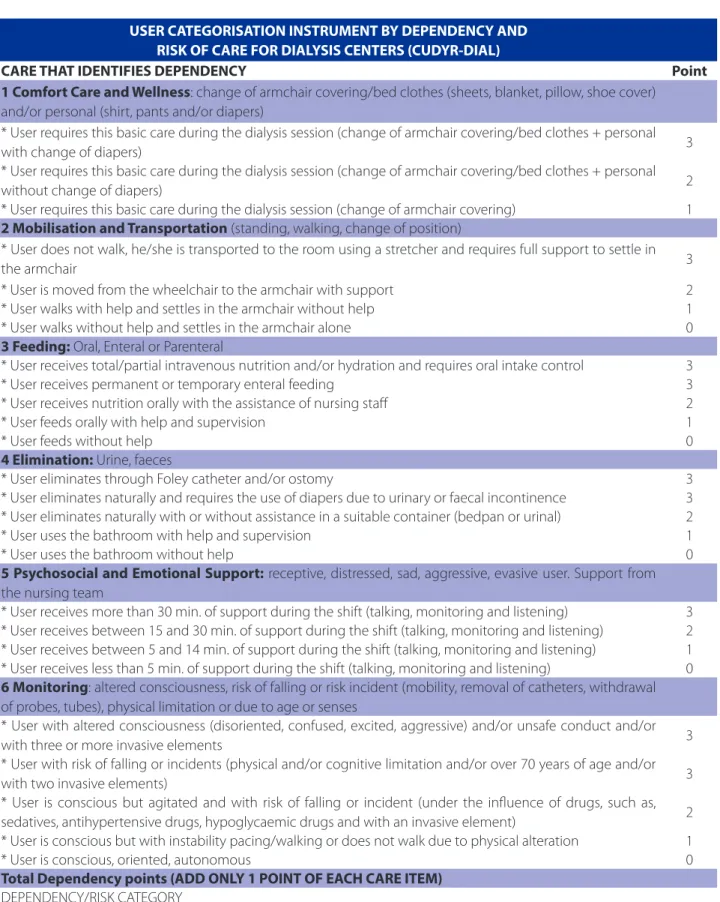
ex-USER CATEGORISATION INSTRUMENT BY DEPENDENCY AND RISK OF CARE FOR DIALYSIS CENTERS (CUDYR-DIAL)
CARE THAT IDENTIFIES DEPENDENCY Point
1 Comfort Care and Wellness: change of armchair covering/bed clothes (sheets, blanket, pillow, shoe cover) and/or personal (shirt, pants and/or diapers)
* User requires this basic care during the dialysis session (change of armchair covering/bed clothes + personal
with change of diapers) 3
* User requires this basic care during the dialysis session (change of armchair covering/bed clothes + personal
without change of diapers) 2
* User requires this basic care during the dialysis session (change of armchair covering) 1
2 Mobilisation and Transportation (standing, walking, change of position)
* User does not walk, he/she is transported to the room using a stretcher and requires full support to settle in
the armchair 3
* User is moved from the wheelchair to the armchair with support 2 * User walks with help and settles in the armchair without help 1 * User walks without help and settles in the armchair alone 0
3 Feeding: Oral, Enteral or Parenteral
* User receives total/partial intravenous nutrition and/or hydration and requires oral intake control 3 * User receives permanent or temporary enteral feeding 3 * User receives nutrition orally with the assistance of nursing staff 2 * User feeds orally with help and supervision 1
* User feeds without help 0
4 Elimination: Urine, faeces
* User eliminates through Foley catheter and/or ostomy 3 * User eliminates naturally and requires the use of diapers due to urinary or faecal incontinence 3 * User eliminates naturally with or without assistance in a suitable container (bedpan or urinal) 2 * User uses the bathroom with help and supervision 1
* User uses the bathroom without help 0
5 Psychosocial and Emotional Support: receptive, distressed, sad, aggressive, evasive user. Support from the nursing team
* User receives more than 30 min. of support during the shift (talking, monitoring and listening) 3 * User receives between 15 and 30 min. of support during the shift (talking, monitoring and listening) 2 * User receives between 5 and 14 min. of support during the shift (talking, monitoring and listening) 1 * User receives less than 5 min. of support during the shift (talking, monitoring and listening) 0
6 Monitoring: altered consciousness, risk of falling or risk incident (mobility, removal of catheters, withdrawal of probes, tubes), physical limitation or due to age or senses
* User with altered consciousness (disoriented, confused, excited, aggressive) and/or unsafe conduct and/or
with three or more invasive elements 3
* User with risk of falling or incidents (physical and/or cognitive limitation and/or over 70 years of age and/or
with two invasive elements) 3
* User is conscious but agitated and with risk of falling or incident (under the influence of drugs, such as, sedatives, antihypertensive drugs, hypoglycaemic drugs and with an invasive element) 2 * User is conscious but with instability pacing/walking or does not walk due to physical alteration 1
* User is conscious, oriented, autonomous 0
Total Dependency points (ADD ONLY 1 POINT OF EACH CARE ITEM)
DEPENDENCY/RISK CATEGORY
Figure 1 – Care that identifies dependency in the Brazilian Portuguese version of the CUDYR-DIAL instrument. Porto Alegre, 2015
SPECIFIC NURSING CARE THAT IDENTIFIES RISK Point 7 Daily Measuring of Vital Signs (2 or more simultaneous parameters): Blood pressure, body temperature, heart rate, respiratory rate, level of pain and others
*Control 11 times or more (pre-dialysis/scheduled time/post-dialysis) 3
*Control 7 to 10 times (pre-dialysis/scheduled time/post-dialysis) 2
*Control 4 to 6 times (pre-dialysis/scheduled time/post-dialysis) 1
8 Volume Control: Weight control, modification of original programming, inputs and outputs measurement (water balance) performed by professionals (nurse, physician, nutritionist) during the dialysis session
*Volume control 6 times or more (pre-dialysis/scheduled time/post-dialysis) 3
*Volume control 3 to 5 times (pre-dialysis/scheduled time/post-dialysis) 2
*Volume control twice (pre-dialysis/scheduled time/post-dialysis) 1
9 Oxygen Therapy: via for tracheostomy tube, tracheal tube, mask, nasal catheter or glasses
*Administration of oxygen via tracheal cannula tube 3
*Administration of oxygen via face mask 2
*Administration of oxygen by nasal cannula 1
*No oxygen therapy 0
10 Management of Vascular Access (AV fistula, graft and temporary and/or permanent venous catheter) Complications (haematoma, collapsing lines, clotting, etc.)
*Connection/disconnection of the dysfunctional catheter (collapsing lines, breakage of catheter tube and clotting) 3
*Connection/disconnection of the AV fistula (arteriovenous fistula) or graft with complications (haematoma, collapsing lines, rupture of lines and/or capillaries, etc.) 3 *Connection/disconnection of the central venous catheter (temporary or permanent) without difficulty 2
* Connection/disconnection of the AV fistula or graft without complications 1
11 Professional Interventions (Tests, invasive procedures, such as insertion of peripheral intravenous catheter, removal of central venous catheter, etc. Connection and disconnection of the dialysis machine are considered separately. Does not include management of vascular access)
*One or more invasive procedures performed by the physician during the dialysis shift (suture to fix the catheter
or removal of catheter) 3
*Three or more invasive procedures performed by the nurse during the dialysis shift 3
*Two invasive procedures performed by nurses during the dialysis shift 2
*One invasive procedure performed by nurses during the dialysis shift 1
12 Skin Care and Dressings: Prevention of skin lesions and bandages or reinforcement of dressing for AV fistula and catheter
*Dressing with complex technique (diabetic foot, chronic wounds) 3
*Dressing of temporary or permanent central venous catheter or covering the puncture site with sterile gauze or dressing one or more times with sterile technique 3 *Dressing vascular access or covering the puncture site with sterile gauze or dressing three or more
times during dialysis without a complex technique 2
*Dressing or covering the puncture site with sterile gauze or dressing once or twice during dialysis
without a complex technique 1
13 Administration of Pharmacological Treatment: via injectable IV, injectable non-IV and other means such as oral, ocular, air/mist, etc.
*Treatment with three or more intravenous injectable drugs during the dialysis session (Heparin, Iron and Antibiotics) 3
*Treatment with two intravenous drugs during the dialysis session (Heparin, Iron) 3
*Treatment with one intravenous drug (Heparin) and four or more drugs administered using other
*Treatment with one intravenous drug (Heparin) and two or three drugs administered using other
methods (SC, oral, ocular,) during the dialysis session 2
*Treatment with one intravenous drug (Heparin) and one drug administered using another method
(SC, oral, ocular,) during the dialysis session 1
*Treatment with one intravenous drug (Heparin) during the dialysis session 1
14 Presence of Invasive Elements: Catheters and central and/or peripheral vascular access. Management of urinary and digestive permanent catheters
*With central venous access and one or more peripheral venous accesses (arterial or venous catheter) and other
invasive element (catheters, drains, others) 3
*With one central intravenous access and/or one or more high-flow peripheral venous accesses
(arterial or venous catheter) 3
*With two large calibre peripheral venous accesses (arterial or venous catheter) 2
*With one or more low calibre peripheral venous accesses 1
Total Risk points (ADD ONLY 1 POINT OF EACH CARE ITEM)
DEPENDENCY/RISK CATEGORY
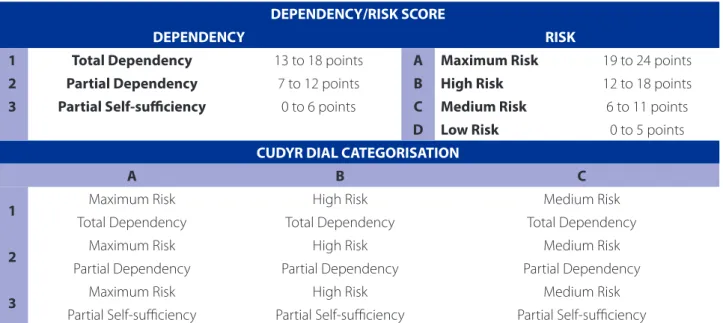
Figure 2 – Specific nursing care that identifies risk in the Brazilian Portuguese version of the CUDYR-DIAL instrument. Porto Alegre, 2015
Source: Research information, 2015.
DEPENDENCY/RISK SCORE
DEPENDENCY RISK
1 Total Dependency 13 to 18 points A Maximum Risk 19 to 24 points
2 Partial Dependency 7 to 12 points B High Risk 12 to 18 points
3 Partial Self-suiciency 0 to 6 points C Medium Risk 6 to 11 points
D Low Risk 0 to 5 points
CUDYR DIAL CATEGORISATION
A B C
1 Maximum Risk High Risk Medium Risk
Total Dependency Total Dependency Total Dependency
2 Maximum Risk High Risk Medium Risk
Partial Dependency Partial Dependency Partial Dependency
3 Maximum Risk High Risk Medium Risk
Partial Self-sufficiency Partial Self-sufficiency Partial Self-sufficiency
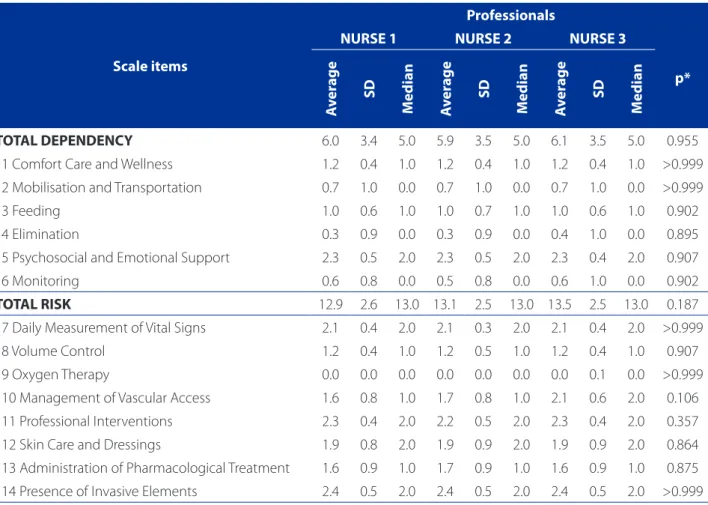
Figure 3 – Score and categorisation of patients according to dependency and risk - CUDYR - DIAL, Brazilian Portuguese version. Porto Alegre, 2015
Source: Research information, 2015.
tensive knowledge of Portuguese. In this step, the translators were unaware of the purpose of the study. The translations were used to create instruments BT1 and BT2.
In step 4, all the instruments produced in the previous steps (T1, T2, T-12, BT1 and BT2) were reviewed and eval-uated by a committee of experts in the joint meeting to
with knowledge of the methodological framework (trans-cultural translation of instruments) - three nurses - one with a master’s degree and two with specialisation in nursing in Nephrology – with proved experience in haemodialysis units in Brazil, a translator with knowledge of the subject and of Linguistics, and a nursing faculty member from Chile with knowledge of the instrument in the Spanish ver-sion and with experience in haemodialysis units.
For Step 5 (pre-test), five nurses who work at the hae-modialysis units of the São Lucas Hospital of the Pontifícia Universidade Católica do Rio Grande do Sul HSL/PUCRS were included, and the Brazilian Portuguese version of the instrument was evaluated in terms of clarity and under-standing.
The final version of the CUDYR-DIAL instrument trans-lated and adapted to Brazilian Portuguese - resulting from steps 4 and 5 - and the Spanish version were forwarded to the main author of the original instrument. Once the trans-lations were analysed to detect differences and similarities between the original and the adapted version, approval was obtained for the Brazilian Portuguese translation (Step 6).
To assess reliability, the final version of the CUDYR-DI-AL translated into Brazilian Portuguese was applied to 78 patients of the haemodialysis units of the HSL/PUCRS who accepted to participate in this study. Each patient was si-multaneously and independently evaluated by three pro-fessional nurses who did not communicate with each oth-er. Application of the instrument did not generate any risk to the patient because the data are based on the routine work of the nursing care unit, i.e. use of the CUDYR-DIAL in-strument did not involve any procedure or function activ-ity. The results were analysed using descriptive (frequency and variability) and analytical statistics. Instrument reliabil-ity was measured by means of internal consistency using Cronbach’s alpha. Consistency between the evaluators/ judges during the application of the scale was analysed us-ing Fleiss’s kappa accordus-ing to the followus-ing classification: 0 = poor; 0 to 0.20 = weak; 0.21 to 0.40 = probable; 0.41 to 0.60 = moderate; 0.61 to 0.80 = substantial and 0.81 to 1.00 = almost perfect(11). The Intraclass Correlation Coefficient
(ICC) was used to assess the estimate of the fraction of total and individual variability of responses between the evalua-tors/judges based on the following interpretations:< 0.4 – poor; ≥ 0.4 and < 0.75 – satisfactory and ≥ 0.75 excellent(11).
For the realisation of the project, the main author of the CUDYR-DIAL instrument authorised the translation and cross-cultural adaptation of the instrument to Brazilian Portuguese via email. The research project was approved by the research ethics committee of the PUCRS under Protocol CAAE 19001313.7.0000.5336 in 08/10/2013. All
participants of the committee of experts, the nurses of the pre-test stage and the nurses and patients of the validation stage signed an informed consent statement.
RESULTS
The final version of the instrument translated into and adapted to Brazilian Portuguese is presented in Figures 1 and 2. Scoring and categorisation of the patients are shown in Figure 3.
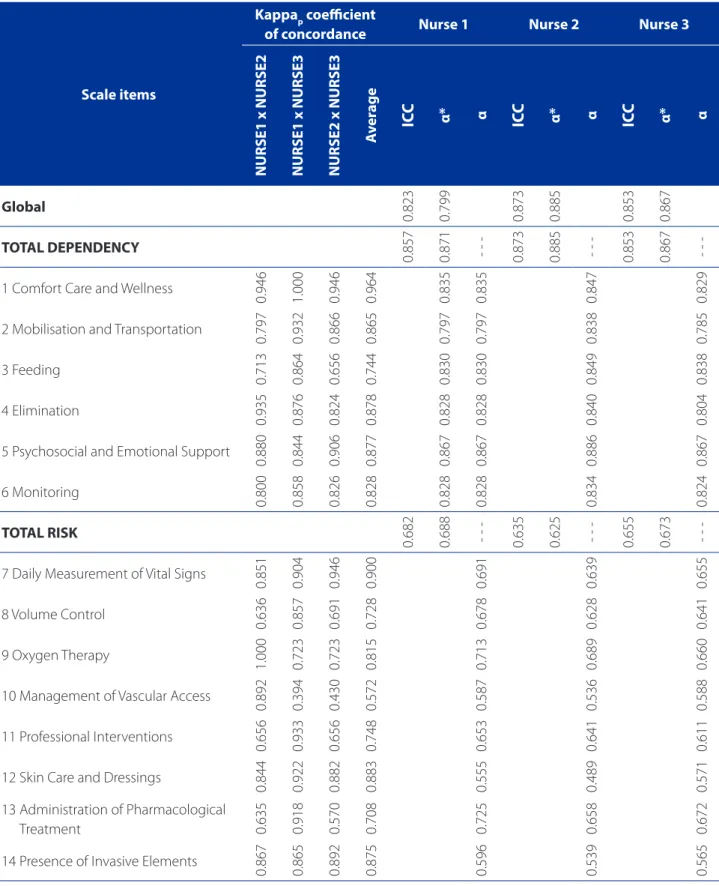
The results of the pre-test stage refer to a sample of three professionals who applied the Brazilian Portuguese version of the CUDYR-DIAL to 78 subjects. In the compar-ison of the average scores (medians) of each item, the re-sults did not reveal statistically significant differences in the data of the three evaluators. The most significant variation occurred in the item Management of vascular access (p = 0.106), in which nurse 3 presented the highest scores (2.1 ± 0.6; median: 2.0) in comparison with nurse 1 (1.6 ± 0.8; median: 1.0) and 2 (1.7 ± 0.8; median: 1.0). However, the scores were not high enough to be considered significant. Thus, there is no evidence that the professionals scored dif-ferently in the items of the scale (Table 1).
Correlation analysis by means of cross-comparison be-tween the evaluators in each item sought to determine the association between the classifications of the professionals and consequently identify the reliability and objectivity of the data. According to the results, all the estimates were significant and positive. The coefficients ranged from 0.674 to 1.000 and the comparison between nurse 1 and nurse 3 concentrated the greatest coefficients, which points to a higher level of association between the scores. The lowest coefficients were for nurse 2 and nurse 3, which reveals a weaker association between the results of these two pro-fessionals.
In relation the estimates obtained for the weighted kappa coefficient (since these variables have ordinal re-sponses), all the coefficients were significant and positive and most of the coefficients were above the minimum ac-ceptable criteria, 0.600.
Table 1 – Score of the domains and their items on the scale presented as average, standard deviation and median for the three professionals. Porto Alegre/RS, Brazil. n = 78 patients
Scale items
Professionals
NURSE 1 NURSE 2 NURSE 3
p*
A
v
er
age
SD
M
edian
A
v
er
age
SD
M
edian
A
v
er
age
SD
M
edian
TOTAL DEPENDENCY 6.0 3.4 5.0 5.9 3.5 5.0 6.1 3.5 5.0 0.955
1 Comfort Care and Wellness 1.2 0.4 1.0 1.2 0.4 1.0 1.2 0.4 1.0 >0.999 2 Mobilisation and Transportation 0.7 1.0 0.0 0.7 1.0 0.0 0.7 1.0 0.0 >0.999
3 Feeding 1.0 0.6 1.0 1.0 0.7 1.0 1.0 0.6 1.0 0.902 4 Elimination 0.3 0.9 0.0 0.3 0.9 0.0 0.4 1.0 0.0 0.895
5 Psychosocial and Emotional Support 2.3 0.5 2.0 2.3 0.5 2.0 2.3 0.4 2.0 0.907 6 Monitoring 0.6 0.8 0.0 0.5 0.8 0.0 0.6 1.0 0.0 0.902
TOTAL RISK 12.9 2.6 13.0 13.1 2.5 13.0 13.5 2.5 13.0 0.187
7 Daily Measurement of Vital Signs 2.1 0.4 2.0 2.1 0.3 2.0 2.1 0.4 2.0 >0.999 8 Volume Control 1.2 0.4 1.0 1.2 0.5 1.0 1.2 0.4 1.0 0.907
9 Oxygen Therapy 0.0 0.0 0.0 0.0 0.0 0.0 0.0 0.1 0.0 >0.999 10 Management of Vascular Access 1.6 0.8 1.0 1.7 0.8 1.0 2.1 0.6 2.0 0.106 11 Professional Interventions 2.3 0.4 2.0 2.2 0.5 2.0 2.3 0.4 2.0 0.357
12 Skin Care and Dressings 1.9 0.8 2.0 1.9 0.9 2.0 1.9 0.9 2.0 0.864 13 Administration of Pharmacological Treatment 1.6 0.9 1.0 1.7 0.9 1.0 1.6 0.9 1.0 0.875
14 Presence of Invasive Elements 2.4 0.5 2.0 2.4 0.5 2.0 2.4 0.5 2.0 >0.999
Source: Research data, 2015.
* Mann Whitney test
13 (administration of pharmacological treatment), all of which classify concordance as low. As for the other items, the concordances were above the minimum acceptable value (0.600).
Thus, evaluating reliability as a function of the correla-tion coefficient revealed that, in the comparison between the three professionals, all estimates were significant and positive (p<0.001) and in most cases the classification was classified as high (0.600< r <1.000). There is evidence that the professionals presented a high degree of convergence for the scores observed in each item of the instrument. With regard to the analysis of concordance based on the kappa coefficient (weighted) among the professionals, most of the results demonstrated a satisfactory level of concordance, which reflects reliability, as shown in Table 2.
Cronbach’s alpha was calculated for the entirety of each dimension and for the set of items of the scale after
individ-ual exclusion. Determining the Cronbach’s alpha of all the items is a measure of the overall internal consistency; the higher the score, the greater the consistency. In this study, considering the estimate of reliability for the data of each professional, the Cronbach’s alpha for the 14 items of the scale presented a minimum of 0.796 (nurse 2) and a max-imum of 0.799 (nurse 1). In relation to reliability for each dimension, again the three professionals presented similar estimates and the dimension “Total dependency” present-ed the highest reliability, with a Cronbach’s Alpha between 0.867 (nurse 3) and 0.885 (nurse 2). For the dimension “Total risk”, the reliabilities were lower, but above the minimum acceptable level, with the minimum of 0.625 (nurse 2) and a maximum of 0.688 (nurse 1).
Table 2 – Analysis of correlation between evaluators and reliability of each item of the CUDYR-DIAL, Brazilian Portuguese version. Porto Alegre/RS, Brazil. n = 78 patients
Scale items
Kappap coeicient
of concordance Nurse 1 Nurse 2 Nurse 3
NURSE1 x NURSE2 NURSE1 x NURSE3 NURSE2 x NURSE3
A
v
er
age
ICC α* α ICC α* α ICC α* α
Global
0.823 0.799 0.873 0.885 0.853 0.867
TOTAL DEPENDENCY
0.857 0.871 - - - 0.873 0.885 - - - 0.853 0.867
-1 Comfort Care and Wellness
0.946 1.000 0.946 0.964 0.835 0.835 0.847 0.829
2 Mobilisation and Transportation
0.797 0.932 0.866 0.865 0.797 0.797 0.838 0.785
3 Feeding
0.713 0.864 0.656 0.744 0.830 0.830 0.849 0.838
4 Elimination
0.935 0.876 0.824 0.878 0.828 0.828 0.840 0.804
5 Psychosocial and Emotional Support
0.880 0.844 0.906 0.877 0.867 0.867 0.886 0.867
6 Monitoring
0.800 0.858 0.826 0.828 0.828 0.828 0.834 0.824
TOTAL RISK
0.682 0.688 - - - 0.635 0.625 - - - 0.655 0.673
-7 Daily Measurement of Vital Signs
0.851 0.904 0.946 0.900 0.691 0.639 0.655
8 Volume Control
0.636 0.857 0.691 0.728 0.678 0.628 0.641
9 Oxygen Therapy
1.000 0.723 0.723 0.815 0.713 0.689 0.660
10 Management of Vascular Access
0.892 0.394 0.430 0.572 0.587 0.536 0.588
11 Professional Interventions
0.656 0.933 0.656 0.748 0.653 0.641 0.611
12 Skin Care and Dressings
0.844 0.922 0.882 0.883 0.555 0.489 0.571
13 Administration of Pharmacological
Treatment 0.635 0.918 0.570 0.708 0.725 0.658 0.672
14 Presence of Invasive Elements
0.867 0.865 0.892 0.875 0.596 0.539 0.565
Source: Research data, 2015.
(α > 0.600), but both showed coefficients above the min-imum acceptable level. With the Cronbach’s alpha of the instrument very close to 0.800 and the Intraclass Correla-tion Coefficient for the total instrument in the same thresh-old (indicating an “almost perfect” concordance), there is evidence that the instrument has good levels of reliability based on the data of the three professionals, which also indicates that the instrument can reproductively measure the investigated information.
DISCUSSION
The study describes the initial stage of the translation and cross-cultural adaptation of the instrument that cate-gorises the level of dependency and risk of haemodialysis patients. This process requires more than the idiomatic and semantic considerations, and implies the use of knowledge regarding the care of patients undergoing haemodialysis in order to reach the essence that guarantees the quality of information.
The CUDYR-Dial was created to assess the degree of dependency and risk of patients undergoing haemodi-alysis. The translation and adaptation of this instrument aimed to fill an existing gap in the area of care for haemo-dialysis patients in Brazil and comply with the new clinical care and safety guidelines for patients with chronic kid-ney disease(8,12-13).
In situations where different evaluators observe be-haviours, conduct trials or make calculations using the same instructions and training, reliability can be measured using the coefficient of linear correlation and by estimating the kappa coefficient of concordance.
Interobserver reliability is a fundamental property that must be tested since the CUDYR-DIAL is a clinical assess-ment instruassess-ment that depends on direct observation and the appropriate recording of variables, i.e. the lower the variation produced in repeated measurements, the higher the reliability. In this study, interobserver reliability was test-ed on all items of the Brazilian Portuguese version of the scale and all the estimates proved to be statistically signifi-cant and positive. For the dimension dependency and risk, the Cronbach’s alpha of the instrument was very close to 0.800, which is similar to the original validation that ranged from 0.80 to 0.87(7).
Two items, 10 and 14, showed less concordance among nurses; however, most of the results demonstrat-ed a degree of satisfactory concordance, which reflects the reliability of the instrument. Item 10 refers to dysfunction-al vascular access, collapsing vascular access lines with or without altering the blood flow or other characteristics,
and also occurred in the original instrument(7). Item 14
re-fers to the presence of invasive elements, which may have passed unnoticed by one of the evaluators, thus reinforc-ing the importance of the point described in literature re-garding the thorough training of examiners before using the test(14).
The reproducibility index was considered adequate and similar to that of other studies on the translation and cross-cultural adaptation of foreign instruments to the Bra-zilian reality(15-16).
As commented in another study(17), the lack of a
validat-ed Brazilian scale to assess the degree of dependence and risk of patients in haemodialysis is a fragility of the valida-tion process.
Since haemodialysis involves the extra-body depu-ration of blood, it exposes patients to risk. Therefore, one of the functions of nurses is to reduce risk and guarantee patient safety(18-19). Part of this process involves ensuring
a proper workload for nursing professionals to meet and cope with patient demands(18). This adjustment must take
into account the degree of dependency and risk to which the patient is exposed. Studies conducted in dialysis units show that adherence to hand washing, change of gloves between procedures and patients decreases as the work-load increases(18-20).
Laws that establish the criteria for organising the care of patients with chronic kidney disease determines the number of patients for each professional, but do not con-sider the demands of patient care. This ground-breaking instrument for the specific evaluation of patients in dial-ysis will provide a new outlook for managing patients in haemodialysis units(8). Assessing the risk and dependency
of these patients contributes to patient safety and reduces the morbidity of therapy.
CONCLUSIONS
The instrument was translated, but none of the terms required a cultural adaptation. The instrument offers an ad-equate level of reliability. The validation of this instrument is in progress. When it is widely available, it will help qualify the care of patients undergoing haemodialysis. The systematic assessment offered by the instrument helps to identify the care needs of patients and increases the safety of care.
The CUDYR-DIAL enables the categorisation of patients and provides fundamental elements for managing care based on the sizing of nursing staff according to the de-gree of patient dependency on nursing care and the risks to which patients are subjected.
REFERENCES
1. Sesso RC, Lopes AA, Thome FS, Lugon JR, Watanabe Y, Santos DR. Relatório do censo brasileiro de diálise crônica 2012. J Bras Nefrol. 2014;36(1):48-53. 2. Brown EA, Johansson L. Epidemiology and management of end-stage renal
disease in the elderly. Nature Rev Nephrol. 2011;7(10):591-8.
3. Perroca MG, Gaidzinski RR. Sistema de classificação de pacientes: construção e validação de um instrumento. Rev Esc Enferm USP. 1998;32(2):153-68. 4. Vieira KL, Urbanetto JS, Figueiredo AE. Methods used for determining nurse
downsizing: an integrative review. Open J Nurs. 2015;5(2):129-35.
5. Cobo Sánchez JL, Pelayo Alonso R, Sánchez Cano M, Alonso Nates R, Menezo Viadero R, Gándara Revuelta M, et al. Repercusión del grado de dependencia de los pacientes en hemodiálisis sobre la carga de trabajo de enfermería. Rev Soc Esp Enferm Nefrol. 2008;11(1):6-11.
6. Arenas M, Alvarez-Ude F, Angoso M, Berdud I, Antolin A, Lacueva J, et al. [Func-tional dependency evaluation of hemodialysis patients: a multicentric study]. Nefrologia. 2005;26(5):600-8.
7. Arechabala-Mantuliz MC, Barrios-Araya SC, Catoni-Salamanca MI, Palma-Cas-tro EE, Ibacache Celedón Y, Richards JA. Validation of an instrument to measure care according to patient dependency and risk in chronic hemodialysis therapy. Aquichán. 2014;14(4):473-84.
8. Ministério da Saúde (BR). Portaria nº 389, de 13 de março de 2014. Define os critérios para a organização da linha de cuidado da Pessoa com Doença Renal Crônica (DRC) e institui incentivo financeiro de custeio destinado ao cuidado ambulatorial pré-dialítico. Diário Oficial da União da República Federativa do Brasil. 2014 mar 14 [citet 2015 sept 25];151(50 Seção I):34-7. Available at: http://pesquisa.in.gov.br/imprensa/jsp/visualiza/index.jsp?data=14/03/2014 &jornal=1&pagina=34&totalArquivos=164.
9. Conselho Federal de Enfermagem (BR). Resolução nº 293/04. Fixa e estabelece parâmetros para dimensionamento do quadro de profissionais de enfermagem nas instituições de saúde. Conselho Regional de Enfermagem, 2004 [cited 2014 jul 04]. Available at: http://www.corensp.org.br/resolucao293.
10. Beaton DE, Bombardier C, Guillemin F, Ferraz MB. Guidelines for the process of cross-cultural adaptation of self-report measures. Spine. 2000;25(24):3186-91. 11. Landis JR, Koch GG. The measurement of observer agreement for categorical
data. Biometrics. 1977;33(1):159-74.
12. Ministério da Saúde (BR). Portaria n. 529, de 1º de abril de 2013. Institui o Programa Nacional de Segurança do Paciente (PNSP) [Internet]. Brasília (DF); 2013. Available at: http://bvsms.saude.gov.br/bvs/saudelegis/gm/2013/ prt0529_01_04_2013.html.
13. Flynn LR, editor. Nurse manager safety practices in outpatient hemodialysis units. In: 48th Annual Communicating Nursing Research Conference: Equity and Access: Nursing Research, Practice, and Education; 2015 April 22-25; Albuquerque, US. 14. Giusti E, Befi-Lopes DM. Tradução e adaptação transcultural de instrumentos
estrangeiros para o Português Brasileiro (PB). Pró-Fono. 2008;20(3):207-10. 15. Torres HC, Hortale VA, Schall VT. Validação dos questionários de
conheci-mento (DKN-A) e atitude (ATT-19) de diabetes mellitus. Rev Saúde Pública. 2005;39(6):906-11.
16. Schulz RB, Rossignoli P, Correr CJ, Fernández-Llimós F, Toni PMd. Validação do mini-questionário de qualidade de vida em hipertensão arterial (MINICHAL) para o português (Brasil). Arq Bras Cardiol. 2008;90(2):139-44.
17. Teixeira PC, Hearst N, Matsudo SMM, Cordás TA, Conti MA. Adaptação transcul-tural: tradução e validação de conteúdo da versão brasileira do Commitment Exercise Scale. Rev Psiq Clín. 2011;38(1):24-8.
18. Thomas-Hawkins C, Flynn L, Lindgren TG, Weaver S. Nurse manager safety prac-tices in outpatient hemodialysis units. Nephrol Nurs J. 2015;42(2):125-33, 47; quiz 34.
19. Ulrich B, Kear T. Patient safety culture in nephrology nurse practice settings: results by primary work unit, organizational work setting, and primary role. Nephrol Nurs J. 2015;42(3):221-36; quiz 37.
20. Shimokura G, Weber DJ, Miller WC, Wurtzel H, Alter MJ. Factors associated with personal protection equipment use and hand hygiene among hemodialysis staff. Am J Infect Control. 2006;34(3):100-7.
Corresponding author:
Ana Elizabeth Prado Lima Figueiredo Email: [email protected]