Inflammation Independently of High Blood Pressure
Yanrong Zhang1, Santiago Cuevas1, Laureano D. Asico1, Crisanto Escano1, Yu Yang1,
Annabelle M. Pascua1, Xiaoyan Wang1, John E. Jones1, David Grandy2, Gilbert Eisner3, Pedro A. Jose1, Ines Armando1*
1Division of Nephrology, Department of Medicine, School of Medicine, University of Maryland, Baltimore, Maryland, United States of America,2Department of Physiology and Pharmacology, Oregon Health and Science University, Portland, Oregon, United States of America,3Department of Medicine, Georgetown University Medical Center, Washington DC, United States of America
Abstract
Renal dopamine receptors participate in the regulation of blood pressure. Genetic factors, including polymorphisms of the dopamine D2receptor gene (DRD2)are associated with essential hypertension, but the mechanisms of their contribution
are incompletely understood. Mice lackingDrd2 (D22/2) have elevated blood pressure, increased renal expression of
inflammatory factors, and renal injury. We tested the hypothesis that decreased dopamine D2 receptor (D2R) function
increases vulnerability to renal inflammation independently of blood pressure, is an immediate cause of renal injury, and contributes to the subsequent development of hypertension. In D22/2mice, treatment with apocynin normalized blood
pressure and decreased oxidative stress, but did not affect the expression of inflammatory factors. In mouse RPTCsDrd2 silencing increased the expression of TNFa and MCP-1, while treatment with a D2R agonist abolished the angiotensin
II-induced increase in TNF-a and MCP-1. In uni-nephrectomized wild-type mice, selective Drd2silencing by subcapsular infusion ofDrd2siRNA into the remaining kidney produced the same increase in renal cytokines/chemokines that occurs afterDrd2deletion, increased the expression of markers of renal injury, and increased blood pressure. Moreover, in mice with two intact kidneys, short-term Drd2 silencing in one kidney, leaving the other kidney undisturbed, induced inflammatory factors and markers of renal injury in the treated kidney without increasing blood pressure. Our results demonstrate that the impact of decreased D2R function on renal inflammation is a primary effect, not necessarily associated
with enhanced oxidant activity, or blood pressure; renal damage is the cause, not the result, of hypertension. Deficient renal D2R function may be of clinical relevance since common polymorphisms of the humanDRD2gene result in decreased D2R
expression and function.
Citation:Zhang Y, Cuevas S, Asico LD, Escano C, Yang Y, et al. (2012) Deficient Dopamine D2Receptor Function Causes Renal Inflammation Independently of High Blood Pressure. PLoS ONE 7(6): e38745. doi:10.1371/journal.pone.0038745
Editor:Jean-Claude Dussaule, INSERM, France
ReceivedDecember 15, 2011;AcceptedMay 10, 2012;PublishedJune 14, 2012
Copyright:ß2012 Zhang et al. This is an open-access article distributed under the terms of the Creative Commons Attribution License, which permits unrestricted use, distribution, and reproduction in any medium, provided the original author and source are credited.
Funding:This work was supported in part by grants from the National Institutes of Health, HL068686, HL023081, HL074940, HL092196, DK039308 and DK090918 (www.NIH.gov). The funders had no role in study design, data collection and analysis, decision to publish, or preparation of the manuscript.
Competing Interests:The authors have declared that no competing interests exist. * E-mail: [email protected]
Introduction
Dopamine synthesized in the kidney is necessary for the maintenance of normal blood pressure and renal function [1]. The disruption of any of the dopamine receptor subtype genes in mice produces receptor subtype-specific hypertension [2]. In particular, the hypertension in mice with disruption of the dopamine D2 receptor (Drd2) gene (D22/2) is associated with
increased production of reactive oxygen species (ROS) [3,4]. Infiltration of inflammatory cells and oxidative stress in the kidney are involved in the development of renal injury and the induction and maintenance of hypertension [5]. Renal tubule cells produce both pro- and anti-inflammatory cytokines and chemo-kines [6], which are secreted across their apical and basolateral membranes [7], and contribute to the development and pro-gression of glomerular and tubular injury. However, the factors that regulate cytokine production in these cells are incompletely understood. Dopamine and dopaminergic drugs have been shown to regulate the immune response and the inflammatory reaction
[8]. Dopamine inhibits the release of IFNc, IL-2, and IL-4 [9] and the lipopolysaccharide-stimulated production of IL-12p40 [10] in immune cells. Administration of dopamine or dopaminergic agonists in vivo reduces the TNFa response to endotoxin [11]
and the activation of leukocytes in experimental sepsis [12]. Conversely, treatment with a dopaminergic antagonist stimulates constitutive and inducible gene expression of IL-1b, IL-6, and TNFain macrophages [13]. In brain-dead rats, a condition that is associated with profound inflammation in end-organs, dopamine reduces renal monocyte infiltration [14], expression of IL-6, and improves renal function after transplantation [15]. Furthermore, mice with intrarenal dopamine deficiency have increased oxidative stress and infiltration of inflammatory cells [16] and decreased renal dopamine production is associated with increased detrimen-tal effects of Ang II on renal injury [17].
The anti-inflammatory effects of dopamine and dopaminergic agonists are mediated, at least in part, by the D2R. D2Rs are
bromocriptine, inhibits lymphocyte proliferation [19] and de-creases antigen-induced macrophage activation and secretion of IL-2, IL-4, and IFNc[11]. In normal human lymphocytes, D2R
agonists increase the secretion of anti-inflammatory cytokines by
de novo gene expression [20]. GLC756, a novel mixed dopamine
D1R antagonist and D2R agonist, inhibits the release of TNFa
from activated mast cells [21].
We hypothesized that the D2R decreases renal inflammation
and prevents renal injury by regulating the inflammatory response in renal proximal tubule cells (RPTCs). To test this hypothesis, we studied parameters of inflammation and injury in the renal cortex of D22/2mice and the effect of D2R silencing on the expression
of inflammatory factors in mouse RPTCs. Because angiotensin (Ang) II and dopamine receptors counter-regulate each other and Ang II, via the AT1R, promotes inflammation and renal injury
[17,18,22], we also determined if stimulation of D2R opposes the
effects of Ang II in these cells. Because D2R deficiency increases
blood pressure and oxidative stress, we studied the effects of normalizing blood pressure and decreasing oxidative stress on the renal expression of cytokines/chemokines in D22/2 mice.
Finally, we studied renal expression of inflammatory factors and markers of renal injury in two mouse models of selective Drd2
silencing in the kidney.
Methods
D2Receptor-deficient Mice
The original F2 hybrid strain (129/SvXC57BL/6J, Oregon Health Sciences University) that contained the mutatedDrd2allele
(D22/2) was bred onto the C57BL/6J background for .20
generations [3]. All animal-related studies were approved by the Institutional Animal Care and Use Committee. D22/2mice and
wild-type littermates (D2+/+) were studied at 6 to 8 months of age.
Mice were housed in metabolic cages for 24 h urine collection and then anesthetized for blood pressure measurement via the femoral artery, as reported previously [4]. The organs were harvested and flash-frozen. As we have reported previously [4], both systolic (12163 (D22/2) vs. 89 (D2+/+) mm Hg; n = 9; P,0.01) and
diastolic blood pressures (8762 (D22/2) vs. 6365 (D2+/+) mm
Hg; n = 9; P,0.02), were increased in D22/2 mice, relative to
D2+/+littermates. A group of mice was treated for 10 days with
apocynin (3 mg/kg/day, Sigma, St. Louis, MO), which inhibits NADPH oxidase activity, or vehicle, via a subcutaneously implanted osmotic mini-pump (AlzetH, Cupertino, CA). Urine collection, blood pressure measurement and tissue harvesting were performed as described above.
Acute Renal Specific Down-regulation of D2R
Renal corticalDrd2was silenced by the subcapsular infusion of Drd2-specific siRNA via an osmotic minipump. Adult male
C57BL/6J mice were uni-nephrectomized one week prior to the implantation of the minipump. For the implantation, the mice were anesthetized with pentobarbital (50 mg/kg body weight, intraperitoneally). The osmotic minipumps (100ml; flow rate: 0.5ml/hr for 7 days) were filled with validated Drd2-specific
siRNA (delivery rate 3mg/day) or non-silencing siRNA as control. The siRNAs were dissolved in an in vivo transfection reagent
(TransITH In Vivo Gene Delivery System, Mirus) under sterile conditions. The minipumps were fitted with a polyethylene delivery tubing (Alzet#0007701) and the tip of the tubing was inserted within the subcapsular space of the remaining kidney. Surgical glue was applied at the puncture site to hold the tubing in place and prevent extra-renal leakage. The osmotic pump was
Figure 1. Renal inflammation and injury in D22/2mice.Masson stained sections of D2+/+mouse kidney (AandB) and D22/2mouse
kidney (CandD). H-E stained sections of D2+/+mouse kidney (E) and
D22/2 mouse kidney (F). G: glomerulus. PCT: proximal convoluted tubule. Proteinaceous casts are marked with arrows (F). Sections from 3 mouse kidneys per group were studied.Gand H: Inflammatory cell infiltration. Kidney sections from D2+/+(G) and D22/2(H) mice were
immunostained for the presence of macrophages and monocytes (arrows). The number of positive cells in 10 randomly selected fields was greater in D22/2(6863) than in D2+/+(1561, P,0.01) mice. Sections from 3 mouse kidneys per group were studied. I. Renal cortical expression of Col 1a1 mRNA determined by qRT-PCR. Results were corrected for expression of GAPDH mRNA and expressed as fold change in comparison to their expression in D2+/+mice. *P,0.05 vs D2+/+;
n = 5/group.J. Urinary microalbuminuria. Urine samples were collected for 24 h from mice in metabolic cages. Albumin was measured by ELISA. *P,0.04 vs. D2+/+; n = 5/group. Magnification: A and C: 100X; B,
D, G and H: 400X; E-F: 200X.
sutured to the abdominal wall to prevent excessive movement of the pump for the duration of the study.
Silencing of Drd2 was also performed in mice that did not
undergo unilateral nephrectomy.Drd2-specific siRNA was infused,
as described above, under the capsule of the left kidney of C57BL/ 6J mice while the right kidney was left undisturbed. In both groups, blood pressure was measured, as above, before and after
the 7-day siRNA infusion. Tissues were harvested after the last blood pressure determination.
Urine Measurements
Urinary levels of IL-6 and IL-10 (SABiosciences-Qiagen, Frederick, MD) and albumin (Albuwell M, Exocell, Philadelphia, PA) were determined by ELISA, the latter using an antibody specific for murine albumin. Values were corrected for urinary creatinine.
Table 1.Gene expression profiling of cytokines, chemokines and receptors in the kidney of D2+/+and D22/2mice.
Genes
Fold change
Up-regulated
Ccl2 Chemokine (C-C motiv) ligand 2 (MCP-1) 1.87
Ccl8 Chemokine (C-C motiv) ligand 8 (MCP-2) 1.95
Ccl7 Chemokine (C-C motiv) ligand 7 (MCP-3) 2.19
Ccl12 Chemokine (C-C motiv) ligand 12 (MCP-4) 2.78
Tnfa Tumor necrosis factor alpha 1.65
Lta Lymphotoxina(Lta/TNFb) 1.41
Ltb Lymphotoxinb(Ltb/TNF C) 2.02
Cxcr5 Chemokine (C-X-C motif) receptor 5 2.19
Ccl11 Chemokine (C-C motif) ligand 11 (eotaxin-1) 2.68
Ccl17 Chemokine (C-C motif) ligand 17 2.37
Ccl20 Chemokine (C-C motif) ligand 20 3.09
Ccl25 Chemokine (C-C motif) ligand 25 2.75
Ccr7 Chemokine (C-C motif) receptor 7 2.61
Cxcl9 Chemokine (C-X-C motif) ligand 9 (MIG) 2.16
Ccl5 Chemokine (C-C motif) ligand 5 (RANTES) 1.59
Ccl4 Chemokine (C-C motif) ligand 4 (MIP-a) 1.64
Cxcl10 Chemokine (C-X-C motif) ligand 10 1.72
Cxcl11 Chemokine (C-X-C motif) ligand 11 1.71
Il-10 Interleukin 10 1.78
Il-18 Interleukin 18 2.07
Il-5 ra Interleukin 5 receptor,a 3.13
Down-regulated
Ccl1 Chemokine (C-C motif) ligand 1 22.46
Ccl24 Chemokine (C-C motif) ligand 24 22.00
Ccr1 Chemokine (C-C motif) receptor 1 22.27
Crp C-reactive protein, pentraxin-related 22.49
Pf4 Platelet factor 4 22.03
Cxcl12 Chemokine (C-X-C motif) ligand 12 21.75
Il-11 Interleukin 11 22.02
Il-13 Interleukin 13 23.20
Il-17B Interleukin 17B 23.57
Il-20 Interleukin 20 25.70
Il-3 Interleukin 3 22.36
Il-4 Interleukin 4 21.71
Il-1f6 Interleukin 1 family, member 6 22.43
Il-8rb Interleukin 8 receptor, 23.72
Cd40lg CD40 ligand 22.90
Fold-change was calculated by theDCt method. n = 3/group. doi:10.1371/journal.pone.0038745.t001
Figure 2. Expression of chemokines/cytokines in renal cortex and urine of D22/2mice. A. Expression of Lta, MCP-2, and NFkB1 mRNA was quantified by qRT-PCR; results were corrected for expression of GAPDH mRNA and expressed as fold change in comparison to their expression in D2+/+mice. *P,0.03 vs. D2+/+mice.B. Protein expression
of MCP-1 (17 kDa) and TNFaprotein (25 kDa) was semi-quantified by immunoblotting. Inset shows one set of immunoblots. Results were corrected for expression of actin and expressed as percentage of the expression in D2+/+ mice, *P,0.02 vs. D2+/+ mice, n = 5/group. C.
Protein expression of IL-6 (25 kDa) and IL-10 (20 kDa) protein semi-quantified by immunoblotting. Results were corrected for expression of actin and expressed as percentage of the expression in D2+/+,*P,0.05
vs. D2+/+mice, n = 5/group Urinary excretion of IL-6 and IL-10 was
quantified by ELISA. *P,0.02 vs. D2+/+mice, n = 5/group.
Cell Culture
Undifferentiated mouse cells were cultured from progenitor kidney cells, kindly supplied by Dr. Ulrich Hopfer (Case Western Reserve University, School of Medicine), isolated from mouse embryo kidneys following the procedure described by Woost et al. [23]. Differentiated mouse RPTCs were cultured to 60–70% confluence and transfected (Hyperfect, Qiagen, Valen-cia, CA) with vehicle, non-silencing siRNA (30 nmol/l; All stars, Qiagen) orDrd2 siRNA (30 nmol/l, Qiagen). Cells were studied
after 72 h. For other experiments cells were cultured to 90–95% confluence, serum starved for 2 h and treated for 24 h in serum-free medium with vehicle (PBS) or 100 nmol/l Ang II in the presence or absence of 1mmol/l quinpirole (D2R/D3R
agonist), or 1mmol/l quinpirole plus 1mmol/l L-741,262 (D2R
antagonist) [24].
RNA Extraction and cDNA Preparation
Kidney samples were homogenized, and total RNA was extracted with Trizol (Invitrogen, Carlsbad, CA) and further purified using the RNeasy RNA Extraction Mini kit (Qiagen). RNA samples were converted into first strand cDNA using an RT2 First Strand kit, following the manufacturer’s protocol (SABios-ciences-Qiagen).
Gene Expression Profiling of Inflammatory Cytokines and Receptors
Gene expression analysis was carried out in groups of four mice using an RT2Profiler PCR array system (SABiosciences-Qiagen) that contained a panel of 84 genes. Real-time PCR was performed following the manufacturer’s protocol. Quality controls were all within the recommended range. Data were analyzed by theDCt method [25].
Quantitative Real-time PCR
Quantitative gene expression was analyzed by real-time PCR, performed on an ABI Prism 7900 HT (Applied Biosystems, Foster City, CA). The assay used gene specific primers (SABiosciences-Qiagen) and SYBR Green real-time PCR de-tection method and was performed as described in the manufacturer’s manual. Primers used were as follows: MCP-1: PPM03151F; MCP-2: PPM03165A; TNFa: PPM03113F; Lta: PPM03114A; IL-4: PPM03013E; IL-5ar: PPM03026E; IL-11: PPM03018E; IL-13: PPM03021A; collagen, type 1,a1 (Col 1a1): PPM-3845F; NFkB1: PPM02930E; osteopontin: PPM03648C;
Actin: PPM0294A; GAPDH: PPM02946E. Data were analyzed using theD DCt method [25].
Immunoblotting
Mouse kidney homogenates and cell lysates were subjected to immunoblotting, as reported previously [3,4]. The primary antibodies used were rat anti-mouse TNFa (BioLegend, San Diego, CA), rabbit polyclonal MCP-1 (Millipore, Billerica, CA), rabbit polyclonal IL-6 (Abcam, Cambridge, MA); rabbit poly-clonal D2R (Millipore), and polyclonal anti-actin (Sigma). The
densitometry values were corrected by the expression of GAPDH and are shown as percentage of the mean density of the control group.
Reporter Assay
NFkB activation was analyzed via the transient expression of an NFkB luciferase reporter system by reverse transfection (Cignal Reporter Assay, SABiosciences-Qiagen). Cells were treated with
Drd2-specific siRNA or non-silencing siRNA, as described above.
After 48 h, the cells were trypsinized and seeded for reverse transfection. The assay was performed following the manufac-turer’s procedures.
Histochemistry and Immunohistochemistry
Formalin-fixed, paraffin-embedded tissues of D2+/+and D22/
2mice were stained with Masson trichrome to evaluate glomerular fibrosis and with hematoxylin eosin (H–E) to evaluate tubular damage. The pathological abnormalities were graded in a blinded manner. Sclerosis was defined as collapse or obliteration of the glomerular capillary tuft associated with increased hyaline matrix [26]. Glomerular sclerosis was expressed as the percentage of glomeruli showing more than 25% sclerosis.
Tissue sections were immunostained for the presence of macrophages and monocytes using a specific rat anti-mouse macrophage/monocyte monoclonal antibody (Millipore) and an avidin–biotin immunoperoxidase kit (Vectastain Elite, Vector Laboratories, Burlingame, CA). The kidneys were lightly counter-stained with hematoxylin. The total number of positive cells in 10 randomly selected fields was counted.
Statistical Analysis
Data are mean6SEM. Comparisons between 2 groups used the Student’s t test. One-way ANOVA followed by post-hoc analysis using the Newman–Keuls multiple comparison test was used to assess significant differences among three or more groups. P,0.05 was considered statistically significant.
Results
Renal Injury and Inflammation Occurs in D22/2 Mice
Masson staining of D22/2 mouse kidney sections showed
glomerulosclerosis and dilation of renal tubules (Fig 1C–D). H-E staining showed the presence of tubular proteinaceous casts (Figure 1F). These lesions were not observed in D2+/+ mice (Figure 1A, B,E). The percentage of glomeruli showing more than 25% sclerosis was greater in D22/2 than D2+/+ mice
(3569% vs. 566%, P,0.01). There were more infiltrating macrophages/monocytes in kidney sections from D22/2 mice
(Figure 1H) than D2+/+ mice (Figure 1G (6863 vs.1561
positive cells/10 fields, P,0.01). The level of mRNA expression of Col 1a1 was about 60% higher in renal cortex of D22/2 than
D2+/+mice (Figure 1I). Microalbuminuria, a functional
param-eter of renal damage, was 9-fold higher in D22/2mice than in
D2+/+littermates (Figure 1J).
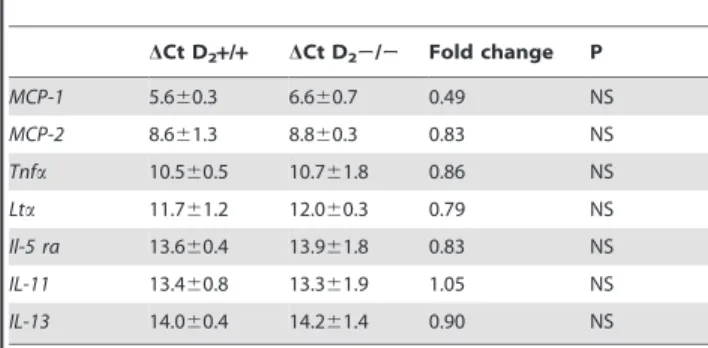
Table 2.Expression of cytokines and chemokines in the heart left ventricle of D2+/+and D22/2mice determined by
qRT-PCR.
DCt D2+/+ DCt D22/2 Fold change P
MCP-1 5.660.3 6.660.7 0.49 NS
MCP-2 8.661.3 8.860.3 0.83 NS
Tnfa 10.560.5 10.761.8 0.86 NS
Lta 11.761.2 12.060.3 0.79 NS
Il-5 ra 13.660.4 13.961.8 0.83 NS
IL-11 13.460.8 13.361.9 1.05 NS
IL-13 14.060.4 14.261.4 0.90 NS
Fold-change was calculated by theDDCt method. Abbreviations as in Table 1. NS = not significant; n = 5/group.
The Expression of Chemokines and Cytokines Involved in Macrophage Recruitment and Inflammation is Increased in the Renal Cortex but not in the Left Ventricle of the Heart of D22/2 Mice
Expression of 84 cytokines and chemokines was analyzed in the renal cortex of D22/2and D2+/+mice using a quantitative
RT-PCR (qRT-RT-PCR) array. Twenty one genes were up-regulated and 15 were down-regulated in D22/2mice (Table 1). Of the genes
that were up-regulated, 10 belong to the C-C subfamily of chemokines, including four of the macrophage chemoattractant group and three of the TNF superfamily. IL-10 and IL-18 genes were also up-regulated. Seven of the 15 down-regulated genes were interleukins (Table 1). Most of the up-regulated chemokines
are inflammatory and belong to the CCL subfamily, involved in macrophage (MCP-1, MIP-1a, RANTES, MCP-2, MCP-5) and/ or T cell (Eotaxin-1, TARC, MIP-3a, CCL-25) recruitment, as opposed to homeostatic [27]. Some of the chemokines, belonging to the CXCL superfamily that attract neutrophils, were also up-regulated (MIG, IP-10, I-TAC) [28]. Three of the four members of the TNF superfamily of inflammatory cytokines were up-regulated, namely TNFa, lymphotoxin-a (Lta), and lympho-toxin-b (TNFb). CD40L, the other member of the superfamily included in the array, was decreased. In contrast to the increased expression of pro-inflammatory chemokines, several anti-inflam-matory interleukins (IL-4, IL-11, IL13, and IL-17B which stimulates IL-11) were decreased, except for IL-10 which was increased (Table 1).
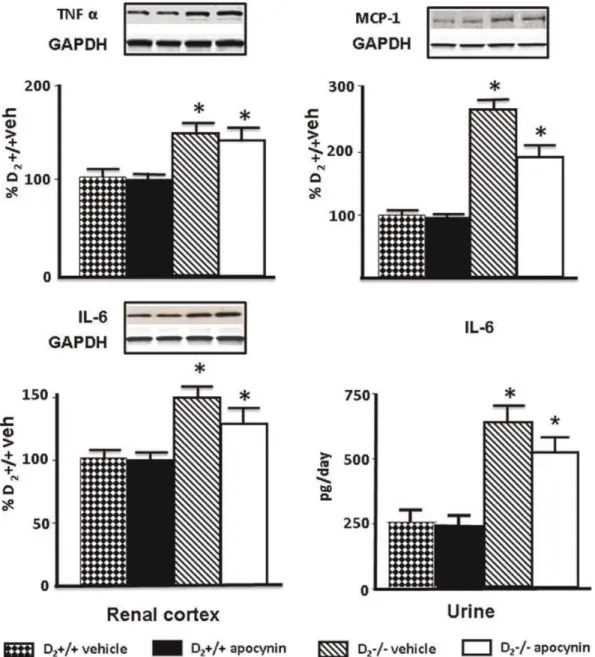
Figure 3. Effect of apocynin on renal cortical expression of TNFa, MCP-1, and IL-6, and urinary excretion of IL-6.Expression of TNFa
(25 kDa) and MCP-1 (17 kDa) protein in renal cortex was semi-quantified by immunoblotting. Inset shows one set of immunoblots. Results were corrected for expression of GAPDH and expressed as percentage of D2+/+mice treated with vehicle, *P,0.05 vs. vehicle or apocynin treated D2+/+;
n = 5/group. Renal expression, semi-quantified by immunoblotting (25 kDa), and urinary excretion of IL-6 quantified by ELISA in 24 h urine samples. Results are expressed as percentage of D2+/+mice treated with vehicle. *P,0.05 vs. vehicle or apocynin treated D2+/+; n = 5/group.
Further experiments were focused on the TNF and MCP families and on IL-6 and IL-10, both of which are downstream TNFa, and on NFkB, which is activated and increased by TNFatranscription [29,30]. IL-6 is involved in the development of renal inflammation and injury [31], and IL-10 has potent anti-inflammatory properties, repressing the expression of TNFa, IL-6, and IL-1 [32]. We also quantified the expression of p50, the DNA binding subunit of NFkB protein complex, a parameter of NFkB activation [33]. Increased renal cortex expression of Lta, MCP-2, and NFkB1 (p50) in D22/2 mice
was confirmed by qRT-PCR and found to be four-, five-, and two -fold higher, respectively, than in D2+/+ (Figure 2A). Increased protein expression of MCP-1 (270630 vs 100615%)
and TNFa (16367 vs 10063%) was confirmed by western blot (Figure 2B). Protein expressions of IL-6 and IL-10 in renal cortex were also increased by about 30% and 60% respectively, and urinary excretion of IL-6 was about three-fold higher while that of IL-10 was about five-fold higher in D22/2 than in
D2+/+ mice (Figure 2C). Decreased renal cortical mRNA expression of IL-4, IL-11, and IL-13 was also confirmed by qRT-PCR (data not shown).
The gene expression of chemokines/cytokines in the heart left ventricle was also determined by qRT-PCR. The expressions of MCP-1, MCP-2, TNFa, and Lta, as well as IL-11, IL-13, and IL-5 receptora, were similar in D22/2and D2+/+mice (Table 2).
This indicated that renal alterations in pro- and anti-inflammatory
Figure 4. D2R function in moue renal proximal tubule cells A.Effect of silencing of D2R on the expression of pro-inflammatory cytokines/
chemokines in mouse RPTCs. Cells were cultured to 60–70% confluence and transfected with non-silencing (NS siRNA) orDrd2siRNA. After 48 h the cells were washed and lysed. Protein expression of D2R (55 kDa), TNFa(25 kDa), and MCP-1(17 kDa) was semi-quantified by immunoblotting. Inset
shows one set of immunoblots. NFkB activation was analyzed via the transient expression of a NFkB-luciferase reporter system by reverse transfection Results are expressed as percentage of NS siRNA or fold activation compared to NS siRNA. *P,0.05 vs. NS (non-silencing) siRNA, n = 4/group.B. Effects of Ang II and D2R stimulation on TNFaand MCP-1 in mouse RPTCs. Cells were serum starved for 2 h before treatment for 24 h in serum-free
medium with vehicle (PBS) or 100 nM Ang II, in the presence or absence of 1mM quinpirole (D2R/D3R agonist) or 1mM quinpirole plus 1mM
L-741,262 (D2R antagonist). Expression of TNFa(25 kDa) and MCP-1 (17 kDa) protein was semi-quantified by immunoblotting. Inset shows one set of
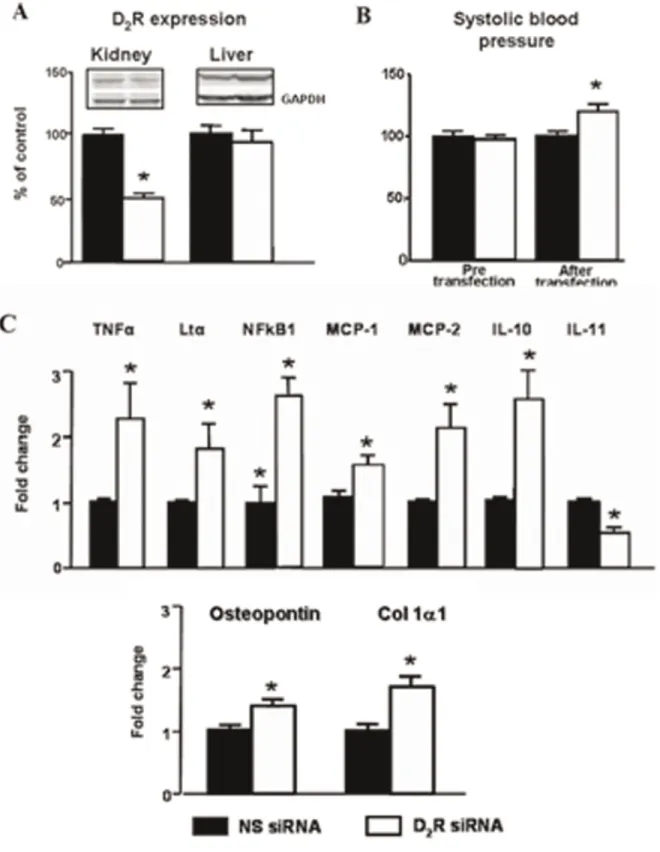
Figure 5. Effect of selective renal silencing of D2R in the remaining kidney of uni-nephrectomized mice on blood pressure and expression on inflammatory factors in the kidney and liver.Renal corticalDrd2was silenced by the renal subcapsular infusion for seven days ofDrd2siRNA, via an osmotic minipump in uni-nephrectomized adult male C57BL/6J mice (see Methods). A. Expression of D2R protein (55 kDa band)
in renal cortex and liver was semi-quantified by immunoblotting. Results were corrected for GAPDH and expressed as % of non-silencing siRNA treated kidneys. * P,0.05 vs non-silencing (NS) siRNA; n = 5/group. B. Systolic blood pressure measured under anesthesia in mice before and seven days afterDrd2siRNA infusion. * P,0.05 vs, NS siRNA; n = 5/group. C. Renal cortical expression of TNFa, Lta, NFkB1, MCP-1, MCP-2, IL-10, IL-11 osteopontin, and Col 1a1 mRNA was quantified by qRT-PCR, results corrected for expression of GAPDH mRNA, and expressed as fold change in comparison to their expression in mice treated with NS siRNA. *P,0.05 vs. NS; n = 5/group.
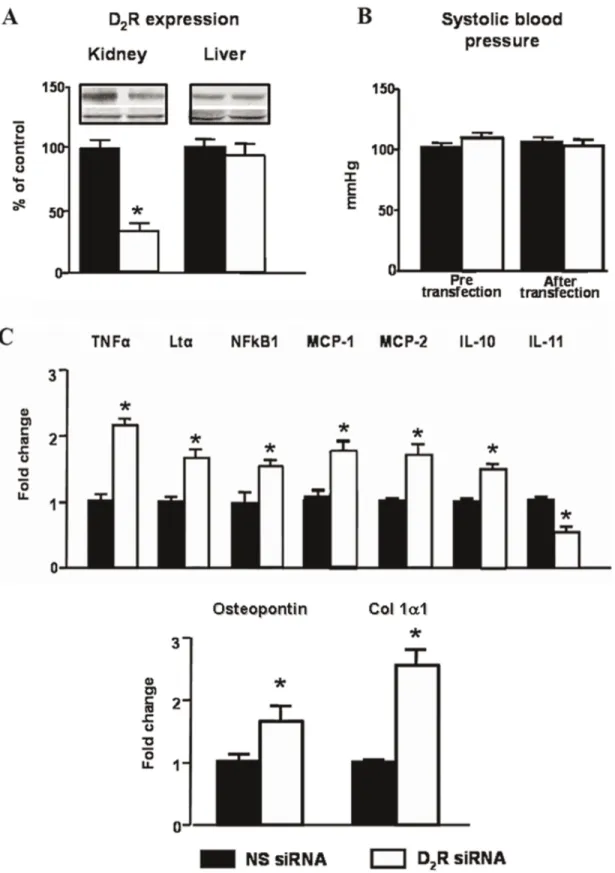
Figure 6. Effect of selective renal silencing of D2R in one kidney of mice without uni-nephrectomy on blood pressure and expression of inflammatory factors in the kidney and liver.Renal cortical D2R was silenced by the renal subcapsular infusion in the left kidney
for seven days ofDrd2siRNA, via an osmotic minipump in adult male C57BL/6J mice (see Methods). A. Expression of D2R protein (55 kDa band) in
renal cortex and liver was semi-quantified by immunoblotting. Results were corrected for GAPDH and expressed as % of NS siRNA treated kidneys. * P,0.05 vs non-silencing NS siRNA; n = 4/group. B. Systolic blood pressure measured under anesthesia in mice before and seven days afterDrd2siRNA infusion; n = 5/group. C. Renal cortical expression of TNFa, Lta, NFkB1, MCP-1, MCP-2, IL-10, IL-11, osteopontin and collagen 1a1 mRNA was quantified by qRT-PCR, results corrected for expression of GAPDH mRNA, and expressed as fold change in comparison to their expression in mice treated with NS siRNA. *P,0.05 vs. NS; n = 5/group.
factors in D22/2 mice were organ specific and not caused by
systemic perturbations.
Decreasing Blood Pressure and ROS does not Normalize the Expression of Inflammatory Factors in Renal Cortex of D22/2 Mice
Treatment with apocynin decreased systolic blood pressure in D22/2 mice (vehicle: 12165; apocynin: 9662 mm Hg; n = 5;
P,0.05) but not in D2+/+ mice (vehicle: 9863; apocynin
9565 mmHg; n = 5). Apocynin also decreased the urinary excretion of the oxidative stress marker 8-isoprostane in D22/2
mice (vehicle: 31666456; apocynin: 18746553 pg/mg creatinine; n = 5, P,0.04) to levels similar to those in wild-type mice (vehicle: 13446365; apocynin: 15426280 pg/mg creatinine; n = 5). Treat-ment with apocynin, however, did not normalize the expression of TNFa, MCP-1, or IL-6 in D22/2 mice. TNFa expression in
renal cortex was higher in vehicle-treated D22/2than
vehicle-treated D2+/+mice; apocynin had no effect on TNFaexpression in D2+/+ or D22/2 mice. MCP-1 protein expression was also
higher in vehicle-treated D22/2 than in vehicle-treated D2+/+
mice; apocynin had no effect on MCP-1 expression in D2+/+mice but decreased it in D22/2 mice although not to the level
observed in D2+/+mice (Figure 3). Renal cortical IL-6 protein expression and urinary excretion of IL-6 were also higher in vehicle-treated D22/2 than in vehicle-treated D2+/+ mice;
apocynin had no effect on IL-6 in D2+/+ mice but modestly decreased its levels in D22/2 mice although they remained
higher than D2+/+mice (Figure 3).
Drd2Silencing in Mouse RPTCs Results in Increased NFkB Transcriptional Activity and TNFa and MCP-1 Expression
Mouse RPTCs in culture endogenously express D2R, TNFa,
and MCP-1. Forty-eight hour-treatment with Drd2 siRNA
de-creased D2R protein expression by about 85%. The treatment
increased NFkB transcriptional activity (3.5-fold) and about two-fold the expression of both TNFa, and MCP-1 which are downstream of NFkB (Figure 4A).
Stimulation of D2R Counteracts the Effects of Ang II in Mouse RPTCs
Treatment with Ang II (100 nmol/l) increased the expression of TNFa by about 50% and that of MCP-1 about 60% in mouse RPTCs. Treatment with quinpirole (1mmol/l), a D2R/D3R
agonist, prevented the stimulatory effect of Ang II on the expression of TNFa and MCP-1. The effect of quinpirole was blocked by the addition of L-741,262, a selective D2R antagonist
(Figure 4B).
Renal Specific Drd2Down-regulation Recapitulates the Effects of GermlineDrd2Knockout on Inflammatory Factors Independently of Changes in Blood Pressure
To determine further the role of D2R in the renal inflammatory
reaction, we acutely and selectively silenced renalDrd2sin mice in
order to avoid the confounding effects of systemic D2R deletion.
Infusion of Drd2 siRNA for seven days in uni-nephrectomized
mice decreased renal cortical expression of D2R by 50% but did
not affect the expression of the receptor in the liver, indicating renal selectivity of the down-regulation (Figure 5A). As with systemic Drd2 deletion, treatment with Drd2 siRNA increased
systolic blood pressure by about 20 mmHg (Figure 5B), an increase of the same magnitude of that observed in mice with systemicDrd2deletion [3,4]. This highlights the role of D
2R in the
regulation of blood pressure via the kidney. Subcapsular renal
Drd2silencing in uni-nephrectomized mice increased renal cortical
mRNA expression of TNFa, Lta, NFkB1, MCP-2 and IL-10, and simultaneously decreased the expression of IL-11. These results are similar to those found in mice with systemic Drd2 deletion,
confirming the role of renal D2R in the regulation of the
expression of inflammatory factors. Furthermore, the expression of osteopontin and Col 1a1, markers of tissue damage [34], was also increased in the kidneys with silenced D2Rs (Figure 5C).
In order to eliminate the confounding effect of uni-nephrectomy and the increase in blood pressure in the above experiments, we also studied the effect of chronic unilateral renal subcapsular infusion ofDrd2siRNA in mice with two intact kidneys. Selective
down-regulation ofDrd2in one kidney(Figure 6A) had no effect
on systolic blood pressure (Figure 6B), suggesting that the intact kidney, in the short-term, is able to compensate for the effects of decreased Drd2 expression in the treated kidney. The mRNA
expression of TNFa, Lta, NFkB1, MCP-1 and MCP-2 was increased in the treated kidney to the same extent as in treated uni-nephrectomized mice; NFkB1 and IL-10 were increased but to a lesser extent than in uni-nephrectomized mice. The mRNA expression of IL-11 was similarly decreased. In contrast the expression of the injury markers osteopontin and Col 1a1 was increased to a greater extent than in infused remnant kidney of uni-nephrectomized mice (Figure 6C).
Discussion
Our results show increased renal expression of pro-inflamma-tory and decreased expression of anti-inflammapro-inflamma-tory cytokines/ chemokines, as well as histological and functional evidence of renal inflammation and injury in mice lacking D2Rs. These alterations
are renal-specific and are mimicked in mouse RPTCs in which the
Drd2is silenced. Moreover, selective unilateral renal D2R
down-regulation in mice with two kidneys, in the absence of elevated blood pressure, reproduced the alterations in inflammatory factors and renal injury observed in D22/2 mice. Thus, our findings
indicate that D2Rs in the kidney have a direct and significant role
in regulating the mechanisms involved in the development of renal inflammation and injury, as well as in blood pressure control.
Chemokines that play an essential role in the direct migration of various types of immune cells were up-regulated in kidneys of D22/2 mice, Drd2-silenced kidneys and RPTCs. In several
models of renal injury, MCP-1 and RANTES are expressed in damaged renal tissues and precede the recruitment of inflamma-tory cells that is a characteristic of many kidney diseases [7]. The infiltrating cells mediate the initiation and progression of injury by direct cytotoxicity, secretion of pro-inflammatory cytokines, and the induction of other pro-inflammatory mediators in renal tubule cells.
The increased gene transcription/protein expression of in-flammatory factors with Drd2 silencing may be caused by decreased D2R-dependent inhibition leading to increased
pro-duction of TNFa, a major regulator of cytokine/chemokine expression. Experimental and clinical studies have demonstrated the role of TNFaas a mediator of inflammatory tissue damage in the pathogenesis of acute and chronic renal disease. TNFa is released from renal cells in response to injury and induces glomerular fibrin deposition, cellular infiltration, and vasocon-striction [35] but causes marked natriuresis [36]. TNFa stimula-tion increases the expression of IL-6, IL-10, and MCP-1 [22]. In immune cells, TNFa production is decreased by dopamine and D2R agonists [21] and in adrenal cortical cells, dopamine, through
the D2R, inhibits basal and secretagogue-stimulated TNFa. Our
in response to Drd2 silencing and inhibition of Ang II-induced
TNFastimulation by D2R activation, indicate that in RPTCs the
D2R negatively regulates both basal and Ang II-stimulated TNFa
production.
TNFaand other members of the TNF superfamily regulate the expression of a large number of cytokines and chemokines by several mechanisms [37], one of which is the activation and nuclear translocation of NFkB [38]. NFkB, which is activated by TNFa, mediates the inflammatory response to TNFa, IL-1b, and other inflammatory factors in renal cells [33]. In turn, the transcription of TNFaand TNF superfamily members is increased by NFkB activation, generating a positive-feedback loop of activation [39]. Our data show that deficient D2R expression
results in NFkB activation, as indicated by the increased renal expression of NFkB1 (p50) and NFkB transcriptional activity in mouse RPTCs. NFkB has been implicated as a factor in diabetic nephropathy [40]. Because the D2R has been shown to positively
regulate NFkB activation in neural-derived cell lines [41,42] it is likely that the negative regulation observed in the current studies is mediated by its direct effects on TNFa expression and function. Most of the down-regulated cytokines in the renal cortex of D22/
2 mice are Th2-type cytokines (e.g., IL-4 and IL-13); the transcription of these cytokines is mainly dependent on factors other than TNFa or NFkB [43] and is negatively regulated by Th1-type cytokines [44].
The hypertension noted in D22/2 mice is at least partially
related to increased renal production of ROS [4]. To evaluate the potentially confounding effect of high blood pressure and ROS on renal inflammation, we treated D22/2 mice with apocynin,
which normalized both blood pressure and ROS production [4] as it does in several experimental models of hypertension [45]. Apocynin had no significant effect on the expression of TNFa, and IL-6, although it decreased MCP-1 expression. These results suggest that, in D22/2mice, high blood pressure or increased
ROS may contribute but neither is the major cause of the increased expression of pro-inflammatory factors. However, an effect of persistent inflammation due to preexisting hypertension cannot be ruled out.
The selective unilateral renal silencing of D2R for seven days, in
mice with two kidneys, did not increase blood pressure but nonetheless increased renal expression of pro-inflammatory chemokines/cytokines and decreased expression of the anti-inflammatory, IL-11. This indicates that hypertension, per se, is
not necessary for the development of renal inflammation but may be a contributing factor. Moreover, the expression of the anti-inflammatory, IL-10, was increased, indicating some compensa-tory feed-back mechanism. Nevertheless, our results show that impaired D2R function (due to decreased D2R expression) results
in a defective balance of pro-inflammatory and anti-inflammatory factors that contribute to renal inflammation and injury.
As mentioned above, intrarenal dopamine buffers the deleteri-ous effects of Ang II on renal inflammation and injury [16,17]. Our results suggest that these effects are mediated by the D2R.
Infusion of Ang II in rats increases TNFa production in renal glomerular endothelial cells, tubules, and vessels, and enhances expression of MCP-1 [22]. Stimulation of the D2R reversed the
increased expression of TNFa and MCP-1 elicited by Ang II in mouse RPTCs, indicating that D2R may counterbalance the
damaging effect of Ang II in the kidney.
The current studies contribute to the understanding of the mechanisms that cause the development of renal inflammation, as well as the development and maintenance of hypertension [5] and suggest that decreased D2R function may play a significant role in
these processes. Deficient renal D2R function may be of clinical
relevance since polymorphisms of the Drd2 gene, that are
commonly observed in humans, result in decreased D2R
expression and function as a consequence of decreased D2R
mRNA stability and decreased synthesis of the receptor or decreased receptor affinity [46–50]. Some of the D2R
polymorph-isms are associated with elevated blood pressure and essential hypertension [51–53]. Moreover, a recent study in an Asian Indian population with type 2 diabetes found that a D2R
polymorphism, resulting in decreased expression of the receptor, confers susceptibility to chronic diabetic nephropathy [54]. Further studies are needed to establish the role of D2R
polymorphisms in conferring susceptibility to chronic renal disease and to determine whether or not modulation of renal D2R
function may be an option in the treatment of hypertension and renal injury.
Author Contributions
Conceived and designed the experiments: IA LDA CE AMP JEJ. Performed the experiments: YZ SC LDA CE YY AMP XW JEJ IA. Analyzed the data: YZ SC LDA YY XW PAJ IA. Contributed reagents/ materials/analysis tools: DG JEJ. Wrote the paper: YZ SC LDA CE YY AMP XW JEJ DG GE PAJ IA.
References
1. Jose PA, Soares-da-Silva P, Eisner GM, Felder RA (2010) Dopamine and G protein-coupled receptor kinase 4 in the kidney: Role in blood pressure regulation. Biochim Biophys Acta 802: 1259–1267.
2. Zeng C, Armando I, Luo Y, Eisner GM, Felder RA, et al. (2008) Dysregulation of dopamine-dependent mechanisms as a determinant of hypertension: studies in dopamine receptor knockout mice. Am J Physiol Heart Circ Physiol 294: H551– H569.
3. Li XX, Bek M, Asico LD, Yang Z, Grandy DK, et al. (2001) Adrenergic and endothelin B receptor-dependent hypertension in dopamine receptor type-2 knockout mice. Hypertension 38: 303–308.
4. Armando I, Wang X, Villar VA, Jones JE, Asico LD, et al. (2007) Reactive oxygen species-dependent hypertension in dopamine D2 receptor-deficient mice. Hypertension 49: 672–678.
5. Harrison DG, Guzik TJ, Lob HE, Madhur MS, Marvar PJ, et al. (2011) Inflammation, immunity, and hypertension. Hypertension 57: 132–140. 6. Segerer S, Schlo¨ndorff D (2007) Role of Chemokines for the Localization of
Leukocyte Subsets in the Kidney. Semin Nephrol 27: 260–274.
7. Wang Y, Tay YC, Harris DC (2004) Proximal tubule cells stimulated by lipopolysaccharide inhibit macrophage activation. Kidney Int 66: 655–662. 8. Bendele AM, Spaethe SM, Benslay DN, Bryant HU (1991) Anti-inflammatory
activity of pergolide, a dopamine receptor agonist. J Pharmacol Exp Ther 259: 169–175.
9. Ghosh MC, Mondal AC, Basu S, Banerjee S, Majumder J, et al. (2003) Dopamine inhibits cytokine release and expression of tyrosine kinases, Lck and Fyn in activated T cells. Int Immunopharmacol 3: 1019–1026.
10. Hasko´ G, Szabo´ C, Ne´meth ZH, Deitch EA (2002) Dopamine suppresses IL-12 p40 production by lipopolysaccharide-stimulated macrophages via ab -adreno-ceptor-mediated mechanism. J Neuroimmunol 122: 34–39.
11. Bach F, Grundmann U, Bauer M, Buchinger H, Solte´sz S, et al. (2002) Modulation of the inflammatory response to cardiopulmonary bypass by dopexamine and epidural anesthesia. Acta Anesthesiol Scand 46: 1227–1235. 12. Birnbaum J, Klotz E, Spies CD, Lorenz B, Stuebs P, et al. (2006) Effects of
dopexamine on the intestinal microvascular blood flow and leukocyte activation in a sepsis model in rats. Crit Care 10: R117–124.
13. Zhu XH, Zellweger R, Wichmann MW, Ayala A, Chaudry IH (2007) Effects of prolactin and metoclopramide on macrophage cytokine gene expression in late sepsis. Cytokine 9: 437–446.
14. Hoeger S, Gottmann U, Liu Z, Schnuelle P, Birck R, et al. (2007) Dopamine treatment in brain-dead rats mediates anti-inflammatory effects: the role of hemodynamic stabilization and D-receptor stimulation. Transpl Int 20: 790– 799.
16. Zhang MZ, Yao B, Wang S, Fan X, Wu G, et al. (2011). Intrarenal dopamine deficiency leads to hypertension and decreased longevity in mice. J Clin Invest 121: 2845–2854.
17. Yang S, Yao B, Zhou Y, Yin H, Zhang MZ, et al. (2012). Intrarenal dopamine modulates progressive angiotensin II-mediated renal injury. Am J Physiol Renal Physiol 302: F742–F749.
18. Levite M (2008) Neurotransmitters activate T-cells and elicit crucial functions via neurotransmitter receptors. Curr Opin Pharmacol l8: 460–471.
19. Morikawa K, Oseko F, Morikawa S (1994) Immunosuppressive activity of bromocriptine on human T lymphocyte function in vitro. Clin Exp Immunol 95: 514–518.
20. Besser MJ, Ganor Y, Levite M (2005) Dopamine by itself activates either D2, D3 or D1/D5 dopaminergic receptors in normal human t-cells and triggers the selective secretion of either IL-10, TNFaor both. J Neuroimmunol 169: 161– 171.
21. Laengle UW, Markstein R, Pralet D, Seewald W, Roman D (2006) Effect of GLC756, a novel mixed dopamine D1 receptor antagonist and dopamine D2 receptor agonist, on TNF-arelease in vitro from activated rat mast cells. Exp Eye Res 83: 1335–1339.
22. Ruiz-Ortega M, Ruperez M, Lorenzo O, Esteban V, Blanco J, et al. (2002) Angiotensin II regulates the synthesis of proinflammatory cytokines and chemokines in the kidney. Kidney Int 82: S12–22.
23. Woost PG, Kolb RJ, Finesilver M, Mackraj I, Imboden H, et al. (2006) Strategy for the development of a matched set of transport-competent, angiotensin receptor-deficient proximal tubule cell lines. In Vitro Cell Dev Biol Anim 42: 189–200.
24. Ferguson SM, Norton CS, Watson SJ, Akil H, Robinson TE (2003) Amphetamine-evoked c-fos mRNA expression in the caudate-putamen: the effects of DA and NMDA receptor antagonists vary as a function of neuronal phenotype and environmental context. J Neurochem 86: 33–44.
25. Livak KJ, Schmittgen TD (2001) Analysis of relative gene expression data using real-time quantitative PCR and the 22
DDCTmethod. Methods25: 402–408.
26. Yoneda M, Sanada H, Yatabe J, Midorikawa S, Hashimoto S, et al. (2005) Differential effects of angiotensin II type-1 receptor antisense oligonucleotides on renal function in spontaneously hypertensive rats. Hypertension 48: 58–65. 27. Bonecchi R, Galliera E, Borroni EM, Corsi M, Locati M, et al. (2009)
Chemokines and chemokine receptors: an overview. Front Biosci 14: 540–551. 28. Romagnani P, Beltrame C, Annunziato F, Lasagni L, Luconi M, et al. (1999) Role for interactions between IP-10/Mig and CXCR3 in proliferative glomerulonephritis. J Am Soc Nephrol 10: 2518–2526.
29. Zheng L, Sinniah R, I-Hong Hsu S (2008). Pathogenic Role of NFkB activation in tubulointerstitial inflammatory lesions in human lupus nephritis. J Histochem Cytochem 56: 517–529.
30. Aggarwal BB (2003) Signalling pathways of the TNF superfamily: A double-edged sword. Nat Rev Immunol 3: 745–756.
31. Patel NS, Chatterjee PK, Di Paola R, Mazzon E, Britti D, et al. (2005) Endogenous interleuk6 enhances the renal injury, dysfunction, and in-flammation caused by ischemia/reperfusion. J Pharmacol Exp Ther 312: 1170– 1178.
32. Mosser DM, Zhang X (2008) Interleukin-10: new perspectives on an old cytokine. Immunol Rev 226: 205–218.
33. Sanz AB, Sanchez-Nin˜o MD, Ramos AM, Moreno JA, Santamaria B, et al. (2010) NFkB in renal inflammation. J Am Soc Nephrol 21: 1254–1262. 34. Lea WB, Kwak ES, Luther JM, Fowler SM, Wang Z, et al. (2009) Aldosterone
antagonism or synthase inhibition reduces end-organ damage induced by treatment with angiotensin and high salt. Kidney Int. 75: 936–944. 35. Donnahoo KK, Shames BD, Harken AH, Meldrum DR (1999) Review article:
the role of tumor necrosis factor in renal ischemia-reperfusion injury. J Urol 162: 196–203.
36. Shahid M, Francis J, Matrougui K, Majid DS (2010) Involvement of tumor necrosis factor-a in natriuretic response to systemic infusion of nitric oxide synthase inhibitor in anesthetized mice. Am J Physiol Renal Physiol 299: F217– F224.
37. Dempsey PW, Doyle SE, He JQ, Cheng G (2003) The signaling adaptors and pathways activated by TNF superfamily. Cytokine Growth Factor Rev 14: 193– 209.
38. Li Q, Verma IM (2002) NFkB regulation in the immune system. Nat Rev Immunol 2: 725–734.
39. Covert MW, Leung TH, Gaston JE, Baltimore D (2005) Achieving stability of lipopolycacharide-induced NFkB activation. Science 309: 1954–1857. 40. Pergola PE, Raskin P, Toto RD, Meyer CJ, Huff JW, et al. (2011) Bardoxolone
methyl and kidney function in CKD with type 2 diabetes. N Engl J Med 365: 327–336.
41. Yang M, Zhang H, Voyno-Yasenetskaya T, Ye RD (2003) Requirement of Gbc
and c-Src in D2 dopamine receptor-mediated nuclear factor-kB activation. Mol Pharmacol 64: 447–455.
42. Takeuchi Y, Fukunaga K (2003) Differential regulation of NF-kB, SRE and CRE by dopamine D1 and D2 receptors in transfected NG108-15 cells. J Neurochem 85: 729–739.
43. Lavender P, Cousins D, Lee T (2000) Regulation of Th2 cytokine gene transcription. Chem Immunol 78: 16–29.
44. Zhu J (2010) Transcriptional regulation of Th2 cell differentiation. Immunol Cell Biol 88: 244–249.
45. Tian N, Moore RS, Phillips WE, Lin L, Braddy S, et al. (2008) NADPH oxidase contributes to renal damage and dysfunction in Dahl salt-sensitive hypertension. Am J Physiol Regul Integr Comp Physiol 295: R1858–R1865.
46. Duan J, Wainwright MS, Comeron JM, Saitou N, Sanders AR, et al. (2003) Synonymous mutations in the human dopamine receptor D2 (DRD2) affect mRNA stability and synthesis of the receptor. Hum Mol Genet 12: 205–216. 47. Thompson J, Thomas N, Singleton A, Piggott M, Lloyd S, et al. (1997) D2
dopamine receptor gene (DRD2) Taq1A polymorphism: reduced dopamine D2 receptor binding in the human striatum associated with the A1 allele. Pharmacogenetics 7: 479–484.
48. Pohjalainen T, Rinne JO, Na˚gren K, Lehikoinen P, Anttila K, et al. (1998) The A1 allele of the human D2 dopamine receptor gene predicts low D2 receptor availability in healthy volunteers. Mol Psychiatry 3: 256–260.
49. Jo¨nsson EG, No¨then MM, Gru¨nhage F, Farde L, Nakashima Y, et al. (1999) Polymorphisms in the dopamine D2 receptor gene and their relationships to striatal dopamine receptor density of healthy volunteers. Mol Psychiatry 4: 290– 296.
50. Ritchie T, Noble EP (2003) Association of seven polymorphisms of the D2 dopamine receptor gene with brain receptor-binding characteristics. Neurochem Res 28: 73–82.
51. Fang YJ, Thomas GN, Xu ZL, Fang JQ, Critchley JA, et al. (2005) An affected pedigree member analysis of linkage between the dopamine D2 receptor gene TaqI polymorphism and obesity and hypertension. Int J Cardiol 102: 111–116. 52. Rosmond R, Rankinen T, Chagnon M, Pe´russe L, Chagnon YC, et al. (2001) Polymorphism in exon 6 of the dopamine D(2) receptor gene (DRD2) is associated with elevated blood pressure and personality disorders in men. J Hum Hypertens 15: 553–558.
53. Thomas GN, Critchley JA, Tomlinson B, Cockram CS, Chan JC (2001) Relationships between the taqI polymorphism of the dopamine D2 receptor and blood pressure in hyperglycaemic and normoglycaemic Chinese subjects. Clin Endocrinol (Oxf) 55: 605–611.