Engineering
ISSN: 1809-4430 (on-line)
________________________
2 Institutos LACTEC/ Curitiba - PR, Brasil.
EFFECT OF ORGANIC LOAD AND ALKALINITY ON DAIRY WASTEWATER BIOMETHANATION
Doi:http://dx.doi.org/10.1590/1809-4430-Eng.Agric.v37n4p820-827/2017
EDUARDO M. KISPERGHER1*, CAMILA A. D’AQUINO2, LUIS C. DA COSTA JUNIOR2,
THIAGO C. DE MELLO2, REGINA WEINSCHUTZ3, ALVARO L. MATHIAS3
1*Corresponding author. Secretaria de Estado de Saúde do Acre/ Rio Branco - AC, Brasil. E-mail: [email protected]
ABSTRACT: This study aimed to evaluate the effect of variations in organic load (hydraulic retention times - HRTs: from 2 to 0.5 day) and in alkalinity (NaHCO3 from 4,000 to 1,000 mg.L-1)
on methane production. Biomass of sewage sludge was inoculated and stabilized on 1" polypropylene rings. The rings were immersed in the liquid phase (8.41 L) of an upflow anaerobic filter reactor (12.22 L). A solution of 5 g of whole milk powder per liter was used to simulate effluent from the dairy industry. Process effectiveness was measured by chemical oxygen demand reduction, biogas production, and biogas methane content. Biogas production started at a 2-day HRT and synthetic effluent alkalinization with 4,000 mg.L-1 NaHCO3. The best operation condition
was at 1-day HRT and with the addition of 4,000 mg.L-1 NaHCO3. Biogas production reached 1.5
NL of biogas per L of reactor liquid phase, with 68% of methane and a concomitant reduction in COD of 57%.
KEYWORDS: dairy industry, biofilter, hydraulic retention time, alkalinity, biogas.
INTRODUCTION
In 2015, Brazilian milk production was estimated at 37.2 billion liters (MAPA, 2015) and worldwide production at 830 billion liters (FAO, 2015). Daily processing of dairy products generates a large quantity of wastewater with a high organic load. Therefore, the environmental impact of this waste can be quite significant, whether due to a large flow or high treatment costs involved (Omil, 2013).
The effluents from cheese factories can be divided into two basic categories: washing and pasteurization waters (low chemical oxygen demand - COD) and cheese whey (high COD, up to 50,000 mg.L-1) (Chatzipaschali & Stamatis, 2012). Generally, the chemical oxygen demand (COD) levels of dairy wastewaters vary between 1,150 and 9,200 mg COD.L-1 (Demirel et al, 2005).
Wastewaters with these characteristics can be bio-transformed through aerobic and/or anaerobic processes to reduce the organic load. Compared to the aerobic, the anaerobic process is simpler and has lower operating costs, besides being more energy-efficient (Patel et al, 1999), producing less sludge, requiring less inorganic nutrients, and generating methane as a by-product (Patil et al, 2012).
Since the eighties, the anaerobic digestion has developed facing some bottlenecks of small and medium industries such as excessive sludge production, energy requirements, and solids settling when applying aerobic processes (Prazeres et al., 2012). Despite these advantages, anaerobic digestion has not been well established as a treatment method for dairy effluents. This is because of the low conversion rates required by long hydraulic retention times (HRT) and the low process stability (Gannoun et al, 2008).
necessary to maintain a continuous biomethanation. The addition of an alkaline agent to the effluent, such as sodium bicarbonate, sodium hydroxide, calcium hydroxide, or lime, is recommended. Alternatively, recirculation of part of the liquid phase has also been described to increase alkalinity and dilute the content of organic matter in the substrate at bioreactor entrance (Zhou et al, 2011).
The objective of this study was to evaluate the influence of organic load, by changing the HRT, and the influence of alkalinity, varying sodium bicarbonate supplementation, on the production of methane from dairy industry wastewater using an upflow anaerobic filter reactor.
MATERIAL AND METHODS
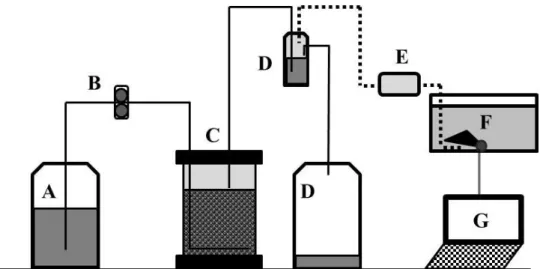
FIGURE 1. Diagram of the experimental apparatus: A) vessel with SIE; B) peristaltic pump; C) bioreactor; D) gas liquid separator and treated effluent vessel; E) biogas bag; F) biogas meter, and G) computer.
Synthetic industrial effluent
Dairy wastewater results from cleaning transport lines and tanks or operation errors (Demirel, et al, 2005), producing highly diluted milk solutions. A synthetic industrial effluent (SIE) was produced based on industrial wastewater parameters, such as COD, pH, VS, and alkalinity, being used as a nutrient (substrate) in the bioreactor. The use of a SIE eliminates variations in substrate composition, whether due to variations in industrial process or microbiota variability. Thus, a solution of 5,000 mg.L-1 of powdered milk was prepared and used immediately in the experiments, after SIE being alkalized with 4,000 mg.L-1 of sodium bicarbonate.
Bioreactor inoculation
Part of the volume (8.41 L) of an upflow anaerobic filter fermenter (12.22 L) was filled with 1-inch polypropylene rings (HyFlow Pall Rings, Interpaking, Brazil). These rings were previously inoculated with sludge from upflow anaerobic sludge blanket (UASB) reactors from the sewage treatment plant of Atuba Sul, in Curitiba - Paraná (Brazil). In doing so, these plastic rings were placed in a tray, submerged in sludge, and then kept static in an incubator at 45°C for seven days. Afterwards, they were randomly placed into the bioreactor and fed with a synthetic sewage effluent
– SSE (Cubas et al, 2011), simulating a domestic sewage with a low organic load. It was injected at a flow of 3 mL.min-1 to keep the biosystem active and stabilized.
Bioreactor operation
Methane production capacity was assessed by using SIE at 35 ± 2°C with four different HRTs (Table 1). Bioreactor temperature was maintained constant using an electronic heat belt (Higher HRCT 19-L-P 300 W, Brazil), and thermal insulation assured by a one-inch-thick stone wool blanket (Rockbras, Brazil). The reactor was continuously fed with the SIE through a peristaltic pump (Watson Marlow 520U, England) for seven days to replace the SSE and adapt the system (Table 1, conditions 0 and 1 respectively). The SIE (5 g powdered whole milk.L-1) received an addition of 4,000 mg.L-1 of sodium bicarbonate, and fermentation was performed with different HRTs, being gradually reduced from 2.0 to 0.5 days for HRT effect evaluation (Table 1, conditions 2 to 5). The criterion for HRT change was biogas production stabilization (±10%) and pH responses (±0.2%). NaHCO3 supplemented SIE, with an HRT of 1 day, was used to determine the ideal
alkaline supplementation (Table 1, conditions 6 to 9). In this case, bicarbonate concentration was reduced stepwise from 4,000 to 1,000 mg.L-1 so its influence on gas production and on effluent pH
9 1.0 1000 171-181
*initial situation = the bioreactor was fed with SSE for biofilm maintenance and stabilization of the controlled culture medium (Cubas et al, 2011). **A 2-day HRT was assumed as sufficient so that all the fermenter fluid is fully replaced with the SIE.
RESULTS AND DISCUSSION
Fermentation of the synthetic effluent
Sewage sludge was an adequate source of microorganisms for the creation of a biologically fixed bed. It is worth mention that the biologic bed remained active for 6 months, based on biogas production and COD reduction. The SIE (COD 7,839 mg.L-1; pH 6.2; alkalinity 150 mg CaCO3.L-1;
VS 0.47%) proved to be similar to the real industrial effluent (COD 8,510 mg.L-1; pH 6.3; alkalinity 0 mg CaCO3.L-1; VS 0.65%). The effluent pH exiting the bioreactor (pHout) was daily measured
since methanogens are highly sensitive to this parameter (Pontoni et al, 2015). In a few days, SIE fermentation without bicarbonate supplementation (initial pH of 6.2; condition 1, Table 1) showed a marked drop in pHout (from 6.5 to less than 5.5). However, this pH is insufficient to methane
production, as confirmed through biogas production observations. Yet alkalinity increased from 150 mg CaCO3.L-1 to 1,260 mg CaCO3.L-1(10th day). This increase was probably due to the byproducts
from hydrolysis of macromolecules. For example, the amino acids from protein degradation contain a carboxylic group (acid) and an amine group (base) which are able to buffer the pH to near 5 (Fennema et al., 2010). According to Tauseef et al (2013), the recommended alkalinity for biomethanation is between 2,500 and 4,500 mg CaCO3.L-1.
Effect of TRH on fermentation of the alkalinized SIE
From the ninth day on (condition 2 in Table 1), 4,000 mg of NaHCO3.L-1 was added to the
SIE in order to increase alkalinity (from 150 to 2,350 mg CaCO3.L-1). COD (7,839 mg.L-1) had no
alteration but pH was significantly increased at the reactor entrance (from 6.2 to 8.1). The pHout also
increased, reaching 7.05 on the 14th day and remaining at 7.00±0.40 from then on. This suggests that the bicarbonate is able to form a stable buffered system, and its alkalinizing capacity is not completely consumed even with the production of acids during the acidogenic phase.
There is a direct relationship between COD and volatile solids in organic matter (Harnadek et al., 2015) and, apparently, dairy wastewater biodegradability is not an issue. Gannoun et al. (2008) reported 90.2% organic load removal efficiency by treating cheese whey with 5,000 mg COD.L-1
between the biomass and the substrate, and to maintain uniform distribution of substrates and fermentation products, preventing microbial physiological stress (Goyal et al, 1996). In this case, an excessive upflow turbulence, under operation condition 5 (HRT = 0.5 days, Table 1), seemed to drag part of the activated sludge off the filling rings. As a result, the flocs no longer degraded the effluent efficiently but became part of the effluent from the reactor, i.e., the yield of COD removal (CODrem = 20.8%) was reduced.
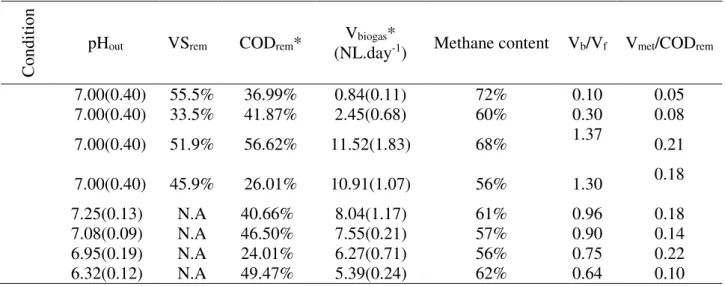
TABLE 2. Effect of the HRT on the principal characteristics of the effluent.
Condit
ion
pHout VSrem CODrem* Vbiogas*
(NL.day-1) Methane content Vb/Vf Vmet/CODrem
2 7.00(0.40) 55.5% 36.99% 0.84(0.11) 72% 0.10 0.05
3 7.00(0.40) 33.5% 41.87% 2.45(0.68) 60% 0.30 0.08
4 7.00(0.40) 51.9% 56.62% 11.52(1.83) 68% 1.37 0.21
5 7.00(0.40) 45.9% 26.01% 10.91(1.07) 56% 1.30 0.18
6 7.25(0.13) N.A 40.66% 8.04(1.17) 61% 0.96 0.18
7 7.08(0.09) N.A 46.50% 7.55(0.21) 57% 0.90 0.14
8 6.95(0.19) N.A 24.01% 6.27(0.71) 56% 0.75 0.22
9 6.32(0.12) N.A 49.47% 5.39(0.24) 62% 0.64 0.10
*Mean value (standard deviation); CODrem = chemical oxygen demand (mg.L-1); VSrem = volatile solids removed; Vbiogas = biogas
volume (NL.day-1); Vb/Vf = V
biogas.Vreactor-1; Vmet/CODrem = NL CH4.g CODrem-1
COD removal yield reached 56.6% when the filter was operated with an HRT of 1.0 day (condition 4, Table 1). This condition also yielded the highest biogas production (11.52 NL.day-1)
and methane content (68%, Table 2). Even so, the CODrem was lesser than that reported for cheese
whey treatment with an initial COD of 30,000 mg.L-1, fermented in an anaerobic filter at 40ºC with an HRT of 2 days; this process achieved levels of organic load removal and methane content of 74.5% and 69%, respectively (Patel et al, 1999). This reaffirms that an anaerobic filter reactor has great potential for wastewater treatment, as long as alkalinity is controlled.
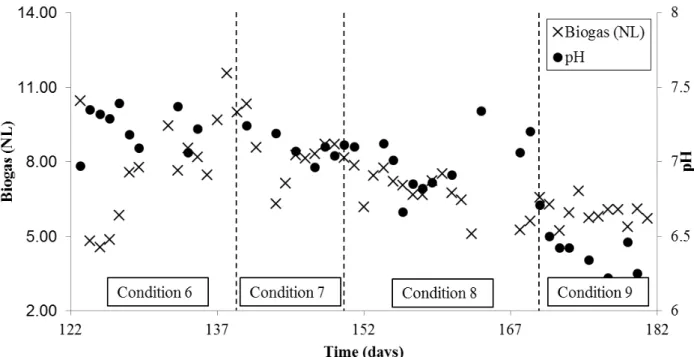
Biogas production (Fig 2) is an efficiency parameter of anaerobic methanogenic degradation. The highest biogas production occurred at condition 4 (HRT = 1.0 day and 4,000 mg NaHCO3.L-1,
Table 1) which, under normal conditions, also corresponded to a higher ratio of methane volume per gram of COD removed (0.21 NL CH4.g CODrem-1, Table 2). The biogas had high methane
content, between 56 and 72%, regardless of the HRT value (Table 2). According to Chatzipaschali & Stamatis (2012), 55% of methane content is expected in biogas from cheese whey anaerobic digestion. One cubic meter of methane represents 10.4 KWh (Luste et al, 2012). As stated, there was no visible change in the biomass layer, neither during fermenter stabilization with SSE nor during the entire study with SIE. However, the methane volume versus CODrem (Table 2) was lower
for the HRT of 2 days (VCH3.g CODrem-1 = 0.05) and 1.5 days (VCH3.g CDOrem-1 = 0.08) than was in
the best condition (HRT 1, VCH3.g CDOrem-1 = 0.21), suggesting that part of the organic matter may
have been converted to biomass. The biogas volume versus reactor volume ratio is 1.37 NLbiogas.Lreactor-1 for the HRT of 1 day, which is a relevant aspect of the study and designing of this
equipment. Gannoun et al. (2008), when treating effluents from cheese production with COD of 5,000 mg.L-1 and HRT between 1 and 4 days reported similar behavior. These authors observed that
the greatest biogas volume occurred with an HRT of 2 days, reaching a relative biogas production of 0.280 L CH4.g CODrem-1. The theoretical biochemical methane potential per gram of CODrem is
FIGURE 2. Effect of the HRT on the production of biogas (NL).
Effect of an alkalinizing agent on synthetic effluent fermentation
Alkaline solutions neutralize the volatile fatty acids produced during the acidogenic phase of an anaerobic fermentation (Deublein & Steinhauser, 2011). Under condition 4 (HRT = 1 day, Table 1), the bioreactor achieved the highest COD removal efficiency; yielding higher daily biogas production and higher methane content (Table 2). Thus, an HRT of 1 day was used to evaluate the effect of sodium bicarbonate supply reduction. The alkalization power of each gram of sodium bicarbonate was measured as 627.5 mg CaCO3.L-1.g-1. A reduction of the salt supplementation
resulted in a drop of pHout and, consequently, a reduction of biogas production (Fig 3). It is a known
fact that pHout decreaseand biogas CO2 content increase indicate a system disturbance (Deublein &
Steinhauser, 2011); however, a higher CO2 production has not been confirmed based on methane
content (Table 2).
CONCLUSIONS
Sewage sludge can be used as a source of microorganisms for production of a biofilm in 1" polypropylene rings used for filling an upflow anaerobic filter reactor. The biological bed remained active for almost 6 months without any significant disturbance, even when operated under different conditions. The dairy industry produces a high organic content with low pH. Methane was not produced without an alkaline agent. Sodium bicarbonate is a good alkalizing agent; however, an economic analysis is mandatory before starting this operation. The volume of methane produced may not be able to cover the cost of this additive. Hydraulic retention time is a critical parameter on methane production and is specific for each type of bioreactor. In this study, the highest capacity to reduce COD (56.6%) of the alkalinized effluent, and the highest production of biogas (1.37 NLbiogas.Lreactor-1), were both achieved with an HRT of 1 day and alkalinization with 4,000 mg
NaHCO3.L-1, corresponding to a conversion of 0.21 NL CH4.g DQOrem-1. The alkali agent may be
reduced to 3,000 mg NaHCO3-1.L-1, with a slight decrease in the biogas production.
ACKNOWLEDGEMENTS
The author thanks the Universidade Federal do Paraná - UFPR (Federal University of Paraná State), the Conselho Nacional de Desenvolvimento Científico e Tecnológico – CNPq (National Council for Scientific and Technological Development), the Coordenação de Aperfeiçoamento
Pessoal de Nível Superior – CAPES/ REUNI (Coordination of Personnel Improvement for the
Higher Education) for the financial support, and the LACTEC company for technical support and partnership.
REFERENCES
Chatzipaschali AA, Stamatis AG (2012) Biotechnological utilization with a focus on anaerobic treatment of cheese whey: current status and prospects. Energies 5:3492-525. Available: www.mdpi.com/journal/energies. Accessed: Feb 15, 2016.
Cubas SA, Foresti E, Roddrigues JAD, Ratusznei SM, Zaiat M (2011) Effect of impeller type and stirring frequency on the behavior of an ANSBBR in the Treatment of low-strength wastewater. Bioresource Technology 102(2):889-893.
Demirel B, Yenigun O, Onay TT (2005) Anaerobic treatment of dairy wastewaters: a review. Process Biochemistry 40(8):2583-2595.
Deublein D, Steinhauser A (2011) Biogas from waste and renewable resources: an introduction. Weinhein, Ed. Wiley-Vch. 443p.
FAO – Food and Agriculture Organization of the United Nations (2015) Food Outlook: biannual report on global food markets. Rome, FAO. 142p.
Fennema OR, Damodaran S, Parkin KL (2010) Fennema food chemistry. Porto Alegre, Artmed. 900p.
Gannoun H, Khelifi E, Bouallagui H, Touhami Y, Hamdi M (2008) Ecological clarification of cheese whey prior to anaerobic digestion in upflow anaerobic filter. Bioresource Technology 99(14):6105-6111.
Goyal SK, Seth R, Handa BK (1996) Diphasic fixed-film biomethanation of distillery spentwash. Bioresource Technology 56(2-3):239-244.
Harnadek CMW, Guilford NGH, Edwards EA (2015) Chemical oxygen demand analysis of anaerobic digester contents. STEM Fellowship Journal 1(2):2-5.
of salty cheese whey. Applied Biochemical Biotechnology 76(3):193-201.
Patil SS, Ghasghse NV, Nashte AP, Kanase SS, Pawar RH (2012) Anaerobic digestion treatment of cheese whey for production of methane in a two stage upflow packed bed reactor. International Journal of Advanced Science, Engineering, and Technology 1(1):1-7.
Pontoni L, Panico A, Salzano E, Frunzo L, Iodice P, Pirozzi F (2015) Innovative parameters to control the efficiency of anaerobic digestion process. Chemical Engineering Transactions 43:2089-2094.
Prabhudessai V, Ganguly A, Mutnuri S (2013) Biochemical methane potential of agro wastes. Journal of Energy, 7p. Available: http://dx.doi.org/10.1155/2013/350731. Accessed: Feb 22, 2016.
Prazeres AR, Carvalho F, Rivas J (2012) Cheese whey management: a review. Journal of Environmental Management 110:48-68.
Raposo F, Fernández-Cegrí V, De La Rubia MA, Borja R, Béline F, Cavinato C, Demirer G, Fernández B, Fernández-Polanco M, Frigon JC, Ganesh R, Kaparaju P, Koubova J, Méndez R, Menin G, Peene A, Scherer P, Torrijos M, Uellendahl H, Wierinckm I, Dewildep V (2011) Biochemical methane potential (BMP) of solid organic substrates: evaluation of anaerobic biodegradability using data from an international interlaboratory study. Journal of Chemical Technology and Biotechnology 86(8):1088-1098.
APHA – American Public Health Association (2012) Standard Methods for the Examination of Water and Wastewater, 19 ed. Washington, DC, APHA. 2316p.
Tauseef SM, Abbasi T, Abbasi SA (2013) Energy recovery from wastewaters with high-rate anaerobic digesters. Renewable and Sustainable Energy Reviews 19:704-741.