A R T I G O O R I G I N A L
R A D I O L O G I C A L S C O R I N G M E T H O D S I N
A N K Y L O S I N G S P O N D Y L I T I S
:
A C O M P A R I S O N O F T H E R E L I A B I L I T Y O F A V A I L A B L E M E T H O D SHasan Ulusoy
*,Arzu Kaya
*,Ayhan Kamanli
*, Gurkan Akgol
*, Salih Ozgocmen
***Division of Rheumatology, Department of Physical Medicine and Rehabilitation, Firat University, Faculty of Medicine, Elazig,Turkey **Division of Rheumatology, Department of Physical Medicine and Rehabilitation, Erciyes University, School of Medicine, Gevher Nesibe Hospital, Kayseri,Turkey
Keywords: Ankylosing Spondylitis; Radiological Scoring; BASRI; SASSS.
Introduction
Ankylosing spondylitis (AS) is a chronic inflamma-tory disease affecting the sacroiliac joints, spine, peripheral joints and entheses1. Radiological signs have diagnostic value in AS. Characteristic radiolo-gical findings in AS are the growth of syndes-mophytes and other features of new bone forma-tion, possibly leading to ankylosis and spinal fu-sion2. The evaluation of disease outcome in AS is a complex and multifactorial issue. Traditionally, va-rious clinical variables like pain and stiffness, spi-nal mobility and anthropometric measurements have been used to assess outcome in patients with AS3,4. However, these clinical variables are prone to change throughout the day even in the same pa-tient and interfere with momentary disease activity, the use of non-steroidal anti-inflammatory drugs and physiotherapy interventions. Moreover, clini-cal measurements may show inter- and intra-ob-server variation5,6. Radiographic scoring methods have been considered to assess the disease outco-me in patients with AS. Radiographs have major advantage of providing an objective result of a cu-mulative process of destruction over time that is not complicated by factors such as diurnal variation and momentary disease activity. Additionally, ra-diographs provide a permanent record necessary for serial evaluation of the disease course, and they can be randomized and blinded for an objective evaluation7-10.
The Stoke Ankylosing Spondylitis Spinal Score (SASSS) and Bath Ankylosing Spondylitis Radiology Index (BASRI) are standardized, reproducible and validated measures of outcome in AS7,10-12. In the early 1990s, Taylor et al11developed a new detailed radiological scoring system known as the SASSS. The SASSS evaluates lateral view of the lumbar
spi-Abstract
Objective: To assess intra and inter-rater reliability of available radiological scoring methods in ankylo-sing spondylitis (AS).
Patients and Methods: Two trained raters evalua-ted 44 complete sets of AS radiographs. The cervi-cal and lumbar spine was graded from zero to 4 according to the Bath Ankylosing Spondylitis Ra-diology Index (BASRI). Hip joints were graded according to the BASRI-hip method. Sacroiliac (SI) joints were scored according to the New York me-thod (0-4). The anterior and posterior sites of the lumbar spine were scored according to the Stoke Ankylosing Spondylitis Spinal Score (SASSS) me-thod (0-72). Modified-SASSS was assessed by using the anterior sites of both the cervical and lumbar spine (0-72).
Results: Both intra and inter-rater reliability were almost perfect for all the methods and intra-class correlation coefficient (ICC) for all the methods was relatively similar to each other. The BASRI-spine and BASRI-total showed intra and inter-rater ICC between 0.78 and 0.98. Both SASSS and modified--SASSS reached perfect intra and inter-rater relia-bility with ICC between 0.86 and 0.99. The ICC of the BASRI-hip was substantial to perfect, ranging from 0.77 to 0.88. Time spent to score a set of radio-graphs using the BASRI-spine was <45 seconds, whereas >60 seconds for both SASSS and mSASSS methods.
Conclusion: After training, all of these methods have demonstrated almost perfect intra and inter-rater reliability. The BASRI was easier to perform and less time consuming than SASSS methods.
H A S A N U L U S O Y E C O L.
ne, with a total score ranging from 0 to 72. Later, SASSS was modified by Cremeers et al13by adding the cervical spine to the scoring system. This new version was called the modified-SASSS. Unlike SASSS, BASRI is a global grading method to assess radiological outcome in AS. BASRI score ranges from 0 to 4 in each evaluated part of the spine. Two versions of the BASRI have been developed. The first one was published in 1995, and the second partially modified later12,14. BASRI-total consists BASRI-hip and BASRI-spine, which combines the scores of the lumbar spine, cervical spine and sa-croiliac joints10,15. For clinicians, it is important to be aware of the reliability of the measurement and scoring methods which are widely used in clinical studies and daily clinical practice.
In this study we aimed to assess intra- and in-ter-rater reliability of available radiological scoring methods in AS. Additionally, we aimed to assess the reliability of SASSS with particular reference to score posterior and anterior sites separately and the reliability of the BASRI-hip, which has not been completely clarified.
Patients and Methods
Forty-four complete sets of radiographs were ran-domly selected from archives of our rheumatology division. These complete sets of radiographs were taken from patients who met modified New York criteria for the classification of AS16. Patients (33 male and 11 female) had a mean age of 32.8±8.0 years and symptom duration of 10.5±7.8 years. One set of radiographs consisted of a posteroanterior view of the pelvis to score the sacroiliac joints and the hips, an anteroposterior and lateral view of the lumbar spine, and a lateral view of the cervical spi-ne. All radiographs were blinded for patients’ iden-tity and numbered.
Scoring procedure
An experienced rheumatologist (SO) trained two physicians (HU and AK, each had ten years of ex-perience in the field of musculoskeletal medicine) for the scoring methods. This training was done in three separate sessions by using the teaching ra-diographs of our division. Four weeks later, raters (HU and AK) scored radiographs on four sessions including eleven sets of radiographs in each. In every occasion, raters scored all sets according to one method only. Raters noted the time spend to
score all sets of radiographs. For intra-rater relia-bility, one of the raters (HU) scored the same radio-graphs 6 weeks later.
For the SASSS scoring, all anterior and posterior corners of each vertebra between the lower border of T12 and the upper border of S1 were examined and scored as: 0 for normal; 1 for sclerosis, erosion or squaring; 2 for syndesmophyte formation; and 3 for total bony bridging, giving a maximum possible score of 36 for each lumbar site (36 for anterior and 36 for posterior)11. A similar pro-cess was used for the assessment of only anterior site of the cervical spine between the lower border of C2 and the upper border of T1, giving a maxi-mum possible score of 3613. The SASSS-spine is a composite score of the anterior and posterior lum-bar SASSS scores and ranges from 0 to 72. The modified-SASSS is also a composite score of the anterior lumbar and anterior cervical SASSS, ranging from 0 to 7211,13. If 3 or fewer scoring sites were missing (lumbar anterior, lumbar posterior and cervical anterior) the mean of the other scoring sites was used as a substitute for the mis-sing sites17. If more than 3 scoring sites were mis-sing, these radiographs were excluded from the study.
For the BASRI, the lumbar spine was defined ex-tending from the lower border of T12 to the upper border of S1, and the cervical spine extending from the lower border of C1 to the upper border of C7. At the lumbar spine, both anteroposterior and la-teral lumbar radiographs were scored and the hig-hest result was accepted as the lumbar spine BAS-RI. Only lateral cervical radiographs were assessed to obtain cervical spine BASRI. BASRI was scored as 0 for normal; 1 for suspicious changes; 2 for ero-sions, squaring, sclerosis or syndesmophytes on ≤2 vertebrae; 3 for syndesmophytes on ≥3 verte-brae and/or fusion involving ≤2 verteverte-brae; 4 for fu-sion involving ≥3 vertebrae on both the lumbar and cervical spine10,12.
Both hips were scored separately according to the BASRI-hip; 0 = normal; 1 = suspicious (possi-ble focal joint space narrowing); 2 = minimal (de-finite narrowing, leaving a circumferential joint space >2 mm); 3 = moderate (narrowing with cir-cumferential joint space ≤2 mm or bone-on-bone apposition of <2 cm); 4 = severe (bone deformity or bone-on-bone apposition ≥2 cm or total hip re-placement)15.
The New York method, ranging from 0 to 4, was used to score the sacroiliac joints. In this method,
R A D I O L O G I C A L S C O R I N G I N A N K Y L O S I N G S P O N D Y L I T I S
each sacroiliac joint was scored as; 0 = no disease; 1= suspicious change; 2 = loss of definition at the edge of the joint, there was some sclerosis and mi-nimal erosions, there might be some joint space narrowing; 3 = definite sclerosis on both sides, lar-ger erosions with loss of joint space; and 4 = com-plete fusion or ankylosis of the joint (without some residual sclerosis)18.
BASRI-spine is the total of lumbar spine, cervi-cal spine, and sacroiliac scores (New York method, mean of both sites to one decimal place), ranging from 2 to 1210. total is the totted up BASRI-hip (mean of both BASRI-hips to one decimal place) and BASRI-spine, with a range of 2-1615.
Statistics
In order to compute inter-rater reliability we used intraclass correlation coefficient (ICC)19. Analysis were performed by using SPSS version 15.0 (SPSS Inc. Chicago, USA). We chose two-way random mo-del ICC with measures of absolute agreement to calculate inter-rater agreement. Analysis of varian-ce (ANOVA) statistics was applied to the data to get ICC estimate. A two-way random model treats both the differences among objects measured and the variability among raters as random factors. We cho-se the single measure estimate, which was more conservative and show the reliability of a single ra-ting. Intra-rater reliability was computed using the one-way random model with measures of absolu-te agreement. Intraclass correlation coefficient va-lue ranges from 0 to 1. According to the criteria of Landis and Koch, ICC estimate of 0.00–0.20 is slight agreement, 0.21–0.40 fair agreement, 0.41–0.60 moderate agreement, 0.61–0.80 substantial agree-ment, 0.81 or above is almost perfect agreement20. Sample size requirements for both inter-rater and intra-rater correlation coefficients at 0.80 and 0.90
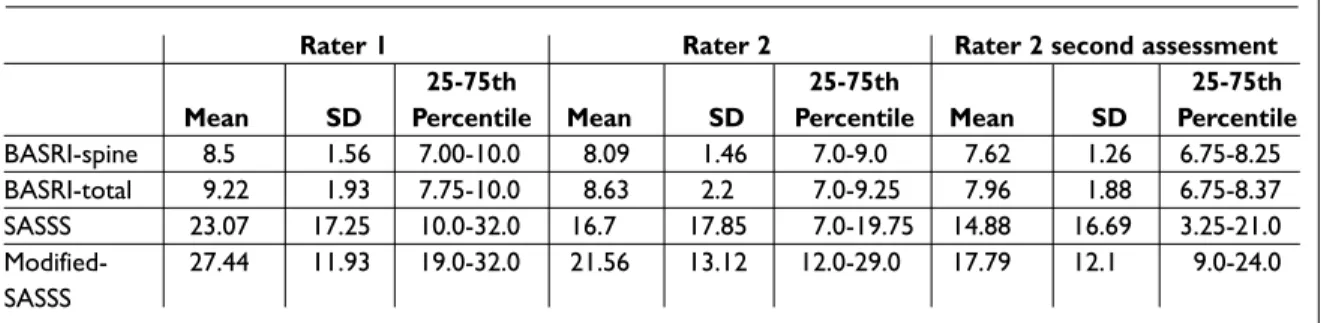
Table I. Scored values of the raters for each method
Rater 1 Rater 2 Rater 2 second assessment
25-75th 25-75th 25-75th Mean SD Percentile Mean SD Percentile Mean SD Percentile
BASRI-spine 8.5 1.56 7.00-10.0 8.09 1.46 7.0-9.0 7.62 1.26 6.75-8.25 BASRI-total 9.22 1.93 7.75-10.0 8.63 2.2 7.0-9.25 7.96 1.88 6.75-8.37 SASSS 23.07 17.25 10.0-32.0 16.7 17.85 7.0-19.75 14.88 16.69 3.25-21.0 Modified- 27.44 11.93 19.0-32.0 21.56 13.12 12.0-29.0 17.79 12.1 9.0-24.0 SASSS
BASRI: Bath Ankylosing Spondylitis Radiology Index; SASSS: Stoke Ankylosing Spondylitis Spine Score; SD: Standard Deviation.
(inter- and intra-rater reliability, respectively) were estimated using tables by Eliasziw et al (at 0.95 con-fidence interval and 0.80 power level, two raters and for two ratings per subject)21. Sample size re-quired was estimated as >40.
Results
The mean time elapsed to score one set of radio-graphs was 68 seconds for the SASSS method, 74 seconds for the modified-SASSS method and 42 seconds for the BASRI-spine method. Scoring va-lues of the raters are shown in Table I.
Both intra and inter-rater reliability were almost good to perfect for all the methods and ICC for all the methods was relatively similar to each other (Table II). The intra-rater reliability was relatively higher than the inter-rater reliability for all the me-thods (Table II).
We also compared the radiological scoring of the anterior site of the lumbar spine with that on the posterior site on the SASSS method. The inter-rater reliability for posterior site of the lumbar spi-ne (ICC 0.81, 95% CI 0.35-0.93) was relatively poo-rer than anterior site (ICC 0.92, 95% CI 0.35-0.98) of the lumbar spine. Intra-rater reliability of the anterior site was also slightly better with respect to posterior site (ICC 0.98, 96% CI 0.97-0.99 vs ICC 0.94, 95% CI 0.90-0.99, respectively). This finding enhances the notion of using anterior sites of the lumbar and cervical spine in the modified-SASSS method. Regarding the BASRI-hip, inter-rater relia-bility was similar for right (ICC 0.79, 95% CI 0.65--0.88) and left hips (ICC 0.84, 95% CI 0.72-0.91). The intra-rater reliability was also perfect for both hips (right hip ICC 0.88, 95% CI 0.79-0.93, left hip ICC 0.77, 95% CI 0.61-0.87).
H A S A N U L U S O Y E C O L.
lumbar spine.
In accordance with previous findings10,25 both intra and inter-rater reliability for the composite BASRI scores (BASRI-spine and BASRI-total) were good to perfect in our study. Additionally, the reliability of the BAS-RI-hip was also good to perfect in agreement with the previous researches10,15,25.
In this study, the mean time spend to sco-re a set of radiographs according to BASRI-spine was <45 seconds, whereas this time was >60 seconds for both the SASSS and mo-dified-SASSS. Similarly, previous studies have reported that SASSS takes more time than the BASRI method27. Calin et al10reported that the mean time taken to score the BASRI-total was less than 30 seconds. To maintain simplicity, BAS-RI does not pick up minor radiologic change inclu-ding erosion, squaring and sclerosis. The score re-mains at grade 2 until fusion between 2 vertebrae or the presence of more than 3 syndesmophytes is identified12. Another advantage of the BASRI me-thod may be the inclusion of hip joints. Hip dise-ase affects 18-37% of the AS population28and is as-sociated with a more severe outcome29. Using the SASSS or modified-SASSS, which are more detai-led methods, is time-consuming with respect to BASRI. However, the modified-SASSS has been identified as the most sensitive radiological me-thod for the evaluation of chronic spinal changes in AS23,30,31. These scoring methods were compared by a group of international experts using criteria developed by the outcome measures in rheumato-logy clinical trials (OMERACT). They found that SASSS and modified-SASSS were more sensitive than BASRI to detect changes at the spine over a 4-year follow-up. The changes were detected at the lumbar spine in 18% of patients according to BAS-RI method, in 46% according to SASSS and in 43% according to modified-SASSS. Change were detec-ted at the cervical spine in 23% of patients accor-ding to BASRI method and in 41% accoraccor-ding to modified-SASSS. SASSS method, which does not include cervical spinal changes, omits a high per-centage of patients who show progression in the cervical spine over a 4-year period. Therefore, the modified-SASSS is more preferable than the SASSS31,32.
Unlike rheumatoid arthritis, radiologic progres-sion in AS appears to proceed quite slowly. At least 2 years of follow up is required to sensitively detect spinal changes according to BASRI and SASSS10,12,15.
Discussion
Structural damage of the spine, such as vertebral squaring, bony erosions, sclerosis, syndesmo-phytes and ankylosis, is a hallmark of AS. The use of a standardized scoring system for spinal radio-graphs allows quantification of damage as a mea-surable outcome for both natural course of the di-sease and clinical trials. Currently various radiolo-gical scoring methods have been validated and used as outcome measures in AS22-24. Any measure that documents disease outcome needs to be re-liable and sensitive to change. Additionally, it must be valid, easy and practical to use in daily clinical practice. This study results confirmed that availa-ble radiological scoring methods, including SASSS, modified-SASSS, BASRI-spine, BASRI-hip and BASRI-total, have substantial to perfect intra and inter-rater reliability.
The developers of the SASSS method found a good inter-rater reliability but, unexpectedly, poo-rer intra-rater reliability11. Spoorenberg et al25 re-ported perfect intra and inter-rater reliability for both the SASSS and modified-SASSS scores, with ICC between 0.92 and 0.98. Similarly, both intra and inter-rater reliability of the SASSS scores were almost perfect in our study. The main problem for SASSS method is the difficulty for scoring the pos-terior site of the lumbar spine. We also found rela-tively poorer reliability scores for the posterior site than anterior site of the lumbar spine. Additionally, it should be emphasized that inclusion of the cer-vical spine in the modified-SASSS gathers impor-tant information. MacKay et al26presented data on the involvement of the cervical spine in a group of 470 patients with AS, 43% of whom showed invol-vement of both cervical and lumbar spine, and 8% showed changes only at the cervical, but not at the
Table II. Inter-and intra-rater reliability of the scoring methods (p<0.0001 for all values)
Inter-rater Intra-rater ICC 95% CI ICC 95% CI BASRI-spine 0.89 0.59-0.96 0.94 0.82-0.98 BASRI-total 0.83 0.56-0.93 0.93 0.78-0.98 SASSS 0.89 0.19-0.97 0.98 0.95-0.99 modified-SASSS 0.86 0.03-0.97 0.97 0.91-0.99
BASRI: Bath Ankylosing Spondylitis Radiology Index; SASSS: Stoke Ankylosing Spondylitis Spine Score; ICC: Intraclass Correlation Coefficient.
R A D I O L O G I C A L S C O R I N G I N A N K Y L O S I N G S P O N D Y L I T I S
Evaluation of radiographs with an interval of one year does not seem to be useful10,17. The radiation exposure is an important disadvantage of the all ra-diological scoring methods. BASRI method requi-res an anteroposterior view of the lumbar spine which increases the radiation exposure. Taking ra-diographs with an interval more than 2 years seems to be reasonable and may reduce the risk of radia-tion. Lack of facet joint examination may be ano-ther limitation of BASRI and SASSS methods. Ac-cording to these methods, a patient with only fu-sion of posterior elements would have low radio-logic scores despite severe spinal involvement. On the other hand, it must be emphasized that the posterior spinal elements are difficult to evaluate even by an experienced musculoskeletal radiolo-gist. Additionally, none of these scoring systems evaluates the thoracic spine, where specific anato-mic features and superimpositions complicate ra-diologic evaluation.
Both BASRI and SASSS methods are significantly correlated with other outcome measures such as the Bath Ankylosing Spondylitis Metrology In-dex3,23,33. Additionally, the modified-SASSS and the BASRI-spine scores were shown to be correlated well with each other23.
Conclusions
Radiological scoring methods remain important outcome measures in AS. There are essentially three different scoring methods: BASRI, SASSS and the modified-SASSS. With a training period, all of these methods have substantial to perfect intra and inter-rater reliability. BASRI is a global scoring me-thod that is easy to perform and time conservati-ve. The modified-SASSS is more preferable than SASSS, because it includes the cervical spine. Us-ing SASSS or modified-SASSS is time consumUs-ing; however, these detailed methods are more sensi-tive to change.
Correspondence to
Dr. Hasan Ulusoy
Firat Universitesi, Tip Fakultesi, Fiziksel Tip ve Rehabilitasyon AD
23119 Elazig, Turkey
E-mail: [email protected], [email protected]
References
1. Sieper J, Braun J, Rudwaleit M, Bonen A, Zink A. Ankylosing spondylitis: an overview. Ann Rheum Dis
2002;61:8-18.
2. Braun J, BM, Sieper J. Radiology and pathology of the spondyloarthropathies. Rheum Dis Clin North Am 1998:697-735.
3. Jenkinson T, Mollorie P, Whitelock H, Kennedy G, Garrett S, Calin A. Defining spinal mobility in anky-losing spondylitis. The Bath Metrology Index. J Rheumatol 1994;21:1694-1698.
4. Creemers MCW, van't Hof MA, Franssen MJAM, van de Putte LBA, Gribnau FWJ, van Riel PLCM. Disease activity in ankylosing spondylitis: selection of a core set of variables and a first step in the development of a disease activity score. Br J Rheumatol 1996;35:867--873.
5. Goodacre JA, Mander M, Carson DW. Patients with ankylosing spondylitis show individual patterns of variation in disease activity. Br J Rheumatol 1991;30:336-338.
6. Pile KD, Laurent MR, Salmond CE, Best MJ, Pyle EA, Moloney RO. Clinical assessment of ankylosing spondylitis: a study of observer variation in spinal measurements. Br J Rheumatol 1991;30:29-34. 7. Averns HL, Oxtoby J, Taylor HG, Jones PW, Dziedzic
K, Daves PT. Radiological outcome in ankylosing spondylitis: use of the Stoke Ankylosing Spondylitis Spine Score (SASSS). Br J Rheumatol 1996;35:373--376.
8. van der Heijde D, Bellamy N, Calin A, Dougados M, Khan MA, van der Linden S, for the Assessment in Ankylosing Spondylitis Working Group. Preliminary core sets for end points in ankylosing spondylitis. J Rheumatol 1997;24:2225-2229.
9. van der Heijde D, Spoorenberg A. Plain radiographs as an outcome measure in ankylosing spondylitis. J Rheumatol 1999;26:985-987.
10. Calin A, Makay K, Santos H, Brophy S. A new dimen-sion to outcome. Application of the Bath Ankylosing Spondylitis Radiology Index. J Rheumatol 1999;26: 988-992.
11. Taylor HG, Wardle T, Beswick EJ, Dawes PT. The rela-tionship of clinical and laboratory measurements to radiological change in ankylosing spondylitis. Br J Rheumatol 1991;30:330-335.
12. MacKay K, Mack C, Brophy S, Calin A. The Bath Ankylosing Spondylitis Radiology Index: a new vali-dated approach to disease assessment. Arthritis Rheum 1998:41;2263-2270.
13. Creemers MCW, Franssen MJAM, van't Hof MA, Gribnau FWJ, van de Putte LBA, van Riel PLCM. As-sessment of outcome in ankylosing spondylitis: an extended radiographic scoring system. Ann Rheum Dis 2005;64:127-129.
14. Kennedy LG, Jenkinson TR, Mallorie PA, Whitelock HC, Garrett SL, Calin A. Ankylosing spondylitis: the correlation between a new metrology score and radiology. Br J Rheumatol 1995;34:767-770.
15. MacKay K, Brophy S, Mack C, Doran M, Calin A. The development and validation of a radiographic gra-ding system for the hip in ankylosing spondylitis: the
bath ankylosing spondylitis radiology hip index. J Rheumatol 2000;27:2866-2872.
16. van der Linden S, Valkenburg HA, Cats A. Evaluation of diagnostic criteria for ankylosing spondylitis: A proposal for modification of the New York criteria. Arthritis Rheum 1984;27:361-368.
17. Spoorenberg A, de Vlam K, van der Heijde D et al. Ra-diological scoring methods in ankylosing spondylitis: Reliability and sensitivity to change over one year. J Rheumatol 1999;26:997-1002.
18. Moll JMH, Wright V. New York clinical criteria for ankylosing spondylitis. Ann Rheum Dis 1973;32:354--363.
19. Shrout PE, Fleiss JL. Intraclass correlations: uses in assessing rater reliability. Psychol Bull 1979; 86:420--428.
20. Landis RJ, Koch GG. The measurement of observer agreement for categorical data. Biometrics 1977; 33:159-174.
21. Eliasziw M, Young SL, Woodbury MG, Fryday-Field K. Statistical methodology for the concurrent assess-ment of interrater and intrarater reliability: using go-niometric measurements as an example. Phys Ther 1994;74:777-788.
22. Brophy S, MacKay K, Al-Saidi A, Taylor G, Calin A. The natural history of ankylosing spondylitis as de-fined by radiological progression. J Rheumatol 2002;29:1236-1243.
23. Salaffi F, Carotti M, Garofalo G, Giuseppetti GM, Grassi W. Radiological scoring methods for ankylo-sing spondylitis: a comparison between the Bath Ankylosing Spondylitis Radiology Index and the modified Stoke Ankylosing Spondylitis Spine Score. Clin Exp Rheumatol 2007;25:67-74.
24. Zochling J. Assessment and treatment of ankylosing spondylitis: current status and future directions. Curr Opin Rheumatol 2008;20:398-403.
25. Spoorenberg A, de Vlam K, van der Linden S et al. Ra-diological scoring methods in ankylosing spondylitis. Reliability and change over 1 and 2 years. J Rheuma-tol 2004; 31:125-132.
26. MacKay K, Brophy S, Mack C, Calin A. Patterns of ra-diological axial involvement in 470 ankylosing spondylitis patients [abstract]. Arthritis Rheum 1997;40:61.
27. Mack CS, MacKay KR, Calin A. Radiology in ankylos-ing spondylitis: a comparison of two scorankylos-ing systems. Br J Rheumatol 1996;35:23.
28. Khan MA. Ankylosing Spondylitis: clinical features. In: Klippel J, Dieppe P, editors. Rheumatology. Mos-by-Year Book Europe Limited; 1994. p. 3:25.1-25.10. 29. Amor B, Santos RS, Nahal R, Listrat V, Dougados M.
Predictive factors for the long term outcome of spondyloarthropathies. J Rheumatol 1994;21:1883--1887.
30. Wanders A, van der Heijde D, Landewe R et al. Inhibi-tion of radiographic progression in ankylosing spondylitis (AS) by continuous use of NSAIDs. Arthri-tis Rheum 2005;52:1756-1765.
31. Wanders AJB, Landewe RBM, Spoorenberg A et al. What is the most appropriate radiologic scoring method for ankylosing spondylitis? A comparison of the available methods based on the outcome mea-sures in rheumatology clinical trials fitler. Arth Rheum 2004;50:2622-2632.
32. van der Heijde D, Landewe R. Imaging in spondylitis. Curr Opin Rheumatol 2005;17:413-417.
33. Baraliakos X, Listing J, Rudwaleit M, Brandt J, Sieper J, Braun J. Radiographic progression in patients with ankylosing spondylitis after 2 years of treatment with the tumour necrosis factor a antibody infliximab. Ann Rheum Dis 2005; 64: 1462-1466.