João Pedro Oliveira Nascimento
Influence of sperm density on cryopreservation outcomes in
sturgeon
UNIVERSIDADE DO ALGARVE
Faculdade de Ciências e Tecnologias
João Pedro Oliveira Nascimento
Influence of sperm density on cryopreservation outcomes in
sturgeon
Mestrado em Aquacultura e Pescas
Trabalho efetuado sob a orientação de: Paulo Zaragoza Pedro, Caviar Portugal Borys Dzyuba, Faculty of Fisheries and Protection of Waters
UNIVERSIDADE DO ALGARVE
Faculdade de Ciências e Tecnologias
i
Influence of sperm density on cryopreservation outcomes in sturgeon
Declaração de autoria de trabalho
Declaro ser o autor deste trabalho, que é original e inédito. Autores e trabalhos consultados estão devidamente citados no texto e constam da listagem de referências incluída.
ii ©João Pedro Nascimento
A Universidade do Algarve reserva para si o direito, em conformidade com o disposto no Código do Direito de Autor e dos Direitos Conexos, de arquivar, reproduzir e publicar a obra, independentemente do meio utilizado, bem como de a divulgar através de repositórios científicos e de admitir a sua cópia e distribuição para fins meramente educacionais ou de investigação e não comerciais, conquanto seja dado o devido crédito ao autor e editor respetivos.
iii
Acknowledgments
I want to thanks to Dr. Paulo Zaragoza Pedro for accepting to be my advisor and Dr. Borys Dzyuba, to accepting me at the Institute, to be my advisor and with the help he gave me during the experiments. I also want to thanks to Dr. Sergii Borishpolets for the reception he gave me when I arrived at the faculty and for all the help he gave.
I want to acknowledge the importance all the persons involved in the experiments, mainly Yevhen Horokhovatskyi, that helped me during the start of the experiments and to settle at the faculty, also to Xin MiaoMiao, Deepali Rahi and Vitaliy Kholodnyy, that helped me during the experiments, when Yevhen and Dr. Borys Dzyuba, were not available.
I want also to thanks to the rest of the staff of the Laboratory of Reproductive Physiology for the reception they gave me at the beginning and to thanks to all the people of the dormitory for the warm reception at the beginning and the good times we spent together.
From the faculty of the university, I want to thanks to Dra. Elsa Cabrita, for the initial contact that gave me the chance to do the internship at the faculty.
I also want to thanks to Dra. Dina Simes, from office of international relations, for the help she gave me regarding the burocracy necessary and to Miss Kačerová of the office for Ph.D. study and foreign relations at the Institute for the help with the burocracy during the stay.
iv
Abstract
The goals of this experiment were the establishment of procedure for variation of spermatozoid concentration without compromising quality, establishment of highest cell concentration without decreasing post-thaw motility by routine freezing protocol and influence of ploidy level. It was used sperm from sterlet sturgeon (Acipenser ruthenus, n=6), Siberian sturgeon (Acipenser baerii, n=6) and from Russian sturgeon (Acipenser gueldenstaedii, n=4). It was tested a method of increasing concentration of spermatozoa by centrifuging with the following conditions (300 x g, 10 min, 4ºC and 300 x g, 20 min, 4ºC). To find the ideal concentration, it was tested 4 dilutions (1:1, 1:4, 1:9 and 1:49) and 2 controls (one control with spermatozoa without being centrifuged and another control with concentrated spermatozoa without the addition of seminal fluid). To perform these 4 dilutions, the concentrated spermatozoa was diluted with seminal fluid (SF). Then, the sperm was diluted in a cryoprotective medium containing 10% methanol and frozen by a conventional freezing protocol. It was measured the concentration of spermatozoa and motility parameters. It was determined the critical concentration of sperm in the straw where it was known that relative motility was 50% by performing a simple regression line. Spermatozoa after centrifugation had no changes in its quality and it was possible to increase concentration up to 10 times the initial concentration. For post-thaw spermatozoa, the highest motilities were obtained in samples with concentrations lower than 1 x 10⁹ spz mL-1 for all three species (57.5 % for sterlet sturgeon, 40% for Siberian sturgeon and 20% for Russian sturgeon). The critical concentrations in the straw for when we know the relative post-thaw motility is 50% was 1.05 x 10⁹ spz mL-1 for sterlet, 0.92 x 10⁹ spz mL-1 for Siberian sturgeon and for Russian sturgeon was 1.17 x 10⁹ spz mL-1. Regarding motility parameters, the concentrations lower than the critic level had higher VCL values (164 µm s-1 for sterlet sturgeon, 179.26 µm s-1 for Siberian sturgeon and 145.48 µm s-1 for Russian sturgeon). There was significant difference (p < 0.05) when comparing the velocities between the spermatozoa with concentration lower than critic level and higher than critic level in sterlet sturgeon and Siberian sturgeon but not in Russian sturgeon. Our results show a dependency of the concentration and spermatozoa size in cryopreservation outcomes.
v
Resumo
A criopreservação de esperma de espécies aquáticas tem vários benefícios nas áreas da aquacultura, conservação e biomedicina. Permite a preservação de espécies específicas ou estirpes, aumentar o número de animais com maior valor genético, extensão da vida reprodutiva de uma certa espécie e evitar perdas genéticas. Em aquacultura, permite a melhoria da gestão de reprodutores, preservar estirpes genéticas e espécies com problemas reprodutivos (falta de sincronização da produção de gâmetas entre machos e fêmeas e espécies que têm uma baixa produção de esperma).
A família do esturjão, Acipenseridae, inclui 4 géneros, Acipenser, Huso, Scaphirhynchus e
Pseudoscaphirhynchus. O esturjão é das espécies mais antigas de água doce, tendo evoluído cerca
de 200 a 250 milhões de anos atrás. São distinguidos por terem um esqueleto cartilaginoso e vivem essencialmente no hemisfério norte. Os acipenseriformes têm a maior proporção de espécies críticas (17) em comparação com outras famílias. A aquacultura tem um papel fundamental na conservação desta espécie, reduzindo a pressão da pesca. Apesar de ser uma espécie cultivada há mais de 100 anos, os métodos de reprodução artificial e manipulação in vitro foi apenas desenvolvida na segunda metade do século XX. A criopreservação é fundamental para esta espécie porque fornece esperma viável para os programas de repovoamento das espécies.
Apesar de haver muitos estudos atualmente relativos à criopreservação de esperma de esturjão, ainda há vários aspetos que devem ser estudados. Um deles é relativo à concentração de esperma, devido à mistura natural que existe entre o esperma e a urina, faz com que a concentração de esperma tenha grandes variações, entre diferentes machos e até durante diferentes alturas de recolha. Por esse motivo, é necessário que haja uma normalização da concentração de esperma usado em criopreservação para que haja um uso efetivo. Atualmente, para a criopreservação de esturjão, usa-se conteúdos mais pequenos (palhinhas 0.5 mL) e é necessário encontrar uma concentração máxima de esperma que se possa usar sem influenciar o sucesso da criopreservação. Utilizou-se o esperma de sterlet (Acipenser ruthenus), por ser uma espécie muito comum em aquacultura, por se ter um vasto conhecimento no ciclo de vida e no protocolo de criopreservação. Também se usou o esperma de esturjão siberiano (Acipenser baerii) e de esturjão russo (Acipenser
gueldenstaedii) porque, caracteristicamente, o esperma é maior e tem um nível de ploidismo maior
vi Os objetivos desta experiência foram estabelecer um procedimento para a variação da concentração de espermatozoide sem comprometer a sua qualidade, uniformização do protocolo de criopreservação de esperma de esturjão e a influência de ploidismo em três espécies de esturjão. Foi utilizado esperma de 6 machos de sterlet, de 6 machos de esturjão siberiano e de 4 machos de esturjão russo. O método utilizado para aumentar a concentração do esperma consistiu na sua centrifugação com as seguintes condições (300 x g, 10 min, 4ºC e 300 x g, 20 min, 4ºC). Para encontrar as concentrações ideais de esperma, foram consideradas 4 diluições (1:1, 1:4, 1:9, 1:49). Os tratamentos foram diluídos num meio crioprotetor com 10% de metanol. Foram analisadas as concentrações de espermatozoide, foi determinada a concentração crítica de esperma em que a mobilidade relativa (ajustado de acordo com a mobilidade mais alta de cada macho de cada espécie), era de 50%, utilizando-se regressão linear simples, e parâmetros de velocidade, VCL (velocidade curvilínea), LIN (linearidade) e BCF (antes e depois de as amostras serem criopreservadas). Após a centrifugação verificou-se que não existia diferenças entre o esperma nativo e o que foi centrifugado e foi possível obter concentrações 10 vezes superior à concentração inicial. Para as amostras pós-congeladas, obteve-se maior mobilidade com concentrações menores que 1 x 10⁹ spz mL-1 (57.5% para o sterlet, 40% para o esturjão siberiano e 20% para o esturjão russo). As concentrações críticas em que a mobilidade relativa é de 50%, determinadas através da utilização da regressão linear simples foram, 1.05 x 10⁹ spz mL-1 para o sterlet, 0.92 x 10⁹ spz mL -1 o esturjão siberiano e para o esturjão-russo 1.17 x 10⁹ spz mL-1. Aos 10s, foi obtido maior VCL
para o esperma com menor concentração que a concentração crítica (164 µm s-1 para o sterlet,
179.26 µm s-1 para o esturjão siberiano e 145.48 µm s-1 para o esturjão russo aos 10s), acontecendo o mesmo para a LIN (67.23 % para o sterlet, 56.98% para o esturjão siberiano e 64.91% para o esturjão russo). Relativamente ao BCF aos 10s, a tendência manteve-se (7 Hz para o sterlet e esturjão siberiano e 5.76 Hz para o esturjão russo). Houve diferenças significativas (p < 0.05) quando se comparou as velocidades obtidas entre o esperma com concentrações menores e maiores que a concentração crítica no caso do sterlet e do esturjão siberiano, mas não para o esturjão russo. Os resultados preliminares mostram que para o sterlet, a concentração inicial que se deve usar é de 2.1 x 10⁹ spz mL-1, para o esturjão siberiano, a concentração inicial é de 1.84 x10⁹ spz mL-1 mas é necessário realizar mais estudos devido à falta de dados entre 0.5-0.8 x 10⁹ spz mL-1 e 1-2 spz mL-1. Para o esturjão russo, apesar de se ter obtido uma concentração crítica de 2.34 x 10⁹ spz mL-1, valor esse que se encontra sobrestimado porque como foi mencionado anteriormente, os
vii valores de concentração crítica foram obtidos a partir da mobilidade relativa. No caso do esturjão russo, os valores de mobilidade absoluta eram muito semelhantes e baixos o que influenciou os valores de mobilidade relativa. Relativamente à experiência em si, tinha-se definido rácios de diluição, mas que para futuras experiências, estas diluições devem ser ajustadas de acordo com a concentração de esperma antes e depois da centrifugação. A centrifugação em si é essencial, mas só é recomendada quando as concentrações de esperma são baixas, como se pode observar nestas experiências. Relativamente ao protocolo, sugere-se que haja um ajuste no protocolo para o esturjão siberiano e esturjão russo, nomeadamente, nomeadamente na concentração final de crioprotetor na palhinha e rácio de congelamento. Os resultados mostram dependência da concentração e do tamanho do espermatozoide no sucesso da criopreservação e que para o esturjão siberiano e para o esturjão-russo é necessário haver mais estudos.
Palavras-chave: Qualidade do esperma, Concentração, Ploidismo, Mobilidade,
viii
Index
Acknowledgments ... iii Abstract ... iv Resumo ... v List of Figures ... xList of Tables ... xii
Abbreviations and acronyms ... xiii
1) Introduction ... 1
a) Sperm cryopreservation in aquaculture: a tool ... 1
i) Application of sperm cryopreservation in aquaculture ... 1
ii) Factors influencing the success of fish sperm cryopreservation protocol ... 3
b) Sturgeon characteristics, conservation status, aquaculture and sperm biology... 6
i) Sturgeon characteristics, conservation status and aquaculture... 6
ii) Spermatological studies for sturgeon farming ... 10
c) Sturgeon Sperm cryopreservation status ... 12
d) Reasons to perform this experiment ... 15
2) Objectives ... 17
3) Methodology ... 17
a) Sperm collection ... 17
b) Sperm concentration and motility parameters assessment ... 18
c) Cryopreservation protocol ... 20
d) Statistical analysis ... 21
4) Results ... 23
a) Method of sperm concentration ... 23
b) Post-thaw Motility % ... 23
c) Individual sperm motility parameters ... 25
i) Sterlet sturgeon ... 25
ii) Siberian sturgeon ... 29
iii) Russian sturgeon ... 33
ix
a) Sterlet sturgeon ... 38
b) Siberian sturgeon ... 40
c) Russian sturgeon ... 41
d) General overview of cryopreserved spermatozoa of sterlet, Siberian sturgeon and Russian sturgeon ... 42
6) Conclusions ... 45
7) References ... 46
Annex I ... 51
x
List of Figures
Figure 1.1 – Geographic distribution of Acipenseriformes (Billard and Lecointre, 2001)
Figure 1.2 – Global sturgeon development from 1950-2011 from fisheries and aquaculture (Bronzi
and Kenthal, 2014)
Figure 1.3 – Estimated global caviar production from fisheries and from aquaculture (Bronzi and
Kenthal, 2014)
Figure 2.1 – Collection of sperm from sturgeon. In (a) shows the collection of sperm and in (b)
the flask where it is introduced the sperm before storing the flask in ice before the experiments.
Figure 2.2 – Computer with ISAS software (Proiser, Valencia, Spain) where the CASA analysis
was performed.
Figure 3.1 - Scatterplot of logarithm relative post-thaw motility against concentration, the values
of concentration are presented in 109 spz mL-1. The r2 was 0.819 for sterlet sturgeon, 0.731 for Siberian sturgeon and 0.509 for Russian sturgeon. The slope was -0.286 ± 0.024 for sterlet sturgeon, -0.325 ± 0.026 for Siberian Sturgeon and -0.257 ± 0.258 for Russian Sturgeon. The critical concentration obtained for sterlet was 1.05 x 10⁹ spz mL-1, for Siberian Sturgeon was 0.92 x 10⁹ spz mL-1 and for Russian sturgeon was 1.17 x 10⁹ spz mL-1.
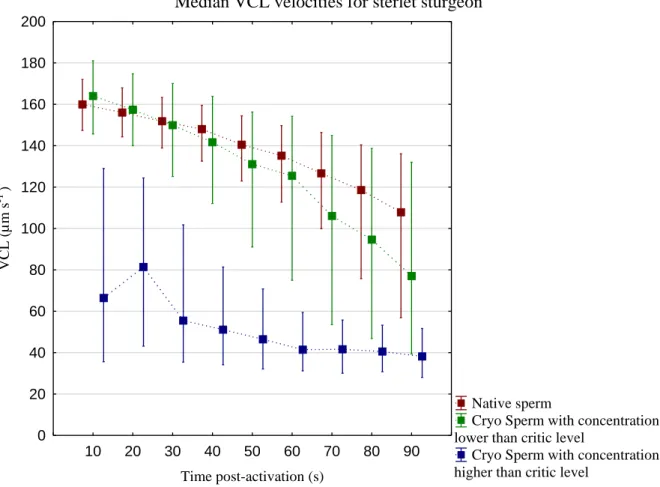
Figure 3.2 – Median VCL for native spermatozoa (Native sperm), post-thaw spermatozoa with
concentration lower than the critic level of sperm (Cryo Sperm with concentration lower than critic level) and Cryo Sperm with concentration higher than critic levels (Cryo Sperm with concentration higher than critic level) in sterlet sturgeon. The letters (a, b, c) represents the statistical differences between treatments at certain times (10s, 40s and 90s) using “Multiple Comparison of mean ranks for all groups” considering p < 0.05. The detailed data is presented in Annex II (Figure II.1).
Figure 3.3 – Median LIN for native spermatozoa (Native sperm), post-thaw spermatozoa with
concentration lower than the critic level of sperm (Cryo Sperm with concentration lower than critic level) and Cryo Sperm with concentration higher than critic levels (Cryo Sperm with concentration higher than critic level) in sterlet sturgeon. The letters (a, b, c) represents the statistical differences between treatments at certain times (10s, 40s and 90s) using “Multiple Comparison of mean ranks for all groups” considering p < 0.05. The detailed data is presented in Annex II (Figure II.4).
Figure 3.4 – Median BCF for native spermatozoa (Native sperm), post-thaw spermatozoa with
concentration lower than the critic level of sperm (Cryo Sperm with concentration lower than critic level) and Cryo Sperm with concentration higher than critic levels (Cryo Sperm with concentration higher than critic level) in sterlet sturgeon. The letters (a, b, c) represents the statistical differences between treatments at certain times (10s, 40s and 90s) using “Multiple Comparison of mean ranks for all groups” considering p < 0.05. The detailed data is presented in Annex II (Figure II.8).
Figure 3.5 – Median VCL for native spermatozoa (Native sperm), post-thaw spermatozoa with
concentration lower than the critic level of sperm (Cryo Sperm with concentration lower than critic level) and Cryo Sperm with concentration higher than critic levels (Cryo Sperm with concentration higher than critic level) for Siberian sturgeon. The letters (a, b, c) represents the statistical differences between treatments at certain times (10s, 40s and 90s) using “Multiple Comparison of
xi mean ranks for all groups” considering p < 0.05. The detailed data is presented in Annex II (Figure II.9).
Figure 3.6 – Median LIN for native spermatozoa (Native sperm), post-thaw spermatozoa with
concentration lower than the critic level of sperm (Cryo Sperm with concentration lower than critic level) and Cryo Sperm with concentration higher than critic levels (Cryo Sperm with concentration higher than critic level) for Siberian sturgeon. The letters (a, b, c) represents the statistical differences between treatments at certain times (10s, 40s and 90s) using “Multiple Comparison of mean ranks for all groups” considering p < 0.05. The detailed data is presented in Annex II (Figure II.12).
Figure 3.7 – Median BCF for native spermatozoa (Native sperm), post-thaw spermatozoa with
concentration lower than the critic level of sperm (Cryo Sperm with concentration lower than critic level) and Cryo Sperm with concentration higher than critic levels (Cryo Sperm with concentration higher than critic level) for Siberian sturgeon. The letters (a, b, c) represents the statistical differences between treatments at certain times (10s, 40s and 90s) using “Multiple Comparison of mean ranks for all groups” considering p < 0.05. The detailed data is presented in Annex II (Figure II.16).
Figure 3.8 – Median VCL for native spermatozoa (Native sperm), post-thaw spermatozoa with
concentration lower than the critic level of sperm (Cryo Sperm with concentration lower than critic level) and Cryo Sperm with concentration higher than critic levels (Cryo Sperm with concentration higher than critic level) for Russian sturgeon. The letters (a, b, c) represents the statistical differences between treatments at certain times (10s, 40s and 90s) using “Multiple Comparison of mean ranks for all groups” considering p < 0.05. The detailed data is presented in Annex II (Figure II.17).
Figure 3.9 – Median LIN for native spermatozoa (Native sperm), post-thaw spermatozoa with
concentration lower than the critic level of sperm (Cryo Sperm with concentration lower than critic level) and Cryo Sperm with concentration higher than critic levels (Cryo Sperm with concentration higher than critic level) for Russian sturgeon. The letters (a, b ,c) represents the statistical differences between treatments at certain times (10s, 40s and 90s) using “Multiple Comparison of mean ranks for all groups” considering p < 0.05. The detailed data is presented in Annex II (Figure II.20).
Figure 3.10 – Median BCF for native spermatozoa (Native sperm), post-thaw spermatozoa with
concentration lower than the critic level of sperm (Cryo Sperm with concentration lower than critic level) and Cryo Sperm with concentration higher than critic levels (Cryo Sperm with concentration higher than critic level) for Russian sturgeon. The letters (a, b ,c) represents the statistical differences between treatments at certain times (10s, 40s and 90s) using “Multiple Comparison of mean ranks for all groups” considering p < 0.05. The detailed data is presented in Annex II. (Figure II.24).
xii
List of Tables
Table 1.1 – Some examples of stresses encountered by cells during “slow” freezing (Morris,
2007).
Table 1.2 - Age, weight and total length at puberty, average time (years) between two spawnings
and longevity in the wild for species of Acipenser (A), Huso (H), and Pseudoscaphirhynchus (P) and one farmed stock of A. baerii (Billard and Lecointre, 2001).
Table 1.3 - Morphological parameters of spermatozoa, regarding Total Length (TL), Nucleus
Length (NL) and ploidy level (n=60) in sterlet, Siberian sturgeon and Russian sturgeon (Alavi et al., 2012b).
Table 2.1 – CASA analysis parameters that were obtained for this experiment.
Table 2.2 – Treatments considered in this experiment. 2 control treatments, 1 treatment with native
spermatozoa (Control Native) and a control with concentrated sperm after centrifugation without seminal fluid (Control Stock) and 4 treatments (1:1, 1:4, 1:9 and 1:49). For the dilution, it was used pure seminal fluid.
Table 3.1 - Statistical descriptors (slope, r-square and intercept) obtained for all the species used,
obtained from GraphPad Prism 7.
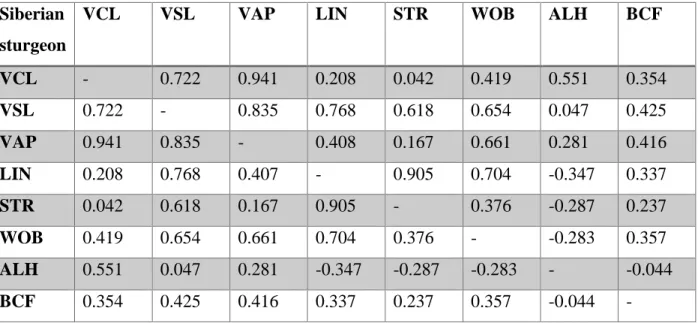
Table 3.2 – Spearman's rank correlation coefficient (ρ) between sperm parameters in sterlet
sturgeon considered p < 0.05. The higher the p-value, the higher the correlation between the sperm parameters.
Table 3.3 – Spearman's rank correlation coefficient (ρ) between sperm parameters in Siberian
sturgeon considered p < 0.05. The higher the p-value the higher the correlation between the sperm parameters.
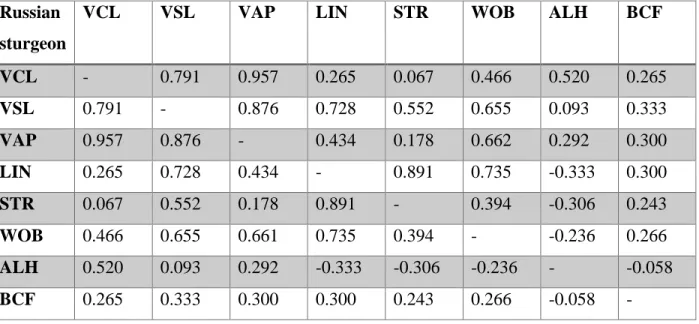
Table 3.4 – Spearman's rank correlation coefficient (ρ) between sperm parameters in Russian
sturgeon considered p < 0.05. The higher the p-value the higher the correlation between the sperm parameters.
xiii
Abbreviations and acronyms
FAO - Food and Agriculture Organization of the United Nations IUCN - International Union for Conservation of Nature
ATP - Adenosine triphosphate DMSO - Dimethyl sulfoxide MET – Methanol
EG – Ethylene glycol DMA – Dimethylacetamide BSA - Bovine serum albumin CR – Critically endangered
GnRH - Gonadotropic-Releasing Hormone cAMP - Cyclic adenosine monophosphate DNA - deoxyribonucleic acid
RAS - Recirculating aquaculture systems BW – Body weight
ISAS – Integrated System for Semen Analysis CASA – Computarized-assisted sperm analysis Spz – Spermatozoa
SF – Seminal fluid
VCL - Curvilinear velocity VSL – Straight line velocity VAP – Average path velocity LIN - Linearity of track STR - Straightness
BCF - Beat cross frequency
ALH – Amplitude of lateral head displacement WOB - Wobble
1
1) Introduction
a) Sperm cryopreservation in aquaculture: a tool
i) Application of sperm cryopreservation in aquaculture
Cryopreservation of sperm from aquatic species offers several benefits in the fields of aquaculture, conservation and biomedicine. Brings the possibility of preserving specific species or strains, increasing the representation of genetically valuable animals, extension of the reproductive life of a certain animal and avoids genetic losses (Zhang et al., 2004) and has a potential to be applied in aquaculture (Asturiano et al., 2017; Tiersch, 2008). Allows the improvement of broodstock management at hatcheries, preserving the genetically selected strains resulting from genetics improvement programs or helping with species that have reproductive problems namely, lack of synchronization in the gamete production of male and female or species that have low sperm production (Asturiano et al., 2017).
There been extensive reviews in cryopreservation, in some cases detailed protocols for farmed species and most of those reports are focused on freshwater species but for marine species, it is not as developed (Martínez-Páramo et al., 2017). For freshwater species, the most focus have been on salmonids, cyprinids and sturgeons (Martínez-Páramo et al., 2017). Lately there has been an increase interest in designing protocols for species from tropical and subtropical areas (Martínez-Páramo et al., 2017). Studies in range of freezing rates, cryoprotectants or extenders are still conducted to develop cryopreservation protocols for species like Atlantic salmon (Salmo salar) (Dziewulska et al., 2011), beluga sturgeon (Huso huso) (AramLi et al., 2015), Siberian sturgeon (Acipenser baerii) (Judycka et al., 2015), perch (Perca fluviatilis) (Bernáth et al., 2015) or tambaqui (Colossoma macropomum) (Maria et al., 2015; Varela Junior et al., 2015). As mentioned previously, cryopreservation of sperm from most marine fish is not as developed as for freshwater species. One of the reasons for this lack of research and application of cryopreservation at production level is due to the reproduction of most marine commercial species occurs naturally in the tank, where no artificial fertilization is required, reducing the need for gamete management techniques (Martínez-Páramo et al., 2017). For halibut (Hippoglossus hippoglossus) and turbot (Scophthalmus maximus) there’s been research on sperm cryopreservation (Babiak et al., 2008; Chereguini et al., 2003). Most of the conducted work in new species is due to conservation of stocks to guarantee culture production, genetic improvement programs and broodstock
2 management (Martínez-Páramo et al., 2017) and for Atlantic halibut, the first successful cryopreservation of sperm was reported by Bolla et al., (1987) and since then several studies were reported regarding the improvement of cryopreserved sperm as well the technology needed for applications in industry (Babiak et al., 2006; Ding et al., 2011). Protocols for other flatfish, have been developed, like, for example, Senegalese sole (Solea senegalensis) and summer flounder (Paralichtys dentatus) (Martínez-Páramo et al., 2017). There are also protocols for new species being introduced in aquaculture to address problems associated with overexploitation of existing fisheries resources, for example, snappers, where some of them are listed as vulnerable by the IUCN, grouper, where some species are listed as endangered (Martínez-Páramo et al., 2017). Several studies were conducted on sperm cryopreservation of this group to synchronize gamete availability between species (Martínez-Páramo et al., 2017). Studies on hybridization, have been done to favour rapid growth (giant grouper, Epinephelus lanceolatus) or tolerance to crowding (orange-spotted grouper, Epinephelus coioides) (Kiriyakit et al., 2011) have been carried out.
Sperm cryopreservation in aquatic species is only beginning to find application on a commercial scale while in mammals, the cryopreservation of genetic resource has already high commercial value. The development of this new industry is constrained by many factors, that includes, the technical requirements for scaling-up to commercial operations during the transition from research (Asturiano et al., 2017; Tiersch, 2008). Tiercsh (2008), mentioned that, for the future commercial application in aquatic species, these next major activities should be included:
- development of technical capabilities and facilities with well-funded and secure locations; - establish training programs for procedural efficiency and recruitment of personnel;
- development of appropriate biosecurity safeguards to control movement of pathogens; - development of a functioning storage repository;
- implementation of archival labelling and creation of robust databases capable of handling biological information;
- further development of capabilities computing and information transfer including the ability to interact and exchange information between databases;
3 - cooperation between organizations and facilities;
- establishment of quality control protocols and standardization of labelling, terminology, reporting of results and databases;
- connection between all the individual repositories, to establish a full repository system and an establishment of pricing structure, marketing and business practices for commercial investment. It should be mentioned that realization of all above mentioned tasks is based on appropriate cryopreservation protocols which should developed and tested considering taxa specific physiological properties of genetic material subjected to cryopreservation (Cabrita et al., 2010).
ii) Factors influencing the success of fish sperm cryopreservation protocol
For a cryopreservation protocol to be successful, there are several factors that need to be considered. The factors that can be considered as the most important ones and that will be explored in this chapter are: sperm quality, extender composition, type and concentration of cryoprotectants, equilibration period and temperature, concentration of sperm and freezing rate, thawing and post thaw handling and viability of assessment of cryopreserved sperm.
Sperm quality its important, because when sperm is collected by stripping, usually the milt is contaminated by urine, which induces activation of the spermatozoa and part of their endogenous stores of ATP are exhausted (Perchec-Poupard et al., 1998). There are ways of avoiding urine contamination, including the use of a catheter introduced into the sperm duct, clearing the bladder before stripping and use of intratesticular spermatozoa (Zhang, 2004).
The extenders are solutions that do not induce sperm activation, based on a saline solution and mimic the osmotic pressure found in the seminal fluid (Cloud and Patton, 2009; Fuller et al., 2004). They are used to dilute the semen, so all individual spermatozoa are exposed to the cryoprotectant before freezing (Fuller et al., 2004). Usually the extenders are composed by salt and sometimes, sugars, such as, sucrose and even the extender can only be composed by sugars, such as a glucose solution (Cloud and Patton, 2009; Lanhsteiner et al., 1995; Legendre and Billard, 1980; Stoss and Refstie, 1983). The most used cryoprotectants are dimethyl sulfoxide (DMSO), glycerol, methanol (MET), ethylene glycol (EG) and dimethylacetamide (DMA) (Boryshpolets et al., 2011; Cloud and Patton; Billard et al., 2004), these compounds enter the cells and protect them during the dehydration process. Other molecules or components such as egg yolk or bovine serum
4 albumin (BSA) are added to solution to act as a membrane stabilizer. (Billard et al., 2004; Cloud and Patton, 2009). Usually the concentration of cryoprotectant used varies from 5 % to 15 % but 10% is the most used concentration and the final concentration needs to be optimized to get greatest protection during freezing and thawing while minimizing toxicity (Cloud and Patton, 2009; Zhang, 2004).
The sperm is usually equilibrated in the cryoprotectant for 10 to 15 minutes at 4ºC, allowing the penetration of the cryoprotectant into sperm before freezing (Zhang, 2004), in cases that the membrane permeability is high, equilibration period is kept as short as possible to avoid the toxic effects of cryoprotectant and extender (Cloud and Patton, 2009; Zhang, 2004). Once cryoprotectant have been added, semen is usually loaded into straws of 0.25 mL, 0.5 mL, 1.2 mL or 5 mL plastic straws (Cloud and Patton, 2009; Zhang, 2004;) or pellets, with 1 or 2 mL (Zhang, 2004).
Different sperm concentrations among individuals and fish species results in different final sperm concentration and concentration of cryoprotectant in the straw (Nynca et al., 2017) and this variability can lead to heterogenous post-thaw quality of the semen. Lahnsteiner et al. (1996) and Judicka et al. (2018) mentions that the influence of sperm concentration in straws on cryopreservation success is species-specific within salmonids but this specificity is also applied in other species besides the salmonids. Lahnsteiner et al., (2000) recommends that the concentration of sperm is dependent on the date of the spawning season, on the age of the fish and may vary between fish populations. The main reason to predict the influence of sperm concentration is: if higher the sperm concentration, the higher is the risk that cells may become closely packed during freezing due to cells partition into unfrozen fraction of solute that in turn leads to cell mechanical damage. This influence will depend mainly on cell concentration and size.
Following ice nucleation in the suspending medium, cells in suspension are not punctured by ice crystals or damaged mechanically by ice. In undercooled solutions, ice crystals grow by migration of water molecules to crystal lattice and not sharp icicles pushing through the solution (Morris, 2007). Following ice formation, cells partition into unfrozen fraction where they are exposed to concentrated solution: cells are not normally “captured” within the ice crystal lattice and they rarely come into direct contact with ice crystals and rather they become concentrated in the unfrozen fraction, where they are exposed to several physical stress (Morris, 2007). It is generally considered that the osmotic response of cells is the determinant of viability since the
5 hypertonic conditions the cells encounter lead to an osmotic loss of water, which is dependent on the rate of cooling. At “slow” rates of cooling, cells remain in equilibrium with the external temperatures, reaching low temperatures, osmotically shrunken with the intracellular compartment sufficiently viscous so that the cells eventually vitrify. As the cooling rate is increased, there is less time for water to diffuse from the cell, becomes supercooled and form intracellular ice, which is lethal (Morris, 2007). Meaning that, if the freezing rates are slower the optimum, the cell death is associated with long exposure to hypertonic conditions, and with cooling rates higher than the optimum, cell death is associated with intracellular ice formation. In table 1, it’s shown some examples of stresses encountered by the cells when they are exposed to a lower freezing rate. The response of cells to the hypertonic conditions encountered during freezing is determined by many biophysical factors: cell volume and surface area, permeability of the cell to water, arrhenius activation energy, type and concentration of cryoprotector additives and cooling rate (Morris, 2007).
Freezing rate is important because as mentioned by Mazur et al., (1972), injuries from freezing is due to two factors. The first factor is, the alteration in the intra- and extracellular solutions produced by ice formation and those detrimental effects increase with the decreasing of the cooling rate, because of slow cooling rate in long exposure times. The other factor is the formation of intracellular ice and its attendant crystallization during slow warming, because intracellular freezing increases when cooling is fast and recrystallization of intracellular ice when subsequent warming. The deleterious effect of one class increases with the increase of the cooling velocity and the deleterious effect of another class decreases with the increasing of the cooling velocity (Mazur et al., 1972), meaning that the optimum occurs when the combined effects of both classes of events are minimal. The sperm can be frozen in programmable freezers, where it is introduced a freezing rate or a regime or simply in the vapours of liquid nitrogen, where the freezing rate is controlled by the height above the liquid nitrogen or simply in the vapours of liquid nitrogen (Billard et al., 2004). The styrofoam box it is the most used to freeze the sperm samples regarding to the use of controlled freezer devices, due to being simple and less expensive (Horokhovatskyi et al., 2017), being easy to apply in practical situations, hatcheries or field sampling and the possibility of an easier application in industry without any investment. After freezing, the frozen samples are thawed in a water bath at temperatures between 0 and 80 ºC, with a typical temperature range being 20 to 40ºC (Lanhsteiner et al., 1995; Zhang, 2004). Depending on the size of the
6 containers, the thawing periods can range between 5 to 30 seconds and the thawed sperm is immediately used for artificial insemination, since motility and fertilizing capacity decrease with time (Zhang, 2004).
Table 1.1 – Some examples of stresses encountered by cells during “slow” freezing (Morris, 2007).
Stress applied to cells Potential Cellular Response Reduction in temperature Membrane phase changes
Depolymerization of the cytoskeleton
Increasing solute concentration Osmotic Shrinkage
Increasing ionic concentration Direct effects on membranes, including solubilization of membrane proteins
Dehydration Destabilization of the lipid bilayers
Precipitation of salts and eutectic formation
Demonstrated to be damaging, but the mechanism is not well defined
Gas Bubble formation Mechanical damage
Solution becomes extremely viscous
Diffusion processes, including osmosis may become limited
Changes in pH Denaturation of proteins
Cells may become closely packed Membrane damage
For the assessment of cryopreserved sperm, many criteria have been used, such as motility, fertilization rate and cell damage (Zhang, 2004). The most common used for assessment are the motility and fertilization rate (Zhang, 2004).
b) Sturgeon characteristics, conservation status, aquaculture and sperm biology i) Sturgeon characteristics, conservation status and aquaculture
The family of sturgeon, Acipenseridae, includes four genera containing 25 species, 17 of them belong to the genera Acipenser, two to the genera Huso, three to the genera Scaphirhynchus and three to the genera Pseudoscaphirhynchus (Dettlaff et al., 1980, Chebanov and Galich, 2011). Sturgeons are the oldest freshwater fishes, having evolved around 200 to 250 million years ago. They are distinguished from modern bony fish due to their cartilaginous skeleton, having the
7 notochord surrounded by a sheath, the perichord, that supports the cartilaginous structure and the spinal cord is in the top of the notochord and the caudal fin is heterocercal (Chebanov and Galich, 2011). Acipenseriformes live exclusively in the Northern Hemisphere, as shown in figure 1.1 and reproduce mostly in freshwater. They migrate for reproduction and feeding, and some species tend to live their whole lives in freshwater, e.g., sterlet (Acipenser ruthenus) and Siberian sturgeon (A.
baerii) while others tend to migrate between freshwater and saltwater (diadromous species) (Billard
and Lecointre, 2001). Some species migrate into seawater after reaching a certain size, (e.g., European Sturgeon (A. sturio), Atlantic Sturgeon (A. oxyrinchus) and white sturgeon (A.
transmontanus) and some other species like Russian sturgeon (A. gueldenstaedtii), Stellate (A. stellatus) and Beluga sturgeon (Huso huso), migrate into brackish water in the Black, Azov and
Caspian Sea (Billard and Lecointre, 2001). Bemis and Kynard (1997) recognized 3 patterns of migration for sturgeon: potamodromy (migration within river/lake system), anadromy (spawning occurs in freshwater, but most of the life cycle is spent at the sea) and freshwater amphidromy (spawning in freshwater, feeding and growth occur during migration into the sea).
Figure 1.1 – Geographic distribution of Acipenseriformes (Billard and Lecointre, 2001).
The life cycle of acipenseriformes is generally long with puberty occurring late in life. Some species, such as the beluga, can live for 100 years and exceed 1,000 kg in mass. These specimens
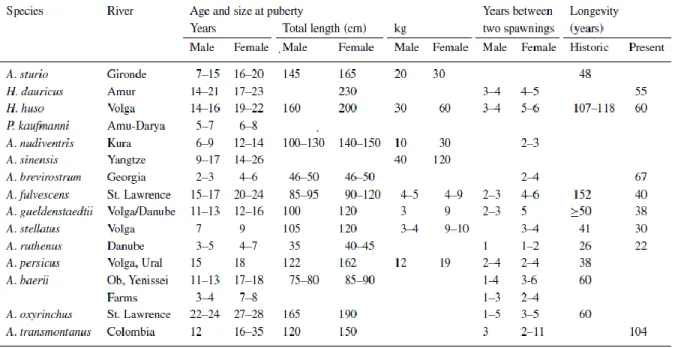
8 are no longer found but some fish over 100 Kg still can be caught (Billard and Lecointre, 2001). Sturgeon growth is continuous with age and after first reproduction, it’s not affected (Bain, 1997; Bruch, 1999; Korkosh and Pronenko, 1998;). Mature Acipenseriformes do not reproduce annually. Spawning rates are once in 2–11 years for females, and 1-6 years for males. The age and size at puberty for species of sturgeon is presented in table 1.3 (Billard and Lecointre, 2001).
Table 1.2 - Age, weight and total length at puberty, average time (years) between two spawning’s and longevity in the
wild for species of Acipenser (A), Huso (H), and Pseudoscaphirhynchus (P) and one farmed stock of A. baerii (Billard and Lecointre, 2001).
30 years of over-exploitation of sturgeon stocks for caviar production along river fragmentation led to the decline of the population (Bronzi and Kenthal, 2014). Sturgeon are adversely affected by degradation of habitat and water quality and accumulation of toxic compounds in sediments and trophic web. They are sensitive to toxic pollutants accumulated in the sediments due to their benthic feeding habits and late puberty, which increases bioaccumulation in the various tissues (muscles, fat, gonads, etc.) (Billard and Lecointre, 2001). Acipenseriformes have the highest proportion of critically endangered (CR) species (17 CR), among all the most threatened animal orders (Bronzi and Kenthal, 2014). Figure 1.2 shows the global harvest of sturgeon in tonnes from 1950 to 2010, and total harvest regarding aquaculture and 1 country, where USSR/Russia had the highest harvest in the 1975, over 30000 tonnes and regarding harvests from aquaculture, it started to increase in early 2000’s, in figure 1.3 shows the preliminary data from Food and Agriculture Organization of the United Nations (FAO) cited in Bronzi and Kenthal
9 (2014) on caviar production reported by member countries for their fishery and sturgeon farms. In the past years, the production of caviar from fished sturgeon is almost 0, according to quotas, while the caviar produced from farmed sturgeon has increased, contributing significantly to the global markets (Bronzi and Kenthal., 2014).
.
10
Figure 1.3 – Estimated global caviar production from fisheries and from aquaculture (Bronzi and Kenthal, 2014).
By supplying these products through aquaculture, fishing pressure can be diverted from this threatened species and have a conservation role but even though they have been farmed for more than a hundred years, intensive artificial reproduction and methods of in vitro manipulation were developed only in the second half of the 20th century (Detlaff et al., 1993) and summarized by Chebanov an Galich (2013). Development of induced spawning and husbandry techniques have permitted restoration programs for sturgeons and paddlefish as well as the establishment of farming some of these fishes for food. Therefore, sperm cryopreservation protocols need to be further developed and optimized so they can provide viable sperm for restoration, conservation of threatened and endangered chondrostei, hybridization, sex manipulation (i.e. gynogenesis and androgenises) and development of genetically superior broodstock (Mims et al., 2011).
ii) Spermatological studies for sturgeon farming
The optimization of male exploitation in aquaculture depends on collecting enough quantity of high-quality spermatozoa to immediately fertilize eggs or store for later use and can be stored for cool for short periods or long-term in liquid nitrogen (Dzyuba et al., 2017). With a good endocrine control of spermiation is possible to collect good quality sperm for in vitro egg fertilization all year and these methods are well described (Chebanov and Galich, 2013). The methodology is based on managing of spermiation by pituitary gonadotropins and gonadal sex
11 steroid synthesis (Alavi et al., 2012b). Using hormonal treatment, is possible to collect large quantities of sperm (up to hundreds of millilitres) with concentrations up to 10 x 109 spz mL-1 and high quality (spermatozoa velocity of 90 to 180 µm s-1 and motility up to 100%) (Dzyuba et al., 2017). These characteristics are highly dependent on species and hormonal treatment methods (Alavi et al.,2012a). The environmental signalling for sperm motility activation is crucial on the elaboration of in vitro fertilization methods, which are thoroughly reviewed for sturgeon in the modern literature (Alavi and Cosson, 2005; Alavi and Cosson, 2006; Alavi et al., 2012ab). The importance of managing sturgeon for efficient husbandry and methods of hypothermic storage and cryopreservation have been reviewed by Billard et al., (2004) and Alavi et al., (2012b). These studies reached the following conclusions:
- stimulation of sperm production can be induced with injections of one of several gonadotropic agents, such as carp or sturgeon acetone dried pituitary extract or analogues of GnRH (Gonadotropic-Releasing Hormone) in combination with a dopamine receptor antagonist;
- semen is produced for several days after hormonal administration and can be collected and stored;
- spermatozoa in stripped semen are immotile in seminal plasma and become active only after dilution with water, or specific activating media in which Ca2+ and K+ ions are the main components of cAMP-dependent signalling for sperm motility activation;
- spermatozoa motility is also under control of bioenergetic pathways.
The morphology of the reproductive system of acipenseriform is different from the other teleostean species, where the sperm of the sturgeons passes through the kidneys then via Wolffian ducts into the environment, rather going directly though the seminal ducts (Dzyuba et al., 2017). In comparison with Actinopterygii taxa, the excretory system of the male sturgeons, have specific anatomical features whereby deferent ducts pass through the kidney, and consequently, the testicular spermatozoa is mixed with the urine which is hypotonic compared to the blood plasma (Krayushkina and Semenova, 2006). This dilution leads to specific characteristics of sturgeon semen, which for artificial propagation, is collected downstream after the passage in the Wolffian ducts and those characteristics included low osmolality, low protein content and spermatozoa content (Alavi et al., 2012a). The processes of milt dilution in the urine were experimentally examined in relation to the sperm milt process (Dzyuba et al., 2014abc; Fedorov, 2015). The mature sperm can be collected by catherization of Wolffian ducts or by applying pressure to the sides and
12 directing the semen into a bowl. Testicular spermatozoa are not capable of being activated in a regular activating medium but acquired capacity after in vitro incubation or in seminal fluid from the Wolffian duct and the sperm maturation is time and temperature dependent (Dzyuba et al., 2014abc; Dzyuba, 2016; Fedorov, 2015). These studies showed that a maturational process in sturgeon takes place outside of the testes in the Wolffian ducts and dilution of testicular spermatozoa by urine is a natural process required for maturation.
The quality of sperm is determined according to sperm production indices (volume and density), DNA and membrane integrity, energy source (ATP contents), chemical and biochemical compositions of the seminal plasma and sperm morphology, motility and fertilizing ability (Alavi et al., 2012a). There are numerous external and internal factors that influence the quality of sperm: temperature and photoperiod, origin of broodfish, (wild or captive) methods for hormonal spermiation induction, frequency of spawning during the reproductive season, feeding and nutrition, stress and endocrine disrupting chemicals (Alavi et al, 2012b). Sturgeon spermatozoa have an acrosomal complex, that is absent from most of teleostean fish. Even though this acrosomal complex is necessary for the penetration to the egg, it is precise role is still unknown (Alavi et al., 2012b). Psenicka et al., (2011) reported that there was a highly correlation between the hatching rate of fertilized eggs and the acrosomal reaction in sperm when the acrosomal reaction was artificially triggered prior to fertilization in vitro, being essential for fertilization and hatching success. This acrosome can be triggered by Ca2+, Mg2+, Sr2+ or egg water (Alavi et al., 2008; Cherr and Clark, 1984; Dettlaff et al., 1993; Lanhsteiner, 2004).
The structure and morphology of spermatozoa have been described for Russian sturgeon, stellate sturgeon, white sturgeon, Atlantic sturgeon, shortnose sturgeon, lake sturgeon, pallid sturgeon, Siberian sturgeon, Chinese sturgeon, sterlet sturgeon and Persian sturgeon (Alavi et al., 2012b). While general description of relationships between ploidy level and spermatozoon size was not done it is possible to predict that this relationship does exist as.
c) Sturgeon Sperm cryopreservation status
There is been reports of successful cryopreservation of sperm for the sturgeon sperm, and in this chapter, it will be shown the ones that can be considered the most important, regarding extender medium, cryoprotectant and freezing rates.
The first attempt of sperm cryopreservation in sturgeon was done by Burtsey and Serebryakova (1969), where he tested in beluga, kaluga and sterlet. The motilities of post-thawed
13 beluga sperm were 50-80%, kaluga and sterlet were 10%. Fertilization rates of samples used to fertilize sturgeon eggs of the same species did not exceed 1%. Pushkar et al., (1979) found that DMSO to be the best cryoprotectant for sturgeon and when used as a diluent with tris-buffer and egg yolk, 50-60% of the post-thawed sperm maintained forward motility. Pushkar et al., (1980a) reported testing of cryoprotectant medium containing 25% DMSO in 0.2M (32.5%) tris HCl-buffer, 0.1 M (32.5%) HCL and 10% of egg yolk. In one of their other articles (Pushkar et al., (1980b)), they concluded that the tris-HCl buffer solution was better for deactivation and survival of sperm, egg yolk was important to increase the activity and fertilization rate of sperm. Silver iodide decreased the ice crystallization during freezing thereby decreasing the number of damaged sperm. Tsvetkova et al., (1996) reported successful fertilization using cryopreserved milt from Siberian sturgeon and sterlet. For Siberian sturgeon, the post-thaw motility of spermatozoa was 23 %. For sterlet sperm, post-thawed motility was 15 %. The fertilization rates using post-thawed cryopreserved were 53% for Siberian sturgeon and 23 % for sterlet sturgeon. Jӓhnichen et al., (1999), reported a success in cryopreservation by using of ethylene glycol (EG) as a cryoprotectant. He obtained post-thaw motilities between 10% and 28%. Horvath and Urbányi (2000) were the first to report the use of methanol as a suitable cryoprotectant for sturgeon sperm. They tested three cryoprotectants were tested at various concentrations and they observed that the highest post-thaw motility (46 %) was reported using the sucrose extender and 10% methanol and it also had the best fertilization results (22 %). Glowgowski et al., (2002) reported success with two extenders (Tris– sucrose–KCl and Tris– NaCl) supplemented with 10% methanol for the Siberian sturgeon with of motilities of 15.6 % and 15.5 % respectively and a hatching rate of 30% and 18% respectively. Billard et al., (2004) refers several authors (Dettlaff et al., 1993; Cherepanov et al., 1993, Drokin et al., 1993, Cherepanov and Kopeika, 1999) that used an extender composed by 100-150 mM of Tris-HCl, DMSO (10-15%) and egg yolk (10-15%), having motility of 40% and a fertilizing capacity of 63% for the Ponto-Caspian sturgeons (Persian sturgeon, Russian sturgeon and Siberian sturgeon). Lahnsteiner et al., (2004), tried to define optimal solutions for the inhibition and activation of sperm motility and the protective potential and toxicity of the cryoprotectants to understand the semen biology and cryobiology for the sterlet. They observed that potassium at concentrations of 2.5-5mM L-1 inhibits the motility of sperm. Urbányi et al., (2004) reported a successful use of cryopreserved sturgeon sperm for hybridization of three species (sterlet, Siberian sturgeon, Russian sturgeon and European sturgeon), having initial post-thaw motilities of 70% and
14 40 % for sterlet, 40% for Siberian sturgeon, 30% for Russian sturgeon and 70% and 60% for European sturgeon. Psenicka et al., (2008) analysed the motility and acrosomal staining characteristics of cryopreserved sterlet sperm to determine why DMSO when used as a cryoprotectant of sturgeon sperm produced high post-thaw motility, but low fertilization rates as compared to methanol. The authors stated that the DMSO may be causing preliminary effects that lead to the acrosomal reaction which are not detectable with the current staining technique, but that may be the cause for the reduced fertility. Boryshpolets et al., (2011) analysed the influence of four different cryoprotectants, DMSO, EG, DMA and MET. DMA was used since it did not have enough study, using concentrations of 5% and 10% for each cryoprotector. With the concentration of 5% and 10% of cryoprotectant, the motility obtained for Met was 28% and 46%, for DMSO was 30% and 45%, EG was 6% and 15% and DMA was 36% and 47%. MET 10% had the highest fertilization and hatching rates rate (near 40 % and 32%, respectively). AramLi et al., 2015 tried to determine the best freezing rate (from -10ºC to -40ºC/min) for beluga sperm and to quantify additional information on the effects of freezing rate on fertilizing ability, motility parameters and ATP content. They observed that the freezing rate of -40ºC/min had higher total duration, with 134s and motility of 69 %, also had significantly higher concentrations of ATP (4.8 nmol/ 108 sperm) and it also happened for fertilization and hatching rate. Judicka et al., (2015b) characterized and compared basic parameters and sperm motility of sperm obtained in December (out of season) and in April. They concluded that the sperm obtained in December can be stored for 24 h and can be cryopreserved without being compromised for artificial reproduction of Siberian Sturgeon. Yamaner et al., (2015a) tested three different types of cryomedium for Russian sturgeon, Cryomedium I (sucrose 24mM, Tris 30 mM, KCl 0.25 mM with methanol 10%), Cryomedium II (sucrose 23.4 mM, Tris- HCl 118 mM, egg yolk 20% with DMSO 20%) and Cryomedium III (sucrose 80 mM, KHCO3 1 mM, RDC Glutathione 5.5 mM with DMSO 10%). They obtained better results for Cryomedium I and II, with mean post-thaw motilities of 28 and 30 % respectively. AramLi et al., 2016 tried to determine the best freezing (-10ºC to -40ºC/min) for Persian sturgeon and evaluated the effects of programmable freezing on sperm motility parameters, fertilization and hatching rates, oxidative stress indices and ATP content. They observed that post thaw sperm from at -40ºC/min, had the better values, with a motility duration of 120 seconds and motility percentage of 60 %, also had the highest fertilization and hatching rates 80% and 75%, respectively, had ATP concentrations of 4.5 nmol/ 108 sperm.
15 There is success in sperm cryopreservation in different sturgeon species and nowadays there is a standard cryopreservation protocol, where the most common used extender is composed by sucrose, Tris-HCL and KCl, containing methanol as a cryoprotectant. For freezing, the most common used is freezing above liquid nitrogen at a height of 3 cm. But even though all of this research, there is no research on how the spermatozoa size, concentration and the differences in ploidy level, influences the cryopreservation outcomes and these unknown factors were tested in this thesis.
d) Reasons to perform this experiment
While sturgeon sperm cryopreservation nowadays is considered technically easy task, but there are several aspects of this procedure, which should be additionally studied to fulfil the requirements of cryobanking in aquaculture practice. It was mentioned above that natural sperm mixing with urine leads to large variability of sperm concentration between males and even for the same male, when sperm is collected at different time after the start of spermiation. That in turn requires standardization of sperm concentration in cryopreserved samples for the most effective use in practice. As modern technics of sturgeon sperm cryopreservation is elaborated for small volume packages, it significantly increases the dimensions of cryo-storage facilities. That is why increase of sperm concentration in cryopreserved samples will facilitate progress in development of sturgeon sperm cryobanking. Dzyuba et al., (2012) reported that there is a high correlation between the sperm concentration and fertilization, hatching rates and sperm osmolarity in the cryopreservation outcomes. However, there is strong restriction for application of cryopreservation for sperm of high concentration. So, there is a necessity to identify the maximum sperm concentration which will not compromise cryopreservation outcomes. The study of this maximum cell concentration was performed in several fish species but not in sturgeon. It should be mentioned that, compared to other actinopterygian fish species, sturgeon spermatozoa possess some specific features such as relatively big size and presence of acrosome, that is why it is not possible to predict if optimal sperm concentration in sturgeon will be similar like other species. The reason to use sterlet is due to be a common species used in aquaculture and cryopreservation, having a strong knowledge regarding life cycle and cryopreservation protocol. Russian sturgeon and Siberian sturgeon were used to due to the bigger size of the sperm and ploidy level and since it is unknown if the ploidy level has a positive or negative influence in cryopreservation outcomes. In the
16 following table is presented some morphological parameters of the spermatozoa (Total Length (TL), Nucleus Length (NL) and Ploidy level) from sterlet, Siberian sturgeon and Russian sturgeon:
Table 1.3 - Morphological parameters of spermatozoa, regarding Total Length (TL), Nucleus Length (NL) and ploidy
level (n=60) in sterlet, Siberian sturgeon and Russian sturgeon (Alavi et al., 2012b).
Species TL (µm) NL (µm) Ploidy level (n=60)
Sterlet sturgeon 47.61 3.30 (0.31) 2n
Siberian sturgeon 51.76 4.98 (0.83) 4n
17
2) Objectives
The objectives of this experiment were:
-Establishment of procedure for variation of cell concentration without compromising sperm quality;
-determination of maximum cell concentration which does not decrease of post-thaw motility by routine conventional freezing protocol;
- influence of different ploidy level in the three species of sturgeon.
3) Methodology
The experiments were performed in the facilities of Faculty of Fisheries and Protection of Waters at the University of South Bohemia in České Budějovice located in Vodňany, Czech Republic during the natural spawning season of sturgeon, between March and May.
a) Sperm collection
Sperm from 4 males of sterlet were collected at 14th of March and the other 2 males at 4th of April. Sperm from Siberian sturgeon and Russian sturgeon were collected in 19th of April and 25th
of April. Males of sterlet (9-15 years, 1-1.8 Kgs), Siberian sturgeon (7-15 years, 4.5-10.8 Kgs) and Russian sturgeon (13-22 years, 11.7-15.5 Kgs), were transferred from fish farming ponds to 4-m3 plastic tanks with closed water recirculation system (RAS) and the temperature of the water was increased to 15ºC over the subsequent 7 days. Males were injected with 4mg/ Kg BW carp pituitary powder dissolved in a 0.9% (w/v) NaCl, 24 hours before being stripped. The sperm was collected a catheter with 4 mm of diameter, connected to a 200 mL flask, inserted in the urogenital papilla or through aspiration, having the catheter connected to a 10 mL syringe and then stored in ice as shown in figure 2.1. It was only selected the sperm that presented an initial motility above 80%.
18
(a) (b)
Figure 2.1 – Collection of sperm from sturgeon. In (a) shows the collection of sperm and in (b) the flask where it
was introduced the sperm before storing the flask in ice before the experiments.
b) Sperm concentration and motility parameters assessment
Immediately after collection, the motility parameters were evaluated. Motility of sperm samples was initiated (in a 1:100 dilution) in an activating medium consisting of 10 mM of Tris-HCl and 0.25% Pluronic F-127 (catalogue number P2443, Sigma-Aldrich) at pH 8.0. Motility was observed using a negative phase-contrast microscope (UB 200i, PROISER, Spain) with an attached ISAS 782M digital camera (PROISER, Germany) as shown in figure 2.2. Sperm motility was evaluated through estimation of the motile spermatozoa in all the layers of the activation medium droplet. For the analysis of the velocity parameters, since fish sperm tend to swim near the surface, motility was recorded on the bottom portion of the activation medium droplet. Video records were obtained at 10-s intervals from to 10 to 90 s post-activation and were analysed using the Integrated System for Semen Analysis (ISAS) software (Proiser, Valencia, Spain). Computerised-assisted sperm analysis (CASA) included the parameters that are shown in the following table (Table 2.1).
19
Figure 2.2 – Computer with ISAS software (Proiser, Valencia, Spain) where the CASA analysis was performed.
Table 2.1 – CASA analysis parameters that were obtained for this experiment.
Units Descriptors Descriptions
VCL µm/s Curvilinear velocity Velocity of progression along the entire trajectory
VSL µm/s Straight line velocity Velocity of progression from first to last coordinates
VAP µm/s Average path velocity Velocity of progression along the smooth trajectory
LIN % Linearity of track VSL/VCL *100
STR % Straightness VSL/VAP *100
BCF Hz Beat cross frequency Frequency that the sperm head
crosses the smoothed trajectory
ALH µm Amplitude of lateral head
displacement
Mean lateral sperm head displacement along the smooth trajectory
WOB % VAP/VCL Oscillation percentage of the
real track with respect to the average track.
20 The concentration of spermatozoa was evaluated using a Burker cell hemocytometer (Meopta, Czech Republic) at 200x magnification on Olympus BX phase-contrast microscope (Olympus, Japan). To increase sperm concentration the sperm was centrifuged on Heraeus Megafuge 16R from Thermo Scientific (Osterode am Harz, Germany). The sperm from 4 males of sterlet were centrifuged at the following condition (10 min, 300 x g, 4ºC), while the sperm from other males of sterlet, Siberian sturgeon and Russian sturgeon were centrifuged with these conditions (20 min, 300 x g, 4ºC), due to the low concentration increase when it was centrifuged with the first conditions and the objective of this experiment was to concentrate sperm as maximum as possible. The pellet (concentrated sperm) was removed from the tube and the supernatant was centrifuged (5000 x g, 15 min) to obtain pure seminal fluid. The concentration of sterlet spermatozoa before being centrifuged ranged from 0.41-1.79 x 10⁹ spz mL-1 and after
centrifugation ranged from 1.25-9.16 x 10⁹ spz mL-1, from Siberian sturgeon, ranged between
0.07-0.98 x 10⁹ spz mL-1 before being centrifuged and after being centrifuged, ranged between 0.76-9.16 x 10⁹ spz mL-1 and from Russian sturgeon, ranged between 0.57-2.11 x 10⁹ spz mL-1 before
being centrifuged and after being centrifuged ranged between 6.25-12.39 x 10⁹ spz mL-1.
c) Cryopreservation protocol
The concentrated spermatozoa obtained from the pellet and native spermatozoa from each male and species were used and frozen individually. To find the ideal concentration of spermatozoa in the straw, we tried several dilutions (1:1, 1:4, 1:9 and 1:49) by adding seminal fluid (SF), as shown in table 2.2. As for controls, it was used native spermatozoa and sperm after centrifugation without diluting with SF. For cryopreservation, sperm was diluted with the extender (1:1 dilution) with the following composition: 23.4 mM sucrose, 0.25 mM KCl, 30 mM Tris-HCl and pH of 8.0 containing 10% of methanol, having a final cryoprotectant concentration of 5 %. Each treatment was stored into 0.5 mL straws and frozen 3 cm above liquid nitrogen in a styrofoam box for 10 mins, with a freezing rate previously determined by Horokhovatskyi et al., (2017) and then plunged into liquid nitrogen.
21
Table 2.2 – Treatments considered in this experiment. 2 control treatments, 1 treatment with native spermatozoa
(Control Native) and a control with concentrated sperm after centrifugation without seminal fluid (Control Stock) and 4 treatments (1:1, 1:4, 1:9 and 1:49). For the dilution, it was used pure seminal fluid.
Dilution rate of spz:SF
Spermatozoa (µl) Seminal Fluid (µl) Cryoprotectant (µl)
Control Native 320 0 320 Control Stock 320 0 320 1:1 160 160 320 1:4 64 256 320 1:9 32 288 320 1:49 6.4 313.6 320
The thawing of the samples was performed in a water bath at 40ºC for 6 seconds and it was evaluated the motility and velocity using the same procedure mentioned above. Measurements of sperm velocity parameters were conducted in triplicates for each male, while spermatozoa concentration and motility before and after cryopreservation were estimated from a single measurement.
d) Statistical analysis
As post thaw motility percentage was varying in dependency of male and cell concentration, the data of motility percentage, were transformed into relative motility percentage values and after, it was done the logarithm of those relative motility percentage values. For this transformation the highest motility in each male (Mot max) was considered as 100% and then for all other samples from the same male relative motility percentage was calculated by formula: (Mot sample/ Mot max) 100%. The logarithm was used due to the high variability of results. It was made a simple regression analysis to predict the dependency of concentration and to find statistically a significant point that we can consider as a limit of maximum concentration. The scatterplot was plotted, making the trendline intercept initially in the y axis at 2, since the maximum of relative motility obtainable is 100%. After it, it was obtained the equation obtained from this regression line and it was determined the critical concentration of spermatozoa in the straw for each species. It was decided to use a relative post-thaw motility of 50 % since ecologically is acceptable and there are
22 other factors that influences post-thaw motility parameters besides concentration. To determine their statistical descriptors (slope and intercept), the data was obtained by using GraphPad Prism 7 (GraphPad Software, La Jolia, USA).
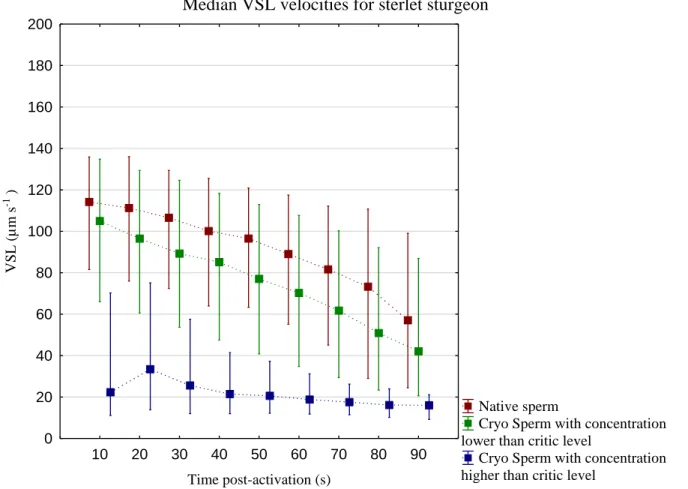
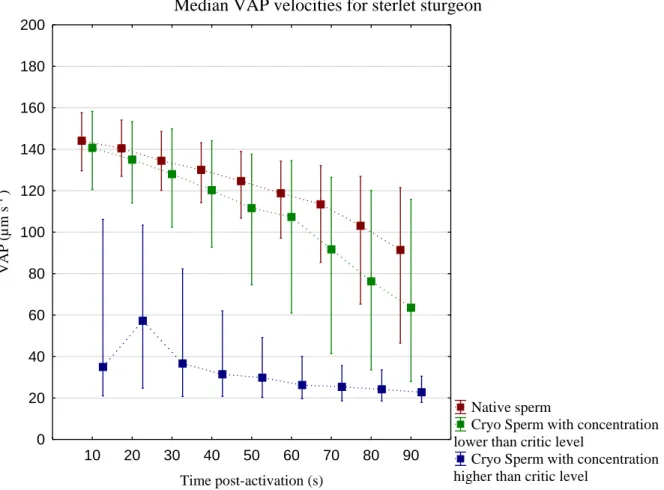
The values of velocity parameters were checked for distribution characteristics and homogeneity of dispersion using Shapiro-Wilk’s and Levene’s tests. Since the data was not normally distributed, they were presented as median and interquartile (25 % and 75%). To compare spermatozoa velocity before and after cryopreservation and motility duration, nonparametric statistics using the Kruskal-Wallis test followed by “Multiple Comparison of mean ranks for all groups” for comparison among groups. This analysis was made at 10s, 40s and 90s, since it matched with the beginning, middle and end of the recording. Correlations among spermatozoa parameters were evaluated using Spearman's rank correlation coefficient (ρ). Based on this analysis VCL, LIN and BCF were selected as parameters correlating with low ρ , to simplify the presentation of data, also to have represented 1 parameter regarding the velocity of spermatozoa, linearity of track and the head movement of the spermatozoa. All spermatozoa that had VCL below 20 µm s-1 were considered immotile and were excluded from analysis. Statistical significance was
considered at p < 0.05 in all tests and to perform the analysis was used STATISTICA software v. 13.4 (TIBCO Software INC, Palo Alto, CA, USA).
In annexes I and II, is presented all data regarding the concentrations and motility determined in each straw, velocity parameters and statistical analysis.