Drivers of Emotions and Purchase Intention in Virtual Supermarket
Setting: Explore the rule of Mental Imagery, Product Involvement and
Presence
CAROLINA FERREIRA CORREIA
Dissertation submitted as partial requirement for the conferral of Master in Marketing
Prof. Sandra Maria Correia Loureiro, Associate Professor with aggregation, ISCTE Business School, Departamento de Marketing, Operações e Gestão Geral
II
D
RI
V
E
RS O
F E
MO
T
IO
N
S
A
N
D
PUR
C
H
A
SE
INTE
N
T
IO
N
IN V
IRT
U
A
L
SU
PE
RM
A
R
K
E
T
SE
T
T
IN
G: E
X
PL
O
RE
T
H
E
RU
L
E
O
F ME
N
T
A
L
IM
AG
E
RY
,
PRO
D
U
CT
IN
V
O
L
V
E
ME
N
T
AND PRE
S
E
N
CE
C
a
ro
li
n
a
F
erre
ir
a
C
o
rre
ia
III
Acknowledgments
To begin with, I would like to say that this year was very challenging and to accomplish this dissertation is undoubtedly a great pride for me. I would like to express my gratitude to all my family, friends, colleagues and professors who somehow contributed to my thesis.
Firstly, I would like to thank my family and close friends for supporting me since the beginning of my academic life, especially during the last year. Without them, it would not be possible to be so motivated to complete my master’s degree. Thank you for all the encouragement and help.
One of the most important driver of this dissertation was my supervisor Sandra Loureiro. I am very thankful for all the support given and all time spent in order to help me. Professor has always been available since the beginning to discuss any topic and give valuable inputs for the dissertation. Thank you for all the guidance and feedback.
In addition, I would like to express my sincere gratitude to my boss, João Cardoso, for all the support and comprehension since I start working at Henkel. Without his flexibility, it would be very difficult to finish the dissertation on time.
Last but not the least, I could not have finished this dissertation without the contribution of everyone who dedicated some minutes of their time to participate in the experience and fill in my survey and to whom I feel really thankful.
Thank you all for helping me to finish this cycle and hope I will still have your support for the next challenges!
IV
Abstract
In this competitive market, companies more and more pay attention on consumer satisfaction by giving a great experience. Many marketing tools have been used to create the right atmosphere during the shopping experience which should stimulate positive emotions to the individual and consequently influence the purchase intention.
Virtual Reality is one of the tools that marketers have investigated to understand its benefits in consumers’ behaviour. Some researches have been made in this field but there is still a lot left to explore. In this vein, the presented dissertation intends to explore how a computer-generated supermarket can affect some factors, that are believed in literature can influence the purchase intention. In order to contribute to the existing literature, this study will analyse the effect of Mental Imagery, Product Involvement and Presence on customer’s emotions during a shopping experience and on the purchase intention. The model was tested in the laundry detergent category. Moreover, a moderator analyses was made to evaluate the effect of some variables inherent to this category’s consumers.
A virtual scenario was created, and the participants experienced a supermarket with virtual reality. Findings reveal that a virtual atmosphere has impact in consumers experience. Mental imagery has the most significant impact on the emotions generated whereas presence has a strong influence on purchase decision. Oppositely, product involvement has any effect on emotions. In addition, the obsession for laundry products highly decrease the effect of product involvement on purchase intention.
Keywords: Virtual Reality, Purchase Intention, Emotions, Store Atmosphere JEL Classification System: M310 - Marketing
V
Resumo
No mercado competitivo de hoje, as empresas preocupam-se cada vez mais com a satisfação dos consumidores, proporcionando uma excelente experiência. Várias ferramentas têm sido usadas para criar uma atmosfera eficaz durante a experiência de compra a fim de estimular emoções positivas e consequentemente influenciar a compra.
Realidade Virtual é uma das ferramentas que se tem investigado para perceber quais os seus benefícios no comportamento dos consumidores. Têm sido feitos alguns estudos nesta área, mas ainda há muito por explorar. Neste sentido, esta dissertação pretende investigar como um supermercado virtual pode afetar algumas variáveis que influenciam a intenção de compra. A fim de contribuir para a literatura já existente, este estudo analisa o efeito das Imagens Mentais, o Envolvimento do Produto e Presença nas emoções dos consumidores e na decisão de compra. O modelo foi testado na categoria dos produtos para a lavagem da roupa. Além disso, uma análise de moderadores foi realizada para avaliar o efeito de algumas variáveis inerentes nos consumidores desta categoria.
Foi criado um cenário virtual e os participantes experienciaram um supermercado em realidade virtual. Os resultados revelam que o ambiente virtual tem impacto no comportamento. As Imagens Mentais têm o impacto mais significante nas emoções geradas enquanto que é a Presença que tem maior impacto na intenção de compra. Por outro lado, o envolvimento com o produto não tem nenhum efeito nas emoções. Além disso, a obsessão por produtos de lavar a roupa diminui a relação entre o envolvimento do produto e a decisão de compra.
Palavras-Chave: Realidade Virtual, Decisão de Compra, Emoções, Ambiente de Loja Classificação JEL: M310 – Marketing
VI
Index
1. Introduction………...11
1.1 Research Problem ... 11
1.2 Structure of the thesis ... 13
2. Literature Review………..14
2.1 Consumer Experience ... 14
2.1.1 Hedonic vs Utilitarian Value ... 15
2.2 Customer Journey ... 16 2.3. Store Atmosphere ... 17 2.3.1 Conceptualization of atmospherics ... 17 2.3.2 Senses ... 18 2.3.2.1 Visual ... 18 2.3.2.2 Auditory ... 19 2.3.2.3. Smell ... 19 2.3.2.4. Tactile ... 20
2.4 Emerging Technologies in Shopping Experience ... 20
2.4.1 Virtual Reality ... 21
2.4.2 Virtual Reality as Marketing Tool ... 22
2.5. Proposal model and hypotheses development ... 23
2.5.1 Product involvement ... 23 2.5.2 Mental Imagery ... 24 2.5.3. Emotional states ... 26 2.5.4 Purchase intention ... 28 2.5.5 Moderators ... 29 2.5.5.1 Obsession ... 29 2.5.5.2 Personality Traits ... 29
VII
2.5.5.3 Perceived Assortment ... 30
2.5.5.4 Perceived Similarity ... 32
2.6 Framework ... 32
3.Methodology……….36
3.1 Virtual Reality Experience ... 36
3.2 Questionnaire ... 38
3.3 Sampling Profile ... 39
4. Data Analyse……….41
4.1 Descriptive Analyse ... 41
4.2 Measurement Model Results………...48
4.3 Structural Results………50
4.4. Moderate Effects………51
5.Conclusion and Implications………55
5.1 Conclusion and Implications ... 55
5.2 Managerial Implications ... 59
5.3 Theoretical Contribution ... 60
5.4 Limitations and future research ... 61
6. References……….63
VIII
List of Tables
Table 1: Sociodemographic Data - Gender………39
Table 2: Sociodemographic Data – Education Level………39
Table 3: Sociodemographic Data – Frequency to the supermarket………40
Table 4: Descriptive Analyses – Product Involvement………..42
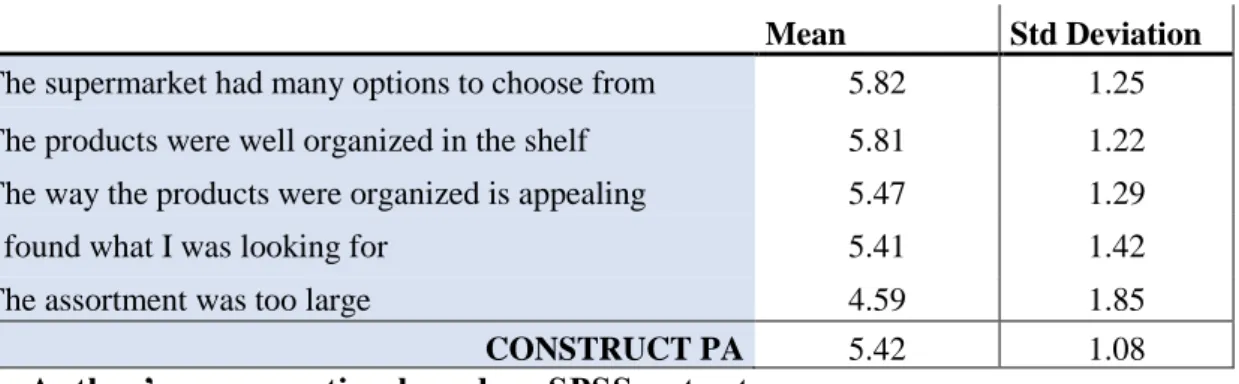
Table 5: Descriptive Analyses – Product Assortment………43
Table 6: Descriptive Analyses – Perceived Similarity………...43
Table 7: Descriptive Analyses – Emotions………44
Table 8: Descriptive Analyses – Presence………44
Table 9: Descriptive Analyses – Purchase Intention ………45
Table 10: Descriptive Analyses – Obsession………45
Table 11: Descriptive Analyses – Quantity………46
Table 12: Descriptive Analyses – Modality………...46
Table 13: Descriptive Analyses – Valence………48
Table 14: Measurement Results – First order construct level………...49
Table 16: Measurement Results – Second order construct level………50
Table 17: Structural Results………...51
Table 18: Moderating Effects………52
Table 19: Direct Effects……….53
IX
List of Figures
Figure 1: Research Structure………..13
Figure 2: S-O-R Model………..………27
Figure 3: Framework……….33
X
List of Abbreviatures
VR – Virtual Reality 3D – Three Dimensional PLS - Partial Least Squares SKU – Stock-Keeping Units HDD – Hard Duty Detergent FFI – Fabric Finisher
11
1. Introduction
One of the main factors that influence consumer behaviour during shopping is store atmosphere. Store atmosphere is “the effort to design buying environments to produce specific emotional
effects in the buyer that enhance his purchase probability” (Kotler, 1974: 50). Store atmosphere
reaches the consumers through their sensory system, in this case through sight, touch, smell and sound. Retailers must know how to stimulate those senses on consumers by modifying some variables, such as music, colour or temperature (Rayburn & Voss, 2013).
Store atmosphere acquired huge importance due to its impact on consumer experience. Customers are starting to value this point more and more during purchase (Edelman & Singer, 2015). Retailers are now realising that the consumer experience they give to their customers is a way to obtain competitive advantage from other brands, so a huge development on this field is being made. To help marketers finding solutions, technology provided important changes and improvements in marketing tools (Shankar et al., 2011). One of them was the implementation of Virtual Reality.
Having Virtual Reality in mind, literature defines this technology as a computer-generated environment where the user feels present in that virtual world (Sutherland, 1970). Virtual Reality has been used for different fields, including Marketing. More and more retailers believe that Virtual Reality is a powerful tool to engage with clients.
This is a topic in need of deeper research, if we are to better understand the benefits Virtual Reality can bring to different companies, specifically by influencing customer experience and purchase intention. However, the impact of Virtual Reality depends on diverse variables, which will be addressed in this study.
1.1 Research Problem
During last years, marketing has suffered a lot of changes, especially regarding the way brands approach their consumers. In fact, consumers are becoming more and more demanding and complex and companies must know how to get with those new type of consumers. To follow up the shoppers, new marketing tools were born, while others were improved. And technology has had a huge contribute on that. Consumers ask more than a simple product or service, they ask for an unique experience with the brand. And this has been the big challenge for marketers.
12 Literature shows that one way to enhance the consumers’ experience is by working on the store atmosphere in order to manipulate the shoppers behave and generate the pretended answers from them. Scientifically, an individual can be manipulated by his sensory factors (such as smell, visual…). Hereupon, retailers must create a store atmosphere that will optimize the consumer behaviour and their decisions, leading a purchase decision.
A lot of opportunities have grown to influence shopper decision. One of the most revolutionary technologies that retailing is trying to implement is Virtual Reality because marketers believe retailing can benefit from it. Indeed, a lot of researchers see the use of Virtual Reality as a promising tool in marketing. But the question is how can brand benefit from it and, on the other hand, how consumer deal with this new approach on their experience. A lot of companies from different markets are testing this new tool and most of them are being successful. The true is consumers feel more entertained and engaged in a store by having a virtual reality experience. However, there is a lack in literature about how this tool can change different factors which influence the consumer experience.
Taken all together a research question emerges: how mental imagery, presence and product involvement influence purchase intention and emotion? And could obsession, perceive similarity and perceive assortment act as moderators between mental imagery, product involvement or presence and purchase intention?
In the current research Virtual Reality is employed to understand whether or not consumers of supermarket laundry products are viewed in a different way. Indeed, as far as we know this is a first attempt to: (a) explore how mental imagery and presence influence purchase intention and emotions in a virtual reality intention simulation a supermarket where laundry products are placed, (b) analyse the moderation effect of obsession with cleanliness on the relationship between mental imagery and purchase intention, between presence and purchase intention and between product involvement and purchase intention, (c) analyse the moderation effect of perceive similarity on the relationship between mental imagery and purchase intention, between presence and purchase intention and between product involvement and purchase intention, and (d) perceive assortment product involvement and purchase intention, (c) analyse the moderation effect of perceive similarity on the relationship between mental imagery and purchase intention, between presence and purchase intention and between product involvement and purchase intention.
13
1.2 Structure of the thesis
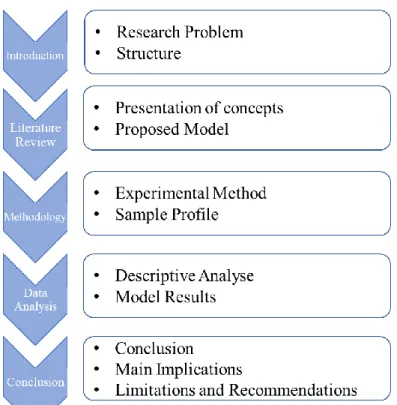
The following paragraphs explain how this thesis is structured and is complemented with the figure 1.
The first chapter includes the introduction, the research problem and the thesis structure. In this chapter it will be found the main topics that will be discussed during the dissertations and also the main purpose of the study. The second chapter consists in the literature review, where the concepts are presented and a deeply exploration is conducted. In addition, the research model is developed, and the hypotheses are formulated. The following chapter regards to the methodology chosen to conduct this research and how the experience was performed. The sample profile and participants socio-demographic characteristics were also introduced. Chapter number four presents the results collected from the experience and data were examined. Finally, in chapter 5 the main conclusions and recommendations from this study are presented.
Figure 1: Research Structure
14
2. Literature Review
2.1 Consumer Experience
Consumers are more demanding and complex, and the market is reaching high levels of competitiveness (Farias, Aguiar & Melo, 2014). Due to this fact, companies intend to offer a memorable and unique shopping experience (Terblanche, 2018). In fact, consumers “want to
be entertained, stimulated, emotionally affected and creatively challenged” (Schmitt,1999 in
Farias, Aguiar & Melo, 2014: 94). These sub-experiences together result in the overall customer experience (Brakus, Schmitt & Zarantonello, 2009). An experience occurs when the company has the intention of creating one, resulting in engagement with customers (Hultén, 2011) as they interact with the store itself (Brakus, Schmitt & Zarantonello, 2009). It is essential that companies know how to manage these moments to create unforgettable and extraordinary experiences which stimulate positive responses (Flavián, Ibánez-Sánchez & Orús, 2018) and, above all, that they learn how to design shopping experiences that enhance the enjoyment during this moment (Kerrebroeck, Brengman & Willems, 2017), because those who enjoy the purchase journey continue to make more purchases, comparing to those who do not (Pantano & Naccarato, 2010).
The way retailers manage store atmosphere has a significant impact on consumer behaviour, and consequently on their shopping experience. This is supported by Rayburn and Voss’ (2013) research, which says the designer of the retail environment seeks to create a space that contributes to a positive shopping experience. Customer experience can be defined, according to literature, as the cognitive, emotional, physical, sensorial and social responses from consumers who are exposed direct and indirectly to differently elements in a store (Brakus, Schmitt & Zarantonello, 2009; Terblanche, 2018), which include variables like music, décor, temperature, light, colours, and other sensory stimulus that enhance those experiences (Morisson, Gan, Dubelaar & Oppewal, 2011). Specifically, Puccinelli et al., (2009) explained that the environmental stimulus influences a consumer’s emotional state directly (e.g., pleasure, arousal, among others), which in turn drives the consumer to show approach or avoidance behaviour (e.g., the willingness to purchase the product or not). Many shopping outcomes can be influenced by those stimuli such as: attitude, approach behaviour, satisfaction or loyalty (Kerrebroeck, Brengman & Willems, 2017).
15 According to a study conducted by Forrester (2016), improving customer experience is the top priority for 72% of the businesses. In addition, one of the marketing trends outlined in 2018 was providing emotionally engaging customer experience during the purchase journey (Forbes, 2017). The question is how well firms are managing the way customer experience is reshaping itself (Flavián, Ibánez-Sánchez & Orús, 2018).
Many authors believe that technology can boost customer experience (Flavián, Ibánez-Sánchez & Orús, 2018; Edelman & Singer, 2015). Besides, some companies have moved from the traditional retail atmosphere to digital solutions at the point of sales (Kerrebroeck, Brengman & Willems, 2017) . Studies demonstrated that in-store digital displays have a positive influence on client behaviour and final decision (Dennis et al., 2014). A lot of new technology trends have since appeared, as we will study deeply in the chapter 2.4.
2.1.1 Hedonic vs Utilitarian Value
To go deeper in this field, one must understand the purpose consumers have about going shopping, as well as the value given to them by that experience. Literature divides the shopping purpose into hedonic and utilitarian value. The hedonic or utilitarian value is influenced by perceived overall atmosphere, because the appeal of shopping environment provides both experiential and functional value (Rayburn & Voss, 2013).
The two concepts differ from each other according to the level of enjoyment or avoidance during shopping. On the one hand, hedonic value is related to the level of pleasantness during the experience (Farias, Aguiar & Melo, 2014). In fact, consumers give greater importance to the overall experience than the specific purchase purpose (Rayburn & Voss, 2013). In sum, hedonic value is associated with the multi-sensory aspects - visual, music, arousal, among others - the consumer is exposed to during his experience (Farias, Aguiar & Melo, 2014). The utilitarian value, on the other hand, is defined by Babin & Attaway (2000) as the instrumental shopping desire, that is, when an individual has a specific purchase purpose and intends to obtain the product in the most efficient and effective way (Rayburn & Voss, 2013). This type of value has a bigger impact on shoppers “with more of a rule-based and functional
orientation” (Babin & Attaway, 2000: 97) and “driven by instrumental concerns with experiential concerns centred on avoiding hassles or perceived efforts” (Rayburn & Voss,
2013: 401). In spite of these differences and the importance of both, retailers tend to understand consumer behaviour from a hedonic perspective.
16
2.2 Customer Journey
As seen before, firms are now focused on creating and delivering positive customer experiences. According to Lemon and Verhoef (2016), customer experience is defined as the entire customer journey with the company over time. This journey is made through multiple touch points in different channels and media. In other words, touch point is the “customer
contact point or a medium through which the firm and the customer interact” (Neslin et al.,
2006: 96) direct or indirectly. The different touch points go from traditional earned media to the store itself (Baxendale, Macdonald & Wilson, 2015). However, the current complexity of touchpoints and the entire customer journey have become a huge challenge for companies, the way they create, manage and attempt to control the experience and journey of each customer. With all of these developments, the customer decision journey needs to be deeply understood by companies, as well as how it flows. The more companies realise this, the more the journey itself becomes a source of competitive advantage (Edelman & Singer, 2015). According to the same authors, developing the customer journey involves treating it as a product which needs to be actively managed, analysed and measured in order to capture maximum value.
The customer journey is interactive and dynamic. Lemon and Verhoef (2016) divided it into three phases: pre-purchase, purchase and post-purchase. Each phase experiences different touchpoints and the customer decision journey needs to be understood across all phases (Wiesel, Thprsten & Pauwels, 2010).
Regarding Lemon and Verhoef’s theory, the first stage is pre-purchase and involves the interaction with the brand/category/product before the purchase transaction. At this stage, the customer shows behaviours such as search, consideration and recognition. This phase starts when the customer realises the need/goal of the purchase. After this, comes the second stage – purchase – when the customer stops searching and has the interaction with the brand during the purchase itself. Finally, the post-purchase phase includes behaviours such as usage and consumption. This phase is crucial to create engagement with the brand and, above all, define the continuity or discontinuity of their journey. The main challenge for companies is to identify the right touchpoints to reach customers in each phase. In fact, touchpoint strength or importance can vary during the customer decision journey (Baxendale, Macdonald & Wilson, 2015).
17 To summarise, customer journey is a source for companies to deliver added value to customers and consequently create competitive advantage (Edelman & Singer, 2015). The next challenging step is how to optimize this tool, as technology has become a great driver of it (Flavián, Ibánez-Sánchez & Orús, 2018)
2.3. Store Atmosphere
More and more purchase choices tend to be influenced not only by products themselves, but also and mainly by the service offered during the shopping experience. Actually, consumers make decisions according to the total product, which includes all product features, such as services, warranties, advertising or store atmosphere (Kotler, 1974). According to Kotler, store atmosphere can be one of the strongest key features of a product, so he defined the “store
atmosphere as a marketing tool” (Atmospherics as a Marketing Tool, 1974: 48). In a survey,
researchers found that 63% of consumers consider store atmosphere a reason to spend more time inside the store and 45% responded they spent more money as a result (Rayburn & Voss, 2013). Now, retailers understand the importance of their store atmosphere on buyer behaviour and make an effort to create a stimulating atmosphere in order to impact consumer feeling (Rayburn & Voss, 2013) and influence their decisions (Farias, Aguiar & Melo, 2014). This is because atmosphere has a strong impact on a customer’s positive but also negative affective arousal, which in turn leads to hedonic or utilitarian shopping value (Babin & Attaway, 2000 in Rayburn & Voss, 2013).
2.3.1 Conceptualization of atmospherics
The past years have witnessed different research attempting to define the concept of “Store Atmosphere”. Beginning with one of the pioneers in this area, atmosphere is “the effort to
design buying environments to produce specific emotional effects in the buyer that enhance his purchase probability” (Kotler, 1974: 50). In other words, the store should be designed with the
specific purpose of creating a planned effect in buyers or potential buyers. In 2000, this definition was reinforced by Turley & Milliman, with the addition of atmosphere variables - external variables, interior, layout, point of sales décor – having a direct impact on cognitive effect of consumers, in turn leading to a behavioural shopping response (Turley & Milliman, 2000). A more recent definition says that “atmosphere in marketing is a term used to describe
the conscious design area in order to create effect on consumers” (Farias, Aguiar & Melo,
18 In literature, different authors agree the consumers can be manipulated by the involved atmosphere. An individual takes an atmosphere in through his senses (Kotler, 1974). Therefore, there are some components in a store that will increase the stimulus of the senses (Farias, Aguiar & Melo, 2014) and influence a particular consumer’s sensory experience.
2.3.2 Senses
As mentioned previously, people’s thoughts and behaviours are affected involuntarily by sensory experience (Baek, Choo & Lee, 2018). In the case of retail store atmosphere, the main sensory channels are sight, sound, scent and touch (Kotler, 1974). Each sense is stimulated by manipulating different variables (Rayburn & Voss, 2013) categorised by Berman and Evans (1995) into: the exterior of the store, the general interior, the layout and design, and the point of purchase and decoration. However, Rayburn & Ross (2013) included one more category: human variables. These variables are manipulated by, for instance, colours, smell, sights and music (Farias, Aguiar & Melo, 2014; Rayburn & Voss, 2013). The next section will further investigate how a shop atmosphere can stimulate each sense.
2.3.2.1 Visual
Visual consumer perception is one of the most studied dimensions, since retailers believe the visual differentiation of a store is important to compete with other brands (Meißner et al.., 2017). The sense of sight can be captured by colour, brightness, size, shapes (Kotler, 1974), movements (Farias, Aguiar & Melo, 2014), lighting (Turley & Milliman, 2000) or décor (Baek, Choo & Lee, 2018).
Regarding colour variables, Farias, Aguiar & Melo (2014: 90) claimed “colours produce
different reactions in individuals (biological, emotional, and draw attention to an object)”,
hereupon retailers use colours in store to create the right mood state in consumers. Colours can stimulate purchases, purchasing rates, time spent in store, pleasant feelings, arousal, store and merchandising (Turley & Milliman, 2000). Different authors found which emotions a specific colour seems to stimulate an individual’ senses. Bellizzi & Hite (1992) made an important contribution to this area. According their study, the colours red and blue (opposite colour properties) have a completely different effect on shopping behaviour. On the one hand, red takes us to a negative and tense atmosphere, but is also perceived as an arousing, exciting and stimulating colour (Labrecque & Milne, 2011). On the other hand, the study showed that blue
19 appeals to a calm, cool and positive atmosphere (Bellizzi & Hite, 1992). In addition, consumers tend to be easily attracted to the shop when it presents warm colours, such as red (Farias, Aguiar, & Melo, 2014). Colour became increasingly relevant for brands, since through colours they can establish an effective visual identity (Labrecque & Milne, 2011), helping to establish their position on consumers’ minds.
2.3.2.2 Auditory
Different studies have come to show the massive impact that non-visual dimensions have on consumer behaviour during shopping. A research made by Helmefalk & Hultén (2017) evidenced that although visual stimulus is the most frequently used factor to appeal to consumers, retailers should supplement it with other ones, namely auditory factors. The result would have a superior impact on emotions and behaviour (Helmefalk & Hultén, 2017).
Back to Kotler (1974), the author defined as aural dimensions the volume, the pitch and noise (Hopkins, 1994 in Helmefalk & Hultén, 2017), as “playing the appropriate background music
can help retailers develop atmosphere” (Farias, Aguiar & Melo, 2014: 91). Music can influence
an individual’s mental process, which in turn will impact his movements inside the shop (Helmefalk & Hultén, 2017).
Music is an easy cue to control and modify (Spence et al., 2014), so it can open a lot of opportunities to retailers. For example, according the same authors, louder music is more appropriate for inciting rapid behaviour, turning the shopping process more optimal. Another study showed the direct effect of music and behaviour, proving that the right music increases the pleasure level, the time and money spent and consequently the overall satisfaction (Morisson et al., 2011).
2.3.2.3. Smell
Smell is considered the primary stimulus when a person walks into a store (Farias, Aguiar & Melo, 2014) and is influenced by scent and freshness (Kotler, 1974). However, Spence et al. (2014) added two important characteristics: the intensity and pleasantness. Scent can be an appealing stimulus to elicit approach behaviours (Spence et al., 2014), by creating a more positive shopping experience.
20 This sense has a particular feature that sets it apart from the other three. A smell may be related with an association mean (Spence et al., 2014), that is, a scent used in the store can recall a relevant memory to the shopper (Farias, Aguiar & Melo, 2014). Therefore, an emotional bond with the products is easily created.
An important study made by Morrison et al. (2011) proved that the right smell has a direct influence on the level of consumer satisfaction regarding the shopping experience. The authors averred that the store aroma increase the pleasure and consequently the time and money spent. Despite being an important key for retailers to achieve specific objectives, the scent dimension must be congruent with the store and the identity of the brand (Spence et al., 2014). Otherwise, it can impact the shopping experience negatively, inviting bad memories when the consumer is exposed to that specific smell (Farias, Aguiar & Melo, 2014).
2.3.2.4. Tactile
The last important channel inside the store is tactile dimension. Again, Kotler (1974) defined the key factors which influence this sense: softness, smoothness and temperature. Later in 2013, King, Block and Hadi added three more characteristics: texture, weight and hardness. Tactile atmosphere has gained importance because researchers have found that shoppers tend to buy a product if they touch it first (Spence et al., 2014). Nevertheless, this topic still lacks research, contrary to the other three senses. In addition, available literature is quite divided on this subject. The most influential aspect regarding touch is temperature, because people are very sensitive to this stimulus. To prove it, research was conducted to analyse the impact of a warm and a cold environment and shows that consumers respond differently to them (King, Block & Hadi, 2013). According to the authors, when exposed to cold temperatures, people tend to behave more emotionally and in a hedonic way than in a warm environment. In fact, in a warmer store, consumers act with utilitarian decision making.
2.4 Emerging Technologies in Shopping Experience
The new Marketing era became a huge challenge for retailers. The field of retailing suffered a lot of changes mainly due to technologies. Consequently, consumer behaviour is also different from past years (Grewal, Nordfält & Roggeveena , 2017). Nowadays, consumers are more demanding and became more complex. However, technologies are not the only driver of this
21 change. According to Shankar et al. (2011), there are other three important drivers: economy, regulation and globalization. On this research we will focus only on technology.
Retailing is shifting from traditional marketing to a modern in-store practises where the omnichannel is the key (Souidena & Ladharia, 2018). The same authors agree that reaching this omnichannel model involves the use of multichannels and, additionally, the increase of shopper touchpoints (Shankar et al., 2011). This multichannel environment is enhanced by some new technology development such as advanced mobile devices and interfaces, powerful search engines, online social networking (Shankar et al., 2011), physical in-store locations, mobile web (Souidena & Ladharia, 2018) and also virtual and augmented reality (Grewal, Nordfält & Roggeveena, 2017). Slowly, retailers are trying to establish contact with their clients by converging offline and online channels.
The purpose behind this change is how it will impact consumer behaviour and their shopping experience. The use of these innovations intends to help customers make a good purchase decision, feel less time pressure, increase their satisfaction and pleasure, feel more engaged and make efficient and quick purchases (Grewal, Nordfält & Roggeveena, 2017)
Although this new experience approach brings a big opportunity for brands, it is also a field that is difficult to develop and needs a lot of study in the years ahead.
2.4.1 Virtual Reality
In response to these new trends, companies have developed strategies in order to be relevant to customers and competitive in the market. Smart technology can enhance the quality of a shopping experience (Kerrebroeck, Brengman & Willems, 2017). One of those key transformations uses Virtual Reality.
Virtual Reality has offered a large potential for a long time, but those opportunities are just beginning to come true, not only by the hands of retailers but also by the ones of shoppers. The new form of technology based on reality is a way to enhance sensory perceptions, if well used (Grewal, Nordfält & Roggeveena , 2017). Though marketing experts see the evolution of Virtual Reality with high hopes for companies, there are no clear guidelines as to how they should integrate it on their marketing mix (Boyd & Koles, 2018). So, more research is needed to understand the potential of this tool.
22 The term “Virtual Reality” began early with the visionary Sutherland (1970), who believes Virtual Reality is a model of real world in real-time, in which the user feels like it as a reality they can manipulate directly and realistically. After that, various authors came up with different definitions, complementing each other. However, a few years later, Steuer (1992) gave us a more scientific approach, defining Virtual Reality as a stimulated environment in which the individual experiences telepresence, that is, the person feels present in a virtual world. In VR, the user emerges in a computer-generated environment where it is possible to perceive, act and interact with a three-dimensional world (Borawskaa, Borawskib & Łatuszyńska, 2018). Kerrebroeck, Brengman and Willems (2017) also contributed to this concept, referring to it as computer-based technology that engage with the human senses (vision, hearing, among others…) and consequently create the feeling of being there. Summing up, VR is a three-dimensional world with realistic sensations, which is able to stimulate a physical presence of environments that actually exist (Farshid et al., 2018).
Virtual Reality is based on three key characteristics: immersion, interactivity (Boyd & Koles, 2018; Kerrebroeck, Brengman & Willems, 2017; Meißner, Pfeiffer & Oppewal, 2017) and the ability to create real-time engagement (Boyd & Koles, 2018). Firstly, when exposed to a virtual environment, the individual experiences the sense of immersion or presence within that environment (Loomis & Blascovich, 1999). In other words, the user feels like being there and escaping or becoming isolated from the real world (Kerrebroeck, Brengman & Willems, 2017). Beside immersion, VR provides a very dynamic environment (Boyd & Koles, 2018), which is important to create consumer involvement. According to Steuer (1992), the user is able to participate by modifying form and content of the environment in real time.
2.4.2 Virtual Reality as Marketing Tool
At first, Virtual Reality was being used in areas like gaming and entertainment, but the tool quickly extended to other areas, like education and tourism (Marasco et al., 2018). Eventually, it was also used in marketing. Professionals realised its impact in consumer engagement and especially in their shopping experience. As a result, companies have used that in order to make the purchase more entertaining and convenient. For example, one of the biggest retailers in the UK, Tesco, is testing the opportunity of having a virtual retailing environment (Corriea, 2014 in Meißner et al., 2017). The company believes that with this technology they can change consumer behaviour.
23 Looking at the impact of VR in shopping experience more closely, retail atmosphere is changing to digital solutions which enhance the stimulus at the point of sales much more (Kerrebroeck, Brengman, & Willems 2017). A study made by Marasco et al. (2018) concluded that by having a Virtual Reality Experience before choosing a country destination, users had a positive and noteworthy influence on their behavioural intentions.
Specifically, a Virtual Reality experience combines multiple sensory channels (Borawskaa, Borawskib & Łatuszyńska, 2018), which leads to high engagement with shoppers and therefore has a positive impact on attitudes and approach behaviour (Kerrebroeck, Brengman & Willems, 2017). According these last authors, it is possible to name specific benefits from this technology in order to influence consumer behaviour. They are: the feeling of being there, creating value by having an enjoyable experience, inducing positive emotions, impacting brand perception, influencing purchase intention, and enhancing brand experience. Before that, Sands, Oppewala & Beverlan (2015) have already concluded that there is a direct link between positive emotions and shopper behaviour. In fact, when the experience incites a positive emotion, people tend to stay longer inside the store, which generates more sales and increases the intention of returning. In conclusion, although requiring a more research, the use of virtual reality has been shown as a potential and promising technology to companies and it can bring a range of benefits.
2.5. Proposal model and hypotheses development
2.5.1 Product involvement
Few studies have been made regarding the impact of product involvement in consumer experience. However, some authors have developed definitions for this concept. One of the pioneers on this matter was Zaichkowsky (1984: 342) who defined Product Involvement as “A person’s perceived relevance of the object based on inherent needs,
values, and interests”. In other words, this means that product can play an important and
different role for each consumer (Porral, Vega & Mangin, 2018). Indeed, product involvement reflects the amount of interest, attention, excitement and motivation of the consumer toward a product (Porral, Vega & Mangin, 2018). The involvement differs from consumer to consumer, depending on personal factors, choices and product significance (Peng et al., 2019). Very briefly, product involvement has to do with the customer perceived value (Peng et al., 2019).
24 The level of involvement differs from product to product in a scale of low to high involvemtent. The degree varies depending on the effort that consumers put into getting the product, the time invested in the decision-making process, the financial and social risk of the purchase (Porral, Vega & Mangin, 2018) and the engagement experience itself (Cowan & Ketron, 2019). The level of consumer involvement influences the importance that the person gives to the product, the amount of information search (Porral, Vega & Mangin, 2018) and the decision behaviour (Peng et al., 2019). When it comes to products with high level of involvement, consumer attention is stronger (Belverde & Goodwin, 2017), so they show greater interest in searching information about the product (Cowan & Ketron, 2019) and comparing the attributes from different products in the same category (Porral, Vega & Mangin, 2018). According to the same authors, consumers are willing to invest time in making a decision, becoming a more complex process. Actually, with a high involvement, customers tend to make decisions based mainly on cognitive attributes, which means that a particular consumer depends on more rational judgments (Peng et al., 2019) in order to avoid risk. When a person is highly involved with a product, the expectation of value increases and he becomes more sensitive to price.
According to Porral, Vega & Mangin (2018), consumers create a higher level of involment with products that generate positive and pleasant emotions. Many other authors believe that involvement and emotion are linked. On the other hand, the more the customer gets involved with the product, the more the experience elicits stronger emotions, either positive or negative, driving to satistaction or dissatisfaction.
Many authors believe that the involvment that a consumer develops with a product has a huge influence on his behaviour and decision making.
2.5.2 Mental Imagery
Since early on, Mental Imagery has been studied by many researchers. In neuropsychology this is defined as “quasi-perceptual experience manifested in the form of sensory,
picture-like representations in the human mind, generated in the absence of true stimuli”
(Bogicevic et al., 2019: 56). According to Miller, Hadjimarcou and Miciak (2000), it is an activation of perceptual knowledge stored in a long-term memory and related to a personal experience. With these characteristics, marketers believe that Mental Imagery can be a stimulus for consumers. Indeed, the presence in an imagined situation can bring various outcomes
25 between the consumer and the brand, such as attention, memory, positive feelings or behavioural responses (i.e. purchase intention) (Ha, Huang, & Park, 2019). Because of that, this matter has gained extreme importance in literature.
Mental Imagery can be evoked in different ways. Babin, Burns & Biswas (1992) were one of the first to study this topic. According to them, there are three traditional ways to evoke mental imagery: pictures, concrete words and instructions. It is believed pictures have a superior impact on mental imagery (Ha, Huang & Park, 2019). Many scientists proved that visual information is easier to remember than the verbal dimension. On the other hand, concrete words are a way for people to easily create the imagery on their mind. That is why the use of concrete words in advertising is so important (Babin, Burns & Biswas, 1992). Finally, when a person receives specific instructions to imagine, the mental imagery is stimulated. Even though those are the main factors found by research to stimulate mental imagery, nowadays there are new types and more technological ways to help. For example, three-dimensional images and virtual reality (Bogicevic et al., 2019), digital games or mobile ads (Ha, Huang & Park, 2019).
Regarding the dimensions that characterise Mental Imagery, it is defined as a multidimensional process. Through the years, various theories appeared with new types of dimensions. However, it is now possible to conceptualise the process like this (Miller, Hadjimarcou & Miciak, 2000): quantity, vividness, valence and modality.
Firstly, quantity or elaboration (Bogicevic et al., 2019) relates the number of images formed on someone’s mind and memory activation, when exposed to an image (Yoo & Kim, 2014). Vividness is concerning to the quality of images generated and how intense they are in one’s mind (Miller, Hadjimarcou & Miciak, 2000), which means clarity, vibrance and distinctiveness. These dimensions are believed by many authors to be the main drivers of Mental Imagery (Ha, Huang & Park, 2019). However, effective tone has a huge influence too, since it reflects the emotional meaning of the recall memory and provokes the individual’s emotional reaction (Yoo & Kim, 2014). Imagery can be evoked by different types of sensory stimulus: tactile, visual, auditory, olfactory or gustatory. This dimension is called modality (Miller, Hadjimarcou & Miciak, 2000).
Analysing all Mental Imagery characteristics, it is believed in literature that there is a relationship between mental imagery and consumer behavioural intent ions (Yoo & Kim,
26 2014). According to the study conducted by the same authors, the imagery environment provokes positive emotions during the shopping experience, because these stimuli affect the cognitive, affective and emotional responses to marketing messages (Miller, Hadjimarcou & Miciak, 2000).
2.5.3. Emotional states
People have different experiences everyday by consuming products and those experiences elicit many emotions. Those emotions may influence the overall satisfaction and the opinion of the consumer. One of the most common and oldest definitions of emotion is from Mehrabian and Russel (1974), who state emotions are a multi-component phenomenon with multi-component responses, inclunding a set of behavioral and physiological reactions and subjective feelings, that is, the reactions an individual has to a given stimulus. Other authors have developed definitions for this concept through the years. In fact, emotions are stimulated by specific situations, and that occurs instantaneously (Belverde & Goodwin, 2017). When it comes to the marketing field, marketers believe that a product or an experience elicit emotional reactions, which they call consumption emotions (Porral, Vega & Mangin, 2018; Ferrarini et al., 2010).
Emotional reactions refer to positive or negative feelings toward a product (Belverde & Goodwin, 2017) and consequently the pleasantness or unpleasantness during the experience (Porral, Vega & Mangin, 2018). These emotional reactions result in liking or disliking, and this is how the consumer creates his own judgement (Belverde & Goodwin, 2017). Moreover, emotions not only represent the reaction of a specific experience, but also the assessment and evaluation of that moment (Porral, Vega & Mangin, 2018).
In fact, we experience a range of emotions through different media. Hereupon, emotions are a key driver to engage with the different experiences we are exposed to (Mullins & Sabherwal, 2018). On the other hand, cognition refers to the way the mental activity acquires and processes the knowledge obtained during the experience (Anderson, 2000) through attention and memory (Mullins & Sabherwal, 2018). These two components can influence decision making.
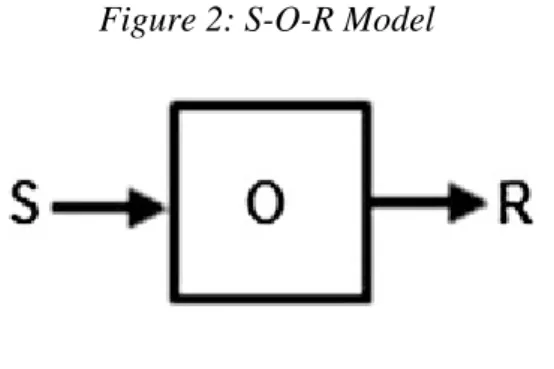
Mehrabian and Russel (1974) designed a model – SOR (stimulu-organism-response) – to prove that human response to stimulati is completely linked to organism component. This model appears as an extension of the Woodworth model (1954). The new model answered what
27 mediates S and R, in other words, what happens between stimulation and response. And the answer is the organism (O), more properly, the sense organs, the nervous system and the muscular system, which includes perception, emotion, judgement, thinking and motivation (Buxbaum, 2016). According to the same authors, the interpetation that the organism gives to a stimulus influences the emotional state, the interaction and the resulting behaviour. Figure 2 shows how the model works.
Figure 2: S-O-R Model
Source: Buxbaum (2016)
According to Mehrabian and Russel (1974), there are three pillars which influence the model: pleasure, dominance and arousal. These dimensions correspond to the emotional responses and indicate peoples’ state of feeling (Bakker et al., 2014; Mehrabian & Russel, 1974). Initially, Mehrabian and Russel (1974) defined pleasure simply as negative or positive feeling toward a stimulus. Later, Mehrabian A. (1996) established new connotations to pleasures, such as excitement, relaxation, love and tranquility versus cruelty, disinterest and boredom. More recent studies defined this dimension as an effective reaction to a stimulus, determining the level of satisfaction and happiness of the individual (Kaltcheva & Weitz, 2006). Regarding dominance, this term refers to the feeling of control or lack of it due to a physical or social barrier (Mehrabian & Russel, 1974). Many adjectives are related to this dimension, for example dominant, controlling, influential, among others… (Thayer, 1967). Arousal is based on a physiological activity inhrent to a stimulus (Bakker et al., 2014; Rojas & Camarero, 2006). Attentiveness, awakeness or alertness are some of the feelings measured by this dimension.
28
2.5.4 Purchase intention
The purchasing process may be influenced by several factors. Marketing researchers need to study and identify those specific factors. That is why more and more studies have been made in order to understand what influences this decision.
To begin with, it is necessary to clarify the meaning of purchase intention . “Purchase
intention is a kind of decision-making that studies the reason to buy a particular brand by consumer” (Mirabi, Akbariyeh & Tahmasebifard, 2015: 268). Hsiao & Chen (2018)
defined the concept as the likelihood of a customer to purchase a specific product, after evaluation (Younus, Rasheed, & Zia, 2015). The definition seems to be simple. However, the process of customer decision is very complex and usually depends on the behavior, perceptions and attitudes of consumers. Moreover, before the final purchase intention, the customer goes through six strages: awareness, knowledge, interest, preference, persuasion and finally purchase (Mirabi, Akbariyeh & Tahmasebifard, 2015).
Purchase intention is affected by several factors (Younus, Rasheed & Zia, 2015) and many authors come up with different opinions. For example, a study conducted by the same authors proved that there is a positive correlation between purchase intention and factors such customer knowledge, celebrity endorsement, product packaging and perceived val ue. Price also has a huge impact on the final purchase decision (Lee, Cheng & Shih, 2017). Customer attitude through product branding is also very important (Hsiao & Chen, 2018), because if the individual has a positive attitude, there is a higher probably that they will buy.
To sum up, marketers need a clear strategy to understand the reasons that lead the customer to buy a specific product and leverage the purchase intention and VR become a potential effective marketing tool for that. An investigation conducted by Suh and Lee (2005) concluded that using VR can influence the purchase intention.
29
2.5.5 Moderators
2.5.5.1 Obsession
It is scientifically proven that people can be addicted to some activities, such as shopping, which leads to enjoyable moments for the individuals and, in higher stages, to compulsions and pre-addictive behaviours (Aikon, Bee & Walker, 2018). In other words, these behaviours can move from passion to obsession. In psychology, “addictive behaviour is
characterized by cravings, dysfunctional emotional responses, a lack of self -control, and an inability to recognize harmful consequences” (Aikon, Bee & Walker, 2018: 69).
Marketing has had a huge impact in facilitating consumption addiction (Martin et al., 2013). According to same authors, addiction is defined from a marketing perspective as a chronic and repetitive behaviour with a desire for immediate gratification. Furthermore, compulsive buying is defined as consistent and habitual behaviour (Aikon, Bee & Walker, 2018).
Consumption addiction is defined as a set of stages where the individual moves from non-user to addiction, and marketing can influence it in several stages. The four identified stages are: non-use, non-addictive, near-addiction and, finally, addiction (Martin et al., 2013). Charlton (2002) believes that each stage develops through time according to the following dimensions: time spent and frequency of engaging in the behaviour, degree of self-control exerted by the individual, impulses, enjoyment of the behaviour and degree of negative consequences or harmful outcomes.
2.5.5.2 Personality Traits
The way people shop can be influenced by the personality of each shopper. Individual personality has been studied since early years. Two authors, Rammstedt & John (2007), created the model “Big Five Personality”, based on the latest theory constructed by John, Donahue & Kentle (1991). The dimensions are divided in: Extraversion, Agreeableness, Conscientiousness, Neuroticism and Openness. Each of these personality traits may vary when exposed to Virtual Reality (Kerrebroeck, Brengman & Willems, 2017) and influence customer behaviour negatively or positively (Malkoça, 2011).
30 Many authors believe these five dimensions impact behaviour differently (DeNeve & Cooper, 1998). The authors defined each dimension concerning their impact. Firstly, Agreeableness and Conscientiousness relate to satisfaction and happiness. Whereas Agreeableness focuses on the quality of the moment, Conscientiousness is related to goal-directed tasks and self-control. Secondly, Extraversion and Neuroticism influence the positive or negative emotional effect, where positive effect is correlated with extraverted people and negative effect with neuroticism. Specifically, extraverted people tend to be happier since they are active, have fulfilling social relationships, energetic and assertive. On the contrary, neurotic people live more anxious and worried, usually feel depressed and communicating with others does not come easy to them (Malkoça, 2011). Finally, Openness to Experience is the most controversal trait, which includes the following components: intelligence, culture, creativity, broad interests and cognitive complexity.
The Openness to Experience may be the main driver to accept or not accept Virtual Reality. In fact, the personality differences among shoppers influences the adoption of a given technology (Mahatanankoon, 2007). For exemple, an important trait too, studied by the same authors, is Personal Innovativeness - in other words, the willingness of try something new, as well as the desire for new experiences. Innovative customers tend to look for different ways to shop.
For this study, it is important we understand how the individual’s traits impact the exposure to Virtual Reality.
2.5.5.3 Perceived Assortment
Assortment represents one of marketing mix components for a retailer, so it is a tool to acquire new customers and also retain them (Bauer, Kotouc & Rudolph, 2012) and for shoppers, assortment can be a crucial factor in store choice. Heurepon, providing the correct assortment of products and services is a challenging function for retailers (Levy & Weitz, 2008). Shortly, the assortment choice has a huge influence on a retailer’s long term sales and profit.
The definion of assortment correponds to the composition of product mix in a specific category (Bauer, Kotouc & Rudolph, 2012), according to these two dimensions: breadth and depth (Pizzi & Scarpi, 2016). The first dimension refers to the number of brands and
31 the second one to the number of stock-keeping units (SKUs) present in the store. This research focuses on grocery categories and customer perception of laundry care assortment (e.g. HDD and FFI) and to understand how customers perception of assortment is influenced when exposed to VR. In the case of the detergents category, the number of SKUs is determined mainly by the scoop, package size, purpose and smell. In grocery retailing, supermarkets try to sell a high level of different products to reach differen t targets.
When a consumer goes to a shop, he expects to find the right mix of products, at the right place, at the right time, with the best price and promo offer (Gruen & Shah, 2000) and this leads to the perceived assorment by the consumer. The latest reseach on this field proved that the actual size of the assortment (Pizzi et al., 2019) or the number of SKUs are no longer the main driver to develop the perceived assortment (Pizzi & Scarpi, 2016). According to Bauer, Kotouc & Rudolph (2012: 12) the assortment perception is defined as the “consumer’s summary subjective overall judgement of an offered in a particular (…)
store”. Each customer develops a diferent perception. There are other dimensions which
influence the level of assortment size perceived by each shoper, for example price (Pizzi
et al., 2019), product quality (Valenzuela, Raghubir & Mitakakis, 2013), the way the
assortment is organized and displayed (Pizzi & Scarpi, 2016), variety (Bauer, Kotouc & Rudolph, 2012) or shopping orientation (Pizzi et al., 2019).
As far as shopping orientation is concerned, as was discussed before, the value given by the customer is divided into Utilitarian and Hedonic (Rayburn & Voss, 2013). When the consumer is motivated by an intrumental goal (utilitarian value), he prefers smaller and specific products assortment (Aydinli, Gu & Pham, 2012). This type of consumers look for an efficient and quick shopping experience, so they intend to minimize shopping time (Pizzi et al., 2019) with a shorter perceived assortment. Nevertheless, the hedonic consumer tries to explore the shopping environment and search for freedom of choice (Pizzi et al., 2019) as well as satisfy the variety and curiosity seeking (Pizzi & Scarpi, 2016). Hence, the shopping experience will be satisfactory when they perceive a larger assortment size (Aydinli, Gu & Pham, 2012).
32
2.5.5.4 Perceived Similarity
Up to this point, we have been describing the benefits and usage for VR. Actually, marketers are trying to offer customers higher interactive experiences and consequently lead to purchase intention (Suh & Lee, 2005). Virtual experiences, by simulating immersion, influence the feeling evoked. However, some recent studies have appeared to explore the possibility of some negative effects that VR may bring.
The main objective of VR is, as described above, to simulate a real world using a computer-generated scanario, where users feel like they are in another place in real time, without leaving the actual place (Berg & Vance, 2017). It occurs when there is a high level of interaction and vividness (Coyle & Thorson, 2001) and seems it is real.
Perceived similarity occurs when people perceive the VR experience as being very similar to the physical experience (Deng, Unnava & Lee, 2019) and consider it as a substitute. People think that virtual reality can fulfill their needs with a similar quality but lower cost. By believing that VR experience substitutes reality, the interest for actual experience can decrease.
But there are some factors that can moderate this effect, for example product involvement. Deng, Unnava and Lee (2019) conducted a study to prove this theory. According to them, in experiences with products with a high level of involvement, people are able to discern the virtual and the real. Summarising, in this case using VR increases the desire of real experiences.
2.6 Framework
Within the customer journey, the experience inside the store (e.g., a supermarket) has been evolving, having in attention the whole atmosphere lived by customers. With the introduction of merging technologies in a customer experience process - like VR - the way customers live and feel in the virtual worlds became more relevant for both researchers and practitioners. The proposed model (see figure 3), is based on the cognitive emotion theory. This theory explains how emotions can influence an individual’s response, as mentioned on chapter 2.5.3.
33 By analysing each topic of Literature Review and linking with the initial objectives for this research, we can create the model to follow. The current model proposes that perceived similarity, obsession and product assortment will influence the mental imaginary, product involvement and presence, which, in turn, have an impact on emotions and the intentions to purchase or recommend. In this vein, in the following lines the main constructs are explained.
From this framework (see figure 3), we may suggest eight hypotheses.
As found on literature, Mental Imagery occurs when cognitive responses are stimulated and so that images on humans’ mind are generated (Bogicevic et al., 2019) related with previous experiences. By stimulating the behaviour it is believed that emotions and purchase intention are generated. Based the previous authors’ model, virtual reality is a tool to enhance mental imagery. So, the first two hypotheses can be formulated:
Figure 3: Framework
Source: Author’s own creation
H1: Mental imagery is positively associated to Purchase Intention H2: Mental imagery is positively associated to Emotions
34 Product involvement is believed as one of the most important factors in consumers’ behaviours. So, it is important to understand how to communicate with products with different levels of involvement, because it influences the way customers want to engage with the brands (Porral, Vega & Mangin, 2018). Based on this information, it is expected that:
H3: Product involvement is positively associated to Purchase Intention H4: Product involvement is positively associated to Emotions
The feeling of presence brought out by the virtual reality stimulus usually creates a highly involvement with the store atmosphere (Boyd & Koles, 2018). People can experience the feeling of escaping and telepresence without moving (Kerrebroeck, Brengman & Willems, 2017) and influence their behaviour. Based on this the following hypothesis arise:
H5: Presence is positively associated to Purchase intention H6: Presence is positively associated to Emotions
There is a lot of research supporting the argument that customer de cision making can be moderator by different variables. In this study three moderators are considered as significant in the relationship between mental imagery/product involvement/presence and purchase intention, specifically in supermarket environments. Obsession is a key factor on this model because this cognitive issue leads to compulsive purchases (Aikon, Bee & Walker, 2018). The level of telepresence during the experience can impact the interest of the virtual experience or even the actual (Deng, Unnava & Lee, 2019) and consequently in the purchase intention. The perceived assortment is an important decision variable during a shopping experience (Levy & Weitz, 2008) so if not well used in the virtual world it will impact significantly the customer decision. Hereupon, the following hypotheses are formulated:
H7: Obsession moderates the relationships between Mental imagery and Purchase intention (H7a), Product involvement and Purchase intention (H7b) and Presence and Purchase intention (H7c)
35 H8: Perceive similarity moderates the relationships between Mental imagery and Purchase intention (H8a), Presence and Purchase intention (H8b) and Product involvement and Purchase intention (H8c)
H9: Perceive assortment moderates the relationships between Mental imagery and Purchase intention (H9a), Product involvement and Purchase intention (H9b) and Presence and Purchase intention (H9c)
36
3.Methodology
After defining the proposed model for this study and the nine research hypotheses, it is important to define which methodology is proposed to test it. The present framework intends to investigate the effect of product involvement and product assortment in the mental imagery and the emotions created and how it will lead to a product intention and recommendation, towards a virtual scenario.
On the one hand, a quasi-experimental between-subjects design was implemented to test the research hypotheses.The quasi-experimental manipulation comprised a virtual grocery store, using Virtua Reality. On the other hand, a quantitative method was followed, by a questionnaire in order to study the variables statistically. The questionnaire was related to a Virtual Reality experience.
3.1 Virtual Reality Experience
The respondents are regular shoppers who were selected to test a virtual shopping. A virtual scenario was created where the participant experienced a virtual supermarket. It is possible to see below the final result of the scenario:
37 Source: Author’s own creation based on Oculus Rift software
In appendix 1 can be find more figures from the scenario.
The scenario displayed the product assortment, prices and promotions. Participants were requested to wear a machine named Oculus Rift, which includes an appropriate oculus to emerge in a virtual world and two motion sensors that detect the movement. Besides, a computer with the software to design the virtual scenario was used. The virtual supermarket