SOCIAL RETURN ON INVESTMENT
THE CASE OF A SCOUTS LOCAL GROUP IN PORTUGAL
Duarte de Almeida Valadas
Dissertation submitted as partial requirement for the conferral of
Master of Science in Business Administration
Supervisor:
Prof. Sofia Santos Albuquerque, Invited Assistant Professor, ISCTE Business School, Marketing, Operations and General Management Department
“If you can dream it, you can do it”
iii
Resumo
Propósito: Esta dissertação pretende mensurar qual o valor social de um grupo local
pertencente ao Corpo Nacional de Escutas (CNE).
Método: O método utilizado pelo autor foi com base no Social Return on Investment
(SROI), método desenvolvido pela Roberts Enterprise Development Fund. É baseado na tradicional análise custo-benefício e pretende monetizar o valor social expressando-o num rácio de valor criado por cada euro investido.
Resultados: Com base nas respostas dos stakeholders, nos indicadores encontrados e
nos valores atribuídos, existe um retorno social de 4,21€ por cada 1€ investido no Grupo de Escuteiros da Póvoa de Santa Iria.
Limitações do Estudo: A inexistência de uma Base de Dados de proxies financeiros
em Portugal, país onde pertence a organização, obrigou o autor a utilizar valores de referência de outros países para parte dos indicadores identificados.
Implicações Práticas: Existe uma pressão sobre as organizações sem fins lucrativos
mostrarem qual o valor social que estão a criar, uma vez que os recursos disponíveis alocados às mesmas são poucos. Com os resultados encontrados, espera-se que o Grupo consiga atrair financiamento de investidores para novas infraestruturas e atividades futuras.
Originalidade/Valor: São poucos os estudos desenvolvidos sobre a medição do valor
social em Portugal, sendo o tema do SROI ainda pouco divulgado e praticado no país. O facto de o CNE não ser uma típica associação sem fins lucrativos que desenvolve apenas acções humanitárias traz um interesse e originalidade acrescida ao tema, contribuindo assim de forma exemplificativa para o potencial do SROI.
Palavras-chave: Valor Social, Retorno Social do Investimento (SROI), Organizações sem fins lucrativos, Escuteiros.
iv
Abstract
Purpose: This dissertation aims measure the social value of a local group of Scouts of
Corpo Nacional de Escutas (CNE).
Method: The method used by the author was based on the Social Return on Investment
(SROI), method which was developed by Roberts Enterprise Development Fund. The method is based on traditional cost-benefit analysis and intends to monetize the social value, expressing it the value created by each euro invested ratio.
Findings: Based on the answers of the stakeholders, the indicators found and assigned
values, there is a social return of 4,21€ by each 1€ invested on the Scouts Group of Póvoa de Santa Iria.
Research Limitations: The lack of a database of financial proxies in Portugal, the
country where the organization belongs, forced the author to use reference values of other countries to evaluate part of the identified indicators.
Practical Implications: There is a pressure on nonprofit organizations to show the
social value that they are creating since there are few resources available to them. With the founded results in this dissertation, it is expected that the Group be able to attract funding from investors for new infrastructures and future activities.
Originality/Value: The measurement of social value in Portugal has until the moment
very few studies developed, being the SROI subject still poorly disseminated and practiced in the country. The fact of CNE not be a typical non-profit association that develops only humanitarian activities brings an increased interest and originality to the subject, contributing then to the SROI potential.
Keywords: Social Value, Social Return on Investment (SROI), Non-profit Organizations, Scouts.
v
Acknowledgments
A special thanks:
To my thesis supervisor, Dra. Sofia Santos de Albuquerque, for all the support throughout the year. Her dedication, patient, the quick answers to my questions, the comments and inputs in each chapter were crucial for the delivery of this dissertation. My gratitude for awakening me to a subject which became so enthusiastic to study.
To my parents, Domingos and Ofélia, for what I am today and to my sister, Adriana, for inspiring me with her natural happiness. They believed, never doubting, in my potential as student and person, being always the first ones to encourage me to finish every step with success. Without their support and immeasurable effort would have been much more difficult to reach this level.
To my classmate, friend, lover and soulmate, Inês. Shared with me all the moments since my bachelor and had a special relevance at this stage. I thank her all the incentives and advices, her full availability, her knowledge and opinion at all the phases of this thesis and, above all, I thank her for the love given in the toughest times.
To all my friends and colleagues that supported me during my academic career.
To Irina Póvoa, Luís Inácio, Rui Luz, Miguel Brito and Bruno Oliveira who agreed with pleasure to take part of the study, answering to all my questions. The same gratitude to the young scouts for the answers on the questionnaires.
Last but not least, to the Local Group of Scouts of Póvoa de Santa Iria for all the lived experiences over the years, inspiring me for this dissertation.
vi
Index
Introduction ... 10
Importance of the subject ... 10
Research Question and Method ... 10
Roadmap ... 11
Literature review ... 13
1. 1.1 Nonprofit Organizations ... 13
General Context ... 13
The Nonprofit Organizations in Portuguese Context ... 14
The Value of Nonprofit Organizations ... 15
1.2 The measurement of social value ... 17
Cost-Effectiveness Analysis (CEA) ... 19
Cost-Benefit Analysis (CBA) ... 19
Social Return on Investment (SROI) ... 20
Robin Hood Foundation Benefit-Cost Ratio ... 21
Acumen Fund Best Available Charitable Option (BACO) ... 22
1.3 SROI as model selected ... 23
Principles and Cost-Benefit Analysis comparison ... 24
Challenges and ambitions ... 25
Method ... 27
2. 2.1 Corpo Nacional de Escutas ... 27
2.2 Research Question ... 29
2.3 SROI Method ... 29
Method application and results analysis ... 39
3. 3.1 Stage 1- Establishing scope and identifying stakeholders ... 39
vii
Identifying and valuing Inputs ... 40
Clarifying Outputs ... 41
Describing Outcomes ... 42
3.3 Stage 3 - Evidencing outcomes and giving them a value ... 46
Developing outcome indicators and putting a value on the outcome ... 46
Establishing how long outcomes last ... 51
3.3 Stage 4 - Establishing Impact ... 54
Estimate of attribution ... 54
Calculating Impact ... 56
3.4 Stage 5 – Calculating the SROI ... 57
SROI Ratio ... 57
Sensitivity Analysis ... 58
Difficulties and Further Investigations ... 60
4. 4.1 Difficulties... 60
4.2 Further Investigations ... 60
Conclusions ... 62
Problematic Overview ... 62
Research Question and Method Application ... 63
Final Considerations ... 65
Bibliography ... 66
Annex I – Young Scouts applied survey ... 70
Official Version (Portuguese) ... 70
English Version ... 72
Annex II – E-mail Interviews ... 74
Official Versions (Portuguese) ... 74
Interview to Irina Póvoa – Volunteers’ Leader ... 74
viii
Interview to Miguel Brito – Scout’ Parent ... 75
Interview to Rui Luz – Scout’ Parent ... 76
Interview to Bruno Oliveira – Municipal Councilor Support Unit ... 77
English Versions ... 79
Interview to Irina Póvoa – Volunteers’ Leader ... 79
Interview to Luis Inácio – Scout’ Parent ... 79
Interview to Miguel Brito – Scout’ Parent ... 80
Interview to Rui Luz – Scout’ Parent ... 81
Interview to Bruno Oliveira – Municipal Councilor Support Unit ... 82
Annex III – Young Scouts’ Inputs cost ... 84
Annex IV – Financial proxies’ conversion ... 85
List of Figures
Figure 1 – Nonprofits contribution to GDP, by country. ... 15Figure 2 – Social Impact Measurement Tools.. ... 18
List of Graphs
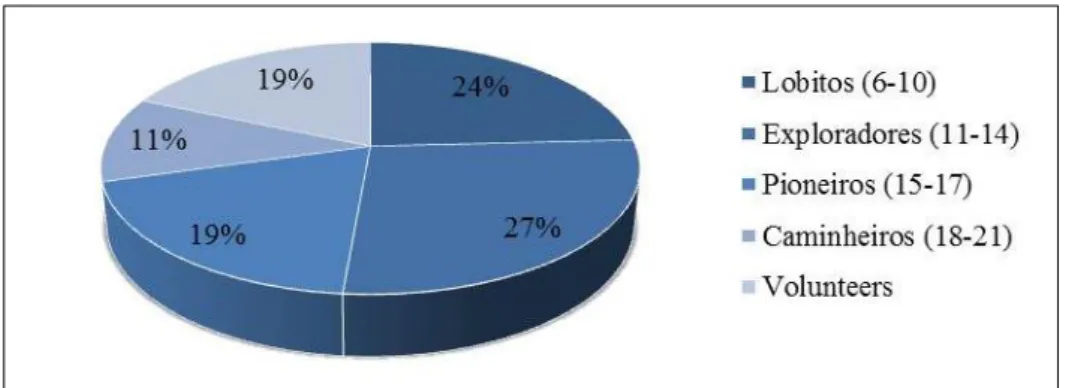
Graph 1 – CNE by age range. ... 28List of Tables
Table 1 – CNE six areas of personal development. ... 28Table 2 – Stage 2 Table Headers. ... 34
Table 3 – Stage 3 Headers Table ... 36
Table 4 – Stakeholders expected outcomes and method of involvement ... 39
Table 5 – Young Scouts Expenses by class ... 40
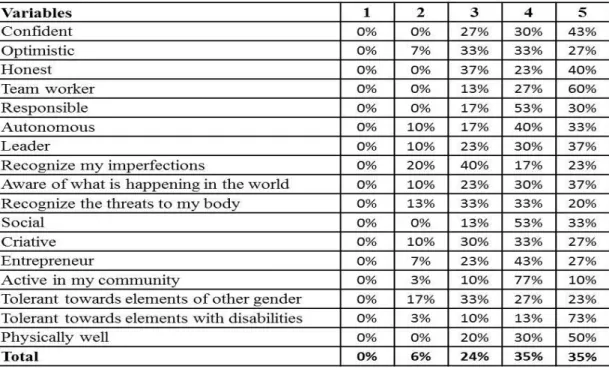
Table 6 – Young Scouts answers’ frequencies ... 42
Table 7 – Young Scouts answers results for each Outcome ... 43
ix
Table 9 – Young Scouts Outcomes values ... 52
Table 10 – Volunteers, Scouts’ Families and Community Outcomes values ... 53
Table 11 – Young Scouts Outcomes attribution ... 54
Table 12 – Young Scouts Outcomes Impact ... 56
Table 13 – Volunteers Outcomes Impact ... 56
Table 14 – Scouts’ Families Outcomes Impact ... 56
Table 15 – Community Outcomes Impact ... 56
Table 16 – Stakeholders Total Value of Inputs ... 57
Table 17 – Stakeholders SROI Ratio ... 57
Table 18 – Sensitivity Analysis Scenario 1 ... 58
Table 19 – Sensitivity Analysis Scenraio 2 ... 59
10
Introduction
Importance of the subject
Not only, but particularity, in a crisis context it is vital for non-profit organizations to be able show the value that they are creating. That happens because public resources are limited and private investors feel that they need to invest their money in what can bring them higher returns. But, if it can be stated that it is easy to evaluate and compare projects that have financial returns, whether for instance by the value of sales, by the EBIT of the company or by its profit margin, evaluating the social value of an organization it is not so straightforward.
In this regard, the measurement of social value has been a topic that has been studied by some authors, in particular by Melinda T. Tuan, Geoff Mulgan and Karen E. H. Maas. There are many Social impact measurement tools but since not all were well succeed in its application, just a few tools have been further developed by the leading researchers in the field. One of that restricted batch was the Social Return on Investment (SROI), method developed by the Roberts Enterprise Development Fund and which has been given special emphasis in the United States of America (USA) and United Kingdom (UK). For the author of this thesis, this method had special interest once that monetize the social value created, based on the stakeholders’ point of view.
Therefore, and once that the subject of the social value measurement is on a very early stage in Portugal, the author decided apply the SROI tool to the largest nonprofit organization in that country, with, roughly, 75000 members, the “Corpo Nacional de Escutas (CNE)” – Scouts of Portugal. The application of this topic to the scouts has captured the attention of the author also for not being a typical nonprofit organization that provides goods or services to others, but, in addition, also has as one of its own goals the satisfaction of their members as human beings.
Research Question and Method
The main objective of this thesis is then to understand if it is possible monetize the social value created by a specific group belonging to this organization and, in case of a positive answer, what is that value. Therefore, the research question of this thesis is as follows:
11 “Is it possible to value the social impact that a Local Group of Scouts of Póvoa de Santa Iria has in its the region?”
In order to be able to answer this question, the author will focus on the Local Group of Scouts of Póvoa de Santa Iria, once that is a group based in the place of residence of the author and that plans to expand in a near future and therefore, needs financial support to the construction of new infrastructures. To answer to the research question was further established a group of sub-questions:
1. Who are the key stakeholders of CNE of Póvoa de Santa Iria?
2. What are the outcomes identified by the stakeholders of a Scout Association? 3. What are the key indicators for measuring the impact identified by the
stakeholders of CNE Póvoa de Santa Iria?
4. It is possible to attribute a monetary value to all the outcomes identified by stakeholders?
The method applied on this thesis will be based on the Social Return on Investment (SROI) method and will have as main source the “Guide to Social Return on Investment”, a Guide developed by the Cabinet Office – UK Government – in 2009. The method will be applied in 5 different stages and aims to express the social value of the organization in a ratio of value created by each euro invested.
Roadmap
This thesis is divided into four main chapters: Literature Review, Method and Methodology, Method application and Results Analysis and, lastly, Difficulties and Further Investigations.
The Literature Review will provide a general overview of the theme. Starting from the importance of the non-profit organizations, its role in Portugal and the importance to develop approaches that allow such organizations to show their value. The measurement of the social value is the second point of this chapter, where besides showing what has been done in this subject, it also explains some of the tools most often used in measuring social value. Lastly, it will be explained why the SROI is the model selected, as well as the principles of the model and the challenges for the tool.
12 Secondly, in the Method and Methodology chapter, the author will star by briefly explaining the history of the World Scouts, providing with some numbers that reflect the size of the organization in Portugal. After the Scouts’ overview will be presented the research question and will be explained in detail each stage of the method. In this chapter will be possible to realize, amongst others, the ways that the author will interact with all stakeholders in the process and also perceive how the calculation of the final ratio is made.
The next step is the Method application and the Results analysis. In this chapter the author aims to be able to link between the Method and Methodology chapter and the results found by the author. In this chapter one will be able to understand the outcomes of the organization that are most valued by the stakeholders, and the monetary value that same outcomes represents.
Lastly, and before concluding, in the Difficulties and Further Investigations chapter, will be presented some of the difficulties found by the author in the writing of the thesis and also some further investigation that could be developed in the future under this same subject
13
Literature review
1.
1.1 Nonprofit Organizations
General Context
The economic organization (as well the social and politic) of a country can be seen as the result of the activity of the public sector and the private sector (Andrade and Franco, 2007). By public sector is meant all the public companies, owned by State or public entities (art. 82º, nº2 CRP1), which has as target, provide to the general population, public or mandatory services and respond to needs which are not able to get answers from private entities (Francisco, 2005), such as military services, police, roads and public education. In other hand, the private sector, denominated also as market or, second sector, is run by private enterprises, has main goal the maximization of profit and it is based on the “supply and demand law”.
However, there is a gap that lies between the State and the market, or in other words, between the social and the strictly economic (Nunes, Reto and Carneiro, 2001). That “gap” is called third sector. The third sector differs from the State because it does not provide mandatory services and differs from the market too since it does not offers services having the profit as the main goal (Gair, 2005; Ferreira, 2000). Further, according to Ferreira (2000), this sector is distinguished from the informal sector, since it is formalized in organizations.
The name “third sector” comes from the fact of has being remained invisible for a long time and was the last to be discovered (Franco et al., 2007). But, although this concept be fully accepted, there is several times a frequent problem on the definition of “third sector” or alternative expressions sometimes used relating to the gap previously mentioned (Nunes et al., 2001).
In addition to the above mentioned expression, the mostly common designations are: nonprofit sector, nonprofits organizations, social economy and non-governmental organizations (Franco et al., 2007). The names “nonprofit sector” and “nonprofit organizations” are due to the fact of the profits not be the essential purpose of this organizations. The profits are allowed, being the profit events very common in order to
14 finance the activities of the organization, but it can’t be the main objective. Social economy is mainly related with social cohesion, combating poverty and social exclusion (Santos, 2005). The non-governmental organizations are characterized essentially by humanitarian objectives in developing countries (Werker and Ahmed, 2007).
Then, a nonprofit organization can be defined as a private organization, non-profit distribution, self-governing and with voluntary participation (Salamon and Anheier, 1992) which provides goods, services and ideas to improve the quality of life of the individuals in society (Drucker, 1995; Carvalho, 2005). Smith (2012) argues that the nonprofits exists to provide public goods to minority groups, since that Government will answer to the demands of the majority, leaving the smallest groups unsatisfied.
The Nonprofit Organizations in Portuguese Context
In Portugal, the first descriptions regarding the third sector dates from the year of 1293 with the creation of a grant called “Bolsa dos Mercadores” (Monteiro, 2010). This grant was created by the merchants of Oporto to cover losses from them maritime activity. During the reign of King Afonso V, appear the first voluntary associations with spiritual principles in order to help in case of social needs (Monteiro, 2010).
Nowadays, according with Franco et al. (2007), the main types of nonprofits organizations are: associations, cooperatives, foundations, private institutes of social solidarity, Misericórdias (Holy Houses of Mercy), organizations for local development, non-governmental organizations to development cooperation (ONG), federations, unions and confederations. More than half of the nonprofit organizations in Portugal- 52% - are related with social services, followed by membership organizations (16%), education and health with 11% and 7% respectively (Franco, Sokolowski Hairel and Salamon, 2008).
According with the same study, the contribution to GDP, the 2% of Portugal, as can be seen in the figure below, shows that the weight of the nonprofit organizations activity in Portugal is considerably below of the international average and far away from countries such as Canada or Israel.
15
Figure 1 – Nonprofits contribution to GDP, by country. Source: Franco et al. (2008)
Even though the third sector in Portugal has been growing consistently in recent years (Franco et al, 2008), the nonprofit organizations are considered the weak side of economy (Nunes et al, 2001). According to Franco et al. (2008) this stereotype occurs due to lack of public conscience of the “sector”, which turns the capacity of the sector itself promote the philanthropy2 very limited as well as ensuring favorable policies for its future development. Apart from the weak legal framework, the author also points out the uncertainty about the functions that the State should finance and carry out, as well as the appropriate cooperation of the nonprofit organizations with the government.
The Value of Nonprofit Organizations
The “third sector” has becoming increasingly important and their growth has been notable, in developed countries since the Second World War (Carvalho, 2005). Is notable the increasing interest from studiers, governors and citizens for the potential contribution to society of the nonprofit organizations (Smith, 2012).
This interest, among other ways, is expressed through the funding of the organizations. The funding structure of an organization of the third sector is done in three different ways (Franco et al., 2007): public funds (by national government or European community), philanthropy (private donations) and equity (sales of goods and services, users' contributions and membership fees). The study made by Universidade Católica and the Johns Hopkins Center shows that, in Portugal, 48% of the contributions are considered equity of the organizations, 40% are public donations and just 12% is
2
Philanthropy: “the giving of time, money and know-how to advance the common good” (W.K. Kellogg Foundation).
16 considered philanthropy. Generally, in the rest of the world (as in Portugal) the philanthropy is the smallest portion of three types of funding (Franco et al., 2007).
In times of economic crisis, there is a greater pressure to nonprofit organizations demonstrates better the impact that is being created, once private and public resources diminish and the competition for those increases (Arvidson, 2010; Ebrahim and Rangan, 2010). Specifically, and giving the currently speech of corporate responsibility, the philanthropy area is an area to explore and seems to have potential for further development (Franco et al., 2007). Despite of the fact that many times the philanthropic donation be motivated exclusively by the interests of the donors and not specifically by the results that the company presents (Frumkin, 2006) is important to increase the available information for donors decide to whom give them funds (Franco et al., 2007).
The third sector organizations must establish links with their investors in order to increase levels of trust to ensure that the relationship with those investors will extend it in time (Franco et al., 2007). Drucker (1995) says that the fact of be a nonprofit organization doesn’t mean that the appeal should not be just to the “heart” but also to the “brain” of who takes the decision to invest. Furthermore, beyond the efforts to get support from the Government and from private entities, for survive, nonprofits have to provide value for the beneficiaries that they attend (Weisbrod, 1998).
In contrast with the economic value, social and environmental impacts are, in most cases, not expressed by the market. Do not have a "market value" and thus are ignored by companies (Maas, 2009). However, in recent years there has been a conformity that any influence or consequence of an organization’ action on the community and environment should be translated into “value” (Seeley; 1998). This line of thought is directly connected to the concept of Triple Bottom Line, a framework that embraces three performance dimensions: economic, social and environmental (Mass, 2009; Xia, Furnish and Kay; 2013). For Savitz (2006), the Triple Bottom Line “captures the essence of sustainability by measuring the impact of an organization’s activities on the world (…) including both its profitability and shareholder values and its social, human and environmental capital”.
Social value is created whenever, through a combination of resources, processes and policies, improvements are made in the lives of individuals or in the society where they live (Emerson, Wachowicz and Chun, 2000). In the case of nonprofits organizations,
17 what defines its value is the success in achieving their missions and the impact created in the community (Herman & Renz, 1998). As example, Putnan (1993) argues that social clubs encourage interaction between citizens, creating ties of social cooperation, which may be useful in the successful resolution of community problems, creating social value. In the same way, the creation of community volunteer programs with the direct involvement of young people helps those youngsters to achieve self-confidence and better behaviors, which can result in productive members of society (Eliasoph, 2011), creating higher social value.
The value of the nonprofits is designed also as its capacity for innovation that can lead to, among others, most effective solutions to social problems (Smith, 2012) and open doors to new intellectual experiences (Rifkin, 1996). One of the issues that has becoming more important over the past decades in this field is the difficulty of measuring this value (Franco et al, 2007).
1.2 The measurement of social value
Despite being a “growing field” that has captured the attention of the nonprofits organizations (Zappala & Lyons, 2009), there is yet some limitations that have precluded the measurement of social value of reach the maturity level. Firstly, and according with Mulgan (2010), the fact of the “people do not agree about what the desired outcome should be”. To explain this theory, the author gives the example of a criminal punishment: “Many people want to imprison criminals to punish them, even when incarceration costs more and confers fewer benefits than do alternatives to prison”. Another limitation is the lack of evident results of the policies taken to the social field makes people more wary about the measurement. Tuan (2008) refers that many benefits of the social programs created are rarely monetized – “Many people would love the social field to be more likely natural science, so that they could definitely predict the effects of, say, a $10 million investment in a crime prevention program” (Mulgan, 2010). Further, the poor quality of the information provided and the cost of mensuration are, according with Tuan (2008), also factors that turn the measurement of social value so hard. Lastly, but not less important, the problem of time – “estimating how much good an action will bring about many years in the future, relative to how much it will cost to implement it now” (Mulgan, 2010).
18 Despite all this factors, it is expected by some people to be able to compare the social value of several social programs in the same way to how they compare the financial return of an investment of other companies (Tuan, 2008). Most performance models of for-profit sector are driven by measures of income or wealth of the shareholders usually expressed in “profitability ratios such as profit margin, return on assets” (Ebrahim and Rangan, 2010) and there is an established knowledge structure that links key elements of management control with the strategy of the companies (Anthony and Young, 2002). The infrastructure that makes the calculation of the financial return on investment be possible took many years to develop, while the social sector only began to measure its outcome in recent years (Tuan, 2008), being evident the appearance of a range of tools and approaches to measure social value creation (Ebrahim and Rangan, 2010).
Figure 2 – Social Impact Measurement Tools. Source: Mass, 2009.
According with Maas (2009) there are thirty social impact measurement tools. Of the various approaches that have been developed for the measurement of social impact,
19 only a few have been developed and successfully applied. In the literature research made by the author of this thesis, there is clear evidence, particularly in Rosenzweig (2004), Tuan (2008), Maas (2009) and Mulgan (2010), in the study of five tools – Cost-Effectiveness Analysis, Cost-Benefit Analysis (CBA), Robin Hood Foundation Benefit-Cost Ratio, Acumen Fund Best Available Charitable Option (BACO) and Social Return on Investment (SROI). The first two are “classical” concepts of analysis and the other three approaches are from organizations that have developed different methodologies to measure the social impact.
Cost-Effectiveness Analysis (CEA)
The Cost-Effectiveness Analysis is a method that compares the cost of a program with the (non-monetary) benefits or outcomes of that same program (Cellini and Kee, 2010; Tuan, 2008). CEA is used in situations where the monetization of the benefits of a program is not possible (Tuan, 2008), relating the specific effectiveness units of that program with its total costs (Kee et al, 2010). The following ratio is created:
𝐶𝑜𝑠𝑡 − 𝐸𝑓𝑓𝑒𝑐𝑡𝑖𝑣𝑒𝑛𝑒𝑠𝑠 𝑅𝑎𝑡𝑖𝑜 = 𝑇𝑜𝑡𝑎𝑙 𝐶𝑜𝑠𝑡
𝑈𝑛𝑖𝑡𝑠 𝑜𝑓 𝐸𝑓𝑓𝑒𝑐𝑡𝑖𝑣𝑒𝑛𝑒𝑠𝑠 (1)
The example of mandatory seatbelts in cars attempts to illustrate the CEA approach. For this measure, the units of effectiveness will be the number of saved lives. By the formula described before, dividing the total costs by the number of saved lives (with the implementation of the policy), the ratio achieved would be perceived as “dollars per life saved”.
Cost-Benefit Analysis (CBA)
Like CEA, the Cost-Benefit Analysis “identifies and places dollar values on the costs of the programs” (Kee et al, 2010), but monetizes also the benefits of the program, comparing them to see which is greater, the value of the benefits or the value of the costs (Tuan, 2008).
𝑁𝑒𝑡 𝐵𝑒𝑛𝑒𝑓𝑖𝑡𝑠 = 𝑇𝑜𝑡𝑎𝑙 𝐵𝑒𝑛𝑒𝑓𝑖𝑡𝑠 − 𝑇𝑜𝑡𝑎𝑙 𝐶𝑜𝑠𝑡 (2)
Taking in the previous example of the seatbelts in cars, to know the net benefits through a CBA would be necessary to know the “monetary value of a life”. The net benefits
20 would be, then, the total value of saved lives less the total cost of implementing the measure.
This approach provides a total accounting of the benefits to the society as a whole, helping the decision-maker to know if a program or intervention brings value added (Tuan, 2008). Through CBA is also possible compare the result of the program with the alternatives available and choose the one with better results (Tuan, 2008), or in other words, the one with higher “net benefits”.
Social Return on Investment (SROI)
The SROI approach was created by the Roberts Enterprise Development Fund, a philanthropic social venture created in 1997 based in San Francisco, California (Tuan, 2008). The REDF supports, through funding, nonprofit organizations which aim to provide social benefits to others, namely to homeless people and to people with a very low income (Emerson and Cabaj, 2000).
The SROI technique can measure all the social value created by the organization or focus on a specific aspect of the work of the organization (Nicholls, 2009) and it is based on traditional cost-benefit analysis (Rotheroe and Richards, 2007). This analysis results in a financial value translating the outcomes of the nonprofits, in a stakeholder’s perspective. This allows NPOs to sum the values of the outcomes of all its stakeholders and compare the total value created with the money required to achieve those outcomes. To measure the value of the most important outcomes and perceive what are the activities that “worth the money” from the stakeholder’s perception, SROI resorts to the use of financial proxies3 (New Philanthropy Capital, 2010).
The value created is expressed through a ratio defined as “monetized social value” and represents the social value created for every euro invested (npc, 2010). For instance, a 2:1 ratio means that for every euro invested, the organization generates a social value of two euros. Although be translated into monetary values, the SROI ratio did not represent a financial value, but a way of expressing the "currency of social value" (Arvidson, Lyon, McKay and Moro, 2010).
3
Financial proxy: “an approximation of value where na exact financial measure is impossible to obtain” (Action for children, 2010).
21 𝑆𝑅𝑂𝐼 = 𝑁𝑒𝑡 𝑃𝑟𝑒𝑠𝑒𝑛𝑡 𝑉𝑎𝑙𝑢𝑒 𝑜𝑓 𝐵𝑒𝑛𝑒𝑓𝑖𝑡𝑠
𝑁𝑒𝑡 𝑃𝑟𝑒𝑠𝑒𝑛𝑡 𝑉𝑎𝑙𝑢𝑒 𝑜𝑓 𝐼𝑛𝑣𝑒𝑠𝑡𝑚𝑒𝑛𝑡 (3)
The original project was developed and adapted to use in Uk by the New Economics Foundation4 using a “ten-stage approach”. The actual SROI guide published by the Cabinet Office5 (2009) redefined to a “six stage approach”.
1. Establishing scope and identifying key stakeholders - is crucial to have clearly defined what the SROI analysis will cover, as well as those who are involved in the process and how.
2. Mapping outcomes – how and where stakeholders are involved in the project and their perception of the organization’s influence in their lives. Relation between inputs, outputs and outcomes.
3. Evidencing outcomes and giving them a value - development of indicators to measure the outcomes, collect data to those indicators and monetize them. 4. Establishing impact – Define of the outcomes that would have occurred
independently of the existence of the organization and eliminate them from the analysis.
5. Calculating the SROI – Sum of all the benefits and subtracting all the damages and compare the result to the investment.
6. Reporting, using and embedding – Share the results with stakeholders.
Robin Hood Foundation Benefit-Cost Ratio
A Robin Hood Foundation was founded in 1988 with the main purpose of fighting the poverty in New York, United States (Tuan, 2008). The foundation works with 200 nonprofit organizations (Tuan, 2008) and it’s divided in two main programs, the "Core fund recipients" and the "Relief fund recipients". The first one consists in four principal areas: Jobs & Economic security, Childhood, Education and Survival. The “relief fund
4 New Economics Foundation: “is the UK's leading think tank promoting social, economic and
environmental justice” (nef website).
5
Cabinet Office: is a department responsible to “support the Prime Minister and Deputy Prime Minister, and ensure the effective running of government” (Cabinet Office website).
22 recipients” are related with “lower income victims' services and relief and mental health services”.6
One of the Robin Hood principles is the use of metrics to evaluate programs and measure results to compare the success of several social programs. In this context, the Foundation developed a Benefit-Cost Ratio methodology in 2003, converting the outcomes of the several programs in a monetized value, in order to identify the benefits created through the grants provided (Tuan, 2008).
The Robin Hood Foundation has, according with Tuan (2008) the following methodology: First, “estimate aggregate earnings boost” - through external and internal research, estimates the earning that a program boost on an individual divided by what would be the earnings of the individual in the absence of the program. Secondly, “estimate the Robin Hood Factor” - the proportion of the grants provided by Robin Hood in the overall success of a program. Third, “note the cost of the program to Robin Hood” - the total value of the grants provided by the Robin Hood Foundation. Lastly, “calculate the Benefit-Cost Ratio”.
𝐵𝑒𝑛𝑒𝑓𝑖𝑡 − 𝐶𝑜𝑠𝑡 𝑅𝑎𝑡𝑖𝑜 = 𝐴𝑔𝑔𝑟𝑒𝑔𝑎𝑡𝑒 𝑒𝑎𝑟𝑛𝑖𝑛𝑔𝑠 𝑏𝑜𝑜𝑠𝑡 𝑥 𝑅𝑜𝑏𝑖𝑛 𝐻𝑜𝑜𝑑 𝐹𝑎𝑐𝑡𝑜𝑟
𝑅𝑜𝑏𝑖𝑛 𝐻𝑜𝑜𝑑 𝐺𝑟𝑎𝑛𝑡 (4)
Acumen Fund Best Available Charitable Option (BACO)
The Acumen Fund is a “venture philanthropic firm” (Brest, Harvey and Low, 2009: 53) founded in 2001 and aims to fund nonprofit organizations enterprises that support efficient investments in developing countries. The fund is especially concerned in reach the people from the “Bottom of pyramid” (BOP)7 of those countries (Brest et al, 2009; Tuan, 2008). The main areas where Acumen invests are in water, health, housing and energy, having projects in all over the world (Tuan, 2008).
To make its investment decision, Acumen attempts to quantify the return of a social investment of a private company and compare it with the existing range of "Best Available Charitable Options" (BACO) for that specific social issue (Acumen Fund,
6 http://www.robinhood.org/programs 7
Bottom of pyramid: “refers to bottom-tier of the world income pyramid and illustrates the large share of people living in extreme and moderate poverty” (Hahn, 2009).
23 2007; Tuan, 2008). This comparison helps the investors to know where they capital will be better applied, answering the question “For each dollar invested, how much social output will this generate over the life of the investment relative to the best available charitable option?” (Acumen Fund, 2007).
The Acumen Fund methodology has three key steps: “(1) calculate the expected return of the BACO; (2) calculate the expected return of the enterprise investment; and (3) compare the expected returns of the two options” (Brest et al, 2009). For both cases, the first phase is estimate the expected outcome of a social program. This outcome can be for example “lives saved”. After estimate the probability of achieve the outcome, it is needed calculate the percentage of philanthropic contribution on the project – in case of the BACO the grant should be 100% of the project, while in the enterprise investment the fraction of the total investment can oscillate from project to project. After solve the equation, the result it is divided by the total net costs of the contribution, can thus be compared the expected return of both investments.
𝐸𝑥𝑝. 𝑟𝑒𝑡𝑢𝑟𝑛 = 𝑂𝑢𝑡𝑐𝑜𝑚𝑒 𝑥 𝑃𝑟𝑜𝑏. 𝑡𝑜 𝑎𝑐ℎ𝑖𝑒𝑣𝑒 (0‐ 1)𝑥 𝑃ℎ𝑖𝑙𝑎𝑛𝑡ℎ. 𝑐𝑜𝑛𝑡𝑟. (0‐ 1)
𝑁𝑒𝑡 𝑐𝑜𝑠𝑡𝑠 (5)
1.3 SROI as model selected
From all the tools, the SROI has attracted considerable attention, particularly in the third sector (npc, 2010), mainly because it considers stakeholders as key components in the definition of outcomes, monetizes the social impact and the final ratio convey the value created in a powerful way (Arvidson et al, 2010). Thereby, answers to the three "roles" that this kind of tools seek to answer – "accounting to stakeholders, improving internal management and measuring social impact" (Mulgan, 2010). Evidence that its use is becoming more common is the fact that in the UK, governments are increasingly encourages companies in social areas to measure their social impact using SROI, turning the technique a reference throughout the UK and also in the US (Nicholls, 2007). Moreover, publications on the subject began to be made in other languages, French and Chinese for instance, and was noticed an increase of organizations dedicated to the study of SROI throughout the world, as is the case of the SROI Network (Millar and Hall, 2012). Despite of SROI be a topic quite “dark” for many foundations (npc, 2010), there are successful projects documented. Among them is "The economic and
24 social return of Action for Children’s Family Intervention Project in Northamptonshire" (Action for Children, 2010) and "The Value of Social Enterprise in Health and Social Care" (UK Department of Health, 2010). Both projects were evaluative analysis – based in outcomes that already happened in organization – but the SROI technique can also be made by forecast analysis, which means predict the social value created if “the activities meet their intend outcomes” (Cabinet Office, 2009: 8).
Principles and Cost-Benefit Analysis comparison
The SROI analysis it is based in seven principles (Cabinet Office, 2009):
1. “Involve stakeholders” - stakeholders inform what are the outcomes to be measured
2. “Understand what changes” - Perceive and evaluate the changes created. This principle is strongly related to Theory of Change8.
3. “Value the things that matter” – use of financial proxies to give value to the outcomes created.
4. “Only include what is material” – “Information is material if its omission has the potential to affect readers’ or stakeholders’ decisions” (Action for Children, 2010).
5. “Do not over claim” - Organizations should report only the value for which they are responsible for creating.
6. “Be transparent” - full transparency on the data used to SROI calculation. 7. “Verify the result” – “Ensure appropriate verification of the account”.
As mentioned before, the SROI is based on traditional cost-benefit analysis. However, in practice there are several differences. Differences that, according with Arvidson et al. (2010) can be divided into four areas: (1) Stakeholders; (2) Management tool; (3) Comparability; (4) Proxies and underlying rationales.
1. Stakeholders – The emphasis given to the importance of stakeholders in the SROI is much stronger than in the CBA. For example, the decision of close or not a local post office. A CBA analysis can conclude that the costs of
8 Theory of Change: “set of assumptions that explain both the mini-steps that lead to a long term goal and
the connections between these activities and the outcomes of an intervention or program (Andersson, 2004).
25 maintaining the station open are greater than the benefits in terms of sales and conclude that the post should close. The SROI evaluates the potential benefit of local residents, as is the case of an old man having a regular contact point, and have a different conclusion. The importance given to stakeholders is the key point of difference between the two analyzes.
2. Management tool – While the CBA is more likely to be carried out by external agents only to evaluate the effectiveness of an intervention or project, the SROI is also seen as a way for organizations to learn and move its resources to areas of greatest impact.
3. Comparability – Unlike the CBA which is designed to compare the ratio of different activities, it is not recommended to be done in the case of SROI since the emphasis on stakeholder engagement results on a set of different indicators, making its comparison very difficult.
4. Financial proxies and underlying rationales – In addition to the "underlying tools of economics" used by CBA, “SROI practitioners have developed banks of proxy information to inform the valuation of intangible benefits, or other benefits that are hard to value" (Arvidson et al, 2010: 7)
Challenges and ambitions
In fact, this issue of the monetization and the use of financial proxies have been the most discussed in the SROI analysis. Despite of being true that it is easier to prove an investment in an outcome if it has a financial value – “it was not until environmental economists managed to value the environment, and compared this value to the costs of protecting it, that governments were motivated to act to combat global warming” – it is, nevertheless, true that it is not easy to directly access the value of those outcomes (npc, 2010). This is due not only because many outcomes, such as confidence or self-esteem, involve subjective judgments as well as the fact that the databases which contains financial proxies are still small or not entirely reliable (Millar et al, 2012). Another of the most limitations referred is estimating the true “cost of capital" of the donors who invest in an organization. Just like any private sector investment, there is an opportunity cost (Emerson and Cabaj, 2010) - “Determining a discount rate is fairly straightforward in the private sector, one simply refers to historical market returns. But the newness of the SROI and lack of historical social operating ratios mean that no such standards exist
26 in nonprofit sector” (Emerson et al, 2010: 12). Besides these two issues, there may also be a tendency for the “production” of the results in an attempt to impress those that are interested in the organization. Since that the grants are associated with the performance, there is a greater motivation for organizations to do it.
Still, there are considerable progresses and which are ongoing ambitions in the SROI area. In an attempt to make financial proxies more robust, the Cabinet Office and SROI Project - created by the Scottish Government - are working together to develop a database of indicators and financial proxies. This should clarify where come from the financial proxies and turn them more reliable, making the SROI more trustworthy (npc, 2010). Regarding the question of the cost of capital, Robert Enterprise Development Foundation (REDF) plans to create their own standards based on the historical performance of its investors, and thus make the nonprofit sector starts to have their own standards (Emerson et al, 2010). REDF further believes that the use of SROI will lead to, and quoting Emerson et al, (2010:14) “better program management, improved accountability and community ownership, more objective performance standards for the nonprofit sector as a whole, and, ultimately, to a greater infusion of much-needed capital into the field.”
27
Method
2.
2.1 Corpo Nacional de Escutas
The “Corpo Nacional de Escutas (CNE)” is, according to the bylaws defined in “Diário da República”, a nonprofit organization, intended for the integral formation of young people, based on a method created by Robert Stephenson Smyth Baden-Powell – general of British Army and founder of Scouting – and in volunteering of its members.
Between 1899 and 1900, in the Transvaal War, Baden-Powell saw the town of Mafeking be harshly attacked by enemy forces. Once that city had few soldiers, the British lieutenant was forced to organize a group of young people to support tasks such as communications, first aids and cooking until the arrival of reinforcements to the city. The dedication, loyalty, courage and responsibility with which the youths perform their tasks have caused a great impression on the leader, inspiring him to, years later, create the Scouts. So in July 1907 born Scouts with a first camping with 20 boys.
Thus, the mission of the Scout Movement is to contribute to education of young people, based on a values system stated on the “Scouts Law” – an ethic code – and on “Scout Promise” – voluntary and personal commitment - helping to build a better world, where people feel totally fulfilled as individuals and play a constructive role in society. This is achieved through three main points:
involving the youths, throughout their formative years, in a process of non-formal education
using a specific method, that makes each individual the principal agent of their own development, to become an independent person, solidary, responsible and committed;
helping young people in defining a value system based upon spiritual, social and personal principles expressed in the Promise and Law.
Currently there are over 28 million scouts spread across 216 countries, whereas in Europe are roughly 2 million and Andorra is the only country where the Scouts Movement is not represented. In Portugal there are roughly 75,000 scouts divided into 3 organizations – the “Corpo Nacional de Escutas (CNE)”, the “Associação de Escoteiros de Portugal (AEP)” and the “Associação das Guias de Portugal (AGP)”. Founded in
28 1923 and with about 68778 active scouts (censos, 2009), the CNE is spread over 1132 Local Groups and represents more than 90% of the actual total of scouts in Portugal. The CNE asserts itself as a movement of the Catholic Church, does not identify with any party ideology and, like all Scouts Associations, is part of the World Organization of the Scout Movement (WOSM). Within each Local Group, the youths are divided in four age groups. (1) From 6 to 10 years old – Lobitos; (2) from 11 to 14 years old – Exploradores; (3) from 15 to 17 years old – Pioneiros and (4) from 18 to 21 years old – Caminheiros. Training each of these groups are dedicated adult volunteers who, at county level, exceed the 12000 (censos, 2009).
Graph 1 – CNE by age range. Source: CNE censos (2009)
The latest educational project of the CNE is defined as a set of objectives and methods, translated into opportunities, contributing to the construction of a path of personal development of children and youth. This educational approach considers all aspects of the personality of the youth summarizing them in six areas of personal development: physical, emotional, character, spiritual, intellectual and social (Secretaria Nacional Pedagógica – CNE, 2010).
29
2.2 Research Question
Since this research aims to quantify the social impact of the scouts’ activity, the researcher will develop a case study analysis, which will follow the Social Return on Investment Method. The question this research aims to answer is:
“Is it possible to value the social impact that a Local Group of Scouts of Póvoa de Santa Iria has in its the region?”
To answer to the research question, the author will focus the application of SROI in the Local Group of CNE Scouts of Póvoa de Santa Iria, District of Lisbon. The Group was founded in 23 of May of 1984 and has currently a total of 160 elements. Of these 160, 20 are adult volunteers’ resources. Since there is a possibility to increase the group with the construction of a new building and this building will be very probably, according with the Group’ Leader, for receive new elements for the age group of 10 to 14 years, it is precisely at this age that the tool will be applied.
In order to answer to the main question of the study, was further established a group of sub-questions:
Who are the key stakeholders of CNE of Póvoa de Santa Iria?
What are the outcomes identified by the stakeholders of a Scout Association? What are the key indicators for measuring the impact identified by the
stakeholders of CNE Póvoa de Santa Iria?
It is possible to attribute a monetary value to all the outcomes identified by stakeholders?
These sub-questions are essential for the conclusions of this thesis since the answers will be crucial to answer to the starting question.
2.3 SROI Method
These study follows a very specific procedure based on the Social Return on Investment (SROI) approach developed by the Roberts Enterprise Development Fund and expressed in the publication “A guide to Social Return on Investment” (Nicholls J., Lawlor E., Neitzer E. and Goodspeed T., 2009). In the literature review chapter the stages of the method were briefly stated and this chapter will explain the process
30 associated with each of the 5 stages with a practical application to the CNE of Póvoa de Santa Iria. All the information regarding the explanation of the 5 stages is taken from the Guide above mentioned.
Stage 1 – Establishing scope and identifying stakeholders
The application of SROI begins with a clear definition of what the study framework is, defining the goals to be achieved, the organization to be studied and the period of time in which the study will be made. As already mentioned, the clear goal to achieve is to understand the social impact of the Scouts Group of Póvoa de Santa Iria have in its community. The period analyzed is 10 months which is roughly the duration of a scouting year.
Once the framework is clear, still in the first stage, it is necessary to identify and engage the stakeholders – all persons and entities who have positive and negative impacts resulting from the activities of the organization. Identified the stakeholders, is necessary to justify its inclusion and which are, in the author's view, the expected outcomes for them, as well as identify the size of the group, the representative sample needed and the method of collecting information. This method of collection, according to the Guide of Cabinet Office (2009) can be done in many different ways, including questionnaires, observations, face interviews, interviews by email, phone interviews, group interviews and informal conversations.
The first stakeholders identified by the researcher are the scouts themselves from the 10 to 14 years old in which the study focuses. As stated in the statutes of the organization and already mentioned in this thesis, the mission of Scouts is that young people feel fully realized as individuals and play a constructive role in the society where they live, therefore they are the main target in the application of SROI.
Regarding to the expected outcomes, from the Programa Educativo do CNE (2010) can be read that are expected developments in the youths at three different levels: (1) Be – responsibility, autonomy, honesty; (2) Know – clear expression of ideas, imperfections recognition, recognition of threats to the body; (3) Act – interact with others, entrepreneurship, creativity. The group of children from 10 to 14 years has a total of 40 elements and in this study is pretended to reach the largest possible number of stakeholders. The information collection of these stakeholders will be made in a
31 questionnaire format, proceeding later to a quantitative analysis of the data obtained, where the outcomes that were more often distinguished by the inquired will be chosen. The survey is composed by two questions. The first related with the selection of outcomes and the second with the Stage 4 – Establishing Impact. In the first question, to the statement "Since I'm in the CNE I feel:" it is expected that the inquired be able to evaluate each characteristic referred in the questionnaire according to their own self-awareness. The scale ranges from 0 to 5 where 0 represents "Strongly Disagree" and 5 "Strongly Agree." The outcomes selected by the researcher will be ones with the highest amount when summed the values of the options (4) and (5). As to the second question, it will be explained further in this chapter.
Secondly, the volunteers, being them who embrace the cause of education of the young scouts and who are expected to be an example of life for those with whom they work9, are the next to be covered. Being them an example and having an increased responsibility in the growth of the youngsters, it is expected outcomes like the increase in self-esteem and increased responsibility. The collection of the data needed will be made by interviewing the leader of the volunteers and the questions will be the following:
What are the main positive impacts that the CNE has on children's development? And for you, what are the effects of belonging to the organization?
Evaluate from 0 to 10 the influence of CNE in the effects (for you) referred wherein 0 corresponds to ‘The impact is not related with the fact of belong to CNE’ and 10 to ‘The impact is fully created by CNE’
The third stakeholder to consider is the families of the children surveyed. Once that “parents are the prime educators until the child attends an early years setting or starts school and they remain a major influence on their children’s learning throughout school and beyond” (Department for children, schools and families – UK Government, 2008), it is expected that they are able to analyze what are the main differences which they observe in the children since they belong to Scouts Group. Still, the most important aspect of the analysis to this stakeholder passes through be identified outcomes for the parents themselves, such as family environment changes since the development of the
9
http://www.convoluntariado.pt/index.php?option=com_content&view=article&id=190:corpo-nacional-de-escutas-&catid=13:confederacao-portuguesa-do-voluntariado&Itemid=17
32 young. The information collection will be made by interviews by email to the largest possible number of parents of young scouts. To parents will be asked the following questions:
What has changed in your relation with the child since he/she is in the group? There was any change in the home environment?
And for you, there was any impact as a result of belongs indirectly to the group? What is the impact in the future that the Scouts have in your child's education? The outcomes selected will be those who are most distinguished by respondents and those which, in the view of the interviewer, are considered more relevant.
Last but not least, the Municipal Council of Vila Franca de Xira, at which the Group belongs. Many of the activities that Scouts develop are related with directly or indirectly actions linked to the welfare of the community where they belong. Examples of these activities are cleaning green spaces and the support to poorest people in the region. There is a long-term relationship between authorities of the two entities (Scouts and Municipal Council) and a mutual availability either for troubleshooting or for conducting activities. Thus, it is important to the study interviewing a member of the Municipal Council who is aware of the relationship between the two entities with the following questions:
What are the positive impacts that the CNE has is the Community? Is there any negative impact that the organization has?
There are other entities in the community who are able to create the same impacts listed?
Compare on a scale of 0 to 10 the impact generated by such entity and the CNE wherein 0 corresponds to ‘The impact is fully created by that organization’ and 10 to ‘The impact is fully created by CNE’
Despite of not all the questions asked in the interviews be necessary to the Stage 1 of the method, for a reason of time utilization and to not have to interview the same stakeholders more than once, will be made the necessary questions to collect information for the Stage 4 – Establishing impact.
33
Stage 2 – Mapping outcomes
After all the information gathered from stakeholders, it is necessary to detail the relationship between the inputs that are used with the outputs and outcomes created that result from this interaction for each stakeholder. This relation between inputs, outputs and outcomes is very often referred as “Theory of change”10
. The stage 2 consists in four main steps:
Identifying Inputs Valuing Inputs Clarifying Outputs Describring Outcomes
Inputs refers to the contribution of each of the stakeholders in order to be possible perform an activity. The inputs are used in the course of an activity and are in most cases the time that the stakeholders expend in the activity and money – whether cash or cash items but with an associated financial value. There are two main types of non-monetized inputs that are generally widely used in SROI analysis: Contributions in goods and services and the time spent by volunteers.
After identifying and give value to inputs is necessary to clarify the outputs generated for each stakeholder. Frequently, the same output is repeated by various stakeholders, however, since the outputs are not taken into account in the calculations – are just used once they are part of the Theory of Change – there is no risk of double counting.
The correct description of the outcomes is the final step in this stage and is of major importance once that SROI is “an outcomes-based measurement tool” and “measuring outcomes is the only way you can be sure that changes for stakeholders are taking place” (Nicholls et al., 2009:33). According to “A Guide to Social Return on Investment” (Nicholls et al., 2009), in the outcomes description make part not only those who were defined by the stakeholders in the collection of information made in the Stage 1 but also those which are the objectives of the organization. May be even
10 “A Theory of Change is a specific and measurable description of a social change initiative that forms
the basis for strategic planning, ongoing decision-making and evaluation” (International Cooperation, 2010). It can be seen as a tool to explain the logic of a strategy. Represents the beliefs between actions and the desired outcomes (Keystone, 2008).
34 excluded some outcomes defined by the stakeholders, if in the opinion of the author, they conflict with the goals and values of the organization. (Nicholls et al., 2009).
After defining stakeholders, inputs, outputs and outcomes, the author will build a table that will have the header as the described in the image below.
Table 2 – Stage 2 Table Headers. Source: Nicholls et al. (2009)
Stage 3 – Evidencing outcomes and giving them a value
Described the outcomes for each of the stakeholders, the next step of the method is to give a financial value to them. This stage should be divided into three steps:
Developing outcome indicators Establishing how long outcomes last Putting a value on the outcome
By indicator refers to “variables whose purpose is to measure change in a given phenomenon or process (Kumar, 1989)”. In SROI analysis, the indicators are applied to outcomes once these ones describe the change in stakeholders. These indicators can be defined by the researcher himself or asking to stakeholders about examples that describe this change reported. It is possible that for the same outcome there is more than one indicator. As an example, if the defined outcome is to reduce the social isolation, two possible indicators are "if stakeholders say they have more friends" and "if stakeholders are going to use public services that had not previously used - e.g. public transport" .
The effect of some outcomes will last longer than others and for this reason, after defined which are the outcomes, it is also necessary that the effect be implicit in the calculation of social return of each of the outcomes. The time used is usually the number of years expected that the benefit lasts after the beginning of the changes caused in the stakeholder. There are outcomes with only 6 months long and there are others that can reach up to 10 or 15 years. Regarding the number of repetitions of the outcome, since the choice of outcomes is through a sample and it is an analysis to the entity itself,
35 and not to a single project, it is assumed that the selected outcomes have an impact on all the stakeholders, namely, to the 40 young scouts, 40 families and 5 volunteers.
The last step in this stage is attributing a value to the outcomes. As mentioned in the literature review, this process involves monetizing - assign a monetary value - something that has no market value. Monetization that is made through financial proxies – “an approximation of value where an exact financial measure is impossible to obtain (Action for Children, 2010)”. If stakeholder be, for instance, an youngster and the outcome be “decrease in drug use” with the corresponding indicator “level of drug use”, a possible financial proxy to use is the "average amount spent by young people on drugs". There are several methods that are used in assigning value to outcomes, among them:
Cost saving
Contingent Valuation Revealed preference
Cost saving is the most widely used and is defined as, as the name says, the money saved for a stakeholder as a result of action rather than another. In the case of SROI, if one of the outcomes for the stakeholder "Government" is the value of an improvement in health, then one of the proxies to be used will be the cost of going to an appointment in a public hospital. On the other hand, if instead of looking for cost saving associations, ask directly to stakeholders how they evaluate something, is called of contingent valuation. This approach is directly related to the willingness to pay of each individual or with the acceptance of a compensation for something hypothetical. If asked to someone how much they would be willing to accept for an increase of pollution in their residential area, the value would be the proxy to be used in evaluating of this outcome. The revealed preference method- technique invented by the American economist Paul Samuelson (1938) – assumes that the preferences of individuals can be determined based on their buying habits. If the indicator defined in SROI analysis was “clean air”, it can be determined its value by calculating the difference in house prices in residential areas with an clean air and identical houses but located in a more polluted residential area.
36 In this thesis, the researcher can use any of these methods to find the best proxies for each of the financial indicators but can just be selected after establish the outcomes for each stakeholder. For this reason, this chapter cannot expose exactly which methods will be used. Moreover, once that, and stated before, UK it is one of the countries most developed in which regards to SROI, there is a higher probability that the majority of the proxies comes from UK sources. Whenever that happens, will be made the conversion from pounds to euros and an update of the cost of living between London and Lisbon – the capital of the country from where the financial proxies are and the capital of the country where the thesis is applied – in order to make a more reliable analysis. The exchange value that will be taken as reference is 1GBP = 1,26EUR11 and whenever necessary to update the cost of living, the value of the Britannic proxy will be divided by 1,51 once that the current prices in Lisbon are 51% cheaper than in London12. Will also be made an update to 2014 prices, through United Kingdom Inflation Rate, whenever the sources of financial proxies be from previous years13. On the end of the chapter the researcher will define a second map that will have the header as the described in the image below.
Table 3 – Stage 3 Headers Table. Source: Nicholls et al. (2009)
Stage 4 – Establishing Impact
Even if the scouts are responsible for a number of outcomes, that same outcomes may not be due only and exclusively to Scouts. Thus, at this stage, the aim is to estimate what percentage of the outcome would have happened even if the stakeholder had no relationship with the group and which other activities contributed to the existence of the same outcome. As mentioned above, in the process of gathering information that will be performed in Stage 1 will be asked questions in the questionnaires and interviews to stakeholders that would allow the necessary calculations in Stage 4.
11 Banco de Portugal (value corresponding to the date of 06-08-2014)
12 http://www.expatistan.com/cost-of-living/comparison/london/lisbon (value corresponding to the date of
06-08-2014 and “based on 21,408 prices entered by 2,390 different people”)