Paperless Reality: Transnational parenthood and
undocumented Nepalese in Portugal
Aashima Budal
Erasmus Mundus Masters in Social Work with Families and Children
Supervisors
Prof. Dr. Cláudia Pereira Prof. Dr. Ana Raquel Matias
Instituto Universitário de Lisboa June 1, 2018
RESUMO
Os migrantes em situação de trabalho não-documentado ou ilegal são agentes económicos que produzem riqueza no país onde residem, pagam impostos, mas não têm direitos legais. Isto acontece com um número substancial de nepaleses residentes em Portugal. Além disso, a grande maioria é qualificada, em termos de escolaridade, embora não seja capaz de progredir profissionalmente devido à sua situação irregular. Este estudo centra-se na imigração
contemporânea de nepaleses indocumentados em Portugal e seus impactos nas famílias. O objetivo foi entender como a educação transnacional é praticada e percebida por mães e pais nepaleses que vivem em Portugal em situação irregular. Este estudo utilizou um método qualitativo através da micro-etnografia, utilizando entrevistas em profundidade e observação participante. Entre os oito participantes da pesquisa, seis eram nepaleses desafiados pela distância e uma situação não documentada, com as famílias que ficaram no Nepal; e dois eram informantes-chave com informações sólidas sobre eles. Os resultados evidenciam as perigosas trajetórias de migração dos nepaleses, bem como suas expectativas frustradas, de mobilidade descendente e exploração como migrantes irregulares. Em segundo lugar,
também expressa as diferenças de género em relação à maternidade e paternidade à distância, enquanto não-documentados, bem como os mecanismos utilizados para lidar com a situação. Dado que as políticas e fronteiras a nível macro estão a tornar-se mais rigorosas, existe espaço para os contrabandistas migrantes cobrarem pelos migrantes nepaleses que desejam trabalhar em Portugal. Uma das principais constatações é que os nepaleses vivem em situação irregular, sendo qualificados e trabalhando em empregos precários e com dívidas elevadas para com os intermediários. Este estudo contribui ainda para a reflexão sobre as implicações dos assistentes sociais no apoio aos migrantes irregulares.
Palavras-chave: Imigração, migração indocumentada, parentalidade transnacional, migração ilegal, Nepaleses, Portugal
ABSTRACT
Undocumented working migrants are economic agents who produce wealth in the country where they reside, paying taxes, but not having legal rights. This happens with a substantial number of the Nepalese residing in Portugal. Furthermore, the large majority of them is qualified, in terms of school education, although not able to progress professionally due to their irregular situation. This study focuses on the contemporary immigration of Nepalese undocumented in Portugal and its impacts on families. The aim was to understand how transnational parenting is being practiced and perceived by Nepalese mothers and fathers living in Portugal, in an irregular situation. This study employed a qualitative method through micro-ethnography, by using in-depth interviews and participant observation. Among eight participants of the research, six were Nepalese challenged by distance and an undocumented situation, with families who stayed in Nepal; and two were key informants having solid information on them. The findings, firstly, evidence the perilous migration trajectories of the Nepalese, as well as their frustrated expectations, mobility descendant and exploitation as irregular migrants. Because the macro level policies and borders are becoming stricter, there is space for migrant smugglers to charge for Nepalese migrants who wish to work in Portugal. Secondly, the outputs revealed gender differences concerning mothers and fathers parenting at distance, while undocumented, as well as their coping mechanisms. Thirdly, the results demonstrate that the Nepalese are living undocumented, while being qualified and working in precarious jobs and high debts to the intermediaries. This study further contributes for the reflection on social worker’s implications in giving support to irregular migrants.
Keywords: Immigration, undocumented migration, transnational parenting, irregular migration, Nepalese in Portugal
iii
Table of Contents
Abstract ... ii
List of tables ... vi
List of figures ... vi
List of abbreviations ... vii
Acknowledgements ... viii
1. Introduction ... 1
Problem statement ... 2
Background and purpose of study ... 3
Aims of the research and methodology ... 3
Significance of study ... 5
Social work implication ... 6
2. Literature review ... 8
2.1 Synopsis of Nepalese emigration ... 8
2.1.1 Current trends of Nepalese labor migration ... 10
Nepalese in Portugal ... 15
2.2 Remittances ... 19
2.2.1 Nepal: One of the world’s top country most dependent on remittances ... 19
2.2.2 Impact of remittances in developing countries ... 21
2.3 Irregular migration ... 22
2.3.1 Irregular migration in Portugal ... 25
2.4 Transnational parenting... 26
2.5 Portuguese legal framework ... 27
Synthesis of Portuguese immigration ... 27
Current policy framework and access to citizenship ... 29
2.6 South Asian migration in Portugal ... 30
iv
3. Theoretical concepts and key issues... 32
3.2 Transnational families and separation ... 35
3.3 Transnational parenthood ... 36
3.5 Transnational parenthood of undocumented migrants ... 37
3.7 Communication ... 39
3.8 Gender roles ... 39
4. Methodology ... 41
4.1 Population of the study ... 41
4.2 Research methodology ... 42
4.2.1 Micro ethnography ... 43
4.2.2 Insider-outsider difference ... 44
4.3 Data collection tools ... 44
4.3.1 Participant observation ... 44
4.3.2 Qualitative interviews ... 45
4.3.3 Field notes ... 46
4.3.4 Literature review and secondary data ... 46
4.4 Data analysis... 46
4.5 Ethical considerations ... 47
4.6 Self-reflections ... 48
4.7 Challenges and limitations of the study ... 49
5. Findings and analysis ... 51
5.1 Profiles of the participants and family information ... 51
5.2 Migration pattern ... 57
5.2.1 Settling of Nepalese immigrants in Portugal ... 59
5.2.2 Transformation of expectations ... 62
5.3 Long distance parenting roles and experiences ... 66
v
5.3.2 Care arrangements and challenges ... 70
5.2.3 Role of remittances ... 72
5. 4 Challenges and impact of irregular status in maintaining transnational families ... 74
5.4.1 Loneliness and self-blame ... 75
5.4.2 Gender ... 76
Transnational motherhood ... 77
Transnational fatherhood ... 78
5.4.3 Discrimination as undocumented immigrant at workplace ... 79
5.5 Coping mechanisms and socialization ... 82
Organizations dedicated to help irregular immigrants and human trafficking victims ... 83
Representative from Solidariedade Imigrante ... 84
Director of the Observatory on Trafficking in Human Beings, Ministry of Internal Affairs ... 85
5.6 Future plans ... 86
5.7 Synthesis of findings and analysis ... 88
6. Conclusion ... 89
Works cited ... 95
Appendices ... 105
Appendix 1: Interview Guide ... 106
Appendix 2: Interview Guide in Nepali ... 110
Appendix 3: Consent Form for the interviews ... 115
Appendix 4: Consent form in Nepali ... 116
vi
List of tables
Table 1: Total reported number of Nepalese workers’ deaths during foreign employment, by sex,
2008/09-2014/15 ... 13
Table 2: Reported number of Nepalese workers’ deaths, by destination country, 2008/09–2014/15 .. 13
Table 3: Reported cause of death among Nepalese labor migrants while working abroad, by sex, 2008/09 – 2014/15 ... 14
Table 4: Nepalese residing in Portugal by Sex, Age, Educational level, and Income ... 16
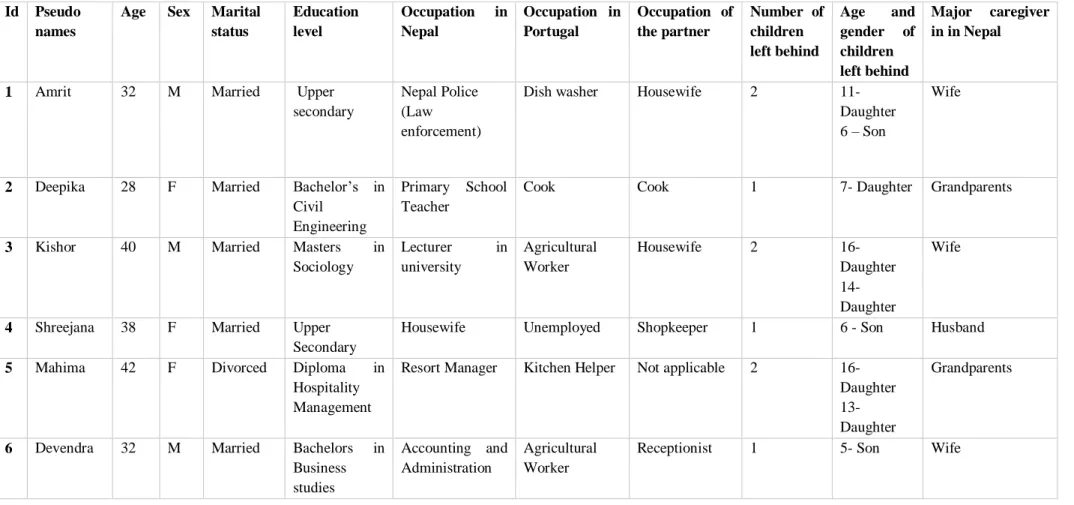
Table 5: Socio demographic characterization of the interviewee and their families ... 52
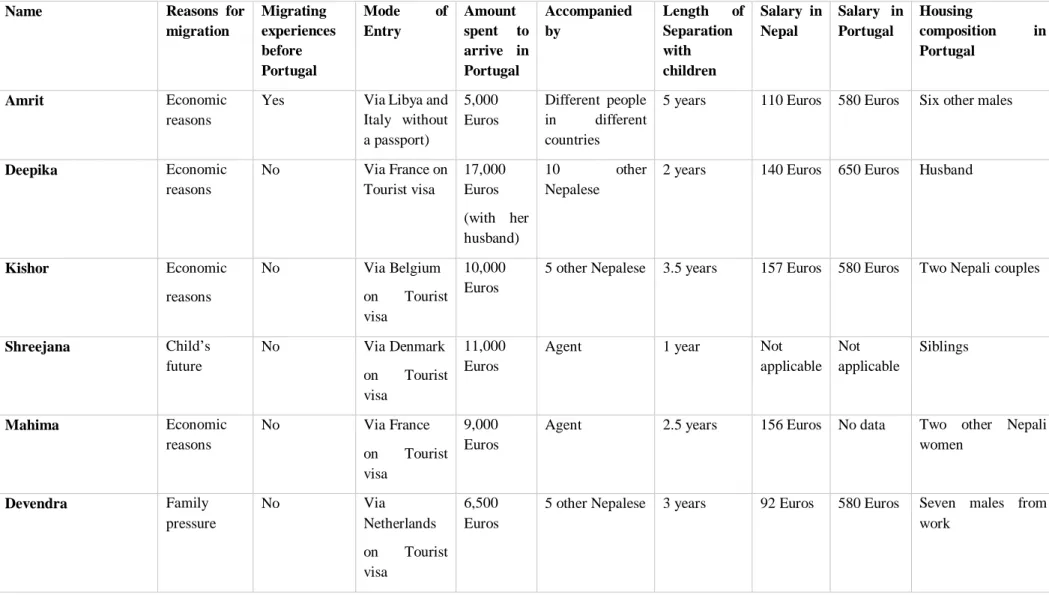
Table 6 Migration trajectory of the interviewees ... 56
List of figures
Figure 1: Choice of destination country by socio-economic status of Nepalese, 2000 ... 9Figure 2: Total number of labor permit issued yearly, 2008/09 - 2014/15 ... 11
Figure 3: Proportion of labor permits issued, by channel of migration, 2008/09–2014/15 ... 12
Figure 4: Nepalese residing in Lisbon by sex in 2011 ... 15
Figure 5: Distribution of Nepalese in Portugal by district and sex in 2016 ... 18
Figure 6: Top 10 countries in the world, personal remittances received in % of GDP, 2016 ... 20
Figure 7: South Asian Population residing in Portugal (2016) ... 30
vii
List of abbreviations
CBS: Central Bureau of Statistics
IFRC: International Federation of Red Cross and Red Crescent Societies INE: Instituto Nacional de Estatistica
IOM: International Organization for Migration MIPEX: Migrant Integration Policy Index NIDS: Nepal Institute of Development Studies NRNA: Non- Resident Nepali Association SEF: Serviço de Estrangeiros e Fronteiras EU: European Union
UN: United Nations
UNDP: United Nations Development Program UDHR: Universal Declaration of Human Rights NASW: National Association of Social Workers IFSW: International Federation of Social Work
viii
Acknowledgements
I am deeply obliged to my thesis supervisors, Prof. Dr. Claudia Pereira and Prof. Dr. Raquel Matias. They have consistently steered me in the right the direction while giving me all the freedom to explore and shape the research. The supervision plan was thorough from the very start and my correspondences were duly responded each time I faced any difficulty or had a query about my research. Every supervision meeting and constructive comments on my work have sparked more knowledge and motivation to keep the study going. My impression of being guided by my mentors was filled with wise advice, insightful criticisms, persistence, warmth, and absolute encouragement!
If I can even become half the intellectual, half the mentor, that Claudia and Raquel are, it will be one of my greatest accomplishments. I thank them for their wisdom, guidance, and patience. I thank my supervisor Professor Claudia, I was fortunate enough to benefit from their immense wealth of knowledge from the very start. I thank her for her generosity and attention to details. Also, for making me a part of her research project of Nepalese in labor trafficking and exploitation, this is one of the subject matters that I deeply care about. I thank her for organizing Lunch writing seminars where I got an opportunity to understand the essence of “academic sharing and growing”. Her calm approach and direction has a significant role in my academic life to which I shall forever remain grateful. Thank you for the endless support!
I would also like to thank my co-supervisor Professor Raquel, her careful sense to details of the work helped me look deeper into my writing and interpretations. Those qualities have shaped me as a more critical evaluator of my own work. Her involvement in this thesis and meticulous attention to details has been one of the highlights of working with her. All the effort has prompted me to do better in each step!
I would like to express my gratitude towards the Erasmus Mundus MFAMILY consortium committee and the European Commission for giving me an opportunity to be part of MFAMILY Master in Social Work with Families and Children. The life changing opportunity of being part of MFamily fraternity is an absolute honor! I thank Professor Maria das Dores Guerreiro for all that she has done from the beginning of the masters’ course and towards the end. I really appreciate her guidance and support throughout. organizing seminars to map our progress and giving necessary feedback for improvement. I would like to thank all the professors from University of Stavanger and Gothenburg University who have imparted valuable knowledge and made our educational experience awesome.
I would also like to thank the experts who were involved in this research project. Without their passionate participation and input, this research could not have been successfully conducted. Rita Penedo, Director of the Observatory on Trafficking in Human Beings, Ministry of Interior who paid attention to ethical issues and agreed to be one of my key informant. Alexandra Pereira, who is currently doing her PhD with Nepalese people, shared her contacts with me and gave me her valuable insights on lives of Nepalese in Portugal. Also, Om Gharti Magar from Solidariedade Imigrante (Association for the defence of immigrants’ rights) who updated me about lives of irregular immigrants and accepted to be my key informant.
ix
I want to thank Mr. Hutraj Pun who introduced me to many journalists, activists, and people that agreed to be my respondents for the project. My deepest gratitude goes to all my participants who despite ‘being in the shadows’ stepped up and diligently answered my questions. I thank you all!
Once again, thank you everyone for having faith in me and making this thesis possible. The writing of this thesis has been an enjoyable journey. I received great inspiration and got a chance to meet with encouraging people during this research, which otherwise would not have been possible.
Finally, I must express my very deep gratitude to Mummy, Daddy, Aaditya, André, Nisha, Abhas, Sabin, Ian, Andrew, Biswash, Babi, Basak and all my colleagues from MFamily for providing me with support and inspiration during my years of study. This accomplishment would not have been thinkable without them. I want to thank everybody who have been directly or indirectly part of my thesis.
1
1. Introduction
Irregular migration, also named as “illegal” or “undocumented”, is an issue of growing amount and importance. According to United Nations (UN) , around 258 million people are worldwide migrants, which reveals an expansion of 49% since 2000 (UN, 2017). This implies that only 3.4% of the world's population are global migrants, which means that most the total populace does not move abroad. Albeit overall records are hard to obtain, the United Nations has surveyed that globally there are about 30 to 40 million undocumented or irregular migrants. This means that to the 258 million international (regular) migrants, sums up about more 15 and 20 per cent who are irregular (international) migrants (UN, 2017).
Therefore, what is exactly an “irregular migrant”? According to International Organization of Migration (IOM) Glossary, an irregular migrant is,
A person who, owing to unauthorized entry, breach of a condition of entry, or the expiry of his or her visa, lacks legal status in a transit or host country. The definition covers inter alia those persons who have entered a transit or host country lawfully but have stayed for a longer period than authorized or subsequently taken up unauthorized employment (also called clandestine/undocumented migrant or migrant in an irregular situation) (IOM, 2011, p. 54).
In the history of migration, separation and transnational families have been thought as a direct result of migration. Transnational families are an increasingly important area in migration studies and have received considerable attention in social work. Migration trajectories of undocumented immigrants is challenging and this study focuses on mechanisms of overcoming the challenges in performing long distance parenting roles. Moreover, migration is both an economic and social process. Migration decisions may be made based principally on economic circumstances, but the process also affects family life. This research focuses on undocumented status and how it affects parenting across borders.
The key aspect of this research is then to explore how parents understand and experience parenthood from a distance while living in an irregular situation. The researcher explores facets of families who are challenged by borders and visa status. It is a current trend in migration that families are divided in different parts of the world, which brings challenges to the notion of family. According to the definition from the A Dictionary of Sociology of “family”, “is an intimate domestic group made up of people related to one another by bonds of blood, sexual mating, or legal ties. It has been a very resilient social unit that has survived and adapted through time”(A Dictionary to Sociology, n.d.). However, with the globalization and the progression of the communication technology making the world ‘smaller’, we can see an enormous movement of transnational families living cross borders. The participants of my research are from Nepal, living in Portugal, whose families are stayed in origin country, and are challenged by distance and confusing irregular situation in the destination country.
2
The idea for this thesis originated when I was in Lisbon, Portugal, in 2016, the first semester of Master’s Program. I interacted with many Nepalese, whose situation shocked me, particularly as this was the first time I was in a foreign country. I had to deal with questions of “how I got into Portugal”, and “how much money I paid to get there”, or sometimes, “which country I overstayed in”, among other questions. I wanted to understand more about the movement of Nepalese and started figuring out that they were entering from different European countries, or by paying some amount of money with the help of ‘smugglers’ who have been living in Portugal. They have either had their visas expired or came in to Portugal without any visas and living without a right to stay in Portugal. The experiences of meeting many irregular immigrants coupled with unique courses during the first semester; namely Sociology of the Family, as well as Family and Migration. My analysis also draws greatly from my experiences as a participant observer of daily life and conversations with many migrants, who were not originally tied to my research.
Problem statement
Even though there is a growing number of irregular migrants who leave their families behind, there is very slight attention paid to their family life. The opportunities for transnational families to meet are scarce and there is a large level of uncertainty and prolonged separation. Irregular migration trajectories on its own are considered risky as a lot of stress factors are attached to the process. An estimation of the annual gross revenue of migrant smuggling marked in an average of USD 5 to 6 billion in 2015 (Interpol, 2016).
According to International Labor Organization (ILO), average monthly earnings of employees in Nepal was approximately 57 Euros1 (ILO, 2008). Whereas, the average monthly income of employees in Portugal is 839 Euros (ILO, 2016). This massive difference in wages also shows the economic motivation to migrate to foreign countries of Nepalese. Scarcity, social and political unpredictability, poverty and not to mention, the restricted convenience of authorized migration routes, push persons to unlawful networks to facilitate their irregular admission, transit or stay in the EU and elsewhere (European Union, 2016). The criminalisation of irregular entry furthermore upsurges the vulnerability of migrants to abuse and exploitation (UN, 2017), which starts at home country as Ya states.
One of the most significant current discussions in legal and moral philosophy is about the problems faced by illegal migrants usually begin in their home countries, especially through unethical practices by illegal brokers and private employment agencies. Migrant workers end up in exploitative working condition due to a lack of accurate information on the living and working conditions in receiving countries (Ya, 2016). In my Google Nepal search for the precise keywords ‘undocumented Nepalese in Portugal and transnational parenting’ on the search bar the result was “Your search did not match any document”. It was apparent that the issue of undocumented Nepalese is underreported and
1 The currency was in Nepalese Rupees and was further converted to Euros using the following website:
3
under studied. However, there were several documents on how Nepalese are travelling all over the globe in search of better opportunities and ultimately, a better life.
Background and purpose of study
Nepal is formally known as the Federal Democratic Republic of Nepal. It is a landlocked country in South Asia bordering India and China. It is one of the least developed nations in the world, and more than one-quarter of their inhabitants live below the poverty line (Central Intelligence Agency, 2018) . The current population of Nepal is approximately 29 million and I argue that there is nearly no social security and few development opportunities, in which the state does not guarantee wellbeing of its citizens and therefore cannot be classified as a “welfare state” by textbook definition. Issues of poverty force millions of people to cross borders and leave families behind.
Nepal is the top country of the world most dependent of remittances for the national GDP. Remittances, the money sent someone in the home country, plays therefore an important role in Nepal’s GDP as it currently stands at 32 percent of country’s total GDP, according to the World Bank data (World Bank, 2016). According to World Bank (2018), the remittances flow to developing countries positioned at $466 billion in 2017 and are anticipated to raise up to around $485 billion in 2018. Similarly, remittances towards South Asia was $117 billion in 2017. We must keep in mind that such fascinating numbers are not just merely statistics of a country and flow of economy, but probably evidence that demonstrates significant universality of transnational families. In fact, these remittances received by the countries, undeniably goes to their transnational families and relatives that make such enormous and persistent flow feasible. Likewise, communication technology and migrant networks have revealed the boundless opportunities that prevail across borders in foreign countries.
It is important to highlight the educational qualifications of the Nepalese immigrants in Portugal. According to the Portuguese Census, nearly two thirds of the Nepalese completed the secondary school and a quarter the university (Bajracharya, 2015a). Therefore, they are qualified immigrants working in manual jobs in agriculture and restaurants. This characteristic of education distinguishes the Nepalese from other immigrants in Portugal. Plus, to descendent mobility in the profession, they are also undocumented, which leaves them in a more vulnerable situation.
Aims of the research and methodology
This study aims to gather meaningful data and answer the questions below. Main question
How do the transnational parents perform parenting roles from a distance while living in an irregular situation?
4 Sub questions
Are there any challenges and impacts of irregular situation in transnational parenting? What was their motivation to choose Portugal as a destination country and how did they
become undocumented?
What are the coping mechanisms that immigrants adapt regarding parenting from afar and family separation?
What are the differences and similarities concerning male and female gender in transnational parenthood among undocumented migrants?
What future expectations plans do these parents have for their children?
The main purpose of this research is therefore to understand the perception and practice of transnational parenting of undocumented Nepalese parents in Portugal. It also intends to fulfil the objective of social work MFamily and apply theoretical knowledge gained during the course. It similarly aims to contribute to the growing knowledge body of irregular migration and transnational parenting research; and provide a perspective of changing Nepalese emigration and families.
The complementary aims are listed below.
• To explore the underlying economic and non-economic causes for irregular migration. • To comprehend the connection with the migrant networks in Portugal and family ties
back in Nepal.
• To identify the major motivation and influences of irregular migration from Nepal to Portugal.
• To explore the positive and negative consequences of irregular migration on migrants and their transnational parenthood in the study area.
• To assess the effects of migration with emphasis on the gender dimension.
The methodology used to achieve these aims was qualitative in nature. According to Bryman (2012), a qualitative study is to characterize the phenomenon, whereas a quantitative is to test hypothesis and measure the dimension. The study has been carried out through micro-ethnography, by using in-depth interviews and participant observation. The interlocutors were tree men and three women, plus two key informants. The secondary data for this research was in international and national databases collected through SEF (Portugal), World Bank, United Nations, and the Office for Education Statistics and Planning, Ministry of Education, and Department of Foreign Employment (Nepal). Moreover, the data for Nepalese migrants were also extracted by earlier research work completed by students in ISCTE-IUL, from MFamily Master, which is currently the only available published data in English on Nepalese immigrants in Portugal.
5
Significance of study
In this research, I attempted to draw from theories on migration and concepts of Sociology of Family to explain the phenomenon of transnational families. Recently, studies have begun to combine both migration and families into one study. Whereas, in the past, most of the studies were focused on only one of the topics but did not integrate them both in one study simultaneously.
This research brought up interesting and unanticipated results. Migration and settlement in Portugal for many Nepalese is a risky, costly, and a prolonged endeavour with lengthy separation from their family members. The higher expenses in the destination country tied with expectations, economic responsibility of family left behind have made lives tougher for many Nepalese. On top of that, living with debts and loans acquired specially for the migration process has contributed in creating several stress factors in Nepalese living in Portugal. The findings of this study show that lives of irregular migrants were already filled with problems and risk before the migration process.
The study also pinpoints the evidences of human rights violation, smuggling, the undocumented immigrants having a fair contribution in the economy of the country of origin as well as destination country with tax payment and social security payment in the Portuguese economy. The irregular migrants in the job market must pay equal taxes as regular immigrants or citizen. It may not be wrong to assume that the economy of a destination country boosts as the revenues rise. Likewise, one of the findings was a huge level of exploitation as the country’s tax system and legal work do not go hand in hand for the irregular immigrants. To illustrate, in Portugal it happened that the tax office did not give them a tax number because they did not have a job but they were only given a job if they have a tax number. They could apply for a residency permit only if they had the tax number and a job contract. The irregular immigrants also contribute a fair share to the global economy with the help of remittances. However, with all these duties at hand, this population has no rights and is labelled as “illegal”, “irregular” or “unauthorized” immigrants. They are subjected to abuse and exploitation in some of their work places or by recruiters. Even though, this was the selected migration channel for the immigrants, as the interviewees of the thesis, who felt trapped living with hefty debts to the recruiters. It is also found that they have long regularization procedures.
Likewise, it was interesting how gender played an important role in parenting and the empowerment of women and men. The study has found that there are both cost and benefits in their decision to migrate. However, the researcher argues if there are more costs than benefits. Benefits being, women being empowered and men taking roles of domestic helps as well. Economic status being uplifted and parents being able to provide for their children and trace their future. Female migrants have felt a sense of emancipation however, male migrants have also gained status and respect in their community back home. If we turn to how it has impacted parents, the results reveal gender differences. Nevertheless, there are similarities, both women (mothers) and men (fathers) interviewed shared the common feelings of loneliness, guilt, and self-blame for the situation they are living in. To maintain parenting, there was serious
6
dependency on communication technology. Likewise, there was an economic transformation in some of their lives as the salaries moved up but most of the interviewees were pushed to the cycle of debt and living with it having a hard time paying off the debts and meeting financial expectations of the family. The living standards had gone down in terms of housing.
Social work implication
According to the most recent global definition issued by International Federation of Social Workers in 2014,
Social work is a practice-based profession and an academic discipline that promotes social change and development, social cohesion, and the empowerment and liberation of people. Principles of social justice, human rights, collective responsibility, and respect for diversities are central to social work. Underpinned by theories of social work, social sciences, humanities and indigenous knowledge, social work engages people and structures to address life challenges and enhance wellbeing (IFSW, 2014). Regarding the definition of social work, it is also pertinent to read the explanation of the National Association of Social Workers, from the United States. Their code of ethics has a list of comprehensive ethical principles that are grounded on social work’s central ideals of social justice, dignity and worth of the person, service, veracity, ability and importance of human relationships (NASW, 2017). These values have established standards to which all social workers must abide.
As the definition of social work suggests, human rights are one of the fundamental principles of social work as expressed in the United Nations Universal Declaration of Human Rights according to its global definition. Before moving on to the significance of human rights based approach in social work, let us understand human rights in general. Human rights are rights inherent to all human beings, whatever our nationality, place of residence, sex, national or ethnic origin, colour, religion, language, or any other status. We are all equally entitled to our human rights without discrimination. These rights are all interrelated, interdependent and indivisible (OHCHR | What are Human Rights, n.d.).
Human rights are considered valid universally and equally for everyone. The social work profession is based in the assumption that human rights for all persons is vital for a better world and the persistence of humanity. The profession of social work takes responsibility to eliminate violation of human rights and professionals must exercise this duty in their practice with people, universally.
However, an ethical dilemma arises when the criminalization of irregular migration comes in action. For social workers based in Europe, in the field of irregular migration, one must understand that in nearly all European Union member states, irregular entry and stay are offences that are typically punishable and condemned with custodial penalty. In some conditions, a person may as well be detained in the return procedure (European Union Agency for Fundamental Rights, 2014). Also, according to pertinent European Union (EU) legislation,
7
the associated countries must punish persons who help irregular migrants to enter and stay in the EU.
Regarding social work implication, there are many structural drawbacks that immigrants face in most parts of the world. Irregular immigrants suggested that they would be happy to receive immigration support and services to safeguard their permanency, safety, and well-being. However, the movement toward the criminalization of immigration, and more precisely, the undocumented population, has led to prevailing dilemmas and barriers to which social workers are required to respond (Furman, 2012). Along with the tough immigration regulation, social workers are in a difficulty in which they either conform and obey the law or interrupt professional values. Social workers can rationalize how they deliver services to undocumented migrants in a different way than others.
Criminalisation affects not only the migrants themselves, as well as individuals who assist them. For instance, providers of charitable or legal support or individuals who rescue migrants in suffering at sea. It has been informed that Malta, Portugal, and Spain do not punish irregular entry or irregular stay with a fine or imprisonment, but return actions are immediately started (European Union Agency for Fundamental Rights, 2014).
Structure of the dissertation
The research paper is divided into six chapters. Chapter 1, this one, established the introduction, which focus on the context and purpose of the study. Chapter 2 is composed of literature review which stretches review of books, papers, journal articles and reports about Nepalese immigration, Portuguese immigration laws, irregular migration, remittances, and transnational parenting practice. Chapter 3 exhibits the theoretical outline of concepts and key issues related to irregular migration networks and transnational parenthood.
Similarly, Chapter 4 is focused on methodology and presents the research strategy, design, data collection techniques, ethical considerations, and limitations of the study. Chapter 5 is composed of analysis and findings regarding participants motivation to travel in an irregular manner, migrant networks, how are they carrying out parenting roles while being undocumented and their coping mechanism and plans for future retrieved from in-depth interviews and observation. Finally, chapter 6 is composed of conclusion, which summarizes the main findings and proposes future research from other standpoints.
8
2. Literature review
The researcher presents the literature review to contextualize and better understand the undocumented Nepalese population in Portugal and transnational parenthood. The chapter is divided into six sections, starting namely with the synopsis of Nepalese migration, and following with the remittances, irregular migration, transnationalism, South Asians in Portugal, and the Portuguese legal framework. It intends to relate and articulate the main research question of the thesis, how are transnational parents performing parenting roles from distance while being undocumented? The sub questions are focused on their motivation to immigrate to Portugal, their coping mechanisms, and future expectations for their children.
2.1 Synopsis of Nepalese emigration
Migration is considered an important phenomenon and has been evident throughout the history of mankind, playing a pivotal role in leading to the world known to us today (IFRC, 2011). According to International Organization of Migration Glossary (IOM, 2011, p. 52), international migration is “Movement of persons who leave their country of origin, or the country of habitual residence, to establish themselves either permanently or temporarily in another country”. An international frontier is therefore crossed. Likewise, in the courses of the overall globalization process that is occurring across the globe, the exchange between information and individuals from one place to another has never been easier. A massive movement flow of culture, ideas, behaviors, families, information and especially money are regarded as key components of migration.
Nepal has a long history of work relocation and migration. The acceptance of youthful Nepali people into the provincial British armed force in the mid nineteenth century gives off an impression of being the principal example of the state's inclusion in formalizing work relocation through bargains between two governments (Bhattarai, 2005). Furthermore, Nepalese have moved to India for work for a substantial length of time and the border crossing is habitually not observed as migration, because of India and Nepal's open frontier and their ancient migration history between each other (Kollmair, Manandhar, Subedi, & Thieme, 2006). A great part of the historical backdrop of work relocation for outside work from Nepal is portrayed by the surge to India, at any rate up to the mid-1980s. Nepal and India share a long and open border and no documentation or visa is required to cross the border from both sides (ibid). However, this has room for contest as the term ‘international migration’ suggests, the movement from one country to another is known as such migration and only because there are open border, countries, statistics, and researcher must consider and observe the movement as migration.
After the displacement of Nepalese populace for military reason, another flow of movement likewise began towards Middle Eastern nations which were incited by the 'oil boom' in mid-1970's (Bhattarai, 2005). Seddon, Adhikari, & Gurung, (2002) specify that it was amid the late 1990's that Nepalese populace started to emigrate progressively to a portion of the Gulf nations. The tremendous interest for work in nations like Qatar, Saudi Arabia and United Arab Emirates charmed the youthful Nepalese individuals hunting down business openings, particularly for
9
the rural population as they were the ones who were deeply affected by the initiation of Nepalese civil war in 1996 (Bhattarai, 2005). In the meantime, the brutal and rough, decade- - long Maoist insurrection that began in 1996 had seriously influenced Nepal's economy.
Nepalese government figures have placed unemployment at 3.20 percent and populace beneath the poverty line remain at 25.2 percent. A report prepared by International Labor Organization (ILO) on Nepali youth between 15-29 discovers youth unemployment rate among college graduates is at 26.1 percent, which is almost three times greater than those without even primary education. Regardless, this could be a direct result of labor migration, extension of the sector of services and the strength of subsistence farming (Serrière, 2014). Most part of youngsters who work in Nepal (92.2 percent) are occupied with casual work without any privileges like fundamental wage, paid yearly and sick leave, and so on.. (Serrière, 2014).
Nepalese have moved to various parts of the world and an example of relocation can be set up as indicated by the financial status, which begins in Group A, the ones richer and with more education, declining gradually until the group D, the ones with lowermost financial and educational resources. Gurung (2000) presents in Figure 1 that Nepalese labors opting to work in the Gulf countries are found to be not as much educated and less rich (Group D) than those aiming to go to North America and Europe. He studies that Nepalese with the maximum capitals and education (Group A) migrate to Anglo-Saxon countries like Australia, Canada, United Kingdom, The Unites States of America, and Japan while people in Group B migrate to nations in Europe like Belgium, Germany, Switzerland; persons in Group C migrate to East Asian countries like Malaysia, Maldives, Singapore, South Korea, Taiwan, Guam; In Group D, they migrate to Gulf Countries and the persons in Group E migrate to India. Migration of enormous sum of Nepalese to Portugal is a new phenomenon which is not communicated in Gurung ‘s study. But it could be probable that the most of the labor migrants coming to Portugal, show the similar features as the other migrants in Group C as a European country (Gurung, 2000).
Figure 1: Choice of destination country by socio-economic status of Nepalese, 2000
Economic Group
(from richest to poorest)
Choice of Destination Country
A Australia, Canada, Hong Kong, Japan, United Kingdom,
United States of America.
B Belgium, Germany, Switzerland
C Guam, Malaysia, Maldives, Singapore, South Korea,
Taiwan
D Gulf Countries
E India
Source: Gurung (2000).
Nepal is presently facing several effects and influences of migration. Likewise, among the numerous impacts of foreign employment, the social dynamics seem to be drastically changing, with many individuals in the working-age populace. Men are found becoming more absent
10
from households in the current times. Besides, social and cultural ideals are also being transformed as more and more women join the labor force largely and universally which is a completely new paradigm (Department of Foreign Employment, 2016).
Nepalese migration is only a new trend to Southern Europe which is Spain and Portugal (Dahal, 2016).There has been insignificant increment until 2005, and after that time there was an enormous rise in number of Nepalese migrating to Portugal (Bajracharya, 2015).
2.1.1 Current trends of Nepalese labor migration
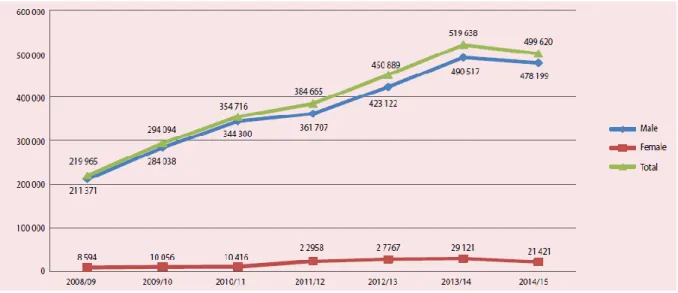
Overseas employment is without a doubt the most notable inspiration for migration from Nepal to other destination in the twenty-first century. More than 3.8 million work licenses to work abroad (except for India) were issued by the Government amid the 1993/94– 2014/15. Likewise, as per the ongoing statistics information (2011), almost 71 percent of the aggregate absent populace (1,921,494), or individuals living out of the nation (counting living in India) referred to private and institutional occupations abroad as the explanations behind leaving the country. Upwards of 1.2 million occupations were accessible in 27 nations, as per the pre-endorsement conceded by the Department of Foreign Employment in 2014/15 (Department of Foreign Employment, 2016). There are different factors related with the decision of choosing destination countries for Nepalese laborers, including financial condition, educational status, access to information and their own social networks (Gurung, 2000).
The inclination of migration for the individuals who have taken authorized approval from the Ministry of Labor between the years 2008/09-2013/14 has been printed in Status Report for Nepal: 2013/14 by the Department of Foreign Employment (2014) as seen in Figure 2. Department of Labor and Employment allotted a total of 2,723,587 work permits from 2008/09 over 2014/15. As per the data on work permits issued, men represented the main part of the labor permits in the course of recent years, at 95.7 percent. In any case, there has been a huge increment in the quantity of permits procured by women in that same period. The share of women migrants topped in 2012/13, at almost 6.2 percent of the aggregate labor migrants and has been falling subsequently. There was a persistent increase in issued grants until 2013/14, when the aggregate number plunged somewhat. The 3.8 percent diminish in 2014/15 from the earlier year is ascribed to the devastating quake that hit Nepal in April 2015.
11
Figure 2: Total number of labor permit issued yearly, 2008/09 - 2014/15
Source: Department of Foreign Employment, Nepal, 2016.
As indicated by the Central Bureau of Statistics of Nepal (2011), the combined number of emigrated Nepalese is around 2 million. A large portion of this populace (75%) dwells in India and Gulf nations, 38% and 37% individually, while just a little number of Nepalese lives in Europe i.e. 3% (CBS, 2016). According to the Nepalese migration profile as specified by Gurung (2000), these rates validate that many of the migrants, particularly the ones going to India and Gulf nations have little educational qualifications and monetary support. It might be believable that they were not ready to discover satisfactory employment openings in Nepal due to their lack of skills and constraining them into grim work (Dahal, 2016b).
The World Bank Group (2011) made an examination on Nepalese individuals who had relocated for employment and returned, uncovering information on licensed recruiters they had and the difficulties they needed to overcome. The migrants said that informal communities in the international destination countries were of incredible help as it opened new channel for openings for work and safeguarded from exploitation, particularly for new migrants. They communicated that they were overqualified for the work they were doing and were not ready to find a superior occupation coordinating their expertise and potential. They had issues with delayed payment at workplace while some said that they confronted medical issues, it made them scared of losing their jobs (The World Bank, 2011).
The primary explanations behind Nepalese migration are joblessness rise and poverty, Maoist insurgency, democratization, and progression through establishment of Foreign Employment Act 1985. With the Foreign Employment Act, labor/abroad work organizations were approved (Gurung, 2000). Nepalese are engaged in for the most part in low or semi-skilled occupations, for example, building construction, carpentry, welding, painting, local work, kitchen helper, and security guards to name a few. Likewise, high frequency of utilizing counterfeit documentation or steering through a transitory third nation travel is also a very common trend among Nepalese going to foreign countries (Sijapati, Bhattarai, & Pathak, 2015).
12
As indicated by the human rights group Amnesty International, Nepali migrant workers are caught in an endless loop of debt obligation and exploitation because of a disappointment by experts to bring down recruitment firms or 'agencies' that charge wrongfully high expenses for employments abroad or education abroad (“Failed and exploited, Nepal migrant workers trapped in debt cycle – Amnesty,” n.d.). A study of more than 400 Nepali migrants by Amnesty discovered that workers are not just constrained up to 12 times more amount to agencies, yet in addition that most are compelled to acquire the cash from corrupt cash moneylenders at high loan costs. Migrant workers very frequently wind up caught in challenging circumstance of working abroad for quite a long time basically to pay off the immense, regularly unlawful expenses they were charged to take the activity (ibid).
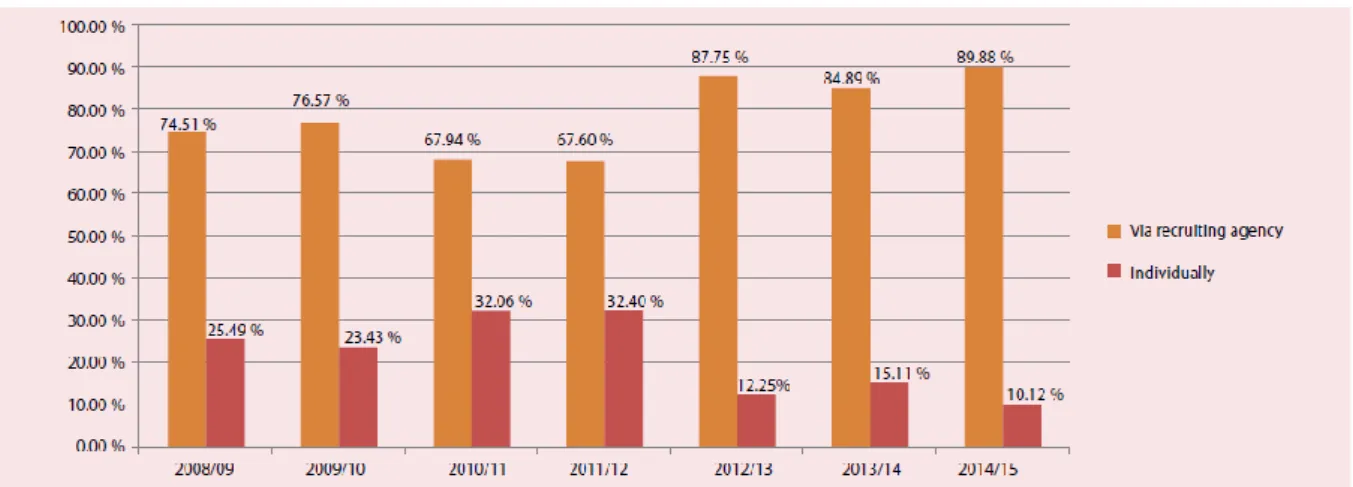
To comprehend this trend further, using the help of a recruitment office has been the favored approach among migrants when looking for foreign employment, with 79.9 percent of all work permits during the last seven years issued to migrants using this method of migration. As Figure 3 outlines, there was a consistent increment in the two channels for getting a work allow until 2011/12, after which there was a significant reduction in the quantity of prospective migrants gaining a work permit without anyone else's help.
Figure 3: Proportion of labor permits issued, by channel of migration, 2008/09–2014/15
Source: Department of Labor Migration, Nepal 2016.
Grievances, distress and death
In Nepal, the most widely recognized grievance or pain detailed by work migrants has been against recruitment offices or people who misinformed or misguided complainants amid the process of employment. Because of forged contracts, overcharging for administration services provided, and misrepresentation by breaching the employment agreement, work migrants have encountered seriously exploitive conditions, including limitation of movement, non-installment of wages and loss of wealth as a result of high migration costs. It is clear the level of fraud executed by recruitment offices and exploitation, abuse, damage, or death during employment in destination nations which have been constantly informed to the Nepalese government. Comparable tendencies appear to be basic in study consultancies, travel offices and so on in Nepal which has prompted a serious web of issues.
13
Similarly, Table 1 portrays an aggregate of 4,322 deaths of migrant laborers (4,235 men and 85 women) happening in 24 destination nations were reported to the Foreign Employment Promotion Board from 2008/09 to 2014/15.
Table 1: Total reported number of Nepalese workers’ deaths during foreign employment, by sex, 2008/09-2014/15
Source: Department of Labor Migration, Nepal 2016.
The accounts of reported deaths in the destination countries over the past seven years disclose that most occurred in Malaysia, Saudi Arabia, Qatar, United Arab Emirates and Kuwait (Table 2).
Table 2: Reported number of Nepalese workers’ deaths, by destination country, 2008/09– 2014/15
Source: Department of Labor Migration, Nepal 2016.
Causes of death
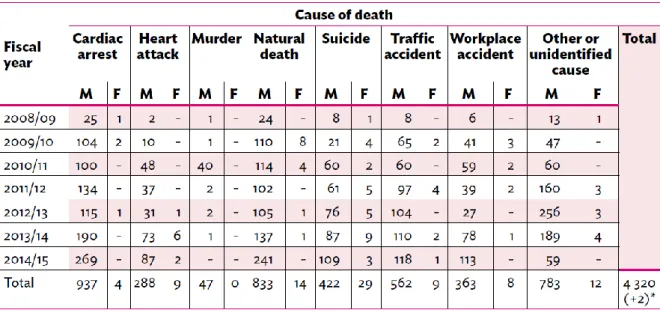
The existing evidence specified that the main reasons of death amongst labor migrants when employed abroad was cardiac arrest (941 cases), natural death (847 cases) and other or
14
unidentified causes (795 cases). A substantial number of deaths by traffic accident (571 cases) and suicide (451 cases) were also recorded, while the proportion of deaths due to a workplace accident was low (at 8.5 per cent). The key cause of death among the female labor migrant was suicide (at 29 of the total 85 among female workers). Approximately 19 per cent of all bereavements were classified as “other or unidentified cause” (Table 3). The record does not offer additional aspect on the reason of death other than the quantitative statistics.
Table 3: Reported cause of death among Nepalese labor migrants while working abroad, by sex, 2008/09 – 2014/15
Source: Department of Labor Migration, Nepal 2016.
These facts highlight the harsh truth of very poor development in relations of generating jobs together in private and public sector with at least 30 percent of the entire population underemployed (ibid.) Thus, the trend of going abroad to work and send money back home remains as a primary objective of migrants. The government encourages people to migrate as their deficiency of creating job opportunities and their effort to keep the economy rousing has been partly shielded by the remittances received by the country.
2.1.2 Student visas and employment
The free movement of travelers, emigrants, immigrants, students, refugees, exiles, and guest workers has been a universal phenomenon and Nepal is not exempt from this actuality. Studying abroad has been a common trend for Nepali students, mostly with the help of education consultancies that are listed in the Company Registrar’s Office and with the Accreditation Section of the Ministry of Education (Department of Foreign Employment, 2016).
The Ministry of Education issues a “No objection letter” (NOC) to students who obtain a visa for foreign studies. The NOC note is a mandatory document essential only for gaining foreign currency so that students can pay their education fees. The unrestricted flow of students from
15
Nepal is attached with a free stream of finance and vice versa through their appointment in employment activities throughout their education and the post-graduation period. Thus, a thin line splits foreign study and overseas employment. Numerous cases have appeared in which “students” were sent in a foreign country for employment in the name of study which has also given rise to undocumented status of Nepalese in many countries (ibid).
The description from Education Ministry of Nepal, 2016, indicates that an average of 54 students leave Nepal every day for study purposes in foreign countries. The figures for 2010/11–2014/15 also specify that the number of students leaving Nepal is growing, from 33 per day to 84. There is an increasing challenge with the interweaving of foreign study and employment. The statistics are alarming since the education ‘consultancies’ encompass private businesses and sham paperwork of sending students for foreign employment. This is now frequently exposed by the Nepal Police (Department of Foreign Employment, 2016). However, the issuance of labor permits or ‘NOC’ itself does not validate the number of people employed or migrated abroad. There are several ways of people migrating in the name of tourism, marriage, or irregular migration process to name a few which does not require a permit to be qualified to leave the nation.
Nepalese in Portugal
Nepalese residing in Lisbon by sex in 2011
The figure 4 represents the Nepalese immigrants residing in Lisbon in the year 2011 according to Census data from Portugal (Bajracharya, 2015). The census of Portugal in 2011 discovered that the total population of Nepalese immigrants at 959 individuals with 710 representing male and 249 representing female.
Figure 4: Nepalese residing in Lisbon by sex in 2011
Source: Bajracharya, 2015 based on INE, Census 2011.
Nepalese residing in Portugal by sex and age, 2011
The figure 4 and table 4 exemplifies the population of Nepalese immigrants according to
Women: 249
16
nationality categorized by sex and age group, residing in Portugal in the year 2011 according to the census. Majority of Nepalese immigrants were from age group 15 to 39, which is 84%. According to (OECD, 2018), people between age group 15 to 64 are working population. Taking that into attention, Nepalese immigrants in Portugal who fall under this age group is represented by 96.6%. When comparing this number to the Nepalese population in European Union countries, there are around 88% of them who are from working age population (Bajracharya, 2015 CBS, 2015). Likewise, three quantities of the Nepalese residing in Portugal are men and on quarter consists of women as shown in Figure 3.
Table 4: Nepalese residing in Portugal by Sex, Age, Educational level, and Income
Source: Bajracharya, 2015 based on INE Census, 2011. * Note: Between 3 to 4 cases are related to individuals aged 65 or more.
Education level of Nepalese residing in Portugal, by sex, 2011
The table 4 also demonstrates the educational level of Nepalese immigrant in Portugal. Most of Nepalese immigrant have accomplished their secondary education, which is signified by 60 percent. One quarter (26%) of Nepalese immigrant finished their tertiary education. There were few who had education below secondary level, which is represented by 14 percent. Therefore, most of the Nepalese immigrants, around 86 percent living in Portugal, have completed at least secondary level of education. It shows that they have some degree of education, which is also confirmed by Gurung (2010), as he mentions majority of Nepalese travelling to America and Europe are educated.
Likewise, focusing on the research topic, the researcher has also found similarities with the following data among the ones she has interviewed. During her interviews most of her
T M F T M F 0 - 14 31 9 22 3.2 1.3 8.8 15 - 39 809 609 200 84.4 85.8 80.3 40 - 64* 119 92 27 12.4 13 11.8 No schooling or pre-schooling 63 39 24 6.6 5.5 9.6 Primary education 68 40 28 7.1 5.6 11.2 Secondary education 578 426 152 60.3 60.3 61.0 Tertiary education 250 205 45 26.1 29 18.7 Work 695 569 126 72.5 80.1 50.6
Property or entrepeneurial income 3 2 1 0.3 0.3 0.4
Supported by household 154 64 90 16.1 9.0 36.1
Temporary benefits (unemployment, illness, maternity leave, social integration income)
15 10 5 1.6 1.4 2.0 Retirement /pension 5 2 3 0.5 0.3 1.2 Other 87 63 24 9.1 8.9 9.6 Total 959 710 249 100.0 100.0 100.0 Income source Educational level Age N % in column
17
interviewees were overqualified for the jobs here in Portugal.
Sources of income of Nepalese in Portugal, by sex, 2011
Table 4 depicts the data for Nepalese immigrants who have been working in the labor market. It displays that 73 percent of immigrants were working. Sixteen percent were supported by family and very few Nepalese had their source of income from unemployment benefit, social integration income other temporary benefit and property or entrepreneurial income. Observing the source of income of Nepalese immigrant women about 50 percent were working in labor market and 36 percent were supported by household income.
Official statistics of Portuguese authority and estimates of Nepalese organizations
Based on researcher’s visit to the Non- Resident Nepalese Association (NRNA) and conversations with journalists they estimate that there is almost 15000 Nepalese living in Portugal both in documented and undocumented status. Nevertheless, according to the statistics of the Service of Foreigners and Borders, SEF, based in the resident permits, the total number of Nepalese residing permanently in Portugal in 2016 is 5835 (SEF, 2016).
In terms of inflow, the recent data of residence permits being granted was 1348 in the year 2016.(ibid) The total number of resident permits granted by the Immigration and Borders Service (SEF) to Nepalese immigrants from 2000 to 2013, from only two Nepalese to be granted resident permit in 2000, the number increased to 2588 in 2013 (Bajracharya, 2015). Distribution of Nepalese in Portugal by district and sex in 2016
Nepalese reside in many parts of Portugal, with Lisbon and Faro districts showing the highest concentration. The distribution of Nepalese in Portugal by district and sex can be seen in the figure 5 which shows the highest concentration of Nepalese population in Lisbon which also led the researcher to conduct her micro ethnography and base her interviews in Lisbon.
18
Figure 5: Distribution of Nepalese in Portugal by district and sex in 2016
Source: SEFSTATS 2016
Undocumented Nepalese and Service for Foreigners and Borders M: 474 F: 232 M: 9 F: 5 M: 2778 F: 1555 M: 78 F: 37 M: 1 F: 0 M: 13 F: 6 M: 0 F: 0 M: 20 F: 2 M: 2 F: 3 M: 1 F: 0 M: 53 F: 39 M:10 F:0 M:114 F: 38 M:276 F: 41 M:25 F: 8 M: 2 F: 1 M: 0 F: 0 M: 0 F: 1 M: 7 F: 4
19
The official data indicates 2,050 people in the metropolitan area of Lisbon alone in the year 2013; 671 misdemeanor proceedings initiated over stay in the country and 200 notifications for voluntary abandonment of the country to Nepalese in 2013 suggest an important immigration and illegal stay in recent years (Dahal, 2016). Likewise, in 2015 there were 4798 Nepalese living in Portugal. However, in 2016 SEF statistics show total inflow of 5835 Nepalese in year 2016, with 3863 being men and 1972 women. Among these, highest position was in Lisbon with 4333 Nepalese migrants residing; 2778 men and 1555 women (SEF, 2016). The inflow of Nepalese migrants in Portugal is an interesting yet understudied phenomenon. The large gap between documented and undocumented migrants calls for serious attention since the undocumented Nepalese do not make it to the official figures. Since most of the undocumented migrants come alone, there are significant impacts on their family.
Likewise, researcher’s micro ethnography and previous researchers suggest that there are numerous Nepalese who are living in an undocumented status without a valid residence visa. Excessive length of stay (illegal stay, article 192 of Law no. 23/2007), out of 411,080 lawsuits that were filed, 941 Nepalese were highlighted under this lawsuit. Whereas, Voluntary Abandonment Notifications (NAV) also had significant increase of 35.8% compared to 2015, maintaining the tendency to increase this indicator. The most representative origins after Brazil and India was Nepal with 537 cases with Notifications (SEF, 2016). SEF Program in Movement is a program to take care of the files for the residence permits’ applications and to deliver those directly to immigrants who have difficulties moving and no transport, or not enough means, to go by themselves to the main buildings/services of SEF in Lisbon highlighting as 49 Nepalese by granting a residence permit (ibid) .
In 2016 SEF also signaled 40 victims associated with the crime of trafficking in persons, constituting the nationalities among which the most relevant were 29 Nepalese. Likewise, SEF also indicated that Nepalese population is growing in terms of foreign population in Portugal. In terms of growth, they have highlighted Nepalese with 44.6% with the issuance out of 1,369 titles (SEF, 2016).
One of the most prominent Nepalese associations in Portugal is NRNA which also acts like an umbrella foundation for the Nepalese where they complain about their problem and receive help to solve matters. Some of the other Nepalese organizations are helping the immigrants by providing training classes and helping them to build social networks. Some organization such as self-help group is also present in Nepalese society established by the women to support in term of financial matter to ensure financial security during difficult times.2
2.2 Remittances
2.2.1 Nepal: One of the world’s top country most dependent on remittances
In the most recent decades, the significance of remittances in connection to national improvement of Nepal has revealed understanding upon the global development agenda. In
20
2014, the World Bank distributed their 'Migration and Development Brief' where they showed that in 2013 the aggregate sum of remittances exchanged back to the global south, increased by 3.5 percent, to come to an expected aggregate of 436 billion USD (World Bank 2014). In various global south nations, the money from the remittances, now regularly exceed the aggregate sum of help got from the developed world. In 2013, the aggregate sum of remittances exchanged back to Nepal nearly surpassed the twofold measure of aggregate income from Nepal's export sector of merchandise and enterprises. Remittances in Nepal remained for 28,8 percent of Nepal's aggregate GDP in 2013 and the aggregate sum of money remitted back to Nepal has expanded by 40 times in extent to Nepal's aggregate GDP between 1991-2008 (Wagle, 2012).
Remittances contributed a 10.9 percentage part of the total gross domestic product (GDP) in 2003/04 also 27.7 per cent in 2014/15. The remittance drive, hence, is a main contributor to advance financing in Nepal. "The outflow of migrants in the past decade has been momentous in transforming the country’s economic, social, and cultural fabric. Nepal has emerged as a remittance economy, shaped by migrants’ cash flows, as it was the third-largest recipient of remittances—as a share of GDP—in the world in 2012 and the top recipient among least developed countries. Foreign employment has provided alternative livelihood opportunities, and remittances have helped to augment household incomes” (World Bank, 2017).
Figure 6 depicts the state-of-the-art 2016 Migration and Remittance data issued by the World Bank. Nepal remained as the uppermost nation most reliant on in remittances as a percentage of GDP in 2016 (World Bank, 2016). In study of World Bank report for 2016, it is concluded that Nepal is foremost in the classification with an estimated USD 6.6 billion in remittances equal to 31.3 percent of the country’s GDP (DeSilver, 2018). Concerning remittances by fraction of GDP, Nepal (31.3 percent) was followed by Kyrgyzstan (USD 2 billion, 30.4 percent of GDP), Tajikistan (USD 1.9 billion, 26.9 percent of GDP), among others (World Bank, 2017).
Figure 6: Top 10 countries in the world, personal remittances received in % of GDP, 2016
0 5 10 15 20 25 30 35 Nepal Kyrgyz Republic
Haiti Tajikistan Liberia Moldova Gambia, The
21 Source: World Bank Report 2016.
2.2.2 Impact of remittances in developing countries
The remittance stream, along these lines, is a noteworthy reason of developing finance in Nepal. The outpouring of migrants in the previous decade has been crucial in changing the nation's financial, social, and cultural framework. Nepal has risen as a remittance economy, molded by migrants' money streams, as it was the third-biggest beneficiary of remittances as a share of GDP in 2012 and the top beneficiary among least developed nations. Foreign employment has given elective occupation opportunities, and remittances have enlarged household earnings. One of the key debates in theory about the development effect of remittances is the degree to which remittances make, or do not make, a significant contribution to the economic advancement of the recipient household (Eversole & Johnson, 2014). . The points of view of remittance beneficiaries made visible through an anthropological approach suggested categories for development analysis. For remittance recipients, the remittances are an approach to satisfy family’s financial objectives now and later in the future. They are an instrument for helping the family – frequently, while likewise accepting assistance from other transnational relatives. Also, they are a thought about livelihood system, that frequently includes the need to ‘sacrifice’ for what's to come in the future (Eversole & Johnson, 2014). Discussing about a research done in 74 developing countries, it is found that there exists a noteworthy travel cost linked with international migration. Due to this, international migrants arise from those income groups which are just above the poverty line in middle income developing countries meaning that they can manage to pay for the migration process.
As specified by Richard and Page, worldwide remittances which are categorized as the share of remittances in country GDP has a statistical and compact, impact on diminishing poverty. By and large, a 10 percent expansion in the share of international remittances in a nation's GDP will prompt a 1.6 percent decrease in the share of population living in poverty (Richard & Page, 2003).
In the vast body of knowledge there is slight agreement and scarce data regarding the influence of international migration on poverty figure 5(ibid). Charles Stahl, for instance, inscribes that “migration, particularly international migration, can be an expensive venture. Clearly it is going to be the better-off households which will be more capable of (producing international migrants).” (as cited in Richard & Page, 2003).
Research likewise discovers that remittances worldwide have expanded during the past thirty years, particularly for progressing countries. Nevertheless, contrasted with private and official flows of capital, remittances are usually small. Additionally, a vital discovering is that worker remittances in respect to GDP are high particularly for small and generally developing nations or nations with a poor institutional structure (Buch, Claudia M.; Kuckulenz, Anja; Le Manchec, Marie-Helene, 2002). Remittances are connected positively to economic growth. Thus,
22
remittances may not only tend to shield families back home as suggested by the literature, but may also be supplementary capitals that can expand revenues of countries.
The flow of remittance revenue in Nepal is an indicator of the deteriorating business sector, which has declined the export commercial, mainly in terms of limited entrepreneurship prospects. Nevertheless, some Nepali economists have started to portray remittance income as the pillar of the economy, the Government differentiates it as a sequence of quick solutions to crawling financial development in place of a viable resolution. Also, an imperative downside, because Nepal’s remittance economy is reliant on international migration, it is vulnerable to external economic crises (Department of Foreign Employment, 2016).
2.3 Irregular migration
International migration has various facets and among them there is irregular migration. Irregular migration is a multifaceted phenomenon and contrasts greatly according to the national and regional situations. Although international figures are hard to obtain, J Chaime (2016) assessed that almost 50 million of all international migrants are in an irregular situation.3 To elaborate further, from the standpoint of destination countries, it refers to circumstances where the entry, stay or labor in a nation is made without the required permission or documents obligatory under immigration protocols.
According to International Organization of Migration Glossary (IOM, 2011), an irregular migrant is
A person who, owing to unauthorized entry, breach of a condition of entry, or the expiry of his or her visa, lacks legal status in a transit or host country. The definition covers inter alia those persons who have entered a transit or host country lawfully but have stayed for a longer period than authorized or subsequently taken up unauthorized employment (also called clandestine/undocumented migrant or migrant in an irregular situation). Likewise, the glossary suggests that the term “irregular” is preferable to “illegal” since the latter carries a felonious meaning and is regarded as denying migrants’ humanity. Whereas, irregular migration refers to “Movement that takes place outside the regulatory norms of the sending, transit and receiving countries.” There is, yet, a predisposition to control the use of the term "illegal migration" to cases of smuggling of migrants and trafficking in people (IOM, 2011).
According to United Nations Department of Economic and Social Affairs (UN, 2017), it is presently assessed that about 258 million individuals are international migrants representing an upsurge of 49% since 2000. This means that 3.4% of the world’s inhabitants are international migrants which suggests that most the world’s population do not migrate abroad. In the year 2017, among the 258 million international migrants worldwide, 106 million were natives from Asia.