M
ANGULAR KINEMATIC ANALYSIS OF THE
UPPER-LIMB JOINTS IN ASSEMBLE WORK
A COMPARATIVE STUDY IN TWO ASSEMBLY LINES
ANA BETTY DE SOUSA ABREU
DISSERTAÇÃO DE MESTRADO APRESENTADA
À FACULDADE DE ENGENHARIA DA UNIVERSIDADE DO PORTO EM ENGENHARIA DE SEGURANÇA E HIGIENE OCUPACIONAIS
Faculdade de Engenharia da Universidade do Porto Rua Dr. Roberto Frias, s/n 4200-465 Porto PORTUGAL
VoIP/SIP: [email protected] ISN: 3599*654 Telefone: +351 22 508 14 00 Fax: +351 22 508 14 40 URL: http://www.fe.up.pt Correio Eletrónico: [email protected]
MESTRADO EM ENGENHARIA
DE SEGURANÇA E HIGIENE
OCUPACIONAIS
Dissertação apresentada para obtenção do grau de Mestre Engenharia de Segurança e Higiene Ocupacionais Faculdade de Engenharia da Universidade do Porto
ANGULAR KINEMATIC ANALYSIS OF THE
UPPER-LIMB JOINTS IN ASSEMBLE WORK
A COMPARATIVE STUDY IN TWO ASSEMBLY LINES
Ana Betty de Sousa AbreuOrientador: Professora Joana Carvalho dos Santos (Escola Superior de Tecnologia da Saúde do Instituto Politécnico do Porto) Coorientador: Professor Doutor João Manuel Abreu dos Santos Baptista (Professor Associado - Faculdade de Engenharia da
Universidade do Porto)
Arguente: Professor Doutor Manuel Rubim Santos (Escola Superior de Tecnologia da Saúde do Instituto Politécnico do Porto) Presidente do Júri: Professor Doutor José Manuel Soutelo Soeiro de Carvalho (Professor Associado - Faculdade de Engenharia
da Universidade do Porto)
I
ACKNOWLEDGEMENT
I wish to thank a particular group of people for their contribution in the development of this research.
First of all, I would like to express my deep gratitude to Professor Joana Carvalho dos Santos for her patient guidance, enthusiastic encouragement and useful critiques. For her valuable and constructive suggestions during the planning and development of this research work. Thanks for being throw all the good and bad moments.
I would like to express my very great appreciation to Professor João Manuel Abreu dos Santos Baptista.
I would also like to thank the automotive industry that allowed the developing of this research in their assembly lines and for all the assistance in the plant data collection.
I wish to acknowledge the help provided by Pedro Fonseca in the data collection. I am particularly grateful for the assistance given by Nuno Marques.
To Nelson Ferreira, a special thank for the patient support and companionship.
III
ABSTRACT
Upper limb work-related musculoskeletal disorders (UL-WMSDs) are still the occupational disease with high incidence among workers in the industrialized countries.
One of the most organizational changes was due the technological advances. The development and introduction of automated systems has been successful in terms of improving the precision and economy of operations. Automation technology was originally developed in order to increase the precision of operations while, at the same time, reducing operator workload and training requirements. However, a considerable number of unanticipated problems have been observed such as interaction between human operators and automated systems. The automation of assembly lines could have increased stress, workload demands, working time and decreased of the job stability among workers. Other aspect of the automation systems is the increase of work-pace and consequently the repetitive movements in the performance of tasks in assemble work.
The aim of this study is to make a comparative study of the angular kinematics of the upper limbs joints between subjects in two assembly lines (semi-automatic assembly line vs. manual assembly line) in a Manufacture company of parts and accessories for automotive industry. For that purpose was used an inertial measurement system Xsens MVN BIOMECH, in seven healthy operators when performing assemble work.
The results show a strong correlation between subjects in the manual assembly line proven that operators have similar patterns of the ROM of the upper limb articulations in the performance of the tasks.
In the semi-automated, even fewer strong correlations were achieved between subjects. No relation between subjects was detected. Likewise in manual assembly line, it was verified a strong articulation movement pattern between subjects.
In the ROM of upper limbs articulations between subjects in assembly lines studied it was possible to verify that 27.4% of the correlation calculated are strong (0.5 to 1), 64.3% have moderated correlation (0.3 to 0.5) and only 8.3% have weak correlation (0,1 to 0,3). It was not detected no correlation or very weak correlation between subjects studied in the similar workstations.
This fact probably means that even with the improvement of the assembly line in technological aspects the range of motion of the upper limb articulation are the identical between subjects. It apparently indicates that human factors were not taken in account in the workstation design and manufacture.
Key Words: Kinematics; Upper Limb; Musculoskeletal Disorders; Assemble Work; Work
Master in Occupational Safety and Hygiene Engineering
RESUMO
As Lesões músculo-esqueléticas nos membros superiores relacionadas com o trabalho (LMEMSRT) continuam a ser a doença ocupacional com maior incidência nas cidades industrializadas.
Ao longo dos anos os avanços tecnológicos conduziram a mudanças organizacionais significativas nas empresas. O desenvolvimento e introdução de sistemas automatizados nos postos de trabalho e equipamentos tem sido bem-sucedida em termos da melhoria da precisão das operações e economia das empresas. A automatização tinha o objetivo de aumentar a precisão das operações, enquanto era também obtida redução da carga biomecânica dos colaboradores e respetivos requisitos de formação. Contudo, algumas dificuldades foram detetadas, nomeadamente na interação homem-máquina. A automatização das linhas de montagem pode ter aumentado os níveis de estresse, as exigências relativas ao trabalho, horas trabalhadas e a diminuição da estabilidade do posto de trabalho. Outro aspeto influenciado foi o aumento do ritmo do trabalho e por conseguinte o aumento dos movimentos repetitivos na realização de tarefas de montagem manual.
O objetivo deste estudo é realizar uma análise comparativa da amplitude movimentos das articulações dos membros superiores dos colaboradores de duas linhas montagem (linha de montagem semiautomática vs. linha de montagem manual) numa Indústria de Fabricação de componentes e acessórios para a indústria automóvel. Para a recolha dos dados foi utilizado um equipamento de medição inercial Xsens MVN BIOMECH. Sete colaboradoras saudáveis participaram neste estudo aquando da realização de tarefas de montagem manual nas linhas de montagem.
Os resultados do estudo e os padrões dos movimentos indicam que existe forte correlação na amplitude de movimentos adotados entre as colaboradoras nos mesmos postos de trabalho de ambas as linhas.
Na linha de montagem semiautomática foi encontrado um menor número de valores na gama de correlações fortes. Contudo, não foi verificado a não correlação entre os sujeitos nos mesmos postos de trabalho avaliados.
Na amplitude de movimentos das articulações dos membros superiores entre as colaboradoras das linhas de montagem em estudo foi possível verificar que 27.4% estão na gama da correlação forte (0.5 to 1), 64.3% na gama de correlação moderada (0.3 to 0.5) sendo que 8.3% encontravam-se na gama de correlação fraca (0,1 to 0,3). Não foi verificada a não correlação ou correlação muito fraca entre os indivíduos nos postos de trabalho semelhantes em estudo.
Os resultados provavelmente indicam que mesmo com a automatização e melhoria das condições tecnológicas na linha de montagem semiautomática não foi tido em conta os fatores humanos dos indivíduos dado que a amplitude de movimentos adotado é semelhante em ambas as linhas.
Palavras-Chave: Cinemática; Membro Superior; Lesões Músculo-esqueléticas; Trabalho
INDEX
1 INTRODUCTION ... 3
2 State of the art ... 5
2.1 Musculoskeletal Disorders ... 5
2.2 Costs and Statistics of Musculoskeletal Disorders ... 6
2.3 Development of Upper Limbs Musculoskeletal Disorders ... 7
2.4 Work Organization and the Impact in Worker´s Health ... 9
2.4.1 Production System Design ... 13
2.5 Motion Capture Systems ... 14
3 Objectives, materials and methods ... 17
3.1 Objectives ... 17
3.2 Materials and Methods ... 17
3.2.1 Operators ... 17
3.2.2 Instrumentation and Data Collection Procedure ... 25
3.2.3 Statistical Data Analysis ... 27
4 RESULTS AND DISCUSSION ... 31
4.1 Anthropometric and Bioimpedance Data ... 31
4.2 Angular Kinematic Range of Motion – Manual Assembly Line ... 31
4.3 Angular Kinematic Range of Motion – Semi-Automated Assembly Line ... 38
4.4 Maximum Cross Correlation - Semi-Automated vs. Manual Assembly Line ... 47
5 CONCLUSIONS AND FUTURE PERSPECTIVES ... 51
5.1 Conclusions ... 51
5.2 Future Perspectives ... 51
VII
FIGURE INDEX
Figure 1 Percentage distribution of occupational diseases, 2002-2005 ... 6
Figure 2 Pathways involved in the pathogenesis of UL-MSDS ... 8
Figure 3 Relations between risk factors of psychosocial and individual origin for neck and upper limb problems ... 9
Figure 4 Conceptual framework for links between lean manufacturing implementation, work characteristics, and injury outcomes. ... 10
Figure 5 Manual Assembly Line Layout ... 13
Figure 6 Semi-automated Assembly Line Layout ... 14
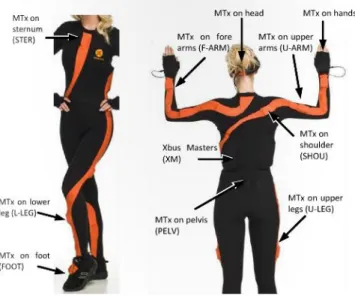
Figure 7 Sensor Modules Localization ... 26
Figure 8 N-Pose for calibration procedure ... 27
Figure 9 Right Shoulder ROM of studied subjects in workstation 100 - Manual Assembly Line ... 32
Figure 10 Right elbow and wrist ROM of studied subjects in workstation 100 - Manual Assembly Line ... 32
Figure 11 Right Shoulder ROM of studied subjects in workstation 102 - Manual Assembly Line ... 33
Figure 12 Right elbow and wrist ROM of studied subjects in workstation 102 - Manual Assembly Line ... 33
Figure 13 Right Shoulder ROM of studied subjects in workstation 103 - Manual Assembly Line ... 34
Figure 14 Right Elbow and Wrist ROM of studied subjects in workstation 103 - Manual Assembly Line ... 34
Figure 15 Right Shoulder ROM of studied subjects in workstation 100 – Semi-automated Assembly Line ... 38
Figure 16 ROM of the Right Elbow and Wrist of the subjects studied in workstation 100 - Semi-automated Assembly Line ... 39
Figure 17 Right Shoulder ROM of studied subjects in workstation 103 - Semi-automated Assembly Line ... 39
Figure 18 Right Elbow and Wrist ROM of studied in workstation 103 - Semi-automated Assembly Line ... 40
Figure 19 Right Shoulder ROM of studied subjects studied in workstation 104 - Semi-automated Assembly Line .. 41
IX
TABLE INDEX
Table 1 Negative impact of WMSDs for States, Companies and Workers ... 5
Table 2 Main factors of the development of WMSDs ... 6
Table 3 Neck and upper limb musculoskeletal disorders ... 8
Table 4 Advantages and disadvantages of the implementation of a LPS ... 11
Table 5 Different assembly lines production systems ... 12
Table 6 Assembly lines characteristics ... 14
Table 7 Motion Caption technologies ... 16
Table 8 Characterization of the movements of the upper limb´s operators of Semi-automated line ... 19
Table 9 Characterization of the movements of the upper limbs operators of the Manual line ... 22
Table 10 Range of Motions and Degrees of freedom analyzed ... 26
Table 11 Strength of relationship of r values ... 27
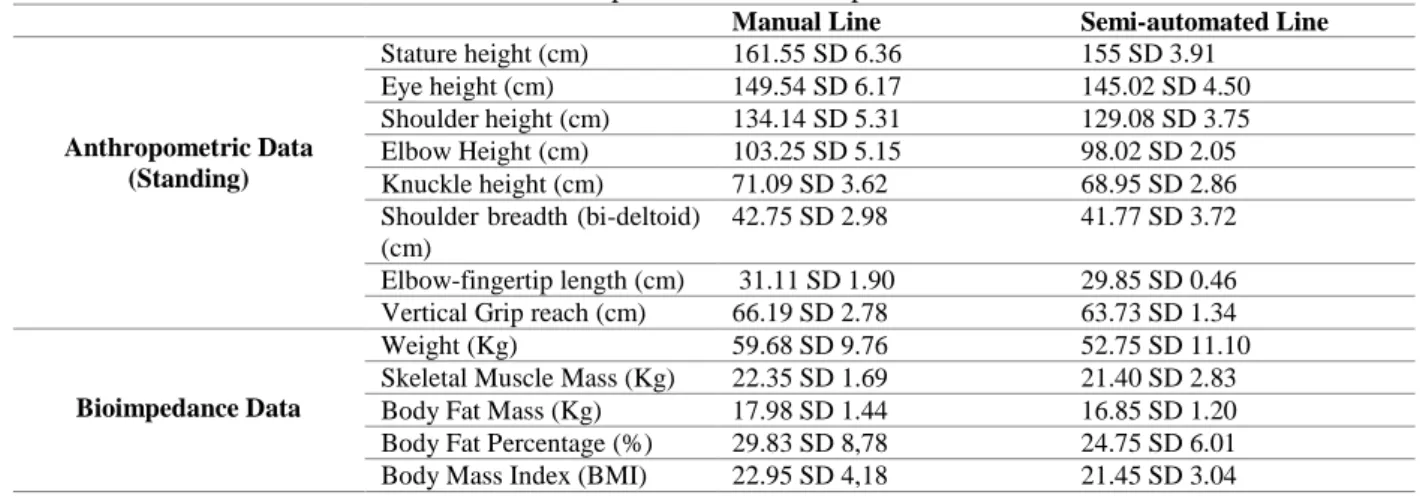
Table 12 Anthropometric and Bioimpedance Data... 31
Table 13 Correlation value r and statistical significance p between subjects in same workstations – Manual Assembly line ... 37
Table 14 Statistics variables between subjects in workstation 100 – Manual Assembly Line ... 44
Table 15 Statistics variables between subjects in workstation 102 – Manual Assembly Line ... 44
Table 16 Statistics variables between subjects in workstation 103 – Manual Assembly Line ... 45
Table 17 Statistics variables between subjects in workstation 100 – Semi-Automated Assembly Line ... 45
Table 18 Statistics variables between subjects in workstation 103 – Semi-Automated Assembly Line ... 46
Table 19 Statistics variables between subjects in workstation 104 – Semi-Automated Assembly Line ... 46
Table 20 Correlation values distribution among workstations ... 47
Table 21 Maximum cross correlation and statistical significance testing between subjects in similar workstations (Manual vs. Semi-Automated) ... 50
XI
ABREVIATIONS
ALB – Assembly Line Balancing BMI – Body Mass Index
DOF – Degrees of Freedom EU – European Union
GPS – Global Positioning System IMU – Inertial Measurement Unit LPS – Lean Production System LLD – Lower Limb Disorder Mo-Cop – Motion Capture System MSD – Musculoskeletal Disorder ROM – Range of Motion
UL-WMSDs – Upper Limbs Work-related Musculoskeletal Disorders WMSDs – Work-related Musculoskeletal Disorders
Abreu, Ana 3
1 INTRODUCTION
Revolutionary changes in organization of work over the years conveyed to several impacts in quality of working life and for health and safety of workers in companies. Those changes were:
Reduce of the workforce;
Increase of the number of temporary workers and contractor-supplied labor;
Adoption of more flexible and lean production technologies.
Pros of work organization changes are mostly related with the increase of flexibility, responsibility and learning opportunities that can lead to the satisfaction and well-being of workers.
The main causes of the work organization change was due to the economics change, client’s demands, mass production, customized products, technology development, and politics (NIOSH, 2003).
For the mass production, industries still have preference for assembly lines in order to accomplish the client’s demands and reducing of the inherent costs. These types of production systems due to the technological innovation can achieve higher rates of production and customization of products. Nowadays assembly lines are getting further automatized being possible the diminished of the workforce.
Automation development created an autonomous system that required little if any human involvement and therefore reduced or eliminated the opportunity for human error. Automation of workstations could substitute human action without any larger impact on the system reducing workforce costs (i.e., workers safety and training). Thus, even highly automated systems still requires workers involvement and therefore coordination between human and machine (Sarter, N. B., Woods, D. D., & Billings, 1997). This fact can lead to the increase of ergonomic risk factors. The mass production, the automation of workstations and the implementation of manufacture production systems as Lean disregarding the human factors can lead to the development of work musculoskeletal disorders (WMSDs). When this type of disease affects upper-limbs are designated upper limb work-related musculoskeletal disorders (UL-WMSDs). Risk factors of the development are: a) repetitive work in the job stations; b) static postures and c) lack of rest periods during the work journey (Luger, Bosch, Veeger, & de Looze, 2014).
In a comparative study of Balogh et al (2006) among semi-automated, manual and automated workstations, results has shown that improvements made from the manual to the semi-automated line implied lower muscular activities and more possibilities for muscular recovery. The improvement of ergonomic conditions prevents illnesses, reduces absenteeism and improves productivity, product quality, and workers’ quality of life (Baraldi & Kaminski, 2011). On the other hand the absence of specific ergonomic criteria in the development of workstations increases intensity and monotonous movements (Neumann, Kihlberg, Medbo, Mathiassen, & Winkel, 2010).
In this study is going to be developed a comparative evaluation in two types of assembly lines in a manufacture company of parts and accessories for automotive industry. For that purpose it will be evaluated the right upper-limb movements adopted by operator´s in a manual assembly line and in a semi-automatized line using an inertial motion capture system Xsens MVN BIOMECH. The final purpose of this study is to compare the angular kinematic data of the right elbow, shoulder and wrist articulations of the operators of the two assembly lines and propose improvements measures in order to enhance the health and well-being of worker´s in assemble work.
Abreu, Ana
2 STATE OF THE ART
2.1 Musculoskeletal Disorders
The musculoskeletal disorders (MSDs) can be described as inflammatory and degenerative disease and disorder of the musculoskeletal tissues as muscles, tendons, ligaments, joints, and blood vessels that result in pain and loss of physical function in the body.
These type of injuries can be aggravated or induced by work and how it is performed designated by work-related musculoskeletal disorders (WMSDs). The disorder restricts the workers participation in society, work and has several negative impacts to state, companies and operators (Table 1) (Devereux & Buckle, 1999; Eurofound, 2007; Golubovich, Chang, & Eatough, 2014).
Table 1 Negative impact of WMSDs for States, Companies and Workers (CRPG, 2005)
State Companies Workers Health costs
Increase of the compensation for disabilities
Higher administrative costs Rehabilitation costs
Increase of the absenteeism
Increase of the costs due to the substitution of the operator Decrease of the production rate (i.e., the new operator is not trained in the work method)
Increase of training costs
Loss of wage income Loss of quality of life Lack of motivation Lack of involvement in family life
WMSDs depends on the part of the body that is affected and the nature of work:
Occupations related with long periods of repetitive and static work, that can lead to the inflammation of the tendons of the wrists and forearms;
Occupations concerning static positions that enable pain and function impairment of the muscles on the shoulder and neck region;
Nerve compression occurring in the wrist and forearm;
Occupations regarding manual handling or heavy physical tasks that can develop degenerative disorders in the spine, usually in the neck or lower back areas. Those can occur in the hip or knee joints.
WMSDs are a significant danger to health and quality of life of workers in a vast range of occupations (e.g., and industries (e.g., service, construction, transportation, manufacturing), nursing, clerical work, airplane baggage handling, cleaning, truck driving, firefighting) (Golubovich et al., 2014).
These types of illness are considered chronic and mostly occur after prolonged exposure to work-related risk factors conditions as: a) awkward postures, b) repetitive strain, c) vibrations; d) carrying of heavy loads; e) applying force or pressure, f) exposure do low temperatures and g) insufficient recovery time (Table 2) (Latko et al., 1999; WHO, 2003). Other risk factors have been described:
Patient-related factors (e.g., genetic background and history of disease);
Non work-related factors (e.g., lifestyle, recreational activities, and activities in the home) (Bongers, Ijmker, van den Heuvel, & Blatter, 2006).
The treatment and recovery can usually be unsatisfactory due to the chronic causes leading to permanent disability and loss of employment (Devereux & Buckle, 1999; Eurofound, 2007). The most regular WMSDs cases recognized as occupational musculoskeletal diseases of the Member States were epicondylitis of the elbow (16054 cases) and tenosynovitis of the hand or wrist (12962 cases). Additionally there were 17395 cases of carpal tunnel syndrome, a neurological disease of the wrist (EU-OSHA, 2010).
Master in Occupational Safety and Hygiene Engineering
6 State of the Art
Table 2 Main factors of the development of WMSDs (adapted by Lakto et al (1999); WHO, (2003))
Factor Possible health result or consequence Working Example Exertion of high intensity forces Acute overloading of the tissues Lifting, carrying, pushing, pulling
Handling heavy loads over long periods of time
Degenerative diseases especially of the lumbar spine
Manual materials-handling
Frequently repeated manipulation of objects
Fatigue and overload of muscular structures
Assembly work; Long time typing; Check-out work
Working in unfavorable posture Overload of skeletal and muscular elements
Working with heavily bent or twisted trunk or hands and arms above shoulders
Static muscular load Long lasting muscular activity and possible overload
Working overhead; Working in a confined space
Muscular inactivity Loss of functional capacity of muscles, tendons and bones
Long term sitting with low muscular demands
Monotonous repetitive manipulations Unspecific complaints in the upper extremities (RSI)
Repeated activation of the same muscles without relaxation
Exposition to vibrations Dysfunction of nerves reduced blood flow; Degenerative disorders
Use if vibrating hand tools; Sitting on vibrating vehicles
Physical environment factors Interaction with mechanical load an aggravation of risks
Use of hand-held tools at low temperatures
Psychosocial factors Augmentation of physical strain, increase in absence of work
High time pressure, low job control, low social support
2.2 Costs and Statistics of Musculoskeletal Disorders
The most prevalent occupational-related health disease in the European Union are the WMSDs. Others that have high occurrences are neurologic diseases, lung diseases, diseases of the sensory organs, and skin diseases (Figure 1) (EU-OSHA, 2010; Eurofound, 2007).
Figure 1 Percentage distribution of occupational diseases, 2002-2005 EU-OSHA, (2010)
European Union has been seeing an increase in the number of workers with WMSDs and is estimated that forty million workers are affected by these health problems. WMSDs are a cause of alarm not only because of the health effects on individual workers, but also because of the economic impact on businesses and the social costs to European countries. The accurate extent of costs within the workplace is difficult to assess and compare due to the different organization of insurance systems and the lack of standardized assessment criteria. Nevertheless, in European Union is predictable that financially the costs of the WMSDs are between 0.5% and 2% of the Gross Domestic Product (GDP).
Abreu, Ana
7
The most prevailing health problems among workers in European Union are backache and muscular pain (combined index of pain in shoulders, neck and/or upper/lower limbs). In 2005, 24.7% of the European workers in the EU-27 complained of back pains, 22.8% of muscular pain in the arms and legs, and 45% affirmed that worked in painful or tiring positions (EU-OSHA, 2010).
Since 2000, the percentage of workers exposed to repetitive movements has increased reaching 62.3% in 2005. The Portuguese, the Romanians, the Lithuanians, the Latvians, the Greeks, the Poles and the Finns are the most exposed to the repetitive movements and carrying of heavy loads. On the contrary the Danes, the Italians, the inhabitants of Luxembourg, the Dutch, the Belgians, the Irish and the inhabitants of Malta, are the least exposed to this type of risk (Eurogip, 2007).
2.3 Development of Upper Limbs Musculoskeletal Disorders
WMSDs are divided in subcategories such as Back Disorders (BD), Upper Limb Disorders (ULDs) and Lower Limb Disorders (LLDs). The most common WMSD in the European Union and in industrialized world are the Upper Limb Work-related Musculoskeletal Disorders (UL-WMSDs) (Finneran & O’Sullivan, 2010). These type of disease refers to injuries that affects the anatomical sites of the hand, arm, shoulder and neck. It occurs mostly due to the type of work and the intensive use of the hands.
The group of workers that seems to be more affected are: a) industrial assembly line workers, b) workers at supermarket checkouts, c) garment sewing machinists, d) musicians and e) keyboard users (EU-OSHA, 2010).
A wide number of member states of the EU (i.e., Sweden and Great Britain) have studied representative samples of the workforce with regard to WMSDs. Results have shown that problems for the neck and upper limb are second in importance only to back disorders (Devereux & Buckle, 1999).
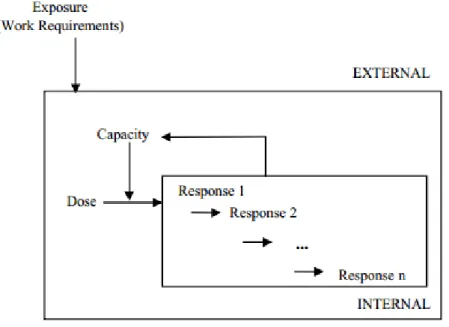
The relation between musculoskeletal problems and physical exposure has become progressively evident. The biomechanical load upon the body leads to the limit of the mechanical properties of the soft tissues. The physiological response occurs in form of deformation, inflammation, muscle fatigue and failure at a microscopic level. The disorders are characterized by the type of tissue affected: a) muscle, b) tendon/ligament, c) nerve, d) circulation, e) joint, f) bursa (Table 3). The main disorders reported by the industry are epicondylitis, tendinitis and carpal tunnel syndrome (Byström, Hall, Welander, & Kilbom, 1995; Latko et al., 1999; EU-OSHA, 2010). Researchers from the United States, Denmark, Finland, Sweden and England developed a conceptual model which reveals the possibilities that can lead to the development of WMSDs (Devereux & Buckle, 1999). The model indicates a group of interacting concepts as exposure, dose, capacity and response. Worker activity is the dose that affects the soft tissues. Consequently the dose will cause a physiological and biomechanical reaction. If during the long exposure period of the dose the body does not have the time to regenerate the responses will keep appearing until some type of structural tissue deformation occurs in the form of pain, swelling and limitation of the worker´s movement (Figure 2) (Buckle & Devereux, 2002; Devereux & Buckle, 1999).
Master in Occupational Safety and Hygiene Engineering
8 State of the Art
Table 3 Neck and upper limb musculoskeletal disorders; adapted by (Buckle & Devereux, 2002)
Tendon-related disorders Nerve-related disorders Muscle related disorders Circulatory/vascular type disorders Joint-related disorders Bursa-related disorders Tendinitis/peritendinitis/ tenosynovitis/ synovitis Carpal tunnel syndrome Tension neck syndrome Hyphothenar hammer syndrome Osteoarthritis Bursitis Epicondylitis Cubital tunnel syndrome Muscle sprain and strain Raynaud´s syndrome
De Quervain´s disease Guyon canal syndrome
Myalgia and myosistis
Dupuytren´s contracture Pronators syndrome Trigger finger Ganglion Cyst Radial tunnel syndrome Thoracic outlet syndrome Cervical syndrome Digital neuritis
Nowadays the psychosocial work environment may also enhance the development of WMSDs due to the organization of work and the perceptions or beliefs held by workers regarding the way work is organized. The work-related psychosocial factors can be high perceived job stress and high jobs demands (Figure 3) (Bongers et al., 2006).
The musculoskeletal and peripheral nerve tissues are also affected by individual characteristics and systemic diseases such as rheumatoid arthritis, gout, lupus and diabetes. Risk varies by age, gender, socioeconomic status, and ethnicity. Other suspected risk factors include obesity, smoking, muscle strength and other aspects of work capacity (Punnett & Wegman, 2004).
Figure 2 Pathways involved in the pathogenesis of UL-MSDS (Buckle & Devereux, 2002)
Abreu, Ana
9
2.4 Work Organization and the Impact in Worker´s Health
The work organization has been changing throw the years mostly because of economic, technological advances, legal, politics and competiveness among companies.
Initially the manufacture of goods were produced on craft production systems with high quality although the production rate was low. Henry Ford developed and operationalized the concept of mass production. It consisted in lowering the work cycle time, by dividing the operations in elementary tasks, where each worker was expected to perform only a single task. Workers required high physical task exertion, low mental requirements, and little social contact with others (teamwork). The work included: a) mechanical pacing; b) repetitiveness; c) low skill requirements; d) performance of a tiny fraction of the product; e) limited social interaction and f) predetermination of tools and techniques.
Companies due to the economics changes, technological development, enhance of product/service demands, higher quality and customized products had the need to change work organization systems. Organizations are adopting new and flatter management structures (i.e., Lean Production System) that results in downward transfer of management responsibility and decentralized control (NIOSH, 2003)
Lean Production System (LPS) was first developed by Toyota into what is known as the Toyota Production System (TPS) in 1945 and it is based in two main pillars:
Just In Time (JIT) that consists in producing the right amount needed with the parts and time needed;
Automation with human touch, whenever are defects or troubles in the working system the workers stop the machines (Genaidy & Karwowski, 2003).
LPS lies in principles of teamwork, communication, continuous improvement and waste elimination that leads to better quality, productivity and market responsiveness. A LPS pursues
Figure 3 Relations between risk factors of psychosocial and individual origin for neck and upper limb problems (Bongers et al., 2006)
Master in Occupational Safety and Hygiene Engineering
10 State of the Art
the decrease of non-value added work (waste) which in the context of automotive industry in grouped into seven categories:
Overproduction: producing sooner or more than the next downstream customer requires;
Waiting: idle time;
Defects: time lost making or fixing defective parts;
Inventory: parts waiting in process or in finished goods storage;
Material handling: redundant movement of parts;
Processing waste: redundant or inefficient steps in the process;
Motion waste: movement that is inefficient or adds no value (Womack, Armstrong, & Liker, 2009).
The LPS is further characterized by having a) general resources (multi-skilled workers, general-purpose machines, fewer functional specialists); b) decentralized authority; c) lateral communication across functional boundaries; d) faster response time and e) higher degree of integration of both conceptual and execution of production tasks, cited by Genaidy & Karwowski, 2003.
The increment of competitiveness among industrial companies made the working processes more demanding. It was necessary to improve the workforce with the aim to increase the efficiency and effectiveness of work establishing the best work practices (productivity, quality of work and human health).
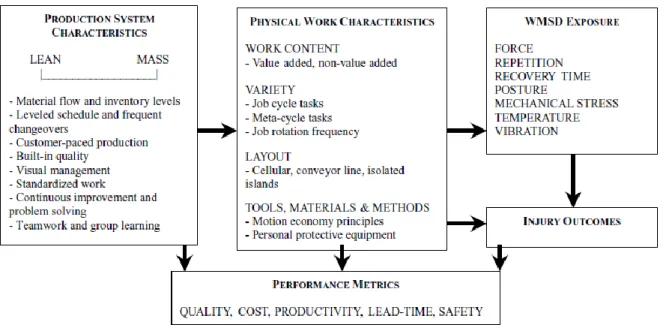
LPS putting into practice improves the productivity, products quality, human organization, reduces the non-value added work and helps companies to progress. It also provides alterations in all aspects of work, since the production system to the physical work characteristics, all these factors can have a direct influence to the worker´s health and lead to the development of WMSDs (Figure 4) (Womack et al., 2009).
In addition to the LPS, companies also have implemented complementary systems in order to improve quality of products and reduce non-value work such as:
Figure 4 Conceptual framework for links between lean manufacturing implementation, work characteristics, and injury outcomes (Womack et al., 2009).
Abreu, Ana
11
Kanban (directly connect with JIT system) that controls the logistical chain of the production system establishing a limit of the materials in order to the production system doesn’t produces more or less than is required;
Heijunka, process that also reduces the waste producing in a constant and predictable rate;
Jidoka that has a directly connection with JIT, were the operators in each workstation can detect abnormalities of the product and have the capability to solve the problem. Normally the workstations/ equipment’s have some devices that can detected the abnormalities and notifies the operator, as poka-yokes and andon devices.
Kaizen is a system directly connected with continuous improvement activities, such as solving problems techniques (5 why´s, ishikawa), work organization and standardization (5S) and worker´s safety (Womack et al., 2009).
There is plenty debate if the LPS improves or not the conditions of the health and safety of workers. Some advantages is the increase of workers:
Flexibility;
Responsibility and engagement;
Learning opportunity (offer workers greater potential for self-direction and confidence);
Skill development;
Career growth (leads to reduced stress and increase satisfaction and wellbeing);
On the other hand it may increase the a) biomechanical workload; b) repetitive movements; c) work pace and decrease the job control. Those factors can be potentially stressful or hazardous leading to high levels of emotional exhaustion. (NIOSH, 2003). Arezes et al, (2010), provided a brief list of some advantages and disadvantages of the implementation of a LPS (Table 4).
Table 4 Advantages and disadvantages of the implementation of a LPS (Arezes, Dinis-carvalho, & Alves C, 2010)
Advantages Disadvantages Hierarchical level decrease
High qualification of the workforce Worker´s participation and engagement Less Human effort
Team work increase Worker´s autonomy
Workforce perceived as central element
Decrease of workers' autonomy Increased risk of WMSD development Individual pressure/surveillance Job enlargement
Stress increase Inflexible work pattern Work pace increase Work intensification
LPS Perceived as “modern” Taylorism
Even technology has evolved and provides solutions to reduce biomechanical load nowadays engineers still are more directed to the production systems efficiency than the ergonomic aspects of work. Thus, the major challenge for ergonomics is to design the work in order to prevent WMSD and with no negative impact on production quality and productivity.
Currently assembly lines remain the production system chosen by companies. Assembly line consists of several stations organized along mechanical structures were machines and equipment’s are placed. Materials and pieces are moved throw conveyor systems. At each station, certain operations are repeatedly performed regarding cycle time. In the development of assembly lines several conditions have to be taken in account:
The number of stations necessary to produce the final product;
Tasks (the total amount of work necessary to assemble a workpiece and is also indivisible referred as task time);
o The set of tasks assigned to a station (constitutes the station load or work content);
Master in Occupational Safety and Hygiene Engineering
12 State of the Art
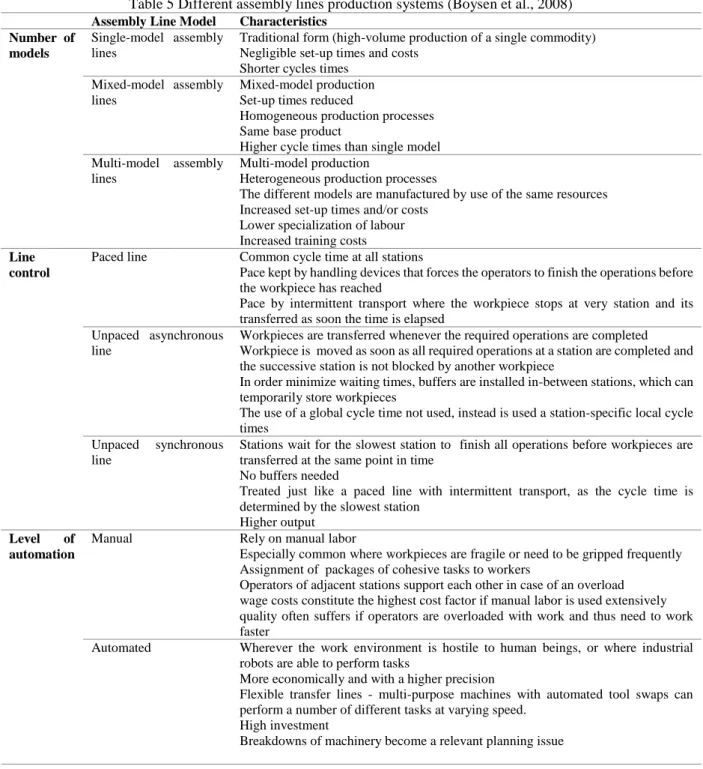
The factors above are taken in consideration in early phase of development in order to improve efficiency and optimize the production system – assembly line balancing (ALB). The ALB consists essentially in all the decisions before workstations are manufacture (Becker & Scholl, 2006). Due to the diverse conditions of the industrial companies and the products characteristics there is a wide range of assembly lines and ALB´s (Table 5) (Boysen, Fliedner, & Scholl, 2008).
Table 5 Different assembly lines production systems (Boysen et al., 2008)
Assembly Line Model Characteristics Number of
models
Single-model assembly lines
Traditional form (high-volume production of a single commodity) Negligible set-up times and costs
Shorter cycles times Mixed-model assembly
lines
Mixed-model production Set-up times reduced
Homogeneous production processes Same base product
Higher cycle times than single model Multi-model assembly
lines
Multi-model production
Heterogeneous production processes
The different models are manufactured by use of the same resources Increased set-up times and/or costs
Lower specialization of labour Increased training costs
Line control
Paced line Common cycle time at all stations
Pace kept by handling devices that forces the operators to finish the operations before the workpiece has reached
Pace by intermittent transport where the workpiece stops at very station and its transferred as soon the time is elapsed
Unpaced asynchronous line
Workpieces are transferred whenever the required operations are completed Workpiece is moved as soon as all required operations at a station are completed and the successive station is not blocked by another workpiece
In order minimize waiting times, buffers are installed in-between stations, which can temporarily store workpieces
The use of a global cycle time not used, instead is used a station-specific local cycle times
Unpaced synchronous line
Stations wait for the slowest station to finish all operations before workpieces are transferred at the same point in time
No buffers needed
Treated just like a paced line with intermittent transport, as the cycle time is determined by the slowest station
Higher output
Level of automation
Manual Rely on manual labor
Especially common where workpieces are fragile or need to be gripped frequently Assignment of packages of cohesive tasks to workers
Operators of adjacent stations support each other in case of an overload wage costs constitute the highest cost factor if manual labor is used extensively quality often suffers if operators are overloaded with work and thus need to work faster
Automated Wherever the work environment is hostile to human beings, or where industrial robots are able to perform tasks
More economically and with a higher precision
Flexible transfer lines - multi-purpose machines with automated tool swaps can perform a number of different tasks at varying speed.
High investment
Breakdowns of machinery become a relevant planning issue
ARTICLE IN P
Automated production systems consist of automated workstations connected by a material handling system whose actuation is coordinated with the stations. In the ideal, no human workers are needed except to perform auxiliary functions such as tool changing, loading and unloading
Abreu, Ana
13
parts, repair and maintenance activities. Even though the initial investment is higher companies rapidly recover it due to the savings in power/energy saving, less manpower usage and security. Production systems have been described as “sociotechnical” systems with both equipment (technical) and human (social) subsystems (Neumann et al., 2010).
The automation of stations, specialization and repetition of tasks has increased the a) repetitive and monotonous work; b) static postures and c) work pace and decreased the work/ rest ratio (Wells, Mathiassen, Medbo, & Winkel, 2007).
2.4.1 Production System Design
The production system of the company in study consists in the manufacture of mechanical cables to the automotive industry and has the Lean Production System implemented.
The company essentially has two main production areas; a) manufacture of parts, b) assembly lines area. To produce the final product, assembly lines are supplied by the parts produced in manufacture area and external suppliers. Assembly line have andon and poke-yoke systems, so all the problems are instantly communicated (maintenance, quality and components supply). When the andon system is activated in seconds a team attempts to solve the problem. All the workstations have a limit number of quality problems that can be detected (this depends directly of the cable reference that is being produced), when this number is exceeded the operator has to stop the equipment and activate the andon system.
In the beginning of the each shift the operator responsible carries a full verification of major points of the cable quality. Every two hours is also performed a quality verification in order to guarantee the process has not modified throw the hours. Other controls are also made by each operator such as: a) safety items, i.e., all the equipment have the safety protections placed and are operative; b) 5S (workplace organization), i.e., cleaning and organization of the workstation.
To this field study it was selected two assembly lines, a manual line and a semi-automated line. The selected assembly line produces the same type of family product – automotive door cables. Of the two assembly lines, the manual is the oldest one. The six workstations are organized along two parallel frameworks (Figure 5). In each workstation is an operator which places the components and activates the equipment so the components can be assemble.
In this line the same operator works on the workstation 100 and 101 given the short time that takes to make one subset of the final cable. The subsets are transported throw each workstation by a drag mat. The task 106 (packing) was not considered in this study.
Master in Occupational Safety and Hygiene Engineering
14 State of the Art
The semi-automated line was built after the manual and the main purpose of the construction was to produce the same amount of cables reducing the workforce.
The shape of the line is distinct from the manual line (Figure 6) due to the automatic workstations (102 and 105).
Similar to the manual line, the same operator works in the workstation 100 and 101 due to the short time of production. In this case only three operators assembles the cable, being the rest of the production system automatized. The manual workstations have the same type of the working method and equipment´s of the manual line.
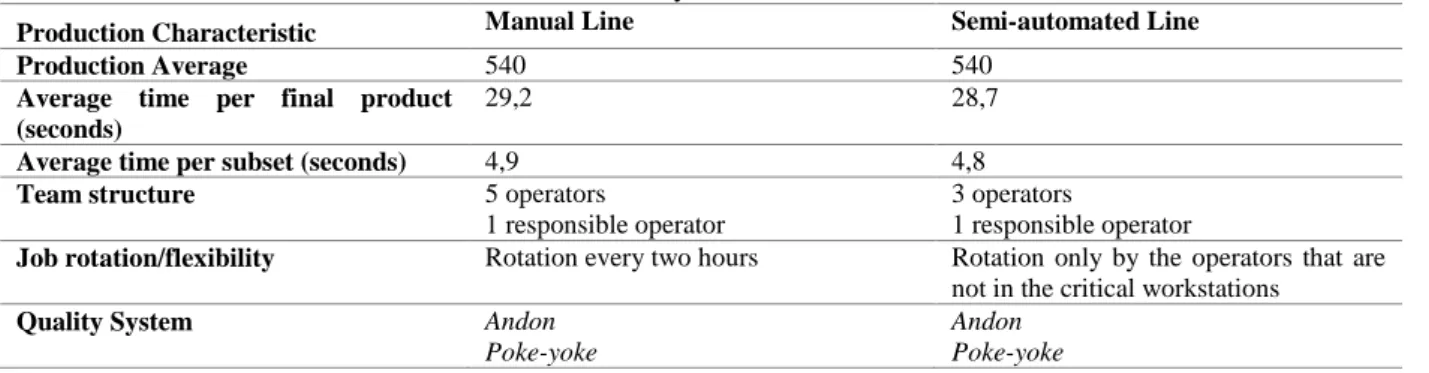
The subsets are transported by a mat with pallets were the subsets are placed and are transported throw each workstation with the exception of the transport since the workstation 104 to 105 that is made manually by the operator. Both the assembly line´s work by the same Lean guidelines (Table 6).
Table 6 Assembly lines characteristics
Production Characteristic Manual Line Semi-automated Line Production Average 540 540
Average time per final product (seconds)
29,2 28,7
Average time per subset (seconds) 4,9 4,8
Team structure 5 operators
1 responsible operator
3 operators
1 responsible operator
Job rotation/flexibility Rotation every two hours Rotation only by the operators that are not in the critical workstations
Quality System Andon Poke-yoke
Andon Poke-yoke
2.5 Motion Capture Systems
A major challenge constitutes to engineers when developing or reconfiguring production systems due to all the characteristics that have to be included (i.e., work conditions and production characteristics). Thus, human factors have to be taken in account in early phase of workstations development as: a) ergonomics; b) kinematics; c) safety; d) accessibility of materials; e) lighting
Abreu, Ana
15
placement and f) cycle time. When health and safety aspects are considered the amount of production can increase for the reason that the performance of workers is tightly linked to their work environment.
A multidisciplinary team has to be included in all the phases of the production system development (i.e., ergonomists, mechanical engineers, supply chain engineers and worker´s). Methods and studies are now available to help identifyi potential risks associated with WMSDs, hazardous jobs or risk factors. The methods can be divided under three main headings:
Self-reports can be used to collect data on workplace exposure to both physical and psychosocial factors by using methods that include worker diaries, interviews and questionnaires;
Observational methods that may be further subdivided between:
o Simpler techniques developed for systematically recording workplace exposure that enable an observer to assess and record data on a number of factors using specifically designed pro-forma sheets for establishing priorities for workplace intervention;
o Advanced techniques developed for the assessment of postural variation for highly dynamic activities that record data either on videotape or are computer analyzed using dedicated software;
Direct measurements using monitoring instruments that rely on sensors attached directly to the subject for the measurement of exposure variables at work (David, 2005; Li & Buckle, 1999).
Advanced observational methods are being mostly used by companies in order to improve production system and ergonomics. Virtual reality based methods can analyze postures, biomechanical load and the workstation ergonomic conditions. Using this type of software designers can carry out in a rapid, cost-less and safe way virtual experiments for assembly processes.
In this kind of method the virtual space is approximated to the real situation approximating the physical and intuitive movements of the operators. It can also be included all the characteristics of the workplace such as working environment, human subjects, product components, jigs, workbenches and tools (Chryssolouris, Mavrikios, Fragos, & Karabatsou, 2000). Other type of systems are now being used to evaluate the risk development of WMSDs. Motion Capture Systems (Mo-Cop) has the ability of recording a live motion event and translating it into a 3D recreation. MO-Cop allows by a visual interpretation the human behavior from images sequences providing biomechanical data. Several fields of study utilizes this type of systems such as: a) Ergonomists, b) Medicine; c) Engineering; d) Sports; e) Video Games and Entertainment, among others.
These type of systems were early developed in the 19th century and then used by cinematographic
companies. In nowadays is being widely used by doctors and scientists to better understand pathologies. Due to the need of the use of these systems a wide range of technologies were developed along the years (Table 7).
Inertial measurement systems (portable 3-D Motion Capture Systems) are also being used providing human biomechanical data. These type of systems can be used indoors or outside and are easily transported (Dutta, 2012). Examples of these type of systems can be:
Xsens (MVN BIOMECH; MVN AWINDA)1: full body inertial kinematic measurement
system, with the incorporation of video data; uses miniature inertial sensors and wireless communication; easy to use and cost efficient system;
Master in Occupational Safety and Hygiene Engineering
16 State of the Art
o Outputs: position, velocity, acceleration, orientation, angular velocity and angular acceleration;
MyoMotion, Velamed 2is a 3D kinematic system that enables the capture of human motion
completely Portable for use indoors or outside; expandable from 2 to 36 IMU sensors o Outputs: Orientation data and linear acceleration data, angular velocities available
post hoc, models of all major body joints.
Table 7 Motion Caption technologies
Traditional Marker-based Optical Motion Capture Systems
Computer Vision
Optical motion capture software and systems use computer vision
Digital images are processed by software to identify objects in order to track motion.
An array of video cameras are connected to a computer running specialized software.
Special Markers Markers are either highly reflective balls or else small bright lights that stand out from the background and are simpler for computer vision algorithms to identify. Drawbacks Having to wear special suits with
markers or have the markers applied to clothing or body.
Precise application of the markers is essential, as the software is estimating the position of the subject.
Modern Markerless Motion Capture Technology
No Markers Uses advanced computer vision technology to identify and track subjects without the need for any special suits or markers.
Advanced algorithms are required
For the development of this field study (data collection outside of a laboratory, library or workplace setting) it was carried out a survey of the scientific data using several scientific data bases as Web of Science, PubMed and Academic Search Complete using several key-words:
Kinematics; Upper Limb; Musculoskeletal Disorders; Assemble Work; Work Design. A
compilation of the scientific papers with most relevant impact were chosen throw the analysis of the abstract, results and journal impact. In order to organize all the scientific papers it was used
Mendeley, a free reference manager.
2http://www.velamed.com/englisch/products/kinematics/noraxon/myomotion/myomotion.html accessed at
Abreu, Ana
3 OBJECTIVES, MATERIALS AND METHODS
3.1 Objectives
In the past few years is being a growing interest of the relationship between workplace factors and the development of the disorders of muscles, tendons, and peripheral nerves in the neck and upper limbs.
The statistics indicates that WMSDs are increasing among workers of the EU members states and is believed that are associated with the advance of automation and specialization in work. Automatized production systems requires that workers performs a single task or a very limited number of tasks repeatedly during the day (Stock, 1991). Repetitive exertions have been among the most widely studied stressors to the development of WMSDs (Latko et al., 1997). Nowadays, repetitiveness and monotonous work are common in industries with automated work processes. According to Baraldi & Kaminski (2011), the ergonomic improvements of the workstations can increase the benefits to the workers (by providing a better quality of life and avoiding long-term injuries and professional diseases) and to the company (by creating competitive advantages in the manufacturing area with the increase of the productivity and avoiding expenses and legal reparations).
The aim of this study is to make a comparative ergonomic evaluation of operators of two types of assembly lines in a Manufacture company of parts and accessories for automotive industry. For that purpose it will be evaluated the right upper limb movements adopted by the operator´s in manual assembly line and in a semi-automatized line. The biomechanical data collection will be made by a portable inertial measurement system Xsens MVN BIOMECH.
The final purpose of this study is to compare the angular data of the right elbow, shoulder and wrist articulations of the operators of the two assembly lines and propose improvements measures in order to enhance the health and well-being of worker´s in assemble work.
3.2 Materials and Methods
3.2.1 Operators
Seven healthy female subjects without any health complaints were included in this study. All the subjects gave written informed consent.
The average ages was 37,3 years (range 24-55) and the mean employment time 5,7 years (range 1-14), all the operators were high skilled in the working process. The work schedule was at the second term of the day (14:00h to 22:00h) with a ten minute break during the work journey at the middle of the term.
The female employees have been physical evaluated by a bioimpedance analysis to determinate the body composition and the anthropometric data of the upper limb was also collected.
Due to the physical characteristics of one of the subject the kinematics measurements will not be considered in the results of this study.
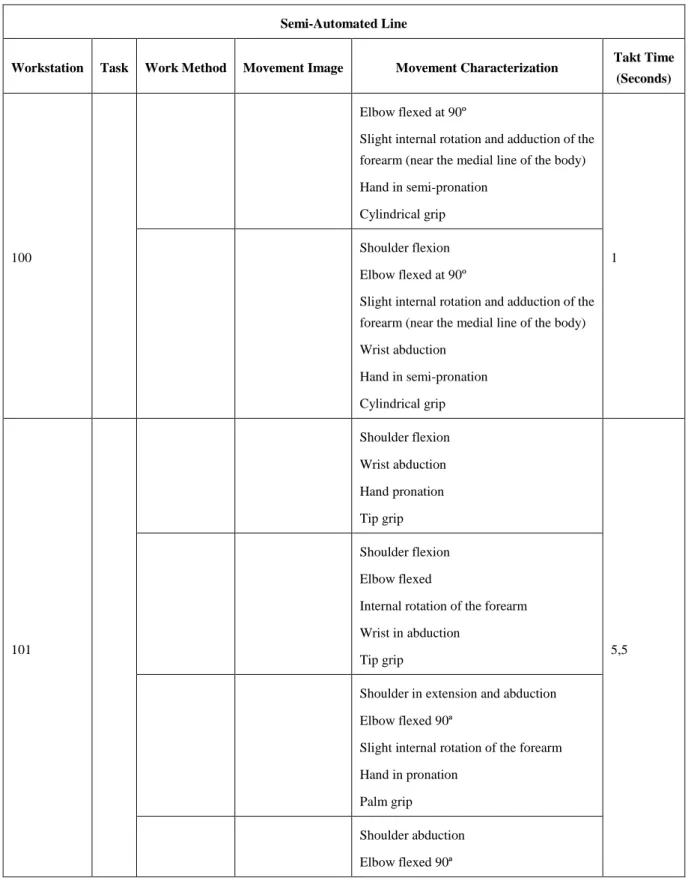
The type of work performed in all workstations is considered low force with repetitive movements of the wrist, elbow and shoulder. The postures adopted are mainly static using only the upper limbs to place the materials in the equipment. A characterization of the movements performed by the operators (work method) was made (Table 8 and 9). In the data collection was asked to the
Master in Occupational Safety and Hygiene Engineering
18 Objectives, materials and methods
operators to follow the working method defined by the process engineer department in the development of the both assembly lines.
Abreu, Ana
19
´
Table 8 Characterization of the movements of the upper limb´s operators of Semi-automated line
Semi-Automated Line
Workstation Task Work Method Movement Image Movement Characterization Takt Time (Seconds)
100
Elbow flexed at 90º
Slight internal rotation and adduction of the forearm (near the medial line of the body)
Hand in semi-pronation
Cylindrical grip
1 Shoulder flexion
Elbow flexed at 90º
Slight internal rotation and adduction of the forearm (near the medial line of the body)
Wrist abduction Hand in semi-pronation Cylindrical grip 101 Shoulder flexion Wrist abduction Hand pronation Tip grip 5,5 Shoulder flexion Elbow flexed
Internal rotation of the forearm
Wrist in abduction
Tip grip
Shoulder in extension and abduction
Elbow flexed 90ª
Slight internal rotation of the forearm
Hand in pronation
Palm grip
Shoulder abduction
Master in Occupational Safety and Hygiene Engineering
20 Objectives, materials and methods
Slight internal rotation of the forearm
Hand in pronation
Palm grip
Shoulder abduction
Slight internal rotation of the forearm
Hand in pronation
Cylindrical grip
Shoulder abduction
Internal rotation of the forearm
Wrist in extension Hand in pronation Cylindrical grip Shoulder extension Hand pronation Palm grip 103 Shoulder flexion Wrist abduction
Hand in semi pronation
Tip grip
5,5 Elbow flexed 90º
Wrist abduction
Hand in semi pronation
Tip grip
Shoulder abduction
Elbow flexed
Hand in semi pronation
Tip Grip
Elbow flexed 90º
Wrist abduction
Hand in semi pronation
Tip Grip
Shoulders flexion
Hand pronation
Wrist abduction with internal rotation
Tip grip
Shoulder abduction
Abreu, Ana 21 Wrist in abduction Hand pronation Fingertip grip 104 Shoulder abduction Wrist abduction
Hand in semi pronation
Tip Grip
6,7 Shoulder abduction and extension
Wrist adduction
Hand in semi pronation
Tip grip
Elbow flexed
Forearm in the medial line of the body
Wrist in abduction
Hand in semi pronation
Tip Grip
Left shoulder in abduction
Internal rotation of the forearm (near the medial line of the body)
Left hand in pronation
Cylindrical handgrip
Right elbow flexed at 90ª
Slight External rotation of the forearm
Right hand in semi-pronation
Tip grip Flexed elbow Wrist in adduction Hand in pronation Tip grip Shoulder flexion Elbow flexed Wrist extension Hand pronation Fingertip Grip
Master in Occupational Safety and Hygiene Engineering
22 Objectives, materials and methods
Table 9 Characterization of the movements of the upper limbs operators of the Manual line
Manual Line Workstation Task Work
method
Movement Image
Movement Characterization Takt Time (Seconds)
100 Elbow flexed 90º
Forearm near the medial line of the body
Wrist adduction
Hand in semi pronation
Cylindrical grip
1
Elbow flexed 90º
Forearm near the medial line of the body
Wrist abduction
Hand in semi pronation
Cylindrical grip
101 Elbow flexed 90º
Wrist in adduction and flexed
Hand in pronation
Tip Grip
5
Shoulder abduction with slight extension
Elbow flexed
Wrist in reference position
Tip Grip Shoulder flexion Elbow flexed Hand in pronation Wrist in extension Tip Grip
Shoulder flexion and abduction
Internal rotation of the forearm
Wrist in flexion
Hand in pronation
Tip Grip
Elbow flexed 90ª
Wrist flexion and abduction
Abreu, Ana
23
102 Shoulder abduction
Hand in semi pronation
Tip grip
5,5
Elbow flexed 90º
Hand in semi pronation
Tip Grip
Shoulders flexion
Hands pronation
Wrist abduction
Tip grip
Shoulder abduction in slight extension
Hand in semi pronation
Tip grip
Shoulder flexion
Hand in semi pronation
Tip Grip
Elbow flexed 90ª
Wrist extension with radial deviation
Hand in pronation
Finger push
103 Shoulder in flexion
Hand in pronation
Wrist in flexion with radial deviation
Tip Grip
5
Shoulder in abduction and flexion
Shoulder flexed
Hand in pronation
Tip Grip
Shoulder flexed
Hand in semi pronation
Master in Occupational Safety and Hygiene Engineering
24 Objectives, materials and methods
Medial rotation of the arm
Hand in pronation
Finger push
104 Shoulder abduction
Elbow flexed with medial rotation
Hand in pronation
Tip Grip
6,7
Elbow flexed
Wrist in neutral position
Hand in semi pronation
Tip grip Shoulder in abduction Shoulder flexed Wrist extension Hand in pronation Finger push 105 Elbow Flexed
Left wrist in neutral position with flexion with tip grip
Right hand in pronation with cylindrical grip
6
Shoulder flexion
Elbow flexion
Wrist in radial deviation
Hand in pronation
Index finger push
Shoulder flexion
Elbow flexion
Wrist in radial deviation
Hand in pronation
Thumb push
Elbow flexion
Wrist extension with radial deviation
Abreu, Ana
25
3.2.2 Instrumentation and Data Collection Procedure
Anthropometric data was collected by the traditional method using two anthropometric rulers, (one sliding ruler fixed at two meters in the wall to measure the stature and other to collect the upper limbs data). For the data collection was requested the operators to adopt the position for standing height (look straight ahead, shoulders relaxed, arms at sides, legs straight and knees together, feet flat, heels almost together and to place the shoulders slades, buttocks and heels touching the measurement surface) and maintain the posture along the measurements. Before the data collection it was asked to operators to remove the working uniform, shoes, socks and all the electric equipment’s so it couldn’t interfere with the measurements.
It was used a check-list (Appendix 1) to register the values. The following measures were recorded:
Stature Height: the vertical distance from the floor to the vertex, i.e., crown of the head;
Eye height, standing: vertical distance from the floor to the inner canthus (corner) of the eye;
Shoulder height, standing: vertical distance from the floor to the acromion i.e., the bony tip of the shoulder;
Elbow Height, Standing: vertical distance from the floor to the radial bone; the bony landmark formed by the upper end of the radius bone which is palpable on the outer surface of the elbow);
Knuckle height: vertical distance from the floor to metacarpal III, i.e., the knuckle of the middle finger;
Shoulder breadth (bi-deltoid): the maximum horizontal breadth across the shoulders, measured to the protrusions of the deltoid muscles;
Elbow-fingertip length: distance from the back of the elbow to the tip of the middle finger in a standard sitting position;
Vertical Grip reach (standing): distance from the acromion to the center of an object gripped in the hand, with the elbow and wrist straight (Pheseant, Stephen; Haslegrave, 2006).
Bioimpedance data collection was made using the In Body 230 – Body composition analyzer, a precision scale that provides precision body composition as weight, lean body mass, body fat mass, total body water, dry lean mass, body mass index (BMI), percent of body fat, basal metabolic rate, segmental lean mass (right arm, left arm, trunk, right leg, left leg) and impedance of each segments. The scale uses a bioelectrical impedance (Z) that measures ten impedance measurements using two different frequencies (20 KHz, 100 KHz) at each five segments (right arm, left arm, trunk, right
leg and left leg). The measurement duration was 30 seconds.
The bioimpedance examination was made at the medical office of the company at the ambient temperature (20-26 ºC) after the anthropometric data collection. The scale In Body230 was installed following the user manual instructions. In order to provide a correct data and to reduce errors it was introduced the gender, height and age of subject.
To achieve reliable results and high reproducibility was important to adopt a proper posture when placed in the scale (Appendix 2). The output of each measurement was saved in the computer to posterior analysis.
Throw each weighting the hand and foot electrodes were cleaned using disinfectants wipes. For the angular kinematic data collection was used Xsens MVN BIOMECH, an Inertial Measurement system. The system can estimate body segment orientation and position changes by integration of gyroscope and accelerometer signals which are continuously updated by using a biomechanical model of the human body, This allows the tracking of dynamic motion.
Master in Occupational Safety and Hygiene Engineering
26 Objectives, materials and methods
The equipment has 17 MTx sensors with two Xbus Masters. The MTx sensors are an inertial and magnetic measurement unit that contains 3D gyroscopes, 3D accelerometers and 3D magnetometers. The sensors are connected by wires to the Xbus Masters (only one cable leading to each limb). The Xbus Masters Masters synchronizes all sensor sampling, provides sensors with power and handles the wireless communication with the laptop.
Before the measurements the equipment was assembled and tested in a mannequin.
The data collection was made in the plant floor, on workstations of the assembly lines selected after two hours of the beginning of the shift so subjects were already adapted to work.
The sensors modules were placed on the feet, lower legs, upper legs, pelvis, shoulders, sternum, head, upper arms, forearms and hands (Figure 7). The setup time in the studied subjects was less than ten minutes.
Although the sensors modules were all placed in order to optimize the calibration it is going to be analyzed the ROM of the right upper limb articulations due to the dominance in the performance of the tasks (Table 10).
Table 10 Range of Motions and Degrees of freedom analyzed
Range of Motion of the Articulation Degrees of Freedom Shoulder adduction/abduction
Shoulder flexion/extension Shoulder interior/exterior rotation
3 (x, y, z)
Elbow flexion/extension 1 (z)
Wrist flexion/extension Wrist ulnar/radial deviation Wrist pronation/supination
3 (x, y, z)
One degree of freedom of the elbow is going to be examined due to his anatomical particularity. Anatomically the elbow has only one articulation but physiologically has two separate functions: a) pronation/supination and b) flexion/extension (Kapandji, 1987). Pronation/supination movement is also evaluated on the wrist, so the elbow ROM further studied is flexion/extension. After the placement of Xsens MVN BIOMECH on subjects it was performed the calibration. For the correct procedure, subject’s foot length was measured using and anthropometric ruler and introduced in the software. For the basic calibration was asked to the operators to adopt the
Abreu, Ana
27
Pose (Figure 8). The aim of the calibration is to determinate the body alignment and body dimensions. Throw each measurement the equipment was calibrated.
3.2.3 Statistical Data Analysis
Microsoft Excel (Office 2013) was used for the anthropometric and bioimpedance data analysis.
For the angular kinematics statistics analysis was used R, version 3.1.1., a free software environment for statistical computing and graphics, executing the following procedure:
1. The values that were not considered of the normal assemble work cycles (outliers) were rejected (i.e., route of the calibration area until the workstation and vice-versa);
2. Due to the high number of values of the data collection it was carried out a downsampling of the datasets (reduce of the number of samples – 0,01 to 0,1);
3. Graphics development of the articulations ranges (x, y, z) of all subjects in the several workstations;
4. Descriptive Statistics variables of downsampled angular kinematic data of the articulation in study (mean; SD; maximum; minimum for each subject in workstation);
5. It was verified that the samples follows a normal distribution in accordance to the Central limit theorem;
6. As the samples are in time series, a cross correlation analysis was made; Cross-correlation and significance level of the data was calculated in the following cases:
6.1. Between subjects in the same workstations in both assembly line (Manual vs. Semi-automated);
6.2. Maximum cross correlation between subjects of the workstations 100, 102 vs. 103 and 103 vs. 104 of the two assembly lines in study (Manual vs. Semi-automated).
The correlation values r ranges between 1 and -1. r>0 indicates positive relationship, r<0 indicates negative relationship and r = 0 indicates no relationship. In general when values are closer to absolute values (-1 and 1) indicates a perfect positive or negative correlation. In accordance to the values achieved correlation can be none to strong (Table 11) (DeGroot, 2011).
Table 11 Strength of relationship of r values
Value of r Strength of relationship -1 to -0,5 or 1 to 0,5 Strong
-0,5 to -0,3 or 0,3 to 0,5 Moderate
0,3 to -0,1 or 0,1 to 0,3 Weak
-0,1 to 0,1 None or Very Weak
Figure 8 N-Pose for calibration procedure
Master in Occupational Safety and Hygiene Engineering
28 Objectives, materials and methods
Descriptive statistic was calculated to all subjects, workstations and assembly lines. Thus, is going to be further analyzed the statistics of the similar workstations (100; 102 vs. 103 and 103 vs. 104) between lines in study.
Abreu, Ana