Review
J. Braz. Chem. Soc., Vol. 25, No. 3, 427-441, 2014. Printed in Brazil - ©2014 Sociedade Brasileira de Química 0103 - 5053 $6.00+0.00
*e-mail: [email protected]
Electrocatalysis by Hydrogenases: Lessons for Building Bio-Inspired Devices
Ian J. McPherson and Kylie A. Vincent*
Inorganic Chemistry Laboratory, Department of Chemistry, University of Oxford, South Parks Road, OX1 3QR Oxford, United Kingdon
Um grande número de enzimas podem funcionar como excelentes eletrocatalisadores quando colocados sobre eletrodos ou superfícies de materiais condutores ou semicondutores. Em particular, nessa revisão serão abordadas as hidrogenases, que são enzimas com centros catalíticos contendo dois átomos de ferro ou um de ferro e outro de níquel para fazer a interconversão entre 2H+ e
H2 com altas frequências de turnover, entretanto os conceitos aqui mostrados podem também
ser igualmente aplicados a outras enzimas redox. Utilizando as hidrogenases como exemplo, examinamos como a compreensão detalhada do comportamento eletrocatalítico de uma enzima pode servir de modelo para o desenvolvimento de dispositivos nos quais a enzima troca elétrons diretamente com uma variedade de materiais inorgânicos, incluindo grafite, semicondutores e pontos quânticos (quantum dots). Nesta revisão mostramos descobertas recentes de catalisadores
compósitos de enzimas-materiais inorgânicos, e alguns dos desafios encontrados para a construção de um dispositivo enzimático, e as oportunidades advindas de sistemas baseados em catalisadores biológicos, incluindo células à combustível, foto-reatores de combustíveis e catalisadores acoplados para síntese química.
A number of redox enzymes function as excellent electrocatalysts when attached to electrodes or conductor/semi-conductor surfaces. A particular focus of this review is on hydrogenases, enzymes which use a di-iron or nickel-iron center to interconvert 2H+ and H
2 at extremely high turnover
frequencies, although the concepts we highlight apply to a wider range of redox enzymes. Taking hydrogenases as our main case study, we examine how a detailed electrochemical understanding of the electrocatalytic behaviour of an enzyme can inform the development of devices in which the enzyme exchanges electrons directly with a range of inorganic materials, including graphite electrodes and particles, semi-conductor electrodes and quantum dots. We review recent developments in composite enzyme-inorganic catalysts, some of the biological and materials challenges in building devices based on enzymes, and the future opportunities for devices based on biological catalysts, including fuel cells, light-driven fuel production and coupled catalysis for chemical synthesis.
Keywords: electrocatalysis, bioelectrochemistry, hydrogenase, enzyme fuel cell, hydrogen
production
1. Introduction
This review examines how electrochemical studies of biological redox catalysts provide insight into opportunities for intelligent assembly of devices in which enzymes are interfaced with inorganic materials. We take hydrogenases as our main case study because they have been widely investigated as immobilised electrocatalysts using electrochemical methods, and a large number of interesting applications for hydrogenases have been demonstrated. These range from energy applications in hydrogen fuel
cells or light-driven hydrogen production to hydrogen-driven chemical synthesis. Many of the design principles and challenges described for hydrogenases are common to other bio-electrocatalysts, and we indicate parallels where appropriate.
Nature uses enzymes as modular catalysts, combining redox half reactions in different ways in biological cells
for specific purposes.1 For example, hydrogenase modules
incorporating a H2-oxidising nickel-iron catalytic center
are found as components in bacterial proton-pumping respiratory chains where they are ultimately linked to the
reduction of small molecules such as nitrate or O2. They
the NAD+-reducing soluble hydrogenases which couple H 2
oxidation to regeneration of the biological cofactor, NADH,
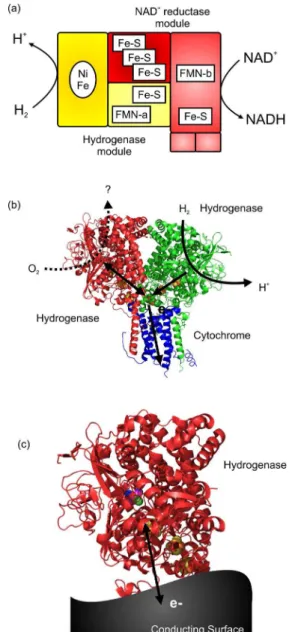
Figure 1a.2 Hydrogenases differ in their sensitivity to
attack or inhibition by small molecules such as O2, CO and
sulphides and often exhibit interesting intrinsic mechanisms
for recovery from inactive or poisoned states.3 The soluble
hydrogenases are one example: although their main role
is to couple H2 oxidation to production of the reduced
cofactor NADH, it is likely that reverse electron transfer is also important in providing low-potential electrons from NADH to re-activate oxidised inactive forms of the
[NiFe]-hydrogenase module.2 A fascinating bifunctional
role was recently proposed for Escherichia (E) coli
hydrogenase I (Hyd-1) by Volbeda et al.4 (see Figure 1b).
They suggested that crystals containing the hydrogenase dimer complexed with cytochrome b may represent a
physiologically relevant construct which in vivo rapidly
removes O2 from cells by coupling H2 oxidation at one
[NiFe]-hydrogenase site to O2 reduction at the [NiFe] site
of its partner hydrogenase molecule via internal electron transfer through iron-sulfur cluster relay chains in the hydrogenase molecules. The ability of hydrogenases to
deal with O2 is covered in more detail in section 2 on
interpretation of enzyme electrochemistry because it is critical to applications of hydrogenases.
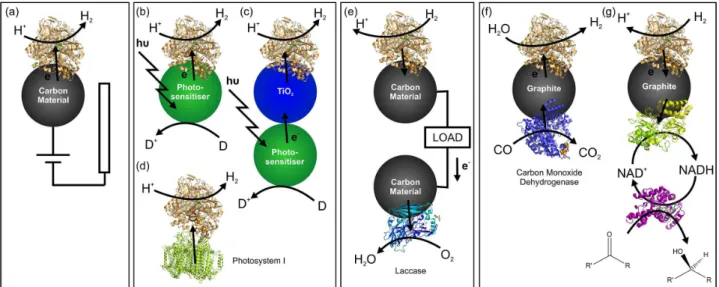
As shown in Figure 1c, the activity of enzymes can be tuned by plugging them in to functional surfaces: these include electrodes at which the potential can be varied continuously, photo-sensitive semiconductor nanoparticles, and conducting particles of graphite at which the potential is set by the catalytic activity of a second enzyme. These various configurations are represented schematically in Figure 2. In each case, the hydrogenase accepts electrons from, or donates electrons to, the surface on which it is attached. The modular nature in which enzymes are exploited within biological cells is immediately conducive to their use as building blocks alongside inorganic materials in hybrid devices. For example, hydrogenases attached to a
carbon cathode,5 a dye-sensitised metal oxide nanoparticle,6
quantum dot,7,8 or a molecule of photosystem I,9,10 have
been shown to be efficient electrocatalysts for production
of H2 from protons in water, using electrons provided by
a series of sacrificial donors, Figure 2a-d. The reverse reaction of hydrogenases has been exploited in fuel cells
in which electrons from H2 oxidation are taken up by a
carbon-based anode and channelled via an external circuit
to a cathode, usually for O2 reduction, Figure 2e.11-13
Electrons transferred through a graphite particle from carbon monoxide dehydrogenase to hydrogenase have been used to couple oxidative biocatalysis (CO oxidation
to CO2) to H2 production: the water-gas shift reaction,
Figure 2f.14 In reverse, electrons released into graphite
from H2 oxidation by an immobilised hydrogenase have
been utilised to drive reductive catalysis by co-immobilised
enzymes such as NAD+-reduction for NADH supply to
dehydrogenases, Figure 2g.15 The inorganic components
of these hybrid devices are mostly inexpensive materials: graphite or other carbons, metal oxides or metal sulfides. Although electrochemistry of proteins is well-developed on gold electrodes, use of a costly metal support for enzymes detracts from the benefits offered by biocatalysts built from
Figure 1. (a) Soluble NAD+-reducing hydrogenase from Ralstonia
eutropha. (b) X-ray crystallographic structure of E. coli hydrogenase I
(Hyd-1) with a membrane-anchor cytochrome b attached (only half of the unit cell is shown; PDB code 4GD3).4 Possible routes for electron
abundant metals such as iron or nickel/iron (hydrogenases and carbon monoxide dehydrogenase for CO oxidation)
and copper (in enzymes for O2 reduction).
Development of hydrogenase-based devices has been driven largely by curiosity or the desire to demonstrate or benchmark what is possible with impressively selective electrocatalysts that do not depend on precious metals. A number of advances in the longevity of hydrogenase electrodes and particle assemblies have been reported recently, but it remains unlikely that hydrogenase-based devices will make a significant contribution to high-level power generation or large-scale fuel production. Enzymes are more likely to be attractive catalysts in environments where their selectivity gives them strong advantages over metal catalysts. Real advances are being made in synthesis of functional bio-inspired catalysts or part-biological catalysts which may help to bridge the gap towards larger-scale applications. Enzymes are equipped with acidic and basic groups ready to donate or accept protons, hydrophobic channels for gas delivery and water-lined channels for rapid proton transport. A metal active site mimic alone is often not sufficient for effective electrocatalysis, but there are now interesting examples of catalysis by systems which incorporate some of the additional functional features of enzymes. These include synthetic catalysts with built-in proton acceptor or electron donor arms, as well as hybrid catalysts comprising synthetic cofactors assembled into
apo-proteins, peptide fragments, or polymer coatings.16-19
The boundaries between native enzyme catalysts and bio-synthetic catalysts are thus being bridged, and we can expect the range of enzyme-inspired catalysts for future devices
to continue to develop. In parallel, the lessons learnt from efficient electrocatalysis by hydrogenases are important in defining requirements for the behaviour of new catalysts across a range of demanding conditions. Entrapment of enzymes in porous structures or covalent attachment may
be necessary to improve their lifetime in devices.20,21 In
the arena of biocatalysis for chemical synthesis, enzyme longevity may not be such a problem since crude enzyme extracts are already used as essentially disposable catalysts in some areas of chemical synthesis. Hydrogenase-based systems may offer interesting benefits over currently-used enzyme-based methods for NADH cofactor recycling and
catalysis for chemical synthesis, Figure 2g.15
2. Interpreting Electrochemistry of Hydro-genases
Two groups of hydrogenases are relevant in discussions
of bio-electrocatalytic H2 oxidation and H+ reduction: the
[NiFe]- and the [FeFe]-hydrogenases; their active sites are
shown in Figure 3a and b.3 Although these enzyme groups
are unrelated in sequence and result from convergent evolution, they have surprisingly similar structural features. Both classes of hydrogenases incorporate relay chains of iron-sulfur clusters that facilitate the long-range electron transfer between the surface of the protein and the buried active site required for catalysis. These clusters are spaced about 10 Å apart in NiFe hydrogenases, as shown in Figure 3c. Moser, Dutton and co-workers have argued that since the rate of electron tunnelling has an exponential dependence on distance, natural selection has optimised
Figure 2. Modular combination of hydrogenases with electronically conducting particles and surfaces allows assembly of a variety of devices: (a) H2
production at an electrode; light-driven H2-production for hydrogenase on (b) a quantum dot, (c) a dye-sensitised TiO2 nanoparticle or (d) coupled to photosystem I, (e) oxidation of H2 in fuel cells; and hydrogenase catalysis coupled to other enzyme redox reactions on graphite particles: (f) the water gas shift reaction by hydrogenase and carbon monoxide dehydrogenase or (g) H2-driven recycling of the cofactor NADH used to supply cofactor to an
the distance between clusters to ensure that intramolecular electron transfer is not rate limiting in catalysis; a distance of less than about 14 Å between redox centres in a biological
relay chain is common.22,23 Iron-sulfur relay clusters are also
important in allowing hydrogenases to exchange electrons with an electrode or other conductive support, meaning that electrons can be transferred to/from the buried active site for catalysis by imposing a potential at the electrode or surface. Interfacial electron transfer between an electrode and an enzyme such as hydrogenase has been successfully modelled using Butler Volmer kinetics, although for many enzymes the relationship had to be modified to account
for a dispersion in orientation of enzyme molecules.24,25
A mixture of orientations means that there is a range of distances between the outermost electron relay center and the electrode, leading to a range of interfacial electron transfer rate constants. It is possible to immobilise many hydrogenases such that interfacial electron transfer does not significantly limit catalysis, and the overall current observed is dictated by the rate of steps in catalysis. An
exception is the [FeFe]-hydrogenase from Chlamydomonas
reinhardtii which has only a single Fe4S4 cluster attached
to the [FeFe] active site and does not possess additional
relay clusters.25
Consideration of a redox enzyme exchanging electrons
with a solid support is not so different from the in vivo
situation where an enzyme exchanges electrons with its
partner donor or acceptor, such as E. coli Hyd-1 with
cytochrome b shown in Figure 1b.4 In vivo, Hyd-1 is
presumed to be a H2 oxidiser, consistent with the relatively
positive potential of the haem centre in the electron acceptor cytochrome (–86 mV is reported for the related
cytochrome b of Ralstonia (R) eutropha membrane bound
hydrogenase26). At an electrode, the potential is controllable
over a continuous range and hydrogenases can be driven to
exhibit net oxidation of H2 or reduction of H+ (see below).
For Hyd-1, the non-physiological H+-reduction half reaction
is strongly inhibited by the product H2 and thus there is no
net H+ reduction detected under a H
2 atmosphere,27 but other
hydrogenases are highly active H2 producers.3
The intricate dependence of enzyme redox catalysis on the potential at which electrons are delivered or removed means that electrochemical study of enzymes such as hydrogenases is a useful route into applications, contributing a ‘voltage road-map’ of the reactions of the enzymes at different potentials. We highlight some of the information that can be extracted from electrochemical studies of hydrogenases and its relevance in understanding how the enzymes will function in devices. A very wide range of electrocatalytic behaviours are exhibited across the ranks of the hydrogenases, offering diverse possibilities
for device development. Equipped with a detailed understanding of the catalytic function of hydrogenases, it is then possible to select ‘circuit components’ to suit a desired function, combining biological fragments from different organisms together with synthetic materials. In this way, larger electrocatalytic systems can be produced to fulfil specific tasks.
Electrocatalysis by hydrogenases adsorbed or covalently attached onto electrodes has become a well-established area, and voltammograms (current-potential traces) provide an immediate read-out of the catalytic behaviour of an enzyme over a given potential landscape under a given set of conditions (including pH, temperature and partial
pressure of H2 or O2). Many of these diagnostic studies have
been carried out with the hydrogenase directly adsorbed onto the edge surface of pyrolytic graphite with no further
attachment chemistry. Voltammograms recorded under H2
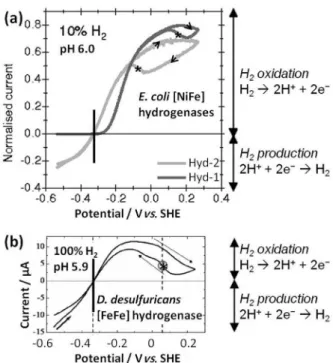
for several hydrogenase electrodes prepared in this way are shown in Figure 4. In each case, the scan commences at a negative potential, in a fairly reducing regime, and the electrode is then swept to positive potentials and finally back to the starting potential. Arrowheads indicate the direction of scan. In Figure 4a, the [NiFe] hydrogenase-2
(Hyd-2) from E.coli (pale gray line) is seen to be a good
H2 producer at low potentials: reduction of H+ at the
hydrogenase active site leads to electron flow from the
Figure 3. Hydrogenase active sites in catalytically active states: (a) [NiFe]-hydrogenase, (b) [FeFe]-hydrogenase. (c) Representation of the X-ray structure of Desulfovibrio fructosovorans [NiFe]-hydrogenase (PDB code:
electrode into the enzyme and is defined as a negative
current.27 At higher potentials, the enzyme is also seen to
be a good oxidiser of H2; electrons released to the enzyme
active site flow into the electrode giving a positive current. At potentials more positive than about –0.1 V, the enzyme begins to switch into a catalytically inactive state (anaerobic oxidative inactivation) and only switches back on when the potential is swept back towards more negative values; reductive activation is observed on the reverse scan in which the current recovers below about –0.1 V (see * in Figure 4a) and eventually rejoins the current level from the forward
sweep. In order to avoid depletion of H2 and build-up of H+
in the solution region close to the electrode surface during high rates of catalysis by immobilized hydrogenases, the electrode is typically rotated rapidly.
Although the term ‘bidirectional’ is typically reserved for a special class of hydrogenases which are believed to
operate in both the H2 oxidation and H+ reduction direction
in vivo (such as R. eutropha NAD+-reducing soluble
hydrogenase, Figure 1a), many isolated hydrogenases are useful electrocatalysts in both directions. However, Hyd-1
from E. coli (Figure 4a, dark grey line) is a very poor H2
producer due to inhibition of this reaction by the product,
H2. Lukey et al. show that even at just 0.3% H2, the H+
reduction current for Hyd-1 is negligible.27 Figure 4a also
shows that Hyd-1 commences H2 oxidation at a small
overpotential relative to the thermodynamic potential
E(2H+/H
2). In practical terms, this slightly compromises
the required operating voltage for immobilised Hyd-1
as an electrocatalyst for H2 oxidation, and in a fuel cell,
this detracts slightly from the zero current voltage (open circuit voltage) as well as the voltage during power production. In contrast, Hyd-2 behaves more like platinum,
operating at no detectable overpotential in either the H+
reduction or H2 oxidation directions. Figure 4b shows a
voltammogram for Desulfovibrio (D) desulfuricans
[FeFe]-hydrogenase; like E. coli Hyd-2, this enzyme is a good H2
producer at low potentials, and a good H2 oxidiser at more
positive potentials with no detectable overpotential. The [FeFe]-hydrogenase also converts reversibly to an oxidised inactive state at higher potentials, switching back on during the reverse sweep towards more negative potentials (* in Figure 4b).
Having established the basic operational voltage range for a given hydrogenase, and its ability to show net catalysis in
the desired reaction direction (H2 oxidation vs. H+ reduction),
the next important question is the robustness of the enzyme
towards O2. Electrochemistry has been particularly useful in
probing the O2 tolerance of hydrogenases, a phenomenon that
has a complex dependence on potential.29-31 Many of the first
[NiFe]-hydrogenases to be isolated were found to be rapidly,
but reversibly, inactivated by O2, requiring low-potential
electrons for re-activation, while [FeFe]-hydrogenases
were found to be inactivated irreversibly by O2 under most
conditions.32 Demonstration that the [NiFe] membrane-bound
hydrogenase from R. eutropha is able to sustain H2 oxidation
in the presence of O2, albeit at a lowered catalytic rate,33 led
to a definition of O2 tolerance in hydrogenases as their ability
to function in the presence of O2, with [NiFe]-hydrogenases
being labelled as either O2-sensitive or O2-tolerant, and
[FeFe]-hydrogenases being assumed to be all O2-sensitive.
Figure 5 shows an example of the current obtained during
oxidation of H2 at an electrode modified with E. coli Hyd-1
operating under different H2/O2 mixtures as the percentage
O2 in the mixture increases while the H2 content is kept
constant.31 This gives an indication of the how the enzyme
might function in a device operated on a mixed H2/O2 feed.
At 6% O2, 10% H2, about half of the activity measured
anaerobically at 10% H2 remains.
Electrochemical examination of hydrogenase electrocatalysis over a range of potentials reveals the story to be more subtle and complex. Armstrong and co-workers have used cyclic voltammetry to investigate the
activity of E. coli Hyd-1 at a range of safe H2/O2 mixtures
as shown in Figure 6.12 Also shown in Figure 6, are the
responses of an electrode modified with the blue copper
O2-reducing enzyme, bilirubin oxidase. Figure 6a shows
Figure 4. Cyclic voltammograms revealing electrocatalytic properties of hydrogenases adsorbed on a pyrolytic graphite edge electrode. (a) Two [NiFe] hydrogenases at 30 °C, a scan rate of 1 mV s–1 and an electrode
rotation rate of 8500 rpm (adapted with permission from reference 27). (b) An [FeFe] hydrogenase at 10 °C, a scan rate of 10 mV s–1, and an electrode
the electrodes functioning in separate compartments of a proton exchange membrane fuel cell, separated by a Nafion membrane. The hydrogenase electrode (the anode) is in a
solution flushed with 1 bar H2 while the bilirubin oxidase
electrode (the cathode) is operating under 1 bar O2. Under
these conditions, the Hyd-1 electrode response resembles that in Figure 6a, while bilirubin oxidase is shown to be an
excellent O2 reduction catalyst, commencing catalysis at
ca. +0.75 V, only just below the thermodynamic potential
for the O2/H2O couple. Nafion is an imperfect barrier to
O2 transport, and a highly O2 sensitive hydrogenase would
be inactivated even by traces of O2 crossing to the anode
compartment from the cathode compartment,33 so the
O2-tolerance of Hyd-1 is important even here.
Mixtures of H2 and O2 are safe at the extremes
where the gas mix is either dilute in H2 or dilute in O2.
Figures 6b and c show the response of the hydrogenase and bilirubin oxidase electrodes operating in the same
compartment under high H2 or low H2 mixed in a safe ratio
with O2 or air. At 96% H2/4% O2 there is still substantial
H2 oxidation activity at the hydrogenase anode although O2
causes a higher proportion of the enzyme to switch into an
inactive state above about 0 V. The H2 oxidation activity is
observed against a background of direct O2 reduction at bare
sites on the graphite electrode which commences around 0 V. The fact that the net current is positive between about –0.2 and +0.1 V shows that there is a higher electron flux
into the electrode from H2 oxidation than the electron flow
out of the electrode for direct O2 reduction in this potential
window. This would be the useful working potential window for the electrode in a fuel cell operated under a
mixed feed of 96% H2/4% O2. The activity of the bilirubin
oxidase electrode suffers under these conditions due to the
lower availability of O2. At 4% H2/96% air, the bilirubin
oxidase electrode fares somewhat better, but the current at
the hydrogenase anode only shows net H2 oxidation in a
very small potential window with the hydrogenase being
completely inactive above about 0 V. Clearly E. coli Hyd-1
and bilirubin oxidase are able to function in a mixed H2/
O2 feed fuel cell at either the low H2 or the high H2 safe
extremes of the gas concentration ranges, but operational current will be very much dependent on the gas availability at either electrode.
Electrochemical investigations of the tolerance of H2
oxidation by hydrogenases to O2 have been more extensive
than investigations in the H+ reduction potential regime
because of the practical problems of direct O2 reduction
at lower potentials at most electrodes which generates a complicating background current contribution (and probably also contributes reactive oxygen species to the solution). Pyrolytic graphite has a particularly large overpotential for
O2 reduction, but even here the reaction commences at about
0 V. Nevertheless, Armstrong and co-workers designed an elaborate protocol of multiple inhibition steps to investigate
Figure 5. Electrochemical experiments on showing the ability of E. coli
Hyd-1 to oxidise H2 in the presence of O2. The enzyme is adsorbed on a pyrolytic graphite edge electrode at pH 6, 30 °C and under the gas mixtures indicated, with an electrode rotation rate of 3000 rpm (adapted with permission from reference 31. Copyright (2013) American Chemical Society).
Figure 6. Practical demonstration of how O2 and H2 levels affect electrocatalysis of H2 oxidation by a [NiFe]-hydrogenase (E. coli
Hyd-1) and O2 reduction by bilirubin oxidase immobilised on separate
graphite electrodes. The electrodes are examined separately in a fuel cell configuration. (a) Hydrogenase electrode under 1 bar (100%) H2 and bilirubin
oxidase electrode under 1 bar (100%) O2, with the electrodes separated by a Nafion membrane; (b) both electrodes under a mixed gas atmosphere in the fuel-rich safe regime: 96% H2 / 4% O2; and (c) both electrodes
H+ reduction in the presence of O
2. Their experiments
showed that H2 oxidation by the [NiFeSe]-hydrogenase
from Desulfomicrobium (Dm) baculatum (having a
selenocysteine replacing one of the active site cysteines)
is completely inactivated by O2 (ca. 5 µM) at 0 V under
5% H2 in N2, but the enzyme maintains its ability to reduce
H+ at ca. 10 µM O
2 (1%) at –0.45 V.34 This ability was
exploited by Reisner et al. in light-driven H2 production
by Dm baculatum hydrogenase after O2 exposure,6 as
discussed in section 4.2. E. coli Hyd-2 is also O2-sensitive
as far as its H2 oxidation ability is concerned, but has been
shown to reduce H+ under 1.25% O
2 at –0.56 V.27 Even
the [FeFe]-hydrogenases from bacteria D. desulfuricans
and Clostridium (C) acetobutylicum, and green alga Chlamydomonas (Ch) reinhardtii show some ability to
reduce H+ under 1% O
2.35 These findings demonstrate that
there is no simple definition of O2 tolerance, but that a
range of hydrogenases show activity for either H2 oxidation
or H+ reduction in the presence of sub-atmospheric
levels of O2, and some, including the relatively robust
[NiFe]-hydrogenases from A. aeolicus and E. coli are
able to oxidise H2 in air. A more sophisticated description
of O2 effects on hydrogenase activity is beyond the scope
of this review.
Effects of O2 need not necessarily be seen as a barrier
to applying hydrogenases in devices; careful selection of ‘the right enzyme for the job’ should be possible in many cases. As discussed in the following section, the relatively
robust E. coli Hyd-1 is well suited for applications in
H2 oxidation and has been exploited in membraneless
H2/O2 fuel cells,12 and in H2-driven chemical synthesis,15
whereas Hyd-2 has attracted attention for its abilities in H+
reduction.15 The [FeFe]-hydrogenases have been exploited
primarily for H2 production applications under strictly
anaerobic conditions.10,36
Beyond tolerance to O2, the ability of hydrogenases
to select H2 over other small gaseous molecules may
also be important depending on the application. Again, electrochemistry provides an immediate picture of the voltage roadmap for inhibition if particular redox states of the active site are more susceptible to inhibition. A notable example of potential-dependent inhibition is
that of [NiFe]-hydrogenases by H2S which acts only in
a high-potential window. Practically, this means that
the hydrogenase is an effective electrocatalyst for H2
oxidation even in the presence of sulfides providing it does
not experience potentials above about 0 V (Figure 7).37
It is interesting to compare the mild and reversible ‘poisoning’ of hydrogenases by small molecules such as sulfides and CO with the serious effects of these molecules on Pt for which inhibition is difficult to reverse.
The sulfur tolerance of a [NiFe]-hydrogenase from
Thiocapsa (T) roseopersicina has been exploited in a H2/O2
fuel cell operating on sulfur-contaminated fuel produced
from microbial fermentation of paper pulp waste.38
The wide variety of hydrogenases now accessible in isolated form provides a versatile library of catalysts for device development: it is often possible to use electrochemical data to assist in the selection of enzymes that show the highest activity under a required set of conditions. This has led to many different hydrogenase-based devices, and materials and engineering challenges now stand alongside chemical and biochemical challenges in defining which applications may become viable on a larger scale in the future.
3. Materials Challenges
We focus attention in this review on direct exchange of electrons between hydrogenases and conductive surfaces. For device development, the use of enzymes in solution is generally unfavourable as this usually necessitates small soluble mediator molecules for electron transfer between the protein and conducting surfaces; this can lead to energy losses and slower kinetics, and mediators such as viologens are toxic. In order for immobilised enzymes to function as effective electrocatalysts, there must be rapid interfacial electron transfer between the protein and support, in addition to rapid electron transfer through the protein itself. This requires the protein to be orientated such that its outermost electron relay centres are close to the support. Attempts to improve orientation go hand-in-hand with developments in the stability of enzyme attachment on surfaces and the design of new electrode materials. Fortuitously, many hydrogenases adsorb spontaneously onto graphitic surfaces, in particular the edge surface of
pyrolytic graphite, to give highly electroactive films.3
It is very difficult to assess accurately the proportion of enzyme molecules able to engage in direct electron
Figure 7. Scheme showing the potential window in which Desulfovibrio vulgaris Miyazaki F [NiFe]-hydrogenase is catalytically active for H2
oxidation (light gray box); reversibly inactivated by O2 (dark gray box) and reversibly inhibited by H2S (black box). (Adapted with permission
transfer since the total coverage and electroactive coverage are rarely known. It is presumably advantageous that the rough surface of pyrolytic graphite provides cavities that allow enzyme molecules to adsorb with multiple contact points. Furthermore, the heterogeneous chemical nature of a freshly polished or abraded graphite surface probably provides a variety of carbon/oxygen functionalities for electrostatic and hydrophobic interactions with protein molecules. However, in moving from fundamental, diagnostic electrochemical studies of enzymes towards development of devices, it has become desirable to explore a wider range of materials and attachment strategies.
The triple challenge of (i) stabilising protein attachment
whilst (ii) retaining direct electron transfer and (iii) even
improving the number of molecules orientated for direct electron transfer has been tackled for both [FeFe] and [NiFe]-hydrogenases by taking advantage of charged patches on the protein surfaces close to the outer FeS relay cluster. Once an appropriately charged patch has been identified on the protein surface, usually of surface lysines or glutamic and aspartic acid residues, an opposite surface charge is introduced onto the electrode via a versatile diazonium coupling strategy that allows introduction of carboxylic acid or amine functionalities. The protein is allowed to orientate according to these charges, and is then covalently linked to the electrode via peptide bonds formed by a carbodiimide coupling reaction. Electrodes modified
with [NiFe]-hydrogenase from Desulfovibrio gigas using
this method led to current densities of almost 0.2 mA cm–2
and retained 90% of their activity after a week of continuous
use.21 To demonstrate that the orientation is dominated
by electrostatic interactions with the surface, both the pH and the ionic strength were increased to disrupt the
interactions.21 This approach was extended by Léger and
co-workers to [FeFe]-hydrogenases from C. acetobutylicum
and Ch reinhardtii to give current densities of over
1 mA cm–2.39 Importantly, this study also confirmed that
parameters such as the affinity of the enzymes for their
substrate H2 and the rate of entry of inhibitory CO into
the enzymes are unchanged for direct adsorption vs. the
covalent attachment on electrodes.39 Direct adsorption
of the hydrogenases still gives the highest initial activity, although poorer stability results in a faster drop-off in activity compared to that for covalently immobilised hydrogenase electrodes. A limitation of this attachment strategy is that the hydrogenase must possess a charged surface patch close to its electron-entry point, and this is not always the case. For example, in hydrogenase I from
Aquifex (A) aeolicus,a hydrophobic helix is believed to help
in anchoring the enzyme to the perisplasmic membrane, and it has been suggested that this accounts for the adsorption
of this particular hydrogenase onto hydrophobic carbon
nanotubes.40
A second major challenge for enzyme electrodes is the low coverage per geometric area dictated by the
large footprint of protein catalysts (ca. 20 nm2 for most
[NiFe]-hydrogenases). This is partly compensated by very fast turnover rates for hydrogenases, estimated at
1,000-20,000 s–1.5,41-43 Nevertheless, planar electrodes
modified with hydrogenase offer relatively low current densities, and to obtain currents suitable for practical devices, the electroactive area must be increased through the development of three-dimensional structures, just as with conventional fuel cell electrodes. One way that this has been achieved is via adsorption of hydrogenase onto conducting graphite platelets or other particulate carbon materials which are subsequently assembled into an
electrode. Healy et al. compared the current response for
electrocatalytic H2 oxidation by E. coli Hyd-1 adsorbed
directly onto a pyrolytic graphite edge electrode with the response at an electrode assembled from pyrolytic graphite particles exposed to approximately the same quantity of hydrogenase and attached using pH-neutral Nafion as binder; the current increased by almost 10
times at the particle electrode.44 De Lacey and co-workers
prepared high surface area electrodes by direct growth of carbon nanotubes onto a gold surface; amine groups were introduced onto the nanotubes by diazonium coupling, followed by carbodiimide coupling to a localised patch of
carboxylic acid groups on D. gigas [NiFe]-hydrogenase
surface, as discussed above.45 Such an electrode produced
a H2 oxidation current of over 1 mA cm–2 for more than
a month of continuous operation. Rather than covalently modifying the nanotubes themselves, Armstrong and
coworkers exploited π-π stacking of pyrene derivatives
on nanotubes to introduce carboxylic acid groups for
coupling to surface amines of E. coli Hyd-I.46 This
electrode also gave currents greater than 1 mA cm–2
for 100 h. Kihara et al. tested direct immobilisation of
Thiocapsa (T) roseopersicina [NiFe]-hydrogenase onto
the hydrophobic surface of a carbon nanotube forest for
H2 production, but their electrodes exhibited sluggish
H+-reduction behaviour.47
Electrodes for enzymatic devices are not limited to carbon-based materials and, spurred on by the possibilities offered by visible light-driven catalysis, semiconducting materials have been investigated as conducting supports for hydrogenases and as photoactive materials, in particular
anatase TiO2 and CdX where X=S or Te. Metal oxide
most commonly used metal oxide, TiO2, has an isoelectric
point of ca. 6.3 and can exhibit positive or negative surface charges in a biologically relevant pH window, equation 1.
Ti–O–↔ Ti–OH ↔ Ti–OH
2+ (1)
In addition, the band gap of TiO2 is a function of pH
(decreasing by 0.059 V for every increase in pH unit) and so consideration of the potential of electrons provided by the material is also essential. Solution conditions must also be finely tuned, as ions such as phosphate can adsorb strongly
on TiO2 and either help or hinder protein adsorption.
Hydrogenase devices have also been built from ‘quantum dots’, semiconducting materials with dimensions between 1-50 nm for which absorption spectra are determined solely by size. Sustained enzyme turnover has been demonstrated, although in some cases the stability of biomolecules in contact with the relatively reactive surface of these
materials may limit their effectiveness.48
These approaches to functionalising materials with hydrogenases have been used to make electrodes for use in fuel cells and hydrogen production devices, and the concept has been taken further by coupling multiple enzymes together to catalyse the formation or regeneration of useful chemicals. Next we review several examples of these applications and the future outlook for a range of bio-hybrid devices.
4. Hydrogenase-Based Devices
4.1 Hydrogen fuel cells
A conventional proton exchange membrane H2/O2 fuel
cell consists of two high surface area electrodes comprising finely divided Pt catalysts, separated by the membrane, usually Nafion. Humidified gases are flowed into the two electrode compartments and the current is collected at graphite plates contacting the electrodes. Blue copper oxidases and hydrogenases have attracted attention for both the cathode and anode catalysts respectively because they can potentially be produced more cheaply than precious metal catalysts and they are relatively insensitive
to poisoning by trace contaminants such as CO and H2S
which arise during production of H2 from steam reforming
of methane. Furthermore, O2 reduction commences at a
lower overpotential at electrodes modified with blue copper
oxidases (laccase or bilirubin oxidase) than at platinum.49
While developments that would allow enzymes to compete with platinum on the scale of large power generation have not occurred, an understanding of how enzymes function in fuel cell devices is providing insight into what can be
achieved in fuel cells with the best possible functional catalyst, albeit they are short-lived. If nothing else, the
ability of enzymes to catalyse H2 oxidation and O2 reduction
efficiently using only base metals such as Ni, Fe and Cu is providing inspiration to chemists seeking to develop new fuel cell catalysts.
The existence of [NiFe]-hydrogenases with sufficient
tolerance to O2 that they are able to operate in H2/O2
mixtures, has allowed demonstration of membraneless fuel
cells operating on safe H2/O2 mixtures. The absence of a
membrane greatly simplifies fuel cell design. The better
the O2-tolerance of the hydrogenase, the greater the current
under mixed fuel/oxidant conditions. The first demonstration
of a membraneless enzyme H2/O2 fuel cell utilised the
substantially O2-tolerant membrane bound hydrogenase
from R. metallidurans and a laccase, both adsorbed onto
pyrolytic graphite strip electrodes, operated under fuel-lean
conditions (3% H2 in air, a safe, non-flammable, mix).11 This
cell showed a high open circuit voltage (0.95 V compared to a theoretical maximum of 1.23 V) although, unsurprisingly under these demanding conditions, the power density was
small (5.2 µW cm–2). Addition of 1% CO had no detectable
effect on the current, neatly showcasing the selectivity
benefits of hydrogenases over Pt.11
The behaviour of membrane-less enzyme H2/O2 fuel
cells was examined in more detail by Wait et al. who
compared identical cells with and without a membrane,
and with different fuel/oxidant ratios.12 This time the
anode was constructed by adsorbing the O2-tolerant Hyd-1
from E. coli onto graphite, while the cathode had bilirubin
oxidase covalently attached to the graphite surface. Voltammograms for these electrodes in the fuel cell under
3 fuel/oxidant scenarious were presented in Figure 6: (i) the
electrodes separated by a membrane and each compartment
receiving pure gas (H2 or O2); (ii) no membrane, and a
fuel-lean regime (4% H2/21% O2); (iii) no membrane, and
a fuel-rich regime (96% H2/4% O2). Scenario 1 gave the
highest open circuit voltage and power density (0.99 V
and 63 µW cm–2, respectively), as expected from the high
fuel/oxidant concentrations permitted with membrane-separated compartments. However, a small amount of
O2 crossover led to reversible inactivation of Hyd-1 at
anode potentials above 0 V. Under fuel cell operation, the anode activity could be recovered by a short period at open circuit conditions, which presumably imposes a low enough anode potential to re-activate the hydrogenase. As expected, in the absence of a membrane and with a
mixed H2-O2 feed, the inactivation of Hyd-1 was more
under fuel-lean conditions inactivation was substantial and could not be reversed by returning to open circuit conditions. This is understood by reference to the individual anode-cathode voltammograms in Figure 6c. Under the
fuel-lean/O2-rich conditions the cathode exhibits much
greater electrocatalytic current with respect to the anode, so under fuel cell operation, the anode is forced to high potential to match the cathode current, thus readily tipping the hydrogenase over into its oxidatively inactivated state
which cannot easily be re-activated at low H2 levels. The
hydrogenase anode could be ‘jump-started’ by connecting it to an identical hydrogenase electrode which had been exposed to the same fuel/oxidant mix, but had not been connected to the cathode. This exemplifies the complex relationship between hydrogenase activity, potential and
O2 concentration, and makes an interesting link to the
physiological situation where it has been hypothesised that
pairs of E. coli Hyd-1 molecules may supply electrons to
re-activate one-another (see section 1).4
The issues of hydrogenase inactivation in fuel cells were
addressed again by Ciaccafava et al. in analysis of a Nafion
membrane-based fuel cell involving A. aeolicus Hyd-1
and bilirubin oxidase covalently attached to single walled
carbon nanotube electrodes.13 The anode environment
was nominally 100% H2 in this case, although some O2
crossover from the cathode (supplied with 100% O2) is
likely. Even under anaerobic conditions, A.aeolicus Hyd-1
exhibits inactivation at potentials above about 0 V,29 and the
enzyme is reported to be damaged irreversibly at potentials
higher than about +0.4 V.13 Ciaccafava et al. demonstrated
the importance of balancing the electrocatalytic half reaction rates at the anode and cathode in order to avoid driving the anode to high potentials; the most stable fuel cell operation was observed when the anode half reaction current outcompetes the cathode current, and the anode achieves sufficient current at potentials close to the
2H+/H
2 couple potential. The Hyd-1 of hyperthermophilic
A. aeolicus has maximum activity at 85 °C, and thus it was
possible to operate this fuel cell with the anode maintained at 60 °C, although the cathode was kept at 20 °C. The elevated anode temperature, in combination with the high surface area offered by the carbon nanotube electrodes, led to much larger power densities than observed for planar graphite electrode cells, and a power density of
300 µW cm–2 was achieved with well-matched cathode/
anode current densities.13 The covalent enzyme attachment
also meant the fuel cell exhibited relatively good stability (retaining 60% of its activity after 24 h use).
The possibility of electricity generation from H2 and O2
using enzyme catalysts is firmly established and it is likely that continued advances will yield sufficiently optimised
current and stability for working cells for specialised,
low power applications. Competing O2 reduction by
hydrogenases remains a challenge: although a number
of substantially O2 tolerant [NiFe] hydrogenases have
been identified and demonstrated in fuel cell devices, the
mechanism for hydrogenase recovery from O2-inactivation
necessarily draws on electrons generated from H2 oxidation
thus lowering the power output. Even with the most O2
tolerant hydrogenases, operation on mixed H2/O2 feeds thus
leads to lowered anode performance via short circuiting
at the anode. Direct O2 reduction at bare regions of the
graphite will add to this effect below about 0 V. Some headway has been made recently in stabilisation of enzyme electrodes and construction of high surface area electrodes
for enzyme-based H2 fuel cells, with carbon nanotube
electrodes looking promising in this context.13,46 What is
needed now is sustained and rational efforts to improve bio-electrodes with a focus on stability, enzyme orientation and coverage, as well as high conductivity throughout the electrode material.
4.2 Hydrogen-production devices
Hydrogenases are also inspirational for their ability to
produce H2 from protons in water at high catalytic rates and
close to the H+/H
2 potential. A range of photo-hydrogen
production devices involving hydrogenases or bio-inspired
catalysts has been reviewed recently,50 so we do not attempt
to offer a complete survey of the developments in biohybrid
H2 production, but instead intend to highlight key challenges
and opportunities relating to hydrogenase electrocatalysis.
Hydrogenase-based devices for H2 production rely upon
electron transfer to the hydrogenase either from an electrode or from a sacrificial donor via a photo-activated electron
transfer step. As with H2 fuel cells, two key challenges in the
development of devices are the size of hydrogenases, which leads to low surface coverage, and their limited stability over many hours. Additional materials and engineering challenges arise in photo-catalytic bio-devices in terms of the stability of the entire set of system components under sustained illumination.
Of the two main classes of hydrogenase, it is generally the [FeFe]-type which show the greatest catalytic
bias towards H2 production. A device demonstrated
by Hambourger et al. retained the well-established
hydrogenase-on-carbon motif for a H2 producing cathode
involving C. acetobutylicum [FeFe]-hydrogenase A
(HydA) adsorbed on carbon felt, Figure 8a. High current densities are achieved at the hydrogenase electrode,
with a waveshape closely resembling that at Pt.5 The
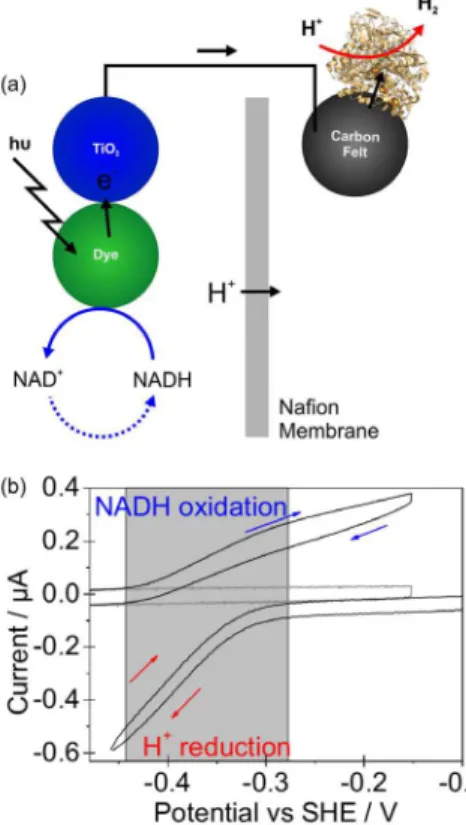
hydrogenase cathode was provided by photo-energised electrons supplied from the sacrificial donor, NADH via
a porphyrin-sensitised TiO2 photoanode. The high cost of
NADH means that it is not viable to consume this cofactor as a sacrificial donor, and the authors note that a future goal
of this research is to incorporate NAD+-dependent biomass
oxidation reactions into the anode compartment such that
the net reaction of the cell is H2 production from biomass.
Oxidation of NADH without a catalyst requires a large
overpotential relative to the NAD+/NADH couple, hence
the need for photo-activated electrons at the anode. The
reduction of H+ by NADH in the absence of illumination is
actually a thermodynamically favourable process at pH 7,
low level H2 and a high ratio of NADH:NAD+. For example,
at atmospheric H2 (0.5 ppm), and a 1000-fold excess of
NADH, the cell potential for this reaction, Ecell = 182 mV
at pH 7. In practice, this can only be achieved with ideal catalysts which operate reversibly at the thermodynamic potentials for each of the half reactions. Efficient NADH oxidation without a detectable overpotential has been
demonstrated at several enzyme-modified electrodes,51,52
indicating that ideal catalysts do exist and that it should
be possible to assemble a H2-producing fuel cell device
(NADH oxidising anode and H+ reducing cathode) from two
enzyme electrodes (see Figure 8b),15 without the need for
photo-activation. Further challenges in the proof-of-concept
photo-H2 production device described by Hambourger et al.
relate to increased electron recombination with the
sensitiser at the anode as H2 builds up and shifts the
potential of the coupled cathode half cell.5
Other photo-H2 production devices involve the
hydrogenase directly adsorbed onto semi-conductor
materials. Morra et al. report a high surface area electrode
constructed from the [FeFe]-hydrogenase C. acetobutylicum
HydA adsorbed on a TiO2 film.53 The electrode gives rise to
a large reductive current (450 µA cm–1 at –0.714 V) although
at this potential the stability is very poor and 50% of the activity is lost after just 10 min.
Devices utilising [FeFe]-hydrogenases have been demonstrated under strictly anaerobic conditions, because of the difficulty of handling these sensitive
enzymes in the presence of O2, although separate
electrochemical studies have shown that H2 production in
air by these enzymes is possible over a limited timeframe,
as mentioned in section 2.35 The greater O
2 tolerance of
[NiFe]-hydrogenases makes them more versatile catalysts. The Peters group attached a Ru(II) photosensitizer to a
[NiFe]-hydrogenase from T. roseopersicina and although
they were unable to achieve direct electron transfer from the Ru(II) to the hydrogenase under illumination, they were able to record photo-hydrogen production in the presence of methyl viologen as an electron transfer mediator under anaerobic and aerobic conditions. It was assumed that the proximity of the photo-reductant to the hydrogenase helps to maintain a reducing environment that further
protects the hydrogenase from O2 damage.54 Most
[NiFe]-hydrogenases suffer from strong product inhibition (by H2;
see for example the dark gray linein Figure 4a), and this
is likely to be a limiting factor in their H2 production. For
example, Kihara et al. used the [NiFe]-hydrogenase from
T. roseopersicina immobilised on hydrophobic carbon
nanotubes as a H2 production electrode, but found the
current to be very sensitive to H2 partial pressure.47 Reisner
et al. have made use of the [NiFeSe]-hydrogenase from Dm baculatum - an enzyme known to suffer much less
from product inhibition and exhibit good O2 tolerance.55
Voltammetry of this enzyme on films of TiO2 annealed onto
indium tin oxide on glass showed promising H+ reduction
currents, even under low-level H2 (at ca. –0.56 V, currents
were ca. 140 µA cm–2 under N
2 and 50 µA cm–2 under 5%
H2). These electrodes retained 50% of their activity after
Figure 8. Coupling of NADH oxidation to H+ reduction. (a) A device
demonstrated by Hambourger et al. for photoactivated NADH oxidation at a porphyrin-sensitised TiO2 anode coupled to H+ reduction by an
[FeFe]-hydrogenase carbon felt cathode.5 A longer goal of this work was
to achieve biomass oxidation at the photo-anode, recycling NADH (dotted arrow). (b) Cyclic voltammograms demonstrating that under appropriate conditions, H+ reduction by NADH is thermodynamically favourable, and
is feasible with ideal electrocatalysts, here the HoxFU NAD+-reductase
moiety of R. eutropha soluble hydrogenase (1 mM NADH), and Hyd-2
from E. coli (under N2), both at pH 7. Figure 8b is reproduced with
storage under N2 for 1 month, demonstrating that sorption
in TiO2 films does not interfere with the enzyme structure,
and may actually stabilise the protein although long term stability of the electrodes under electrocatalytic conditions
has not been investigated. Reisner et al. then went on to
exploit hydrogenase on nanoparticulate TiO2, sensitised with
a ruthenium dye, for visible light-driven H2 production.6,55
In this system, an electron is photo-excited in the dye and transfers to the conduction band of the semiconductor particles. The dye is regenerated by a sacrificial electron donor while the electron transfers to hydrogenase where
reduction of H+ to H
2 occurs. Under illumination of
45 mW cm–2 a level of 4.6% H
2 was reached in the headspace,
corresponding to a turnover number of 1.9 × 10⁵ for the
hydrogenase.55 The limiting part of the system appeared to
be the ruthenium dye, rather than the enzyme.
Avoiding the need for a separate dye-sensitiser,
H2 production has been reported for T. roseopercina
[NiFe]-hydrogenase on CdTe quantum dots,8 and
C. acetobutylicum [FeFe]-hydrogenase I on CdS nanorods.7
Similarly, reduction of CO2 to CO by carbon monoxide
dehydrogenase has been shown on CdS quantum dots.56
These demonstrations show that enzyme adsorption on nanoscale semiconducting particles is a versatile approach for a range of bio-electrocatalytic transformations.
The field of light-driven biocatalytic devices still has many opportunities for creative combination of components and reactions and we can expect many exciting new developments in this area in the future. These need to be accompanied by detailed studies to improve our fundamental understanding of electron transfer between enzymes and semiconductor materials and analysis of the limiting factors in stability of these systems.
4.3 H2-driven chemical synthesis or H2 production via coupled catalysis
The observation that a range of different enzymes will exchange electrons with graphitic surfaces has led to coupling or wiring of enzymes together on graphite particles. In one proof-of-concept demonstration, hydrogenase was co-immobilised onto pyrolytic graphite particles or
platelets with nitrate reductase, such that electrons from H2
oxidation passed from the hydrogenase into the particle, and were then taken up by the nitrate reductase for reduction
of nitrate to nitrite.57 A more interesting manifestation
involved demonstration of the water gas shift reaction,
interconversion of CO and H2O with CO2 and H2, on
graphite platelets modified with hydrogenase and carbon
monoxide dehydrogenase, as represented in Figure 2f.14 We
recently used a similar particle concept for recycling of the
important biological cofactor NADH, Figure 2g. Under 1 bar
H2 and with NAD+ in solution, reduction of NAD+ by H2 is
thermodynamically favourable. The NAD+-reducing catalytic
moiety of R. eutropha soluble hydrogenase was combined
with E. coli Hyd-I on pyrolytic graphite particles to couple
electrocatalytic reduction of NAD+ to NADH to the oxidation
of H2, providing a modular system for recycling these
important biological cofactors.15 Most NADH-dependent
dehydrogenases will not exchange electrons directly with an electrode because they require electron transfer in the form of
hydride (H– = 2e– + H+) from NADH. By co-immobilisation
of lactate dehydrogenase on the particles, it was possible
to demonstrate H2-driven reduction of the model substrate
pyruvate, to lactate, via the recycled NADH, as shown in
Figure 9.15 This opens up new opportunities for driving
electron transfer to NADH-dependent enzymes from H2 or
an electrode via NADH.
In each case, the critical features are the conductivity of the graphite to transfer electrons between the two enzymes, and adsorption of the two enzymes in correct orientations for fast electron transfer, and in an appropriate ratio that their catalytic rates are matched fairly evenly.
5. Future Scope
One of the historical barriers to the development of enzyme-based devices has been the research specialisation necessary for culturing the variety of specialised host organisms under suitable conditions for enzyme expression. Increased interest in hydrogenase chemistry has led to isolation and characterisation of
new hydrogenases, including several temperature-stable
enzymes from hyperthermophilic organisms.29,58,59 Isolation
of two [NiFe]-hydrogenases from E. coli (including
crystallographic characterisation of hydrogenase-1) and
genetic engineering of these enzymes,4,27 and successful
heterologous expression of several other hydrogenases in E. coli, are helping to broaden the availability of
hydrogenases for study and application. The feasibility and economics of scale-up of hydrogenase preparations, for example to gram and kilogram scales, still need to be established if they are to be used in commercial devices. The demonstration that [FeFe]-hydrogenase precursors lacking the 2Fe2S unit of the active site can be activated by incorporation of a synthetic 2Fe2S cluster provides a tantalising indication that it might be possible to produce
part-synthetic enzymes on a larger scale.19,60
Two main areas emerge where further work is needed. The first is in electroactive attachment of enzymes at high coverage, on high surface area electrodes or particles. Detailed insight into the range of interactions involved in stabilising protein-protein complexes is available from crystallographic structures, studies involving mutagenesis of surface residues and coupling between spin-labels observed through advanced electron paramagnetic resonance (EPR) methods. In comparison, we know relatively little about the specific interactions that support protein-electrode interactions, and efforts to expand the range of useful materials often involve trial and error rather than rational design.
A second area that still requires further attention is in
development of O2 tolerance. We now understand much about
the competing reactions of H2 and O2 at hydrogenase active
sites, particularly for [NiFe]-hydrogenases, but more needs to be done to control the relative rates of these reactions to avoid
short circuiting of H2 oxidation currents to un-productive
O2-reduction. Nevertheless, a number of hydrogenases are
available with sufficient O2 tolerance that all types of devices
discussed in this review have been demonstrated operating
under air, or at least with low level O2.
Arising from the wealth of possibilities demonstrated with enzyme electrocatalysts, we can expect to see new generations of bio-inspired catalysts that incorporate synthetic metal centres alongside polymer, oligo-peptide or even protein shells that provide the functionality of proteins (eg., proton transfer, electron transfer, substrate selectivity, stabilisation and protection) but with higher active site density and improved robustness. This is a fast evolving field, and the most exciting developments are emerging at the interfaces between biocatalysis, enzyme engineering, materials science, chemical synthesis and device electronics.
Acknowledgements
K.A.V. is grateful for Fellowship support from the Royal Society, the Research Councils UK and Jesus College, Oxford and for EPSRC INSPIRE Award EP/J009601/1. Both I.J.M. and K.A.V. are supported financially by ERC Starting Grant 258600.
Kylie Vincent is an Associate Professor in Inorganic Chemistry at the University of Oxford and a Tutorial Fellow at Jesus College, Oxford. She graduated from the University of Melbourne, Australia (BA/BSc(Hons), PhD), conducting doctoral research in the laboratories of Stephen Best (Melbourne) and Chris Pickett (John Innes Centre, UK). She carried out postdoctoral research with Fraser Armstrong at the University of Oxford as an RJP Williams Junior Fellow at Wadham College, and then held Fellowships from the Royal Society and Research Councils UK. Her research interests are in bio-inorganic chemistry, and her group have developed new spectroelectrochemical methods for studying redox proteins.
Ian McPherson gained his MChem in 2011 from the University of Oxford. His Masters’ research was conducted in the group of Prof Vincent where he stayed on as a DPhil student. His work centers on the development of novel infrared spectroelectrochemical methods for studying electrocatalysis, in both biological and synthetic catalyst systems.
References
1. Shafaat, H. S.; Rüdiger, O.; Ogata, H.; Lubitz, W.; Biochim. Biophys. Acta Bioenergetics2013, 1827, 986.
2. Lauterbach, L.; Liu, J.; Horch, M.; Hummel, P.; Schwarze, A.; Haumann, M.; Vincent, K. A.; Lenz, O.; Zebger, I.; Eur. J. Inorg. Chem.2011, 1067.
3. Vincent, K. A.; Parkin, A.; Armstrong, F. A.; Chem. Rev.2007,
107, 4366.
4. Volbeda, A.; Darnault, C.; Parkin, A.; Sargent, F.; Armstrong, F. A.; Fontecilla-Camps, J. C.; Structure 2013, 21, 184.
6. Reisner, E.; Powell, D. J.; Cavazza, C.; Fontecilla-Camps, J. C.; Armstrong, F. A.; J. Am. Chem. Soc. 2009, 131,
18457.
7. Brown, K. A.; Dayal, S.; Ai, X.; Rumbles, G.; King, P. W.;
J. Am. Chem. Soc.2012, 132, 9672.
8. Greene, B. L.; Joseph, C. A.; Maroney, M. J.; Dyer, R. B.; J. Am. Chem. Soc.2012, 134, 11108.
9. Krassen, H.; Schwarze, A.; Friedrich, B.; Ataka, K.; Lenz, O.; Heberle, J.; ACS NANO2009, 3, 4055.
10. Lubner, C. E.; Applegate, A. M.; Knörzer, P.; Ganago, A.; Bryant, D. A.; Happe, T.; Golbeck, J. H.; Proc. Natl. Acad. Sci. USA2011, 108, 20988.
11. Vincent, K. A.; Cracknell, J. A.; Clark, J. R.; Ludwig, M.; Lenz, O.; Friedrich, B.; Armstrong, F. A.; Chem. Commun.
2006, 5033.
12. Wait, A. F.; Parkin, A.; Morley, G. M.; dos Santos, L.; Armstrong, F. A.; J. Phys. Chem. C2010, 114, 12003. 13. Ciaccafava, A.; De Poulpiquet, A.; Techer, V.; Giudici-Orticoni,
M. T.; Tingry, S.; Innocent, C.; Lojou, E.; Electrochem. Commun.2012, 23, 25.
14. Lazarus, O.; Woolerton, T. W.; Parkin, A.; Lukey, M. J.; Reisner, E.; Seravalli, J.; Pierce, E.; Ragsdale, S. W.; Sargent, F.; Armstrong, F. A.; J. Am. Chem. Soc.2009, 131, 14154.
15. Reeve, H. A.; Lauterbach, L.; Ash, P. A.; Lenz, O.; Vincent, K. A.; Chem. Commun.2012, 48, 1589.
16. Frederix, P. W. J. M.; Kania, R.; Wright, J. A.; Lamprou, D. A.; Ulijn, R. V.; Pickett, C. J.; Hunt, N. T.; Dalton Trans.2012, 41,
13112.
17. Dutta, A.; Hamilton, G. A.; Hartnett, H. E.; Jones, A. K.; Inorg. Chem.2012, 51, 9580.
18. Le Goff, A.; Artero, V.; Jousselme, B.; Tran, P. D.; Guillet, N.; Métayé, R.; Fihri, A.; Palacin, S.; Fontecave, M.; Science2009,
326, 1384.
19. Berggren, G.; Adamska, A.; Lambertz, C.; Simmons, T. R.; Esselborn, J.; Atta, M.; Gambarelli, S.; Mouesca, J.-M.; Reijerse, E.; Lubitz, W.; Happe, T.; Artero, V.; Fontecave, M.;
Nature2013, 499, 66.
20. Poulpiquet, A. D.; Ciaccafava, A.; Szot, K.; Pillain, B.; Infossi, P.; Guiral, M.; Opallo, M.; Giudici-Orticoni, M.-T.; Lojou, E.; Electroanal.2013, 25, 685.
21. Rüdiger, O.; Abad, J. M.; Hatchikian, E. C.; Fernandez, V. M.; De Lacey, A. L.; J. Am. Chem. Soc.2005, 127, 16008. 22. Moser, C. C.; Farid, T. A.; Chobot, S. E.; Dutton, P. L.; Biochim.
Biophys. Acta2006, 1757, 1096.
23. Page, C. C.; Moser, C. C.; Chen, X.; Dutton, P. L.; Nature1999,
402, 47.
24. Léger, C.; Jones, A. K.; Albracht, S. P. J.; Armstrong, F. A.;
J. Phys. Chem. B2002, 106, 13058.
25. Hexter, S. V.; Grey, F.; Happe, T.; Climent, V.; Armstrong, F. A.;
Proc. Natl. Acad. Sci. USA2012, 109, 11516.
26. Sezer, M.; Frielingsdorf, S.; Millo, D.; Heidary, N.; Utesch, T.; Mroginski, M.-A.; Friedrich, B.; Hildebrandt, P.; Zebger, I.; Weidinger, I. M.; J. Phys. Chem. B2011, 115, 10368.
27. Lukey, M. J.; Parkin, A.; Roessler, M. M.; Murphy, B. J.; Harmer, J.; Palmer, T.; Sargent, F.; Armstrong, F. A.; J. Biol. Chem.2010, 285, 3928.
28. Parkin, A.; Cavazza, C.; Fontecilla-Camps, J. C.; Armstrong, F. A.; J. Am. Chem. Soc.2006, 128, 16808.
29. Pandelia, M.-E.; Fourmond, V.; Tron-Infossi, P.; Lojou, E.; Bertrand, P.; Léger, C.; Giudici-Orticoni, M.-T.; Lubitz, W.; J. Am. Chem. Soc.2010, 132, 6991.
30. Hamdan, A. A.; Burlat, B.; Gutierrez-Sanz, O.; Liebgott, P.-P.; Baffert, C.; De Lacey, A. L.; Rousset, M.; Guigliarelli, B.; Leger, C.; Dementin, S.; Nat. Chem. Biol.2013, 9, 15. 31. Evans, R. M.; Parkin, A.; Roessler, M. M.; Murphy, B. J.;
Adamson, H.; Lukey, M. J.; Sargent, F.; Volbeda, A.; Fontecilla-Camps, J. C.; Armstrong, F. A.; J. Am. Chem. Soc.2013, 135,
2694.
32. Vincent, K. A.; Parkin, A.; Lenz, O.; Albracht, S. P. J.; Fontecilla-Camps, J. C.; Cammack, R.; Friedrich, B.; Armstrong, F. A.;
J. Am. Chem. Soc.2005, 127, 18179.
33. Vincent, K. A.; Cracknell, J. A.; Lenz, O.; Zebger, I.; Friedrich, B.; Armstrong, F. A.; Proc. Natl. Acad. Sci. USA
2005, 102, 16951.
34. Parkin, A.; Goldet, G.; Cavazza, C.; Fontecilla-Camps, J. C.; Armstrong, F. A.; J. Am. Chem. Soc.2008, 130, 13410. 35. Goldet, G.; Brandmayr, C.; Stripp, S. T.; Happe, T.; Cavazza, C.;
Fontecilla-Camps, J. C.; Armstrong, F. A.; J. Am. Chem. Soc.
2009, 131, 14979.
36. Brown, K. A.; Wilker, M. B.; Boehm, M.; Dukovic, G.; King, P. W.; J. Am. Chem. Soc.2012, 134, 5627.
37. Vincent, K. A.; Belsey, N. A.; Lubitz, W.; Armstrong, F. A.;
J. Am. Chem. Soc.2006, 128, 7448.
38. Voronin, O. G.; Shestakov, A. I.; Sadraddinova, E. R.; Abramov, S. M.; Netrusov, A. I.; Zorin, N. A.; Karyakin, A. A.; Int. J. Hydrogen Energy2012, 37, 10585.
39. Baffert, C.; Sybirna, K.; Ezanno, P.; Lautier, T.; Hajj, V.; Meynial-Salles, I.; Soucaille, P.; Bottin, H.; Léger, C.; Anal. Chem.2012, 84, 7999.
40. Luo, X.; Brugna, M.; Tron-Infossi, P.; Giudici-Orticoni, M. T.; Lojou, E.; J. Biol. Inorg. Chem.2009, 14, 1275.
41. Karyakin, A. A.; Vinogradova, D. V.; Morozov, S. V.; Karyakina, E. E.; Electrochim. Acta2010, 55, 7696.
42. Jones, A. K.; Sillery, E.; Albracht, S. P. J.; Armstrong, F. A.;
Chem. Commun.2002, 866.
43. Madden, C.; Vaughn, M. D.; Díez-Pérez, I.; Brown, K. A.; King, P. W.; Gust, D.; Moore, A. L.; Moore, T. A.; J. Am. Chem. Soc.
2012, 134, 1577.
44. Healy, A. J.; Reeve, H. A.; Parkin, A.; Vincent, K. A.;
45. Alonso-Lomillo, M. A.; Ruediger, O.; Maroto-Valiente, A.; Velez, M.; Rodriguez-Ramos, I.; Munoz, F. J.; Fernandez, V. M.; Lacey, A. L. D.; Nano Lett.2007, 7, 1603.
46. Krishnan, S.; Armstrong, F. A.; Chem. Sci.2012, 3, 1015.
47. Kihara, T.; Liu, X.-Y.; Nakamura, C.; Park, K.-M.; Han, S.-W.; Qian, D.-J.; Kawasaki, K.; Zorin, N. A.; Yasuda, S.; Hata, K.; Wakayama, T.; Miyake, J.; Int. J. Hydrogen Energy2011, 36, 7523.
48. Shen, X.-C.; Liou, X.-Y.; Ye, L.-P.; Liang, H.; Wang, Z.-Y.;
J. Colloid Interface Sci.2007, 311, 400.
49. dos Santos, L.; Climent, V.; Blanford, C. F.; Armstrong, F. A.;
Phys. Chem. Chem. Phys.2010, 12, 13962.
50. Woolerton, T. W.; Sheard, S.; Chaudhary, Y. S.; Armstrong, F. A.; Energy Environ. Sci.2012, 5, 7470.
51. Barker, C. D.; Reda, T.; Hirst, J.; Biochemistry2007, 46, 3454. 52. Lauterbach, L.; Idris, Z.; Vincent, K. A.; Lenz, O.; PloS ONE
2011, 6, e25939.
53. Morra, S.; Valetti, F.; Sadeghi, S. J.; King, P. W.; Meyer, T.; Gilardi, G.; Chem. Commun., 2011, 47, 10566.
54. Zadvornyy, O. A.; Lucon, J. E.; Gerlach, R.; Zorin, N. A.; Douglas, T.; Elgren, T. E.; Peters, J. W.; J. Inorg. Biochem.
2012, 106, 151.
55. Reisner, E.; Fontecilla-Camps, J. C.; Armstrong, F. A.; Chem. Commun.2009, 550.
56. Chaudhary, Y. S.; Woolerton, T. W.; Allen, C. S.; Warner, J. H.; Pierce, E.; Ragsdale, S. W.; Armstrong, F. A.; Chem. Commun.
2012, 48, 58.
57. Vincent, K. A.; Li, X.; Blanford, C. F.; Belsey, N. A.; Weiner, J. H.; Armstrong, F. A.; Nature Chem. Biol.2007, 3, 761. 58. Yoon, K.-S.; Fukuda, K.; Fujisawa, K.; Nishihara, H.; Int. J.
Hydrogen Energy2011, 36, 7081.
59. Nishimura, H.; Kitano, Y.; Inoue, T.; Nomura, K.; Sako, Y.;
Biosci. Biotechnol. Biochem.2010, 74, 1624.
60. Esselborn, J.; Lambertz, C.; Adamska-Venkatesh, A.; Simmons, T.; Berggren, G.; Noth, J.; Siebel, J.; Hemschemeier, A.; Artero, V.; Reijerse, E.; Fontecave, M.; Lubitz, W.; Happe, T.; Nature Chem. Biol.2013, 9, 607.
Submitted on: December 8, 2013
![Figure 3. Hydrogenase active sites in catalytically active states: (a) [NiFe]- [NiFe]-hydrogenase, (b) [FeFe]-hydrogenase](https://thumb-eu.123doks.com/thumbv2/123dok_br/18998410.462935/4.892.457.797.102.514/figure-hydrogenase-active-catalytically-active-states-hydrogenase-hydrogenase.webp)

![Figure 7. Scheme showing the potential window in which Desulfovibrio vulgaris Miyazaki F [NiFe]-hydrogenase is catalytically active for H 2 oxidation (light gray box); reversibly inactivated by O 2 (dark gray box) and reversibly inhibited by H 2 S (blac](https://thumb-eu.123doks.com/thumbv2/123dok_br/18998410.462935/7.892.487.813.207.354/potential-desulfovibrio-miyazaki-hydrogenase-catalytically-reversibly-inactivated-reversibly.webp)