Cesarean delivery and small newborn for gestational age
C
ESARIANA E RECÉM-
NASCIDO PEQUENO PARA A IDADE GESTACIONALAuthorship: Federação Brasileira das Associações de Ginecologia e Obstetrícia (Febrasgo)
Participants: Ricardo Simões1,2, Wanderley M. Bernardo2, Antônio J. Salomão1, Edmund C. Baracat1
Conflict of interest:none
1Federação Brasileira das Associações de Ginecologia e Obstetrícia (Febrasgo) 2Guidelines Project, Associação Médica Brasileira
http://dx.doi.org/10.1590/1806-9282.62.01.16
The Guidelines Project, an initiative of the Brazilian Medical Association, aims to combine information from the medical ield in order to standard-ize procedures to assist the reasoning and decision-making of doctors.
The information provided through this project must be assessed and criticized by the physician responsible for the conduct that will be adopted, de-pending on the conditions and the clinical status of each patient.
I
NTRODUCTIONSmall for gestational age (SGA) refers to a fetus that has failed to reach a speciic biometry, including abdominal circumference consistent with gestational age, which may be caused by prematurity, intrauterine growth restriction, or both, with variable etiology and effects.
The deinition of small for gestational age (SGA) new-born is not clear. According to the World Health Organi-zation (WHO), SGA is deined as a fetus whose weight at birth is below the 10 percentile for its gestational age and gender, based on an intrauterine growth curve1 (D).
How-ever, this deinition has the main disadvantage of depend-ing on the weight curve at birth that is used as a reference, although it varies according to the population studied. Another deinition considered for SGA newborns is the
one endorsed by the International Society of Pediatric Endocrinology, which considers small for gestational age infants born with weight and/or length less than two or more standard deviations of the mean for gestational age. Other authors also consider SGA infants born at term and whose birth weight is ≤ 2,500 g.
Exception should be made with respect to the con-cept of SGA, used as an indicator of intrauterine growth restriction, terms that should never be applied interchange-ably since some babies considered small for gestational age may simply represent those located in the lower por-tion of a normal distribupor-tion curve for fetal growth, as in the case of genetic predisposition (parents are small).
It is known that the birth weight is the most impor-tant factor in neonatal mortality, and also a signiicant determinant of post-natal mortality and infant morbid-ity. This may explain the high morbidity and mortality rates identiied among infants born small for gestation-al age, compared to those observed for newborns
consid-ered appropriate for gestational age (AGA)2 (B). Thus,
bet-ter management of the health of these children is imperative, starting with prenatal care and delivery assis-tance.
O
BJECTIVEThe objective of this review is to provide the best evi-dence available today for cesarean section indication in pregnancies with small for gestational age fetuses, and its effect on perinatal and neonatal morbidity and mor-tality.
M
ATERIAL AND METHODSThe evidence to be used for analysis of perinatal and neo-natal morbidity and mortality, according to the mode of delivery chosen for pregnancies with SGA fetuses, was ob-tained based on the following steps: preparation of the clinical question, structuring of the question, search for evidence, critical evaluation, and evidence selection.
Clinical question
Is cesarean delivery in pregnancies with small for gestation-al age fetuses related to lower perinatgestation-al and neonatgestation-al mor-bidity and mortality compared to vaginal delivery?
Structured question
The clinical question is structured according to the P.I.C.O. components (P (Patient); I (Intervention); C (Compari-son); O (Outcome)).
• P: Small for gestational age.
• I: Cesarean-section.
• C: Vaginal deliver.
Bases of scientiic data consulted
The scientiic databases consulted were: PubMed-Med-line and Cochrane. A manual search from the references of reviews (narrative or systematic) was also performed.
Strategies for search of evidence
PubMed-Medline
Strategy: (Cesarean Section OR Cesarean Sections OR Delivery, Abdominal OR Abdominal Deliveries OR De-liveries, Abdominal OR Caesarean Section OR Caesare-an Sections OR Abdominal Delivery OR C-Section OR C Section OR C-Sections OR Postcesarean Section) AND (Infant, Small for Gestational Age).
Cochrane
Strategy: cesarean section AND Small for Gestational Age.
Studies retrieved (7/17/14) (Table 1)
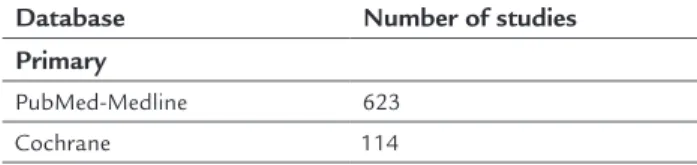
TABLE 1 Number of studies retrieved with the search strategies used for each scientific database.
Database Number of studies Primary
PubMed-Medline 623
Cochrane 114
Inclusion criteria for studies retrieved
Selection of studies, assessment of titles and abstracts ob-tained from the search strategy in the consulted databas-es was conducted by two rdatabas-esearchers with skills in the prep-aration of systematic reviews, both independent and blinded, strictly observing the inclusion and exclusion cri-teria previously established (see item “P.I.C.O components”). All potentially relevant studies were identiied. Whenever the title and the summary were not enlightening, research-ers sought the full article.
Study design
Narrative reviews, case reports, case series and studies pre-senting preliminary results were excluded from the as-sessment. Systematic reviews and meta-analyzes were used with the basic purpose of recovering references that per-haps had been lost at irst, from the initial search strate-gy. Studies designed as cohort or controlled clinical tri-als (randomized or not) were included.
Cohort studies were deined as those with follow-up of patients, the same history, and analysis of prognostic outcomes.
Controlled clinical trials were evaluated according to the Jadad score.3
P.I.C.O. components
• Patient: pregnant women (nulliparous and multipa-rous) with singleton small for gestational age fetuses in cephalic position.
• Intervention: cesarean-section.
• Comparison: vaginal delivery.
• Outcome: newborn outcomes included: perinatal or neonatal death (excluding cases of death related to fa-tal fefa-tal abnormalities), neonafa-tal morbidity, such as seizures (occurring within the irst 24 hours of birth or that require two or more drugs to control), Apgar score, birth asphyxia, respiratory complications, infec-tion, need for admission into neonatal intensive care unit, neonatal encephalopathy, trauma at birth (bone fractures, subdural hematoma, cerebral or intraven-tricular hemorrhage), spinal cord injury, peripheral nerve injury (e.g., brachial plexus injury), disabilities in childhood, hypotonia, intubation or need for ven-tilation for at least 24 hours, and need for tube feed-ing for four days or longer.
Language
We included studies available in Portuguese, English, French or Spanish.
According to publication
Only studies with full text available were considered for critical assessment.
Studies selected in the irst assessment
After entering the search strategy in the primary databas-es (PubMed-Medline and Cochrane), the assdatabas-essment of titles and abstracts led to the selection of three studies.
Evidence selected in critical evaluation and exhibition of results
The studies considered for full text reading were critical-ly assessed according to inclusion and exclusion criteria, study design, P.I.C.O., language and availability of the full text.
Results pertaining clinical status will be displayed in-dividually showing the following items: clinical question, number of studies selected (according to inclusion crite-ria), description of the studies (Table 2), results and sum-mary of the available evidence.
After applying the inclusion and exclusion criteria, the evidence selected in the search and deined as ran-domized controlled trials (RCT) were subjected to an ap-propriate checklist for critical assessment (Table 3). Crit-ical assessment of RCTs allows to classify them according to the Jadad score, so that Jadad < three (3) trials are con-sidered inconsistent (grade B), and those with scores ≥ three (3), consistent (grade A). For critical analysis of non-randomized studies, among them prospective observa-tional studies, we used the Newcastle-Ottawa scale.4
For results with available evidence, wherever possible the following speciic items are deined: population, in-tervention, outcomes, the presence or absence of beneit and/or damage and controversies.
The results will be presented preferably in absolute data, absolute risk, number needed to treat (NNT), or number needed to harm (NNH), and occasionally in mean and standard deviation.
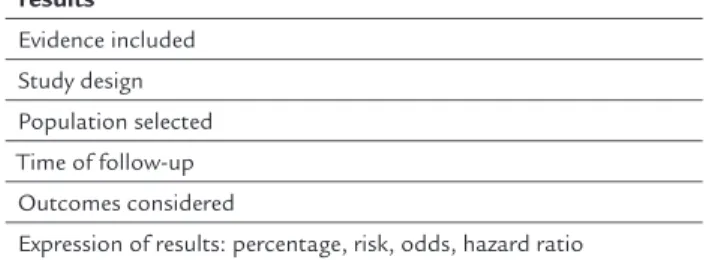
TABLE 2 Worksheet used for description of studies included and exposure of the results
Worksheet for description of studies and exposure of the results
Evidence included Study design Population selected Time of follow-up Outcomes considered
Expression of results: percentage, risk, odds, hazard ratio
TABLE 3 Critical assessment script for randomized controlled trials (checklist).
Study data
Reference, study design, Jadad, strength of evidence
Sample size calculation
Estimated differences, power, signifi-cance level, total number of patients
Patient selection
Inclusion and exclusion criteria
Patients
Recruited, randomized, prognostic differences
Randomization
Description and blinded allocation
Patient follow-up
Time, losses, migration
Treatment protocol
Intervention, control and blinding
Analysis
Intention to treat, analyzes of intervention and control
Outcomes considered
Primary, secondary, measuring instrument of the outcome of interest
Result
Benefit or harm in absolute data, benefit or harm on average
R
ESULTSClinical question
Is cesarean delivery in pregnancies with small for ges-tational age fetuses related to lower perinatal and neo-natal morbidity and mortality compared to vaginal de-livery?
TABLE 4 Selection process.
Evidence selected
Type of publication Included Non-concurrent cohort studies 3 5-7
The main reasons for the exclusion of works were: the un-availability of the full text; a study design other than lon-gitudinal observational (retrospective or prospective) or experimental (controlled clinical trials, randomized or not) studies.
Results of the evidence selected
Of the 737 articles initially retrieved, 3 were selected to support the summary of evidence concerning perinatal and neonatal morbidity and mortality, according to mode of delivery chosen for pregnancies of small for ges-tational age fetuses. Studies included are shown in Ta-ble 4.
1. Kinzler WL, et al. (B).5
• Design: non-concurrent observational longitudi-nal study (1995 to 1997).
• Population: women who gave birth to small for gestational age babies, in cephalic presentation and with gestational age between 24-42 weeks.
• Outcome: to evaluate neonatal morbidity and mor-tality among infants exposed and not exposed to labor.
• Result: of the 986,405 small for gestational age newborns, 87.4% were exposed to labor. Of these, fetuses with gestational age from 24 to 31 weeks had the highest risk of death in the early neonatal period compared to those born by cesarean section. However, analyzing the late neonatal and postna-tal period, the authors found that for fetuses sub-ject to labor there was a lower risk of death at all gestational ages.
2. Boers KE, et al. (B).6
• Population: retrospective analysis of all births of fetuses with gestational age > 36 weeks occurred between the years 2000-2004.
• Outcome: neonatal morbidity and mortality.
• Result: a total of 14,416 births of babies weighing less than the 10th percentile for gestational age were
identiied. In this study, the authors found no dif-ference in neonatal outcomes (neonatal mortality, and Apgar score <7) between fetuses born by spon-taneous vaginal delivery or elective cesarean deliv-ery (RR=0.44 with 95CI: 0.02 to 3.0 and RR=0.97 with 95CI: 0.61 to 1.5, respectively).
3. Lee HC, et al. (B).7
• Design: non-concurrent observational longitudi-nal study.
• Population: retrospective analysis of all births that occurred between the years 1999-2000. New-borns with gestational age from 26 to 36 weeks were considered small for gestational age when their weight was below the 10th percentile (SGA
newborns), or appropriate for gestational age (AGA) when their weight was between the 10th and 90th
percentiles.
• Outcome: neonatal morbidity and mortality ac-cording to the mode of delivery selected.
• Result: in this study, there was a higher cesarean section rate among SGA newborns compared to those considered AGA. These rates were more prom-inent among fetuses with gestational ages from 26 to 32 weeks (50 to 67%) while those considered AGA had cesarean rates ranging from 22 to 38%. New-borns considered small for gestational age at week 31 of pregnancy had increased survival with cesar-ean section, while those found small for gestation-al age at week 33 or later, as well as AGA infants had decreased survival when delivery was performed through cesarean section.
D
ISCUSSIONIn this review, the authors found no prospective observa-tional studies examining the neonatal outcomes in ques-tion, regarding the selected mode of delivery (cesarean or vaginal) for pregnancies of small for gestational age fe-tuses. However, retrospective studies analyzing these out-comes are described. The methodological limitations in-trinsic to these designs should be taken into consideration, especially with regard to the heterogeneity of the popu-lation included in the studies, which is a very important
factor since the very deinition of SGA varies according to the population curve adopted. Moreover, we noticed in the studies retrieved the association of another risk factor related to neonatal morbidity and mortality, which is prematurity. Although only SGA fetuses were includ-ed, it is possible that this could have introduced bias into the analysis of morbidity and mortality related to the mode of delivery, since many small for gestational age newborns are not premature and therefore they have no problems connected to prematurity.
A retrospective study assessed in this analysis sug-gests that small for gestational age newborns (between 24-31 weeks) exposed to labor have increased risk of ear-ly neonatal death compared with those not subject to la-bor. On the other hand, in this same analysis, the authors identiied a lower risk of death in the late neonatal and postnatal periods to those born vaginally, regardless of gestational age5 (B). Contradictory results were found in
another retrospective study, which showed that SGA ne-onates born at 31 weeks had lower late neonatal mortal-ity with cesarean delivery, while SGA newborns with ges-tational age > 33 weeks, as well as those considered AGA, had higher mortality rates associated with cesarean sec-tion7 (B).
Another study concluded that there was no differ-ence in neonatal mortality and morbidity according to Apgar score between fetuses born vaginally and those de-livered by elective cesarean section6 (B).
F
INAL RECOMMENDATIONSIn the absence of other obstetric indications requiring ce-sarean section, there is no suficient evidence to recom-mend planned cesarean section in the pregnancy of small for gestational age fetuses aiming to reduce neonatal and perinatal morbidity and mortality.
R
EFERENCES1. Intrauterine growth retardation in newborn children. Available from: http:// www.who.int/ceh/indicators/iugrnewborn.pdf. Acessado em: 10.jul.2014. 2. Clausson B, Cnattingius S, Axelsson O. Preterm and term births of small for
gestational age infants: a population-based study of risk factors among nulliparous women. Br J Obstet Gynaecol. 1998; 105(9):1011-7. PubMed PMID: 9763054.
3. Jadad AR, Moore RA, Carroll D, Jenkinson C, Reynolds DJ, Gavaghan DJ, et al. Assessing the quality of reports of randomized clinical trials: is blinding necessary? Control Clin Trials. 1996; 17:1-12.
5. Kinzler WL, Ananth CV, Smulian JC, Vintzileos AM. he efects of labor on infant mortality among small-for-gestational-age infants in the USA. J Matern Fetal Neonatal Med. 2002; 12(3):201-6. PubMed PMID: 12530619. 6. Boers KE, van der Post JA, Mol BW, van Lith JM, Scherjon SA. Labour and
neonatal outcome in small for gestational age babies delivered beyond 36+0
weeks: a retrospective cohort study. J Pregnancy. 2011; 2011:293516. PubMed PMID: 21490789.