SOCIAL SUPPORT AND FAMILIES OF CHILDREN WITH CANCER:
AN INTEGRATIVE REVIEW
Iara Cristina da Silva Pedro1 Cristina Maria Galvão2 Semiramis Melani Melo Rocha3 Lucila Castanheira Nascimento4
Pedro ICS, Galvão CM, Rocha SMM, Nascimento LC. Social support and families of children with cancer: an integrative review. Rev Latino-am Enfermagem 2008 maio-junho; 16(3):477-83.
This study aimed to search available evidences in literature about social support to families of children with cancer. An integrative review was elaborated and the articles were searched in PUBMED, WEB of SCIENCE, CINAHL, PsycINFO and LILACS, using the key words: social support, cancer, child and family, between 1996 and 2006. Fifteen articles were selected and the analysis of these publications allowed for the identification of three themes: social support and the trajectory of cancer, social support to healthy siblings and social support to fathers and mothers of children with cancer. Data indicated a lack of consensus among researchers about the use of the term social support and that there is a need for greater methodological rigor in the conduction of these studies. Acknowledging the clients’ support needs is important to plan nursing care and guide research development, whose results can be used in practice.
DESCRIPTORS: social support; neoplasms; child; family; pediatric nursing
APOYO SOCIAL Y FAMILIAS DE NIÑOS CON CÁNCER: REVISIÓN INTEGRADORA
La finalidad de este estudio fue buscar las evidencias que se encontraban disponibles sobre el apoyo social a familias de niños con cáncer. Se realizó una revisión integradora y los artículos fueron buscados en las bases de datos PUBMED, WEB of SCIENCE, CINAHL, PsycINFO y LILACS, con las palabras clave: social support, cancer, child y family, en el período de 1996 a 2006. Fueron seleccionados quince artículos. El análisis permitió identificar tres temáticas: apoyo social y la trayectoria del cáncer; apoyo social a los hermanos saludables; y, apoyo social a los padres y madres de niños con cáncer. Los datos indicaron que falta consenso entre los investigadores al respecto del uso del término apoyo social y que es necesario realizar estudios con un mayor rigor metodológico. Reconocer las necesidades, que tiene la clientela, de recibir apoyo es importante para planificar el cuidado de enfermería y dirigir el desarrollo de investigaciones, cuyos resultados puedan ser aplicados en la práctica.
DESCRIPTORES: apoyo social; neoplasias; niño; familia; enfermería pediátrica
APOIO SOCIAL E FAMÍLIAS DE CRIANÇAS COM CÂNCER: REVISÃO INTEGRATIVA
O estudo teve como objetivo buscar evidências disponíveis na literatura que abordem o apoio social aos membros de famílias de crianças com câncer. Elaborou-se revisão integrativa e a busca dos artigos nas bases de dados PubMed, Web of Science, CINAHL, PsycINFO e LILACS, com as palavras-chave social support, cancer, child e family, no período de 1996 a 2006. Selecionou-se quinze artigos e a análise desses permitiu a identificação de três temáticas: apoio social e a trajetória do câncer, apoio social aos irmãos saudáveis e apoio social aos pais e mães de crianças com câncer. Os dados indicaram falta de consenso entre os pesquisadores em relação ao uso do termo apoio social e a necessidade de maior rigor metodológico na realização dos estudos. Reconhecer as necessidades de apoio é importante para se planejar o cuidado de enfermagem e direcionar o desenvolvimento de pesquisas, cujos resultados possam ser desenvolvidos na prática.
DESCRITORES: apoio social; câncer; criança; família; enfermagem pediátrica
1 RN, Master’s student, e-mail: [email protected]; 2 Associate Professor, e-mail: [email protected]; 3 Retired Full Professor, e-mail:
[email protected]; 4 Ph.D., Faculty, e-mail: [email protected]. University of São Paulo at Ribeirão Preto College of Nursing, WHO Collaborating Centre
for Nursing Research Development, Brazil
478
INTRODUCTION
A
dvancements in modern science andtechnology have contributed to the progress of cancer
treatment, so that children and their families can go
through a longer experience of the disease. To help
them in the cancer trajectory, social support is an
important ally.
Social support can be considered “an
interaction process between people or groups of
people, who through systematic contact establish
bonds of friendship and information, receiving
material, emotional, affective support, contributing to
mutual well-being and constructing positive factors in
prevention and health maintenance. Social support
highlights the role individuals can play to solve daily
situations in crisis moments”(1). However, most studies
have looked at social support generically, and not as
the main object of their research, turning comparisons
and applications more difficult. In addition, studies
on social support in Pediatric Oncology originate in
adult-based theories. Research on the effects of social
support on child cancer patients are still in the initial
stage, which does not permit empirical determinations
on the importance of this resource for children with
cancer and their relatives(2).
In view of the above, this study aims to look
for evidence available in literature about social
support for family members of children with cancer,
from their perspectives, in the last ten years, so as to
synthesize knowledge in the area as a base for care
delivery to these clients.
METHOD
To achieve the research objective, the
integrative literature review was selected as the
research method, with the following steps: problem
identification (elaboration of guiding question,
establishment of key words and criteria for inclusion/
exclusion of articles), article selection, definition of
information to be extracted from reviewed articles
(objectives, methodology and key conclusions), as
well as their analysis, discussion and result
interpretation and, finally, knowledge synthesis(3-5).
In view of the research problems: a) cancer
is a public health problem; b) it becomes increasingly
necessary to include the families in care and in the
therapeutic diagnosis process; c) social support can
serve as an important tool to help people experiencing
the trajectory of cancer; the following guiding question
was established for the review: “What scientific
knowledge has been produced about social support
given to family members of children with cancer, from
their perspectives?”. The inclusion criteria were: the
study theme of the publication should be questions
about families or relatives of children with cancer in
dealing with some kind of social support; presenting
social support as the central focus and object of the
study; publications in English, Spanish and Portuguese,
published between January 1996 and July 2006;
publications with abstracts available at and indexed
in PubMed, digital databases produced by the National
Library of Medicine (USA) in the field of Bioscience;
Web of Science, which refers to a set of databases
(Science Citation Index, Social Science Citation Index,
Arts and Humanities Citation Index, Current Chemical
Reactions and Index Chemicus), compiled by the ISI
(Institute for Scientific Information); CINAHL
(Cumulative Index of Nursing and Allied Health
Literature), which joins the main scientific productions
in nursing; PsycINFO, a reference in psychology,
behavioral sciences and education, and LILACS, which
covers scientific publications in health from Latin
America and the Caribbean. Publications whose
research subjects were only adolescents were
excluded, as the authors of this review were only
interested in research with child cancer patients
younger than twelve and their relatives.
The following key words were used: apoio social (social support), família (family), criança (child) and câncer (cancer). Care was taken to use the key
words that are considered as descriptors in the DECs
(Descritores em Ciências da Saúde) and MeSH (Medical Subject Headings). The PubMed and Web of Science
databases permitted an advanced search with the four
key words at the same time; the remainder, however,
allowed for crossed searches with only three words
at the same time. Therefore, in the CINAHL, PsycINFO
and LILACS databases, mutual combinations of key
words were necessary.
To select the publications, each title and
abstract was read exhaustively to confirm if they
addressed the guiding research question and attended
to the established inclusion and exclusion criteria.
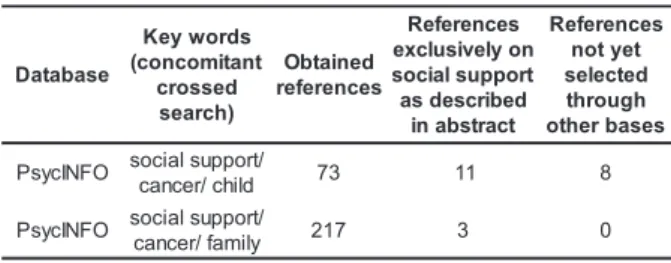
Table 1 shows the distribution of the publications
included in the review and their selection phases.
Social support and families…
Pedro ICS, Galvão CM, Rocha SMM, Nascimento LC.
Table 1 - Distribution of bibliographic references from
PubMed and Web of Science, according to the key
words e s a b a t a D s d r o w y e K t n a t i m o c n o c ( d e s s o r c ) h c r a e s d e n i a t b O s e c n e r e f e r s e c n e r e f e R y l e v i s u l c x e l a i c o s n o s a t r o p p u s n i d e b i r c s e d t c a r t s b a s e c n e r e f e R y l e v i s u l c x e l a i c o s n o r e t f a t r o p p u s f o g n i d a e r e l c i t r a l l u f d e m b u P l a i c o s / d l i h c / t r o p p u s y l i m a f / r e c n a c 4 8
1 15 12
f o b e W e c n e i c s l a i c o s / d l i h c / t r o p p u s y l i m a f / r e c n a c 1
2 2 1
In Pubmed, 184 references were found, 18
of which were published in languages the inclusion
criteria did not cover: seven French, three German,
two Polish, two Japanese, one Italian, one Korean,
one Russian and one Chinese. Among the 166
remaining publications, the abstracts of ten were not
available; five focused on adolescents as research
subjects, 12 studied adult cancer and six were not
related to cancer. Then, 133 publications were left, of
which only 15 exclusively addressed social support,
that is, social support was the main study object. After
reading the full version of these 15 articles, three
were excluded: one did not look at social support from
the perspective of family members of children with
cancer, but from that of the health professionals who
dealt with them; and the other two did not contain
social support as the main study object. One of them
focused on the healthy sibling’s life during one year
of treatment for the child with cancer, and the other
on the integration process of the child at home and in
the community immediately after the treatment.
Twenty-one references were found in the Web
of Science, six of which were repeated in PubMed.
Among the 15 remaining publications, one focused
on adolescents as research subjects; another looked
at adult cancer, and four did not refer to cancer. After
reading the abstracts of the nine remaining abstracts,
it was found that only two indicated social support as
the main study object. However, the reading of the
full version revealed that one of them focused on how
the parents deal with the disease experience over
time. Hence, only one of the selected articles was
included.
For the search in CINAHL and PsycINFO, first,
the key words social support, cancer and child were
used and next, the word child was replaced by family.
The other two words – social support and cancer –
were not excluded as publications with themes different
from our guiding question could appear. The same
logic could not be used in LILACS, because the first
crossed search, described above, had only produced
one article and, therefore, out of concern that an
article would be missed, combinations like: “cancer x
child x family” and “social support x cancer” were
used.
Table 2 - Distribution of bibliographic references from
CINAHL, according to the key words
e s a b a t a D s d r o w y e K t n a t i m o c n o c ( d e s s o r c ) h c r a e s d e n i a t b O s e c n e r e f e r s e c n e r e f e R n o y l e v i s u l c x e t r o p p u s l a i c o s d e b i r c s e d s a t c a r t s b a n i s e c n e r e f e R t e y t o n d e t c e l e s h g u o r h t s e s a b r e h t o L H A N I
C socialsupport/ d l i h c / r e c n a
c 37 6 1
L H A N I
C socialsupport/ y l i m a f / r e c n a
c 114 2 0
In the first crossed search, 37 references
were found. The abstract of six contained social
support as the main study object; however, five of
these publications had already been found in the
PubMed search, while the sixth was later repeated in
the PsycInfo database. In the second crossed search,
114 references were found, however, without any new
study, as publications complying with the inclusion
criteria had already been selected. Most studies
discarded in this search referred to adult cancer.
Table 3 - Distribution of bibliographic references from
PsycINFO, according to the key words
e s a b a t a D s d r o w y e K t n a t i m o c n o c ( d e s s o r c ) h c r a e s d e n i a t b O s e c n e r e f e r s e c n e r e f e R n o y l e v i s u l c x e t r o p p u s l a i c o s d e b i r c s e d s a t c a r t s b a n i s e c n e r e f e R t e y t o n d e t c e l e s h g u o r h t s e s a b r e h t o O F N I c y s
P socialsupport/ d l i h c / r e c n a
c 73 11 8
O F N I c y s
P socialsupport/ y l i m a f / r e c n a
c 217 3 0
Seventy-three references were located in the
first crossed search. In 11, social support was the
main study object, but one was repeated in PubMed; one in Pubmed and CINAHL, and another in CINAHL
only. Access to five of the eight references not found
in any other database was not possible, because these were two books and two dissertations, both published
in English and not issued in Brazil; as to the fifth
publication, the article was requested via COMUT (Programa de Comutação Bibliográfica), but access
could not be obtained until the moment of publication.
480
articles, two were excluded: one focused on the
experience of Greek mothers during their children’s
terminal phase, and another only described the
relation between of the mother – child with cancer
dyad. In the second crossing, 217 references were
found, but only three complied with the inclusion
criteria and had already been selected. Most studies
excluded in this crossed search referred to cancer in
adults, mainly in women.
Table 4 - Distribution of bibliographic references from
LILACS, according to the key words
e s a b a t a D s d r o w y e K t n a t i m o c n o c ( ) h c r a e s d e s s o r c d e n i a t b O s e c n e r e f e r s e c n e r e f e R n o y l e v i s u l c x e t r o p p u s l a i c o s S C A L I
L cancer/child/family 26 0
S C A L I
L socialsupport/cancer 11 0
S C A L I
L socialsupport/child/ r e c n a
c 1 0
In LILACS, 38 references were found, but one
was repeated due to the combinations made. Among
the 37 remaining references, six looked at health
professionals who took care of children with cancer;
eight addressed adult cancer; one was not related to
cancer, and five abstracts were not available. All 17
remaining publications did not address social support
as the main study object.
At the end of the trajectory described above,
in total, 15 articles were selected, which addressed
the guiding question and also complied with the
previously established criteria.
RESULTS
The analysis of the 15 selected articles
showed that eight had been elaborated by nursing
researchers, sometimes in partnership with other
professionals, such as physicians and recreationists.
A certain level of homogeneity was found in the
articles’ distribution in terms of publication year, with
an average of two publications on social support as
the main study object. With respect to the countries
of origin, the United States led the number of
publications; despite some studies with other origins,
English was the predominant language.
As to the study design characteristics, among
the 15 studies included in the review, six used a
quantitative methodological approach, with three
exploratory-descriptive, two correlation studies and
one methodological research; four studies used the
qualitative methodological approach, with two
phenomenological and two descriptive studies; two
experience reports and three literature reviews, one
of which was a critical literature review(4, 6-7) . e s a b a t a
D Year Origin Author Activityarea Studydesign
d e m b u
P 1997 China Martinsoneta.l Nursing/Medicine Descriptive-exploratory
L H A N I C / O F N I c y s
P 1997 USA Varnieta.l Medicine Descriptive-exploratory
d e m b u
P 1998 Greece Vasilatou-kosmidiseta.l Medicine Experiencereport
L H A N I C / d e m b u
P 2000 USA MurrayJS. Nursing Criticalilteraturereview
L H A N I C / d e m b u
P 2000 USA MurrayJS. Nursing Methodologicalresearch
L H A N I C / d e m b u
P 2001 USA MurrayJS. Nursing Descriptive-exploratory
O F N I c y s P / d e m b u
P 2001 Austraila McGrathP. Medicine Phenomenologicalstudy
L H A N I C / d e m b u
P 2002 USA MurrayJS. Nursing Descriptive
d e m b u
P 2002 England Simmseta.l Nursing/RecreationWork Experiencereport
d e m b u
P 2002 USA Neil-urbaneta.l Nursing Phenomenologicalstudy
d e m b u
P 2003 USA Suzukieta.l Psychology/Medicine Literaturereview
e c n e i c s f o b e
W 2003 Singapore RosaleenO. SocialWork Descriptive
d e m b u
P 2004 Canada Kerreta.l Nursing Literaturereview
L H A N I C / O F N I c y s P / d e m b u
P 2004 Canada Barreraeta.l Psychology Correlationstudy
o f n I c y s
P 2006 Sweden Norbergeta.l Psychology/Medicine Correlationstudy
Table 5 - Distribution of references included in the integrative review, according to database, publication year,
origin, authors, activity area and study design
The analysis of the selected publications allowed for the identification of three themes: social
support and the trajectory of cancer, social support
to healthy siblings and social support to fathers and mothers of children with cancer, described below.
Social support and the trajectory of cancer
Diagnosis and/or relapse of the disease tend
to be the most difficult phase for the families of
children with cancer(8-9). At that moment, in general,
Social support and families…
Pedro ICS, Galvão CM, Rocha SMM, Nascimento LC.
they need more emotional support and, during the treatment, they also look for informational support (10-12)
. After receiving the diagnosis, the families start to
seek and receive the different types of social support,
which favor their adjustment in this trajectory(11).
However, it was found that the support offered tends
to decrease over time due to the duration of
treatment(9). Social support is essential to help the
families to deal with the shock of the diagnosis and
the subsequent demands posed by treatment until
the end, whether this means cure or death(12).
Social support to healthy siblings
The healthy siblings’ answers are determined
by their individual temperament, life experiences,
culture, developmental age, age of the sick child,
closeness of the relation between the sick and the
healthy child, and also by how the family responds to
the situation(13). Emotional, instrumental and
informational support are considered the most
beneficial support types for healthy siblings(14-15). Some
of these supports have useful mechanisms that teach
them to deal with the situation: participation in support
groups, talking about the subject; receiving
information; open communication with the family;
getting involved in care for sick siblings, as well as
visiting them in hospital and keeping contact with them
at this place, whether by phone or letters. Moreover,
time should be spent with the healthy siblings and
they should be charged with small responsibilities at
home, such as taking care of a pet, in order to acquire
a sense of importance(13).
Reducing social support for healthy siblings
can cause psychosocial problems, such as:
resentment, rage, fear of death, jealousy, guilt,
isolation(13), anxiety, depression and behavioral
problems(13, 16). Not all healthy siblings develop
behavioral or emotional problems but, when this
occurs, it is difficult to identify and intervene
adequately(16), mainly when the necessary theoretical
reference frameworks and technical instruments for
this purpose are missing. Adequate means to survey
data, as well as to assess different subjects’
perceptions – parents and healthy siblings(17) and a
theoretical reference framework are essential to help
pediatric nurses to apply the social support concept
in their clinical practice with healthy siblings of children
with cancer(18).
As to the characteristics of this concept, these
include: attributes, antecedents and consequences. The following attributes can be mentioned: emotional,
instrumental, informational and appraisal support. Antecedents of social support include: social network,
social engagement and social climate. And, finally, favorable consequences entailed by different support
types: increased self-esteem; better ways of dealing with the disease; increased knowledge and
understanding of the disease and help for siblings to examine and interpret the situation more
appropriately(18).
Social support to fathers and mothers of children with
cancer
The fathers and mothers of children with cancer can have different responses to adapt to the
disease. To give one example, Chinese fathers
frequently report symptoms like appetite and weight loss, sleeping difficulties, followed by headaches,
dizziness and, finally, colds; Chinese mothers, on the other hand, presented more symptoms than
fathers(19). In general, men suffer more from isolation and receive less social support than men(20), perhaps
because mothers demonstrate greater anxiety, which is why they seek more support than fathers(21). In
practice, individual variations should be taken into account with a view to the better elaboration of a
family-centered care plan, although making gender differences is not appropriate, that is, both fathers
and mothers should be offered the same support,
independently of gender(21).
The sources of support offered to these clients
include partners(9,19), family, friends, employees,
hospital team and other parents experiencing the same situation(9). Suggestions to increase the support
offered to families include: offering care through
trained volunteers; involving people who guide the families in the initial stages of treatment and giving
opportunities for them to get to know children whose
treatment was successful(9); developing support groups for parents(9), either in hospital(20) or
electronically, besides encouraging the use of new
technologies: Internet access and use of videogames
to start dialogues about cancer between children and parents(22). Through the range of available
interventions, nurses and other health professionals
can play an important role by increasing these interventions, as well as by offering Access to different
482
DISCUSSION
The analyzed data reveal that, when looking
at the country of publication, the United States lead
the ranking of publications in which social support was
the main object of study. In Brazil, on the other hand,
no research was published with this focus between
1996 and 2006. There is an urgent need for further
research in this area, so as to understand the relation
between social support and Brazilian families of
children with cancer, as cultural and socioeconomic
differences can interfere in this process.
The review revealed how difficult it is to work
with the “social support” theme. Initially, in the search
for articles, it could be perceived that the databases
selected articles that were not always in line with the
social support concept, as some authors called any
type of “help” a synonym of “social support”. This
demonstrated that the social support concept is not
very clear yet(23-25), as many researchers have not
established an operational definition of social support
as a base for practice(18, 23). Only one(18) of the fifteen
articles included in this review intended to analyze its
concept.
Different approaches to the term “apoio social” (social support) were found, and also its diverse types: sistema de suporte/ support systems(19); questões de apoio/ support issues(9), necessidade de apoio/ supportive care needs(10); informational and
emotional needs(10); apoio psicossocial/ psychosocial
support(22); informal social support(11); practical
support from informal social network(11); cuidados de apoio/ supportive care(12); apoio social percebido/
perceived support(8,21) and received support. A clearer
definition of this concept will favor its applicability in
research(26).
It should be highlighted that greater rigor in
research development is needed, mainly in terms of
method description. One study was found(19) that used
scales but did not present any related references; another(22) performed a literature review without
describing how it was conducted, giving the impression of a mere collection about cancer, although this did not invalidate the authors’ contribution to scientific
knowledge in the area.
CONCLUSIONS
Providing social support to the family members of children with cancer is a part of integral
nursing care delivery. Social support frequently tends to decrease over time, but its offer should not be excluded, as the different phases the children and
their families face have their own characteristics and relatives do not always express the difficulties they
experience. To allow nursing to substantially contribute in the course cancer imposes, planning appropriate services and care, based on the needs in each phase
of the disease, it is important to have instruments that help in the identification of social support types
that will favor these clients, such as: adequate communication, interviews, genogram, ecomap,
among others. Future research should try to understand what these families need most during the cancer trajectory, either the family as a whole or each
member of the family core, whether healthy or ill and whether present or not in the hospital environment.
Nowadays, science and technological
advances have provided a wide range of available interventions. Therefore, both nurses and other health
professional should pay special attention to this process, in order to offer access to different kinds of support to children with cancer and their families.
Acknowledging the actual support needs of family members of children with cancer is important for the
coherent and adequate planning of nursing care, as well as to help and direct intervention areas that need
to be developed, tested in research and put in practice.
REFERENCES
1. Pietrukowicz MCLC. Apoio social e religião: uma forma de enfrentamento dos problemas de saúde. [Mestrado]. Rio de Janeiro (RJ): Fundação Oswaldo Cruz, Escola Nacional de Saúde Pública; 2001.
2. Woodgate RL. Social support in children with cancer: a review of the literature. Journal of Pediatr Oncol Nurs 1999 October; 16(4):201-13.
3. Ganong LH. Integrative reviews of nursing research. Res Nurs Health 1997; 10(1):1-11.
4. Rodgers BL, Knafl KA, editors. Concept development in nursing: foundations, techniques and applications. Philadelphia (PA): WB Saunders; 2000.
5. Whittemore R, Knafl K. The integrative review: updated methodology. J Adv Nurs 2005; 52(5):546-53.
6. Lobiondo-Wood G, Haber J. Nursing research. Methods and critical appraisal for evidence-based practice.6th ed. St.
Louis (MO): Mosby Elsevier; 2006.
7. Polit DF, Beck CT. Nursing research: principles and methods. 7th ed. Philadelphia (PA): Lippincott Williams & Wilkins; 2004.
Social support and families…
Pedro ICS, Galvão CM, Rocha SMM, Nascimento LC.
8. Varni JW, Katz E. Stress, social support and negative affectivity in children with newly diagnosed cancer: a prospective transactional analysis. Psychooncology 1997; 6:267–78.
9. Mcgrath P. Identifyng support issues of parents of children with leukemia. Cancer Pract 2001 July-August; 9(4):198-205.
10. Kerr LMJ, Harrison MB, Medves J, Tranmer J. Supportive care needs of parents of children with cancer: transition from diagnosis to treatment. Oncol Nurs Forum 2004; 31(6):116-26.
11. Rosaleen O. Burden of care and childhood cancer: experiences of parents in Asian context. Health Soc Work 2003 August; 28(3): 232-40.
12. Vasilatou-Kosmidis H. Supportive care in children with cancer. Our experience at “A. Kyriakou” Children’s Hospital in Athens, Greece. Support Care Cancer 1998; 6:4–7. 13. Simms S, Hewitt N, Vevers J. Sibling support in childhood cancer. Paediatr Nurs 2002 september; 14(7):20-2. 14. Murray JS. Social support for school-aged siblings of children with cancer: a comparison between parent and sibling perceptions. J Pediatr Oncol Nurs 2001 May-June; 18(3):90-104.
15. Murray JS. A qualitative exploration of psychosocial support for siblings of children with cancer. J Pediatr Oncol Nurs 2002 October; 17(5):327-37.
16. Barrera M, Fleming CF, Khan FS. The role of emotional social support in the psychological adjustment of siblings of children with cancer. Child Care Health Dev 2004; 30(2):103–11.
17. Murray JS. Development of two instruments measuring social support for siblings of children with cancer. J Pediatr Oncol Nurs 2000 October; 17(4):229-38.
18. Murray JS. A concept analysis of social support as experienced by siblings of children with cancer. J Pediatr Oncol Nurs 2000 October; 15(5):313-22.
19. Martinson IM, Liu-chang C, Yi-hua L. Distress symptoms and support systems of chinese parents of children with cancer. Cancer Nurs 1997; 20(2):94-9.
20. Neil-Urban S, Jones JB. Father-to-father support: fathers of children with cancer share their experience. J Pediatr Oncol Nurs 2002 May-June; 19(3): 97-103.
21. Norberg AL, Lindblad F, Boman KK. Support-seeking, perceived support, and anxiety in mothers and fathers after children’s cancer treatment. Psychooncology 2006; 15: 335-43.
22. Suzuki LK, Kato PM. Psychosocial support for patients in pediatric oncology: the influences of parents, schools, peers, and technology. J Pediatr Oncol Nurs 2003 July-August; 20(4):159-74.
23. Hupcey JE. Clarifying the social support theory-research linkage. J Adv Nurs 1998; 27:1231-421.
24. Finfgeld-Coneet D. Clarification of social support. J Nurs Scholarsh 2005; 37(1):4-9.
25. Hegyvary ST. Editorial clarifying social support. J Nurs Scholarsh 2005; 37(1):287.
26. Williams P, Barclay L, Schmied V. Defining social support in context: a necessary step in improving research, intervention, and practice. Quali Health Res 2004 September; 14(7):942-60.