Mar-Apr 2010; 18(2):247-54 www.eerp.usp.br/rlae
Corresponding Author: Elizabeth Fujimori
Universidade de São Paulo. Escola de Enfermagem Av. Dr. Enéas de Carvalho Aguiar, 419
Cerqueira César
CEP: 05403-000 São Paulo, SP, Brasil E-mail: [email protected]
Food Consumption and Iron Intake of Pregnant and
Reproductive Aged Women
Ana Paula Sayuri Sato
1Elizabeth Fujimori
2Sophia Cornbluth Szarfarc
3Ana Luiza Vilela Borges
4Maria Alice Tsunechiro
5This study compares the eating habits and consumption of natural and fortified iron sources
in pregnant and reproductive aged women. This cross-sectional study was developed in
a health center located in São Paulo, SP, Brazil. We studied 61 women, of which 30 were
pregnant. A food frequency questionnaire and a 24-hour recall instrument were used. The
main natural sources of iron were beans and greens, although fortified foods were also
an important source. There was little statistically significant difference between the food
consumption of pregnant and non-pregnant women. Inadequate intake of iron, folate and
calcium was observed in both groups. Non-pregnant women meet the iron recommendation,
considering the iron added in fortified foods, though pregnant women do not. These results
suggest the need for mixed strategies: food fortification, iron supplements for pregnant
women and nutritional instruction for women in general.
Descriptors: Food Consumption; Iron, Dietary; Women’s Health; Prenatal Care.
1 RN, Master’s Student, Escola de Enfermagem, Universidade de São Paulo, SP, Brazil. Scholarship holder, Scientific Initiation Program,
Pibic/CNPq/USP 2007-2008. E-mail: [email protected].
2 RN, Ph.D in Public Health, Associate Professor, Escola de Enfermagem, Universidade de São Paulo, SP, Brazil. E-mail: efujimor@
usp.br.
3 Chemisty, Ph.D. in Public Health, Associate Professor, Faculdade de Saúde Pública, Universidade de São Paulo, SP, Brazil. E-mail:
Consumo alimentar e ingestão de ferro de gestantes e mulheres em idade reprodutiva
Comparar a prática alimentar e o consumo de alimentos fontes de ferro, naturais e
fortiicados, de mulheres em idade reprodutiva, gestantes ou não, constituiu o objetivo
desta pesquisa. Estudo transversal, desenvolvido em um centro de saúde do município de São Paulo, envolvendo 61 mulheres, sendo 30 gestantes. Utilizou-se questionário de frequência de consumo alimentar e recordatório de 24h. As principais fontes naturais de
ferro foram feijão e folhas verdes. Alimentos fortiicados também tiveram participação importante. Houve pequena diferença estatisticamente signiicativa entre o consumo alimentar das gestantes e não gestantes. Observou-se inadequação do consumo de
ferro, folato e cálcio nos dois grupos. As mulheres não gestantes atenderiam a demanda
de ferro, considerando-se o adicional recomendado para a fortiicação das farinhas, porém, as gestantes não. Há necessidade de estratégias combinadas: fortiicação dos alimentos, suplementação medicamentosa para gestantes e orientação nutricional para
as mulheres em geral.
Descritores: Consumo de Alimentos; Ferro na Dieta; Saúde da Mulher; Cuidado Pré-Natal.
Consumo alimentar e ingestión de hierro por mujeres embarazadas y en edad reproductiva
Comparar la práctica alimentar y el consumo de alimentos fuentes de hierro, naturales y
fortiicados, de mujeres en edad reproductiva, gestantes o no, constituye el objetivo de
esta investigación. Se trata de un estudio transversal, desarrollado en un centro de salud del municipio de Sao Paulo, en el cual participaron 61 mujeres, siendo 30 gestantes. Se utilizó un cuestionario de frecuencia de consumo alimentar y un recordatorio de 24h. Las principales fuentes naturales de hierro fueron frijoles y hojas verdes. Alimentos
fortiicados también tuvieron participación importante. Hubo una pequeña diferencia estadísticamente signiicativa entre el consumo alimentar de las gestantes y no
gestantes. Se observó inadecuación del consumo de hierro, folato y calcio en los dos grupos. Las mujeres no gestantes atenderían la demanda de hierro, considerándose el
adicional recomendado para la fortiicación de las harinas, sin embargo, las gestantes no. Hay necesidad de implementar estrategias combinadas: fortiicación de los alimentos,
suplemento medicamentoso para gestantes y orientación nutricional para las mujeres en general.
Descriptores: Consumo de Alimentos; Hierro en la Dieta; Salud de la Mujer; Atención Prenatal.
Introduction
Iron deiciency anemia is an important public health
problem among pregnant women. Although a global
picture of the prevalence of this nutritional deiciency
is not available, it is estimated that 52% of pregnant women in developing countries is anemic (1). In Brazil,
the prevalence of anemia is estimated at about 30 to 40% in pregnant women(2) and 30% in reproductive
aged women(3).
During pregnancy, anemia is harmful both to the woman and child and is associated with a higher risk of maternal and fetal morbidity and mortality (1). Women
need to have adequate storage of iron to meet the high requirements of this mineral during the pregnancy. The total iron required during pregnancy is about 1000mg, but the majority of women do not meet this demand(4).
that the iron storage was below 300mg for 32% of them, and 64% had less than 500mg of iron.
This deiciency might occur due to the Brazilians habit of consuming foods with insuficient quantities of
iron, based on beans instead of food from animal origin such as red meat and organ meat, the main sources of iron(6-8).
Considering that an inappropriate diet is the main
determinant of iron deiciency and also that enriching
the foods that compose the diet of Brazilian families
contributes to diminishing the risk of iron deiciency,
the Brazilian Ministry of Health proposed the Wheat
and Corn Flour Fortiication with Iron and Folic Acid in
2002(9). Effectively implemented in Brazil in June 2004,
the program requires manufacturers to add a minimum of 4.2mg of iron and 150mcg of folic acid for each 100g
of wheat or corn lour produced.
The actions to prevent anemia during pregnancy
include not only food fortiication but also educating
women, so they increase their consumption of iron natural sources and foods that favor the absorption of this mineral, as well as limit their consumption of foods that inhibit iron absorption. This orientation should
integrate nursing practice both in the ield of obstetrics
and that of collective health(10-11).
The relevance of evaluating the eating habits of pregnant and non-pregnant women of reproductive age
is justiied because it allows the early detection of speciic
nutritional problems, which can be corrected, avoiding harm during pregnancy. Based on this, the current study compared eating habits and consumption of natural and
fortiied sources of iron between reproductive aged women, pregnant or not, to provide scientiic evidence that can
improve the quality of prenatal and women’s care.
Method
This is part of a larger project*, whose objective was to identify the presence of wheat and corn-based foods in the eating habits of pregnant and non-pregnant women of reproductive age. The project was approved by the Ethics Research Committee accredited in the National Council of Research Ethics. This cross-sectional and descriptive study was carried out in one of the health services that compose the sample of São Paulo, SP, Brazil.
The study’s population was composed of women between 20 and 49 years of age and pregnant women in at least the 20th week of pregnancy (in order to exclude
sickness problems, very common at the beginning of the pregnancy), attending the health unit on Thursdays in the adult and prenatal sectors of a school health center between August and October 2007.
Women were approached in the waiting room and those who signed a free and informed consent form (CEP nº521/2006) participated in the study. Sixty-one women were interviewed: 31 non-pregnant and 30 pregnant women.
A pretested instrument with closed questions was used to identify socioeconomic and demographic data including the following variables: age, schooling, family income, marital status and inclusion in the job market. Weight and height were measured at the time of the interview through a Filizola® anthropometric scale.
Nutritional status was characterized using measures of height and weight to calculate the Body Mass Index (BMI) and according to the indicators proposed by the Brazilian Ministry of Health(12). For pregnant women was
used BMI according to week of pregnancy and for non-pregnant women BMI <18.5; ≥18.5 and <25; ≥25 and <30; and ≥30 designated underweight, normal weight, overweight and obesity, respectively.
Eating habits were evaluated through a semi-quantitative, pretested Food Frequency Questionnaire (FFQ) that included 13 foods in which frequency was characterized as: at least once a day, 2-4 times a day, once a week, 1-3 times a month and rarely/never. The study evaluated the consumption of iron natural
sources of animal origin (beef, liver, poultry, ish and eggs) and vegetal origin (bean, greens); fortiied foods
(bread, crackers and pasta); foods that stimulate iron absorption (fruits/natural juices) and potential inhibitors of iron absorption (coffee/tea, milk/dairy products).
As recommended(13), to better measure food
consumption, a 24-hour recall instrument was used concomitantly with the FFQ, which evaluated the food consumption of a one-day period. The intake of energy
and nutrients was identiied as well as the most frequent
composition of daily meals. Adequacy of food consumption was analyzed using the Virtual Nutri(14) software, though
Dietary Reference Intakes (DRI) were used as reference values instead of the recommendations included in the program (Recommended Dietary Allowance)(15). The
quantity of additional iron and folate present in the
fortiied foods was estimated considering a daily average
consumption of 120gr of wheat(16), which would have on
average 5.1 mg of additional iron and 180mcg of folic acid, provided the quantities recommended by law are being complied with.
Rev. Latino-Am. Enfermagem 2010 Mar-Apr; 18(2): 247-54.
For data analysis purposes, the foods were distributed into three groups of consumption: “frequent”, “regular” and “rare”. This categorization was based on recommendations of the Food Guide for the Brazilian Population(17). The consumption of cereals (bread,
crackers), beans, greens, fruits/juices, meat (beef,
poultry and ish) and eggs, milk/dairy and coffee was
considered “frequent” if ingested at least once a day, “regular” when ingested 2-4 times a week and “rare” if ingested once a week or less. Pasta and liver were considered of “frequent” consumption if ingested at least once a week, “regular” three times a month and “rare” if rarely or never ingested.
The Statistical Package for Social Sciences (SPSS) version 15.0 and Epi Info version 6.0 were used for the statistical analysis. The Student t-test was used to compare average values and the Chi-square test to
compare proportions. A level of signiicance of 5% was
used.
Results
Both the pregnant and non-pregnant women presented similar socioeconomic, demographic and nutritional characteristics, though, as shown in Table 1, the pregnant women were younger (p<0.05).
The majority of pregnant women (67%) had begun
prenatal care in the irst quarter and were in the third
quarter of pregnancy at the time of the interview (60%). All of them reported they were receiving and taking iron supplements.
Table 1 – Distribution of non-pregnant (n=31) and pregnant women (n=30) according to socioeconomic, demographic and nutritional characteristics. São Paulo, SP, Brazil 2007
Characteristics
Non-pregnant Pregnant p
n % n %
Marital status
Partner 17 54.8 18 60 0.881a
No partner 14 45.2 12 40 Paid job
Yes 13 41.9 15 50 0.707a
No 18 58.1 15 50
Nutritional status
Underweight - - 3 10 0.339a
Adequate weight 16 51.6 15 50
Overweight 11 35.5 9 30
Obesity 4 12.9 3 10
Average age in years (SD) 31.6(6.8) 27.1(5.3) 0.005b
Average schooling in years (SD) 8.7(3.3) 9.5(3.1) 0.302b
Average family income in terms of
MWc (SD)d 3.0(2.4) 2.8(3.6) 0.857 b
ap-value refers to the Chi-square test; bStudent’s t-test; cMW= Brazilian monthly minimum wage in 2010 was R$ 510, equivalent to US$ 287; dSome
information was lost.
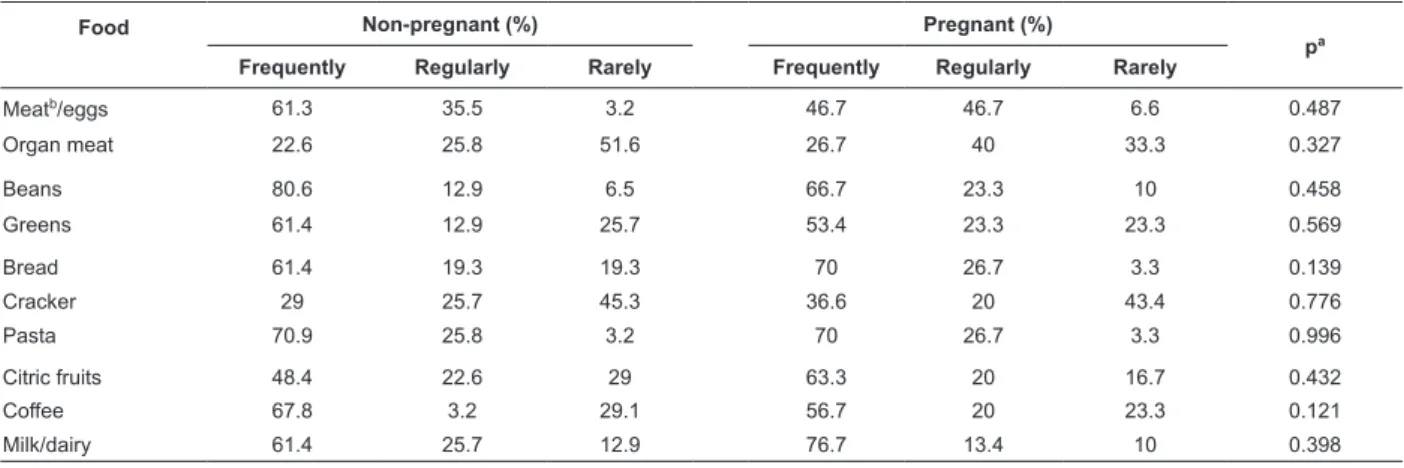
Table 2 presents the frequency of the food consumption distributed in the three proposed categories and no difference was found between the studied groups. Concerning the most frequent consumed iron natural sources, those of vegetal origin prevailed, especially beans. Meat and eggs were among the most consumed natural iron sources of animal origin.
Food Non-pregnant (%) Pregnant (%)
pa
Frequently Regularly Rarely Frequently Regularly Rarely
Meatb/eggs 61.3 35.5 3.2 46.7 46.7 6.6 0.487
Organ meat 22.6 25.8 51.6 26.7 40 33.3 0.327
Beans 80.6 12.9 6.5 66.7 23.3 10 0.458
Greens 61.4 12.9 25.7 53.4 23.3 23.3 0.569
Bread 61.4 19.3 19.3 70 26.7 3.3 0.139
Cracker 29 25.7 45.3 36.6 20 43.4 0.776
Pasta 70.9 25.8 3.2 70 26.7 3.3 0.996
Citric fruits 48.4 22.6 29 63.3 20 16.7 0.432
Coffee 67.8 3.2 29.1 56.7 20 23.3 0.121
Milk/dairy 61.4 25.7 12.9 76.7 13.4 10 0.398
Table 2 – Percentage of frequency of reported consumption of selected foods according to the group of non-pregnant and pregnant women. São Paulo, SP, Brazil, 2007
aChi-square test between non-pregnant and pregnant women distributed in three categories of frequency. bIncluded red meat, poultry and ish
Among those foods the main ingredient of which
was wheat lour, bread was reported most by the
frequently consumed by 70% of the women, that is, at least once a week. There was no report of consumption of corn-based foods (Table 2).
Citric fruits, which improve the absorption of iron, were not consumed daily by all women, though coffee and milk, potential inhibitors of iron absorption, were ingested at least once a day by the majority of the studied women (Table 2).
Around 80% of the women had dinner and its composition was similar to that of lunch. The distribution of food by meals between the groups was very similar,
though, the pregnant women presented a signiicantly
higher (p<0.05) consumption of fruits/natural juices at lunch and afternoon snack, and milk and dairy products at breakfast (Table 3).
Table 3 – Distribution of women according to the most frequently ingested foods in the main daily meals. São Paulo, SP, Brazil 2007
Meal
Non-pregnant women Pregnant women
p valuea n (%) n (%) reported habitual food n (%) n (%) reported habitual food
Breakfast 31 (100) 30 (100)
Coffee/tea 23(74.2) 22(73.3) 0.829
Bread/cracker (wheat flour) 21(67.7) 26(86.7) 0.146
Milk and dairy productsa 19(61.3) 26(86.7) 0.049
Fruits/natural juices 8(25.8) 5(16.7) 0.576
Morning snack 11 (36) 12 (40)
Coffee/tea 2(18.2) 1(8.3) 0.590
Bread/cracker (wheat flour) 5(45.4) 5(41.7) 0.999
Fruits/natural juices 7(63.6) 7(58.3) 0.999
Lunch 29 (94) 30 (100)
Rice 26(89.6) 27(90) 0.999
Beans 25(86.2) 24(80) 0.730
Meats 24(82.7) 28(93.3) 0.254
Bread/ pasta (wheat flour) 5(17.2) 6(20) 0.950
Salads 13(44.8) 19(63.3) 0.244
Fruits/natural juices 10(34.5) 24(80) 0.001
Coffee/tea/soft drinks 7(24.1) 2(6.7) 0.079
Afternoon snack 17 (55) 23 (77)
Coffee/tea 8(47) 2(8.7) 0.009
Bread/cracker (wheat flour) 10(58.8) 14(60.8) 0.844
Milk and dairy 3(17.6) 12(52.2) 0.057
Fruits/natural juices 4(23.5) 16(69.5) 0.010
Dinner 26 (84) 24 (80)
Rice 18(69.2) 19(79.1) 0.632
Beans 15(57.7) 13(54.1) 0.972
Meats 17(65.4) 20(83.3) 0.261
Bread/pasta (wheat flour) 6(23.1) 2(8.3) 0.250
Salads 7(26.9) 12(50) 0.165
Eggs 4(15.4) 4(16.7) 0.999
Fruits/natural juices 2(7.7) 7(29.1) 0.069
Coffee/tea/soft drink 7(26.9) 3(75) 0.293
Sandwiches 3(11.5) 5(20.8) 0.456
Evening snack 13 (42) 11 (37)
Coffee/tea 5(38.4) 4(36.3) 0.999
Bread/cracker (wheat flour) 5(38.4) 2(18.2) 0.386
Milk and dairy 4(30.7) 4(36.3) 0.999
Fruits/natural juices 3(23.1) 3(27.3) 0.999
Rev. Latino-Am. Enfermagem 2010 Mar-Apr; 18(2): 247-54.
Table 4 presents daily-recommended intake, average consumption of selected nutrients and
percentage of nutritional adequacy. We veriied that the pregnant women presented a signiicantly higher
average consumption of ascorbic acid, folate and calcium (p<0,05). Despite the higher ingestion of calcium among pregnant women, the adequacy level for calcium was low in this group (63%), though it
was signiicantly higher than among non-pregnant
women (48%). The level of adequacy for folate was
very low for both groups (38%), though with the
estimated additional intake, provided the fortiication
of foods is being carried out as recommended by law, adequacy passes the 50% mark. Iron presented similar average consumption between groups. Since the recommendation increases by 50% for pregnant women, even if iron is being added as recommended by law, the percentage of adequacy for this group is
signiicantly lower (p<0.05), about two thirds of the
recommended amount.
Table 4 – Daily recommended consumption, average consumption and consumption adequacy of selected nutrients of the studied women. São Paulo, SP, Brazil 2007
Nutrients
Non-pregnant Pregnant
pb pc
DRIa Average Adequacy (%) DRIa Average Adequacy (%)
Ascorbic acid (mg) 75 91 121 85 189 222 0.005 0.015
Folate (mcg) 400 154(+180)d 38(84)e 600 229(+180)d 38(68)e 0.003 0.96
Calcium (mg) 1000 475 48 1000 633 63 0.026 0.026
Iron (mg) 18 12.4(+5.1)d 69(97)e 27 13.6(+5.1)d 51(69)e 0.352 0.009
a DRI – Dietary Reference Intakes (Institute of Medicine 2004).
b Student t-test of average of consumption of nutrients between non-pregnant and pregnant women c Student t-test of average of adequacy between non-pregnant and pregnant women
d The values between parentheses represent the additional recommended by law.
e The values between parentheses represent the consumption adequacy, considering the recommended addition.
Discussion
As part of a larger project, this study compared the
eating habits and consumption of natural and fortiied
sources of iron in pregnant and non-pregnant women in reproductive age attending a public health service of a large city, and, thus, does not allow generalizations. Additionally, the food consumption of a single day was evaluated, which may not represent the individuals’ usual consumption(18). However, the 24-hour recall provides
detailed information of the types of foods consumed and their quantities. It is worth noting that a food frequency questionnaire was concomitantly applied in order to measure the ingestion of nutrients(13). Another limitation
to be mentioned is that the quantity of iron and folate
added in fortiied foods was estimated considering that
the quantities recommended by law and by another study(16) were being complied with.
Iron deiciency anemia is present in all social
groups, though it is closely related to poverty, lower educational level and poorer life conditions(2), which is the proile of the majority of women cared for by public
health services in Brazil.
It is important to highlight that there are two types of iron in food and they have different bioavailability. The heme iron, found in food of animal origin (muscle
tissue, liver, poultry and ish) in the form of hemoglobin
and myoglobin is more easily absorbed by the intestinal mucosa. The non-heme iron, found in food of vegetal origin (beans, soy, greens such as kale and spinach) has lower bioavailability and is affected by chemical or food factors(19).
Among the iron natural sources, food of vegetal origin prevailed in the diets of both groups, especially beans.
Meat, ish, poultry and eggs were also daily ingested though less frequently, as veriied in other studies(7-8,20).
The proportion of reported liver consumption of at least once a week is surprising because it is a food rich in heme iron but little consumed by Brazilians. Nevertheless this result is similar to that found by another study carried out with pregnant women(20).
Contrary to what generally is observed in Brazil(21),
greens, citric fruits and milk were part of the daily diet of the majority of the studied women. Citric fruits are rich in ascorbic acid and are known for facilitating iron absorption. However, in order to increase the absorption of iron of vegetal origin (non-heme iron) they should to be ingested daily with the main meals: lunch and dinner(19). The frequent presence of fruits/juices in
with the main meals of all women in reproductive age should be reinforced.
In turn, coffee and milk are identiied as potential
iron absorption inhibitors, but this action is only observed when large quantities of these substances are consumed in the same meal as the iron(19). The high frequency of milk consumption among pregnant women has been veriied
by other studies(5,7-8,20). However, despite three quarters of
pregnant women and two thirds of non-pregnant women reported daily consumption of milk, the percentage of calcium adequacy did not even reach 50% of the recommended amount for the non-pregnant group.
The iron-fortiied foods were clearly present in
all women’s diets, while bread was ingested daily and pasta was ingested weekly by more than two thirds
of women, results that corroborate the indings of
other researchers(7-8,16,20-21). A study that evaluated the consumption by pregnant women of food fortiied with
iron revealed that the most consumed items were bread, crackers, cakes, pasta and couscous(16).
It is important to highlight that the consumption of corn was not reported in the 24-hour recall, not as the main ingredient (polenta) or even as an ingredient in cakes and breads. There are probably regional
speciicities in Brazilian diets, nevertheless, another
study carried out in Brasília also found that more than 70% of the 456 studied pregnant women rarely ingested these foods(16).
Considering an additional 5.1mg of iron, based on an average consumption of 120 grams/day of wheat-based food(16), provided the law is being complied with,
the non-pregnant women reach the daily recommended dose of iron (97% adequacy) but the pregnant women do not (69% adequacy). However, this study does not analyze the quantity of iron added in wheat, suggesting the need for further studies especially designed to determine that level.
The results revealed that the consumption of iron,
not considering the additional fortiication of wheat, did not reach the daily-recommended amount, which justiies
an iron fortiication and supplementation program as well
as the concern of researchers and health workers over the consumption of this nutrient by women, especially pregnant women. We stress that other studies obtained the same results in relation to the inadequacy of iron in pregnant women(7-8).
The constant presence of wheat lour byproducts in
the daily diet of the interviewed women indicates that
these foods are appropriate for being fortiied with iron. Another study conirming this fact, however, stresses
that attention should be paid to the added quantity and the bioavailability of iron compounds used in the supplementation of these foods(16).
Final considerations
We observed that non-pregnant women it into the
iron recommendation considering that the minimum quantity of iron recommended by law is really present in
the lour fortiied with iron. The same was not observed
in relation to the pregnant women who, even with the
high consumption of natural sources of iron and lour fortiied, did not meet the high requirement of iron. This
fact corroborates the need for iron supplements during pregnancy.
These results suggest that the Fortiication of
Wheat and Corn Flours represents an advance in the
control of iron deiciency. However, it does not seem to be suficient to meet daily iron requirements during
pregnancy, which reinforces the need for combined
strategies: food fortiication, iron supplementation and
nutritional education.
It should be highlighted the importance of providing nutritional orientation in women’s health care,
in general, especially to prevent iron deiciency and
minimize its risks. The role of health professionals is to inform patients about sources of iron and ways to improve its absorption, clarify concerning the risks of anemia and the importance to take iron supplements during pregnancy.
References
1. World Health Organization. Iron deficiency anaemia. Assessment, preventing, and control. A guide for programme managers. Geneva; 2001 [Acesso em: 21 novembro 2008].
Disponível em: http://whqlibdoc.who.int/hq/2001/WHO_
NHD_01.3.pdf
2. Batista M Filho, Souza AI, Bresani CC. Anemia como problema de saúde pública: uma realidade atual. Ciênc Saúde Colet. 2008 novembro/dezembro;13(6):1917-22.
3. Ministério da Saúde (BR). Pesquisa Nacional de Demografia
e Saúde da Criança e da Mulher. Relatório Final 2006. Brasília: Ministério da Saúde; 2008.
4. Bothwell TH. Iron requirements in pregnancy and strategies to meet them. Am J Clin Nutr 2000 July; 72(1):257-64.
5. Fujimori E, Laurenti D, Núñez de Cassana LM, Oliveira
Rev. Latino-Am. Enfermagem 2010 Mar-Apr; 18(2):247-54.
Paulo, Brasil. Arch Latinoam Nutr março 1999; 49(1):8-12.
7. Azevedo DV, Sampaio HAC. Consumo alimentar de gestantes
adolescentes atendidas em serviço de assistência pré-natal. Rev
Nutr. julho/setembro 2003; 16(3):273-80.
8. Barros DC, Pereira RA, Gama SGN, Leal MC. O consumo alimentar de gestantes adolescentes no Município do Rio de Janeiro. Cad Saúde Pública. 2004; 20(Supp l):121-9.
9. Ministério da Saúde (BR). Agência Nacional de Vigilância
Sanitária. Regulamento Técnico para a Fortificação das Farinhas
de Trigo e das Farinhas de Milho com Ferro e Ácido Fólico.
Resolução RDC nº 344, de 13 de dezembro de 2002. Diário
Oficial da União, de 18 de dezembro de 2002. [Acesso em: 15 julho 2008]. Disponível em: http://e-legis.anvisa.gov.br/leisref/ public/showAct.php?id=1679&word=RDC
10. Engstrom JL, Sittler CP. Nurse-midwifery management of iron-deficiency anemia during pregnancy. J Nurse-Midwifery. 1994 March; 39(Supp 2):20-32.
11. Barros SMO, Costa CAR. Consulta de Enfermagem a gestantes com anemia ferropriva. Rev Latino-am Enfermagem outubro 1999; 7(4):105-11.
12. Ministério da Saúde (BR). Vigilância alimentar e nutricional.
Orientações básicas para a coleta, o processamento, a análise de dados e a informação em serviços de saúde. Brasília: Ministério
da Saúde; 2004.
13. Bertin RL, Parisenti J, Di Pietro PF, Vasconcelos FAG.
Métodos de avaliação do consumo alimentar de gestantes: uma
revisão. Rev Bras Saúde Mater Infan. outubro-dezembro 2006; 6(4):383-90.
14. Philippi ST, Szarfarc SC, Latterza AR. Virtual Nutri [computer program], versão1.0, for Windows. São Paulo: Departamento de
Nutrição, Faculdade de Saúde Pública, USP; 1996.
15. Institute of Medicine. Dietary reference intakes. Tables of DRI values. [tabelas na internet].Washington (DC): National Academy Press; 2004. [Acesso em: 21 julho 2008]. Disponível em: http://www.iom.edu/?id=54417
16. Vasconcelos IAL, Cortes MH, Coitinho DC. Alimentos sujeitos
à fortificação compulsória com ferro: um estudo com gestantes. Rev Nutr março-abril 2008; 21(2):149-60.
17. Ministério da Saúde (BR). Secretaria de Atenção à Saúde. Coordenação Geral da Política de Alimentação e Nutrição. Guia alimentar para a população brasileira: promovendo a alimentação
saudável. Brasília: Ministério da Saúde; 2005. 236p.(Série A. Normas e Manuais Técnicos) [Acesso em: 28 julho 2008]; Disponível em: http://dtr2001.saude.gov.br/editora/produtos/ livros/pdf/05_1109_M.pdf
18. Fisberg RM, Slater B, Martini LA. Métodos de inquéritos alimentares. In: Fisberg RM, Slater B, Marchioni DML, Martini LA. Inquéritos alimentares: Métodos e bases científicos. Barueri (SP): Manole; 2005. p. 1-31.
19. Pereira RC, Diniz AS, Ferreira LOC. New findings on iron absorption conditioning factors. Rev Bras Saude Mater Infant outubro-dezembro 2004; 4(3):241-8.
20. Vitolo MR, Boscaini C, Bortolini GA. Baixa escolaridade como fator limitante para o combate à anemia entre gestantes. Rev Bras Ginecol Obstet junho 2006; 28(6):331-9.
21. Fundação IBGE. Pesquisa de orçamentos familiares 2002-2003. Primeiros resultados. Brasil e Grandes Regiões [documento
na internet]. Rio de Janeiro; 2004 [Acesso em: 21 novembro 2008]. Disponível em: http://www.ibge.gov.br/home/estatistica/ populacao/ condicaodevida/pof/2002/pof200220032aed.pdf
Received: Dec. 23st 2008