Abstract
Objective: To describe the clinical, hematological and radiographic characteristics of children hospitalized for Mycoplasma pneumoniae pneumonia.
Method: The study population consisted of 190 children between 3 months and 16 years old, hospitalized for radiographically conirmed pneumonia. Patients were divided into two groups, to wit: 95 children with Mycoplasma pneumoniae pneumonia, as diagnosed using the enzyme-linked immunosorbent assay (ELISA) method; and 95 children with pneumonia caused by other etiologic agents. Using a validated scoring system, the clinical, hematological and radiographic indings of both groups were compared to differentiate Mycoplasma pneumoniae pneumonia (group 1) from pneumonia caused by other etiologic agents (group 2), itself divided into two groups, bacterial (n = 75) and viral (n = 20).
Results: Mycoplasma pneumoniae pneumonia was found most often in girls (p < 0.01), older children (p < 0.01), and patients with dry cough (p < 0.01) and extrapulmonary manifestations (p < 0.01). The clinical, hematological and radiographic variables of Mycoplasma pneumoniae pneumonia (mean score = 6.95) scored between those found in bacterial (mean score = 8.27) and viral pneumonia (mean score = 0.90).
Conclusion: Results suggest that the scoring system can contribute to the presumptive diagnosis of Mycoplasma pneumoniae pneumonia and help differentiate pneumonic status caused by other etiologic agents.
J Pediatr (Rio J). 2010;86(6):480-487: Mycoplasma, Mycoplasma pneumoniae, pneumonia, radiography, children.
ORiginAl ARtiCle
Copyright © 2010 by Sociedade Brasileira de Pediatria480 introduction
Mycoplasma pneumoniae (MP) is a major etiologic
agent behind community-acquired pneumonia. The factors include poor familiarity with clinical status, lack
of quick and speciic exams during the initial stage (often unavailable in most practices), and dificulty culturing
said microorganisms in laboratories.1
Identifying the etiologic agent is a key challenge for
pneumonia. In everyday practice, clinicians usually resort to empirical treatment, since the agent is only identiied
in 40 to 60% of cases,2,3 and can sometimes not be the
sole case of the pneumonia.4,5 That’s why treatment is based on the epidemiological, clinical (especially age),
Clinical, radiographic and hematological characteristics
of
Mycoplasma pneumoniae
pneumonia
letícia Alves Vervloet,1 Paulo Augusto Moreira Camargos,2 Damião Ranulfo Fernandes Soares,3
gabriel Antônio de Oliveira,4 Janúncio nunes de Oliveira5
1. Doutoranda, Saúde da Criança e do Adolescente. Universidade Estadual de Campinas (UNICAMP), Campinas, SP, Brazil.
2. Professor titular, Departamento de Pediatria, Faculdade de Medicina, Universidade Federal de Minas Gerais (UFMG), Belo Horizonte, MG, Brazil. 3. Pós-graduado, Radiologia. Hospital Trousseau, Paris, France. Médico Radiologista, Hospital Infantil Nossa Senhora da Glória, Vitória, ES, Brazil. 4. Titular, Colégio Brasileiro de Radiologia. Médico Radiologista, Hospital Infantil Nossa Senhora da Glória, Vitória, ES, Brazil.
5. Especialista, Colégio Brasileiro de Radiologia. Radiologista, Hospital Infantil Nossa Senhora da Glória, Vitória, ES, Brazil. No conflicts of interest declared concerning the publication of this article.
Suggested citation: Vervloet LA, Camargos PA, Soares DR, de Oliveira GA, de Oliveira JN. Clinical, radiographic and hematological characteristics of Mycoplasma pneumoniae pneumonia. J Pediatr (Rio J). 2010;86(6):480-487.
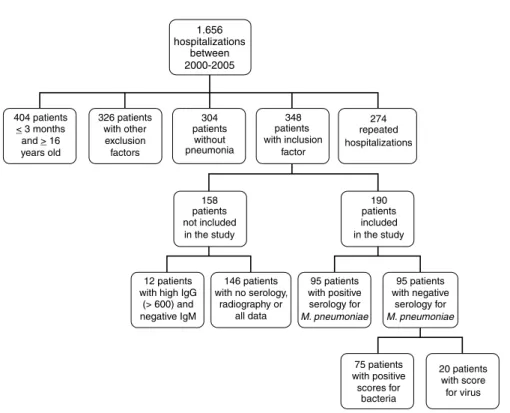
Figure 1 - Flowchart of inclusion, losses and exclusion of study population. Comparative study of patients suffering from Mycoplasma pneumoniae pneumonia and other etiologic agents radiographic and laboratory characteristics associated with
certain microorganisms. One should always include MP
in differential etiologic diagnosis of community-acquired pneumonia, including as coinfection, since it does not respond to the antibiotics habitually used in treatment, such as beta-lactam.6,7
MP does not grow in the media usually employed for
bacterial culture, and does not turn the media opaque when it does grow. Colonies formed in solid media cannot be seen under optical microscopes and, since they are
Gram-negative, cannot be detected by sputum bacterioscopy either. Therefore, diagnosis requires speciic exams; currently, the
most frequent are serological exams and the polymerase
chain reaction (PCR), with sensitivity and speciicity varying
according to the kit used.1
The objective of this study is to describe a clinical,
hematological and radiographic profile of children
hospitalized for MP pneumonia, comparing it to the proile
of pneumonia caused by other etiologic agents.
Method
This cross-sectional, observational study recruited in
sequence 190 children, ages 3 months to 16 years old, with
radiographically proven community-acquired pneumonia,
admitted to the pneumology department of Hospital Infantil
Nossa Senhora da Glória, Vitória, state of Espírito Santo,
Brazil (Figure 1). The public regional hospital is associated with the state department of health, and is a reference for urgent/emergency care and pediatric specialties, including pneumology and infectology.
Patients were divided into two groups, to wit: 1) 95 children with MP pneumonia; 2) 95 children with negative
results for the same test, and who therefore were suffering from pneumonia caused by other etiologic agents. Later, the score described by Moreno et al.8 was used to divide group
2 into two others, one suggestive of bacterial (n = 75) and the other of viral etiology (n = 20).
The study included patients ranging from 3 months to 16 years old, of both genders, suffering from
community-acquired pneumonia. Patients were excluded if their clinical and radiographic features suggested or conirmed
neurological and/or neuromuscular diseases, congenital
malformation, primary or acquired immunodeiciency,
cardiopathies, bronchopulmonary dysplasia, neoplasms,
Bronchiolitis Obliterans, cystic ibrosis, and other chronic
pulmonary diseases with pulmonary sequelae.
presence of positive IgM according to the enzyme-linked
immunosorbent assay (ELISA) method.
The study used the GenBio ImmunoWELL® (Gen Bio,
USA) kit, based on the identiication of IgG and IgM for MP. The product has 90% speciicity and 92% sensitivity during the acute stage when compared to PCR for MP.10 All laboratory
exams were done at the hospital’s regular lab, performed by a technician unaware of the clinical, hematological and radiographic characteristics of the patients in the study.
The score described by Moreno et al.8 was used to analyze the characteristics of the pneumonia. The score is a clinical, radiolographic and hematological scale, originally
conceived to make presumptive assessments of whether a pneumonic status had viral or bacterial etiology, but which,
for the sake of analysis, was applied to the two groups
described above.
The score consists of age, axillary temperature, absolute neutrophil count, and percent bands, and radiographic
aspect. The score ranges from -3 to 15; values equal to or greater than 4 indicate bacterial etiology, while viral status
can be suspected when the score is equal to 3 points or less. Therefore, axillary temperature≥ of 39 ºC equals 3
points; age ≥ 9 months equal 2 points; absolute neutrophil count ≥ 8,000 cells/mm3 equals 2 points; and 1 point for
bands ≥ 5%.
Radiographic aspects can be divided into iniltrate type (Well-deined, lobular, segmental, subsegmental (rounded) = 2; poorly deined, patchy = 1; interstitial, peribronchial = -1), location (single lobe or multiple lobes in one or both lungs, but well-deined as in iniltrates = 1; multiple lobes, perihilar, poorly deined = -1), luid in pleural space (minimal = 1; obvious luid = 2), abscess, bullae, or pneumatocele (equivocal = 1; evident = 2), and presence of atelectases (subsegmental, usually multiple = -1; lobar, involving right midium lobe or right upper lobe = -1; lobar in other lobes = 0). The cutoff point of 4 is 100% sensitive and 93.8% speciic, with positive predictive value of 75.8% and negative of 100% for bacterial etiology. Beware, however, that the score was developed using only the etiological survey of typical viruses and germs, which did not include MP.8
Chest X-rays were analyzed by a radiologist with more
25 years of experience in pediatric radiology and who had
no knowledge of clinical and hematological characteristics
or of ELISA results for MP.
Clinical, hematological and radiographic differences,
as well as the score for both groups (MP pneumonia and
pneumonia from other etiologic agents) were analyzed using the chi-square test, Fisher’s exact test, Student’s t test, and Mann-Whitney test. Signiicance, i.e., probability at which the null hypothesis is rejected, was set at 0.05 or 5% (
a
< 0.05).The study was approved by the research ethics committee of the hospital (protocol number 34/04) and of Universidade
Federal de Minas Gerais (protocol ETIC 0421/06).
Results
Table 1 contains descriptive characteristics from both groups. Age was below 5 years old for 75.8% of patients with MP pneumonia and 86.3% for patients with pneumonia
caused by other etiologic agents; the difference in mean
age was statistically signiicant (p < 0.01). Female gender was more common for the group positive for MP (p < 0.01). There was no statistically signiicant difference in disease course (p = 0.53), hospitalization time (p = 0.25), use of mechanical ventilation (p = 0.36), and number of deaths (p = 0.62). Among the signs and symptoms present upon
admission, only dry cough, present predominantly in the
positive group, was statistically signiicant (p < 0.01)
(Table 1).
Table 2 compares the frequency of extrapulmonary
manifestations in both groups with statistically signiicant
differences (p < 0.01), especially in terms of cardiac
alterations (p = 0.02).
Comparison between groups with MP pneumonia and pneumonia caused by other etiologic agents with score suggestive of bacterial condition
There was no statistically signiicant difference between
the presence of children younger than 9 months old in the
group positive for MP (n = 95) and the group with scores suggestive of bacteria (n = 75). The presence of fever with temperatures ≥ 39 ºC was more frequent in the group with scores suggestive of bacterial pneumonia (p = 0.02). Regarding presence of anemia (deined as hemoglobin ≤ 11 g/dL), leukocytes ≥ 12,000 cells/mm3 and neutrophils
≥ 8,000 cells/mm3, there was no statistically signiicant
difference. However, the presence of immature neutrophils above 5% was highest in the group suggestive of bacterial
pneumonia (p < 0.01) (Table 3).
Comparison of radiographic aspects shows that MP had higher frequency of poorly deined or diffuse and interstitial iniltrate; and the other group had greater lobar and lobular aspect at a statistically signiicant rate (p = 0.03). Pleural
effusion was present in both groups, but the group with score
suggestive of bacterial pneumonia had it at higher rates (p = 0.03) and also more apparent (p < 0.01) (Table 3).
The difference between the scores of the two groups
M. pneumoniae Pneumonia from other
pneumonia etiologic agents
Variables n = 95 (%) n = 95 (%) p
Age 44.39±39.83 (27; 5-167) 29.98±37.41 (14; 4-183) < 0.01
< 5 years 72 (75.8) 82 (86.3) 0.06
< 9 months 8 (8.4) 26 (27.4) < 0.01
Female 59 (62.1) 38 (40.0) < 0.01
Disease course 10.66±16.86 (6; 1-120) 8.76±7.82 (6; 1-45) 0.53
Signs/symptoms
Dyspnea 82 (86.3) 79 (83.1) 0.54
Dry cough 58 (79.4) 37 (49.3) < 0.01
Wheezing 48 (50.5) 45 (47.3) 0.66
Nausea/vomiting 22 (23.1) 29 (30.5) 0.25
Coryza 21 (22.1) 30 (31.5) 0.14
Temperature ≥ 39 ºC 17 (17.9) 25 (26.3) 0.16
Chest pain 18 (18.9) 11 (11.5) 0.15
Diarrhea 14 (14.7) 9 (9.4) 0.26
Abdominal pain 12 (12.6) 10 (10.5) 0.65
Hospitalization time 17.73±13.08 (14; 2-88) 15.97±12.42 (12; 3-74) 0.25
Mechanical ventilation 22 (23.1) 17 (17.9) 0.36
Death 1 (1.0) 3 (3.1) 0.62
table 1 - Comparison between patients with Mycoplasma pneumoniae pneumonia and those with pneumonia from other etiologic agents
Pneumonia from other agents
extrapulmonary MP pneumonia total Bacteria Virus
manifestations (n = 95) (n = 95) p* (n = 75) p† (n = 20) p‡
Alterations present 49 (51.58) 21 (22.11) < 0.01 16 (21.3) < 0.01 5 (25.0) 0.03
Cardiac 14 (14.74) 5 (5.26) 0.02 4 (5.3) 0.04 1 (5.0) 0.21
Upper airways 8 (8.42) 3 (3.16) 0.12 2 (2.7) 0.10 1 (5.0) 0.51
Digestive 7 (7.37) 5 (5.26) 0.55 3 (4.0) 0.27 2 (10.0) 0.48
Neurological 6 (6.32) 3 (3.16) 0.49 2 (2.7) 0.22 1 (5.0) 0.64
Renal 6 (6.32) 2 (2.11) 0.27 2 (2.7) 0.22 0 (0.0) 0.30
Dermatological 4 (4.21) 1 (1.05) 0.36 1 (1.3) 0.26 0 (0.0) 0.46
Hematologic 3 (3.16) 1 (1.05) 0.62 1 (1.3) 0.40 0 (0.0) 0.56
Articular 1 (1.05) 1 (1.05) 1.00 1 (1.3) 1.00 0 (0.0) 0.82
table 2 - Comparison between primary extrapulmonary manifestations of patients with Mycoplasma pneumoniae pneumonia and those with pneumonia from other etiologic agents
MP = Mycoplasma pneumoniae.
* Comparison between group with MP pneumonia and without MP.
† Comparison between group with MP pneumonia and score for bacteria. ‡ Comparison between group with MP pneumonia and score for virus.
Comparison between groups with MP pneumonia and pneumonia caused by other etiologic agents with score suggestive of viral condition
The presence of children younger than 9 months old was
equal to 8.4% in the group with positive serology for MP
Pneumonia from other agents
MP pneumonia Bacteria Virus
Variables (n = 95) (n = 75) p* (n = 20) p†
Clinical and laboratory
Age 44.39±39.83 34.52±38.89 0.01 12.95±25.39 < 0.01
≥ 9 months 87 (91.6) 65 (86.7) 0.30 4 (20.0) < 0.01
Temperature ≥ 39 ºC 17 (17.9) 25 (33.3) 0.02 0 (0.0) 0.02
Leukocytes ≥ 12,000 cells/mm3 64 (67.4) 43 (57.3) 0.17 7 (35.0) < 0.01
Neutrophils ≥ 8,000 cells/mm3 59 (62.1) 45 (60.0) 0.77 2 (10.0) < 0.01
Immature neutrophils ≥ 5 (%) 45 (47.4) 53 (70.7) < 0.01 4 (20.0) 0.02
Radiographic aspect
Iniltrate 0.03 < 0.01
Lobar, lobular 48 (50.5) 53 (70.7) 4 (20.0)
Poorly deined 35 (36.9) 15 (20.0) 5 (25.0)
Diffuse, interstitial peribronchial 10 (10.5) 4 (5.3) 11 (55.0)
Undeined 2 (2.11) 3 (3.16) 0 (0.0)
Location 0.16 < 0.01
Single or multiple lobes, well deined 80 (84.2) 68 (90.6) 9 (45.0)
Multiple perihilar lobes, poorly deined 13 (13.7) 4 (5.3) 10 (50.0)
Undeined 2 (2.11) 3 (3.16) 1 (5.0)
Pleural effusion
Present 39 (41.05) 43 (57.33) 0.03 < 0.01
Minimal 9 (9.5) 0 (0.0) < 0.01 1 (5.0) < 0.01
Apparent 30 (31.6) 43 (57.3) 0 (0.0)
Abscesses, pneumatoceles and bullae
Present 11 (11.57) 6 (8.0) 0.43 0.20
Doubtful 1 (1.1) 0 (0.0) 0.56 0 (0.0) 0.27
Evident 10 (10.5) 6 (8.0) 0 (0.0)
Atelectases
Present 13 (13.7) 3 (4.0) 0.03 0 (0.0) 0.12
Subsegmental (usually multiple) or lobar
(upper and right-middle lobe) 7 (7.4) 2 (2.7) 0.09 0 (0.0) 0.21
Lobar (other lobes) 6 (6.3) 1 (1.3) 0 (0.0)
Score, mean and standard deviation 6.95±3.13 8.27±2.79 < 0.01 0.90±1.65 < 0.01
table 3 - Comparison between patients positive for Mycoplasma pneumoniae and patients negative for Mycoplasma pneumoniae with score suggestive of bacterial and viral conditions
MP = Mycoplasma pneumoniae.
* Comparison between group with MP pneumonia and score for bacteria.
† Comparison between group with MP pneumonia and score for virus. The presence of leukocytes ≥ 12,000 cells/mm3 and
neutrophils ≥ 8,000 cells/mm3 was larger in the group
positive for MP (both with p < 0.01), as well as the presence of bands ≥ 5% (p = 0.02) (Table 3).
Comparison of radiographic aspects shows that the
group with scores suggestive of viral pneumonia had more diffuse, interstitial and peribronchial iniltrate, located in multiple lobes, perihilar, poorly deined, and with absence
of apparent pleural effusion (all p < 0.01) (Table 3).
The difference between the scores of the two groups
was statistically signiicant (p < 0.01). The group with MP pneumonia had a score ranging from 0 to 15 points, with
mean and standard deviation of 6.95±3.13 and a median of 7; the group with viral scores ranged from -2 to -3 points, with mean and standard deviation of 0.90±1.65 and a
median of 1 (Table 3).
Discussion
In terms of clinical variables, mean age was highest in the group suffering from MP pneumonia. Age is an important
predictor of etiologic agent in pneumonia.11,12 According to
the British Thoracic Society,2 bacterial pneumonia is most
hospitalized children had mean ages of 29.5 months for typical bacterial, 60.2 months for MP, and 18.5 months for viruses.13
In the MP group, 75.8% of cases were of patients younger than 5 years old. According to the literature, MP can strike
patients regardless of age. Waris et al.14 found that 21% of
patients with MP pneumonia among children younger than 5 years old. Esposito et al.,15 in a survey of 196 children younger than 5 years old, found Streptococcus pneumoniae in 24.5% and MP in 15.3% of children. Though frequency
is lower in that age range, this is also the group for which hospitalization is most frequent. In Finland, in 2004, Korppi et al.13 found hospitalization rates of 67% for children
younger than 4 years old, 5% for children 5 to 9 years old,
and 9% for children 10 to 14 years old. The present study assessed only hospitalized children, which explains its large
share of subjects younger than 5 years old.
In this study, female patients were more common in the
MP positive group. This matches the work by
Heiskanen-Kosma et al.,16 who describe higher rates of incidence for
female (2.1 cases/1,000 children/year) rather than male (1.3 cases/1,000 children/year) patients.
In MP pneumonia, symptoms usually appear gradually
and can persist for weeks or months.17 Disease course was
longest in the positive serology group (120 days), compared to the 45 days of the negative serology group. Dry cough was most frequent in the positive serology group. According to the literature, when the MP infection is located in the
trachea, bronchi and bronchioles, the result is constant,
uncontrollable, nonproductive coughing, awakening the patient in the middle of the night and preventing them from
going back to sleep.17 We should stress that the absence
of this symptom does not rule out MP infection, and that absence of coughing was greater for the positive serology group (22.11%) than for negative cases (13.68%).
Fever above 39 °C suggests bacterial infection, while low intensity fever is usually associated with viral infections.18 In this study, fever in MP pneumonia was lower than in bacterial infections and higher than in viral ones.
Increased bands immature neutrophil count in patients
without MP is caused by more acute statuses. In MP pneumonia, symptoms usually have a more insidious onset, a fact relected in blood tests.17 Leukocytes ≥ 12,000 cells/ mm3 are not statistically different among groups, but the
variable is not part of the score.8
The presence of extrapulmonary manifestations in MP infections is well documented in the literature. Practically any organ can suffer from MP infections, though the
respiratory tract is their primary target. According to the
literature, approximately 25% of patients hospitalized for MP infections can have extrapulmonary complications at
some point of the disease course. The pathogeny of those complications is unknown and can occur before, during
or after pulmonary manifestations and even in complete
absence of respiratory symptoms.17 In this study, 51.58%
of MP pneumonia cases had extrapulmonary manifestations, a number above descriptions in the literature, probably due to the severity of patient conditions and the characteristics
of the hospital to which patients were admitted. In
non-MP cases, only 22.11% of patients had extrapulmonary alterations (21.3% of patients with bacterial scores, 25% of those with viral scores). The most important manifestations were cardiac alterations, found predominantly in the positive group (14 cases, 14.75%, vs. 5 cases and 5.26% in the negative group).
Physicians treating children with pneumonia still have trouble deciding if the etiology is viral, bacterial or of some atypical germ, such as MP, and deining if antibiotics
should be administered or not. This is due to the need on the one hand to treat bacterial status with antibiotics to impact morbidity and mortality, and on the other to restrict
indiscriminate use of antibiotics in viral statuses, which can
lead to increased bacterial resistance. Another key point is
choosing which antibiotic to prescribe. The availability of serology or other speciic exams to diagnose MP pneumonia is poor in most practices; even when present, results may take too long. Therefore, knowledge of MP behavior can aid
the choice of antibiotics, since its lack of cell wall means it does not respond to beta-lactams.1
Thoracic radiography is very useful, and should be requested whenever possible for differential diagnosis and to aid the assessment of the extension and level of complication of the pneumonia. However, interpretation of
chest x-rays is highly dependent on the examiner.19 Usually,
an interstitial aspect suggests viral etiology, while an alveolar
pattern indicates bacterial status. But in a Finnish study of
215 children, bacterial infection was present in only 71% of the 137 children with alveolar iniltrate evident in thoracic radiography and half of the 77 patients with interstitial iniltrate. The authors concluded that most children with alveolar pattern pneumonia, especially those with lobar iniltrate, had laboratory evidence of bacterial etiology; however, interstitial iniltrate is present in both viral and
bacterial pneumonia.20
Scoring tables with radiographic characteristics provide parameters that help us differentiate between viral and
bacterial pneumonia. In 2000, Swingler21 performed a
systematic review of the literature to assess the differentiation of bacterial and viral infections in pediatric chest x-rays. In
that study, the Khamapirad & Glezen22 score achieved the
highest rates of sensitivity and speciicity (89 and 84%, respectively). The score by Moreno et al.8 was based on this pre-existing template; to the radiographic aspects were
added other clinical and hematological variables, which increased accuracy, resulting in 100% sensitivity and 93.8% speciicity, positive predictive value of 75.8% and negative
References
1. Vervloet LA, Marguet C, Camargos PA. Infection by Mycoplasma pneumoniae and its importance as an etiological agent in childhood community-acquired pneumonias. Braz J Infect Dis. 2007;11:507-14.
2. British Thoracic Society Standards of Care Committee. British Thoracic Society guidelines for the management of community acquired pneumonia in childhood. Thorax. 2002;57 Suppl 1:
i1-24.
3. McCracken GH Jr. Diagnosis and management of pneumonia in children. Pediatr Infect Dis J. 2000;19:924-8.
4. McIntosh K. Community-acquired pneumonia in children. N
Engl J Med. 2002;346:429-37.McIntosh K. Community-acquired
pneumonia in children. N Engl J Med. 2002;346:429-37.
5. Tsolia MN, Psarras S, Bossios A, Audi H, Paldanius M, Gourgiotis D, et al. Etiology of community-acquired pneumonia in hospitalized
school-age children: evidence for high prevalence of viral infections.
Clin Infect Dis. 2004;39:681-6.
6. Hammerschlag MR. Mycoplasma pneumoniae infections. Curr Opin Infect Dis. 2001;14:181-6.
7. Korppi M. Community-acquired pneumonia in children:
issues in optimizing antibacterial treatment. Paediatr Drugs.
2003;5:821-32.
8. Moreno L, Krishnan JA, Duran P, Ferrero F. Development and validation of a clinical prediction rule to distinguish bacterial from viral pneumonia in children.Pediatr Pulmonol. 2006;41:331-7. 9. World Health Organization. Dept. of Child and Adolescent Health
and Development; Unicef. Management of the child with a serious infection or severe malnutrition: guidelines for care at the irst referral level in developing countries. Geneva; WHO; 2000. 10. Petitjean J, Vabret A, Gouarin S, Freymuth F. Evaluation of four
commercial immunoglobulin G (IgG)- and IgM-speciic enzyme
immunoassays for diagnosis of Mycoplasma pneumoniae infections.
J Clin Microbiol. 2002;40:165-71.
11. Jadavji T, Law B, Lebel MH, Kennedy WA, Gold R, Wang EE.
A practical guide for the diagnosis and treatment of pediatric pneumonia. CMAJ. 1997;156:S703-11.
12. Michelow IC, Olsen K, Lozano J, Rollins NK, Duffy LB, Ziegler T, et al. Epidemiology and clinical characteristics of community-acquired pneumonia in hospitalized children. Pediatrics.
2004;113:701-7.
13. Korppi M, Heiskanen-Kosma T, Kleemola M. Incidence of community-acquired pneumonia in children caused by Mycoplasma
pneumoniae: serological results of a prospective, population-based
study in primary health care. Respirology. 2004;9:109-14.
14. Waris ME, Toikka P, Saarinen T, Nikkari S, Meurman O, Vainionpää R, et al. Diagnosis of Mycoplasma pneumoniae pneumonia in children. J Clin Microbiol. 1998;36:3155-9.
15. Esposito S, Bosis S, Cavagna R, Faelli N, Begliatti E, Marchisio P, et al. Characteristics of Streptococcus pneumoniae and atypical
bacterial infections in children 2-5 years of age with
community-acquired pneumonia. Clin Infect Dis. 2002;35:1345-52.
16. Heiskanen-Kosma T, Korppi M, Jokinen C, Kurki S, Heiskanen L, Juvonen H, et al. Etiology of childhood pneumonia: serologic results of a prospective, population-based study.Pediatr Infect Dis J. 1998;17:986-91.
17. Waites KB. New concepts of Mycoplasma pneumoniae infections
in children. Pediatr Pulmonol. 2003;36:267-78.
18. Russell G. Community acquired pneumonia. Arch Dis Child. 2001;85:445-6.
19. Davies HD, Wang EE, Manson D, Babyn P, Shuckett B. Reliability of the chest radiograph in the diagnosis of lower respiratory infections in young children. Pediatr Infect Dis J. 1996;15:600-4.
20. Virkki R, Juven T, Rikalainen H, Svedstrom E, Mertsola J, Ruuskanen O. Differentiation of bacterial and viral pneumonia in children.
Thorax. 2002;57:438-41.
21. Swingler GH. Radiologic differentiation between bacterial and viral
lower respiratory infection in children: a systematic literature review. Clin Pediatr (Phila). 2000;39:627-33.
When using the score8 to differentiate between positive
and negative serology for MP pneumonia, but with possible bacterial or viral etiology, clinical, laboratory and radiographic variables for MP pneumonia often have means somewhere between bacterial and viral processes, with more variables closer to those suggestive of bacteria than those suggestive of viruses. Mean scores8 for MP pneumonia are lower than those for bacterial pneumonia, but higher than for viral ones; however, they are closer to bacterial pneumonia scores.
In the literature, viral infection is also associated to the interstitial peribronchial and perihilar iniltrate aspect, and is rarely concurrent with pleural effusion. Alveolar disease,
consolidation, presence of aerial bronchogram, and pleural effusion are all characteristics of bacterial pneumonia.18,20,23
According to the literature, the radiographic aspect of MP lies between the viral and bacterial aspects.23 In the present
study, radiographic comparison showed that iniltrate was more lobar, lobular and well deined in pneumonia with scores suggestive of bacteria, more poorly deined in MP
pneumonia, and more diffuse, interstitial and peribronchial
in cases of likely viral etiology.
Pleural effusion was apparent in bacterial pneumonia,
almost absent in nonbacterial ones, and present, though
often minimal, in MP pneumonia. The literature includes a study which evaluated 81 children with pleural effusion,
which found Streptococcus pneumoniae in 20% of cases,
followed by MP in 18%.24
A potential limitation of this study is its population, which consists of inpatients at a tertiary hospital, often referred to it by other practices. The score used in the study was
developed based exclusively on a etiologic survey of viruses and typical bacteria, which did not include MP.
Results suggest some clinical, hematological and radiographic characteristics present in patients may
contribute to the presumptive diagnosis of MP pneumonia
and aid the process of differentiating it from cases cause by other etiologic agents.
In most cases, MP pneumonia scored between bacterial and viral pneumonia, though closer to the irst. Therefore, if resources to conirm the diagnosis of MP pneumonia are unavailable, a score suggestive of bacterial etiology and lack
of response to the antibiotics most commonly employed in the initial treatment for community-acquired pneumonia
raise the possibility of MP pneumonia. In these cases,
physicians should consider switching current antibiotics to macrolides.
Acknowledgments
To Victor Earl Vervloet and Mário Tironi Júnior, pediatric pneumologists at the Hospital Infantil Nossa Senhora da Glória pneumology department, for their assistance in
22. Khamapirad T, Glezen WP. Clinical and radiographic assessment of acute lower respiratory tract disease in infants and children.
Semin Respir Infect. 1987;2:130-44.
23. Donnelly LF. Maximizing the usefulness of imaging in children with community-acquired pneumonia. AJR Am J Roentgenol. 1999;172:505-12.
24. Shen YH, Hwang KP, Niu CK. Complicated parapneumonic effusion and empyema in children. J Microbiol Immunol Infect. 2006;39:483-8.
Correspondence: Letícia Alves Vervloet
Rua Eugênio Netto, 488 - sala 712 - Praia do Canto CEP 29055-270 – Vitória, ES – Brazil
Tel.: +55 (27) 3227.2825, +55 (27) 9234.0012 Fax: +55 (27) 3325.0489