Analysis of risk factors related to minor and major
lower limb amputations at a tertiary hospital
Análise dos fatores de risco relacionados às amputações maiores e menores
de membros inferiores em hospital terciário
Seleno Glauber de Jesus-Silva1
*
, João Pedro de Oliveira1, Matheus Henrique Colepicolo Brianezi1,
Melissa Andreia de Moraes Silva1, Arturo Eduardo Krupa1, Rodolfo Souza Cardoso1
Abstract
Background: Whether they are deined as minor or major, lower limb amputations constitute a severe health problem, causing high rates of morbidity and mortality and considerable social impact. Diferent patient clinical characteristics appear to be related to diferent types of amputations. Objectives: To analyze risk factors present in patients who underwent lower limb amputations at a tertiary hospital. Methods: his was a retrospective, cross-sectional study of 109 patients who underwent lower limb amputations over a period of 31 months, analyzing gender, age, 15 clinical data and ive laboratory parameters present at the time of admission. Data were treated with descriptive statistics and compared using Student’s t test for unpaired samples (for numerical variables), the Mann-Whitney test, or Fisher’s exact tests (for categorical variables). Results: here were 59 major and 50 minor amputations out of a total of 109 performed. he majority of patients were male (65%) and mean age was 65 years (range 39 to 93). Risk factors that were statistically (p < 0.05) more related to major amputations were advanced age, stroke, ischemia, sepsis, and low hemoglobin and hematocrit levels. Diabetes mellitus, neuropathy, and palpable distal pulses were factors more strongly associated with minor amputations. Conclusions: Lower limb amputations at diferent levels are related to diferent risk factors. Ischemia of greater severity and morbidity was associated with major amputations, while neuropathy and preserved perfusion were more often related to minor amputations.
Keywords: amputation; risk factors; ischemia; gangrene; diabetes mellitus; cross-sectional studies.
Resumo
Contexto: As amputações dos membros inferiores, sejam deinidas como maiores ou menores, são um grave problema de saúde, com altos índices de morbimortalidade e de relevante impacto social. Diferentes características clínicas dos pacientes parecem estar relacionadas aos diferentes tipos de amputação realizados. Objetivos: Analisar os fatores de risco presentes em pacientes submetidos a amputações de membros inferiores em hospital terciário.
Métodos: Estudo retrospectivo, transversal, envolvendo 109 pacientes submetidos a amputação de membro inferior em um período de 31 meses, através da análise de gênero e idade, 15 dados clínicos e cinco parâmetros laboratoriais presentes no momento da admissão. Os dados foram submetidos a estatística descritiva e comparativa através do teste t de Student não pareado (para variáveis numéricas), e dos testes de Mann-Whitney e exato de Fisher (para variáveis categóricas). Resultados: Das 109 amputações realizadas, 59 foram maiores e 50 menores. A maioria dos pacientes era do gênero masculino (65%), e a média de idade foi de 65 anos (mín. 39, máx. 93). Dentre os fatores de risco observados, idade avançada, acidente vascular encefálico, isquemia, sepse e níveis baixos de hemoglobina e hematócrito estavam estatisticamente mais relacionados às amputações maiores (p < 0,05). Diabetes melito, neuropatia e pulsos distais palpáveis foram fatores mais associados às amputações menores. Conclusões: Os níveis das amputações de membros inferiores estão relacionados a diferentes fatores de risco. Os quadros isquêmicos mais graves e de maior morbidade estiveram associados a amputações maiores, enquanto a neuropatia e perfusão preservada, mais relacionados às amputações menores.
Palavras-chave: amputação; fatores de risco; isquemia; gangrena; diabetes mellitus; estudos transversais.
1 Faculdade de Medicina de Itajubá – FMIt, Itajubá, MG, Brazil.
Financial support: Bolsa de Pesquisa de Iniciação Cientíica, Fundação de Amparo à Pesquisa de Minas Gerais (FAPEMIG). Conlicts of interest: No conlicts of interest declared concerning the publication of this article.
Submitted: October 02, 2016. Accepted: January 25, 2017.
INTRODUCTION
Limb amputation is one of the oldest treatment options available in medicine and consists of the total or partial removal, generally surgical, of an extremity. Estimates of incidence in the worldwide literature vary from 2.8 to 43.9/105 inhabitants/year,1 while in Brazil
an incidence of 13.9/105 inhabitants/year has been
observed. Lower limb amputations account for 85% of this total and have a major socioeconomic impact, with loss of the capacity to work, of socialization, and of quality of life, in addition to complications such as hematoma, infections, necrosis, contractures, neuromas, phantom pain, and re-admissions, making them a considerable public health problem.2-4
Overall, 80% of all lower limb amputations are performed on adults. The main associated risk factors are diabetes mellitus, arterial hypertension, smoking, dyslipidemia, advanced age, chronic renal failure, hypercoagulability, and genetic factors.5,6 Half of all
amputations are performed on diabetics,7 followed by
patients with non-diabetic atherosclerosis, massive arterial thrombosis and embolism. Diabetic patients with neuropathy and/or ischemia are more susceptible to ulceration and infection, which generally results in amputation.8 Traumatisms and malignant tumors
are responsible for, respectively, 10.6% and 5.8% of lower limb amputations.2 Despite the increase in
the number of revascularization interventions, some studies indicate that the prevalence of amputations has remained unaltered because of the increase in cases of atherosclerosis and diabetes mellitus and aging of the population.9
Major amputations are generally deined as those
performed above the level of the ankle, whether transtibial, transfemoral, knee disarticulations or hip disarticulations, while minor amputations are those restricted to the toes or at the level of the foot (whether transmetatarsal amputations, tarsometatarsal or Lisfranc disarticulations, or mid-tarsal or Chopart disarticulations).10 Minor amputations are generally
better accepted because they do not necessarily impose a need for prostheses to enable walking.11 Mortality
rates differ between the two groups, varying from 22% within 1 year for minor amputations12 to 21%
within 1 month up to 52% within 1 year for major amputations.13
The objective of this study is to determine the main risk factors associated with the different types of lower limb amputations (major and minor) in patients treated by a vascular and endovascular surgery team at a tertiary hospital.
MATERIALS AND METHODS
This was a retrospective study analyzing the medical records for 109 patients who underwent major or minor lower limb amputations between July 2013 and January 2016 at a vascular and endovascular surgery service in a tertiary hospital. The study was approved by the institution’s Research Ethics Committee under number 1.290.602. The sample size was calculated
to a signiicance level of α = 5% for a test power of β = 80%. Age, gender, 15 clinical data and ive
laboratory parameters were extracted from medical records and inserted in an electronic spreadsheet.
Systemic arterial hypertension was deined as
pressures greater than 140 × 90 mmHg or continuous use of antihypertensive drugs, diabetes mellitus as fasting glycemia > 106 mg/dL or use of hypoglycemiants, renal failure as creatinine clearance < 60mL/min or serum creatinine > 1.6 mg/dL, peripheral arterial occlusive disease as an ankle-brachial index < 0.9 or evident clinical signs of arterial occlusion, and neuropathy as presence of plantar trophic ulcers, bone deformity, or Charcot osteoarthropathy. Other parameters recorded were smoking; history of acute myocardial infarction or stroke; prior revascularization of the limb (irrespective of whether or not it was related to the current condition); prior amputation (any amputation at a level distal to that of the current
extremity); emboligenic arrhythmia – more speciically atrial ibrillation; evident infection of the limb (presence
of abscess, necrosis, suppuration, or plantar trophic ulcers with sequestration); sepsis; presence of pedal pulse and/or posterior tibial pulse; and systolic and
diastolic arterial blood pressures. Sepsis was deined
as presence of at least two of the following factors associated with evident infection: fever > 38 °C, heart rate > 90 beats per minute, tachypnea >20 breaths per minute and leukocytosis >12,000/mm3). Red and
white blood cell counts on admission were recorded, as were glycemia and creatinine levels. Before analysis, 15 patients with incomplete medical records were
excluded from the study and only the irst admission
for each patient was included.
Descriptive statistics were calculated for the subsets and then the two-tailed Student’s t test for unpaired samples (for numerical variables), the Mann-Whitney test or Fisher’s exact test (for categorical variables)
were applied. Associations between risk factors and
type of amputation were detected using Pearson’s linear correlation test. The statistical software employed was
RESULTS
There were 59 major and 50 minor amputations
out of a total of 109 performed. Among the major
amputations, 39 were transfemoral (21 on the left and 18 on the right) and 20 were transtibial (11 on the left and nine on the right). The minor amputations were two transtarsal, eight transmetatarsal, and 40 toe amputations.
The majority of patients were male (n = 71; 65%) and the mean age of the sample was 65 years (range = 39 to 93).
Six of the 59 major amputations were caused by acute arterial occlusion (10.1%) and the remaining 53 cases (89.8%) were the result of occlusive peripheral arterial disease and/or complications of the diabetic
foot. All the patients who had minor amputations had
decompensated atherosclerosis and/or an infected diabetic foot. There were 10 recorded deaths of patients who had had major amputations and no death of patients who underwent minor amputations, within a six-month period.
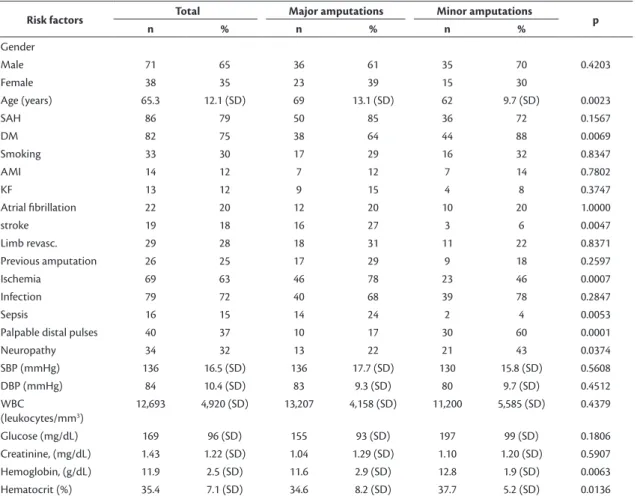
Table 1 lists the statistics for the risk factors studied, in the entire sample and in the subsets. The prevalence of prior revascularization of the limb did not differ between groups (major amputations
31% vs. minor amputations 22%, p = 0.83).
Comparative analysis of the two types of amputations revealed a tendency for major amputations to be more strongly associated with ischemia and less so with infection, while the opposite was observed for minor amputations (Figure 1).
The results for Pearson’s linear correlation test between risk factors and type of amputation are shown in Table 2. Advanced age, stroke, ischemia, sepsis, and secondary amputation were more strongly related to major amputations, while diabetes mellitus, neuropathies, palpable distal pulses, and higher levels of hemoglobin and hematocrit were more likely to be present in patients who underwent minor amputations.
Table 1. Epidemiological characteristics and risk factors in the whole sample and in each of the subsets analyzed.
Risk factors Total Major amputations Minor amputations p
n % n % n %
Gender
Male 71 65 36 61 35 70 0.4203
Female 38 35 23 39 15 30
Age (years) 65.3 12.1 (SD) 69 13.1 (SD) 62 9.7 (SD) 0.0023
SAH 86 79 50 85 36 72 0.1567
DM 82 75 38 64 44 88 0.0069
Smoking 33 30 17 29 16 32 0.8347
AMI 14 12 7 12 7 14 0.7802
KF 13 12 9 15 4 8 0.3747
Atrial ibrillation 22 20 12 20 10 20 1.0000
stroke 19 18 16 27 3 6 0.0047
Limb revasc. 29 28 18 31 11 22 0.8371
Previous amputation 26 25 17 29 9 18 0.2597
Ischemia 69 63 46 78 23 46 0.0007
Infection 79 72 40 68 39 78 0.2847
Sepsis 16 15 14 24 2 4 0.0053
Palpable distal pulses 40 37 10 17 30 60 0.0001
Neuropathy 34 32 13 22 21 43 0.0374
SBP (mmHg) 136 16.5 (SD) 136 17.7 (SD) 130 15.8 (SD) 0.5608
DBP (mmHg) 84 10.4 (SD) 83 9.3 (SD) 80 9.7 (SD) 0.4512
WBC
(leukocytes/mm3)
12,693 4,920 (SD) 13,207 4,158 (SD) 11,200 5,585 (SD) 0.4379
Glucose (mg/dL) 169 96 (SD) 155 93 (SD) 197 99 (SD) 0.1806
Creatinine, (mg/dL) 1.43 1.22 (SD) 1.04 1.29 (SD) 1.10 1.20 (SD) 0.5907
Hemoglobin, (g/dL) 11.9 2.5 (SD) 11.6 2.9 (SD) 12.8 1.9 (SD) 0.0063
Hematocrit (%) 35.4 7.1 (SD) 34.6 8.2 (SD) 37.7 5.2 (SD) 0.0136
DISCUSSION
Limb amputations, whether at the level of the toes, or involving partial or total loss of the limb, impose clinical and social challenges on the patients subjected to them, although to different degrees. Determination of the clinical characteristics and risk factors of each group is fundamental to understanding the processes that culminate in limb loss.
Worldwide, incidence rates of amputation are variable.
A meta-analysis of publications from 1989 to 2010 found
incidence rates of 5.8 to 31 cases/105 inhabitants in the
general population and of 46.1 to 9,600 cases/105 inhabitants
among diabetics.14 A population-based study in
Brazil investigating 5,539 people who underwent major amputations observed an incidence of 9.7 cases/105 inhabitants in an age range of
30 to 89 years and of 29.5 cases/105 inhabitants aged 55 to 74 years and the igures were even higher for
diabetics (45.98 and 92.19 cases/105 inhabitants,
respectively).5 The mean age of patients studied was
similar to that for other population-based studies, at approximately 65 years.5,15
The same Brazilian population study observed a similar distribution of etiologies, with diabetes and chronic peripheral arterial disease present in the great majority of cases (90.7%), followed by trauma (5.6%), osteomyelitis (1.7%), gas gangrene (1.2%), and neoplasms (0.8%).5 In comparison, a
different Brazilian study investigating patients on a rehabilitation program observed higher numbers of traumatic causes (33%) and lower rates of vascular causes (51.5%).2 This difference was probably because
of the type of specialty and the patients involved, since patients referred for rehabilitation generally have less severe vascular disease and are younger. It is estimated that the true incidence of major limb amputations in Brazil is more related to vascular causes, due to the high prevalence of atherosclerotic disease and diabetes, with consequent lower rates of referral for rehabilitation.
The ratio of major to minor amputations was around 2:1, which is in contrast with the results of population studies, which have observed the inverse ratio of
1:2.16 Additionally, it is known that there is a wide
range of variation in amputation rates, depending on socioeconomic characteristics and access to medical care.17 We hypothesize that the scenario observed in the present study relects delays in access to medical care
and low socioeconomic status, which mean that many cases are admitted at a point at which preservation at the infrapatellar level is evidently impossible and revascularization attempts are equally futile.
With relation to the risk factors studied, it was observed that advanced age, previous stroke, prior amputation, sepsis, ischemia and anemia (low hemoglobin and hematocrit levels) were statistically more related to major amputations while diabetes, palpable distal pulses, and preexisting neuropathy were more related to minor amputations. These characteristics highlight the two groups’ distinct characteristics.
A retrospective study in Israel that analyzed
594 diabetics (53.2% of whom had undergone major amputations) reported anemia, leukocytosis, hypoalbuminemia, and reduced creatinine clearance
as factors signiicantly related to major amputations,
while higher glycosylated hemoglobin levels was the only factor related to minor amputations.18 A similar
comparative study of a 97-patient series in Holland observed stronger relationships between major amputations and stroke and prior revascularization of the limb.9 An intrahospital study in South Korea
revealed that dialysis, plantar ulcers with bone involvement, gastrointestinal disorders, ulcers of
Figure 1. Comparative graph illustrating types of amputations and primary etiologies. here was a higher prevalence of infection in the minor amputation subset and a higher prevalence of ischemia in the major amputation subset (Mann-Whitney test). Table 2. Pearson linear correlations between risk factors analyzed and type of surgery performed.
Risk factor r CI (min.-max.) p
Palpable distal pulses –0.4451 –0.58 –0.28 < 0.0001
Hemoglobin –0.2837 –0.45 –0.10 0.0028
Diabetes mellitus –0.2723 –0.44 –0.09 0.0041
Hematocrit –0.2585 –0.43 –0.07 0.0066
Neuropathy –0.2344 –0.40 –0.05 0.0141
Age 0.2893 0.11 0.45 0.0023
Stroke 0.2774 0.09 0.44 0.0035
Sepsis 0.2778 0.09 0.44 0.0034
Ischemia 0.3111 0.15 0.49 0.0004
the calcaneus, anemia, and abnormal glycemia were most related to amputations.19 Low HDL levels
have also been studied and implicated as prognostic factors for amputations at all levels in diabetics with plantar ulcers.20 In turn, arterial calciication and distal
vascular incompressibility in diabetics are considered prognostic factors of amputation equally as important as the ankle-brachial index.21
The present study identiied that reduced hematocrit
and hemoglobin levels were significantly more likely to be present in patients who underwent major amputations compared to those subjected to minor
amputations. A similar publication, involving only
patients with occlusive peripheral arterial disease,
observed a signiicantly higher risk of major amputation (odds ratio [OR] = 1.56) and of death and amputation (OR = 1.58) at 1 year among those with anemia,
in relation to those who had normal hemoglobin levels.22 On the other hand, the presence of anemia
associated with blood transfusions in patients who undergo amputation is also considered a negative prognostic factor for occurrence of complications such as pneumonia, venous thromboembolism, and prolonged hospital stay.23
In diabetics, local infections, with plantar ulcers, edema, and hyperemia, are known high-risk factors for amputations.8,24 However, the present study observed
that only sepsis was related to major amputations, irrespective of the presence of local infection. In these cases, the importance of taking a treatment decision immediately to prevent progression to septic shock and death cannot be overstated.
Chronic ulcers on a diabetic foot are an additional risk factor for development of necrotizing fasciitis and progression to amputation of the limb. It is estimated that necrotizing fasciitis affects up to 4.9% of diabetics, and that the probability of amputation reaches 72.4% in patients who also have plantar ulcers.25
The same study detected that hypoalbuminemia was a determinant factor for amputation, observing that albumin levels were lower in patients who underwent major amputations than in patients who had minor
amputations (2.3 g/dL vs. 2.6 g/dL, p = 0.002) and that high grades on the Wagner Classiication
(stages 4 and 5) had a stronger association with loss of the limb.
Rates of revascularization of the limb did not differ between the two groups (28% of the entire sample) and the prevalence of amputations was not lower among revascularized patients. However, the
beneits of revascularization in terms of incidence of
amputations has already been investigated in long-term studies.26-28 Notwithstanding, we conducted a linear
regression analysis that showed that the principal factor that determined progression to major or minor amputation was the initial vascularization status of the limb. Case-control studies would be better for determination with greater precision of the natural progression of revascularized and non-revascularized patients and the relationship between amputation and patency rates.
Several different studies have observed reductions in overall incidence of major amputations and related it to better control of diabetes (despite the increase in diabetes incidence) and better governmental public health strategies, such as creation of multidisciplinary teams for treatment of the diabetic foot and expansion of healthcare networks.10,14,15,29-31 The present
cross-sectional and single-center study was unable
to determine eficacy of public health initiatives with
relation to amputations.
Limitations of the present retrospective study include a lack of additional clinical variables for study, such as obesity, HDL, LDL, and glycosylated hemoglobin levels, and medication usage, which is partially because data collection was dependent on correct completion of hospital medical records. Short and medium-term mortality rates could not be considered accurate, which removes a possible source of relevant data on the impact of each type of amputation on survival. Mortality data has almost never been available from the medical record, except in cases of intrahospital deaths and of patients who regularly returned to outpatients for follow-up, since many of the patients analyzed were later treated in
their home towns, and notiication services were
not integrated. Rehabilitation (with prostheses) is another datum to which there was little access, because it is conducted at referral services in other towns. The prevalence rates of major comorbidities such as diabetes, hypertension, and kidney disease were higher in the present study than in other similar publications,25,32-34 which does not merely characterize
the study population as at high risk, but also underscores the lack of public services for preventative healthcare in the geographic area studied.
surgery, orthopedics, etc.) conducted with the objective of determination of short and medium-term mortality are fundamental to extending knowledge of the true impact of amputations on the patients under our care.
REFERENCES
1. Global Lower Extremity Amputation Study Group. Epidemiology of lower extremity amputation in centres in Europe, North America and East Asia. The Global Lower Extremity Amputation Study Group. Br J Surg. 2000;87(3):328-37. PMid:10718803. http://dx.doi. org/10.1046/j.1365-2168.2000.01344.x.
2. Caromano FA, Castelucci P, Lebre L, Takahashi SY, Tanaka C. Incidência de amputação de membro inferior, unilateral: análise de prontuários. Rev Ter Ocup USP. 1992;3(1/2):44-53.
3. Asano M, Rushton P, Miller WC, Deathe BA. Predictors of quality of life among individuals who have a lower limb amputation. Prosthet Orthot Int. 2008;32(2):231-43. PMid:18569891. http:// dx.doi.org/10.1080/03093640802024955.
4. Beaulieu RJ, Grimm JC, Lyu H, Abularrage CJ, Perler BA. Rates and predictors of readmission after minor lower extremity amputations. J Vasc Surg. 2015;62(1):101-5. PMid:25827965. http://dx.doi. org/10.1016/j.jvs.2015.02.021.
5. Spichler D, Miranda F Jr, Spichler ES, Franco LJ. Amputações maiores de membros inferiores por doença arterial periférica e diabetes melito no município do Rio de Janeiro. J Vasc Bras. 2004;3(2):111-22.
6. Husain K, Hernandez W, Ansari RA, Ferder L. Inflammation, oxidative stress and renin angiotensin system in atherosclerosis. World J Biol Chem. 2015;6(3):209-10. PMid:26322175. http:// dx.doi.org/10.4331/wjbc.v6.i3.209.
7. Gamba M, Gotlieb SL, Bergamaschi DP, Vianna LA. Lower extremity amputations in diabetic patients: a case-control study. Rev Saude Publica. 2004;38(3):399-404. PMid:15243670. http://dx.doi. org/10.1590/S0034-89102004000300010.
8. Lavery LA, Armstrong DG, Wunderlich RP, Mohler MJ, Wendel CS, Lipsky BA. Risk factors for foot infections in individuals with diabetes. Diabetes Care. 2006;29(6):1288-93. PMid:16732010. http://dx.doi.org/10.2337/dc05-2425.
9. Ploeg AJ, Lardenoye JW, Vrancken Peeters MPFM, Breslau PJ. Contemporary Series of morbidity and mortality after lower limb amputation. Eur J Vasc Endovasc Surg. 2005;29(6):633-7. PMid:15878543. http://dx.doi.org/10.1016/j.ejvs.2005.02.014.
10. Kolossváry E, Ferenci T, Kováts T, et al. Trends in major lower limb amputation related to peripheral arterial disease in hungary: a nationwide study (2004-2012). Eur J Vasc Endovasc Surg. 2015;50(1):78-85. PMid:25842279. http://dx.doi.org/10.1016/j. ejvs.2015.02.019.
11. Assumpção EC, Pitta GB, Macedo CL, et al. Comparação dos fatores de risco para amputações maiores e menores em pacientes diabéticos de um Programa de Saúde da Família. J Vasc Bras. 2009;8(2):133-8. http://dx.doi.org/10.1590/S1677-54492009000200006.
12. Fortington LV, Geertzen JHB, van Netten JJ, Postema K, Rommers GM, Dijkstra PU. Short and long term mortality rates after a lower limb amputation. Eur J Vasc Endovasc Surg. 2013;46(1):124-31. PMid:23628328. http://dx.doi.org/10.1016/j.ejvs.2013.03.024.
13. Remes L, Isoaho R, Vahlberg T, et al. Major lower extremity amputation in elderly patients with peripheral arterial disease: incidence and survival rates. Aging Clin Exp Res. 2008;20(5):385-93. PMid:19039278. http://dx.doi.org/10.1007/BF03325142.
14. Moxey PW, Gogalniceanu P, Hinchliffe RJ, et al. Lower extremity amputations: a review of global variability in incidence. Diabet Med. 2011;28(10):1144-53. PMid:21388445. http://dx.doi. org/10.1111/j.1464-5491.2011.03279.x.
15. Baba M, Davis WA, Norman PE, Davis TME. Temporal changes in the prevalence and associates of diabetes-related lower extremity amputations in patients with type 2 diabetes: the Fremantle Diabetes Study. Cardiovasc Diabetol. 2015;14(1):1-10. PMid:26684912. http://dx.doi.org/10.1186/s12933-015-0315-z.
16. Moxey PW, Hofman D, Hinchliffe RJ, Jones K, Thompson MM, Holt PJ. Epidemiological study of lower limb amputation in England between 2003 and 2008. Br J Surg. 2010;97(9):1348-53. PMid:20632310. http://dx.doi.org/10.1002/bjs.7092.
17. Tseng CL, Helmer D, Rajan M, et al. Evaluation of regional variation in total, major and minor amputation rates in a national health-care system. Int J Qual Health Care. 2007;19(6):386-76. PMid:17947387. http://dx.doi.org/10.1093/intqhc/mzm044.
18. Wiessman M, Liberty IF, Segev RW, Katz T, Abu Tailakh M, Novack V. Clinical characteristics and survival of patients with diabetes mellitus following non-traumatic lower extremity amputation. Isr Med Assoc J. 2015;17(3):145-9. PMid:25946764.
19. Namgoong S, Jung S, Han S-K, Jeong S-H, Dhong E-S, Kim W-K. Risk factors for major amputation in hospitalised diabetic foot patients. Int Wound J. 2015;13(Suppl 1):13-9. PMid:26478562. http://dx.doi.org/10.1111/iwj.12526.
20. Ikura K, Hanai K, Shinjyo T, Uchigata Y. HDL cholesterol as a predictor for the incidence of lower extremity amputation and wound-related death in patients with diabetic foot ulcers. Atherosclerosis. 2015;239(2):465-9. PMid:25697577. http://dx.doi. org/10.1016/j.atherosclerosis.2015.02.006.
21. Lew E, Nicolosi N, Botek G. Lower extremity amputation risk factors associated with elevated ankle brachial indices and radiographic arterial calcification. J Foot Ankle Surg. 2015;54(3):473-7. PMid:25661784. http://dx.doi.org/10.1053/j.jfas.2014.12.022. 22. Desormais I, Aboyans V, Bura A, et al. Anemia, an independent
predictive factor for amputation and mortality in patients hospitalized for peripheral artery disease. Eur J Vasc Endovasc Surg. 2014;48(2):202-7. PMid:24935912. http://dx.doi.org/10.1016/j. ejvs.2014.04.005.
23. Tan T-W, Eslami M, Rybin D, Doros G, Zhang WW, Farber A. Blood transfusion is associated with increased risk of perioperative complications and prolonged hospital duration of stay among patients undergoing amputation. Surgery. 2015;158(6):1609-16. PMid:26094176. http://dx.doi.org/10.1016/j.surg.2015.04.039.
24. Pickwell K, Siersma V, Kars M, et al. Predictors of lower-extremity amputation in patients with an infected diabetic foot ulcer. Diabetes Care. 2015;38(5):852-7. PMid:25665817. http://dx.doi. org/10.2337/dc14-1598.
25. Chen I-W, Yang H-M, Chiu C-H, Yeh J-T, Huang C-H, Huang Y-Y. Clinical characteristics and risk factor analysis for lower-extremity amputations in diabetic patients with foot ulcer complicated by Necrotizing Fasciitis. Medicine. 2015;94(44):e1957-7.
26. Karlström L, Bergqvist D. Effects of vascular surgery on amputation rates and mortality. Eur J Vasc Endovasc Surg. 1997;14(4):273-83. PMid:9366791. http://dx.doi.org/10.1016/S1078-5884(97)80239-0.
27. Logar CM, Pappas LM, Ramkumar N, Beddhu S. Surgical revascularization versus amputation for peripheral vascular disease in dialysis patients: a cohort study. BMC Nephrol. 2005;6(3):3. PMid:15780133. http://dx.doi.org/10.1186/1471-2369-6-3.
arterial disease. J Vasc Surg. 2014;59(2):409-418.e3. PMid:24080134. http://dx.doi.org/10.1016/j.jvs.2013.07.114.
29. Lombardo FL, Maggini M, De Bellis A, Seghieri G, Anichini R. Lower extremity amputations in persons with and without diabetes in Italy: 2001-2010. PLoS ONE. 2014;9(1):e86405-7.
30. McGinigle KL, Kalbaugh CA, Marston WA. Living in a medically underserved county is an independent risk factor for major limb amputation. J Vasc Surg. 2014;59(3):737-41. PMid:24246532. http:// dx.doi.org/10.1016/j.jvs.2013.09.037.
31. Alvarsson A, Sandgren B, Wendel C, Alvarsson M, Brismar K. A retrospective analysis of amputation rates in diabetic patients: can lower extremity amputations be further prevented? Cardiovasc Diabetol. 2012;11(1):18. PMid:22385577. http://dx.doi. org/10.1186/1475-2840-11-18.
32. Ahmad N, Thomas GN, Gill P, Chan C, Torella F. Lower limb amputation in England: prevalence, regional variation and relationship with revascularisation, deprivation and risk factors. A retrospective review of hospital data. J R Soc Med. 2014;107(12):483-9. PMid:25389229. http://dx.doi.org/10.1177/0141076814557301.
33. Leite CF, Frankini AD, DeDavid EB, Haffner J. Análise retrospectiva sobre a prevalência de amputações bilaterais de membros inferiores. J Vasc Bras. 2004;3(3):206-13.
34. Genovese EA, Chaer RA, Taha AG, et al. Risk factors for long-term mortality and amputation after open and endovascular treatment of Acute Limb Ischemia. Ann Vasc Surg. 2016;30(c):82-92. PMid:26560838. http://dx.doi.org/10.1016/j.avsg.2015.10.004.
*
Correspondence Seleno Glauber de Jesus-Silva Avenida BPS, 492/1001 CEP 37500-177 - Itajubá (MG), Brazil Tel.: +55 (35) 3629-7602 / +55 (35) 99931-0929 E-mail: [email protected]
Author information SGJS - Vascular Surgeon; Assistant Professor, Disciplina de Introdução aos Procedimentos Minimamente Invasivos, Faculdade de Medicina de Itajubá (FMIt). JPO and MHCB - Medical Students, Faculdade de Medicina de Itajubá (FMIt). MAMS - Vascular Surgeon; Assistant Professor, Disciplina de Cirurgia Vascular, Faculdade de Medicina de Itajubá (FMIt). AEK - Vascular Surgeon; Full Professor, Disciplina de Cirurgia Vascular, Faculdade de Medicina de Itajubá (FMIt). RSC - Vascular Surgeon; Adjunct Professor, Disciplina de Introdução aos Procedimentos Minimamente Invasivos, Faculdade de Medicina de Itajubá (FMIt).
Author contributions Conception and design: SGJS, JPO, MHCB Analysis and interpretation: SGJS, JPO Data collection: JPO, MHCB Writing the article: JOP, MHCB, SGJS Critical revision of the article: MAMS, RSC Final approval of the article*: SGJS, JPO, MHCB, MAMS, AEK, RSC Statistical analysis: SGJS Overall responsibility: SGJS