R E V I E W
Open Access
Off-label prescribing for allergic diseases in
children
Diana Silva
1,2*, Ignacio Ansotegui
3and Mário Morais-Almeida
2,4Abstract
The majority of drugs prescribed have not been tested in children and safety and efficacy of children’s medicines are frequently supported by low quality of evidence. Therefore, a large percentage of prescriptions for children in the clinical daily practice are used off label. Despite the several recent legislation and regulatory efforts performed worldwide, they have not been successful in increasing availability of medicines adapted to children. Moreover, if we consider that 30% of the prescribed drugs for children are for the respiratory field and only 4% of new investigation projects for children research were proposed to access drugs for respiratory and allergy treatment, there is a clear imbalance of the children needs in this therapeutic area. This narrative review aimed to describe and discuss the off-label use of medicines in the treatment and control of respiratory and allergic diseases in children. It was recognized that a large percentage of prescriptions performed for allergy treatment in daily clinical practice are off label. The clinicians struggle on a daily basis with the responsibility to balance risk-benefits of an off-label prescription while involving the patients and their families in this decision. It is crucial to increase awareness of this reality not only for the clinician, but also to the global organizations and competent authorities. New measures for surveillance of off-label use should be established, namely through population databases implementation. There is a need for new proposal to correct the inconsistency between the priorities for pediatric drug research, frequently dependent on commercial motivations, in order to comply to the true needs of the children, especially on the respiratory and allergy fields.
Keywords: Child, Preschool child, Off-label use, Unlicensed, Asthma, Urticaria, Atopic dermatitis, Rhinitis, Anti-asthmatic agents, Drugs
Introduction
The majority of drugs prescribed have not been tested in children and safety and efficacy of children’s medicines are frequently supported by low quality of evidence [1]. In Europe the percentage of authorized medicines for children is 33.3% [2]. This is explained by the lack of clinical research in this population, caused by ethical, scientific and technical issues, but also commercial pri-orities [3,4]. Therefore, most of the therapies prescribed to children are on an off-label or unlicensed basis [1].
Global legislation and regulatory efforts have been done to overpass these limitations aiming to produce proper research in the pediatric population, promoted
by an International Conference on Harmonization (ICH) guidelines for clinical investigation of medicinal products in the pediatric population [5]. Since 1997, the Food and Drug Administration (FDA) in the United States of America (US) produced several regulation/legislation initiatives (Pediatric Rule Regulation, 1998; Best Pharma-ceutical for Children Act, 2002 and Pediatric Research Equity Act, 2003) [6,7]. In Europe (EU), followed by US experiences, new regulations were implemented since January 2007 [8]. In both continents the measures taken enclosed financial incentives to the industry, the addition of 6 months extra patent protection and an additional 2 years market exclusivity for orphan medicines [1,3]. Furthermore, World Health Organization (WHO) adopted in 2007 the WHA60.20 Resolution “Better Medicines for Children” to undertake activities in the interest of impro-ving pediatric medicines research, regulation and rational [4]. One of the most important was the establishment of * Correspondence:[email protected]
1
Immunoallergology Department, Centro Hospitalar de São João, Alameda Prof. Hernâni Monteiro, 4200-309 Porto, Portugal
2
Immunoallergology Department, CUF Descobertas Hospital, R. Mário Botas, 1998-018 Lisboa, Portugal
Full list of author information is available at the end of the article
journal
© 2014 Silva et al.; licensee BioMed Central Ltd. This is an Open Access article distributed under the terms of the Creative Commons Attribution License (http://creativecommons.org/licenses/by/2.0), which permits unrestricted use, distribution, and reproduction in any medium, provided the original work is properly credited. The Creative Commons Public Domain Dedication waiver (http://creativecommons.org/publicdomain/zero/1.0/) applies to the data made available in this article, unless otherwise stated.
Silva et al. World Allergy Organization Journal 2014, 7:4 http://www.waojournal.org/content/7/1/4
the Model List of Essential Medicines for Children, now in its 4th version [9]. However, major discrepancies be-tween drug prescription patterns in children and the drugs granted pediatric exclusivity still exists. Looking back to the last 5 years of the Pediatric Regulation from the European Medical Agency (EMA) [Regulation(EC) Nº1901/2006], 600 pediatric investigation plans (PIP) were performed, of those 453 referred to not yet autho-rized drugs, while the remaining related to new indica-tions. However, no specific therapeutic area was addressed more than the other, and as far as pneumology and aller-gology are considered, they only accounted for 4% of PIP [10]. At the same time, 30% of the prescribed drugs for children are for the respiratory system. This suggests that pediatric studies still do not address the real need in pediatric drug development despite an overall increase of medicines now available for children. Most of the drugs available on the market, specially those considered for the treatment of allergic diseases, are still not specifically tested in children, particularly in the younger ones. The aim of this review is to describe and discuss the current off-label use of medicines in the treatment and control of allergic diseases in children.
Review
Definitions and concepts
For approval of a new medicine, the manufacturer is re-quired to provide the relevant national medicines regula-tory authority specific information about its quality, safety and efficacy. When successful, the new medicine/ formulation is approved and a Marketing Authorization is issued along with the Summaries of Product Charac-teristics (SPC) [11]. However, the use of drugs outside their authorized SPC is not the concern of the author-ities and is the sole responsibility of the prescriber [12].
Off-label use (unlabelled or unapproved) refers to pre-scription and/or administration of a drug outside the terms of the marketing authorization, in a way not tailed in the SPC. An unlicensed (unregistered) use is de-scribed as a formulation or dosage that has not been approved in the country in which it is prescribed or ad-ministered [11,13,14]. However, in the literature, the exact definition varied between authors through time. In a re-cent systematic review, different off-label types of use were found, some considered dose, frequency and route of ad-ministration, while others only contra-indications or age range [11]. In an effort to produce a common definition for future research and regulatory purposes, Neubert et al. through a systematic review of the literature and a Delphi survey with 34 experts from different areas, provided common definitions for off-label drug use in children [14]. “Pediatric off-label use” included all pediatric uses of a marketed drug not detailed in the SPC, namely: thera-peutic indication; therathera-peutic indication for use in subsets
(like age groups); appropriate strength (dosage by age); pharmaceutical form and route of administration [14]. For the purposes of this review this off-label definition was considered.
Trends of off-label prescription in children
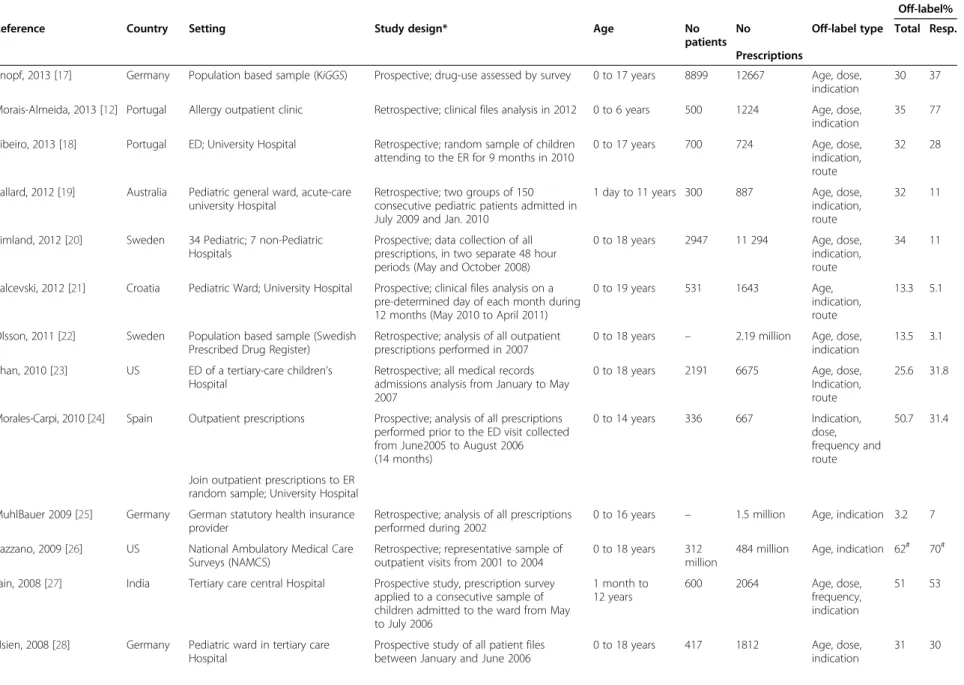
To ascertain the trends of off-label use in children, es-pecially in respiratory and allergic diseases, a systematic search of the literature was performed in Pubmed-Medline in July 2013 using the terms associations, “(off-label OR unlicensed OR unapproved OR unregistered)” AND “children”. The studies approaching the general prevalence of off-label use that reported allergic and/or respiratory diseases data are described in Table 1. The percentage of off-label use varied widely between stud-ies, ranging from 3 to 51% of prescriptions, and reach-ing a prevalence of 78%, when considerreach-ing patients that received at least one off-label medicine. This variability can be explained by the different settings (countries), age range and population sample (outpatient, inpatient, population databases from pharmacies or from medical prescription records). Sturkenbbom et al., compared three different countries prescription patterns (Italy, United Kingdom and Netherland) that, despite being quite simi-lar, off-label prescriptions percentages differed, which could be explained by different pediatric authorization sta-tus of the drugs in these countries [15]. A systematic re-view assessing off-label prescription in children found it to be common in all settings, but higher rates were seen for neonatal versus pediatric wards and for hospital versus community settings [16]. Therefore, off-label prescription should be assessed carefully and adapted to each reality and population.
Frequency of drug prescription increases with age; however the number of off-label medicines use de-creases. The highest proportion of off-label prescription in children occurs in the first two years of life [18,20,22,24-26,29,31,34-36]. In an outpatient setting in the US, the adjusted probability of receiving at least one off-label prescription in a medical visit was 59% in chil-dren’s aged 6 to 12 years, increasing to 65% from 2 to 6 year of age, to 67% if they had 1 to 2 years of age and 74% if less than 1 year (p < 0.001) [26]. Furthermore, probability could increase by 26 to 39% if they received more than one drug (p < 0.001) [26]. Nevertheless, this is not consistent in all studies. In a recent outpatient popu-lation based sample analysis in Germany there was a predominance of off-label medication use from 3 to 13 years of age [17]. The main reason for this difference can be related with the study population, mainly com-posed by healthy children. When considering children that resort to health care versus those that are hospital-ized results differ. In a study addressing children admit-ted to different pediatric wards the odds of being
Silva et al. World Allergy Organization Journal 2014, 7:4 Page 2 of 12
Table 1 Summary of the studies reporting off-label medicines use and specifying respiratory off-label use
Off-label%
Reference Country Setting Study design* Age No
patients No
Prescriptions
Off-label type Total Resp.
Knopf, 2013 [17] Germany Population based sample (KiGGS) Prospective; drug-use assessed by survey 0 to 17 years 8899 12667 Age, dose, indication
30 37 Morais-Almeida, 2013 [12] Portugal Allergy outpatient clinic Retrospective; clinical files analysis in 2012 0 to 6 years 500 1224 Age, dose,
indication
35 77 Ribeiro, 2013 [18] Portugal ED; University Hospital Retrospective; random sample of children
attending to the ER for 9 months in 2010
0 to 17 years 700 724 Age, dose, indication, route
32 28
Ballard, 2012 [19] Australia Pediatric general ward, acute-care university Hospital
Retrospective; two groups of 150 consecutive pediatric patients admitted in July 2009 and Jan. 2010
1 day to 11 years 300 887 Age, dose, indication, route
32 11
Kimland, 2012 [20] Sweden 34 Pediatric; 7 non-Pediatric Hospitals
Prospective; data collection of all prescriptions, in two separate 48 hour periods (May and October 2008)
0 to 18 years 2947 11 294 Age, dose, indication, route
34 11
Palcevski, 2012 [21] Croatia Pediatric Ward; University Hospital Prospective; clinical files analysis on a pre-determined day of each month during 12 months (May 2010 to April 2011)
0 to 19 years 531 1643 Age, indication, route
13.3 5.1
Olsson, 2011 [22] Sweden Population based sample (Swedish Prescribed Drug Register)
Retrospective; analysis of all outpatient prescriptions performed in 2007
0 to 18 years – 2.19 million Age, dose, indication
13.5 3.1 Phan, 2010 [23] US ED of a tertiary-care children’s
Hospital
Retrospective; all medical records admissions analysis from January to May 2007
0 to 18 years 2191 6675 Age, dose, Indication, route
25.6 31.8
Morales-Carpi, 2010 [24] Spain Outpatient prescriptions Prospective; analysis of all prescriptions performed prior to the ED visit collected from June2005 to August 2006 (14 months) 0 to 14 years 336 667 Indication, dose, frequency and route 50.7 31.4
Join outpatient prescriptions to ER random sample; University Hospital MuhlBauer 2009 [25] Germany German statutory health insurance
provider
Retrospective; analysis of all prescriptions performed during 2002
0 to 16 years – 1.5 million Age, indication 3.2 7 Bazzano, 2009 [26] US National Ambulatory Medical Care
Surveys (NAMCS)
Retrospective; representative sample of outpatient visits from 2001 to 2004
0 to 18 years 312 million
484 million Age, indication 62# 70#
Jain, 2008 [27] India Tertiary care central Hospital Prospective study, prescription survey applied to a consecutive sample of children admitted to the ward from May to July 2006 1 month to 12 years 600 2064 Age, dose, frequency, indication 51 53
Hsien, 2008 [28] Germany Pediatric ward in tertiary care Hospital
Prospective study of all patient files between January and June 2006
0 to 18 years 417 1812 Age, dose, indication 31 30 Silva et al. World Allergy Organiz ation Journal 2014, 7 :4 Page 3 o f 1 2 http://ww w.waojour nal.org/conte nt/7/1/4
Table 1 Summary of the studies reporting off-label medicines use and specifying respiratory off-label use (Continued)
Shah, 2007 [29] US 31 tertiary care pediatric hospitals (PHIS database)
Retrospective study of all children discharged from the Hospital during 2004
0 to 17 years 355409 — Age, indication 78.7# 11.2#
Ufer, 2004 [30] Sweden Population based sample (Statistics Sweden and the National Corporation of Swedish Pharmacists)
Retrospective study of all drug register present in the database in 2000
0 to 15 years – 2,8million Age, dose, indication, formulation, route
20.7 8.6
Schirm, 2003 [31] Netherland Pharmacies dispensing records in northern Netherland (Interaction database)
Retrospective study of all drugs dispensing records in the Interaction database in 2000
0-16 years 18493 66222 Age 20.6 15.1
Pandolfini, 2002 [32] Italy Nine general pediatric hospitals wards
Prospective; analysis of all prescriptions performed to children in 12 week period
1 month to 14 years 1461 4255 Dose, route, indication and duration 60 33
McIntyre, 2000 [33] England Suburban general practice clinic Retrospective; study of all prescriptions performed in 1998
0 to 12 years 1175 3347 Age, dose, route
10.5 28 *All studies had a cross-sectional study design; ED- Pediatric Emergency department; #- off-label percentages is reported to visits or patients that received at least 1 off-label-drug; KiGGS- German Health Interview and Examination Survey for Children and Adolescents; PHIS- Pediatric Health Information System.
Silva et al. World Allergy Organiz ation Journal 2014, 7 :4 Page 4 o f 1 2 http://ww w.waojour nal.org/conte nt/7/1/4
prescribed an off label drug almost doubled in children with less than 1 year of age (OR 1.80; 95% CI 1.03–3.59, adjusted to age, gender, number of medications prescribed and type of ward) [37]. At the same time, several other factors besides age interfere with the use of off label medi-cines. The other most commonly encountered reason for off-label prescribing was dosage, that both includes under-dosing and over-under-dosing [16,17,19,20,27,30,33,35,38,39]. This is expected due to the frequent dose adjustments needed to be performed in children. Other frequently re-ported reasons were unapproved therapeutic indication [18,22], followed by inappropriate age [17-19,24,38], fre-quency of drug use and, as less frequently reported, route of administration [19,32] and type of formulation [21]. The total absence of pediatric information in the SPC is also a common problem in off label prevalence studies. In-consistent information between SPC was noted, namely for drugs with the same active compound but from diffe-rent companies [20,40].
Drug related problems and off-label drug use in children
Off-label prescribing is not illegal, not necessarily wrong, and is contemplated in several pediatric guidelines, but remarkably, no reference is made that some drugs are being recommended in an unlicensed or off-label use basis [41]. Indeed, quality of drug therapies is not neces-sarily related to drug license status [16]. However this has several clinical, ethical and safety issues and there is no explicit guide to help clinicians assess the appropri-ateness of off-label prescribing [21]. Often it is necessary to use medicine in an off-label basis, but this should be appraised according to clinical indications, therapeutic alternatives and risk-benefit analysis, and it is required to obtain informed consent from the patient or guardian [12]. Repeatedly a question is posed in the literature [11] and clinicians minds: “Is off-label use more likely to be implicated in an Adverse Drug Reaction?”
A recent review that accessed the relationship between off-label and unlicensed medicine use and adverse drug reactions (ADR) in children concluded that good quality of evidence is lacking to answer this question; different methodologies are used and definitions of off-label and unlicensed are not consensual between studies [11]. However, results of previous studies have indicated that there might be an association between off-label use and ADR risk [11]. In all ADRs reported over a decade in Danish children, one-fifth was associated with off-label prescriptions [42].
Evidence has been contradictory and varies widely. In studies with prospective design, incidence of ADR in off-label drugs ranged from 2 to 39% [11]. Santos et al. reported that in an inpatient population, off-label drug use was significantly associated with ADRs (relative risk 2.44; 95% CI 2.12, 2.89) [39]. In another inpatient sample,
Neubert et al. reported a higher prevalence of ADR with off-label use compared with licensed ones (6.1 versus 5.6%). On the other hand, evaluating an outpatient setting showed a frequency of ADR 2-fold higher among licensed medication than in off-label, though the overall frequency of ADR was low (<1%) [23].
Respiratory diseases treatments have been reported in several associations with adverse reactions and off-label prescription. In a retrospective analysis of all ADR re-ported from the Swedish Drug Information System in 2000, medications used for asthma treatment were the most frequently associated with adverse reactions. Of those, 31% were being used off-label [30]. In another study regarding a pharmacovigilance prospective survey in France, exposure to drugs of “Respiratory System” in a multivariate analysis was associated with a decreased risk on ADR (0.20; 95% CI 0.07, 0.60). This study also related the off-label use of a drug due to a different indi-cation with an increased risk of ADR, particularly in in-fants (3.94; 95% CI 1.12, 13.84) [43]. Several factors interfere in this unknown relationship of off-label medi-cines and ADR, as age, type of drug, disease and previ-ous evidence of that medication use. Any decision about off-label prescription should weight risks and benefits and has to be based on value judgments that must in-volve parents or guardians in the decision [44].
Off-label prescription for asthma treatment in children
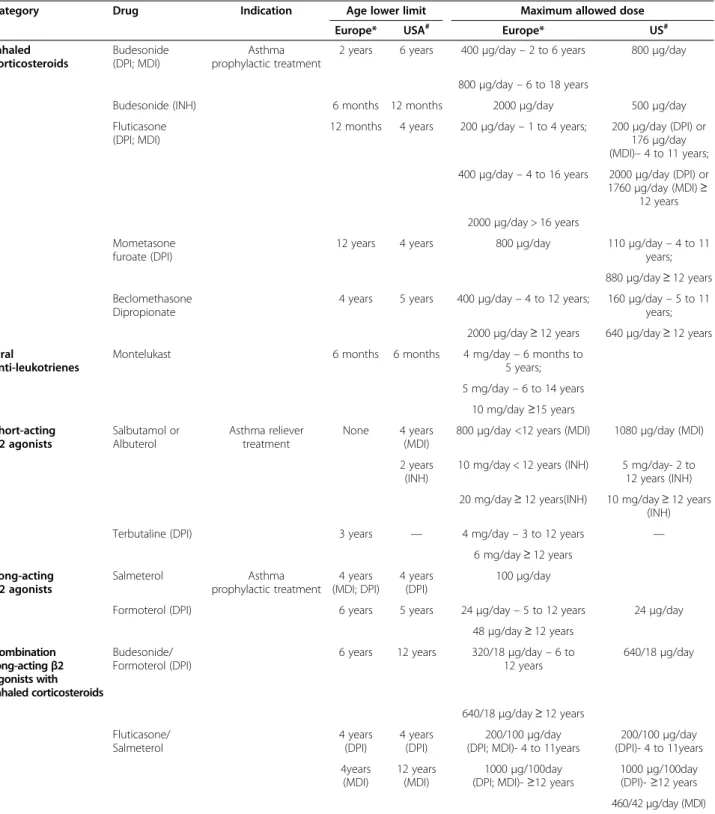
Considering the global trends of outpatient prescription in children, allergy and asthma medicines are on the top of the most dispensed drugs [45]. If only respiratory me-dication is considered, asthma therapies are the most frequently prescribed (40.7% of all prescriptions) [46]. Therefore, knowledge of the authorized drugs for asthma is essential for adequate patient care. The most commonly used drugs for treating asthma are presented in Table 2, accordingly to the authorized age and maximum allowed dose limits.
Asthma management guideline recommendations, namely Global Initiative for Asthma (GINA) or Expert Panel Re-port 3: Guidelines for the Diagnosis and Management of Asthma (EPR-3) [49,50] are widely followed by physicians, and both provide recommendations for all age groups; however, evidence supporting recommendations for pre-school children is limited. The mainstay treatment for asthma are inhaled corticosteroids (ICS), but guidelines often do not provide specific recommendations for upper doses limits specially in children [50]. In this age group, namely in preschool children, inhaled corticosteroids are also the most recommended for long-term asthma treat-ment, mainly based in the previous experience in adults and in older children, though they advise that dose-responses are not well studied [49-51] and indeed “chil-dren are not a small size adult”. Asthma treatment poses
Silva et al. World Allergy Organization Journal 2014, 7:4 Page 5 of 12
Table 2 Drugs used for treatment of asthma in children and authorizations for their use according to age, dose and indication
Category Drug Indication Age lower limit Maximum allowed dose
Europe* USA# Europe* US#
Inhaled corticosteroids Budesonide (DPI; MDI) Asthma prophylactic treatment
2 years 6 years 400μg/day – 2 to 6 years 800μg/day
800μg/day – 6 to 18 years
Budesonide (INH) 6 months 12 months 2000μg/day 500μg/day
Fluticasone (DPI; MDI)
12 months 4 years 200μg/day – 1 to 4 years; 200μg/day (DPI) or 176μg/day (MDI)– 4 to 11 years; 400μg/day – 4 to 16 years 2000μg/day (DPI) or 1760μg/day (MDI) ≥
12 years 2000μg/day > 16 years
Mometasone furoate (DPI)
12 years 4 years 800μg/day 110μg/day – 4 to 11
years; 880μg/day ≥ 12 years Beclomethasone
Dipropionate
4 years 5 years 400μg/day – 4 to 12 years; 160μg/day – 5 to 11 years; 2000μg/day ≥ 12 years 640μg/day ≥ 12 years Oral
anti-leukotrienes
Montelukast 6 months 6 months 4 mg/day– 6 months to
5 years; 5 mg/day– 6 to 14 years
10 mg/day≥15 years Short-acting
β2 agonists Salbutamol orAlbuterol
Asthma reliever treatment
None 4 years
(MDI)
800μg/day <12 years (MDI) 1080μg/day (MDI) 2 years
(INH)
10 mg/day < 12 years (INH) 5 mg/day- 2 to 12 years (INH) 20 mg/day≥ 12 years(INH) 10 mg/day≥ 12 years
(INH)
Terbutaline (DPI) 3 years — 4 mg/day– 3 to 12 years —
6 mg/day≥ 12 years Long-acting
β2 agonists Salmeterol prophylactic treatmentAsthma
4 years (MDI; DPI)
4 years (DPI)
100μg/day
Formoterol (DPI) 6 years 5 years 24μg/day – 5 to 12 years 24μg/day
48μg/day ≥ 12 years Combination long-actingβ2 agonists with inhaled corticosteroids Budesonide/ Formoterol (DPI)
6 years 12 years 320/18μg/day – 6 to
12 years 640/18μg/day 640/18μg/day ≥ 12 years Fluticasone/ Salmeterol 4 years (DPI) 4 years (DPI) 200/100μg/day (DPI; MDI)- 4 to 11years
200/100μg/day (DPI)- 4 to 11years 4years (MDI) 12 years (MDI) 1000μg/100day (DPI; MDI)-≥12 years
1000μg/100day (DPI)-≥12 years 460/42μg/day (MDI)
DPI- dry powder inhaler; MDI- Metered dose inhaler; INH- inhalation suspension *Data obtained in the Summaries of Product Characteristics (SPC) of one European country (Portugal, Infarmed [47]), except for mometasone furoate obtained from the UK SPC#
Data obtained in the FDA approved Drugs Database [48]. Comparison between an European country (regulated by EMA and the national authority) and the United States of America (regulated by FDA).
Silva et al. World Allergy Organization Journal 2014, 7:4 Page 6 of 12
several challenges in very young children; often an overlap between recurrent wheezing and asthma phenotypes oc-curs, making diagnosis and therapeutic decisions contro-versial [52,53]. Moreover, some therapeutic options are not deprived of side effects [49,52].
In children, inhaler type and child’s ability to use it correctly also interferes with the treatment. Beclometha-sone, budesonide and fluticasone are available as either metered dose inhaler (MDI) or dry powder inhaler (DPI). Preschool children are not able to cooperate with the proper inhalation technique demanded by DPI, therefore these devices are not licensed for this popula-tion [52]. Furthermore, some new drugs like mometa-sone and ciclesonide are still not approved under 12 years [52].
In long-term treatment, if control is not achieved, other treatment associations can be considered, but their efficacy and safety are also not established in some cases. Long acting β2 agonists (LABA) are endorsed in the EPR-3 as one option for step-up therapy for persistent asthma in association to inhaled corticosteroids. Though they advise that these drugs aren’t adequately studied in children with less than 4 years of age, they are recom-mended as an add-on in the upper steps of the stepwise approach [50]. On the other hand, GINA guidelines spe-cifies asthma therapy for children under 5 years of age, where LABA aren’t approved, indicating oral anti-leukotriene’s as an option [54,55]. Guidelines are recom-mendations on the appropriate management, diagnosis and treatment, but they differ between each other and vary widely between countries, however they do not re-place clinician’s knowledge and skills. Several studies assessed the pediatric use of asthma drugs in different countries through cohort and cross-sectional studies [46,56,57]. TEDDY study is a 6 years retrospective ana-lysis of outpatient medical records concerning pediatric asthma that combined databases from Netherland, Italy and United Kingdom and described the use of asthma drugs to be more frequent in children less than two years of age [56] to whom drug authorizations are scarce (Table 2). As expected, asthma treatment in children under 2 years present the highest prevalence of off-label use [12,46,56,57]. The most frequent drugs used off label are the short actingβ2 agonist (SABA) salbutamol, ran-ging from 24 to 45% [56,57], and inhaled corticosteroids, from 26 to 80% [12,56,57]. Fixed combination of ICS and LABA were also often prescribed [56]. When con-sidering types of off-label use, salbutamol and ICS were the most frequently reported due to age limits (19%), and salmeterol-fluticasone association due to inadequate indication [33,57]. Other studies report off-label use of these drugs due to higher than recommended doses; this could be explained mainly owing to inconsistencies found between the SPC and country guideline recommendations
[19,35]. Many children with asthma are not managed in accordance with the set guidelines, as they vary widely in the literature and are not consistent with the SPC, leaving physicians to prescribe off-label. Most recognize it and be-lieve that off-label prescription is appropriate, however they have efficacy and safety concerns. Moreover in a re-cent study only one third of the physicians self-reported that children’s guardians/parents were informed of off-label treatment use [58].
Off-label use for rhinitis treatment in children
Allergic rhinitis is the most prevalent chronic allergic disease in children [59]. Oral second-generation anti-histamines and intranasal corticosteroids are considered the first line treatments [59-61]. In Table 3 are described some examples of the most often used drugs for allergic rhinitis, accordingly to the age limit and maximum allowed dose. The majority of intranasal corticosteroids and some of the anti-histamines lack pediatric approval and this is recognized by the guidelines [59,61]. These drugs are recommended for children by extrapolation from pharmacological and clinical data in adults. How-ever, the absorption, distribution and metabolism in chil-dren diverge from adults and age-related differences in children exist in their ability to metabolize, absorb, ex-crete and transform medications, therefore efficacy and safety might be affected [59,62]. Although nasal cortico-steroids can be associated with some side effects, includ-ing bone mineral density loss, adrenal suppression and growth retardation, these were only reported in one study using beclomethasone [60,62]. Therefore, only the lowest possible dose for symptoms control is favored [61]. Intranasal corticosteroid use before age of 2 is con-sidered off-label and only mometasone is authorized in less than 4 years of age in the US (Table 3). As for anti-histamines, accordingly to the most recent guideline up-date, first generation drugs should not be used for rhin-itis in children due to their side effects [63]. However, the most frequently available anti-histamines over the counter in the US are from first generation. This raised public health concerns about their use in children and, in the US, campaigns have been conducted to advise for safety concerns and recommend against their use under the age of two [64]. If considering an outpatient setting, the majority of off-label prescriptions were from pediatri-cians (54.4%), but a large number, 34.3%, were self-medications [24]. Despite their widely use only few studies have been performed to assess the magnitude of off-label drug in children for rhinitis.
In a recently published study assessing off-label use in an allergy outpatient clinic, the most frequently scribed drugs were nasal corticosteroid in 76% of all pre-scriptions, anti-histamines were used off-label in 22% [12]. T’Jong et al. study reported that of all respiratory
Silva et al. World Allergy Organization Journal 2014, 7:4 Page 7 of 12
drug prescriptions assessed to be used in a pediatric popu-lation, half of the patients were prescribed antihistamines and nasal corticosteroids in an off-label basis [46]. In other studies assessing systemic anti-histamines, off-label pre-scribing ranged from 6.5% to 43% [17,23,30,33,35]. Cetiri-zine [65,66], levocetiriCetiri-zine [62,67] and loratadine [68] have been the most investigated for long term safety in pediatric population. Despite pharmacokinetic studies have been performed in new generation anti-histamines, long-term safety studies in children are still lacking [69,70]. Indeed, due to the proven efficacy of nasal corticosteroids and
anti-histamines on disease control in children by reducing associated impairment and improving disease-related quality of life, more studies are needed about safety in order for physicians to perform a rational deci-sion of the large number of options available in the mar-ket [62,69,71].
Off-label medicines use for treating urticaria and atopic eczema in children
In a joint initiative, the European Academy of Allergol-ogy and Clinical ImmunolAllergol-ogy (EAACI), the EU-funded
Table 3 Drugs used for treatment of allergic rhinitis, urticaria and atopic eczema in children and their authorizations for their use according to age, dose and indication
Category Drug Indication Age lower limit Maximum allowed dose
Europe USA Europe* US#
Nasal inhaled corticosteroids
Budesonide Allergic Rhinitis 6 years 6 years 400μg/day 400μg/day
Fluticasone furoate
4 years 4 years 50μg/day – 4 to 12 years 200μg/day
200μg/day ≥ 12 years
Mometasone 6 years 2 years 100μg/day 100μg/day −2 to 11 years;
200μg/day ≥ 12 years Oral antihistamines Cetirizine Allergic rhinitis;
Urticaria
2 years 6 months 5 mg/day– 2 to 6 years; 2.5 mg/day- 6 months to 1year
10 mg/day > 6 years 5 mg/day- >1 year to 5 years 10 mg≥ 6 years
Levocetirizine 2 years 6 months 2.5 mg/day– 2 to 6 years; 1.25 mg 6 months to 5 years
5 mg/day– older than 6 years 2.5 mg- 6 years to 11 years 5 mg≥ 12 years
Loratadine 2 years 2 years 5 mg/day– 2 to 6 years;
10 mg/day > 6 years
Desloratadine 12 months 6 months 1.25 mg/day– 1 to 5 years; 1 mg– 6 to 11 months
2.5 mg/day– 6 to 12 years; 1.25 mg/day– 1 to 5 years; 5 mg/day≥ 12 years; 2.5 mg/day– 6 to 11 years;
5 mg/day≥ 12 years
Fexofenadine 6 years 6 years 60 mg/day– 6 to 11 years 30 mg/day- 6 months
to < 2 years 180 mg/day≥ 12 years 60 mg/day– 2 to 11 years
180 mg/day≥ 12 years
Diphenhydramine 6 years 2 years 75 mg/day– 6 to 12 years; 37.5 mg/day– 2 to 5 years
150 mg/day > 12 years 150 mg/day– 6 to 11 years 300 mg/day≥ 12 years Topical
immunomodulators
Pimecrolimus Atopic
Dermatitis
2 years 2 years Twice daily, intermittent treatment 12 months
Twice daily, intermittent treatment 12 months
Tacrolimus 2 years 2 years 0.03%- 2 to 15 years 0.03%– 2 to 15 years
0.1%≥ 16 years 0.1%≥ 16 years
(twice daily for 3 weeks then once daily, intermittent use)
(twice daily for intermittent use)
*Data obtained in the Summaries of Product Characteristics (SPC) of one European country (Portugal, Infarmed [47])#
Data obtained in the FDA approved Drugs Database [48].
Comparison between an European country (regulated by EMA and the national authority) and the United States of America (regulated by FDA).
Silva et al. World Allergy Organization Journal 2014, 7:4 Page 8 of 12
network of excellence, the Global Allergy and Asthma European Network (GA2LEN), the European Dermatol-ogy Forum (EDF) and the World Allergy Organization (WAO) published a guideline for urticaria management [72]. In it was recommended as the first line treatment for urticaria the use of oral anti-histamines in an up-dosing step up therapy until up to 4 times the dose. These new recommendations were also advised for chil-dren, adjusting the dose accordingly to the weight [72]. Recent randomized, double-blind, placebo controlled tri-als in adults support the efficacy and safety of this up-dosing use, namely in cold contact urticaria [73,74]. Nevertheless, due to the absence of controlled trials in children, these changes were not updated in the SPC of the anti-histamines in the market and as stated above only a few of them were actually studied for their long term effects in children. This explains why a large por-tion of the off-label type of use when considering anti-histamines is due to a different dose prescription [12]. For chronic disease it is also important not only efficacy and safety, but also compliance to the treatment. Chil-dren pediatric formulations, namely under 6 years of age, are usually liquid and it is necessary to make them stable, sterile, pleasant and long lasting. Furthermore as children grow, drug doses should be adapted to weight and, to avoid dosing errors, the means to deliver accur-ate doses of these liquid formulations need to be avail-able [62]. In atopic dermatitis, anti-histamines also are considered as potential benefit to reduce pruritus, and although no evidence exists to support their role in treatment they can be useful in reducing this disturbing symptom in children [69].
Accordingly to the most recently published guidelines for atopic dermatitis the main treatment is skin hydration, topical anti-inflammatory medications and antipruritic therapy [75-77]. For anti-inflammatory medication, topical glucorticosteroids or topical calcineurin inhibitors are used. For topical corticosteroids numerous substances are available, grouped by potency. Potent and very potent cor-ticosteroids (Group III and IV) are more likely to cause systemic or local side effects (like adrenal suppression, skin atrophy or striae) than group I (mild) and II (moder-ate strength); therefore the first should be avoided for treatment in infants, whose higher surface area to body weight ratio and age dependent maturation of the skin barrier function leaves them vulnerable to over-dosing [75,78]. According to the FDA, use of these products are also limited by age and duration of treatment [78]. Still and specially from birth to 4 years of age, topical cortico-steroids were prescribed off-label in 13% of all prescrip-tions, of those 58% due to high dosage use [35]. Recent guidelines recommend that for mild disease activity, a small amount of topical corticosteroids twice to thrice weekly until reaching a mean monthly dose of 15 grams
(g) in infants, 30 g in children and up to 60 to 90 g in ado-lescents and adults [75].
Nowadays new topical anti-inflammatory alternatives include calcineurin inhibitors and fourth generation cor-ticosteroids. This fourth generation corticosteroids, like methylprednisolone aceponate seem to have a favorable benefit-risk-ratio in this age group [79]. Regarding top-ical immunomodulators, calcineurin inhibitors, like ta-crolimus and pimeta-crolimus, as they don’t cause skin atrophy, are favored for long-term management and to be used in delicate body areas, such as the eyelid region, the perioral skin, genital area, the axilla or the inguinal fold [80]. As a result of the immunosuppressant activity of these drugs there are concerns about their potential to promote skin infections and malignancies, particularly lymphomas, following long-term treatment [80]. These drugs are only approved for children with more than 2 years of age by FDA and EMA (Table 3). Due to the high prevalence of atopic dermatitis in children, which begins in over 60% of cases during the first year of life, usually affects more sensitive-skin areas and have a higher body surface/volume ratio that enhances the risk of systemic exposure to corticosteroids, it was seen an increase of use in topical calcineurin inhibitors [77,80]. Off-label use, particularly in infants in the US, reached a high prevalence of prescriptions in 2004, approximately 525,000 (14% of yearly prescriptions) for pimecrolimus and 69,000 (7%) for tacrolimus [80]. This led FDA to in-clude a black box warning in 2005, changed to a box warning in 2006, on the labels of topical tacrolimus and pimecrolimus. Still, further discussion has occurred and even with large epidemiological data, at current time, FDA maintains that may be “a possibility of an associ-ation” [80]. However, guidelines recommend clinicians to use tacrolimus ointment, specially for eczema on the face, eyelid, and skin folds that is unresponsive to low-potency topical steroids in children older than 2 years [75,77]. Other systemic drugs for atopic dermatitis treat-ment also recommended off-label in children and ado-lescents is cyclosporine, however only reserved in the most severe and refractory to classical treatment and usually demanding specialized care [76].
Unmet needs
According to the World Health Organization the ideal medicine for a children is“one that suits the age, physio-logical condition and body weight of the child taking them and is available in a flexible solid oral dosage form that can be taken whole, dissolved in a variety of liquids, or sprinkled on foods, making it easier for children to take” [81]. However this reality is far from us and still, as it was seen, drugs are not adequately studied for children.
In order to improve drug use and safety of treatment in children there is a need to increase research not only
Silva et al. World Allergy Organization Journal 2014, 7:4 Page 9 of 12
for new drugs, but also in medicines that are in market but are not adequately adjusted for children. Several worldwide regulatory efforts, namely those included in the initiative “Better Medicines for Children” allowed that a large number of new products with pediatric indi-cations and age-appropriate pharmaceutical forms to be now authorized and made available. Furthermore, a high number of agreed pediatric investigation plans indicate that further products are appearing. However, there is an imbalance between the priorities for pediatric drug re-search and the need of the children. This is specially vis-ible for respiratory and allergy treatment medicines [3,10].
Furthermore, physicians frequently encounter an in-consistency in what is proposed on the guidelines and the drugs summary of product recommendations [35]. There is an urgent need for regulations of off-label pre-scribing not only for medical institutions, but also for physicians [82]. In a daily basis they are confronted with questions of safety, apprehension of potential ADR, effi-cacy and ethical issues. As Gazarian et al. reported most physicians believe that off-label prescribing is adequate and they are doing it considering that the benefits out-weigh the risks, but due to lack of evidence, frequently they are unaware of the true balance [13].
The overall level of unlicensed and off-label pediatric prescribing suggests the need to perform well designed clinical studies in children, for that pharmaceutical industry and academic organizations should be encour-aged [37,82]. The previously implemented Pediatric Use Marketing Authorization (PUMA), which offered 8 years of data protection and 10 years of market exclusivity to any new off-patent product developed exclusively for use in the pediatric population was not successful and in the last 5 years only one was granted. Probably it did not outweight the economical risks and competition with previously implemented drugs. New measures are needed to encourage the market in a new path. Furthermore, more awareness should be enforced using population-based databases to monitor off-label prescription and by that increase awareness of the true children’s needs and interests.
Conclusions
Off-label use in children is common and differs between countries, inpatient and outpatient settings and age. Re-spiratory and allergy medicines are on the top of the most prescribed off-label drugs in children, nevertheless this has not been accompanied with new research of their safety and efficacy in children, specially with those drugs already in market. In this narrative review it was recognized that a large percentage of drugs prescription in an allergist daily clinical practice are off-label. It is fundamental to increase awareness of this reality, as it is the responsibility of the clinician to balance risk-benefits
of the prescription. Parents/guardians should be informed and involved in the decision in order to prevent misunder-standings, increase compliance and awareness to adverse effects in the pursuance of a good clinical outcome. There is a need for new studies with a better design to access long-term safety and efficacy of respiratory and allergy on-market drugs in children, primarily in those under two years of age. New ways should be found by the competent authorities to promote more research accordingly to the patients needs, namely on respiratory and allergy field.
Abbreviations
ADR:Adverse drug reactions; EPR-3: Expert panel report 3: Guidelines for the diagnosis and management of asthma; EAACI: European Academy of Allergology and Clinical Immunology; EDF: European Dermatology Forum; EU: Europe; EMA: European Medicines Agency; DPI: Dry Powder Inhaler; FDA: Food and drug administration; GA2LEN: Global Allergy and Asthma
European Network; GINA: Global Initiative for Asthma; ICH: International conference on harmonization; ICS: Inhaled corticosteroids; LABA: Long acting β2 agonist; MDI: Metered dose inhaler; PIP: Pediatric investigation plans; PUMA: Pediatric Use Marketing Authorization; SABA: Short actingβ2 agonist; SPC: Summaries of product characteristics; TEDDY: Task-force in Europe for Drug Development for the Young; US: United States of America; WAO: World Allergy Organization.
Competing interests
The authors declare that they have no competing interests.
Authors’ contributions
DS, IA and MMA equally contributed to writing the manuscript. All authors have reviewed and approved the final version of manuscript.
Author details
1
Immunoallergology Department, Centro Hospitalar de São João, Alameda Prof. Hernâni Monteiro, 4200-309 Porto, Portugal.2Immunoallergology Department, CUF Descobertas Hospital, R. Mário Botas, 1998-018 Lisboa, Portugal.3Department of Allergy and Immunology, Hospital Quirón Bizkaia, Carretera de Leioa-Unbe, 33 Bis., 48950 Erandio, Spain.4Center for Research in Health Technologies and Information Systems, University of Porto, Porto, Portugal.
Received: 3 September 2013 Accepted: 22 January 2014 Published: 14 February 2014
References
1. Dunne J: The European Regulation on medicines for paediatric use. Paediatr Respir Rev 2007, 8:177–183.
2. Ceci A, Felisi M, Baiardi P, Bonifazi F, Catapano M, Giaquinto C, Nicolosi A, Sturkenboom M, Neubert A, Wong I: Medicines for children licensed by the European Medicines Agency (EMEA): the balance after 10 years. Eur J Clin Pharmacol 2006, 62:947–952.
3. Boots I, Sukhai RN, Klein RH, Holl RA, Wit JM, Cohen AF, Burggraaf J: Stimulation programs for pediatric drug research–do children really benefit? Eur J Pediatr 2007, 166:849–855.
4. Hoppu K, Anabwani G, Garcia-Bournissen F, Gazarian M, Kearns GL, Nakamura H, Peterson RG, Sri Ranganathan S, de Wildt SN: The status of paediatric medicines initiatives around the world–What has happened and what has not? Eur J Clin Pharmacol 2012, 68:1–10.
5. Clinical Investigation of Medicinal products in the pediatric population. http://www.ich.org/fileadmin/Public_Web_Site/ICH_Products/Guidelines/ Efficacy/E11/Step4/E11_Guideline.pdf.
6. Pediatric Research Equity Act of 2003. http://www.fda.gov/downloads/Drugs/ DevelopmentApprovalProcess/DevelopmentResources/UCM077853.pdf. 7. Best Pharmaceuticals for Children Act. http://www.fda.gov/RegulatoryInformation/
Legislation/FederalFoodDrugandCosmeticActFDCAct/SignificantAmendments totheFDCAct/ucm148011.htm.
Silva et al. World Allergy Organization Journal 2014, 7:4 Page 10 of 12
8. Regulation (EC) number 1901/2006 of the European parliament and of the council of 12 December 2006 on medicinal products for paediatric use and amending Regulation (EEC) No 1768/92, Directive 2001/20/EC, Directive 2001/ 83/EC and Regulation (EC) No 726/2004. http://ec.europa.eu/health/files/ eudralex/vol-1/reg_2006_1901/reg_2006_1901_en.pdf.
9. 4th WHO Model List of Essential Medicines for Children’s (April 2013). http:// www.who.int/medicines/publications/essentialmedicines/en/index.html. 10. Report from the commission to the European Parliament and the Council, Better Medicines for Children— From Concept to Reality; General Report on experience acquired as a result of the application of Regulation (EC) No 1901/ 2006 on medicinal products for paediatric use. [http://ec.europa.eu/health/ files/paediatrics/2013_com443/paediatric_report-com(2013)443_en.pdf] 11. Mason J, Pirmohamed M, Nunn T: Off-label and unlicensed medicine use
and adverse drug reactions in children: a narrative review of the literature. Eur J Clin Pharmacol 2012, 68:21–28.
12. Morais-Almeida M, Cabral AJ: Off-label prescribing for allergic diseases in pre-school children. Allergol Immunopathol (Madr) 2013. http://dx.doi.org/ 10.1016/j.aller.2013.02.011.
13. Gazarian M, Kelly M, McPhee JR, Graudins LV, Ward RL, Campbell TJ: Off-label use of medicines: consensus recommendations for evaluating appropriateness. Med J Aust 2006, 185:544–548.
14. Neubert A, Wong IC, Bonifazi A, Catapano M, Felisi M, Baiardi P, Giaquinto C, Knibbe CA, Sturkenboom MC, Ghaleb MA, Ceci A: Defining off-label and unlicensed use of medicines for children: results of a Delphi survey. Pharmacol Res 2008, 58:316–322.
15. Sturkenboom MC, Verhamme KM, Nicolosi A, Murray ML, Neubert A, Caudri D, Picelli G, Sen EF, Giaquinto C, Cantarutti L, et al: Drug use in children: cohort study in three European countries. BMJ 2008, 337:a2245.
16. Pandolfini C, Bonati M: A literature review on off-label drug use in children. Eur J Pediatr 2005, 164:552–558.
17. Knopf H, Wolf IK, Sarganas G, Zhuang W, Rascher W, Neubert A: Off-label medicine use in children and adolescents: results of a population-based study in Germany. BMC Public Health 2013, 13:631.
18. Ribeiro M, Jorge A, Macedo AF: Off-label drug prescribing in a Portuguese paediatric emergency unit. Int J Clin Pharm 2013, 35:30–36.
19. Ballard CD, Peterson GM, Thompson AJ, Beggs SA: Off-label use of medicines in paediatric inpatients at an Australian teaching hospital. J Paediatr Child Health 2013, 49:38–42.
20. Kimland E, Nydert P, Odlind V, Bottiger Y, Lindemalm S: Paediatric drug use with focus on off-label prescriptions at Swedish hospitals - a nationwide study. Acta Paediatr 2012, 101:772–778.
21. Palcevski G, Skocibusic N, Vlahovic-Palcevski V: Unlicensed and off-label drug use in hospitalized children in Croatia: a cross-sectional survey. Eur J Clin Pharmacol 2012, 68:1073–1077.
22. Olsson J, Kimland E, Pettersson S, Odlind V: Paediatric drug use with focus on off-label prescriptions in Swedish outpatient care–a nationwide study. Acta Paediatr 2011, 100:1272–1275.
23. Phan H, Leder M, Fishley M, Moeller M, Nahata M: Off-label and unlicensed medication use and associated adverse drug events in a pediatric emergency department. Pediatr Emerg Care 2010, 26:424–430. 24. Morales-Carpi C, Estan L, Rubio E, Lurbe E, Morales-Olivas FJ: Drug
utilization and off-label drug use among Spanish emergency room paediatric patients. Eur J Clin Pharmacol 2010, 66:315–320. 25. Muhlbauer B, Janhsen K, Pichler J, Schoettler P: Off-label use of
prescription drugs in childhood and adolescence: an analysis of prescription patterns in Germany. Dtsch Arztebl Int 2009, 106:25–31. 26. Bazzano AT, Mangione-Smith R, Schonlau M, Suttorp MJ, Brook RH:
Off-label prescribing to children in the United States outpatient setting. Acad Pediatr 2009, 9:81–88.
27. Jain SS, Bavdekar SB, Gogtay NJ, Sadawarte PA: Off-label drug use in children. Indian J Pediatr 2008, 75:1133–1136.
28. Hsien L, Breddemann A, Frobel AK, Heusch A, Schmidt KG, Laer S: Off-label drug use among hospitalised children: identifying areas with the highest need for research. Pharm World Sci 2008, 30:497–502.
29. Shah SS, Hall M, Goodman DM, Feuer P, Sharma V, Fargason C Jr, Hyman D, Jenkins K, White ML, Levy FH, et al: Off-label drug use in hospitalized children. Arch Pediatr Adolesc Med 2007, 161:282–290.
30. Ufer M, Kimland E, Bergman U: Adverse drug reactions and off-label prescribing for paediatric outpatients: a one-year survey of spontaneous reports in Sweden. Pharmacoepidemiol Drug Saf 2004, 13:147–152.
31. de Jong-van Den Berg LT, Schirm E, Tobi H: Risk factors for unlicensed and off-label drug use in children outside the hospital. Pediatrics 2003, 111:291–295.
32. Pandolfini C, Impicciatore P, Provasi D, Rocchi F, Campi R, Bonati M: Off-label use of drugs in Italy: a prospective, observational and multicentre study. Acta Paediatr 2002, 91:339–347.
33. McIntyre J, Conroy S, Avery A, Corns H, Choonara I: Unlicensed and off label prescribing of drugs in general practice. Arch Dis Child 2000, 83:498–501.
34. Bucheler R, Schwab M, Morike K, Kalchthaler B, Mohr H, Schroder H, Schwoerer P, Gleiter CH: Off label prescribing to children in primary care in Germany: retrospective cohort study. BMJ 2002,
324:1311–1312.
35. Ekins-Daukes S, Helms PJ, Simpson CR, Taylor MW, McLay JS: Off-label prescribing to children in primary care: retrospective observational study. Eur J Clin Pharmacol 2004, 60:349–353.
36. Lindell-Osuagwu L, Korhonen MJ, Saano S, Helin-Tanninen M, Naaranlahti T, Kokki H: Off-label and unlicensed drug prescribing in three paediatric wards in Finland and review of the international literature. J Clin Pharm Ther 2009, 34:277–287.
37. Khdour MR, Hallak HO, Alayasa KS, AlShahed QN, Hawwa AF, McElnay JC: Extent and nature of unlicensed and off-label medicine use in hospitalised children in Palestine. Int J Clin Pharm 2011, 33:650–655.
38. Neubert A, Dormann H, Weiss J, Egger T, Criegee-Rieck M, Rascher W, Brune K, Hinz B: The impact of unlicensed and off-label drug use on adverse drug reactions in paediatric patients. Drug Saf 2004, 27:1059–1067.
39. Dos Santos L, Heineck I: Drug utilization study in pediatric prescriptions of a university hospital in southern Brazil: off-label, unlicensed and high-alert medications. Farm Hosp 2012, 36:180–186.
40. Lass J, Irs A, Pisarev H, Leinemann T, Lutsar I: Off label use of prescription medicines in children in outpatient setting in Estonia is common. Pharmacoepidemiol Drug Saf 2011, 20:474–481.
41. Riordan FA: Use of unlabelled and off licence drugs in children. Use of unlicensed drugs may be recommended in guidelines. BMJ 2000, 320:1210.
42. Aagaard L, Hansen EH: Prescribing of medicines in the Danish paediatric population outwith the licensed age group: characteristics of adverse drug reactions. Br J Clin Pharmacol 2011, 71:751–757.
43. Horen B, Montastruc JL, Lapeyre-Mestre M: Adverse drug reactions and off-label drug use in paediatric outpatients. Br J Clin Pharmacol 2002, 54:665–670.
44. Lenk C, Koch P, Zappel H, Wiesemann C: Off-label, off-limits? Parental awareness and attitudes towards off-label use in paediatrics. Eur J Pediatr 2009, 168:1473–1478.
45. Chai G, Governale L, McMahon AW, Trinidad JP, Staffa J, Murphy D: Trends of outpatient prescription drug utilization in US children, 2002–2010. Pediatrics 2012, 130:23–31.
46. t’Jong GW, Eland IA, Sturkenboom MC, van den Anker JN, Strickerf BH: Unlicensed and off-label prescription of respiratory drugs to children. Eur Respir J 2004, 23:310–313.
47. Autoridade Nacional do Medicamento e Produtos de Saúde. http://www.infarmed. pt/infomed/pesquisa.php.
48. FDA Approved Drug Products. http://www.accessdata.fda.gov/scripts/cder/ drugsatfda/index.cfm.
49. Global Strategy for Asthma Management and Prevention. [http://www. ginasthma.org]
50. National Asthma Education and Prevention Program, Third Expert Panel on the Diagnosis and Management of Asthma. Expert Panel Report 3: Guidelines for the Diagnosis and Management of Asthma. http://www.ncbi.nlm.nih.gov/ books/NBK7232/.
51. Yewale VN, Dharmapalan D: Promoting appropriate use of drugs in children. Int J Pediatr 2012, 2012:906570.
52. Smyth AR, Barbato A, Beydon N, Bisgaard H, de Boeck K, Brand P, Bush A, Fauroux B, de Jongste J, Korppi M, et al: Respiratory medicines for children: current evidence, unlicensed use and research priorities. Eur Respir J 2010, 35:247–265.
53. Grover C, Armour C, Asperen PP, Moles R, Saini B: Medication use in children with asthma: not a child size problem. J Asthma 2011, 48:1085–1103. 54. GINA: Global Strategy for the Diagnosis and Management of Asthma in
Children 5 Years and Younger. In Book Global Strategy for the Diagnosis
Silva et al. World Allergy Organization Journal 2014, 7:4 Page 11 of 12
and Management of Asthma in Children 5 Years and Younger. Edited by Editor ed.^eds. City; 2009.
55. Pedersen SE, Hurd SS, Lemanske RF Jr, Becker A, Zar HJ, Sly PD, Soto-Quiroz M, Wong G, Bateman ED: Global strategy for the diagnosis and management of asthma in children 5 years and younger. Pediatr Pulmonol 2011, 46:1–17. 56. Sen EF, Verhamme KM, Neubert A, Hsia Y, Murray M, Felisi M, Giaquinto C, t’
Jong GW, Picelli G, Baraldi E, et al: Assessment of pediatric asthma drug use in three European countries; a TEDDY study. Eur J Pediatr 2011, 170:81–92.
57. Baiardi P, Ceci A, Felisi M, Cantarutti L, Girotto S, Sturkenboom M, Baraldi E: In-label and off-label use of respiratory drugs in the Italian paediatric population. Acta Paediatr 2010, 99:544–549.
58. Mukattash T, Hawwa AF, Trew K, McElnay JC: Healthcare professional experiences and attitudes on unlicensed/off-label paediatric prescribing and paediatric clinical trials. Eur J Clin Pharmacol 2011, 67:449–461. 59. Bousquet J, Khaltaev N, Cruz AA, Denburg J, Fokkens WJ, Togias A,
Zuberbier T, Baena-Cagnani CE, Canonica GW, van Weel C, et al: Allergic Rhinitis and its Impact on Asthma (ARIA) 2008 update (in collaboration with the World Health Organization, GA(2)LEN and AllerGen). Allergy 2008, 63(Suppl 86):8–160.
60. Wallace DV, Dykewicz MS, Bernstein DI, Blessing-Moore J, Cox L, Khan DA, Lang DM, Nicklas RA, Oppenheimer J, Portnoy JM, et al: The diagnosis and management of rhinitis: an updated practice parameter. J Allergy Clin Immunol 2008, 122:S1–84.
61. Scadding GK, Durham SR, Mirakian R, Jones NS, Leech SC, Farooque S, Ryan D, Walker SM, Clark AT, Dixon TA, et al: BSACI guidelines for the management of allergic and non-allergic rhinitis. Clin Exp Allergy 2008, 38:19–42.
62. Pampura AN, Papadopoulos NG, Spicak V, Kurzawa R: Evidence for clinical safety, efficacy, and parent and physician perceptions of levocetirizine for the treatment of children with allergic disease. Int Arch Allergy Immunol 2011, 155:367–378.
63. Brozek JL, Bousquet J, Baena-Cagnani CE, Bonini S, Canonica GW, Casale TB, van Wijk RG, Ohta K, Zuberbier T, Schunemann HJ: Allergic Rhinitis and its Impact on Asthma (ARIA) guidelines: 2010 revision. J Allergy Clin Immunol 2010, 126:466–476.
64. Joint meeting on the Nonprescription Drugs Advisory Committee and the Pediatric Advisory Committee. http://www.fda.gov/ohrms/dockets/ac/07/ briefing/2007-4323b1-02-FDA.pdf.
65. Simons FE: Prospective, long-term safety evaluation of the H1-receptor antagonist cetirizine in very young children with atopic dermatitis. ETAC Study Group. Early Treatment of the Atopic Child. J Allergy Clin Immunol 1999, 104:433–440.
66. Simons FE, Silas P, Portnoy JM, Catuogno J, Chapman D, Olufade AO, Pharmd: Safety of cetirizine in infants 6 to 11 months of age: a randomized, double-blind, placebo-controlled study. J Allergy Clin Immunol 2003, 111:1244–1248.
67. Simons FE: Safety of levocetirizine treatment in young atopic children: An 18-month study. Pediatr Allergy Immunol 2007, 18:535–542. 68. Grimfeld A, Holgate ST, Canonica GW, Bonini S, Borres MP, Adam D,
Canseco Gonzalez C, Lobaton P, Patel P, Szczeklik A, et al: Prophylactic management of children at risk for recurrent upper respiratory infections: the Preventia I Study. Clin Exp Allergy 2004, 34:1665–1672. 69. de Benedictis FM, de Benedictis D, Canonica GW: New oral H1
antihistamines in children: facts and unmeet needs. Allergy 2008, 63:1395–1404.
70. Gupta SK, Kantesaria B, Banfield C, Wang Z: Desloratadine dose selection in children aged 6 months to 2 years: comparison of population
pharmacokinetics between children and adults. Br J Clin Pharmacol 2007, 64:174–184.
71. Rachelefsky G, Farrar JR: A control model to evaluate pharmacotherapy for allergic rhinitis in children. JAMA Pediatr 2013, 167:380–386. 72. Zuberbier T, Asero R, Bindslev-Jensen C, Walter Canonica G, Church MK,
Gimenez-Arnau AM, Grattan CE, Kapp A, Maurer M, Merk HF, et al: EAACI/ GA(2)LEN/EDF/WAO guideline: management of urticaria. Allergy 2009, 64:1427–1443.
73. Krause K, Spohr A, Zuberbier T, Church MK, Maurer M: Up-dosing with bilastine results in improved effectiveness in cold contact urticaria. Allergy 2013, 68:921–928.
74. Siebenhaar F, Degener F, Zuberbier T, Martus P, Maurer M: High-dose desloratadine decreases wheal volume and improves cold provocation
thresholds compared with standard-dose treatment in patients with acquired cold urticaria: a randomized, placebo-controlled, crossover study. J Allergy Clin Immunol 2009, 123:672–679.
75. Ring J, Alomar A, Bieber T, Deleuran M, Fink-Wagner A, Gelmetti C, Gieler U, Lipozencic J, Luger T, Oranje AP, et al: Guidelines for treatment of atopic eczema (atopic dermatitis) part I. J Eur Acad Dermatol Venereol 2012, 26:1045–1060.
76. Ring J, Alomar A, Bieber T, Deleuran M, Fink-Wagner A, Gelmetti C, Gieler U, Lipozencic J, Luger T, Oranje AP, et al: Guidelines for treatment of atopic eczema (atopic dermatitis) Part II. J Eur Acad Dermatol Venereol 2012, 26:1176–1193.
77. Schneider L, Tilles S, Lio P, Boguniewicz M, Beck L, LeBovidge J, Novak N, Bernstein D, Blessing-Moore J, Khan D, et al: Atopic dermatitis: a practice parameter update 2012. J Allergy Clin Immunol 2013,
131:295–299. e291-227.
78. Hengge UR, Ruzicka T, Schwartz RA, Cork MJ: Adverse effects of topical glucocorticosteroids. J Am Acad Dermatol 2006, 54:1–15. quiz 16–18. 79. Blume-Peytavi U, Wahn U: Optimizing the treatment of atopic dermatitis
in children: a review of the benefit/risk ratio of methylprednisolone aceponate. J Eur Acad Dermatol Venereol 2011, 25:508–515.
80. Carr WW: Topical calcineurin inhibitors for atopic dermatitis: review and treatment recommendations. Paediatr Drugs 2013, 15:303–310. 81. Medicines: medicines for children, Fact sheet N°341. http://www.who.int/
mediacentre/factsheets/fs341/en/.
82. Zhang L, Li Y, Liu Y, Zeng L, Hu D, Huang L, Chen M, Lv J, Yang C: Pediatric off-label drug use in China: risk factors and management strategies. J Evid Based Med 2013, 6:4–18.
doi:10.1186/1939-4551-7-4
Cite this article as: Silva et al.: Off-label prescribing for allergic diseases in children. World Allergy Organization Journal 2014 7:4.
Submit your next manuscript to BioMed Central and take full advantage of:
• Convenient online submission • Thorough peer review
• No space constraints or color figure charges • Immediate publication on acceptance
• Inclusion in PubMed, CAS, Scopus and Google Scholar • Research which is freely available for redistribution
Submit your manuscript at www.biomedcentral.com/submit
Silva et al. World Allergy Organization Journal 2014, 7:4 Page 12 of 12
![Table 1 Summary of the studies reporting off-label medicines use and specifying respiratory off-label use (Continued) Shah, 2007 [29] US 31 tertiary care pediatric hospitals](https://thumb-eu.123doks.com/thumbv2/123dok_br/15803202.1079543/4.1190.80.1068.104.331/summary-reporting-medicines-specifying-respiratory-continued-pediatric-hospitals.webp)