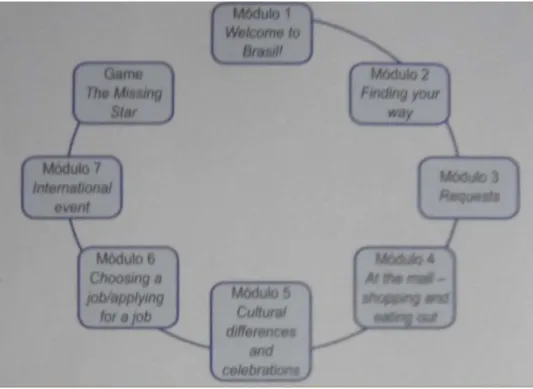
1
MOTIVATION IN LANGUAGE LEARNING IN BILINGUAL PROGRAMS- FROM THEORY TO PRACTICE
SÉRGIO MANUEL COELHO FERNANDO
Supervisor: Jeffrey Scott Childs
ARACAJU-BRAZIL 2018
2 ABSTRACT
The challenges of education in the digital age are often discussed around the world. The
speed of technological advances requires in-depth studies and effective action around new tools
to improve learning. This reveals the challenge of incorporating technology in the school
environment and the educational curriculum.
One of the advantages of the program to be discussed is the possibility of a time and
space barrier break. In São Paulo, the Virtual School has become an important tool for the future,
the use of resources of their own self-learning process allows students the use of technology and
media resources that constitute motivators to learn a new language. Such interfaces are
increasingly used in formal education and training processes.
It is in such a context that this research is justified; since the digital age gives us tools for
any imaginable activity, how about we should actually incorporate these tools in education and
human development. In Brazil, this idea exists only on the papers of endless educational
3
It is not only the educational manager who seeks new outlets, but also the teacher, who is
the one that has direct contact with their students and knows better than anyone what really
works in the classroom. The proposal aims to introduce an easy and simple way to explore the
influence of the student motivation and cognitive abilities in relation to remembering the
language, learning new specific vocabulary, and the process through which he/she learned L1
and was learning L2. The knowledge and the understanding of the motivations and learning style
of each student is of the utmost importance, including past learning experiences, and their
learning experience with L1 and L2.
Little focus is often given to the teaching of other languages. There is a disconnect
between what is students want and what is provided by schools in Brazil. This study highlights
the different ways students and learners of second languages can be motivated to learn. A case
study research was employed on a group of 20 students in Sao Paulo in the eighth and ninth
classes.
4 Table of Contents ABSTRACT ... 2 Table of Figures ... 6 Chapter 1: Introduction ... 7 1.1 Background ... 7
1.2 Education Benefits based on Projects in Teaching other Languages ... 8
PART I: MOTIVATION AND LANGUAGE LEARNING IN THEORY ... 10
Chapter Two: Literature Review... 10
2.1 Literacy and Biliteracy ... 10
2.2Literacy in the English Language ... 12
2.3 Bilingualism ... 14
2.4 Bilingual Education in Brazil ... 15
2.5 Pre-Bilingual Concept ... 16
2.6 Acquisition and expansion of vocabulary in a second language ... 19
2.7 Psychogenesis Language Writing ... 22
2.8 Educational and social psychology ... 24
2.9 Concepts of identity and "self" ... 27
2.9.1 Self-concept ... 28
2.9.2 Motivational Self System in Second Language ... 29
2.10 The Socio-cultural model by Gardner ... 30
2.11 Reflective Thinking ... 31
PART II: MOTIVATION AND LANGUAGE LEARNING IN PRACTICE ... 35
5
3.1 Introduction and Overview ... 35
3.1.1Project Background ... 39
Chapter 4 Research Design Principles ... 43
4.1 Necessity of Study ... 43
4.2 Applied Principles ... 45
4.2.1 Configural Effects ... 45
4.2.2 Multiple Routes not a Single Model fits all.... 46
4.2.3 Predictive Validity ... 46
Chapter Five: Research Methodology ... 47
5.1 Introduction ... 47
5.2 Research Philosophy ... 47
5.3 Research Strategy ... 48
5.4 Sample and Population ... 51
5.5 Research Schedule ... 51
5.6 Learning Process Activities ... 51
Chapter Six: Results ... 54
6.1 Introduction ... 54
6.2 Results ... 54
PART III: FINAL CONSIDERATIONS ... 57
Chapter Seven: Discussion, Recommendations and Conclusion ... 57
7.1 Discussions ... 57
7.2 Recommendations ... 58
7.3 Limitations of the Study ... 59
7.4 Conclusion ... 60
6
Table of Figures
Figure 1:The student in construction of knowledge. Photo courtesy institutional video EVESP 12 Figure 2.1 Bilingualism and increasingly technology in the lives of our youth. Photo courtesy institutional video EVESP. ... 18 Figure 3.Data sheet courtesy EVESP, which got the data of interest in this type of course for public school students. Research was collected by the Boards of São Paulo State Education, between the months of October and November 2011. Material collect. ... 35 Figure 4 the development of the course, a flow chart that guided every step of the content
creation process for the integration of different work teams has been prepared (LaFemina,). .... 36 Figure 5Cover, DVD and back cover of the material under study (LaFemina). ... 37 Figure 6(LaFemina. 2013, 2013 Figure 7Figure 3.4:
(LaFemina, 2013, ... 38 Figure 8 The mini-test, present in all modules, allows students to evaluate their performance. (LaFemina, 2013). ... 38 Figure 9 The game "The Missing Star', is ten hours long and ends the course. (LaFemina, 2013). ... 39 Figure 10 The game "The Missing Star ', is ten hours long and ends the course. (LaFemina, 2013). ... 40 Figure 11 Based on guidance on the curriculum of the Foreign Modern Language team SEE-SP, home of the modules has a working theme. (LaFemina 2013). ... 41 Figure 12 At the end of the modules a mini-testis proposed, evaluating the used content.
(LaFemina, 2013). ... 42 Figure 13 Photo courtesy institutional video EVESP. Module display screenI, theme Airport. .. 52 Figure 14 Computer Screen copy of an interactive activity class ... 53 Figure 15 Computer Screen Print Home screen module 08 game. ... 53
7
Chapter 1: Introduction
1.1 Background
Across the world, there exist thousands of languages that make communication among a
group of people better. Languages seldom correspond to people’s cultures and ways of life. To
many, language is a vital tool of communication, that in its absence, interaction among people
will be useless. Language enables people to correspond to communication accordingly based on
their understanding.
In today’s era, cultural diversity has led to people from different language backgrounds
interacting with one another. Interaction, in this case, exists in form of education, intermarriages,
and friendships. These forms of interaction often result in people being able to learn the
languages of those they interact with. In Brazil, for instance, people who come from other
countries have to learn Portuguese as it’s the main language spoken by the people. About 98% of
the Brazilian population communicate through the Portuguese language as languages like
German, English, Spanish, and French are used but on rare occasions. In total, Brazil has about
150 languages and dialects spread across its population.
Bilingualism is a phenomenon where people are capable of using at least two languages
for communication purposes. It seldom exists when a person learns another language on top of
their mother tongue. In other cases, bilingualism exists when a child is exposed to two languages
at an early stage and grows up knowing them fluently. In Brazil, where the majority of people
know and speak Portuguese, languages such as English, Spanish and French are taught in schools
to equip learners with bilingual skills.
Bilingual programs in Brazil exist for different reasons. For many, they are seen as
8
participants to change their social and income status. These programs, nevertheless, motivate
people to achieve different things in their lives. Cognitive abilities and motivation in students in
bilingual programs are often dependent on the environment they are in (Haddock et al. 89). Policy makers in Brazil have come up with different proposals to help promote bilingual
education. Unfortunately, most of these efforts have only been put on paper and no real action
has been taken.
1.2 Education Benefits based on Projects in Teaching other Languages
As a strategy highly focused on the student, project-based education has been widely
recognized as an effective means of promoting learning, as it reaches a number of important
goals. In the field of foreign language learning, it gives students the opportunity to interact with
authentic texts and communicate in a context similar to real life (Allen 235).
This stems from the fact that, for the implementation of projects, students are required to
use the target language to communicate in small groups in order to accomplish tasks. Besides the
increase in language learning, the implementation of short and long-term projects has often been
associated with beneficial results such as greater student participation and motivation to
participate in activities, as mentioned by Fried-Booth (23). Students learn "how to structure
problems, organize and investigate problems, collect and analyze data, organize evidence, weigh
the arguments for and against specific solutions and work independently and with others"
(Winitzky & Tannebaum 165).
Students who engage in the work of such projects are more likely to demonstrate critical
and creative thinking skills and metalinguistic awareness, while at the same time learning to
cooperate with each other (Bott). The project also promotes the natural integration of all language skills (reading, writing, listening and speaking) and provides ample opportunities for
9
teachers to integrate information and communication technologies (ICT) in teaching. What is of
primary importance is the fact that the project can give weaker students the opportunity to take
an active role and increase their confidence in using the foreign language.
In recent decades, Information and Communication Technologies (ICT) have been
widely used in education. These technologies now form an integral part of most English teaching
settings. Information and communication technologies can also be used for the implementation
of project work.
In some educational institutions today, it is already accepted that the implementation of
the project in the foreign language classroom can be facilitated by the use of Information and
Communication Technologies (ICT). Information and communication technologies can be used
in teaching in all phases of a project, from planning to presentation. More specifically, the World
Wide Web can be used as a means to find and collect information necessary for the
implementation of the project. Thus, students also learn how to evaluate their sources of
information and select only those that are objective and contain reliable information. In the
presentation phase, students can use a variety of Web 2.0 tools, which "herald a new era of
teaching and learning" (Chaka 54) to present their work. In addition, web-based tools allow
students to communicate with ease and low cost (Web 2.0 tools are free programs) and
collaborate with the world outside the classroom. Finally, Web 2.0 services add the ability for
students to create social networks to interact, share information and learn collaboratively
10
PART I: MOTIVATION AND LANGUAGE LEARNING IN THEORY
Chapter Two: Literature Review
2.1 Literacy and Biliteracy
Literacy is the development of awareness and understanding of letters and their
operation. The literate child understands the alphabet code and is able to use it mechanically,
reading and writing. Literacy is the understanding that reading and writing play social functions,
present in different environments. The child begins to realize that newspapers and books read by
parents or older siblings have a code, which is different from the drawings. Literacy is the
understanding that reading and writing are present in various areas of everyday life and are
important social tools that perform various functions.
The word literacy, according to Soares:
It arose in order to supply the need to distinguish processes in which there is only the learning of the Writing System of those in which the learner is able to use his reading and writing to perform social practices (58).
Of literacy, Soares states:
It is the state or condition that assumes the one who learns to read and write. Thus bringing social, cultural, political, economic,
cognitive, linguistic consequences to either the social group in which it is introduced or to the social group that learns to use it (66).
Though scholars often disagree, Soares (57) points out that: "It is considered more
appropriate to speak of literacies in the plural, to encompass the grandeur of the phenomenon."
11
We can use the term literacy in the plural, or refer to literacy cultures to preserve the idea that there is not only a literacy culture. In social communities, literacy cultures coexist with different activities: social, scientific, religious, professional, etc. There are also literate cultural manifestations associated with popular culture, such as cordel literature, for example. A culture of literacy consists of social practices in which people rely on written and read or read and preserved texts in memory. [...] For many people, including teachers, these traits in children's speech are simply mistakes that must be made corrected at school. [...] However, although perfectly suited to the oral and spontaneous communication of children among themselves or between themselves and their relatives, these forms are not adequate to the more formal discourse proper to the classroom. Nor are they adequate in the tasks developed in the written mode of the language
The literary literacy aims to train readers to be included in a community and learn their
cultural instruments, thereby improving their understanding of the context in which they live.
The reader must be critical when reading a literary text and feel the need for literary reading,
reading for pleasure and not only out of obligation.
Biliteracy is associated with the development of skills related to the social function of
two languages and the enrichment provided with the expansion of the cultural, social and
Academic répertoire. The child understands, therefore, as each language is used in the
communities where they are present, the specific characteristics of each and how they are used
and interpreted.
Thus, the function of a school and the bilingual teacher is to provide, in addition to
literacy – the knowledge of the alphabetic system, also the exploration of how the two languages
are used and their functions and social practices. Furthermore, a child is not always literate or
Biliterate. It is up to professionals involved in bilingual education to achieve the literacy or
12 2.2Literacy in the English Language
The literacy process in the English language is similar to that in the Portuguese language,
in which through everyday experiences, each child develops the ability to recognize letters and
their sounds, to later start joining them in creating syllables and words. The letters are just
symbols or codes written for the sounds of English speech. Learning about the relationship
between the letters of the alphabet and the sounds of speech they represent allows us to "crack
the code" and learn reading (decoding) and; spelling as well as the knowledge to write
(encoding).
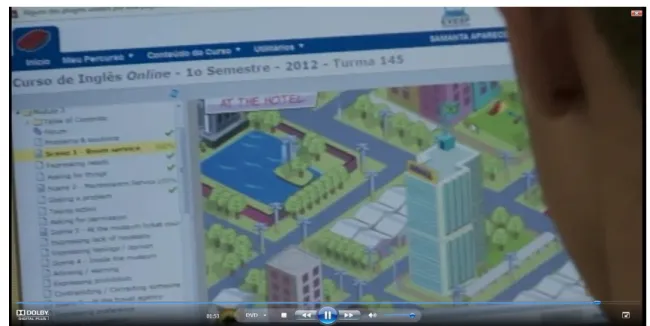
Figure 1: The student in the construction of knowledge. Photo courtesy institutional video EVESP
There are different functions in the context of learning a foreign language. The effective
function relates to the emotional interpretation of perceptions, information or knowledge, since
the cognitive function, in turn, refers to the process that leads to knowledge and understanding
(encoding process, storage, processing and retrieval of information). However, it is the volitional
function, to connect knowledge to emotions, that leads to a specific behavior. This personal,
intentional, planned, deliberate component-oriented goal shows a proactive stance that many call
13
To summarize, 'motivation' is related to one of the most basic aspects of the human mind, and most researchers and teachers would agree that it has a very important role in determining success or failure in any learning situation. That is my personal experience of 99 percent of language learners who really want to learn a foreign language (who are really motivated) will be able to master it reasonable working on the knowledge, regardless of their language aptitude (Dörnyei 2).
The term 'motivation' is used by teachers when they want to describe a good or bad
student. Dörnyei believes that this reflects our conviction, in his opinion, firstly, that throughout
the long process of teaching/learning a foreign/second language the enthusiasm, commitment and
persistence of the learner determine his or her success or failure (4). "With sufficient motivation
learners can achieve a reasonable level of proficiency regardless of their language or cognitive
skills" (Dörnyei 5). Without enough motivation, the most intelligent students will not be able to
persist long enough to reach a language level that can be useful. As Dörnyei states:
In other words, 'motivation' is a general way of referring to the antecedents (the origins and causes) of action. The main question in motivational psychology is: who are these antecedents? Because human behavior has two basic dimensions - direction and magnitude (intensity) That are responsible for:
• The choice of a particular action;
• The effort expended on it and the persistence with it (277)
Motivation is thus a very broad concept that encompasses a variety of cognitive, affective
and behavioral processes, which explain the reason a person decides to do something; spends
much time on the activity; and exercises intensity in performing the tasks associated with it
(Dörnyei 6). It is due to the nature of motivation and its various aspects that learners and
researchers face a problem in choosing a theoretical foundation which best serves to incorporate
14 2.3 Bilingualism
To improve our understanding of student motivation to learn a foreign language, it is also
important to understand what is, in fact, true bilingualism. Several concepts are given by
different theorists, due to the existence of various types and levels of bilingualism, as each
individual has different degrees of proficiency. We conceptualize such term to have an idea what
it is, but we do not know properly its real meaning.
Skutnabb-Kangas asserts that:
A bilingual speaker is someone who can communicate in two or more languages, in both communities, according to the requirements of communicative and cognitive competence made by these communities or by the individual at the same level of native speakers, and is capable to identify the two or more language groups (cultures) or parts thereof (95). This concept does not assume the ideal bilingual individual, but a speaker able to meet
the communication demands made by the communities in which they live. The classification of
context/society where bilingualism is developed, that is, if a society is considered bilingual / or
not, is also relative.
Popular bilingualism occurs involuntarily because the individual becomes bilingual for
survival. An example of this is Brazilian families who move to the United States looking for
better living conditions, without even knowing the English language, the main language of the
country. Because of the need to survive, however, communicate and get a job in this new
country, they end up learning the new language.
While in popular bilingualism the acquisition of new language is by necessity, elitist
bilingualism is by personal or family option, so that the child can, for example, achieve greater
social prestige and better opportunities. Some parents still have resorted to bilingualism because
15
According to Baker and Prys Jones (156), the relationship between bilingualism and
intelligence has passed through different periods. In the 1960s, there was a period of negative
effect, in which it was considered that bilingualism would produce possible negative effects on
intelligence. In the 1970s, came the neutral period, which considered equal cognitive
development of bilingual and monolingual children.
Although we have been through different periods, currently, according to Harding-Esch
and Riley, there is no unanimity about the possible consequences of bilingualism, whether good
or bad. Today, it is not intended to find out if the child is cognitively more or less capable than a
monolingual child. At this time, schools are trying to analyze and describe the specifics of the
development of the bilingual individual, looking for evidence that differs from speakers of only
one language.
2.4 Bilingual Education in Brazil
The expansion of bilingual schools in Brazil, issue 215, Online Education Journal of 6
August 2018, written by Marini et al. says:
Brazil is almost deaf and dumb in voice and speech that the world demands even more. Historically, English quality in Brazilian formal education has always been the privilege of a few. Private schools often limited to meet the requirements of MEC, never hard enough to generate effective language learning. Public chronically immersed in a sea of difficulties, it remains, with very few exceptions, comply table. It happens that, in recent years, Brazil, like most countries in the world, began to unlock locks and unlock doors. Barriers and plunged borders, travel and exchanges were common, communication between people has become more popular and cheaper and the Internet arrived with 70% of its content in English. In this new context, the English language in Brazil (1).
It is the same as if a student of The American School of Rio de Janeiro were to study at a
16
source of law, but operating on Brazilian soil. They are at least 30% more expensive than
bilingual schools. According to Marini et al., however:
Over the past five years, the market of formal private schools increased by 2% per year on average in Brazil. Meanwhile, the bilingual school expanded at rates between 6% and 10%. Part of this commendable performance, in the dark tunnel of the crisis, due to large and bold bets as the Conexia. The group is part of Sistema Educacional Brasileiro (SEB), active for five decades in the
education market and now present in over 300 schools in 20 states.
A proof of the potential of this market is the landing of global giants like British Pearson Bilingual Program, considered the world's largest education company with 170 years of existence, 35,000 professionals and operations in more than 70 countries and multinational original publisher Spanish Santillana. In just six years of existence, Pearson, which serves more than one million students in the world, won 150 Brazilian schools. The program package, one of the most widely adopted in Europe, offers twenty items in service, cultural competitions school management (1)
But would such renewal in the teaching of a second language be the end of the line for
language courses? On the contrary, the models are complementary as there is evidence of
learners’ desire. Bilingualism can still take a long time to get to most private schools, especially
in the countryside. Brazil has 40 million students in public schools, and that the public will not
have a school offering bilingual education for long. The only part of them will form a huge
market. Finally, there will always be demand for courses for adults and professionals.
2.5 Pre-Bilingual Concept
Bilingualism is the quality, condition, characteristic, act, practice, or effect of
consciousness, by a man or woman, to use two languages or dialects in multidimensional
everyday life. Living bilingualism is the first signal transcendence of the mother tongue, leaving
behind monoglotism to steadily move towards the functional polineurolexic.
As it is understood, by the dictionary, monoglotism comes from the Greek: monos, only
17
language by a person or community. Functional polineurolexic comes from the word lexicon,
that also comes from the Greek language, leksikós, “With regard to the words” the composition
element teak derives from the Latin language, theca, "case; collection; Local guard collections ",
and the Greek language, theke," box; case; casket; deposit; guard building, "ie, a box or case of
functional words with intrinsic meaning (Miller 39).
Attentive to the needs of the globalized world, which has the fluency of English as more
than a luxury language, but now as a necessity, bilingual education offers the possibility for
students to practice the language more intensively, experiencing and using it every day, which
facilitates the flow of language, especially in conversation.
It is also worth mentioning that it is important that the teaching method is applied to the
student as soon as possible. This is because the early years are critical for learning languages.
Learning during childhood enables the strengthening of linguistic structures and cognitive
development; after all, it is the age where children learn to read and write, for example.
For a better adaptation of children, the bilingual pre-course would be ideal, considering
the flatness of each, so you can track their progress learning the new language. The
pre-bilingualism is the first contact and familiarization with the expressed language. Ideally, at home
and at school the words will start being exchanged in different languages, making it cognitively
18
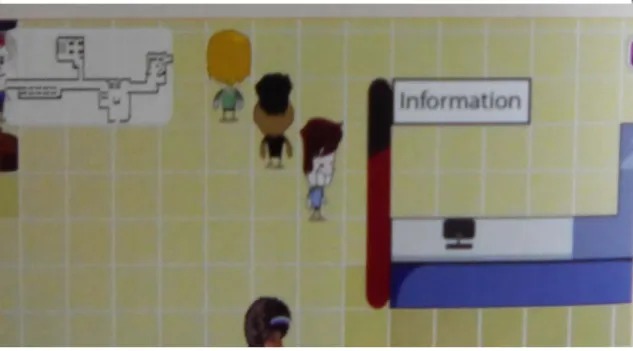
Figure 2.1 Bilingualism and increasingly technology in the lives of our youth. Photo courtesy institutional video EVESP. With regard to the learning of foreign languages, Liu states that:
In terms of foreign language education, English had gradually gained
supremacy in foreign language education China opened up and integrated into the global economy. English dominance Seemed to co-occur with the high-speed economic development, but it was Also Accompanied by and exacerbated the ever-deepening social inequality (73).
On the other hand, the rapid promotion of English contributed to accentuating the
existing gap between regions, social classes and ethnic groups (Feng 87), with regard to
education in general and in particular to the teaching of foreign languages.
The main advantages are "relationships with parents, family, and friends, communication
with people of other nationalities and ethnic groups; sensitivity to language and communication;
greater cultural knowledge and with that world view, among other” (Nobrega & Hodges 6). As
Struys (38) suggests, one of the most striking features of the processing of human language is the
ability to accommodate two or more languages in a brain. This increases linguistic flexibility
because it allows adapting to a wide range of communication situations.
The development of bilingual language in preschool children may differ from monolingual development in superficial aspects, but fundamentally the processes are identical. The bilingual children employ the same strategies to acquire the second language, being, however, able to use their linguistic systems in developing differently under the contextual point of view (Ferronatto et al. 4).
19
If bilingualism has a positive effect on intellectual functioning related to monolingualism,
it is expected that a certain amount of bilingual exposure is required to observe progress (Paap &
Greenberg 235). Of course, this difference will depend on the initial age of exposure to various
languages. This hypothesis is in accordance with the voluminous literature addressing the effects
of early acquisition in the field of language and literacy development (Kovelman et al. 155;
Sundara et al. 370; and Uccelli & Páez 52). In the research carried out, it appears that there are
many arguments favorable to exposing a child to bilingual education as soon as possible. Added
to this there is also a growing number of children developing a bilingual context.
2.6 Acquisition and expansion of vocabulary in a second language
Speaking about language acquisition, it must first be clarified in the concept of input, as
the speech that a child is exposed to. Linguistic input, according to Borges and Solomon (2003),
corresponds to all linguistic experience gained by the use of language in social interactions,
especially those in direct communication with the subject itself. Second language acquisition,
according to Ellis (156), is not a uniform phenomenon, due to the combinations of various
factors associated with the learners and the different contexts in which learning takes place. How
can we explain these differences in achievement? Broadly speaking, three different sets of
explanatory factors have been identified: social, cognitive, and effective (Ellis 158).
The differentiation of the concepts of acquisition and learning, established by Krashen
(444), must be observed: “language learning involves a formal study, including an intellectual
effort and logical thinking by the learner.” While the acquisition is more naturally in real and
concrete situations of interacting environments, functional skills are developed by individuals,
through natural, intuitive and unconscious assimilation. The acquisition of a second language
20
in practice through its use in significant interactions with other speakers of the language to be
acquired (Krashen 447).
This theory postulates that the acquisition of a second language is part of a process of
acculturation and that proficiency is determined by the degree to which the individual assimilates
the target language. Ellis (160) points out that for this theory the lower the degree of social and
psychological distance that the learner has with the target language group, the more it can
influence the language acquisition process.
The innatism theory, inspired by studies of Chomsky (122) and his theory of Universal
Grammar (UG), does not address second language acquisition properly but reiterates that
language is inherent to the human being, to determine something as complex as language
acquisition. Therefore, there would be a biological basis guiding this process. For this theory, the
input is responsible for activating the Universal Grammar and establishing the language that is
developed by the individual as the possibility of acquiring a language only exists when there is
exposure to it.
Furthermore, in innatism, the monitor model, developed by Krashen (451) presents three
assumptions, which are:
- The hypothesis of separation between acquisition and language learning; event monitor, which differentiates the acquisition of the learning system;
- The hypothesis of the natural order, in which the second language takes place in a predictable sequence;
- The hypothesis of input requires that, in order to pass a language stage to another, it is extremely important that the input is beyond the stage at which the individual is being acquired and the hypothesis of an effective filter.
According to Figueiredo (39), for the individual with positive attitudes towards a second
21
Language, which postulates the existence of linguistic aspects common to all languages, genetic
and inborn in humans, which is activated by environmental input and is responsible for
developing L1 and L2.
Although Krashen’s ideas have evolved, some authors criticize him for stating that this
theory did not go beyond the acquisition of grammatical structures, and consider language
acquisition a linear perspective. Due to criticism of Krashen’s theories based on a cognitive
perspective and development, the hypothesis of interaction was designed. Interactionist theories
not only consider the input to explain second language acquisition, but also that there must be
interaction for the input to occur.
The theory of cultural-historical perspective and interactionists are often compared. But
Lightbown & Spada (35) comment that the main difference between them is the emphasis given
by each theory to the internal cognitive process. The historical and cultural proposal attaches
more importance, to learning through social interaction, starting externally and through social
activity, while cognitive processes are being internalized.
All chains presented above are intended to explain the acquisition of the second language by two factors: first, the presence of an input of the second language available to the learner and the second as internal learning mechanisms that justify the way that the second language data is processed (Ellis 166). When the child shows interest in communicating in a foreign language, it is a sign that
he/she feels comfortable to interact socially, speeding the acquisition of the language. It is
important that the language acquisition environment is welcoming, stimulating and conducive of
L2. Parents/Teachers should be sensitive and understand when children have difficulty to
communicate and understand the second language, leading the child to use the mother tongue.
22
parent/teacher should always try to associate the student´s communication in some way with the
foreign language.
The moment of reading a story is very important and it is necessary that the teller takes
some care during this learning process. The story should be known, going through a time of the
previous study to capture all its features and engage to tell it to children. Reading should be made
during a climate of involvement and charm, developed with pauses and breaks so that the child's
imagination is respected.
2.7 Psychogenesis Language Writing
The traditional model of literacy puts the student in a passive position in the process of
writing acquisition, where his or her only function is to assimilate the knowledge that is passed
by a teacher, by memorizing sounds, copying words and deciphering syllables. This method does
not allow the student to participate in the construction of their own knowledge process.
It was through this model that the Argentine psycholinguist Emilia Ferreiro together with
others developed his research on the process of the child's learning, arguing that, contrary to
what was thought, the reading and writing system should be built gradually, with the student in a
continuous learning process. As mentioned earlier, literacy begins long before school. Ferreiro et
al.explains that "literacy is not a state, but a process whose beginning is in most previous cases
the school and does not finish at the end of primary school" (Ferreiro et al.47) About literacy the
author also states:
Modelo tradicional associacionista da aquisição da linguagem é simples: existe na criança uma tendência à imitação (tendência que as diferentes posições associacionistas justificarão de maneira 10 variada), e no meio social que a cerca (os adultos que a cuidam) existe uma tendência a reforçar seletivamente as emissões vocálicas da criança que correspondem a sons ou pautas sonoras complexas (palavras) da linguagem própria desse meio social (21).
23
Then comes the notion of writing as a system of representation and not as a code or
technique to be transferred and acquired.
The study of language attitudes has an extensive research tradition rooted in different
disciplines. The sociology of language, the social psychology of language, sociolinguistics,
linguistic anthropology, discourse analysis, among others, have brought their contributions to the
study of this construction. However, understanding such a complex issue as language attitude
required an appeal to various theoretical disciplines that forced us, as Moita Lopes mentioned, to
make "an integration of various fields of ideas" (27).
The search for theoretical elements of other disciplines, such as social psychology,
provides us with the basis of a clear definition. The identification of factors that influence the
attitudes revealed requires the presence of an approach based on inter-group relations, as the
foreign language acquisition context involves the relationship between different linguistic
groups. The phonetic basis of theories considers the phonetic-segmental and prosodic features
characteristic of these varieties. Thus, the guiding concepts of the research providing a
theoretical framework adequate to explain the attitudes towards other regional varieties, as well
as before their speakers. The phonetic basis of theories considers the phonetic-segmental and
prosodic features characteristic of these varieties.
According to Garret the study of sociolinguistic communities´ language attitudes can
prove "interactional dynamics and relational forces work inside. This includes bias in favor or
against other social or regional varieties, feelings about the speech of the other group or the
24
Other authors, like sociolinguists Agueyisi and Fishbein (155), mention the importance of
studies on attitudes in the field of sociolinguistics to know matters such as choosing a language
in multilingual societies, language planning or language teaching. Therefore, the importance of
including this construction in the acquisition of a second language is evident, in which the study
of linguistic attitudes dates back to language contact situations. These studies have been mainly
based on the relationship of this construction with success in learning a second language
(Guilloteaux et al. 56). Thus, several authors have elaborated different hypotheses about the relationship of attitudes, motivation, and guidance to success (Agueysi and Fishbein 160).
Dörnyei et al. (9) remind us that there has been recently within Applied Linguistics an
opening to the inclusion of psychological factors and processes. Similarly, Kalaja comments:
From 1990 onwards, there has been a greater emphasis on research whose focus is on the context, so the studies have focused on how the motivations - attitudes, in our case - of the learner are reflected in the events and processes of the class. This new approach offers insights into how learners shape and negotiate in speech and writing their understandings and directions regarding an L2 (8).
2.8 Educational and social psychology
As Allport, states that:
attempts to understand and explain how the thought, feeling, and behavior of individuals are influenced by the actual, imagined, or implied presence of others (3).
Social psychology can establish a connection with the subject of research, for regional
variety is intrinsically linked to the community of speakers. Therefore, justified interest in
contexts in which individuals of a linguistic and also cultural group, learn the language of a
25
on the acquisition of second languages, the construct attitudes appear associated and often
confused with the motivation. In this sense, according to Ellis:
there is a large number of individual variables apprentice who have been identified as influencing learning outcomes. However, these constructs were vaguely defined, making it difficult to synthesize the results of different studies and come up with a coherent and complete picture. So often attitude, belief or state appear as undifferentiated, are also unclear interrelations between attitudes and other constructs such as beliefs, motivation and/or perception (199).
According to Ajzen and Fishbein "attitude is an evaluation of a psychological object
captured through the dimensions of attributes such as good/bad, pleasant/unpleasant (28). Eagly
and Chaiken argue that attitudes are "a psychological tendency expressed in evaluating a
particular entity with some degree of favoritism or not" (3). From these two definitions can be
seen that the focus of this construction is in its evaluative nature.
Contemporary trends within social psychology depart from the consideration that such
attitudinal object assessments derive from three sources of information, which together form the
constructed attitude. The first is the effective component - feelings, emotions, related to the
attitudinal object, the second, the cognitive component - beliefs about the attitudinal object.
Finally, we have the behavioral component - behaviors associated with the object of attitude
(Eagly & Chaiken 3).
It should be considered that the formation of attitudes is a direct result of the
knowledge-making process of the social environment that surrounds us. According to Rodrigues (55), they
are formed during our socialization process and result from common learning processes. This
also shows the difficulty we have to make a change in attitudes.
According to the psychosocial theories known as consistency theories, Rodrigues (56)
26
They are independent and interdependent, i.e, influence each other in the direction of a state of
harmony. Therefore, any change in one of these three components is able to modify others. In
this sense, one can say that there is a consistency between the three so that favorable cognitions
tend to be associated with positive emotions, and adverse cognitions with negative effects.
Ajzen and Fishbein (135) state that human behavior is guided by social attitudes, so
attitude is the key to understanding human behavior. However, the view that attitudes offer an
insight into how people behave has been challenged by other researchers as Ajzen and Fishbein
themselves acknowledge (135). After various surveys, the results of the studies show the
attitudes to be poor predictors of actual behavior, and many social psychologists have begun to
question the usefulness of the construct.
The model of the theory of experience is the most widely used to measure attitudes and
has spawned two behavior prediction theories. So many studies on behavior prediction from
attitudinal variables were conducted within the framework of the theory of "reasoned action and
planned behavior" Ajzen et al. (187) and its predecessor, the Reasoned Action Theory, by Ajzen
et al. (62).
The former theory states that a person's behavior is determined by its intention to carry it
out, whereas this intention is determined by the attitude toward the behavior (attitudinal
component) and the subjective norm (normative component). The subjective norm, as the second
determinant of intention, is set or determined by beliefs about how other people (who are
important to me) will consider the performance of my behavior. Therefore, subjective norms
27
Conceptually, attitudes are relatively stable, which means that a change of them is
difficult; but it's not impossible.
2.9 Concepts of identity and "self"
Each theory reflects different perspectives, each perspective will reveal certain aspects of
the phenomenon and hide others. For the authors, MacIntyre, Noels & Moore, the fact of
considering various theories allows a holistic understanding of motivation in learning a language
(325).
Consider the concepts of identity and "self" as they are dealt with in two major theoretical
models of motivation, namely the Socio-Educational Model of Gardner (23a) and the L2
Motivational Self System mentioned by Dörnyei and Zoltan (279). In this way, we intend to
discern which areas of convergence and divergence will allow us to have a better understanding
of the role of the "self" in the motivation to learn a language (Carver & Michael 56).
An important aspect in the model of self-motivational system L2 is the approach of
motivation in favor of a framework of dynamic systems. Dynamic system approaches refer to the
behavior of complex systems containing multiple interconnected components, “wherein the
development is characterized by a non-linear growth as the systems are restructured, they adapt
and evolve organically” (Dörnyei & Ushioda 3).
As Dörnyei and Ushioda (24) argue that the prospects of complex systems began to
influence thinking across the broader field of SLA, and it seems likely that an approach of
dynamical systems involves a much closer integration with other SLA dimensions than presented
28
on developing a complex system over time, where there is an underlying order to chaos,
changing with time, and its elements are always in non-linear interaction (Hoyle et al. 1680).
Dörnyei notes that the development of future self-identities helps the process of acquiring
languages (8). Studies of Dörnyei and self-motivational system L2 seek to account for the wider
complexities in language teaching (Dörnyei & Zoltan 277). The model features the construction
of a perfect self-image, ideal self-learner, bringing up alternative identities of the language for
research of motivation and motivational strategies. To Dörnyei and Ushioda (5), these figures
"created" by the students reinforce the motivation.
2.9.1 Self-concept
Regarding the “self", some authors state that it has an important role in the academic
performance of students (Csizér and Magid; Magid 230), but plays an even more significant role
in learning a language, if we consider that "language, after all, belongs to a person's whole social
being; It is part of one's identity, and this is used to convey identity to other people " (Williams
& Burden 115).
The "self-concept" of each individual has been seen as the epitome of each person,
related to the way that we look at it (Csizér & Dörnyei 23; Higgins et al. 55). An essential aspect of this complex notion was considered extremely important for researchers working on
motivation: the "self-concept", which is not so much as you see yourself at the moment but as
you imagine yourself in the future (Higgins 319).
Markus and Nurius (950) described “possible selves" as mental representations
29
imagined "selves": they represent the idea that each person has in relation to what they can
become, in what would become and what is feared to become.
2.9.2 Motivational Self System in Second Language
A notion discussed in Dörnyei (11), which builds on the intellectual work of Markus and
Nurius (950), proposing a model of motivation for learning L2 that reformulates the motivator to
construct itself, thus thinking of the psychological theory of "possible selves" as "ideal selves
that we would like to become", "selves that we could become," and "selves we are afraid of
becoming". As the "cognitive components" and the "hopes and fears, goals and threats" (954),
providing ideas of what "is possible for us to be’ (Markus 960; Markus & Kitayama 224). In this way, it would lead the student to reflect on his or her possible selves, and thus to identify and
label the person he could become, as explained by Ushioda and Dörnyei (3).
About the “Ideal L2 self”: if the person would like to speak the L2 (for instance, the
person who would like to be associated with travel or to do business internationally), the "ideal
L2 self" is a strong motivator in learning language, as far as he/she wants to reduce the gap
between the present and the future "self". The “Ought-to L2 self” relates to the attributes related
to L2 that each of us should have in order to avoid possible negative results and that have little or
nothing to do with one's own desires or expectations.
The "Motivational Self System" model (self-motivational system) also includes a third
component that reflects the main conclusions derived from the investigation into motivation,
conducted in the 90s, which highlighted the motivational importance of the immediate context of
learning and experience. As Dörnyei et al. conclude (10), this approach relates to the two future
"self-guides", associated with an imagined experience, and a third constituent rooted in actual
30
and L2 learning experience regarding the “two future self-guides, associated with imagined
experience and a third constituent rooted in actual experience” (Dörnyei et al. 8).
2.10 The Socio-cultural model by Gardner
In the first full summary of the motivation in L2, Robert Gardner regarded the L2 as
mediators between different ethnolinguistic communities in multicultural contexts, considering
the motivation to learn the language of the other community as the first force responsible for
improving our intercultural communication and affiliation (Gardner 6b). Gardner claims that "a
foreign language, unlike other school subjects, is not an area of socio-culturally neutral
knowledge, since it is affected by various socio-cultural factors, including attitudes,
representations and also cultural stereotypes" (Gardner 21a)
This leads us to consider Gardner´s socio-educational model, in our study. The
fundamental principle of the socio-psychological approach lies in the fact that the position in the
target community has a strong influence on learning an L2. Gardner assumes that the linguistic
objectives of a learner fall into two broad categories:
(i) An integrative orientation that reflects a positive attitude towards the L2 community and a desire to interact with, and even resemble, representative members of the L2 community; and
(ii) An instrumental orientation, in which language learning is primarily
associated with the pragmatic aspect of the potential gain that will be the mastery of L2, namely obtaining a better job or a higher salary. , seems to coincide with the conviction of our students that the language allows them to open the doors of the labor market (Gardner 10a)
Gardner's theory of a more developed aspect is not related to integrative/instrumental duality, but rather a broader concept of integrative reason. These consist of a complex structure, of three main components:
(i) Integration, subsuming an integrative orientation, interest in foreign languages, and attitudes towards the target community;
31
(ii) Attitudes, in relation to the learning situation, comprising attitudes towards the teacher and the course; and
(iii) Motivation, which is compounded by motivational intensity, the desire to learn a language and attitudes towards learning a language (Gardner 10a) Gardner explains why:
[M] isused frequently in the literature, though close inspection will reveal different meanings to many individuals ". Still, an "integrative" component has consistently emerged in empirical studies even in the most diverse contexts, explaining a significant portion of the variance in language learners'
motivational disposition motivated learning and behavior (Gardner 12a)
The Canadian socio-psychological approach dominated the field of motivation in L2, for
more than two decades and, interestingly, the biggest challenge is not that of the researchers of
L2, but rather in the area of traditional psychology (mainstream). The 80s brought a cognitive “revolution” resulting in new theories of motivation and the new paradigm that found
particularly fertile ground within educational psychology. The study of student motivation has
become a topical issue, and virtually all major psychologists have begun to take an active interest
in the matter.
2.11 Reflective Thinking
According to Dewey, reflective thinking is the active and persistent examination of all faiths or alleged forms of knowledge in the light of the foundations that sustain it and the conclusions to tend. In Dewey's definition it is clear that reflective thinking is aimed at the achievement of a goal.
For a professional to reach this goal and thus reach a conclusion, he or she must go through certain stages of reflective thought. For Dewey, the stages of reflective thinking are:
1. A state of perplexity, hesitation, doubt
2. A search action or investigation in an attempt to bring to light facts that can confirm or cancel the initial doubt (23).
By emphasizing the existence of phases in reflective thinking, Dewey distinguishes the reflective thought of routine thinking. Schön (102), in turn, contributed to the dissemination of
32
the concept of reflection, distinguishing between: reflection-in-action (reflection-in-a-share) and reflection-on-action (reflection-into-a-share).
The reflection-during-the-action occurs when the professional (in this case, the teacher) reflected on their practice while it is happening, that is, while it is in the classroom. Reflection-on-a-share, however, is developed after the end of class.
The reflection of the action can be systematic and deliberate, which may occur during the interval of the classes, or later when the teacher is reviewing the progress of students or reviewing their planning. Zeichner, in turn, described three different levels of reflection: technical, practical and critical.
The professional that reflects on the technical level, shows his concern for the efficiency of the instruments used to achieve certain goals; reflection on the practical level relates to the evaluation of educational objectives, as these are achieved by the students, and finally, critical reflection that considers the importance of educational goals, how well these have been achieved and who is benefiting from these positive achievements.
To Wallace (178), the teaching of English is considered a profession, as it presents the following essential qualities required by society: a scientific knowledge base on a rigorous study period that is evaluated formally, a sense of public service, high standards professional conduct and ability to perform useful and specific tasks competently.
Furthermore, according to Wallace (178), professionalism can be developed in three models of vocational education: the craft, the applied science, and the reflective model. The learner is passing professional competence through education (demonstration) made by professional experiences and practicing (training).
Professional training courses that follow this model seem to suggest that there are fixed patterns of behavior to be learned, like an assembly line and, since these behaviors become routine, the learner reaches the required professional competence. This professional education model was widely used during the era of the method, which had its origins in linguistics structuralism, behaviorism, and psychology.
33
At that time, a great deal of research was carried out to try to find the most effective method for teaching languages, as it was believed that the learner's success depended on the choice and use of the best method. With the rapid growth of disciplines such as psycholinguistics and sociolinguistics, the craft model was losing ground to the second model of professional education that Wallace calls the applied science model. This model is traditional and probably still the most used in training courses or professional education programs. The basis of this model is the findings of the empirical sciences, and therefore the main objective to be achieved is purely instrumental.
In the applied science model, it aids in discovering the future teacher who, in turn, puts them into practice. In the era of the method, the faults occurred when caused by choosing the wrong method or by poor enforcement. These failures occur because the teacher did not
understand the findings or put them into practice incorrectly, which means that the fault is in the teacher. Wallace (1995) presents the following diagram that summarizes the model of applied science.
The teacher who applies scientific knowledge in the classroom can eventually become an 'expert', conducting research and making findings, but often this happens when the teacher ends up leaving teaching to become a researcher. This keeps research away from practice because, as the teacher becomes a researcher, he/she will only disclose findings, and will apply them, if the teacher is teaching.
In the model craft, as mentioned above, professionalism is achieved by imitation. In the model of applied science, professionalism is arrived at by applying discoveries made by
researchers who do not work in the classroom most of the time.
The model of reflection, in turn, tries to meet the failure that these two models feature, i.e. to make the teacher reflect on their practice, no longer passively accept the results of research, and to ensure that the teacher becomes a researcher without, however, distancing him or herself from the classroom. Two terms often associated with the model of reflection are received knowledge and experience.
The first occurs when the future teachers learn the vocabulary and concepts related to their area of expertise (survey results), the theories and skills that are widely accepted as part of
34
the intellectual content necessary for the performance of the profession. But the knowledge that is experienced is developed through practice when the teacher has the opportunity to reflect on putting this knowledge into action, that is, reflect on their practice while it occurs.
For Wallace (179), teacher education has three models (craft, applied science, and the reflective model) for Zeichner (21), teacher education is analyzed according to four paradigms: behaviorist, personalism, the office-traditional and oriented paradigm for research. The main features of the behaviorist paradigm are an emphasis on the development of observable and specified skills, teacher evaluation by their performance in terms of proficiency, also pre-specified. Reflection and personal development do not receive attention here.
As its name suggests, the personalist paradigm is opposed to the behaviorist paradigm "because it is related to the humanistic practices in order to offer teacher personal growth, promoting an increase in psychological terms. This evolution in the form of a reorganization of beliefs and perceptions is seen as more important than the specific skill "(Moll da Cunha 15). As the specific skill domain is not essential within this paradigm, the content of teacher education courses is rarely by default. Professional competence is seen in terms of psychological maturity in this paradigm reflection as it is not the central point that is taken into account.
The third paradigm analyzed by Zeichner (23), the traditional craft paradigm assumes that teaching is a craft. According to this paradigm, the teacher is seen as a passive recipient of
knowledge that is passed on by a specialist. Reflection is not emphasized in this paradigm.
The last paradigm-oriented research considers the teacher responsible for their
preparation for teaching. In this category, the technical skills are seen as a means by which the objectives are achieved.
35
PART II: MOTIVATION AND LANGUAGE LEARNING IN PRACTICE
Chapter Three: English Project
3.1 Introduction and Overview
To understand the educational benefits of learning a second language a review of the ‘English Project’ is needed in forming a reflection as a teacher. These aspects provide an insight
into the path taken students in learning a second language. Learning second languages can be
subjected to obstacles and milestones in classrooms that hinder substantial progress. The English Project’s purpose was to come up with resolutions that could maximize the benefits of learning
the second language. The aim of the project is also in line with the use of modern technology in
teaching English and other second languages in Brazil.
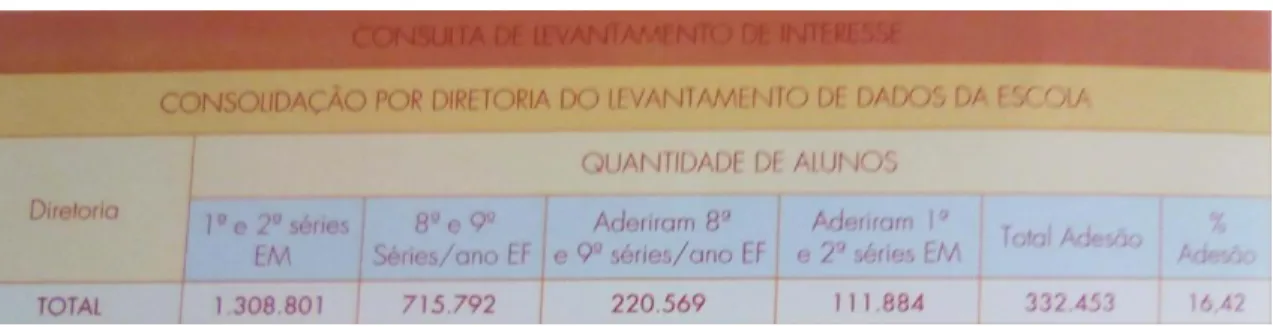
The project, with the support of education investors, occurred in 2011, the year in which
the student interest research was held. The research sought to abolish the problems reported by
the teachers on practice and education, and so held graphs of interest so that the final material
was suitable to the approach taken in public schools. There was the whole collection of data that
was required for the construction of this new instrument which would be disseminated in mass,
and with great results expected.
Figure 3.Data sheet courtesy EVESP, which got the data of interest in this type of course for public school students. The research was collected by the Boards of São Paulo State Education, between the months of October and November 2011. Material collect.
36
The target audience was defined, and the selected students were those who were enrolled
in a high school of the state's public school system. Each of these students was offered a place in
the program, it was up to each learner to decide if he or she wished to participate in the course.
The project was a partnership of the São Paulo State Government by the State Secretariat
of Education of São Paulo and the Ministry of Education, as well as the Padre Anchieta
Foundation (sponsor of TV Cultura, Radio FM Cultura and Cultura Brasil, Multicultural
Education, UNIVESP TV, and Ra Tim Bum!). The Padre Anchieta Foundation - Paulista Center
for Radio and TV Education is a private entity that is funded by budget allocations and from its
resources.
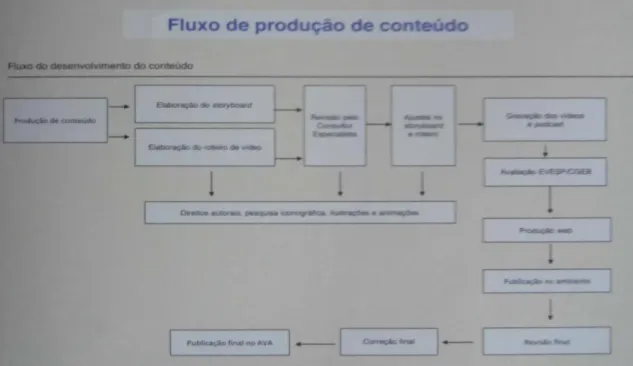
Figure 4 the development of the course, a flow chart that guided every step of the content creation process for the integration of different work teams has been prepared (LaFemina,).
The organizers of the teaching material were Ana Carolina Nunes Lafemina, Fernanda
37 Figure 5Cover, DVD and back cover of the material under study (LaFemina).
All teachers took a six-months training course, following an assessment of the effects of
the programs as of then, made visits to schools and held meetings with students frequently, in an
effort to better understand their view on the subject matter.
The teachers stated that even though the materials used were good, there were still some
barriers to break down to reach the students’ connection to the virtual classroom. "At first,
students found it different and interesting," and, "they say they like the course, but it was noticed
that the student begins to feel some difficulties (access, content, motivation) and gives up,
showing that access to the internet is also demotivating.
The project’s aim is to motivate students to learn English in a more modern way and
38
instructions for the student to know how to use the learning environment (Figure 6) and was fully
customized to meet the target audience because the platform is playful, dynamic, colorful and
gamified. (Figure 7).
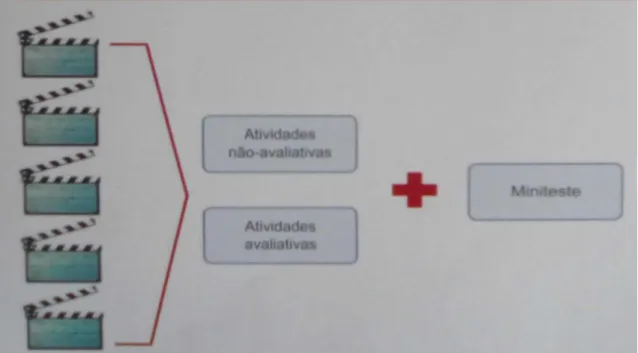
The modules consist of videos, evaluation activities, at the end of which a mini-test is
presented, through which the student tests the knowledge acquired in the module.
Figure 6(LaFemina. 2013, 2013 Figure 7Figure 3.4: (LaFemina, 2013,
Furthermore, it was intended by the teachers to deepen students` knowledge of the
English language through exposure to videos and activities specially designed to portray
everyday situations so that students could experience situations such as being at an airport, and at
major international events like the World Cup.
39
Figure 9 The game "The Missing Star', is ten hours long and ends the course. (LaFemina, 2013). 3.1.1Project Background
The project was tested by the television media (TV Cultura) and the government of the
State of São Paulo, who were trained and properly gazetted for the objectified activity, and the
material for the project during and after the completion of the pilot project. The material was
distributed to Public Schools of São Paulo; such material must be kept in their libraries for use
by network teachers who have an interest in implementing the project. The Brain Honey
40
Figure 10 The game "The Missing Star ', is ten hours long and ends the course. (LaFemina, 2013).
The aim of the project was the improvement and development of the process of learning
and traditional teaching methods, through the Secretariat of the São Paulo State Education
(SEE-SP) was created the Virtual School Educational programs of the State of São Paulo (EVE(SEE-SP).
Established by Decree No. 57011 of 23 May 2011, the EVESP aims to offer regular educational
programs, in situations that require meeting the needs of specific groups of the population. It
should develop programs and distance learning courses, subject to the national curriculum
guidelines, and expand decisions. The courses are designed for students enrolled in public
schools.
Distance education collaborates with the modernization of teaching resources and
continuing education and creates new learning models since that access should be getting wider.
Summarizing the steps taken to arrive at the assembly of the material and methodology to be
41
of students who are in high school and elementary II. This research rated the degree of
knowledge of the English language acquired by students, teachers, and students to learn the point
of common interest; and trained and evaluated professionals graduated in English, to be selected
and distributed to public schools in the state. Pitombeira (2013)
The Padre Anchieta Foundation was in charge of producing the material of the project,
and the CD, which has classes and activities to be developed with the use of multimedia, and
these were distributed to schools.
Figure 11 Based on guidance on the curriculum of the Foreign Modern Language team SEE-SP, home of the modules has a working theme. (LaFemina 2013).
42
43
Chapter 4 Research Design Principles
4.1 Necessity of Study
The English Project provides a clear abstract of what could motivate people to learn a
second language. It focusses on the environment that students are exposed to and how it relates
to their performance and motivation in learning the English language. Although it is important to
rely on some of the findings of the English project, several factors indicate that there is a need to
conduct another study on the same issue.
Firstly, the environment, from the English project, was designed to be similar to all the
participants in the study. Students who were under study shared the resources that were availed
for the project. Similar technology was applied across all the participants. The study aimed to
find out the obstacles faced by students learning English when exposed to the same resources.
External resources that could affect the outcome of the study were not considered. Students and
learners, in general, are known to come from different backgrounds with different kinds of
resources availed to them. To a large extent, these resources are known to precipitate different
kinds of learning capabilities. Given that all the student participants were given an equal amount
of time and resources, exposure to different kinds of external resources played an important role
in swaying the results of the English Project.
As a result, a need to conduct a study that will incorporate different factors, external or
internal, arises. Unlike the English Project, this study focused on all possible factors that could
affect the outcome of the bilingual learning process. This was done to ensure that the results
collected are true and balanced and that all the factors or resources that could determine the
outcome of a learning process are included. With this inclusion, the results and findings of this
44
Secondly, the English Project was done in 2011. Lots of changes in the learning
environment have happened since this time. Even though some of the findings of the project are
still valuable to date, some have become outdated or have outlived their impact on the bilingual
learning process. In the last few years, different changes in the learning process have occurred rendering some of the previous processes ineffective. In today’s era, people learn second
languages through technologies that were introduced recently. In other terms, people flow with
the innovations of the day.
Technology, for instance, has changed significantly since 2011. The English Project
focused on the application of technology that was available at the time in Brazil. In the last eight
years, the world of technology has seen significant developments, some of whom have occurred
in the learning sector. The emergence of technologies such as applications in smartphones that can aid in bilingual learning has greatly changed people’s approach to learning a second
language. Learners of second languages rely on both class and technological knowledge to
acquire bilingualism.
The English Project, based on these factors, is ineffective in relating to today’s
technology and innovation. In this study, the use of new technology and capabilities of
innovation have been incorporated. The study represents the true picture on the ground for today’s technological and innovative environment as opposed to that of 2011.
The English project, furthermore, focused on the perceptions of teachers on student
understanding and motivation in learning the English language. The teachers were exposed to a
six-month training exercise to equip them with skills of identifying obstacles and motivations for
learning the English language. The teachers were supposed to monitor the stunts under study and