i
MAKE IT AUTHENTIC
Gonçalo Ferreira Munster Teixeira Motta
full name
How can Instagrammers benefit from authentic
communication?
Dissertation presented as partial requirement for obtaining
the Master’s degree in Information Management
ii NOVA Information Management School
Instituto Superior de Estatística e Gestão de Informação Universidade Nova de Lisboa
MAKE IT AUTHENTIC:
HOW CAN INSTAGRAMMERS BENEFIT FROM AUTHENTIC
COMMUNICATION?
by
Gonçalo Ferreira Munster Teixeira Motta
Dissertation presented as partial requirement for obtaining the Master’s degree in Information Management, with a specialization in Marketing Intelligence
Advisor: Diego Costa Pinto
iii
DEDICATION
I dedicate this section exclusively to people who contributed directly to the realization of this dissertation.
Firstly, I would like to thank Professor Diego Costa Pinto for his excellent academic guidance and constant motivation. Knowledge, experience and tireless dedication were some of the factors that deserve to be highlighted.
Finally, want to show all my apreaciation to family and friends that accompany me through the various phases and were always ready to support me and help me in anyway possible.
iv
ABSTRACT
Social Media has been one of the favourite ways for brands to promote their products/services and at the same time develop relationships with their consumers. Among the different ways of marketing on social media, influencer marketing has been the one with biggest growth in popularity. Although there is an increasing number of influencers and brands partnerships to promote products on social media, consumers are left uncertain about the authenticity of what is promoted. This study aims to understand how the perceived authenticity of different types of Instagram post will have a better effect towards the product attitude and purchase intention. With this study we want to compare two main types of communication/promotion made by Instagrammers and understand how followers react to a commercial approach on communication vs more natural one, like product placement. Using an experimental study with 99 participants, this research explores different approaches and appeals of the communication generated by Instagrammers and understands how it affects followers perceived authenticity and how that influence product attitude and purchase intentions. The findings indicate that a more natural approach on the communication, such as an image with product placement and an emotional text are seen as more authentic and have a positive effect on purchase intention.
KEYWORDS
Social Media, Instagram, User Generated Content, E-Word of Mouth, Influencer, Instagrammer, Product Placement, Authenticity
v
INDEX
1. Introduction ... 1
2. Literature review ... 4
2.1. Social Media and Instagram... 4
2.2. Opinion Leaders, Influencers and Instagrammers ... 5
2.3. User Generated Content & E- Word Of Mouth ... 6
2.4. Product Placement and Perceived Authenticity ... 8
2.4.1.Authenticity ... 10
3. Methodology ... 13
3.1. Sample of Participants ... 15
3.2. Measures & Data Analysis ... 16
3.2.1.Instagram usage ... 16
3.2.2.Life satisfaction (moderator) ... 18
3.2.3.Perceived authenticity (dependent variable) ... 19
3.2.4.Product attitude and Purchase Intention (dependent variable) ... 21
4. Results and discussion ... 24
5. Conclusions ... 27 5.1. Theoretical contributions ... 27 5.2. Managerial Implications ... 28 5.3. Limitations ... 29 6. Bibliography ... 30 7. Appendix (optional) ... 37
vi
LIST OF FIGURES
Figure 1 – Research Model ... 13
Figure 2 – Instagram Posts ... 14
Figure 3 – Gender Sample... 15
Figure 4 – Instagram Daily Usage ... 16
Figure 5 – Instagrammers Followed ... 17
Figure 6 – How often do followers read the copy ... 17
Figure 7 – Authentic Posts ... 19
Figure 8 – Sponsorship Reference ... 22
Figure 9 – Purchase Intention ... 23
vii
LIST OF TABLES
Table 1 – Life Satisfaction ... 18 Table 2 – Internal consistency ... 21
1
1. INTRODUCTION
Nowadays it’s undeniable that social media has become a big part of our lives, not only as personal networks but also as platforms where brands and consumers meet and develop relations. The number of social media users continues to grow, and it is estimated that in 2019, there were around 3.47 billion social media users around the globe (Statista 2020). According to Marshall (2010), Social Media serve as a window for individuals to create a persona/ a public self-presentation and Instagram is seen as the perfect platform to open that window.
Therefore, brands and marketers understand the importance of their presence on social media since it enables them to be part of the online discussion regarding their product and reputation and to be closer to their consumers, promoting a better relation.
Social Media Influencers are regular users of social media platforms, who can collect a vast number of followers on social media through the engagement with their community (Senft, 2008). Some individuals have a lot of followers and are seen as role models, experts or simply attractive on matters of appearance, lifestyle and taste, granting them the status of influencers and micro-celebrities.
Brands and marketers realised the importance of such influencers, also known as “instagrammers” (Jiménez-Castillo et al., 2019) by the influence they have amongst their community of followers and the niche of followers that some were able to create.
Therefore, instagrammers are seen as a bridge of communication between brands and followers, as they “represent a new type of independent third-party endorser who shape audience attitudes through blogs, tweets, and the use of other social media” (Freberg et al., 2011, p. 90). Due to that, brands started to invest more in “influencer marketing” to take advantage of Instagrammer's intrinsic characteristics, personality, targeted audience and
content to promote their products and services (De veirman et al., 2017). Besides that, the
communication from Instagrammers is still seen as non-commercial and it’s a mix between User Generated Content and Product Placement. It is a very discreet way of advertising, and that is why it seems to work so well, and it has been a serious focus on communication investment (Lou et al., 2019)
2
The investment in influencer marketing has been growing and is one of the most effective. The study “US Social Trends for 2017” made by eMarketer, where it is stated that US marketers who are familiar with influencer marketing consider this practice to be one of the second most effective promotional strategy (7.56 on a 10-point scale) when equated to other media, such as magazine advertising (5.36) and celebrity endorsements (6.84). This is reinforced by the report “The State of Influencer Marketing 2020” made by Linqia, 86% of marketers used influencer marketing in 2019, 92% of whom found it effective. Also, according to the report, Instagram is the platform of choice of 97% of marketers and agency professionals.
Besides this, the “US Social Trends for 2019” report by eMarketer point out that marketeers will focus on micro and nano influencers since brands want to work with people who might actually like and use a marketer’s product then someone who just want to make a buck out of it.
An important reason for the considerable success of influencer marketing is due to the perceived authenticity of the communication (Scott, 2015,). Consumers trust other people more than they trust brands and 66% of people trust recommendations from opinions posted by consumers online. (Forbes, 2018). Since consumers perceive influencer’s as more trustworthy than the content provided by brands, their willingness to buy might increase (Waldt et al., 2009; Fan et al., 2012).
Followers are pulled by the chance to access content that comes from other “consumers” like them and therefore influencer’s opinions, are considered most times as genuine and non-commercial, are perceived as more trustworthy than regular marketing promotion/communication (Mudambi et al.,2010).
But the popularity of influencer marketing and the growth of the number of collaborations between influencers and brands has called the attention of followers and has been putting the factor “authenticity” into question. There are many well-known cases of instagrammers that saw their credibility and authenticity challenged and doubted. Consumers and followers are getting better informed and are aware of the commercial agreements between brands and instagrammers and it seems like there is always a sense of suspicious around instagrammers content.
3
Thus, although prior studies analyse the importance of credibility on Social Media, authenticity in this area is still giving the first steps and is a concept that has been growing in importance due to the tensions that brands and influencers face with their community of followers.
Therefore, this study aims to understand if influencers can create authenticity in their favour, testing which type of promotion/communication is better perceived among followers as the most authentic and how much this perceived authenticity influences product attitude and purchase intention.
4
2. LITERATURE REVIEW
2.1. SOCIAL MEDIA AND INSTAGRAM
The Social Media platforms, “a group of Internet-based applications that build on the ideological and technological foundations of Web 2.0, and that allow the creation and exchange of user generated content’’ (Kaplan et al., 2010, p. 61) or Social networking sites, cyber environment where individuals can create a personal profile, share photos, images and text with each other (Powell, 2009) has become a considerable part of most people’s life since it became almost essential for social networking and content sharing (Asur et al., 2010), and at the same time has an important role in the economic interests of businesses. This study will mainly focus on Instagram, one of the social media with biggest growth in users and in importance.
“Instagram is a photo-sharing social networking app that enables users to take pictures and edit them with a selection of digital filters. Instagram also started to offer video sharing and Instagram Stories” (Statista 2018)
Instagram has been showing an exponential growth, going from 90 million monthly active users since 2013 to 1 billion monthly active users in 2018. This rise of this social media platform has also been accompanied by brands that are increasing their presence and investment on Instagram.
And it is easy to understand why since Instagram engagement with brands is 10 times higher than Facebook’s, in some cases even more. When Mercedes-Benz released the new A-Class, it shared a post of the same image both on Facebook and on Instagram. The Facebook post quickly had more than 10,000 Likes and Instagram generated more than 150,000 Likes—15 times the response (Forbes, 2018). These facts demonstrate how crucial this trend is for advertisers wanting to reach their audience.
Nowadays, it’s estimated that exist more than 25 million business profiles on Instagram. these numbers clearly show that brands are seeing Instagram as a new channel to connect with consumers. In 2017 around 80 percent of Instagram’s users followed a business account and 60% of Instagram users discover new products on the platform (Brandwatch, 2019).
5
2.2. OPINION LEADERS,INFLUENCERS AND INSTAGRAMMERS
The concept of opinion leaders was first introduced in 1955 by Katz in his study of the communication flow between the mass media and the public and extensive research has shown that influencers drive new product adoption.
In general, opinion leaders/influencers are defined by the combination of three factors: personification of values (who one is), competence (what one knows) and strategic network location (where one is). Each of these three factors can be constructed with one or a wide range of features psychological traits, expertise or position in the social network (e.g. betweenness centrality, eigenvector centrality or node accessibility).
Besides the definitions of opinion leaders/influencers, we can also include instagrammers in the definition of human brand as they are according to Thomson a “well-known persona who is the subject of marketing communications efforts” (Thomson, 2006). Furthermore, instagrammers as human brands bring their own audience into the marketing communications efforts. Instagrammers is the name given to influencers on Instagram, they are regular users of this kind of digital platforms, who can collect a vast number of followers on Instagram through the engagement with their community (Senft, 2008)
The “key factor” to obtain the status of instagrammer is around of the number of followers. According to De Veirman, Cauberghe and Hudders (2016) Instagram profiles with high numbers of followers are considered more likeable, mostly because of higher perceptions of popularity.
These Instagrammers are seen as micro-celebrities, opinion leaders and human brands. The term of micro-celebrity was first established in 2001 by Theresa M. Senft defining as “people “amping up” their popularity over the web using technologies like video, blogs and social networking sites” (Senft 2008, p. 25).
Social media have been crucial for “normal people” present themselves as opinion leaders/influencers and grow their basis of followers making these influencers as micro-celebrities and human brands. Platforms as Instagram allows influencers to directly show their “real” selves and their personal life, which includes their preferences, opinions and
6
tastes, often related to several brands, to their audience, creating the perception of proximity between their audience and therefore a sense of, similarity, trust and credibility. McGuire (1985) contends that the effectiveness of a message also depends on the attractiveness of the source, which is driven by familiarity, likeability and similarity (in terms of values and cultural background).
A higher degree of similarity leads to more positive attitudes toward the advertised brand and thus to greater advertising effectiveness. Influencers/Instagrammers many times are also seen as an aspirational/role model and consumers might compare themselves with the idealized persona (Bower et al., 2001), and strive to increase the similarity between them and the influencer.
It’s clear that the “right choice of influencer can be effective in establishing a position for newly launched product and it can also change perceptions on a product that has been positioned in a wrong way” (Waldt et al, 2009).
Overall, influencers/instagrammers are micro-celebrities who can, at the same time, embody one or several brands, depending mostly on characteristics of personality and competence, be a communication channel for a targeted audience and still maintain the sense of proximity to their community of followers, being perceived as “one of them” most of the times and therefore be perceived as trustworthy and authentic in their communication. We suspect that user’s life satisfaction can influence their motivation to adopt influencers choices. We tend to believe that users with lower levels of life satisfaction, will be influenced by instagrammers, to increase their similarity with their aspirational model.
H1: Users’ levels of life satisfaction impact instagrammers communication influence
2.3. USER GENERATED CONTENT &E-WORD OF MOUTH
The rise of social media and this type of opinion leaders/micro-celebrities has originated a shift of power between brands and consumers, forcing many marketers and brands to focus on Consumer to Consumer promotion methods and approaches such as encouraging consumers to create brand-related content.
7
According to Beclh, Kerr and Powel, we can describe this creation of brand-related content by the consumer as User Generated-Content, since it fits in the definition of consumer-generated media such as opinions, experiences, advice related to products/services and brands, often based on personal experience/knowledge, and which it is present in social media platforms and forums. Besides this definition of UGC, Muntinga et al. (2011) point three brand-related activities described as essential for the process of UGC: Consuming, Contributing and Creating. As mentioned, UGC is usually created based on personal experience, during or after consuming activities, in which consumer experiments and tries the product so that an opinion can be developed and shared with other consumers as a contribution on the decision-making process. The process of creating the content can vary between a simple text or producing/uploading photos or videos related to brands.
In any type of content, text/message appeal is of high importance since it is an element of differentiation and its essence must include or at least trigger a reason for listeners/readers to sell out their attention towards that call.
We can identify two major message appeals, the rational and the emotional. The rational appeal relates to the cognitive response and focus on objective and factual information such as products features and attributes. Differently, the emotional appeal triggers an affective response, aim at uncovering emotions (Goldberg et al., 1987).
The capacity and effort made by instagrammers to develop/create relevant and quality content is one of the factors for their success in building a dense community of followers and increase the reach of their electronic word-of-mouth (eWOM).
Many times, misinterpreted as the same as UGC, since they are two close related concepts, the eWOM can be defined as "any positive or negative statement made by potential, actual, or former customers about a product or company, which is made available to a multitude of people and institutions via the Internet" (Hennig-Thurau et al., 2004, p.39)
Recent research indicates that the combination of UGC and eWoM, have a bigger influence on consumer behaviour than traditional forms of advertising and marketing (Muntinga et al., 2011; Villanueva et al., 2008; Chiou et al., 2003) once these methods are perceived as more trusted and persuasive than traditional advertisements (Bickar et al., 2001; Goldsmith et al., 2006; Okazaki, 2008).
8
Instagrammers are precepted as more authentic form of communication and promotion since they are “regular” people who express their own opinions, thoughts and experiences about a brand/product or service on Instagram. The UGC created by instagrammers is, at least, based in two of three brand related activities described as essential for this process: Creating and Contributing. But many times, the first brand related activity, consuming, is not part of the process, compromising the realness of the UGC.
Nowadays, brands rather than encouraging instagrammers to create brand-related content, prefer to pay them or give instagrammers something in return for them to disguise the promotion of product/service as a user generated content by manipulating the elements of communication.
This effort made by brands, is defined by Burmann and Arnhold (2009) as user generated branding (UGB), in which there is a strategic and operative management of the user- generated content (UGC) to achieve brand goals. Consumers and followers have been aware of these marketing tactics developed by brands in association with instagrammers, which has been affecting both brand and influencer perceived authenticity.
We believe that if an Instagrammer has a more emotional, natural and discreet speech considering a brand or product, this communication would be perceived as a more genuine and authentic and therefore the follower attitude towards a brand/product will be better and the intention to buy will also be bigger, since followers will think that the Instagrammer is sharing a personal taste and not being a channel of promotion.
H2: Instagram posts with emotional text are perceived as more natural and authentic.
2.4. PRODUCT PLACEMENT AND PERCEIVED AUTHENTICITY
Considering the decrease on perceived authenticity in UGC and eWOM, several brands and instagrammers are turning to more “discreet” methods such as product placement, which is not exactly a new marketing technique (Balasubramanian, 1994), but more recently has re-gained it place on the promoting strategy.
Product Placement is the paid visual inclusion of branded products or brand identifiers in editorial content (Karrh, 1998). James Bond movies are well-known for practice product
9
placement, every time we see the James Bond watch or car, we see it as part of the movie and not as method to promote something, even though we can clearly identify the watch or the car. Under these circumstances, audiences are probably unaware of the commercial influence attempts and/or to process the content of such communication differently than they process a commercial message.
Having this definition and example to start, we can almost do an immediate connection to social media influencers. Their capacity to create relevant content to their audience and still integrate brands, products and commercial messages, makes influencer marketing a form of product placement (Russell et al.,2005; Schneider et al., 2005).
Product Placement has many different purposes but it is clear that promotes brand awareness, consumer recall, instant brand recognition but it can also help to change consumers’ attitudes (Williams et al., 2011). The success and effectiveness of the product placement is dependent on two main factors on the strategy, the brand consciousness and the obviousness of the placement will determine the degree of influence in consumer behavior.
More and more instagrammers are using product placement to expose and promote brands/products in their posts, since those brands/products are viewed as a part of everyday life of the instagrammer and therefore it is assumed as a personal choice. In this way, being consistent on showing the product on several occasions, the community of followers doesn’t see it as a marketing move but gets aware of the brand/product. Besides of this, consumers are presented to products on daily usage situations into which followers can adopt, replicate and project themselves, being one step closer to the influencers they admire (Russell et al., 2006).
While its clear the effectiveness of product placement, this method have been criticized since camouflaged promotional intent may be unclear to consumers (Boerman et al., 2017) and given the increased advertising saturation and ever-rising presence of product placements through social media, the audience of followers many times doesn´t know to what extent the content is under the influencer's control or is part of marketing strategy by brands (Liljander et al., 2015).
10
Besides the referred above, it is known that many companies contact influencer, concretely specifying how their brand/ product must be integrated in the Influencer’s post, compromising the authenticity of the communication and therefore the persuasiveness of a message since it depends on the audience's trust in the communicator and related perceptions of the communicator's authenticity and credibility on the topic at hand (Hovland et al., 1953; Amos et al. 2008).
We expect the type of image, will affect the perceived authenticity of a post, in a way that how some instagrammers present products or brands in a picture will be seen as more real and natural than a commercial partnership post. We want to prove that an image where the product is placed as natural part of the lifestyle of the instagrammer or in a normal consumption situation, will be perceived as more authentic than an image where the focus is the product/brand without any natural incorporation.
H3: Posts with product placement are perceived as more authentic than normal promotion on a post.
2.4.1. Authenticity
The desire of authenticity is clear on consumers (Arnould et al., 2000; Beverland et al., 2010) and they will respond positively to brands that are perceived as authentic (Rose et al., 2005). In fact, Brown (2001) argues that one of modern marketing’s central problems is the tension between authenticity and inauthenticity. This tension has been growing with all the technological advances, which have facilitated the effective simulation of authenticity (Halliday, 2001).
The word “authentic” is often associated with meanings of genuineness and truth but in different ways. The word “authentic” is sometimes used to describe something that is thought to be “the original” or “the real thing” or used to describe something equal to “the original” such as “authentic reproduction” or “authentic recreation”.
These two different associations of the word authentic presents us two types of authenticity, according to Charles Pierce (Pierce, 1998), the indexical and the iconic.
11
First, the indexical authenticity refers to signs that are thought to have a factual and spatio-temporal link with something else. To view something as an indexical authentic, the perceiver has to believe that it actually has the factual and spatio-temporal link that is said. Alternatively, Iconic authenticity is connected to sense of the word “authentic” as something whose physical appearance resembles something that is indexically authentic. According to Peirce, for perceivers to view something as an icon, they must have already some previous knowledge or perception, which create an “image” in their minds. The perceivers compare this “image” with what they sense and make an assessment of similarity.
Morhart conceptualizes and simplifies Charles Pierce approach on authenticity with three perspectives. The first perspective is the objectivist one which defines authenticity as an objectively measurable quality of an entity that can be evaluated by experts. The second one is the constructivist perspective, in which authenticity is reflected as the projection of one's own beliefs, expectations, and perspectives onto an entity. The last one is the existentialist perspective of authenticity is related to being true to oneself.
According to Morhart, the brand authenticity will vary on how consumers sense that a brand is being true and faithful to itself and its consumers.
Authenticity should not be seen just as need of consumers, but brands must realize that perceived brand authenticity is one of the biggest strengths of brand swot analysis. Perceived brand authenticity will positively influence brand attachment, brand commitment, brand loyalty and word of mouth (Morhart, 2015) which can increase purchase intentions (Napoli et al., 2014).
Nowadays, authenticity is fundamental to reinforce brand loyalty amongst consumers. According to Forbes, authenticity matters now more than ever not just for brands but also for celebrities, politicians and anyone else in the media spotlight, such as influencers. Scandals, PR mishaps and social media slip ups are almost impossible to keep undercover on today’s connected society with a more accurate “consumer radar”.
An influencer’s attitude and presence is authentic if they are perceived as reflection of who the person really is and are not the construction of a character just to meet social conventions or make money (Holt, 2002).
12
Despite there are no purely objective criteria for deciding whether a market offering is indexically or iconically authentic, all of them have indexical and iconic properties, but not all will be perceived as authentic by consumers.
The perceived authenticity is result of a spectrum of features that makes someone think an object or subject is genuine, real, original or on the extreme replication of the original. If one of the features doesn’t fit on the overall idea of the authentic object/subject, perception is jeopardized. Therefore, we believe that congruence on the different traits of communication are essential to craft authenticity.
Due to that we believe that the combination of a more natural and discreet text concerning a product and a more natural insertion of product in an image that reflects real life consumption, will be perceived as more authentic and therefore more effective promotion techniques.
H4: Posts with product placement and an emotional text regarding the product are perceived as more authentic.
We believe that the capacity of recognizing a more commercial or authentic approach on an Instagram post is related to the knowledge and Instagram usage that a follower has, in a way that an Instagram user who follows several Instagrammers and has been exposed to various Instagram promotions, has already developed a criterion to distinguish what seems real and what looks like a commercial promotion.
H5: Users with higher level of usage of Instagram, are less influenced by instagrammers strategies.
H6: Users who follow a considerable number of influencers are less influenced by instagrammers strategies.
13
3. METHODOLOGY
The main purpose of this study is to understand in which measure the type of post and promotion on Instagram will affect perceived authenticity of an influencer and therefore what is the impact that has on purchase intention.
We aim to comprehend if an Instagrammer can produce content in way that would be perceived has authentic by its followers.
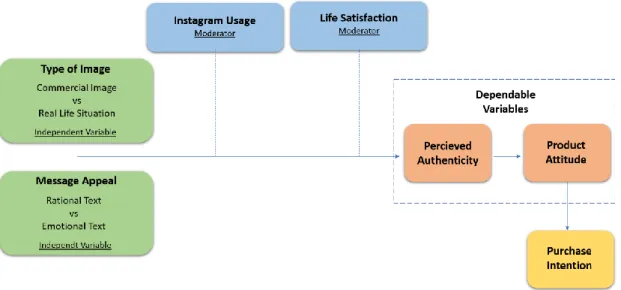
To better visualize and understand the components of this study, it was developed a model (figure 1) in which it is described relation of combined independent variables, one being the type of Instagram Image promotion (direct promotion vs indirect promotion), and the other is message appeal (rational appeal vs emotional appeal). The combination of the independent variables aims to understand how it will affect the dependent variable perceived authenticity and therefore product attitude and purchase intention.
To moderate this relation between independent variables and dependable variables, it will be also analyzed Instagram usage and life satisfaction.
Since this study tries to define a correlation between types of posts and authenticity, an explanatory research will be conducted based on the already existing data and researches and with collection of primary data through an online survey to evaluate Instagram users’ opinions and to quantify their positions on the subject, making this a quantitative study.
14
The online survey was grouped in four main groups. The first part of the survey was a more generic one to collect demographic data from the participants and to understand their familiarity with Instagram and their usage habits, since it’s one of the moderators of the study. The first question served as a filter to exclude all the participants who didn’t have an Instagram account.
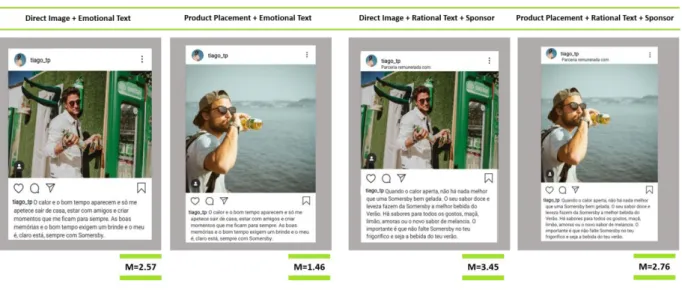
The second part of the survey was a more specific analysis where participants were asked to stay focused and look at all elements of the upcoming picture and text. In total 4 different stimulus materials were used in this study. Figure 2 illustrates the four different versions of stimuli material. On one hand the differences between the Instagram images are clear, since one post has, what we call direct promotion, were you can easily identify the product/brand, the other fake post has a product placement image where the influencer is using the product, on the other hand the differences in the copy of the posts can be easily taken as similar but in fact we have two different types of copy, being one more rational and other more emotional. Both texts had the name of the brand but only the posts with the rational text had the partnership claim present, since it is a more commercial kind of text.
While presenting all the four scenarios participants were asked to analyze and carefully look to the different posts. Following this question, participants were asked more generic questions about their opinions and thoughts on Influencers in general. At the end of this part of the survey, participants also faced questions regarding life satisfaction.
Finally, were asked about features of the fake posts to confirm whether they really understood each post and they analyzed them carefully but, at the same time, there was
15
some manipulation check questions to avoid participants to be aware of the main purpose of the survey.
3.1. SAMPLE OF PARTICIPANTS
For the analysis of the hypotheses previously presented, a survey was developed in which we approached the different variables of Instagram communication, type of image and text and how they were perceived by the respondents and the influence they had on purchase motivations, through their frequency of purchase. use of the app and the degree of satisfaction with your lifestyle.
This survey was randomly assigned to 132 participants but since some of them forgot to respond to some questions (20%) and there was also a criterion of exclusion to complete the survey, all participants needed to have an Instagram account. Due to that, 33 participants were excluded, remaining only 99 valid answers.
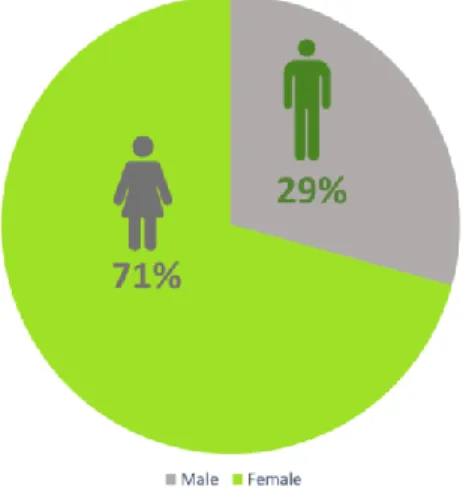
in which 70 participants were women, representing 70.7% of the sample, and 29 were men, representing 29,3% of the sample.
Participants assume an average age of 24 years (SD=3.78), with 35 being maximum age. This average age follows the line of the largest age group present on Instagram, which is from 18 to 34 and represents 65% of Instagram users, according to Statista 2020.
16
3.2. MEASURES &DATA ANALYSIS
The statistical analysis involved measures of descriptive statistics (absolute and relative frequencies, means and respective standard deviations).
For this dissertation, the statistical methods used were the following: the Cronbach's alpha consistency coefficient, Spearman's correlation coefficient, simple linear regression, Student's t-test for one sample, Student's t-test for independent samples, Student's t-test for paired samples and the Mann-Whitney test. The assumptions of simple linear regression, namely the linearity of the relationship between the independent variables and the dependent variable (graphical analysis), residual independence (Durbin-Watson test), normality of the residuals (Kolmogorov-Smirnov test), and homogeneity of variances (graphical analysis) were analyzed and were generally satisfied. The normal distribution of values was analyzed with the Shapiro-Wilk test and the homogeneity of variances with the Levene test. In situations where the sample size was greater than 30, normal distribution was accepted according to the central limit theorem.
All the collected data was analyzed through the statistical software – IBM SPSS (Statistical Package for the Social Sciences) 25.
3.2.1. Instagram usage
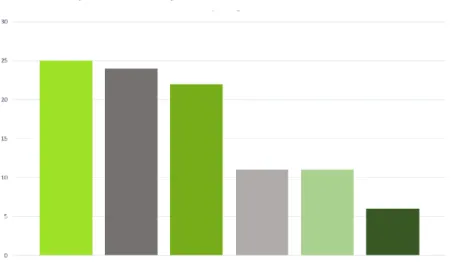
When asked about their consumption / use of Instagram, only 10.71% do not consider themselves an active user, while 89.29% assumed to be active users. Converting this answer in time, we learned that about 46% spend between 1 to 2 hours a day on Instagram and about 28% spend more than 2 hours a day. Both values are above the average of 53 minutes, according to Similar Web. (Similar Web)
17
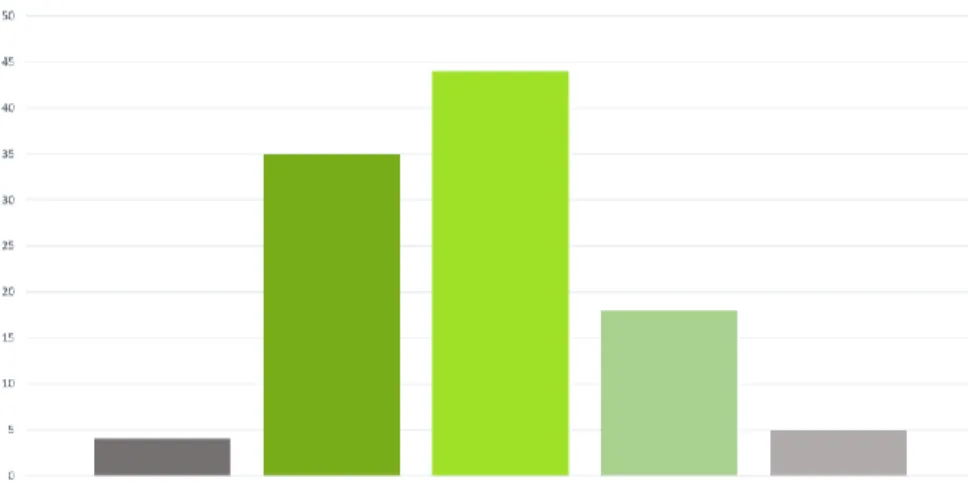
In addition, the familiarity with instagrammers was initially assessed based on the number of influencers each participant followed (SD= 1.43) and the values are very close when comparing the sample of participants who follows between 1 and 5 instagrammers, representing about 39% and the sample who follows 6 at 10 instagrammers, being around 30%. One of the most surprising figures in this section was the nearly 17% of participants that follow more than 20 influencers.
One of the behaviors that we also tried to understand was how often Instagram users actually read the copy (text) of posts. This information can be very important to truly understand weight between image and text on a post. The results were very insightful, according to the sample, most people, almost 65% of the inquired, only reads the copy 50% of the times or even less.
Figure 5 – Instagrammers Followed
18 3.2.2. Life satisfaction (moderator)
As mention before, we consider that the life satisfaction of an individual can affect and be a moderator on how someone, reacts, relates and perceives an influencer. We tend to believe that followers with low levels of life satisfaction will be more influenced by instagrammers, being more willing to buy/consume products or services presented by them.
To assess participants life satisfaction was implemented the Satisfaction with Life Scale (SWL), developed by Pavot, W. & Diener, E. (2008). This scale is a tool designed to evaluate global cognitive judgments of satisfaction with one's life.
The Satisfaction With Life Scale (SWLS) has been used as a measure of the life satisfaction component of subjective well-being and is a 7-point Likert scale with scores vary between 5 and 35, with a score of 20 representing a neutral point on the scale. Scores between 5-9 indicate the respondent is extremely dissatisfied with life, whereas scores between 31-35 indicate the respondent is extremely satisfied.
The responses presented were quite positive, with responses ranging from 4.73 to 5.86 and the average total score obtained from the responses was 26.08, placing respondents in a comfortable position of being “satisfied”, this being the second-best level of satisfaction. The average of attributes related to life satisfaction was 5.2, which is significantly above the midpoint of the scale (4), t (95) = 8,974, p = .001, which means that levels of satisfaction with life are high.
The internal consistency of the scales used in this study, were assess using the Cronbach's alpha internal consistency coefficient, with a value of .879, which is good. The categorization of Alpha values follows that referenced in Hill (2005).
19 3.2.3. Perceived authenticity (dependent variable)
To evaluate the dependent variable of perceived authenticity different posts were presented, 2 posts with images of the actor and influencer with the product in a form of product placement / User Generated Content but one with emotional text and the other as rational text, and the same texts were applied to images in which the product presentation was clear.
Once the 4 types of posts were presented, respondents were asked to order from the most natural/authentic to the least authentic/most commercial post.
The post that was perceived as the most natural / authentic, was the post number 2 (1.46), the one where the influencer presented the product in the act of consumption (product placement / UGC) and whose description pulled more towards the emotional side of the product and without any mention of partnership.
Then, the second choice was the post number 1 (2.57), the one where the influencer's presentation clearly shows the product but with emotional text without mention to the partnership.
The post selected as the least natural / authentic was the post number 3 (3.45), where the influencer clearly presents the product, with the rational text about it and with mention to the partnership.
20
In addition, the perception of influencers' communication was addressed in a more direct way, in general, using a Likert scale of 7 values, being 1 Totally Disagree and 7 Totally agree with the following statements “generates interest”, “It seems real”, “makes me want to buy / consume” and “informs me”.
It’s clear that influencers play a part on followers’ commercial life since the communication dimensions more valued were “informs me” (M=4.61, SD=1.590), “generates interest” (M=4.19, SD=1.736) and “makes me want to buy” (M=3.61, SD=1.640). When asked about the veracity of the communication, the statement “it seems real” was the one that people tend to disagree the most (M=2.95, SD=1.688).
Advancing from the influencers' communication and focusing on the influencers as a whole, several characteristics of the same were presented, asking for, using the Likert scale of 7 values being 1 totally disagree and 7 totally agree with the following statement “I consider influencers…”.
The first three adjectives are very close and were chosen to assess the perception of the factor authenticity in the influencers presented. The first three characteristic to appear were connected to the authenticity of influencers, to which most respondents tend to disagree that they think the influencers are genuine (M=2.73, SD=1.427), real (M=3.00, SD=1.616) and authentic (M=2.71, SD=1.327).
In order to cement the values obtained in the first three characteristics, the commercial adjective was chosen, presenting itself as opposed to those initially exposed, with a considerable number to totally agree that the influencers are commercial (M=5.71, SD=1.372).
And finally, with the purpose to try to understand the distance between follower and influencer, we chose also three characteristics that we consider that can be motivating to follow an instagrammer and that, at the same time, are strongly related to two moderating elements of this study. When asked about the similarity factor, a considerable number of the participants totally disagree with the statement "I think influencers are like me" (M=2.82, SD=1.528), finding that the aspirational element has weight when it comes to following an influencer. When asked about the knowledge of influencers in the areas they fall into,
21
curiously a group of participants disagree that influencers are experts in areas (M=3.03, SD=1.625) but at the same time tend to agree that they are opinion leaders (M=3.96, SD=1.790) and relevant (M=4.20, SD=1.512).
Considering both questions using the Likert scale of 7 values, the internal consistency of the scales used in the present study, assessed with the Cronbach's alpha internal consistency coefficient, ranged from a minimum of .787 (reasonable) to a maximum of .866 (good). As previously mentioned, the categorization of Alpha values follows that referenced in Hill (2005).
3.2.4. Product attitude and Purchase Intention (dependent variable)
To ensure that respondents had really understood which product and brand were in question, two screening questions were asked, mentioning other products and brands, which could be present or not on the posts.
First, it was questioned what the focus of the posts was, to which about 90% got it right, stating that it was the beverage but there were still 6% who assumed that the focus of the posts was the influencer itself, an understandable mistake and at the same time it could mean that the presence and mentions of the product / brand, passed by.
22
The second, more concrete question regarding the product was more enlightening. When asked which brand was highlighted in the posts, 98% answered correctly, stating that it was Somersby.
A third question was also asked, in which the participants' attention to the post was assessed, ensuring that the references of the brand under analysis were clear and as such, 99% of respondents said they had noticed the references to Somersby.
As already mentioned, two of the four posts had clear mentions of a sponsored partnership between the influencer and the brand to assess whether it would impact the perceived authenticity and if it influenced the purchase intention. To assess the respondents' attention to this detail, the question was asked whether they had noticed the mention of the partnership, which resulted in 81% positive responses and only 19% said they had not noticed any reference in any of the four posts.
Figure 8 – Sponsorship Reference
In order to assess the possible influence that the posts could have on the purchase intention, a question of 5 items of Likert scale was developed in which we asked if the participants would buy the product presented by the influencer, with 1 corresponding to not buying for sure and 5 corresponding to buying for sure.
23
About 41% were indifferent, saying that they might buy, then 34% of respondents said that it was unlikely to buy the product as opposed to the 17% who said they probably did.
Besides this, the four posts were presented once again, and it was clearly asked which of the posts could have a bigger influence on their purchase intention. Confirming our expectation, the post with the product placement image and emotional text was the choice of 64% of the inquired.
In addition, respondents were asked to state how much they were willing to pay for the product in question, with an average response of 2.77 euros, with the normal cost of a bottle on large surfaces being approximately 1.25 euros and in establishments the variation usually ranges from 2 euros to 3.5 euros.
Figure 9 – Purchase Intention
24
4. RESULTS AND DISCUSSION
The present study extends previous research (e.g, Kowalczyk et al., 2016; Sandy et al., 2017; Audrezet et al, 2018; Pöyry et al., 2019), presenting a perspective on one hand on how Instagram users perceive authenticity on posts and, on the other hand, how Instagrammers can “fabricate” and present themselves as more authentic. Besides this, our study also provides some evidence of the authenticity effect on purchase intention.
First, this study evaluated how follower’s real life could have an impact on the influence of instagrammers communication. Using a simple linear regression model with the variable life satisfaction as an independent variable and the intention to consume as a dependent
variable, being statistically significant, F(1, 94) = 6,031, p = .016, although life satisfaction only
explains 6% of the intention to consume. The variable life satisfaction proved to be a significant predictor of impact instagrammers communication influence (β = .246, p = .016). Once the coefficient is positive, we can conclude that the higher the levels of satisfaction with life, the greater the impact instagrammers communication influence, confirming the stated H1.
Then we evaluated how Instagram users perceived influencers authenticity and also aim to understand if Instagrammers could fabricate authenticity in their communication and therefore have better commercial results. We found that certain traits of communication can have impact on how favorably the audience perceives Influencer’s authenticity and the endorsements they make. A more realistic, subtle and natural communication, both copy with emotional text appeal (Zhang et al., 2014) and photo with product placement (Russell et al., 2006) was found to have a positive effect on perceived authenticity. These results were supported using t-student test, where we found that Instagram posts with emotional text are perceived as more natural and authentic then posts with rational text, being the difference statistically significant, t (78) = -8,670, p = .001, confirming H2. Also using t-student teste we confirmed H3 that posts with product placement are perceived as more natural and authentic since t (78) = -7,496, p = .001. As a result of H2 and H3 confirmed, is no surprise that H4, which is the combination of a post with product placement and an emotional text, was also perceived as more authentic than any other combination of post elements, with a clear result, t (78) = -12,052, p = .001.
25
However, we had some results that made us question the real impact of text on Instagram posts, despite being with emotional or rational appeal. The majority of the inquired said that only reads the copy of a post 50% the times or less. This fact provides some extension to the important role that image/visual appeal have on product and brand effect (Hagtvedt et al., 2008).
Although the post that could have a bigger influence on purchase intention was also the one perceived as the most authentic, when Instagram user were asked if they would buy or at least wanted to buy the product, based on the posts, only a minority affirmed positively. This raises some new questions since we feel we could not entirely correlate the perceived authenticity effect on followers’ purchase intentions as stated by many studies (Ilicic et al., 2016; Fritz et al.,2017; Napoli et al., 2014).
At the beginning we suspected this negative result may be due to the high usage of Instagram users who respond to the survey. The majority stated to be an active Instagram user with several hours of daily usage and following between 6 to 20 Instagrammers. Following on previous research (Pierce, 1998; Morhart, 2015), we constructed H5 and H6, assuming that users with higher level of usage and following a higher number of influencers
on Instagram, respectively, were less influenced by instagrammers strategies. Based on
previous research, we considered that users that followed a considerable number of instagrammers and spent some time on Instagram would be more expose to promotional posts, therefore more aware to identify what it seems authentic vs. what it looks commercial and as result less influenced.
Contrary to our expectations, first, using the Mann-Whitney test, we saw that H5 didn’t confirm since there was significant statistically difference between the groups, Z = -3,654, p = .001. Second, we were confronted with the negative result for H6, using the Spearman correlation coefficient between the number of influencers that the subjects follow and the
intention to consume is statistically significant, positive and weak (rsp = .344). Since the
coefficient is positive, it means that users who follow more influencers are more influenced by instagrammers strategies.
26
In conclusion, albeit this study rises some new questions, the main results follow the line of previous studies (e.g., Audrezet et al., 2018; Pöyry et al., 2019; Rietveld et al., 2020; Thomas et al., 2014) on how important is for social media influencers to understand how authenticity is identified and its real effect on the relation with followers and also on their commercial goals.
27
5. CONCLUSIONS
5.1. THEORETICAL CONTRIBUTIONS
The main purpose of this dissertation was to understand how followers/consumers perceive authenticity on instagrammers communication and how that perceived authenticity could affect product attitude. The present study contributes with several cohesive points to our better understanding on Social Media communication and the important role that authenticity plays both for influencers and brands.
Our study demonstrates that in spite authenticity varies from person to person, according to personal thoughts and experiences but all objects have characteristics/signs that allow us to judge if something appears to be authentic or not (Pierce, 1998).
We found that both image and text could be developed to present a more authentic look, being clear that an image that has a product placed seems more natural and authentic as if it was an influencers personal choice and moment of regular consumption (Russell et al., 2006) and that a more emotional text triggers an affective response (Goldberg et al., 1987) resulting in more favorable brand attitude (Zhang et al., 2014). Another contribution of this study is that, in spite of some recent studies on authenticity on social media (Audrezet et al., 2018) mention that is important for influencers to disclaim their partnership/sponsored post in order to create a relation of transparency with their community of followers, we found that the posts with that kind of mention were the ones that worst performed both in perceived authenticity and purchase intention. This negative result is expected since when a follower is exposed to a sponsored post, their persuasion knowledge is activated, and their cognitive and/or affective resistance is triggered resulting on a decreased-on persuasion and purchase intention (van Reijmersdal et al., 2016)
Surprisingly, this study detected that image effectively has a much bigger weight on Instagram communication, then the text, since a majority of the inquired referred that only reads the description a few times.
28
5.2. MANAGERIAL IMPLICATIONS
The rising importance of influencer marketing on social media and the rising awareness of communities to understand these marketing techniques raises both challenges and opportunities for brands and influencers.
One of the big advantages of using Influencers on endorsements is that they can embody and reflect brand/product personality and at the same time social media influencers generate a greater sense of social identification, making them develop a more defined and relevant community followers than general celebrities. For this, we believe that authenticity should not be viewed by brands as a risk but should be encourage so that influencers keep trustworthy relationships with their followers and therefore, maintain their relevance as an opinion leader and not as a brand endorser. Besides, when brands are open to give space to influencers for co-creation of content and to be themselves, marketers will be able to identify eventual signs of lack of passion or purely opportunistic/monetary interests.
Of course, taking in consideration the results of this study, we strongly advice marketers and influencers to consider a product placement approach on their social media content since it is perceived as more natural and therefore more authentic way to present a product/brand. As mentioned before, followers are continually increasing their awareness and knowledge of the relations between brands and influencers and transparency is demanded. Due to ethical considerations and legal restrictions that have been appearing, brands must require Instagrammers to disclose their commercial relationship, but we give some tips on this aspect, since our study proved the negative effect of the partnership mention on the top of a post. Our study also provided an interesting insight relative to the copy of posts. We have seen that a clear majority of people only reads the text 50% of the times or even less. Consequently, we suggest presenting the disclosure of sponsorship/ad as part of the text of a post such as using hashtag at the end since probably will not even be recognized by most followers and the influencer and the brand cannot be accused of lack of transparency.
29
5.3. LIMITATIONS
The present study allowed us to understand that there is a combination of elements in an influencer communication that can improve the sense of authenticity perceived by followers/consumer. We believe that life satisfaction, had a very homogenous positive result and that it would be interesting to have a bigger variety of answers. Besides this, we consider that probably there should be more investigation and deeper than this dissertation concerning life satisfaction.
Although the presented variables were chosen right for the study, we consider that probably there were many more that could fit into the survey and enrich the final result of the study. The number of participants was a relevant sample, even more if we consider that it represents the main age group in Instagram. Nonetheless, we faced some difficulties in collecting data, since the number of answered surveys does not correspond to the total sample that started the survey and some participants left questions unanswered.
The presented study may serve as a basis for future works, if we consider that this study approached a specific type of communication on Instagram. Future studies may try to understand different signs of authenticity that can be “produced” in other types of content on Instagram, such as instastories, posting videos, swipe up links and so on. We also consider that the sample can be bigger and more segmented buy age and gender, trying to understand the different perceptions of authenticity and degree of influence that it has on followers’ intention to buy. Furthermore, the study could benefit from the inclusion of focus groups or interviews, to complement the original survey and double check some of the responses obtained.
30
6. BIBLIOGRAPHY
Abdul Adis, A. A., Ing, G. P., Osman, Z., Razli, I. A., Pang, Y. X., Sondoh, S. L., & Majid, M. R. A. (2015). Mediation role of attitude towards product placement in social media. Journal of Sustainable Development. https://doi.org/10.5539/jsd.v8n3p79
Akbar, M. M., & Wymer, W. (2017). Refining the conceptualization of Brand Authenticity. Journal of Brand Management, 24(1). https://doi.org/10.1057/s41262-016-0023-3
Athwal, N., & Harris, L. C. (2018). Examining how brand authenticity is established and maintained: the case of the Reverso. Journal of Marketing Management, 34(3–4).
https://doi.org/10.1080/0267257X.2018.1447008
Audrezet, A., de Kerviler, G., & Guidry Moulard, J. (2018). Authenticity under threat: When social media influencers need to go beyond self-presentation. Journal of Business Research, November 2017, 0–1. https://doi.org/10.1016/j.jbusres.2018.07.008
Becker, M., Wiegand, N., & Reinartz, W. J. (2019). Does It Pay to Be Real? Understanding Authenticity in TV Advertising. Journal of Marketing, 83(1), 24–50.
https://doi.org/10.1177/0022242918815880
Belk, R. W., & Costa, J. A. (1998). The Mountain Man Myth: A Contemporary Consuming Fantasy. Journal of Consumer Research. https://doi.org/10.1086/209536
Beverland, M. B., & Farrelly, F. J. (2010). The Quest for Authenticity in Consumption: Consumers’ Purposive Choice of Authentic Cues to Shape Experienced Outcomes. Journal of Consumer Research. https://doi.org/10.1086/615047
Beverland, M. B., Lindgreen, A., & Vink, M. W. (2008). Projecting authenticity through advertising: Consumer judgments of advertisers’ claims. Journal of Advertising, 37(1), 5–15.
https://doi.org/10.2753/JOA0091-3367370101
Boerman, S. C., Willemsen, L. M., & Van Der Aa, E. P. (2017). “This Post Is Sponsored”: Effects of Sponsorship Disclosure on Persuasion Knowledge and Electronic Word of Mouth in the Context of Facebook. Journal of Interactive Marketing. https://doi.org/10.1016/j.intmar.2016.12.002
Borges-Rey, E. (2015). News images on instagram: The paradox of authenticity in hyperreal photo reportage. Digital Journalism. https://doi.org/10.1080/21670811.2015.1034526
Bower, A. and Landreth, S. (2001), “Is beauty best? Highly versus normally attractive models in advertising”, Journal of Advertising, Vol. 30 No. 1, pp. 1-12
Burmann, C. (2010). A call for User-Generated Branding. Journal of Brand Management, 18(1), 1–4.
https://doi.org/10.1057/bm.2010.30
Carsana, L., & Jolibert, A. (2018). Influence of iconic, indexical cues, and brand schematicity on perceived authenticity dimensions of private-label brands. Journal of Retailing and Consumer Services, 40, 213–220. https://doi.org/10.1016/j.jretconser.2017.10.006
31 Chae, B., & Hoegg, J. (2013). The Future Looks “Right”: Effects of the Horizontal Location of Advertising Images on Product Attitude. Journal of Consumer Research.
https://doi.org/10.1086/669476
Charlton, A. B., & Cornwell, T. B. (2019). Authenticity in horizontal marketing partnerships: A better measure of brand compatibility. Journal of Business Research, 100(March), 279–298.
https://doi.org/10.1016/j.jbusres.2019.03.054
Chen, Y., Fay, S., & Wang, Q. (2011). The Role of Marketing in Social Media: How Online Consumer
Reviews Evolve. Journal of Interactive Marketing.
https://doi.org/10.1016/j.intmar.2011.01.003
Chevalier, J. A., & Mayzlin, D. (2006). The effect of word of mouth on sales: Online book reviews. In Journal of Marketing Research. https://doi.org/10.1509/jmkr.43.3.345
Christodoulides, G., Jevons, C., & Bonhomme, J. (2012). Memo to marketers: Quantitative evidence for change - how user-generated content really affects brands. Journal of Advertising Research.
https://doi.org/10.2501/JAR-52-1-053-064
Chu, S. C., & Kim, Y. (2011). Determinants of consumer engagement in electronic Word-Of-Mouth (eWOM) in social networking sites. International Journal of Advertising.
https://doi.org/10.2501/IJA-30-1-047-075
Colliander, J., & Erlandsson, S. (2015). The blog and the bountiful: Exploring the effects of disguised product placement on blogs that are revealed by a third party. Journal of Marketing Communications. https://doi.org/10.1080/13527266.2012.730543
Cong, Y., & Zheng, Y. (2017). A Literature Review of the Influence of Electronic Word-of-Mouth on Consumer Purchase Intention. Open Journal of Business and Management, 05(03), 543–549.
https://doi.org/10.4236/ojbm.2017.53047
De Veirman, M., Cauberghe, V., & Hudders, L. (2017). Marketing through instagram influencers: The impact of number of followers and product divergence on brand attitude. International Journal of Advertising, 36(5), 798–828. https://doi.org/10.1080/02650487.2017.1348035
De Vries, L., Gensler, S., & Leeflang, P. S. H. (2012). Popularity of Brand Posts on Brand Fan Pages: An Investigation of the Effects of Social Media Marketing. Journal of Interactive Marketing.
https://doi.org/10.1016/j.intmar.2012.01.003
Deibert, A. (2017). Why Authenticity In Marketing Matters Now More Than Ever (URL:
https://www.forbes.com/sites/forbescommunicationscouncil/2017/05/26/why-authenticity-in-marketing-matters-now-more-than-ever/#7a998fb79823)
Dion, N. A. (2016). The Effect of Instagram on Self-Esteem and Life Satisfaction. Salem State University Digital Commons at Salem State University.
32 Djafarova, E., & Rushworth, C. (2017). Exploring the credibility of online celebrities’ Instagram profiles in influencing the purchase decisions of young female users. Computers in Human Behavior, 68, 1–7. https://doi.org/10.1016/j.chb.2016.11.009
Erkan, I. (2015). Electronic Word of Mouth on Instagram: Customers’ Engagements with Brands in Different Sectors. International Journal of Management, Accounting and Economics.
Fan, Y.-W., & Miao, Y.-F. (2012). Effect Of Electronic Word-Of-Mouth On Consumer Purchase Intention: The Perspective Of Gender Differences. International Journal of Electronic Business Management.
Fritz, K., Schoenmueller, V., & Bruhn, M. (2017). Authenticity in branding – exploring antecedents and consequences of brand authenticity. European Journal of Marketing, 51(2).
https://doi.org/10.1108/EJM-10-2014-0633
Geuens, M., De Pelsmacker, P., & Faseur, T. (2011). Emotional advertising: Revisiting the role of product category. Journal of Business Research, 64(4), 418–426.
https://doi.org/10.1016/j.jbusres.2010.03.001
Geurin, A. N., & Burch, L. M. (2017). User-generated branding via social media: An examination of six running brands. Sport Management Review, 20(3), 273–284.
https://doi.org/10.1016/j.smr.2016.09.001
Goldberg, M. E., & Gorn, G. J. (1987). Happy and Sad TV Programs: How They Affect Reactions to Commercials. Journal of Consumer Research. https://doi.org/10.1086/209122
Grayson, K., & Martinec, R. (2004). Consumer Perceptions of Iconicity and Indexicality and Their Influence on Assessments of Authentic Market Offerings. Journal of Consumer Research, 31(2), 296–312. https://doi.org/10.1086/422109
Guèvremont, A. (2018). Creating and interpreting brand authenticity: The case of a young brand. Journal of Consumer Behaviour, 17(6), 505–518. https://doi.org/10.1002/cb.1735
Guèvremont, A., & Grohmann, B. (2016). The brand authenticity effect: situational and individual-level moderators. European Journal of Marketing, 50(3–4), 602–620.
https://doi.org/10.1108/EJM-12-2014-0746
Hawi, N. S., & Samaha, M. (2017). The Relations Among Social Media Addiction, Self-Esteem, and Life Satisfaction in University Students. Social Science Computer Review, 35(5), 576–586.
https://doi.org/10.1177/0894439316660340
Hennig-Thurau, T., Gwinner, K. P., Walsh, G., & Gremler, D. D. (2004). Electronic word-of-mouth via consumer-opinion platforms: What motivates consumers to articulate themselves on the Internet? Journal of Interactive Marketing. https://doi.org/10.1002/dir.10073
Hill, M. M. e Hill, A. (2005). Investigação por Questionário, (2.ª ed. rev. e corrigida). Lisboa: Edições Sílabo, p. 377
33 Holmes, R. (2018). As Facebook Shifts, Instagram Emerges As A New Home For Brands (URL:
https://www.forbes.com/sites/ryanholmes/2018/02/01/as-facebook-shifts-instagram-emerges-as-a-new-home-for-brands/#25350b957834)
Holt, D. B. (2002). Why Do Brands Cause Trouble? A Dialectical Theory of Consumer Culture and Branding. Journal of Consumer Research. https://doi.org/10.1086/339922
https://www.statista.com/statistics/454772/number-social-media-user-worldwide-region/
Ilicic, J., & Webster, C. M. (2016). Being True to Oneself: Investigating Celebrity Brand Authenticity. Psychology and Marketing. https://doi.org/10.1002/mar.20887
Ilicic, J., Baxter, S. M., & Kulczynski, A. (2019). Keeping it real: examining the influence of co-branding authenticity in cause-related marketing. Journal of Brand Management, 26(1).
https://doi.org/10.1057/s41262-018-0109-1
Industry, A. (2017). Uncovering the Motivations for Creating Brand-Related UGC on Instagram: Isaac, M. S., & Grayson, K. (2016). Beyond Skepticism: Can Accessing Persuasion Knowledge Bolster
Credibility? Journal of Consumer Research, ucw063. https://doi.org/10.1093/jcr/ucw063 Kaplan, A. M., & Haenlein, M. (2010). Users of the world, unite! The challenges and opportunities of
Social Media. Business Horizons. https://doi.org/10.1016/j.bushor.2009.09.003
Katz, E., Lazarsfeld, P. F., & Roper, E. (2017). Personal influence: The part played by people in the flow of mass communications. In Personal Influence: The Part Played by People in the Flow of Mass Communications. https://doi.org/10.4324/9781315126234
Khamis, S., Ang, L., & Welling, R. (2017). Self-branding, ‘micro-celebrity’ and the rise of Social Media
Influencers. Celebrity Studies, 8(2), 191–208.
https://doi.org/10.1080/19392397.2016.1218292
King, C. W., & Summers, J. O. (1970). Overlap of Opinion Leadership across Consumer Product Categories. Journal of Marketing Research. https://doi.org/10.2307/3149505
Kowalczyk, C. M., & Pounders, K. R. (2016). Transforming celebrities through social media: the role of authenticity and emotional attachment. Journal of Product and Brand Management, 25(4), 345–356. https://doi.org/10.1108/JPBM-09-2015-0969
Kozinets, R. V. (2004). Consumer perceptions of iconicity and indexicality and their influence on assessments of authentic market offerings Food porn View project Digital Branding View project. In Article in Journal of Consumer Research.
https://www.researchgate.net/publication/228765554
Laura, D. (2018). What is the impact of Instagram’ s Social Influencers on Consumer Attitude and Purchase Behaviour of lifestyle products of young Belgian women ? Mémoire réalisé par. Longstreet, P., & Brooks, S. (2017). Life satisfaction: A key to managing internet & social media