Economic diplomacy in action
The case of the Embassy of Portugal in the
Czech Republic
Final work in the form of Internship Report Presented to Universidade Católica Portuguesa to obtain a master's degree in Business Economics
by
Ana Lúcia da Ponte Neiva
Under the guidance of Professor Leonor Sopas
Universidade Católica Portuguesa May, 2016
Acknowledgements
I would like to start by thanking my parents and siblings for their support throughout my academic career and for always believing in me.
To my friends that contributed to this work and who always motivated me. To my mentor, Professor Leonor Sopas, I appreciate all your support, time and dedication provided to this thesis.
Thank you to everyone at the Embassy of Portugal in Prague for the collaboration always demonstrated in response to my requests.
Resumo
A diplomacia económica tornou-se um instrumento-chave para a política externa dos governos e para a promoção dos interesses de um país no exterior. A evolução do conteúdo económico da diplomacia levou à intervenção de novos atores (p. ex., organizações internacionais, empresas multinacionais). Apesar da intervenção de atores não-estatais, existe um forte consenso sobre o impacto global da diplomacia económica através do setor público. Tanto quanto eu poderia descobrir, não existem estudos sobre o papel das embaixadas portuguesas. Este trabalho tem por objetivo analisar o papel da embaixada Portuguesa, incluindo a delegação local da AICEP na concretização dos principais objetivos da diplomacia económica Portuguesa na República Checa. É adotada uma estratégia de investigação qualitativa, aplicando-se o método de estudo de caso para compreender o papel que ambas as organizações assumem. Informação recolhida durante os 5 meses de estágio e entrevistas a empresas Portuguesas com investimentos na República Checa são as principais fontes de informação. A ausência de uma delegação da AICEP na República Checa levou ao crescente papel da embaixada no apoio às empresas Portuguesas. A falta de recursos humanos na embaixada e a distância geográfica à delegação da AICEP em Varsóvia são consideradas grandes limitações em relação à promoção e ao apoio nas relações bilaterais comerciais e de investimento entre os dois países. Concretizar objetivos de diplomacia económica exige recursos. Após a eficiente utilização dos recursos públicos (combinando os recursos das delegações da AICEP com os das embaixadas), faria sentido aumentar a cooperação com atores privados, tais como as Câmaras de Comércio bilaterais e associações empresariais. Palavras-chave: Diplomacia Económica, Investimento Direto Estrangeiro, Agência de Promoção do Investimento, Embaixada.
Abstract
Economic diplomacy has become a key instrument of Governments' foreign policy and of the promotion of a country's interests abroad. The evolution of the economic content of diplomacy led to the intervention of new actors (e.g. international organizations, non-profit organizations). Despite the intervention of non-state actors, there is a strong consensus on the overall impact of economic diplomacy through the public-sector. As far as I could find out, there are no studies about the role of the Portuguese embassies. This work aims to analyse the role of the Portuguese embassy and the local delegation of AICEP in achieving the main goals of Portuguese economic diplomacy in the Czech Republic. A qualitative research strategy is adopted, applying the case study method to comprehend the role assumed by both organizations. Information collected during the 5 months of the internship and interviews of Portuguese firms with investments in the Czech Republic are main sources of information. The absence of a physical presence of the AICEP delegation in the Czech Republic led to the increasing role of the embassy at supporting Portuguese firms. The lack of human resources at the embassy and the geographic distance to AICEP’s delegation in Warsaw are considered to be major constraints regarding the promotion and support of bilateral trade and investment relations between the two countries. The achievement of economic diplomacy goals requires resources. After looking for a greater efficiency in the use of public resources (combining the resources of AICEP delegations with the embassies’ resources) it would make sense increase the cooperation with private actors, such as bilateral Chambers of Commerce and business associations. Keywords: Economic Diplomacy, Foreign Direct Investment, Investment Promotion Agency, Embassy.
Index
Acknowledgements ... ii
Resumo ... iii
Abstract ... iv
Index ... v
List of Figures ... viii
List of Tables ... ix
Chapter 1 Introduction ... 10
Chapter 2 Economic diplomacy ... 13
2.1.Concept and its evolution ... 13
2.2.Dimensions of economic diplomacy models and a benchmarking approach ... 17
2.2.1.The German economic diplomacy model ... 22
2.2.2.The French economic diplomacy model ... 26
2.2.3.The British economic diplomacy model ... 30
2.2.4.The Czech economic diplomacy model ... 33
2.2.5.The Portuguese economic diplomacy model ... 39
2.3.Final remarks of this chapter ... 51
Chapter 3 Embassies and IPAs in economic diplomacy ... 55
3.2.Firms’ investment decisions ... 57
3.3.Government’s intervention in investment decisions ... 63
3.3.1.Embassies ... 64
3.3.2.IPAs ... 66
3.3.2.1. Governments and IPAs affecting investment location decisions ... 68
3.3.2.2. Evaluating IPAs/IPIs... 70
3.4.Final remarks of this chapter ... 77
Chapter 4 Method adopted... 79
Chapter 5 Economic relations between Portugal and the Czech Republic ... 82
5.1.External trade and FDI statistics ... 82
5.1.1.External trade ... 82
5.1.2.FDI ... 85
5.1.2.1.Bilateral investments: Portuguese and Czech firms ... 89
5.2.The internship at the Embassy of Portugal in the Czech Republic ... 92
5.3.Two Portuguese investments in the Czech Republic ... 97
Chapter 6 Conclusion ... 102
References ... 105
Appendices Appendix 1: aicep Portugal Global overseas network ... 116
Appendix 3: Diary of activities carried out during the internship at the Embassy
of Portugal in Prague ... 118
Appendix 5: Inward and Outward FDI flows by country and by sector in the Czech Republic, in 2014 ... 128
Appendix 6: FDI inward and outward flows between the Czech Republic and Portugal ... 130
Appendix 7: FDI inward and outward positions between Portugal and the Czech Republic ... 130
Annexes Annex 1: Government measures in the 1990s... 131
Annex 2: Government measures since 2000 ... 131
Annex 3: Inquiry-Handling: GIBP Defines Practice Standard ... 132
Annex 4: Ease of doing business in the Czech Republic ... 133
Annex 5: Ease of doing business in Portugal ... 134
List of Figures
Figure 1: Economic diplomacy model in Portugal during the XIX Constitutional Government (2011 – 2015) ... 43 Figure 2: Top 10 IPIs at Inquiry-Handling ... 75 Figure 3: FDI inward annual flows, 2004-2014, in US Dollars at current prices and current exchange rates in millions ... 87 Figure 4: FDI outward annual flows, 2004-2014, in US Dollars at current prices and current exchange rates in millions ... 88 Figure 5: Organisational chart of the Embassy of Portugal in the Czech Republic, during the period of my internship ... 92
List of Tables
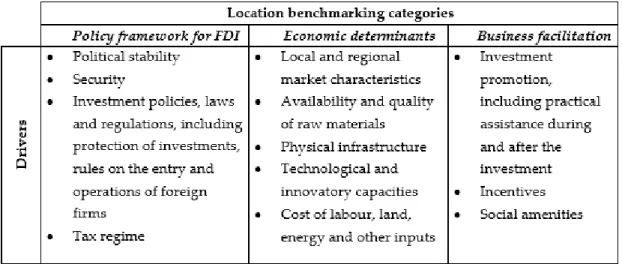
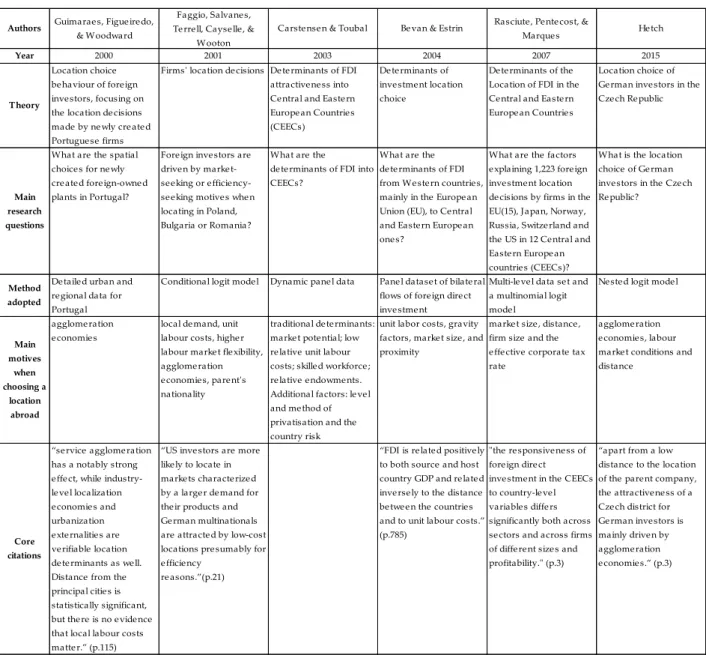
Table 1: Economic diplomacy models adopted by some of the main economies in European Union ... 51 Table 2: Main activities and services provided in the context of economic diplomacy ... 53 Table 3: Main drivers of location benchmarking categories ... 59 Table 4: Determinants of firms’ location decisions – a comparison of different authors’ theories ... 61 Table 5: Performance of IPIs Web site and inquiry-handling in 2009 and 2012 ... …72 Table 6: Exports and imports of goods and services of the Czech Republic ... 83 Table 7: Main exported and imported products of the Czech Republic ... 83 Table 8: Main destination and origin of the Czech Republic exports and imports ... 83 Table 9: Trade balance of goods of Portugal with the Czech Republic, in million euros ... 84 Table 10: Imports of Portugal from the Czech Republic, by product groups, in million euros ... 85 Table 11: Exports from Portugal to the Czech Republic, by product groups, in million euros ... 85 Table 12: Czech firms doing business in Portugal ... 90 Table 13: Portuguese firms doing business in the Czech Republic ... 91
Chapter 1
Introduction
The present thesis’s main purpose is to comprehend what is the role of the Portuguese embassy and the local delegation of AICEP in achieving the main goals of Portuguese economic diplomacy in the Czech Republic. As far as I could find out, there are no studies about the role of the Portuguese embassies. At the same time there is an increasing interest on the potential of economic diplomacy for internationalization and growth (Bergeijk, Okano-Heijmans, & Melissen, 2011).
Economic diplomacy is considered as a plural set of practices that aim to improve a home country’s economic interests abroad.
In a context of international relations, innovation and new technologies of communication and information between different economies, the States are no longer considered the only performers of economic diplomacy. Barston (2006), Bayne & Woolcock (2011), Saner & Yiu (2003) argue the emergence of non-state economic diplomacy actors. International organizations, non-profit organizations, multinational enterprises and different civil society groups, also play a fundamental role as performers of diplomacy.
Despite the emergent intervention of non-state actors, there is a strong consensus on the overall impact of investment facilitation and promotion through the public-sector. Stopford, Strange, & Henley (1991) believe that the evolution of the economic diplomacy concept led to a stronger relationship between Governments and firms.
Governments’ priority is the development and improvement of their economies and Foreign Direct Investment (FDI) contributes to growth. Also, Investment Promotion Agencies (IPAs) have emerged in several countries as a
popular tool and as key institutions to promote and attract foreign investment, and the majority of the worldwide IPAs were created by national Governments (Zanatta, Costa, & Filippov, 2006).
Firms internationalize to seek resources, markets, efficiency, strategic assets and competitive positioning. Their location decisions are influenced by national Governments’ policies and IPAs activities (UNCTAD, 2001). Within the Government, embassies are highlighted as the foreign representative of a country’s goals abroad. Throughout the years, the coordination activities among embassies and IPAs has become more common. The evaluation of IPAs' services is important to improve their quality and efficiency (UNCTAD, 2008).
This work is structured as follows. Chapter 2 discusses the economic diplomacy concept and its evolution through time. It also presents a comparison between five economic diplomacy models: three European countries considered to have efficient models – Germany, France and the United Kingdom – and two other countries that constitute the basis for this work – the Czech Republic and Portugal. The comparison of the main strategic lines between the five models, delivers conclusions on the efficiency of the Portuguese model and how it could be improved in the light of the methods adopted by the three countries of reference. Chapter 3 focuses on the role of embassies and IPAs in economic diplomacy. The latter section analysis firms’ decisions when choosing a location to invest abroad, and the Governments’ measures to facilitate and attract firms’ investments. The method adopted is presented in Chapter 4, focusing on the research question of this thesis and on the explanation of the procedures adopted to produce the results of this research. Chapter 5 addresses the economic relations between Portugal and the Czech Republic, analysing external trade data and FDI flows between the two countries. A description of the activities developed during the internship and the results of the two interviews made to Portuguese firms with investments in the Czech Republic are the last part of this
chapter. The role of the Portuguese embassy in the Czech Republic, discussing how the economic diplomacy goals are defined by the embassy and the activities developed regarding to the foreign direct investment attraction and promotion is the main goal of this chapter. Lastly, Chapter 6 presents the conclusion with final recommendations about what can be done to improve the relationship between the embassy, AICEP and firms.
Chapter 2
Economic diplomacy
The reinforcement of economic diplomacy has been one of the main axes of action of the foreign policy of Governments. The internationalization of the economy, the promotion of exports and a country’s brand, and the attraction of foreign investment are central concerns of economic diplomacy.
In this chapter I will address the concept of economic diplomacy and its evolution through time. The presentation of different economic diplomacy models and examples of some European best performers, will serve as a benchmark to evaluate the Portuguese model efficiency. The analysis and comparison of different dimensions of economic diplomacy models allows us to conclude which are the main characteristics of an efficient model.
2.1. Concept and its evolution
The process of globalization, liberation and internationalization of trade, generated a major interdependence between the Government and the Economy and consequently created different traditional patterns of diplomacy and external policy.
After the Cold War, the diplomatic relations main focus is on the economic arena of diplomacy on prejudice of issues related to politics and security.
Barston (2006) refers to diplomacy as a concept that goes beyond the political-strategic relations. The author believes that diplomacy should not limited to foreign ministries and diplomatic personal services. Moreover, Barston (2006) claims the following: “rather, diplomacy is undertaken by a wide range of actors, including “political” diplomats, advisers, envoys and officials from a wide range of “domestic” ministries or agencies with their foreign counterparts, reflecting its
technical content; between officials from different international organizations such as the International Monetary Fund (IMF) and the United Nations (UN) Secretariat, or involving foreign corporations and a host government transnationally; and with or through non-governmental organizations (NGOs) and “private” individuals” (p. 1).
Bull (2012) and Bayne & Woolcock (2011) agree that the concept of diplomacy consists on the conduction of relations between Sovereign States and other entities, held by official agents through peaceful means.
Build on the definition of diplomacy suggested by Bayne & Woolcock (2011), Moons & Bergeijk (2013) define the new economic diplomacy as “a set of activities (both regarding methods and processes for international decision making) related to cross border economic activities (export, import, investment, lending, aid, migration) pursued by state and non-state actors in the real world” In a context of international relations, innovation and new technologies of communication and information between different economies, the States are not considered the only actors on international economic relations. Nowadays, international organizations, non-profit organizations, multinational enterprises and different society agents, play a fundamental role in the diplomatic arena.
The post-modern1 nature of diplomacy is characterized by the simultaneous participation of multiple state and non-state actors (Melissen, 1999). New entrants represent different organizations of local, national and international interests to the diplomatic arena with divergent diplomatic roles. Saner & Yiu (2003) refer that additionally to national state actors (economic and commercial diplomats), the post-modern diplomacy also includes non-state actors
1 Post-modern diplomacy can be defined as “the mechanism of representation, communication and
negotiation through which states and other international actors conduct their business”(Melissen, 1999) According to Saner & Yiu (2003), the term post-modern concerns to “developed countries where the distinction between internal affairs and foreign policy has been increasingly replaced by a multi-actor participation in diplomacy, foreign economic relations and public affairs.”
(corporate, business, national NGO and transnational NGO diplomats), sub-national actors – e.g. regions like Länder of Germany - and suprasub-national actors – e.g. European Union and NAFTA.
According with Saner & Yiu (2003), economic diplomacy concerns to economic policy issues such as the work of delegations of standard setting organisations such as World Trade Organization. Economic diplomats are responsible to report and monitor economic policies in foreign countries and provide advice to the home government on how to best influence those policies. On the other hand, commercial diplomacy comprises the work of diplomatic missions in support of the home country’s business and finance sectors in their pursuit of economic success and the country’s general objective of national development.
Saner & Yiu (2003) argue that the non-state actors of post-modern diplomacy integrate: the corporate diplomacy, which “consists of two organizational roles considered to be critical for the successful coordination of a multinational company, namely that of a country business unit manager who should be able to function in two cultures: the culture of the business unit, and the corporate culture that is usually heavily affected by the nationality of the global corporation; and that of a corporate diplomat who as a home country or other national who is impregnated with the corporate culture, multilingual, from various occupational backgrounds, and experienced in living and functioning in various foreign cultures.” (p.15); the business diplomacy that relates to the management of interfaces between a global company and its multiples non-business counterparts and external constituencies; the national NGO diplomacy, which focus on the interests of civil society in the economic sphere and on various constituencies ranging from consumer protection, anti-corruption to shareholder groups and environmentalists; and the transnational NGO diplomacy, that organises advocacy events and lobbies activities at cross-border levels, where
transnational NGO diplomats operate at an international level, including organisations such as Greenpeace.
The process of globalisation has highlighted the importance of new actors in diplomacy as described above, and the actual economic diplomacy is viewed as an enlarged concept, where embassies, consulates and other non-state actors play an important role supporting the diplomatic subjects. Government’s entities should play an active role as a means of supporting and promoting the internationalization of the economy and consequently of the enterprises, but the private sector itself should also have a role in economic diplomacy.
Saner & Yiu (2003) agree that nowadays economic diplomacy has an enlarged role and intervention, although diplomacy is still treated as an exclusive domain of the Ministry of Foreign Affairs. The authors suggest a decentralisation of power, by proliferating diplomatic activities through other ministries and non-state actors. Additionally, with their study, they conclude that in the post-modern economic diplomacy, the Ministry of Foreign Affairs and state diplomats are more reachable, outgoing and inclusive, constantly searching for the inclusion of other actors from ministries or even non-state actors.
On an international level basis there are identified three different types of economic diplomacy. The economic diplomacy on a bilateral level, refers to two representatives of the same Government that cooperate with each other, meaning that diplomacy occurs between the Government and Chiefs of State, Embassies and Consulates (Magalhães, 1996). Although, the latest author also refers the existence of a multilateral level on economic diplomacy, that is proceeded collectively between representatives of various States through conferences or international organizations. Economic diplomacy may be also seen on a regional level (Barston, 2006). The author refers to the establishment of economic organizations to solve conflicts in a certain region, as the European Union and NAFTA.
This thesis adopts the concept of economic diplomacy according to Moons & Bergeijk (2013).
2.2. Dimensions of economic diplomacy models and a
benchmarking approach
This section aims to define the main strategic lines of an efficient and effective economic diplomacy model. Therefore, a benchmark of some of the most effective models adopted by European developed countries, will be addressed. The selected best-practice countries are Germany, France and the United Kingdom2, since these countries have achieved important outcomes on the investment and trade fronts, within the Europe. The models of the Czech Republic and Portugal are also studied, as both countries constitute the centre of analysis in this thesis.
Most developed countries and even emerging countries have their models of economic diplomacy. The implementation of a strategy to guarantee the potential of embassies and consulates in supporting businesses’ internationalization, promoting the country’s image abroad, and attracting foreign investment differs among countries. Economic diplomacy models are widely used, and have formed the basis for policy advice on investment and trade relations.
In order to comprehend an economic diplomacy model, the following three dimensions will be analysed for each model: A) Management3 and execution
2 The analysis of the economic diplomacy models of Germany, France and the United Kingdom, is based on
the report “Benchmark standardisation” of Barneveld et al. (2014), since its sources are retrieved from interviews with representatives of a Ministry or Agency responsible for foreign economic services, in each country. Key documents, websites of agencies and Ministries in each country’s language, thesis, and dissertations were also explored in the authors' work. This report was elaborated by external consultants in the different countries.
actors; B) Activities employed; C) Monitor and evaluation methods used to assess the performance of economic diplomacy.
A. Management and Execution Actors
Historically, the role of non-state actors such as non-governmental organisations (NGOs), international businesses, and civil society groups in multilateral diplomacy have not been an active one. In recent years however, several factors have influenced their participation, especially in multilateral diplomacy. The growing number of non-state actors, as well as the development of communication technologies, allowed a better organisation, co-ordination worldwide and more effective advocacy of NGOs. The recognition by Governments and international organisations that non-state actors have vital information and can make a valuable contribution to global change, led to their increased participation in economic diplomacy (Valencia, 2006).
With the emergence of these new actors, the application of economic diplomacy can be described by the triangular diplomatic model, introduced by Stopford, Strange, & Henley (1991) and Strange (1992), which distinguishes three relationship dimensions. The model focuses on the analysis of relations between state and non-state actors, particularly between Governments and companies. The concept of triangular diplomacy establishes three levels of negotiation: Government-Government, enterprise-enterprise and Government-enterprise, although it can also include international organizations.
Stopford et al. (1991) investigated the process of negotiation and decision-making between Governments and enterprises at investment projects in several developing countries. Based on these findings, the authors argue that the proximity between Governments and businesses is not new, but the evolution of diplomacy intensified this relationship. Currently, the negotiations and its rules are not confined to the borders of states and argue that these are held on a
triangular base. This condition stems from changes in post-modern diplomacy actors, which currently includes the traditional actors such as Ambassadors and Ministers of Foreign Affairs, but also members of other Ministries and executives of local and multinational companies. These economic diplomatic agents conduct bilateral and multilateral negotiations.
For the authors of the triangular diplomacy model, the benefits of foreign direct investments can only be achieved with Government intermediation, especially in developing countries, to the extent that Transnational Corporations are the owners of capital and technology.
The presence of the private-sector in the economic diplomatic services is growing, but the Ministry of Foreign Affairs remains the most involved part in the management of the policy objectives. The Ministry of Economic Affairs is also a usual manager of economic diplomacy, although some countries emphasize the inclusion of other ministries as that of Education, Business and Growth and Innovation (Barneveld, Dani, Kovacs, & Teichler, 2014).
The execution of economic policy is made by a diverse set of actors and agencies, either private or public:
Governments execute economic diplomacy by means of diplomatic representations through embassies and consulates. The public actors report to the ministry responsible, usually the Ministry of Foreign Affairs;
Investment Promotion Agencies (IPAs)/Investment Promotion
Intermediaries (IPIs) & Export Promotion Agencies – are specialized
agencies generally established by the Government to perform economic diplomacy activities and work with other state-actors of diplomacy. These agencies may also be, occasionally, a non-profit organization with similar functions of a chamber of commerce or a business consulting corporation.
Chambers of Commerce are private enterprises’ associations that particularly promote the development of its affiliates nationally and internationally. Their role in economic diplomacy is enlarged by partnerships established with Governments. Chambers of Commerce motivate Governments and companies to permanently seek new markets and areas of economic activity.
Non-Governmental Organizations (NGOs) are important non-state actors operating at a national, regional and transnational levels on economic, social and political issues (Saner & Yiu, 2003). NGOs are moving into the policy domain of economic development, and becoming extremely active supporting policies and strategies regarding foreign direct investment and rural development. Transnational NGOs are seeking collaborative relationships with Governments and business alike (Saner & Yiu, 2003).
Enterprise actors attempt to influence economic and political decision makers and interact with NGOs and other civil society groups who are also concerned about the business conduct of companies.
The role of embassies and IPAs will be further address with more detail in chapter 3.
B. Activities employed
As the main goals of economic diplomacy are similar in several countries, the majority of the countries implement the same activities (Barneveld et al., 2014). These authors also argue that economic diplomacy addresses mainly the following activities: promote the domestic economy; attract foreign investments; support firms’ internationalization; improve economic relations and trade policy; stimulate exports; supply market information; organize network events; promote the home country's brand.
The authors Saner & Yiu (2003) believe that the post-modern diplomats distinguished in the previous subsection (economic, commercial, business, corporate, national and transnational NGOs), perform the following common tasks of economic diplomacy:
Deal with their respective customers – Governments, companies, civil society;
Conduct bilateral and multilateral negotiations; Coordinate international public relations campaigns;
Collect and analyse pertinent information emanating from host countries and international communities;
Scan the environment;
Reach out to the opinion makers of their respective communities, societies and/or international communities.
Barston (2006), defines the tasks of economic diplomacy as the following: Represent the diplomatic circuit;
Advise the sending Government;
Prepare the basis for a policy or new initiatives;
Reduce the conflicts on bilateral or multilateral relations; Contribute to the order and orderly change;
Create, develop and change the international standards of legislative and regulatory type, which provide structure to the international system.
C. Evaluation of economic diplomacy activities
Methods of evaluation referred in this part apply to Government and non-government specialized agencies that promote economic diplomacy goals.
To monitor and to evaluate the effects of economic diplomacy are not easy tasks. The effects are not clear on either an enterprise – many are the factors
which affect a firm’s performance – or a nation’s economic performance. Most countries measure the effects on economic diplomacy by adopting different indicators (Barneveld et al., 2014).
Often, the monitoring and evaluation is based on surveys of customer’s
satisfaction, through interviews and/or questionnaires made to clients. Activity indicators as the number of information publications, number of contacts made
per year and the amount of time spent per client, are also widely used to evaluate economic diplomacy performance. Another instrument to analyse agencies’ performance is the use of general statistical indicators. Some examples are the number of attempts made to start a successful business, the amount of days necessary to set up a business abroad.
These methods to certify the quality of agencies are implemented by most of the countries to generate knowledge about how customers and employees evaluate the services provided by the agency, in order to improve the services and functioning of this organization (UNCTAD, 2008).
2.2.1.
The German economic diplomacy model
The economic diplomacy in Germany follows a decentralized approach due to its federate nature of Government. The different States have the freedom to pursue their own economic agenda and have their own actors accordingly. The combination of public & private efforts – where the Chambers of Commerce play a distinct role – and Federal & Länder (German Federal States) activities are what most characterizes the German economic diplomacy.
Germany follows a distinct form of economic diplomacy conducted by its foreign policy, this is, the Federal Government prefers not to use the term “economic diplomacy” and instead uses “external economic promotion” or “external economic policy”.
This model is slightly different from all the others, since it is based on the Chambers of Commerce – Public-Private Partnerships (PPP) that are co-funded4 by the Federal Government and participating enterprises – with the support of Länder (German Federal States).
Germany presents explicit programs to support the internationalization of enterprises by establishing German Centres that provide business services to SMEs (Small and Medium Enterprises).
At a Federal level, relating to external economic promotion, there are five main policy makers that have their own agencies or missions:
Federal Foreign Office (FFO) – agency that pursues its policy through diplomatic means at multilateral (United Nations, World Trade Organization, World Bank and European Union) and bilateral levels. The FFO establishes the overall policy for German representations abroad and their interests, including economic interests. The main goal of this policy is to promote economic prosperity in Germany in close cooperation with other EU member states.
Federal Ministry for Economic Affairs and Energy – defines the economic and innovation policies. This Ministry supports German companies in foreign markets and promotes the foreign investment in Germany. It works through the Chambers of Commerce and a Federal agency for investment promotion – Germany Trade & Invest.
Federal Ministry for Research and Education - promotes cooperation between German researchers and foreign research institutes, attracting academic talent to Germany. This Ministry works through high-level diplomats based in missions around the world.
Federal Ministry for Economic Cooperation and Development – contributes to external economic policy, supporting the activities of
private companies for development, especially in sub-Saharan Africa. The Ministry works through its own agency - German Development Agency - with the support of the state group KfW Banking Group and through diplomatic representations abroad.
Federal Ministry of Food and Agriculture – aims to promote the agricultural sector and the agro-industrial business of German companies.
The Federal States conduct an independent foreign policy and each of them are in charge of promoting commerce and attracting investment in the particular Federal State. German economic diplomacy actors can be distinguished according to the level of Federal or State and the Ministry directing or financing the activity of each of them.
German Chambers of Commerce (GCC), Germany Trade & Invest that cooperates with the Chambers of Commerce, German Centres and German Missions Abroad execute the external economic policy.
The GCC are in 90 countries with 130 locations worldwide, employing 1700 people. GCC are financed through membership fees and can adopt three organizational forms: bilateral, where it is governed by its member companies and holds an office in Germany and in the host country; delegation or representation, which are direct subsidiaries of the Association of German Chambers of Industry and Commerce. Its activities are grouped into five categories: market entry, market information, law and taxes, human resources and trade fairs. GCC works in cooperation with other private and public associates – industry associations, trade fair organizations, regional and local associations, embassies and consulates, the offices of Germany Trade & Invest. Another perk of GCC is that besides supporting enterprises to expand abroad, it also aids companies to foment its local businesses in Germany.
Germany Trade & Invest services offered include “up-to-the minute foreign trade information” for firms based in Germany that look to expand their business abroad. Its services consist on: country reports, market and industry reports, business and tax law information, customs and tariff conditions, international project notifications, calls for tender and business contacts, and practical business information. The work of Germany Trade & Invest with GCC is divided in a way that the former focus on general information concerning the expansion of firms abroad, and the latter focus on specific information regarding contacts and consulting in the target country.
German Centres provide business spaces in foreign countries at lower rates than the market for Germany's SMEs looking to do business abroad.
German Missions Abroad closely cooperate with European Union partners to address several topics, such as non-tariff barriers. The missions, support companies to gain market access and advise them on political particularities of the host-country. German Missions Abroad also give general political support to further the interests of Germany and European Union. The political support of the missions is complemented with the services provided by the GCC.
Germany external economic policy has not been monitored and evaluated. However, in 2014 the Federal Ministry for Economic Affairs and Energy requested an evaluation of the work done by the GCC and it is planning a similar evaluation of the Germany Trade & Invest. Concerning the evaluation of the German Missions Abroad, there is no available information.
The Association of German Chambers of Industry and Commerce evaluate GCC on a yearly basis. Nevertheless, performance and quality indicators were not covered on the evaluation and instead, it focused on issues of compliance. The evaluations are based in the annual reports of each Chamber of Commerce. Additionally, the Association of German Chambers of Industry and Commerce and the Federal Ministry for Economic Affairs and Energy have staff responsible
for control missions, in order to guarantee that the GCC is working accordingly to the legal requirements.
There is no available evaluation of German Centres and the Germany Trade & Invest has not been evaluated (Barneveld et al., 2014).
In summary, the main feature of the foreign economic policy of the Federal Republic of Germany is the combination of public and private efforts at the federal level and at the level of Länder (German federal states). In addition to the German Missions Abroad and the Germany Trade & Invest, both with a mission to attract investments, the GCC plays a distinct role in foreign economic policy, with a mission to support the expansion of German companies abroad. Lastly, the German Centres serve as business incubators for SMEs in a foreign country.
2.2.2. The French economic diplomacy model
The French economic diplomacy has adopted a centralized approach. Recently, in 2014, there have been some mergers between the French actors of economic diplomacy, in order to reduce their number and centralize better the activities of diplomacy.
The main actors involved in policy making are the Ministry of Economic and Financial Affairs (DG Trésor) and the Ministry of Foreign and European Affairs (MAEE). Additionally, regional and local authorities have their own projects that are complementary to Government action.
Concerning the management of French economic diplomacy, the DG Trésor, MAEE and the Ministry of Foreign Affairs (MFA) are responsible for it. The MFA and the MAEE have created the International Trade and Business Department (DEEI) to adjuvant the action plan for economic diplomacy.
Several agencies provide support to execute the economic diplomatic services by offering their assistance to foreign and domestic businesses. Those agencies are:
Ubifrance – is the main actor supporting the internationalization of French companies, but it is the only agency that demands a payment for its services mainly because of its more complete range of services and the guaranty of a quality service with qualified specialists in market analysis. Ubifrance offers a wide range of services and products for French businesses willing to export or to develop activities abroad. These services can be classified into the following categories: i) information on markets and sectors; ii) prospection of markets; iii) communication on markets; iv) organization of trade missions and events; and v) provision of human resources locally through the program Volunteer for International Experience5 (VIE).
The Chambers of Commerce and Industry (CCIFE) – provides similar services as Ubifrance but CCIFE offers services and products at an international and multilateral level, with a foreign presence in 81 countries, and it does not charge for the support delivered. CCIFE activities and services are: administrative procedures (certification of documentation for exported products); information on international trade techniques; individual meetings with a country expert to discuss the market potential, and networking; market research and/or studies; thematic meetings moderated by international development advisers; information on public financial support to export; organization of business clubs/business networking on common issues. CCIFE also organizes international events and forums to support information exchange among firms that share the same interests.
5 Created in September 2001 under the aegis of the Ministry for Foreign Trade to promote French export
abroad, the V.I.E programme is managed by Ubifrance. The programme reinforces the international development of French companies, while offering young graduates an opportunity to benefit from a
Economic Services – are attached to French embassies and report to the DG Trésor and the Ambassador. Economic Services activities consist on: set-up of large investment contacts in a foreign country; perform business intelligence services, provide general information on the host-country and its economic situation, elaborate sectoral analysis and assess the country’s risk, analyse the market conditions in terms of competitiveness policy and signal emergent obstacles on trade, security issues, corruption. Economic services also organize trade missions and events, and moderate economic, financial and trade bilateral relations. Invest in France Agency (L’Agence Française pour les Investissements
Internationaux – AFII) – manages its domestic and foreign activities by branding France as an attractive partner for business and attracts foreign direct investment to France. The services provided by this institution include: general information about France (main industrial sectors, business environment regarding the tax system and the rules of the labour market), support the actions of research and innovation, innovation clusters; guidelines for the creation of companies in France; collection and publication of testimonials and successful stories in France and examples of FDI projects; expert advice and detailed information about the laws that apply to an investment, the right to state aid and financial advantages available for projects; assistance to speed up procedures and to contact relevant Government departments; help with staff relocation, including support with administrative formalities.
French Regional and Local Authorities – their projects receive support from the Government and from other agencies (Ubifrance, IFA and the CCIFE) and the Local authorities are major actors of French economic
diplomacy. The activities developed by these authorities support French companies exports, organizing trade missions and events. One result of the mergers between French actors happened in 2015 between Ubifrance and the Invest in France Agency, establishing the Business France national agency that works with a network of public- and private-sector partners. Business France is present in 70 countries throughout the world, supporting the international development of the French economy and it is responsible for fostering the export growth by French businesses, as well as promoting and facilitating international investment in France. It promotes France’s companies, business image and nationwide attractiveness as an investment location, and also runs the VIE international internship program (Business France, 2016a).
Since 2009 the embassies are not responsible for providing assistance to companies that want to expand it or start a business abroad, but only try to understand the needs of these companies and direct them towards specific operators. Although, if it refers to large investment contracts and litigation proceedings, embassies play an important role in supporting firms.
Services’ performance is not evaluated by DG Trésor neither by the Ministry of Foreign Affairs. Thus, there are no performance indicators set or published. The Ministry of Foreign and European Affairs and DG Trésor mostly collect activity indicators from embassies. For example, the following indicators are highlighted: the number of forum and events organized; the number of SMEs supported in foreign markets; the number of companies requesting countries analysis.
It is difficult in economic diplomacy to define indicators that measure its impact. For example, a successful export or the signature of a major investment contract is the result of combined factors and actions of various stakeholders. Therefore, it is challenging to say that the action was successful because of the support of an actor. Formerly, it becomes complex to set a performance
evaluation system designed for economic diplomacy, especially when there are various actors involved.
However, France has a report from the parliament – Bentejac Desponts report – published in June 2013, which focuses on firms’ internationalization. The report does not present an explicit overview on the methodology, however it involves an inquiry to 250 enterprises, in order to assess satisfaction, concerning the support received from French operators. Indicators to measure economic diplomacy performance are only based on satisfaction surveys among firms. The overall results of this report include the following:
1. The economic diplomacy policy is complex, since many actors are involved and several tools/services are used. Sometimes companies cannot easily access information;
2. Since the establishment of Ubifrance in 2004, the services and the products are more professional, holding higher quality standards;
3. Governance and monitoring of the overall policy is weak. The strategy should be defined through a better coordination of the various Ministries involved. The actions taken by the agencies (IFA, Ubifrance, and CCIFE, among others) should be better coordinated.
2.2.3. The British economic diplomacy model
Policy on economic diplomacy in the United Kingdom (UK) is divided between the Foreign and Commonwealth Office (FCO) and the Department for Business Innovation and Skills (BIS). The United Kingdom has a very centralized approach, since only one agency – UK Trade & Investment (UKTI) – works in close collaboration with and at the embassies. UKTI is a joint non-ministerial Government department, established in 2011, under the FCO and BIS.
The FCO and UKTI are the principal managers of economic and commercial diplomacy, as FCO is one of the main policy developers and UKTI is the main partner at the implementation of policy actions.
Regarding trade and commercial diplomacy, implemented policies are mostly developed by FCO and BIS, working in close cooperation with UKTI and UK Export Finance. Though, the most relevant policies concerning economic diplomacy address investment and trade issues, such as “double the UK’s exports to £1 trillion by 2020 and attract more inward investment in UK infrastructure projects” (The UK Government, 2016a).
British embassies and consulates are also managers of economic diplomacy, along with other businesses and universities that cooperate in promoting the country and its trade and investment opportunities as “Business Ambassadors”. These actors are actively held by the work of 102 UKTI offices abroad (The UK Government, 2016b). Moreover, the UKTI has a partnership working with the English regions and decentralized administrations as well as the British Chambers of Commerce, countrywide.
Furthermore, the executers of economic diplomacy are the following actors: British embassies and consulates – promote opportunities for foreign
trade and investment. UKTI foreign offices support actively embassies, mission and consulates on their activities, which consist on provide guidance in a foreign country by its official staff, jobs concerning passport, visa and other notary documents, provide advisory services and provide information about prisoners in some countries.
UKTI – has a multi-annual strategy of five years that works to implement the Government’s goal of doubling exports and the number of British companies to export. It also aims to increase foreign investment in the UK. The strategy of this agency is described in Britain
Open for Business6 and it comprises a number of priorities: "targeting innovative and high growth SMEs; bringing high value opportunities home; developing a pipeline of high quality inward investment and building strategic relationships". UKTI has three purposes:" 1) helping UK companies to succeed in the global economy; 2) working towards bringing high value foreign investment to UK and 3) develop outstanding corporate performance and marketing to deliver UKTI's objectives7." The agency has about 2000 staff and 101 foreign country offices. The staff working overseas in UKTI offices, closely collaborate with embassies, mission and consulates.
UK Export Finance – is an export credit agency, which supports UK exporters by providing insurance to exporters and guarantees to banks to share the risks of providing export finance. It also provides loans to overseas buyers of goods and services from the UK. UK Export Finance is the operating name of the Export Credits Guarantee Department (ECGD). It is supported by an advisory non-departmental body, Export Guarantees Advisory Council (EGAC) that advices the Secretary of State for BIS on UK Export Finance’s operations. The credit agency is responsibility of the Ministry of State for Business, Innovation and Skills and the Ministry of State for Trade and Investment.
Although there is no explicit indication of how is measured economic diplomacy performance, UKTI produces Annual Reports and Accounts and the
6 Britain Open for Business is a five-year strategy launched in May 2011, by the UK Trade & Investment
(UKTI).
7 UKTI has its own objectives and also contributes to FCO and BIS objectives. UKTI is particularly focused
on where Government can add value and make the most difference, such as: “focusing on high growth sectors, countries and high value opportunities, targeting the best opportunities for UK success; leading negotiations and trade missions to open up new markets and opportunities for UK business; inspiring, encouraging and supporting small and medium-sized businesses to take their first export steps, or to explore new markets, working together with private sector partners; promoting positive perceptions of the UK and British products and services internationally; maintaining the UK as a competitive location for investment,
Annual Invest Review to provide further details of foreign direct investment during the financial year. They also provide a considerable amount of information about the performance of British firms abroad.
Performance evaluation is reviewed annually and reconfigured in order to ensure the effectiveness. With regard to trade development, performance is evaluated through a report named Performance and Impact Monitoring Survey (PIMS), which covers most of the activities and services of UKTI. Through PIMS, UKTI evaluates the quality and satisfaction; the impacts and results; as well as willingness to pay. Some of the main data used in performance’s evaluation, are the following: evaluation of quality; overall satisfaction; improvements in business performance; increased research and development; the estimated additional profit and additional sales; barriers overcome.
The performance of embassies and consulates is evaluated through “A Charter for Business”, where FCO establishes the goal of monitor measures taken by competitors to attract inward investment and ensure that these are integrated into policy making of UK.
2.2.4. The Czech economic diplomacy model
The Government of the Czech Republic believes that for diplomacy to be effective it must have “a clear vision and orientation, must be effectively organized, equipped with sufficient human and financial resources, understood as an active part of the state’s foreign and economic policy, created and conducted in partnership with the private sector and based upon real demand for Czech firms and their services” (Ministry of Foreign Affairs of the Czech Republic, 2010a).
Czech Republic’s economic diplomacy aim is to promote the country in the world through trade and investments. The Czech Government priorities are the promotion of activities in the fields of exports, investments and tourism, as the
country’s prosperity depends on the ability to promote its economics interests internationally. Moreover, other goals of the Czech economic diplomacy are:
Promote the Czech Republic economic interests internationally as the conditions of the increasing globalization combined with the Czech economy’s high degree of openness influences the country’s prosperity; Promote Government policy in the fields of manufacturing, the
movement and exchange of goods, services, labour and incoming and outgoing investments;
Create a positive image of the country throughout the world;
Assume an important role in the process of formulating, promoting and protecting the interests of the Czech Republic in European Union bodies;
Support the country in the world through trade and investments; Improve economic development – life conditions, innovation,
environment protection, free trade;
Solve problems and protect Czech foreign companies;
Provide safety, prosperity, human dignity, including the protection of human rights.
The promotion and development of economic diplomacy activities is a responsibility of the Ministry of Foreign Affairs (MFA). The promotion of economic interests abroad is an integral part of the foreign policy of the Czech Republic, and the MFA plays an important and irreplaceable role in what concerns the accomplishment of these interests. Economic diplomacy is one of the tools of foreign policy.
The role of the MFA in economic diplomacy and promotion of the Czech Republic abroad is operationalized by the establishment of the Economic Cooperation and Promotion Abroad Section. Also, the Ministry of Industry and Trade (MIT) has an important role co-operating with the MFA in order to ensure
the quality of common activities, the professional and efficient assistance to the process of penetration of foreign markets by Czech companies realizing exports and investments abroad. Thus, the policy makers of economic diplomacy in the Czech Republic are the MFA and the MIT.
The main executers of economic diplomacy in the Czech Republic, and the employed activities/services, are the following:
Czech Invest is a Business and Development agency, which main objective is to advise and support existing and new entrepreneurs and foreign investors in the Czech Republic. The agency was established in 1992 by the MIT, and it contributes to attracting foreign investment and developing domestic companies through its services and development programmes. It also promotes the Czech Republic abroad and acts as an intermediary between the European Union (EU) and small and medium-sized enterprises in implementing structural funds in the Czech Republic. The agency has eight foreign offices. Czech Invest is exclusively authorized to file applications for investment incentives at the competent governing bodies and prepares draft offers to grant investment incentives. Its task is also to provide potential investors current data and information on business climate, investment environment and investment opportunities in the Czech Republic. All services provided by the agency are free of charge and its services are the following: full information assistance; tailor-made visits; handling of investment incentives; access to EU structural funds; business properties identification; business infrastructure development; search for potential suppliers/joint-ventures/acquisition partners; care for existing investors (Czech Invest, 2016).
Czech Trade was also established by the MIT, in 1997. The agency is an official contact partner for those foreign companies looking for
qualified Czech-based suppliers of products, providers of services or investors. It also provides export information and assistance to Czech exporters and supports them when they enter foreign markets. The agency operates worldwide by 47 offices abroad. Czech Trade provides a wide range of business support and networking services including: introduction to Czech quality suppliers; assistance with local outsourcing; organisation of buyer’s visits and meetings with Czech companies; participation in trade fairs abroad; information about doing business in the Czech Republic. The agency provides a unique service to foreign clients – Czech Business Partner Search – with a team of specialists that are capable of finding a new Czech-based supplier of goods and services to suit their clients’ needs. All the services provided by Czech Trade are free of charge (Czech Trade, 2016).
Czech Tourism is a state-funded organization administered by the Ministry for Regional Development of the Czech Republic. The Ministry is responsible for tourism and, within the EU framework, oversees the interests of local Government bodies, also playing a role in building effective economic diplomacy. The primary goal of Czech Tourism is to promote the Czech Republic as a tourist destination both abroad and in the Czech Republic. The Ministry for Regional Development also plays a very important role in implementing the EU’s regional and structural policy, referred to as economic and social cohesion policy (Czech Tourism, 2016).
Czech Centres constitute a state organisation funded by the MFA. Czech Centres represent the Czech Republic abroad especially in the area of culture, trade and tourism, providing information services about the country. They do not have a diplomatic status. They are run by the Administration of Czech Centres (i.e. a budgetary organization
of the MFA). The network of Czech Centres foreign branches is an active instrument of Czech foreign policy in the area of public diplomacy. Some of the Czech Centres activities, are the following: promote the Czech Republic abroad in cooperation with the diplomatic missions and are one of the channels of public diplomacy; facilitate the participation of Czech entities in foreign projects; promote the Czech cultural scene in all areas of creativity; support external economic relations; provide information about the Czech Republic. Czech centres will propose a system for monitoring their activities and opportunities, since there is no database available of it. The resulting database will cover activities supported both by State funds and by private resources. It should contribute to greater coordination of Czech foreign presentation and should become, among other things, one of the primary resources for assessing the exports of the creative industries (Czech Centres, 2015).
Embassies represent the Czech Republic in the receiving State and are responsibility of the MFA. Economic and commercial sections form an integral part of the embassies and their staff is subordinate to embassy heads. Expert management of economic sections falls within the competence of the MIT. A Czech embassy draws its activities upon the concept of the country´s foreign policy. Embassies carry out the following tasks:
- “Establish and develop contacts with State bodies, organizations, institutions, representatives of public life and citizens, as well as with international organizations and institutions in the receiving State;
- Suggest and, on the advice of the headquarters, prepare and secure visits of official representatives of the Czech Republic and those of the receiving state, and participate in their negotiations;
- Acquire, process and judge the information concerning the situation in internal and foreign politics and culture of the receiving state with special regard to its relations with the Czech Republic, and send this information to the MFA;
- Inform the MFA on the activities of main information means in the receiving State with focus on the publicity concerning the Czech Republic; Look for suitable forms and means for disseminating the information and publicity concerning the Czech Republic;
- Follow the fulfilment of international treaties, by which is the Czech Republic and the receiving State bound, and submit proposals for contractual or other adjustment of contacts with the receiving state; - Maintain contacts with societies of friends of the Czech Republic
and with Czech organizations abroad; - Cooperate with Czech centres;
- Help to establish and develop contacts of Czech entities with partners in the receiving State;
- Manage the property, which has been entrusted to them, of the Czech Republic abroad.”(Ministry of Foreign Affairs of the Czech Republic, 2009).
Economic diplomacy of the Czech Republic uses the network of diplomatic missions abroad, where economic and commercial sections form an integral part of the embassies. The Government also has a network system of governmental agencies – Czech Invest and Czech Trade – with their offices abroad, linked with embassies that closely cooperate with the MFA and the MIT, considering the promotion of economic interests abroad to be one of their priorities.
One of the key prerequisites for building an effective economic diplomacy in the Czech Republic is to improve cooperation between the MFA and the MIT. Both Ministries have common goals in the field of promoting economic activities and management of commercial and economic sections.
In order to improve the coordination of all units of the State abroad and to improve their management, a management system of State services abroad in the field of promotion of exports, investments and trade policy is applied. The relevant project, which due to the method of Balanced Scorecard8, provides managerial control, planning, reporting and evaluation of activities. It has been carried out by the MFA and by the MIT in cooperation with Czech Trade, Czech Invest, Czech Centres and Czech Tourism agencies. This system perceives the principle of a single network abroad, the coordination role of Ambassadors in promoting economic interest abroad and management skills of commercial and economic sections.
Additional steps leading to higher efficiency of economic diplomacy have been realized. A project of gradual combination of services provided abroad by Czech Trade and Czech Invest agencies enables better coordination of services provided by the two agencies and leads to costs savings and higher effectiveness of marketing and promoting activities (Ministry of Foreign Affairs of the Czech Republic, 2010b).
2.2.5. The Portuguese economic diplomacy model
Economic diplomacy is defined as "the activity of the State and its public institutions outside the national territory, in order to obtain the necessary contributions for the acceleration of economic growth, the creation of a
8 The balanced scorecard “is a strategic planning and management system that is used extensively in
business and industry, government, and non-profit organizations worldwide to align business activities to the vision and strategy of the organization, improve internal and external communications, and monitor
favourable climate for innovation and technology, and the creation of new markets and quality employment generation in Portugal." (Resolução do Conselho
de Ministros no 152/2006 de 9 de Novembro de 2006, 2006).
The XIX Constitutional Government program, implemented in June 2011 and operational until October 20159 , assumed that the strengthening of the Portuguese economic diplomacy is one of the main axes of action of the Portuguese foreign policy. To further reinforce the Portuguese economic diplomacy as means of improving its external policy, the Government’s program proposed the following measures:
Reallocate resources to countries with the greatest potential to increase exports and attract FDI;
Contribute to enhancing the internationalization and competitiveness of enterprises, ensuring a coordinated action with private enterprises in foreign markets; making companies’ operations abroad and foreign investors operating in Portugal less bureaucratic;
Eliminate the double taxation that still exist;
Encourage large Portuguese companies to involve Portuguese SMEs on their internationalization;
Support consortium of firms’ training and of integrated value chain networks;
Relaunch "Portugal Brand" as a symbol of quality for Portuguese firms, brands, and products abroad;
Promote and strengthen partnerships between Portuguese
entrepreneurs residents and non-residents, including the restructuring
9 The focus of the Portuguese economic diplomacy model is in this period (June 2011 – October 2015), since
of Netinvest10 program; and also the investment of non-residents in the country;
Promote the action of the Portuguese Chambers of Commerce and other business structures in the countries of residence and their national articulation.
Investment is a key concern of the Portuguese Government, since attracting FDI in greenfield projects, acquisitions and mergers, is essential for the increase in exports, job creation and improvement of national competitiveness and growth. It is also crucial to concentrate the management of national and public incentives, maximizing their use. Accordingly, the following guidelines were established:
Adjust the orientation and program of the structural and cohesion funds, by agreement with the European Commission, due to the new investment priorities that contribute to the objectives of economic policy;
Take on the structural and cohesion funds as a means to encourage the process of resource reallocation in the economy, in particular by aligning the terms of financial contribution in the investment projects and the guarantee schemes, in order to significantly strengthen the involvement of credit institutions;
Establish new mechanisms for co-investment venture capital that allow the expansion of domestic investors’ spectrum, in addition to the financial sector, and contribute to raise the participation of specialized international investors with ability to open new horizons for companies;
10 Aims to attract investment by Portuguese resident entrepreneurs abroad and foster their relations with
Deepen the cooperation with CGD11 in developing solutions that promote the timely absorption of structural funds and better potentiate the use of public resources, bearing in mind the priority vocation of business financing and the condition of major national venture capital investor;
Reconfigure the partnership model with the vast network of entities that appeal to public funds by pursuing an aim of general interest among business agents, allowing the reconfiguration of the nature of state involvement with efficiency gains.
The economic diplomacy goals for each foreign representation are annually defined in the form of a “Business Plan Proposal". According to a set of guidelines set out from Lisbon, by AICEP, in consultation with the Presidency of the Council of Ministers and the Ministry of Foreign Affairs (MFA), Ambassadors in conjunction with the local delegation of AICEP and Tourism of Portugal define the goals for each embassy, based on the guidelines established by the MFA.
The economic diplomacy model proposed by the XIX Constitutional Government (Figure 1) emphasized the role of the MFA and the Ministry of Economy and Employment (MEE) in economic diplomacy. Accordingly with the
Decreto-Lei no121/2011, de 29 de Dezembro, do Ministério dos Negócios Estrangeiros
(2011), the MFA is a governmental department whose mission is to formulate, coordinate and execute the foreign policy of Portugal.