Universidade do Algarve
Population dynamics of benthic foraminifera in the
intertidal mudflat of Northern Germany
Simon Masche
Tese para obtenção do Grau de Mestre em Biologia Marinha
Trabalho efetuado sob a orientação de:
(Alfred Wegener Institute): (Universidade do Algarve):
Prof. Dr. Jelle Bijma Dr. Isabel Mendes
Dr. Markus Raitzsch
Section Marine Biogeosciences
Alfred Wegener Institute for Polar and Marine Research Am Handelshafen 12, 27570 Bremerhaven
Germany
2
Population dynamics of benthic foraminifera in the
intertidal mudflat of Northern Germany
Simon Masche
Tese para obtenção do Grau de Mestre em Biologia Marinha
Trabalho efetuado sob a orientação de:
(Alfred Wegener Institute): (Universidade do Algarve):
Prof. Dr. Jelle Bijma Dr. Isabel Mendes
Dr. Markus Raitzsch
Section Marine Biogeosciences
Alfred Wegener Institute for Polar and Marine Research Am Handelshafen 12, 27570 Bremerhaven
Germany
3
Population dynamics of benthic foraminifera in the
intertidal mudflat of Northern Germany
Declaration of authorship of work
I hereby declare, as the author of this work, that it is original and unpublished. Authors and works consulted are properly cited in the text and included in the list of references.
Declaro ser o autor deste trabalho, que é original e inédito. Autores e trabalhos consultados estão devidamente citados no texto e constam da listagem de referências incluída.
Copyright
The University of Algarve has the right, perpetual and without geographical boundaries, to file and publicize this work through printed copies reproduced on paper or digital form, or by any other means known or hereafter invented. It is allowed to distribute your work for promotion through scientific repositories and for educational purposes or research, not commercial, as long as credit is given to the author and publisher.
A Universidade do Algarve tem o direito, perpétuo e sem limites geográficos, de arquivar e publicitar este trabalho através de exemplares impressos reproduzidos em papel ou de forma digital, ou por qualquer outro meio conhecido ou que venha a ser inventado, de o divulgar através de repositórios científicos e de admitir a sua cópia e distribuição com objetivos educacionais ou de investigação, não comerciais, desde que seja dado crédito ao autor e editor.
Section Marine Biogeosciences
Alfred Wegener Institute for Polar and Marine Research Am Handelshafen 12, 27570 Bremerhaven
Germany
4 ABSTRACT
The population dynamics of benthic foraminifera from the intertidal mudflat near Dorum-Neufeld in Northern Germany was examined. The study covered the period from September 2011 – July 2012. Biweekly, sediment samples were taken from four spatially distributed sites covering an area of approximately 100,000 m2 in the mudflat. Three benthic species are known to dominate the foraminifer population in the study area: Ammonia aomoriensis (Asano, 1951), Haynesina germanica (Ehrenberg, 1840) and Elphidium williamsoni (Haynes, 1973). The aim of this study is to obtain a long-term overview of the population dynamics of the three species and to gain information on the reproduction period for each species, thus providing constrains for optimizing sampling strategies for laboratory cultures. Coexistence and competition for resources among the three dominant foraminifer species in the benthic realm is analyzed.
The very high abundance of living foraminifers in the mudflat in May and June with a maximum in May for both A. aomoriensis and H. germanica is observed. The fact that the higher abundance, starting in March and declining in June, is observed at all four sampling locations substantiates this finding. The population dynamics in the intertidal mud flats of Dorum-Neufeld has not been systematically analyzed before and now confirms assumptions previously derived from observations in laboratory stock cultures.
In contrast, E. williamsoni has a completely different lifecycle than A. aomoriensis and
H. germanica with higher reproduction in colder months between September and
March. It is present throughout the year and distributed patchier in all stations.
The most appropriate time for sampling foraminifers for culture experiments is between May and June for A. aomoriensis and H. germanica and from September until March for E. williamsoni.
The abundance of E. williamsoni does not show a peak during May and June like A.
Section Marine Biogeosciences
Alfred Wegener Institute for Polar and Marine Research Am Handelshafen 12, 27570 Bremerhaven
Germany
5 months. This means that either E. williamsoni competes with A. aomoriensis and H.
germanica or that a colder climate favors the reproduction of E. williamsoni. In
contrast, the similar abundance peak of A. aomoriensis and H. germanica suggests that these species coexist without competing with each other, maybe due to the use of different food sources.
Haynesina germanica and E. williamsoni are both cleptoplasts, they are able to use
diatom chloroplasts for photosynthesis. This adaptation might grant these two species an ecological niche alongside A. aomoriensis in the intertidal mudflat ecosystem.
The sediments from Dorum that exclusively consist out of muddy, non-cohesive silt to fine sand plays a role in the relatively high Foraminifer densities, but very low species richness.
In this study, regarding to temperature reconstruction with the help of fossil Foraminifera, the calculated average temperature is ̴ 10° C higher, than the measured average temperature which shows that population dynamics have a significant influence on possible temperature reconstructions with proxy signals (e. g. Mg/Ca).
Keywords: benthic foraminifera, Ammonia aomoriensis, Haynesina germanica,
Section Marine Biogeosciences
Alfred Wegener Institute for Polar and Marine Research Am Handelshafen 12, 27570 Bremerhaven
Germany
6 RESUMO
A presente tese de Mestrado examinará a dinâmica populacional de foraminíferos bentónicos, numa zona intertidal lodosa, próxima de Dorum-Neufeld, no norte da Alemanha.
Os foraminíferos bentónicos são Protistas comuns, que habitam quase todos os ambientes bentónicos. Apesar da sua distribuição ubíqua são biologicamente versáteis. A sua distribuição e abundância são influenciadas por parâmetros físicos, químicos e biológicos, o que os transforma em excelentes ferramentas para interpretações ecológicas e ambientais. Possuem ainda um potencial de preservação excelente no registo fóssil, podendo fornecer informações credíveis para compreender as alterações em ambientes marinhos, ocorridos no passado histórico e geológico.
O estudo da dinâmica populacional preenche a lacuna entre as características individuais de um organismo na população e a dinâmica da população como um todo. Esta ciência tem a função investigar as alterações ocorridas nas populações em termos de tamanho e composição etária, a curto e longo prazo, fornecendo deste modo bases para futuros estudos.
O objetivo desta investigação é a obtenção a médio-termo, da dinâmica populacional de três espécies de foraminíferos bentónicos. Pretende-se ainda obter informações sobre o período reprodutivo de cada espécie, no sentido de restringir os períodos ideais de amostragem, de modo a proceder à colheita de espécimes para cultura em laboratório. Serão ainda analisadas, a coexistência e competição entre as três espécies de foraminíferos bentónicos dominantes neste ambiente.
A amostragem para a realização deste estudo decorreu entre Setembro de 2011 e Julho de 2012. Bimensalmente, amostras de sedimento superficiais foram colhidas em quatro locais, espacialmente distribuídos na planície lodosa próxima de Dorum-Neufeld, cobrindo uma área aproximada de 100.000 m2. Serão analisadas três espécies de
Section Marine Biogeosciences
Alfred Wegener Institute for Polar and Marine Research Am Handelshafen 12, 27570 Bremerhaven
Germany
7 foraminíferos bentónicos, que são já conhecidas por dominar a população na área de estudo, nomeadamente: Ammonia aomoriensis, Haynesina germanica e Elphidium
williamsoni.
Os valores de abundância mais significativos de foraminíferos vivos, na planície lodosa, ocorreram entre Maio e Junho, para as espécies A. aomoriensis e H. germanica. Este resultado mostra sem ambiguidade, que estas espécies apresentam o seu período de maior reprodução durante estes dois meses. Este resultado é ainda reforçado pelo aumento de abundância destas espécies, que se inicia em Março e diminui em Junho, em todos os locais de amostragem.
As maiores abundâncias de foraminíferos observadas em Maio e Junho podem estar relacionadas com o aumento de alimento disponível, nomeadamente forte aumento de fitoplâncton durante a primavera ou aumento das descargas de água-doce. Deve notar-se, contudo, que a classe de tamanho inferior, entre 90-125 µm (considerada a fração juvenil dos foraminíferos), possui o seu pico reprodutivo em Maio em todas as estações, e após este período a sua abundância decresce, ao passo que na classe de tamanho seguinte (125-250 µm) o maior pico de abundância se prolonga por mais tempo. Em alguns casos, o pico de abundância da classe de tamanho 125-250 µm começa logo após o pico de abundância dos juvenis. Estes dois eventos estão possivelmente relacionados com o crescimento dos juvenis, que são posteriormente adicionados à fração de tamanho maior (125-250 µm). Em culturas de laboratório das espécies de A.
aomoriensis e H. germanica realizadas no Instituto Alfred Wegener (Alemanha), o
conhecimento prático demonstrou que os foraminíferos juvenis conseguem num dia construir uma nova câmara da sua carapaça. Esta informação pode permitir determinar o momento exato de maior reprodução, através do cálculo do número de câmaras existentes num foraminífero juvenil, por exemplo, um foraminífero com 10 câmaras era um juvenil à 10-20 dias atrás.
Elphidium williamsoni possui um ciclo de vida completamente diferente das espécies A. aomoriensis e da H. germanica. Esta espécie apresentou as maiores abundâncias nos
Section Marine Biogeosciences
Alfred Wegener Institute for Polar and Marine Research Am Handelshafen 12, 27570 Bremerhaven
Germany
8 meses mais frios, entre Setembro e Março, no entanto, ocorreu durante todo o ano, apresentando variações de abundância em todas as estações analisadas.
O melhor período do ano para amostragem de foraminíferos para cultura em laboratório é entre Maio e Junho para as espécies A. aomoriensis e H. germanica, e entre Setembro e Março para a espécie E. williamsoni.
Em termos de competição e coexistência, E. williamsoni não apresenta aumento significativo de abundância durante os meses de Maio e Junho, como se verificou para as espécies A. aomoriensis e H. germanica. Isto poderá indicar que E. williamsoni compete diretamente com A. aomoriensis e H. germanica ou que o clima mais frio favorece a sua reprodução. Por outro lado, os picos de abundância similares apresentados por A. aomoriensis e H. germanica sugerem que estas espécies coexistem no mesmo ambiente não havendo competição entre elas, talvez devido ao uso de diferentes tipos de alimento.
A influência do tamanho dos grãos de sedimento na densidade e na diversidade das associações de foraminíferos continua a ser controverso. Tipicamente, num ambiente com correntes fortes os sedimentos são mais grosseiros, enquanto correntes mais fracas permitem a sedimentação de material mais fino. Uma grande amplitude da maré em zonas de planície lodosa pode também ser considerada um importante fator limitante, devido à energia variável que controla a sedimentação, resultando na deposição de sedimentos finos em cima de sedimentos mais grosseiros. O que está de acordo com os sedimentos superficiais da planície lodosa de Dorum, que é composta por sedimentos lodosos não coesivos a areia fina. Baseado nas observações de densidade e diversidade das associações de foraminíferos bentónicos, pode ser assumido que substratos grosseiros (silte + argila <12-13%) favorecem o estabelecimento dos foraminíferos epifaunais. Outros estudos, no entanto, revelam que quer a densidade quer a riqueza específica estão claramente relacionados com o tamanho dos grãos de sedimento: quanto maior for o grão, menor a densidade e a riqueza especifica e vice-versa. Os resultados obtidos neste estudo revelaram ser diferentes. A densidade de foraminíferos
Section Marine Biogeosciences
Alfred Wegener Institute for Polar and Marine Research Am Handelshafen 12, 27570 Bremerhaven
Germany
9 bentónicos é relativamente elevada, mas a riqueza específica é muito baixa. Apenas três espécies de foraminíferos bentónicos ocorrem na planície lodosa de Dorum. Isto poderá estar relacionado com as severas condições físicas de hidrodinâmica que apenas permitem a sobrevivência e desenvolvimento de espécies muito tolerantes.
Isto poderá explicar a existência de H. germanica num ambiente fisicamente controlado como a planície lodosa de Dorum, onde existe uma elevada turbulência hidrodinâmica. Outra explicação poderá estar relacionada com o facto de a H. germanica e o E.
williamsoni serem cleptoplásticos, isto é, são capazes de usar cloroplastos de
diatomáceas para fazer fotossíntese. Esta adaptação poderá conceder a estas duas espécies um nicho ecológico em paralelo com a A. aomoriensis no ecossistema da planície lodosa.
Quando são efetuadas reconstruções de temperatura com base em foraminíferos fósseis (ex. Mg/Ca), a dinâmica de populações poderá ter uma influência significativa nos valores obtidos. O sinal do registo geoquímico é obtido, normalmente, a partir do registo químico total, que representa a média de crescimento de numerosos indivíduos durante diferentes períodos, isto sob a influência de diferentes condições ambientais. No entanto, o registo obtido é um sinal médio que não tem em conta as variações sazonais de abundância. Quando são investigados foraminíferos fósseis, para a maior parte das espécies, não é conhecido o seu pico de abundância durante o ano.
Neste estudo, o cálculo da temperatura média (23.4ºC) é aproximadamente 10ºC superior ao valor de temperatura média registado para esta área, que é de 13.4ºC. O que vem demonstrar que é importante conhecer as variações populacionais dos foraminíferos, de modo a melhorar e compreender os indicadores (proxies) geoquímicos, assim como a sua fiabilidade e limitação.
A dinâmica populacional na planície lodosa de Dorum-Neufeld nunca tinha sido analisada de uma forma sistemática, confirmando com este estudo os pressupostos anteriormente assumidos com base em observações realizadas em cultura de laboratório.
Section Marine Biogeosciences
Alfred Wegener Institute for Polar and Marine Research Am Handelshafen 12, 27570 Bremerhaven
Germany
10 Palavras-chave: Foraminíferos bentónicos, Ammonia aomoriensis, Haynesina
Section Marine Biogeosciences
Alfred Wegener Institute for Polar and Marine Research Am Handelshafen 12, 27570 Bremerhaven
Germany
11 Acknowledgments
I would like to express my gratitude to my supervisors Prof. Dr. Jelle Bijma and Dr. Markus Raitzsch for the useful comments, remarks and engagement through the learning process of this master thesis. This master thesis would not have been possible without the guidance and the outstanding help of my Portuguese supervisor Dr. Isabel Mendes. I also want to thank my family and my girlfriend for their loving and devoted support.
Section Marine Biogeosciences
Alfred Wegener Institute for Polar and Marine Research Am Handelshafen 12, 27570 Bremerhaven Germany 12
Table of Contents
ABSTRACT ... 4 RESUMO ... 6 Acknowledgments ... 11 List of Figures ... 14 GENERAL INTRODUCTION ... 16 Goals: ... 18 Ocean Acidification ... 19 Study area ... 22MATERIALS AND METHODS ... 24
Sampling sites and sample collection ... 24
Sample preparation ... 28
Speciation ... 31
Classification and Phylogeny ... 34
Reproduction ... 36
Residual calculations ... 38
Mg/Ca temperature calculation ... 39
RESULTS ... 41
Total abundance of foraminifers ... 41
Size fractions ... 43
Temporal variation of foraminifers ... 44
Section Marine Biogeosciences
Alfred Wegener Institute for Polar and Marine Research Am Handelshafen 12, 27570 Bremerhaven Germany 13 DISCUSSION ... 59 GLOSSARY ... 66 REFERENCES ... 68 SUPPLEMENTAL MATERIAL ... 75
Excel table with original data: ... 75
Section Marine Biogeosciences
Alfred Wegener Institute for Polar and Marine Research Am Handelshafen 12, 27570 Bremerhaven
Germany
14 List of Figures
Figure 1: A. Bjerrum plot for inorganic carbon species (Zeebe and Wolf-Gladrow, 2001). B.
Carbonate chemistry (Bijma and Burhop, 2010). ... 20
Figure 2: Sampling locations (sites 1-9) in the intertidal mudflat near Dorum-Neufeld, Northern Germany (N 53° 44’, E 08° 30’). Stations 1, 6, 8 and 9 (yellow mark) were continuously sampled. Stations 2, 3, 4, 5, 7 only during September - December 2011. ... 24
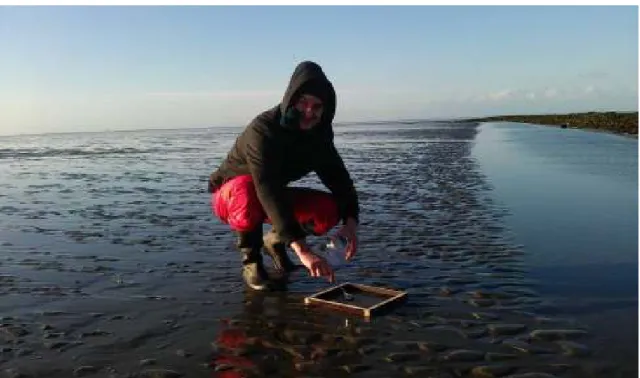
Figure 3: Sampling at Site 1 during low tide, close to a tidal flat channel. ... 25
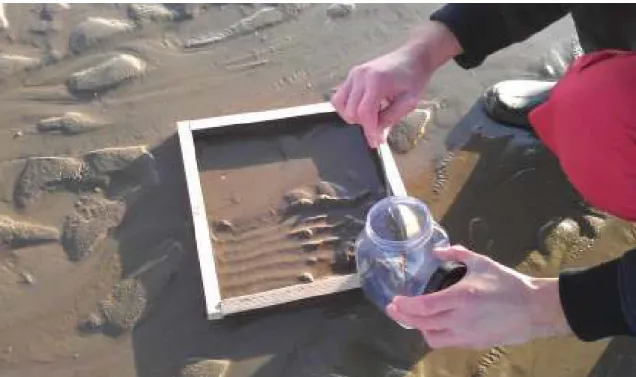
Figure 4: Surface sediment collection (~0.5 to 1 cm)... 26
Figure 5: Total number per cm3 of living and dead A. aomoriensis, H. germanica and E. williamsoni. ... 27
Figure 6: Removing macrofauna, silt, clay and excess Rose Bengal. ... 28
Figure 7: Sediment samples mixed with Sodium Polytungstate. ... 29
Figure 8: Stained foraminifers floating on top of the Sodium Polytungstate solution. ... 30
Figure 9: Electron micrographs of: E. williamsoni (left) (in Hayward et al., 1997), H. germanica (2nd from left) (in Banner and Culver, 1978), and A. aomoriensis T6 (umbilical view, 2nd from right and spiral view, right) (in Hayward et al., 2004). Scale bar is 100 µm... 31
Figure 10: Live shots of: E. williamsoni (left) (in Austin, 2001), H. germanica (middle) (in Goldstein, 2006), and A. aomoriensis T6 (right) (in Dissard et al., 2010). Scale bar is 100 µm if not labeled. ... 31
Figure 11: Elphidiids rDNA phylogeny and content of kleptochloroplasts per individual per species (Pillet et al., 2010). Each pie represents a single individual; they are shown by morphospecies horizontally and by sampling location vertically, Chezzetcook Inlet (Ch In), Trebeurden (Trb), Roscoff (Rosc) and others. ... 33
Figure 12: Foraminiferal suborders and phylogeny. Redrawn from Tappan and Loeblich (1988). ... 35
Figure 13: Generalized foraminifera life cycle. Redrawn from Goldstein (1999). ... 37
Figure 14: Total numbers of individual foraminifers per cm3 for each species from September to July at Station 1. Living and dead foraminifers are shown in red and black, respectively. .... 46
Section Marine Biogeosciences
Alfred Wegener Institute for Polar and Marine Research Am Handelshafen 12, 27570 Bremerhaven
Germany
15 Figure 15: Total numbers of individual foraminifers per cm3 for each species from September to July at Station 6. Living and dead foraminifers are shown in red and black, respectively. .... 47 Figure 16: Total numbers of individual foraminifers per cm3 for each species from September to July at Station 8. Living and dead foraminifers are shown in red and black, respectively. .... 48 Figure 17: Total numbers of individual foraminifers per cm3 for each species from September to July at Station 9. Living and dead foraminifers are shown in red and black, respectively. .... 49 Figure 18: Foraminifer abundance in four different size classes from station 1. Only living individuals are shown. ... 50 Figure 19: Foraminifer abundance in four different size classes from station 6. Only living individuals are shown. ... 51 Figure 20: Foraminifer abundance in four different size classes from station 8. Only living individuals are shown. ... 52 Figure 21: Foraminifer abundance in four different size classes from station 9. Only living individuals are shown. ... 53 Figure 22: Residuals of A. aomoriensis. Left side shows all sampling dates and sampling day. Right side bar shows percentage deviation from the mean relative abundance. ... 56 Figure 23: Residuals of H. germanica. Left side shows all sampling dates and sampling day. Right side bar shows percentage deviation from the mean relative abundance. ... 57 Figure 24: Residuals of E. williamsoni. Left side shows all sampling dates and sampling day. Right side bar shows percentage deviation from the mean relative abundance. ... 58 Figure 25: Measured temperature and salinity over the sampling period. ... 62
Section Marine Biogeosciences
Alfred Wegener Institute for Polar and Marine Research Am Handelshafen 12, 27570 Bremerhaven
Germany
16 GENERAL INTRODUCTION
Benthic foraminifera are common marine protozoa inhabiting almost all benthic environments. Formerly, benthic foraminifera were considered to occupy only the sediment surface and the top centimeters of the sediment, but later they were found also to inhabit deeper sediment layers (Jorissen, 1999). Benthic foraminifera are capable of vertical migration (Severin and Erskian, 1981; Moodly et al., 1998). The upper layers of sediment are usually well oxygenated, thus vertical migration is an excellent adaptation to escape temporary environmental changes such as severe anoxia, since the sediment surface is the last microhabitat to turn chemically hostile and the first to be re-oxygenated (Duijnstee et al., 2003). Under conditions of experimental bottom-water anoxia, typical shallow living foraminiferal taxa reside almost exclusively in the top 5 mm of the sediment, whereas they live deeper in the sediment (and reach a density maximum between 5 and 10mm) when the bottom-water is oxygenated (Duijnstee et al., 2003).
Despite their ubiquity in the marine realm (e.g. Murray, 1991), their biological versatility (e.g. Lipps, 1983), and their importance in the carbon cycle (e.g. Gooday et al., 1992; Graf, 1992; Moodley et al., 1998), modern benthic foraminifera have been seriously neglected by biologists. This lack of attention is compensated for by their popularity among paleontologists. The calcareous and agglutinated tests that foraminifera produce have a high potential to fossilize such that they are very abundant in old marine sediments. Some are found in deposits dating back to Cambrian times (e.g. Culver, 1991).
The calcareous tests of foraminifera are susceptible to dissolution in calcite undersaturated waters due to decreasing water pH (ocean acidification), which makes them an important group to study the effects of ocean acidification. During the Paleocene-Eocene, ̴ 2000 x 109 metric tons of carbon were rapidly released in form of methane, which lowered the ocean pH and led to an increase in ocean temperature.
Section Marine Biogeosciences
Alfred Wegener Institute for Polar and Marine Research Am Handelshafen 12, 27570 Bremerhaven
Germany
17 During the Paleocene-Eocene thermal maximum (PETM), sea surface temperature rose by 5°C in the tropics and as much as 9°C at high latitudes (Zachos et al., 2005), which contributed to the mass extinction of benthic foraminifera at the P-E boundary.
Because of their excellent preservation potential, fossil foraminiferal shells are used for paleoenvironmental reconstructions in the marine realm (e.g. Duijnstee et al., 2003). For instance, paleoecological transfer functions are empirically derived equations for quantitatively estimating past atmospheric or oceanic conditions. The relationships represented in these functions are based on the spatial correlations between modern climate data and Foraminifera (assemblages and shape diversity), which are used as calibration sets (Sachs et al., 1977). Paleoenvironmental reconstructions also use geochemical composition of tests and include, among others, the Mg/Ca ratio as a recorder of bottom-water temperature (e.g. Martin et al., 2002), B/Ca as a proxy for the calcite saturation state (e.g. Yu and Elderfield, 2007), the boron isotopic composition as a pH proxy (e.g. Hönisch et al., 2008), and the stable isotopes of oxygen and carbon that are used to reconstruct past changes in sea level, temperature, carbon cycle and marine productivity (e.g. Zachos et al., 2001).
However the exact calcification mechanisms and secondary factors influencing the minor and trace metal incorporation into shell calcite are largely unknown. Another source of uncertainty when developing or applying proxies using shells from sediments is the lack of knowledge about foraminiferal population dynamics. The recorded geochemical signal is usually derived from bulk chemistry, which displays an average of numerous individuals grown at different times and thus under different environmental conditions. Consequently, the record is an averaged signal that obliterates seasonal changes in abundance. For this reason, it is important to gain knowledge about foraminiferal population variations to improve our understanding of geochemical proxies as well as their reliability and limitation.
The study of population dynamics bridges the gap between the characteristics of individual organisms in a population and the dynamics of the total population as a
Section Marine Biogeosciences
Alfred Wegener Institute for Polar and Marine Research Am Handelshafen 12, 27570 Bremerhaven
Germany
18 whole. Individuals in biological populations differ with regard to their physical and behavioral characteristics and therefore in the way they interact with their environment (Cushing, 1998). The science of population dynamics has the task to investigate the short and long term changes in size and age composition of populations, thus providing a baseline for future studies such as to investigate the impact of Ocean Acidification on foraminiferal population structure.
Three benthic species, which will be examined in this study, have been identified to be the only calcareous foraminifers that populate in the intertidal mudflat of Dorum-Neufeld: Elphidium williamsoni (Haynes, 1973), Ammonia aomoriensis (Asano, 1951) and Haynesina germanica (Ehrenberg, 1840). The foraminifer sampling is carried out approximately biweekly, and the obtained time series data cover the period from September 2011 to July 2012. The present study is limited to this period, but the study will be extended beyond the deadline of this Master thesis to finally span approximately 1 ½ years (November 2011 – July 2013).
Shallow-water species such as A. aomoriensis are also often used for culturing studies because most deep-sea foraminifers are unable to survive under laboratory conditions, which is probably due to the pressure differences between natural habitat and laboratory. At the Alfred Wegener Institute for Polar and Marine Research (AWI) these shallow-water species are taken from the intertidal mudflat near Dorum-Neufeld in northern Germany. However, to date it has never been systematically investigated when the highest population densities occur in this area, and foraminifera for culturing were more or less randomly sampled.
Goals:
● Provide information on the population structure of each of the benthic species and investigate the potential influence on the mean geochemical proxy-signal (e.g. Mg/Ca)
Section Marine Biogeosciences
Alfred Wegener Institute for Polar and Marine Research Am Handelshafen 12, 27570 Bremerhaven
Germany
19 ● Provide information on the timing of reproduction of foraminifera in the intertidal mudflat. The number of juveniles is expected to give an idea of the optimum time for reproduction.
● The factors that influence foraminiferal abundance changes are still unknown and need to be explored; this study will provide some ideas concerning this matter. In addition, coexistence and competition among the three dominant foraminifer species in the benthic realm will be analyzed.
● Baseline for future studies to investigate the impact of ocean acidification on foraminiferal population structure.
Ocean Acidification
Over the last century, human activities have significantly influenced the biogeochemical cycles of carbon and nutrient elements with profound environmental impacts on local to global scales (IPCC, 2007). Since the industrial revolution surface ocean pH decreased by 0.1 units and model projections show that this decrease can reach 0.3 to 0.4 units in 2100 (IPCC scenario B2, 2007).
Carbon is the fourth most abundant element in the Universe. Most of it is stored in rocks, about 65,500 billion metric tons. The rest resides in the ocean, atmosphere, plants, soil, and fossil fuels. The carbon cycle represents the flows between each reservoir, which is divided into slow and fast components. A carbon increase puts carbon gases into the atmosphere resulting in warmer temperatures on Earth. The carbon cycle maintains a balance that prevents all of Earth’s carbon from entering the atmosphere or from being stored entirely in rocks, thus it acts as a planet’s thermostat. Human disturbances such as burning fossils and deforestation change the global carbon cycle. By clearing forests, the ability of the plants to store carbon, as they grow, vanishes and in agriculture, woods are often replaced by plats which store less carbon.
Section Marine Biogeosciences
Alfred Wegener Institute for Polar and Marine Research Am Handelshafen 12, 27570 Bremerhaven
Germany
20 With deforestation soil is exposed that vents carbon into the atmosphere. Since the beginning of the Industrial Revolution, when humans first started burning fossil fuels, carbon dioxide concentrations in the atmosphere have risen from about 280 parts per million to 387 parts per million, a 39 percent increase. As for now, land plants and the ocean have taken up about 55 percent of the extra carbon that humans have put into the atmosphere while about 45 percent has stayed in the atmosphere (Riebeek, 2011). The main reason of this surface ocean pH decrease is the increase of anthropogenic carbon dioxide (CO2) in the atmosphere. The carbon dioxide data from Mauna Loa (volcano on Hawaii in the Pacific Ocean), which constitute the longest record of direct measurements of atmospheric CO2, show a steady increase of atmospheric CO2 from 1960 to 2010 (Tans, NOAA/ESRL). Since the partial pressure of CO2 in the surface ocean tends to equilibrate with the atmosphere, the carbon uptake by the oceans increases with increasing atmospheric CO2. In seawater, carbon is present in three forms (CO2, HCO3- and CO32-) (Fig. 1B), the relative proportions of which determine the pH (Zeebe and Wolf-Gladrow, 2001) (Fig. 1A). Hence, the more CO2 is released by human beings, the more is absorbed by the ocean, which leads to a reduced surface ocean pH, also known as ocean acidification, yet the ocean remains alkaline.
A 5 6 7 8 9 10 11 12 100 80 60 40 20 0 pH % CO CO22 HCOHCO33 COCO3322- -5 6 7 8 9 10 11 12 100 80 60 40 20 0 pH % CO CO22 COCOCOCO3322- -3 322- -HCO HCO33- -HCO HCO33- -B
Figure 1: A. Bjerrum plot for inorganic carbon species (Zeebe and Wolf-Gladrow, 2001). B. Carbonate chemistry (Bijma and Burhop, 2010).
Section Marine Biogeosciences
Alfred Wegener Institute for Polar and Marine Research Am Handelshafen 12, 27570 Bremerhaven
Germany
21 The increase of CO2 due to human activity has contributed to growing concerns about climate change consequences (Gruber and Sarmiento, 2002) and perturbation of ocean chemistry (Doney, 2006).
Population dynamic studies serve as a baseline study for the effects of ocean acidification. Ocean acidification is a major threat for marine organisms, although the response is highly species-specific. Some organisms show no response or even higher growth rates (some marine algae) while others, especially corals and pteropods, which are carbonate producers, whose skeletons and shells are made up of the more soluble form of calcium carbonate – aragonite, are highly sensitive to ocean acidification. As a result, the shells end up being thinner and more fragile. For example, sea grass shows increased photosynthetic rates and higher reproduction rates in acidified water (Fabry et al., 2008). On the other hand, corals are more sensitive in a way that calcification rates may vary substantially in response to changes in pH and aragonite saturation state (McNeil et al., 2004). The effect of elevated atmospheric CO2 on marine calcification is more diverse than previously thought. That is why further species-specific and multispecies studies with multiple stress factors have to be carried out.
Relating to the timing of reproduction of benthic foraminifers, biological consequences of ocean acidification suggest that calcification and metabolic processes are compromised in acidified seawater. Calcifying organisms can increase the rates of many of their biological processes, such as their metabolism and the ability to calcify to compensate for increased seawater acidity (Wood et al., 2008).
Section Marine Biogeosciences
Alfred Wegener Institute for Polar and Marine Research Am Handelshafen 12, 27570 Bremerhaven
Germany
22 Study area
The Wadden Sea stretches along the European continental coastline from Den Helder in the Netherlands to Esbjerk in Denmark with a length of 450 km and 20 km in width. In Germany it covers an area of 500.000 ha. The term “Wadden Sea” stands for the area from the dike towards the sea within a 10 meter depth contour line.
The Wadden Sea at the North Sea coast is the largest continuous Wadden Sea on Earth and a world heritage site, where millions of migratory birds take refuge. The Wadden Sea National Park in Schleswig-Holstein is with an area of 285.000 ha, the largest National Park in middle Europe. My study area is located in the intertidal mudflat near Dorum-Neufeld, Northern Germany (N 53° 44’, E 08° 30’).
The Wadden Sea is an open system where water exchange with the North Sea occurs through tidal inlets. The quality of water, sediment and marine habitats is to a large degree influenced by processes occurring in the North Sea and vice versa.
Especially the intertidal estuarine mudflat with its organic substances offers a splendid amphibian biotope. The upper centimeters of the sediment habitats many algae, bivalves, snails, worms and crustaceans. At 30 cm depth, no oxygen is present and forms blackish colored sediment due to composition processes.
Organisms living in tidal flat ecosystems have to tolerate extreme environmental gradients in salinity, incident light, oxygen availability and temperature. Nevertheless, this type of landscape exhibits high rates of primary production (Loebl et al., 2007).
These high rates are not only supported by the presence of well-adapted phytoplankton and microorganism consortia, but also by enhanced nutrient availability due to rapid organic matter (OM) remineralization. In intertidal areas, aerobic and anaerobic OM degradation processes are fuelled by filtration of suspended particles and dissolved OM from the water column within permeable sediments (Beck and Brumsack, 2012).
Section Marine Biogeosciences
Alfred Wegener Institute for Polar and Marine Research Am Handelshafen 12, 27570 Bremerhaven
Germany
23 Continuous supply of organic substrate supports enhanced microbial activity, and ultimately the release of metabolic products such as nutrients and methane (CH4) to the pore waters. Tidal pumping induces advective flushing of permeable sediments and the transport of remineralization products to the open water column, where they can once again support primary production (Beck and Brumsack, 2012).
Intertidal mudflats are favored habitats for benthic foraminifera. They are, non-vegetated, soft sediment habitats, found between mean high-water and mean low-water spring tide datums (Dyer et al. 2000) and are generally located in estuaries and other low energy marine environments. Intertidal mudflats underlie drastic changes in soil composition due to seasonal and tidal changes. Although tidal flats comprise only about 7% of total coastal shelf areas (Stutz and Pilkey 2002), they are highly productive components of shelf ecosystems responsible for recycling organic matter and nutrients from both terrestrial and marine sources and are areas of high primary and secondary productivity (Black et al., 1998). Large amounts of sediment and organic matter are transported and deposited in intertidal mudflats, thus resulting in a high food supply for microorganisms, finfish, shellfish and migrating birds.
Section Marine Biogeosciences
Alfred Wegener Institute for Polar and Marine Research Am Handelshafen 12, 27570 Bremerhaven
Germany
24 MATERIALS AND METHODS
Sampling sites and sample collection
Nine spatially distant sampling sites were selected in the intertidal mudflat near Dorum-Neufeld. They were arranged in three rows. Within each row, three sampling sites are located approximately 100 meters away from each other, ranging from close to the shore towards 300 m off shore (Fig. 2). The sampling sites 1-3 and 8-9 are located close to tidal flat channels, while site 7 is located in a salt grass patch. Sites 4-6 are in the midst of the sampling area.
Figure 2: Sampling locations (sites 1-9) in the intertidal mudflat near Dorum-Neufeld, Northern Germany (N 53° 44’, E 08° 30’). Stations 1, 6, 8 and 9 (yellow mark) were continuously sampled. Stations 2, 3, 4, 5, 7 only during September - December 2011.
Section Marine Biogeosciences
Alfred Wegener Institute for Polar and Marine Research Am Handelshafen 12, 27570 Bremerhaven
Germany
25 Starting in September 2011 until July 2012, sediment was collected biweekly from the sediment surface of the intertidal mudflat near Dorum-Neufeld at low tide (Fig. 3). Stations 1, 6, 8 and 9 were continuously sampled. Stations 2, 3, 4, 5, 7 only during September - December 2011. From each sampling site, the upper ~0.5 to 1 cm of the sediment was collected from a 30 cm x 30 cm frame, filled into plastic jars, and subsequently covered with sea water to avoid desiccation (Fig. 3 and 4). Temperature and salinity were measured in a tidal flat channel along with sample collection. In the laboratory, the sediment was resuspended for homogenization and subsamples (20 ml, ±1 ml) were put into centrifuge tubes containing 70% ethanol and Rose Bengal (1g/l) (for further details see Diz, et al., 2009), and stored at 4°C until further processing. Rose Bengal was used to distinguish between (recently) living and dead individuals as it adheres to proteins and produces a red coloration (Murray and Bowser, 2000) when the organism are alive. To obtain the exact number of foraminifers, which were counted from the varying amounts of sediment, the data was normalized by dividing the number of counted foraminifers through the respective sediment amount.
Section Marine Biogeosciences
Alfred Wegener Institute for Polar and Marine Research Am Handelshafen 12, 27570 Bremerhaven
Germany
26
Figure 4: Surface sediment collection (~0.5 to 1 cm).
After the first three months of sampling (September through December 2011), I excluded some of the nine sampling sites (Fig. 5) to focus on the most productive sampling sites.
Station 1, 6, 8 and 9 showed the highest abundance of species throughout the first three sampling month, which was the criterion for sorting out the sampling sites. The second main criterion is to keep sampling sites with a high abundance of A. aomoriensis, because this species is the primary target species used in culture experiments at the AWI and is therefore of special importance for further investigation.
Sampling station 1 shows a high abundance of A. aomoriensis in all three sampling months and has also a high abundance of the other two species. Station 6 is another sampling station with relatively high number of A. aomoriensis, especially in the months of November and December. Station 8 has a relatively high occurrence of A.
Section Marine Biogeosciences
Alfred Wegener Institute for Polar and Marine Research Am Handelshafen 12, 27570 Bremerhaven
Germany
27
Section Marine Biogeosciences
Alfred Wegener Institute for Polar and Marine Research Am Handelshafen 12, 27570 Bremerhaven
Germany
28 Stations 2, 3, 4, 5, and 7 were excluded because they had the lowest abundance of foraminifers and are therefore less attractive for further investigation. The number of dead individuals was not considered for site selection.
From January 2012 samples were only taken from stations 1, 6, 8 and 9 and these were taken into account in the results.
Sample preparation
In the laboratory, the subsamples were fixed in Alcohol and Rose Bengal stained. After 24 hours, they were washed and wet-sieved over 63 µm and 1.6 mm sieves to remove macrofauna and sediment smaller than 63 µm (silt and clay < 63 µm) and excess Rose Bengal and ethanol (Fig. 6). The washed sediment samples are then oven dried (60°C) and filled in glass jars for subsequent heavy liquid separation with Sodium Polytungstate.
Section Marine Biogeosciences
Alfred Wegener Institute for Polar and Marine Research Am Handelshafen 12, 27570 Bremerhaven
Germany
29 In order to separate the foraminifera (stained and unstained) in the samples from the remaining sediment we use a heavy liquid separation technique with Sodium Polytungstate (Munstermann and Kersthold, 1996). Sodium Polytungstate [Na6 (H2 W12 O40)] is a high-density agent, which is non-toxic, ecologically safe and recoverable, so that it can be re-used. To obtain the best results in separating foraminifers, we adjusted to a density of 2.45 g/ml, by adding distilled water to the solution. The exact density of 2.45 g/ml, which worked best for separating foraminifers, was eventually obtained by trial and error.
We verified the efficiency of the separation. After density centrifugation no foraminifera were found in the remaining sand fraction and all foraminifera were kept in the supernatant.
Section Marine Biogeosciences
Alfred Wegener Institute for Polar and Marine Research Am Handelshafen 12, 27570 Bremerhaven
Germany
30
Figure 8: Stained foraminifers floating on top of the Sodium Polytungstate solution.
For separation, each sediment sample (20 cm3) was equally divided into four centrifuge tubes containing Sodium Polytungstate (Fig. 7). After mixing and centrifuging for 10 minutes at 2000 rpm, the foraminifers were decanted from the upper layer of the solution (Fig. 8) over a filter to collect the Sodium Polytungstate. The remaining Sodium Polytungstate in the tube and bottom sediment was also filtered for recycling. The filter containing the foraminifers (stained and unstained) and sediment remains was thoroughly washed with MilliQ water to remove any remaining Sodium Polytungstate from the shells. Subsequently, the sample was air-dried and filled into vials for further processing.
Section Marine Biogeosciences
Alfred Wegener Institute for Polar and Marine Research Am Handelshafen 12, 27570 Bremerhaven
Germany
31 Speciation
Before counting and classification, the foraminifers were dry-sieved over 90, 125, 250 and 355 µm sieves to separate different size classes and to remove remaining sediment.
The foraminifers of each size class were identified and total numbers of dead or alive specimens were counted. Counting was done using a binocular (Zeiss, steREO, Discovery, V12) and picking trays. We identified three benthic species that are present in the intertidal flat of Dorum, which will be examined in this study: E. williamsoni, A.
aomoriensis and H. germanica. No other species, except the three mentioned above,
were observed.
Figure 9: Electron micrographs of: E. williamsoni (left) (in Hayward et al., 1997), H. germanica (2nd from left) (in Banner and Culver, 1978), and A. aomoriensis T6 (umbilical view, 2nd from right and spiral view, right) (in Hayward et al., 2004). Scale bar is 100 µm.
Figure 10: Live shots of: E. williamsoni (left) (in Austin, 2001), H. germanica (middle) (in Goldstein, 2006), and A. aomoriensis T6 (right) (in Dissard et al., 2010). Scale bar is 100 µm if not labeled.
Section Marine Biogeosciences
Alfred Wegener Institute for Polar and Marine Research Am Handelshafen 12, 27570 Bremerhaven
Germany
32 In the literature, the Ammonia species that is present in Northern Germany’s mudflats is often referred to as Ammonia tepida (Cushman, 1926). Morphological distinction of molecular types in Ammonia revealed though, that the species near Dorum, Neufeld is the molecular subtype (T6) of A. aomoriensis. This specific molecular subtype is characterized by a commonly elongate folium, pointed, with weak, imperforate, secondary calcite; often with one or more small umbilical bosses; radial sutures perpendicular to spiral suture on spiral side (Fig. 9 and 10) (Hayward et al., 2004).
Ammonia species are free epibenthic or endobenthic in fine sediments. “Foraminifera
are recorded as feeding primarily upon bacteria, small diatoms, and nannoplankton. Thus their food items are usually below 50 µm and commonly below 25 µm in size” (Lipps, 1970).
Haynesina germanica and E. williamsoni are both cleptoplasts, they are able to use
diatom chloroplasts for photosynthesis (see Fig 10 for green color of chloroplasts in H.
germanica). “Kleptoplastidy is the ability of heterotrophic organisms to preserve
chloroplasts of algal preys they eat and partially digest. As the sequestered chloroplasts stay functional for months, the “host” becomes photosynthetically active”(Pillet et al., 2010).
Characterizing kleptoplastidy is of major importance for understanding endosymbiosis and the emergence of photosynthesis among eukaryotes. Most of the hypotheses assume that the acquisition of chloroplasts by the host cell was carried through a predator-prey relationship between a heterotrophic eukaryotic cell feeding on algae (Keeling, 2004).
Haynesina germanica mainly bears chloroplasts of pennate diatoms (see Fig 11). The
majority of kleptochloroplasts found in E. williamsoni belong to diatoms from clades C (Cymatosirales) and D (pennate diatoms) with almost the same ratio. In comparison to other foraminifers, chloroplasts sequestered by Haynesina and Elphidium originated exclusively from diatoms (Pillet et al., 2010).
Section Marine Biogeosciences
Alfred Wegener Institute for Polar and Marine Research Am Handelshafen 12, 27570 Bremerhaven
Germany
33
Figure 11: Elphidiids rDNA phylogeny and content of kleptochloroplasts per individual per species (Pillet et al., 2010). Each pie represents a single individual; they are shown by morphospecies horizontally and by sampling location vertically, Chezzetcook Inlet (Ch In), Trebeurden (Trb), Roscoff (Rosc) and others.
Section Marine Biogeosciences
Alfred Wegener Institute for Polar and Marine Research Am Handelshafen 12, 27570 Bremerhaven
Germany
34
Haynesina germanica has been widely described as a conspicuous inhabitant of
shallow-water settings along European coastlines, the Mediterranean Sea, the Gulf of Mexico and Canada (e.g. Calvo-Marcilese and Langer, 2010, see references therein). It is a mid-latitudinal, temperate and euryhaline species that favors shallow-water muddy and phytal environments of salt-marshes, intertidal habitats with salinities that generally range between 1 and 30, and optimal temperatures between 12 and 22 ºC (Banner and Culver, 1978; Hottinger et al., 2001). Armynot du Châtelet et al. (2004) have also shown that H. germanica is a successful pioneer species in polluted estuarine environments and in zones that are rich in organic matter (see also Gebhardt, 2009).
Elphidium williamsoni was originally described from beach sands off Dunkerque,
France. Tests of E. williamsoni exhibit numerous papillae of different sizes in the umbilical area. They are surrounded by thickened extensions of the chamber walls pointing into the umbilicus (Fig. 9). The sutural bridges are generally indistinct. The test of E. williamsoni is slightly compressed with a width * 10/diameter ratio of 4–5 (Lutze, 1965).
Classification and Phylogeny
When it comes to foraminiferal classification and phylogenic trees, foraminifera are primarily classified based on the composition and morphology of their test. Three basic wall compositions are known, organic, agglutinated and secreted calcium carbonate.
Agglutinated forms, for example the Textulariina, are composed of randomly accumulated grains or grains selected on the basis of specific gravity, form or size; where some forms arrange particular grains in specific parts of the test.
Section Marine Biogeosciences
Alfred Wegener Institute for Polar and Marine Research Am Handelshafen 12, 27570 Bremerhaven
Germany
35 Foraminifera that secrete tests are again subdivided into three major groups, microgranular (i.e. Fusulinina), porcelaneous (i.e. Miliolina) and hyaline (i.e.
Globigerinina) (Fig 12).
Figure 12: Foraminiferal suborders and phylogeny. Redrawn from Tappan and Loeblich (1988).
Microgranular walled forms are composed of equidimensional subspherical grains of crystalline calcite. Porcelaneous forms have a wall composed of thin inner and outer veneers enclosing a thick middle layer of crystal laths; they are imperforate and made from high magnesium calcite. The hyaline foraminifera add a new lamella to the entire test each time a new chamber is formed (Olney, 2002).
Section Marine Biogeosciences
Alfred Wegener Institute for Polar and Marine Research Am Handelshafen 12, 27570 Bremerhaven
Germany
36 The Spirillinina have a test constructed of an optically single crystal of calcite, the Suborder Silicoloculinina has a test composed of silica. The Suborder Involutina have a two chambered test composed of aragonite. The Robertinina also have a test composed of aragonite and the Suborder Carterina is believed to secrete spicules of calcite which are then weakly cemented together to form the test (Olney, 2002).
Elphidium williamsoni, A. aomoriensis and H. germanica all belong to the Order Rotaliida, whose tests are typically enrolled or may be encrusted with proliferated
chambers (Pawlowski et al., 2003).
Reproduction
Of roughly 4000 living species of foraminifera the life cycles of only about 20 are well-known. There is a large variety of reproductive, growth and feeding strategies, yet the alternation of sexual and asexual generations is frequent throughout the group and this characteristic separates the foraminifera from other members of the Granuloreticulosea. Asexually produced haploid generations commonly form a large proloculus (initial chamber) and are therefore termed megalospheric. Sexually produced diploid generations have a tendency to produce a smaller proloculus and are therefore termed
microspheric. Importantly, in terms of preservation in the fossil record, many
foraminiferal tests are either partially dissolved or partially disintegrated during the reproductive process (Olney, 2002).
The diploid zygote growths to a diploid, microspheric agamont, which forms young haploid foraminifera via meiosis (see Fig. 13). The young foraminifers can either grow to a haploid, megalospheric gamont or form a schizont, which is able to reproduce asexually. The megalospheric gamont produces gametes via mitosis which subsequently turn into diploid zygotes.
Section Marine Biogeosciences
Alfred Wegener Institute for Polar and Marine Research Am Handelshafen 12, 27570 Bremerhaven
Germany
37
Section Marine Biogeosciences
Alfred Wegener Institute for Polar and Marine Research Am Handelshafen 12, 27570 Bremerhaven
Germany
38 Residual calculations
The absolute numbers from the respective species are calculated from the size fraction data. Subsequently the relative abundance (0 ˂ x ˂ 1) is calculated. The residual values (-1˂ x ˂1) are then determined from the mean abundance. Finally, the percentage (%) deviation from of the standard residual values was calculated (see Figures 22-24 and supplemental data).
The residual graphs allow a different way of representing the data and show the percentage change compared to the mean value as a function of grain size and time (Figs. 22-24).
Section Marine Biogeosciences
Alfred Wegener Institute for Polar and Marine Research Am Handelshafen 12, 27570 Bremerhaven
Germany
39 month Temp number of A.a. percentage of A.a. to total number
Sep 19 2 0,692041522 Oct 12 4 1,384083045 Nov 4 6 2,076124567 Dec 4 4 1,384083045 Jan 1 3 1,038062284 Feb 4 2 0,692041522 Mar 10 3 1,038062284 Apr 12 15 5,190311419 May 20 50 17,30103806 Jun 22 70 24,22145329 Jul 25 60 20,76124567 Aug 28 70 24,22145329 13,41666667 289
measured average T total number
theoretical Mg/Ca using calibration for Cibicidoides spp. of Elderfield et al. 2006 7,276423648 3,36907924 1,397436497 1,397436497 1,004650263 1,397436497 2,703749422 3,36907924 8,122512149 10,12127338 14,0783687 19,58256216 Mg/Ca temperature calculation
Calculating the mean temperature from Ammonia aomoriensis, using a theoretical Mg/Ca calibration for Cibicidoides spp. of Elderfield et al. 2006. The calculated temperature is 23, 4° C.
Section Marine Biogeosciences
Alfred Wegener Institute for Polar and Marine Research Am Handelshafen 12, 27570 Bremerhaven
Germany
40 contribution of monthly Mg/Ca to annual Mg/Ca
0,050355873 0,046630855 0,029012522 0,019341682 0,010428895 0,009670841 0,028066603 0,174865704 1,405278919 2,451519505 2,922844712 4,743181145 11,89119726 23,46508105
annual Mg/Ca calculated average T
Section Marine Biogeosciences
Alfred Wegener Institute for Polar and Marine Research Am Handelshafen 12, 27570 Bremerhaven
Germany
41 RESULTS
Total abundance of foraminifers
Ammonia aomoriensis and H. germanica:
Analysis of the total numbers of living specimens (Figs. 14-17), reveals a peak starting in May through June at all sampling stations for A. aomoriensis and H. germanica. The abundance in this time period for A. aomoriensis and H. germanica ranges from 60 to 90 individuals/cm3, whereas during the rest of the sampling period it rarely exceeds 20 individuals/cm3. In fact, from November to March the total numbers of living A.
aomoriensis and H. germanica predominantly remains below 5 individuals/cm3.
The number of living individuals, start to increase in March with its maximum in May and June can be observed for A. aomoriensis and H. germanica at all four stations (Fig. 14-17).
In contrast, living specimens of E. williamsoni show no peak during May and June, but have various peaks which are not uniform at all sampling stations.
Considering the total amount of dead foraminifers at sampling station 1, there is a significant peak for both A. aomoriensis and H. germanica in February with an average of 30 dead individuals/cm3. There is also a slight increase from April to July ranging from 1 to 7 dead individuals/cm3, which is present at all sampling stations.
Examining station 6 for the total amount of dead foraminifers, the quantity does not exceed 13 dead individuals/cm3 for all three species at any time, except E. williamsoni in May and June with 17 and 20 dead individuals/cm3,respectively (Fig. 15).
Section Marine Biogeosciences
Alfred Wegener Institute for Polar and Marine Research Am Handelshafen 12, 27570 Bremerhaven
Germany
42 Sampling station 8 has one peak in November with 19 dead individuals/cm3 for A.
aomoriensis and H. germanica.
Similarly to station 8, sampling station 9 has one peak in November with 12 dead individuals/cm3 for A. aomoriensis and H. germanica.
Elphidium williamsoni:
At station 1, E. williamsoni exhibits two high peaks with 96 individuals/cm3 on September 20th and 90 individuals/cm3 on January 16th. This species also shows several smaller peaks throughout the year ranging from 20 to 40 individuals/cm3 (Fig. 14).
At sampling station 6, there is only one high peak with 80 individuals/cm3 on September 20th. From November to July, the total number of living specimen is between 10-20 individuals/cm3.
At sampling station 8, the highest abundance of E. williamsoni is also in September with 26 individuals/cm3. There are several smaller peaks in January, March, April and June, but none of them exceeds 20 individuals/cm3 (Fig. 16).
At sampling site 9, the total amount of living E. williamsoni does not exceed the 20 individuals/cm3 mark, the highest amounts can be registered in September, February, March and June, each with 16, 15, 18 and 17 individuals/cm3 (Fig. 17).
Considering the total amount of dead foraminifers at sampling station 1, E. williamsoni has a single peak in June with 38 dead individuals/cm3 (Fig. 14).
In sampling station 8, E. williamsoni has a peak in June with 20 individuals/cm3 and a second peak in November with 15 dead individuals/cm3 (Fig. 16).
Section Marine Biogeosciences
Alfred Wegener Institute for Polar and Marine Research Am Handelshafen 12, 27570 Bremerhaven
Germany
43 In sampling station 9, E. williamsoni has a peak in June with 14 dead individuals/cm3 and a second peak in November with 15 dead individuals/cm3 (Fig. 17).
Size fractions
The four sampling sites can be divided into close-to-shore (station 6), mid-shore (station 1, 8) and off-shore sampling sites (station 9) (Fig. 2). Regardless of the location and distance to the shore, all four sites show a major peak from May through June for A.
aomoriensis and H. germanica.
At sampling station 1 (mid-shore) A. aomoriensis and H. germanica have their highest abundance in the 125-250 µm size class with 47 individuals/cm3 in May and June. In the smallest size class with 90-125 µm there is also a rise from April to May and a decline afterwards until July.
The abundance in the biggest size class (>350 µm) is very small to zero. E. williamsoni is the most frequent species in this size class with an average of less than 1 individual/cm3.
Elphidium williamsoni has several high peaks in the 125-250 µm size class with more
than 50 individuals/cm3 in September and January and three smaller peaks with roughly 20 individuals/cm3 in December, March and June (Fig. 18).
In the 250-350 µm size class, there are three peaks, the highest in January with 36 individuals/cm3, the second highest in March with 29 individuals/cm3 and the lowest in April with 21 individuals/cm3.
The abundances at sampling station 6 (close to shore) are similar to station 1 (mid-shore), except that the peak in the smallest size class with 90-125 µm is smaller in May with 26 individuals/cm3, compared to ~40 individuals/cm3 at station 1. There is only
Section Marine Biogeosciences
Alfred Wegener Institute for Polar and Marine Research Am Handelshafen 12, 27570 Bremerhaven
Germany
44 one peak of E. williamsoni in September with more than 50 individuals/cm3 instead of several peaks as in station 1.
Station 8, which is another mid-shore sampling site (such as station 1), shows similar patterns as station 1, but has lower total numbers (Figs. 18 and 20). Compared to station 1, E. williamsoni shows no high peaks at station 8, but is more equally abundant with 10 individuals/cm3 on average, which is not the case in station 1 (Fig. 18).
The off-shore station 9 is similar to the other three stations, which are spatially different. Ammonia aomoriensis and H. germanica have their highest abundance in the 125-250 µm size class with 30 and 40 individuals/cm3, respectively, in May and June. In the smallest size class with 90-125 µm, there is also a rise which begins in April with a maximum in May and a decline afterwards until July.
Elphidium williamsoni displays medium peaks in September with 15 individuals/cm3 in the 125-250 µm size class and in March with 14 individuals/cm3 in the 250-350 µm size class (Fig. 21).
Temporal variation of foraminifers
Ammonia aomoriensis and H. germanica have their highest total abundance in spring
and summer, throughout all four sampling sites, whereas in autumn and winter until the end of March low abundance predominates. A clear increase in both species can be observed with its maximum in May and June (Fig. 14-17).
Elphidium williamsoni does not show such an increase, but reaches peaks in total
abundance throughout the rest of the season; it has two high peaks with 96 individuals/cm3 in September and 90 individuals/cm3 in January. Elphidium williamsoni is generally more abundant in autumn and winter than A. aomoriensis and H.
Section Marine Biogeosciences
Alfred Wegener Institute for Polar and Marine Research Am Handelshafen 12, 27570 Bremerhaven
Germany
45 Regarding seasonal differences in size classes, the smallest size fraction of 90-125 µm for A. aomoriensis and H. germanica tends to increase not as much as the 125-250 µm size class and also tends to decrease in June, whereas the larger size class with 125-250 µm is more abundant during this month.
For example, at station 8 (Fig. 20), the maximum peak in the smallest size class for A.
aomoriensis and H. germanica is at 34 individuals/cm3 in May, which is almost identical to the peak in the larger size class above (125-250 µm). In the next sampling period in June, the abundance decreases in the smallest size class (90-125 µm) down to 23 individuals/cm3, whereas in the larger size class (125-250 µm) a clear increase up to 38 individuals/cm3 is observed.
Section Marine Biogeosciences
Alfred Wegener Institute for Polar and Marine Research Am Handelshafen 12, 27570 Bremerhaven
Germany
46
Figure 14: Total numbers of individual foraminifers per cm3 for each species from September to July at Station 1. Living and dead foraminifers are shown in red and black, respectively.
Section Marine Biogeosciences
Alfred Wegener Institute for Polar and Marine Research Am Handelshafen 12, 27570 Bremerhaven
Germany
47
Figure 15: Total numbers of individual foraminifers per cm3 for each species from September to July at Station 6. Living and dead foraminifers are shown in red and black, respectively.
Section Marine Biogeosciences
Alfred Wegener Institute for Polar and Marine Research Am Handelshafen 12, 27570 Bremerhaven
Germany
48
Figure 16: Total numbers of individual foraminifers per cm3 for each species from September to July at Station 8. Living and dead foraminifers are shown in red and black, respectively.
Section Marine Biogeosciences
Alfred Wegener Institute for Polar and Marine Research Am Handelshafen 12, 27570 Bremerhaven
Germany
49
Figure 17: Total numbers of individual foraminifers per cm3 for each species from September to July at Station 9. Living and dead foraminifers are shown in red and black, respectively.
Section Marine Biogeosciences
Alfred Wegener Institute for Polar and Marine Research Am Handelshafen 12, 27570 Bremerhaven
Germany
50
Figure 18: Foraminifer abundance in four different size classes from station 1. Only living individuals are shown.
Section Marine Biogeosciences
Alfred Wegener Institute for Polar and Marine Research Am Handelshafen 12, 27570 Bremerhaven
Germany
51
Figure 19: Foraminifer abundance in four different size classes from station 6. Only living individuals are shown.
Section Marine Biogeosciences
Alfred Wegener Institute for Polar and Marine Research Am Handelshafen 12, 27570 Bremerhaven
Germany
52
Figure 20: Foraminifer abundance in four different size classes from station 8. Only living individuals are shown.
Section Marine Biogeosciences
Alfred Wegener Institute for Polar and Marine Research Am Handelshafen 12, 27570 Bremerhaven
Germany
53
Figure 21: Foraminifer abundance in four different size classes from station 9. Only living individuals are shown.