Risk factors for postpartum urinary incontinence
* Extracted from the dissertation “Incontinência urinária no puerpério: fatores de risco e impacto na qualidade de vida”, Faculdade de Enfermagem, Universidade Estadual de Campinas, 2011.
1 Universidade Estadual de Campinas, Faculdade
de Enfermagem, Programa de Pós-Graduação em Enfermagem, Campinas, SP, Brazil.
2 Universidade Estadual de Campinas, Faculdade
de Enfermagem, Pós-Doutorado, Campinas, SP, Brazil.
3 Universidade Estadual de Campinas, Faculdade
de Enfermagem, Campinas, SP, Brazil.
Risk factors for postpartum urinary incontinence*
Fatores de risco para incontinência urinária no puerpério Factores de riesgo para incontinencia urinaria en el puerperio
Lígia da Silva Leroy1, Adélia Lúcio2, Maria Helena Baena de Moraes Lopes3
How to cite this article:
Leroy LS, Lúcio A, Lopes MHBM. Risk factors for postpartum urinary incontinence. Rev Esc Enferm USP. 2016;50(2):200-207. DOI: http://dx.doi.org/10.1590/ S0080-623420160000200004
Received: 06/13/2015 Approved: 12/29/2015
Original article DOI: http://dx.doi.org/10.1590/S0080-623420160000200004
Corresponding author:
Maria Helena Baena de Moraes Lopes Rua Tessália Vieira de Camargo, 126 Cidade Universitária Zeferino Vaz CEP 13083-887 – Campinas, São Paulo, Brazil [email protected]
abstract
Objective: To investigate the risk factors for postpartum urinary incontinence (UI) and its characteristics. Method: his was a case-control study with 344 puerperal women (77 cases and 267 controls) with up to 90 days postpartum. In a single session, participants were given a questionnaire with sociodemographic and clinical data and two others that assessed urine leakage, leakage situations, and type of UI. Results: Stress UI was present in 45.5% of the women, incidents of urine leakage several times a day in 44.2%, of which 71.4% were in small amounts and 57.1% when coughing or sneezing. In 70.1% of cases, UI began during pregnancy and remained through the postpartum period. After running a binary logistic regression model, the following factors remained in the inal model: UI during pregnancy (OR 12.82, CI 95% 6.94 – 23.81, p<0.0001), multiparity (OR 2.26, CI 95% 1.22 – 4.19, p=0.009), gestational age at birth greater or equal to 37 weeks (OR 2.52, CI 95% 1.16 – 5.46, p=0.02) and constipation (OR 1.94, CI 95% 1.05 – 5.46, p=0.035). Conclusion: Most often, UI irst appeared during pregnancy and remained through the postpartum period. Urinary incontinence during pregnancy, multiparity, gestational age at birth greater or equal to 37 weeks, and constipation were presented as risk factors. In the studied group, stress UI was more frequent.
descriPtOrs
INTRODUCTION
Urinary incontinence (UI) is a frequent condition during the pregnancy-puerperium cycle, with a prevalence of 18.6% to 75%(1) during pregnancy and 6% to 31%(2) postpartum,
ac-cording to the characteristics of the investigated population, the deinition of UI, and the period in question(3-4).
he pathophysiology of UI during pregnancy and the puerperium is multifactorial and involves pregnancy itself, hormonal changes, changes in the urethral angle, anatomi-cal injury after birth, and dynamic forces involving muscle and connective tissue(2).
Both urinary incontinence during pregnancy and in the immediate postpartum period can predict the long-term existence of this condition(5). A prospective cohort study
conducted twelve years after birth revealed that 66% of the incontinent women during the irst pregnancy or recent pu-erperium (three months) reported UI after birth, compared to 32.6% of previously continent women in one of those pe-riods(5). A more recent cohort study, also conducted twelve
years after birth, showed that of the women who reported UI three months after birth, 76.4% were still incontinent 12 years later (953/1247), indicating that this condition com-monly goes unresolved(6).
Stress UI (SUI) is more common among puerperal women, followed by mixed UI (MUI) and urge UI (UUI). Generally, episodes of urine leakage are infrequent and the amount of urine leakage is small(3-4,7-10).
Maternal age greater than 35 years, UI during pregnancy, elevated body mass index (BMI), multiparity, and normal birth are considered risk factors for postpartum UI(4,7,9-14). A 10-year
cohort study developed with the goal of assessing the efect of the irst normal birth on urinary symptoms showed that it was associated with an increase in SUI, in addition to UUI, regard-less of maternal age or number of births(14).
Other factors such as: color or race, episiotomy, perineal tears, newborn’s head circumference, newborn’s weight, gestational age at birth, smoking, and constipation require further studies in or-der to prove their association with postpartum UI(7,12,14-16).
Urinary incontinence results in decreased quality of life dur-ing pregnancy(1) and the puerperal period(17), pointing to the
importance of research on factors that can result in this condi-tion. However, there are few studies with adequate sample size investigating risk factors for UI in the postpartum period(10).
Professionals that are familiar with such factors can conduct early identiication of women with a greater probability of de-veloping this condition and can thus take preventive measures to reduce the prevalence of UI.
hus, the objective of this study was to investigate the risk factors for postpartum UI among women receiving care at a tertiary teaching hospital in the state of São Paulo, Brazil. Furthermore, the researchers aimed to characterize UI accord-ing to type, frequency and amount of urine leakage, situations in which leakage occurs, and the onset of this condition.
METHOD
his case-control study was previously approved by the research ethics committee of the Faculty of Medical
Sciences of the Universidade Estadual de Campinas (reso-lution no. 247/2010) and conducted according to the re-quired ethical standards.
he sample consisted of women with up to 90 days postpartum present at the obstetrics outpatient facility of a public tertiary teaching hospital in the state of São Paulo, Brazil, for their postpartum checkup.
he researcher selected puerperal women who met the study’s inclusion criteria based on the initial application of a checklist. hus, both in the study and control groups, women whose UI irst appeared before pregnancy and who presented any of the following conditions that increase the possibility of urine leakage or lead to the use of medication that afect the lower urinary tract were excluded: multiple pregnancy, presence of chronic obstructive pulmonary dis-ease, arterial hypertension, neurological disdis-ease, diabetes mellitus, urinary tract infection, history of pelvic surgery (with the exception of a cesarean section), kidney stones, current treatment for UI and/or use of medications that interfere with lower urinary tract function.
he women were allocated to one of two groups: in-continent puerperal (IP) and in-continent puerperal (CP). hey were classiied as continent or incontinent based on questions 3 and 4 of the International Consultation on Incontinence Questionnaire – Short Form (ICIQ-SF), validated in Portuguese(18), which assess the frequency and
amount of urine leakage, respectively, identifying whether or not an individual has UI. Women were classiied as IP if they reported any frequency and/or amount of urine leakage in four weeks prior to the interview; they were classiied as CP if they answered “never” for question 3 and “none” for question 4 of the ICIQ-SF.
To avoid bias, the puerperal women who illed out the questionnaire and did not report any complaints of urine leakage were asked to answer questions 3 and 4 once more, keeping in mind the immediate postpartum period up to the moment of the study. his was done to assess their state of continence in the puerperium. hose who provided the same answers (“never” for question 3 and “none” for ques-tion 4) were considered continent.
A questionnaire was created to gather sociodemograph-ic and clinsociodemograph-ical data. hree judges with experience in the ields of obstetric gynecology and urogynecology analyzed the questionnaire’s content validity. After making the sug-gested changes and formatting, it was pre-tested with ten puerperal women.
he questionnaire consisted of three sections. Section I contained questions regarding sociodemographic character-istics (age, color, marital status, education level and income), section II investigated the onset of UI, smoking, consti-pation and number of living children, in addition to the woman’s weight (kg) and height (m) as declared by partici-pants on the day of data collection to calculate BMI based on the formula: weight (kg)/height (m)2. Finally, section III
Risk factors for postpartum urinary incontinence
(white, black, yellow, brown, and indigenous, as classiied by the Brazilian Institute of Geography and Statistics)(19),
UI during pregnancy (yes or no), BMI (underweight: <20 kg/m2, normal range: 20-24,9 kg/m2, overweight: 25-29,9
kg/m2 and obese: ≥30 kg/m2, according to the literature)(9),
parity (primiparous or multiparous), type of current birth (normal, forceps, cesarean), type of previous birth (none, only normal, only cesarean, mostly normal, mostly cesarean, same number of normal and cesarean), episiotomy (yes or no), perineal tears (yes or no), newborn’s head circumfer-ence (<34, ≥34 cm), newborn’s weight (<3000, 3000-3500, >3500g), gestational age at birth (<37, ≥37 weeks), smoking (never smoked, ex-smoker, smoker), and constipation (de-ined as having fewer than three evacuations per week and the need to make an efort more than 25% of the time when defecating(20), answer categories: yes or no).
Among the group of incontinent women, the ICIQ-SF was used to investigate the frequency, amount and situations or urine leakage. hese women were also given the King’s Health Questionnaire(KHQ), validated in Portuguese(21),
whose scale of symptoms identiies type of UI. Stress uri-nary incontinence was deined as uriuri-nary leakage that oc-curs when making a physical efort such as coughing, sneez-ing, runnsneez-ing, etc.; UUI was deined as a very strong need to urinate, with urine leakage occurring before reaching the bathroom, and MUI when both options were indicated(21).
he women who met the inclusion criteria were invited to participate in the study and after informed consent forms were signed, data collection began via self-completion ques-tionnaires. However, whenever necessary, participants could ask the researcher questions about any doubts.
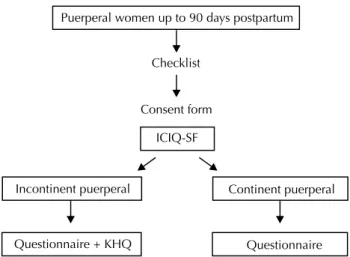
he women in the IP group answered the ICIQ-SF, fol-lowed by the characterization questionnaire and the KHQ. hose in the CP group answered the ICIQ-SF and the questionnaire created for this study. Figure 1 summarizes the data collection procedure.
Data collection took place during a single visit and lasted approximately two hours, between May and December of 2010.
Puerperal women up to 90 days postpartum
Checklist
Consent form
ICIQ-SF
Incontinent puerperal
Questionnaire + KHQ
Continent puerperal
Questionnaire
SampleSizecalculation
Sample size was calculated to detect an odds ratio of 3.0, or one case to three controls, assuming a signiicance level of 5% and statistical power of 80%, being that the prevalence of exposure among the cases was estimated at 20%(22). he
estimated sample size was 74 cases and 222 controls. No initial matching criteria were established, but pos-teriorly, marital status, education level, and family income of the two groups were compared to assess any diferences regarding these characteristics.
StatiSticalanalySiS
Descriptive statistics was used, including absolute and relative frequencies of categorical variables and measures of position and dispersion of continuous variables. he Kolmogorov-Smirnov test indicated lack of normal distri-bution between groups and so nonparametric tests were em-ployed. he sociodemographic and clinical characteristics of the groups were compared using Pearson’s chi-squared test for categorical variables and the Mann-Whitney test for continuous variables. he binary logistic regression model was adjusted to assess possible risk factors for UI. he so-ciodemographic and clinical models that presented values for p≤0.20 in bivariate analysis were tested in the model. he variables for the inal model were chosen according to stepwise selection criteria(23).
Values were considered statistically signiicant if p<0.05 (a=5.0%). Data analysis was conducted with SAS soft-ware (version 9.1.3, SAS Institute Inc., Cary, NC, USA, 2002-2003).
RESULTS
A total of 441 women were interviewed. Of these, 97 were excluded for not meeting the selection criteria. A comparison of the included and excluded puerperal wom-en using the Mann-Whitney test showed diferwom-ences in terms of age (p<0.0001) and education levels (p=0.0496), with greater means among excluded women. However, the groups were similar regarding time postpartum (p=0.9870).
hus, 344 women were included in this study (77 cases and 267 controls). he mean age of participants was 25.9±7.7 years (ranging from 13 to 45 years) and mean time postpartum was 52.3±12.0 days (ranging from 12 to 87 days). Most were nonwhite (65.7%), i.e., brown or black (none were yellow or indigenous), 70.9% were married, had an average of 9.9±2.7 years of formal education (ranging from 5 to 18 years) and had a mean monthly family income of two minimum wages, or BRL 1,212.50±773.50 at the time of the study (ranging from BRL 200 to 6,000).
Of the total amount of participants, 53.8% (185) were primiparous and 46.2% (159), multiparous. Most of the pu-erperal women were submitted to cesarean sections (54.9% or 189), 39.5% (136) had normal births and 5.5% (19) had a forceps delivery. At birth, the women were approximately in their 38th week of pregnancy (SD=3.1, varying from 24
to 42) and had, on average, 2±1.0 living children (ranging from 1 to 7). Urinary incontinence during pregnancy was reported by 28.2% (97).
Figure 1 – Data collection procedures.
Regarding previous births, 12.2% (42) had been submitted to a cesarean section, 15.1% (52) had been submitted to a nor-mal or forceps delivery and 18.9% (65) to both. Episiotomies were performed on 23.8% (82) of the women, of which 17.2% (59) presented some degree of perineal tearing.
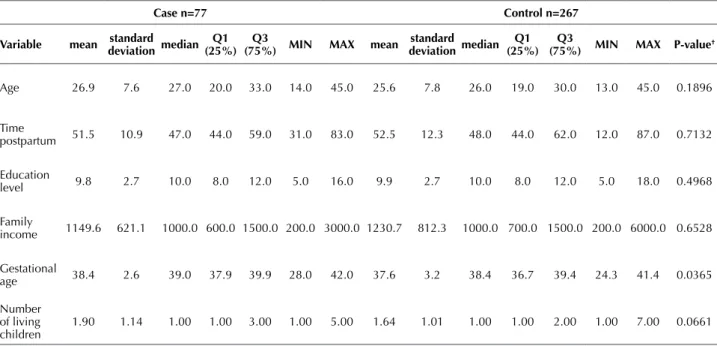
Table 1 presents the mean, standard deviation, median,
1st and 3rd quartiles, minimum and maximum values of the
following variables: age, time postpartum, education level, family income, gestational age, and number of living chil-dren. he study and control groups difered only in terms of gestational age, which together with maternal age was an investigated risk factor.
Table 1 – Mean, standard deviation, 1st and 3rd quartiles, minimum and maximum values of variables: age, time postpartum, educa-tion level, family income, gestaeduca-tional age and number of living children, according to group (case or control) – Campinas, São Paulo, Brazil, 2010.
case n=77 control n=267
Variable mean deviationstandard median (25%)Q1 (75%)Q3 Min MaX mean deviationstandard median (25%)Q1 (75%)Q3 Min MaX P-value†
Age 26.9 7.6 27.0 20.0 33.0 14.0 45.0 25.6 7.8 26.0 19.0 30.0 13.0 45.0 0.1896
Time
postpartum 51.5 10.9 47.0 44.0 59.0 31.0 83.0 52.5 12.3 48.0 44.0 62.0 12.0 87.0 0.7132
Education
level 9.8 2.7 10.0 8.0 12.0 5.0 16.0 9.9 2.7 10.0 8.0 12.0 5.0 18.0 0.4968
Family
income 1149.6 621.1 1000.0 600.0 1500.0 200.0 3000.0 1230.7 812.3 1000.0 700.0 1500.0 200.0 6000.0 0.6528
Gestational
age 38.4 2.6 39.0 37.9 39.9 28.0 42.0 37.6 3.2 38.4 36.7 39.4 24.3 41.4 0.0365
Number of living children
1.90 1.14 1.00 1.00 3.00 1.00 5.00 1.64 1.01 1.00 1.00 2.00 1.00 7.00 0.0661
† P-value calculated with the Mann-Whitney test.
Among IP women, the characteristics of UI were as-sessed with the ICIQ-SF and KHQ questionnaires. Women presented SUI as the most common type of UI (45.5%), followed by MUI (28.6%) and UUI (26%). Most of the women presented urine leakage several times a day (44.2%), followed by 2 to 3 times a week (26%), in small amounts (71.4%), although approximately 12% reported large volumes. Regarding situations in which urine leakage
occurs, most (57.1%) reported coughing or sneezing, fol-lowed by 49.4% with leakage when exercising and 26% be-fore reaching the bathroom.
he data in Table 2 present the risk factors investigated in this study and their association with UI after delivery. he occurrence of postpartum UI was signiicantly associated with pregnancy UI (p<0.0001), multiparity (p=0.0291), and gesta-tional age at birth greater or equal to 37 weeks (p=0.0193).
Table 2 –Comparison of incontinent and continent puerperal women regarding frequency of risk factors for urinary incontinence (UI) – Campinas, São Paulo, Brazil, 2010.
risk factors
Puerperal women (n= 344)
P-value †
incontinent (n=77) continent (n=267)
n % n %
age (years)
0.1399
≤25 36 46.8 132 49.4
26-30 13 16.9 69 25.8
31-35 15 19.5 31 11.6
>35 13 16.9 35 13.1
color/race
0.3283
White 30 39.0 88 33.0
Nonwhite 47 61.0 179 67.0
Ui during pregnancy
<0.0001
No 23 29.9 224 83.9
Yes 54 70.1 43 16.1
Risk factors for postpartum urinary incontinence
risk factors
Puerperal women (n= 344)
P-value †
incontinent (n=77) continent (n=267)
n % n %
current bMi (kg/m2)
0.3335
Underweight (<20) 1 1.3 18 6.7
Normal range (20-24.9) 35 45.5 116 43.4
Overweight (25-29.9) 26 33.8 85 31.8
Obese (≥30) 15 19.5 48 18.0
Parity
0.0291
Primiparous 33 42.9 152 56.9
Multiparous 44 57.1 115 43.1
type of current birth
0.2806
Normal 28 36.4 108 40.4
Forceps 7 9.1 12 4.5
Cesarean 42 54.5 147 55.1
type(s) of previous birth(s)
0.1446
None (primiparous) 33 42.9 152 56.9
Only vaginal birth (normal or forceps) 15 19.5 37 13.9
Only cesarean section 10 13.0 32 12.0
Mostly vaginal (normal or forceps) 5 6.5 12 4.5
Mostly cesarean 6 7.8 7 2.6
Same number of vaginal and cesarean 8 10.4 27 10.1
episiotomy
0.6809
No 60 77.9 202 75.7
Yes 17 22.1 65 24.3
Perineal tearing
0.9435
No 64 83.1 221 82.8
Yes 13 16.9 46 17.2
First degree 8 61.5 31 67.4
Second degree 5 38.5 15 32.6
newborn’s head circumference (cm)
0.1315
<34 32 41.6 137 51.3
≥34 45 58.4 130 48.7
newborn’s weight (g)
0.1828
<3000 31 40.3 136 50.9
3000-35000 24 31.2 77 28.8
>3500 22 28.6 54 20.2
gestational age at birth (weeks)
0.0193
<37 12 15.6 77 28.8
≥37 65 84.4 190 71.2
smoking
0.1505
Never smoked 61 79.2 196 73.4
Ex-smoker 14 18.2 46 17.2
Smoker 2 2.6 25 9.4
constipation
0.0557
No 32 41.6 144 53.9
Yes 45 58.4 123 46.1
† P-value calculated with Pearson’s chi-squared test.
In bivariate analysis, the variables that presented p<0.20 and were tested in the logistic model were: age, UI during pregnancy, parity, type(s) of previous birth(s), newborn’s head circumference, newborn’s weight, gesta-tional age at birth, smoking, and constipation. Urinary incontinence during pregnancy, parity, gestational age at birth and constipation remained in the inal model.
After running the binary logistic regression, the follow-ing variables proved to be risk factors for postpartum UI: UI during pregnancy (OR 12.82, CI 95% 6.94 – 23.81, p<0.0001), multiparity (OR 2.26, CI 95% 1.22 – 4.19, p=0.0094), gestational age at birth greater or equal to 37 weeks (OR 2.52, CI 95% 1.16 – 5.46, p=0.0199) and con-stipation (OR 1.94, CI 95% 1.05 – 5.46, p=0.0345).
DISCUSSION
Regarding the onset of UI, 70.1% of the women with postpartum incontinence had been afected by inconti-nence during pregnancy; furthermore, there was a strong association between UI during pregnancy and increased risk for UI in the puerperium (OR 12.82), corroborating the results of other studies(4,9-11). hese indings indicate
that in most cases, UI irst appeared during pregnancy and remained after birth, in accordance to a previous study in which most of the incontinent women in the puerperium experienced involuntary urine leakage in the third trimes-ter of pregnancy, although only 4% of them developed UI after birth(8).
Other authors have also observed that UI during preg-nancy increases the risk of UI in the puerperium. A study conducted with primiparous women a year postpartum showed that women with UI during pregnancy were ive times more likely to develop SUI (OR 5.79, CI 95% 2.79 – 12)(24). Another study included only primiparous
wom-en and found that participants with UI during pregnancy were 2.3 more likely to present UI six months postpartum (IC 95% 2.2 – 2.4)(9).
Studies indicate that women who have vaginal births present greater prevalence of postpartum UI compared to women submitted to cesarean sections(3,6). Furthermore,
persistent postpartum UI is less common in women with only cesarean sections compared to women with only spontaneous vaginal deliveries(6). In the present study, this
was not observed, perhaps due to the small sample size. Other risk factors found in this study were multiparity (OR 2.26), gestational age at birth greater or equal to 37 weeks (OR 2.52) and constipation (OR 1.94). he associa-tion between multiparity and postpartum UI has already been shown by previous studies(10-11). Gestational age at
birth has been investigated by few studies and they did not show an association with postpartum UI(12). However,
the greater the gestational age, the greater risk for UI dur-ing pregnancy and the greater prevalence of UI(25), being
that urine leakage is more common in the third trimes-ter of pregnancy(8,10). herefore, greater gestational age at
birth can inluence postpartum UI, as it elevates the risk of pregnancy UI. his is probably due to the greater time and pressure of the pregnant uterus on pelvic suspensory
(ligaments) and supporting (endopelvic fascia and mus-cles) structures, as suggested by other authors(25).
A previous study also demonstrated an association be-tween constipation with postpartum UI(16). his association
is justiied because constipation is related to repeated pelvic pressure and tension, occurring more often than birth(26).
he rectum and the lower urinary tract are intimately related, as they originate from the same embryonic struc-ture, possess the same peripheral innervation, and the cen-tral processing of aferent activity occurs in the same area of the brain(27). he intimate proximity of these systems
suggests that dysfunctions in one of them can inluence the other’s function, even mechanically(28). One study that
assessed whether rectal distension inluenced the results of a urodynamic test showed that rectal distension can cause detrusor hyperactivity in some women; however, the data were inconclusive and further research is needed(27).
A cohort study conducted six months postpartum showed that chronic constipation was a risk factor for postpartum UI (OR 1.86, CI 95% 1.03 – 3.34)(16). Another
cross-sectional study conducted with non-puerperal women indicated that constipation was just as signiicant as obstet-ric trauma in causing pelvic loor problems (OR 2.35, CI 95% 1.27 – 4.34)(26).
he participants in this study presented SUI as the most common type of UI and also reported losing more urine when coughing or sneezing and/or exercising. Furthermore, they declared small amounts of urine leakage, indings that corroborate those of previous studies(4,10). here was a high
frequency of UI episodes, in which approximately 44% of the puerperal women reported leaking urine several times a day, diferent from previous studies in which UI was not very frequent after birth(3-4,10). his diference found in this
study is probably due to the recent postpartum period in-vestigated, which was up to 90 days.
he short postpartum period investigated (up to 90 days) restricts analyses and comparisons with longer studies. he present data can only be used with puerperal women who present sociodemographic and clinical characteristics similar to those described. Another limitation of this study was that not all of the Roma III(20) diagnostic criteria were
used to identify cases of constipation.
It is important for all health professionals that care for women to know that UI during pregnancy is a risk factor for postpartum UI, and it is important that history of urine leakage be included as part of prenatal care. Similarly, in-testinal constipation should also be investigated and treated. he results indicate that eforts to prevent postpartum UI should begin during pregnancy. Prenatal pelvic loor muscle exercises reduce the prevalence of UI during preg-nancy and in the postpartum (up to 12 weeks)(29) and are
therefore indicated as a prevention measure.
Risk factors for postpartum urinary incontinence
CONCLUSION
Most of the women reported urine leakage in small amounts, however, it occurred several times a day, in gen-eral when coughing or sneezing. Urinary incontinence often appeared irst during pregnancy and remained in
the puerperal period. Risk factors for postpartum UI were: UI during pregnancy, multiparity, gestational age at birth greater or equal to 37 weeks, and constipation. In the studied group of puerperal women, stress UI was more frequent.
resUMO
Objetivo: Investigar os fatores de risco para a incontinência urinária (IU) no puerpério e as suas características. Método: Trata-se de estudo caso-controle com 344 puérperas (77 casos e 267 controles), com até 90 dias pós-parto. Foi aplicado, em um único momento, um questionário para os dados sociodemográicos e clínicos, e dois outros para avaliar a perda urinária, situações de perda e o tipo de IU. Resultados: Apresentaram IU de esforço 45,5%, perda urinária diversas vezes ao dia 44,2%, sendo 71,4% em pequena quantidade e 57,1% ao tossir ou espirrar. Em 70,1% dos casos a IU iniciou-se na gestação e permaneceu no puerpério. Ao ajustar-se um modelo de regressão logística binária, apenas IU na gestação (OR 12,82, IC 95% 6,94 – 23,81, p<0,0001), multiparidade (OR 2,26, IC 95% 1,22 – 4,19, p=0,009), idade gestacional no parto maior ou igual a 37 semanas (OR 2,52, IC 95% 1,16 – 5,46, p=0,02) e constipação (OR 1,94, IC 95% 1,05 – 5,46, p=0,035) permaneceram no modelo inal. Conclusão: A IU iniciou-se frequentemente na gestação e permaneceu no puerpério. A presença de IU na gestação, multiparidade, idade gestacional no parto maior ou igual a 37 semanas e constipação foram fatores de risco. No grupo estudado a IU de esforço foi a mais frequente.
descritOres
Incontinência Urinária; Incontinência Urinária por Estresse; Período Pós-parto; Fatores de Risco; Enfermagem Obstétrica.
resUMen
Objetivo: Investigar los factores de riesgo para incontinencia urinaria (IU) en el puerperio y sus características. Método: Se trata de estudio de caso-control con 344 puérperas (77 casos y 267 controles), con hasta 90 días post parto. Se aplicó, en un solo momento, un cuestionario para los datos sociodemográicos y clínicos, y dos otros para evaluar la pérdida urinaria, situaciones de pérdida y el tipo de IU. Resultados: Presentaron IU de esfuerzo el 45,5%, pérdida urinaria diversas veces al día el 44,2%, siendo el 71,4% en pequeña cantidad y el 57,1% al toser o estornudar. En el 70,1% de los casos la IU se inició en la gestación y permaneció en el puerperio. Al ajustarse un modelo de regresión logística binaria, solo IU en la gestación (OR 12,82, IC 95% 6,94 – 23,81, p<0,0001), multiparidad (OR 2,26, IC 95% 1,22 – 4,19, p=0,009), edad gestacional en el parto mayor o igual que 37 semanas (OR 2,52, IC 95% 1,16 – 5,46, p=0,02) y constipación (OR 1,94, IC 95% 1,05 – 5,46, p=0,035) permanecieron en el modelo inal. Conclusión: La IU se inicia a menudo en la gestación y permanece en el puerperio. La presencia de IU en la gestación, multiparidad, edad gestacional en el parto mayor o igual que 37 semanas y constipación fueron factores de riesgo. En el grupo estudiado la IU de esfuerzo fue la más frecuente.
descriPtOres
Incontinencia Urinaria; Incontinencia Urinaria de Esfuerzo; Periodo Posparto; Factores de Riesgo; Enfermería Obstétrica.
REFERENCES
1. Sangsawang B, Nucharee S. Stress urinary incontinence in pregnant women: a review of prevalence, pathophysiology, and treatment.Int Urogynecol J. 2013;24(6):901-12.
2. Sievert KD, Amend B, Toomey PA, Robinson D, Milsom I, Koelbl H, et al. Can we prevent incontinence? ICI‐RS 2011. Neurourol Urodyn. 2012;31(3):390-9.
3. Thom DH, Rortveit G. Prevalence of postpartum urinary incontinence: a systematic review. Acta Obstet Gynecol. 2010;89(12):1511-22.
4. Solans-Domènech M, Sánchez E, Espuña-Pons M. Urinary and anal incontinence during pregnancy and postpartum. Obstet Gynecol. 2010;115(3):618-28.
5. Viktrup L, Rortveit G, Lose G. Does the impact of subsequent incontinence risk factors depend on continence status during the irst
pregnancy or the postpartum period 12 years before? A cohort study in 232 primiparous women. Am J Obstet Gynecol. 2008;199(1):73. e1-73.e4.
6. MacArthur C, Wilson D, Herbison P, Lancashire RJ, Hagen S, Toozs-Hobson P et al. Urinary incontinence persisting after childbirth: extent, delivery history, and effects in a 12-year longitudinal cohort study. Prolong study group. BJOG. 2015 Apr 2. doi: 10.1111/1471-0528.13395. [Epub ahead of print]
7. Sangsawang B. Risk factors for the development of stress urinary incontinence during pregnancy in primigravidae: a review of the literature. Eur J Obstet Gynecol Reprod Biol. 2014;178:27-34.
8. Raza-Khan F, Graziano S, Kenton K, Shott S, Brubaker L. Peripartum urinary incontinence in a racially diverse obstetrical population. Int Urogynecol J. 2006;17(5):525-30.
9. Wesnes SL, Hunskaar S, Bo K, Rortveit G. The effect of urinary incontinence status during pregnancy and delivery mode on incontinence postpartum: a cohort study. BJOG. 2009;116(5):700-7.
10. Lima JLDA Lopes MHBM. Prevalência de incontinência urinária no ciclo grávido-puerperal [resumo]. Rev Estima. 2009;7(3):46.
12. Eftekhar T, Hajibaratali B, Ramezanzadesh F, Shariat M. Postpartum evaluation of stress urinary incontinence among primiparas. Int J Gynecol Obstet. 2006;94(2):114-8.
13. Rogers RG, Leeman LL. Pospartum genitourinary changes. Urol Clin N Am. 2007;34(1):13-21.
14. Altman D, Ekström A, Gustafsson C, López A, Falconer C, Zeterström J. Risk of urinary incontinence after childbirth. Obstet Gynecol. 2006;108(4):873-8.
15. Carroli G, Mignini L. Episiotomy for vaginal birth. Cochrane Database Syst Rev. 2009;(1):CD000081.
16. Ewings P, Spencer S, Marsh H, O’Sullivan M. Obstetric risk factors for urinary incontinence and preventative pelvic loor exercises: cohort
study and nested randomized controlled trial. J Obstet Gynaecol. 2005;25(6):558-64. Erratum in: J Obstet Gynaecol. 2005;25(8):834-5.
17. Leroy LS, Lopes MHBML. Urinary incontinence in the puerperium and its impact on the health-related quality of life. Rev Lat Am Enfermagem. 2012;20(2):346-53.
18. Tamanini JTN, Dambros M, D’Ancona CAL, Palma PCR, Netto Jr NR. Validação para o português do “International Consultation on Incontinence Questionnaire-Short Form” (ICIQ-SF). Rev Saúde Pública. 2004;38(3):438-44.
19. Instituto Brasileiro de Geograia e Estatística. Metodologia do censo demográico 2000. Rio de Janeiro: IBGE; 2003.
20. Longstreth GF, Thompson WG, Chey WD, Houghton LA, Mearin F, Spiller RC. Functional bowel disorders. Gastroenterology. 2006;130(5):1480-91.
21. Tamanini JTN, D’Ancona CAL, Botega NJ, Netto Jr NR. Validação do “King’s Health Questionnaire” para o português em mulheres com incontinência urinária. Rev Saúde Pública. 2003;37(2):203-11.
22. Glazener CMA, Herbison GP, MacArthur C, Lancashire R, McGee MA, Grant AM, et al. New postnatal urinary incontinence: obstetric and other risk factors in primiparae. BJOG. 2006;113(2):208-17.
23. Draper NR, Smith H. Applied regression analysis. New York: Wiley & Sons; 1998.
24. Diez-Itza I, Arrue M, Ibañez L, Murgiondo A, Paedes J, Sarasqueta C. Factors involved in stress urinary incontinence 1 year after irst
delivery. Int Urogynecol J. 2010;21(4):439-45.
25. Lin KL, Shen CJ, Wu MP, Long CY, Wu CH, Wang CL. Comparison of low urinary tract symptoms during pregnancy between primiparous and multiparous women. Biomed Res Int. 2014;2014:303697. doi: 10.1155/2014/303697.
26. Amselem C, Puigdollers A, Azpiroz F, Sala C, Videla S, Fernández-Fraga X, et al. Constipation: a potential cause of pelvic loor damage?
Neurogastroenterol. 2010;22(2):150-3, e48.
27. Panayi DC, Khullar V, Digesu GA, Spiteri M, Hendricken C, Fernando R. Rectal distension: the effect on bladder function. Neurourol Urodyn. 2011;30(3):344-7.
28. Averbeck MA, Madersbacher H. Constipation and LUTS: how do they affect each other? Int Braz J Urol. 2011;37(1):16-28.
29. Boyle R, Hay‐Smith EJC, Cody JD, Mørkved S. Pelvic loor muscle training for prevention and treatment of urinary and fecal incontinence