DM
November| 2014
João Micael da Silva Leça
MASTER IN APPLIED BIOCHEMISTRY
Evolution of Ethyl Carbamate
During Madeira Wine Ageing by GC-MS
A new methodology
SUPERVISOR
José Carlos Antunes Marques
João Micael da Silva Leça
MASTER IN APPLIED BIOCHEMISTRYEvolution of Ethyl Carbamate
During Madeira Wine Ageing by GC-MS
A new methodology
Evolution of ethyl carbamate during Madeira wine ageing by GC-MS: a new methodology
AGRADECIMENTOS
Quero começar por agradecer à minha família e em especial à minha mãe, Teresa Silva, à minha avó, Teresa Teixeira, ao meu avô, Quirino Teixeira, à minha tia, Ana Teixeira, à minha madrinha, Sandra Nunes, à minha madrinha, Maria Nunes e aos meus primos Ludgero Gomes e Lília Gomes, por todo o amor e apoio que sempre me deram.
Um obrigado à Fátima Spínola pelo seu amor. Um especial obrigado por toda a compreensão, pelo apoio e por todos os momentos bons que já partilhamos. Certamente seria uma pessoa muito diferente se nunca nos tivéssemos conhecido. Obrigado por tudo.
Um enorme obrigado à Anabela Moura, à Manuela Godinho e ao Dr. António Godinho por toda a dedicação e apoio. O meu agradecimento torna-se difícil de expressar por palavras.
E porque a vida não tem valor sem ser partilhada, um grande obrigado aos meus amigos mais próximos: Vítor Correia, Victor Andrade, Catarina Lume, João Mendes, Igor Nunes, Pedro Leme, Marco Franco, João Silva, Nuno Pestana, Válter Mendes, Julie Campbell, Luís Freitas, Igor Afonso, Roberto Aguiar, Marisa Faria, Dina Maciel, Neide Cardoso, Joaquim Lopes, Miguel Nunes, Paulo Silva, Dinarte Jesus, Hugo Câmara, Núria Fernandes, Vânia Silva, Rodolfo Silva e Ricardo Mendonça.
Por outro lado, quero agradecer às pessoas que de forma mais direta contribuíram para a conclusão desta etapa:
Quero expressar a minha gratidão ao meu orientador principal, Professor Doutor José Carlos Marques, por me ter dado a oportunidade de trabalhar sob a sua orientação e com isso engrandecer a minha formação pessoal e profissional.
Queria também estender a minha gratidão à minha coorientadora, Doutora Vanda Nulita Pereira, pela partilha de conhecimento e pelo apoio constante no trabalho a ser desenvolvido, desde o primeiro momento em que tive contacto com o laboratório.
Evolution of ethyl carbamate during Madeira wine ageing by GC-MS: a new methodology
metodologia. À Carolina Vieira e à Magda Santos pela simpatia e apoio durante o decurso do presente estudo.
Também quero agradecer o suporte financeiro do FEDER, projeto IMPACT II (MADFDR-01-0190-FEDER-000010), no âmbito do programa Intervir+, no qual foi bolseiro de investigação e à Agência Regional para o Desenvolvimento da Investigação Tecnologia e Inovação (ARDITI) pelo suporte financeiro atual através de uma bolsa de frequência de estágio.
Ao Instituto de Nanoestruturas, Nanomodelação e Nanofabricação (I3N) de Aveiro, no qual sou membro colaborador. Um especial agradecimento ao Professor Doutor João Lemos Pinto.
À Universidade da Madeira, a todos os meus colegas e às pessoas envolvidas na formação dada ao longo do 1º Ciclo em Bioquímica e do 2º Ciclo em Bioquímica Aplicada.
Finalmente, agradeço à Madeira Wine Company, em particular ao Eng.º Francisco Albuquerque e ao Eng.º Filipe Azevedo, pelo fornecimento das amostras analisadas neste projeto e pela disponibilidade na partilha de informação essencial para a compreensão dos resultados.
Evolution of ethyl carbamate during Madeira wine ageing by GC-MS: a new methodology
R
ESUMO
Recentemente o carbamato de etilo (CE) foi reclassificado pela Agência Internacional
de Pesquisa sobre o Cancro (IARC) como “provavelmente carcinogénico para humanos” e
este ocorre sobretudo em bebidas fermentadas, tendo vários países definido valores limite de CE em bebidas alcoólicas. Neste seguimento e tendo em conta as baixas concentrações encontradas em bebidas alcoólicas, a comunidade científica tem mostrado interesse para o desenvolvimento de novas metodologias analíticas, pelo que a sua simplificação tem um papel relevante no seu controlo e prevenção.
Primeiramente, foi desenvolvida uma metodologia simples, rápida e sensível para a quantificação do CE em vinhos fortificados, através da microextração em sorvente empacotado (MEPS) com cromatografia gasosa acoplada a um detetor de espectrometria de massas (GC-MS). Esta metodologia apresentou uma boa linearidade (R2 = 0,999) e sensibilidade (LOD = 1.5µg/L). A precisão da metodologia foi avaliada através da repetibilidade e reprodutibilidade (RSD < 7%). Além disso, ficou demonstrada uma boa recuperação (97 - 106%) e sua aplicabilidade (16 vinhos fortificados). Neste seguimento, a metodologia desenvolvida revelou ser uma excelente abordagem para a quantificação rotineira do CE em vinhos fortificados.
A evolução do CE foi também acompanhada durante um ano e meio de envelhecimento de vinhos Madeira sujeitos aos dois métodos tradicionais de envelhecimento, a estufagem e o canteiro, com o objetivo de avaliar as cinéticas de formação. Os resultados obtidos revelaram que o processo de estufagem aumenta a cinética de formação do CE e promove um aumento linear da sua concentração (R2 ≥ 0,977), proporcional ao tempo de envelhecimento (4 meses). No entanto, os vinhos estufados quando sujeitos ao envelhecimento por canteiro apresentam valores de CE praticamente constantes durante os restantes 14 meses. Os resultados obtidos sugerem que a estufagem não parece ser o fator crítico na formação do CE, mas sim a quantidade de precursores no meio.
Evolution of ethyl carbamate during Madeira wine ageing by GC-MS: a new methodology
S
UMMARY
Recently, ethyl carbamate (EC) was reclassified by the International Agency for Research on Cancer (IARC) as "probably carcinogenic to humans" and occurs mainly in fermented beverages. Nowadays many countries have set limit values for EC in alcoholic beverages. In this sense and taking into account the low concentrations found in alcoholic beverages, the scientific community has shown interest for the development of new analytical methods, whereby its simplification plays an important role in the EC control and prevention.
Firstly, a simple, rapid and sensitive methodology was developed for the EC quantification in fortified wines by microextraction by packed sorbent (MEPS) with gas chromatography coupled with a mass spectrometer detector (GC-MS). This method showed good linearity (R2 = 0.999) and sensitivity (LOD = 1.5 µg/L). The accuracy of the method was assessed by means of repeatability and reproducibility (RSD < 7%). Moreover, a good recovery has been demonstrated (97 – 106%) as well as its applicability (16 fortified wines). Thus, the developed methodology has proven to be an excellent approach for routine quantification of EC in fortified wines.
The EC evolution was also evaluated during a year and half of Madeira wine ageing submitted to two traditional ageing methods, estufagem and canteiro, in order to evaluate the
formation kinetic. The results revealed that estufagem process increased the formation kinetic
and promoted a linear increase of the EC concentration (R2 ≥ 0.977), proportionally to the ageing time (4 months). However, when the wines are firstly submitted to estufagem and then
undergo canteiro ageing, the EC values remain almost constant during the following 14
months. The results suggest that estufagem does not seem to be the critical factor in the EC
formation, but instead the amount of precursors in the medium.
Evolution of ethyl carbamate during Madeira wine ageing by GC-MS: a new methodology
Contents
PART I –GENERAL INTRODUTION……...……….………......1
1. SCOPE AND OBJECTIVES ... 2
2. ETHYL CARBAMATE... 3
2.1. FORMATION PATHWAYS ... 5
2.1.1. REACTION BETWEEN UREA AND ETHANOL ... 7
2.1.2. REACTION BETWEEN CITR ULLINE AND ETHANOL ... 8
2.1.3. REACTION BETWEEN CYANIC ACID AND ETHANOL ... 9
2.1.4. REACTION BETWEEN CARBAMYL PHOSPHATE AND ETHANOL ... 10
2.2. TOXICITY ... 10
2.2.1. CARCINOGENESIS ... 10
2.2.2. INFLUENCE OF ETHANOL ON ETHYL CARBAMATE M ETABOLISM ... 12
2.3. LEGISLATION ... 12
2.4. DETERMINATION ... 13
2.5. PREVENTION AND CONTROL ... 15
3. MADEIRA WINE ... 17
PART II - DEVELOPED METHODOLOGY………...……….………..19
4. METHODOLOGY FOR DETERMINATION OF ETHYL CARBAMATE IN FORTIFIED WINES USING MEPS EXTRACCION WITH A GC-MS EQUIPMENT ... 20
4.1. INTRODUCTION ... 20
4.2. MATERIALS AND METHODS ... 22
4.2.1. CHEMICALS AND SAMPLES ... 22
4.2.2. APPARATUS AND CHROMATOGRAPHIC CONDITIONS ... 23
4.2.3. MEPS OPTIMIZATION ... 23
4.2.4. MEPS OPTIMIZED PROCEDURE ... 24
4.2.5. METHOD VALIDATION ... 25
4.3. RESULTS AND DISCUSSION ... 26
4.3.1. EXTRACTION SOLVENT SURVEY ... 27
4.3.2. SELECTION OF THE MEPS SORBENT AND EXTRACTION SOLVENT ... 28
4.3.3. MEPS EXTRACTION OPTIMIZATION ... 30
4.3.4. MATRIX EFFECTS ... 31
4.3.5. METHOD VALIDATION ... 32
4.3.6. ANALYSIS OF FORTIFIED WINE SAMPLES ... 34
Evolution of ethyl carbamate during Madeira wine ageing by GC-MS: a new methodology
PART III - MONITORING OF ETHYL CARBAMATE DURING THE AGEING
PROCESS……….………....………..……….………..……...37
5. EVOLUTION OF ETHYL CARBAMATE IN MADEIRA WINE: CANTEIRO VS. ESTUFAGEM. ... 38
5.1. INTRODUCTION ... 38
5.2. MATERIALS AND METHODS ... 40
5.2.1. SAMPLES ... 40
5.3. RESULTS AND DISCUSSION ... 40
5.4. CONCLUDING REMARKS ... 43
PART IV - CONCLUSIONS AND PERSPECTIVES …………...………….………..…..45
6. CONCLUSIONS ... 46
7. FUTURE PERSPECTIVES ... 46
8. REFERENCES ... 47
Tables
Table 1 - Maximum levels for ethyl carbamate in alcoholic beverages 13
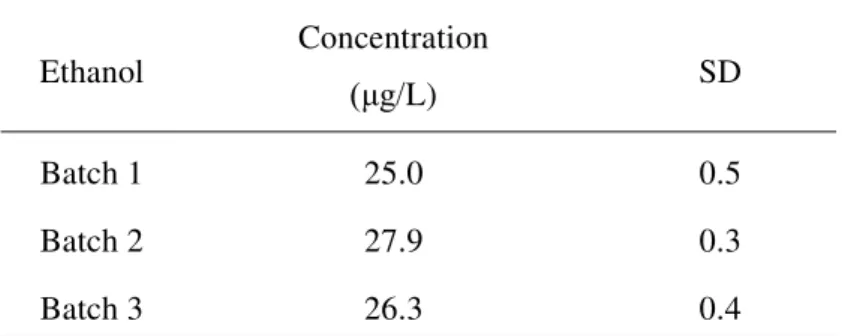
Table 2 - Concentration of EC in the ethanol available in the laboratory (> 99.8% (GC)),
Sigma - Aldrich) 28
Table 3 - Validation results obtained for the proposed MEPS/GC-MS methodology 34
Table 4 - Application of the proposed methodology for the EC quantification of 16 fortified
wines. 35
Figures
Fig. 1 – Ethyl carbamate 4
Fig. 2 – Pathways of EC formation in alcoholic beverages. Reaction 1 - urea with ethanol; reaction 2 – citrulline with ethanol; reaction 3 – cyanic acid with ethanol; reaction 4 - carbamoyl phosphate with ethanol and reaction 5 - diethyl pyrocarbonate with
ammonia (20). 6
Fig. 3 - Catabolism of arginine in Neurospora crassa and Saccharomyces cerevisiae (24). 7
Fig. 4 - Anabolism of arginine in Neurospora crassa and Saccharomyces cerevisiae (24). 8
Evolution of ethyl carbamate during Madeira wine ageing by GC-MS: a new methodology
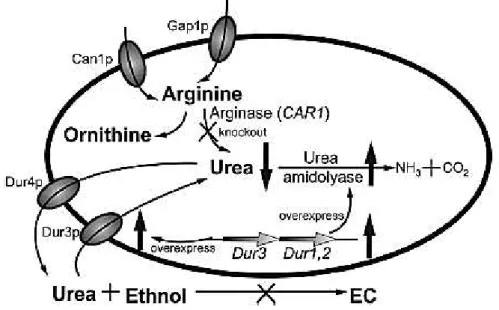
Fig. 6 – Diagram of the two approaches used in metabolic engineering methods for EC elimination. Repression of the gene encoding for arginase (CAR 1) and the enhancing of genes that regulate the metabolism and transport of urea (DUR1,2 and DUR3) (73). 17
Fig. 7 - DoE optimized MEPS procedure for determination of EC in fortified wines. 25
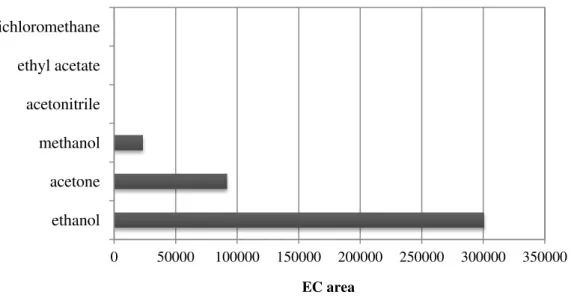
Fig. 8 - EC checking of the possible extraction solvents: ethanol, methanol, acetone, acetonitrile, ethyl acetate and dichloromethane. 27
Fig. 9 - Typical chromatograms of the sorbent materials SIL, C2, C8, C18 and M1 using the extraction solvents acetonitrile, ethyl acetate and dichloromethane. EC RT ≈ 14 min, BC RT ≈ 19 min. RT - retention time; AA – peak area; SN - signal to noise ratio. 29 Fig. 10 - DoE to optimize the MEPS extraction with C8 BIN with sample volume, extraction
solvent volume and the response in GC-MS equipment as variables. The colormap illustrates the variation of GC-MS response, where the maximum is delimited by the
dark red line. 31
Fig. 11 - Percentage of the matrix effect between the slopes of the three calibration curves: synthetic wine and sweet and dry fortified wine. 32
Fig. 12 - Chromatograms of the fortified wine samples used to generate the matrix -matched calibration and a 100 µ g/L standard solution of EC with 24 µ g/L of BC. EC – ethyl
carbamate; BC – butyl carbamate. 33
Fig. 13 - Evolution of ethyl carbamate in sweet wines made from two Vitis vinifera L
.varieties, Malvasia and Tinta Negra, aged by two different maturation processes,
estufagem and canteiro. 41
Fig. 14 – Trends of EC evolution during Madeira wine maturation, estufagem and canteiro of
Evolution of ethyl carbamate during Madeira wine ageing by GC-MS: a new methodology
C
OLLABORATION IN PROJECTS
IMPACT II – Impact of production technologies in Madeira wine Quality. Funding through FEDER - Intervir+, QREN.
VALIMED – Validation of analytical methods and determination of uncertainties. Funding through FEDER - Intervir+, QREN.
ESTUFA – Madeira wine estufagem monitorization. Funding through FCT.
L
IST OF PUBLICATIONS
REFEREED JOURNAL ARTICLES:
Leça, J. M., V. Pereira, A. C. Pereira and J. C. Marques (2014). "Rapid and sensitive methodology
for determination of ethyl carbamate in fortified wines using microextraction by packed sorbent and gas chromatography with mass spectrometric detection." Analytica Chimica Acta 811(0): 29-35. Impact factor: 4.31
POSTER COMMUNICATIONS:
Carvalho, M.J., Leça, J.M., Miranda, A., Pereira, V., Pereira A.C., Albuquerque, F., Marques, J.C.
Evaluating the polyphenolic content and colour of Tinta Negra must at different fermentation extensions, XX ENCONTRO LUSO-GALEGO DE QUÍMICA, Porto, Portugal, 26–28 Novembro, 2014
Leça, J.M., Pereira, V., Albuquerque, F., Marques, J.C. Effect of winemaking process on the low
weight polyphenols content of Madeira wines produced from the traditional varieties, EUROANALYSIS XVII, Varsóvia, Polónia, 25-29 agosto, 2013
Miranda, A., Leça, J.M., Pereira, V., Albuquerque, F., Marques, J.C. Volatile profile comparison
between Madeira traditional varieties during winemaking process, EUROANALYSIS XVII, Varsóvia, Polónia, 25-29 agosto, 2013
Leça, J.M., Pereira, V., Albuquerque, F.M., Marques, J.C. Rapid and sensitive method for
Evolution of ethyl carbamate during Madeira wine ageing by GC-MS: a new methodology
with gas chromatography and mass spectrometric detection (GC-MS), IN VINO ANALYTICA SCIENTIA, Reims, França, 2-5 julho, 2013
Pontes, M., Pereira, V., Leça, J.M., Albuquerque, F., Marques, J.C. Rapid screening tool for
5-hydroxymethylfurfural determination in Madeira wines by UV spectroscopy and chemometrics, IN VINO ANALYTICA SCIENTIA, Reims, França, 2-5 julho, 2013
Pereira, V., Carvalho, M.J., Leça, J.M., Gouveia, C., Carvalho, M.Â.A.P. Marques, J.C., Total
polyphenolic content of sweet potato flours produced from Madeira Islands common cultivars, EUROFOODCHEM XVII, Istambul, Turquia, 7-10 maio, 2013
Pestana, C., Pereira, V., Leça , J.M., Loja, S., Vieira, L., Marques, J.C. Free volatiles evolution during
the storage of a lager beer, EUROFOODCHEM XVII, Istambul, Turquia, 7-10 maio, 2013
Leça J.M., Pereira V., Albuquerque F., Marques J.C. Evolução dos polifenóis durante o processo de
PART I
–
GENERAL INTRODUTION
Evolution of ethyl carbamate during Madeira wine ageing by GC-MS: a new methodology
1.
SCOPE AND OBJECTIVES
Grapes and wines contain several organic and inorganic forms of nitrogen-containing compounds. The main organic forms are amines, amides, amino acids, pyrazines, nitrogen bases, pyrimidines, proteins and nucleic acids. On the other hand, the inorganic forms include ammonia (in the form of ammonia salts) and nitrates. These group of compounds define the total nitrogen content of grapes and wines (1, 2).
Nitrogenous compounds are indispensable nutrients for yeasts, during alcoholic fermentation. Furthermore, the amino acid composition plays an important role on the wine’s aromatic complexity (2, 3). Nitrogen deficiency in must can occur, causing sluggish or stuck fermentations, which leads to the production of hydrogen sulphide in trace amounts, imparting highly offensive odours. Consequently, wine quality can be compromised and that’s the
reason why the addition of ammonium salts to the must has become a common practice in some wineries, preventing the lack of nutrients for yeasts (4).
The quantity and the form of the available nitrogen not only affects the fermentation but also the composition of the reaction products and therefore the wine quality (5). In general, total nitrogen assays (usually by Kjeldahl method) are standard techniques used in
wineries to support the winemaking. Nitrogen composition varies between varietals and vineyards and normally the red wines have, on average, twice the concentration of total nitrogen compared to white wines. This variation is related to the differences between the winemaking practices: red wine musts are submitted to higher times and temperatures of maceration, which promotes the dissolution of nitrogenated substances (6).
In recent years, the bioactive potential of nitrogen compounds in wine has raised some concerns and a lot of interest in the scientific community, namely nitrogenated pesticides, which are applied in vineyards and are found in wines, representing a significant issue to the human health. Additionally, amino acids like histidine and tyrosine, in the presence of some enzymes, produced by wine bacteria, originate the corresponding biogenic amines that might cause headaches, nausea, and allergic-type reactions after wine ingestion (4). Ochratoxin A, another nitrogenous compound, is a mycotoxin produced by fungi, mainly by Aspergillus
Evolution of ethyl carbamate during Madeira wine ageing by GC-MS: a new methodology
In particular, amides are a family of nitrogen-containing compounds found in wines that does not seem to have a significant influence on its flavour but have raised some interest to the scientific community due to toxicological concerns. These substances have an amino group (-NH2) linked to a carbonyl group (-CO). The most common amines found in wines are urea and EC. Urea is produced during yeast fermentation, by the arginine metabolism, and can react directly with ethanol producing EC (1). EC is also formed by the reaction of other nitrogened compounds (precursors) with ethanol and appears to be hazardous to human health, due to its carcinogenic and mutagenic potential (2).
The choice of the EC for the study’s main purpose was based on not also about the toxicological concerns but mostly on the legislation limitations established for the EC occurrence in beverages, which already imposed some difficulties to wineries in the exportation of Portuguese fortified wines lots. This leads to economic losses and consequently the image of these wines in the international market can be compromised. In this sense, the first objective of this work was the development of an efficient and effective method to quantify EC in fortified wines using simple, fast and affordable analytical procedures, without needing sophisticated and expensive equipment that is available on the market. The first goal for the method development was the EC monitoring during ageing processes, estufagem and
canteiro, in order to verify the formation kinetic.
2.
ETHYL CARBAMATE
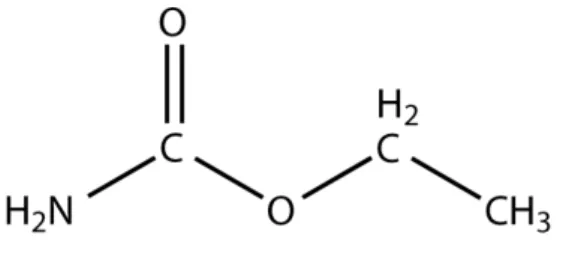
EC, also known as urethane (CAS number 51-79-6), is the ethyl ester of carbamic acid (Fig. 1). In the past there are records of its use in industry, medicine and veterinary. For several years, it was industrially produced to be used in the preparation and modification of amino resins and as solvent and co-solvent for pesticides and pharmaceuticals. It was also used as a preservative in the food industry, especially in alcoholic beverages, among other applications. The most common method used at the time to commercially obtain the EC was through the reaction of ethyl chlorocarbonate with ammonia (6, 8).
Evolution of ethyl carbamate during Madeira wine ageing by GC-MS: a new methodology
In an initial phase it has been used in patients with terminal breast cancer, which didn’t lead to
encouraging results. The utilization of EC was extended to the treatment of other neoplasic diseases such as leukemia and multiple myeloma (8) with low rates of success (10). In fact, chronic therapy with EC caused leukopenia, hepatic necrosis and aplastic anemia (11), so its use in human medicine was continuously abandoned. In the veterinary field the EC is regularly used as an anaesthetic, including when it is desired a long term anaesthesia, in laboratory animals, without major changes in their biological parameters (12).
Fig. 1 –Ethyl carbamate.
Since the discovery of its toxicity in 1943, studies regarding the effects of EC in human health have generated an extensive literature about its genotoxicity and carcinogenicity (13). In fact, EC showed to be genotoxic and carcinogenic to various tested species, such as rats, mice, hamsters and monkeys (14). In 2007 the EC was reclassified by the IARC from
“possibly carcinogenic” (Group 2B) to “probably carcinogenic to humans” (Group 2A) (15).
EC is formed by the reaction of nitrogen compounds with ethanol and is detected in small quantities, in the order of ng to mg per kg, in fermented foods and beverages such as bread, yoghurt, soy sauce, spirits, wine and beer. Nowadays the consumption of this kind of foods and beverages is the major route of exposure to EC (16). The first reference about the EC presence in alcoholic beverages was in 1971, associated with the degradation of diethyl carbonate, an additive used for the microbial activity control in beverages (17) which was later prohibited. Five years later Ough (18) demonstrated that EC could naturally occur in fermented products, verifying its presence in alcoholic beverages and fermented foods.
Evolution of ethyl carbamate during Madeira wine ageing by GC-MS: a new methodology
country to define legislation to EC, in order to establish a concentration limit value in alcoholic beverages. At the present time other countries have followed this example, such as the case of Czech Republic, France, Germany, Switzerland and United States of America (19).
In 2005, the Codex Alimentarius Commission of the United Nations Food and Agriculture (FAO) and the World Health Organization (WHO) concluded that EC is a relevant issue but it is not considered as a high priority problem, by the fact that the exposure to the compound, in a common diet is minimal, excluding the consumption of alcoholic beverages. However, concentrations ingested in diet together with those that come from the consumption of alcoholic beverages have been a matter of concern. In this sense, it is important to continue the preventive and control actions in alcoholic beverages (16).
2.1.
Formation pathways
Previous studies regarding the EC control have focused their attention in the identification of the main precursors in alcoholic beverages, as well as understanding the impact of external factors in their formation such as light, reaction time and temperature. In this sense, the study of the formation pathways has been playing a crucial role in the preventive and control actions (16).
Evolution of ethyl carbamate during Madeira wine ageing by GC-MS: a new methodology
Fig. 2 –Pathways of EC formation in alcoholic beverages. Reaction 1 - urea with ethanol; reaction 2 –
citrulline with ethanol; reaction 3 – cyanic acid with ethanol; reaction 4 - carbamoyl phosphate with ethanol and reaction 5 - diethyl pyrocarbonate with ammonia (20).
In wines the most part of EC is formed during or after fermentation, probably by the reaction of carbamoyl compounds with ethanol. In fact, some of these compounds are formed during fermentation. One of the most common ways of EC occurring in acidic medium, such as wines, is the reaction of ethanol with urea. In turn, in distilled alcoholic beverages the major pathway for the formation of EC comes from cyanide volatile compounds, like cyanic
Ornithine Urea
Citrulline
Cyanic acid
Carbamoyl phosphate Ethanol
Ethyl carbamate Diethyl pyrocarbonate
+
Saccharomyces cerevisiae
Lactic acid bacteria
1
2
3 4
5
HCN
ATP + CO2 + NH3
Evolution of ethyl carbamate during Madeira wine ageing by GC-MS: a new methodology
acid, that are able to react in a gas phase or to pass into the distillate. External factors, such as temperature and pH influence the kinetics of these reactions. (19, 20). However, the study of diethyl pyrocarbonate pathway (Reaction 5 of Fig. 2) was taken out of consideration since the prohibition of its use as a food additive (20).
2.1.1.
Reaction between urea and ethanol
The abundance of urea in grapes, rice and other fermented sources and its formation during fermentation makes it the most common precursor of EC in food products, by its reaction with ethanol (Reaction 1 of Fig. 2) (20). Urea is a compound found in many fermented foods but its concentration is typically higher in alcoholic beverages or baked products. In alcoholic beverages urea can be found in the order of mg per litre. In wines it is assumed that the most part of urea has origin in the fermentation step, almost exclusively from arginine degradation metabolism by yeast. Arginine is an amino acid, abundantly found in grape juice, which is used as a nitrogen source by the yeast to ensure its growth and cell proliferation (21-23).
The catabolism of arginine (Fig. 3), as the main source of urea, was extensively studied by Davis (24) in Neurospora crassa and Saccharomyces cerevisiae. This process consists in
the hydrolysis of arginine to ornithine and urea, being this reaction catalysed by arginase. Thereafter the formed urea can be metabolized to ammonia and carbon dioxide.
Fig. 3 - Catabolism of arginine in Neurospora crassa and Saccharomyces cerevisiae (24).
Arginine
Urea Allophanate
H2O H2O
Ornithine
2NH2
CO2
2NH2
2CO2
Evolution of ethyl carbamate during Madeira wine ageing by GC-MS: a new methodology
EC production resultant from the reaction of urea and ethanol, at room temperature, has a moderate kinetic, however its formation increases with temperature (in baking, boiling or toasting) (25, 26). Other routes for the formation of EC have also been described, involving the application of temperatures above 60 ºC through isocyanate, cyanate or cyanic acid as products which might react with ethanol (27-29).
The production of fortified wine, such as Madeira wine, involves a step that consists in the interruption of fermentation by the addition of natural grape spirit (containing 95% (v/v) of ethanol). This procedure usually results in an increase of urea in solution. This is due to the ability of ethanol to remove urea from the yeast intracellular space to the solution. The concentration of urea in the yeast also varies during fermentation, so the amount of urea extracted depends on the time in which the fortification occurs (30-32).
2.1.2.
Reaction between citrulline and ethanol
Citrulline is found in grape wines and fruit brandies. Despite being quantified in a certain concentration in grape juice, citrulline is generated in larger quantities through arginine anabolism during the fermentation (Fig. 4). Summarized, ornithine and carbamoyl phosphate reacts to form arginine, being citrulline an intermediate product of this metabolism (24). Citrulline is a precursor of EC (Reaction 2 of Fig. 2) and its occurrence is more commonly associated with lactic acid bacteria activity, via malolactic fermentation (20, 23, 24).
Fig. 4 - Anabolism of arginine in Neurospora crassa and Saccharomyces cerevisiae (24).
CYTOSOL
2NH3 + 2CO2
Allophanate
Urea
Carbamoyl phosphate + Ornithine
Glutamine Citruline Arginine MITOCHONDRION
AcGLU-P AcGLU Glutamate
Evolution of ethyl carbamate during Madeira wine ageing by GC-MS: a new methodology
Liu (33) demonstrated that the production of citrulline is correlated with the increase of EC and the degradation of arginine. The catabolic and anabolic metabolism of arginine, by yeasts, occurs simultaneously during fermentation, which can explain this result. In fact, by using fermentation model systems, it was verified that the amount of citrulline produced can be applied to predict EC potential levels through the use of a linear correlation (34, 35).
2.1.3.
Reaction between cyanic acid and ethanol
Chemically, the cyanic acid is a compound which is in the liquid or gaseous state at ambient temperature. Cyanic acid boiling point is 25.6 °C and its water solubility is high (36). There are several species which produce cyanogenic glycosides, secondary metabolites of plants, and the corresponding hydrolytic enzyme. Cyanogenic glycosides decompose in sugar and cyanohydrin by enzymatic or thermal cleavage. Hydrocyanic acid is formed after cyanohydrin decomposition and in the presence of oxygen, oxidizes to cyanic acid, a precursor of EC (Reaction 3 of Fig. 2) (37, 38). Cyanidric acid is more associated with stone fruit musts however, in grape must, only minor amounts were detected, resultant from grape seeds. Pressing increases the passage of cyanidric acid to must but the quantities released are considered reduced (37, 39).
There are several factors that have been mentioned as crucial in the formation of EC from cyanide, such as pH, light, ethanol content, temperature and presence of metallic species (19, 27, 40). Distillates beverages are those that normally present higher concentrations of EC, which is mainly produced during or after the distillation step. In this case, the volatile precursors of EC such as hydrocyanic acid and cyanic acid, present or formed during distillation, have a great impact in its production. Their low boiling points (approximately 30 ºC) make them likely to react in the gas phase with ethanol, producing EC. After obtaining the distillate, the presence of metallic salts (Cu(II) or Fe(III)) and light plays a crucial role in the kinetic of EC formation. It seems likely that distillation promotes the appearance of other natural EC precursors (19).
Evolution of ethyl carbamate during Madeira wine ageing by GC-MS: a new methodology
acid and cyanides are still missing. Besides hydrocyanic acid did not reveal a genotoxicity potential its consumption at high concentrations, through fruit brandies, is considered undesirable (41).
2.1.4.
Reaction between carbamoyl phosphate and ethanol
The carbamoyl phosphate can be formed, inside the yeasts or bacteria cells, by adenosine triphosphate (ATP), ammonia (NH3) and carbon dioxide (CO2) catalysed by the enzyme carbamoyl-phosphate synthase. Carbamoyl phosphate such as citrulline is an intermediate product of arginine anabolism during fermentation (fig. 4), principally during malolactic fermentation. The presence of this compound in the extracellular medium is rarely observed, having less attention of the scientific community in the control of EC occurrence. Carbamoyl phosphate ethanolysis leads to the formation of EC (Reaction 4 of Fig.2) (18, 24, 40).
2.2.
Toxicity
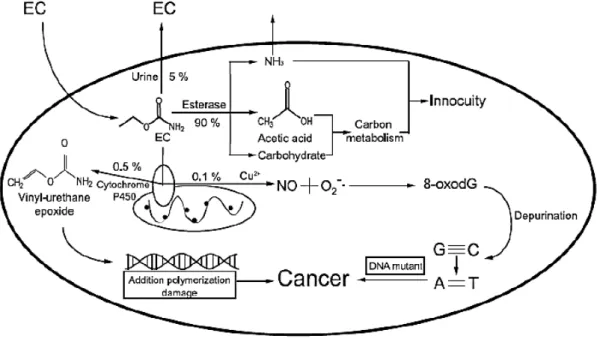
The toxicity of EC was firstly recognized in 1943 in a work developed after the authors encountered a high incidence of lung cancer in laboratory animals anesthetized with EC (13). During the next two decades various experiences with animals were carried out in order to assess the risk associated with EC exposure. In general the results were consistent, taking into account that all species have developed different benign and malignant tumours (42). The EC shows a low acute toxicity, however its continued administration, at lower doses, promotes an increase of biological dysfunctions, carcinogenesis and mortality (16). The oxidation of EC to vinyl epoxide is the most worrying pathway in terms of genotoxicity (15). Other studies allowed to conclude that the metabolizing mechanism of EC occurs essentially in the liver and lung (14, 43, 44).
2.2.1.
Carcinogenesis
Evolution of ethyl carbamate during Madeira wine ageing by GC-MS: a new methodology
gland and others (14, 45). Topical application of EC also induced pulmonary adenomas and breast carcinomas (46). After administration of EC in hamsters, they experienced an increase incidence of cancers including melanoma, mammary gland tumours and carcinomas of the thyroid, ovary, liver and spleen, among others (47). The EC carcinogenesis was also verified in primates, with higher incidence in lung cancer and hepatocellular adenomas and carcinomas (48, 49).
Fig. 5 –Carcinogenesis metabolism of EC (adapted from Hübner (50)).
Evolution of ethyl carbamate during Madeira wine ageing by GC-MS: a new methodology
56). It was also concluded that the metabolism of EC by CYP2E1 is necessary for its genotoxicity (43).
Major reviews were performed in 1989 by the California Department of Health Services, discussing the state of the art in the risk assessment for EC carcinogenicity (42). In 2005, the Codex Alimentarius commission of FAO and WHO considered the EC a relevant public health issue (16). More recently, in 2007, the EC was reclassified by the IARC as a
“probably carcinogenic to humans” (Group 2A), the second most worrisome classification of
IARC to carcinogenesis risk (15).
2.2.2.
Influence of ethanol on ethyl carbamate metabolism
Besides the consumption of alcoholic beverages is the major exposure route to EC, the ethanol also interferes in its metabolization. Yamamoto (57) found that the administration of EC, together with ethanol, diminish the EC hydrolysis to carbon dioxide and its clearance (57). Chronic use of ethanol induces the formation of CYP2E1, the effect of ethanol in the decrease of EC clearance suggests that there is a competition for this oxidase enzymes (58). The neuropharmacological effects, like hypnotic and anaesthetic properties, of EC are increased wen the chemical is co-administered with ethanol (42). In a long-term study, during 2 years, of administration of EC in 5% of ethanol vs. drinking-water it was observed a
decrease in body weight and an increase of biological dysfunctions and lethality.
2.3.
Legislation
Evolution of ethyl carbamate during Madeira wine ageing by GC-MS: a new methodology
This legislation raised several problems at that time. There were no analytical methods with the required sensitivity nor accessible to most laboratories. Moreover, producers of alcoholic beverages did not know how to control EC levels in their products. However this imposition led to a great attention of the scientific community, resulting in a pronounced advance in the control of this toxic compound (15, 16, 19, 41, 59).
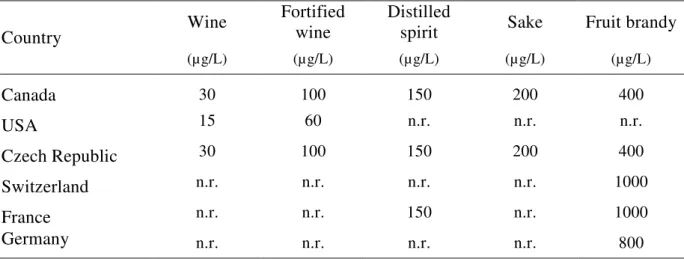
Public health options vary depending on the country and in the European Union does not exist a common legislation to EC maximum levels (41). Nowadays, some countries have established its own legislation (Table 1). The Czech Republic implemented an identical legislation to Canada. However, United States of America are the most restrictive in respect of table and fortified wines. Germany and Switzerland imposed limits values to fruit brandies and France, in addition to fruit brandies, also included distilled spirits in the legislation (19).
Table 1 - Maximum levels for ethyl carbamate in alcoholic beverages
Country Wine
Fortified wine
Distilled
spirit Sake Fruit brandy
(µg/L) (µg/L) (µg/L) (µg/L) (µg/L)
Canada 30 100 150 200 400
USA 15 60 n.r. n.r. n.r.
Czech Republic 30 100 150 200 400
Switzerland n.r. n.r. n.r. n.r. 1000
France n.r. n.r. 150 n.r. 1000
Germany n.r. n.r. n.r. n.r. 800
n.r. - no regulation
2.4.
Determination
Evolution of ethyl carbamate during Madeira wine ageing by GC-MS: a new methodology
Since then, the GC has been considered the preferential technique to quantify EC in alcoholic beverages. The emergence of new detectors, like mass spectrometer detector (MS), and new techniques of extraction have motivated the development of new methodologies, with simplified extraction processes and higher sensitivities (15, 19, 42). The legislation imposed by Canada authorities, in 1985, also forced the scientific community to develop new analytical methods. The analysis of this compound in complex matrixes, such as alcoholic beverages, is hard to achieve because of the low concentration levels (in the order of µg/L) and due to the high interference caused by other matrix components, even when extensive clean-up procedures are applied (15).
Nowadays, the GC coupled with MS has become the excellence technique for the quantification of EC. Usually the MS detector is operating in selected-ion monitoring mode and in general the ions m/z 89, 74, and 62 are used to identify the compound and the ion m/z 62 is used for quantification. The propyl carbamate (PC) or butyl carbamate (BC) have been used as internal standard, however there has been an increase tendency to use EC labelled with deuterium, 13C or 15N isotopes, in mass spectrometric detection (15, 19).
The Association of Official Analytical Chemists International adopted as their official methods, to quantify EC in different matrixes, two GC methods, one with MS detection and other by thermal energy analyser detection (TEA) (62, 63). The International Organisation of Vine and Wine (OIV) official method, for determination of EC in beverages, requires a GC/MS equipment, using selected ion monitoring mode, and PC as internal standard. This method involves a complex and time-consuming extraction procedure, using a diatomaceous earth solid phase extraction column (64).
The advanced chromatographic separation system, by multidimensional GC, with a previous solid-phase extraction (SPE) simplifies the extraction procedure to determine EC, however it is necessary to remove the ethanol from the sample by a time-consuming technique (65). Another advanced approach is the tandem MS (MS-MS) detection that improves the sensitivity and specificity of the methods (66, 67). Liquid chromatography is also used to quantify the EC using derivatization with 9-xanthydrol and fluorescence detection (HPLC-FLD) (68-70).
Evolution of ethyl carbamate during Madeira wine ageing by GC-MS: a new methodology
head space solid-phase microextraction (HS-SPME) has been successfully applied to quantify EC in wine and spirits. The HS-SPME followed by GC-MS-MS analysis to determine this compound in alcoholic beverages have been widely used by the scientific community, generating several articles (15, 66, 71). Emergent techniques, like MEPS, may provide simpler and more robust methods for the EC determination in alcoholic beverages, which contributes to its prevention and control.
2.5.
Prevention and control
Identifying the causes of human cancer is the priority on its prevention and today the high incidence of this disease continues to increase. The EC raises some concerns in terms of public health as a “probably carcinogenic to humans” being a problem more associated with alcoholic beverages consumption. The prevention and control of EC levels, used in the beverage industries, have obtained good results, however it seems to be important to keep implementing these effective preventive and control actions. There has been a clear reduction of this compound in commercial products over the past 20 years. These results are due to the efforts made in the identification of the main precursors, the understanding of its formation mechanisms, as well as the impact of external factors such as light, temperature and time of storage or ageing (15, 16).
Nowadays, there are still no general methods for EC prevention in all foods and beverages but some different strategies have been developed and applied in industrial scale. Based on recent research, the mitigation of EC in alcoholic beverages can be achieved by the modification of raw materials and by the optimization of the fermentation parameters, like using commercial yeasts that excretes low concentrations of urea and by the addition of acid urease that degrades urea or even by the modification of the fermentation yeast cells (19, 20).
Evolution of ethyl carbamate during Madeira wine ageing by GC-MS: a new methodology
provide sufficient nutrients for yeast cell growth. FDA also indicates the enzymatic hydrolysis of urea, with urease enzyme, as a way to mitigate EC.
The fortified wine producers have to take into account that the fortification step increases the urea excretion by yeast cells. Urea is usually formed during the early and middle stages of fermentation and laboratory tests should be performed in order to minimize its concentration in solution (72).
In general, some techniques can support the prevention of EC occurrence, such us lowering the pH, lowering the ethanol content and lowering the temperature during the fermentation and storage. Supplementing adjustments at the beginning of the fermentation with diammonium phosphate is also a preventive technique. These techniques are not effectiveness and cannot be applied to all fermentative practices. Additionally, factors such as oxygen and light irradiation play an important role in EC formation (20). Another solution proposed in wine production was the use of commercial yeast with low urea excretion. The solution to reduce EC that appears to be more effective and that is inclusively recommended by FDA is the application of acid urease. Acid urease has an optimum pH compatible with wine, and its feasibility to remove urea has been demonstrated. The industrial application of acid urease in wineries still limited because of longstanding and expensive procedures. The perspectives about acid urease utilisation are good and a lot of research has been accomplished (20, 72).
Methods involving metabolic engineering, through the modification of fermentative yeasts, have been successfully applied. In fact, 89% of EC reduction can be achieved. These methods are based on the repression of urea by inhibiting the expression of arginase (CAR1) or by controlling the amount of urea in medium, through the enhancing of the genes that regulate its metabolism and the transport (DUR1,2 and DUR3) (Fig. 6). Consequently, these methods implicate changes on the beverages flavour (20, 73).
Evolution of ethyl carbamate during Madeira wine ageing by GC-MS: a new methodology
process, the application of steam, low temperature, high reflux rate distillation and also metabolic engineering. These methods reduce the EC levels, but none is completely effective and most of them promotes accentuated changes on the flavour and a set of other problems (20).
Fig. 6 –Diagram of the two approaches used in metabolic engineering methods for EC elimination.
Repression of the gene encoding for arginase (CAR 1) and the enhancing of genes that regulate the metabolism and transport of urea (DUR1,2 and DUR3) (adapted from Butzke (73)).
3.
MADEIRA WINE
Madeira wine is a fortified wine with an alcoholic content between 17 to 22%. Still nowadays, Madeira wine is an internationally well-recognized product, not only by its History but also by its peculiar characteristics, representing a product with significant value to
Madeira Island’s economy (Portugal). It is characterized by a marked and intense flavour and
Evolution of ethyl carbamate during Madeira wine ageing by GC-MS: a new methodology
Madeira wine has a unique winemaking process and the extension of fermentation is defined according to the grape variety and the style desired (dry, medium-dry, medium-sweet and sweet wines may be produced). The fermentation is stopped by the addition of grape spirit containing 95% v/v of ethanol. After the post-fermentation treatments, the obtained wine undergoes a maturation process that can go directly into wood casks, in an ageing process named canteiro, or can be previously submitted to a unique accelerated ageing process, the
estufagem process. In canteiro, the wine remains in casks for a minimum period of 3 years. On
the other hand, in estufagem the fortified wine is usually heated at about 45 °C for a minimum
period of 3 months. In the past, this process emerged to reproduce the wine ageing during those long sea voyages. This process is another particularity that makes Madeira wine a distinctive fortified wine (74-78).
Madeira wine has been raising interest in the scientific community, resulting in a considerable number of scientific studies. Its volatile profile is the aspect that has been receiving great attention and, up to the moment, has originated more scientific articles (79-91). Chemometric studies in Madeira wine, using advanced multivariate statistical methodologies, have also been applied in order to characterize the ageing process, defining patterns of ageing and predicting wine age (92-96), as well as allowing the quantification compounds of interest, in a quick and easy way (96). The estufagem process was deeply studied by Pereira (97), that
evaluated the effect of this ageing process in the main characteristics and constituents of Madeira wine, resulting several scientific papers (88, 98-101).
PART II - DEVELOPED METHODOLOGY
This Part of the work is based on the following publication:
Rapid and sensitive methodology for determination of ethyl carbamate in fortified wines using microextraction by packed sorbent and gas chromatography with mass spectrometric detection
J. M. Leça, V. Pereira, A. C. Pereira, J. C. Marques
Analytica Chimica Acta, 2014;811:29-35
Evolution of ethyl carbamate during Madeira wine ageing by GC-MS: a new methodology
4.
METHODOLOGY FOR DETERMINATION OF ETHYL
CARBAMATE IN FORTIFIED WINES USING MEPS
EXTRACCION WITH A GC
-
MS EQUIPMENT
Abstract:
This section presents a new methodology to quantify EC in fortified wines. The presented approach combines the MEPS, using a hand-held automated analytical syringe, with one-dimensional GC coupled with mass spectrometry detection (GC–MS). The performance of different MEPS sorbent materials was tested, namely SIL, C2, C8, C18 and M1. Also, several extraction solvents and the matrix effect were evaluated. Experimental data showed that C8 and dichloromethane were the best sorbent/solvent pair to extract EC. Concerning solvent and sample volumes optimization used in MEPS extraction an experimental design (DoE) was carried out. The best extraction yield was achieved passing 300 μL of sample and 100 μL of
dichloromethane. The method validation was performed using a matrix-matched calibration using both sweet and dry fortified wines, to minimize the matrix effect. The proposed methodology presented good linearity (R2 = 0.999) and high sensitivity, with quite low limits of detection (LOD) and quantification (LOQ), 1.5 and 4.5 μg/L, respectively. The recoveries varied between 97 and 106%, while the method precision (repeatability and reproducibility) was lower than 7%. The applicability of the methodology was confirmed through the analysis of 16 fortified wines, with values ranging between 7.3 and 206 μg/L. All chromatograms showed good peak resolution, confirming its selectivity. The developed MEPS/GC-MS methodology arises as an important tool to quantify EC in fortified wines, combining efficiency and effectiveness, with simpler, faster and affordable analytical procedures that provide great sensitivity without using sophisticated and expensive equipment.
4.1.
Introduction
Evolution of ethyl carbamate during Madeira wine ageing by GC-MS: a new methodology
quantification, with the advancement of technology, has played an important role in EC control and prevention. Nonetheless nowadays the quantification of the EC stills not accessible to most wine producers and usually involves expensive equipment, such as GC-MS, and complex and extensive extraction procedures or simple extraction procedures associated with variants of the GC-MS, much more expensive, such as multidimensional gas chromatography (GC-GC) or triple quadrupole mass spectrometry detection (MS/MS) (15, 19).
Several extraction and chromatographic techniques have been used, including continuous liquid-liquid extraction (LLE) with Soxhlet apparatus (102), derivatization with 9-xanthydrol followed by high performance liquid chromatography (HPLC) with fluorescence detection (69) and even LLE after derivatization, followed by GC–MS (103). Other methods make use of solid phase extraction (SPE), but using multidimensional gas chromatography with mass spectrometry (GC-GC/MS) (65) or liquid chromatography with tandem mass spectrometry (LC-MS/MS) for detection (70). Several efforts have been done to develop new methodologies to determine EC without using long procedures and hard-working analyses, combining precision to high sensitivity. In this regard, headspace solid phase microextraction (HS-SPME) has been gaining great highlighting using gas chromatography with tandem mass spectrometry detection (GC-MS/MS) (104) and two-dimensional gas chromatography with time-of-flight mass spectrometry (GC×GC–ToFMS) (67).
Evolution of ethyl carbamate during Madeira wine ageing by GC-MS: a new methodology
The aim of this part of the study was to develop a fast, simple and sensitive methodology to quantify EC in fortified wines using MEPS extraction combined with one-dimensional GC-MS equipment.
4.2.
Materials and methods
4.2.1.
Chemicals and samples
EC was purchased from Acros Organics (Geel, Belgium), while butyl carbamate (BC), used as internal standard (IS), was obtained from Sigma–Aldrich (Steinheim, Germany). All standards had a purity grade of more than 97%. Absolute ethanol, > 99.8% (GC), was purchased from Sigma–Aldrich (Steinheim, Germany), tartaric acid and methanol from Panreac (Barcelona, Spain) while acetonitrile, ethyl acetate and dichloromethane were from Fisher Scientific (Leicestershire, UK). Ultra-pure water (18 MΩ) was prepared by the
Simplicity®UV ultrapure water (type 1) apparatus from Millipore (Milford, MA, USA).
EC and BC stock solutions of 1 g/L were prepared by dissolving appropriate amounts of each compound in ultra-pure water. In order to obtain the matrix-matched calibration solutions, suitable dilutions of the stock solutions were prepared with ultra-pure water, to obtain the intermediate solutions of 50 mg/L in EC and 10 mg/L in BC, which were then used to spike dry and sweet fortified young wines. Each calibration point was extracted in triplicate, within the validation range 5-400 μg/L.
The sweet and dry fortified wines used to perform the matrix-matched calibrations were obtained from Vitis vinifera L. white varieties and were absent of quantifiable amounts
of EC and BC. Regarding the application sample set, 16 fortified wines, aged up to 36 years old and with ethanol contents between 18 to 20% were analysed using the developed methodology.
4.2.2.
Apparatus and chromatographic conditions
eVol® MEPS™ hand-held automated analytical syringe (SGE Analytical Science,
Evolution of ethyl carbamate during Madeira wine ageing by GC-MS: a new methodology
size and 60 Å pore size), containing 4 mg of different packing polymers (SIL, C2, C8, C18 and M1) were tested to optimize the extraction.
All analyses were carried out using a GC-MS system, the TRACE GC Ultra gas chromatograph equipped with the ISQ single quadrupole and the TriPlus autosampler (liquid mode) from Thermo Scientific (Hudson, NH, USA). The column was a DB-WAX 60 m ×
0.250 mm with 0.50 μm film thickness from Agilent J&W (Folsom, CA, USA). The carrier
gas was helium at a constant flow rate of 1 mL/min. The injector port that was kept at 230 °C, in splitless mode, while the transfer line and the ion source were maintained at 230 and 240 °C, respectively. The oven temperature program started at 40 °C, hold 1 min, increased to 180 °C at 20 °C/min and hold for 15 min, with a total GC run time of 23 min.
The mass spectrometer was operated in electron impact (EI) mode at 70 eV. Initially, some tests with standards and samples were performed with chromatograms obtained in total ion count (TIC), in the range m/z 30–400, to ensure the retention time of EC and BC. Then, selective ion monitoring (SIM) of the three characteristic ions m/z 62, 74 and 89 of both compounds was tested in order to ensure good resolution. Also, to increase the sensitivity and to meet quantification purposes, further analyses were performed using the ion m/z 62.
4.2.3.
MEPS optimization
Evolution of ethyl carbamate during Madeira wine ageing by GC-MS: a new methodology
and solvent volumes to be used in the extraction procedure. As response variable, the GC-MS data was used, namely to evaluate the factors-levels combination that ensure its maximization. For each factor, three levels were examined, varying from 200 to 1000 µL and 100 to 350 µL to sample and solvent volumes, respectively. The plan to carry out the experiments as well as the data analysis was computed using Matlab software (version 7.6, the Mathworks Inc.).
4.2.4.
MEPS optimized procedure
Firstly, 5 mL of sample/standard solution, previously spiked with 12 μL of internal
standard (BC solution of 10 mg/L), were filtered through 0.45 µm syringe Acrodisc GHP filters (Pall Gelman Sciences, Ann Arbor, MI, USA). Following this step, samples were then extracted using the C8 sorbent, which was selected to extract EC, after being performed the optimization tests. Before each extraction, the sorbent was washed and conditioned twice with 500 µL of methanol, dichloromethane and ultra-pure water, at about 33 μL/s. Then, 300 μL of
Evolution of ethyl carbamate during Madeira wine ageing by GC-MS: a new methodology
Fig. 7 - DoE optimized MEPS procedure for determination of EC in fortified wines.
4.2.5.
Method validation
The described MEPS/GC-MS methodology for determination of EC in fortified wines was validated in terms of linearity, sensitivity, matrix effect, selectivity, precision and accuracy.
The working standard solutions were prepared by spiking both dry and sweet fortified wines at six different concentration levels: 5, 10, 50, 100, 200 and 400 μg/L of EC with 24
μg/L of BC as internal standard. Calibration curves were obtained by plotting the analyte peak area ratio (EC area/IS area) from the six increasing standard solutions against the corresponding EC concentration. The linearity was determined based on the linear regression results.
Sensitivity was evaluated determining the limit of detection (LOD) and limit of
quantification (LOQ) as follow: LOD=3.3 σ/b and LOQ=10 σ/b, with σ as the intercept
Evolution of ethyl carbamate during Madeira wine ageing by GC-MS: a new methodology
The matrix effect (ME) was assessed through the percentage of the quotient between the slopes of the curves obtained from the standards solutions in synthetic wine (6 g/L of tartaric acid, 18% of ethanol and pH 3.50) and those obtained by spiking dry and sweet fortified wines with known amounts (matrix-matched calibration), by the following equation (110):
% ME = [((slope of matrix-matched calibration - slope of synthetic wine calibration))/(slope of synthetic wine calibration)]×100
Selectivity was appraised by the analysis of several fortified wines, among which were chosen those that were used for the matrix-matched calibration, to ensure the absence of chromatographic interferences, at the retention times of EC and BC (SIM at m/z 62), which could compromise EC quantification. Synthetic wine blanks were also evaluated.
Precision was estimated from inter- and intra-day analysis of the standard solutions and fortified wines. Intra-day repeatability was assessed by 10 successive replicate determinations of 2 samples and a working standard solution, while inter-day reproducibility was assessed by the analyses of the same samples in 3 different days. These two parameters were expressed as relative standard deviation (%RSD).
The accuracy of the method was assessed through a recovery study, spiking a fortified wine in triplicate, with known amounts of EC at three representative concentrations levels, within the calibration range. Average recovery was calculated by comparing mean values of the 3 replicates with theoretical concentrations of each one. Carry-over was also investigated by running a blank sample after extracting the working standard solutions with the highest content of EC.
4.3.
Results and discussion
Evolution of ethyl carbamate during Madeira wine ageing by GC-MS: a new methodology
recording the sum of the three major ions m/z 62, 74 and 89 and also, only the characteristic ion m/z 62. It was found interferences at the EC retention time when the recording was done with the sum of the ions m/z 62, 74 and 89. Indeed, the TIC mode analysis confirmed that the matrix of some fortified wines was very complex and concentrated, compromising the sensitivity. In this sense, it was chosen to perform SIM analysis only at m/z 62, which assured enough sensitivity to analyse EC with an excellent performance. Similar strategy has already been adopted by other authors (65, 111, 112).
4.3.1.
Extraction solvent survey
Taking into account the objective of developing an extraction method with MEPS, the potential extraction solvents were analysed looking for the presence of EC, with the SIM mode at m/z 62. The obtained results showed that only acetonitrile, ethyl acetate and dichloromethane were EC free solvents. Methanol, ethanol and acetone solvents had measurable amounts of EC, mainly ethanol, which presented the peak with the greatest area of EC (Fig. 8).
Fig. 8 - EC checking of the possible extraction solvents: ethanol, methanol, acetone, acetonitrile, ethyl
acetate and dichloromethane.
This result led us to avoid the use of this solvent for calibration purposes, considering that EC presence in ethanol could affect its quantification. Actually, the EC determination in alcoholic beverages presupposes its use to simulate the matrix, since ethanol has direct
0 50000 100000 150000 200000 250000 300000 350000 ethanol
acetone methanol acetonitrile ethyl acetate dichloromethane
Evolution of ethyl carbamate during Madeira wine ageing by GC-MS: a new methodology
influence on the EC extraction. Thus, this fact must be taken into account on the development of analytical methods, once standards solutions are currently prepared with a certain percentage of ethanol.
Actually, we have tried to find an ethanol source that was absent of EC. In this sense, 3 bottles of ethanol > 99.8% (GC) of the same brand, available in the laboratory, were tracked through GC-MS direct injection, in order to quantify EC (Table 2). In this case, the calibration was prepared based on standards diluted in dichloromethane. The resulting calibration showed good linearity and sensitivity results (R2 = 0.999 and LOQ = 15.21 μg/L). The results revealed that ethanol bottles presented concentrations ranging from 25.0 to 27.9 μg/L.
Table 2 - Concentration of EC in the ethanol available in the laboratory (> 99.8% (GC)), Sigma -
Aldrich)
Ethanol Concentration SD
(μg/L)
Batch 1 25.0 0.5
Batch 2 27.9 0.3
Batch 3 26.3 0.4
SD - standard deviation
Therefore, the synthetic wine, usually used for the preparation of standards, can have an additional EC concentration of about 4.5 μg/L derived from the added ethanol (18%).
4.3.2.
Selection of the MEPS sorbent and extraction solvent
After solvents survey, several tests were conducted in order to select the best solvent/sorbent pair. To perform this task, a non-optimized MEPS procedure was carried out
using a 500 μL syringe coupled with a hand-held automatic system. This syringe was fitted
Evolution of ethyl carbamate during Madeira wine ageing by GC-MS: a new methodology
Fig. 9 - Typical chromatograms of the sorbent materials SIL, C2, C8, C18 and M1 using the extraction
solvents acetonitrile, ethyl acetate and dichloromethane. EC RT ≈ 14 min, BC RT ≈ 19 min. RT - retention time; AA – peak area; SN - signal to noise ratio.
Evolution of ethyl carbamate during Madeira wine ageing by GC-MS: a new methodology
The obtained results were compared to select the best BIN and solvent to extract and quantify EC in fortified wines. Regarding the extraction solvent, it was verified that acetonitrile extracts less EC compared to the other two extraction solvents, regardless the BIN used. Moreover, acetonitrile extracted some interfering substances that co-eluted with the EC and BC peaks (Fig. 9). In turn, ethyl acetate and dichloromethane were the solvents with higher efficiency in the extraction of EC and BC. Actually, ethyl acetate extracts more EC than dichloromethane, however, causes a change in the baseline, reducing the signal to noise ratio (S/N) of both EC and BC peaks (Fig. 9). Furthermore, the EC peak of the ethyl acetate extracts presented an inferior resolution, as depicted in Fig. 9. Considering these results, dichloromethane was chosen as extraction solvent.
The BIN with C8 sorbent material presented the best efficiency to extract EC (Fig. 9), using dichloromethane as extraction solvent. Thus, C8 BIN and dichloromethane were chosen to perform the MEPS/GC-MS methodology for the determination of EC in fortified wines.
4.3.3.
MEPS extraction optimization
After choosing the C8/dichloromethane pair to extract EC, an DoE was carried out to optimize the extraction in order to obtain the best response in the GC-MS equipment. The sample and extraction solvent volumes were the chosen variables. The sample volumes analysed were 200, 500 and 1000 μL, while the tested solvent volumes were 100, 200 and 350
μL. Fig. 10 depicts the result of the statistical DoE approach. The two factors analysed were
plotted against the response variable in order to visualize the combination that maximizes the GC-MS response. Moreover, the response of other interferences was also analysed in order to ensure that the chosen factors combination maximize the S/N of the methodology used.
Evolution of ethyl carbamate during Madeira wine ageing by GC-MS: a new methodology
Fig. 10 - DoE to optimize the MEPS extraction with C8 BIN with sample volume, extraction solvent
volume and the response in GC-MS equipment as variables. The colormap illustrates the variation of GC-MS response, where the maximum is delimited by the dark red line.
4.3.4.
Matrix effects
The matrix effect can compromise the results generated by an analytical method, especially when it is intended to analyse samples of high complexity, such as fortified wines. Thus, the variation percentages of the slopes of three calibration curves, accessed with synthetic, dry and sweet fortified wines as samples matrix and using the optimized extraction, were compared to evaluate the matrix influence on the extraction procedure and analysis (Fig. 11).
Although there is no limit values established for matrix effect, it can be considered that up to 15% of matrix suppression or enhancement is acceptable. In the present study a value of 17% was obtained between synthetic and the both fortified wines. A negligible difference was found (about 0.3%) between the two types of wines, not having a considerable matrix effect between these two types of fortified wines.
Sample Volume (L)
S o lv e n t V o lu m e ( L)
200 400 600 800 1000
Evolution of ethyl carbamate during Madeira wine ageing by GC-MS: a new methodology
Fig. 11 - Percentage of the matrix effect between the slopes of the three calibration curves: synthetic
wine and sweet and dry fortified wine.
4.3.5.
Method validation
Faced with the lack of an ethanol completely free of EC, together with the fact that was observed matrix effect between synthetic and fortified wines, it was decided to adopt the matrix-matched calibration approach to overcome these drawbacks. To accomplish this calibration, the selectivity of the proposed methodology was firstly assessed by the analysis of the sweet and dry fortified wines specially selected, which were further used to generate the matrix-matched calibration. The results revealed that there were no interferences at EC and BC retention times, 14.1 and 19.4 min, respectively, as demonstrated in Fig. 12.
A single calibration curve was then obtained by the average response of the six concentration levels prepared with both sweet and dry fortified wine standard solutions. Each one was extracted in triplicate and injected twice. A good correlation coefficient (R2 = 0.999)
was observed, confirming the linearity of the method. Table 3 depicts some of the validation
results.
The method sensitivity was evaluated by LOD and LOQ determinations, calculated
based on the obtained linear regression. The LOD and LOQ were low (1.5 and 4.5 μg/L,
respectively), being close or even lower to those found in literature (65, 67, 70, 71, 102-104, 111, 112, 115-117), conferring to the developed methodology a great sensitivity to analyse EC in fortified wines.
17.1% 17.3% 0.3%
sweet fortified wine Vs synthetic wine dry fortified wine Vs
synthetic wine sweet fortified wine Vs