Legume-Cereal Intercropping Improves
Forage Yield, Quality and Degradability
Jie Zhang1☯‡, Binjie Yin1☯‡, Yuhuai Xie1, Jing. Li2, Zaibin Yang1, Guiguo Zhang1,2*
1College of Animal Sciences and Technology, Shandong Agricultural University, Tai-an, Shandong 271018, P. R. China,2Department of Biochemistry and Molecular Biology, College of Life Sciences, Peking University, Beijing 100871, P. R. China
☯These authors contributed equally to this work.
‡These authors share the first authorship on this work. *[email protected]
Abstract
Intercropping legume with cereal is an extensively applied planting pattern in crop cultiva-tion. However, forage potential and the degradability of harvested mixtures from intercrop-ping system remain unclear. To investigate the feasibility of applying an intercropintercrop-ping system as a forage supply source to ruminants, two consecutive experiments (experiments 1 and 2) involving a field cultivation trial and a subsequentin vivodegradable experiment were conducted to determine the forage production performance and the ruminally degrad-able characteristics of a harvested mixture from an alfalfa/corn-rye intercropping system. In experiment 1, the intercropping system was established by alternating alfalfa and corn or rye with a row ratio of 5:2. Dry matter (DM) and nutrient yields were determined. In experi-ment 2, forages harvested from the different treatexperi-ments were used as feedstuff to identify nutrient degradation kinetics and distribution of components between the rapidly degrad-able (a), potentially degradable (b) and the degradation rate constant (c) of‘b’fraction byin saccomethod in Small-Tail Han wether Sheep. The intercropping system of alfalfa and corn-rye provided higher forage production performance with net increases of 9.52% and 34.81% in DM yield, 42.13% and 16.74% in crude protein (CP) yield, 25.94% and 69.99% in degradable DM yield, and 16.96% and 5.50% in degradable CP yield than rotation and alfalfa sole cropping systems, respectively. In addition, the harvest mixture from intercrop-ping system also had greater‘a’fraction,‘b’fraction,‘c’values, and effective degradability (Evalue) of DM and CP than corn or rye hay harvested from rotation system. After 48-h exposure to rumen microbes, intercropping harvest materials were degraded to a higher extent than separately degraded crop stems from the sole system as indicated by visual microscopic examination with more tissues disappeared. Thus, the intercropping of alfalfa and corn-rye exhibited a greater forage production potential, and could be applied as forage supply source for ruminants. The improved effective degradability of harvest mixture mate-rial could be attributed to greater degradable components involving the rapidly degradable fractions (a), potentially degradable (b) fractions, and degradable rate constant (c), than that of corn and rye hay.
a11111
OPEN ACCESS
Citation:Zhang J, Yin B, Xie Y, Li J., Yang Z, Zhang G (2015) Legume-Cereal Intercropping Improves Forage Yield, Quality and Degradability. PLoS ONE 10(12): e0144813. doi:10.1371/journal.pone.0144813
Editor:Zhihui Cheng, Northwest A&F University, CHINA
Received:April 12, 2015
Accepted:November 24, 2015
Published:December 16, 2015
Copyright:© 2015 Zhang et al. This is an open access article distributed under the terms of the
Creative Commons Attribution License, which permits unrestricted use, distribution, and reproduction in any medium, provided the original author and source are credited.
Data Availability Statement:All relevant data are within the paper and its Supporting Information file.
Funding:This work was supported by the Special Fund for Agro-scientific Research in the Public Interest of China (project no. 201403047), the Awarding Fund for Outstanding Young Scientists of Shandong Province (project no. BS2013NY007), and the Shandong Province Special Fund of Native Sheep Varieties Protecting Project.
Introduction
In many farming areas of the world, the continuous reduction of arable land has decreased the available land area for forage production [1,2]. Crop residues, which lack rumen-degradable nutrients [3,4], have been recommended as the main roughage resource in intensive ruminant farming systems [5]. However, deficient superior forage is the main restrictive factor in herbiv-orous livestock industry in those regions [6,7,8]. This deficiency, including unbalanced sea-sonal forage distribution, can be resolved by purchasing and storing high quality roughage feed such as hay or silage for ruminants [9,10]. Despite the advantage of this practice, production costs are likely increased and farm profitability is reduced. Thus, feasible methods should be established to satisfy roughage requirement for rapid and sustainable development of ruminant husbandry [6,11,12].
Intercropping exhibits a greater forage production performance than sole cropping and is a feasible option for forage production [13,14,15]. Corn (Zea maysL.)-rye (Secale cerealeL.) rotation and their respective monocultures are traditional cultivation practices in the main grain and forage production system in farming areas worldwide [16], especially in some areas that are limited to only one cropping season annually due to temperature and water con-straints. Furthermore, the corn-based intercropping with alfalfa (Medicago sativaL.) [17,18], faba bean (Vicia fabaL.) [19,20], soybean (Glycine maxL. Merr.), and wheat (Triticum aesti-vumL.) [21], have been documented a yield advantage compared with sole cropping of corn or legumes. Previous studies on forage degradability also showed that the degradable rate and extent of forage tissues were related to the inherent degradable characteristics (e.g. the content of rapidly soluble fraction, the content of slowly degradable fraction and its rate constant (h-1) of the degradation); these parameters can be investigated on the basis of anatomical structure variation [22,23].
Although advantages of biomass yields of intercropping system with two crops species have been extensively investigated, further studies have yet to evaluate whether intercropping alfalfa with corn-rye rotation system is feasible when considering the degradability or utilization of harvest mixture from intercropping system. In addition, degradation characteristics of mixture harvested from intercropping systems also remain unclear. In the present study, rye was inter-cropped with alfalfa after corn was harvested on the basis of existing alfalfa/corn strip intercrop-ping systems to improve the land utilization and avoid the land idle after corn was harvest. This study aimed to (1) determine the biomass and nutrient yields of alfalfa/corn-rye intercropping system, (2) explore the degradable characteristics of mixture byin saccomethod, and (3) exam-ine changes in the anatomical structure of crop stem before and after degradation occurs.
Materials and Methods
Plant materials and experimental design
Field experiments were conducted at the Chinese National Huang-Huai-Hai Regional Corn Technology Innovation Centre (36°09' N, 117°09' E, 134 m asl), on a brown loam soil (fine, mixed, super-active, mesic). Organic matter, total N, Olsen P and K in the upper 20cm of soil in the experimental field were 8.1%, 3.45 g/kg, 31.6, and 78.2 mg/kg, respectively. The centre, managed by Shandong Agricultural University, is specially used for field cultivation trials. The region is characterized with a temperate, semiarid and continental climate. Annual sunshine time is 2,611 h. The frost-free period is approximately 200 days and precipitation is approxi-mately 650 mm.
cerealeL.cv.‘Lumai1’), rotation of corn-rye, and sole crop alfalfa were arranged following a randomized complete block design with 3 replications. Based on the previous studies where 5 rows alfalfa were alternatively intercropped with 2 rows corn exhibiting a higher yield advan-tage compared to respective sole cropping [14], an intercropping system with an alfalfa:corn row ratio of 5:2was established in May 20, 2011 in a 23.4m2plot. The rotation of corn-rye and sole crop alfalfa were established in the same area plots at the same time. In the second year (2012) of the establishment of the alfalfa/corn intercropping system, rye was introduced to the intercropping system after corn was harvested and grown with alfalfa from October to May of the succeeding year (2013) in intercropping plots. Three rows of rye were planted with a row spacing of 20 cm between two alfalfa bands (Fig 1). At the first year of the establishment of intercropping system, all plots were given a basal application of N at 225 kg ha-1as urea and P were applied at 33 kg ha-1as calcium superphosphate. In the following years, no fertilizes were applied to any of the plots during the experiment. Both the N and P fertilizers were evenly broadcast and incorporated into the top 20 cm of the soil prior to sowing. The general irriga-tion and pesticide practices were employed in proper time during the growing season to pre-vent the water stress and insect pest occurrence. Climatic information for the duration of the experiment is shown inTable 1, and no major natural disasters occurred.
In the second year of intercropping system establishment (2012), the biomass and nutrient yields were determined. Alfalfa was harvested at one-tenth bloom (the early blooming stage) to a 5-cm stubble height without seriously reducing plant vigour and stand life. In our study, alfalfa was reaped 5m of each strip at early blooming stage for determining DM yields, and har-vested 4 times in 2012, and 2 times in the first half of 2013 (to accumulate the alfalfa yield before rye harvest). Grain and stalk of corn were harvested separately at physiological maturity by cutting 10 plants randomly from each plot. Rye was harvested 5 m of each strip in heading stages for calculating biomass yield.
The harvested samples were oven-dried at 65°C until the weight was constant to measure the content of DM and calculated the biomass yield of all treatments [14,17].
In sacco incubation
This study was carried out in strict accordance with the recommendations in the Guide for the Care and Use of Laboratory Animals of Shandong Agricultural University Animal Nutrition Research Institute. The protocol was approved by the Committee on the Ethics of Shandong Agricultural University (Approval Number: S20130058). All efforts were made to minimize suffering.
A degradability study was conducted throughin saccoincubation in 3 rumen-fistulated mature‘Small-Tail Han’wether sheep (average body weight 45 ± 5 kg) to evaluate the degrad-ability of separate alfalfa, rye, corn (stem + grain) from sole cropping, and the mixture from intercropping harvest. The sheep were fed with a total mixture ratio containing 40% alfalfa, 40% rye hay and 20% concentrate. Diet and water were providedad libitum.
Oven-dried (65°C) corn (stem + grain), rye, and alfalfa hay were ground to pass 1-mm sieve. The ground samples were weighed to approximately 8 g, and placed individually in N-free polyester bags (10cm×9cm with a pore size of 50 ± 15μm; Ankom Technology, Macedon, NY, USA). The mixture from intercropping contained the three materials following the field biomass yield proportion (rye hay: corn stalk: corn grain: alfalfa hay = 1:1.5:1.5:4) and a weight of 8 g.
Fig 1. Diagram of different intercropping patterns between alfalfa (A,*), corn (C, +) and rye (R, +). Distances between rows (cm) are indicated.
doi:10.1371/journal.pone.0144813.g001
Table 1. Weather conditions for the duration of the experiment.
Item Months
1 2 3 4 5 6 7 8 9 10 11 12
2012 (year)
Rainfall (mm/month) 6.5 8.6 18.2 25.8 44.2 90.6 218.2 157.7 67.4 35.3 18.4 9.2
Air temperature (°C) Mean minimum -7.4 5.2 1 7.6 13.3 19.8 22.3 21.2 15.4 9.6 -1.8 -5.6
Mean maximum 4.4 6.5 13.2 20 26.3 31.6 31.8 31.1 32.9 29.3 18.8 6.3
2013 (year)
Rainfall (mm/month) 4.2 7.1 16.7 27.2 68.8 118.5 203.4 124 75.6 29.3 26.3 12.3
Air temperature (°C) Mean minimum -7.1 -8.2 -1.2 6.8 7.7 16.1 17.9 17.7 11.6 8.6 -3.2 -6.2
Mean maximum 8.3 10.6 17.1 24 27.3 31.3 34.1 32.6 31.1 29.9 24.7 8.5
incubated for 0, 2, 4, 6, 12, 16, 24, and 72 h. For each incubation time, one lingerie bag contain-ing four duplicate samples was placed into each of the three sheep rumen, for a total of six rep-licated samples per treatment. Incubations were run consecutively.
The non-incubation bags (0 h) were not incubated in the rumen, but kept under water at 39°C for additional 20 min, and then washed with tap water for 15 min in a washing machine where rinsing was interrupted thrice by spinning.
After the appropriate incubation time, six duplicate bags were removed at each incubation time for each sample and immediately placed in iced water for 5 min. Subsequently, the bags were rinsed followed by a rinsing in the washing machine with spinning. All of the washed bags were oven-dried at 65°C to determine residue DM, then the dried residues from bags were collected and ground to pass 1-mm sieve for chemical analysis.
Microscopic analysis
Based on the differences in degradability among samples from sole crop and intercropping sys-tems, specific internodes (the fourth elongated internodes above the soil surface for corn and rye [23], and the seventh internodes for alfalfa [22]) preserved in 50g/100g ethanol were selected and microscopically evaluated to visualize degradable sections. Twenty slices of each crop stalk with cross-sections of 100μm in thickness were prepared using a sliding-type micro-tome (Leica SM 2400, GMI, Inc., USA) and stored in 50g/100g ethanol. Ten randomly chosen sections of each crop were used to observe the anatomic structure of forage stem and the remaining 10 sections were degraded byin vitromethod for 48 h incubation [23,24].
Thein vitrotrial were designed to 3 incubation groups corresponding to the 3 harvest mate-rials from the field trial, i.e. sole crop corn stalk, sole crop rye stalk sections, and mixed samples from intercropping system composed of corn stalk, rye stalk, alfalfa stem, and corn grain (0.5 g) ground to pass 1.0-mm screen. The section samples were incubated in 150 mL serum bottle with 100 mL of a 250 mg/g rumen fluid:buffer mixture [23]. These bottles were placed in an incubator with 39°C water bath and periodically agitated under continuous flushing with CO2
for 48 h incubation. Rumen fluid was collected from a rumen-fistulated small-tail sheep used inin saccoexperiment; the sheep were fed and treated in the same manner. After incubation was completed, the sections were gently rinsed with tap water and then stored in 500 mg/g eth-anol for microscopic evaluation. The sections were stained with safranine for 1 min, rinsed gently with running tap water, and then stained using fast green for 20 s; excess solution was removed. Stained sections were examined for tissue degradation degree by light microscopy (Diagnostic Instruments, Inc., Sterling Heights, MI) and images were collected using a spot digital camera (Nikon, D7000).
Calculation of degradation kinetics and effective degradability
The time-course disappearance for DM, crude protein (CP) and neutral detergent fiber (NDF) were used to fit thein saccodegradation kinetic parameters using non-linear (NLIN) procedure of SAS (2003) following the formula below [25,26].
pðtÞ ¼aþb½1 e cðt LÞ ð
1Þ
Furthermore, the effective degradability (E) of DM, CP, and NDF was obtained as the fol-lowing equation:
E¼aþbc=ðcþkÞ ð2Þ
where‘k’is the fractional passage rate assumed to be 0.06 for forage [27].
Chemical component analysis
The same nutrient component in feed orin saccoresidues was determined following the same procedure. Crude protein was determined by applying the micro-Kjeldahl method [28]. The NDF were measured according to a previously described procedure [29].
Statistical analysis
Data on DM yield, nutrient yields, and degradation kinetics were subjected to one-way ANOVA using the GLM procedure of SAS version 9.0. The effect of cultivation patterns on yields was determined by the preplanned contrast (intercropping vs. others). Difference was declared significant whenP<0.05. Means of the feed degradation kinetics between treatments were compared with Duncan’s multiple-comparison range test at 5% level.
Results
The DM and nutrient yields
Highly significant (P<0.001) differences in DM, CP, and NDF yields among different cultiva-tion patterns were observed (Table 2). The intercropping system exhibited higher (P0.002) DM and CP yields, and lower (P= 0.001) NDF yield than the rotation of corn and rye. Com-pared with sole crop of alfalfa, the intercropping system considerably improved (P0.002) DM, CP, and NDF yields. However, regardless of intercropping or sole cropping, the contents of CP and NDF for the same crop were always similar (P>0.05).
Degradability and degradable nutrient yields at 48 h incubation
The degradability of DM, CP, and NDF at 48 h is shown inTable 3. The nutrient degradability of intercropping mixture material was markedly higher (P<0.01) than that of corn or rye except for NDF of corn (P= 0.167), and lower (P<0.01) than that of alfalfa. Based on 48 h degradability, degradable DM and nutrient yields were significantly different (P<0.001) among the present cultivation patterns. The degradable DM and CP yields of the intercropping system were substantially greater (P<0.01) than those of sole cropping and rotation cropping. However, the degradable NDF yield of the intercropping system was similar (P= 0.087) to that of rotation cropping and higher (P<0.001) than that of the sole cropping of alfalfa.
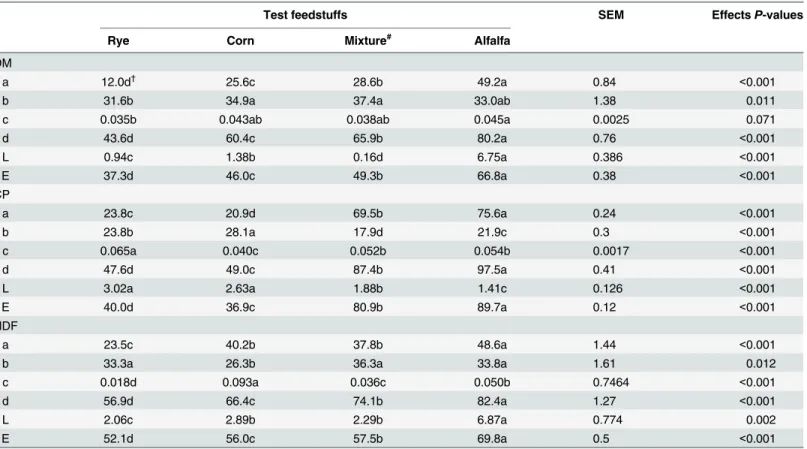
In sacco degradation kinetics
Table 2. Dry matter and nutrient yields (kg/ha) of different cultivation patterns.
Treatments DM Yield (kg/ha) Nutrient Content (%) Nutrient Yield (kg/ha)
CP NDF CP NDF
Intercropping corn 11952 8.89 45.4 1062 5427
rye 4750 10.8 64.2 505 3050
alfalfa 17701 19.3 37.5 3422 6631
summed 34403 / / 4989 15108
Rotation corn 23471 8.81 44.9 2068 10538
rye 7656 9.98 64.1 764 4907
summed 31127 / / 2887 15574
Sole crop alfalfa 22428 18.5 37.4 4154 8402
SEM* 153.9 0.71 0.27 26.1 60.3
ANOVA
Main effects <0.001 <0.001 <0.001 <0.001 <0.001
Intercropping.vs. rotation / / / / /
corn / 0.590 0.945 / /
rye / 0.419 0.957 / /
summed 0.002 / / <0.001 0.001
Intercropping.vs. sole crop alfalfa <0.001 0.797 0.872 0.002 <0.001
*The SEM values represent the overall standard error of means in each column.
doi:10.1371/journal.pone.0144813.t002
Table 3. The 48-h degradability and yields of degradable dry matter (DM), crude protein (CP)and neutral detergent fiber (NDF) based on 48-h degradability.
Treatments Degradability (%) Degradable nutrient yields (kg/ha)
DM CP NDF DM CP NDF
Intercropping mixture# 58.8 85 65.6 20218 4239 9907
Rotation corn 52.6 43.9 63.6 12343 913 6776
rye 34.4 44.4 56.7 2630 358 2788
summed / / / 14973 1272 9564
Sole crop alfalfa 74.9 96.4 78.3 16789 4006 6579
SEM* 0.56 0.48 0.66 171.4 25.7 82.8
ANOVA
Main effects <0.001 <0.001 <0.001 <0.001 <0.001 <0.001
Intercropping.vs. rotation
corn <0.001 <0.001 0.167 / / /
rye <0.001 <0.001 <0.001 / / /
summed / / / <0.001 <0.001 0.087
Intercropping.vs. sole crop alfalfa <0.001 <0.001 <0.001 <0.001 0.013 <0.001
#
Mixture was the harvest material from intercropping system composed of corn (stalk + grain), rye, and alfalfa according to the actual yield infield. i.e. rye hay: corn stalk: corn grain: alfalfa hay = 1:1.5:1.5:4.
*The SEM values represent the overall standard error of means in each column.
that from rotation cropping. Alfalfa subjected to sole cropping showed the numerically greatest
‘d’,‘E’, and‘L’values among the tested feeds.
The rapidly degradable CP (a), potential degradable CP (d), and effective degradability (E) of CP of the harvest material subjected to intercropping were higher than those of cereals sub-jected to sole cropping and less than those of alfalfa hay subsub-jected to sole cropping. While the lowest slowly degradable fraction (b) was observed in the mixture subjected to intercropping compared with cereals or alfalfa hay subjected to sole cropping. The lag time (L) of CP of the mixture subjected to intercropping was shorter than that of cereals subjected to sole cropping but longer than that of alfalfa hay subjected to sole cropping. The degradation rate (c) of slowly degradable CP was similar to that of the mixture subjected to intercropping and alfalfa hay but less than that of cereals subjected to sole cropping.
The rapidly degradable fraction (a), potential degradable fraction (d), and effective degrad-ability (E) of NDF were different among the test feeds, with the highest in alfalfa hay, followed by intercropping mixture, and the lowest in sole crop cereals. The degradation rate (c) of NDF was lower (P<0.001) in mixture subjected to intercropping compared to alfalfa hay and corn subjected to sole cropping. The lag time of NDF in the mixture subjected to intercropping Table 4. Thein saccodegradation kinetics*of different cultivation patterns.
Test feedstuffs SEM EffectsP-values
Rye Corn Mixture# Alfalfa
DM
a 12.0d†
25.6c 28.6b 49.2a 0.84 <0.001
b 31.6b 34.9a 37.4a 33.0ab 1.38 0.011
c 0.035b 0.043ab 0.038ab 0.045a 0.0025 0.071
d 43.6d 60.4c 65.9b 80.2a 0.76 <0.001
L 0.94c 1.38b 0.16d 6.75a 0.386 <0.001
E 37.3d 46.0c 49.3b 66.8a 0.38 <0.001
CP
a 23.8c 20.9d 69.5b 75.6a 0.24 <0.001
b 23.8b 28.1a 17.9d 21.9c 0.3 <0.001
c 0.065a 0.040c 0.052b 0.054b 0.0017 <0.001
d 47.6d 49.0c 87.4b 97.5a 0.41 <0.001
L 3.02a 2.63a 1.88b 1.41c 0.126 <0.001
E 40.0d 36.9c 80.9b 89.7a 0.12 <0.001
NDF
a 23.5c 40.2b 37.8b 48.6a 1.44 <0.001
b 33.3a 26.3b 36.3a 33.8a 1.61 0.012
c 0.018d 0.093a 0.036c 0.050b 0.7464 <0.001
d 56.9d 66.4c 74.1b 82.4a 1.27 <0.001
L 2.06c 2.89b 2.29b 6.87a 0.774 0.002
E 52.1d 56.0c 57.5b 69.8a 0.5 <0.001
*a, soluble fraction (%); b, degradable but insoluble fraction (%); c, rate constant (%/h) of degradation of fraction b; d = a+ b, the potential degradable fraction (%); L, lag time (h) and E, effective degradability calculated with a passage rate (k) of 6%/h.
†
Different letters in the same row indicate significant differences (P<0.05).
#Mixture was the harvest material from intercropping system composed of corn (stalk + grain), rye, and alfalfa according to the actual yield in
field. i.e. rye hay: corn stalk: corn grain: alfalfa hay = 1:1.5:1.5:4.
averaged 2.29 h; this parameter was shorter than that of whole corn (2.89 h;P<0.05) and alfalfa hay (6.86 h;P<0.05) but higher than that of rye hay (2.06 h;P<0.05).
Comparison of anatomical structures of forage stalk before and after
degradation in rumen
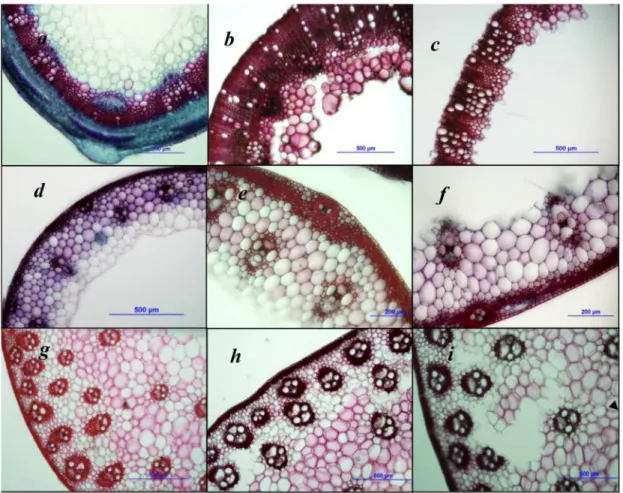
Fig 2showed an overview of the stalk sections that typically remain after 48-h degradation by rumen microbes. The anatomical structure of the samples was greatly altered compared with that of samples before degradation occurred.
Lignified alfalfa vascular bundles formed a continuous ring-like structure around the stem, and parenchyma cell walls in the pith were very thin and non-lignified (Fig 2a). Vascular bun-dles of corn and rye stalks discretely distributed throughout the parenchyma of the stalks, as observed in the cross-sections (Fig 2dand 2g). In the cross-section of the rye stem, parenchyma cells adjacent to the epidermis were very small, whereas those around the center of the pith were relatively large. Discrete vascular bundles were also separated by regions of parenchyma cells. The primary phloem and xylem in the vascular bundles were prominent but lack in fas-cicular cambium (Fig 2d).
Degradation studies with mirror sections have revealed that the epidermis and collenchyma cells of the alfalfa stem subjected to sole cropping (separately degraded) were completely degraded, but the parenchyma cells in the pith and the fascicular cambium, as well as the phloem close to the xylem ring structure, were only partly degraded after 48-h exposure to rumen microbes (Fig 2b). Nevertheless, the sections of alfalfa stem subjected to intercropping were degraded together with corn and rye stalks; these sections were degraded to a greater extent than separately degraded alfalfa stems, and all of the tissues except the xylem ring struc-ture were almost completely degraded by microbial activity (Fig 2c).
After 48-h exposure to rumen microbes, it appeared that only the parenchyma cells close to the pith and some of the epidermis cells from rye stems subjected to sole cropping were degraded. However, the vascular bundles and the surrounding parenchyma cells were completely non-degradable (Fig 2e). While for the intercropping rye stems degraded with alfalfa and corn stalks, the parenchyma cells neighboring the pith were completely degraded, and the epidermis region showed some holes; moreover, the parenchyma around the vascular bundles were also degraded to a greater extent compared with rye stalk subjected to sole crop-ping (Fig 2f).
After corn stalk subjected to sole cropping was exposed to rumen microbes for 48h, only small amount of parenchyma cells inlayed in the vascular bundles were degraded (Fig 2h). By contrast, for intercropping corn stalk sections degraded with alfalfa and rye stems, a large num-ber of parenchyma cells surrounding vascular bundles were degraded, and more holes were observed in the degraded sections (Fig 2i). In the present trial, parenchyma cells located in the inner central pith region of the cross-sections of corn stalk were poorly degradable regardless of sole cropping or intercropping (Fig 2h and 2i).
Discussion
systems involving clover (Trifolium repensL.) and barley (Hordeum vulgareL.) [11], clover and ryegrass (Lolium multiflorumL.) [30], faba bean and barley [6,31] are greater than those of sole cropping.
Although, in the present study, the field experiment is based on only one year of harvest data, when considering the production performance, a previous 3-year cultivation experiment also showed the yield advantage for intercropping compared with sole crops [14,17]. Therefore, given the biomass yield, we conclude that the intercropping of alfalfa and corn-rye improved the forage production performance and utilization efficiency of arable land; this intercropping practice is a feasible forage production pattern.
It should be pointed out that the yield advantage in the present study was based on the sum of the DM of each component crop, rather than the yield of each companion crop. Since the main aims were to certify whether inclusion of legume (alfalfa) in the traditional cereals rota-tion system can improve the total biomass, nutrient balance of harvest material, and the overall nutrient utilization. In fact, the yield per unit growth land of component crops in intercropping system is higher than the same crop in sole cropping system (Table A inS1 File.).
Fig 2. Transverse sections of alfalfa, rye and corn stems before and after degradation.a. the anatomic structure of alfalfa stem (the cross-section of the seventh internode);b. the anatomic structure of rumen-degraded alfalfa stem subjected to sole cropping;c. the anatomic structure of intercropping alfalfa stem degraded together with rye and corn stem in rumen;d. the anatomic structure of rye stem (the cross-section of the fourth internode);e. the anatomic structure of rumen-degraded rye stem subjected to sole cropping;f. the anatomic structure of intercropping rye stem degraded with alfalfa and corn stem in rumen;g. the anatomic structure of corn stalk (the cross-section of the fourth internode);h. the anatomic structure of rumen-degraded corn stalk subjected to sole cropping;i. the anatomic structure of intercropping corn stalk degraded with rye and alfalfa stem in rumen.
The rate and extent of feedstuff degradation in rumen can be used as reference to evaluate utilization in the digestive tract. The non-degradable nutrients within 48 h are unlikely utilized by ruminants and excreted directly. In the present study, intercropping system provided more degradable nutrients in terms of DM, CP, and NDF than sole cropping or crops rotation. This finding suggested that available nutrient yields from the intercropping harvest mixed material consisting of legume and grasses were enhanced. Previous studies also documented that the combination of grass and legume hays used as livestock diet likely produce the positive associa-tive effects with improved nutrient utilization that exceeds balanced median values of its com-ponents considered individually [32,33]. Similarly, under the current experimental condition, the harvest mixed material from intercropping system comprised cereals and legume hay. Therefore, the higher nutrient utilization may be derived from the positive associative effects.
In the present study, the intercropping harvest material composed of corn, rye and alfalfa exhibited a higher nutrient degradability compared to that of individual corn or rye. This was consistent with previous studies. Some researchers found that the legumes had a faster degra-dation in comparison with grasses, and the presence of legumes likely accelerate the degrada-tion of the grasses [34]. In addition, the association of legume with grass can elicit a synergetic effect with improved effective degradability, which might come from the optimal energy-to-protein ratio and the increased microbial profiles due to the multiple substances [35]; on the other hand, the associative effects between grass and legumes may be attributed to those bioac-tive compounds contained in component forages[36]. Similarly, in the current study, the DM effective degradability (E) for the intercropping harvest mixed material was higher than that from rotation cereals, and lower than that for sole alfalfa. On the other hand, compared to those for rotation crops, the DM degradation parameters involving fraction‘a’(rapidly degrad-able),‘b’(slowly degradable), were higher, and lag time (Lvalues) was shorter for intercropping harvest material. Therefore, it is seemed that the rate and extent of forage degradation were related to inherent feed characteristics as indicated by the degradation kinetics of thea,b,c, andL. This was consistent with previous literatures [37,38].
Although the fractionEof the degradable NDF was intermediate between sole crop rye and corn, the mixed sample exhibited a significantly higher degradability of DM and CP than the mono-cultured crops due to high levels of fractions‘a’(rapidly degradable) and‘c’(degradation rate). Consequently, for these nutrient fractionsEfrom intercropping harvest material were superior to the rotation crop. Fraction‘d’of degradable nutrients were also significantly increased in the mixture subjected to intercropping with shorter lag time compared with that of rye or corn subjected to sole cropping.
In the current study, intercropping mixture and sole forage stalks exhibited differential degradability depending on the compositions of diets. Furthermore, the combination of legume and grass in the intercropping harvest material likely elicited a positive associative effect. Alfalfa contained the greatest rapidly degradable fractions of DM, CP, and NDF, and was also composed of completely lignified ring-like vascular bundles with the main components of NDF; as a result, DM and NDF remained in rumen for a longer lag time. Those factors contrib-uted to a greater effective degradability (E), potential degradable fraction (d) of DM, CP and NDF of alfalfa than those of the stem of other crops subjected to sole crop or rotation. The intercropping mixture composed of alfalfa, corn (stalk and grain), and rye stems presented a variation tendency similar to that of alfalfa hay subjected to sole cropping in terms of nutrient digestibility with improved fractions of‘E’and‘d’of the mixture.
synergetic response with a positive effect on nutrient use by animals [36]. Some previous stud-ies also observed the positive response when legumes and grasses are mixed as livestock diets [32,39]. However, few studies have assessed forage performance and nutrient values based on the food chain from forage field production to livestock utilization. This method can be used to comprehensively evaluate feed yield potential and quality.
In the present study, forage yield and nutrient degradability were determined and degrad-ability was illustrated on the basis of anatomical structure variation of stem tissues. In the cur-rentin vitrotrial, lignified alfalfa stem tissue were partially degraded, and only non-lignified tissues can be completely degraded when incubation time was extended (data not shown). The degradation extent and rate can be illustrated by tissue sections [22,40]. Jung and Casler (2006) demonstrated that for the corn stem being exposed to rumen microbes, the nearest paren-chyma cell layers surrounding vascular bundles were completely degraded, whereas other parenchyma cells far from the vascular tissues were degraded to a less extent. In contrast, for alfalfa stem, parenchyma cells in the pith located in the center of the stem cross-section can be completely degraded by rumen microbes within 8 h of fermentation [22,24,41].
After the 48-hin vitroincubation of alfalfa stem subjected to sole cropping, parenchyma cells located in the interior of the xylem ring appeared to be unlikely degraded. However, for the mixed fermentation samples, only a ring xylem was remained. Accordingly, the mixture consisting of alfalfa, corn, and rye stems showed enhanced degradability compared with alfalfa stalk subjected to sole cropping. Similarly, Jung and Engels (2001) found that the lignified ring structure in alfalfa stem comprising primary and the secondary xylem vessels remained intact even after 96 hin vitroincubation with rumen microorganisms [22]. Thus, the lignified ring-like structure is the main factor that reduces the degradability of alfalfa hay in ruminants. More tissues are possibly degraded and the complete utilization is likely improved when alfalfa hay and grasses are degraded simultaneously.
Conclusions
The results obtained in the present study showed that intercropping of alfalfa and corn-rye increased total forage and degradable nutrient yields. An increase in intercropping system nutrient could be attributed to the increase of forage DM rather than nutrient content.
The harvest materials from legume-cereal intercropping system likely elicited a positive asso-ciative effect when those materials were degraded in the rumen, and exhibited a greater effective degradability than stems of simple crop subjected to sole cropping. Tissues of the harvest material subjected to intercropping were degraded to a higher extent than those of stems of crops subjected to sole cropping when these tissues were exposed to rumen microbes, and this characteristic con-tributed to the improved degradability of the legume-cereal intercropping harvest materials.
The present study explored the nutrient yield and degradability of the practical harvest material from intercropping system (alfalfa/corn-rye), demonstrating the feasibility of exten-sively employed intercropping cultivation pattern as a forage supply source to ruminant in farming area, and providing a theoretical support for further popularizing this model in a wider range. In addition, further research is also needed to investigate the difference of degrad-ability between the material from sole crops mixed together and the actual harvest mixture from intercropping system.
Supporting Information
S1 File. The yields (kg/ha) per unit growth land area of component in different cultivation patterns (Table A).
Acknowledgments
We thank Professor R. Yang and Dr. X. Sun from Shandong Agricultural University for assis-tance with experimental setup, data collection, image processing, and providing comments on this manuscript.
Author Contributions
Conceived and designed the experiments: GGZ. Performed the experiments: JZ BJY. Analyzed the data: YHX JL. Contributed reagents/materials/analysis tools: ZBY. Wrote the paper: GGZ.
References
1. Lenné JM, Thomas D (2006) Integrating crop livestock research and development in Sub-Saharan Africa: Option, imperative or impossible? Outlook Agr 35: 167–175.
2. Zhang GG, Yang ZB, Dong ST (2011) Interspecific competitiveness affects the total biomass yield in an alfalfa and corn intercropping system. Field Crop Res 124: 66–73.
3. Cho AS, Ueda K, Kondo S (2012) Evaluation of associative effects on ruminal digestion kinetics between pasture and grains using in vitro gas production method. Anim Sci J 83: 650–655. doi:10. 1111/j.1740-0929.2011.01003.xPMID:22943532
4. Jung HG, Allen MS (1995) Characteristics of plant cell walls affecting intake and digestibility of forages by ruminants. J Anim Sci 73: 2774–2790. PMID:8582870
5. Niderkorn V, Baumont R, Le Morvan A, Macheboeuf D (2011) Occurrence of associative effects between grasses and legumes in binary mixtures on in vitro rumen fermentation characteristics. J Anim Sci 89: 1138–1145. doi:10.2527/jas.2010-2819PMID:21415423
6. Strydhorst SM, King JR, Lopetinsky KJ, Harker KN (2008) Forage potential of intercropping barley with faba bean, lupin, or field pea. Agron J 100: 182.
7. Anil L, Park J, Phipps RH, Miller FA (1998) Temperate intercropping of cereals for forage: a review of the potential for growth and utilization with particular reference to the UK. Grass Forage Sci 53: 301–
317.
8. Jiang D, Zhuang D, Fu J, Huang Y, Wen K (2012) Bioenergy potential from crop residues in China: Availability and distribution. Renew Sust Energ Rev 16: 1377–1382.
9. Sulc RM, Tracy BF (2007) Integrated crop-livestock systems in the US corn belt. Agron J 99: 335.
10. Russelle MP, Entz MH, Franzluebbers AJ (2007) Reconsidering integrated crop–livestock systems in North America. Agron J 99: 325–334.
11. Ross SM, King JR, O Donovan JT, Spaner D (2004) Forage potential of intercropping berseem clover with barley, oat, or triticale. Agron J 96: 1013–1020.
12. Eguienta YK, Martin C, Lecomte P, Husson O, Castella JC (2002) Crop-livestock interactions in north-ern Vietnam: Issues, diversity of farmers' responses, and altnorth-ernatives for sustainable integration of ani-mals in upland agricultural systems. Castella JC and Quang DD (Eds.): 221–247.
13. Lauriault LM (2004) Yield and nutritive value of irrigated winter cereal forage grass–legume intercrops in the Southern High Plains, USA. Agron J 96: 352.
14. Zhang GG, Yang ZB, Dong ST (2011) Interspecific competitiveness affects the total biomass yield in an alfalfa and corn intercropping system. Field Crop Res 124: 66–73.
15. Sleugh B, Moore KJ, George JR, Brummer EC (2000) Binary legume-grass mixtures improve forage yield, quality, and seasonal distribution. Agron J 92: 24–29.
16. Carruthers K, Prithiviraj B, Fe Q, Cloutier D, Martin RC, Smith DL (2000) Intercropping corn with soy-bean, lupin and forages: yield component responses. Eur J Agron 12: 103–115.
17. Zhang GG, Zhang CY, Yang ZB, Dong ST (2013) Root distribution and N acquisition in an alfalfa and corn intercropping system. J Agr Sci 5: 129–142.
18. Sun BR, Peng Y, Yang H, Li ZJ, Gao YZ, Wang C, et al. (2014) Alfalfa (Medicago sativaL.)/Maize (Zea maysL.) Intercropping Provides a Feasible Way to Improve Yield and Economic Incomes in Farming and Pastoral Areas of Northeast China. Plos One. pp. 1–12.
19. Li L, Zhang F, Li X, Christie P, Sun J, Yang S, et al. (2003) Interspecific facilitation of nutrient uptake by intercropped maize and faba bean. Nutr Cycl Agroecosys 65: 61–71.
21. Li L, Sun J, Zhang F, Li X, Yang S, Rengel Z (2001) Wheat/maize or wheat/soybean strip intercropping: I. Yield advantage and interspecific interactions on nutrients. Field Crop Res 71: 123–137.
22. Jung HG, Engels FM (2001) Alfalfa stem tissues: Rate and extent of cell-wall thinning during ruminal degradation. Neth J Agr Sci 49: 3–13.
23. Jung HG, Casler MD (2006) Maize stem tissues: impact of development on cell wall degradability. Crop Sci 46: 1801.
24. Engels FM, Jung HG (2005) Alfalfa stem tissues: Impact of lignification and cell length on ruminal deg-radation of large particles. Anim Feed Sci Tech 120: 309–321.
25. Ørskov ER, McDonald I (1979) The estimation of protein degradability in the rumen from incubation measurements weighted according to rate of passage. J Agr Sci 92: 499–503.
26. López S, France J, Dhanoa MS, Mould F, Dijkstra J (1999) Comparison of mathematical models to describe disappearance curves obtained using the polyester bag technique for incubating feeds in the rumen. J Anim Sci 77: 1875–1888. PMID:10438036
27. Terramoccia S, Bartocci S, Amici A, Martillotti F (2000) Protein and protein-free dry matter rumen degradability in buffalo, cattle and sheep fed diets with different forage to concentrate ratios. Liv Produc Sci 65: 185–195.
28. Eastin EF (1978) Total nitrogen determination for plant material containing nitrate. Anal Biochem 85: 591–594. PMID:646114
29. Zhang GG, Yang ZB, Zhang QQ, Yang WR, Jiang SZ (2012) A multienzyme preparation enhances the utilization of nutrients and energy from pure corn and wheat diets in broilers. J Appl Poultry Res 21: 216–225.
30. Elgersma A, Nassiri M, Schlepers H (1998) Competition in perennial ryegrass–white clover mixtures under cutting. 1. Dry-matter yield, species composition and nitrogen fixation. Grass Forage Sci 53: 353–366.
31. Erice G, Louahlia S, Irigoyen JJ, Sanchez-Diaz M, Avice JC (2010) Biomass partitioning, morphology and water status of four alfalfa genotypes submitted to progressive drought and subsequent recovery. J Plant Physiol 167: 114–120. doi:10.1016/j.jplph.2009.07.016PMID:19744745
32. Niderkorn V, Baumont R (2009) Associative effects between forages on feed intake and digestion in ruminants. Animal 3: 951–960. doi:10.1017/S1751731109004261PMID:22444815
33. Dixon RM, Stockdale CR (1999) Associative effects between forages and grains: consequences for feed utilisation. Crop and Pasture Sci 50: 757–774.
34. Halmemies-Beauchet-Filleau A, Vanhatalo A, Toivonen V, Heikkilä T, Lee MRF, Shingfield KJ (2013) Effect of replacing grass silage with red clover silage on ruminal lipid metabolism in lactating cows fed diets containing a 60:40 forage-to-concentrate ratio. J Dairy Sci 96: 5882–5900. doi: 10.3168/jds.2013-6872PMID:23849641
35. Metzler Zebeli BU, Scherr C, Sallaku E, Drochner W, Zebeli Q (2012) Evaluation of associative effects of total mixed ration for dairy cattle using in vitro gas production and different rumen inocula. J Sci Food Agr 92: 2479–2485.
36. Niderkorn V, Baumont R, Le Morvan A, Macheboeuf D (2011) Occurrence of associative effects between grasses and legumes in binary mixtures on in vitro rumen fermentation characteristics. J Anim Sci 89: 1138–1145. doi:10.2527/jas.2010-2819PMID:21415423
37. Sun XZ, Waghorn GC, Clark H (2010) Cultivar and age of regrowth effects on physical, chemical andin saccodegradation kinetics of vegetative perennial ryegrass (Lolium perenneL.). Anim Feed Sci Tech 155: 172–185.
38. Abbeddou S, Rihawi S, Hess HD, Iñiguez L, Mayer AC, Kreuzer M (2011) Nutritional composition of lentil straw, vetch hay, olive leaves, and saltbush leaves and their digestibility as measured in fat-tailed sheep. Small Ruminant Res 96: 126–135.
39. Da Silva Michele Simili, Tremblay Gaëtan F., Bélanger Gilles, Lajeunesse Julie, Papadopoulos Yousef A., Fillmore Sherry A. E., et al. (2014) Forage energy to protein ratio of several legume–grass complex mixtures. Anim Feed Sci Tech 5: 17–27.
40. King C, McEniry J, Richardson M, O'Kiely P (2014) Characterization for industrial purposes of the fibre anatomy of perennial ryegrass and tall fescue stem and leaf at three stages in the primary growth. Grass Forage Sci 69: 64–73.