PRODUCTION OF PEPTIDE ANTIBIOTICS BY BACILLUS SP. GU 057 INDIGENOUSLY ISOLATED FROM SALINE SOIL
Adnan Amin1*, Muhammad Ayaz Khan1, Malik Ehsanullah1, Uzma Haroon2, Sheikh Muhammad Farooq Azam2, Abdul Hameed3
1
Gomal Centre of Biochemistry and Biotechnology (GCBB) Gomal University, D.I.Khan (KPK), Pakistan; 2Chemistry Department, Gomal University, D.I.Khan (KPK) Pakistan; 3Department of Microbiology, Faculty of Biological Sciences, Quaid I
Azam University, Islamabad Pakistan.
Submitted: September 16, 2011; Returned to authors for corrections: February 15, 2012; Approved: June 07, 2012.
ABSTRACT
A total of 112 soil samples were taken from differents areas of district D.I.Khan and Kohat (KPK) Pakistan
and screened for production of antibiotics against the Micrococcus luteus and Staphylococcus aureus. Widest
zone of inhibition (18mm) was produced by microorganism isolated from saline soil. The strain was later
identified as Bacillus GU057 by standard biochemical assays. Maximum activity (18mm inhibition zone) was
observed against Staphylococcus aureus after 48 hours of incubation at pH 8 and 4% concentration of
glucose. The antibiotic was identified by autobiography as bacitracin. The Bacillus strain GU057 was
confirmed as good peptide antibiotic producer and can effectively be indulged as biocontrol agent.
Key words: Peptide antibiotics, Bacillus species, screening, optimization of parameters.
INTRODUCTION
Antibiotics are the secondary metabolites produced by the
microorganisms via enzymatic catalysis involving a series of
biosynthetic pathways (9). Naturally the antibiotics produced
by microorganisms are responsible for the regulation and
control of microbial population in soil, compost and water.
Majority of such antibiotics are toxic in nature and only few
find a use in medicine for treatment of multiple ailments due to
high margin of safety (7, 27). Such antibiotics are mainly
produced by Penicillium, Streptomyces, Cephalosporium,
Micomonospora and Bacillus accounting for more than 5,000
compounds (4, 26). These antibiotics are low molecular weight
polypeptides produced by ribosomal or non ribosomal
mechanisms (17).
The Bacillus species are known for the synthesis of
secondary metabolites with remarkable diversity both in
structure and function (22). For instance cerecin 7, Tochicin,
Thuricin 7, thuricin 439 and entomocidus 9 (7,8) and few may
be ribosomal in origin including sublancin (18), subtilosin A
(3), subtilin (27) and TasA (24) are highly active against
variety of microorganisms (10).
Bacitracin is most important cyclic polypeptide antibiotic
produced Bacillus species and is primarily active against the
Gram-positive bacteria. The bacitracin is used as anti-infective
agent in a variety of pharmaceutical preparations including
aerosols, topical lotions, skin ointments and creams (2, 25).
The bactericidal activity of bacitracin is the result of cell wall
inhibition.
The purpose of this study was to isolate antibiotic
producing Bacillus strain from extreme conditions (saline soil)
and suggest the optimum conditions for maximum activity.
MATERIALS AND METHODS
Screening of antibiotic-producing Bacillus species from soil
About 112 soil samples were taken from different
locations of district D.I.Khan and Kohat (KPK) Pakistan and
assessed for antimicrobial potential. The lawn of test strains
Staphylococcus aureus and Micrococcus luteus was applied
gently on surface of freshly prepared Muller Hinton agar
(oxoid) plates and was sprinkled with 10-25 particles of each
soil sample separately. These agar plates were incubated at
30°C for 24 to 48 hours. After incubation, the plates were
observed for antimicrobial activity by observing the zones of
inhibition around microbial colonies (2).These microbial
colonies were picked up by a sterilized wire loop and
subcultured many times to obtain isolated and purified bacterial
colonies.
Antibiotic production
The bacterial isolates with widest zone of inhibition was
inoculated in the Muller Hinton (Oxoid) broth at pH 7.3 in a
flask and incubated for 48-72 hours at 150 rpm at 30°C.
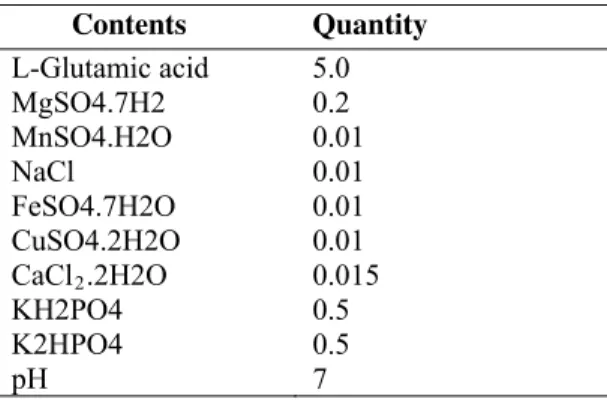
Sterilized production medium was prepared according to
instructions (2) (Table 1). The inoculum was shifted to the
production mediumand incubated for 192 hours at 150rpm in
an orbital shaker. After every 24 hours, samples were drawn up
to 192 hours. Each sample was centrifuged separately to obtain
cell-free culture supernatant followed by sterilization through
0.2 μm. filter paper. The supernatant so obtained was subjected
to agar well diffusion assay for antibiotic production. Similar
procedure was repeated for the optimization of the identified
Bacillus specie at various pH, temperature and glucose
concentrations (optimization parameters) and results were
recorded.
Table 1. Composition of production medium (g/L).
Agar well diffusion assay
The agar well diffusion method was employed to
determine the antibiotic production by the strain (20). Briefly
the turbidity of 24 hours old cultures of test strains (S. aureus
and M. luteus) was adjusted to 0.5 McFarland turbidity
standard. The test strains was then applied on the surface of
Muller Hinton agar plates (30ml) using sterilized cotton swab
and allowed to dry for 15 minutes. Wells were made by using
sterilized cork borer (8mm). About 100µl of the cell-free
culture supernatants was transferred into each well. The agar
plates were then incubated at required temperatures and
observed for the development of zones of inhibitions around
each well (Fig 1).
Identification of Bacillus specie
The strain producing maximum zones of inhibition was
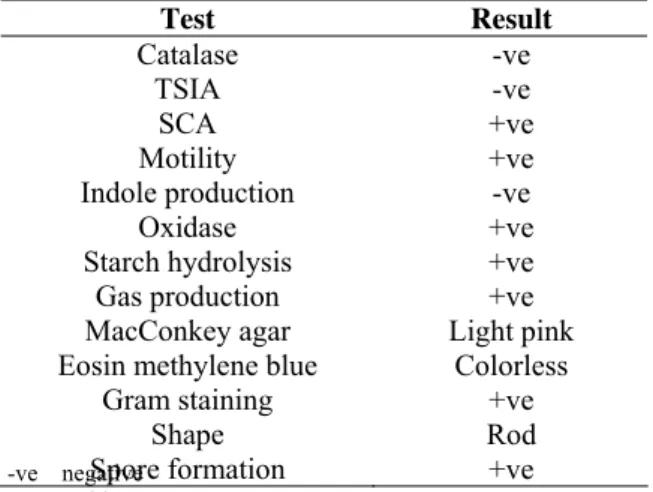
identified both morphologically and biochemically (5) as
Bacillus specie (Table 2). The results were later confirmed by
API 20E.
Contents Quantity
L-Glutamic acid MgSO4.7H2 MnSO4.H2O NaCl FeSO4.7H2O CuSO4.2H2O CaCl2.2H2O
Table 2. Biochemical Tests for Identification of Bacillus spp.
Identification of peptide antibiotics by paper chromatography
The antibiotic produced by Bacillus strain was identified
by bioautography (16) using Whatman No. 1 filter paper.
Briefly the supernatant of each sample was applied separately 2
cm above the base of the paper and dried thoroughly.
Afterwards the filter paper was dipped in the solvent system
(acetone: acetic acid: water; 50:3:47). After the solvent
migration till the end of the paper (16-24 cm), the
chromatogram was air-dried by exposure to hot air with air
drier. The developed papers were placed for 30 minutes on
Muller Hinton agar inoculated with S. aureus and M. luteus,
and the plates were then incubated at desired temperature and
time. Finally the antibiotic was identified by measuring the Rf
value (Retardation factor i.e the ratio of the distance traveled
by the center of a spot to the distance traveled by the solvent
front) and comparing it with Rf values of different antibiotics
(23). Autobiography procedure was repeated for standard
bacitracin purchased commercially (Oxoid).
Optimization of various parameters for maximum antibiotic production
For the optimization of microbial growth various
parameters like time of incubation (up to 192 hours), the pH (4,
5, 6, 7 and 8) and the glucose concentration (2, 3, 4, 5 and 6%)
were determined (in triplicate) and results were recorded.
RESULTS
The bacterial strain and peptide antibiotic identification
About 112 different soil samples were screened for
presence of peptide antibiotics producing bacteria. Of them, the
strain GU 057 was selected for further screening seeing that
this strain presented widest zones of inhibitions (18mm)
against test strains (Fig 1). The strain GU057 was isolated from
saline soil in the roots of Terminalia Arjuna roots in District
D.I.Khan at pH 8.2. The strain was later identified as Bacillus
sp. GU 057. The strain was subjected to batch fermentation and
the samples were taken to identify the antibiotic by
bioautography. The Rf values of the antibiotic produced by
Bacillus spp was compared with standard antibiotic (bacitracin)
Rf values and confirmed as bacitracin.
Figure 1. Widest zone of inhibitions (18mm) of Bacillus GU215 against Staphylococcus aureus
Optimization of various parameters for antibiotic production
Maximum activity of the bacitracin was observed after 48
hours of the incubation against Staphylococcus areus.
Afterwards a steady decline in the activity was noted till 192
hours, while Micrococcus luteus presented comparatively
lesser activity (Fig 2).
Test Result Catalase TSIA SCA Motility Indole production Oxidase Starch hydrolysis Gas production MacConkey agar Eosin methylene blue
Gram staining Shape Spore formation -ve -ve +ve +ve -ve +ve +ve +ve Light pink Colorless +ve Rod +ve
-ve negative +ve positive
Figure 2. Development of inhibition zones produced by Bacillus spp.GU057 antibiotic against Staphylococcus aureus and Micrococcus luteus at different incubation time.
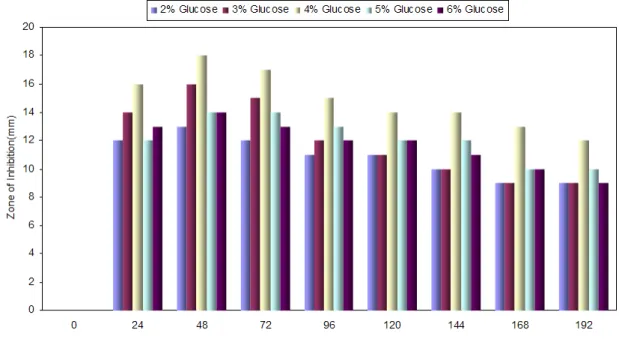
A gradual increase in the activity of the bacitracin was
observed by increasing the glucose concentration and
maximum inhibitory zone was recorded at 4% concentration of
the glucose but after wards a decline in the activity was noted
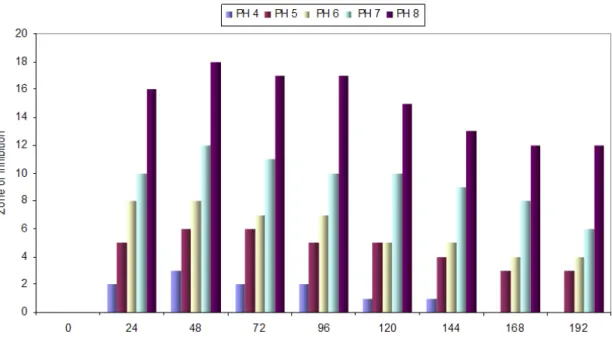
(Fig 3). Like wise maximum activity was observed at pH 8
after 48 hours of incubation. Comparatively lesser activities
were bacitracine was observed at pH 4 to pH 7 (Fig 4).
Similarly the effect of different temperatures (30, 35, 40, 45,
50, 55°C) on the production of antimicrobial in fermentation
broth highlighted a maximum activity at 40°C (Fig 5).
Figure 4. The effect of various pH levels on the zone of inhibition produced by Bacillus spp.GU057 against Staphylococcus aureus.
Figure 5. The effect of time of incubation on the zone of inhibition produced by Bacillus spp.GU057 against Staphylococcus aureus.
DISCUSSION
Soil is a prosperous source of microorganism that
produces a wide range of antibiotics including peptide
antibiotics (2, 14). The Bacillus species are most popular for
producing peptide antibiotic compounds such as polymyxin,
colistin, and circulin (15). The development of resistance and
lesser safety margins provoked the scientist to search for
antimicrobial agents with modified properties and maximum
assess the antibiotic production from bacillus species,
identification of antibiotic and optimization of various growth
parameters.
Among all soil samples collected from different areas of
District D.I.Khan and Kohat, the strain GU 057 presented
widest zones of inhibition against Staphylococcus aureus
(18mm) followed by Microccos luteus (13mm) after 48 hours
of incubation. This trend remained approximately same till 62
hour, however a gradual decline in the inhibition was observed
as the time of incubation increased till 192 hours. This trend is
supported by earlier findings (1, 2,16).
Glucose is an essentail nutrient required for the growth
and production of secondary metabolites including the
antibiotics (11). The strain GU 057 presented a steady increase
in the zone of inhibition by increasing the concentration of
glucose in the production media (16) and maximum activity
was reported at 4% glucose concentration. Never theless a
controlled decline in the activity was observed at higher
glucose concentrations as have been described previously (11,
13).
The effect of temperature on the growth and secondary
metabolites (antibiotics) synthesis was determined by
incubating the strain GU 057 at various temperatures. The
strain showed encouraging results at the 40°C after 48hours of
incubation. This may be the thermophilic nature of the strain
(1, 12). Significantly lower levels of zones of inhibitions were
observed at all other temperatures (30, 35, 45, 50 and 55°C).
Similarly the effect of pH on zones of inhibition produced
by Bacillus strain was not un surprising. The widest inhibitory
zone was reported at pH 8 after 48 hours of incubation. This
activity is the result of extremophilic nature of the strain (saline
soil) as reported earlier (19, 21). Comparatively much lesser
inhibition was reported at pH 4, 5, 6 and 7 as the time of
incubation was increased from 49 to 192 hours as observed
previously (6,12). The results of present study confirm the
Bacillus sp. GU 057 strain isolated from saline soil, as
producer of peptide antibiotic (bactitracin).
REFERENCES
1. Ahmad, S.; Muhammad, S.U; Hameed, A. (2009). Antibiotic production by thermophilic Bacillus specie SAT-4 Pak. J. Pharm. Sci. 22(3), 339-345.
2. Awais, M.; Pervez, A.; Qayyum, S.; Saleem, M.(2008). Effects of glucose, incubation period and pH on the production of peptide antibiotics by Bacillus pumilus. Afri. Jour. Microbiol. Res. 2, 114-119. 3. Babasaki, K.; Takao, T.; Shimonishi, Y.; Kurahashi, K.; Subtilosin, A.
(1985) a new antibiotic peptide produced by Bacillus subtilis 168: isolation, structural analysis, and biogenesis. J. Bio Chem. 98(3), 585– 603.
4. Berdy, J. (1980). Recent advances in and prospects of antibiotic research. Process Biochem. 15: 28-36.
5. Bergey, D.H.; Holt, J.G.; (1994). In: Bergey's Manual of Determinative Bacteriology. 9th ed. Williams & Wilkins Publishers, Baltimore. 6. Bushra, J.; Hasan, F.; Hameed, A.; Ahmed, S. (2007). Isolation of
Bacillus subtilis MH-4 from soil and its potential of polypeptidic
antibiotic production. Pak. J. Pharm. Sci., 20(1), 26-31.
7. Cherif, A.; Chehimi, S.; Limem, F. (2003). Detection and characterization of the novel bacteriocin entomocin 9, and safety evaluation of its producer, Bacillus thuringiensis ssp. Entomocidus HD9. Appl. Microbiol. 95, 990-1000.
8. Cherif, A,; Ouzari, H.; Daffonchio, D. (2001). Thuricin 7 a novel bacteriocin produced by Bacillus thuringiensis BMG1.7, a new strain isolated from soil. Lett. Appl. Microbiol. 32, 243-247.
9. Demain, A.L.; Aharonowitz, Y.; Martin, J.F. (1983). Metabolite control of secondary biosynthetic pathways. In: Vining LC (Ed.), Biochemistry and Genetic Regulation of Commercially Important Antibiotics. Addison-Wesley, London, pp.49-67
10. Emmert, E.A.B,; Handelsman, J. (1999). Biocontrol of plant disease; a (Gram- positive perspective). F.E.M.S. Microbiol. Lett. 17, 1-9.
11. Espeso, E.A.; Tilburn, J.; Arst, H.N.; Peñalva, M.A. (1993). pH regulation is a major determinant in expression of a fungal penicillin biosynthetic gene. E.M.B.O. J., 12, 3947-3956.
12. Esikova, T.Z.; Temirov, Y.V.; Sokolov, S.L.; Alakhov, Y.B. (2002). Secondary Antimicrobial Metabolites Produced by Thermophilic Bacillus spp. Strains VK2 and VK21. Appl. Biochem. Microbiol. 38, 226-231.
13. Gesheva, V.; Ivanova, V.; Gesheva, R. (2005). Effects of nutrients on the production of AK-111-81 macrolide antibiotic by Streptomyces hygroscopicus. Microbiol. Reds., 160: 243-248.
14. Janabi, A.A.H. (2006). Identification of Bacitracin Produced by Local Isolate of Bacillus licheniformis. Afr. J. Biotechnol. 5 (18): 1600-1601. 15. Katz, E.; Demain, A.L. (1997). The peptide antibiotics of Bacillus,
16. Mendo, S.; Faustino, N.A.; Sarmento, A.C.; Amado, F.; Moir, A.J.(2004). Purification and characterization of a new peptide antibiotic produced by a thermotolerant Bacillus licheniformis strain. Biotechnol. Lett. 26, 115-119
17. Nakano, M.M.; Zuber, P. (1990). Molecular biology of antibiotic production in Bacillus. Crit. Rev. Biotechnol. 10(3):223-240.
18. Paik, S.H.; Chakicherla, A.; Hansen, J.N.( 1998). Identification and characterization of the structural and transporter genes for, and the chemical and biological properties of, sublancin 168, a novel lantibiotic produced by Bacillus subtilis 168. J. Biol. Chem. 273(36), 23134–23142. 19. Priest, F.G. (1992). Biology of Bacilli. In: Bacilli applications to
industry. Edited by Doi RH and McGloughlin M. Butterworth-Heinemann, Boston, Mass, pp.293-320.
20. Sen, K.S., Haque, F.S.; Pal, C.S. (1995). Nutrient optimization for production of broad spectrum antibiotics by Streptomyces antibioticus Str. 15.4. Acta. Microbial. Hung. 42:155-162.
21. Schallmey, M., Singh, A.; Ward, O.P. (2004). Developments in the use of Bacillus species for industrial production. Can. J. Microbial., 50: 1-17.
22. SiloSuh, L.A.; Lethbridge, B.J.; Raffel, S.J.; He, H.; Clardy, J.;
Handelsman, J.(1994). Biological activities of two fungistatic antibiotics produced by Bacillus cereus UW85. Appl. Environ. Microbiol. 60(6), 2023–2030.
23. Snell, N.; Ijichi, K.; Lewis, J.C. (1956). Paper Chromatographic Identification of Polypeptide Gram Positive Inhibiting Antibiotics. Appl. Microbiol. 4(1): 13-17.
24. Stover, A.G.; Driks, A. (1999). Secretion, localization, and anti-bacterial activity of TasA, a Bacillus subtilis spore-associated protein. J. Bacteriol. 181(5), 1664–1672.
25. Yousaf, M. (1997). Studies on the cultural conditions for the production of antibiotic bacitracin by B. licheniformis. PhD dissertation, Islamia University, Bahawalpur, Pakistan. (http://eprints.hec.gov.pk- /view/subjects/f2.html).
26. Zinsser, H. (1988). Antimicrobial agents, 9th chapter. In: Zinsser H, Joklik WK, Willett HP, Amos DB, Wilfert C (ed.), Zinsser Microbiology, Prentice Hall International, UK, pp.128-160.
27. Zhang, Y. (2004). Biocontrol of sclerotinia stem rot of canola by bacterial antagonists and study of biocontrol mechanisms in-volved. M.Sc. thesis, University of Manitoba, Winnipeg, Manitoba.