REVISÃO / REVIEW
INTRODUCTION
The commensal bacteria that normal colonize the gastrointestinal tract (previously referred to as the gut lora but now included in the term microbiota) play a critical role in human health and have been considered an important factor in the pathophysiol-ogy of some digestive disorders. This narrative review considers recent advances in our understanding of the gut microbiota, as well as their interactions with the host, in the pathophysiology of irritable bowel syndrome (IBS) and analyzes the role of probiotics in the management of IBS.
To achieve a comprehensive review the relevant literature was assessed in Pubmed, Medline and other online sources using the following search terms: probiotics, irritable bowel syndrome, gastrointestinal, enteric lora, spastic colon, gut microbiota, gut mi-crolora, diarrhea, constipation, motility, functional disorders, dietary guidelines.
IRRITABLE BOWEL SYNDROME
Definition and classification
IBS is deined by the coexistence of abdominal
THE INTESTINAL MICROBIOTA AND THE
ROLE OF PROBIOTICS IN IRRITABLE BOWEL
SYNDROME: a review
Joaquim Prado
MORAES-FILHO
1and Eamonn M M
QUIGLEY
2Received 14/7/2015 Accepted 13/8/2015
ABSTRACT - Irritable bowel syndrome is a common, chronic relapsing gastrointestinal disorder that affects 7%–22% of the population worldwide. According to Rome III Criteria, the disorder is deined by the coexistence of abdominal discomfort or pain associated with an alteration in bowel habits. Its pathophysiology is not completely understood but, in addition to some important abnormali-ties, the disturbed intestinal microbiota has also been described supported by several strands of evidence. The treatment of irritable bowel syndrome is based upon several therapeutic approaches but few have been successful or without adverse events and more recently the gut microbiota and the use of probiotics have emerged as a factor to be considered. Probiotics are live micro-organisms which when consumed in adequate amounts confer a health beneit to the host, such as Lactic bacteria among others. An important scientiic rationale has emerged for the use of probiotics in irritable bowel syndrome, although the data regarding different species are still limited. Not all probiotics are beneicial: it is important to select the speciic strain which should be supported by good evidence base. The mechanisms of action of probiotics are described and the main strains are quoted.
HEADINGS- Irritable bowel syndrome. Microbiota. Therapeutics. Probiotics.
Declared conflict of interest of all authors: none Disclosure of funding: no funding received
1 Departamento de Gastroenterologia, Faculdade de Medicina, Universidade de São Paulo, SP, Brasil; 2 Houston Methodist Hospital and Weill Cornell Medical College,
Houston, Texas, United States.
Correspondence: Joaquim Prado Moraes-Filho. Rua Itapaiuna, 1165, c. 28 - CEP: 05707-001 - Sao Paulo, SP, Brasil. E-mail: [email protected]
discomfort or pain associated with an alteration in bowel habits. The diagnostic criteria currently used in clinical research and, to some extent in clinical practice, are the Rome III criteria(34). (Figure 1). IBS
is a common, chronic, relapsing and remitting gastro-intestinal disorder estimated to affect 7%-22% of the general worldwide population(28, 31).
Recurrent abdominal pain or discomfort* at least 3 days per month in the last 3 months** associated with 2 or more of the following:
1. Improvement with defecation
2. Onset associated with a change in frequency of stool
3. Onset associated with a change in form (appearance) of stool
FIGURE 1. Rome III criteria for IBS(34).
* Discomfort means an unconfortable sensation not necessarily described as pain. In clinical trials, a pain and/or discomfort frequency of at least 2 days/week during screening evaluation is needed for subject eligibility.
IBS is commonly diagnosed based upon these symptom criteria and in the absence of alarm signals. The cardinal symptom in IBS is abdominal pain occurring in association with an alteration in bowel habit; diarrhea and/or consti-pation. Accordingly, given that pain is a deining feature, painless, unexplained diarrhea or constipation would not be included in the deinition of IBS. Bloating is reported by the majority of patients with IBS and may be associated with visible abdominal distention(31). Complete details on the
diagnostic approach to IBS diagnosis are beyond the scope of this paper; the common clinical features supporting the diagnosis of IBS are presented in Figure 2.
The importance to society of IBS rests, not only in its high prevalence but also, for some affected individuals, on the occurrence of very bothersome symptoms which signii-cantly impact on quality of life and social functioing and, as a consequence, impose a substantial economic impact on health-care systems and the community at large(49). Precise,
early diagnosis will minimize exposure to unnecessary and potentially risky investigations and may alleviate suffering and improve quality of life.
Pathophysiology
As a multifactorial functional disorder, the patho-physiology of IBS is not completely understood, but it is commonly viewed as representing dysregulation along the brain-gut axis, which may include abnormalities at any one or more levels in the enteric, autonomic and/or central nervous systems, or altered interactions between these systems(53). Peripheral contributors to IBS
symptoma-tology may include abnormal motility(40), a dysregulated
intestinal immune response(7), low grade inflammation,
altered gastrointestinal permeability(72) and a disturbed
intestinal microbiota(72). Of late, considerable interest has
surrounded the posibility that intestinal bacteria could play an important role in triggering symptoms and even in the basic pathophysiology of IBS.
A role for the microbiota in IBS is, indeed, supported by several strands of evidence that include: differences in the colonic microbiota between IBS and non-IBS popula-tions, the development of IBS in the aftermath of infectious gastroenteritis, symptomatic responses to antibiotic, prebi-otic and probiprebi-otic administration and, more recently, by anecdotal rports of responses to fecal microbial transplan-tation(14, 21, 30, 66). Perhaps the most convincing illustration
of the role of bacteria in IBS is provided by observations that indicate that the risk for IBS is increased sevenfold in patients who have previously experienced an infec-tious gastroenteritis(21). Indeed, it would appear that any
intervention that can lead to changes in intestinal ecology may lead to the occurrence of IBS and its discomforting symptoms(4).
In assessing the role of any putative pathophysiological factor in IBS one must bear in mind the potential impact of an important confounder: co-morbid psychopathology. Co.-morbid depression and anxiety, so common in IBS, can modulate and even intensify the patient’s perception of their symptoms(4), increase the likelihood of medical consultation
and investigation and even impact directly on many of the aforementioned factors thought relevant to the pathophysi-ology of IBS.
Treatment
The ideal therapeutic approach to any disease or disorder is to consider its pathophysiology and how direct therapy ac-cordingly. However, given its heterogenous phenotype, vary-ing presentation, broad range of severity and, undoubtedly, multifactorial pathophysiology, this approach is not possible in IBS. Given a multitude of possibly relevant therapeutic The American College of Gastroenterology IBS Task
Force recommended that diagnostic testing (blood tests, colo-noscopy, celiac disease sorology, etc) should not be performed on a routine basis on patients with typical IBS symptoms, except when alarm features are present(3, 16). However, in some
cases and in certain contexts, the differential diagnosis of IBS from other intestinal disorders can be dificult. In such instances it is important to consider, among others, enteric infections and infestations, food intolerance, inlammatory bowel disease, adverse drugs reactions (e.g. to antibiotics, tricyclic antidepressants, proton pump inhibitors) and small bowel bacterial overgrowth.
In developing a managment strategy in IBS it is impor-tant, where possible, to deine the predominant bowel pattern. Accordingly, four IBS sub-types have been proposed by the Rome Foundation Committe on functional bowel disorders (Figure 3):
- Constipation predominant IBS (IBS-C); - Diarrhea-predominant IBS (IBS-D); - Mixed IBS (IBS-M);
- Unsubtyped IBS.
• Presence of Rome III Criteria (Figure 1) • No alarm features
• Bloating and/or distension • Variability of symptoms over time
• Exacerbations triggered by life events and stressful situations • Symptoms exacerbated by eating
• Psychiatric comorbidity (depression, anxiety and somatoform disorders)
FIGURE 2. IBS diagnosis: clinical features supportive of IBS
1. IBS-C
- Hard or lumpy stools ≥25% of bowel movements
- Loose (mushy) or watery stools <25% of bowel movements
2. IBS-D
- Loose (mushy) or watery stools ≥25% of bowel movements - Hard or lumpy stools <25% of bowel movments
3. IBS-M
- Hard or lumpy stools ≥25% of bowel movements - Loose (mushy) or watery stools ≥25% of bowel movements
4. Un-subtyped IBS
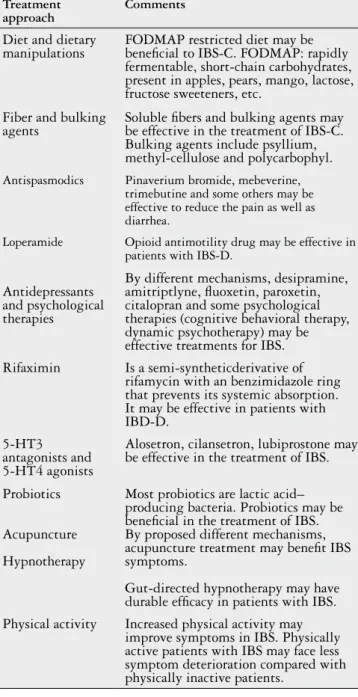
targets, a simple, unitary approach is currently impossible; not surprisingly many therapeutic approaches have been pro-posed but few have been very successful or without adverse events (Figure 4).
THE GUT MICROBIOTA
Humans are colonized with microrganisms that inhabit the skin, oral cavity, vagina and gastrointestinal tract from birth(33). In the gastrointestinal tract, 500 to 1,000 different
species of bacteria coexist (gut microbiota), with the pre-cise composition of the gut microbiome varying between individuals(18). The adult human gastrointestinal tract is
estimated to contain 1014 viable microorganisms, which is
10 times the number of eukaryotic cells found within the human body(64). This is a complex ecosystem with the largest
population of microorganisms in the gastrointestinal tract residing in the lumen and within, or adjacent to, the mucus layer of the colon(19).
The development of the gut microbiota starts at birth. Its composition is inluenced by both the mode of delivery and how the infant is fed: the gut microbiota of breastfed babies, for example, being mainly dominated by Biidobacteria, in comparison to babies nourished with infant formulas. Early environmental exposure is of primary importance in shaping the microbiota(71); by 3-4 years of age the microbiota becomes
stable and similar to that of adults.
In adults, the composition of the microbiota is inluenced by such factors as diet, geographic location and the use of oral antibiotics(24). It is also thought that further changes
occur in old age.
The microbiota performs many critical roles, such as the maintenance of mucosal integrity, the protection against pathogens (by means of bacterial antagonism and priming of host immune responses(24)), immune system modulation,
synthesis of vitamins and cholesterol, metabolism of bile acids and indigestible dietary components. With the intestinal epithelium, the microbiota of the gut provides the irst line of defense against orally introduced invaders(14).
A relationship between the microbiota and intestinal motility has also been described(57) and may be mediated
through substances released by bacteria, by the end products of bacterial fermentation, through the effects of cytokines and chemokines elaborated as part of the immune response, as well as via the release of intestinal neuroendocrine fac-tors(18, 36).
Dysbiosis (also called dysbacteriosis) refers to microbial imbalance on or inside the body, and is most commonly reported in terms of changes in the digestive tract. Many fac-tors can negatively impact on gut commensals and promote dysbiosis, such as antibiotic use, psychological and physical stress, radiation, altered peristalsis and dietary changes. It should be remembered that although dysbiosis has been rec-ognized in various intestinal diseases, in most cases a deini-tive cause-and-effect relationship remains to be established. The gut microbiota is considered to be an important factor in the pathophysiology of IBS, either alone or in com-bination with other factors(16, 18, 55). In some studies, speciic
changes in the microbiota have been associated with par-ticular IBS presentations and/or phenotype(24). Commensal
function thougth especially relevant to IBS will be explored further in the discussion of probiotics in IBS.
Given the aforementioned interest in the gut microbiota and its interactions with the host in this common disorder, the gut microbiota, through the use of antibiotics, prebiotics and probiotics, has emerged as a factor to be considered in the teatment of IBS. Two non-pharmacological approach have amerged as being of particular interest: dietary and lifestyle changes(22, 41, 54) and the use of probiotics(22, 66, 72).
Treatment approach
Comments
Diet and dietary
manipulations FODMAP restricted diet may be beneicial to IBS-C. FODMAP: rapidly fermentable, short-chain carbohydrates, present in apples, pears, mango, lactose, fructose sweeteners, etc.
Fiber and bulking
agents Soluble ibers and bulking agents may be effective in the treatment of IBS-C. Bulking agents include psyllium, methyl-cellulose and polycarbophyl.
Antispasmodics Pinaverium bromide, mebeverine,
trimebutine and some others may be effective to reduce the pain as well as diarrhea.
Loperamide Opioid antimotility drug may be effective in
patients with IBS-D.
Antidepressants and psychological therapies
By different mechanisms, desipramine, amitriptlyne, luoxetin, paroxetin, citalopran and some psychological therapies (cognitive behavioral therapy, dynamic psychotherapy) may be effective treatments for IBS. Rifaximin Is a semi-syntheticderivative of
rifamycin with an benzimidazole ring that prevents its systemic absorption. It may be effective in patients with IBD-D.
5-HT3 antagonists and 5-HT4 agonists
Alosetron, cilansetron, lubiprostone may be effective in the treatment of IBS.
Probiotics
Acupuncture
Hypnotherapy
Most probiotics are lactic acid– producing bacteria. Probiotics may be beneicial in the treatment of IBS. By proposed different mechanisms, acupuncture treatment may beneit IBS symptoms.
Gut-directed hypnotherapy may have durable eficacy in patients with IBS. Physical activity Increased physical activity may
improve symptoms in IBS. Physically active patients with IBS may face less symptom deterioration compared with physically inactive patients.
PROBIOTICS
Probiotics are live micro-organisms which when consumed in adequate amounts, confer a health beneit to the host(27).
Most probiotic bacteria are lactic bacteria (lactic acid-producing bacteria), that include Lactobacillus,Lactococcus, Biidobacterium and Streptococcus(63). This group of bacteria has the capacity to anaerobically digest dietary sugars and produce lactic acid. Probiotic properties have also been ascribed to the yeast Saccharomyces cerevisae ssp boulardi (S. Boulardi) and other species of bacteria of the genera Escherichia and Bacillus. The natural ecosystem of lactic acid bacteria is the digestive tract.
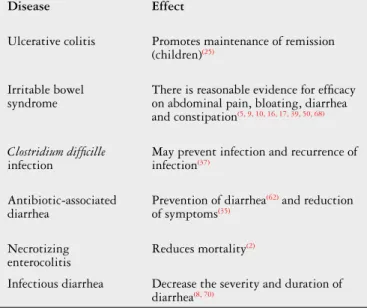
The use of probiotics has been extensively investigated and eficacy, to a greater or lesser extent, demonstrated in a number of intestinal disorders, as presented in Figure 5. However, not all probiotics all beneicial in all circunstances: it is important to carefully select the speciic strain which is supported by a good evidence base for a given indication. A large volume of in vitro and in vivo data has clearly shown that the various biological effects of probiotics are strain speciic and it is not possible to extrapolate eficacy or failure from one strain to another, unless a common mechanism of action has been described and appropriate clinical studies performed(60).
• Actions in the intestinal lumen and on the mucosal surface
One mode of action of a probiotic may relate to its effects on the host’s microbiota. This includes the so called “barrier” effect whereby resistance to colonization is exerted against pathogenic bacteria thus limiting or even preventing their colonization of the host. Bacterial inhibition by probiotics may be mediated through their production of bacteriocins or biosurfactants with antimicrobial activity or to the elabo-ration of metabolites that induce a decrease in luminal pH and, thereby, an environment which is less favourable for the growth of certain bacteria(6). In addition to the production
of antimicrobials, probiotics may also modify the metabolic behaviour of the indigenous microbiota(67). Paneth cells,
stimulated by probiotics, produce antimicrobial peptides and mucus that function to prevent direct contact between luminar pathogens and the epithelium. All of these effects could be important in the prevention of post-infections IBS.
Probiotics can also enhance epithelial integrity by pro-moting mucus secretion, the production of defensins and the synthesis of proteins critical to the structure of tight junc-tions between enterocytes; effects that collectively improve gut barrier function, whose function may be compromised in IBS(6, 55, 60, 63, 67).
Metabolic effects, though little studied in the context of IBS, could also be relevant. Thus changes in bacterial fermentation could impact on “gas-related” symptoms and modulation of bile salt conjugation inluence stool volume and consistency.
• Immune effects and systemic actions
Probiotics modulate the immune system and, in particu-lar, that important population of immune cells that exist in the small bowel, the gut-associated (or mucosa-associated) lymphoid tissue (GALT or MALT). Peyer’s patches consti-tute a gateway for entry for antigens and the activation of immune responses involves recognition of antigen by the speciic receptors on innate immune cells, epithelial cells, dendritic cells and macrophages. Some probiotics protect against pathogen-induced tissue damage by stimulating induction of regulatory T-cells, as has been described with the probiotic B. Infantis 35624 in mice(52). These receptors are
recognized by structural components on the surface of the micro-organisms, the microbial associated molecular patterns (MAPS), which may interact with the intestinal epithelium and stimulate the cells of the intestinal immune system at the lamina propria level(42). Subsequently, T-cells are activated
and the differentiation of T-helper lymphocytes promoted with the production of anti-inlammatory cytokines. Vari-ous probiotics and, especially, lactic acid bacteria, may exert differing biological effects depending on the cytokine proile they induce(42). Furthermore, effects may be local, limited to
the stimulation of the intestinal immunity, or may be sys-temic(67). Given that a number of immunological changes have
been demonstrated, albeit not consistently, in IBS, any one or combination of these immunological effects of probiotics could be relevant to their beneits.
Probiotic mechanisms of action
Not all the mechanisms of action of the probiotics are well understood and some have been primarily, if not ex-clusively, documented in vitro or in animal models studies. Care should be exerted in extrapolating these results to man. Taking into consideration such limitations, these are some known modes of action of probiotics that may be especially relevant to IBS.
Disease Effect
Ulcerative colitis Promotes maintenance of remission
(children)(25)
Irritable bowel syndrome
There is reasonable evidence for eficacy on abdominal pain, bloating, diarrhea and constipation(5, 9, 10, 16, 17, 39, 50, 68)
Clostridium dificille infection
May prevent infection and recurrence of infection(37)
Antibiotic-associated diarrhea
Prevention of diarrhea(62) and reduction
of symptoms(35)
Necrotizing enterocolitis
Reduces mortality(2)
Infectious diarrhea Decrease the severity and duration of diarrhea(8, 70)
FIGURE 5. Effects of probiotics in randomized, clinical
PROBIOTICS IN GASTROENTEROLOGY
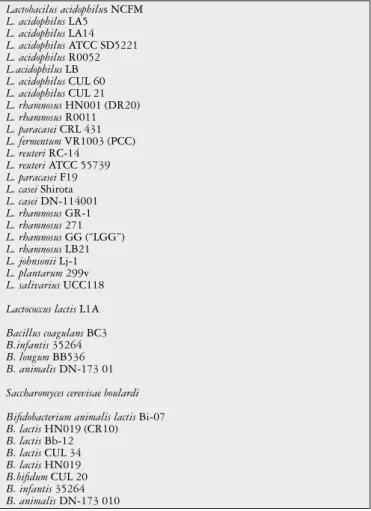
Probiotic effects are strain dependent. A wide range of probiotics are currently available as presented in Figure 5. In this regard, it is important to emphasize that the clinical eficacy of a probiotic product is determined by factors such as the dosage (number of colony forming units, cfu’s), the formulation, the viability (outside and inside the intestine), the method of dosing and the speciic microbial species and strain(s) that it includes. A good product should be character-ized at the level of the genome, its range of biological effects deined and its stability in the conditions and over the dura-tion of time that it is recommended to be stored, validated(61).
Currently, gastrointestinal disorders for which the use of probiotics has been proposed include: acute infectious diarrhea(11, 65), traveler’s diarrhea(38, 65), antibiotic-associated
diarrhea(37, 69), constipation(17, 29, 46), necrotizing enterocolitis(45),
inlammatory bowel disease(15, 23, 25, 44) and IBS(7, 37, 66, 72) (Figure
6). It must be emphasized that not all of these indications are supported by compelling clinical data.
Probiotics in IBS
IBS is a good example of the limitations of clinical data; though many studies have been published, few have achieved standards appropriate for clinical trials in man. Recommendations for probiotic use in man continue to be constrained by poor methodological standards in many studies resulting in low levels of evidence and, at best, conditional recommendations. Recognizing these limitations, the observations included here represent a summary of an extensive and updated review of the current literature of the role of the probiotics in the therapeutic approach of the IBS.
Studies in patients with IBS have shown alterations in microbiota such as an increased ratio of Firmicutes to Bacteroides and a reduction in Lactobacillus or Biido-bacterium species(58). It is known that Lactobacillus and Biidobacterium species have anti-inlammatory effects in the intestine and their depletion could contribute to
low-grade inlammation(51). Proinlammatory cytokine levels
(e.g. interleukin (IL)-6, IL-8, tumor necrosis factor-α,
and IL-1β) are elevated in the systemic circulation of
patients with IBS(13); phenomena that may be triggered
and perpetuated by the alterations in the gut microbiota observed in IBS, as evidenced by experiments in germ- free animals(48).
Taking into consideration the large number and highly variable characteristics and properties of microorgan-isms that have been studied, it may be inappropriate to combine the results of different trials(4). Furthermore,
probiotic formulations may contain a single strain or a combination of multiple species and/or strains. In IBS, the most studied strains belong to Lactobacillus sp. and Biidobacterium sp. As such, a consistent trend toward an improvement of bloating and constipation has been reported with the use of Biidobacterium infantis, B. brevis and B. Animalis and abdominal pain, bloating, diarrhea
and constipation have been shown to improve with
Lac-tobacillus plantarum, L casei, L. reuteri, L. acidophilus, L. Rhamnosus(1, 9, 12, 17, 32, 51, 68, 74). Biidobacterium infantis 35624
has been shown to, not only improve individual symptoms, but also produce global improvement(5, 51, 74).
Management strategies in IBS are highly variable (Figure 4) and may be driven by illness severity, pre-dominant symptoms and physician preference. In this context, certain probiotics, by virtue of their safety and tolerability are options to consider as they have been shown to improve global symptoms, bloating and latu-lence. A number of reviews(5, 17, 39, 46, 50) as well as a recent
well conducted systematic review and meta-analysis have demonstrated that probiotics have a therapeutic beneit in the IBS and may improve global symptoms, abdominal pain, bloating and latulence(17) although the quality of
evidence, according to the GRADE (Grading of Recom-mendations Assessment, Development and Evaluation) assessment, was low.
Lactobacilus acidophilus NCFM
L. acidophilus LA5
L. acidophilus LA14
L. acidophilus ATCC SD5221
L. acidophilus R0052
L.acidophilus LB
L. acidophilus CUL 60
L. acidophilus CUL 21
L. rhamnosus HN001 (DR20)
L. rhamnosus R0011
L. paracasei CRL 431
L. fermentum VR1003 (PCC)
L. reuteri RC-14
L. reuteri ATCC 55739
L. paracasei F19
L. casei Shirota
L. casei DN-114001
L. rhamnosus GR-1
L. rhamnosus 271
L. rhamnosus GG (“LGG”)
L. rhamnosus LB21
L. johnsonii Lj-1
L. plantarum 299v
L. salivarius UCC118
Lactococcus lactis L1A
Bacillus coagulans BC3
B.infantis 35264
B. longum BB536
B. animalis DN-173 01
Saccharomyces cerevisae boulardi
Biidobacterium animalis lactis Bi-07
B. lactis HN019 (CR10)
B. lactis Bb-12
B. lactis CUL 34
B. lactis HN019
B.biidum CUL 20
B. infantis 35264
B. animalis DN-173 010
CONCLUSIONS
The relative lack of effective therapeutic options for the treatment of IBS opens the way for new approaches and, among these, probiotics, which are generally regarded as safe and may act on the global symptoms, bloating and latulence, which have considerable appeal. Furthermore, a rather impressive scientiic rationale has emerged for the use of probiotics in gastrointestinal conditions, including IBS. Such data is, of course, highly strain speciic(10). However,
Moraes-Filho JP, Quigley EMM. Microbiota intestinal e função dos probióticos na síndrome do intestino irritável: uma revisão. Arq Gastroenterol. 2015,52(4):xxx.
RESUMO- A síndrome do intestino irritável é uma enfermidade crônica recidivante, que afeta 7%-22% da população mundial. Segundo os denomina-dos Critérios de Roma III, a síndrome do intestino irritável é deinida pela coexistência de dor ou desconforto abdominal associadenomina-dos à alteração do hábito intestinal. A isiopatologia não é completamente esclarecida mas, além algumas importantes alterações descritas, alterações na microbiota intestinal têm tambem sido relatadas, suportadas por diferentes graus de evidência. O tratamento da síndrome do intestino irritável é baseado em diversas abordagens terapêuticas, mas, poucas tem resultados efetivamente satisfatórios ou sem a ocorrência de eventos adversos. Mais recentemente, a microbiota intestinal e o uso de probióticos têm sido considerados como fatores importantes a serem considerados. Probióticos são microrganismos vivos que, quando consumidos em quantidades adequadas, contribuem para a saúde do hospedeiro, como por exemplo, Lactobacillus acidophilus, dentre outras. Importantes justiicativas cientíicas têm sido citadas sobre o uso de probióticos na síndrome do intestino irritável, embora sejam ainda limitados dados sobre as diferentes espécies bacterianas constituintes dos probióticos. Não todos os probióticos são benéicos nesse caso: é impor-tante selecionar as cepas especíicas as quais devem ser suportadas por evidências cientíicas satisfatórias. Os mecanismos de ação dos probióticos são descritos e citadas as principais cepas.
DESCRITORES- Síndrome do intestino irritável. Microbiota. Terapêutica. Probióticos.
recommendations regarding individual species or strains continue to be limited by a lack of data and the poor quality of much of the available data(17).
Authors’ contributions
Moraes-Filho JP: acquisition of data; interpretation of data; drafting of the manuscript. Quigley EMM: critical revision of the manuscript for important intelectual content; interpretation of data; supervision of the inal manuscript.
REFERENCES
1. Agrawal A, Houghton LA, Morris J, Reilly B, Guyonnet D, Feuillerat NG, et al. Clinical trial: the effects of a fermented milk product containing Biidobacterium lactis DN-173-010 on abdominal distension and gastrointestinal transit in irritable bowel syndrome with constipation. Aliment Pharmacol Ther. 2009;29(1):104-114. 2. Alfaleh K, Anabrees J, Bassler D. Probiotics reduces the risk of necrotizing
enterocolitis in preterm infants: a meta-analysis. Neonatology. 2010;97(2):93-9. 3. American College of Gastroenterology Task Force on Irritable Bowel Syndrome1,
Brandt LJ, Chey WD, Foxx-Orenstein AE, Schiller LR, Schoenfeld PS, et al. An evidence-based position statement on the management of irritable bowel syndrome. Amer J Gastroenterol. 2009;104(Suppl 1):S1-S35.
4. Bixquert M. Treatment of irritable bowel syndrome with probiotics: growing evidence. Indian J med Res. 2013;138:175-7.
5. Brenner DM, Moeller MJ, Chey WD, Schoenfeld PS. The utility of probiotics in the treatment of irritable bowel syndrome: a systematic review. Am J Gastro-enterol. 2009;104(4):1033-49.
6. Butel MJ. Probiotics, gut microbiota and health. Med Mal Infect. 2014;44(1):1-8. 7. Chadwick VS, Chen WY, Shu DR, Paulus B, Bethwaite P, Tie A, et al. Activation
of the mucosal immune system in irritable bowel syndrome. Gastroenterology 2002;122(7):1778-83.
8. Chen CC, Kong MS, Lai MV, Chao HC, Chang KW, Chen SY, et al. Probiotics have clinical, microbiologic, and immunologic eficacy in acute infectious diarrhea. Pediatr Infec Dis J. 2010;29(2):135-8.
9. Ciorba MA. A gastroenterologist’s guide to probiotics. Clin Gastroenterol Hepatol 2012;10(9):960-8.
10. Clarke G, Cryan JF, Dinan TG, Quigley EM. Review article: probiotics for the treatment of irritable bowel syndrome – focus on lactic acid bacteria. Aliment Pharmacol Ther. 2012;35(4):403-13.
11. Correa NB, Penna FJ, Lima FMLS, Nicoli JR, Filho LA. Treatment of acute diarrhea with Saccaromyces boulardii in infants. J Ped Gastroenterol Nutr. 2011;53(5):497-501.
12. Cui S, Hu Y. Multistrain probiotic preparation signiicantly reduces symptoms of irritable bowel syndrome in a double-blind placebo-controlled study. Int J Clin Exp Med. 2012;5(3):238-44.
13. Dinan TG, Quigley EMM, Ahmed SMM, Scully P, O’Brien S, Omahony L, et al. Hypothalamic-pituitary-gut axis dysregulation in irritable bowel syndrome: plasma cytokines as a potential biomarker? Gastroenterology. 2006;130(2):304-11. 14. DuPont HL. Review article: evidence for the role of gut microbiota in irritable
bowel syndrome and its potential inluence on therapeutic targets. Aliment Phar-macol Therap. 2014;39(10):1033-42.
15. Fedorak RN. Probiotics in the management of ulcerative colitis. Gastroenterol Hepatol. (NY) 2010;6(11):688-90.
16. Ford AC, Moayyedi P, Lacy BE, Lembo AJ, Saito YA, Schiller LR, et al. Amer-ican College of Gastroenterology. Monograph on the Management of Irritable Bowel Syndrome and Chronic Idiopathic Constipation. Am J Gastroenterol. 2014;109(Suppl 1):S2-S6.
17. Ford AC, Quigley EMM, Lacy BE, Lembo AJ, Saito YA, Schiller LR, et al. Eficacy of prebiotics, probiotics, and synbiotics in Irritable bowel syndrome and chronic idiopatic constipation: systematic review and meta-analysis. Am J Gastroenterol. 2014;109(10):1547-61.
18. Foxx-Orenstein AE, Chey WD. Manipulation of the gut microlora as a novel treatment strategy for gastrointestinal disorders. Am J Gastroenterol. 2012(Sup-pl);1:41-6.
19. Gareau MG, Sherman PM, Walker A. Probiotics and the gut microbiota in intestinal health and disease. Nat Rev Gastroenterol Hepatol. 2010;7(9):503-14. 20. Gibson PR, Shepherd S. Evidence-based dietary management of functional
gastroeintestinal symptoms: the FODMAP approach. J Gastroenterol Hepatol. 2010;25(2):252-8.
21. Halvorson HA, Schlett CD, Riddle MS. Postinfectious irritable bowel syndrome - a meta-analysis. Am J Gastroenterol. 2006;101(8):1894-9.
22. Hayes P, Fraher MH, Quigley EMM. Irritable Bowel Syndrome: The Role of Food in Pathogenesis and Management. Gastroenterol Hepatol (NY). 2014;10(3):164-74.
23. Hedin C, Whelan K, Lindsay JO. Evidence for the use of probiotics and prebi-otics in inlammatory bowel disease: a review of clinical trials. Proc Nutr Soc. 2007;66(3):307-15.
24. Hill DA, Hoffmann C, Abt MC, Du Y, Kobuley D, Kirn TJ, et al. Metagenomic analysis reveal antibiotic-induced temporal and spatial changes in intestinal microbiota with associated alterations in immune cell homeostasis. Mucosal Immunol. 2010;3:148-58.
25. Isaacs K, Herfarth H. Role of probiotic therapy in IBD. Inlamm Bowel Dis. 2008;14(11):1597-605.
26. Johannesson E, Simrén M, Strid H, Bajor A, SadikR. Physical activity improves
symptoms in irritable bowel syndrome: a randomized controlled trial. Am J Gastroenterol. 2011;106(5):915-22.
27. Joint FAO, WHO Working Group Report on Drafting Guidelines for the Evalu-ation of Probiotics in Food. [Internet]. [Accessed 2015 April 6]. Available from: http://www.fda.gov/ohrms/dockets/dockets/95s0316/95s-0316-rpt0282-tab-03-ref-19-joint-faowho-vol219.pdf. London, Ontario, Canada, April 2002.
28. Jones R, Lydeard S. Irritable bowel syndrome in the general population. BMJ 1992;304(6819):87-90.
29. Kajander K, Myllyluoma E, Rajilic-Stojanovic M, Kyronpalo S, Rasmussen M, Järvenpää S, et al. Clinical trial; multispecies probiotic supplemenation alleviates the symptoms of irritable bowel syndrome and stabilizes intestinal microbiota. Aliment Pharmacol Ther. 2008;27(1):48-57.
30. Kassinen A, Krogius-Kurikka L, Makivuokko H, Rintilla T, Paulin L, Corander J, et al. The fecal microbiota of irritable bowel syndrome patients differs signiicantly from that of healthy subjects. Gastroenterology 2007;133(1):24-33.
31. Khan S, Chang L. Diagnosis and management of IBS. Nat Rev Gastroenterol Hepatol. 2010;7(10):565-81.
32. Ki Cha B, Mun Jung S, Hwan Choi C, Song ID, Woong Lee H, Joon Kim H, et al. The effect of a multispecies probiotic mixture on the symptoms and fecal microbi-ota in diarrhea-dominant irritable bowel syndrome: a randomized, double-blind, placebo-controlled trial. J. Clin Gastroenterol 2012;46(3):220-7.
33. Ley RE, Peterson DA, Gordon JI. Ecological and evolutionary forces shaping microbial diversity in the human intestine. Cell. 2006;124(4):837-48.
34. Longstreth GF, Thompson WG, Chey WD, Houghton LA, Mearin F, Spiller RC. Functional bowel disorders. Gastroenterology. 2006;130(5):1480-91.
35. Lönnermark E, Friman V, Lappas G, Sandberg T, Berggren A, Ingegerd A. Intake of Lactobacillus plantarum reduces certain gastrointestinal symptoms during treatment with antibiotics. J Clin Gastroenterol. 2010;44(2):106-12.
36. Marchesi J, Shanahan F. The normal intestinal microbiota. Current Opin Infect Dis 2007;20(5):508-13.
37. McFarland LV. Meta-analysis of probiotics for the prevention of antibiotic associated diarrhea and the treatment of Clostridium dificile disease Am J Gas-troenterol. 2006;101(4):812-22.
38. McFarland LV. Meta-analysis of probiotics for the prevention of traveler’s diar-rhea. Travel Med infect Dis. 2007;5(2):97-105.
39. McFarland LV, Dublin S. Meta-analysis of probiotics for the treatment of irritable bowel syndrome. World J Gastroenterol. 2008;14(17):2650-61.
40. McKee DP, Quigley EM. Intestinal motility in irritable bowel syndrome: is IBS a motility disorder? Part 1. Deinition of IBS and colonic motility. Dig Dis Sci. 1993;38(10):1761-2.
41. McKenzie YA, Alder A, Anderson W, Wills A, Goddard L, Gulia P, et al. British Dietetic Association evidence-based guidelines for the dietary management of irritable bowel syndrome in adults. J Hum Nutr Diet. 2012;25(3):260-74. 42. Menard O, Butel MJ, Gaboriau-Routhiau V, Waligora-Dupriet AJ. Gnotobiotic
mouse immune response induced by Biidobacterium sp. strains isolated from infants. Appl Environ Microbiol. 2008;74(3):660-6.
43. Menees SB, Maneerattannaporn M, Kim HM, Chey WD. The eficacy and safety of Rifaximin for the irritable bowel syndrome: a systematic review and meta-analysis. Am J Gastroenterol. 2012;107(1):28-35.
44. Miele E, Pascarella F, Gianetti E, Quaglietta L, Baldassaro RN, Staiano A. Effect of a probiotic preparation (VSL#3) on induction and maintenance of remission in children with ulcerative colitis. Am J Gastroenterol. 2009;104(2):437-43. 45. Mihatsch WA, Braegger CP, Decsi T., Kolacek S, Lanzinger H, Mayer B, et al.
Critical systematic review of the level of evidence for routine use of probiotics for reduction of mortality and prevention of necrotizing enterocolitis and sepsis in preterm infants. Clinical Nutri. 2012;31(1):6-15.
46. Moayyedi P, Ford AC, Talley NJ, Cremonini F, Foxx-Orenstein AE, Brandt LJ, et al. The eficacy of probiotics in the treatment of irritable bowel syndrome: a systematic review. Gut. 2010;59(3):325-32.
47. Moayyedi P, Quigley EMM, Lacy BE, Lembo AJ, SaitoYA, Schiller LR, et al. The effect of iber supplementation on Irritable Bowel Syndrome: a systematic review and meta-analysis. Am J Gastroenterol. 2014;109(9):1367-74.
48. Natividad JMM, Petit V, Huang X, Palma G, Jury J, Sanz Y, et al. Commensal and probiotic bacteria inluence intestinal barrier function and susceptibility to colitis in Nod1-l-, Nod2-l- mice. Inlamm Bowel Dis. 2012;18(8):1434-46. 49. Nellesen D, Yee K, Chawla A, Lewis BE, Carson RT. A systematic review of
the economic and humanistic burden of illness in irritable bowel syndrome and chronic constipation. J Manag Care Pharm. 2013;19(9):755-64.
50. Nikfar S, Mozaffari S, Didari T, Abdollari M. Effectiveness of probiotics in irri-table bowel syndrome: a systematic review with meta-analysis. Value in Health. 2014;17:A363.
52. O’Mahony C, Scully P, O’Mahony D, Murphy S, O’Brien F, Lyons A, et al. Com-mensal-induced regulatory T-cells mediate protection against pathogen-stimulated NF-B activation. PLoS Pathogens. 2008;4(8):e1000112.
53. Öhman L, Simrén M. New insights into the pathogenesis and pathophysiology of irritable bowel syndrome. Dig Liver Dis 2007;39(3):201-15.
54. Öhman L, Simrén M. Pathogenesis of IBS: role of inlammation, immunity and neuroimmune interactions. Nat Rev Gastroenterol Hepatol. 2010;7(3):163-73. 55. Öhman L, Simrén M. Intestinal microbiota and its role in irritable bowel syndrome
(IBS). Curr Gastroenterol Rep. 2013;15(5):323-9.
56. Peters SL, Muir JG, Gibson PR. Review article: gut-directed hypnotherapy in the management of irritable bowel syndrome and inlammatory bowel disease. Alim Pharmacol Ther. 2015;41(11):1104-5.
57. Quigley EMM. Microlora modulation of motility. J Neurogastroenterol Motil. 2011;17:140-7.
58. Rajilic-Stojanovic M, Biagi E, Heilig HG, Kajander K, Kekkonen RA, Tims S, et al. Global and deep molecular analysis of microbiota signatures in fe-cal samples from patients with irritable bowel syndrome. Gastroenterology. 2011;141(5):1792-801.
59. Rao SS, Yu S, Fedewa A. Systematic review: dietary iber and FODMAP-restrict-ed diet in the management of constipation and irritable bowel syndrome. Alim Pharmacol Ther. 2015;41(12):1256-70.
60. Rijkers GT, de Vos WM, Brummer RJ, Morelli L, Corthier G, Mareau P. Health beneits and health claims of probiotics: bridging science and marketing. Br J Nutr. 2011;106(9):1291-6.
61. Ringel Y, Quigley EMM, Lin HC. Using probiotics in Gastrointestinal Disorders. Am J Gastroenterol. 2012(Suppl);1:34-40.
62. Ruszczynsky M, Radzikowski A, Szajewska H. Clinical trial: effectiveness of
Lactobacillus rhamnosus (strains E/N, Oxy and Pen) in the prevention of antibi-otic-associated diarrhea in children. Aliment Pharmacol Ther. 2008;28(1):154-61.
63. Sarowska J, Choroszy-Król I, Regulska-Ilow B, Frej-Madrzak M, Jama-Kmiecik A. The therapeutic Effect of probiotic bacteria on gastrointestinal Diseases. Adv Clin Exp Med 2013;22:759-766.
64. Savage DC. Microbial ecology of the gastrointestinal tract. Annu Rev Microbiol. 1977;31:107-33.
65. Sazawal S, Hiremath G, Dhingra U, Malik P, Deb S, Black RE. Eficacy of pro-biotics in prevention of acute diarrhoea: a meta-analysis of masked, randomised placebo-controlled trials. Lancet Infec Dis. 2006;6(6):374-82.
66. Sha S, Liang J, Chen M, Xu B, Liang C, Wei N, et al. Systematic review: faecal microbiota transplantation therapy for digestive and nondigestive disorders in adults and children. Aliment Pharmacol Ther 2014;39(10):1003-32.
67. Shanahan F. Probiotics in Perspective. Gastroenterology. 2010;139(6):1808-12. 68. Simrén M, Doré J. Gut microbiota for health - current insights and understanding.
Eur Gastroenterol Hepatol Ver. 2012;8:77-81.
69. Szajewska H, Ruszczynski M, Radzikowski A. Probiotics in the prevention of antibiotic-associated diarrhea in children: a meta-analysis of randomyzed con-trolled trials. J Pediatr. 2006;149(3):367-72.
70. Thomas DW, Greer FR. Probiotics and prebiotics in pediatrics. Pediatrics. 2010;126(6):1217-31.
71. Turnbaugh PJ, Gordon JI. The core gut microbiome, energy balance and obesity. J Physiol. 2009;587(Pt 17):4153-8.
72. Wang LH, Fang XC, Pan GZ. Bacillary dysentery as a causative factor of irritable bowel syndrome and its pathogenesis. Gut. 2004;53(8):1096-101.
73. Weinberg DS, Smalley W, Heidelbaugh JJ, Sultan S. American Gastroentero-logical Institute Guideline on PharmacoGastroentero-logical Management of Irritable Bowel Syndrome. Gastroenterology. 2014;147(5):1146-8.