A Work Project, presented as part of the requirements for the Award of Master’s Degree in Management from the NOVA- School of Business and Economics.
An analysis of associations between Human Resources Practices,
Affective Commitment, Exhaustion and Cynicism of Temporary
Workers
Iole Rabassini 23195
A Project carried out on the Master in Management, under the supervision of Filipa Castanheira
Fall Semester January 2016
1 | P a g e
Table of Contents
Abstract ... 2
Introduction ... 3
Literature Review and Hypotheses ... 6
Methods ... 9 Sample ... 9 Measures ... 10 Results ... 11 Descriptive Statistics ... 11 Regression analysis ... 12 Discussion ... 17 Limitations ... 20 Practical implications ... 21 References ... 23
2 | P a g e
Abstract
This research examines the relationships between Human Resources Practices (HRP) and affective commitment, exhaustion, and cynicism of temporary workers. Furthermore, voluntariness and tenure with the client organization are assumed in the analysis as moderators. A sample of Temporary Agency workers was surveyed. It was assumed that HRP positively relates with affective commitment, while negatively with exhaustion and cynicism. Results confirmed the proposed relationships. Regarding the moderators, it has been proved that voluntariness partially weakens the relationships between HRP and temporary workers’ outcomes. However, contrary to the hypothesis, this effect cannot be affirmed also for the tenure with the client organization. Previous literature as well as implications of the findings are discussed.
Key words: Temporary Workers, Human Resources Practices, Affective Commitment,
3 | P a g e
Introduction
Understanding the relationship between HR practices (HRP) and affective commitment, exhaustion, and cynicism might help organizations in focusing HR effort to achieve these outcomes for the mentioned cluster of workers. Indeed, temporary workers may be less satisfied with their jobs: they might perform monotonous tasks as well as they have to burden instability, which definitely might concern them. However, this condition is not linked itself to the fixed-term contracts they own. Previous researches demonstrated that contract type was unrelated to affective commitment, turnover intention, and organizational commitment (De Cuyper, and De Witte, 2009). HRP involve different activities such as staffing, socialization, training, performance appraisal, compensation and incentives among others that intend to provide support, track improvements and award goals achieved by workers throughout their entire working life. To the purpose of this research, it is assumed that temporary workers respond in accordance to their individual perception and experience of HRP. Furthermore, HRP are also used as a marker by workers to evaluate how they have been treated by the organization (Mitlacher, 2008). In response to this perception of treatment, workers tend to show some attitudes and adapt their behavior according to that. Thus, if they perceive that the organization is investing in them, by delivering appropriate supports and satisfying their needs and expectations, workers will reciprocate the organization with positive attitudes. Workers’ behavior and attitudes play a crucial role in easing business firms to acquire and making human resources aligned with its targets and objectives (Huselid, 1995). Affective commitment is one of these positive attitudes the research is focused on. It presupposes an emotional liaison and identification with organizational values and goals that have been designed as a result of workers’ perceptions of HRP (Lepak, Liao, & Chung 2006).
4 | P a g e
Thanks to the organizational support (expressed by HRP), workers can value achievements, recognitions, responsibilities, advancements, and career growth, which contribute to develop or strengthen affective commitment toward the organization, and, in the end, these determinants are also pivotal in attaining job satisfaction. The research also introduces exhaustion in the analysis, taking into account that temporary workers might experience uncertainty and feel more vulnerable to burnout due to their fixed-term contracts (De Cuyper, Castanheira, De Witte, & Chambel, 2014). Indeed, having a fixed-term contract involves an overall concern in relation to the permanence of employment in the future, as a consequence temporary workers suffer the worry of a potential loss of financial and social resources (De Witte, 1999). Such anticipation of this occurrence might weigh on these workers and worsen their well-being at work as an additional stressing factor. Cynicism is another aspect that takes place in the analysis. It refers to hostile, suspicious, and disparaging attitudes toward work situations and social interactions (Crank, Culbertson, Poole & Regoli, 1987; Ulmer, 1992). Cynicism brings negativism and pessimism towards others or other objects. Dealing with stress, disagreement with organizational expectations, lack of social support and recognition are just some factors that can contributes to this attitude.
Furthermore, in order to perform a more accurate analysis, it has been decided to introduce some factors as likely moderators of this model. Voluntariness and tenure with the client organization are considered relevant influencing factors for the analysis. Voluntariness means the extent to which the worker prefers his or her current employment status (Chambel & Castanheira, 2007). Thus, it is greater when the worker chooses his or her status and lower when he or she feels forced in this choice. Some workers believe temporary employment as a valuable option due to different reasons (De Jong, De
5 | P a g e
Cuyper, De Witte, Silla, & Bernhard-Oettel, 2009). It might suit with individuals’ increased demands for flexibility in working patterns, temporary jobs may involve less commitment to the employer and, hence, better opportunities to combine work with other activities (e.g. education and care giving). Individuals may also value temporary jobs as a stepping-stone into permanent employment or a mean of entering the labour market by securing an immediate source of income while gaining work experience that can help them to move up to another job. For that reason, it will be expected that different degree of voluntariness to temporary jobs will bring also different results (Chambel & Castanheira, 2007) to the degree people treasure the effort that organizations put on developing valuable HRP. Moreover, it is worth to introduce in the analysis also the impact that tenure with the client organization might have on the above mentioned relationships. In fact, it is expected that by comparing different clusters of temporary workers it is likely that the ones that work for the company for a longer period will be less influenced by HR practices, since they are already used to them. Hence, it is expected that temporary workers, the more they stay with the organization, the less they value HRP as relevant contributors for their job satisfaction since they begin to take them for granted as usually permanents do. Thus, they tend to behave and to reciprocate as permanents.
6 | P a g e
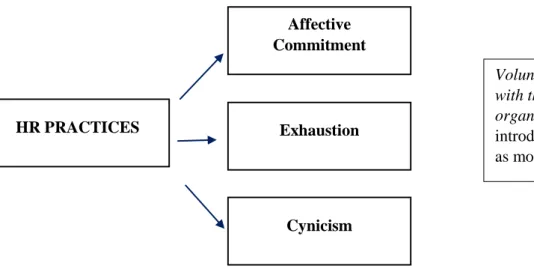
The following diagram shows the relationship the research aims at understanding. Figure 1: Research Model
Although, before proceeding with a deeper analysis, it is important to provide a brief overview of the context, its characteristics and previous results on the theme. In fact, this analysis attempts to add elements to former studies in order to fill some gaps in the research over this topic.
Literature Review and Hypotheses
Over the past recent years the number of temporary workers has increased both in Europe and US. Thus, examining consequences and implications of this trend is crucial in order to deeply understand likely changes on employment relationship. Temporary contracts imply forms of dependent employment which, by their nature, do not offer to workers the prospect of a long-lasting employment relationship. Gender and age difference are also worth to consider in temporary employment. In fact, younger and less educated workers together with women mostly hold this kind of contract. Besides the economic instability, other root causes of this broaden trend can be mostly attributed to the rapid and unexpected evolutions of the external environment that push organizations to fast adapt
HR PRACTICES
Voluntariness and Tenure with the client
organization are
introduced in the model as moderators
Affective Commitment
Exhaustion
7 | P a g e
its activities in terms of number of employees and their related skills (Moorman & Harland, 2002). More specifically, the emerging need of flexibility can be met also by employing temporary workers to satisfy the peak of demand due to seasonality as well as other contingent production’s needs. Thus, by employing temporary workers, organizations are able to hire or fire employees to match the requirements of the business at any given moment (Chambel & Castanheira, 2006; 2007). Understood that temporary employment allows organizations to achieve short term benefits, as enhanced flexibility, lower both labour costs and HR responsibilities, however, it is important to realize if it also may imply some trade-offs in the long term. Trade-offs might involve higher costs in the long period in terms of poor worker attitudes that finally can threaten temporary workers’ effectiveness compared to permanent ones. On this point, previous researches (De Cuyper et al, 2008) have demonstrated that is not the job contract type 1 that influences workers’ attitudes or well-being. In fact, through comparing temporary workers’ and permanents’ attitudes, De Cuyper demonstrated that temporary workers’ attitudes or well-being are not inevitably worse than those exhibited by permanents, since those characteristics are mostly influenced by employment relationship that workers develop with the company they work for, rather than by their contract type. However, since labour costs’ reduction represents one of the main reason to employ this kind of workers, according to that, organizations may provide temporary workers with fewer inducements (lower possibility of career promotion, training, performance appraisal, compensation and incentives, etc...). That also happens because organizations are not
1 For the analysis temporary workers and permanents taken into consideration perform the same tasks, as a consequence the main difference in the type of contract is represented by the duration.
8 | P a g e
supposed by any work regulation to promote HR practices towards temporary workers. However, it has been proved that temporaries are more sensitive to organizational treatment compared to permanents (Coyle-Shapiro and Kessler, 2002). According to the Psychological Contract Theory, some scholars (McDonald & Makin, 2000; Millward & Brewerton, 2000) demonstrated that temporary workers are not concerned just about economic interests, due to the fact that they have a time bounded relationship with the organization (transactional psychological contract) but they also value a relational psychological contract based on socio-emotional exchanges with the organization. De Cuyper et al. (2007) stated that there are three possible factors, which can make a psychological contract more relational in contents: tenure, volition and contract prospect. Thus, if temporary workers perceive a positive relationship with the organization, in the end, they will value more than permanents the organization’s investment and favourably reciprocate with positive attitudes. If not, temporary workers may feel less involved by the organization’s processes and it will be likely that they show less affective commitment or contribution to the organization. As a consequence, it should be advisable that organizations treat temporary workers not as peripheral, being, the employment relationship that affects workers’ attitudes and not the kind of contract itself.
In the light of this mentioned research, it is important to integrate this part with a deeper analysis regarding the relationship between the HRP and affective commitment, exhaustion, and cynicism, by considering voluntariness and tenure with the organization as moderator factors.
9 | P a g e
Thus, the next step is to test the following hypotheses:
Hp. 1: HRP are positively related to affective commitment of temporary workers. Hp. 2: HRP are negatively related to exhaustion of temporary workers.
Hp. 3: HRP are negatively related to cynicism of temporary workers.
Hp. 4: Voluntariness moderates the relationship between HRP and employees’ outcomes.
More specifically, a higher degree of voluntariness to temporary employment weakens the relationship between HR practices and affective commitment, exhaustion, and cynicism.
Hp. 5: Tenure moderates the relationship between HR practices and employees’
outcomes. More specifically, a longer tenure with the organization determines a lower relationship between HR practices and affective commitment, exhaustion, and cynicism.
Methods
SampleParticipants are 2466 Temporary Agency Workers (TAW) from several temporary work agencies2. Even though the clients and companies may differ, these workers are all call center operators, and perform similar tasks regardless of the client. Furthermore, TAW and permanent employees perform similar tasks in the client companies, and have similar management requirements and work conditions. The sample is primarily composed of females3 (59.8%) with an average age of 30.2 years. 38.5% work in the client for less than one year, 38.6% have been working in the client for more than one year and less than 5 years, and 22.9% for more than 5 years. Workers’ qualifications are also considered to better identify characteristics of the sample. Around half (50.4%) have completed
2This data-base was courtesy of the research project PTDC/PSI-PSO/120419/2010 3Gender was coded “1” if the respondent was male and “2” if the respondent was female.
10 | P a g e
school, 21.9% study in the University, and 27.7% are graduated. More specifically,
gender and age were included in the analyses as control variables because earlier researches indicated that these variables can influence motives for taking up contingent employment (De Jong & Schalk, 2010; Tan & Tan 2002). As a matter of facts, women and young people might be more willing to accept temporary jobs since this kind of contract allows them flexible schedules such a way that they can also commit to other activities.
Measures
The HR practices were measured with the scale used by Chambel, Castanheira & Sobral (2015, on-line) to measure temporary agency workers’ (TAW) perception of HR practices in contact centers. The scale includes 22 items that evaluate the following practices: staffing, socialization, training, performance appraisal, and compensation and incentives. We asked the worker to think about her/his employment experience in the company and answer each item on a 7-point Likert scale ranging from 1 (strongly disagree) to 7 (strongly agree). The internal consistency reliability coefficient among participants in the present sample was α = .93.
Affective commitment was measured using Meyer, Allen, and Smith (1993). Six items were measured on a seven-point scale, ranging from “Strongly Disagree” (1) to “Strongly Agree” (7). An example item is ‘I feel a strong sense of belonging to (organization name)’. High scores indicate high levels of affective commitment. The internal consistency reliability coefficient among participants in the present sample was α = .88.
Exhaustion and Cynicism were assessed using a Portuguese translation of Maslach Burnout Inventory – General Survey 1996 used in previously conducted studies with TAW in contact centers (De Cuyper, Castanheira, De Witte, & Chambel, 2014).
11 | P a g e
Exhaustion included five items measuring feelings of being emotionally extended and depleted of one’s resources (e.g., “I feel emotionally drained from my work”; Cronbach’s alpha = .91). While Cynicism was assessed by a five item-scale (e.g., “I doubt the significance of my work”; Cronbach’s alpha = .82). Respondents answered on a seven-point scale ranging from “Never” (0) to “Every day” (6), with high scores indicating high exhaustion and cynicism.
The voluntariness of TAW was assessed with an adaptation of the Motivation at Work Scale (MAWS; Gagné et al., 2015) developed by Lopes and Chambel (2014) to analyze the motivation of TAW. In this study we used 12 items that reflect the types of voluntary motives to choose a temporary job (De Jong, De Cuyper, De Witte, Silla, & Bernhard-Oettel, 2009). Example items include “Because it is the job that best fits to my needs (example: studies, family)”, and “Because it increases my probabilities to have a better job in the future”. Participants are asked to indicate for each statement to what degree they correspond to one of the reasons for which they have this temporary employment on a seven-point scale ranging from 1 (does not correspond at all) to 7 (corresponds very strongly). Higher scores indicate higher voluntariness. The internal consistency reliability coefficient among participants in the present sample was α = .91.
Results
Descriptive Statistics
After providing a description of the method used and a brief overview regarding the sample that took place in the survey, the next step is to look at the descriptive statistics in order to understand the relationship between the variables. From the table below, it can be seen that, as expected, the relationship between HRP and affective commitment is positive, while between HRP and exhaustion and HRP and cynicism is negative. More
12 | P a g e
specifically, values show that HRP relates respectively to affective commitment with r= 0.580, p< 0.001, while HRP relates to exhaustion with r= -0.325, p< 0.001 and to cynicism with r= -0.382, p<0.001. These values explain that perceived higher levels of HRP are associated with higher levels of affective commitment toward the organization and lower levels of exhaustion and cynicism in the sample taken into consideration.
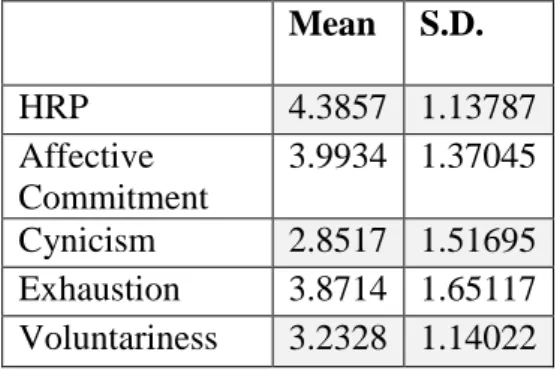
Table 1: Descriptive Statistics- Mean and Standard Deviation
Mean S.D. HRP 4.3857 1.13787 Affective Commitment 3.9934 1.37045 Cynicism 2.8517 1.51695 Exhaustion 3.8714 1.65117 Voluntariness 3.2328 1.14022
Table 2: Descriptive Statistics and study variable intercorrelations
Regression analysis
To test the hypotheses of the model, regression analyses are performed for affective commitment, exhaustion and cynicism. The model is composed of three steps, in the first
(*)Note. N=2466; HRP=Human Resource Practices Dummy Variable coded 1 for Male and 2 for Female *p<.05; **p<.01; ***p<.001
13 | P a g e
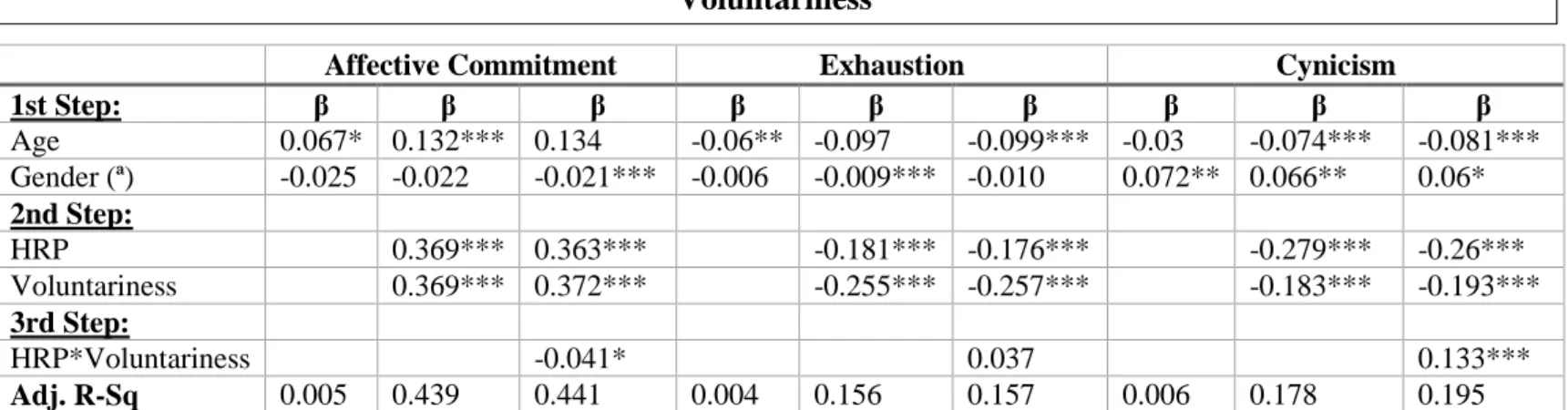
one control variables (age and gender) are introduced, then the independent variables (HRP and the moderator Voluntariness or Tenure) and in the last step the interaction term (HRP*Voluntariness or HRP*Tenure) takes part of the analysis to verify whether it determines any significant change in the dependent variables (affective commitment, exhaustion and cynicism). As many experts recommend, to reduce the multi-collinearity, before creating the interaction terms, the independent variables were centered around zero by subtracting each value from its respective mean (Cohen, Cohen, West & Aiken, 2003). Once more, the β-coefficients from the ANOVA output confirm what was already found in the correlation analysis. However, through the regression analyses the model considers also the interaction of the moderators. In the first analysis voluntariness is assumed as moderator and the combined impact with HRP on the dependent variables is tested. The β-coefficients table (Table 3) displays that HRP have a significant effect on all the dependent variables (affective commitment β= 0.369, p< 0.001; exhaustion β= -0.181, p<0.001; cynicism β= -0.279, p<0.001) in the expected direction. In the light of these results, Hp.1 Hp.2 and Hp.3 are supported.
For what concerns Hp.4, it can be said that voluntariness contributes to moderate the relationship between HRP and affective commitment, and cynicism.
14 | P a g e
Table 3: Table of Coefficients
Affective Commitment Exhaustion Cynicism
1st Step: β β β β β β β β β Age 0.067* 0.132*** 0.134 -0.06** -0.097 -0.099*** -0.03 -0.074*** -0.081*** Gender (ª) -0.025 -0.022 -0.021*** -0.006 -0.009*** -0.010 0.072** 0.066** 0.06* 2nd Step: HRP 0.369*** 0.363*** -0.181*** -0.176*** -0.279*** -0.26*** Voluntariness 0.369*** 0.372*** -0.255*** -0.257*** -0.183*** -0.193*** 3rd Step: HRP*Voluntariness -0.041* 0.037 0.133*** Adj. R-Sq 0.005 0.439 0.441 0.004 0.156 0.157 0.006 0.178 0.195
Figures 2 and 3 provide a graphic representation of the impact of different levels of HRP
(low and high) on affective commitment and cynicism by also considering the level of voluntariness to temporary jobs. As it has been already proved, higher levels of HRP are associated with higher affective commitment for both temporary workers with low and high voluntariness. What it is also worth to notice is that temporary workers with low voluntariness show lower level of affective commitment compared to those with high voluntariness in the case of low HRP. However, even though the degree of voluntariness determines different levels of affective commitment when the organization provide workers with low HRP, once the HRP increase, affective commitment’s perception of temporary workers increase approximately at the same pace for both workers with low and high voluntariness.
(*)Note. N=2466; HRP=Human Resource Practices Dummy Variable coded 1 for Male and 2 for Female *p<.05; **p<.01; ***p<.001
15 | P a g e
Figure 2: The moderator effect of voluntariness on the relationship between HRP and affective
commitment
For what concern cynicism, in the Figure 3, the graph adds something more to the already explained relationship. It is clear that higher level of HRP contributes to lower cynicism for both cases of low and high voluntariness, however, the impact of HRP on reducing cynicism is greater in the case of low voluntariness to temporary jobs. Hence, in the graph the line associated to low voluntariness is steeper compared to the one of high voluntariness when HRP increase.
1 1.5 2 2.5 3 3.5 4 4.5 5 Low HRP High HRP A ff ect ive C om m it m ent Low Voluntariness High Voluntariness
16 | P a g e
Therefore, results partially support H4.
Figure 3: The moderator effect of voluntariness on the relationship between HRP and cynicism
For what concerns the Hp.5 that aims at verifying the moderator role that tenure plays in the relationship between HRP and the dependent variables, results show that tenure does not moderate these relationships. For that reason, the Hp.5 cannot be supported.
Table 4: Table of Coefficients
Affective Commitment Exhaustion Cynicism
1st Step: β β β β β β β β β Age 0.067** 0.134*** 0.135*** -0.06** -0.132*** -0.132*** -0.030 0.093*** 0.093*** Gender (ª) -0.025 -0.013 -0.013 -0.006 -0.004 -0.005 0.072** 0.067** 0.067** 2nd Step: HRP 0.596*** 0.534*** -0.306*** -0.326*** -0.374*** 0.378*** Tenure 0.002 -0.098 0.125*** 0.093 0.067** 0.061 3rd Step: HRP*Tenure 0.105 0.034 0.007 Adj. R-Sq 0.005 0.354 0.354 0.003 0.127 0.127 0.006 0.159 0.159 1 1.5 2 2.5 3 3.5 4 4.5 5 5.5 6 Low HRP High HRP C ynic
ism Low Voluntariness
High Voluntariness
17 | P a g e
Discussion
The results of this research found support to the positive relationship between HRP and affective commitment, the negative relationship between HRP and exhaustion, and HRP and cynicism for the considered sample of temporary workers. Indeed, workers’ attitudes and behaviours are not determined by the contract itself, but the employment relationship people managed to establish is mainly responsible of these outcomes. Contrarily to what believed, temporary workers are interested in developing a socio-emotional relationship with the organization, even though the relation with the employer will be short due to the fixed-term contracts they own. As example of this relationship, previous researchers on the theme (Chambel & Castanheira, 2012) proved that training, which is the specific HRP that enables workers to be equipped with skills and knowledge required, contributes to enhance affective commitment and lower exhaustion. Doing that, temporary workers feel that the organization is investing in them, by providing broadened knowledge that they can also spend in the labour market once their contracts will expire. Then, temporary workers reciprocate with positive attitudes: from one side, they might feel more confident in the tasks they have to perform thanks to the training, from the other, they also might feel less vulnerable to experience burnout and cynicism since they perceive to be supported by the organization. Furthermore, temporary workers usually do not expect organizational support, thus, when they receive support through HRP, they end up to value even more any organizational activity aimed at taking care of them. In the end, this mutual “give and take” behaviour fosters the psychological contract between the parties. This research went one step further by introducing in the analysis two moderator factors. Results proved that voluntariness partially moderates the above mentioned relationships, since it works as moderator for both affective commitment and cynicism, while it is not valid for exhaustion. In fact, higher degree of voluntariness to temporary employment
18 | P a g e
determines a smaller impact in enhancing affective commitment as well as a smaller impact in lowering the level of cynicism. This might happen because temporary workers have chosen on purpose this kind of contract and they are satisfied with their provisional condition. Thus, it can be assumed that they are less interested in strengthening the relationship with the organization. Being permanently hired is not one of their main concerns, as a consequence, they might see their employment relationship with a more short-term view, where economic interests seem more important than the socio-emotional ones. However, the moderator effect does not work for exhaustion. Whether or not the degree of voluntariness is high or low, the relationship between HRP and exhaustion does not significantly change. On this point, previous researchers can be taken into account to explain this result. In fact, Beirão da Cruz (2012) demonstrated in his analysis that the stepping-stone motive does not moderate the relationship between training and exhaustion. The stepping-stone motive can be considered as one of the possible reasons that makes workers accepting temporary jobs and it influences the degree of voluntariness. More specifically, if the degree by which people consider temporary jobs a valuable option is high in the stepping-stone motive, this can be seen also as a measure of their degree of voluntariness to this kind of jobs. As a consequence, high stepping-stone motive or high voluntariness to temporary jobs will similarly behave in the model. If it is assumed that the ultimate goal of temporary workers is to get a permanent job, temporary workers might be more willing to accept worse conditions and bear higher level of exhaustion in order to show themselves to the employers able to good performances, even when they cope with strain in the hope of getting a permanent job. Considering these premises, as it is verified that the stepping-stone motive does not moderate the relationship between training and exhaustion, it is proved the same also for
19 | P a g e
the moderator role of voluntariness on exhaustion. Nonetheless, the stepping-stone motive and voluntariness are both negatively related with exhaustion. As a result, when workers use their job to get a permanent employment, since they are focused on achieving their goal, they tend to be more positive regarding the future and they are likely to establish a relationship with the employer that shows, through their attitudes and behaviour, that they can be a valuable asset for the future. However, future researches should investigate the reasons behind the voluntary choice of being a temporary worker. In fact, as previously stated, there are many reasons that make people willing to accept fixed-term contracts. While some reasons involve workers’ need of flexibility in such a way that they can work and do in the meantime other activities, other workers might have high voluntariness as well, but just because they consider temporary employment as a stepping-stone toward a permanent one. Bottom line, different reasons behind voluntariness bring different results that should be further analysed. Looking at the tenure with the client organization, it does not moderate the relationships. For the sample surveyed the time spent within the organization does not have a significant impact on the outcomes. Temporary workers usually do not expect organizational support so they positively value it and reciprocate with attitudes and behaviours that reinforce the socio-emotional relationship with the firms they work for. Contrarily to what expected, by working longer for the same organization, temporary workers keep on valuing the investment firms carry out towards them, even when they are already used to that support. Results show that the impact of HRP on affective commitment, exhaustion and cynicism is not weakened by the length of time they stay with the same organization. Furthermore, the latter result is also aligned with previous researches (Chambel & Castanheira, 2006): “when temporary workers develop a lasting relationship with the organization, and have
20 | P a g e
the possibility of converting their contact, they develop a similar psychological contract to core workers, in which socio-emotional components predominate”.
Limitations
A number of limitations have to be considered. First of all, the analysis shows just the direction of the relationships that exist among the variables, but it cannot assess any causal relationship. Provided explanations are rooted in likely reasons that might have determined these results, based on previous researches on the topic. Moreover, since this research was carried out at a moment in time, longitudinal studies should be realized to support these findings. It is also important to point out that the research was focused on workers’ perceptions towards their employment relationship, which means that it is based on self-reported data, and it is also possible that results might be contaminated by the common method variance. Furthermore, the sample is limited to one country (all the participants are Portuguese), thus, it would be needed to spread this research to a wider context in order to find out possible differences. Being the temporary workers surveyed all call-centers operators, results might be valid just for that specific industry, it could be interesting to repeat the research also in other industries where temporary workers are used in order to make comparisons and underline differences. Future researches should explore reasons that determine the degree of voluntariness to temporary employment. For instance, it has been seen that people might be willing to accept temporary jobs either because these jobs allow them more flexibility and less commitment either because they are considered as a stepping stone toward permanent employments. Being these two cluster of reasons really different, it is important to further investigate in such direction, considering that it might bring also conflicting results. From another perspective, since temporary employment is often used to lower labour costs and enhance flexibility, it is
21 | P a g e
advisable to add to future researches also the cost components in the analysis. Providing temporary workforce with the same organizational support permanent workers usually have, might imply higher total costs and so it might lower one of the beneficial effects of employing this type of workforce. This trade-off should be addressed, however, it might be tough to get this kind of information for different reasons: forecasting or isolating the specific costs related to HRP (time and other resources needed) can be hard and organizations might not be collaborative due to their no-disclosure policies on the topic.
Practical implications
These findings have important implications for Human Resource field: HRP help to foster workers’ affective commitment and reduce both exhaustion and cynicism. In contrast to human capital theories, it is worth to invest in high-quality HRP even towards temporary workers. Indeed, results confirm that the perception of HRP is not determined by the length of contract, but it is influenced by the employment relationship that it is established between the parties. As long as organizations are willing to invest in HRP in order to provide support even to temporary workers, they will reciprocate with positive attitudes and behaviours. More specifically, organizational support can be seen as a mean to foster employment relationship and overcome possible threats of poor workers attitudes and behaviours that might show up especially under temporary employment conditions. Bottom line, the nature of contract should not be a reason to decide whether or not invest in developing high-quality HRP. Unless organizations do not do that, they might have less engaged or low-quality workforce and this might constitute a potential loss of competitiveness in the medium or long term. To conclude, the concern of equal treatment of different kind of workforce (Commission of European Communities, 2002) is critical considering both the pace of increasing in the temporary employment all over
22 | P a g e
the world as well as beneficial effects associated with it when temporary workers are treated not just as peripheral.
23 | P a g e
References
Beirão da Cruz R., (2012). Training as a promoter of employability and implications to temporary workers exhaustion: the moderating role of the stepping-stone motive
Chambel, M.J., & Castanheira, F. (2006). Different Temporary Work Status, Different Behaviors in Organization. Journal of Business and Psychology, 20, 351-367. DOI: 10.1007/s10869-005-9015-0.
Chambel, M.J., & Castanheira, F. (2007). They don’t wan’t to be temporaries: Similarities between temps and core workers. Journal of Organizational Behavior, 28, 943-959. DOI: 10.1002/job.471
Chambel, M.J., Castanheira, F. (2012). Training of temporary workers and the social exhange process Chambel, M.J., Castanheira, F., & Sobral, F. (2015, on-line). Temporary agency versus permanent workers: A multigroup analysis of associations between human resource management, work engagement and affective commitment. Economic and Industrial Democracy. DOI: 10.1177/0143831X14550695
Cohen, J.; Cohen, P., West, S.G., & Aiken, L.S. (2003). Applied Multiple Regression/Correlation Analysis for the Behavioral Sciences. 3rd Edition.
Lawrence Erlbaum Associates, Publishers. Mahwah: New Jersey.
Coyle-Shapiro, J. A. (2002). A psychological contract perspective on organizational citizenship behaviour. Journal of Organizational Behavior, 23, 927- 946. De Cuyper, N., Castanheira, F., De Witte, H., & Chambel, M.J. (2014). A multiple group analysis of associations between emotional exhaustion and supervisor-rated performance:
24 | P a g e
Temporary versus permanent call center workers. Human Resource Management, 53 (4), 623-633. DOI:10.002/hrm.21608
De Cuyper, N.; Notelaers, G. and De Witte, H. (2009) Job Insecurity and Employability in Fixed-Term Contractors, Agency Workers, and Permanent Workers: Associations with Job Satisfaction and Affective Organizational Commitment. Journal of Occupational Health Psychology 14(2): 193–205. De Jong, J., & Schalk, R. (2010). Extrinsic motives as moderators in therelationship between fairness and work-related outcomes among temporary workers. Journal of Business and Psychology, 25(1), 175-189.
De Jong, J., De Cuyper, N., De Witte, H., Silla, I., & Bernhard-Oettel, C. (2009). Motives for accepting temporary employment: A typology. International Journal of Manpower, 30(3), 237-252.
Gagné, M., Forest, J., Vansteenkiste, M., Crevier-Braud, L., Van den Broeck, A., Aspeli, A. K., Bellerose, J., Benabou, C., Chemolli, E., Güntert, S. T., Halvari, H., Indiyastuti, D. L., Johnson, P. A., Molstad, M. H., Naudin, M., Ndao, A. Olafsen, A. H., Roussel, P., Wang, Z., & Westbye, C. (2015). The multidimensional work motivation scale: Validation evidence in seven languages and nine countries. European Journal of Work and Organizational Psychology, 24(2), 178-196. DOI:10.1080/1359432X.2013.877892
Knopp, M. (2012). The psychological contracts of temporary employees.
Lepak D, Liao H, Chung Y, (2006), A conceptual review of human resource management system in strategic human resource management research. In: Martocchio J (ed.) Research in Personnel and Human Resources Management, Vol. 25. Oxford: Elsevier, pp. 217- 272.25 | P a g e
Lopes, S. & Chambel, M. J. (2014). Motives for being temporary agency worker: Validity study of one measure according to the self-determination theory. Social Indicators Research, 116(1), 137–152.
McDonald, D. J., & Makin, P. J. (2000). The psychological contract, organizational commitment and job satisfaction of temporary staff. Leadership & Organization Development Journal, 21, 84-92. Meyer, J.P., Allen, N.J. & Smith, C.A. (1993). Commitment to organizations and occupations: Extension and test of a three-component conceptualization. Journal
of Applied Psychology, 78(4), 538-51.
Millward, L. J., & Brewerton, P. M. (2000). Psychological contacts: Employee relations for the twenty-first century? In C. L. Cooper, & I. T. Robertson (Eds.), International review of industrial and organizational psychology (Vol. 15, pp. 1-61).New York, NY: John Wiley & Sons.
Mitlacher, L. (2008) Job quality and temporary agency work: Challenges for human resource management in triangular employment relations in Germany. International Journal of Human Resource Management 19(4): 446-460.
Moorman, R. H. & Harland, L. K. (2002). Temporary employees as good citizens: Factors influencing their OCB performance. Journal of Business and Psychology, 17,171-187. Tan, H.-H., & Tan, C.-P. (2002). Temporary employees in Singapore: What drives them? The Journal of Psychology, 136(1), 83-102.