http://www.uem.br/acta ISSN printed: 1679-9275 ISSN on-line: 1807-8621
Acta Scientiarum
Doi: 10.4025/actasciagron.v36i2.14570
The effects of industrial waste from enzyme production on pasture
growth and soil chemical properties
André Faé Giostri1*, Luis Fernando Montrucchio Bond1, Antônio Carlos Vargas Motta1, Ida Chapaval Pimentel2, Paulo César de Faccio Carvalho3 and Jair Alves Dionísio1
1
Programa de Pós-graduação em Ciência do Solo, Universidade Federal do Paraná, Rua dos Funcionários, 1540, 80035-050, Curitiba, Paraná, Brazil. 2
Setor de Ciências Biológicas, Departamento de Patologia Básica, Centro Politécnico, Universidade Federal do Paraná, Curitiba, Paraná, Brazil. 3
Programa de Pós-graduação em Produção Vegetal, Universidade Federal do Paraná, Curitiba, Paraná, Brazil. *Author for correspondence. E-mail: [email protected]
ABSTRACT. Farmers have used liquid waste from the enzyme industry as fertilizer. To determine the impact of liquid waste from enzymes (LWEs) on soil properties, plant growth and nutrient content in pasture, an experiment was conducted with five different rates of LWE application (0, 45, 90, 135 and 180 m3 ha-1) to a
Cambisol in August 2006. In August 2007, 60 m3 ha-1 of LWE was applied in every treatment. Soil was sampled
on four different dates and at four different depths (0-10, 10-20, 20-40 and 40-60 cm) to verify changes in its chemical properties. Soil was improved in terms of acidity and availability of Ca2+, Mg2+, K+ and P in the 0-10
cm layer, indicating that the effect of LWE is corrective concerning these attributes. There was also improvement in pasture quality through increased levels of N, P and K in plants during the first year of waste application. The use of larger doses of LWE led to increases in productivity (42.6 kg dry weight m-3 residues). These results
indicate that the application of LWE is feasible for the fertilization of this grassland containing low-fertility acidic Cambisol.
Keywords: soil acidity, forage, carbon, fertilizater.
Resíduo de indústria de enzimas no crescimento da pastagem e propriedades químicas do solo
RESUMO. O resíduo líquido da indústria de enzimas (LWE) é utilizado como fertilizante por muitos agricultores. Para determinar o impacto do uso de LWE no solo, crescimento e nutrição mineral do pasto nativo,
foi executado um experimento com cinco doses de LWE (0, 45, 90, 135 e 180 m3 ha-1), aplicado em um
Cambissolo Háplico distrófico, em agosto de 2006. Em 2007 uma única dose de 60 m3 ha-1 foi aplicada em todos
os tratamentos. Amostras de solo foram coletadas em quatro profundidades (0-10, 10-20, 20-40 e 40-60 cm) para verificar mudanças nas propriedades químicas do solo. Foram executados cinco cortes para determinar condições nutricionais e produtividade das plantas. No solo constatou-se melhoria nos parâmetros de acidez e disponibilidade de Ca2+, Mg2+, K+ e P, indicando sua ação como corretivo da acidez e fonte de nutrientes. Houve
melhoria na qualidade da pastagem através do aumento dos teores de N, K e P nas plantas. O uso de doses do resíduo proporcionou aumentos médios na produtividade (42,6 kg matéria seca m-3 resíduo). Os resultados
obtidos indicam que o LWE mostrou-se viável na fertilização de pastagem em Cambissolo ácido de baixa fertilidade.
Palavras-chave: acidez do solo, forragem, carbono, fertilizante.
Introduction
Industrial waste has been used in agricultural applications as a source of nutrients, such as vinasse in sugarcane areas (CANELLAS et al., 2003). Long-term use was shown to be feasible when low concentrations of heavy metals and other organic contaminants were present in the waste (CAVALLET et al., 2006).
Among the soil systems to which industrial waste has been applied, pastures are the most appropriate because they provide easy access to farm equipment year round and are found throughout the Brazilian territory. Pasture ecosystems occupy 173 million
hectares of land in Brazil, of which 5.7 million hectares are natural pastures located in Paraná State (IBGE, 2010). In most Brazilian pastures, the soil has low natural fertility; it is necessary to constantly replace nutrients in these soils. Pasture productivity and quality decrease over time when no nutrient replacement takes place. This reduction causes a subsequent decrease in the performance of pasture-raised cattle (COSTA et al., 2009).
248 Giostri et al.
Acta Scientiarum. Agronomy Maringá, v. 36, n. 2, p. 247-257, Apr.-June, 2014
to the field and can improve pasture productivity (POWER; SUTTON, 1996). The indiscriminate use of organic waste can increase nutrient levels in the soil to the point of causing environmental problems (SHARPLEY et al., 1993; KINGERY et al., 1994; POWER; SUTTON, 1996). It is necessary to consider local legislation when applying organic waste as a fertilizer; many countries, such as Brazil, prohibit the application of any residue on pastures that contains animal source products (BRASIL, 2001).
It has become more common in developing countries over the last decade for waste from industries that use grain and other materials from fields as an alternative to using animal, waste. These industries can generate large amounts of waste. Returning these industrial wastes to the field might provide a good nutrient source for pastures and has an environmental appeal. Waste derived from microbial fermentation processes that yield industrial enzymes contains N, P, K, Ca, Mg and micronutrients (CAVALETT et al., 2006). Because LWE (liquid waste from enzymes) is neutralized with Ca and Mg oxides, it can increase soil pH and other associated soil chemical properties (CAVALETT et al., 2006).
Application of LWE is an effective way to dispose of industrial waste and may increase the productivity of pastures via a beneficial effect on soil nutrient status.
Using LWE as a fertilizer is an effective way to dispose of industrial waste and may increase the productivity of pastures via a beneficial effect on soil nutrient status.
An experiment was performed to determine the impact of LWE on soil properties and plant growth and nutrition in pasture.
Material and methods
Location
The experiment was carried out in the municipality of Fazenda Rio Grande, in the Metropolitan Region of Curitiba. This municipality is located on the First Plateau of Paraná with the coordinates 24º16’56.71” south and 51º28’32.91 west.
According to the Köppen classification, the climate of this region is classified as Cfb. The climate is subtropical mesothermal and humid with no dry season and cool summers. The temperature in the coldest months ranges from -3 to 18°C; in the hottest months, temperature ranges from 10 to 34°C. The annual rainfall is 1600-1800 mm. The relative air humidity is 70-80% (IAPAR, 2000).
Experimental design
The area exhibits an undulated relief at a mean altitude of 900 m (IAPAR, 1994). It is covered with non-fertilized native field, where grass stands are predominant as an extensive pasture system to raise cattle and horse.
This experiment was carried out over 2 years in an area of nearly 2 hectares, where hermarthria (Hemarthria altissima) grass seedlings were introduced in rows. The experimental design was a random block with four blocks. Each block included five plots (7 x 15 m) corresponding to different waste application rates, totaling 20 plots.
The treatments comprised five different rates of LWE application: 0, 45, 90, 135 and 180 m³ ha-1. The
maximum rate recommended by the company that produces this LWE (Novozymes Latin America Ltda) is 90 m³ha-1. Therefore this maximum rate
and two rates above the maximum rate (135 and 180 m3 ha-1) were used to test for possible negative
effects of high rates of application.LWE was applied manually using water cans on August 34, 2006. The waste was transferred to a 1 m³ reservoir and stirred continually to keep the product in suspension before spreading over each plot. The plots were subdivided into sections (5 per plot) during the application to ensure a homogenous application of the LWE (with each section receiving an equal portion of the LWE application). For the highest application rate, half of the application volume was applied to each plot, and the other half was applied only after the first application had completely infiltrated. This procedure was performed to minimize surface runoff.
A second 60 m3 application was carried out on
August 15, 2007. A 5 m3 tank with a fan type
spreader was used to apply liquid waste to the pasture surface.
Soil
The soil in the study area was a Cambisol (Cambissolo Háplico distrófico; EMBRAPA, 2006). Soil samples were collected from the 0-20 cm layer of the experimental area on July 11, 2006. The results of the soil analysis are shown in Table 1.
Table 1. Chemical attributes of the soil in the study area at a depth of 0-20 cm before the application of LWE.
Al3+ (H + Al) Ca2+ Mg2+ K+ Na+ P C Clay
pH
CaCl2 --- cmolc dm
-3
--- mg dm-3
g dm-3
g kg-1
4.15 1.29 12.2 1.32 0.65 0.11 0.06 2.4 34.1 350
Characterization of Industrial LWE
Effects of industrial residue on pasture growth 249
production and is free of animal residues. The production company used a specific microorganism to produce the phytase enzyme. Before field application, the waste underwent a process that used hydrated lime [Ca(OH)2 + Mg(OH)2] to inactivate enzymes and
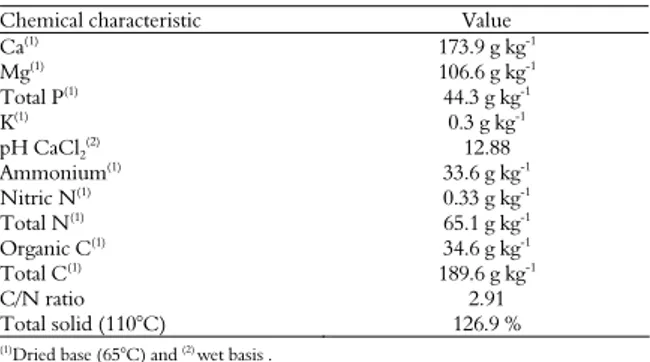
microorganisms. After a 24-hour period, a batch of waste was stirred, sampled and analyzed. LWE was only cleared for agricultural use after a negative microbiological growth test, which was verified by the quality control service of the production company. The chemical characteristics of the LWE used were described by APHA (1998) and are shown in Table 2.
Table 2. Chemical characteristics of LWE applied on a native pasture in Fazenda Rio Grande, Paraná State, Brazil.
Chemical characteristic Value
Ca(1) 173.9 g kg-1
Mg(1)
106.6 g kg-1
Total P(1) 44.3 g kg-1
K(1) 0.3 g kg-1
pH CaCl2
(2)
12.88
Ammonium(1) 33.6 g kg-1
Nitric N(1)
0.33 g kg-1
Total N(1) 65.1 g kg-1
Organic C(1) 34.6 g kg-1
Total C(1)
189.6 g kg-1
C/N ratio 2.91
Total solid (110°C) 126.9 %
(1)Dried base (65°C) and (2) wet basis .
Sampling, analysis and pasture productivity
Soil samples were collected at depths of 0-10, 10-20, 20-40 and 40-60 cm on days 34, 132, 216 and 336 after the first application of LWE. Soil was collected at each plot with a Dutch auger at 15 points to produce a composite sample. The soil was air-dried and sifted through a 2 mm sieve. Chemical analysis of the soil was performed at the UFPR fertility laboratory, according to the methodology described by Marques and Motta (2003) to determine the following: pH CaCl2, pH by
Shoemaker, McLean and Pratt (SMP), exchangeable elements by KCl 1 M (Al3+, Ca2+, Mg2+), available
nutrients by Mehlich I (K+ and P) and potential
acidity by Ca acetate 0.5 M - pH 7.0 (H+Al). The sum of bases (SB) was calculated from the analytical results. The organic C content was determined by the Walkley-Black method adapted for colorimetric measurements by Raij et al. (1987).
Pasture dry matter was assessed at 58, 128, 233, 496 and 540 days after the first application of LWE. During autumn and winter, no assessment was conducted because the forage production in both seasons was very low. Green leaf samples were collected from an area of 0.25 m2 at four
random points per plot, totaling 1 m2. At each
point, all of the material was cut from the plant at a height of 2 cm. Soon thereafter, all plants of the
plot were cut at the same height, and the cut material was removed from the plot. The sampled material was weighed to obtain a wet mass, rinsed under running water and deionized water and dried in an oven at 65°C to obtain the dry mass. Chemical analysis was performed for C, N, P, K, Ca, and Mg in the plant tissue according to the methodology described by Reissman and Martins (2007). Nitrogen and carbon contents were determined by dry combustion using a VARIO EL III - Elementary® apparatus. Plant samples were
subjected to dry digestion in porcelain crucibles for P, Ca, Mg, and K analysis. Phosphorus content was determined colorimetrically using an UV/VIS spectrophotometer. Calcium, Mg, Fe, Mn, Zn, and Cu contents were determined by atomic absorption spectrophotometry. Potassium content was determined by flame spectrophotometry.
Statistical analysis
The data from the five treatments in four randomized blocks were examined via regression analysis, in which a curve trend was observed and where the significance cutoff was p < 0.05. Statistical analysis was performed using the ASSISTAT® 7.5 beta
statistical program. The data are presented as the mean of 4 replicates.
Results and discussion
Soil analysis
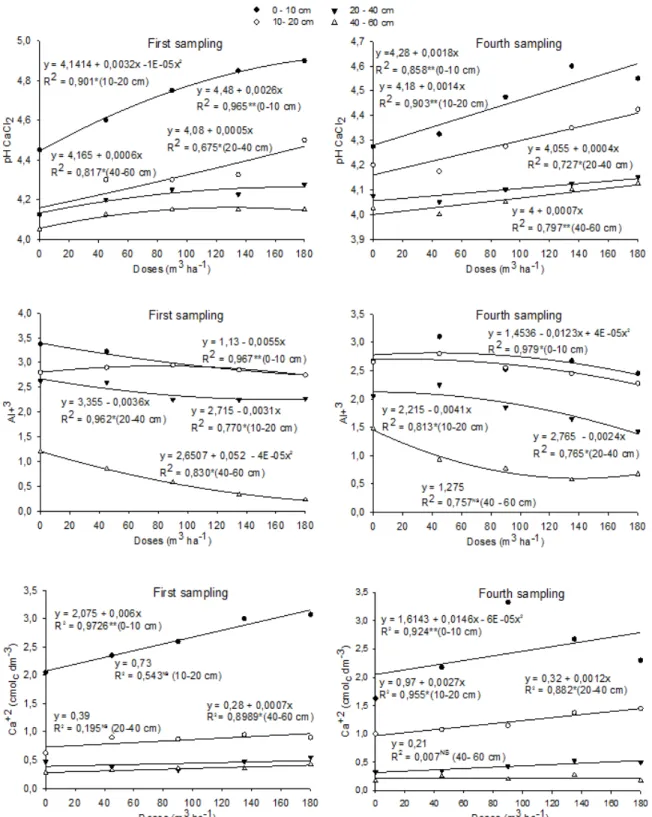
The application of LWE resulted in lower soil acidity, higher pH (CaCl2) and decreased Al3+
(Figure 1). The increases in soil pH were linear overall for all treatments up to 60 cm deep; the most significant effects occurred close to the surface. This finding demonstrates that LWE has an impact on soil acidity, both at the surface and at greater depths (Figure 1).
250 Giostri et al.
Acta Scientiarum. Agronomy Maringá, v. 36, n. 2, p. 247-257, Apr.-June, 2014
Figure 1. The pH (CaCl2) and concentrations of Al3+ and Ca2+ at different depths in soil treated with different doses of LWE in the municipality
of Fazenda Rio Grande, Paraná State, Brazil. *(p < 0.001), **(p < 0.05) and NS (non-significant). The data represent the mean of 4 replications.
The soil in this experiment had a high buffering capacity, which can be observed by a high value of (H + Al) (Table 1); the changes obtained in this soil were therefore considerable (Figure 1). The increase in soil pH may explain the increase in dry matter productivity (Figure 3). Native grasses have been
shown to exhibit a low-to-zero response to lime application in terms of yield in conditions similar to this experiment (MACEDO et al., 1979).
Concentrations of Ca2+ (Figure 1) and Mg2+
Effects of industrial residue on pasture growth 251
Figure 2. Concentrations of Mg2+, K+, P and BS at different depths in soil treated with different doses of LWE in the municipality of
Fazenda Rio Grande, Paraná State, Brazil; *
(p < 0.001), **
(p < 0.05) and NS (non-significant).
This result was expected because these elements were abundant in the waste; these elements are also associated with higher pH and lower Al3+ in the soil. Potassium (K+) levels had
252 Giostri et al.
Acta Scientiarum. Agronomy Maringá, v. 36, n. 2, p. 247-257, Apr.-June, 2014
available using LWE. These results also confirm that a major surface application of the LWE yielded a positive response at a depth of 60 cm. Work at Tocantis State performed by Araújo et al. (2007) also showed that K+ concentration in the
soil increased when different sources of organic matter were used for fertilization; this nutrient is released by organic compounds, especially cattle manure.
The increase of Ca2+ in the soil was associated
with a decrease of the Ca in the leaf tissue of the first cut. Values of Ca remained the same in the other cuts, suggesting that an interaction with K helped to decrease Ca absorption by plants.
The phosphorous (P) concentration in the soil was consistently higher in surface layers and decreased as the assessed depth increased (Figure 2). This response was expected because the high amount of P in the LWE used in this study. Additionally, P exhibits low soil mobility and concentrates within the first soil layer. Cavallet et al. (2006) also observed an increase in P concentration in the superficial layers when LWE was used in a fertilization experiment involving annual crops in a no-tillage system.
The sum of bases increased due to LWE application, especially in the 0-10 cm depth. The sum of bases was higher when collections were conducted closer to the date of LWE application
(Figure 2). This result was expected, as the sum of bases yielded by LWE is a direct effect. Decreases in Al3+ concentrations are the result of the
formation of hydroxides of Al when pH increased. The sum of bases increased down to the 40 cm layer,suggesting that these bases could leach downwards over time when continuously applied to the same area; this was also observed by Kingery et al. (1994) when organic waste was applied to soil. There is a strong association between variations in soil pH and the sum of bases, suggesting that biopores and the application of organic residue can affect the results observed here.
Plant tissue
The C concentration in the pasture was between 417.5 and 428.7 g kg-1, which was close
to the value of 400 g kg-1 found by Mazza et al.
(2009) for Mombasa grass (Panicum maximum
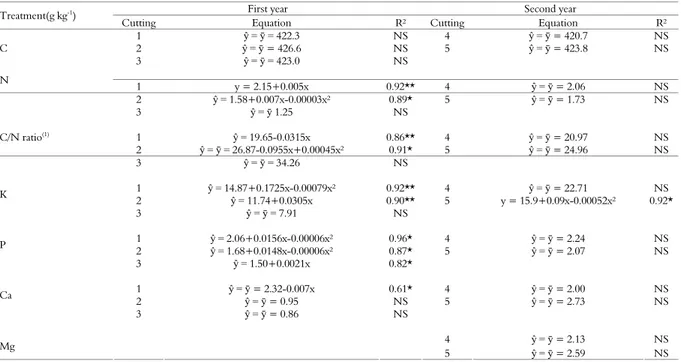
Jacq.) in the region of the First Plateau of Paraná. The C concentration did not vary with the use of LWE (Table 3), even when gains were made in productivity (Table 3).
Although the C concentration in the pasture remained unchanged, C production increased with LWE use (Table 3) along with an increase of dry matter production (Figure 3).
Table 3. Regression analysis of concentration data for N, P, K, Ca, Mg and C and the C/N ratio in plant tissues in the first and second years of the study. Data were collected after applications of LWE in natural pastures with hermarthria grass in the municipality of Fazenda Rio Grande, Paraná State, Brazil.
First year Second year
Treatment(g kg-1)
Cutting Equation R² Cutting Equation R²
1 ŷ = ӯ = 422.3 NS 4 ŷ = ӯ = 420.7 NS
2 ŷ = ӯ = 426.6 NS 5 ŷ = ӯ = 423.8 NS
C
3 ŷ = ӯ = 423.0 NS
N
1 y = 2.15+0.005x 0.92** 4 ŷ = ӯ = 2.06 NS
2 ŷ = 1.58+0.007x-0.00003x² 0.89* 5 ŷ = ӯ = 1.73 NS
3 ŷ = ӯ 1.25 NS
1 ŷ = 19.65-0.0315x 0.86** 4 ŷ = ӯ = 20.97 NS
C/N ratio(1)
2 ŷ = ӯ = 26.87-0.0955x+0.00045x² 0.91* 5 ŷ = ӯ = 24.96 NS
3 ŷ = ӯ = 34.26 NS
1 ŷ = 14.87+0.1725x-0.00079x² 0.92** 4 ŷ = ӯ = 22.71 NS
2 ŷ = 11.74+0.0305x 0.90** 5 y = 15.9+0.09x-0.00052x² 0.92*
K
3 ŷ = ӯ = 7.91 NS
1 ŷ = 2.06+0.0156x-0.00006x² 0.96* 4 ŷ = ӯ = 2.24 NS
2 ŷ = 1.68+0.0148x-0.00006x² 0.87* 5 ŷ = ӯ = 2.07 NS
P
3 ŷ = 1.50+0.0021x 0.82*
1 ŷ = ӯ = 2.32-0.007x 0.61* 4 ŷ = ӯ = 2.00 NS
2 ŷ = ӯ = 0.95 NS 5 ŷ = ӯ = 2.73 NS
Ca
3 ŷ = ӯ = 0.86 NS
4 ŷ = ӯ = 2.13 NS
Mg
5 ŷ = ӯ = 2.59 NS
Effects of industrial residue on pasture growth 253
Each m³ of LWE applied yielded 20 kg ha-1 of C in
the aerial part of the plants; this yield was observed in both years. This increase in C sequestration could have a positive effect on the maintenance of organic matter in the soil (COSTA et al., 2009).
It was observed that the concentration of N in the plant tissue had increased at the first sampling, though the LWE effect decreased over time (Table 3). Such increases greatly affect pasture quality, as N content is associated with protein concentration and animal performance (SENGER et al., 1996). At the first cutting, the concentration of N in plant tissue showed a linear increase in response to LWE application (Table 3); this was most likely due to the ready availability of N as ammonium in LWE (Table 2). The organic fraction of N in LWE was found in easily mineralized compounds; the C/N relationship is considerably lower than 20/1 (Table 2). Increases in productivity and the concentration of N in plant tissue occurred simultaneously, with a visible change in the leaves in the form of an intense green color. Alvim et al. (1999) and Mazza et al. (2009) also observed a linear response due to increasing rates of nitrogen fertilization.
Quadratic behavior was observed in the concentration of N in the plant in response to LWE application at the second cutting. No change in the concentration of N in the plants was found at the third cutting (Table 3). The decrease in LWE influence on N concentration over time could be associated with N leaching. The leaching process should be high for nitrate, which is directly related to pH. Nitrificant bacteria cannot survive at the low pH observed in native conditions. The incremental change in soil pH caused by LWE application could boost nitrate loss. These results are in contrast with the strong linear increase in dry matter production, suggesting a probable effect of N dilution.
An inverse relationship was found between LWE application rates and the C/N ratio in pasture (Table 3). This result was expected because the C concentration did not vary and the concentration of N in the plants increased when LWE was applied during the initial phases of the trial.
The concentration of P in the plants showed a quadratic response to the LWE rates applied in the first and second cuttings, reaching a maximum value close to a rate of 130 m³ ha-1 (Table 3). In these
cuttings, the concentration of P in the pasture when LWE was applied reached values that can be considered high. The concentration of P at the third cutting showed a linear response to LWE, though at lower concentrations when compared with the other
cuts (Table 3). In the fourth and fifth cuttings, there was no difference in the P concentration at different LWE applications. This result was not expected; P is characterized as being a nutrient with a high residual effect.
The potassium concentration in plant tissue at the first cutting was found to show a quadric response, reaching a maximum concentration at an LWE application rate of 109 m³ ha-1. There was a
linear increment in the concentration of K in the plants at the second cutting, while no changes were found at the third and fourth cuttings. The K concentration showed a quadratic response to LWE application again at the fifth cutting (Table 3).
The P and K concentrations obtained from the plant tissue are within adequate levels for grasses according to Raij et al. (1996) at 1.0-3.0 g kg-1 and
12-25 g kg-1, respectively. The only exceptions to
this pattern were found for K in the second and third cuttings, which the concentrations were below 12 g kg-1. In the second colection LWE was not
applied. A low K concentration was observed in the pasture for all treatments at the third collection, though no symptoms associated with deficiency were observed.
That shows that treatment should be applied at smaller amount for K to be supplied to the pasture, given the mobility of that element in the soil, and as such it can be easily lost. The decrease in the concentrations of K in plant tissue was greatest between the second and third collection, when a deficient concentration was observed.
The loss of K in plant tissue is not exclusively caused by the loss of the residual effect of fertilization but may also be due to a dilution effect, because the third sampling yielded the highest production of dry matter for the studied period. Seasonal conditions played an important role in K variations as well, as shown by Senger et al. (1996), who verified that higher concentrations of P, Mg and K occurred in the springtime compared to other seasons.
The concentration of Ca in the plants showed an inverse relationship to LWE application rates (Table 3) applied at the first cutting, despite the large amount of LWE applied. This finding could be due to an antagonist effect of one or more nutrients that were added to LWE.
The concentration of Ca in the plant tissue varied from low in the first year to adequate in the second year, with values within the 2-6 g kg-1 range being
considered adequate for grasses according to Raij et al. (1996).
254 Giostri et al.
Acta Scientiarum. Agronomy Maringá, v. 36, n. 2, p. 247-257, Apr.-June, 2014
pasture (i.e., no sign of retarded growth or a lighter green color than is usual). This result suggests that these levels were sufficient for the conditions at hand. Even when lower or unchanged Ca concentrations were observed when LWE was applied at increasing rates, increase of the productivity was observed; in this case, Ca concentrations seemed to have little effect on production.
Magnesium concentrations were only measured at the fourth and fifth collection. The concentration of Mg was only a concern after low Ca concentrations to be observed. Balance between Ca and Mg is important for plant and animal nutrition. With this information, it was possible to establish the best way to correct the soil composition; the treatment for extremely low Mg is gypsum, the treatment for low Mg is calcitic limestone and high Mg can be treated with dolomitic limestone.
The concentration of Mg in the plants was not influenced by the amount of LWE applied. The measured levels of Mg in all treatments, starting with the fourth collection, were within the adequate range of 1.5-4.0 g kg-1 (Table 3) according to Raij et al.
(1987). Senger et al. (1996) observed similar Mg concentrations in dry matter in a natural pasture that varied from 1.2-2.5 g kg-1; however, Silva et al. (1996)
and Senger et al. (1996) reported lower concentrations that varied between 1.0-1.4 and between 0.6-1.5 g kg-1,
respectively.
The data confirm that the applied waste was responsible for the improvement in production and pasture quality. This improvement was due to increases in protein and nutrient content, especially in the cuttings conducted after (or closer to) LWE applications.
The results presented in Table 4 indicate that the amounts of N, P and K extracted by the pasture increased, especially in the cuttings conducted in the
first year. These results were expected; isolated or combined effects of increases in productivity and the N, P and K concentrations in the pasture were observed during this period. Despite successive decreases in the concentrations of N, P and K in plant tissue in the first, second and third cuttings (Table 3), the highest concentrations of these nutrients were found in the first cut and were due to higher productivity (Figure 3).
Pasture productivity
When no LWE was applied, the cumulative productivity values for natural pasture with hermarthria grass were 4,552.4 and 4,627 kg ha-1
of dry matter for the first and second years, respectively. A similar production potential of approximately 4000 kg ha-1 year-1 has been
reported for native pastures in southern Brazil (DURIGON et al., 2002; CORREA et al., 2006; GATIBONI et al., 2000). When natural pastures with hermartria grass were fertilized with LWE, their cumulative productivity in the first year reached a maximum value of 11642 kg ha-1 of dry
matter at the highest rate of LWE addition. The productivity increases observed in this work are similar to those obtained by Durigon et al. (2002) in native pastures during the spring-summer period in the State of Rio Grande do Sul; in that study, an application rate of 40 m³ ha-1 of liquid
pig manure led to an increase from 3,900.0 to 10,300.0 kg ha-1 of dry matter.
Although the obtained productivities were much higher than normally indicated for native conditions, productivities were lower than the 23,100.0 kg ha-1 year-1 of dry matter reported by
Alvim et al. (1999); in that study, a Tifton 85 pasture of selected pasture grass in Minas Gerais was
Table 4. Nutrient and C concentrations measured in the first and second year from natural pastures with hermarthria grass treated with different rates of LWE, in the municipality of Fazenda Rio Grande, Paraná State, Brazil.
First Second
Treatment (g ha-1)
Cutting Equation R² Cutting Equation R²
1 ŷ = 90.22+1.561x-0.0057x² 0.98** 4 ŷ = ӯ = 926.46 NS
2 ŷ = 438.93+9.88x 0.99** 5 ŷ = ӯ = 1199.79 NS
C
3 ŷ = 1376.19+7.708x 0.89**
1 ŷ = 4.26+0.117x-0.0004x² 0.99** 4 ŷ = ӯ = 45.87 NS
2 ŷ = 18.14+0.4481x 0.97** 5 ŷ = ӯ = 48.47 NS
N
3 ŷ= 37.12+0.2804x 0.92**
1 ŷ = 3.15+0.1271x-0.0005x² 0.99** 4 ŷ = ӯ = 50.44 NS
2 ŷ = 10.38+0.4176x 0.99** 5 ŷ = ӯ = 51.41 NS
K
3 ŷ = 25.48+0.1458x 0.93**
1 ŷ = 0.43+0.0142x-5E-05x² 0.99** 4 ŷ = ӯ = 4.76 NS
2 ŷ = 2.12+0.0567x 0.92** 5 ŷ = ӯ = 5.85 NS
P
3 ŷ = 4.68+0.0415x 0.95**
1 ӯ= ŷ = 0.60 NS 4 ŷ = ӯ = 4.47 NS
2 ӯ= ŷ = 2.26 NS 5 ŷ = ӯ = 7.56 NS
Ca
3 ӯ= ŷ = 4.32 NS
4 ŷ = ӯ = 4.69 NS
Mg
5 ŷ = ӯ = 6.20+0.0125x 0.59*
Effects of industrial residue on pasture growth 255
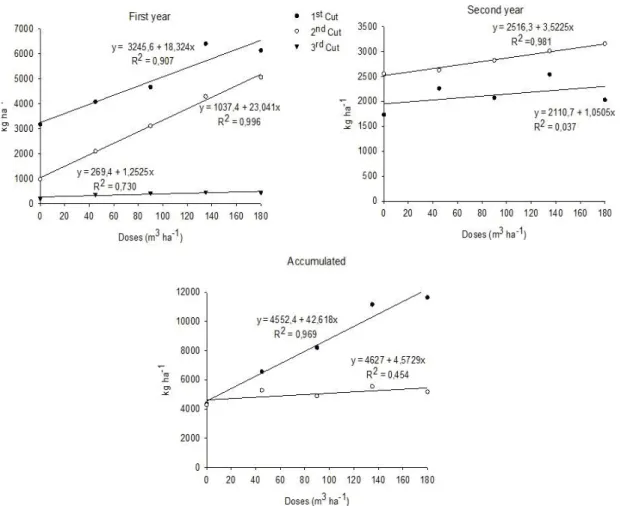
Figure 3. Dry matter yield in the first year (three cuttings) and second year (two cuttings) plotted against the accumulated yield of hermarthria grass treated with different rates of LWEin a pasture in the municipality of Fazenda Rio Grande, Paraná State, Brazil.
fertilized with 600 kg ha-1 year-1 of N. Therefore,
LWE may provide high yields in increments when applied to selected grass pastures.
The increase in dry matter productivity due to LWE application was linear for the first, second and third pasture cuttings (Figure 3). For each m3
of LWE applied, dry matter was enhanced by 42.6 kg ha-1, which corresponds to dry matter totals of
1.3, 18.3 and 23 kg ha-1 for the first, second and
third cuttings, respectively. The equation in Figure 3 suggests that pasture dry matter productivity can increase nearly 2-fold when approximately 105 m³ LWE is applied. In the second year, the slopes were 3.5 and 1.05 for the first and second cuttings, respectively.
Conclusion
The application of LWE led to increases in productivity (42.6 kg dry matter m-3 residue) and in
pasture quality based on the N, P and K content in plants in thefirst year after application. Improvement of the soil occurred in terms of acidity and the availability of Ca2+, Mg2+, K+ and P in the 0-10 cm
layer, which indicates that LWE can improve acidity and nutrient content. The concentration of Ca in soil decreased after LWE application, and no change in C content was observed in plant tissue. These results indicate that the application of LWE is a feasible means of fertilization for pastures with acid, low fertility, and/or Cambisol soil.
Acknowledgements
The authors would like to thank the staff of Novozymes (Pedro Luiz Fernandes and Edna Genar Feliciano Maftum), Fabiane Machado Vezzaniand the staff and students of the Department of Soils and Agricultural Engineering at UFPR. This project was conducted with financial support from Novozymes Latin America.
References
256 Giostri et al.
Acta Scientiarum. Agronomy Maringá, v. 36, n. 2, p. 247-257, Apr.-June, 2014
APHA-American Public Health Association. Standard
methods for the examination of water and wastewater. 20th ed. Washington, D.C.: AWWA, 1998.
ARAÚJO, R.; GOEDERT, W. J.; LACERDA, M. P. C. Qualidade de um solo sob diferentes usos e cerrado
nativo. Revista Brasileira de Ciência do Solo, v. 31,
n. 2, p. 1099-1108, 2007.
BRASIL. Ministério da Agricultura, Pecuária e Abastecimento. Secretária de Defesa Agropecuária. Instrução normativa n.º 15, de 2 de maio de 2001.
Diário Oficial da União, Brasília, 17 de julho de 2001.
CANELLAS, L. P.; VELLOSO, A. C. X.; MARCIYEAR, C. R.; RAMALHO, J. F. G. P.; RUMJANEK, V. M.; REZENDE, C. E.; SANTOS, G. A. Propriedades químicas de um cambissolo cultivado com cana-de-açúcar, com preservação do palhiço e adição de vinhaça por longo tempo.
Revista Brasileira de Ciência do Solo, v. 27, n. 2, p. 935-944, 2003.
CAVALLET, L. E.; LUCCHESI, L. A. C.; MORAES, A.; SCHIMIDT, E.; PERONDI, M. A.; FONSECA, R. A. Melhoria da fertilidade do solo decorrentes da adição de enzimas de água residuária da indústria de enzimas.
Revista Brasileira de Engenharia Agrícola e Ambiental, v. 10, n. 3, p. 724-729, 2006.
CORREA, D. A.; SCHEFFER-BASSO, S. M.; FONTANELI, R. S. Efeito da fertilização nitrogenada na produção e composição química de uma pastagem natural.
Revista Brasileira de Agrociência, v. 10, n. 1, p. 17-23, 2006.
COSTA, K. A. P.; FAQUIN, V.; OLIVEIRA, I. P.; SEVERIANO, E. C.; SIMON, G. A.; CARRIJO, M. S. Doses e fontes de nitrogênio na nutrição mineral do capim-marandu. Ciência Animal Brasileira, v. 10, n. 2, p. 115-123, 2009.
DURIGON, R.; CERETTA, C. A.; BASSO, C. J.; BARCELLOS, L. A. R.; PAVINATO, P. S. Produção de forragem em pastagem em pastagem natural com o uso de esterco líquido de suínos. Revista Brasileira de Ciência do Solo, v. 26, n. 2, p. 983-992, 2002.
EMBRAPA-Empresa Brasileira de Pesquisa Agropecuária.
Sistema brasileiro de classificação de solos. Brasília: Embrapa Produção de Informação, 2006. p. 215.
GATIBONI, L. C.; KAMINSKI, J.; PELLEGRINI, J. B. R.; BRUNETTO, G.; SAGGIN, A.; FLORES, J. P. C. Influência da adubação fosfatada e da introdução de espécies forrageiras de inverno na oferta de forragem de
pastagem natural. Pesquisa Agropecuária Brasileira,
v. 35, n. 8, p. 1663-1668, 2000.
GEOHRING, L. D.; MCHUGH, O. V.; WALTER, M. T.; STEENHUIS, T. S.; AKHTAR, M. S.; WALTER, M. F. Phosphorus transport into subsurface drains by macropores after manure applications: implications for best
management practices. Soil Science, v. 166, n. 12,
p. 896-909, 2001.
IAPAR-Instituto Agronômico do Paraná. Cartas
climáticas do Estado do Paraná. Londrina: Iapar, 1994.
IAPAR-Instituto Agronômico do Estado do Paraná.
Cartas climáticas do Estado do Paraná. Ed. 2000. Available from: <http://www.iapar.br/Sma/Cartas_Climaticas /Cartas_Climaticas.htm>. Access on: June 23, 2008. IBGE-Instituto Brasileiro de Geografia e Estatística.
Resultado do censo agropecuário 2010 para o Estado do Paraná (resultado preliminar). Available from:<http://www.ibge.gov.br/estadosat/temas.php?sigl a=pr&tema=censoagro>. Access on: Jan. 11, 2011. KINGERY, W. L.; WOOD, C. W.; DELANEY, D. P.; WILIANS, J. C.; MULLINS, G. L. Impact of long-term land application of broiler litter on environmentally related soil properties. Journal Environmental Quality, v. 23, n. 1, p. 139-147, 1994.
MACEDO, W.; BRASIL, N. E.; PATELLA, J. F. Calcário na implantação em cobertura de leguminosas de inverno.
Pesquisa Agropecuária Brasileira, v. 14, n. 2, p. 125-134, 1979.
MARQUES, R.; MOTTA, A. C. V. Análise química do
solo para fins de fertilidade. In: LIMA, M. R. (Org.)
Manual de diagnóstico da fertilidade e manejo dos solos agrícolas. Curitiba: Universidade Federal do Paraná, 2003. p. 82-101.
MAZZA, L. M.; FERRARO, F. P.; GARCIA, R. F.; CHEROBIM, V. F.; MOTTA, A. C. V.; MORAES, A. Efeito da adubação nitrogenada na composição química de
uma pastagem de capim Mombaça (Panicum maximum) na
região metropolitana de Curitiba. Scientia Agraria, v. 10, n. 4, p. 257-265, 2009.
PAVAN, M. A. Mobilização orgânica do calcário no solo através de adubo verde. In: PAULETTI, V.;
SEGANFREDO, R. (Ed.). Plantio direto: atualização
tecnológica. São Paulo: Fundação Cargill; Fundação ABC, 1999. p. 45-52.
PETRERE C.; ANGHINONI, I. Alteração de atributos químicos no perfil do solo pela calagem superficial em campo nativo. Revista Brasileira de Ciência do Solo,v. 25, n. 4, p. 885-895. 2001.
POWER, J.; SUTTON, A. Integrated animal waste
management. Task Force Report, n. 128, p. 56-60, 1996. (Council for Agricultural Science and Technology).
RAIJ, B.; CANTARELLA, H.; QUAGGIO, J. A.;
FURLANI, A. M. C. Recomendações de adubação e
calagem para o estado de São Paulo. 2. ed. Campinas: Instituto Agronômico; Fundação IAC, 1996. p. 285.
RAIJ, B.; QUAGGIO, J. A.; CANTARELLA, H.; FERREIRA, M. E.; LOPES, A. S.; BATAGLIA, O. C.
Análise química do solo para fins de fertilidade. Campinas: Fundação Cargill, 1987. p. 170.
REISSMAN, B. C.; MARTINS, A. P. L. Material vegetal e as rotinas laboratoriais nos procedimentos químico analíticos. Scientia Agraria, v. 8, n. 1, p. 1-17, 2007. SHARPLEY, A. N.; SMITH, S. J.; BAIN, W. R. Nitrogen and phosphorus fate from long-term poultry litter
applications to Oklahoma soils. American Soil Science
Society Journal, v. 57, n. 1, p. 1131-1137, 1993.
Effects of industrial residue on pasture growth 257
Grande do Sul. Pesquisa Agropecuária Brasileira,
v. 31, n. 12, p. 897-904, 1996.
SILVA, R. M.; SIEWERDT, L.; SILVEIRA JÚNIOR, P.; SIEWERDT, F. Níveis e fracionamento da aplicação do nitrogênio nos teores de proteína bruta e macro-elementos na forragem de campo natural de Planosolo. Revista Brasileira de Agrociência, v. 2, n. 1, p. 165-170, 1996.
Received on August 23, 2011. Accepted on August 1, 2012.