UNIVERSIDADE do ALGARVE
Faculdade de Ciências e Tecnologia
Bio-removal of toxic metals by metal
resistant anaerobic bacteria: molecular
characterization and performance studies
Mónica Sofia Furtado Martins Neves
Doutoramento em Ciências Biotecnológicas
Área de Especialização: Biotecnologia Ambiental
Faro
2010
Faculdade de Ciências e Tecnologia
Bio-removal of toxic metals by metal
resistant anaerobic bacteria: molecular
characterization and performance studies
Mónica Sofia Furtado Martins Neves
Orientador: Maria Clara Semedo da Silva Costa
Co-orientador: Raul José Jorge Barros
Doutoramento em Ciências Biotecnológicas
Área de Especialização: Biotecnologia Ambiental
Faro
2010
The present thesis was supported by Fundação para a Ciência e a Tecnologia through a PhD grant (SFRH/BD/29677/2006) and the Project ECOTEC (POCI/AMB/58512/2004).
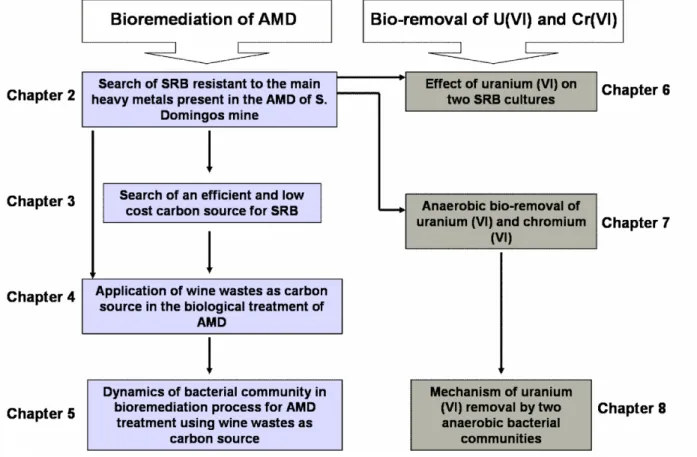
The objective of the research described in this thesis was the identification and characterization of anaerobic bacterial communities with high metal resistance and ability for metal removal, thus with potential for application in bioremediation processes.
A sulphate-reducing bacteria (SRB) consortium resistant to high concentrations of heavy metals (Fe, Cu, Zn), similar to those typically present in acid mine drainage (AMD), was obtained from a wastewater treatment plant. Moreover, this consortium showed ability to use wine wastes as carbon and electron source. The phylogenetic analysis of the dsr gene sequence revealed that this consortium contains species of SRB affiliated to Desulfovibrio
fructosovorans, Desulfovibrio aminophilus and Desulfovibrio desulfuricans. Wine wastes
as carbon source for SRB activity were applied with success in a bioremediation process for the treatment of artificial AMD. TGGE fingerprinting and phylogenetic analysis showed that the composition of the community in the bioreactor fed with wine wastes remained stable during the whole time of operation and its bacterial diversity was higher than the community in the bioreactor fed with ethanol.
Several microbial communities were investigated for their ability to remove uranium (VI) and additionally the impact of U(VI) on SRB communities was explored. Although the original communities were mainly composed by SRB, after uranium exposure these bacteria were not detected in the communities. The highest efficiency for U(VI) removal was observed with a consortium from a soil collected in Monchique thermal place. Moreover this community also showed ability to remove Cr(VI). However when U(VI) was replaced by Cr(VI) several differences in the structure of the bacterial community were observed. The mechanism of U(VI) removal by this consortium was also investigated and was found that U(VI) removal occurred by enzymatic reduction and bioaccumulation. Phylogenetic analysis of 16S rRNA showed that this community was mainly composed by bacteria closely related to Sporotalea genus and Rhodocyclaceae family.
Resumo
O principal objectivo do presente trabalho foi identificar e caracterizar comunidades de bactérias anaeróbias resistentes a metais tóxicos e com capacidade para os remover, consequentemente, com elevado potencial para serem aplicadas em processos de biorremediação de águas e efluentes contaminados com metais, nomeadamente águas ácidas de mina (AMD), e efluentes contendo urânio ou crómio.
As AMD possuem um pH muito baixo e contêm normalmente elevadas concentrações de metais pesados e sulfato. Assim, o tratamento biológico com bactérias redutoras de sulfato (BSR) tem sido considerado uma alternativa promissora para a descontaminação de AMD. As BSR são consideradas importantes membros da comunidade microbiana, sendo interessantes tanto ao nível económico como ambiental e biotecnológico. Estas bactérias utilizam o sulfato como aceitador de electrões na degradação da matéria orgânica, produzindo sulfureto de hidrogénio. O sulfureto de hidrogénio gerado reage com determinados metais pesados, tais como ferro, cobre e zinco, produzindo sulfuretos metálicos que são bastante insolúveis. Assim, através da utilização das BSR num processo de biorremediação para o tratamento da AMD consegue-se eliminar simultaneamente os sulfatos e metais pesados. Para o desenvolvimento de um processo eficiente de biorremediação da AMD são necessárias BSR resistentes às concentrações de metais pesados que normalmente estão presentes nestas águas. Os metais pesados são normalmente tóxicos para os microorganismos inclusive para as BSR. A toxicidade dos metais pesados deve-se ao facto destes terem capacidade de se ligarem às células através da substituição dos iões essenciais e de bloquearem os grupos funcionais de moléculas importantes, como por exemplo as enzimas. Assim, os metais podem provocar a lise celular e a inactivação das enzimas. Deste modo é necessário pesquisar BSR resistentes aos metais pesados que se pretendem eliminar.
Neste trabalho conseguiu-se isolar um consórcio bacteriano contendo BSR com uma elevada resistência a metais pesados (Fe, Cu e Zn) a partir de lamas de uma estação de tratamento de águas residuais. Este consórcio mostrou suportar as concentrações destes metais que normalmente se encontram presentes nas AMD. A análise filogenética revelou que este consórcio bacteriano continha espécies de BSR afiliadas com Desulfovibrio
redução do sulfato. Visto que o lactato é uma fonte de carbono mais dispendiosa do que o etanol, assim é preferível num processo de biorremediação usar o etanol para promover a actividade destas BSR. Normalmente as AMD não possuem elevadas concentrações de compostos que possam funcionar como fonte de carbono e de electrões para as BSR, pelo que é necessário adicionar uma fonte externa, de forma a promover a actividade bacteriana. Assim, foi investigada a possibilidade de usar resíduos de indústrias alimentares (indústrias vinícolas e queijarias) como fonte de carbono e de electrões para as BSR, visto que estes resíduos são largamente produzidos em Portugal. Observou-se que os resíduos de uma indústria vinícola (que contém etanol) podem ser usados eficientemente pelas BSR como fonte de carbono e de electrões, desde que misturados com lama de mármore, que também é um resíduo. A lama de mármore funcionou como tampão e agente neutralizante. Verificou-se que o consórcio bacteriano com capacidade para usar resíduos vinícolas como fonte de carbono e de electrões era constituído por espécies de Desulfovibrio
fructosovorans, Desulfovibrio aminophilus e Desulfovibrio desulfuricans. Posteriormente,
investigou-se a aplicação dos resíduos vinícolas como fonte de carbono e de electrões para a actividade das BSR num processo de biorremediação para o tratamento da AMD. Verificou-se, tal como nos estudos anteriores, que estes resíduos promoveram uma eficiente actividade das BSR e consequentemente o sistema de biorremediação apresentou uma eficiente performance no tratamento da AMD, conseguindo produzir água tratada com características, em termos de pH, sulfato e metais (Fe, Cu e Zn), que cumprem a legislação em vigor para água de rega.
Para além da eficiência do processo de biorremediação da AMD usando resíduos vinícolas como fonte de carbono e de nutrientes foi também estudada a dinâmica das populações bacterianas no sistema de biorremediação, através da técnica de electroforese em gel com gradiente de temperatura (TGGE) e da análise filogenética. Procedeu-se também à comparação da estrutura da população bacteriana desenvolvida no biorreactor alimentado com resíduos vinícolas com a estrutura desenvolvida no biorreactor alimentado com etanol. O perfil de TGGE e a análise filogenética mostraram que a composição da comunidade bacteriana no biorreactor alimentado com resíduos vinícolas permaneceu estável durante todo tratamento e que possui uma maior diversidade bacteriana comparativamente com o
biorreactor alimentado com etanol. Através da análise filogenética das bandas do TGGE observou-se que a comunidade bacteriana no biorreactor alimentado com resíduos vinícolas era constituída por bactérias afiliadas com os géneros Desulfovibrio, Clostridium,
Citrobacter e Cronobacter e com a ordem Bacteroidales, enquanto a comunidade
dominante desenvolvida no biorreactor alimentado com etanol era composta por bactérias pertencentes somente ao género Desulfovibrio. A presença de diferentes grupos bacterianos no biorreactor alimentado com resíduos vinícolas sugere que talvez ocorra uma interacção sinérgica entre as diferentes populações bacterianas. Esta sinergia poderá ser a razão pela qual as BSR conseguem utilizar o resíduo vinícola, que é um substrato orgânico complexo, como fonte de carbono e de electrões na redução do sulfato.
Algumas águas subterrâneas e superficiais estão contaminadas com urânio. Esta contaminação poderá ser o resultado de processos naturais, actividades mineiras ou descargas de material nuclear para o ambiente. As técnicas convencionais aplicadas na remoção de urânio de soluções aquosas são normalmente baseadas em processos físico-químicos, como por exemplo precipitação através da adição de carbonatos. No entanto estas técnicas têm elevados custos associados e limitações técnicas.
Actualmente a biorremediação é considerada como uma potencial alternativa aos métodos convencionais de remoção de urânio, uma vez que possui varias vantagens tais como baixos custos operativos e uma elevada eficiência no tratamento de efluentes com concentrações baixas de urânio.
Durante as últimas duas décadas tem-se vindo a descobrir que diversos grupos de microrganismos possuem capacidade para remover urânio de soluções aquosas. As BSR são um exemplo desses microrganismos. Algumas destas bactérias tem capacidade para reduzir enzimaticamente o urânio (VI) a urânio (IV) que é bastante insolúvel, ao contrário do urânio (VI). Consequentemente as BSR são consideradas como potenciais candidatas para serem aplicadas em processos de biorremediação de águas e efluentes contaminados com urânio. Assim, investigou-se a capacidade de várias comunidades de BSR para removerem urânio (VI) de soluções aquosas. Adicionalmente, investigou-se o efeito do urânio (VI) na estrutura das comunidades bacterianas através da análise por TGGE. Conseguiu-se obter consórcios com capacidade para remover urânio (VI) a partir das comunidades de BSR, tendo-se verificado no entanto uma drástica alteração na composição das comunidades bacterianas durante a exposição ao urânio (VI). Surpreendentemente as
necessidade de monitorizar as populações dominantes durante os estudos de bio-remoção. Através da análise filogenética das bandas do TGGE observou-se que os consórcios bacterianos com habilidade para remover urânio eram constituídos por bactérias afiliadas com o género Clostridium e com as famílias Caulobacteraceae e Rhodocyclaceae. Assim estas bactérias possuem potencial para serem aplicadas em processos de biorremediação de águas e efluentes contaminados com urânio.
Visto que o urânio (VI) e o crómio (VI) possuem algumas semelhanças nomeadamente o mesmo estado de oxidação da forma mais solúvel e a possibilidade de serem reduzidos por via biológica originando estados de oxidação insolúveis, U(IV) e Cr(III), foi investigada a possibilidade das comunidades bacterianas com capacidade para removerem o U(VI) terem também capacidade de remover o Cr(VI). Para atingir este objectivo estudou-se a capacidade de remoção de U(VI) por comunidades bacterianas obtidas a partir de diversas amostras ambientais, umas contaminadas com urânio e outras não contaminadas. Posteriormente as comunidades que demonstraram capacidade para remover U(VI) foram testadas também para a remoção de Cr(VI). Também se comparou a estrutura das comunidades bacterianas com capacidade de remover urânio (VI) com a das comunidades bacterianas que demonstraram capacidade para remover crómio (VI). Esta comparação foi realizada através da análise por TGGE. Verificou-se que de todas as comunidades bacterianas testadas, somente três é que mostraram habilidade para remover urânio (VI): uma proveniente de amostras de solo das termas de Monchique, outra proveniente de lamas da uma zona húmida da mina da Urgeiriça e outra proveniente de sedimentos da mina da Urgeiriça. A maior eficiência de remoção de ambos os metais foi observada com um consórcio bacteriano obtido a partir de amostras de solo das termas de Monchique. Este consoórcio conseguiu remover 91% de U(VI) de uma solução que continha 22 mg/L e 99% de Cr(VI) de uma solução que continha 13 mg/L deCr(VI). Este estudo demonstrou que as comunidades com capacidade para remover urânio (VI) também possuem capacidade para remover crómio (VI). No entanto observaram-se diversas diferenças na estrutura das comunidades quando o urânio (VI) foi substituído por crómio (VI). Através da análise filogenética das bandas do TGGE, verificou-se que os consórcios bacterianos com capacidade para remover urânio eram maioritariamente constituídos por bactérias afiliadas
com o género Clostridium e com a família Rhodocyclaceae, enquanto que as comunidades estabelecidas na presença do crómio (VI) eram maioritariamente compostas por bactérias pertencentes ao género Clostridium e às famílias Rhodocyclaceae e Enterobacteriaceae. Este último grupo foi somente detectado nas comunidades com capacidade de remover o crómio (VI). A presença de bactérias nunca reportadas como possuindo capacidade para remover estes metais, como é o caso das bactérias pertencente às famílias Rhodocyclaceae e Enterobacteriaceae, foi uma importante descoberta encorajando a exploração das potencialidades destes microorganismos para fins de biorremediação. Uma vez que estas comunidades são constituídas por espécies bacterianas pouco ou nada exploradas em termos de biorremediação, o mecanismo envolvido na remoção de urânio (VI) não está ainda esclarecido. Tem sido demonstrado que os microrganismos possuem diversos mecanismos de remoção de metais como por exemplo acumulação do metal no interior das células, adsorção à superfície celular e alteração do estado de oxidação do metal, tornando-o mentornando-os stornando-olúvel. Este últimtornando-o mecanismtornando-o é ntornando-ormalmente realizadtornando-o ptornando-or interméditornando-o de enzimas existentes nas células. Assim, para obter conhecimentos sobre a remoção de urânio (VI) pelas comunidades bacterianas descobertas anteriormente, procedeu-se ao estudo do mecanismo envolvido na remoção de urânio (VI) de duas das comunidades bacterianas: uma proveniente de um local não contaminado (termas de Monchique) e outra proveniente de uma mina de urânio (mina da Urgeiriça). A remoção de U(VI) foi testada na presença de células vivas, células mortas e produtos produzidos extracelularmente pelas bactérias. Em ambos os consórcios observou-se somente remoção de U(VI) na presença de células vivas e verificou-se, através da análise de difracção por raio X, a presença de U(IV) no precipitado produzido biologicamente. Através da análise das células bacterianas por microscopia electrónica de transmissão (TEM) observou-se a presença de precipitados densos maioritariamente na região periplasmática das células de ambos os consórcios e precipitados arredondados no citoplasma de algumas células do consórcio proveniente das amostras de solo das termas de Monchique. Estes resultados sugerem que a remoção de urânio (VI) pelo consórcio bacteriano proveniente de amostras de solo das termas de Monchique ocorreu por redução enzimática e por bioacumulação, enquanto que a redução enzimática provavelmente foi o único mecanismo envolvido na remoção de urânio (VI) pelo consórcio proveniente de sedimentos da mina da Urgeiriça. Os resultados da análise por espectrometria de infravermelho por transformada de Fourier (FTIR) sugeriram que
sequenciação do gene 16S rRNA, mostrou que a comunidade proveniente de amostras de solo das termas de Monchique era maioritariamente constituída por bactérias afiliadas com o género Sporotalea e com a família Rhodocyclaceae, enquanto que a comunidade proveniente de sedimentos da mina da Urgeiriça era maioritariamente composta por bactérias afiliadas com o género Clostridium e também com a família Rhodocyclaceae. Tendo em conta que existe uma grande diversidade de microrganismos na natureza é de grande importância pesquisar e caracterizar comunidades bacterianas resistentes a metais e com capacidade para os remover. Com este trabalho conseguiu-se demonstrar que é possível obter consórcios bacterianos a partir de amostras ambientais com potencialidades para serem aplicados em processos de biorremediação de águas e efluentes contaminados com metais. Conclui-se também que a exposição das comunidades a diferentes metais promove o crescimento de diferentes populações bacterianas, o que enfatiza a necessidade de, para além de monitorizar a eficiência de remoção dos metais, monitorizar as populações bacterianas dominantes envolvidas nos estudos de biorremediação. A identificação das comunidades bacterianas, bem como o conhecimento sobre as interacções entre as bactérias e os metais poderão contribuir para o desenvolvimento de estratégias de biorremediação mais eficientes.
Palavras-chave: Comunidades bacterianas, Biorremediação, AMD, Urânio (VI), Crómio (VI)
“O valor das coisas não está no tempo em que elas duram, mas na intensidade com que acontecem. Por isso existem momentos inesquecíveis, coisas inexplicáveis e pessoas incomparáveis"
Chapter 1 General introduction
1
Chapter 2 Characterization and activity studies of highly heavy metal resistant sulphate-reducing bacteria to be used in acid mine drainage
decontamination
43
Chapter 3 Biological sulphate reduction using food industry wastes as carbon sources
64
Chapter 4 Wine wastes as carbon source for biological treatment of acid mine drainage
81
Chapter 5 Dynamics of bacterial community in up-flow anaerobic packed bed system for acid mine drainage treatment using wine wastes as carbon source
97
Chapter 6 Effect of uranium (VI) on two sulphate-reducing bacteria cultures from a uranium mine site
115
Chapter 7 Anaerobic bio-removal of uranium (VI) and chromium (VI): Comparison of microbial community structure
137
Chapter 8 Mechanism of uranium (VI) removal by two anaerobic bacterial communities
161
Chapter 9 Concluding remarks and future perspectives 185
Appendixes 189
Acknowledgements 190
About the author 192
Chapter
1
1. Introduction
Metals constitute about 75% of the known elements. They are distributed all over the earth (Raab and Feldmann, 2003; Gadd 2010) and are usually classified in the following three categories: toxic metals (such as Cr, Zn, Cu, Ni, Cd, As, etc.), precious metals (such as Pd, Pt, Ag, Au, etc.) and radionuclides (such as U, Th, Ra, Am, etc.) (Bishop, 2002; Wang and Chen, 2006). Metals are a kind of resource that is becoming rarer. However, due to their increasing application, the heavy metals pollution has accordingly become one of the most serious environmental problems.
Current and past mining activities are considered as the principal sources of metal contamination in soils and waters (Johnson and Hallberg, 2005). The mining industry produces acidic wastewaters containing high concentrations of sulphate, heavy metals and metalloids (such as arsenic) (Nagpal et al., 2000; Garcia et al., 2001; Johnson and Hallberg, 2005). Such waters, known as acid mine drainage (AMD), are considered one of the major environmental problems faced by the mining industries (Chockalingam and Subramanian, 2009). Uranium mining activities have also resulted in the generation of large amounts of wastes containing different heavy metals and radionuclides with severe impact in the environment (Lloyd and Macaskie, 2000). Moreover, with the rapid development of several industries (including energy and fuel production, fertilizer and pesticide, electroplating, photography, dyes, textile), wastes containing metals are directly or indirectly discharged into environment (Barnhart, 1997; Bishop, 2002; Wang and Chen, 2006). Heavy metal contamination represents a severe environmental concern owing to their hazardous impact, causing serious damage to human health, biodiversity and ecosystems (Navarro et al., 2008).
Physicochemical methods, such as chemical neutralization followed by hydroxide or carbonate precipitation of metals, solvent extraction, ion exchange processes, adsorption on activated carbon and membrane technologies have been conventionally employed for heavy metals removal from industrial wastewaters (Lanouette, 1977; Shokes and Moller, 1999; Burgess and Stuetz, 2002; Wang and Chen, 2006). However, these methods have significant disadvantages, such as incomplete metal removal, cost (high reagent and/or energy requirements) generation of toxic sludge or other waste pollutants, and they are not
Chapter 1: General introduction
3
selective enough to allow the recovery of heavy metals present in the effluent (Chubar et
al., 2004; Saeed et al., 2005; Chen et al., 2008). For theses reasons, research and
development focused on the search of better decontamination methods and new technologies has been intensive.
Bioremediation strategies based on the use of microorganisms are considered a potential alternative and an economically attractive approach that offers several advantages over the traditional techniques, such as low operating costs, minimum production of disposable sludge volume and high efficiency in detoxifying very dilute effluents (Valls and de Lorenzo, 2002). However, heavy metals are generally toxic for microorganisms, due to substitution of essential ions on cellular sites, and blockage of functional groups of important molecules such as enzymes (Gonzalez-Silva et al., 2009). This results in denaturation and inactivation of enzymes and disruption of cell organelle membrane integrity (Sani et al., 2001; Cabrera et al., 2006). In order to develop an efficient bioremediation process, selection of the most efficient metal-resistant bacteria is required The present study focuses in the identification and characterization of anaerobic bacterial communities with high metal resistance and ability for metal removal, thus with potential for application in bioremediation processes for treatment of wastewaters containing metals, namely AMD, wastewaters containing uranium and industrial effluents contaminated with chromium.
2. Wastewaters containing metals
2.1. Acid mine drainage
Acid mine drainage (AMD), also known as acid rock drainage (ARD), results from mining activities where pyritic minerals have been exposed to water and oxygen (Roman et al., 2008). During mining exploration oxygen and water was introduced into the deep geological environment leading to the oxidation of minerals (Christensen et al., 1996; Banks et al., 1997). Oxidation also occurs when reduced minerals (mainly sulphide) are brought to the surface and deposited in heaps (Banks et al., 1997). The oxidation of sulphide minerals leads to the formation of acidic wastewaters containing high
concentrations of sulphate and metallic ions, known as AMD (Kaksonen and Puhakka, 2007; Costa et al., 2008; Pérez-López et al., 2008). Metals concentration in AMD is determinate by the composition of the minerals. The low concentration of organic matter (below to 20 mg/L) presents a problem for bioremediation of these wastewaters (Johnson and Hallberg 2003).
AMD is currently one of the most widespread forms of pollution worldwide (Tabak et al., 2003, Pinto and Silva, 2005). This problem is also very important in Portugal where extensive sulphide mining activities played an important role from pre-historic until recent times. Nevertheless, in the last decades practically all the mining activities have been suspended and as a consequence several mine sites have been left untreated (Oliveira et al., 2000). Portugal has about 175 abandoned mine sites and 14% of the 85 abandoned mines studied by Oliveira et al., in 2002, were found to generate AMD and/or to pose a high degree of environmental risk. Examples of such source of pollution are mines of S. Domingos (Fig. 1.1), Aljustrel, Caveira and Lousal (Pinto and Silva, 2005).
Fig. 1.1 São Domingos mine: open pit lake (left) and AMD (right). (Photos: Mónica Martins).
The abandoned copper mine of São Domingos, located in Mértola (Beja District) is one of the most emblematic Portuguese mining sites in the Iberian Pyrite Belt (IPB). The beginning of mining exploitation in the area dated back to the pre-Roman period, remaining in activity until 1966, when it was definitely closed. The intense mining activity is reflected by the presence of huge volumes of AMD (Pérez-López et al., 2008). The AMD from S. Domingos is highly acidic (pH around 2) and is characterised by high concentrations of heavy metals, mainly Fe (500 mg/L), Cu (50 mg/L), Zn (110 mg/L) and sulphate (3100 mg/L) (Costa and Duarte, 2005; Costa et al., 2008). These characteristics make this AMD
Chapter 1: General introduction
5
an excellent candidate for the application of a treatment based in the SRB activity for metal precipitation through biologic sulphate reduction.
2.2. Wastewaters containing radionuclides
Uranium mining and mineral processing for production of nuclear power have resulted in the generation of significant amounts of wastes containing radionuclides (mainly uranium) with severe impact on environment (Gorby and Lovley, 1992; Choudhary and Sar, 2009). Due to the use of sulphuric or nitric acid as extractants in the operation, these wastewaters are generally characterised by very low pH, high levels of uranium, heavy metals, sulphate and nitrate (Yi et al., 2007).
Portugal was particularly rich in uranium mines (e.g. Urgeiriça, Cunha Baixa, Quinta do Bispo, Vale de Abrutiga) (Pinto and Silva, 2005). In the last century 4370 tons of U3O8,
radio salts and about 13 millions tons of different kinds of wastes were produced in Portugal (Nero et al., 2003). Underground and open pit mining were the main extraction techniques used, as well as in situ-leaching to recover uranium from the poorest ore (Nero
et al., 2003). Wastewaters produced by in situ-leaching process still persist in all of the
areas where uranium mining occurred, even after the exploration has ceased (Pereira et al., 2008). The abandoned uranium mine of Urgeiriça located in Canas de Senhorim (Viseu district, North Portugal) is an example of such source of contamination. Urgeiriça mine exploration began in 1913 for radium extraction and this activity was maintained until 1944. After this year, this mine was exclusively dedicated to the production of uranium (Madruga et al., 2001). The mine exploration has been stopped in the decade of 90.
Radionuclides like uranium are of particular concern due to their high toxicity and long half lives. Uranium can be characterised as a heavy, ductile and slightly paramagnetic metal and is widely dispersed in the earths crust, rocks and soils at the level of about 2-4 ppm by weight (Gavrilescu et al., 2009). Uranium is in fact more abundant than gold, silver, mercury or cadmium (Gavrilescu et al., 2009).
Natural uranium exists in three different forms (isotopes): 238U, 235U, and 234U, in relative abundances of 99.27 %, 0.72 %, and 0.0055 %, respectively (Eisenbud and Gesell, 1997). Uranium can exist in the +3, +4, +5 and +6 oxidation states, however only U(IV) and
U(VI) are stable in aqueous solution. Uranium exists in solution predominantly as U (VI) in the form of divalent oxocomplex (UO22+) and as soluble carbonate complexes (Gavrilescu
et al., 2009).
Uranium (IV) is very insoluble forming uraninite (UO2), on the other hand uranium (VI) is
much more soluble and mobile (Gavrilescu et al., 2009). Therefore the reduction of U(VI) to U(IV) by some microorganisms has been viewed as a potential mechanism for sequestration of environmental uranium contamination (Wall and Krumholz, 2006).
2.3. Wastewaters containing chromium
Chromium is one of the metals most widely used in the industry. Consequently, large amounts of chromium are discharged into the environment (Remoundaki et al., 2007) due to inadequate waste treatment (Chen and Hao, 1998). Leather tanning, electroplating, metallurgy, petroleum refining, textile manufacturing and metal finishing are the major sources of chromium discharge (Barnhart, 1997; Remoundaki et al., 2007).
Textile manufacturing is considered as the most polluting of all industrial sectors (Khelifi et
al., 2009). In fact, several pollutants are present in textile effluents such as dyes, heavy
metals (e.g. chromium) and sulphate salts (Cetin et al., 2008). The chromium complex in textile dyes is formed through the chemical reaction between Cr2O3 and a variety of azo
organic compounds (Cetin et al., 2008). The structure of these chromium complexes is very stable and hard to destroy (Delee et al., 1998). In the automotive sector, hexavalent chromium is used in surface treatment in order to ensure anti-corrosion protection of metallic components in steel or aluminum, friction facilitation and decoration (Remoundaki
et al., 2007).
The aqueous solubility of chromium and its toxicity are strongly dependent on its oxidation state (Chardin et al., 2002). Chromium exists in a number of oxidation states being the most stable and common forms the trivalent, Cr(III), and the hexavalent, Cr(VI), (Remoundaki et al., 2007; Thacker et al., 2007). Cr(VI) is highly soluble and thus, mobile and bio-available in aquatic systems (Chung et al., 2006). Cr(VI) is known as carcinogenic and mutagenic, being actively transported into cells via the anion transport pathway (Stearns et al., 1995; Flores and Pérez 1999; Shi et al., 1999). In contrast, Cr(III) has relatively low toxicity and tends to form insoluble and strong complexes with hydroxides at
Chapter 1: General introduction
7
neutral pH (Rai et al., 1989;Palmer and Wittbrodt, 1991). Biotransformation of Cr(VI) to non toxic Cr(III) by microorganisms offers an economical and eco-friendly option for treatment of waters contaminated with chromium (Pal et al., 2005).
3. Biologic sulphate reduction applied in the treatment of
wastewaters containing metals
The role of SRB in acid mine waters was first explored by Colmer and Hinkle (1947) and since then microbial remediation of sulphate and metal-containing wastewater was applied in several passive and active processes (Tuttle et al., 1969). Due to combined removal of metals and sulphate, the biological treatment with SRB is considered the most promising alternative for the treatment of several types of industrial wastewaters, namely AMD (Johnson and Hallberg 2005; Neculita et al. 2007).
3.1. Diversity of sulphate-reducing bacteria
SRB constitute a diverse group of prokaryotes phylogenetically and metabolically versatile and may represent the first respiring microorganisms with subsequent role in the biochemistry of the various environments (Barton and Fauque, 2009). Until the early 1980s it was thought that sulphate reducers played only a minor part in the carbon cycle. However, through the research carried by Fritz Widdel (1980), it was discovered that SRB are the main players in anaerobic carbon cycling (Muyzer and Stams, 2008). SRB have successfully adapted to almost all the ecosystems of the planet and consequently they are widespread in anoxic habitats such as marine sediments, hydrothermal vents and hydrocarbon seeps (Muyzer and Stams, 2008; Barton and Fauque, 2009). SRB can also be found in habitats with extreme pH values such as mining wastewaters, where pH can be as low as 2 and in soda lakes, where pH can be as high as 10 (Muyzer and Stams, 2008). They are also present in aquifers and in engineered systems, such as anaerobic wastewater treatment plants (Muyzer and Stams, 2008; Barton and Fauque, 2009).
Based in analysis of 16S rRNA gene sequences, the known SRB can be grouped into seven phylogenetic groups: five within the bacteria and two within the Archaea (Table 1.1).
Table 1.1 Phylogeny of sulphate-reducing prokaryotes (Castro et al., 2000; Garrity et al., 2003; Meyer and Kuever, 2007; Muyzer and Stams, 2008).
Phylum Class Family Genus
Desulfovibrionaceae Desulfovibrio Desulfacinum; Desurforhabdus Desulfovirga Syntrophobacteraceae Thermodesulforhabdus Desulfomonile Syntrophaceae Desulfobacca Desulfobacterium Desulfobacter Desulfobacula Desulfobotulus Desulfocella Desulfococcus Desulfofrigus Desulfonema Desulfofaba Desulforegula Desulfosarcina Desulfospira Desulfobacteraceae Desulfotignum Desulfobulbus Desulfocapsa Desulforhopalus Desulfofustis Desulfobulbaceae Desulfortalea Desulfarculaceae Desurfarculus Desulfonatronumaceae Desulfonatronum Desulfomicrobium Desulfomicrobiaceae Desulfocaldus Desulfohalobium Desulfonatronovibrio Desulfonauticus Proteobacteria Delta-proteobacteria Desulfohalobiaceae Desulfothermus Desulfotomaculum Desulfosporosinus
Firmicutes Clostridia Peptococcaceae
Desulfosporomusa Thermodesulfobacterium Thermo- desulfobacteria Thermo- desulfobacteria Thermo- desulfobacteriaceae Thermodesulfatator
Nitrospira Nitrospira Nitrospiraceae Thermodesulfovibrio
Unclassified Unclassified Thermodesulfobiaceae Thermodesulfobium
Euryarchaeota Archaeoglobi Archaeoglobaceae Archaeoglobus Thermocladium
Crenarchaeota Thermoprotei Thermoproteaceae
Chapter 1: General introduction
9
All of the SRB groups are characterised by their use of sulphate as a terminal electron acceptor during anaerobic respiration. Most of the sulphate reducers belong to Deltaproteobacteria. The majority of SRB of this class are mesophilic, however
Desulfacinum and Thermodesulforhabdus are thermophilic (Castro et al., 2000). The class
Clostridia contains SRB affiliated to Desulfosporomusa, Desulfosporosinus and
Desulfotomaculum. This bacterial group includes the only SRB known to form
heat-resistant endospores (Castro et al., 2000) and all are Gram-positive. Some species of
Desulfotomaculum are thermophilic, although their optimal growth temperatures are lower
than those of thermophilic Gram-negative (Desulfacinum and Thermodesulforhabdus genera) and archaeal sulphate reducers (Castro et al., 2000). The Termodesulfobacteriaceae, Nitrospiraceae and Thermodesulfobiaceae families only contain thermophilic SRB. Within Archaea, at present only three genera of sulphate reducers are known: Archaeoglobus, Thermocladium and Caldivirga genera. The archaeal sulphate reducers exhibit optimal growth temperatures above 80ºC, however they can survive at lower temperatures (Castro et al., 2000).
3.2. Sulphate reduction and metals precipitation
3.2.1 Assimilatory and dissmilatory sulphate reduction
Several microorganisms reduce sulphate in the small amounts required for the synthesis of cellular material. This small-scale reduction of sulphate has been known by assimilatory sulphate reduction (Peck, 1961). In assimilatory sulphate reduction, sulphide is not usually produced in detectable amounts from sulphate. A minor group of microorganisms have the ability to reduce sulphate in great excess of nutritional requirements and thus massive amounts of sulphide are produced (Peck, 1961). This large-scale reduction of sulphate to sulphide has been identified by dissimilatory sulphate reduction. In dissimilatory sulphate reduction (also called sulphate respiration) microorganisms use sulphate as an external electron acceptor in the oxidation of energy substrates resulting in the production of sulphide (Peck, 1961; Barton and Fauque, 2009). The major group of microorganisms known to be dissimilatory sulphate reducers are SRB. The pathway of dissimilatory and
assimilatory sulphate reduction is described in Fig. 1.2 (Peck, 1961; Postgate, 1984; Madigan et al., 2003; Barton and Fauque, 2009).
Fig. 1.2 Dissimilatory and assimilatory sulphate reduction: adenosine triphosphate (ATP), adenosine diphosphate (ADP), adenosine 5´-phosphosulphate (APS), inorganic pyrophosphate (PPi), adenosine monophosphate (AMP), phosphoadenosine 5´-phosphosulphate (PAPS) and phosphoadenosine 5´-phosphate (PAP). (Adapted from Postgate, 1984; Madigan et al., 2003)
The first step of assimilatory and dissimilatory sulphate reduction is the activation of the sulphate ion. Sulphate is the unique electron acceptor that must be activated before it can be reduced. This activation is made by means adenosine triphosphate (ATP). The enzyme ATP-sulfurylase catalyzes the binding of sulphate to phosphate group of ATP molecule, forming adenosine 5´-phosphosulphate (APS) and inorganic pyrophosphate (PPi) (Peck, 1961; Postgate, 1984; Madigan et al., 2003; Barton and Fauque, 2009). APS structure is
Chapter 1: General introduction
11
similar to ATP but two of the phosphate groups of ATP are replaced by a sulphate group (Postgate, 1984). The formation of PPi is thermodynamically unfavourable, therefore the reaction needs to be pulled to completion. This last reaction was carried by an inorganic pyrophosphatase (pyrophosphate phosphohydrolase) which hydrolyzes PPi forming phosphate (Peck, 1961; Madigan et al., 2003; Barton and Fauque, 2009).
In dissimilatory sulphate reduction APS is reduced directly to sulphite (SO32-) with the
release of adenosine monophosphate (AMP). This reaction is catalyzed by APS-reductase and it is the first redox reaction. In assimilatory reduction, another phosphate group is added to APS forming phosphoadenosine 5´-phosphosulphate (PAPS) in the presence of the enzyme APS-kinase. Then PAPS is reduced to sulphite, by PAPS reductase, with the release of phosphoadenosine 5´-phosphate (PAP) (Peck, 1961; Postgate, 1984; Madigan et
al., 2003; Barton and Fauque, 2009).
The six-electron reduction of sulphite to sulphide must compensate the energy investment of sulphate activation and yield additional ATP for growth (Barton and Fauque, 2009). The mechanism of sulphite reduction to sulphide is somewhat controversial and two different metabolic pathways have been proposed (Fig. 1.2) (Postgate, 1984; Madigan et al., 2003; Barton and Fauque, 2009):
1) Sulphite is reduced to sulphide in one step, catalyzed by dissimilatory sulphite reductase (DSR) without the formation of free intermediates.
2) Sulphite is reduced to sulphide in three steps using two free intermediates: trithionate (S3O62-) and thiosulphate (S2O32-).
In the dissimilatory sulphate reduction, sulphide is excreted into the environment whereas in assimilatory reduction, the sulphide formed is immediately converted into organic sulphur compounds, such as amino acids (Madigan et al., 2003).
The resulting sulphide from dissimilatory sulphate reduction may dissociate according to the environmental conditions. The following equilibrium equations describe this dissociation (Johnson and Hallberg, 2005):
H2S ↔ HS- + H+ pKa1=6.9 (25ºC) (1.1)
In the optimum pH for SRB activity (around 7) H2S and HS- are the predominant sulphide
forms.
3.2.2 Metal precipitation by biologic sulphide
SRB are anaerobic microorganisms that use sulphate as a terminal electron acceptor for the degradation of organic compounds, resulting in the production of hydrogen sulphide and alkalinity (Kaksonen and Puhakka, 2007; Muyzer and Stams, 2008; Qiu et al., 2009). Biologic hydrogen sulphide reacts additionally with certain metals dissolved in contaminated waters forming insoluble precipitates (White et al. 2003, Costa and Duarte 2005, Vega-López et al. 2007) and, as a result, the concentrations of sulphate and dissolved metals are reduced. The biological transformation process is described in the following reactions, where CH2O represents the electron donor and M2+ metals, such as Zn2+, Cu2+,
Ni2+, Co2+, Fe2+, Hg2+, Pb2+or Cd2+ (Kaksonen and Puhakka, 2007; Qiu et al., 2009):
2 CH2O + SO42- →H2S (g) + 2 HCO3- (1.3)
H2S + M2+ → MS (s) + 2H+ (1.4)
HCO3- + H+ → CO2 (g) + H2O (1.5)
The potential advantages of metal sulphide precipitation include production of lower sludge volume and lower solubility of the metal sulphides generated compared with the corresponding hydroxides or carbonates (Table 1.2) (Bayrakdar et al., 2009; Gonzalez-Silva et al., 2009). Moreover, a high degree of selective metal precipitation is possible with sulphide, as opposed to hydroxide precipitation (Fig. 1.3) (Huisman et al., 2006). Optimal pH values for precipitation of several metals have been suggested by Hammack et al. (1994), Govind et al. (1997) and Tabak et al. (2003): copper can be precipitated as CuS at extremely low pH values (pH ≤ 1.0) without precipitation of other metals, whereas ZnS precipitates at pH values between 2 and 5. Moreover, Fe(II) does not precipitate as FeS until pH reaches values above 4.5. Thus, a selective precipitation of metal sulphides by pH control can be an additional advantage.
Chapter 1: General introduction
13
Table 1.2 Solubility product constants of several metals with hydroxide, carbonate and sulphide ions, Ksp, at 25ºC (Sillen and Martell, 1964).
Ksp Metal OH- CO32- S 2-Cu2+ 2.0 × 10⁻¹⁹ 1.3 × 10⁻¹⁰ 1.0 × 10-36 Fe2+ 2.0 × 10⁻¹⁵ 5.0 × 10⁻¹¹ 1.0 × 10⁻¹⁸ Zn2+ 5.0 × 10⁻¹⁷ 1.0 × 10⁻⁷ 1.0 × 10⁻²³ Cd2+ 2.0 × 10⁻¹⁴ 2.5 × 10⁻¹⁴ 1.0 × 10⁻²⁸ Pb2+ 4.0 × 10⁻¹⁵ 1.6 × 10⁻¹³ 1.0 × 10⁻²⁸ Ni2+ 2.0 × 10⁻¹⁶ 1.3 × 10⁻⁷ 1.0 × 10⁻²²
Fig. 1.3 Solubility of metal hydroxides and sulphides as function of pH (Huisman et al., 2006).
3.3. Electron donor and carbon source for sulphate-reducing bacteria
SRB are known to utilise hydrogen and a number of simple organic compounds such as carboxylic acids (e.g. formate, lactate and acetate) or alcohols (e.g. ethanol and methanol) as energy sources (Table 1.3) (Liamleam and Annachatre, 2007). Oxidation of organic compounds can be incomplete with acetate as a by-product or complete, leading to the final production of carbon dioxide (Postgate, 1984; Muyzer and Stams, 2008). SRB that degrade organic compounds completely normally also use acetate as carbon and electron source (Postgate, 1984; Muyzer and Stams, 2008).
Table 1.3 Sulphate reducing reactions with different electron donors. Gibbs free energy changes were calculated from Thauer et al. (1977).
Substrate Equation ∆Gº
(kJ/reaction) Hydrogen 4H2 + SO42- + H+→ HS- + 4H2O -151.9
Lactate 2CH3CHOHCOO- + SO42- → 2CH3COO- + HS- + 2HCO3- + H+ -159.6
Formate 4HCOO- + SO42- + H+ → HS- + 4HCO3- -146.7
Acetate CH3COO- + SO42- → HS- + 2HCO3- -47.3
Ethanol
2CH3CH2OH + SO42- → 2CH3COO- + HS- + 2H2O + H+ -132.7
Methanol 4CH3OH + 3SO42- → 4HCO3- + 3HS- + 4H2O + H+ -361.7
Thermodynamically, sulphidogenesis with hydrogen as electron source is more favourable than with acetate or formate and would be a relatively inexpensive substrate (Lens et al. 2003; Fedorovich et al. 2000; Nagpal et al. 2000. However, engineering and safety requirements are needed at a commercial scale (Huisman et al. 2006; Kaksonen and Puhakka, 2007) which largely contribute to increase the investment and operating costs of the process. Most SRB that use hydrogen as electron donor are able to grow on formate (Liamleam and Annachatre, 2007).
Acetate is a key intermediate in the breakdown of organic substances in anaerobic processes and can be used as an electron donor and carbon source by some SRB. However,
Chapter 1: General introduction
15
low biomass yield is achieved with this substrate (Kaksonen and Puhakka, 2007; Liamleam and Annachatre, 2007). Lactate is the carbon source most widely used by SRB (Postgate 1984; Barnes 1998; El Bayoumy et al., 1999). Although lactate promotes high biomass yield and high alkalinity production, this substrate would be too expensive for a large scale process (Kaksonen and Puhakka, 2007; Liamleam and Annachatre, 2007). Methanol is of particular interest as electron donor because it is readily available and cost effective (Kaksonen and Puhakka, 2007; Liamleam and Annachatre, 2007). Methanol can be directly used by SRB or indirectly used via the involvement of other anaerobic microorganisms. The growth of SRB with methanol is slow and methanogens can compete for it with SRB under mesophilic conditions (Kaksonen and Puhakka, 2007; Liamleam and Annachatre, 2007). According to the literature, ethanol seems to be the most cost effective substrate (Huisman et al., 2006; Tsukamoto et al., 2004). However, a draw-back of using this carbon source is a rather low growth rate of SRB (Kaksonen and Puhakka, 2007; Liamleam and Annachatre, 2007). Furthermore, the incomplete oxidation of ethanol does not produce alkalinity and leads to acetate accumulation (Kaksonen and Puhakka, 2007; Liamleam and Annachatre, 2007).
Several natural sources of organic materials serving as electron donors and carbon sources have been already investigated. Zagury et al., (2006) investigated several carbon sources for biological sulphate reduction in the treatment of AMD: maple wood chips, leaf compost, conifer compost and poultry manure. The author demonstrated that a mixture of organic materials was most effective compared with single natural organic substrates. In the study of Chang et al. (2000) oak chips, spent mushroom compost and organic rich soil were tested as electron donors for SRB. Results showed that spent mushroom compost is better electron donor compared to oak chips and organic rich soil (Chang et al., 2000). Boshoff et
al. (2004) showed that tannery effluent can be used as a carbon and electron source by SRB
in the treatment of AMD. Gibert et al. (2004) showed that sheep manure was the best substrate for SRB followed by poultry manure and oak leaf. The efficacy of lignocellulose as a carbon source for sulphate reduction has been recently demonstrated by Roman et al. (2008).
The selection of the carbon source depends to a great extent on the degradability of the organic substrate and on the composition of the bacterial community. Normally, complex organic compounds are not direct substrates for SRB (Liamleam and Annachhatre, 2007;
Muyzer and Stams, 2008). Therefore, SRB are dependent on other microorganisms that degrade these substrates and ferment them to products that can be used as carbon source by SRB (Liamleam and Annachhatre, 2007; Muyzer and Stams, 2008) (Fig. 1.4). The syntrophic relationships established between various microorganisms allowed the degradation of complex molecules, such as glucose, and the use of the corresponding degradation products by SRB (Zhao et al., 2010). Moreover, Clostridium sp. has been reported as playing an important role in fermenting molasses and glucose, and as cooperating with SRB for sulphate reduction (Bruggemann and Gottschalk, 2009). The involvement of Lactobacilli, other fermentative bacteria, in molasses fermentation was also reported when this substrate was provided as electron donor for sulphate reduction (Maree
et al., 1986). The co-existence of SRB and fermentative bacteria may be the key factor for
the utilization of complex organic substrates as carbon sources for sulphate reduction.
Fig. 1.4 Schematic representation of anaerobic microbial degradation of organic compounds in the presence of sulphate (adapted from Muyzer and Stams, 2008).
Chapter 1: General introduction
17
3.4. Sulphate-reducing based processes
The bioremediation processes can be categorized into two types: passive and active treatments systems (Jonhnson and Hallberg 2005; Kaksonen and Puhakka, 2007).
3.4.1. Passive biologic treatments
Passive applications for treatment of groundwater contaminated with metals include the enhancement of the microbial activity in groundwater aquifers through substrate injection or permeable reactive barriers (Kaksonen and Puhakka, 2007) (Fig. 1.5a and b). Permeable reactive barriers consist of zones of reactive material installed across the flow path of contaminated groundwater (Richardson and Nicklow, 2002). SRB reduces sulphate from water by using the electron donors present in the barrier (Kaksonen and Puhakka, 2007). This process generates alkalinity and precipitation of metals as sulphides. The success of this type of treatment depends on the selection of the material that composes the barrier. Gravel can be mixed with organic material to increase the permeability and limestone may be added to provide additional alkalinity (Waybrant et al., 1998; Amos and Younger, 2003).
Infiltration beds and wetland systems are passive treatments that can be applied for surface contaminated waters (Kaksonen and Puhakka, 2007) (Fig. 1.5c and d). Infiltration beds are used for treating contaminated surface waters in a similar manner as reactive barriers are used for groundwater. The bed contains organic materials that support the growth and activity of sulphate reducers and is covered with an impermeable liner that helps to create anaerobic conditions (Jonhnson and Hallberg 2005; Kaksonen and Puhakka, 2007) (Fig. 1.5c).
Wetlands have been recognized for several years as low cost systems to treat metal containing wastewaters (Jonhnson and Hallberg 2005; Kaksonen and Puhakka, 2007). These systems have been applied for the removal of sulphate, metals and radionuclides from mine waters (Jonhnson and Hallberg 2005; Kaksonen and Puhakka, 2007). Wetlands can be classified as aerobic and anaerobic. The major objective of the aerobic wetland systems is to enhance the oxidation and hydrolysis reaction of metals and to retain the resulting metal precipitates (Jonhnson and Hallberg 2005; Kaksonen and Puhakka, 2007). The hydrolysis of metals produces acidity and consequently this type of system is generally
constructed to treat waters that are alkaline. Macrophytes are normally planted in aerobic wetlands for aesthetic reasons as well as to regulate water flow and to filter and stabilise the metal precipitates (Jonhnson and Hallberg 2005; Kaksonen and Puhakka, 2007).
Fig. 1.5 Passive treatment based in sulphate reduction, for AMD: a) substrate injection, b) permeable reactive barriers, c) infiltration beds and d) anaerobic wetland systems (adapted from Kaksonen and Puhakka, 2007).
Wetlands supplement with submerged organic substrate are called anaerobic wetland or compost bioreactors (Fig. 1.5d). These organic substrates stimulate microbial activity. The biologic reactions that occur in anaerobic wetlands generate alkalinity and biogenic sulphide and therefore may be used to treat wastewaters that are acidic and metal rich (Jonhnson and Hallberg 2005; Kaksonen and Puhakka, 2007). Macrophytes can be used in anaerobic wetlands but only for aesthetic reasons. Penetrating plant roots may cause the
Chapter 1: General introduction
19
ingress of oxygen into anaerobic zones which is unfavourable to reductive processes (Jonhnson and Hallberg 2005).
Passive biological treatment approaches offer low-cost and minimal maintenance solutions for treating metal containing wastewaters, and thus they are also suitable for remote mining areas. However the required area may be large, the metal recovery is difficult, and the control and predictability of the process poor due to seasonal variations (Kaksonen and Puhakka, 2007). To minimize the weaknesses of passive treatment, SRB can be selectively enriched and their activity used in more controlled bioreactors (active treatments) (Kaksonen and Puhakka, 2007).
3.4.2. Active biologic treatments
Numerous reactor designs for biological sulphate reduction have been reported, such as batch reactors, sequencing reactors, fluidized-bed reactors, up-flow anaerobic packed bed reactors and membrane bioreactors (see review of Kaksonen and Puhakka, 2007).
Biological sulphate reduction and metal precipitation can be applied in single or separated unit processes where the metals are precipitated prior to the biological step by recycling either sulphide containing water or H2S containing gas (Fig. 1.6).
Fig. 1.6 Active treatment based in sulphate reduction, for AMD: a) single-stage process (up-flow anaerobic packed bed reactor), b) two-stage process with sulphide recirculation (up-flow anaerobic packed bed reactor with a settler).
The single-stage treatment process is a low-cost solution for AMD decontamination, but it may not be viable if the wastewater is very acidic or contains high concentrations of heavy metals. Many single-stage treatment systems have utilized alkaline materials to generate additional alkalinity. Barros et al. (2009) showed that the incorporation of a solid waste material (calcite tailing) in the bioreactor provides adequate conditions for simultaneous removal of metals and sulphate from AMD.
Active systems where metals precipitate prior to the biological step allow a selective precipitation of metal sulphides which can be an additional advantage (Tabak et al., 2003; Huisman et al., 2006). By controlling the pH and sulphide concentration, metals can be selectively recovered from a multi-metal waste as a pure metal-sulphide based on their different solubilities (Fig. 1.3) (Tabak et al., 2003; Huisman et al., 2006). Tabak et al., (2003) developed a two stage process for metals separation from AMD using sulphide and hydroxide precipitation. In a recent study, Sahinkaya et al. (2009) showed the efficiency of selective precipitation of copper and zinc in an anaerobic baffled reactor. Moreover, Bijmans et al. (2009) showed selective recovery of nickel over iron in a gas lift bioreactor. At industrial stage, Thioteq technology is an example of full-scale process which uses sulphate reduction and metal precipitation in separated unit processes (Huisman et al., 2006). This technology has been developed by Paques BV and has been applied with success in treatment of metal and mining industry wastewaters (Huisman et al., 2006).
4. Biologic mechanisms applied in metal removal
Metals can be classified into essential and toxic elements for each organism. Iron, copper, zinc, calcium, manganese, magnesium, sodium and potassium are metals that are essential for most organisms (Raab and Feldmann, 2003). However, essential metals can be toxic when their concentration is higher than that required for metabolism, at this point the metal can act as inhibitor of metabolic pathways by strongly binding to enzymes, or by forming unwanted radicals or less stable reaction-products and therefore wasting energy (Raab and Feldmann, 2003). Therefore, microorganisms have developed a whole range of mechanisms to deal with unfavorable environmental conditions, such as the presence of higher concentration of metals, allowing their survival in extremely harsh conditions like
Chapter 1: General introduction
21
soils and waters contaminated with metals (Raab and Feldmann, 2003). In addition, these microbe-metal interactions have played an important role in the solubility and mobility of metals in soil in waters (Lovley and Coates, 1997). The distribution of metals between solid, soluble and volatile species was thought for a long time to result purely from geological processes. The knowledge about the influence of microorganisms on this distribution grew over the last decades (Raab and Feldmann, 2003). Some microorganisms act as geochemical agents promoting precipitation, transformations or dissolutions of minerals (Lovley and Coates, 1997; Raab and Feldmann, 2003). For instance microbes can dissolve metal ions, for example iron from pyrite, and convert them into soluble species. This mechanism can help in the leaching of these contaminants from soils (Lovley and Coates, 1997; Raab and Feldmann, 2003). Moreover, microorganisms can also operate in the opposite way by changing the redox state of metals, converting them to insoluble or volatile species (e.g. Hg2+ can be enzimatically reduced to volatile Hg0) (Lovley and Coates, 1997; Raab and Feldmann, 2003; Gadd, 2010). The adsorption and accumulation of metals by microbial biomass can also prevent further migration of metals (Lovley and Coates, 1997; Raab and Feldmann, 2003). These biologic processes are considered as important as the physicochemical reactions that occur in the environment (Raab and Feldmann, 2003). Nowadays these biologic mechanisms were explored in order to developed efficient processes for treatment of soils and waters contaminated with metals.
4.1 Biosorption and bioaccumulation of metals
Biosorption and bioaccumulation have been demonstrated to possess good potential to replace conventional methods for the removal of metals (Volesky and Holan, 1995; Malik, 2004). The differences between biosorption and bioaccumulation processes are listed in Table 1.4. Biosorption is a metabolic passive process by which metals are bound to the surface of cells walls and occurs even with dead biomass (Lovley and Coates, 1997; Chojnacka, 2010). This process is very similar to conventional adsorption or ion-exchange except that the sorbent is biologic (Lovley and Coates, 1997; Chojnacka, 2010). Bioaccumulation is a metabolic active process which is performed by living cells (Vijayaraghavan and Yun, 2008; Chojnacka, 2010). In the bioaccumulation process the metals accumulate inside the cells, and this process occurs in two stages: the first, faster, is
identical to biosorption, and the second stage, which is slower, includes metal transport into the cells (mainly via energy active transport systems) (Aksu and Dönmez, 2000; Chojnacka, 2010). Inside the cells the metals precipitate or are transformed into other species by oxidation or reduction (Wang and Chen, 2006; Yilmazer and Saracoglu, 2009).
Table 1.4 Comparison between biosorption and bioaccumulation (Vijayaraghavan and Yun, 2008; Chojnacka, 2010).
Features Biosorption Bioaccumulation Mechanism Metals are bound to cellular
surface
Metals are bound to cellular surface and accumulate inside of the cells
Biomass Not alive Alive
Cost Usually low High, the process involves living cells, therefore costs with cell maintenance are required Selectivity Poor Better than biosorption Versatility Good. The binding sites can
accommodate several metals
Not very flexible. The process is affected by high metals concentration
Rate of removal Fast Slow
Metals affinity High Depends on the toxicity of the metal Metal recovery High, with proper selection of
elutant.
Even if possible, the biomass cannot be used for next cycle
Regeneration and Reuse
High Very limited since most of the metals are intracellularly accumulated
With the bioaccumulation process it is possible to reach lower residual concentration of metal in solution. Part of the metals is transported into the cell releasing the binding sites present in surface, therefore additional amount of metals can be bound, increasing the removal rate (Chojnacka, 2010). On the other hand, bioaccumulation is a more complex process with more costs associated, since this process requires nutrients for cell maintenance (Vijayaraghavan and Yun, 2008; Chojnacka, 2010).
Chapter 1: General introduction
23
Biosorption might be an important natural process for metals concentration in soils and contaminated aquifers. Furthermore a barrier of microorganisms with biosorptive abilities could be applied in order to remove metals from groundwater (Lovley and Coates, 1997). The biosorption process can effectively sequester dissolved metal ions from dilute complex solutions with high efficiency and quickly (Norton et al., 2004; Orhan et al., 2006).
For a long time the mechanism of biosorption was unknown. Several different processes were thought to contribute to what was observed as biosorption: surface complexation and precipitation, physical adsorption and ion exchange (Wang and Chen 2006; Wang and Chen 2009). Recently the dominating role of the ion exchange process was confirmed (Chojnacka, 2010). Therefore the pH is the operation condition that most strongly affects the efficiency of this process; pH determines the protonation or deprotonation of metal ions binding sites and thus influence the availability of the binding sites to metal cations (Chojnacka, 2010). Generally the process of biosorption can be described as biological ion exchange with binding groups present on the surface of cell walls such as hydroxyl, carboxyl, phosphoryl and amino groups (Jiang et al., 2004; Acharya et al., 2009).
The first major challenge for metal removal by bioaccumulation and biosorption is to select the most promising biomass. The biosorbents should have high metal-binding capacity (Wang and Chen, 2009). In addition, the bioaccumulating organisms should be resistant to high concentrations of metals and they should not have mechanisms which protect from excessive accumulation inside the cell (Deng and Wilson, 2001; Kocberber and Dönmez, 2007). They should have mechanisms of intracellular binding, for instance synthesis of low molecular weight proteins, such as metallothioneins, which bind the metals in order to exclude them from metabolic processes. These proteins are frequently synthesized as the response to the presence of metal ions in the growth medium (Martin-Gonzalez et al., 2006). Moreover some bacteria belonging to genera Bacillus, Acinetobacter, Pseudomonas
and SRB, can produce extracellular polymeric substances (EPS) (Beech and Cheung, 1995; Pirog, 1997; Flemming and Wingender, 2001; Guibaud et al., 2005; Ueshima et al., 2008). EPS are produced during microorganisms growth and their composition depends on the strain and the culture conditions. However, they generally contain high molecular weight compounds such as proteins, polysaccharides, glycoproteins and lipopolysaccharides, which possess a substantial quantity of anionic functional groups (carboxylic, phosphoric,
amino, and hydroxyl groups) contributing for metal adsorption to the biomass (Flemming and Wingender, 2001; Guibaud et al., 2005; Ueshima et al., 2008).
Several microorganisms have been investigated for their metal binding ability under several conditions (see reviews by Whang and Chen (2006), Vijayaraghavan and Yun (2008) and Whang and Chen (2009)). Moreover the process of biosorption has been recently commercialized and BIO-CLAIM® is one of the biosorbents available on the market. This product consists of bacteria of the genus Bacillus treated with caustic soda and immobilized in polyethyleneimine (PEI) beads and glutaraldehyde (Chojnacka, 2010).
4.2. Metals reduction and precipitation
Microorganisms can remove a number of metals from the environment by reducing them to a lower redox state (Lovley and Coates, 1997). With this approach the mobility and toxicity decrease for several metals for instance U(VI) to U(IV) and Cr(VI) to Cr(III) (Wall and Krumholz, 2006; Cheung and Gu, 2007; Gadd, 2010). Metals reduction can be a detoxification mechanism or a metabolic process in which metals are used as electron acceptors in anaerobic respiration (dissimilatory metal reduction) (Lovley 1993; Slobodkin, 2005). Different physiological groups of bacteria are responsible for dissimilatory metal reduction such as SRB, thermophilic microorganisms, Fe(III)-reducing bacteria and fermentative bacteria (Slobodkin, 2005; Wall and Krumholz, 2006; Cheung and Gu, 2007; Mohapatra et al., 2010). Moreover, in recent years, attention has been focused on the
application of this approach for recovery of platinum group metals. Lloyd et al. (1998) reported that Pd(II) was reduced to Pd(0) on the surface of Desulfovibrio desulfuricans with hydrogen as electron donor. The enzyme implicated in this reaction was a hydrogenase (Lloyd et al., 1998). Yong et al. (2002) demonstrated the application of this approach to the recovery of Pd(0) from industrial wastes containing soluble Pd(II). Recently the reduction of Rh(III) and Pt(IV) by a mixed consortium of SRB was demonstrated by Ngwenya and Whiteley (2006) and Rashamuse and Whiteley (2007), respectively. Moreover, it was discovered that two different hydrogenase enzymes were involved in the bioreduction of platinum (IV) into platinum (0): First platinum (IV) was reduced to platinum (II) by oxygen-sensitive novel cytoplasmic hydrogenase and second platinum (II) ion was reduced