Universidade do Minho
Escola de Engenharia
Hélder Paulo Monteiro Abreu
Visual Speech Recognition
for European Portuguese
U
niversidade do Minho
Escola de Engenharia
Hélder Paulo Monteiro Abreu
Visual Speech Recognition
for European Portuguese
Dissertação de Mestrado
Mestrado em Engenharia Informática
Trabalho realizado sob a orientação de Prof. Carlos Silva (Universidade do Minho) Prof. Miguel Sales Dias (Microsoft Language Development Center, Instituto Universitário de Lisboa, ISCTE-IUL)
“All our knowledge has its origin in our perceptions.” Leonardo da Vinci
A
CKNOWLEDGEMENTS
First of all, I want to thank my parents for their endless support in all these years. Without them, I wouldn’t achieve this. Thank you.
I also want to thank João Freitas, for his guidance and ability to discuss any issue. To Prof. Miguel Sales Dias for his guidance and for the opportunity to work at the Microsoft Language Development Center (MLDC). It has been an enriching experience.
To Prof. Carlos Silva for the guidance and the helpful insights, since the beginning of this work.
Finally, I want to thank my colleague and friend, Carlos Sotelo, for the frequent and useful exchange of ideas and opinions, and for helping to relativize the stressful moments.
R
ESUMO
O reconhecimento da fala baseado em características visuais teve início na década de 80, integrado em sistemas de reconhecimento audiovisual da fala. De facto, o objetivo inicial do re-curso a características visuais foi o de aumentar a robustez dos sistemas de reconhecimento au-tomático da fala, que perdem precisão rapidamente em ambientes ruidosos. Contudo, o potencial para manter um bom desempenho de reconhecimento de fala em situações em que os dados acústicos estão comprometidos ou em qualquer outra situação em que é necessária uma pessoa capaz de ler os lábios, levou os investigadores e a criar e desenvolver a área de reconhecimento visual da fala.
Os sistemas tradicionais de reconhecimento visual da fala usam apenas informação RGB, seguindo uma abordagem unimodal, uma vez que o recurso a outras modalidades é dispendioso e implica problemas de sincronização entre as mesmas. O lançamento do Microsoft Kinect, que inclui um microfone, uma câmara RGB e um sensor de profundidade, abriu novas portas às áreas de reconhecimento da fala. Para além disso, todas as modalidades podem ser sincronizadas usando as funcionalidades do SDK. Recentemente, a Microsoft lançou o novo Kinect One, que oferece uma melhor câmara e um sensor de profundidade com uma tecnologia diferente e mais precisa. O objetivo principal desta tese consiste em criar um sistema de reconhecimento visual da fala baseado no Kinect e verificar se um sistema multimodal, baseado em RGB e dados de pro-fundidade, é capaz de obter melhores resultados do que um sistema unimodal baseado exclusiva-mente em RGB.
Considerando o processo de extração de características, uma abordagem recente baseada em características articulatórias tem mostrado resultados promissores, quando comparada com abordagens baseadas em visemas. Esta tese pretende verificar se uma abordagem articulatória obtém melhores resultados que uma abordagem baseada na forma.
O sistema desenvolvido, chamado ViKi (Visual Speech Recognition for Kinect), alcançou uma taxa de reconhecimento de 68% num vocabulário de 25 palavras isoladas, com 8 oradores, supe-rando a abordagem unimodal testada. A informação de profundidade provou aumentar a taxa de reconhecimento do sistema, tanto na abordagem articulatória (+8%) como na abordagem baseada na forma (+2%). Num contexto de dependência em relação ao orador, ViKi também alcançou uma
média de ≈70% de taxa de reconhecimento. A abordagem articulatória obteve piores resultados que a abordagem baseada na forma, alcançando 34% de taxa de reconhecimento, contrariando os resultados obtidos em estudos prévios com abordagens baseadas na aparência e a terceira hipótese desta tese.
A
BSTRACT
Speech recognition based on visual features began in the early 1980s, embedded on Audio-Visual Speech Recognition systems. In fact, the initial purpose to the use of visual cues was to increase the robustness of Automatic Speech Recognition systems, which rapidly lose accuracy in noisy environments. However, the potential to keep a good accuracy, whenever the use of an acoustic stream is excluded and in any other situations where a human lip reader would be needed, led researchers to create and explore the Visual Speech Recognition (VSR) field.
Traditional VSR systems used only RGB information, following an unimodal approach, since the addition of other visual modalities could be expensive and present synchronization issues. The release of the Microsoft Kinect sensor brought new possibilities for the speech recognition fields. This sensor includes a microphone array, a RGB camera and a depth sensor. Furthermore, all its input modalities can be synchronized using the features of its SDK. Recently, Microsoft released the new Kinect One, offering a better camera and a different and improved depth sensing technol-ogy.
This thesis sets the hypothesis that, using the available input HCI modalities of such sensor, such as RGB video and depth, as well as the skeletal tracking features available in the SDK and, by adopting a multimodal VSR articulatory approach, we can improve word recognition rate accu-racy of a VSR system, compared to a unimodal approach using only RGB data.
Regarding the feature extraction process, a recent approaches based on articulatory features have been shown promising results, when compared to standard shape-based viseme approaches. In this thesis, we also aim to verify the hypothesis that an articulatory VSR can outperform a shape-based approach, in what concerns word recognition rate.
The VSR system developed in this thesis, named ViKi (Visual Speech Recognition for Kinect), achieved a 68% word recognition rate on a scenario where 8 speakers, pronounced a vocabulary of 25 isolated words, outperforming our tested unimodal approach. The use of depth information proved to increase the system accuracy, both for the articulatory (+8%) and the shape-based ap-proach (+2%). On a speaker-dependent context, ViKi also achieved an interesting average accuracy of ≈70%. The articulatory approach performed worse than the shape-based, reaching 34% of word
accuracy, contrary to what happens with previous research based on appearance approaches and not confirming our third hypothesis.
1
I
NDEX
1. Introduction ... 7 1.1. Motivation ... 8 1.2. Problem ... 11 1.3. Hypothesis ... 11 1.4. Objectives ... 12 1.5. Dissertation Overview ... 122. State of the Art of VSR ... 14
2.1. Background ... 15
2.1.1. Speech Production ... 15
2.1.2. Speech Perception ... 17
2.1.3. Speech Recognition by Machine ... 19
2.1.4. Human vs. Machine Results ... 20
2.2. Real World Applications ... 23
2.3. The Evolution of Speech Recognition Systems ... 25
2.4. Related Work in VSR ... 30
2.5. Speech Recognition Challenges ... 32
2.5.1. General Speech Recognition Issues ... 32
2.5.2. VSR Issues ... 35
2.6. Summary ... 39
3. ViKi - Visual Speech Recognition for Kinect ... 41
3.1. System Requirements ... 41
3.2. System Overview and GUI ... 43
2 3.4. Pre-Processing ... 49 3.5. Features Extraction ... 51 3.5.1. Geometric Features ... 54 3.5.2. Articulatory Features ... 56 3.6. Classification ... 58 3.7. Summary ... 62
4. Results and Evaluation ... 63
4.1. Global Analysis, Classification and Validation ... 63
4.2. Analysis of Speaker Dependency ... 69
4.3. Analysis of the Individual Sets ... 70
4.4. Summary ... 72
5. Conclusions and Future Work ... 73
5.1. Conclusions ... 73
5.2. Future Work ... 75
A. Consent Form (in EP) ... 84
B. Cross-Validation Results ... 86
C. Confusion Matrix - Articulatory Features ... 88
D. Confusion Matrix - Geometric and Articulatory Features ... 89
3
L
IST OF
F
IGURES
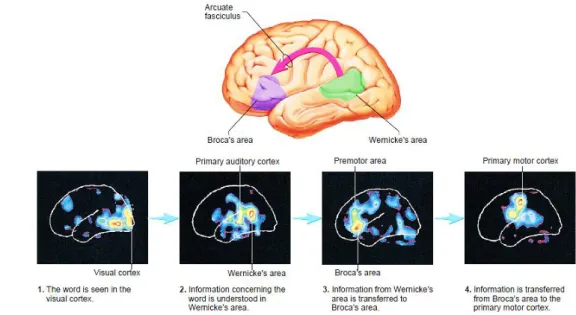
Figure 1 - Description of the cortical activities during speech (Seeley, et al., 2008) ...16
Figure 2 - Multimodal speech chain representation with feedback loops (Gick, et al., 2013) ...17
Figure 3 - Comparison of human and automatic speech recognition performance (Moore & Cutler, 2001) ...22
Figure 4 - Radio Rex toy ...25
Figure 5 - Dr. E. A. Quade demonstrating the Shoebox ...25
Figure 6 - AIBO ERS-210 ...28
Figure 7 - Asimo humanoid robot ...29
Figure 8 - Full bilabial closure during the production of the words “romantic” (left) and “academic” (right) (Saenko, et al., 2004) ...30
Figure 9 – Example of two extracted angles - p1 and p2 based on the tracked lip points from the Kinect SDK (Yargıç & Doğan, 2013) ...31
Figure 10 - RGB images from the first version of Kinect (left) and the Kinect One (right) ...37
Figure 11 – Logical workflow overview of the Viki system, showing the multimodal input HCI approach. The collected streams are first processed to identify the lips. After the lip segmentation, the height, width and depth variations of the lips are extracted. All these features are then normalized, merged (fused) into a feature vector and sent to the classifier, for word recognition. ...43
Figure 12 - Main Window of ViKi ...44
Figure 13 – ViKi while recording a word ...45
Figure 14 - Classification window from ViKi, showing the classification results from the 3 SVM and the plots of the extracted features. ...45
Figure 15 - Browse window to load a word to ViKi ...46
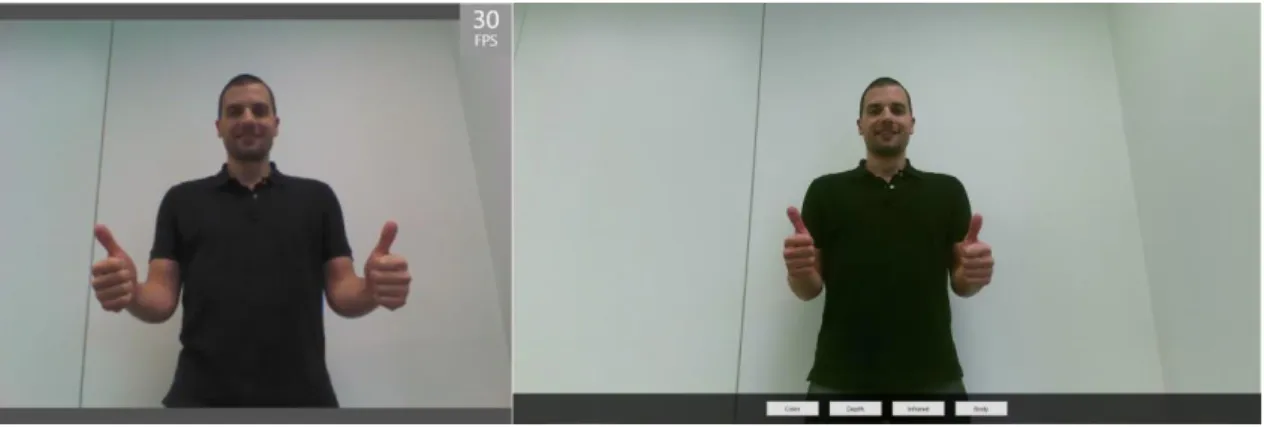
Figure 16 - Images collected from the RGB (left), depth (center) and IR (right) streams ...47
Figure 17 - Lip tracking approach with the depth frame showing the scanned region and its closest point (left) and the selected region to locate the lips based on this point location (right) ...49
Figure 18 - Red (image on the left), Green (image in the center) and Blue channels (image on the right), from the RGB frame ...49
4
Figure 19 - Y (image on the left), Cb (image in the center) and Cr channels (image on the right) from the YCbCr frame ...50 Figure 20 - Extracted Green channel from the RGB frame (image on the left), after brightness equalization (image in the center) and after median filter and binarization (image on the right) ...50 Figure 21 - Extracted Cr channel from the YCbCr frame (1st image), after brightness equalization (2nd image) and after median filter and binarization (3rd image) ...50 Figure 22 - Set of points (in red) obtained with the Convex Hull using the processed green channel image ...51 Figure 23 - External top lip point search algorithm pseudocode ...52 Figure 24 - RGB frame (left image), processed green channel (center image) and processed Cr channel (right image) showing the effacement of the inner contour due to the visibility of the tongue during the word "Calendário" ...52 Figure 25 – Same RGB frame as the presented on Figure 24, showing: the ROI (in red) and the six tracked points (in green) after the depth correction of the internal ones. ...53 Figure 26 - Width and Height represented on a RGB frame ...54 Figure 27 - Neutral lip position (left image), lip protrusion (center image) and lip backing (right image). ...55
Figure 28 - Scheme showing how the depth of the lips (yellow lines) is obtained using the distance from the Kinect to the head joint (green line) and to the lips (red lines) ...55 Figure 29 - Plot showing the extracted Width feature from a recording of the word "Contactos" ....56 Figure 30 - Plot showing the extracted Rounding feature from a recording of the word "Contactos". ...57
Figure 31 - Frame from the EP word "Fotografia" showing the rounding feature appearing before the opening ...58 Figure 32 - Confusion matrix obtained from the validation test based on geometric features ...66 Figure 33 - Plots based on (normalized) geometric features from the words "Email" (top) and "Lembretes" (bottom) ...67 Figure 34 - Intra-speaker variability between two recordings of the word "Fotografias". The two frames present the differences between the minimum width achieved during the recordings. ...70
5
L
IST OF
T
ABLES
Table 1 - Correspondences between Speech Recognition Systems and Human Speech Perception
...20
Table 2 - Thesis objectives aligned with the defined hypothesis...42
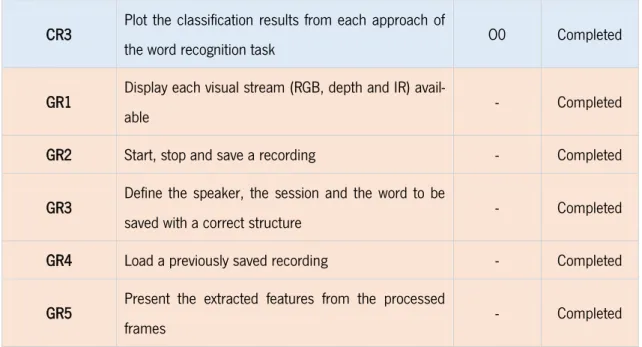
Table 3 - System requirements definition ...42
Table 4 - Set of digits words ...48
Table 5 - Set of words extracted from the Ambient Assisted Living context ...48
Table 6 - Kernels tested for the SVM ...61
Table 7 - Cross-validation results for approaches using geometric and AF features ...64
Table 8 - Average word accuracies of the training and validation sets from each SVM using all dataset ...65
Table 9 - Word accuracies average obtained from each SVM with and without the use of the depth data ...68
Table 10 – Word Accuracies average of the training and validation sets from each SVM and each speaker ...69
6
A
BBREVIATIONS AND
A
CRONYMS
AAL Ambient Assisted Living AAM Active Appearance Model AF Articulatory Feature
ASR Automatic Speech Recognition AVSR Audio-Visual Speech Recognition
CUAVE Clemson University Audio Visual Experiments DARPA Defense Advanced Research Projects Agency
EP European Portuguese
FFT Fast Fourier Transform
FPS Frames per Second
GUI Graphical User Interface HCI Human-Computer Interaction
HMM Hidden Markov Model
HSR Human Speech Recognition
IR Infrared
LPC Linear Predictive Coding ROI Region of Interest
SDK Software Development Kit PSL Portuguese Sign Language PSLR Portuguese Sign Language SVM Support Vector Machine
TOF Time-of-Flight
UI User Interface
ViKi Visual Speech Recognition for Kinect VSR Visual Speech Recognition
7
1. I
NTRODUCTION
Speech is the most natural form of human communication and researchers have been work-ing for decades to make machines able to understand and pronounce it. Speech recognition, in particular, also known as automatic speech recognition (ASR), can be defined as the process of converting a speech signal to a sequence of words, by means of an algorithm implemented in a computer program. For reasons ranging from technological curiosity to the desire to automate simple tasks, the research in ASR has attracted a great deal of attention for the past sixty years. It has even inspired seventh art characters as R2D2 and C3PO (“Star Wars”, 1977) or Sonny (“I, Robot”, 2004). Nowadays, it still inspires science fiction movies but also TV series like “Person of Interest”, where we can find The Machine who’s not only able to understand human speech but also capable to predict human behavior. All those machines can not only recognize spoken words but they’re also able to comprehend its meaning. However, in spite of all the research that have been conducted, we are still far from creating one able to understand spoken discourse on any subject, by any speaker, in any environment. This is due to the complexity of the language itself, but also to a whole range of environmental conditions such as the presence of noise, the speed of speech, the gender or age of the speaker or even the speaker’s mood.
As human beings, we use more than just sound to communicate. Facial expressions, as well as lips motion, body language and gestures, give us useful information to interpret words correctly, suggesting the benefits of using more than one source of information (multimodal approach), for the development of a speech recognition system.
8
1.1. M
OTIVATION
The first approach in the speech recognition field was made using only the voice as an input, yielding to a human-computer interaction (HCI) system accepting several commands, as the one created at the Bell labs in 1952. This system may have been the first true word recognizer system, as it could be trained to recognize spoken digits from a single speaker (Davis, et al., 1952).
The visual approach for the speech recognition was only introduced in the late 70’s, after the discovery of the psychologist Harry McGurk and his assistant, John MacDonald. They acci-dentally discovered an audio-visual illusion, known since then as the McGurk effect or McGurk illusion (McGurk & MacDonald, 1976), that demonstrated the combined nature of speech under-standing and the importance of the visual features, leading to bimodal speech recognition systems (Petajan, et al., 1988). Thereafter, several multimodal databases, recorded in distinct conditions, emerged to be used in speech recognition research. For example, the CUAVE (Clemson University Audio-Visual Experiments) is an English database with a corpus1 containing more than 7000
ex-pressions of a vocabulary2 comprising isolated and connected digits (Patterson, et al., 2002).
Despite the good results achieved by multimodal speech recognition systems, the audio data captured in unsupervised environments is occasionally unusable. For instance, let’s imagine a speech recognition system included in a car radio, allowing the driver to switch the radio station or the CD track. If we consider the engine, the traffic or even the music noise, it becomes obvious that an audio recognition system would be highly unreliable. Visual Speech Recognition (VSR) sys-tems have the advantage of not being influenced by acoustic noise. They can be used by people with speech problems (e.g. laryngectomy3, muteness or temporary states of aphonia), when, for
privacy maters, it is not advisable to make noise, or simply when it is not possible to control the environment’s noise. These systems are essentially lip-reading based, which gives them the same weaknesses as the human lip readers. Lip reading weaknesses are essentially related with visibility conditions, but also to the fact that some sounds are visually indistinguishable from others or simply invisible. While phonemes can be defined as units of different sounds perceived of a lan-guage or dialect, visemes are based on the visual aspect of the phonemes. Knowing this, it’s natural that the number of visemes is smaller than the number of phonemes, since several phonemes are
1 Collection of words or sentences of a database. 2 The body of words used in the research.
9
classified as the same viseme (e.g. in the European Portuguese, the phonemes /f/ and /v/ belong to the same viseme class). To compensate the lack of visemes classes, lip readers often rely on higher-level linguistic information as the pragmatic, semantic, phonetic or syntactic context, asso-ciated to the message. Automatic systems based on visual cues don’t have access to this kind of information, which hinders the recognition process. On the other hand, VSR systems can collect precise information unavailable to Human lip readers (e.g. mouth features variations, like width and height).
Traditionally, in VSR research, standard video cameras are used to collect the databases (Patterson, et al., 2002; Pera, et al., 2004; Lee, et al., 2004). Therefore, researchers were limited to RGB images only (unimodal approach), to extract the necessary features for the recognition. The release of the Kinect (for Xbox) in 2010 and Kinect for the Windows platform in 2012, brought new possibilities to the ASR, Audio-Visual Speech Recognition (AVSR) and VSR fields. The Kinect sensor enables the users to control and interact with their computer, through a natural user interface (UI) using gestures and spoken commands. It features an RGB camera, a depth sensor and a micro-phone array, providing full-body 3D motion capture, facial recognition and robust voice recognition capabilities with echo canceling. Both the RGB camera and the depth sensor are able to capture 30 FPS with a 640x480 resolution, while tracking 20 skeletal joints of up to 2 simultaneous skele-tons. Since its release, more and more Kinect-based recognition systems emerged, using several combinations of its features (Yargıç & Doğan, 2013; Sun, et al., 2012; Galatas, et al., 2012; Galatas, et al., 2011). One of the greatest advantages of the Kinect over traditional cameras is the ability to track up to 100 face points. Since the face tracking is a key step on any speech recognition system based on visual features, it becomes a very interesting tool for VSR researches.
The Kinect for Windows brought a range of new possibilities for the speech recognition re-search fields throughout the several released versions (1.5 to 1.8) of its Software Development Kit (SDK) but, as versatile as it looks, it also has some downsides. The VGA resolution of its RGB camera lacks details compared with most of the existing standard cameras. Furthermore, the depth information is collected using a technique known as structured light, which principle is to project a known pattern onto the scene and infer depth from the deformation of that pattern (Zhang, et al., 2002). This technique obtains direct measurements only at scene points illuminated by the light pattern. Depth values at non-illuminated points have to be derived via interpolation or surface fitting (Schaller, 2011), which is problematic in contours regions with abrupt depth variations (e.g. inner contours of the lips when the mouth is open). Moreover, the tracking technique of the 100 face
10
points is based on Active Appearance Model (AAM). The main problem of using an AAM approach is that it can generate non-realistic shapes/appearance configurations (Gonzalez-Mora, et al., 2007). Since the shape of the mouth is widely used in shape-based approaches of VSR researches, the tracked mouth points must be used cautiously.
The second version of the Kinect, the Kinect One, was released in July 2014, along with the public preview of the Kinect for Windows SDK 2.0. It brings several improvements over its prede-cessor, like a Full HD color camera able to capture 30 FPS with a 1920 x1080 resolution and a wider field of view. The skeletal tracking can now follow as many as 6 complete skeletons and 25 different joints (including thumbs). The depth sensor has a higher depth fidelity and significantly improved noise floor, using now a Time-of-Flight (TOF) technology. TOF cameras use intensity mod-ulated infrared (IR) light, which is not visible to human eyes to illuminate the scene. Then, a Photon Mixing Device sensor captures the reflected light and evaluates the distance information on the pixel, with no need of values interpolation. These improvements make the new Kinect One even more interesting for VSR purposes than its predecessor, allowing to use of high resolution color images along with precise depth information.
In VSR systems, after capturing and extracting the region of interest (ROI) of each frame, the extraction of visual features normally falls into three main categories: appearance-based ap-proaches (using the color of the pixel), shape-based apap-proaches (e.g. using geometric features, like the width and height of the mouth, or the angle of its corners), or hybrid approaches (using a combination of the previous ones). The extracted features are then sent to some classification system to identify visemes, isolated words or sentences. In the last years, a new approach emerged in the VSR domain, based on the use of articulatory features (AF), proposing a multiple stream of visible linguistic features (e.g. lips closing, lips opening, tongue protrusion and so on) to classify words, as opposed to a single stream of visemes (Saenko, et al., 2004). It was shown that AF-based models can outperform conventional single-stream viseme-AF-based models (using appear-ance-based approaches), in a medium-vocabulary isolated word task and in small-vocabulary con-nected word task (Saenko, et al., 2009). However, AF were always extracted manually or by using appearance-based approaches. No references were found of articulatory approaches being com-pared with shape-based approaches.
Regarding the languages used on VSR, most of the vocabularies are based on the English language. VSR systems based on European Portuguese (EP) vocabularies were not found in the literature. The existing ones were only based on RGB images (Moura, 2005; Moura, et al., 2005).
11
1.2. P
ROBLEM
Based on the previously presented information, it is possible to identify the underlying prob-lems that formed the basis for this thesis hypothesis.
Traditional VSR systems only rely on RGB data to perform feature extraction. Depth data has been collected for a couple of VSR and AVSR systems (Galatas, et al., 2012; Yargıç & Doğan, 2013), but using the first version of the Kinect sensor.
o Question 1: Does skeletal tracking and improved depth data (multimodal ap-proach) from the new Kinect One sensor, allows us to increase the accuracy of VSR systems when compared with traditional systems using only RGB images (unimodal approach)?
Few VSR systems follow an articulatory approach (Saenko, et al., 2004; Saenko, et al., 2005; Saenko, et al., 2009) and none of them used depth data for features extraction.
o Question 2: Does articulatory approaches for VSR based on RGB images and depth data outperform articulatory approaches based only on RGB images?
o Question 3: Does articulatory approaches for VSR outperform shape-based ap-proaches?
1.3. H
YPOTHESIS
From the research questions presented in the section 1.2, we propose the following thesis hypothesis:
H1: A multimodal approach, based on skeletal tracking, RGB imaging and depth data, improves the VSR systems accuracy compared to the use of unimodal approaches using only RGB imaging.
H2: An articulatory VSR approach based on RGB imaging and depth data outperforms RGB-based articulatory approaches.
12
1.4. O
BJECTIVES
To address the stated hypothesis, we’ve established the main objective of this thesis, as the development of a multimodal VSR system for the EP language (O0).
To address more specifically each of the hypotheses, we have stated the following objectives: O1: To demonstrate hypothesis H1, we have used Computer Vision techniques and the skeleton tracking, RGB imaging and depth data available on the Kinect One sensor, aiming to extract some geometric and articulatory features and assess its influence on the word recognition rate, in a process of recognizing a word out of a 24 words vocabulary, and then comparing the results with the classical RGB-only unimodal approaches.
O2: To demonstrate hypothesis H2, we have tested and compared the word recognition rate results of our articulatory approach using RGB and depth data with the same approach using only RGB data, in a word recognition task.
O3: To demonstrate hypothesis H3, we have tested and assessed if our articulatory ap-proach (using opening, rounding and the protrusion of the lips as features) outperforms our shape-based approach (using the width, height and depth variation of the lips), for the same word recog-nition task.
To the best of our knowledge, this is the first VSR system for EP using the new Kinect One sensor.
1.5. D
ISSERTATION
O
VERVIEW
This document aims to introduce all the necessary background for the understanding of the VSR field and the developed system.
Chapter 2 presents a review of the state of the art of VSR, starting with a background section to introduce important concepts related to the speech process and speech recognition by humans and machines. The applications of VSR systems on the real world are also discussed, as well as the main issues and challenges on the development of speech recognition systems.
13
Chapter 3 includes all the key processes on the development of the proposed VSR system – ViKi. The Graphical User Interface (GUI) is introduced, presenting all the features of the developed application. The Data Collection section presents the selected vocabulary, participants and struc-ture of the collected data. All the data processing, including the feastruc-tures extraction and the classi-fication processes are also discussed.
Chapter 4 discusses the analysis and validation of the developed system, using all the cor-pora and speakers. The depth data influence and the accuracies obtained on each of the words sets separately are discussed. For a better understanding of the intra- and inter-speaker variability, results from an individual training and validation of each speaker is also presented.
Finally, chapter 5 concludes this dissertation with the discussion of the verification of our stated Hypothesis, based on the results of chapter 4. Some comments on the work done and suggestions for future activities, are also made.
14
2. S
TATE OF THE
A
RT OF
VSR
Conceptually, the development of speech recognition is closely tied with other developments in speech science and engineering and, as such, it can be viewed as having roots in studies going back to the Greeks. However, the history of speech recognition systems itself started in the 20th century, bonded with the first commercial appearances of the microphone. Thomas Edison (1847– 1931) is well known for his work refining the carbon granule microphone1. His transmitter was
simple and cheap to manufacture, but also very efficient and durable, being employed on the first ever radio broadcast in 1910. It also became the basis for the telephone transmitters, used on millions of telephones around the world for the majority of the last century, as well as an essential tool for the speech recognition field (Robjohns, 2000).
This chapter aims to introduce important concepts related to the speech, providing the nec-essary background in human speech, for understanding the development of a speech recognition system. The practical applications of speech recognitions systems will be presented, as well as their notable evolution, from a basic toy of the beginning of the 20th century (able to recognize only
one word), to the powerful virtual assistants existing on our smartphones today (able to perform complex tasks and learn from our habits). Finally, the recent work in the VSR field and the main issues related with the development of speech recognition systems will also be discussed.
1 Originally created by David Edward Hughes (1831-1900).
15
2.1. B
ACKGROUND
Human Speech Recognition (HSR) has been the subject of many researches for several years, side by side with speech recognition by machines, essentially to assess the evolution of the latter’s accuracy. But, considering the complexity of the speech recognition process, it is necessary to have some background from several fields to understand the fundamental aspects of its devel-opment. This section will discuss how the human speech is processed and perceived, and the mechanics of speech recognition systems.
2.1.1. S
PEECH
P
RODUCTION
In normal fluent conversation we are able to produce two to three words per second, which amounts to about four syllables and ten or twelve phonemes per second. These words are contin-uously selected from a huge repository, the mental lexicon1, which contains at least 50–100
thou-sand words in a normal, literate adult person. Even so, the high speed and complexity of word production does not seem to make it particularly error-prone since we err, on average, no more than once or twice in 1000 words (Levelt, 1999).
The organization of speech processing is grounded in the fact that the brain has to do two kinds of things with the acoustic speech information. This model holds that a ventral stream is involved in processing speech signals for comprehension while a dorsal stream is responsible for translating acoustic speech signals into articulatory representations, which are essential for speech production. A wide range of evidence suggests that the ventral stream is bilaterally organized (alt-hough with important computational differences between the two hemispheres). The dorsal stream, on the other hand, is strongly left dominant (Hickok, 2013). In most people, the cerebral area responsible for the speech is in the left cerebral cortex. Two major cortical areas are involved in this process: Wernicke’s area (sensory speech area), a portion of the parietal lobe, and Broca’s area (motor speech area) in the inferior part of the frontal lobe. Wernicke’s area is necessary for understanding and formulating coherent speech. Broca’s area initiates the complex series of move-ments necessary for speech (Seeley, et al., 2008). The two areas are connected by a bundle of neurons known as the arcuate fasciculus (see Figure 1).
1 Or person’s vocabulary
16
Regarding the steps involved in the speech production, this process can then be divided in 3 main events, as represented in Figure 2 (speaker side):
1. Conceptual preparation (thought) – Consists in the activation of a lexical concept for which you have a word in your lexicon. Usually, such a concept is part of a larger message but, even in the simple case of naming a single object, it is not trivial which lexical concept should be activated to refer to that object, depending on the discourse (Levelt, 1999). 2. Formulation (linguistic representation) – It is the process corresponding to the linguistic
representation required for the expression of the desired message. It comprises both the selection of lexical material and the organization of this material in a syntactic framework (Smedt, 1996).
3. Articulation (facial movements + acoustics) - Series of neuromuscular commands to cause the vocal cords to vibrate when appropriate and to shape the vocal tract such that the proper sequence of speech sounds is created and spoken, producing an acoustic signal as the final output. The neuromuscular commands must simultaneously control all the aspects of the articulatory motion, including the control of the lips, jaw, tongue and velum (Rabiner & Biing-Hwang, 1993).
A speech recognition system is based on the data obtained from the articulation step, since it’s the only physical process from which we are able to extract information. For VSR purpose, the anatomical structures used as reference are the visible ones (lips, jaw, cheeks, teeth and tongue). Considering this, they will not be presented.
17
2.1.2. S
PEECH
P
ERCEPTION
Spoken syllables may persist in the world for mere tenths of a second. Yet, as adult listeners, we are able to gather a great deal of information from these fleeting acoustic signals. We may apprehend the physical location of the speaker, the speaker's gender, regional dialect, age, emo-tional state, or identity. These spatial and indexical factors are conveyed by the acoustic speech signal in parallel with the linguistic message of the speaker. Although these factors are of much interest in their own right, speech perception most commonly refers to the perceptual mapping from acoustic signal to some linguistic representation, such as phonemes, syllables or words (Holt & Lotto, 2010). Speech perception, in addition to be of great scientific interest, is also a main issue to those concerned with building systems for the processing of speech. The human system for speech recognition and understanding is the one known example of a robust speech recognizer, since it is insensitive to variability over the range of nonlinguistic factors in the speech signal (Gold, et al., 2011).
The ease with which people frequently comprehend speech by audition alone and the meth-odological rigors associated with controlling several different stimulus modalities are perhaps two reasons why speech perception research has been mostly focused on auditory speech perception (Bernstein & Benoît, 1996). However, speech perception is inherently multimodal. Brain regions once thought sensitive to only auditory speech, are now known to respond to visual speech input. Despite our intuition of speech as something we hear, there is now overwhelming evidence that
18
the brain treats speech as something we hear, see, and even feel (Rosenblum, 2013). Human speech perception rely then on both acoustic and visual cues to decode speech. These visual cues usually include the position and movement of the visible articulators (e.g. lips, teeth and tongue), and other cues not directly related to the production of speech (e.g. facial expression, head pose and body gestures). As listening conditions degrade, speech perception increasingly relies on these visual cues to assist with decoding spoken words. Indeed, visual speech automatically integrates with auditory speech in a number of different contexts (Hilder, et al., 2009; Rosenblum, 2013).
When we speak, we are also constantly monitoring and adjusting what we’re doing. Speech production uses many different sensory mechanisms for feedback. The most commonly known feedback in speech is auditory feedback, though many senses are important in providing feedback in speech. Speech is often thought of largely in terms of sound. Sound is indeed an efficient me-dium for sharing information: it can be disconnected from its source, can travel a long distance through and around objects, and so on. As such, sound is a powerful modality for communication. Likewise, auditory feedback from sound provides a speaker with a constant flow of feedback about his or her speech (Gick, et al., 2013). But speech can also be perceived visually, by watching movements of the face and body. Lip reading is a god example, since it’s used to understand or interpret speech without hearing it, a technique especially mastered by people with hearing diffi-culties. Lip reading was practiced as early as 1500 AD, and probably before that. The first success-ful lip reading teacher was the Spanish Benedictine monk, Pietro Ponce, who died in 1588. Lip reading teaching subsequently spread to other countries. The German Samuel Heinecke opened the first lip reading school in Leipzig in 1787. The first speech reading conference was held at Chautauqua, USA in 1894. Several different methods have been described in the literature for human lip reading such as the Muller-Walle, Kinzie, and the Jena methods. Although only 50% or less of speech can be seen, the reader must guesstimate the missed parts. This was the core of the Jena method: training the eye and exercising the mind. However, regardless of the variety of known lip reading methods, all methods still depend on the lip movement that can be perceived by the lip reader (Hassanat, 2011).
As shown in the Speech Production section, speech can be described as a dual route model which includes a ventral stream, involved in processing speech signals for comprehension, and a dorsal stream, responsible for speech production. Speech perception is often conceived of as a complex categorization task accomplished within a highly multidimensional space. One can con-ceptualize a segment of the speech signal as a point in this space representing values across
19
multiple acoustic dimensions. In most cases, the dimensions of this space are continuous acoustic variables such as fundamental frequency, formant frequency, formant transition duration, and so forth. That is, speech stimuli are represented by continuous values, as opposed to binary values of the presence or absence of some feature. Speech perception is the process that maps from this space onto representations of phonemes or linguistic features that subsequently define the pho-neme (Holt & Lotto, 2010).
Speech processing is not a trivial task. It has been the subject of many researches, leading to several theories. Observations of the automaticity of audiovisual speech have had important influences on these theories (Rosenblum, 2005) but, considering the scope of this dissertation, they will not be described.
2.1.3. S
PEECH
R
ECOGNITION BY
M
ACHINE
The technology has reached a point where large-vocabulary speaker-independent continuous speech recognition is now available online, and where small-vocabulary voice command-and-con-trol is becoming a familiar feature for users of smartphones. But, after years of research and de-velopment, the accuracy of speech recognition systems remains one of the key challenges. This leads the interest to the sophisticated mechanisms that give the human speech perception its excellence in comprehension and error correction. Although the simple imitation of human mech-anisms may not be a good approach to engineering design, it is still likely to be useful to study the functional characteristics of human speech perception (Gold, et al., 2011).
Modern speech recognition systems, like HSR, have three main processes (see section 2.1.1). Table 1 shows these processes and their correspondence in the human speech perception system. A speech recognition system must always have, at least, one sensor able to capture some speech feature. The most common speech recognition systems are based on the acoustic feature, requiring one or more microphones, but other features can also be captured like the face morphol-ogy (using a depth camera) or the electrical activity of the face muscles (using surface electromy-ography). Similarly, humans use their ears and eyes in this first process to capture audio and visual information. After the capture of the selected characteristic, the data must be processed. While humans convert the captured information into the appropriate linguistic representation, a speech recognition system must extract useful features to be subsequently used in the final process. This
20
processing depends heavily on the type of speech recognition system but what is normally required is a mathematical and scientific formalism for encoding the data in a computationally useful form: a formalism which can exploit patterns, can generalize from seen data to unseen data, and in response to some efficiency criterion uses the minimum information to achieve its goals. For ex-ample, in the VSR field, it is common to extract geometric features like the width and height of the mouth to be used in the classification, since each word can be described in terms of the variation of these features. Finally, the data must be encoded in a suitable model (commonly known as feature vector), to compute the most likely state of the model for a specified input, which is normally achieved through a classification system. This process can be compared with the meaning attrib-ution on the human perception (Moore & Cutler, 2001).
Table 1 - Correspondences between Speech Recognition Systems and Human Speech Perception Process Speech Recognition System Feature Human Speech Perception Feature Conversion of the audible
and/or the visible information into data that can be processed
One or several sensors (e.g.
mi-crophone and/or camera) Ears and eyes
Conversion of the captured infor-mation from the sensors in a
structured representation
Feature extraction mechanism –
feature vector Linguistic representation
Recognition of the processed
in-formation Classification system Meaning attribution
2.1.4. H
UMAN VS
.
M
ACHINE
R
ESULTS
Since the emergence of ASR, researchers aim to create a system able to perform as a hu-man. Central issues in the study of ASR and HSR are clearly comparable in respect of the aim to understand the process of extracting linguistic information. Nevertheless, the research communi-ties that concern themselves with ASR and HSR are largely distinct. In part this follows from the way the two research tasks are envisaged. In the machine side, the objective has been to define a complete end-to-end process for moving from low-level to high-level descriptions of a speech signal.
21
ASR models are typically presented in the form of an entire working system that takes acoustic input (or visual input, in case of VSR systems) and produces a lexical or semantic-level description as output. In contrast, HSR research has been subdivided, and its separate components parceled out to different research domains. As a consequence, HSR theories are models of specific aspects of this process, with minimal attention to the feasibility of interfacing to models of other stages in the recognition process (Moore & Cutler, 2001).
The major obstacle for HSR researchers is the impossibility of direct observation. HSR re-searchers cannot take the system apart, neither can they switch off components one by one to identify their separate contributions, nor can they adjust the system and compare the performance of versions which differ only in a single respect. On the other hand, automatic systems are based on a statistical modelling paradigm, which allows generalization to unseen data. In fact, a small but finite probability can be attached to any acoustic/visual signal - even one unlikely to have been generated by any known physical system. One consequence of this, is that, not only are automatic systems able to ride over a momentary loss of data, but it would appear to hallucinate with data that was well outside of its experience - that is, data on the tails of its probability distributions (Moore & Cutler, 2001).
For these reasons, the direct comparison of human and machine accuracies is a difficult process. Human error rates should ideally be compared only to error rates of the current single best-performing speech recognition system. Such comparisons are impossible because no single recognition system has been tested on all corpora and shown to provide the best performance across all conditions sampled by these corpora. In general, speech recognition systems developed for one corpus degrade on other corpora due to the careful tuning required to provide the best performance. Results obtained with human listeners are also sometimes inflated because experi-menters reduced errors caused by inattention by allowing multiple listening passes and by using a committee majority vote across multiple listeners instead of using the average individual error rate. Experimenters also sometimes corrected for spelling errors to eliminate out-of-vocabulary re-sponses. Such out-of-vocabulary responses are not possible for machine recognizers which use limited vocabulary testing when the training and testing vocabularies are known and identical (Lippmann, 1997).
22 Despite the presented
is-sues, several studies compared the performance of speech recognition systems and humans, in multiple contexts. Lippmann (Lippmann, 1997) presented some results ob-tained from several studies compar-ing HSR and ASR. Figure 3 shows some of the key results, ranging from connected digit recognition to
the transcription of spontaneous telephone speech. These results clearly indicate that ASR recog-nition accuracy lags about an order of magnitude behind that of HSR, at the time of writing his paper. Several years later, Meyer et al. (Meyer, et al., 2006) also compared ASR and VSR accura-cies obtaining similar results. Across all conditions, humans outperform ASR systems. The differ-ences are clearly visible in the noise-free conditions, where the average human performance is 99.6% and the ASR performance is 74.0 %. They used the German dialect from four different regions (East Frisian, East Phalian, Bavarian and standard German) showing that the better results were obtained with the standard German (HSR: 99.7% accuracy; ASR: 81.1% accuracy). The ASR accuracy was reduced by 2.5 to 10.2% absolute for the dialects while, for the HSR test, an average performance drop of 4% was observed. Other than for the ASR experiment, the differences between dialects were not significant.
Recently, Juneja compared ASR and HSR but using a null grammar continuous speech vo-cabulary with varying perplexities, claiming that the results are not biased from a language model while the accuracy tests are done on continuous speech at the same time (Juneja, 2012). In this study, ASR exhibited as much as an order of magnitude more errors than HSR, even if supplied with the same context. That, combined with the observation that the increase in WER is very similar for ASR and HSR for a significant change in perplexity, implies that there were a large difference in the acoustic modeling performance of ASR and HSR. While humans may be adept at context aware-ness and exception handling, these results shown that the gap in acoustic modeling between hu-mans and machines is still fairly large, even when there are no exceptions in the ordering of words and when the context is the same.
Figure 3 - Comparison of human and automatic speech recognition performance (Moore & Cutler, 2001)
23
Considering that most of ASR work focuses purely on speech acoustics or on audio-visual speech, it is natural that few studies compared HSR and VSR results. The human ability for lip reading varies from one person to another, and depends mainly on guessing to overcome the lack of visual information. Lip readers need to have a good command of the spoken language, and in some cases the lip reader improvises and uses his/her knowledge of the language and context to pick the nearest word that he/she feels fits into the speech. Moreover, human lip readers benefit from visual cues detected outside the mouth area (e.g. gestures and facial expressions). The com-plexity and difficulties of modelling these processes present serious challenges to the task of VSR. Nevertheless, Hilder et al. (Hilder, et al., 2009) compared the performance of human and machine lip-reading ability, based on shape-only (using AAM) and shape + appearance information. They found that automatic lip-reading systems outperform human viewers at both the viseme and the phoneme level (80.27% and 91.6% of accuracy compared to 31.6% and 35.4%, respectively) with full shape and appearance information. In the full, isolated, real words recognition task, human recognition outperform the VSR system (18.42% compared to 5%). The authors justified this phe-nomena by the prior knowledge of English words, which is not provided to the machine-based system. An important fact to notice about this study is that none of the subjects who have partici-pate was a professional lip-reader.
2.2. R
EAL
W
ORLD
A
PPLICATIONS
Speech recognition has been successfully applied in a range of systems and has the poten-tial to reach multiple fields. The main fields where speech recognition can be found today range from office applications to medical systems, and they can be categorized into several broad classes (Rabiner & Juang, 2000).
O
FFICE/
B
USINESSThe most common office applications supporting speech recognition, normally include dic-tation, but other features like data entry onto forms, database management and control, and key-board enhancement can be found. In addition to a large vocabulary speech-to-text capabilities, systems like Dragon (Nuance Communications, Inc., 2014) or VoxSigma Software Suite (Vocapia
24
Research SAS, 2014) include adaptive features allowing the transcription of noisy speech, such as speech with background music.
T
ELECOMMUNICATIONSThe speech recognition technologies have a strong presence in telecommunications. Nowa-days, most of mobile phones support voice dialing by name or number and it is common for tele-communications companies to include automation of operator assisted services (voice recognition call processing systems to automate operator service routing according to call types). VoltDelta OnDemand Solutions (VoltDelta, 2014) is an example of an automated customer service call cen-ters in the telecommunications market.
M
EDICALClinicians at many healthcare delivery networks rely on speech recognition to document patient encounters reporting several benefits including reduced transcription expense, increase of productivity, reduced time spent in documenting care and improved patient care via more detailed documentation and faster results delivery (Nuance Communications, Inc., 2008). Speech recogni-tion has a similar role in the medical field as in the office/business field, delivering free-text dictarecogni-tion systems with medical vocabulary and even regional accent support (1st Provider's Choice, 2014).
O
THERSSpeech recognition has some modest, but growing, applications in several other fields: › Video Games - The Microsoft Kinect, the XBOX and XBOX One accessory, supports voice
commands in several languages;
› Automotive Market - The Android Car, that should be launched in the late 2014, will sup-port several functions like GPS mapping/navigation or music control;
› Biometrics - Biometrics systems based on speech recognition can currently perform au-thentications through natural voice pattern instead of passwords or pins;
› Digital Personal Assistants – Nowadays, these systems are increasingly present in each one’s life, in our smartphones, tablets or laptops (e.g. Google Now, Siri and Cortana, pre-sent in the 3 major mobile operating systems – Android, iOS and Windows Phone, respec-tively), allow to search online or simply add a reminder using the voice.
25
› Robotics – As shown in the previous chapter, speech recognition has a strong presence in the robotics field, incorporating robots like AIBO or ASIMO.
2.3. T
HE
E
VOLUTION OF
S
PEECH
R
ECOGNITION
S
YSTEMS
In the early 1920s machine recognition came into existence. The first machine to recognize speech to any significant degree was a toy manufactured in 1920, commercially named Radio Rex. Rex was a celluloid dog with an iron base and an in-built system sensible to acoustic energy (see Figure 4). The energy contained in the vowel of the word “Rex” was sufficient to trigger the system, making the dog to leave its house.
Despite its ingenious way of responding when its name was called, the toy responded to many words other than “Rex”, and even to many non-speech sounds that had sufficient acoustic energy to trigger it. This inability to reject out-of-vocabulary words/sounds is an issue shared by most recognition systems that followed it. Although much of the work in vocoding and related speech analysis in the 1930s and 1940s was relevant to speech recognition, the next com-plete system of any significance was developed at Bell Labs in the early 1950s (Moura, 2005; Anusuya & Katti, 2009; Gold, et al., 2011).
The first true ASR system was built in 1952 at Bell Laboratories and it consisted of an isolated digit recognition system. It was able to achieve an accuracy varying between 97% and 99% and it could be trained to recognize digits from a single speaker. This system relied heavily on measuring spectral resonances during
the vowel region of each digit (Davis, et al., 1952). In 1956, a similar work aimed to recognize 10 distinct syllables from 10 monosyllabic words in a single speaker system. It also relied in spectral meas-urements (provided by an analog filter bank) primarily during vowel regions
Figure 4 - Radio Rex toy
Figure 5 - Dr. E. A. Quade demonstrating the Shoebox
26
(Olson & Belar, 1957). In 1962, IBM presented its "Shoebox" machine at the Seattle World’s’ Fair (see Figure 5). This device recognized and responded to 16 spoken words, including ten digits (from 0 to 9) and six arithmetical operations. It was able to instruct an adding machine when a number and command words such as "plus," "minus" and "total" were spoken and print answers to simple arithmetic problems (IBM, 2003). The particularity of the Shoebox was its size: smaller than a shoe box.
Prior to the 1060s, the primary approach to estimating the short-term spectrum was a filter bank. Then, some breakthroughs occurred that became important for the speech recognition field in the 1970s. Three spectral estimation techniques were developed that were later of great signifi-cance for recognition, although their early applications to speech were for vocoding: the Fast Fou-rier Transform (FFT), Cepstrum analysis, and Linear Predictive Coding (LPC). The FFT is one of the most fundamental numerical algorithms. It computes the Discrete Fourier Transform (DFT) of an n-dimensional signal in O(n log n) time. The algorithm plays a central role in several application areas, including signal processing and audio / image / video compression. It is also a fundamental subroutine in integer multiplication and encoding / decoding of error-correcting codes (Gold, et al., 2011; Hassanieh, et al., 2012). The Cpestrum analysis was originally developed by Bogert for seismic analysis in 1963 (Bogert, et al., 1963) and consists of a nonlinear signal processing tech-nique. Its significance for speech recognition is primarily as an approach to estimating a smooth spectral envelope. It ultimately became widely used for recognition, particularly in combination with other analysis techniques, being applied to speech and audio signals by Oppenheim, Schafer, and Stockham (Rabiner & Juang, 2000; Gold, et al., 2011). LPC is a mathematical approach to speech modeling and one of the most powerful speech analysis techniques. It provides an efficient way of finding a short-term spectral envelope estimate that has many desirable properties for the repre-sentation of speech, in particular the emphasis on the peak spectral values that characterize voiced sounds. It is also a useful method for encoding good quality speech at a low bit rate. A final achieve-ment of note in the 1960s was the pioneering research of Reddy in the field of continuous speech recognition by dynamic tracking of phonemes (Gold, et al., 2011).
In the 1970s, speech recognition research achieved a number of significant milestones. The isolated word or discrete utterance recognition systems became a viable and usable technology, IBM launch a highly successful group effort in large vocabulary speech recognition and researchers at AT&T Bell began a series of experiments aimed at making speech recognition systems that were
27
truly speaker independent. The Defense Advanced Research Projects Agency (DARPA)1 also funded
a large speech-understanding project which goal was to perform 1000-word ASR system by using a few speakers, connected speech, and constrained grammar with less than a 10% semantic error (Anusuya & Katti, 2009; Gold, et al., 2011). But the 1970s also brought new discoveries in human speech perception that would influence the course of the speech recognition field, like the one made by the psychologist Harry McGurk and his assistant John MacDonald. They were studying how infants perceive speech during different periods of development. For example, they placed a videotape of a mother talking in one location while the sound of her voice played in another. For some reason, they asked their recording technician to create a videotape with the audio syllable “ba” dubbed onto a visual "ga". When they played the tape, McGurk and MacDonald perceived "da". After the initial confusion, they realized that "da" resulted from a quirk in human perception, not an error on the technician’s part. They then reported this phenomenon in their 1976 paper (McGurk & MacDonald, 1976), becoming known as the McGurk effect and proving the multimodal nature of human perception. So, the acoustic speech signal can be seen as the primary cue for recognizing speech, but visual observation of the lips, teeth, tongue, and jaw contribute to percep-tion of phoneme articulapercep-tion, while the angle of the head and raising of the eyebrows help convey the intonation of speech (Granström & House, 2004).
The findings of McGurk reverberated in the following years, leading to the emergence of AVSR systems in the 1980s. In 1984, Petajan gave the first step in the research of speech recog-nition based on both acoustic and visual information (Petajan, 1984). He designed a lip-reading system using geometric features, such like the mouth height, width, area and perimeter, to aid his ASR system for the recognition of isolated words from a 100-word vocabulary that included digits and letters. He concluded that the combination of both modalities yield a final recognition accuracy which greatly exceeds the acoustic recognition accuracy alone. This increasing of accuracy is par-ticularly visible in degraded conditions like noisy environments, where traditional ASR systems per-forms poorly.
The growing number of AVSR systems led to the creation of several audio-visual databases, with different purposes. For example, the Clemson University Audio Visual Experiments or CUAVE (Patterson, et al., 2002), created in 2002, is an English audio-visual database of isolated and connected digits that include an even representation of male and female, for a total of 36 speakers, and several particularities like different skin tones and accents or other visual features such as
28
glasses, facial hair, and hats. It also includes records with 2 speakers simultaneously and with speakers moving. Another audio-visual database, targeting speech recognition systems in a car environment, is the AVICAR (Lee, et al., 2004). This English database included 100 speakers (50 males and 50 females), 60% of which are native speakers of American English while others have Latin American, European, East Asian and South Asian backgrounds. It includes isolated digits, isolated words, phone numbers and sentences recorded with eight microphones and four cameras, at different driving speeds.
Regarding the EP language, two databases were found: the LPFAV2, an audio-visual data-base specially designed for an application where the user has a specific motor impairment, and a corpora designed for a SSI that, in addiction to collect audio-visual data, also acquires information from other sensors. The LPFAV2 (Pera, et al., 2004) consists of a single speaker database with 652 sentences from a 68 words vocabulary. It includes numbers from zero to billions ranges, mathematic operators, commands and connectors. The database for the SSI was collected recently (Freitas, et al., 2014) using, among other sensors, the Kinect (for the audio-visual capture of iso-lated words). The data acquisition included recordings of 9 sessions from 8 native EP speakers (2 female and 6 male) and the vocabulary consisted of 32 words, including 10 digits from 0 to 9.
With the enhancement of speech recognition systems, they began to be included in several projects like the Mars Polar Lander. This robotic spacecraft lander, launch by NASA on January 3, 1999 to study the soil and climate of a region near the south pole of Mars, included a microphone similar to those in hearing aids and a mi-croprocessor chip used in speech recognition devices (Baalke & Goodall, 1997). In the same year, Sony released the first robotic pet, the AIBO ERS-110. One year later, the second generation of the AIBO, the ERS-210 (see Figure 6) already included speech recognition capabilities, being able to learn and recognize up to 50 words/instructions (Sony Corporation, 2000). In October 2000, Honda introduced what is now considered the most advanced humanoid robot (see Figure 7). ASIMO, an acronym for Advanced Step in Innovative Mobility, was designed to be a multi-functional mobile assistant and is capable to run, walk on uneven slopes and surfaces, turn smoothly, climb stairs, and reach for and grasp objects. It can also comprehend and respond to simple voice com-mands, and recognize the face of a select group of individuals. Using its camera eyes, ASIMO can
29
map its environment and register stationary objects, avoid moving obstacles as it moves through it (Honda Motor Corporation, 2014).
The previous examples show some current applications of ASR and AVSR systems. Most of the focus on constructing speech recognition systems based on visual information has been with respect to AVSR, augmenting an ASR with visual features to im-prove its robustness to acoustic noise. Pure VSR systems have not been effectively employed in practical applications due to the dif-ficulties in tracking lips robustly, obtaining stable features, and im-plementing word classifiers. These difficulties result from the in-herent dynamic nature of lip shapes and texture, these character-istics changing in accordance with lip motion, illumination
changes, pose movement, and alterations in view camera settings. There are also considerable inter-person variations in lip structure. Furthermore, it is also difficult to obtain the appropriate lip reading features in a real-time manner (Shin, et al., 2011). Another major limitation of VSR systems is that not all of the speech articulators are visible, and so the information available is somewhat limited. This means that the differences in articulation for many sounds are where they cannot be seen, and so, many sounds appear visually similar on the lips. For example, the place of articulation for the phonemes /b/, /m/ and /p/ is at the lips (these are bilabial stops and require a closure of the lips). The differences between these sounds are in the voicing and the nasality. Similarly /f/ and /v/ are labiodental fricatives and require the lower lip to come into contact with upper teeth. Again, one of the main differences between these sounds is that /f/ is voiceless whilst /v/ is voiced, a difference that generally cannot be seen at the lips (Newman, et al., 2010). But VSR systems have many potential applications. Speech recognition systems based only on visual fea-tures are essential in situations where someone cannot express itself loud and clear due to patho-logical reasons, where the use of an acoustic stream is precluded and in any situation where a human lip reader would be needed (e.g. security issues or noisy environments). Considering this, recognition based on visual features has received a great deal of attention since the 1990s for its potential use in applications such as HCI, speaker recognition, sign language recognition (SLR) and video surveillance.
30
2.4. R
ELATED
W
ORK IN
VSR
One of the first studies in the VSR field consisted of a word-based system with a lip modeling approach for the recognition task (Rao & Mersereau, 1994). This system achieved an 85% accuracy using the distance between the corners of the lips and the distance between the top of the upper lip and the middle of the lower lip for the recognition task, but only two words were considered.
Saenko et al. (Saenko, et al., 2004) adapted the concept of AF to the visual domain, aiming to improve recognition rates in the presence of image noise. The difference between their method of classifying AF and the conventional method of classifying visemes can be illustrated by the following example. Let’s consider the phoneme /m/ in the words, “romantic” and
“aca-demic”. The Figure 8 shows the closure during the production of /m/ in each word. Both examples belong to a single viseme class (the bilabial viseme) and have the same open/closed feature value (fully closed). However, their appearance is different: in the right image, the distance between the corners of the lips is wider. This suggests the presence of contextual information. In fact, the pre-ceding /ow/ in the word “romantic” causes the /m/ to be rounded, whereas the prepre-ceding /eh/ in the word “academic” does not. Therefore, modeling lip rounding and lip opening as two separate AF would recover more information than just modeling the /m/ viseme. From their results, Saenko et al. concluded that, while the viseme classifier’s performance degrades with increasing noise levels, the AF-based classifier retains a significantly higher recognition rate.
Werda et al. (Werda, et al., 2007) developed an Automatic Lip Feature Extraction prototype (ALiFE) to automatically localize lip feature points in a speaker face and to carry out a spatial-temporal tracking of these points. Their approach consisted in detecting a lip contour, using the active contour technique known as Snakes, and then use it to identify 4 points of interest (top center of the upper lip, bottom center of the lower lip and corners). Using these points they extract 3 features - the distance between the corners points (width), the distance between the top and bottom points (height) and the area consisting of the inside of the mouth. Then, they classified the vowels (in French) from 42 native speakers, achieving an accuracy of 72.73%.
Figure 8 - Full bilabial closure during the produc-tion of the words “romantic” (left) and “aca-demic” (right) (Saenko, et al., 2004)
31 Since its release for the Microsoft Windows platform in 2012, the Kinect have been used for the creation of corpora (Galatas, et al., 2011; Freitas, et al., 2014) and in several AVSR studies (Galatas, et al., 2011; Galatas, et al., 2013). Not many studies used it for a VSR system develop-ment but McKay et al. (McKay, et al., 2013) fore-cast that the Kinect has the ability to act as an
ASR and that, using the RGB camera and the depth information, words can potentially be recon-structed through the observation of lip movement without the presence of sound. Using the 18 points of the lips tracked by the Kinect, Yargiç & Doğan (Yargıç & Doğan, 2013) created a VSR system with a Turkish vocabulary of 15 words (consisting of colors). For the classification task they extracted the angles between all the tracked points of the lips (see Figure 9) obtaining an accuracy rate of 78.22%.
The EP language was also used in several speech recognition researches. Pera et al. (Pera, et al., 2004) create an audio-visual dataset from a 68 words vocabulary, that was posteriorly used by Moura (Moura, 2005) in its AVSR system. Moura et al. (Moura, et al., 2005) used this database to create a lip-reading system to be integrated in an ASR system, achieving a WER of 36.88% for the development set and 38.44% for the validation set. They also claimed to have reduced the WER of the ASR in 20% after merging the systems. Freitas et al. (Freitas, et al., 2014) used the Kinect and two other sensors to collect a multimodal corpora for Silent Speech Interaction with a vocabulary of 32 words that included RGB, depth, surface electromyography, ultrasonic doppler sensing and audio data. Considering the variablity of the collected data, this dataset can also be used in ASR, AVSR or VSR systems.
Regarding the classifiers used for the development of speech recognition systems, the Hidden Markov Model (HMM) stands out as the main choice (Moura, et al., 2005; Saenko, et al., 2005; Hilder, et al., 2009; Lan, et al., 2012). Other classifiers found in literature were Support Vector Machine (SVM) (Yau, et al., 2007; Shaikh, et al., 2010), K-Nearest Neighbours (Yargıç & Doğan, 2013) and Fuzzy Set Theory (Baldwin, et al., 1999). Despite the common use of HMM on the speech recognition field, Yau et al. achieved an higher accuracy using SVM, compared with a previous research where they used HMM (Yau, et al., 2007).
Figure 9 – Example of two extracted angles - p1 and p2 based on the tracked lip points from the Kinect SDK (Yargıç & Doğan, 2013)