ORIGIN
AL RESEAR
CH
Corresponding address: Pedro Paulo Deprá – Av. Colombo, 5790, Zona 7, Maringá (PR) – Zip Code 87020-900 – Telephone: (41) 99723-4394 – E-mail: [email protected] – Finance source: CNPq, Finep, SETI-PR – Conlict of interests: Nothing to declare – Presentation: Sept. 10, 2016 – Accepted for publication: June 15, 2017 – Approved by the Comitê de Ética em Pesquisa com Seres Humanos (COPEP) of the Universidade Estadual de Maringá (UEM), under the protocol n° 096.
Study developed in the Laboratório de Biomecânica e Comportamento Motor (Labicom) of the Department of Physical Education of the Universidade Estadual de Maringá (UEM) – Maringá (PR), Brazil.
1Student in the Physical Education Program of the Universidade Estadual de Maringá (UEM) – Maringá (PR), Brazil.
2PhD Professor in the Physical Education Program of the Universidade Estadual de Maringá (UEM) and in the Graduate Associated Program in Physical Education (UEL/UEM) – Maringá (PR), Brazil.
3PhD Professor in the Physical Education Program of the Universidade Estadual de Maringá (UEM) – Maringá (PR), Brazil.
ABSTRACT | Hydrogymnastics is a physical activity that can help elderly in the prevention of function losses as postural balance. The aim of this study was to investigate the effects of a hydrogymnastics program with focus on moving dynamic exercises on the body balance of elderly. The sample was split into two groups: experimental group (EG) (n=27, age=67.33±5.33 years) and control group (CG) (n=10, age=67.74±7.24 years). EG took part in 50 minute-long hydrogymnastics classes twice a week, for 16 weeks. Postural balance was measured by the behavior of the Center of Pressure (COP) using a force platform, it was observed, in the results, a better performance in total movement and in the anteroposterior width in the EG when compared to the CG. Also after the intervention period, the CG showed a significant increase in the COP area. It was concluded that, hydrogymnastics practice, with emphasis on exercises with different movement possibilities, can significantly alter the postural balance rates.
Keywords | Elderly; Postural Balance; Exercise Therapy.
RESUMO | A hidroginástica é uma atividade física que pode ajudar os idosos na prevenção de perdas funcionais como o equilíbrio postural. O objetivo deste estudo foi investigar os efeitos de um programa de hidroginástica com ênfase em exercícios dinâmicos em deslocamento sobre o equilíbrio corporal de idosos. A amostra foi dividida em dois grupos: grupo experimental (GE) (n=27,
303
idade=67,33±5,53 anos) e grupo controle (GC) (n=10, idade=67,74±7,24 anos). O GE participou de duas aulas semanais de hidroginástica com duração de cinquenta minutos, durante dezesseis semanas. O equilíbrio postural foi mensurado pelo comportamento do Centro de Pressão (COP) utilizando uma plataforma de força. Observou-se nos resultados melhor desempenho no deslocamento total e na amplitude ântero-posterior do GE comparado ao GC. Também após o período de intervenção o GC apresentou significativo aumento da área do COP. Concluiu-se que a prática da hidroginástica, enfatizando exercícios com diferentes formas de deslocamentos, pode alterar significativamente os índices de equilíbrio postural. Descritores | Idoso; Equilíbrio Postural; Terapia por Exercício.
RESUMEN | La hidrogimnasia es una actividad física que puede ayudar a los ancianos en la prevención de pérdidas funcionales como el equilibrio postural. El objetivo de este estudio fue investigar los efectos de un programa de hidrogimnasia con el énfasis en los ejercicios dinámicos en el desplazamiento sobre el equilibrio corporal de los ancianos. La muestra fue dividida en dos grupos: el grupo experimental (GE) (n = 27, edad = 67,33 ± 5,53 años) y el grupo control (GC) (n = 10, edad = 67,74 ± 7,24 años). El GE participó de dos clases semanales de hidrogimnasia con duración de cincuenta minutos, durante dieciséis semanas. El equilibrio postural fue mensurado por el comportamiento
Efects of hydrogymnastics with dynamic exercises in
movement on the body balance of elderlyl
Efeitos da hidroginástica com exercícios dinâmicos em deslocamento sobre o equilíbrio corporal
de idosos
Efectos de la hidrogimnasia con los ejercicios dinámicos en el desplazamiento sobre el equilibrio
corporal de los ancianos
del Centro de Presión (COP) utilizando una plataforma de fuerza. Se observó en los resultados mejor desempeño en el desplazamiento total y en la amplitud antero-posterior del GE comparado al GC. También después del período de intervención el GC presentó signiicativo incremento del área del COP. Se
concluyó que la práctica de la hidrogimnasia, enfatizando los ejercicios con diferentes maneras de desplazamientos, puede alterar signiicativamente los índices de equilibrio postural. Palabras clave | Anciano; Balance Postural; Terapia por Ejercicio.
INTRODUCTION
he population of people aging 60 years or more has been increasing. According to the United Nations, between 2015 and 2030, it is estimated that the number of people around the world aging 60 or more will grow 56%, from 901 million to 1.4 billion. During the next 15 years, it predicted that the number of these people will grow quicker in Latin America and Caribbean, having a predicted increase of 71% in the population aging 60 years or more1. However, such longevity
needs to be followed by habits that prevent elderlies from adverse situation that compromise their quality of life. As an example, the impact of balance loss in the elderly can compromise their functional independence, putting them under the risk of sufering falls2.
Along with the ageing process, the visual, vestibular, and somatosensorial systems can be afected and many phases of postural control can be suppressed, reducing the system’s compensation ability, leading to an increase in postural instability3,4. In this sense, the practice of
physical activity, which considers the recommendations regarding the kind, intensity, frequency and duration, can avoid physical incapacities and functional losses that happen to elderly5 and can contribute to a better
quality of life6.
According to Simoons and Hansen7, due to the
prevalence of mortality associated with falls in the elderly population, older adults tend to restrict their mobility to avoid the occurrence of a fall. By restricting activity, elderlies can submit themselves to a vicious cycle of voluntarily restrictive activities, which, in its turn, leads to a reduction of functional mobility, which results on restricted activities7.
Hydrogymnastics has been playing an important role on the health care performed to elderly people, by promoting the improvement of their independence and functional abilities2. he therapeutic beneits of water
have been commonly attributed to its physical properties such as buoyancy, pressure and heat exchange7. However,
water exercises for the elderly population enable them to perform big movements without the risk of falling or getting injured and help to keep an independent posture8.
According to Avelar et al.8, water has a viscosity that
allows the movement to be done slowly and, thus, the individuals have more time to create and develop answer reaction mechanisms.
In literature, there are hydrogymnastics programs reported in which the classes are 50-60 minute-long, focusing primarily on stationary exercise. In the last decade, it was possible to observe new suggestions using dynamic exercises with movement in the liquid mean11,12,
a fact that broadens the possibility of interactions with the medium for the participants. Water resistance, the dimension and speed of the body immersed in this luid promote the drag force, which imposes more restrictions to the movement and requiring, thus, constant postural adjustment13.
he aim of this study was to assess the efects of a program comprised of classes with 70-80% of its exercises performed with movements on the elderly body balance.
METHODOLOGY
51 elderlies, and had sample loss of 6 elderly from the EG and 8 from the CG.
he convenience sample of EG was composed by elderly people enrolled in a hydrogymnastics program, belonging to an extension project of the Universidade Estadual de Maringá, PR. Inclusion criteria were elderly aging from 60 to 80 years who voluntarily accepted to join the study after the promotion for external community to take part in hydrogymnastics classes of an university extension project. he participation of the EG happened after a medical approval. he elderly from both groups did not perform any other physical activity during the study period.
CG was selected intentionally and non-probabilistically by the easiness of contact to the people aging from 60 to 80 years and who did not practice hydrogymnastics.
he project was approved by a Committee of Ethics on Research with Human Beings of the Universidade Estadual de Maringá, CAEE (no. 0047.0.093.000-10). he participants signed the Informed Consent Form in order to join the study.
Before and after the experimental protocol, EG and CG elderly were evaluated regarding the center of pressure (COP) variables, which are the medial-lateral width, anterior-posterior width, total movement and COP area14.
Body balance in elderly was evaluated by the analysis of the COP behavior using a force platform (EMG System do Brasil®). Sample rate was 100 Hz and the acquisition period was 30 seconds15. hrough
the Biomec 400 Software, the values for COP variables were extracted.
During the measurement of body balance markers, each subject was standing on both feet on the platform, in the orthostatic position, placing the feet at the same distance from each other than the shoulders, with relaxed and placed along the body arms, ixed gaze on a point at the wall in the same height than the eyes, two meter-distant from the force platform, data gathering pre and post-intervention was done twice by each volunteer, with the eyes open and closed. From these data, the average for each veriication was estimated.
To verify the efect of vision on balance, the Romberg quotient was used. his quotient is a ratio of the values for the variables obtained in the condition ‘eyes closed’ and ‘eyes open’. Romberg Quotient is measured by the expression RQ=EC/EO. This quotient’s null hypothesis is a value equal to 1, which corresponds to no contribution of the vision to posture stabilization16.
he classes were given by the hydrogymnastics trainee of the extension project Avaliação, Prescrição e Orientação de Exercícios Físicos para Populações Especiais
e Atletas Universitários (Assessment, Prescription and
Guidance of Exercises for Special Populations and University Athletes), which helped elderlies when going in and out the pool, following the class development close to the elderly for more safety.
he EG was submitted, throughout 16 weeks, to a hydrogymnastics program, having 50 minute-long sessions twice a week, performed in alternate days, in a heated swimming pool at the temperature between 29 and 30 ºC and 1.25 m deep. During the class, the activities were performed with all elderly people (n=37), with no subgroup division.
Each class was divided into three parts, 10 minutes of warm-up, 30 minutes for the main part and 10 minutes of relaxation and/or stretching (Chart 1). During the warm-up, the time spend in each exercise varied around two minutes, according to the exercise’s intensity. Relaxation was used only in high intensity classes.
For the statistical analysis, the exploratory analysis was performed to assess the normality of data distribution using the Shapiro-Wilk test. In descriptive statistics, the average and standard deviation for the results that showed normal distribution were calculated. For the results that showed lack of normality, the median and interquartile range were estimated.
In the comparison intragroup (pre x post) involving the normal distribution, the dependent Student t-test (paired) was used, while the Wilcoxon test was used for the variables that do not involve normal distribution. In the comparison between groups (pre x pre and post x post), the Levene’s test for equality of variances, and the independent Student t-test (normal distribution) and Mann-Whitney U test (non-normal distribution) were used.
RESULTS
he results of COP variance in pre and post tests are shown in the Tables 1 to 4. he exclusion criterion was the elderly’s absence in three classes, without justiication.
COP width in the medial-lateral direction
he COP medial-lateral width in the open eyes condition was higher for the post-intervention moment than in the pre-intervention one. Romberg Quotient for the EG at the pre-intervention moment was 1.06 (±0.33) and at the post-intervention it was 1.01 (±0.29). It was observed no diference between the pre and post-intervention moments for the EG Romberg Quotient in the medial-lateral width.
COP width in the antero-posterior direction
When the antero-posterior width was compared in both groups (intragroup), we observed no statistically
Chart 1. Class Planning performed with EG
CLASS STAGES EXERCISE TIME
[minutes] EQUIPMENT
WARM-UP
- Walking at the speed chosen by the student - Walking without taking the foot out of loor - Crossed step walking
- Walking with lateral movement - Backward walking
- Backward running
10 No equipment
MAIN
- Running to the front - Running to the back - Running in circles
* All kinds of running were done while holding the noodles and performing the elbows’ lexion and extension movement parallel to the water’s surface
30
Swimming noodles
Abduction and adduction movements with the lower and upper limbs
with lateral, front and back movements No equipment
Localized exercises composed by muscle toning exercises for arms, chest, shoulders, abdomen, hips, gluteus, and leg. These exercises were always alternated with dislocation exercises
Noddles, hand paddles, swimming dumbbells and swimming board
RELAXATION - Dorsal decubitus loating 10 Swimming noodles
STRETCHING
- Exercises emphasizing the legs’ posterior muscles (gastrocnemius and soleus), hip lexor, the posterior thigh muscles, chest, quadriceps, gluteus and neck
10 Rails around the swimming pool
signiicant diferences between pre and post-intervention moments in both conditions of eyes open and closed. In the intergroups comparison, at the post-intervention moment in the closed eyes condition, CG showed higher antero-posterior width than EG.
Total COP movement
Total COP movement in the eyes open and closed conditions showed reduction at the post-intervention moment for CG as well as for EG. At the post-intervention moment in both conditions, EG showed total movement smaller than CG.
COP Area
Table 1. COP medio-lateral width with eyes open and closed, of EG and CG, pre and post-intervention.
GROUP DESCRIPTIVE
MEDIAL-LATERAL WIDTH (cm)
EYES OPEN EYES CLOSED
PRE POST Efect Size
(Intragroup) PRE POST
Efect Size (Intragroup)
EG (n = 27)
Average (dp) 1.26(0.41)a 1.46(0.56)a
d = 0.40 1.29(0.47) 1.54(1.02) -Median (I.I.) 1.22 (0.65) 1.43 (0.55) 1.20 (0.62) 1.31 (0.77)
CG (n = 10)
Average (dp) 1.41(0.51) 1.54(0.42)
- 1.33(0.46) 1.70(0.68) -Median (I.I.) 1.48 (0.93) 1.63(0.82) 1.24 (0.71) 1.74 (1.11)
Note: Intragroup Comparison – Student T-test: a(p=0.039); Intergroup comparison: There were no diferences.
Table 2. COP antero-posterior width with eyes open and closed of EG and CG, at pre and post-intervention
GROUP DESCRIPTIVE
ANTERO-POSTERIOR WIDTH (cm)
EYES OPEN EYES CLOSED
PRE POST PRE POST
EG (n = 27)
Average (dp) 1.97(0.49) 1.88(0.51) 2.40(0.73) 2.38(0.82)a Median (I.I.) 1.87 (0.69) 1.74 (0.84) 2.36 (1.16) 2.39 (0.87)
CG (n = 10)
Average (dp) 2.22(0.42) 2.20(0.67) 2.34(0.75) 3.11(1.25)a Median (I.I.) 2.15 (0.58) 2.26 (1.15) 2.37 (1.14) 2.85 (1.83)
Efect Size (Intergroups) - - - d = 0.69
Note: Intragroup Comparison: There were no diferences; Intergroup Comparison – Independent Student T-test: a(p = 0.044).
Table 3. Total COP movement, in the eyes open and closed conditions of EG and CG, pre and post-intervention.
GROUP DESCRIPTIVE
TOTAL MOVEMENT (cm)
EYES OPEN EYES CLOSED
PRE POST Efect Size
(Intragroup) PRE POST
Efect Size (Intragroup)
EG (n = 27) Average(dp) 82.80(17.39) 36.56(8.95) r = – 0.61 89.51(16.34) 49.11(19.41) r = – 0.60
Median (I.I.) 82.80 (16.94)b 34.09 (14.54)b.d 92.33(23.20)c 44.08 (18.54)c.e
GC (n = 10)
Average (dp) 80.09 (24.01)a 57.63(31.49)a
d = 0.80 86.23 (31.45) 75.77(33.14) -Median (I.I.) 79.03 (31.08) 46.31 (40.40)d 83.59 (24.54) 71.82 (45.44)e
Efect Size (Intergroups) - r = 0.38 - - r = 0.47
-Note: Intragroup Comparison – Student T-test: a(p=0.04); Wilcoxon Test: b(p=0.0001); c(p=0.0001). Intergroup Comparison – Mann-Whitney U-test: d(p=0.026); e(p=0.005).
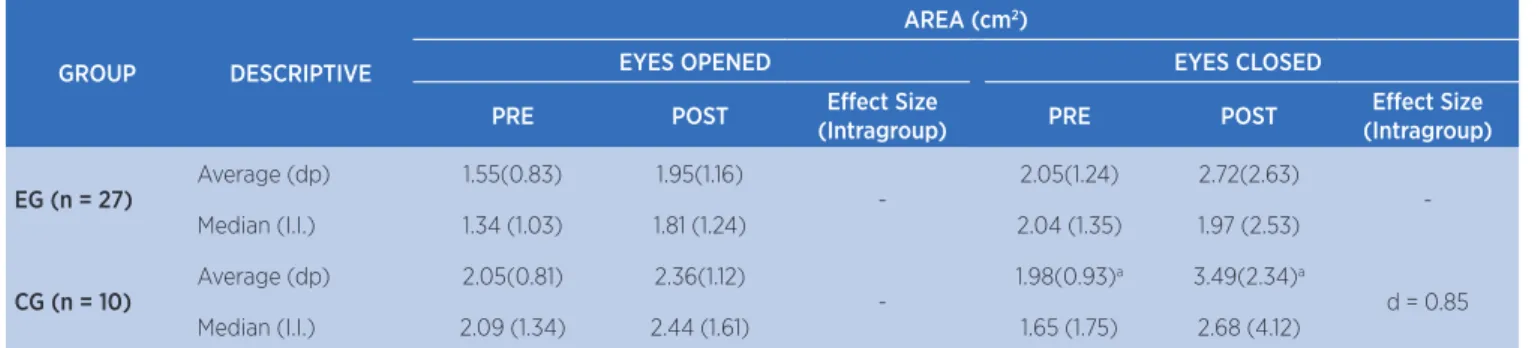
Table 4. COP area, with eyes open and closed of EG and CG, pre and post-intervention.
GROUP DESCRIPTIVE
AREA (cm2)
EYES OPENED EYES CLOSED
PRE POST Efect Size
(Intragroup) PRE POST
Efect Size (Intragroup)
EG (n = 27) Average (dp) 1.55(0.83) 1.95(1.16) - 2.05(1.24) 2.72(2.63)
-Median (I.I.) 1.34 (1.03) 1.81 (1.24) 2.04 (1.35) 1.97 (2.53)
CG (n = 10) Average (dp) 2.05(0.81) 2.36(1.12) - 1.98(0.93)
a 3.49(2.34)a
d = 0.85 Median (I.I.) 2.09 (1.34) 2.44 (1.61) 1.65 (1.75) 2.68 (4.12)
DISCUSSION
COP results obtained in this study showed that hydrogymnastics enabled the improvement of the elderly’s body posture after the intervention period. Such improvement was seen in a reduction of the total movement and the maintenance of antero-posterior width and COP area in the eyes closed condition. he results shown by the elderly participants in the hydrogymnastics training were highlighted when compared to the elderly people in the CG. After the intervention period, the CG showed an increase in the COP area, that is, a broader dispersion of COP data15.
The efects of hydrogymnastics on the total
COP movement
he results seen for the variable total COP movement showed that the EG had a signiicant diference in relation to the CG in the eyes open and closed conditions. EG showed post-training movement values about 30% lower than CG in the eyes open condition and 40% lower in the eyes closed condition.
Generally, when the visual information is removed, the proprioceptive information is not enough to allow the postural control to have the same behavior18.
However, in our study, the EG, even with reduced visual information, showed better postural control that the CG. he same happened in the study by Oliveira19
in which the aim was to assess the biomechanical characteristics of elderly balance, highlighting a better balance in the female group and among the ones who practiced physical activities. In that study, the situations where there was less stability was with the eyes closed.
The efect of hydrogymnastics on the COP
width
he results for the antero-posterior width showed that the EG had a signiicant diference, 23.5% smaller in relation to the CG at the post-intervention moment in the eyes closed condition. Positive contributions of the water exercise for the reduction of postural instability were also shown in the work by Suomi and Koceja20, in which for the medial-lateral as well
as for the antero-posterior, the group who performed water exercises showed reduction of post-intervention postural oscillation.
In literature, it is possible to see results of interventions that led to an increase in the averages of the COP variables. When studying the efect of Tai Chi Chuan on the balance and mobility of individuals with multiple sclerosis, Averill21 observed an increase in the speed
and COP excursion after the intervention, when the subjects performed a meditation standing posture with arm movement. According to Averill21, instead of the
prediction of increase of postural oscillation because of a lesser CNS control due to the ageing process, the increase in postural oscillation can really be a beneicial adaptation to increase the amount of sensorial information available for the CNS.
Besides, according to Averill21, the increase in speed
and COP excursion may have happened because the participants felt more self-assured moving within their balance limits.
Similar results to the ones found in our study were described by Maejima et al.22. As an efect of
intervention, COP postural oscillation increased signiicantly. According to the authors, this increase is a function acquired to control static balancing. To verify the efect of vision on balance, Maejima et al. suggested the use of the Romberg quotient. In this study, we had values close to 1 for the variable medial-lateral width, in pre (1.06) and post (1.01) moments, showing that in the comparison between intervention moments, the vision had less inluence on the results for the medial-lateral width, thus, demonstrating that possible alterations come from the proprioceptive and vestibular system. herefore, despite the low diference found in the eyes open condition for the variable COP medial-lateral width, we highlight that this information is important, since it agrees with Averill21, whose strategy is that
elderly people, for trusting more, begin to explore the limits of their base of support.
The efect of hydrogymnastics on the COP
area
Regarding the COP area, it was observed a diference between the pre and post-intervention moments only for the CG. his result shows that this variable increased 76.2% in the elderly who did not practice hydrogymnastics. Such result is similar to the study by Freitas Junior23 that analyzed the postural oscillations of
Paulus apud Aoki24 airms that the visual system
has a very important role on the maintenance of a stable posture, and it has been posited that reduced visual function irmly afects postural control. With the reduction of visual information, CG showed more diiculty in keeping postural control at the post-intervention moment for the COP area variable.
hus, the increase in COP area in the CG eyes closed condition can be an indicative of the importance of promoting actions to encourage regular and continuous hydrogymnastics practice for the elderly population as a way of maintaining balance and, consequently, other beneit associated to the practice of physical exercises, as the maintenance of movement width, musculature strengthening, and cardiorespiratory conditioning, performed safely25. his may provide the elderly more
autonomy for the realization of activities of daily living (ADL), for their leisure activities and independence, thus impacting general well-being and quality of life26.
Study limitations and suggestions for further
investigations
One of the study’s limitations was not monitoring physical activities of daily living (ADL) of the CG and EG, and the reduced number of male elderly people. his procedure would add more information to the interpretation of the phenomenon of elderly adaptability to the training based on water exercises.
We suggest further investigation verify the elderly’s health state, the fall frequency and that a questionnaire on quality of life be applied. Concerning the intervention, we suggest that the efects of weekly frequency and duration of the hydrogymnastics class on body balance is veriied.
CONCLUSION
Based on the results, it is possible to conclude that water activity improved the body balance of the EG, the total COP movement and antero-posterior width with closed eyes, of elderly people who practiced hydrogymnastics after 16 weeks of intervention focused on dynamic movement exercises.
hus, we conclude that hydrogymnastics practice focusing on exercises with diferent movement possibilities can change signiicantly the postural balance rates.
ACKNOWLEDGMENTS
We thank the help of the student Larissa Daniele Rubira Strioto, of the Associated Graduate Program in Physical Education (UEL/UEM), during data gathering.
REFERENCES
1. United Nations. World Population Ageing 2015 [Internet]. 2015 [acesso em 17 ago. 2017]. Disponível em: https://goo.gl/ o2N4fK
2. Reichert T, Prado AKG, Kanitz AC, Kruel LFM. Efeitos da hidroginástica sobre a capacidade funcional de idosos: metanálise de estudos randomizados. Rev Bras Ativ Fís Saúde. 2015;20(5):447-57. doi: 10.12820/rbafs.v.20n5p447. 3. Daubney ME, Culham HG. Lower-extremity muscle force and
balance performance in adults aged 65 years and older. Phys Ther. 1999;79(12):1177-85. doi: 10.1093/ptj/79.12.1177.
4. Romero CA, Iturbe AG, Gil CL, Lesende IM, Santiago AL. Actividades preventivas em los ancianos. Aten Primaria [Internet]. 2001 [acesso em 17 ago. 2017];28(Suppl. 2):161-80. Disponível em: https://goo.gl/eTkixS
5. Coelho CF, Burini RC. Atividade física para prevenção e tratamento das doenças crônicas não transmissíveis e da incapacidade funcional. Rev Nutr. 2009;22(6):937-46. doi: 10.1590/S1415-52732009000600015.
6. Andreotti RA, Okuma SS. Validação de uma bateria de testes de atividades da vida diária para idosos isicamente independentes. Rev Paul Educ Fís [Internet]. 1999 [acesso em 17 ago. 2017];13(1): 46-66. Disponível em: https://goo.gl/ Qr2Toz
7. Simmons V, Hansen PD. Efectiveness of water exercise on postural mobility in the well elderly: an experimental study on balance enhancement. J Gerontol A Biol Sci Med Sci. 1996;51A(5):M233-38. doi: 10.1093/gerona/51A.5.M233. 8. Avelar IS, Soares V, Barbosa RC, Andrade SR, Silva MS,
Vieira MF. The inluence of a protocol of aquatic exercises in postural control of obese elderly. Rev Andal Med. Deporte. 2016:1-6. doi: 10.1016/j.ramd.2016.01.003.
9. Antes DL, Wiest MJ, Mota CB, Corazza ST. Análise da estabilidade postural e propriocepção de idosas isicamente ativas. Fisioter Mov. 2014;27(4);531-9. doi: 10.1590/0103-5150.027.004.AO05.
10. Souza LK, Coelho BS, Freire B, Delevatti RS, Roncada C, Tiggemann CL, et al. Comparação dos níveis de força e equilíbrio entre idosos praticantes de musculação e de hidroginástica. Rev Bras Ativ Fis Saúde. 2014;19(5):647-55. doi: 10.12820/rbafs.v.19n5p647.
12. Katsura Y, Yoshikawa T, Ueda SY, Usui T, Sotobayashi D, Nakao H, et al. Efects of aquatic exercise training using water-resistance equipment in elderly. Eur J Appl Physiol. 2010;108(5):957-64. doi: 10.1007/s00421-009-1306-0. 13. Hamill J, Knutzen KM. Bases biomecânicas do movimento
humano. São Paulo: Manole; 1999. 532 p.
14. Duarte M, Zatsiorsky VM. Efects of body lean and visual information on the equilibrium maintenance during stance. Exp Brain Res. 2002;146(1):60-9. doi: 10.1007/ s00221-002-1154-1.
15. Duarte M, Freitas SMSF. Revisão sobre posturograia baseada em plataforma de força para avaliação do equilíbrio. Rev Bras Fisioter. 2010;14(3):183-92. doi: 10.1590/ S1413-35552010000300003.
16. Cornilleau-Pérès V, Shabana N, Droulez J, Goh JCH, Lee GSM, Chew PTK. Measurement of the visual contribution to postural steadiness from the COP movement: methodology and reliability. Gait Posture. 2005;22(2):96-106. doi: 10.1016/j. gaitpost.2004.07.009.
17. Cohen J. Statistical power analysis for the behavioral sciences. 2. ed. Hillsdale: Lawrence Earlbaum; 1988. 474 p. 18. Teixeira CS, Rossi AG, Lopes LFD, Mota CB. Utilização da
visão para a manutenção do equilíbrio estático em jovens. FIEP Bulletin. 2007;77(Esp. 1):636-39.
19. Oliveira EM. Avaliação biomecânica do equilíbrio do idoso [Dissertação]. Florianópolis: Universidade do Estado de Santa Catarina; 2006.
20. Suomi R, Koceja DM. Postural sway characteristics in women with lower extremity arthritis before and after
an aquatic exercise intervention. Arch Phys Med Rehabil. 2000;81(6):780-5. doi: 10.1016/S0003-9993(00)90111-4. 21. Averill JL. Efect of a Tai Chi Chuan slow walking intervention
on balance and mobility in individuals with multiple sclerosis [Dissertação]. Amherst: University of Massachusetts; 2013.
22. Maejima H, Kanetada Y, Sunahori H, Murase A, Otani T, Sakamoto N, et al. The Efects of comprehensive exercise program on the adjustments of standing balance in community-dwelling elderly persons. J Jpn Phys Ther Assoc [Internet]. 2008 [acesso em 17 ago. 2017];11:7-13. Disponível em: https://goo.gl/W8DBpE
23. Freitas PB Jr. Características comportamentais do controle postural de jovens, adultos e idosos [Dissertação]. Rio Claro: Universidade Estadual Paulista Júlio de Mesquita Filho; 2003. 24. Aoki H, Demura S, Kawabata H, Sugiura H, Uchida Y, Xu N,
et al. Evaluating the efects of open/closed eyes and age-related diferences on center of foot pressure sway during stepping at a set tempo. Adv Aging Res. 2012;1(3):72-7. doi: 10.4236/aar.2012.13009.
25. Matsudo SM, Matsudo VKR. Prescrição e benefícios da atividade física na terceira idade. Rev Bras Ciênc Mov [Internet]. 1992 [acesso em 17 ago. 2017];6(4):19-30. Disponível em: https://goo.gl/VpWLg7