An Updated Study to Determine Association
between Gadolinium-Based Contrast Agents
and Nephrogenic Systemic Fibrosis
Bin Zhang
1,2, Long Liang
1,2, Wenbo Chen
1, Changhong Liang
1, Shuixing Zhang
1*
1Department of Radiology, Guangdong Academy of Medical Sciences/Guangdong General Hospital, Guangzhou, Guangdong Province, China,2Graduate College, Southern Medical University, Guangzhou, China
Abstract
Background
Nephrogenic systemic fibrosis (NSF) is a rare but serious disorder disease affecting
patients with advanced renal disease. Although multiple studies have indicated an
associa-tion between gadolinium-based contrast agents (GBCAs) and NSF, some studies published
after 2007 found no association. We therefore performed a meta-analysis to evaluate the
association and analyze related (co)factors.
Methods
Studies for analysis were identified by searching PubMed, Embase, and the Cochrane
Cen-tral Register of Controlled Trials through December 2014. Pooled odds ratios (OR) with
95% confidence intervals (CI) were calculated using the fixed-effects model. Statistical
heterogeneity was assessed by Q statistics and the I
2test. Publication bias was evaluated
using Begg
’
s test, Egger
’
s test, funnel plot, and classic fail-safe N. Study quality was
assessed using the Newcastle-Ottawa Scale. We also conducted sensitivity analyses,
subgroup analyses and a cumulative meta-analysis. All statistical analyses were performed
using Comprehensive Meta-Analysis 2.0.
Results
A total of 14 studies (6,398 patients) met the inclusion criteria, but 3 were excluded since
they reported no NSF events. Meta-analysis of controlled trials indicated a significant
asso-ciation between GBCAs and NSF development (OR = 16.504; 95% CI: 7.455
–
36.533;
P
<
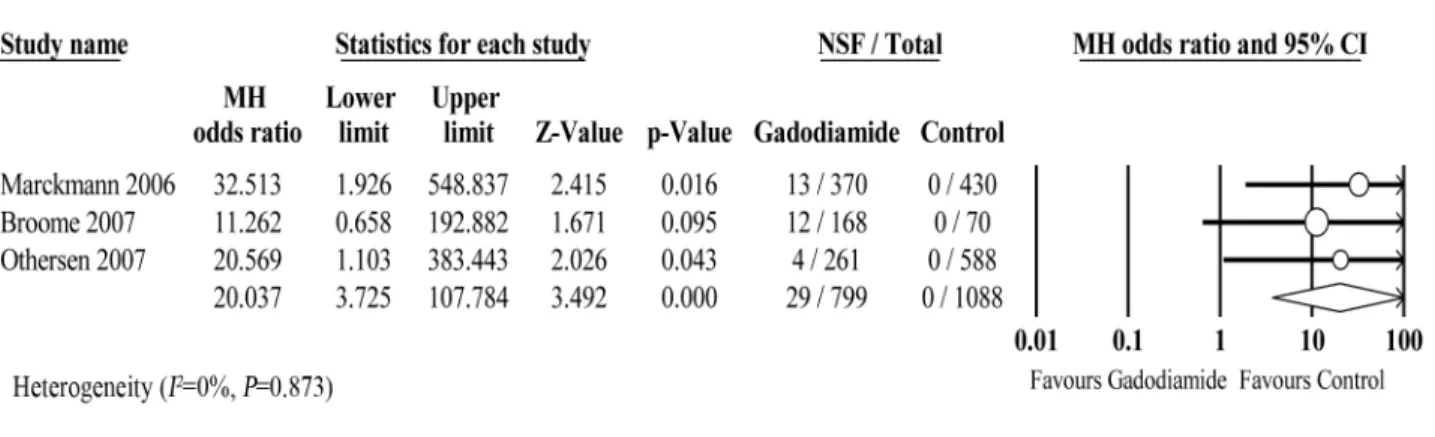
0.001) and between gadodiamide and NSF (OR = 20.037; 95% CI: 3.725
–
107.784;
P
<
0.001). No statistical heterogeneity was observed across studies (
P
= 0.819,
I
2= 0%;
P
=
0.874,
I
2= 0%, respectively). Cumulative analysis demonstrated that the pooled ORs for
association between GBCAs and NSF decreased post-2007 compared to pre-2007 (OR =
26.708; 95% CI: 10.273
–
69.436;
P
<
0.001).
OPEN ACCESS
Citation:Zhang B, Liang L, Chen W, Liang C, Zhang S (2015) An Updated Study to Determine Association between Gadolinium-Based Contrast Agents and Nephrogenic Systemic Fibrosis. PLoS ONE 10(6): e0129720. doi:10.1371/journal.pone.0129720
Academic Editor:Abelardo I Aguilera, Hospital Universitario de La Princesa, SPAIN
Received:January 5, 2015
Accepted:May 12, 2015
Published:June 15, 2015
Copyright:© 2015 Zhang et al. This is an open access article distributed under the terms of the
Creative Commons Attribution License, which permits unrestricted use, distribution, and reproduction in any medium, provided the original author and source are credited.
Data Availability Statement:All relevant data are within the paper and its Supporting Information files.
Funding:This study was supported by grants from National Scientific Foundation of China
(No:81171329) and Guangdong Science Foundation (No:S2011010000790). The funders had no role in study design, data collection and analysis, decision to publish, or preparation of the manuscript.
Conclusions
Although this updated meta-analysis found a significant association between GBCAs and
the incidence of NSF in patients with advanced renal disease, the association decreased
after 2007. More studies, especially randomized controlled trials, are warranted to examine
the potential association between GBCAs other than gadodiamide and NSF.
Introduction
Nephrogenic systemic fibrosis (NSF), previously known as nephrogenic fibrosing dermopathy
(NFD), is an idiopathic, progressive, systemic fibrosis disease that occurs in patients with renal
diseases and can result in significant disability and even death [
1
,
2
]. Little is known about the
etiology of NSF, and there is currently no consistently effective treatment [
3
]. Therefore, NSF
prevention would be beneficial [
4
], ideally by confirming risk factors for the disease. Literature
published prior to 2007 has not only suggested that free gadolinium, particularly gadodiamide,
is a trigger of NSF [
5
], but has reported a strong causal relationship between gadolinium
expo-sure and the development of NSF [
6
–
18
]; however, this association may be affected by other
factors or cofactors, such as dosage or type of gadolinium, dialysis modality, renal disease
severity, liver transplantation, chronic inflammation, or accelerated atherosclerosis [
19
–
22
].
In contrast, studies published after 2007 have reported few or even no NSF events in
con-junction with gadolinium exposure and have therefore concluded a lack of association [
23
–
28
].
This change between studies conducted pre-2007 vs. post-2007 may be ascribed to a public
health advisory issued by the United States (US) Food and Drug Administration (FDA) and
guidelines released by the American College of Radiology (ACR) in 2007, as well as the class
labeling of gadolinium requested by the European Medicines Agency (EMA) [
29
].
Here, we performed an updated meta-analysis to evaluate the association between
gadolin-ium-based contrast agents (GBCAs) and NSF pre- and post- 2007 and attempted to analyze
relevant factors or cofactors that may have influenced this association.
Materials and Methods
This study was reported in accordance with the Preferred Reporting Items for Systematic
Reviews and Meta-Analyses (PRISMA) statement (
S1 File
) [
30
].
Two authors (B.Z. and L.L.) independently extracted data. Disagreements were solved by
negotiation, consensus, and decision by a third author (WB.C). As this was a meta-analysis
that did not involve identifiable patient data, no particular ethical considerations were
required.
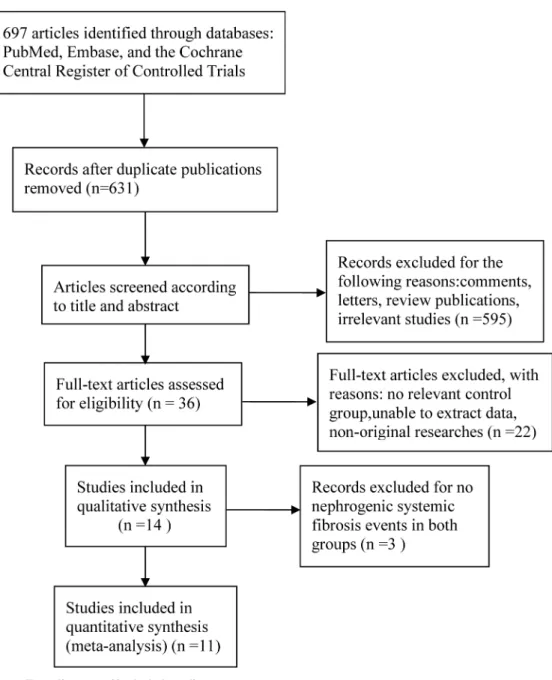
Literature search and study selection
In our second step, we screened the titles and abstracts of papers identified in the first step.
Those that met our inclusion criteria were deemed eligible for full-text review. The main
inclu-sion criterion was that the study examined association between GBCAs and NSF; comments,
letters, review publications, and irrelevant studies were excluded.
Third, we reviewed the literature screened by the second step. Studies were further excluded
for the following reasons: no control group, unable to extract data, and nonoriginal research.
Data extraction and quality assessment
The outcome of interest was the incidence of NSF/NFD in association with gadolinium
expo-sure. Baseline characteristics extracted from all studies included country, study design, study
time span, population history, GBCA type used, outcome measure, and study results. We also
determined whether a dose-response relationship between GBCAs and NSF was reported. For
quality assessment of included studies, the Newcastle-Ottawa Scale for cohort studies and
case-control studies was used [
31
]. The scale for cohort studies encompassed 3 main items: (1)
Selection, (2) Comparability, and (3) Outcome. The scale for case-control studies also consisted
of 3 items: (1) Selection, (2) Comparability, and (3) Exposure. After these 3 main items, the
scales included 8 subitems. All scores are represented out of 9 possible stars (
Table 1
). A higher
score indicates that the individual study was of higher quality. Discrepancies in the score were
resolved through discussion between the authors.
Data synthesis and analysis
Data synthesis and analysis were performed using the fixed-effects model (Mantel- Haenszel
method) with Comprehensive Meta-Analysis V2 (Biostat, Englewood, NJ, United States). Studies
that did not report any NSF cases were excluded from the final meta-analysis [
32
]. For each
study, we calculated the odds ratio (OR) with 95% confidence interval (CI). A 2-tailed
P-value
<
0.05 was considered significant. We assessed statistical heterogeneity between 2 studies
using Cochrane
’
s Q test (
P
<
0.10 considered significant) and I
2statistics (25%, 50%, and 75%
represented low, moderate, and high heterogeneity, respectively). Publication bias was evaluated
using Begg
’
s test (rank regression), Egger
’
s test (linear regression), and funnel plot, except in
cases where included studies were
<
10 [
33
]. Rosenthal
’
s fail-safe N test was used to compute the
number of missing studies (with a mean effect of zero) that would need to be added to the
analysis to yield an overall nonsignificant effect (
P
>
0.05). A higher N meant more robust
results. In addition, sensitivity analysis was conducted by omitting 1 study at a time to determine
if any single study excessively influenced the summary estimates. Cumulative analysis was
applied to compare pooled ORs of all studies published chronologically to a specific point in
time. Subgroup analyses were used to determine some possible impacts on the association
between GBCAs and NSF, such as age or gender, country studied, sample size, medium contrast
dose, and type of study.
Results
Study flow diagram and baseline characteristics
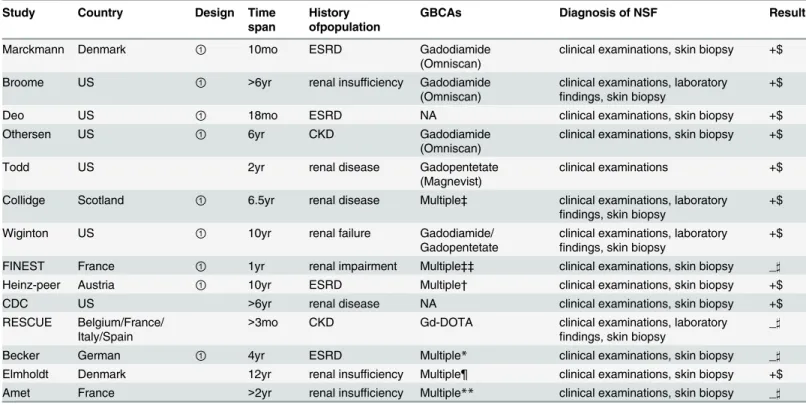
The baseline characteristics of included studies are shown in
Table 2
. We identified 12
cohort studies and 1 case-control study, but no randomized controlled trials. The initial 14
studies included a total of 6,398 patients with advanced renal disease that required dialysis. The
11 studies analyzed in the final meta-analysis included a total of 5,405 patients. All studies were
performed in the US or in Europe. The time spans of the studies ranged from 3 months to 12
years. Gadodiamide was the sole contrast agent used in 3 studies [
9
,
12
,
13
]. Two studies injected
meglumine gadoterate (Gd-DOTA) and gadopentetate, respectively [
8
,
25
]. A diagnosis of NSF
depended on clinical examinations and skin biopsies except for 1 study which only used clinical
examinations [
8
].The results from 9 of these studies showed an association between
gadolin-ium exposure and NSF, while 4 did not [
23
–
26
].
Decreased association between all GBCAs and NSF after 2007
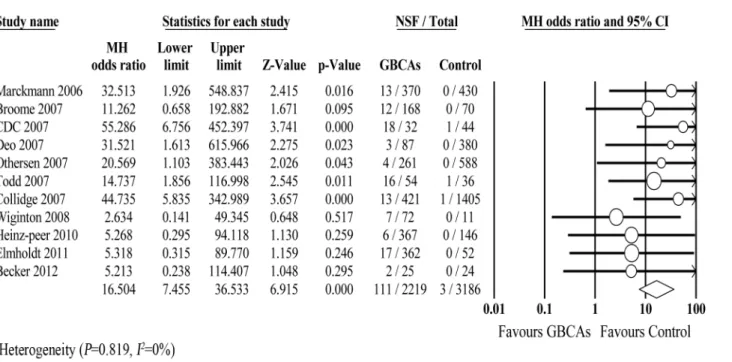
Our meta-analysis demonstrated an obvious association between GBCAs and NSF
(OR = 16.504; 95% CI: 7.455
–
36.533;
P
<
0.001) (
Fig 2
). No significant heterogeneity was
observed across studies (
P
= 0.819,
I
2= 0%). Evidence from the cumulative analysis indicated a
Table 1. Checklist for quality assessment of cohort and case-control study.
Cohort study
Selection
1. How representative was the GBCAs group compared with the general population exposed to GBCAs? (if yes, one star, no star if the patients were selected)
2. Was the source of non-exposed cohort same as exposed cohort? (if yes, one star, no star if drawn from a different source or the source was not described)
3. Ascertainment of exposure: any reliable document or criteria reported (if yes, one star) 4. Exclusion of outcome of interest at start of study (if yes, one star)
Comparability
5. Adjustment for confounding factors? (if age- and sex-matched, one star, other important factors controlled, one star)
Outcome
6. Was outcome obtained via rigorous assessment? (if yes, one star) 7. Was follow up long enough for outcome to occur? (if yes, one star) 8. Low loss to follow up of cohorts (if yes, one star)
Case-control study
Selection
1. Was the Case Definition Adequate? (e.g. hospital records) (if yes, one star, no star if definition was inadequate or definition was not described)
2. Was the case collected consecutively and representative? (if yes, one star)
3. Was the source of control group same as case group? (if yes, one star, no star if drawn from a different source or the source was not described)
4. Were controls had no history of this outcome(endpoint)and definited explicitly? (if yes, one star)
Comparability
5. Adjustment for confounding factors? (if age- and sex-matched, one star, other important factors controlled, one star)
Exposure
6. Ascertainment of Exposure: any reliable document or others? (if yes, one star) 7. Same method of ascertainment for cases and controls? (if yes, one star) 8. Was non-response rate same in both groups? (if yes, one star)
decrease in the risk of NSF linked to GBCA exposure post-2007 compared with pre-2007
(OR = 26.708; 95% CI: 10.273
–
69.436;
P
<
0.001) (
Fig 3
).
1.
Publication bias.
Asymmetry was observed upon visual inspection of funnel plots (
Fig 4
);
however, quantitative assessment by Begg
’
s test (
P
= 0.186; continuity correction
P
= 0.213)
and Egger
’
s test (
P
= 0.042) suggested that there was little publication bias. Rosenthal
’
s
fail-safe N was 119, meaning that 119
‘
null
’
studies would need to be located and included in
order for the combined 2-tailed
P
-value to exceed 0.05. Therefore, the result was relatively
robust.
2.
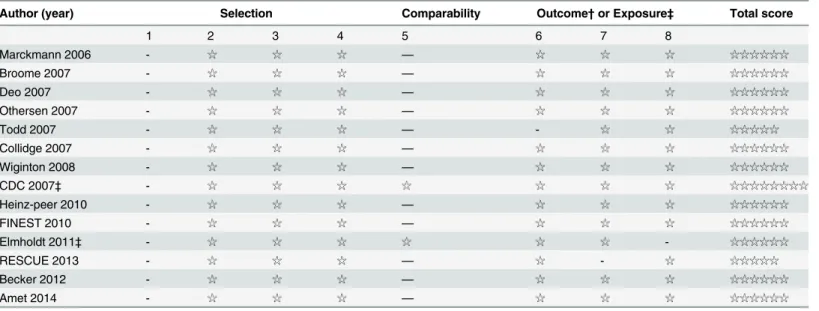
Quality assessment.
The median Newcastle-Ottawa quality score for the included studies
was 6 stars (range, 5
–
8 stars). Only 2 studies controlled for confounding factors [
14
,
34
]
(
Table 3
).
3.
Sensitivity analysis.
The forest plot of sensitivity analysis indicated that no single study had
an excessive influence on the pooled analysis (
Fig 5
).
4.
Subgroup analysis.
We couldn
’
t perform subgroup analyses according to age or gender,
medium contrast dose, and type of study due to unknown or insufficient data. Subgroup
analysis by country showed no significant difference between the US and Europe countries
(OR = 17.35; 95% CI: 5.98
–
50.33;
P
<
0.001 vs OR = 15.59; 95%CI: 4.75
–
51.18;
P
<
0.001)
(
Table 4
). However, a marked difference was observed by sample size (OR = 13.32; 95% CI:
4.93
–
35.99;
P
<
0.001 vs OR = 23.41; 95%CI: 6.24
–
87.88;
P
<
0.001) (
Table 4
).
Table 2. The baseline characteristics of included studies.
Study Country Design Time
span
History ofpopulation
GBCAs Diagnosis of NSF Results
Marckmann Denmark ① 10mo ESRD Gadodiamide
(Omniscan)
clinical examinations, skin biopsy +$
Broome US ① >6yr renal insufficiency Gadodiamide
(Omniscan)
clinical examinations, laboratory findings, skin biopsy
+$
Deo US ① 18mo ESRD NA clinical examinations, skin biopsy +$
Othersen US ① 6yr CKD Gadodiamide
(Omniscan)
clinical examinations, skin biopsy +$
Todd US ② 2yr renal disease Gadopentetate
(Magnevist)
clinical examinations +$
Collidge Scotland ① 6.5yr renal disease Multiple‡ clinical examinations, laboratory
findings, skin biopsy
+$
Wiginton US ① 10yr renal failure Gadodiamide/
Gadopentetate
clinical examinations, laboratory findings, skin biopsy
+$
FINEST France ① 1yr renal impairment Multiple‡‡ clinical examinations, skin biopsy _]
Heinz-peer Austria ① 10yr ESRD Multiple† clinical examinations, skin biopsy +$
CDC US ③ >6yr renal disease NA clinical examinations, skin biopsy +$
RESCUE Belgium/France/
Italy/Spain ②
>3mo CKD Gd-DOTA clinical examinations, laboratory
findings, skin biopsy
_]
Becker German ① 4yr ESRD Multiple* clinical examinations, skin biopsy _]
Elmholdt Denmark ③ 12yr renal insufficiency Multiple¶ clinical examinations, skin biopsy +$
Amet France ② >2yr renal insufficiency Multiple** clinical examinations, skin biopsy _]
Note:①/②/③represented retrospective cohort study, prospective cohort study, case-control study, respectively. mo = months, yr = years.ESRD = end stage renal disease,CKD = chronic kidney disease,GBCAs = gadolinium-based contrast agents, NSF = nephrogenic systemicfibrosis, NA = not available, Gd-DOTA = meglumine gadoterate
‡88.6% MR examinations were performed with gadodiamide (Ominscan), 11.4% were performed with Multihance, Magnevist,etc. ‡‡76% received gadoterate
†Seven types of GBCAs were used in MR examinations
*Five types of GBCAs
¶ Gadodiamide, gadopentetate dimeglumine, gadobutrol, etc.
**Seven types of GBCAs
$ Positive association was found between GBCAs and NSF
Fig 2. Forest plot of association between GBCAs and the development of NSF. doi:10.1371/journal.pone.0129720.g002
Association between gadodiamide and NSF
To date, only 3 studies exclusively injected gadodiamide in patients with renal disease. A
meta-analysis of these 3 studies revealed a significant link between gadodiamide and NSF
(OR = 20.037; 95% CI: 3.725
–
107.784;
P
<
0.001). No significant heterogeneity was observed
across studies (
P
= 0.873,
I
2= 0%) (
Fig 6
). Since the number of included studies was less than
10, the power of publication bias evaluation was very low and therefore was not assessed.
The Newcastle-Ottawa quality scores of all studies were 6 stars (
Table 3
). No single study
excessively affected the pooled estimates (
Fig 7
).
Fig 4. Funnel plot for publication bias. doi:10.1371/journal.pone.0129720.g004
Table 3. Quality assessment of included studies.
Author (year) Selection Comparability Outcome†or Exposure‡ Total score
1 2 3 4 5 6 7 8
Marckmann 2006 - ☆ ☆ ☆ — ☆ ☆ ☆ ☆☆☆☆☆☆
Broome 2007 - ☆ ☆ ☆ — ☆ ☆ ☆ ☆☆☆☆☆☆
Deo 2007 - ☆ ☆ ☆ — ☆ ☆ ☆ ☆☆☆☆☆☆
Othersen 2007 - ☆ ☆ ☆ — ☆ ☆ ☆ ☆☆☆☆☆☆
Todd 2007 - ☆ ☆ ☆ — - ☆ ☆ ☆☆☆☆☆
Collidge 2007 - ☆ ☆ ☆ — ☆ ☆ ☆ ☆☆☆☆☆☆
Wiginton 2008 - ☆ ☆ ☆ — ☆ ☆ ☆ ☆☆☆☆☆☆
CDC 2007‡ - ☆ ☆ ☆ ☆ ☆ ☆ ☆ ☆☆☆☆☆☆☆☆
Heinz-peer 2010 - ☆ ☆ ☆ — ☆ ☆ ☆ ☆☆☆☆☆☆
FINEST 2010 - ☆ ☆ ☆ — ☆ ☆ ☆ ☆☆☆☆☆☆
Elmholdt 2011‡ - ☆ ☆ ☆ ☆ ☆ ☆ - ☆☆☆☆☆☆
RESCUE 2013 - ☆ ☆ ☆ — ☆ - ☆ ☆☆☆☆☆
Becker 2012 - ☆ ☆ ☆ — ☆ ☆ ☆ ☆☆☆☆☆☆
Amet 2014 - ☆ ☆ ☆ — ☆ ☆ ☆ ☆☆☆☆☆☆
Association between other GBCAs besides gadodiamide and NSF
Within the eligible studies, 2 studies reported an injection of Gd-DOTA and gadopentetate,
respectively [
8
,
25
]. The OR for NSF in the study that administered gadopentetate was 14.737
(95% CI = 1.856
–
116.998;
P
= 0.011). No NSF events were reported in the study that used
Gd-DOTA, making determination of its association with NSF impossible. There were no other
controlled or uncontrolled studies determining the association between other GBCAs and
NSF.
Dose-response relationship between GBCAs and NSF
In total, 4 studies described a dose-response relationship between gadodiamide exposure and
the risk of NSF [
7
,
10
,
12
,
34
] (
Table 5
). Collidge et al reported that patients with NSF received
a higher median cumulative dose of gadodiamide than their unaffected gadolinium-exposed
Fig 5. Sensitivity analysis plot of GBCAs group vs Control group.To assess the influence of single study on pooled estimate, we omitted one study at a time.
doi:10.1371/journal.pone.0129720.g005
Table 4. Subgroup analyses on the incidence of NSF in various conditions.
Conditions Included study OR with 95%CI Heterogeneity analysis
Country
Europe 5 15.59 (4.75–51.18;P<0.001) I2= 0%;P= 0.579
US 6 17.35 (5.98–50.33;p<0.001) I2
= 0%;P= 0.694 Patients
<500 7 13.32 (4.93–35.99;p<0.001) I2= 0%;P= 0.671
>500 4 23.41 (6.24–87.88;p<0.001) I2= 0%;P= 0.688
counterparts (0.39 vs. 0.23 mmol/kg of body weight, respectively,
P
= 0.008) [
10
]. The other 3
studies also showed gadodiamide dosage differences between patients with and without NSF.
Discussion
Main findings and analysis
Our updated meta-analysis suggested a significant association between GBCA exposure and
the development of NSF, consistent with another systematic review and meta-analysis
con-ducted pre-2007 [
35
]. Nevertheless, our cumulative meta-analysis indicated an obvious
decrease in the association between GBCA exposure and NSF post-2007. If the
“
zero case
effect
”
of 3 of the included studies is considered, the decreased association between GBCAs
and NSF post-2007 may be overestimated.
From 1997 to 2007, more than 500 NSF cases were reported in patients with severe renal
insufficiency (glomerular filtration rate
<
30 ml/min/1.73 m
2) [
36
]. The FDA and ACR both
issued warnings against the use of gadolinium in this renal function-compromised population
due to the suspected link. Our findings supported these warnings. All NSF cases in our study
occurred in patients with severe renal disease. The FDA and EMA also requested that
manufacturers of all approved GBCAs, drugs widely used for magnetic resonance imaging, use
Fig 6. Forest plot of association between Gadodiamide exposure and the development of NSF. doi:10.1371/journal.pone.0129720.g006
Fig 7. Sensitivity analysis plot of gadodiamide group vs. control group.To assess the influence of single study on pooled estimate, we omitted one study at a time.
nearly identical text in their product labeling (revised in 2010) to describe the risk of NSF [
29
].
Evaluation of renal function (e.g. serum creatinine level) and history was also recommended
before use of GBCAs. As a result, the prevalence of NSF has decreased dramatically [
37
–
39
].
Our cumulative meta-analysis also found a decreased effect and may reflect these changes in
policy.
Other factors or cofactors may affect the association between GBCAs and NSF. In our
meta-analysis, 4 studies described a dose-response relationship between gadodiamide and NSF.
Broome et al. showed that the risk of NSF was 12.1 times higher in a double dose group
com-pared with a single dose group [
12
]. Other studies reported similar findings [
40
,
41
]. Use of
higher gadolinium doses than were recommended by regulatory agencies contributed to NSF
[
42
]. Additionally, certain chelates were shown to be risk factors for NSF development after
GBCA exposure [
43
]. GBCAs are classified according to their chemical structure as
macrocy-clic vs. linear, or ionic vs. nonionic. In contrast to ionic, macrocymacrocy-clic chelates, nonionic, linear
chelates bind gadolinium less tightly, resulting in a less stable gadolinium-ligand complex with
higher free gadolinium dissociation rates [
43
,
44
]. For this reason, researchers hypothesized
that nonionic, linear chelates (e.g. gadodiamide, gadoversetamide) are more likely to cause
NSF than ionic macrocyclic chelates (e.g. dotarem) [
20
,
45
]. In our study, we did not find
pub-lished reports examining the link between GBCAs other than gadodiamide/gadopentatate and
NSF.
Other risk factors or cofactors may play a concomitant role in NSF development. A
case-control study from Denmark showed that of 17 NSF cases, 41% received hemodialysis, 24%
peritoneal dialysis, and 35% no dialysis [
34
]. The authors concluded that the risk of NSF may
be higher in patients who underwent hemodialysis than in patients who underwent peritoneal
dialysis. The NSF risk was also strongly correlated with the severity of renal disease, measured
by renal excretion, which determines the duration of GBCA exposure and therefore the extent
of gadolinium ion release. Almost all NSF cases develop in dialysis patients with severe
to end-stage (stage 4
–
5) chronic kidney disease (CKD). Very few cases of NSF are seen in
patients with a glomerular filtration rate
>
30 ml/min [
46
]. Cofactors such as chronic
inflam-mation and accelerated atherosclerosis seem to be involved in the development of NSF, but
their role is still unclear [
21
].
To reduce the risk of NSF, gadolinium exposure and other risk factors and cofactors should
be controlled by physicians. Researchers have conducted trials that limit GBCA to the
recom-mended dose or even to a quarter-dose (0.025 mmol/kg), that dialyze patients quickly
follow-ing GBCA administration, and that avoid usfollow-ing nonionic, linear GBCA in patients with renal
Table 5. Dose-response relationship between gadolinium and NSF.
Study Year Gadolinium dose OR(95%CI) Pvalue
NSF group Non-NSF group
Collidge 2007 0.39* 0.23* NA .008
Broome 2007 0.20† 0.10† 12.1(0.7–206.2) NA
Heine-peer 2010 59.5‡ 25.0‡ NA .028
Elmholdt 2011 57±36※ 25±13※ NA .012
Note: NA = not applicable
*cumulative dose, median (mmol/kg) †mean (mmol/kg)
‡median (ml) ※mean±sd(ml)
failure especially when there are proinflammatory and/or atherosclerotic conditions may
sig-nificantly reduce the risk of NSF[
47
,
48
].
Limitations
There were some limitations of this meta-analysis. First, no randomized controlled trials were
available for inclusion, and most of the included studies did not adjust for confounding factors.
Second, the authors were unable to agree upon a method to calculate the effect of the 3 studies
that reported
“
zero NSF cases
”
. Third, since all included studies were performed in either the
US or Europe, the summary estimates may not be applicable to other countries, though the
result of subgroup analysis by country showed no significant difference between the US and
Europe countries. Fourth, since almost all patients in our study had stages 3
–
5 of CKD, we are
unable to comment on the risk of NSF in patients with acute renal failure or other stages of
CKD. Lastly, we could not find any controlled or uncontrolled published studies examining the
association between NSF and GBCAs in forms other than gadodiamide.
Conclusions
This study demonstrates a significant association between GBCAs and NSF; however, the
asso-ciation decreased in studies reported after 2007, likely a result of policies issued by the FDA
and ACR. The association can be affected by the GBCA dose, GBCA chemical structure,
dialy-sis modality, renal disease severity, proinflammatory and/or atherosclerotic conditions, and
other factors. Thus, clinicians should minimize gadolinium exposure and carefully assess risks
and benefits, especially for patients with severe to end-stage CKD. These recommendations are
in line with the FDA and ACR guidelines.
Supporting Information
S1 File. PRISMA Checklist (DOC).
(DOC)
S2 File. Search strategy S2 (DOC).
(DOCX)
Acknowledgments
We sincerely thank the librarians at the Library of Southern Medical University for their
sup-port and advice during the literature search.
Author Contributions
Conceived and designed the experiments: BZ. Analyzed the data: BZ WC LL. Contributed
reagents/materials/analysis tools: BZ WC. Wrote the paper: BZ CL SZ.
References
1. Chao CC, Yang CC, Hsiao CH, Pan MK, Lin CH, et al. (2008) Nephrogenic systemic fibrosis associated with gadolinium use. J Formos Med Assoc 107: 270–274. doi:10.1016/S0929-6646(08)60147-3
PMID:18400614
2. Broome DR (2008) Nephrogenic systemic fibrosis associated with gadolinium based contrast agents: a summary of the medical literature reporting. Eur J Radiol 66: 230–234. doi:10.1016/j.ejrad.2008.02. 011PMID:18372138
4. Introcaso CE, Hivnor C, Cowper S, Werth VP (2007) Nephrogenic fibrosing dermopathy/nephrogenic systemic fibrosis: a case series of nine patients and review of the literature. Int J Dermatol 46: 447– 452. PMID:17472669
5. Reiter T, Ritter O, Prince MR, Nordbeck P, Wanner C, et al. (2012) Minimizing risk of nephrogenic sys-temic fibrosis in cardiovascular magnetic resonance. J Cardiovasc Magn Reson 14: 31. doi:10.1186/ 1532-429X-14-31PMID:22607376
6. Moreno-Romero JA, Segura S, Mascaro JJ, Cowper SE, Julia M, et al. (2007) Nephrogenic systemic fibrosis: a case series suggesting gadolinium as a possible aetiological factor. Br J Dermatol 157: 783– 787. PMID:17627792
7. Heinz-Peer G, Neruda A, Watschinger B, Vychytil A, Geusau A, et al. (2010) Prevalence of NSF follow-ing intravenous gadolinium-contrast media administration in dialysis patients with endstage renal dis-ease. Eur J Radiol 76: 129–134. doi:10.1016/j.ejrad.2009.06.028PMID:19619969
8. Wiginton CD, Kelly B, Oto A, Jesse M, Aristimuno P, et al. (2008) Gadolinium-based contrast exposure, nephrogenic systemic fibrosis, and gadolinium detection in tissue. AJR Am J Roentgenol 190: 1060– 1068. doi:10.2214/AJR.07.2822PMID:18356456
9. Othersen JB, Maize JC, Woolson RF, Budisavljevic MN (2007) Nephrogenic systemic fibrosis after exposure to gadolinium in patients with renal failure. Nephrol Dial Transplant 22: 3179–3185. PMID:
17890246
10. Collidge TA, Thomson PC, Mark PB, Traynor JP, Jardine AG, et al. (2007) Gadolinium-enhanced MR imaging and nephrogenic systemic fibrosis: retrospective study of a renal replacement therapy cohort. Radiology 245: 168–175. PMID:17704357
11. Deo A, Fogel M, Cowper SE (2007) Nephrogenic systemic fibrosis: a population study examining the relationship of disease development to gadolinium exposure. Clin J Am Soc Nephrol 2: 264–267. PMID:17699423
12. Broome DR, Girguis MS, Baron PW, Cottrell AC, Kjellin I, et al. (2007) Gadodiamide-associated nephrogenic systemic fibrosis: why radiologists should be concerned. AJR Am J Roentgenol 188: 586–592. PMID:17242272
13. Marckmann P, Skov L, Rossen K, Dupont A, Damholt MB, et al. (2006) Nephrogenic systemic fibrosis: suspected causative role of gadodiamide used for contrast-enhanced magnetic resonance imaging. J Am Soc Nephrol 17: 2359–2362. PMID:16885403
14. Centers for Disease Control and Prevention (CDC) (2007) Nephrogenic fibrosing dermopathy associ-ated with exposure to gadolinium-containing contrast agents—St. Louis, Missouri, 2002–2006. MMWR Morb Mortal Wkly Rep 56: 137–141. PMID:17318112
15. High WA, Ayers RA, Chandler J, Zito G, Cowper SE (2007) Gadolinium is detectable within the tissue of patients with nephrogenic systemic fibrosis. J Am Acad Dermatol 56: 21–26. PMID:17097388
16. Kallen AJ, Jhung MA, Cheng S, Hess T, Turabelidze G, et al. (2008) Gadolinium-containing magnetic resonance imaging contrast and nephrogenic systemic fibrosis: a case-control study. Am J Kidney Dis 51: 966–975. doi:10.1053/j.ajkd.2007.12.036PMID:18501784
17. Rydahl C, Thomsen HS, Marckmann P (2008) High prevalence of nephrogenic systemic fibrosis in chronic renal failure patients exposed to gadodiamide, a gadolinium-containing magnetic resonance contrast agent. Invest Radiol 43: 141–144. doi:10.1097/RLI.0b013e31815a3407PMID:18197066
18. Hoppe H, Spagnuolo S, Froehlich JM, Nievergelt H, Dinkel HP, et al. (2010) Retrospective analysis of patients for development of nephrogenic systemic fibrosis following conventional angiography using gadolinium-based contrast agents. Eur Radiol 20: 595–603. doi:10.1007/s00330-009-1586-0
PMID:19760239
19. Ng YY, Lee RC, Shen SH, Kirk G (2007) Gadolinium-associated nephrogenic systemic fibrosis: double dose, not single dose. AJR Am J Roentgenol 188: W582, W583. PMID:17515358
20. Edward M, Quinn JA, Burden AD, Newton BB, Jardine AG (2010) Effect of different classes of gadolinium-based contrast agents on control and nephrogenic systemic fibrosis-derived fibroblast proliferation. Radiology 256: 735–743. doi:10.1148/radiol.10091131PMID:20663970
21. Grebe SO, Borrmann M, Altenburg A, Wesselman U, Hein D, et al. (2008) Chronic inflammation and accelerated atherosclerosis as important cofactors in nephrogenic systemic fibrosis following intrave-nous gadolinium exposure. Clin Exp Nephrol 12: 403–406. doi:10.1007/s10157-008-0063-4PMID:
18551245
22. Caccetta T, Chan JJ (2008) Nephrogenic systemic fibrosis associated with liver transplantation, renal failure and gadolinium. Australas J Dermatol 49: 48–51. doi:10.1111/j.1440-0960.2007.00426.x
PMID:18186850
with gadolinium-based contrast agents: the Prospective Fibrose Nephrogenique Systemique study. Invest Radiol 49: 109–115. doi:10.1097/RLI.0000000000000000PMID:24169070
24. Becker S, Walter S, Witzke O, Kreuter A, Kribben A, et al. (2012) Application of
gadolinium-based contrast agents and prevalence of nephrogenic systemic fibrosis in a cohort of end-stage renal disease patients on hemodialysis. Nephron Clin Pract 121: c91–c94. doi:10.1159/000345150PMID:
23182840
25. Deray G, Rouviere O, Bacigalupo L, Maes B, Hannedouche T, et al. (2013) Safety of meglumine gado-terate (Gd-DOTA)-enhanced MRI compared to unenhanced MRI in patients with chronic kidney dis-ease (RESCUE study). Eur Radiol 23: 1250–1259. doi:10.1007/s00330-012-2705-xPMID:23212275
26. Janus N, Launay-Vacher V, Karie S, Clement O, Ledneva E, et al. (2010) Prevalence of nephrogenic systemic fibrosis in renal insufficiency patients: results of the FINEST study. Eur J Radiol 73: 357–359. doi:10.1016/j.ejrad.2008.11.021PMID:19128909
27. Ishiguchi T, Takahashi S (2010) Safety of gadoterate meglumine (Gd-DOTA) as a contrast agent for magnetic resonance imaging: results of a post-marketing surveillance study in Japan. Drugs R D 10: 133–145. doi:10.2165/11539140-000000000-00000PMID:20945944
28. Zou Z, Ma L, Li H (2009) Incidence of nephrogenic systemic fibrosis at Chinese PLA General Hospital. J Magn Reson Imaging 30: 1309–1312. doi:10.1002/jmri.21769PMID:19937931
29. Yang L, Krefting I, Gorovets A, Marzella L, Kaiser J, et al. (2012) Nephrogenic systemic fibrosis and class labeling of gadolinium-based contrast agents by the Food and Drug Administration. Radiology 265: 248–253. PMID:22923714
30. Moher D, Liberati A, Tetzlaff J, Altman DG (2009) Preferred reporting items for systematic reviews and meta-analyses: the PRISMA Statement. Open Med 3: e123–e130. PMID:21603045
31. Wells GA, Shea B, O'Connell D, Peterson J, Welch V, et al. (2011) The Newcastle-Ottawa Scale (NOS) for assessing the quality of nonrandomized studies in meta-analysis. Available:www.ohri.ca/programs/ clinical_epidemiology/oxford.asp. Accessed 2014 Dec 8.
32. Higgins J, Green S (2011) Cochrane handbook for systematic reviews of interventions, version 5.1.0, Available:http://handbook.cochrane.org/chapter10/10.4.3.1.html. Recommendations on testing for fun-nel plot asymmetry. Accessed 2014 Dec 8.
33. Altman DG (2001) Systematic Reviews in Health Care: Meta-Analysis in Context. BMJ Books.347 p. 34. Elmholdt TR, Pedersen M, Jorgensen B, Sondergaard K, Jensen JD, et al. (2011) Nephrogenic
sys-temic fibrosis is found only among gadolinium-exposed patients with renal insufficiency: a case-control study from Denmark. Br J Dermatol 165: 828–836. doi:10.1111/j.1365-2133.2011.10465.x
PMID:21692765
35. Agarwal R, Brunelli SM, Williams K, Mitchell MD, Feldman HI, et al. (2009) Gadolinium-based contrast agents and nephrogenic systemic fibrosis: a systematic review and meta-analysis. Nephrol Dial Trans-plant 24: 856–863. doi:10.1093/ndt/gfn593PMID:18952698
36. Kitajima K, Maeda T, Watanabe S, Ueno Y, Sugimura K (2012) Recent topics related to nephrogenic systemic fibrosis associated with gadolinium-based contrast agents. Int J Urol 19: 806–811. doi:10. 1111/j.1442-2042.2012.03042.xPMID:22571387
37. Daftari BL, Aran S, Shaqdan K, Kay J, Abujudeh H (2014) Current status of nephrogenic systemic fibro-sis. Clin Radiol 69: 661–668. doi:10.1016/j.crad.2014.01.003PMID:24582176
38. Kim KH, Fonda JR, Lawler EV, Gagnon D, Kaufman JS (2010) Change in use of gadolinium-enhanced magnetic resonance studies in kidney disease patients after US Food and Drug Administra-tion warnings: a cross-secAdministra-tional study of Veterans Affairs Health Care System data from 2005–2008. Am J Kidney Dis 56: 458–467. doi:10.1053/j.ajkd.2010.03.027PMID:20580477
39. Wang Y, Alkasab TK, Narin O, Nazarian RM, Kaewlai R, et al. (2011) Incidence of nephrogenic sys-temic fibrosis after adoption of restrictive gadolinium- based contrast agent guidelines. Radiology 260: 105–111. doi:10.1148/radiol.11102340PMID:21586680
40. Martin DR, Krishnamoorthy SK, Kalb B, Salman KN, Sharma P, et al. (2010) Decreased incidence of NSF in patients on dialysis after changing gadolinium contrast-enhanced MRI protocols. J Magn Reson Imaging 31: 440–446. doi:10.1002/jmri.22024PMID:20099361
41. Abujudeh HH, Kaewlai R, Kagan A, Chibnik LB, Nazarian RM, et al. (2009) Nephrogenic systemic fibro-sis after gadopentetate dimeglumine exposure: case series of 36 patients. Radiology 253: 81–89. doi:
10.1148/radiol.2531082160PMID:19709997
43. Grobner T, Prischl FC (2008) Patient characteristics and risk factors for nephrogenic systemic fibrosis following gadolinium exposure. Semin Dial 21: 135–139. doi:10.1111/j.1525-139X.2007.00406.x
PMID:18226001
44. Penfield JG, Reilly RF (2008) NSF: What We Know and What We Need to Know: Nephrogenic Sys-temic Fibrosis Risk: Is There a Difference between Gadolinium-Based Contrast Agents? Seminars in Dialysis 21: 129–134. doi:10.1111/j.1525-139X.2007.00408.xPMID:18225999
45. Kielstein JT, Schiffer M (2010) [Nephrogenic systemic fibrosis: a rare disease with grave conse-quences]. Internist (Berl) 51: 39–44. doi:10.1007/s00108-009-2408-9PMID:20033388
46. Bhave G, Lewis JB, Chang SS (2008) Association of gadolinium based magnetic resonance imaging contrast agents and nephrogenic systemic fibrosis. J Urol 180: 830–835, 835. doi:10.1016/j.juro.2008. 05.005PMID:18635232
47. Zou Z, Zhang HL, Roditi GH, Leiner T, Kucharczyk W, et al. (2011) Nephrogenic systemic fibrosis: review of 370 biopsy-confirmed cases. JACC Cardiovasc Imaging 4: 1206–1216. doi:10.1016/j.jcmg. 2011.08.013PMID:22093272