Doppler and maternal serum screening in the prediction
of pregnancy complications*
Doppler e marcadores séricos maternos na predição de complicações da gestação
Fabrício da Silva Costa1, Rebeca Silveira Rocha2, Sérgio Pereira da Cunha3, Francisco Cândido dos Reis4, Aderson Tadeu Berezowski5, José Antunes-Rodrigues6
OBJECTIVE: To compare the effectiveness of uterine artery Doppler and maternal serum screening in the prediction of pregnancy complications. MATERIALS AND METHODS: Prospective study with 49 primigravidae at their 18th gestational week, when a blood sample was collected for serum dosage by chemiluminescence (alpha-fetoprotein, human chorionic gonadotropin and nitric oxide) and radioimmunoassay (atrial natriuretic peptide). Uterine artery Doppler was performed between the 24th and 26th gestational weeks, for determin-ing the presence or absence of notch in the flow velocity waveform. The non-parametric Mann-Whitney test was utilized for statistical analysis, and the Fisher exact test for analysis of qualitative parameters. RESULTS: Sensitivity, specificity, positive and negative predictive values were, respectively, 8.3%, 97.0%, 50.0% and 74.4% for alpha-fetoprotein; 8.3%, 87.9%, 20.0% and 72.5% for human chorionic gonadotropin; 16.7%, 97.0%, 33.3% and 76.2% for atrial natriuretic peptide; and 16.7%, 93.9%, 50.0% and 75.6% for nitric oxide. The uterine artery Doppler sensitivity was 75.0%, specificity 63.6%, positive predictive value 57.1%, and negative predictive value 87.5%. CONCLUSION: Uterine artery Doppler is an effective method for pre-diction of pregnancy complications as compared with maternal serum screening in low risk populations. Keywords: Doppler; Serum screening; Preeclampsia; Complications; Pregnancy.
OBJETIVO: Comparar a eficácia do Doppler das artérias uterinas e de marcadores séricos maternos na pre-dição de complicações da gestação. MATERIAIS E MÉTODOS: Trata-se de um estudo prospectivo com 49 primigestas, incluídas no estudo na 18ª semana, sendo coletada a amostra sanguínea para a realização das dosagens séricas, realizadas pelo método de quimioluminescência (alfa-fetoproteína, gonadotrofina coriô-nica humana e óxido nítrico) e radioimunoensaio (peptídio atrial natriurético). O Doppler das artérias uterinas foi realizado entre 24–26 semanas, determinando a presença ou ausência de incisura na onda de velocidade de fluxo. Na análise estatística utilizou-se o teste de Mann-Whitney, para amostras não-paramétricas, e o teste exato de Fisher, para parâmetros qualitativos. RESULTADOS: Os valores de sensibilidade, especifici-dade, valor preditivo positivo e valor preditivo negativo foram, respectivamente, de 8,3%, 97,0%, 50,0% e 74,4% para a alfa-fetoproteína; 8,3%, 87,9%, 20,0% e 72,5% para a gonadotrofina coriônica humana; 16,7%, 97,0%, 33,3% e 76,2% para o peptídio atrial natriurético; e 16,7%, 93,9%, 50,0% e 75,6% para o óxido nítrico. A sensibilidade do Doppler foi de 75,0%, especificidade de 63,6%, valor preditivo positivo de 57,1% e valor preditivo negativo de 87,5%. CONCLUSÃO: O Doppler das artérias uterinas é melhor preditor de complicações da gestação quando comparado a alguns marcadores séricos em populações de baixo risco. Unitermos: Doppler; Marcadores séricos; Pré-eclâmpsia; Complicações; Gravidez.
Abstract
Resumo
* Study developed at Hospital das Clínicas da Faculdade de Medicina de Ribeirão Preto da Universidade de São Paulo (HCFMRP-USP), Ribeirão Preto, SP, Brazil.
1. PhD, Associate Professor of Gynecology and Obstetrics in the Course of Medicine, Universidade Estadual do Ceará (UECE), Fortaleza, CE, Brazil.
2. Graduate Student, Universidade Estadual do Ceará (UECE), Fortaleza, CE, Brazil, holder of Scientific Initiation Scholarship (Conselho Nacional de Desenvolvimento Científico e Tecnoló-gico – CNPq).
3. Private Docent, Titular Professor, Department of Gynecol-ogy and Obstetrics at Faculdade de Medicina de Ribeirão Preto da Universidade de São Paulo (FMRP-USP), Ribeirão Preto, SP, Brazil.
4. Private Docent, Associate Professor, Department of Gyne-cology and Obstetrics at Faculdade de Medicina de Ribeirão Preto da Universidade de São Paulo (FMRP-USP), Ribeirão Preto, SP, Brazil.
5. PhD, Professor, Department of Gynecology and Obstetrics
several gestational disorders, especially preeclampsia. Some of these tests are simple, other, invasive; some of them have been extensively evaluated, others still re-main under clinical investigation. The lit-erature review demonstrates a high level of disagreement as far as the sensitivity and predictive value of several of these tests are concerned, and an ideal test for screening the main gestational and perinatal patholo-gies is still to be found(1).
The greatest majority of current studies about markers for gestational and
perina-Costa FS, Rocha RS, Cunha SP, Reis FC, Berezowski AT, Antunes-Rodrigues J. Doppler e marcadores séricos maternos na predição de complicações da gestação. Radiol Bras. 2008;41(1):7–12.
at Faculdade de Medicina de Ribeirão Preto da Universidade de São Paulo (FMRP-USP), Ribeirão Preto, SP, Brazil.
6. Private Docent, Titular Professor, Department of Physiology at Faculdade de Medicina de Ribeirão Preto da Universidade de São Paulo (FMRP-USP), Ribeirão Preto, SP, Brazil.
Mailing address: Dr. Fabrício da Silva Costa. Rua Eunice Wea-ver, 210, casa 13, Bairro Edson Queiroz. Fortaleza, CE, Brazil, 60834-540. E-mail: [email protected]
Received March 14, 2007. Accepted after revision May 24, 2007.
INTRODUCTION
tal complications associated with alter-ations in the trophoblastic invasion, show a trend towards the identification of a sole marker(2). Preeclampsia and intrauterine growth restriction (IUGR), however, are multisystemic diseases, with placentation abnormalities probably due to genetic and immunological predisposition(3), and a se-ries of humoral and cardiovascular alter-ations probably related to endothelial dys-function(4), so the discovery of a good sole marker is practically unachievable.
Some studies have demonstrated that the association between serum markers and an abnormal uterine artery Doppler may potentialize the identification of pregnant women at risk, preventing the development of gestational complications(5,6).
The present study is aimed at compar-ing the effectiveness of uterine arteries Doppler and the maternal sera screening — alpha-fetoprotein (AFP), human chorionic gonadotropin (hCG), atrial natriuretic pep-tide (ANP), and nitric oxide (NO), in the prediction of pregnancy complications.
MATERIALS AND METHODS
The present casuistic included 49 primi-gravidae, with no chronic, gestational or gynecologic disease, assisted at the prena-tal assistance clinic of Department of Gy-necology and Obstetrics at Hospital das Clínicas da Faculdade de Medicina de Ribeirão Preto da Universidade de São Paulo (HCFMRP-USP) or at the public health service network of Ribeirão Preto, SP. This study was approved by the HCFMRP-USP Committee for Ethics on Research, and the tests and examinations were performed only after the patients had been given an explanation and signed a term of informed consent.
The determination of gestational age was based on the first day of last menstrual period, and on transvaginal ultrasound study performed during the first trimester of gestation.
The pregnant women were included in the study at their 18th gestational week, when a blood sample was collected for serum screening. Uterine artery Doppler was performed between the 24th and 26th gestational weeks. Additionally, the pa-tients were given guidance about
parturi-tion in the HCFMRP-USP Obstetric Cen-ter. The women’s prenatal follow-up was kept at their original health units up to the end of gestation. Extra-protocol tests and studies were offered in cases of intercur-rences or by request of the prenatal doctor. In the setting of complications, the patients were referred for follow-up in the High-Risk Pregnancy Clinic of the HCFMRP-USP Department of Gynecology.
Exclusion criteria of the present study were: presence of chronic, gestational or gynecologic diseases, chronic use of medi-cations, smoking, multiple gestation, pres-ence of fetal malformation, miscarriage, failure do appear at scheduled returns and childbirth in other hospitals. Failure to ap-pear at scheduled returns (two cases), and childbirth in other hospitals (two cases) were the reasons for exclusion of four women during the development of the present study.
The following data were obtained: women’s age, color and familial history of chronic diseases (chronic arterial hyperten-sion and diabetes mellitus).
Upon their inclusion in the study at the 18th gestational week, the women had a 15 ml blood sample collected, after 30-minute seating rest, by peripheral venous puncture with a 20 ml syringe (without heparin).
AFP and hCG screening was performed by chemiluminescence, with Immulite AFP (2000) and Immulite hCG (2000) kits (Di-agnostic Products Corporation; Los Ange-les, CA, USA). The essays were performed at the Laboratory of Tocogynecological Physiology and Pharmacology, Department of Gynecology and Obstetrics of HC-FMRP-USP. The measurements were per-formed with an Immulite chemilumines-cence automatic analyzer (DPC Cirrus Inc., a DPC subsidiary). Values found for AFP and hCG were converted into multiples of median. AFP and hCG medians were deter-mined by means of a normality curve cor-responding to the Brazilian population. Values > 2.0 MoM for AFP and hCG screening were considered as abnormal according to the literature(1).
ANP screening was performed by ra-dioimmunoessay, with Euro-Diagnostica (2000) kits (ALPCO – American Labora-tory Products Company; Windham, NH, USA). The essays were performed at
Labo-ratory of Neurophysiology, Department of Physiology of FMRP-USP. In the present study, this essay sensitivity for ANP was 3.5 pg/ml. The intra-essay coefficient of variation was 8.6%, with mean and stan-dard deviation of 12.6 ± 1.1 pg/ml. All of the measurements were performed in a single essay, so eliminating the inter-essay variation. Values > 237.4 pg/ml for ANP were considered as abnormality, corre-sponding to the 95% of the present sample. NO screening was performed by com-parison with a standard colorimetric curve with the following parameters or character-istics: slope= 2.70; intercept = –26.00; R = 0.99992 and standard deviation = 6.38 µmol/l. All of the measurements were per-formed in a single essay, so eliminating the inter-essay variation. Values > 17.8 µmol/l for NO were considered as abnormality, corresponding to the 95th percentile of the present sample.
Uterine artery Doppler examinations were always performed by a same observer, between the 24th and 26th gestational weeks, with the patient in dorsal decubitus, the table tilted at 45°, after spontaneous urination. Mean examination duration was 30 minutes. The equipment utilized was an ATL HDI 3000 model (Advanced Tech-nologies Laboratories; Bothell, WA), with a wide band 2–5 MHz convex transducer, pulse Doppler, color-Doppler and power-Doppler, and 100 Hz filter setting.
The vessels evaluated by the Doppler method were the right and left uterine ar-teries and respective ascending branches. For the purpose of examination, the trans-ducer was placed on the abdomen inferior lateral quadrant, in a medially angulated position. The color Doppler was used to identify the uterine artery homolateral to the transducer, on the intersection with the external iliac artery, and the volume sample was placed approximately 1 cm above the crossing point. The presence of bilateral notch in the Doppler study performed be-tween the 24th and 26th gestational weeks was considered as an abnormality in the flow velocity waveform.
One has considered as gestational com-plications: development of preeclampsia, premature separation of normally im-planted placenta (PSNIP) and preterm de-livery (PTD). The diagnosis of preeclamp-sia was based on increase in the arterial pressure > 140/90 mmHg, unchanged af-ter six-hour rest, associated with pro-teinuria (≥ 0.3 g in 24 hours)(6).
One has considered as perinatal compli-cations: centralization of fetal blood flow, presence of thick meconium in the amni-otic fluid at the time of birth, and small infants for the gestational age (SGA). SGA neonates were those who, at the birth, pre-sented a weight below the 10th percentile on the growth curve established for our population.
For statistical analysis, the unpaired t -test was utilized for quantitative continu-ous variables of normal distribution; the Mann-Whitney test for non-parametric quantitative samples; the exact Fisher test for qualitative parameters; and the Pear-son’s for correlations evaluation. Sensitiv-ity, specificSensitiv-ity, positive predictive value (PPV), and negative predictive value (NPV) were calculated by the cut-off estab-lished in the literature for AFP and hCG(1), and values of ANP and NO 95th percentile. The multivariate analysis by means of multiple logistic regression was utilized for evaluation of all the markers as a whole.
RESULTS
The present study included 45 pregnant women whose epidemiological character-istics and gestational results are described on Table 1.
The patients were divided into two groups: normal –with no obstetric and/or perinatal complications; complicated –with obstetric and/or perinatal complications.
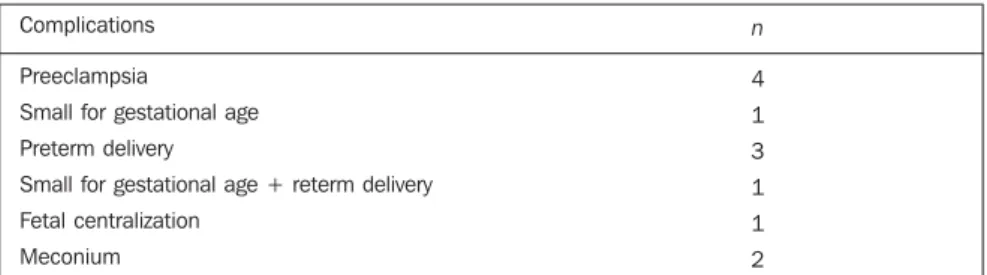
Table 2 is a list of the 12 cases of gesta-tional and/or perinatal complications found in the present study. All of these complica-tions are included in the spectrum of alter-ations related to abnormality in the placen-tal adaptation. No case of PSNIP was ob-served.
Table 3 shows mean and standard devia-tion for AFP, hCG, ANP and NO serum screening both in normal and complicated gestations.
The presence of bilateral notch in the uterine arteries was found in the studies performed between the 24th and 26th ges-tational weeks, in 21 cases (46.7%), unilat-eral notch in three cases (6.6%), and absent in 21 cases (46.7%).
The presence of bilateral notch in the uterine arteries between the 24th and 26th weeks was strongly associated with the onset of complications during pregnancy. Nine pregnant women presented inter-currences, representing 75% of the total of complications. All the cases of preeclamp-sia (four), one case of SAG neonate, three
cases of PTD, and one case of thick meco-nium at the time of delivery, presented al-teration of the flow velocity waveform (FVW).
The presence of unilateral notch was observed only in three cases. One preg-nancy progressed normally, while one case resulted in PTD with SAG neonate, and another in “centralization of fetal circula-tion” resulting in a term neonate with no neonatal complication.
The FVW normality has not been strongly associated with the onset of dis-eases during gestation. Of 21 patients who
Table 1 Epidemiological characteristics and gestational results associated with presence or absence of obstetric complications.
Characteristics
Age (years)
Color – White – Non-white
Weight at the 18th gestational week (kg)
Familial history (CAH and DM)
Gestational age at delivery (weeks)
Type of delivery – Vaginal delivery – Cesarean section surgery
Birth weight (g)
Apgar 5th minute < 7
Total of casee
Normal
21.7* ± 5.8
24 (72.7%) 9 (27.3%)
57.4* ± 3.0
9 (27.3%)
39.2* ± 1.3
30 (90.9%) 3 (9.1%)
3261* ± 344
0 (0.0%)
33
Complicated
21.5* ± 3.4
8 (66.7%) 4 (33.3%)
67.4* ± 5.4
6 (50.0%)
37.4* ± 2.3
6 (50.0%) 6 (50.0%)
2859* ± 653
0 (0.0%)
12
p
0.65†
0.7‡
0.01†
0.1‡
0.02§
0.00‡
0.05§
* Mean; † T test; ‡Fisher test; §Mann-Whitney test. CAH, chronic arterial hypertension; DM, diabetes mellitus.
Table 3 AFP, hCG, ANP and NO serum levels in normal and complicated pregnancies – mean and standard deviation.
Marker
AFP (MoM)
hCG (MoM)
ANP (pg/ml)
NO (µmol/l)
Normal pregnancies
0.91 ± 0.36
1.08 ± 0.75
119.6 ± 47.0
10.0 ± 3.4
Complicated pregnancies
0.98 ± 0.48
1.19 ± 0.78
139.3 ± 77.1
11.1 ± 4.6
p*
0.89
0.56
0.61
0.61
* Mann-Whitney test.
AFP, alpha-fetoprotein; hCG, human chorionic gonadotropin; ANP, atrial natriuretic peptide; NO, nitric oxide.
Table 2 Complications during the gestation and/or perinatal period.
Complications
Preeclampsia
Small for gestational age
Preterm delivery
Small for gestational age + reterm delivery
Fetal centralization
Meconium
n
4
1
3
1
1
2
have not presented notch in the uterine ar-teries, only one progressed with complica-tion in the perinatal period.
Table 4 demonstrates the association between the presence of gestational and/or perinatal complications and the qualitative evaluation of the uterine arteries FVW.
The presence of any gestational and/or perinatal complication has demonstrated to be more frequently associated with the presence of bilateral notch in uterine arter-ies at Doppler, according to the exact Fisher test (p < 0.04).
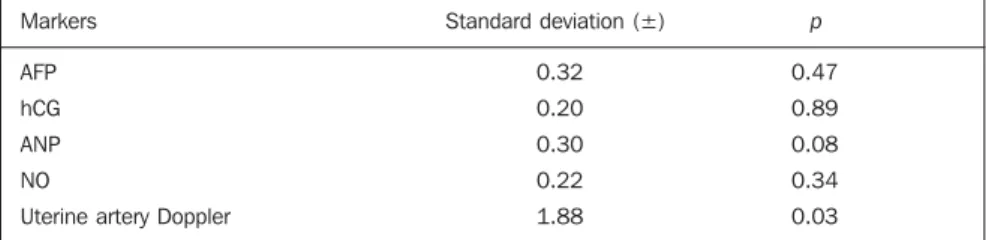
Table 5 shows the analysis by multiple logistic regression utilized for evaluating the simultaneous or multivariate effect from AFP, hCG, ANP, NO serum screening and uterine artery Doppler on the predic-tion of pregnancy complicapredic-tions.
The presence of bilateral notch is the only variable presenting correlation with the onset of complications in the multivari-ate analysis (odds ratio of 5.2).
Table 6 shows the sensitivity, specific-ity, PPV and NPV of the different markers in the prediction of gestational complica-tions.
DISCUSSION
More than 100 tests have already been evaluated for the prediction of disorders associated with abnormality in the placen-tal adaptation, particularly preeclampsia, but the ideal predictive test has not been described yet(7).
In 1988, investigators obtained, overall, 26% of adverse gestational results after
inexplicable high serum level of AFP: 6% of fetal or neonatal deaths, 15% of low weight at birth, and 6.2% of congenital abnormalities(8). On the other hand, some authors have contested the value of the AFP serum screening in the prediction of preec-lampsia(9). Researchers have studied 72 patients with inexplicable increase in the AFP serum level during the gestation, and compared their findings with those from normal control groups. Adverse perinatal result has occurred in 38.9% of cases with high serum levels of AFP, and in 31.9% of controls (p = 0.50), allowing the authors to conclude that AFP offers only a small, ad-ditional predictive value in a high-risk population(9).
In the present study, the AFP values have not demonstrated a statistically sig-nificant difference between the group with gestational and/or perinatal complications (mean 0.98 ± 0.48 MoM) and the control group (mean 0.91 ± 0.36 MoM), with p = 0.89. With a cut-off value for abnormality > 2.0 MoM, the AFP sensitivity was only 8.3%, specificity 97.0%, the PPV, 50.0%, and NPV, 74.4% for prediction of preg-nancy complications.
Some studies in the literature have shown that the hCG and/or plasmatic β -hCG serum screening between 14–20 amenorrhea weeks seems to be an excellent test for prediction of vascular complica-tions in primigravidae(10). A study has dem-onstrated that β-hCG levels twofold above the mean level were associated with an in-crease in the relative risk for hypertension induced by gestation and preeclampsia (RR = 1.7 and 5.1, respectively)(10).
Similarly to AFP, some authors have contested the value of hCG serum screen-ing in the prediction of gestational compli-cations. In a study developed in 1998, the β-hCG levels resulted in a ROC curve to evaluate its potential in the screening for preeclampsia. Nineteen patients (4.4%) developed preeclampsia and the mean free β-hCG level in the second trimester of pregnancy was significantly high in com-parison with the control group (1.52 versus
1.10; p = 0.03). The ROC curve demon-strated that, for a sensitivity of 79%, the specificity was only 54%, allowing the author to conclude that the isolate measure-ment of β-hCG free fraction during the Table 4 Association between presence and absence of notch in uterine arteries at the 24–26th
gesta-tional weeks and the onset of complications.
Doppler
Bilateral notch
Unilateral or absent notch
n
21
24
Complications
Preeclampsia
Preterm delivery
Small for gestational age
Meconium
Preterm delivery + small for gestational age
Fetal centralization
Meconium
n
4
3
1
1
1
1
1
n, number of cases.
Table 5 Prediction of pregnancy complications – analysis by multiple logistic regression.
Markers
AFP
hCG
ANP
NO
Uterine artery Doppler
Standard deviation (±)
0.32
0.20
0.30
0.22
1.88
p
0.47
0.89
0.08
0.34
0.03
AFP, alpha-fetoprotein; hCG, human chorionic gonadotropin; ANP, atrial natriuretic peptide; NO, nitric oxide.
Table 6 Maternal serum screening and uterine artery Doppler predictive value for pregnancy complica-tions.
Markers
AFP
hCG
ANP
NO
Uterine artery Doppler
Sens. (%)
8.3
8.3
16.7
16.7
75.0
Sens., sensitivity; Spec., specificity; PPV, positive predictive value; NPV, negative predictive value; AFP, alpha-fetoprotein; hCG, human chorionic gonadotropin; ANP, atrial natriuretic peptide; NO, nitric oxide.
Spec. (%)
97.0
87.9
97.0
93.9
63.6
PPV (%)
50.0
20.0
33.3
50.0
57.1
NPV (%)
74.4
72.5
76.2
75.6
second gestational trimester is not clini-cally useful as a maternal serum screening for preeclampsia in primigravidae.(11).
In the present study, hCG values have not demonstrated a statistically significant difference between the group with gesta-tional and/or perinatal complications (mean = 1.19 ± 0.78 MoM) and the control group (mean = 1.08 ± 0.75 MoM). With a cut-off value for abnormality above de 2.0 MoM, the hCG sensitivity in the prediction of complications was only 8.3%, specific-ity 87.9%, PPV 20.0% and NPV 72.5%.
ANP seems to play a significant role as a predictive marker for preeclampsia and other related diseases, considering that ANP secretion may be a response to hemo-dynamic changes possibly preceding the clinical onset of the disease(1). Ultrasonog-raphy has allowed the identification of na increase in the left atrium dimensions and a frequent occurrence of pericardial effu-sion in women with preeclampsia and with high ANP serum levels in the third gesta-tional trimester and early in the puerpe-rium, suggesting that the preeclampsia in-creases the intracardiac pressure, stimulat-ing the ANP secretion(12).
Data in the present casuistic have not shown a statistically significant difference in the ANP serum concentration, consider-ing the group with gestational and/or peri-natal complications (mean 139.3 ± 77.1 pg/ ml) and the control group (mean 119.6 ± 47.0 pg/ml). With a cut-off value above the 95th percentile for abnormality (272.7 pg/ ml), the ANP sensitivity for complication prediction was only 16.7%, and specificity 97.0%, PPV 33.3% and NPV 76.2%.
Aiming at demonstrating that the de-crease in the production of NO may play a role in the preeclampsia physiopathology, investigators have measured the serum ni-trate levels in 20 women with preeclamp-sia, 20 healthy pregnant women and 12 non-pregnant women in childbearing age. The serum nitrate concentration was sig-nificantly higher in the patients with preec-lampsia, in comparison with the healthy pregnant and the non-pregnant women(13). These results do not support the hypothesis that a decrease in the endothelial NO pro-duction plays a significant role in the preec-lampsia physiopathology; on the contrary, increased serum nitrate levels may
repre-sent an increase in the NO production or decrease in its renal clearance as a response to the disease.
The role of the maternal serum NO in the prediction of complications early in the first half of the pregnancy, is still to be es-tablished. This has encouraged its investi-gation as a probable marker in the predic-tion of gestapredic-tional complicapredic-tions. No sta-tistically significant difference was found in the serum NO concentration, between the group with gestational and/or perinatal complications (mean 11.1 ± 4.6 µmol/l) and the control group (mean 10.0 ± 3.4 µmol/l). With a cut-off value above the 95th percentile for abnormality (18.9 µmol/l), the NO sensitivity for gestational complications prediction was only 16.7%, specificity 93.9%, PPV 50.0% and NPV 75.6%.
The placenta, in the process of implan-tation and development, changes the uter-ine circulation from low flow with high resistance to high flow with low resis-tance(6). As result, the uterine arteries protodiastolic notch disappears around the 24–26th gestational. In the present group of pregnant women, bilateral notches were present in uterine arteries in 21 cases (46.7%) at the 24–26th gestational weeks, with a statistically significant difference as compared with normal pregnancies (p < 0.04). In 1998, in a study with uterine ar-teries Doppler between the 19th and 21st gestational weeks, investigators observed the presence of bilateral notch in 12.4% of cases, and the Doppler study was consid-ered as altconsid-ered in 22.8% of cases(14). In the same year, in a study of non-selected pa-tients in the 24th gestational week, the au-thor observed the notch in 27.7% of cases(15). On the other hand, another study has shown a high incidence of notches be-tween the 18th and 26th gestational weeks, with the presence of bilateral notches in 40.7% of cases(16).
Considering the easiness, safety and non-invasiveness of uterine artery Doppler, the sensitivity and specificity of this method in the prediction of gestational complications have already been widely evaluated(17,18). In 1998, in a study on the diagnosis of the presence of bilateral notches with Doppler, the sensitivity was 61.9%, the specificity 88.7%, PPV 11.1%,
and NPV 99.0%. On the other hand, for the diagnosis of IUCR, the sensitivity was 36.8%, specificity 89.2%, PPV 17.9%, and NPV 95.7%. With the high resistance as a criterion for Doppler abnormality, the au-thors reported 71.4% sensitivity, 78.2% specificity, 6.9% PPV, and 99.2% NPV for the diagnosis of preeclampsia. For the di-agnosis of IUCR, the sensitivity was 47.4%, specificity 78.7%, PPV 12.5%, and NPV 95.9%(14). In 1998, also with the pres-ence of bilateral notch or high RI as crite-ria for Doppler abnormality, the investiga-tors demonstrated a good sensitivity, but low PPV. Bilateral notch as a predictor of toxemia presented 100.0% sensitivity, 76.3% specificity, 19.0% PPV, and 100.0% NPV; high RI showed 83.3% sensitivity, 84.7% specificity, 23.3% PPV, and 98.9% NPV(15). In 2000, another study demon-strated 91.0% sensitivity, 42.0% specific-ity, and 37.0% PPV for the prediction of preeclampsia(16). For the prediction of SAP neonates, the sensitivity was 84.0%, speci-ficity 39.0%, and PPV 33.0%. A study de-veloped in 2005 prospectively evaluated the level of amniotic fluid in low-risk preg-nant women, concluding that this is not a good predictor of gestational and perinatal complications, whereas the presence of bilateral notch in the uterine arteries con-firmed by Doppler in the period between the 24th and 26th gestational weeks is a good predictor of such complications, with 90.0% sensitivity, and 62.5% specificity(19). Another study has shown that the presence of a high RI between the 24th and 26th gestational weeks presented sensitivity and specificity similar to the presence of bilat-eral notch in uterine arteries, with a slight improvement in the PPV(20).
preeclampsia were, respectively, 3% and 98%, and the β-hCG sensitivity and speci-ficity, respectively 3% and 95%(1). These low sensitivities in the detection of gesta-tional complications were similar to those found in the present study. The N-terminal proatrial natriuretic peptide serum levels were not high in the patients with gesta-tional hypertension (330 pmol/l) and in cases of preeclampsia. These data are simi-lar to the ones of the present study, consid-ering that significant differences in the ANP levels between complicated and nor-mal gestations were not found. With a gradual logistic regression model, the same authors have evaluated the simultaneous effect of the levels of N-terminal ANP, AFP, β-hCG, maternal age and mean arterial pres-sure (MAP) between the 19–24th gesta-tional weeks on the chances of preeclamp-sia development. Serum levels and mater-nal age cannot predict preeclampsia, the MAP being the only factor identified as a risk predictor (p = 0.01). In the present study, a gradual logistic reversion model was uti-lized for simultaneously evaluating AFP, hCG, ANP, NO and uterine arteries Doppler as gestational complications predictors. In the multivariate analysis, the presence of bilateral notch on uterine arteries Doppler is the only variable presenting correlation with the onset of gestational and/or perina-tal complications, with odds ratio of 5.2.
CONCLUSION
The present casuistic demonstrates the relevance of uterine artery Doppler,
par-ticularly between the 24th and 26th gesta-tional weeks, even for low-risk pregnant women, allowing the selection of patients with uteroplacental flow alterations for follow-up in reference centers and adoption of prophylactic measures.
REFERENCES
1. Pouta AM, Hartikainen AL, Vuolteenaho OJ, et al. Midtrimester N-terminal proatrial natriuretic peptide, free beta-hCG, and alpha-fetoprotein in predicting preeclampsia. Obstet Gynecol. 1998; 91:940–4.
2. Broughton Pipkin F, Sharif J, Lal S. Predicting high blood pressure in pregnancy: a multivariate approach. J Hypertens. 1998;16:221–9.
3. Robillard PY, Hulsey TC, Périanin J, et al. Asso-ciation of pregnancy-induced hypertension with duration of sexual cohabitation before concep-tion. Lancet. 1994;344:973–5.
4. Roberts JM, Taylor RN, Musci TJ, et al. Preec-lampsia: an endothelial cell disorder. Am J Obstet Gynecol. 1989;161:1200–4.
5. Elsandabesee D, Srinivas M, Kodakkattil S. The clinical value of combining maternal serum screening and uterine artery Doppler in prediction of adverse pregnancy outcome. J Obstet Gynaecol. 2006;26:115–7.
6. Cnossen JS, van der Post JAM, Mol BWJ, et al. Prediction of pre-eclampsia: a protocol for sys-tematic reviews of test accuracy. BMC Pregnancy and Childbirth. 2006;6:29.
7. Dekker GA, Sibai BM. Early detection of preec-lampsia. Am J Obstet Gynecol. 1991;165:160– 72.
8. Burton BK. Outcome of pregnancy in patients with unexplained elevated or low levels of mater-nal serum alpha-fetoprotein. Obstet Gynecol. 1988;72:709–13.
9. Phillips OP, Simpson JL, Morgan CD, et al. Un-explained elevated maternal serum alpha-fetopro-tein is not predictive of adverse perinatal outcome in an indigent urban population. Am J Obstet Gynecol. 1992;166:978–82.
10. Sorensen TK, Williams MA, Zinghein RW, et al. Elevated second-trimester human chorionic
go-nadotropin and subsequent pregnancy-induced hypertension. Am J Obstet Gynecol. 1993;169: 834–8.
11. Luckas M, Hawe J, Meekins J, et al. Second tri-mester serum free beta human chorionic gonadot-rophin levels as a predictor of pre-eclampsia. Acta Obstet Gynecol Scand. 1998;77:381–4.
12. Pouta AM, Räsänen JP, Airaksinen KEJ, et al. Changes in maternal heart dimensions and plasma atrial natriuretic peptide levels in the early puerperium of normal and pre-eclamptic pregnan-cies. Br J Obstet Gynaecol. 1996;103:988–92.
13. Smárason AK, Allman KG, Young D, et al. El-evated levels of serum nitrate, a stable end prod-uct of nitric oxide, in women with pre-eclampsia. Br J Obstet Gynaecol. 1997;104:538–43. 14. Kurdi W, Campbell S, Aquilina J, et al. The role
of color Doppler imaging of the uterine arteries at 20 weeks’ gestation in stratifying antenatal care. Ultrasound Obstet Gynecol. 1998;12:339– 45.
15. Montenegro CAB, Chaves E, Pessoa LG, et al. Valor preditivo para a toxemia do Doppler das artérias uterinas. Prog Diagn Prenat. 1998;10:16– 9.
16. Coleman MA, McCowan LM, North RA. Mid-trimester uterine artery Doppler screening as a predictor of adverse pregnancy outcome in high-risk women. Ultrasound Obstet Gynecol. 2000; 15:7–12.
17. Nardozza LMM, Camano L, Moron AF, et al. Al-terações ultra-sonográficas na gravidez Rh nega-tivo sensibilizada avaliada pela espectrofometria do líquido amniótico e pela dopplervelocimetria da artéria cerebral média. Radiol Bras. 2006;39: 11–3.
18. Pastore AR. Dopplervelocimetria da artéria cere-bral média fetal: o divisor de águas no diagnós-tico da anemia fetal [editorial]. Radiol Bras. 2006;39(1):iii.
19. Costa FS, Cunha SP, Berezowski AT. Avaliação prospectiva do índice de líquido amniótico em gestações normais e complicadas. Radiol Bras. 2005;38:337–41.