138
Original Articles
Prevalence of and factors associated with polypharmacy among elderly
persons resident in the community
Natália Araujo de Almeida1
Annelita Almeida Oliveira Reiners2
Rosemeiry Capriata de Souza Azevedo2
Ageo Mário Cândido da Silva3
Joana Darc Chaves Cardoso2
Luciane Cegati de Souza4
1 Hospital Universitário Júlio Müller (HUJM), Unidade de Atenção à Saúde da Criança e Adolescente, Departamento de Pediatria. Cuiabá, MT, Brasil.
2 Universidade Federal de Mato Grosso (UFMT), Faculdade de Enfermagem. Cuiabá, MT, Brasil. 3 Universidade Federal de Mato Grosso (UFMT), Instituto de Saúde Coletiva (ISC). Cuiabá, MT, Brasil. 4 Secretaria de Estado e Saúde (SES), Auditoria Geral do Sistema Único de Saúde. Cuiabá, Mato Grosso,
Brasil.
Correspondence
Natália Araujo de Almeida
E-mail: [email protected]
Abstract
Objective: to verify the prevalence of and factors associated with polypharmacy among elderly residents of the city of Cuiabá, in the state of Mato Grosso. Method: a cross-sectional study of 573 people aged 60 and over was performed. Polypharmacy was defined as the use of five or more medications. To investigate the association between polypharmacy and sociodemographic variables, health and access to medication, the Mantel Haenszel chi square test was used in bivariate analysis and Poisson regression was used in multivariate analysis. The significance level adopted was 5%. Result: the prevalence of polypharmacy was 10.30%. Statistically significant associations were found between polypharmacy and living with others, describing suffering from circulatory, endocrine, nutritional and digestive tract diseases, and referring to financial difficulties for the purchase of medicines. Conclusion: some social and health condition factors play an important role in the use of multiple medications among the elderly.
139
INTRODUCTION
The population of Brazil has undergone a rapid aging process, creating challenges for health services in terms of the provision of care and the maintenance of quality of life. Aging also brings an exponential increase in the prevalence of chronic diseases and medication use1, often with negative consequences for health.
The increased use of medications by the elderly
leads to polypharmacy, deined as the regular use of ive or more drugs2. Concomitant use of multiple medications can lead to undesirable health outcomes such as an increase in adverse reactions and drug interactions, lower adherence to drug therapy, decreased functional capacity, and cognitive decline.
In addition to these effects, polypharmacy can result in a greater demand for care, an increase in the number of hospital admissions, and higher costs for the health system3. It can also affect the quality of a prescribed drug treatment when it is combined with self-medication, which is common among the elderly4.
Some studies have evaluated the use of medications and the presence of polypharmacy among the elderly. In developed countries, polypharmacy among the elderly varied between 39%5 and 45% of the population6. In Brazil, a study with elderly people living in the metropolitan area of the city of São Paulo found a prevalence of polypharmacy of 36.0%2.
A number of factors have been associated with polypharmacy among the elderly, such as the female gender, having a poor self-perception of health, belonging to a more advanced age group, having a low level of schooling and the presence of chronic diseases2,7-9. Added to this is the ease of obtaining medicines in pharmacies without prescriptions, which increases the exposure of the elderly to excessive drug use and unnecessary
inancial expense10.
In addition to these factors, the presence
of cognitive deicits, chronic disease and low
schooling, which are common among the elderly,
are considered to compromise their ability to perform activities of self-care11.
Considering the complexity of the relationship between aging and medication use, there is a
need to gather new scientiic evidence on this
phenomenon in developing countries such as Brazil, so that health managers and professionals can better understand these exposure factors and act to prevent polypharmacy. Thus, the objective of the present study was to verify the prevalence of and factors associated with polypharmacy among elderly persons resident in the community.
METHOD
A cross-sectional population-based study was performed. The data analyzed was taken from a study carried out by Cardoso et al.12 which evaluated the self-reported health conditions of elderly persons living in the city of Cuiabá, in the state of Mato Grosso. For the present study, individuals aged 60 years or older living in the urban area of the city of Cuiabá in 2012 were selected. Institutionalized elderly individuals with
evidence of cognitive deicit or with a condition
that prevented them from answering the questions were excluded, as were those living in rural areas.
The procedures proposed by Luiz and Magnanini13 for inite populations were used to determine the sample size. Based on a total number of elderly people aged 60 years or over of 45,64914, and adopting a signiicance level of
5% (corresponding to a 95% conidence interval, z [α]/2=1.96), with a sampling error tolerance
of 5%, an estimated maximum prevalence of polypharmacy among the elderly of 50% and a design effect of 1.3, a required sample of 495
participants was identiied. This number was
increased by 10% to explore associations between the independent variables and polypharmacy. It was then increased by a further 10% to compensate for any losses and refusals. A total of 26 elderly people
refused to participate, resulting in a inal sample of
140
Data collection was performed as follows: from the starting point of the census sector, a clockwise route was followed from house to house until the end of the sector. Researchers asked if anyone aged 60 years or older lived at each house. If the answer
was yes, the interviewer identiied themselves and
explained the research objectives, and the elderly persons were invited to participate in the study. The interviews took place either at the time or were scheduled for a later date. All elderly people living in the household (men and women) were interviewed. The interviews were carried out in the home of the elderly person, in a comfortable, well-lit environment that was free from interference. Several strategies were adopted to guarantee the quality of the data, from the preparation of a data collection manual, the standardization of the data collection form, the selection and training of the interviewers and the direct accompanying of the researchers in
the ield. In addition, data collection was assessed
on a weekly basis and all the questionnaires were checked to identify failures in the completion of the answers, provide complementary information and complete the database.
The dependent variable in the present study
was the presence of polypharmacy – deined as the regular use of ive or more medications2 and evaluated by asking about the use of medication during the application of the questionnaire.
The following independent variables were evaluated: a) sociodemographic characteristics:
gender (male/female), age group (classiied as 60
to 69 years, 70 to 79 years and 80 years and over),
marital status (classiied as married and single/ other), schooling (classiied as illiterate, up to 4 years
of schooling or more than 4 years of schooling),
monthly income of elderly person (classiied as
having no income or an income), occupational
status (classiied as active, when the individual
declared that they performed some kind of labor activity, irrespective of remuneration, or inactive); b) health conditions: use of medical services
(classiied as public institution or others),
self-medication (yes, when any self-medication, prescribed by a doctor or otherwise, was used), self-reported
health (classiied as poor or very poor, good, good
or very good), presence and type of self-reported
disease (classiied as presence of self-reported disease and reclassiied as circulatory disease (yes/
no), endocrine disease, nutritional and metabolic
disease (yes/no), musculoskeletal and connective tissue disease (yes/no), diseases of the digestive tract (yes/no), diseases of the ear and the mastoid process (yes/no) and other diseases (yes/no); c) variables related to access to medication: inancial dificulties in the acquisition of medication (yes/no), dificulty inding the medication in the pharmacy (yes/no), dificulty in obtaining a prescription for controlled medication (yes/no).
The active principles of each drug were described in accordance with the Anatomical
Therapeutic and Chemical classiication (ATC),
level 5 (chemical substance)16.
In bivariate analysis, the crude associations between the outcome variable (polypharmacy) and
the other exposure variables were identiied. The
chi-square test (p<0.05), using the Mantel Haenszel method (95% CI), or Fischer's exact test were applied as indicated.
Multiple analysis was performed using the Poisson Regression model, including all variables that presented an association with p-value <0.20 in the crude analysis, adopting the insertion of variables by block technique (sociodemographic
irst, followed by health conditions and then
acquisition of medication). All variables that retained an association were included in the
inal model, using the progressive withdrawal of
variables method (Stepwise backward). Variables
with a statistically signiicant association p-value <0.05 were considered in the inal model.
The project was approved by the HUJM
Research Ethics Committee (CEP/HUJM), under record number 132/CEP-HUJM/2011, and all the
participants signed a Free and Informed Consent Form (FICF).
RESULTS
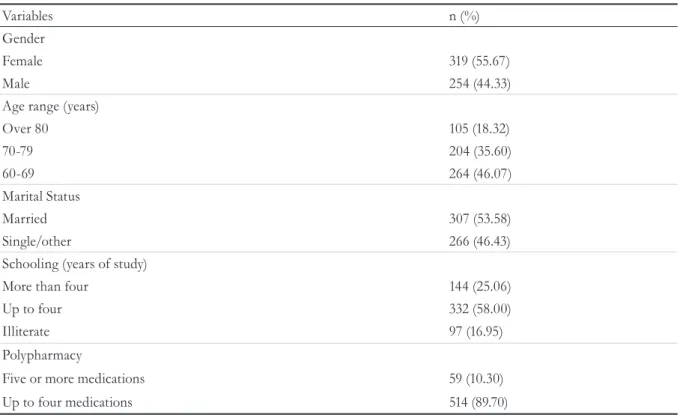
Of the 573 elderly persons surveyed, the majority were female (55.67%), aged from 60 to 69 years (46.07%), and illiterate or with up to 4 years of schooling (83.06%). In terms of polypharmacy, 59 (10.30%) individuals reported the regular use of
141
In total, 350 medications were used by the
elderly persons, according to ATC classiication.
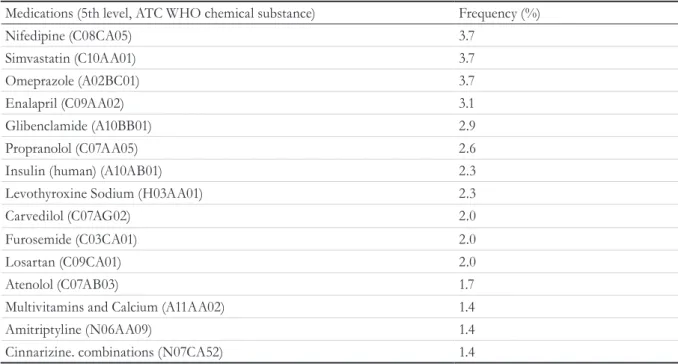
Among the 20 most frequently used medications were those that acted on the cardiovascular system (55.0%), the alimentary tract and metabolism (25.0%), the nervous system (10.0%), and systemic hormonal preparations (5.0%). The active principles most commonly used by the elderly persons were hydrochlorothiazide (6.6%), acetylsalicylic acid (6.3%), metformin (6.0%), captopril (4.9%), nifedipine (3.7%), simvastatin (3.7%) and omeprazole (3.7%) (Table 2).
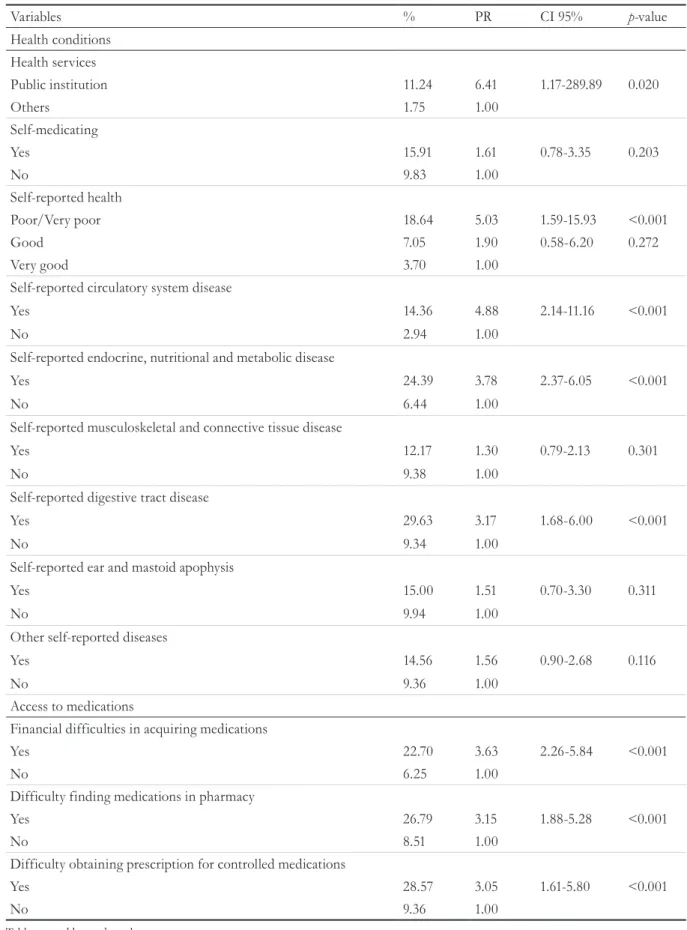
In terms of health conditions, elderly individuals
who used public health services (PR=5.03,
CI=1.59-15.93) and who described their health as poor or very
poor (PR=5.03; CI=1.59-15.93) were associated
with the use of polypharmacy. The presence of polypharmacy was more frequent among those who reported diseases of the circulatory system
(PR=4.88, CI=2.14-11.16), endocrine, nutritional and metabolic diseases (PR=3.78, CI=2.37-6.05) and diseases of the digestive tract (PR=3.17,
1.68-6.00) (Table 4).
In terms of variables relating to access to
medicines, elderly persons who had inancial dificulties in purchasing medicines (PR=3.63, CI=2.26-5.84), dificulties inding the drug in the pharmacy (PR=3.15, CI=1.88-5.28) and dificulties obtaining a prescription for controlled drugs (PR=3.15, CI=1.61-5.80) reported a greater
presence of polypharmacy (Table 4).
Table 1. Distribution of elderly persons according to gender. age group. marital status and level of schooling
(n=573). Cuiabá. Mato Grosso. 2012.
Variables n (%)
Gender
Female 319 (55.67)
Male 254 (44.33)
Age range (years)
Over 80 105 (18.32)
70-79 204 (35.60)
60-69 264 (46.07)
Marital Status
Married 307 (53.58)
Single/other 266 (46.43)
Schooling (years of study)
More than four 144 (25.06)
Up to four 332 (58.00)
Illiterate 97 (16.95)
Polypharmacy
Five or more medications 59 (10.30)
Up to four medications 514 (89.70)
Table created by study authors.
Table 2. Distribution of 20 medications most frequently used by elderly persons practicing polypharmacy,
Cuiabá, MT, 2012.
Medications (5th level, ATC WHO chemical substance) Frequency (%)
Hydrochlorothiazide (C03AA03) 6.6
Acetylsalicylic acid (B01AC06) 6.3
Metformin (A10BA02) 6.0
Captopril (C09AA01) 4.9
142
Table 3. Bivariate analysis of polypharmacy and sociodemographic variables (n=573). Cuiabá, Mato
Grosso, 2012.
Variables % PR CI 95% p-value
Gender
Female 11.29 1.25 0.76-2.05 0.383
Male 9.06 1.00
Age range (years)
Over 80 10.48 1.13 0.59-2.16 0.713
70-79 8.37 0.80 0.39-1.64 0.544
60-69 11.83 1.00
Marital Status
Married 12.70 1.69 1.01-2.82 0.042
Single/other 7.52 1.00
Schooling (years of study)
More than 4 3.81 0.45 1.13-1-54 0.193
Up to 4 14.81 1.75 0.77-3.99 0.166
Illiterate 8.45 1.00
Living arrangements
With other person/people 11.13 3.40 0.85-13.56 0.057
Alone 3.28 1.00
Monthly income
No income 26.92 2.74 1.38-5.44 0.006
Income 9.82 1.00
Occupational status
Active 11.68 1.18 0.69-2.03 0.542
Inactive 9.86
Table created by authors.
Medications (5th level, ATC WHO chemical substance) Frequency (%)
Nifedipine (C08CA05) 3.7
Simvastatin (C10AA01) 3.7
Omeprazole (A02BC01) 3.7
Enalapril (C09AA02) 3.1
Glibenclamide (A10BB01) 2.9
Propranolol (C07AA05) 2.6
Insulin (human) (A10AB01) 2.3
Levothyroxine Sodium (H03AA01) 2.3
Carvedilol (C07AG02) 2.0
Furosemide (C03CA01) 2.0
Losartan (C09CA01) 2.0
Atenolol (C07AB03) 1.7
Multivitamins and Calcium (A11AA02) 1.4
Amitriptyline (N06AA09) 1.4
Cinnarizine. combinations (N07CA52) 1.4
143
Table 4. Bivariate analysis of polypharmacy, health conditions and access to medication of elderly persons (n=573).
Cuiabá, Mato Grosso, 2012.
Variables % PR CI 95% p-value
Health conditions Health services
Public institution 11.24 6.41 1.17-289.89 0.020
Others 1.75 1.00
Self-medicating
Yes 15.91 1.61 0.78-3.35 0.203
No 9.83 1.00
Self-reported health
Poor/Very poor 18.64 5.03 1.59-15.93 <0.001
Good 7.05 1.90 0.58-6.20 0.272
Very good 3.70 1.00
Self-reported circulatory system disease
Yes 14.36 4.88 2.14-11.16 <0.001
No 2.94 1.00
Self-reported endocrine, nutritional and metabolic disease
Yes 24.39 3.78 2.37-6.05 <0.001
No 6.44 1.00
Self-reported musculoskeletal and connective tissue disease
Yes 12.17 1.30 0.79-2.13 0.301
No 9.38 1.00
Self-reported digestive tract disease
Yes 29.63 3.17 1.68-6.00 <0.001
No 9.34 1.00
Self-reported ear and mastoid apophysis
Yes 15.00 1.51 0.70-3.30 0.311
No 9.94 1.00
Other self-reported diseases
Yes 14.56 1.56 0.90-2.68 0.116
No 9.36 1.00
Access to medications
Financial difficulties in acquiring medications
Yes 22.70 3.63 2.26-5.84 <0.001
No 6.25 1.00
Difficulty finding medications in pharmacy
Yes 26.79 3.15 1.88-5.28 <0.001
No 8.51 1.00
Difficulty obtaining prescription for controlled medications
Yes 28.57 3.05 1.61-5.80 <0.001
No 9.36 1.00
144
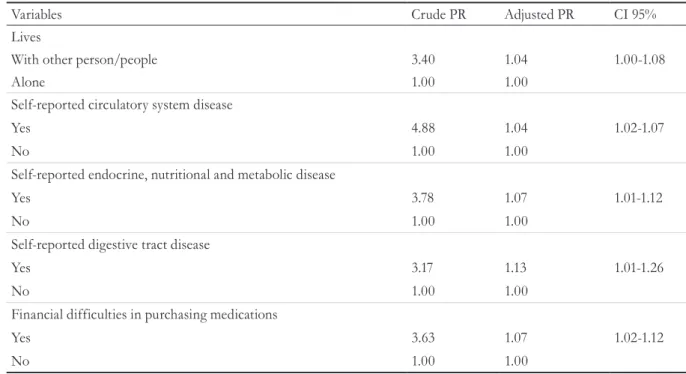
In Poisson Multiple Regression, the variables
that remained signiicantly associated with
polypharmacy were: living with another person or
other people (p=0.012, PR=1.04), self-reported circulatory system disease (p=0.002, PR=1.04);
self-reported endocrine, nutritional and metabolic
disease (p=0.011, RP=1.07); (p=0.038, RP=1.13) and described inancial dificulties in purchasing medicines (p=0.008, RP=1.07) (Table 5).
DISCUSSION
The prevalence of polypharmacy identiied in
this study was similar to that observed in Belgrade, Serbia, in a survey of 480 elderly people receiving care at a Health Care Center17, and a study of 400 individuals aged 60 and over residing in an area covered by the Family Health Strategy in Recife18. However, other studies found prevalences ranging from 13.9% to 57.0%2,19,20.
The most frequently used medications were those aimed at cardiovascular performance, the
alimentary/metabolic tract and the nervous system,
a result that collaborates with other studies2,4. These
indings are consistent with the morbidity proile
of those practicing polypharmacy in the present study. It should be noted that omeprazole was the sixth most frequently used medication among the elderly. This medication has a high potential for drug interactions with medications commonly used by the elderly, such as acetylsalicylic acid, glibenclamide and nifedipine21,22, making its consumption even more of a concern among elderly users of a number of medications.
In the present study, the fact that an elderly person lived with another person or people was associated with the use of polypharmacy. Cintra et al.23 stated that elderly people with such living conditions adhere more to the treatments recommended by the health service. Among the probable explanations for this are the fact that, under these conditions, the family member or caregiver, who has a more accurate perception of the health conditions of the elderly individual, encourages him or her to more frequently seek medical care, which can also lead to the increased prescription and consumption of medicines for such elderly people.
Table 5. Poisson Multiple Regression Model and variables associated with polypharmacy among elderly persons.
Cuiabá, MT, 2012.
Variables Crude PR Adjusted PR CI 95%
Lives
With other person/people 3.40 1.04 1.00-1.08
Alone 1.00 1.00
Self-reported circulatory system disease
Yes 4.88 1.04 1.02-1.07
No 1.00 1.00
Self-reported endocrine, nutritional and metabolic disease
Yes 3.78 1.07 1.01-1.12
No 1.00 1.00
Self-reported digestive tract disease
Yes 3.17 1.13 1.01-1.26
No 1.00 1.00
Financial difficulties in purchasing medications
Yes 3.63 1.07 1.02-1.12
No 1.00 1.00
145 Paradoxically and unexpectedly, elderly persons
who reported inancial dificulties in purchasing
medications were associated with a greater use of
polypharmacy. This inding was further corroborated,
in bivariate analysis, by the fact that elderly persons
who practiced polypharmacy had greater dificulty inding the drug in the pharmacy or even obtaining a
prescription for controlled medications.
In this context, the National Medication Policy of the Sistema Único de Saúde (SUS) (the
Uniied Health System) has among its objectives
the guaranteed access of the population to what are considered essential drugs, and to make medicines for the treatment of chronic diseases available free or at a lower cost24. However, there is a lack of medicines in primary care, forcing the elderly person to seek the unavailable drugs in local commercial pharmacies and drugstores.
In these establishments, staff are inancially
compensated for increased sales of medications, including those not included in pharmacological prescriptions25. The necessity to spend more when purchasing these drugs may conversely contribute to the underutilization of such medications26 and
subsequently greater inancial dificulties in their
acquisition27.There is a ine line between risk and
the beneit of the practice of polypharmacy by the
elderly. Elevated use of medications can adversely affect the quality of life of the elderly due to the greater occurrence of adverse effects and drug interactions. In contrast, these same medications help to prolong life, for the most part. In this way, it is not necessarily polypharmacy that exposes the elderly to the potential risk of adverse events, but rather the irrational nature of their use28.
The rational use of medicines is deined as use
appropriate for the clinical conditions in question, in doses appropriate to the needs of the individual, for a suitable period and at the lowest cost to the individual and the community. Among other criteria, such rational use recommends that when the is
necessary, its eficacy and safety should be prioritized and the prescribed therapeutic regimen be fulilled
in the most suitable way29. However, complex drug prescriptions, combined with the reduced dexterity and auditory and visual acuity of elderly persons, as well as the high illiteracy rate present in most
Brazilian elderly individuals, can compromise the understanding of a medical prescription, leading to incorrect use of the medication30.
It is important to consider that elderly persons have a range of comorbidities, meaning that prescriptions for medications are constantly reviewed in terms of pharmaceutical form, packaging and labels, and other factors. Additionally, the improper prescription of medications is often attributed to a lack of training among doctors who prescribe medicine to geriatrics, as well as
a deiciency in pharmaceutical training when
attending the elderly31. Thus, the presence of the pharmacist in the process of pharmaceutical care for the elderly is important to ensure the rational use of medications and the reduction of prescribing or dosing errors, as well as preventing the misuse of drugs and limiting the occurrence of adverse reactions. However, pharmaceutical care remains incipient in primary care, which is the priority locus of health care for the elderly.
The association between the various comorbidities evaluated and polypharmacy found in this study is consistent with other studies of the elderly17,32. A study conducted in Japan found that polypharmacy was more common in the treatment of hypertension, hyperlipidemia, gastric ulcers and diabetes33. Similarly, Carvalho et al.2 in a study carried out in the metropolitan region of São Paulo found that elderly persons with hypertension and diabetes were also more likely to practice polypharmacy. These diseases are the main causes of mortality among the global elderly population33,34. The high prevalence of diseases of the digestive system can often lead to the unnecessary intake of other drugs, thus explaining the use of polypharmacy in this population32. This condition can lead to a cascade of negative effects on the health of the elderly and on the health system.
This study was cross-sectional in nature, and its strengths include the use of measures of association of prevalence in both bivariate analysis
146
persons. As both sets of information were obtained simultaneously, the possibility of reverse causality, where the explanatory variables may not have occurred before the response variable, cannot be excluded. The occurrence of memory bias can also not be excluded as the study was based on the evaluation of recall, in which the capacity to remember the past may be more closely related to the use of polypharmacy.
CONCLUSION
The prevalence of polypharmacy found in the present study was similar to that found in communities in other regions. Elderly persons
who lived with others, described having inancial dificulties in acquiring medications, and who
suffered from a comorbidity or comorbidities were associated with polypharmacy, demonstrating that a number of aspects of social and health
conditions play an important role in the use of multiple medications among the elderly.
The present study allows a greater understanding of the use of multiple medications by elderly persons living in the community and the main factors associated with this practice. Closer monitoring by health professionals, including questions regarding the acquisition of medications during screening tests for the multidimensional evaluation of the elderly, may result in more suitable treatment of the comorbidities that are common among individuals of this age group.
It is important to include the pharmacist in
basic health care. The eficient use of medications
requires the interrelated work of a team of professionals who directly assist the health care user. The pharmacist is responsible for the monitoring of therapeutic results and adverse effects, and is of great importance for the care of elderly people practicing polypharmacy.
REFERENCES
1. Hébert R. A revolução do envelhecimento [Editorial].
Ciênc Saúde Coletiva [Internet]. 2015 [acesso em 17 jan. 2016];20(12):3618. Disponível em: http://www. scielo.br/scielo.php?script=sci_arttext&pid=S1413-81232015001203618&lng=pt&nrm=iso
2. Carvalho MF, Romano-Liebe NS, Bergsten-Mendes G, Secoli SR, Ribeiro E, Lebrão ML, et al.
Polifarmácia entre idosos do Município de São Paulo - Estudo SABE. Rev Bras Epidemiol [Internet]. 2012 [acesso em 10 jun 2013];15(4):817-27. Disponível em: http://www.scielo.br/pdf/rbepid/v15n4/13.pdf
3. Maher JR, Roberto L, Hanlon JT, Hajjar, Emily R. Clinical Consequences of Polypharmacy in Elderly.
Expert Opin Drug Saf [Internet]. 2014 [acesso em 30 dez. 2014];13(1):1-11. Disponível em: http://www.ncbi.
nlm.nih.gov/pmc/articles/PMC3864987/pdf/nihms-4. Baldoni AO, Ayres LR, Martinez EZ, Dewulf NLS, Santos V, Obreli-Neto PR, et al.
Pharmacoepidemiological profile and polypharmacy indicators in elderly outpatients. Braz J Pharm Sci
[Internet]. 2013 [acesso em 30 dez. 2014];49(3):443-52. Disponível em: http://www.scielo.br/pdf/bjps/ v49n3/v49n3a06.pdf
5. Charlesworth CJ, Smit E, Lee DS, Alramadhan F, Odden MC. Polypharmacy adults aged 65 years and older in the United States: 1988-2010. J gerontol Ser A Biol Sci Med Sci. 2015;70(8):989-95.
6. Banerjee A, Mbamalu D, Ebrahimi S, Khan AA, Chan TF. The prevalence of polypharmacy in elderly attenders to an emergency department - a problem with a need for an effective solution International.
J Emerg Med [Internet]. 2011 [acesso em 30 dez. 2014];4(1):1-8. Disponível em URL: http://www.ncbi. nlm.nih.gov/pmc/articles/PMC3121581/
7. Altiparmak S, Altiparmak O. Drug-using behaviors of the elderly living in nursing homes and community-dwellings in Manisa, Turkey. Arch Gerontol Geriatr. 2012;54(2):242-8.
8. Kim HA, Shin JY, Kim MH, Park B. Prevalence and predictors of polypharmacy among korean
147
9. Santos TRA, Lima DM, Nakatani AYK, Pereira LV, Leal GS, Amaral RG. Consumo de medicamentos por idosos, Goiânia, Brasil. Rev
Saúde Pública [Internet]. 2013 [acesso em 30 dez. 2014];47(1):94-103 . Disponível em: http:// www.scielo.br/scielo.php?script=sci_arttext&pid =S0034-89102013000100013
10. Aquino DS. Por que o uso racional de medicamentos
deve ser uma prioridade? Ciênc Saúde Coletiva [Internet]. 2008 [acesso em 20 dez. 2013];13(1):773-36. Disponível em: http://www.scielo.br/pdf/csc/v13s0/
a23v13s0.pdf
11. D'ors E, Xavier AJ, Ramos LR. Trabalho, suporte social e lazer protegem idosos da perda funcional:
estudo epidoso. Rev Saúde Pública [Internet]. 2011 [acesso em 20 dez. 2013];45(4):685-92. Disponível em: http://www.scielo.br/scielo.php?pid=S0034-89102011000400007&script=sci_arttext
12. Cardoso JDC, Azevedo RCS, Reiners AAO, Louzada CV, Espinosa MM. Autoavaliação de saúde ruim e fatores associados em idosos residentes em zona urbana. Rev Gaúch Enferm
[Internet]. 2014 [acesso em 20 jan. 2015];35(4):35-41. Disponível em: http://seer.ufrgs.br/index. php/RevistaGauchadeEnfermagem/article/ viewFile/46916/32391
13. Luiz RR, Magnanini MM. A lógica da determinação da amostra em investigação epidemiológica. Cad
Saúde Coletiva [Internet]. 2000 [acesso em 30 dez. 2014];8(2):9-28. Disponível em: http://www.cadernos. iesc.ufrj.br/cadernos/images/csc/2000_2/artigos/ csc_v8n2_09-28.pdf
14. BRASIL. Ministério da Saúde. DATASUS.
População Residente – Mato Grosso [Internet]. Brasília, DF: MS; 2010 [acesso em 30 dez. 2014]. Disponível em: http://tabnet.datasus.gov.br/cgi/ tabcgi.exe?ibge/cnv/popmt.def
15. Veras R, Dutra S. Perfil do idoso brasileiro:
Questionário BOAS [Internet]. Rio de Janeiro: UnATI, UERJ; 2008 [acesso em 20 dez. 2013]. Disponível em: http://www.crde-unati.uerj.br/ liv_pdf/perfil.pdf
16. World Health Organization. ATC/DDD Index 2016
[Internet]. Oslo: WHO; 2017 [acesso em 10 jan. 2016]. Disponível em: http://www.whocc.no/atc_ddd_index/
17. Gazibara T, Nurkovic S, Kisic-Tepavcevic D, Kurtagic I, Kovacevic N, Gazibara T, et al. Pharmacotherapy and over-the-counter drug use among elderly in Belgrade, Serbia. Geriatr Nurs. 2013;34(6):486-90.
18. Neves SJF, Marques APO, Leal MCC, Diniz AS, Medeiros TS, Arruda IKG. Epidemiologia do uso de medicamentos entre idosos em área urbana do Nordeste do Brasil. Rev Saúde
Pública [Internet]. 2013 [acesso em 30 dez. 2014];47(4):759-68. Disponível em: http://www. scielo.br/scielo.php?script=sci_arttext&pid =S0034-89102013000400759
19. Flores LM, Mengue SS. Uso de medicamentos por idosos em região do sul do Brasil. Rev
Saúde Pública [Internet]. 2005 [acesso em 30 dez. 2014];39(6):924-9. Disponível em: http:// www.scielo.br/scielo.php?script=sci_arttext&pid =S0034-89102005000600009
20. Gokce Kutsal Y, Barak A, Atalay A, Baydar T, Kucukoglu S, Tuncer T, et al. Polypharmacy in the elderly: a multicenter study. J Am Med Dir Assoc. 2009;10(7):486-90.
21. Cintra FA, Guariento ME, Miyasaki LA. Adesão medicamentosa em idosos em seguimento
ambulatorial. Ciênc Saúde Coletiva [Internet]. 2010 [acesso em 30 dez. 2014];15(3):3517-15. Disponível em: http://www.scielo.br/scielo.php?script=sci_artte xt&pid=S1413-81232010000900025
22. Malta DC, Silva Junior JB. O Plano de Ações Estratégicas para o Enfrentamento das Doenças
Crônicas Não Transmissíveis no Brasil e a definição
das metas globais para o enfrentamento dessas doenças até 2025: uma revisão. Epidemiol Serv Saúde
[Internet]. 2013 [acesso em 30 dez. 2014];22(1):151-64. Disponível em: http://scielo.iec.pa.gov.br/scielo. php?pid=S1679-49742013000100016&script=sci_
arttext
23. Fiúza EPS, Lisboa MB. Bens credenciais e poder de mercado: um estudo econométrico da indústria farmacêutica brasileira. Rio de Janeiro: IPEA; 2002.
24. Luz TCB, Loyola Filho AI, Lima-Costa MF. Estudo de base populacional da subutilização de medicamentos por motivos financeiros entre idosos na Região Metropolitana de Belo Horizonte, Minas
Gerais, Brasil. Cad Saúde Pública [Internet]. 2009 [acesso em 30 dez. 2014];25(7):1578-86. Disponível em: http://www.scielo.br/pdf/csp/v25n7/16.pdf
25. Monteschi M, Vedana KGG, Miasso AI. Terapêutica medicamentosa: conhecimento e dificuldades de familiares de pessoas idosas com transtorno afetivo
bipolar. Texto & Contexto Enferm [Internet]. 2010 [acesso em 30 dez. 2014];19(4):709-18. Disponível em: http://www.scielo.br/pdf/tce/v19n4/14.pdf
26. Tapia-Conyer R, Cravioto P, Borges-Yáñez A, De La Rosa B. Consumo de drogas médicas em poblacion de 60 a 65 años en México. Encuesta Nacional de Adicciones 1993. Salud Pública México
[Internet]. 1996 [acesso em 30 dez. 2014];38(6):458-65. Disponível em: http://www.redalyc.org/ pdf/106/10638608.pdf
27. World Health Organization. The Rational use of drugs: report of the conference of experts, Nairobi,
25-29 November 1985 [Internet]. Geneva: WHO; 1987 [acesso em 30 dez. 2014]. Disponível em: http:// apps.who.int/medicinedocs/documents/s17054e/
148
Received: May 15, 2016 Revised: November 21, 2016 Accepted: January 21, 2017
28. Marin MJS, Cecílio LCO, Perez AEWUF, Santella F,
Silva CBA, Gonçalves Filho JR, et al. Caracterização do uso de medicamentos entre idosos de uma unidade
do Programa Saúde da Família. Cad Saúde Pública [Internet ]. 2008 [acesso em 30 dez.2014];24(7):1545-55. Disponível em: http://www.scielosp.org/scielo. php?script=sci_arttext&pid=S0102-311X2008000700 009&lng=en&nrm=iso
29. Romano-Lieber NS, Teixeira JJV, Farhat FCLGF, Ribeiro E, Crozatti MTL, Oliveira GSAO. Revisão dos estudos de intervenção do farmacêutico no uso de medicamentos por pacientes idosos.
Cad Saúde Pública [Internet]. 2002 [acesso em 30 dez. 2014];18(6):1499-1507. Disponível em: http://www.scielo.br/scielo.php?pid=S0102-311X2002000600002&script=sci_arttext
30. Silveira EA, Dalastra L, Pagotto V. Polifarmácia, doenças crônicas e marcadores nutricionais em
idosos. Rev Bras Epidemiol [Internet]. 2014 [acesso em 20 fev. 2015];17(4):818-29. Disponível em: http://
www.scielo.br/pdf/rbepid/v17n4/pt_1415-790X-rbepid-17-04-00818.pdf
31. Mizokami F, Yumiko K, Noro T, Furuta K.
Polypharmacy with common diseases in hospitalized elderly Patients. Am J Geriatr Pharmacother. 2012;10(2):123-8.
32. Góis ALB, Veras RP. Informações sobre a morbidade hospitalar em idosos nas internações do Sistema Único de Saúde do Brasil. Ciênc
Saúde Coletiva [Internet]. 2010 [acesso em 30 dez. 2014];15(6):2859-69. Disponível em: http:// www.scielo.br/scielo.php?script=sci_arttext&pid =S1413-81232010000600023
33. Tavares MS, Macedo TC, Mendes DRG. Possíveis
Interações Medicamentosas em um Grupo de Hipertenso e Diabético da Estratégia Saúde Da
Família. Revista de Divulgação Científica Sena Aires 2012 [acesso em 30 dez 2014];1(2):119-26. Disponível em: http://revistafacesa.senaaires.com.br/index.php/ revisa/article/view/21/16
34. Okuno MFP, Cintra RS, Vancini-Campanharo C, Batista REA. Interação medicamentosa no serviço
de emergência. Einstein (São Paulo) [Internet]. 2013 [acesso em 30 dez. 2014];11(4):462-6. Disponível em: http://www.scielo.br/scielo.php?script=sci_arttext&p id=S1679-45082013000400010
35. ZOU GA. modified poisson regression approach to prospective studies with binary data. Am J Epidemiol