Comparison of the effects of two bongo net mesh sizes on the estimation of
abundance and size of Engraulidae eggs
Studies of ichthyoplankton retention by nets of
different mesh sizes are important because they help
in choosing a sampler when planning collection and
the establishment of correction factors. These factors
make it possible to compare studies performed with
nets of different mesh sizes. In most studies of mesh
retention of ish eggs, the taxonomic identiication
is done at the family level, resulting in the loss of
detailed information. We separated Engraulidae
eggs, obtained with 0.333 mm and 0.505 mm mesh
bongo nets at 172 oceanographic stations in the
southeastern Brazilian Bight, into four groups based
on their morphometric characteristics. The difference
in the abundance of eggs caught by the two nets was
not signiicant for those groups with highest volume,
types A and B, but in type C (
Engraulis anchoita
),
the most eccentric, and in type D, of the smallest
volume, the difference was signiicant. However, no
signiicant difference was observed in the egg size
sampled with each net for
E. anchoita
and type D,
which exhibited higher abundance in the 0.333 mm
mesh net and minor axis varying from 0.45-0.71
mm, smaller than the 0.505 mm mesh aperture and
the mesh diagonal.
A
bstrAct
Jana Menegassi del Favero
1,*, Mario Katsuragawa
1, Maria de Lourdes Zani-Teixeira
1,
Jefferson T. Turner
21 Instituto Oceanográico da Universidade de São Paulo
(Praça do Oceanográico, 191, 05508-120 - Butantã - São Paulo - SP, Brasil)
2 University of Massachussets
(Dartmouth - 285 Old Westport Road - Dartmouth, MA 02747-2300)
*Corresponding author: [email protected]
Descriptors:
Ichthyoplankton,
Engraulis anchoita
,
Mesh size, Capture Eficiency, SE Brazil.
Estudos sobre a retenção do ictioplâncton por
redes com diferentes tamanhos de malhas são
importantes, pois ajudam na escolha do amostrador
durante o planejamento da coleta e possibilitam
o estabelecimento de fatores de correção. Tais
fatores permitem a realização de comparações entre
trabalhos realizados com diferentes malhagens. Na
maioria dos estudos focando a retenção de ovos
de peixes por diferentes tamanhos de malhas, a
identiicação taxonômica é feita até o nível de
família, resultando na perda de informações mais
detalhadas. Os ovos analisados foram obtidos
em 172 estações oceanográicas realizadas na
Plataforma Continental Sudeste do Brasil, com
rede bongô de malhas 0,333 e 0,505 mm. Os ovos
de Engraulidae foram separados em quatro tipos
de acordo com características morfométricas tipos
A, B, C (
Engraulis anchoita
) e D, ovos de menor
volume. Apenas os ovos de
E. anchoita
, de maior
excentricidade, e do tipo D, de menor volume, foram
signiicativamente mais abundantes na rede de 0,333
mm, embora suas dimensões não tenham diferido
entre as capturas realizadas com as duas malhagens e
o tamanho do eixo menor desses dois tipos não tenha
excedido 0,71 mm, valor semelhante à diagonal da
malha de 0,505 mm.
r
esumo
Descritores: Ictioplâncton, Engraulis anchoita,
Tamanho de Malhagem, Eficiência de Captura, SE Brasil.
INTRODUCTION
A historical analysis of the development of quantita
-tive zooplankton collecting systems, from the hensen net to the four-dimensional biological oceanography, has been presented by WIEBE and BENFIELD (2003). Even with
the sophisticated sampling systems available to quantify
the abundance of planktonic organisms, for example those using acoustic and optical technologies, less sophisticated net-based sampling devices remain in widespread use.
This reliance on simple nets is due to the relatively low
expense of the sampling gear, the ease of deployment, and
to the desire to maintain a standard protocol over a long
time series (JOHNSON; FOGARTY, 2013).
Much attention has been focused recently on multi-de-cadal time-series of marine organisms (e.g. BRODEUR et al., 1996; MULLIN, 1998; NAGASAWA, 2001; STRATOUDAKIS et al., 2003; AUTH et al., 2011; TURNER et al., 2011). Few long time-series data are avai-lable, and many that exist are complicated by the changes
in methodology that have been made over the years. The
long-term time-series contain much information which
would be valuable were the results obtained by the diffe -rent methods comparable or if calibration factors could
be determined for the different methods (REBSTOCK, 2002). For example, the California Cooperative Oceanic Fisheries Investigations (CalCOFI) program has sampled
zooplankton off the west coast of North America since
1949, but in 1978 the 1m diameter ring net was replaced by a bongo net, with two 0.71m diameter nets on a single frame, so REBSTOCK (2002) determined whether (deba-ted whether/attemp(deba-ted to determine how far the estimates
of abundance of calanoid copepods collected with the ring
and bongo net were comparable. For the Brazilian coast, the Biological Collection “Prof. E. F. Nonato” (ColBIO) of the Oceanographic Institute, University of São Paulo, Brazil, contains zooplankton samples collected in the sou-theastern Brazilian Bight since the 1960s, but the mesh sizes used have not always been the same, and this calls for studies on the effect of the mesh-size when sampling different taxonomic groups, to allow multi-decadal and multi-annual comparisons.
The ideal sampler for zooplankton is one whose se
-lective characteristics are appropriate, qualitatively and quantitatively, to the problem under study (BARKLEY, 1972). Sampling programs and devices must provide
ac-curate measurements of changes in abundance and levels of precision that permit the detection of variations in key
parameters for a proper understanding of the processes
that inluence population dynamics. It is important that the
survey design should provide adequate spatial and tempo -ral resolution and that the correct sampling gear and mesh size be chosen to minimize sampling bias for the organis
-ms under study (PEPIN; SHEARS, 1997).
A number of studies have documented comparisons
of different kinds of sampling gear. PEPIN and SHEARS (1997) compared the variability and capture eficiency of
bongo nets and Tucker trawls in the collection of ichthyo
-plankton and other macrozoo-plankton, concluding that both samplers are eficient at catching a wide range of sizes of larval ish, with bongo nets being more effective for
smal-ler larvae and the Tucker trawl for larger ones. The evalu
-ation of catchability of ish eggs and larval ish with the 0.61 m bongo and the 1 m2 Multiple Opening and Closing
Net Environmental Sensing System (MOCNESS) was con-ducted by JOHNSON and FOGARTY (2013), showing that overall catches of ish larvae and eggs were signiicantly hi-gher for the MOCNESS, which iltered 3.5 times more sea-water than the bongo; but bongo nets were more eficient in collecting some larval taxa in the larger size classes. Those
authors reinforced the idea that the catchability of sampling
gear of larval taxa is species-speciic and advanced-stage--speciic. In many cases, such as when sampling effectively all sizes of leptocephali, two types of nets/trawls will likely be needed (MILLER et al., 2013).
An inter-comparison and evaluation of methods for
sampling and determination of zooplankton distribution
and biomass was recently conducted and included 14 zooplankton sampling instruments: four multiple ope-ning and closing net systems (1- and 10-m2 MOCNESS,
1-m2 BIONESS, 0.25-m2 MultiNet), three high-speed
samplers (LHPR, Gulf-V, CPR), one optical plankton counter (OPC), 4 vertically or obliquely hauled nets (WP-2.20- and 60-cm Bongo, 1-m Ring net (CalCOFI)), and two micronekton trawls (MIK ring net, young-ish trawl) (SKJOLDAL et al., 2013). The results of this stu-dy showed that different vertical, oblique, and multiple opening/closing net systems produced similar estimates
of zooplankton when operated with comparable mesh si
-zed nets, the mesh size of the net exercising the greatest inluence on the biomass and species composition of the
zooplankton community.
Figure 1. Location of the sample stations in the southern Brazilian
Bight during 1975 and 1982.
1998). However, only a few of these studies included ish eggs in the comparison, analyzing rather the total of eggs sampled (e.g. CHUTE; TURNER, 2001; HERNANDEZ et al, 2011). The studies that compare the effects of mesh size on sampling a speciic egg family is usually done with Engraulidae, because they are easy to identify due to their ellipsoid shape, segmented yolk and, usually, absence of oil droplets (CIECHOMSKI, 1965; PHONLOR, 1985). SOMERTON and KOBAYASHI (1989) compared the catch of Hawaii anchovy eggs in two plankton nets, one with 0.183 mm mesh size and the other with 0.335 mm; MATSUURA and NAKATANI (1980) and SANCHEZ and CIECHONSKI (1984) compared the catch of Engraulis anchoita Hubbs & Marini, 1935 eggs using a bongo net
itted with 0.333 and 0.505 mm mesh size nets, producing
contradictory results.
Engraulids are small pelagic ish ecologically
impor-tant as secondary consumers near the bottom of the food
chain and essential prey for other ish, marine mammals and seabirds, at the top of the food chain, thus linking the bottom of the chain with the top (CASTELLO, 2007). Some Engraulidae species are also important ishery re-sources (FAO, 2012). Along the southern Brazilian co-ast it is estimated that up to 135,000 tonnes of Engraulis anchoita could be sustainably exploited (MADUREIRA
et al., 2009), however its exploitation has only recently started in this area (CARVALHO; CASTELLO, 2013).
In view of the environmental and isheries signiicance of the Engraulidae family, the importance of long time-series studies, the lack of information
on the catchability of different Engraulidae eggs and the contradictory results of the two studies on the west
Southern Atlantic coast, the main objective of the present
study is to compare the effects of the bongo net mesh size on the measurement of the abundance and size of four types of Engraulidae eggs in the southeastern Brazilian Bight. The null hypotheses are that the frequency of
occurrence, the abundance and the size of the Engraulidae eggs types are the same, regardless of whether the 0.333 mm or the 0.505 mm mesh size net is used.
MATERIAL AND METHODS
D
atacOllectiOnanDpreparatiOnIchthyoplankton samples were collected at 140 sta-tions from November 29th to December 18th, 1975 and at 32
stations from March 8th to15th, 1982. All the stations were
located in the southeastern Brazilian Bight (23ºS - 29ºS) as
shown in Figure 1. The sampling procedure described by
Smith and Richardson (1977) was followed, using a bongo net with a 0.61 m diameter mouth opening, equipped with paired cylindrical-conical 0.333 mm and 0.505 mm mesh size nets. To measure iltered water volume a lowmeter
was attached at the center of the mouth of each net. A de -pressor was applied to the net which was towed obliquely
from the surface to a maximum depth not exceeding 200 m, and then back to the surface, maintaining a wire angle near 45º. At stations shallower than 60 m the bongo net
was lowered twice close to the bottom to increase the vo
-lume of water iltered. Towing speed was of about 1.5 - 2 knots. All samples were preserved in 4% buffered formalin in seawater and stored in the Biological Collection “Prof. E. F. Nonato” (ColBIO) of the Oceanographic Institute, University of São Paulo, Brazil.
Engraulidae eggs were sorted and identiied by their morphometric characteristics in four groups, types A, B, C (Engraulis anchoita) and D, as described by FAVERO
et al. (2014). Major and minor egg axes were measured
automatically through photographs using the program
ImageJ. All Engraulidae eggs of each group were measu-red, except when the number of individuals for a given group exceeded 100. In these instances, 100 eggs were
randomly selected for measurement.
D
ataanalysesFrequency of occurrence (FO) for each egg type in each mesh size net was calculated by FO = (pi/p)*100,
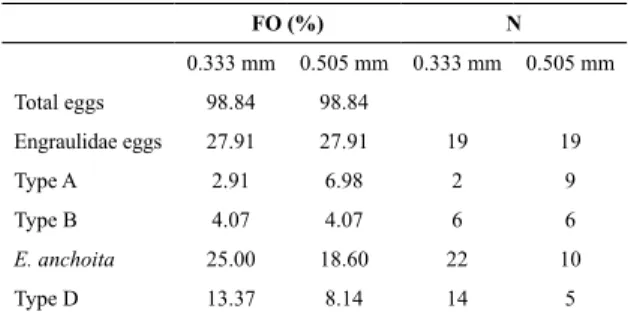
Table 1. Frequency of occurrence (FO) in the 0.333 mm
and the 0.505 mm mesh net; number of stations (N) where the egg types occurred in just one of the nets.
FO (%) N
0.333 mm 0.505 mm 0.333 mm 0.505 mm
Total eggs 98.84 98.84
Engraulidae eggs 27.91 27.91 19 19 Type A 2.91 6.98 2 9 Type B 4.07 4.07 6 6
E. anchoita 25.00 18.60 22 10
Type D 13.37 8.14 14 5
type “i” was present, and p the total number of stations (GUILLE, 1970).
For data descriptions and analyses the number of Engraulidae eggs was standardized according to the volu
-me of seawater iltered (eggs/m3).
As our abundance data were not normally distributed
and the samples are dependent, to verify the inluence of the mesh size on volume of seawater iltered, volume of plankton and abundance of ish eggs, the non-parametric Wilcoxon paired-sample test (ZAR, 1999) was performed.
Although a few studies have compared the effects of di
-fferent mesh-sizes on the plankton catch using consecu-tive tows (SOMERTON; KOBAYASHI, 1989; CHUTE; TURNER, 2001; TSENG et al., 2011; MAKABE et al., 2012), factors such as tow depth, tow time and net speed are dificult to control when separate tows are made and compared. As the bongo net was itted with two different mesh size nets, all the factors cited above were the same at each station, enabling a pairwise correlation of the da-ta from the two nets, as was done by MATSUURA and NAKATANI (1980), and SANCHEZ and CIECHONSKI (1984). In this case, a paired-sample test will be more po-werful than the two-sample test (ZAR, 1999). This analy-sis was done only at the positive stations, meaning that
only at the stations where Engraulidae eggs were collected in at least one mesh size net.
The difference in the egg axes size per mesh was
tes-ted by the two sample Student´st-test, with conidence
le-vel of 99% (p < 0.01).
All the analyses described were made using R softwa-re (R Cosoftwa-re Team, 2012).
RESULTS
A total of 306,711 ish eggs were collected, 66,331 (21.63%) of them being of the Engraulidae family.
Engraulis anchoita represented 92.89% (n = 61,615) of all
Engraulidae egg samples, followed by type D, with 3.26% (n = 2,160), type A with 2.95% (n = 1,960) and type B with 0.90% (n = 596).
Of the 172 oceanographic stations sampled, only at two were there no ish eggs. Engraulidae eggs were found at 38.95% of the stations. Engraulis anchoita was the
Engraulidae with the highest FO, of 31.40%. Again, E. anchoita was followed by type D, with 16.28%, type A
with 8.14% and type B with 7.56% FO.
As Engraulidae eggs were present at only ive stations during 1982, all the statistical analyses were undertaken
for both years together.
For type B eggs, FO was the same for both nets; howe-ver, at six stations this type occurred only in the 0.505 mm mesh size and at the other six stations, only in the 0.333 mm. For type A, FO was higher in the 0.505 mm mesh net, but at two stations type A eggs occurred only in the 0.333
mm mesh net. For E. anchoita and type D eggs, FO was
higher in the 0.333 mm mesh net, though they were pre-sent in the 0.505 mm mesh net but abpre-sent in the 0.333 mm mesh net at 10 and 5 stations, respectively (Table 1).
Even with the volume of water iltered being gre-ater in the 0.505 mm mesh net, the median volume of plankton and the median abundance of total ish eggs and of Engraulidae eggs were higher in the 0.333 mm mesh size net. Among the Engraulidae, the median abundances
of eggs of types A and B estimated for the two mesh sizes
were not signiicantly different, but the median abundance
of E. anchoita and type D was higher in the 0.333 mm
mesh net (Table 2).
The egg abundance differences between the 0.333 and 0.505 mm mesh nets varied at each station for each egg type, showing no constant pattern (Figure 2). Type A and
type B showed low values of abundance differences be
-tween the 0.333 and 0.505 mm mesh nets. For E. anchoita, there was only one station where the egg abundance sam
-pled with the 0.505 mm mesh net was much higher than the egg abundance sampled with the 0.333 mm mesh, with an abundance difference of 114 eggs/m3; at the other sta-tions, more E. anchoita eggs were sampled with the 0.333
mm mesh net, with difference values varying from almost zero to 41.08 eggs/m3. For type D eggs, at most stations the 0.333 mm mesh net sampled more eggs than the 0.505 mm mesh net, and only in a few cases was the 0.505 mm mesh net more eficient than the 0.333 one, but with low difference values, less than 0.08 eggs/m3.
The stations that sampled more E. anchoita and
Table 2. Amplitude and median values of sea water iltered volume (m3), plankton volume (ml/m3) and egg abundance (eggs/ m3) collected with 0.333 mm and 0.505 mm mesh nets in the southern Brazilian Bight during 1975 and 1982. P-values (P)
of Wilcoxon paired-sample test and number of positive stations (N).
Amplitude Median Value P N
0.333 mm 0.505 mm 0.333 mm 0.505 mm
Filtered volume (m3) 79.5 - 690.7 85.9 - 690.7 235.1 268.5 < 0.01 172
Plankton volume (ml/m3) 0.02 - 2.67 0.01 - 2.14 0.27 0.18 < 0.01 172
Total eggs 0 - 330.7 0 - 128.6 0.97 0.67 < 0.01 170
Total Engraulidae 0 - 54.9 0 - 117.2 0.09 0.01 < 0.01 67 Abundance* (eggs/m3) Type A 0 - 2.92 0 - 8.21 0 0.04 0.15 14
Type B 0 - 0.76 0 - 2.95 0 0.01 1 13
Engraulis anchoita 0 - 53.75 0 - 114.5 0.24 0 < 0.01 54
Type D 0 - 7.11 0 - 2.70 0.03 0 < 0.01 28
* Positive stations.
Figure 2. Differences (eggs/m3) between the four types of Engraulidae
egg abundances sampled by 0.333 mm and 0.505 mm mesh net in the southern Brazilian Bight, during 1975 and 1982. Positive values mean that the abundance of eggs sampled by 0.333 mm mesh size was higher than that of the 500 mm, and negative values the opposite.
Figure 3. Bubble plot of the egg abundance logarithmized (represented by circles) of E. anchoita (left) and type D (right), and the proportion
of eggs sampled with the 0.333 mm and the 0.505 mm mesh net at each station sampled in the southern Brazilian Bight during 1975 and 1982 and the volume of plankton interpolated, obtained at the same stations
during the same years. Small black dots represent the negative stations.
with the stations that presented higher abundance of
plankton (Figure 3).
Mean value of the major axis was signiicantly different between mesh size nets for types A, B and E. anchoita; no signiicant difference being observed for type
D. Types A and B eggs also had different mean values of the minor axis for the two nets, however no signiicant
difference was observed for E. anchoita and type D eggs
(Table 3). The low size range of the egg axes in the four egg types identiied may be seen in Table 3.
No correlations between egg abundance sampled with
the 0.333 mm and the 0.505 mm mesh nets were observed
for E. anchoita and type D eggs, making it impossible to
establish a correction factor (Figure 4).
DISCUSSION
A bongo net towed at a low speed had been conside -red to be the best sampling gear for ichthyoplankton sur
-veys (SMITH; RICHARDSON, 1977), but bongo nets
do not prevent some problems inherent to the process
Figure 4. Plot of the abundance of eggs sampled with the 0.333 mm mesh net versus the abundance of eggs sampled with the 0.505 mm
mesh net for Engraulis anchoita and type D eggs.
Table 3. Number of eggs measured (N), size range, mean and standard deviations of the major and minor axes for each
Engraulidae egg type sampled in southern Brazilian Bight during 1975 and 1982 using a bongo net itted with a 0.333 mm and 0.505 mm mesh net. P- values (P) of Student´st-test.
Major Axis (mm) Minor Axis (mm)
N Size Range Mean ± SD P Size Range Mean ± SD P
0.333 0.505 0.333 0.505 0.333 0.505 0.333 0.505 0.333 0.505
Type A 117 274 1.17 - 1.61 1.20 - 1.57 1.39 ± 0.07 1.36 ± 0.06 < 0.01 0.62 - 0.82 0.60 - 0.80 0.72 ± 0.05 0.70 ± 0.04 < 0.01 Type B 57 91 0.91 - 1.18 0.97 - 1.17 1.10 ± 0.05 1.06 ± 0.04 < 0.01 0.63 - 0.78 0.62 - 0.73 0.71 ± 0.04 0.67 ± 0.02 < 0.01
E. anchoita 898 559 0.85 - 1.21 0.83 - 1.23 1.03 ± 0.06 1.01 ± 0.07 < 0.01 0.45 - 0.63 0.42 - 0.62 0.52 ± 0.03 0.52 ± 0.03 0.42
Type D 194 155 0.76 - 0.99 0.67 - 1.01 0.89 ± 0.05 0.88 ± 0.05 0.08 0.45 - 0.71 0.47 - 0.70 0.56 ± 0.05 0.55 ± 0.04 0.32
as larvae grow and develop, they improve their ability to detect net pressure and their swimming ability, evading plankton nets (JOHNSON; FOGARTY, 2013). Extrusion
represents the loss of ichthyoplankton through the net me
-shes by the combined effects of hydraulic pressure, mor-phology and size of the ish larvae and eggs, net mesh size and stability (VANNUCCI, 1968). Increasing the towing speed may improve the catch eficiency of larger zoo-plankton, but results in greater loss of small individuals by extrusion. In general, smaller ish eggs and larvae are extremely vulnerable to changes in iltration pressure and extrusion (SMITH; RICHARDSON, 1977). Furthermore,
ichthyoplankton patchiness makes sampling of these or
-ganisms even more dificult. Of all the problems cited, we can easily eliminate avoidance in this present study, as ish
eggs cannot swim away from a net.
In a conical net, water low is evenly distributed throughout its length and, if clogging occurs, it will be
distributed evenly over the entire surface. In the combi
-ned cylindrical and cone desig-ned net (as in the bongo net
used) some of the water is naturally diverted by the co
-ne model and is iltered through the cylinder (CURRIE, 1963). The porous cylindrical part, in front of the il-tering cone, probably oscillates in response to eddies caused by the ring, and so cleans itself of accumulated organisms, reducing the rate of clogging (TRANTER; SMITH, 1968).
Fine-mesh nets, with comparable iltering areas, ilter initially as well as larger mesh sizes do, but clog more rapidly. In the relatively clear water of Catalina Island, California, three different mesh size nets maintained high iltering eficiency for 18 minutes, after which the 0.101 mm mesh net clogged to 83% eficiency and af-ter 30 minutes the 0.201 mm mesh net clogged to 84% eficiency. The 0.333 mm mesh net had about 85% iltra-tion eficiency during one hour of towing (SMITH et al., 1968). SOMERTON and KOBAYASHI (1989) studying Hawaii anchovy eggs (Encrasicholina purpurea),
obser-ved that the catch of the plankton net of a 0.183 mm mesh size was signiicantly less than that of a 0.335 mm one,
indicating that the smaller mesh net was likely clogged.
HERNANDEZ et al. (2011) found no differences in total ish larvae and egg densities between 0.333 mm and 0.200
mm mesh bongo nets. Those authors observed that only
two out of 22 pairs of samples clogged, mainly because of the low volume of water iltered during their 1-18m obli-que tows, of approximately 67 m3. In the present study, since we used conical- cylinder nets of 0.333 and 0.505 mm mesh, larger than those used in the studies discussed above, our tows did not last more than 15 minutes, and as the 0.505 mm mesh net did not sample more eggs at the stations with higher plankton abundance, where the 0.333 mm net would clog, we can also disregard the clogging
A number of studies have documented the effect of
mesh size on the retention of larvae, with the general conclusion that larger mesh sizes eficiently collect the
late ontogenetic stages but underestimate the initial lar
-val stages due to extrusion (e.g. HOUDE; LOVDAL, 1984; LESLIE; TIMMINS, 1989). In contrast, smaller--mesh nets collect smaller size classes of larvae, but are prone to clogging - thus reducing their effectiveness in sampling larger size classes (SMITH et al., 1968; TRANTER; SMITH, 1968). In this regard, inappro-priate mesh-size nets are one of the most important
sources of sampling bias affecting organism size and
development stage data (SMITH et al. 1968; COLTON et al. 1980). In our results, the eggs of each Engraulidae type exhibited low variations of the major and minor diameters and the 0.333 mm mesh net sampled type A and B eggs larger than the ones sampled in the 0.505 mm mesh net, the opposite of what was expected. For
E. anchoita and type D eggs, which were more
abun-dant in samples of the 0.333 mm mesh net, there were
no size differences when the two nets were compared.
Thus, the different mesh used had no egg size selecti-vity within each egg type, and our data presented no length-frequency bias.
Another reason why the quantitative difference for E. anchoita and type D eggs cannot be associated when comparing both nets with the egg size is that there we
-re minor variations in axes varying from 0.45 to 0.71 mm, the smaller dimension being smaller than the 0.505
mm mesh aperture and the mesh diagonal. In our stu
-dy we used nets that had diagonals of approximately 0.45 and 0.71 mm for the 0.333 and 0.505 mm nets, respectively. SMITH et al. (1968) summarized the re-sults of SAVILLE (1958) and concluded that the ma-ximum cross-section diameter of an organism must be
wider than the mesh diagonal to be fully retained. Some
authors considered this “Diagonal rule” too conservati-ve (e.g. LENARZ, 1972; SANCHEZ; CIECHOMSKI, 1984; SOMARAKIS et al., 1998). The engraulid eggs, excluding type D, only had a major axis larger than the 0.71 mm diagonal and all the eggs of E. anchoita and
type D, and some eggs of types A and B had a minor axis smaller than 0.71 mm. Since we cannot conirm
whether ellipsoid eggs were retained due to their minor
or major axes, we believe that the “Diagonal rule” was
not applicable in this study.
The patchiness of planktonic ish eggs and lar-vae has been well described (e.g. MCGURK, 1986;
MATSUURA; HEWITT, 1995; BRADBURY et al., 2003; MAYNOU et al., 2006), even for some species of the Engraulidae (HEWITT, 1981). The role of
pa-tchiness as a component of the sampling bias was stu
-died by WIEBE and HOLLAND (1968) and WIEBE (1970; 1971). These studies emphasized the importance of the size analyses, distribution and density of
zoo-plankton patches for the understanding of the sampling bias. The large values of the abundance amplitude in the present study indicate patchiness in the occurrence
of the Engraulidae eggs, but no conclusion about the
characteristics of these patches can be drawn from our data. Further studies on patch size and density and whe -ther it is possible for one bongo net to pass through the
patch and the other not, or the possibility for one net to
pass through a denser part of the patch must be under
-taken to conirm whether the differences in sampling
Engraulidae eggs with different mesh nets are caused
by patchiness. The patchiness effect could also explain why eggs of all types were sampled in the 0.505 mm mesh net but were absent in the 0.333 mm mesh net at some stations, and why at one station the 0.505 mm
mesh net abundance of E. anchoita was much higher
than the abundance sampled with the 0.333 mm mesh net, with a difference of 114 eggs/m3. If the differen -ce in mesh retention was the only factor involved, this
would not happen.
As in our results, in MATSUURA and NAKATANI (1980) the 0.333 mm mesh net collected
mo-re E. anchoita eggs than the 0.505 mm mesh net in the Santos area of the southern Brazilian coast in
November 1977. However, those authors only sampled five fixed stations and did not evaluate the abundance difference at each station, or if there was any mesh effect on the egg size. On the other hand, SANCHEZ and CIECHOMSKI (1984) analyzing E. anchoita eggs
sampled on the Uruguayan and Argentinian coasts during the spring of 1981 did not observe any diffe-rence in the abundance obtained with the 0.333 and the 0.505 mm mesh nets. According to SANCHEZ and CIECHOMSKI (1984), the difference in the results is caused by the regional variation, as the minor axis of
the E. anchoita eggs sampled on the Uruguayan and Argentinian coasts was larger than the ones sampled in the Santos area and also greater than those sampled
the Brazilian southeast coast, the minor axis mean value observed by MATSUURA and NAKATANI (1980) was of 0.58 mm and, in the present study, of 0.52 mm. It is known that the southeastern Brazilian Bight, excluding the Santa Marta Cape region, has
one unit stock of E. anchoita and southern Brazil ano
-ther (CARVALHO; CASTELLO, 2013). The sou-thern
Brazil stock is the same as that named bonaerense off
Argentina and Uruguay (CARVALHO; CASTELLO, 2013).
The extent to which clogging, avoidance and ex-trusion of ish larvae and eggs is a problem depends upon the objective of the study. Ecological studies of ichthyoplankton communities, e.g. dominant species and species composition, will be subject to some bias as a result of these problems, but this bias may not be serious. However, studies of the distribution and abun-dance of newly-hatched larvae or the estimate of
mor-tality rates from length frequencies will incorporate
serious bias if clogging, avoidance and extrusion losses are overlooked (JOHNSON; MORSE, 1994). As there
were no differences in the abundance of Engraulidae
eggs of types A and B in the two mesh sizes tested, the
results obtained with each net were comparable. On
the other hand, our results showed that the 0.333 mm
mesh net tends to sample more E. anchoita and type
D eggs than that of 0.505 mm, but as no correlation
was observed between these eggs captured in the two
nets, we could not calculate any correlation factor to facilitate the comparisons. As discussed above, we can ignore avoidance, clogging and egg-size mesh-selecti-vity effects as they do not affect these results. Thus,
the difference between the eggs captured at each station seems to occur randomly due to egg patchiness or to
other, unanalyzed, factors.
In conclusion, the abundance of Engraulidae eggs sampled with a bongo net of 0.333 mm and 0.505 mm
mesh sizes in the southeastern Brazilian Bight can be com
-pared if they are of types A or B, but if they are Engraulis anchoita or of type D, some caution is recommended when comparing these results.
ACKNOWLEDGEMENTS
The authors thank those responsible for the Biological
Collection “Prof. E. F. Nonato” (Oceanographic Institute, University of São Paulo) for the egg samples. The irst
author is thankful for the scholarships given by Fundação de Amparo à Pesquisa do Estado de São Paulo (FAPESP). Comments and suggestions from Antônio Olinto Ávila da Silva, June Ferraz Dias, Rubens Mendes Lopes and two anonymous reviewers, improved the quality of this ma-nuscript, for which the authors are grateful.
REFERENCES
AUTH, T. B.; BRODEUR, R. D.; SOULEN, H. L.; CIANNELLI, L.; PETERSON W.T. The response of ish larvae to decadal changes in environmental forcing factors off the Oregon coast. Fish. Oceanogr., v. 20, n. 4, p. 314-328, 2011. BARKLEY, R. A. Selectivity of towed-net samplers. Fish. Bull.
U. S., v. 70, n. 3, p. 799-820, 1972.
BRADBURY, I. R.; SNELGROVE, P.V. R.; PEPIN, P. Passive and active behavioural contributions to patchiness and spa -tial pattern during the early life history of marine ishes. Mar. Ecol. Prog. Ser., v. 257, p. 233-245, 2003.
BRODEUR, R. D.; FROST, B.W.; HARE, S. R.; FRANCIS, R. C.; INGRAHAM, W.J. Interannual variations in zooplankton bio-mass in the gulf of Alaska, and covariation with California cur-rent zooplankton biomass. CalCOFl Rep., v. 37, p. 80-99, 1996. CASTELLO, J.P. Síntese sobre a anchoíta (Engraulis anchoita)
no sul do Brasil. In: HAIMOVICI, M. (Ed.). A prospecção pesqueira e abundância de estoques marinhos no Brasil nas décadas de 1960 a 1990: levantamento de dados e avaliação crítica. Brasília: MMA/SMCQ, 2007. p. 197-218.
CARVALHO, F.M.; CASTELLO, J.P. Argentine anchovy (Engraulis anchoita) stock identiication and incipient
ex-ploitation in southern Brazil. Lat. Am. J. Aquat. Res., v. 41, n. 5, p. 820-827, 2013.
CHUTE, A.S.; TURNER, J.T. Plankton studies in Buzzards Bay, Massachusetts, USA. V. Ichthyoplankton, 1987 to 1993. Mar. Ecol. Prog. Ser., v. 224, p. 45-54, 2001.
CIECHOMSKI, J.D. Observaciones sobre la reproduccion desa-rollo embrionario y larval de la Anchoita Argentina ( Engrau-lis anchoita). Bol. Inst. Biol. Mar., v. 9, p. 1-29, 1965.
CIECHOMSKI, J.D. The size of the eggs of the Argentine ancho-vy, Engraulis anchoita (Hubbs & Marini) in relation to the
season of the year and to the area of spawning. J. Fish Biol., v. 5, p. 393-398, 1973.
COLTON JR., J.B.; GREEN, J.R.; BYRON, R.R.; FRISELLA, J.L. Bongo net retention rates as affected by towing speed and mesh size. Can. J. Fish. Aquat. Sci., v. 37, n. 4, p. 606-623, 1980. CURRIE, R.I. The Indian Ocean Standard Net. Deep. Sea Res.,
v. 10, p. 27-32, 1963.
FAO. The State of World Fisheries and Aquaculture 2012. Food and Agriculture Organization of the United Nations Rome, 2012. 209 p.
GUILLE, A. Benthic Bionomy of continental shelf of french ca-talane coast. II. Benthic communities of the macrofauna. Vie Millieu, v. 21, n. 8, p. 149-280, 1970.
FAVERO, J. M.; KATSURAGAWA, M.; ZANI-TEIXEIRA, M. L.; TURNER, J. T. Using new tools to identify eggs of
Engraulis anchoita (Clupeiformes, Engraulidae). J. Fish.
HERNANDEZ JR., F. J.; CARASSOUA, L.; MUFFELMANA, S.; POWERS, S.P.; GRAHAMA, W.M. Comparison of two plankton net mesh sizes for ichthyoplankton collection in the northern Gulf of Mexico. Fish Res., v. 108, n. 2-3, p. 327-335, 2011.
HEWITT, R. The value of pattern in the distribution of young ish. Rapp. P-V. Réun. Cons. Perm. Int. Explor. Mer, v. 178, p. 229-236, 1981.
HOUDE, E. D.; LOVDAL, J. A. Seasonality of Occurrence, Foods and Food Preferences of Ichthyoplankton in Biscayne Bay, Florida. Estuar. Coast. Shelf. Sci., v. 18, n, 4, p. 403-419, 1984
JOHNSON, D. L.; FOGARTY, M. J. Intercalibration of MOC-NESS and Bongo nets: Assessing relative eficiency for ichthyoplankton. Prog. Oceanogr., v. 108, p. 43-71, 2013. JOHNSON, D. L.; MORSE, W.W. Net Extrusion of Larval Fish:
Correction Factors for 0.333 mm Versus 0.505 mm Mesh Bongo Nets. NAFO. Sci. Coun. Studies., v. 20, p. 85-92, 1994.
LENARZ, W. H. Mesh retention of larvae of Sardinops caerulea
and Engraulis mordax by plankton nets. Fish. Bull., v. 70, n.
3, p. 839-848, 1972.
LESLIE, J. K.; TIMMINS, C. A. Double nets for mesh aperture selection and sampling in ichthyoplankton studies. Fish Res., v. 7, n. 3, p. 225-232, 1989.
MADUREIRA, L. S. P.; CASTELLO, J. P.; PRENTICE-HER-NÁNDEZ, C.; QUEIROZ, M. I.; ESPÍRITO SANTO, M. L.; RUIZ, W. A.; RAGGI ABDALLAH, P.; HANSEN, J.; BER-TOLOTTI, M. I.; MANCA, E.; YEANNES, M. I.; AVDA-LOV, N.; AMORÍN, S. F. Current and potential alternative food uses of the Argentine anchoita (Engraulisanchoita) in Argentina, Uruguay and Brazil. In: HASAN, M. R.; HAL-WART, M. (Eds.). Fish as feed inputs for aquaculture: practi-ces, sustainability and implications. Fisheries and Aquacultu-re Technical Paper, FAO, Rome, 2009. p. 269-287.
MAKABE, R.; TANIMURA, A.; FUKUCHI, M. Comparison of mesh size effects on mesozooplankton collection eficiency in the Southern Ocean. J. Plankton. Res., v. 34, n. 5, p. 432-436, 2012.
MATSUURA, Y.; HEWITT, R. Changes in the spatial patchiness of Paciic mackerel, Scomberjaponicus, larvae with increa-sing age and size. Fish. Bull., v. 93, n. 1, p. 172-178, 1995. MATSUURA, T.; NAKATANI, K. Variability in quantity of
zoo-plankton, ish eggs and larvae associated with two different mesh sizes in bongo nets. Atlântica, v. 4, p. 43-52, 1980. MAYNOU, F.; OLIVAR, M. P.; EMELIANOV, M. Patchiness of
eggs, larvae and juveniles of European hake Merluccius mer-luccius from the NW Mediterranean. Fish Oceanogr., v. 15, n.
5, p. 390-401, 2006.
MCGURK, M. D. Natural mortality of marine pelagic ish eggs and larvae: role of spatial patchiness. Mar. Ecol. Prog. Ser., v. 34, p. 227-242, 1986.
MILLER, M. J.; STEPPUTTIS, D.; BONHOMMEAU, S.; CAS-TONGUAY, M.; SCHABER, M.; VOBACH, M.; WYSUJA-CK, K.; HANEL, R. Comparisons of catches of large leptoce-phali using an IKMT and a large pelagic trawl in the Sargasso Sea. Mar. Biodiv., v. 43, n. 4, p. 493-501, 2013.
MULLIN, M. M. Interannual and interdecadal variation in Ca-lifornia Current zooplankton: Calanus in the late1950s and
early 1990s. Glob. Change. Biol., v. 4, n. 1, p. 115-119, 1998.
NAGASAWA, K. Long-term variations in abundance of Paciic herring (Clupea pallasi) in Hokkaido and Sakhalin related to
changes in environmental conditions. Prog. Oceanogr., v. 49, n. 1, p. 551-564, 2001.
PEPIN, P.; SHEARS, T. H. Variability and capture eficiency of bongo and Tucker trawl samplers in the collection of ichthyo -plankton and other macrozoo-plankton. Can. J. Fish. Aquat. Sci., v. 54, n. 4, p. 765-773, 1997.
PHONLOR, G. Morfologia e Biologia dos ovos de Engraulidae do sul do Brasil (Teleostei, Clupeiformes). Rev. Bras. Biol., v. 44, n. 4, p. 467-487, 1985.
R CORE TEAM. 2012. R: A language and environment for statis-tical computing. Vienna: R Foundation for Statisstatis-tical Compu-ting, 2012. Available at: http://www.R-project.org/. Accessed on: 19 Jan. 2014.
REBSTOCK, G. A. An analysis of a zooplankton sampling-gear change in the CalCOFI long-term monitoring program, with implications for copepod population abundance trends. Prog. Oceanogr., v. 53, n. 2-4, p. 215-230, 2002.
SÁNCHEZ, R. P.; CIECHONSKI. J. D. Estimación de la biomassa de adultos desovantes de la anchoíta (Engraulis anchoita) en el área costera bonaerense durante la primavera de 1981 y análi-sis comparativo de los recuentos de ictioplancton con redes de diferentes mallas. Rev. invest. Des. Pesq., v. 4, p. 49-61, 1984. SAVILLE, A. Mesh selection in plankton nets.J. Cons. Int.
Ex-plor. Mer., v. 23, p. 192-201, 1958.
SKJOLDAL, H. R.; WIEBE, P. H.; POSTEL, L.; KNUTSEN, T.; KAARTVEDT S.; SAMEOTO, D. D. Intercomparison of zooplankton (net) sampling systems: Results from the ICES/ GLOBEC sea-going workshop. Prog. Oceanogr., v.108, p. 1-42, 2013.
SMITH, P. E.; RICHARDSON, S. L. Standard techniques for pe-lagic ish egg and larva surveys. FAO. Fish. Tech. Pap.,v. 175, p. 1-100, 1977.
SMITH, P. E.; COUNTS, R. C.; CLUTTER, R. I. Changes in il-tering eficiency of plankton nets due to clogging under tow. J. Cons. Int. Explor. Mer, v. 32, n. 2, p. 232-248, 1968. SOMARAKIS, S.; CATALANO, B.; TSIMENIDES, N.
Catcha-bility and retention of larval European anchovy, Engraulis encrasicolus, with bongo nets. Fish. Bull., v. 96, n. 4, p.
917-925, 1998.
SOMERTON, D. A.; KOBAYASHI, D. R. A method for correc-ting catches of ish larvae for the size selection of plankton nets. Fish. Bull. S. U., v. 87, n. 3, p. 447-455, 1989. STRATOUDAKIS, Y.; BERNAL, M.; BORCHERS, D. L.;
BOR-GES, M. F. Changes in the distribution of sardine eggs and larvae off Portugal, 1985-2000. Fish Oceanogr., v. 12, n. 1, p. 49-60, 2003.
TRANTER, D. J.; SMITH, P. E. Filtration Performace. In: TRANTER, D. J.; FRASER, J. H. (Eds.). Zooplankton sam-pling, UNESCO monographs on oceanographic methodolo-gy. Paris: UNESCO, 1968. p. 27-56.
TSENG, L. C.; DAHMS, H.U.; HUNG, J. J.; CHEN, Q. C.; HWANG, J. S. Can different mesh sizes affect the results of copepod community studies? J. Exp. Mar. Biol. Ecol.,v. 398, n. 1, p. 47-55, 2011.
VANNUCCI, M. Loss of organisms through the meshes. In: TRANTER, D.J.; FRASER, J.H. (Eds.). Zooplankton sam-pling, UNESCO monographs on oceanographic methodolo-gy. Paris: UNESCO, 1968. p. 77-86.
WIEBE, P. H. Small-scale spatial distribution in oceanic zoo-plankton. Limnol. Oceanogr., v. 15, n. 2, p. 205-217, 1970. WIEBE, P. H. A computer model study of zooplankton patchiness
and its effects on sampling error. Limnol. Oceanogr., v. 16, n. 1, p. 29-38, 1971.
WIEBE, P. H.; Benield, M. C. From the Hensen net toward four--dimensional biological oceanography. Prog. Oceanogr., v. 56, n. 1, p. 7-136, 2003.
WIEBE, P. H.; Holland, W. R. Plankton patchiness: effects on repea-ted net tows. Limnol. Oceanogr., v. 13, n. 2, p. 315-321, 1968. ZAR, J. H. Biostatistical Analysis. Upper Saddle River: Prentice