Ciências da Saúde
Characterization of elderly and non-elderly
patients with bronchial asthma
Perspective of the Self-knowledge of the Disease
Adriana dos Santos Pascoal
Dissertação para obtenção do Grau de Mestre em
Medicina
(Ciclo de estudos integrado)
Orientador: Professor Doutor Luís Taborda Barata
Coorientador: Professor Doutor Jorge Manuel Reis Gama
iii
Agradecimentos
Agradeço a todos aqueles que contribuíram de alguma forma para a realização deste projeto:
Professor Luís Taborda Barata, que acompanhou a investigação com muito interesse, motivando-me a mim e aos meus colegas para prosseguir com o nosso trabalho.
Professor Jorge Gama, pela ajuda preciosa no trabalho estatístico. Colegas de equipa, pela partilha na realização deste trabalho.
Todos os administrativos e restante corpo de profissionais do sector 2 e do sector de Exames Especiais do CHCB pela simpatia e ajuda prestada na logística do trabalho de campo.
Drª Salete Valente, Drª Maria Jesus Valente, e Drª Marli Loureiro, pela ajuda prestada durante o trabalho de campo.
Marta Duarte, por todo o apoio em todas as pequenas coisas que eram necessárias durante o desenvolvimento do trabalho, e pela disponibilidade e simpatia com que sempre me recebeu. Aos meus pais, por me apoiarem nos meus momentos menos fáceis.
Ao meu namorado, por todo o apoio que me tem dado ao longo do tempo.
A todos os voluntários e seus familiares, pela disponibilidade e paciência na participação neste estudo, fundamental para a sua realização.
iv
Abstract
Background: It is clear that health literacy, namely having knowledge about one’s own disease (self-knowledge of the disease) and its management, is fundamental for reducing the impact of bronchial asthma, namely in terms of a patient’s asthma control and quality of life.
Thus, the aims of the present study were to analyze the relevance and gaps of self-knowledge
about asthma in the asthmatic patient; to evaluate whether having asthma affects the level of knowledge of the disease and which factors may be associated with poorer self-knowledge about asthma and, finally, whether this is different in the elderly versus younger asthmatic patients.
Methods: Cross-sectional assessment of 92 elderly and 100 non-elderly asthmatic patients
followed at Centro Hospitalar Cova da Beira, Portugal, with a control group of 100 elderly and 100 non-elderly non asthmatic patients. All volunteers signed a written informed consent form. Standardized and validated questionnaires were applied in order to evaluate
depression, cognitive state, asthma control, quality of life, knowledge about the disease, and
inhaler technique demonstration was also requested. Results were analysed using the
Software Package for Social Sciences®, version 23.0.
Results: All four groups had a clear predominance of women. Most elderly asthmatics and
non-elderly asthmatics had no depressive humor on the GDS and on the CES-D, respectively. The majority had adult-onset / late-onset (AOA/LOA) asthma. Elderly asthmatic were mostly
non-atopic whereas non-elderly asthmatics were preferentially atopic. More than two thirds
had their asthma controlled in the past month, as assessed by ACT. Asthmatic patients
significantly demonstrated a better knowledge level than non-asthmatic volunteers. Elderly
Asthmatics had similar scores to those obtained by Non-Elderly Asthmatics for all four topics
of the questionnaire. The elderly asthmatic patients with no depressive mood had a
significantly higher level of self-knowledge than elderly asthmatic patients with depressive mood.
Conclusions: We have confirmed that elderly asthmatic patients who are preferentially female, non-atopic, have LOA/AOA and are regularly follow up at specialty clinics can demonstrate similar results in self-knowledge score to those in non-elderly asthmatics. We also showed that depression is a significant negative factor influencing self-knowledge score in elderly asthmatic patients.
v
Keywords
vi
Resumo
Introdução: É claro que a literacia de saúde, nomeadamente ter conhecimento sobre a própria doença (auto-conhecimento da doença) e a sua gestão, é fundamental para reduzir o impacto da asma brônquica, nomeadamente em termos de controlo da asma e qualidade de vida do paciente. Assim, os objetivos do presente estudo são: analisar a relevância e as lacunas de auto-conhecimento sobre a asma no paciente asmático; avaliar se ter asma afeta o nível de conhecimento da doença e que fatores podem ser associados com pior auto-conhecimento da doença e, finalmente, avaliar se isto é diferente nos idosos comparativamente com os pacientes asmáticos mais novos.
Métodos: Avaliação transversal de 192 pacientes asmáticos (92 idosos e 100 não idosos)
seguidos no Centro Hospitalar Cova da Beira, Portugal, com um grupo de controlo de 100 pacientes não asmáticos (100 idosos e 100 não idosos). Todos os voluntários assinaram um consentimento informado. Questionários estandardizados e validados foram aplicados de modo a avaliar a depressão, estado cognitivo, controlo da asma, qualidade de vida, conhecimento sobre a doença, e a técnica inalatória também foi requerida. Os resultados foram analisados através do Pacote de Software para Ciências Sociais (SPSS), versão 23.0.
Resultados: Todos os quatro grupos demonstraram uma clara predominância do sexo
feminino. A maioria dos asmáticos idosos e não idosos não tinham humor depressivo no GDS e no CES-D, respetivamente. A maioria tinha asma de início em adulto/ início tardio (AOA/LOA). Os asmáticos idosos eram predominantemente não atópicos, enquanto que a maior parte dos asmáticos não idosos eram atópicos. Mais do que dois-terços tinham a sua
asma controlada no último mês, como avaliado no ACT.Os pacientes asmáticos demonstraram
significativamente melhor conhecimento do que os voluntários não asmáticos. Os asmáticos idosos tiveram resultados similares aos obtidos pelos asmáticos não idosos para todos os tópicos do questionário. Os asmáticos idosos sem humor depressivo tiveram um nível de auto-conhecimento significativamente superior do que os asmáticos idosos com humor depressivo.
Conclusões: Pacientes asmáticos idosos, predominantemente do sexo feminino, não atópicos
e com LOA/AOA podem demonstrar resultados similares em auto-conhecimento aos de
asmáticos não idosos. Por outro lado, a existência de depressão influencia, negativamente, o
vii
Palavras-chave
viii
Resumo Alargado
Introdução: A asma é uma doença heterogénea, normalmente caracterizada por inflamação
crónica das vias aéreas. Nos idosos, em particular, a asma é associada a qualidade de vida
significativamente pior, comparativamente com o resto da população. Uma revisão
sistemática mostrou que uma literacia limitada de saúde, como referido na literatura médica, é altamente prevalente e é consistentemente associada ao nível de educação, alguns aspetos étnicos, e a idade. A literacia de saúde, nomeadamente ter conhecimento sobre a própria doença (autoconhecimento da doença) e a sua gestão, é fundamental para reduzir o impacto da asma brônquica, nomeadamente em termos de controlo clínico e qualidade de vida do paciente. Contudo, há uma relativa falta de informação sobre o conhecimento de adultos mais velhos sobre a asma. Assim, os objetivos do presente estudo são: analisar a relevância e as lacunas de autoconhecimento sobre a asma no paciente asmático; avaliar se ter asma afeta o nível de autoconhecimento da doença e que fatores podem ser associados a um pior autoconhecimento da doença e, finalmente, se o autoconhecimento é diferente nos idosos comparativamente aos pacientes asmáticos mais novos.
Métodos: Avaliação transversal de 192 pacientes asmáticos (92 idosos e 100 não idosos)
seguidos no Centro Hospitalar Cova da Beira, Portugal, com um grupo de controlo de 100 pacientes não asmáticos (100 idosos e 100 não idosos). Todos os voluntários assinaram um consentimento informado. Um questionário estandardizado e detalhado em caracterização sociodemográfica e clinica da asma brônquica foi aplicado, seguido de um questionário estandardizado para a análise do autoconhecimento sobre vários aspetos de asma. Finalmente, questionários estandardizados e validados foram aplicados de modo a avaliar a depressão, estado cognitivo, controlo da asma, qualidade de vida e técnica inalatória. Os resultados foram analisados através do Pacote de Software para Ciências Sociais (SPSS), versão 23.0 e um valor de prova (p value, p) inferior a 0,05 foi considerado como significativo em todos os testes estatísticos.
Resultados: Todos os quatro grupos demonstraram uma clara predominância do sexo
feminino. Em termos de escolaridade e escala social de Graffar, os asmáticos mais velhos tinham um nível de escolaridade significativamente mais baixo e pertenciam a uma classe social mais baixa do que os voluntários não idosos. A maioria dos asmáticos idosos e não idosos não tinham humor depressivo no GDS e no CES-D, respetivamente. A maioria tinha asma de início em adulto/ início tardio (AOA/LOA). Enquanto que a maior parte dos idosos asmáticos eram não atópicos, a maior parte dos doentes não idosos tinham atopia. Mais do
que dois-terços tinham a sua asma controlada no último mês, como avaliado no ACT. A
ix
foi significativa, com os pacientes asmáticos demonstrando significativamente melhor conhecimento do que os voluntários não asmáticos. Os asmáticos idosos tiveram resultados similares aos obtidos pelos asmáticos não idosos para todos os tópicos do questionário. Os asmáticos idosos sem humor depressivo tiveram um nível de autoconhecimento
significativamente superior do que os asmáticos idosos com humor depressivo. Nenhum fator
foi significativamente influenciado pelo nível de autoconhecimento, com a exceção de certos parâmetros de qualidade de vida avaliados pelo questionário AQLQ.
Conclusão: Em suma, o presente estudo é o primeiro a caracterizar asmáticos, idosos e não
idosos, em termos de autoconhecimento sobre a asma em Portugal, e, internacionalmente, é um dos poucos a avaliar este assunto nos idosos. Pacientes asmáticos idosos, predominantemente do sexo feminino, não atópicos e com LOA/AOA podem demonstrar
resultados similares em autoconhecimento ao de asmáticos não idosos. Finalmente, a
depressão é um fator de influência, significativamente negativo, no autoconhecimento da asma, no idoso asmático.
x
Índice
Agradecimentos ... iii Abstract... iv Keywords ... v Resumo ... vi Palavras-chave ... viiResumo Alargado ... viii
Índice ... x
Lista de Figuras... xii
Lista de Tabelas ... xii
Lista de Acrónimos... xiii
1. Introduction ... 1
2. Materials and Methods ... 3
2.1. Study Design and Sample Selection ... 3
2.2. Patient Recruitment ... 3
2.3. Questionnaires ... 3
2.4. Definitions ... 4
2.5. Spirometry with Bronchodilation ... 4
2.6. Statistical Analysis ... 5
3. Results ... 6
3.1. Sample selection and characterization ... 6
3.2. Sociodemographic caracterization ... 7
3.3. Clinical caracterization ... 8
3.4. Differences in self-knowledge about asthma between populations... 10
3.5. Differences in self-knowledge about specific issues of asthma between populations. . 11
3.6. Factors that might influence the self-knowledge score ... 13
3.7. Factors potentially influenced by the self-knowledge score ... 15
4. Discussion ... 17
5. Future Prospects ... 22
6. References ... 23
7. Appendix ... 26
Appendix I – STROBE Statement ... 26
Appendix II - Informed Consents ... 28
Appendix III: Demographic and Clinical Characterization ... 32
Appendix IV: GDS-15, CES-D and MMES ... 37
xi
Appendix VI: ACT and AQLQ ... 44 Appendix VII: Inhaler Technique Questionnaire ... 48
xii
Lista de Figuras
Figure 1 – Flowchart of sample selection and characterization
Lista de Tabelas
Table 1 – Demographic features of the different sample groups
Table 2 – Clinical and Functional Characterization of the different sample groups Table 3 - Score obtained in the Bronchial Asthma Self-Knowledge Questionnaire Table 4 - Pairwise Comparisons of Groups
Table 5 - Score obtained in the Bronchial Asthma Self-Knowledge Questionnaire Table 6 - Score obtained in 4 subtopics of the Bronchial Asthma Self-Knowledge Questionnaire
Table 7 - Pairwise Comparisons of Groups for Topics of the Questionnaire Table 8 - Score obtained in 4 subtopics of the Bronchial Asthma Self-Knowledge Questionnaire
Table 9 - Pairwise Comparisons of Groups for Pathophysiology Topic of the Questionnaire Table 10 - Analysis of variables that may influence Asthma Self-Knowledge in Elderly and Non-Elderly Asthmatics and in Elderly and Non-Elderly Non-Asthmatics
Table 11 - Analysis of Emotional influence on Asthma Self-Knowledge in Elderly Asthmatics Table 12 - Analysis of asthma-related variables that may be influenced by Asthma Self-Knowledge in Elderly and Non-Elderly Asthmatics
xiii
Lista de Acrónimos
ACT - The Asthma Control Test AOA – Adult-onset asthma
AQLQ – The Asthma Quality of Life Questionnaire ATA – American Thoracic Society
CES-D – Centre for Epidemiological Studies Depression Scale CHCB – Centro Hospitalar Cova da Beira
COA – Childhood-onset asthma ERS – European Respiratory Society FCS – Faculdade de Ciências da Saúde FEV1 – Forced expiratory volume in 1 second FVC – Forced vital capacity
GDS-15 – Geriatric Depression Scale ICS – Inhaled Corticosteroid
MMSE – Mini-Mental State Examination p - p-value
SD – Standard deviation
SPSS – Statistical Package for the Social Sciences UBI – Universidade da Beira Interior
1
1. Introduction
Asthma is a heterogeneous disease, usually characterized by chronic airway inflammation. It may be associated with bronchial hyperreactivity to diverse stimuli, such as allergens or physical exercise. It is defined by pulmonary airflow obstruction, which is reversible either spontaneously or upon appropriate treatment. Other symptoms such as cough, wheeze, dyspnea and the feeling of chest tightness vary over time in their incidence, frequency and
intensity1.
In the elderly, in particular, asthma is associated with significantly worse quality of life
compared to the rest of the population2. In fact, some evidence suggests that asthma is more
severe among the elderly3, and the risk of dying from asthma increases with age4. There are
many factors associated with worse asthma outcomes in the elderly, namely the tendency of this age group to attribute their respiratory symptoms to ageing and the poor perception of the severity of their symptoms, demonstrating lower awareness of bronchoconstriction than
younger adults5. Such low awareness may have a physiological basis, since the bronchi of
elderly asthmatic patients have fewer adrenergic receptors but it may also be influenced by
cognitive factors as well as by lower levels of health literacy6. Health literacy is defined, by
the American Institute of Medicine of the National Academies, as the degree to which individuals have the capacity to obtain, process, and understand basic information and services needed to make appropriate decisions regarding their health, and identifies it as a
major contributor to better illness self-management and health outcomes in general6. A
systematic review showed that limited health literacy, as depicted in the medical literature, is highly prevalent and is consistently associated with educational level, some ethnicity
aspects, and age7. It is clear that health literacy, namely having knowledge about one’s own
disease (self-knowledge of the disease) and its management, is fundamental for reducing the impact of bronchial asthma, namely in terms of a patient’s asthma control and quality of
life8,9. Furthermore, adherence to medication and inhaler technique are generally poorer
among older asthmatics, and clearly worse among those with low health literacy10.
However, there is a relative lack of information concerning older adults' knowledge about asthma. Although some studies have measured asthma knowledge inside a community, they have not specifically focused on the elderly population. Nevertheless, data from a large-scale survey conducted in Australia with 55 years old or older volunteers, with and without asthma, showed that there is a general lack in information about asthma and the perception of
2
A Portuguese population-based study showed that there is a high prevalence of
physician-diagnosed asthma in the elderly population (10.9% of 3678 participants)12, and, according to a
study prepared by the Research Department about Population of the Department of Census and Population Statistics released in April 8th, 2002, by the National Institute of Statistics, more than half of the population over 65 years old (55.1%) were illiterate. Thus, it may be
assumed that the elderly population generally has a low-level of instruction13, a fact which
may influence the general level of health literacy of elderly Portuguese patients. This situation emphasizes the importance of developing studies on health literacy and asthma self-knowledge in elderly asthmatics in Portugal as well as elsewhere.
Thus, the aims of the present study were to analyze the relevance and gaps of self-knowledge
about asthma in the asthmatic patient; to evaluate whether having asthma affects the level of knowledge of the disease and which factors may be associated with poorer self-knowledge about asthma and, finally, whether this is different in the elderly versus younger asthmatic patients.
3
2. Materials and Methods
2.1. Study Design and Sample Selection
This is an observational and descriptive study. The target population consisted of individuals with a confirmed diagnosis of Bronchial Asthma, being regularly followed up at Pulmonology or Immunoallergology outpatient clinics of Cova da Beira Academic Hospital Centre. The control population consisted of individuals without Bronchial Asthma, registered at Cova da Beira Healthcare Centre (ACES-CB). All volunteers were separated into two age groups: non-elderly (age below 65) and non-elderly (age of 65 or older). The inclusion criteria for the target population was the clinical diagnosis of Bronchial Asthma and exclusion criteria were co-morbidity with Chronic Pulmonary Obstructive Disease (COPD) or Restrictive Pulmonary Disease and low Mini-Mental State Examination score. For the control population, the exclusion criteria were recent or past history of obstructive or restrictive pulmonary diseases and a low Mini-Mental State Examination score. According to these criteria, four groups were set up: elderly asthmatic (EA); non-elderly asthmatic (NEA); elderly non-asthmatic (ENA) and non-elderly non-asthmatic (NENA). This study was approved by the Ethics Committee of the Faculty of Health Sciences of the University of Beira Interior (FCS-UBI), Covilhã, Portugal, and
by the Ethics Committee of the Cova da Beira Academic Hospital Centre (CHCB). Possible
confounders were patients with cognitive impairment and other allergic or respiratory diseases that could resemble asthma presentation. In order to overcome this, patients with cognitive impairment and COPD were excluded. For this study, we assumed that having between 90 and 100 volunteers in each group under study would allow the detection of differences in the questionnaire on asthma knowledge of at least 1 point, with a margin of error of less than 5% and a confidence interval of 95%.
2.2. Patient Recruitment
Patients were invited to participate in the study via a telephone call or approached directly after their medical appointments in the same hospital or in the ACES-CB. All patients who accepted to participate were assessed at CHCB, ACES-CB, or in the FCS-UBI, between March 2015 and March 2016. These volunteers signed a written informed consent form in accordance with the declaration of Helsinki and an informed consent form in accordance with the guidelines of the Ethics Committee of the Cova da Beira Academic Hospital Centre (Appendix II), after the study was explained to them.
2.3. Questionnaires
All volunteers were interviewed and questionnaires selected and filled in by six trained researchers/clinicians who also participated in the planning of the study. A standardized,
4
detailed questionnaire on socio-demographic and clinical characterization of bronchial asthma was applied (Appendix III). Data about childhood and adulthood place of residence, home characteristics, past and current occupations, personal hobbies and educational qualifications, personal and family history of atopy and respiratory disease, current and past occupational exposure, co-morbidities, asthma triggers, medication and personal habits were obtained. To evaluate the social characteristics, the Graffar Social Scale was used. Cognitive
function was assessed using the Mini Mental State Examination (MMSE)14 and Emotional
function was assessed using the Center of Epidemiologic Study Depression Scale (CES-D)15 in
non-elderly asthmatics and Geriatric Depression Scale in elderly asthmatics (GDS)16 (Appendix
IV). Standardized and validated questionnaires were also applied in order to evaluate asthma control, quality of life and knowledge about the disease (Appendix V and VI). Knowledge about asthma was assessed using a standardized 20-item questionnaire about the characteristics of the disease. Asthma Control was assessed using the Asthma Control Test (ACT) questionnaire. The impact of asthma on the Quality of Life was measured using the Asthma Quality of Life Questionnaire (AQLQ). At the end of the interview, inhaler technique was analyzed, according to the minor and major criteria defined by international guidelines (Appendix VII). For the control groups of non-asthmatic volunteers, the clinical history of asthma and inhalational technique were not assessed and the following questionnaires were not applied: ACT and AQLQ.
2.4. Definitions
For this study, we defined Long Standing Asthma (LSA) as equivalent to the Dutch definition of Early Onset Asthma (EOA) or Childhood Onset Asthma (COA), and involving the
development of asthma symptoms and confirmed bronchial asthma before 18 years of age17,18.
We also defined Late Onset Asthma (LOA) as equivalent to Adult Onset Asthma (AOA), when
symptoms of asthma developed after that age17,18. Atopy was defined on the basis of the
presence of at least one positive cutaneous response (> 3 mm) to aeroallergens and/or a positive serum test for screening aeroallergen-specific IgE (> 0.35 kUA/L. The in vitro test for determination of serum values of IgE specific for the standard screening battery of aeroallergens (Phadiatop aeroallergens) was performed using a fluorometric methodology (Unicap 100 Phadia Diagnosis®, Phadia, Sweden).
2.5. Spirometry with Bronchodilation
Spirometry was performed by certified technicians, at the Lung Function Department of Cova da Beira Academic Hospital Centre, in volunteers without episodes of respiratory infections in the previous four weeks, with the patients sitting down, using the EasyOne spirometer (ndd
Medical Technologies, Andover, MA, USA) before and 15 minutes after inhalation of 200 g of
a short-acting beta2-agonist (salbutamol), via a metered dose inhaler and a spacer chamber. Only spirometric tests which met the American Thoracic Society (ATS) / European Respiratory
5
Society (ERS) criteria were used for analysis19. When bronchial obstruction was detected,
bronchodilation was carried out and a positive response was recorded in the presence of an
increase in FEv1 of at least 200 ml and 12%19.
2.6. Statistical Analysis
Results were analyzed using the Software Package for Social Sciences (SPSS), version 23.0® statistical software. Descriptive analysis was used for characterization of the sample.
To evaluate the association between the study variables, we used the chi-square test or
Fisher's exact test, when the first was not suitable, and Mann-Whitney U test. ANOVA or
Kruskal-Wallis test were used for comparing three or more groups. Multiple comparisons was performed for a significant Kruskal-Wallis test with Dunn-Bonferroni test and for a significant ANOVA with t-Student test with Sidak correction. The assumptions of parametric tests were carried out using K-S Lilliefors test or Shapiro-Wilk test and Levene’s test. Chi-Square was used to analyze the influence of Self-Knowledge Score by Quartiles on asthma control and inhalation technique. A Spearman’s rho Correlation was used to analyze the relation between self-knowledge score and Quality of Life assessed by AQLQ. A p-value less than or equal to 0.05 was regarded as significant for all statistical tests used. Missing data was approached by restricting analysis to individuals with complete data on all variables.
6
3. Results
3.1. Sample selection and characterization
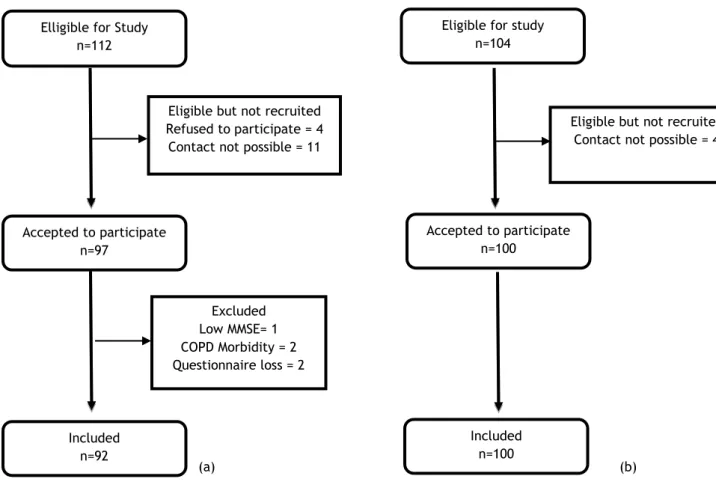
For the present study, out of a list of 112 elderly patients (EA) meeting the criteria for entry into the study, 4 patients refused to participate, and we were not able to contact 11, even upon three attempts. In terms of non-elderly asthmatics (NEA), out of a list of 104, we were
able to contact 100. Thus, 100 non-elderly and 97 elderly individuals with a confirmed clinical
diagnosis of bronchial asthma followed up in Allergology or Pulmonology outpatient clinics of
CHCB, were interviewed. Five elderly asthmatics had to be excluded, one due to low MMSE
score, two due to chronic obstructive pulmonary disease co-morbidity and two due to questionnaire loss, yielding a total number of 92 elderly asthmatics participating in the study.
In addition, 211 volunteers, 107 elderly plus 104 non-elderly, without asthma were sequentially recruited at outpatient clinics of ACES-CB. Of the 211 volunteers, 11 had to be excluded, due to respiratory disease. Two hundred of these were validated for inclusion in the statistical analysis.
(a) (b)
Figure 1 - Flowchart of sample selection and characterization (a) elderly, b) non-elderly). Elligible for Study
n=112
Included n=92
Accepted to participate n=97
Eligible for study n=104
Accepted to participate n=100
Included n=100 Eligible but not recruited
Refused to participate = 4 Contact not possible = 11
Excluded Low MMSE= 1 COPD Morbidity = 2 Questionnaire loss = 2
Eligible but not recruited Contact not possible = 4
7
3.2. Sociodemographic caracterization
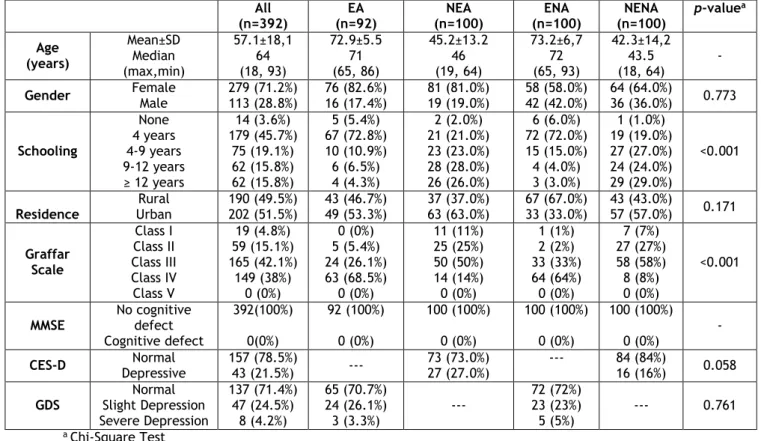
The sociodemographic characteristics of the studied population are shown in Table 1. The groups of elderly volunteers (asthmatic and non-asthmatic) were well matched in terms of age (72.9±5.5 years versus 73.2±6.7, respectively) and this also occurred between the groups of non-elderly volunteers (asthmatic and non-asthmatic) (45.2±13.2 versus 42.3±14.2, respectively). All four groups were also well matched in terms of gender, with a clear predominance of women, and also in terms of place of residence, with a clear predominance of an urban setting. However, in terms of schooling, there were significant differences between the elderly and the elderly groups, with most elderly asthmatics and non-asthmatics having a significantly lower schooling level than that of non-elderly volunteers (p<0.001; Chi-Square test). Furthermore, there were also significant association between the elderly and the non-elderly groups in terms of Graffar social scale, with the elderly more frequently belonging to a lower social class (p<0.001; Chi-Square test)
Since it was an exclusion criteria, none of the patients had cognitive impairment on the MMSE. Most elderly asthmatics (70.7%) had no depressive humor on the GDS and only a minority (3.3%) had a severe impairment. Similarly, most of the non-elderly asthmatics (73.0%) had no depressive humor on the CES-D. The majority of the non-asthmatics had no depressive humor (84% of non-elderly and 72% of elderly).
Table 1 – Demographic features of the different sample groups
All (n=392) EA (n=92) NEA (n=100) ENA (n=100) NENA (n=100) p-valuea Age (years) Mean±SD Median (max,min) 57.1±18,1 64 (18, 93) 72.9±5.5 71 (65, 86) 45.2±13.2 46 (19, 64) 73.2±6,7 72 (65, 93) 42.3±14,2 43.5 (18, 64) - Gender Female Male 279 (71.2%) 113 (28.8%) 76 (82.6%) 16 (17.4%) 81 (81.0%) 19 (19.0%) 58 (58.0%) 42 (42.0%) 64 (64.0%) 36 (36.0%) 0.773
Schooling None 4 years 4-9 years 9-12 years ≥ 12 years 14 (3.6%) 179 (45.7%) 75 (19.1%) 62 (15.8%) 62 (15.8%) 5 (5.4%) 67 (72.8%) 10 (10.9%) 6 (6.5%) 4 (4.3%) 2 (2.0%) 21 (21.0%) 23 (23.0%) 28 (28.0%) 26 (26.0%) 6 (6.0%) 72 (72.0%) 15 (15.0%) 4 (4.0%) 3 (3.0%) 1 (1.0%) 19 (19.0%) 27 (27.0%) 24 (24.0%) 29 (29.0%) <0.001 Residence Rural Urban 190 (49.5%) 202 (51.5%) 43 (46.7%) 49 (53.3%) 37 (37.0%) 63 (63.0%) 67 (67.0%) 33 (33.0%) 43 (43.0%) 57 (57.0%) 0.171 Graffar Scale Class I Class II Class III Class IV Class V 19 (4.8%) 59 (15.1%) 165 (42.1%) 149 (38%) 0 (0%) 0 (0%) 5 (5.4%) 24 (26.1%) 63 (68.5%) 0 (0%) 11 (11%) 25 (25%) 50 (50%) 14 (14%) 0 (0%) 1 (1%) 2 (2%) 33 (33%) 64 (64%) 0 (0%) 7 (7%) 27 (27%) 58 (58%) 8 (8%) 0 (0%) <0.001 MMSE No cognitive defect Cognitive defect 392(100%) 0(0%) 92 (100%) 0 (0%) 100 (100%) 0 (0%) 100 (100%) 0 (0%) 100 (100%) 0 (0%) - CES-D Depressive Normal 157 (78.5%) 43 (21.5%) --- 73 (73.0%) 27 (27.0%) --- 84 (84%) 16 (16%) 0.058
GDS Normal Slight Depression Severe Depression 137 (71.4%) 47 (24.5%) 8 (4.2%) 65 (70.7%) 24 (26.1%) 3 (3.3%) --- 72 (72%) 23 (23%) 5 (5%) --- 0.761 a Chi-Square Test
8
3.3. Clinical caracterization
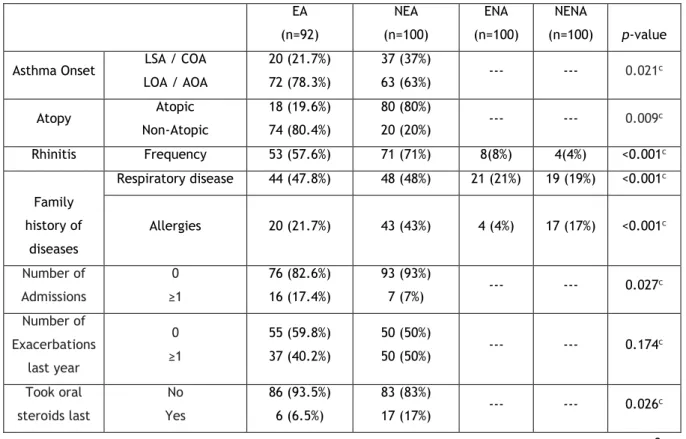
Clinical characteristics of the patient sample are shown in Table 2. The majority had adult-onset / late-adult-onset (AOA/LOA) asthma (78.3% of elderly and 63% of non-elderly). Elderly asthmatics (EA) were significantly less frequently atopic than non-elderly asthmatics (NEA)
(19,6% versus 80%; p=0.009). Most patients had concurrent rhinitis (71% of non-elderly and
57.6% of elderly). More than two thirds (72.8% of elderly and 67% of non-elderly) had their asthma controlled in the past month, as assessed by ACT. Most patients were on topical steroids (88%) and had not had an exacerbation in the previous year (54.7%). Only 12% had taken oral steroids in the previous year and were admitted to a ward because of an asthma crisis in their previous life span. Almost half (48%) of elderly and non-elderly did not have
their inhalational technique checked regularly and, in fact, about one third of both Elderly
and Non-Elderly Asthmatics had an incorrect inhalational technique. Almost half of the asthmatics had a family history of respiratory disease and 43% of non-elderly and 21.7% of elderly had a family history of allergies.
As expected, NEA had a significantly higher lung function, both in terms of mean FEV1 (L/min) and FVC (L/min) than the elderly asthmatics (p <0.0001), although not in terms of percent expected values. However, EA had a significantly lower FEV1/FVC ratio than non-elderly asthmatics, suggesting more relevant bronchial obstruction. In fact, significantly more EA had moderate or severe degrees of bronchial obstruction than NEA (p <0.0001). Finally, a significantly lower proportion of EA had a positive response to bronchodilation than NEA (p <0.0001).
Table 2 – Clinical and Functional Characterization of the different sample groups EA (n=92) NEA (n=100) ENA (n=100) NENA (n=100) p-value
Asthma Onset LSA / COA LOA / AOA 20 (21.7%) 72 (78.3%) 37 (37%) 63 (63%) --- --- 0.021 c Atopy Atopic Non-Atopic 18 (19.6%) 74 (80.4%) 80 (80%) 20 (20%) --- --- 0.009 c Rhinitis Frequency 53 (57.6%) 71 (71%) 8(8%) 4(4%) <0.001c Family history of diseases Respiratory disease 44 (47.8%) 48 (48%) 21 (21%) 19 (19%) <0.001c Allergies 20 (21.7%) 43 (43%) 4 (4%) 17 (17%) <0.001c Number of Admissions 0 ≥1 76 (82.6%) 16 (17.4%) 93 (93%) 7 (7%) --- --- 0.027 c Number of Exacerbations last year 0 ≥1 55 (59.8%) 37 (40.2%) 50 (50%) 50 (50%) --- --- 0.174 c Took oral steroids last No Yes 86 (93.5%) 6 (6.5%) 83 (83%) 17 (17%) --- --- 0.026 c
9 year Inhalation Technique Checked No Yes 48 (48%) 52 (52%) 48 (52.2%) 44 (47.8%) 0,563 c Took inhaled steroids continuously No Yes 8 (8.7%) 84 (91.3%) 13 (13%) 87 (87%) --- --- 0.340 c ACT Uncontrolled Controlled 25 (27.2%) 67 (72.8%) 33 (33%) 67 (67%) --- --- 0.380 c Inhalational technique Incorrect Acceptable or Correct 28 (30.4%) 64 (69.6%) 35 (35%) 65 (65%) --- --- 0.501 c Lung function FEV1 (L) Mean + SD Median Range 1.72 + 0.53 1.68 0.87 - 3.19 2.60 + 0.64 2.55 1.74 - 4.31 --- --- <0.0001a FEV1 (%) Mean + SD Median Range 101.9 + 25.7 104.6 40.3 – 141.5 104.2 + 16.2 103.1 70.0 – 147.2 --- --- 0.833 FVC (L) Mean + SD Median Range 2.42 + 0.64 2.38 1.28 - 4.24 3.36 + 0.80 3.25 1.74 - 5.87 --- --- <0.0001 a FVC (%) Mean + SD Median Range 114.9 + 21.9 117.6 74.0 – 150.2 113.9 + 16.0 112.3 77.5 – 147.2 --- --- 0.772 FEV1/FVC (%) Mean + SD Median Range 70.9 + 10.4 72.9 44.9 – 87.5 77.7 + 8.1 78.1 58.8 – 94.9 <0.0001a Patients with airway
obstruction (n; %) Mild Moderate Severe 67 (72.8%) 17 (18.5%) 8 (8.7%) 100 (100%) 0 0 --- --- <0.0001b Patients (n; %) with reversibility (positive response to bronchodilation) 22 (24.3%) 71 (71%) --- --- <0.0001c aMann-Whitney U test; bFisher's exact test;cChi-Square test
10
3.4. Differences in self-knowledge about asthma between
populations
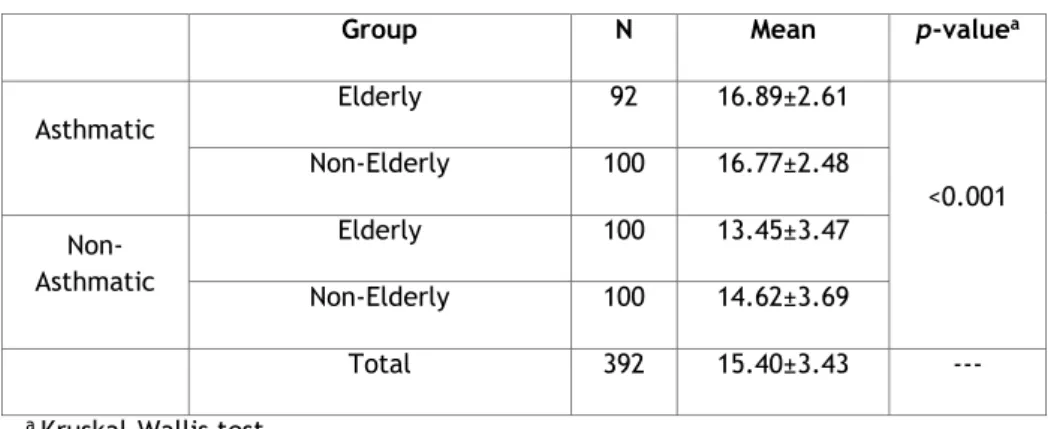
The difference in self-knowledge about asthma between the asthmatic group and the non-asthmatic group was significant (p-value<0.001), with non-asthmatic patients (either Elderly or Non-Elderly) significantly demonstrating a better knowledge level than non-asthmatic volunteers (Tables 3 and 4).
Table 3. Score obtained in the Bronchial Asthma Self-Knowledge Questionnaire
Group N Mean p-valuea
Asthmatic Elderly 92 16.89±2.61 <0.001 Non-Elderly 100 16.77±2.48 Non-Asthmatic Elderly 100 13.45±3.47 Non-Elderly 100 14.62±3.69 Total 392 15.40±3.43 --- a Kruskal-Wallis test
Furthermore, although Elderly Asthmatic patients obtained self-knowledge scores that were similar to those achieved by Non-Elderly Asthmatics, the former had significantly higher scores than Elderly Non-Asthmatic volunteers (p<0.001) and Non-Elderly Non-Asthmatics (p<0.001)(Table 4).
Table 4. Pairwise Comparisons of Groups
aDunn-Bonferroni test
Group p-valuea
Elderly Asthmatic vs Non-Elderly Asthmatic 1 Elderly Asthmatic vs Elderly Non-Asthmatic <0.001
Elderly Asthmatic vs Non-Elderly Non-Asthmatic <0.001
Elderly Non-Asthmatic vs Non-Elderly Asthmatic <0.001
11
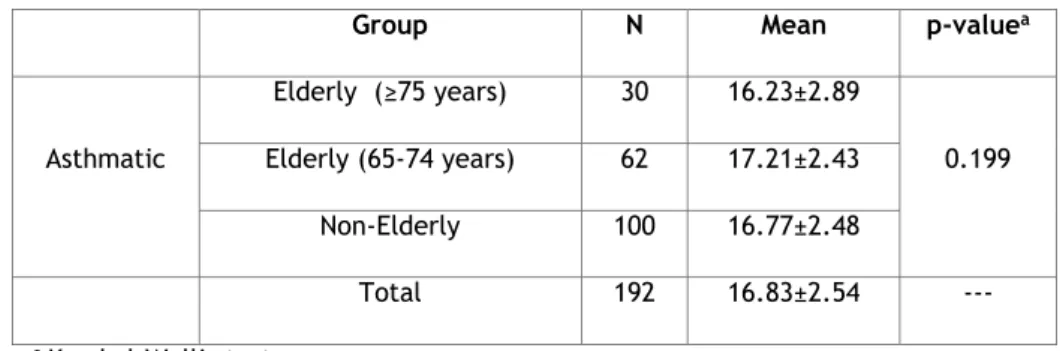
We next subdivided the elderly asthmatic population into “more elderly” (≥75 years) and “less elderly” (65-74 years), because this difference in age could influence the asthma self-knowledge level, and repeated the analysis. The “more elderly” did not have significantly worse self-knowledge than the less elderly or the non-elderly (Table 5).
Table 5. Score obtained in the Bronchial Asthma Self-Knowledge Questionnaire
Group N Mean p-valuea
Asthmatic Elderly (≥75 years) 30 16.23±2.89 0.199 Elderly (65-74 years) 62 17.21±2.43 Non-Elderly 100 16.77±2.48 Total 192 16.83±2.54 --- a Kruskal-Wallis test
3.5. Differences in self-knowledge about specific issues of
asthma between populations.
We next subdivided the Bronchial Asthma Self-Knowledge Questionnaire into four different
topics: Pathophysiology (questions (Q) 1, Q12, and Q13); Medication (Q3, Q4 and Q6); Asthma
Control (Q15, Q19, and Q20) and Clinical Features (Q9, Q10, and Q11). Significant differences
in scores for the four topics were detected across the four groups of volunteers (Table 6).
Table 6. Score obtained in 4 subtopics of the Bronchial Asthma Self-Knowledge Questionnaire
EA (Mean±SD) NEA (Mean±SD) ENA (Mean±SD) NENA (Mean±SD) p-valuea Pathophysiology 2.10±1.08 1.89±0.95 1.62±1.03 1.56±1.03 0.001 Medication 2.64±0.57 2.46±0.69 1.65±0.86 1.93±0.89 <0.001 Asthma Control 2.80±0.20 2.92±0.31 2.43±0.67 2.58±0.74 <0.001 Clinical Features 2.24±0.65 2.27±0.82 1.93±0.88 1.91±0.94 0.003 a Kruskal-Wallis test
12
Elderly Asthmatics had similar scores to those obtained by Non-Elderly Asthmatics for all four topics of the questionnaire. However, Elderly Asthmatics scored significantly higher than Asthmatic volunteers, either Elderly or Elderly, for all topics (Tables 6 and 7). Non-Elderly Asthmatics also had significantly higher scores than Non-Elderly Non-Asthmatics for Medication topic and than Non-Elderly Non-Asthmatics for Medication and Asthma Control topics.
Table 7. Pairwise Comparisons of Groups for Topics of the Questionnaire
a Dunn-Bonferroni test
We next subdivided again the elderly asthmatic population into two sub-groups: more elderly (≥75 years) and less elderly (65-74 years), because this age difference might influence the asthma self-knowledge level in the different topics, and repeated the analysis (Table 8).
Table 8. Score obtained in 4 subtopics of the Bronchial Asthma Self-Knowledge Questionnaire
Elderly Asthmatic (≥75 years) (Mean±SD) Elderly Asthmatic (65-74 years) (Mean±SD) Non-Elderly Asthmatic (Mean±SD) p-valuea Pathophysiology 1.83±1.15 2.23±1.03 1.89±0.95 0.043 Medication 2.63±0.61 2.65±0.55 2.46±0.69 0.170 Asthma Control 2.77±0.50 2.82±0.43 2.92±0.31 0.076 Clinical Features 2.20±0.55 2.26±0.70 1.93±0.88 0.585 a Kruskal-Wallis test Groups p-valuea Pathophysiology p-valuea Medication p-valuea Asthma Control p-valuea Clinical Features Elderly Asthmatics vs
Non-Elderly Asthmatics 0.793 0.673 0.661 1.000
Elderly Asthmatics vs Elderly Non-Asthmatics
0.006
<0.001 0.001 0.024
Elderly Asthmatics vs Non-Elderly Non-Asthmatics 0.001 <0.001 <0.001 0.019 Elderly Non-Asthmatics vs Non-Elderly Non-Asthmatics 1.000 0.242 0.054 1.000 Elderly Non-Asthmatics vs Non-Elderly Asthmatics 0.407 <0.001 0.147 0.162 Non-Elderly Non-Asthmatics vs Non-Elderly Asthmatics 0.157 <0.001 <0.001 0.138
13
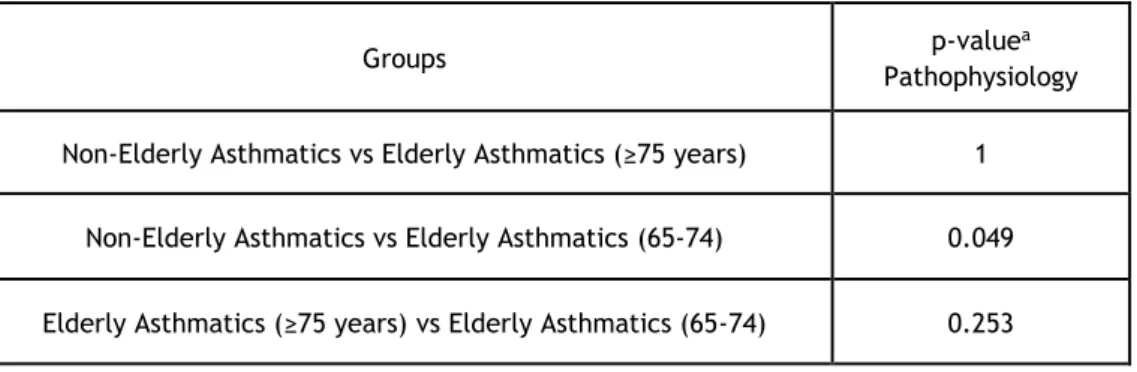
The more elderly did not have significant lower self-knowledge about asthma than the less elderly and the non-elderly. However, the less elderly significantly demonstrated a better knowledge level in the Pathophysiology subtopic than the non-elderly (Tables 8 and 9).
Table 9. Pairwise Comparisons of Groups for Pathophysiology Topic of the Questionnaire
a Dunn-Bonferroni test
3.6. Factors that might influence the self-knowledge score
We next analyzed which factors might influence self-knowledge scores in elderly and non-elderly asthmatics and non-asthmatics and also whether these were different. For that purpose, we used ANOVA to compare the self-knowledge score between the abovementioned groups and to compare the self-knowledge score with the factors described on the table. Then, we analyzed the interaction of the different factors with the group in the self-knowledge score (Table 10).
Table 10. Analysis of variables that may influence Asthma Self-Knowledge in Elderly and Non-Elderly Asthmatics and in Elderly and Non-Elderly Non-Asthmatics
EA
(Mean±SD) (Mean±SD) NEA (Mean±SD) ENA (Mean±SD) NENA p-value
Qualifications 0-4 16.86±264 16.52±1.95 13.44±3.52 14.30±5.29 <0.001a 0.548b 0.989c >4 17.00±2.58 16.84±2.62 13.50±3.39 14.70±3.21 Graffar I,II, III 17.00±2.49 16.87±2.55 13.31±3.10 14.63±3.49 <0.001a 0.493b 0.836c IV,V 16.84±2.68 16.14±1.96 13.53±3.69 14.13±5.84 Family History No 16.83±2.75 16.64±2.63 13.43±3.41 14.95±3.36 <0.001 a 0.383b 0.192c Groups p-valuea Pathophysiology Non-Elderly Asthmatics vs Elderly Asthmatics (≥75 years) 1
Non-Elderly Asthmatics vs Elderly Asthmatics (65-74) 0.049 Elderly Asthmatics (≥75 years) vs Elderly Asthmatics (65-74) 0.253
14 Yes 16.96±2.48 16.92±2.32 13.52±3.80 13.21±4.71 Number of Admissions 0 16.96±2.71 16.82±2.51 - - 0.645a 0.141b 0.056c ≥1 16.56±2.16 16.14±1.95 - - Number of Exacerbations last year 0 17.00±2.45 16.36±2.78 - - 0.798a 0.459b 0.143c ≥1 16.73±2.86 17.18±2.09 - - Took oral steroids Not 16.94±2.67 16.69±2.56 - - 0.393a 0.628b 0.211c Yes 15.83±1.47 17.18±2.04 - - Inhalation Technique Checked Yes 16.80±2.72 17.10±2.06 - - 0.722a 0.501b 0.242c Not 16.98±2.53 16.42±2.84 - - Took inhaled steroids continuously Not 16.86±2.10 16.39±2.63 - - 0.647a 0.704b 0.726c Yes 16.89±2.67 16.83±2.46 - - CES-D Nor mal - 16.84±2.59 - 14.79±3.71 <0.001a 0.252b 0.477c Depr esse d - 16.59±2.17 - 13.75±3.55 GDS Nor mal 17.59±2.14 - 13.58±3.60 - <0.001a 0.004b 0.051c Depr esse d 15.22±2.91 - 13.11±3.17 -
a ANOVA Group (Elderly and Non-Elderly Asthmatics and Elderly and Non-Elderly Non-Asthmatics) effect on Asthma Self-Knowledge Score; b ANOVA Qualifications, Graffar, Family History, Number of Admissions, Number of Exacerbations, Took oral steroids, Inhalation Technique Revised, Took inhaled steroids continuously, CES-D and GDS effects on Asthma Self-Knowledge Score; c Interaction between the effects a and b on Self-Knowledge Score.
No factor significantly influenced the level of self-knowledge in either elderly or non-elderly asthmatics and non-asthmatics, except for the presence of depression in the elderly (GDS)
15
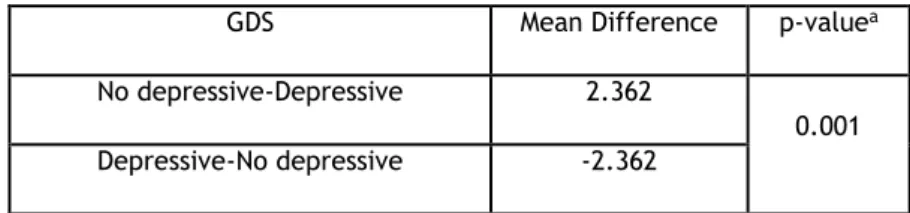
In fact, the elderly asthmatic patients with no depressive mood had a significantly higher level of self-knowledge than elderly asthmatic people with depressed mood, according to the multiple comparisons with t-Student test with Sidak correction (p-value = 0.001) (Table 11).
Table 11. Analysis of Emotional influence on Asthma Self-Knowledge in Elderly Asthmatics
GDS Mean Difference p-valuea
No depressive-Depressive 2.362
0.001 Depressive-No depressive -2.362
a t-Student test with Sidak correction
3.7. Factors potentially influenced by the self-knowledge score
We next analyzed whether there were asthma-related parameters that might be influencedby the level of self-knowledge about asthma in elderly and non-elderly patients. No single
factor was significantly influenced by the level of self-knowledge, with the exception of certain parameters of quality of life assessed by AQLQ Questionnaire (Table 12). Correlations between different AQLQ scores and self-knowledge score were all significant except for the symptoms score. However, the correlation between AQLQ total and activities score was very weakly negative, and the correlation between AQLQ emotional and environmental exposure score was weakly negative. In other words, there was a weak and inverse relationship between the Self Knowledge and AQLQ score that was not strong enough to predict that in practice worse asthma self-knowledge about asthma in asthmatics will lead to better quality of life.
Table 12. Analysis of asthma-related variables that may be influenced by Asthma Self-Knowledge in Elderly and Non-Elderly Asthmatics
Self-Knowledge Score by Quartiles
0-14 15-16 17-18 19-20 p-valuea Inhalational Technique Incorrect 36.1% 31.4% 27% 37.9% 0.60 Correct/Acceptable 63.9% 68.6% 73% 62.1% ACT Controlled 72.2% 77.1% 66.7% 67.2% 0.69 Uncontrolled 27.8% 22.9% 33.3% 32.8%
Correlation Self-Knowledge Scoreb p-valuec
Total -0.184 0.011
16 AQLQ Symptoms -0.082 0.26 Emotional -0.223 0.002 Environmental Exposure -0.303 <0.001
a Chi-square test with Self-Knowledge Score by Quartiles; b Spearman’s rho correlation with Self-Knowledge Score; c Significance for Spearman’s rho correlation
17
4. Discussion
This study assessed, for the first time in Portugal, various aspects regarding the knowledge elderly asthmatic patients have about the disease and compared such knowledge with that of younger asthmatics and with elderly non-asthmatic volunteers. In this regard, this is also one of the few studies worldwide to have done such an analysis, as far as we know.
In terms of sociodemographic characterization, all four groups were well matched in terms of gender, with a clear predominance of women, and also in terms of place of residence, with a clear predominance of an urban setting. However, in terms of schooling, there were significant differences between the elderly and the non-elderly groups, with most elderly asthmatics and asthmatics having a significantly lower schooling level than that of non-elderly volunteers. Furthermore, there were also significant differences between the non-elderly and the non-elderly groups in terms of Graffar social scale, with the elderly more frequently belonging to a lower social class. Most elderly asthmatics had no depressive humor on the GDS and only a minority had a severe impairment.
The difference in self-knowledge about asthma between the asthmatic group and the non-asthmatic group was significant, with non-asthmatic patients (either Elderly or Non-Elderly) significantly demonstrating better knowledge level than non-asthmatic volunteers. Furthermore, although Elderly Asthmatic patients obtained similar self-knowledge scores to those achieved by Non-Elderly Asthmatics, the former had significantly higher scores than Elderly Non-Asthmatic volunteers and Non-Elderly Non-Asthmatics, which suggests that having the disease is associated with having more knowledge about it. Furthermore, in a more detailed analysis in terms of division of age groups, the more elderly (≥75 years) did not have significantly worse self-knowledge about asthma than the less elderly (65-74 years) and the non-elderly, which suggests that older age, when not associated with cognitive deficits, is not necessarily a negative factor influencing self-knowledge of the disease. In this regard, our findings are different from those a Turkish study which showed that knowledge of asthma was
very low in elderly asthmatic patients20. Since, in both studies, patients were regularly seen
at outpatient specialty clinics, and the sociodemographic and clinical characterization of the patients were similar (except for the fact that the Turkish study excluded patients who had had an acute asthma attack), reasons for such a discrepancy may include the different difficulty level of the Asthma Knowledge Questionnaire used, the frequency of explanation of the clinical situation to the patients, or the different themes addressed (skill with the inhaler, spacer and holding chamber, other).
We also showed that Elderly Asthmatics had similar scores to those obtained by Non-Elderly
Asthmatics in all four topics of the questionnaire: Pathophysiology; Medication; Asthma
Non-18
Asthmatic volunteers, either Elderly or Non-Elderly, for all topics. Non-Elderly Asthmatics also had significantly higher scores than Elderly Non-Asthmatics for Medication topic and than
Non-Elderly Non-Asthmatics for Medication and Asthma Control topics. These observations
again suggest that having the disease is associated with a higher level of knowledge about it than in volunteers without the disease, at least when patients are regularly seen at outpatient clinics. Furthermore, when we broke up the elderly group into the more elderly and the less elderly, we observed that the more elderly did not have a significantly lower self-knowledge about asthma than the less elderly and even than the non-elderly volunteers. Curiously, the less elderly even showed a significantly better knowledge level in the Pathophysiology subtopic than the non-elderly. Despite lower levels of health literacy being
reported as more prevalent among older adults21, the more elderly of our study may have had
similar asthma self-knowledge than the less elderly in all subtopics because they were being regularly reminded, at each appointment, about the main features of the disease (bronchial obstruction and inflammation) as well as the need to follow medication instructions, in order to address these issues. In this regard, some studies have shown that regular patient education, even in elderly patients, may have a clear impact on knowledge about disease,
with benefits being obtained in disease outcomes22.
When we analyzed various factors that might affect the level of self-knowledge about asthma, surprisingly we did not find any factor that significantly influenced such level of self-knowledge in either elderly or non-elderly asthmatics or non-asthmatics, except for the presence of depression in the elderly (GDS). In this regard, the elderly asthmatic patients with no depressive mood had a significantly higher level of self-knowledge than elderly asthmatic people with depressed mood, which suggests that depression affects the disposition to learn about the disease or even to answer the different questions of the questionnaire.
The fact that most of the factors did not influence the level of self-knowledge score is
concordant with another study about asthma self-management knowledge in which most of
the factors did not have a significant association with self-management knowledge, namely
age, patient education level, inhaler technique score, ACT score and family history of atopy20.
Nevertheless, our findings regarding the influence of depression upon self-knowledge about asthma are interesting and are in line with other studies which have found a significant
relationship between depression and poor adherence to asthma therapy23 and poor asthma
control24. Thus, it is important to support the emotional status of the patient with asthma
and depression in order to improve the quality of life and facilitate the control of asthma, which is influenced by both medication adherence and self- knowledge.
When we next analyzed whether some asthma-related features or patient attitudes were
affected by the level of self-knowledge about the disease, we did not detect any single factor
that was significantly influenced by the level of self-knowledge either in elderly and non-elderly, with the exception of certain parameters of quality of life assessed by AQLQ Questionnaire. In fact, in this regard, there was a weak and inverse correlation between the
19 level of Self Knowledge about asthma and the AQLQ score. However, such an association was not strong enough to predict that worse self-knowledge about asthma in asthmatics will lead to better quality of life or that worse quality of life will lead to better self-knowledge. We can say that this result does not allow us to refute the hypothesis that better asthma self-knowledge may improve quality of life. First, the correlation is weak, and secondly, although our patients had good cognitive scores on the MMSE, gaps of memory are frequent in elderly people and may also cause irregular responses to AQLQ. In addition, there may be heterogeneity in the way people qualify their quality of life. In fact, studies have shown that there is a particularly strong effect of psychological characteristics on the quality of life of
patients with bronchial asthma25. However, there may be an inverse effect of the worse
quality of life on self-knowledge score simply because patients who have a greater impact of the disease upon their lives may tend to seek more information about asthma. Nevertheless,
our results are in contrast with those from other studies showing that higher levels of asthma
efficacy (the individual’s confidence in their capacity to carry out the necessary self-management behaviors required to control symptoms and prevent exacerbations of the
disease) are associated with better quality of life26. Maybe it is necessary to define the level
of self-knowledge in a more functional way that could represent the “self-efficacy” of the asthmatic patient.
In any case, to educate the patient, in an effective way, is a health instrument that should be
integrated into the management of asthma.27 By giving the necessary tools for the asthmatic
patients to get to better know their disease, a proper discussion about their asthma care can be initiated with their clinician and the patients may more easily participate in decisions
regarding the management of their disease.28
Curiously, the level of self-knowledge about asthma did not influence asthma control in
either elderly or non-elderly patients, which is concordant with a study about the association
between asthma self-management knowledge and asthma control in the elderly20, and
contrasts with another study in elderly asthmatics subjected to a regular programme of
asthma education22 as well as with other studies in younger, non-elderly asthmatics, which
showed that there was a significantly positive correlation between knowledge patients had
obtained from an allergist and asthma control9. The concordance of our study with other
studies about asthma self-knowledge in the elderly20, may reflect the fact that asthma
control measure tools and knowledge questionnaires have not been specifically validated for elderly asthmatics. The discordance between our study and another carried out in elderly asthmatic patients, which showed that patient education improved asthma control and quality of life may be due to the fact that it involved a clearly defined and regular education
interventional programme22 whereas our patients only received information regarding asthma
whenever they came to a clinical appointment, which varied in time. Nevertheless, there is
20
and non-elderly asthmatics and it is, therefore, very important to evaluate and improve the education of elderly asthmatic.
In addition, self-knowledge about asthma did not influence the correct or incorrect use of the inhalers in our patients. This could be due to the diversity of inhalers with different levels of difficulty and to a lack of correlation between the questions of the self-knowledge questionnaire and the ability needed to correctly use an inhaler, since our study was not specifically designed to assess inhaler technique. Similar results were observed in a study conducted in elderly asthmatics that did not find an association between asthma knowledge and inhaler technique score, and actually reported that older patients showed improper use
of the inhaler.20 Nevertheless, it is fundamental that clear and adapted instructions regarding
inhaler technique are regularly given, and also that the actual patient performance of the technique is checked, since such an approach has been shown to improve the technique, with
benefits in asthma outcomes29.
Our study had several limitations. The main limitation was volunteer recruitment and even though we were able to recruit a relatively high number of elderly and non-elderly asthmatics, higher than that seen in some other studies on Asthma Self-Knowledge in elderly and non-elderly asthmatic patients, it is possible that the influence of most factors on Asthma Self-Knowledge was not detected due to some lack of study power.
Another potential limitation was that this a study based on self-reporting aspects, which, particularly in elderly patients, may be subject to memory bias or awareness-related bias. Nevertheless this problem equally affects all studies that address this issues and, in that regard, our study is comparable to other studies.
Another limitation of the study was that the questionnaires that were used to show the influence of self-knowledge on asthma control (ACT) and quality of life (AQLQ) have not been specifically validated for an elderly population. Thus, it is possible that some of the questions in these questionnaires are not adapted for comprehension and normal limitations of older elderly patients, which may have biased some of the results obtained.
Another important limitation was the duration of the interview when questionnaires were applied, especially with the elderly asthmatics. Although an effort was made towards conducting the interview at each patient’s own pace, tiredness could be a factor of potential biases. In order to avoid this type of problems, interview were conducted at patients’ own pace, allowing pauses whenever necessary.
In summary, the present study is the first to characterize elderly and non-elderly asthmatic patients in terms of asthma self-knowledge in Portugal, and, internationally, is one of the few to address this issue in the elderly. We have confirmed that, at least in elderly asthmatic patients, who are preferentially female, non-atopic, have LOA/AOA and are regularly seen at a specialty outpatient clinic, can demonstrate similar results in self-knowledge score to those
21
in non-elderly asthmatics. We also showed that depression is a significant negative factor influencing self-knowledge score in elderly asthmatic.
Future studies with a higher number of patients and improved study strategy will allow clarification of some aspects namely those related to factors that influence asthma self-knowledge because, in order to develop effective and suitable educational programs for
22
5. Future Prospects
In order to overcome limitations of the present study we propose some future approaches: In order to overcome difficulties in selection, recruitment and accessibility to the hospital of asthmatic patients, it would be very important to develop a computer platform working in a network at various participating healthcare units. This would allow health professionals participating in the study to directly and easily fill in study protocols without the patients having to attend a single unit for collection of data.
Although we had a relatively large patient sample, it will be always important, and useful for the power of the study, to increase the sample size.
It will also be important to do some adjustments in terms of applied questionnaires and length of the interview, particularly because their parameterization and application have not yet been specifically validated for elderly patients and because of the potential tiredness implicated in the survey response.
It will also be important to further study the emotional state of asthmatics in future investigations and in the clinical practice, because of the influence encountered here on asthma knowledge.
It will be quite relevant to apply the questionnaire to clearly defined subtypes of elderly asthmatics, namely in terms of disease severity and even different clinical phenotypes. Finally, this project also aims to alert to the importance of patient education in order to promote better outcomes in control and quality of life. Maybe the next questionnaire used in future investigations could have greater specificity in themes that influence more directly asthma control, namely the ability to cope with the disease. Furthermore, psychological aspects should also be studied.
23
6. References
1. Global Iniciative for Asthma (GINA) 2016 Report Update. http:// ginasthma.org/2016
gina-report-global-strategy-for-asthma-management-and-prevention/ (Accessed
online in April 2016).
2. Plaza V, Serra-Batlles J, Ferrer M, Morejón E. Quality of life and economic features in elderly asthmatics. Respiration. 2000; 67: 65–70.
3. Quadrelli SA, Roncoroni A. Features of asthma in the elderly. J Asthma. 2001; 38: 377–89.
4. Australian Centre for Asthma Monitoring 2008. Asthma in Australia 2008. AIHW. 2008; 1-14. Available from: www.aihw.gov.au/publication-detail/?id=6442468169
5. Jones SC, Iverson D, Burns P, Evers U, Caputi P, Morgan S. Asthma and ageing: An end user’s perspective - the perception and problems with the management of asthma in the elderly. Clin Exp Allergy. 2011;41(4):471–81.
6. Nielsen-Bohlman L, Panzer AM, Hamlin B, Kindig DA. Executive Summary. Health Literacy: A Prescription to End Confusion [Internet]. 2004; 1–25. Available from: http://www.nap.edu/catalog.php?record_id=10883#toc.
7. Paasche-Orlow MK, Parker RM, Gazmararian JA, Nielsen-Bohlman LT, Rudd RR. The prevalence of limited health literacy. J Gen Intern Med. 2005; 20: 175–84.
8. Wang K-Y, Chu N-F, Lin S-H, Chiang I-C, Perng W-C, Lai H-R. Examining the causal model linking health literacy to health outcomes of asthma patients. J Clin Nurs. 2014; 23: 2031–42.
9. Mancuso CA, Rincon M. Impact of health literacy on longitudinal asthma outcomes. J Gen Intern Med 2006; 21: 813-7.
10. Federman AD, Wolf MS, Sofianou A, Martynenko M, Connor RO, Halm EA, et al. Self-management behaviors in older adults with asthma: associations with health literacy. J Am Geriatr Soc 2014; 62: 872–9.
11. Evers U, Jones SC, Iverson D, Caputi P. The asthma knowledge and perceptions of older Australian adults: Implications for social marketing campaigns. Patient Educ Couns. 2013; 91: 392–9.
12. Morais-Almeida M, Pité H, Pereira AM, Nunes C, Fonseca J. Asma e rinite no idoso - Estudo epidemiológico nacional. Rev Port Imunoalergologia. 2014; 22: 33–42.
13. Instituto Nacional de Estatística. O Envelhecimento em Portugal : Situação demográfica e socio-económica recente das pessoas idosas. Rev Estud Demográficos 2002; 1: 185–208. Available from: papers3://publication/uuid/1A7196EB-B35B-4744-
B687-A9550F7B254C\nhttp://censos.ine.pt/xportal/xmain?xpid=CENSOS&xpgid=ine_censos_ estudo_det&menuBOUI=13707294&contexto=es&ESTUDOSest_boui=106370&ESTUDOS modo=2&selTab=tab1.
24
14. Guerreiro M, Silva A, Botelho M. Trasnlation and adaptation of the MMSE to the Portuguese population. Rev Port Neurol. 1994; 1: 9-10.
15. Gonçalves B, Fagulha T. The Portuguese version of the Center for Epidemiologic Studies Depression Scale. Eur J Psychol Assessment. 2004; 4: 339-348.
16. Paradela EM, Lourenço RA, Veras RP. Validation of geriatric depression scale in a general outpatient clinic. Rev Saude Publica. 2005; 39: 918-23.
17. Miranda C, Busacker A, Balzar S, Trudeau J, Wenzel SE. Distinguishing severe asthma phenotypes: role of age at onset and eosinophilic inflammation. J Allergy Clin Immunol. 2004; 113: 101-108.
18. Amelink M, de Nijs SB, de Groot JC, van Tilburg PMB, van Spiegel PI, Krouwels FH, et al. Three pheonotypes of adult-onset asthma. Allergy 2013; 68: 674-680.
19. Miller MR HJ, Brusasco V, Burgos F, Casaburi R, Coates A, Crapo R, et al. Clinical and functional features of Bronchial Asthma in elderly patients 21 OF, Pellegrino R, Viegi G, Wanger J. ATS/ERS Task Force. Standardisation of spirometry. Eur Respir J. 2005; 26: 319-38.
20. Ozturk AB, Ozyigit Pur L, Kostek O, Keskin H. Association between asthma self-management knowledge and asthma control in the elderly. Ann Allergy Asthma Immunol. 2015; 114: 480–4.
21. Oates DJ, Paasche-Orlow MK. Health literacy: Communication strategies to improve patient comprehension of cardiovascular health. Circulation. 2009; 119: 1049-51. 22. Baptist AP, Ross JA, Yang Y, Song PXK, Clark NM. A randomized controlled trial of a
self regulation intervention for older adults with asthma. J Am Geriatr Soc 2013; 61: 747-753.
23. Bozek A, Jarzab J. Adherence to asthma therapy in elderly patients. J Asthma 2010; 47: 165-5.
24. Smith A, Krishnan JA, Bilderback A, Riekert KA, Rand CS, Bartlett SJ. Depressive symptoms and adherence to asthma therapy after hospital discharge. Chest. 2006; 130: 1034–8.
25. Coban H, Aydemir Y. The relationship between allergy and asthma control, quality of life, and emotional status in patients with asthma: a cross-sectional study. Allergy Asthma Clin Immunol. 2014; 10: 67. DOI: 10.1186/s13223-014-0067.
26. Lavoie KL, Bouchard A, Joseph M, Campbell TS, Favreau H, Bacon SL. Association of asthma self-efficacy to asthma control and quality of life. Ann Behav Med. 2008; 36: 100–6.
27. Anderson CJ, Bardana EJ Jr. Asthma in the elderly: the importance of patient education. Compr Ther. 1996; 22: 375–83.
28. Wise RA, Enright P, Falsey AA, Mathur SK. NIH Public Access. J Allergy Clin Immunol. 2012; 128: 1-40.
29. Goeman D, Jenkins C, Crane M, Paul E, Douglass J. Educational intervention for older people with asthma: a randomized controlled trial. Patient Educ Couns 2013; 13:
586-25
26
7. Appendix
Appendix I – STROBE Statement
STROBE Statement—Checklist of items that should be included in reports of cross-sectional
studies
Item No
Recommendation Page Nº
Title and abstract 1 (a) Indicate the study’s design with a commonly used term in
the title or the abstract
iv
(b) Provide in the abstract an informative and balanced summary of what was done and what was found
iv
Introduction
Background/rationale 2 Explain the scientific background and rationale for the
investigation being reported
1
Objectives 3 State specific objectives, including any prespecified
hypotheses
2
Methods
Study design 4 Present key elements of study design early in the paper 3
Setting 5 Describe the setting, locations, and relevant dates, including
periods of recruitment, exposure, follow-up, and data collection
3
Participants 6 (a) Give the eligibility criteria, and the sources and methods
of selection of participants
3
Variables 7 Clearly define all outcomes, exposures, predictors, potential
confounders, and effect modifiers. Give diagnostic criteria, if applicable
3-4
Data sources/ measurement
8* For each variable of interest, give sources of data and details
of methods of assessment (measurement). Describe
comparability of assessment methods if there is more than one group
3-4
Bias 9 Describe any efforts to address potential sources of bias 3
Study size 10 Explain how the study size was arrived at 3
Quantitative variables
11 Explain how quantitative variables were handled in the
analyses. If applicable, describe which groupings were chosen and why
NA
Statistical methods 12 (a) Describe all statistical methods, including those used to
control for confounding
5
(b) Describe any methods used to examine subgroups and interactions
5
(c) Explain how missing data were addressed 5
(d) If applicable, describe analytical methods taking account of sampling strategy
NA
(e) Describe any sensitivity analyses NA