EXOPOLYSACCHARIDES PRODUCED BY THE SYMBIOTIC
NITROGEN-FIXING BACTERIA OF LEGUMINOSAE
(1)Cleide Aparecida Bomfeti(2), Ligiane Aparecida Florentino(3), Ana Paula Guimarães(4), Patrícia Gomes Cardoso(5), Mário César
Guerreiro(6) & Fatima Maria de Souza Moreira(7)
SUMMARY
The process of biological nitrogen fixation (BNF), performed by symbiotic nitrogen fixing bacteria with legume species, commonly known as α and β rhizobia, provides high sustainability for the ecosystems. Its management as a biotechnology is well succeeded for improving crop yields. A remarkable example of this success is the inoculation of Brazilian soybeans with Bradyrhizobium strains. Rhizobia produce a wide diversity of chemical structures of exopolysaccharides (EPS). Although the role of EPS is relatively well studied in the process of BNF, their economic and environmental potential is not yet explored. These EPS are mostly species-specific heteropolysaccharides, which can vary according to the composition of sugars, their linkages in a single subunit, the repeating unit size and the degree of polymerization. Studies have showed that the EPS produced by rhizobia play an important role in the invasion process, infection threads formation, bacteroid and nodule development and plant defense response. These EPS also confer protection to these bacteria when exposed to environmental stresses. In general, strains of rhizobia that produce greater amounts of EPS are more tolerant to adverse conditions when compared with strains that produce less. Moreover, it is known that the EPS produced by microorganisms are widely used in various industrial activities. These compounds, also called biopolymers, provide a valid alternative for the commonly used in food industry through the development of products with identical properties or with better rheological characteristics, which can be used for new applications. The microbial EPS are also able to increase the adhesion of soil particles favoring the mechanical stability of aggregates, increasing
(1) Part of the Doctoral Thesis of the first author approved by the Agricultural Microbiology Programme of the Federal University
of Lavras – UFLA. Received for publication in May 2010 and approved in January 2011.
(2) Adjunct Professor, Federal University of Jequitinhonha e Mucuri Valleys – UFVJM. E-mail: [email protected] (3) Post Doctoral Student in Agricultural Microbiology Programme of Federal University of Lavras – UFLA. Caixa Postal 37,
CEP 37200-000 Lavras (MG). E-mail: [email protected]
(4) Master in Agrochemistry, UFLA. E-mail: [email protected] (5) Adjunct Professor, UFLA. E-mail: [email protected]
(6) Associate Professor, UFLA. E-mail: [email protected] (7) Associate Professor, UFLA. E-mail: [email protected]
levels of water retention and air flows in this environment. Due to the importance of EPS, in this review we discuss the role of these compounds in the process of BNF, in the adaptation of rhizobia to environmental stresses and in the process of soil aggregation. The possible applications of these biopolymers in industry are also discussed.
Index terms: Exopolysaccharides, nodules, environmental stress, soil aggregation, rhizobia.
RESUMO: EXOPOLISSACARÍDEOS PRODUZIDOS POR BACTÉRIAS
FIXADORAS DE NITROGÊNIO SIMBIÓTICAS DE LEGUMINOSAE
O processo de fixação biológica de nitrogênio (FBN), realizado por bactérias fixadoras de N2 simbióticas de leguminosas, comumente denominados α e β rizóbios, proporciona alta
sustentabilidade aos ecossistemas. Seu manejo como uma biotecnologia é bem sucedido para aumentar a produtividade das culturas. Um exemplo notável desse sucesso é a inoculação da soja com estirpes de Bradyrhizobium.Os rizóbios produzem grande diversidade de estruturas químicas dos exopolissacarídeos (EPS). Embora o papel dos EPS seja relativamente bem estudado no processo de FBN, o seu potencial econômico e ambiental ainda não é explorado. Esses EPS são principalmente heteropolissacarídeos espécie-específicos, que podem variar de acordo com a composição dos açúcares, as suas ligações em uma única subunidade, o tamanho da unidade repetitiva e o grau de polimerização. Estudos mostram que os EPS produzidos por essas bactérias exercem importante papel no processo de invasão, formação do cordão de infecção, desenvolvimento do bacteroide e do nódulo e resposta de defesa da planta. Esses EPS também conferem proteção a essas bactérias quando submetidas a diversos estresses ambientais. Em geral, estirpes de rizóbios que produzem maior quantidade de EPS são mais tolerantes às condições adversas, quando comparadas com estirpes que produzem menor quantidade. Além disso, sabe-se que os EPS produzidos por microrganismos são amplamente utilizados em vários segmentos industriais. Esses compostos, também denominados biopolímeros, fornecem uma alternativa válida para a substituição das gomas comumente usadas na indústria de alimentos, por meio do desenvolvimento de produtos com propriedades praticamente idênticas ou com melhores características reológicas, que podem ser usados para novas aplicações. Os EPS microbianos também são capazes de aumentar a adesão de partículas do solo, favorecendo a estabilidade mecânica dos agregados, além de aumentarem os níveis de retenção de água e fluxo de ar nesse ambiente. Diante da importância dos EPS, na presente revisão discute-se o papel desses compostos no processo de fixação biológica de N2, na adaptação dos rizóbios a
estresses ambientais, bem como no processo de agregação do solo. As possíveis aplicações desses biopolímeros na indústria também são discutidas.
Termos de indexação: exopolissacarídeos, nodulação, estresse ambiental, agregação do solo, rizóbios.
INTRODUCTION
Nitrogen (N) is a constituent of various cellular components, such as amino acids, proteins, enzymes, nucleic acids and chlorophyll. Numerous fundamental biochemical reactions involve the presence of N, which is the fourth most-consumed nutrient of cultivated plants. In the case of some plants in the Leguminosae family, N can be fully or partially provided through the symbiosis of the legume plants with nodulating
N2-fixing bacteria, commonly known as rhizobia.
Rhizobia belong to a particular group of microorganisms that have an enzyme complex called nitrogenase, responsible for the reduction of
atmospheric nitrogen (N2) to ammonia (NH3). This
process is known as Biological Nitrogen Fixation (BNF) and it is an important N source in agricultural systems, consequently reducing the requirements of N fertilization of legume crops. In Brazil, the best example of BNF application is the inoculation of
soybean (Glycine max. (L.) Merrill) with strains of
the genus Bradyrhizobium, making N fertilization
completely unnecessary and ensuring greater competitiveness of this commodity in the international market (Vargas et al., 1982; Moreira & Siqueira, 2006).
legumes in the soil (Broughton et al., 2000; Shorupska et al., 2006). These signaling molecules, called Nod factors, are lipochitooligosaccharides that have various
chemical substitutions.Nod factors are responsible
for initiating root hair curling, infection thread formation and activation of cellular division of cortical cells, resulting in the formation of the nodules (Schulze et al., 1998). Within these nodules, the bacteria differentiate into bacteroids that perform the BNF process. In response, the plants provide carbohydrates as carbon and energy source for these bacteria. Nod factors are not the only bacterial signals necessary for the establishment of a successful symbiosis. As in other interactions between bacteria and plants or animals, surface polysaccharides (SPS) are also involved. These molecules act as important signals in symbiotic processes and are present in Gram-negative bacteria as cyclic glucans, lipopolysaccharides (LPS), capsular polysaccharides (KPS) and exopolysaccharides (EPS), (Spaink, 2000; Fraysse et al., 2003; D’Haeze et al., 2004).
The cyclic glucans are usually concentrated in the periplasmic space, where they are important regulatory compounds involved in the osmotic adaptation of bacteria (Breedeveld et al., 1993). The LPS are anchored in the bacterial outer membrane and consist of three parts: lipid A, the core polysaccharide and the O-antigen polysaccharide (Madigan et al., 2004). The KPS are surface polysaccharides that form a cohesive layer adhered to the bacterial cell surface, while EPS refers to polysaccharides with little or no cell association (Fraysse et al., 2003; Lepek & D’Antuono, 2005; Shorupska et al., 2006) (Figure 1).
This review is focused on the EPS and their function in the process of symbiotic BNF and the adaptation of rhizobia to environmental stresses. Brief considerations of the potential industrial applicability of these bacteria in the production of gums and the importance of these compounds in soil aggregation are also presented.
EXOPOLYSACCHARIDES PRODUCED BY α AND β-RHIZOBIA
Different taxonomic groups of prokaryotes have the
capacity of biological N2 fixation, with high
morphological, physiological, genetic and phylogenetic diversity (Moreira & Siqueira, 2006). Until 2001, it
was believed that the N2-fixing bacteria able to form
nodules on legume plants were restricted to the α
-proteobacteria class, which includes the genera:
Rhizobium (Frank, 1889), Ensifer (Sinorhizobium) (Dangeard, 1926; Chen et al., 1988; de Lajudie et al.,
1994; Young, 2003), Allorhizobium (de Lajudie et al.,
1998, Young et al., 2001), Bradyrhizobium (Jordan,
1982), Azorhizobium (Dreyfus et al., 1988),
Mesorhizobium (Jarvis et al., 1982, 1997; Jordan,
1984). However, some authors found that bacteria of
the genera Burkholderia (Moulin et al., 2001) and
Cupriavidus (Ralstonia) (Chen et al., 2001;
Vandamme & Conye, 2004), both belonging to the
class β-proteobacteria are also able to fix N2 and form
nodules on legumes. Besides, other genera and
families in Rhizobiales (α-proteobacteria) were
described as N2-fixing bacteria able to establish
symbiosis with legumes: Devosia (Rivas et al., 2002,
2003), Phyllobacterium (Valverde et al., 2005),
Methylobacterium (Sy et al., 2001; Jourand et al.,
2004), Ochrobactrum (Trujillo et al., 2005) and
Shinella (Lin et al., 2008).
Both α and β proteobacteria are able to produce
EPS that can be classified as homo and heteropolysaccharides. Homopolysaccharides are generally neutral glucans, whereas heteropoly-saccharides are mostly polyanionic compounds, due to the presence of uronic acid. The EPS produced by rhizobia are mostly species or strain-specific heteropolysaccharides and are formed from repeat units of hexose residues such as glucose, galactose, mannose, rhamnose, and galacturonic and glucuronic acids with pyruvate, acetyl, succinyl and hydroxybutanoic substitutions (Lepek & D’Antuono, 2005). The EPS produced by rhizobia are highly diverse, varying in the type of sugars and their linkage in the single subunit, repeat unit size and polymerization degree, as well as non-carbohydrate decoration (van Workun et al., 1998; Laus et al., 2005; Fraysse et al., 2003; Shorupska et al., 2006). Figure 2 shows the primary structure of EPS from different
rhizobia species. Among the genera of known α
-rhizobia, the EPS composition has only been
characterized for Rhizobium, Bradyrhizobium,
Sinorhizobium and Azorhizobium so far.
Strains of Rhizobium leguminosarum, despite
having different biovars (trifolii, viciae and phaseoli)
and nodulating different host plants, have conserved EPS composed of glucose, glucuronic acid and galactose at a ratio of 5:2:1 (Robertsen et al., 1981; O’Neil et al., 1991) (Figure 2a). However, some strains secrete EPS with different sugar contents and chain
lengths. In R. leguminosarum bv. trifolii 4S (Figure 2b), an EPS subunit is composed of seven sugars, and the galactose molecule is absent in this
chain (Amemura et al., 1983). In Rhizobium
leguminosarum bv. viciae 248 (Figure 2C) the EPS
subunit has an additional glucuronic acid
(Canter-Cremers et al., 1991). Similar to S. meliloti, strains
of R. leguminosarum can produce EPS that differ in molecular weight, i.e., they can produce both low and high molecular weight EPS (Djordevic et al., 1987; Mazur et al., 2003).
The chemical composition of EPS produced by other
species of the Rhizobium genus has also been
described, such as the EPS of R. tropici CIAT899T
(Figure 2d) composed of subunits consisting of glucose and galactose sugars at a ratio of 6:2 (Gil-Serrano et
al., 1990) and the EPS produced by Rhizobium sullae
strain KYGT207, which is formed from monomers of glucose, galactose and mannuronic acid at a ratio of
2:1:1 (Kaci et al., 2005). Rhizobium huakuii isolated
from nodules of Astragalus sinicus produces EPS
composed of glucose, galactose, ribose and glucuronic acid at a ratio of 5:1:1:1 (Hisamatsu et al., 1997) and
Rhizobium sp. N613 produces a homogenous β-glucan
which consists of β-D-(1-4)-glucose and β
-D-(1-6)-glucose at a ratio of 2:1 (Zhao et al., 2010).
In Bradyrhizhobium japonicum, differences in the composition of EPS (Table 1), DNA sequence, membrane lipid composition and antibiotic resistance led to the reclassification of this species into two groups
(I and II). One group continued as B. japonicum
(group I) while the other was renamed B. elkanii
(group II) (Kuykendall et al., 1992). The EPS of B.
japonicum (Figure 2e) is composed of mannose,
galactose, glucose, and galacturonic acid sugars at a ratio of 1:1:2:1 (Mort & Bauer 1980, 1982; Huber et al., 1984; Puvanesarajah et al., 1987; Louch & Miller,
2001), while B. elkanii (formerly referred to as B.
japonicum group II) synthesises an EPS consisting
solely of rhamnose and glucuronic acid at a ratio of 3:1 (Huber et al., 1984; An et al., 1995) (Figure 2f).
Among the best-known EPS produced by rhizobia is succinoglycan (EPS I), produced by strains of
Sinorhizobium meliloti (Figure 2g). This EPS is
composed of an octasaccharide of repeat units containing one galactose and seven glucoses (Leigh et
al., 1985; Reinhold et al., 1994). S. meliloti also has
the ability to synthesise another exopolysaccharide, galactoglucan (EPS II), which is synthesized under low-phosphate conditions or when mutations in genes related to EPS I synthesis occur (Zhan et al., 1989; Zhan et al., 1991; Keller et al., 1995). EPS II is a disaccharide with repeat units composed of one glucose and one galactose (Zhan et al., 1989; Her et al., 1990) (Figure 2h). Both EPS I and II may be secreted in two different fractions, high or low molecular weight. The high molecular weight fractions of EPS I and II
have hundreds to thousands of monomeric units (106–
107 Da), while the low-molecular-weight fractions
consist of monomers, dimers and trimers in the case of EPS I and oligomers (15 to 20 units) in the case of EPS II (Gonzalez et al., 1996; Gonzalez et al., 1998; Wang et al., 1999; Shorupska et al., 2006).
The EPS produced by Azorhizobium caulinodans
strain ORS571T, different from other EPS produced
by species of rhizobia, is a linear homosaccharide
Figure 2. Primary EPS structure of different rhizobia species (a) Rhizobium leguminosarum (Robertsen et al., 1981; O’Neil et al., 1991), (b) R. leguminosarum bv. trifolii 4S (Amemura et al., 1983), (c) Rhizobium leguminosarum bv. viciae 248 (Canter-Cremers et al., 1991), (d) Rhizobium tropici CIAT899T (Gil-Serrano
composed only of 4,6-0 -(1-carboxyetilideno)-D-galactosyl residues (D’ Haeze et al., 2004).
The β-rhizobia genus Burkholderia contains both
associative and symbiotic species. The EPS structure
of the N2-fixing strains of the symbiotic species B.
caribensis MWAP71 is composed of glucose and
thalose in a 2:1 ratio (Vanhaverbeke et al., 2001). As an example of the EPS described for associative species
of N2–fixing Burkholderia, we can cite the B.
kuruensis strain M130, which produces two distinct
EPS, EPS A and EPS B. EPS A is composed of rhamnose, glucose and glucuronic acid at a ratio of 2:2:1, whereas EPS B is a mixture of two polymers of hepta or octasaccharide repeat units composed of rhamnose, galactose, glucuronic acid and glucose at a ratio of 2:2:2:1 or 2:2:2:2 (Mattos et al., 2001; Hallack
et al., 2010). B. tropica Ppe8 is not actually a valid
species, but a study of the composition of its EPS revealed that it is formed by subunits composed of rhamnose, glucose and glucuronic acid at a ratio of 2:2:1 (Serrato et al., 2008).
A wide variety of chemical structures of different rhizobia species were described, however, the chemical composition of the EPS of some genera such as
Mesorhizobium have not been determined yet. The
chemical characterization of the EPS of other rhizobia species is still needed, since the characterization of these compounds is highly relevant from an economic and agricultural point of view. It should also be emphasized that these studies dealt mainly with strains from temperate regions, which are adapted to quite different weather and soil conditions from those in tropical regions.
FUNCTION OF EXOPOLYSACCHARIDES IN THE PROCESS OF LEGUME NODULATION
The main steps for the establishment of the symbiosis between rhizobia and legume species are: rhizobia multiplication on root surface, rhizobia
Table 1. Composition of EPS in repeat units normalized to mannose, from the different Bradyrhizhobium japonicum strains previously classified as group I and group II. (Modified and updated from Huber et al., 1984) (Note: Currently group II is classified as B. elkanii)
(1) Huber et al. (1984). (2) Mort & Bauer (1980). (3) Puvanesarajah et al. (1987). (4) Louch & Miller (2001). Type strains of *:
adhesion to root surface, root hair curling, infection thread formation (in root hairs), formation of nodule meristem, nodule development and differentiation, release of rhizobia from infection threads, their division and differentiation into bacteroids, development of nitrogenase, biochemical and physiological functions
associated with N2 fixation and maintenance of nodule
function (Sprent, 1989).
The biological functions of EPS in rhizobium-legume symbiosis are related to different stages of plant infection by the bacterium. It has already been shown that these compounds are essential for the effective
establishment of the symbiosis between Rhizobium
sp. NGR234 and Leucaena leucocephala or
Macroptilium atropurpureum. Mutant strains
deficient in EPS production were unable to promote the formation of efficient nodules on these different hosts, and the ability to induce functional nodules with these mutants was restored by adding purified EPS from the parental strain (Djordjevic et al., 1987). EPS production is also indispensable in the nodule
formation process by M. tianshanense, and no nodules
were formed whenEPS mutant strainswere inoculated
on roots of Glycyrrhiza uralensis (Wang et al., 2008).
A mutation in R. leguminosarum bv. trifolii 24.1
for EPS production (exo- mutants) formed inefficient
nodules in Trifolium pratense plants (Skorupska et
al., 1995), and the EPS of R. leguminosarum bv. viciae
ANU843 was necessary to induce root hair curling
and infection thread formation in V. sativa (van
Workun et al., 1998). Inoculation with exo- mutants
of R. leguminosarum RBL5523 on the roots of V.
sativa subsp. nigra also blocked the infection thread formation, which was aborted soon after initiation of the infection process (Laus et al., 2004, 2005). The
co-inoculation of mutant exo- Nod+ mutants with exo+
Nod- mutants restored the nodule development process
in Rhizobium bacteria, demonstrating the importance of EPS in the nodulation process (van Workun et al., 1998; Laus et al., 2005).
The influence of EPS on root hair curling and bacteria invasion into the nodule was assessed with
different strains mutated for EPS production (exo-),
using S. meliloti Rm1021 symbiosis with Medicago
sativa plants. Strains with the exo- phenotype were
not capable of nodulating these plants efficiently (Leigh et al., 1985; Battisti et al., 1992; Urzainqui & Walker, 1992). The addition of small EPS quantities produced
by wild strains during inoculation with exo- mutants
allowed the formation of functional nodules. The addition of low-molecular weight EPS I (succinoglycan)
at the moment of inoculation of exo- mutants of S.
meliloti Rm1021 led to the formation of a nodule
morphology similar to the wild type strain, with the presence of a large quantity of bacteroids (Battisti et al., 1992; Urzainqui & Walker, 1992).
A mutant of S. meliloti Rm2011 unable to produce
EPS I only induced the formation of pseudonodules that did not contain an infection thread or bacteroids
in M. sativa (Niehaus et al., 1993). An intact structure
of the EPS I of S. meliloti Rm1021 is required for the
initial infection thread formation and elongation (Cheng & Walker, 1998), suggesting that the EPS functions as a signaling molecule that recognizes complex receptors present in plants. A EPS I mutant of S. meliloti CXM1-118 inoculated into M. sativa and
M. trunculata plants formed small, irregularly shaped and inefficient nodules that were formed three to four days after those induced by the parental strain (Zatovskaya et al., 2007). Electron microscopy analysis of these nodules revealed the presence of highly vacuolated cells that contained a reduced number of bacteroids.
In the case of S. meliloti Rm1021, EPS II is also
involved in the formation of nodules that fix N2
efficiently, overcoming the symbiotic defects of strains deficient in the production of EPS I, which are able to functionally replace succinoglycan (Glazebrook & Walker, 1989; Gonzalez et al., 1996). Moreover, the addition of low-molecular-weight EPS II to mutants deficient in the production of EPS I and II enabled
the process of N2 fixation, producing nodules
morphologically indistinguishable from those produced by the wild type strain (Gonzalez et al., 1996). Also, the symbiotically active fraction of EPS II (low-molecular-weight fraction) is shown to be a critical factor for biofilm formation and root colonization.
Thus, the ability of S. meliloti Rm1021to properly
attach to root surfaces and form biofilms conferred by the synthesis of EPS may embody the main function of these symbiotically essential molecules (Rinaudi & González, 2009).
The EPS also play a fundamental role in the initial stages of the symbiotic interaction between
Bradyrhizobium japonicum 110spc4 and Glycine max
in preventing the defense response of the host plant.
EPS mutant strains (exo-) of B. japonicum stimulated
the accumulation of phytoalexins (defense substances produced by plants) in the early stages of interaction
with Glycine max. After 72 h of incubation, the levels
of phytoalexins produced by the plants were 10-fold higher than in plants inoculated with the wild type strain (Parniske et al., 1993, 1994).
Exo- mutants of S. meliloti Rm2011, when
inoculated on M. sativa, formed pseudonodules that
induced an alteration in the defense response of the plants, with increased wall thickness of the cortical cells and an accumulation of phenolic compounds in the cells of these nodules (Niehaus et al., 1993). In
the symbiosis of R. leguminosarum bv. trifolli 24.1
with T. pratense, EPS-deficient mutants induced the
In the Azorhizobium caulinodans ORS571T
-Sesbania rostrata symbiosis, mutants deficient in
EPS production were unable to penetrate the tissues of the host plant due to the loss of protection by EPS
upon exposure to H2O2, produced by Sesbania rostrata
as a defense mechanism (D’ Haeze et al., 2004).
The function of EPS in the determination of rhizobia-host plant specificity is still very controversial (Shorupska et al., 2006). Van Workun et al. (1998)
demonstrated that exo- mutants of R. leguminosarum
bv. viciae RBL5523 inoculated into V. sativa can overcome the lack of EPS production when homologous EPS (structurally similar), but not heterologous EPS (structurally different) are added, suggesting that there are some structural requirements for EPS to function as a signaling molecule in the process of
symbiosis. A hybrid strain of Rhizobium sp NGR234
containing the genes of S. meliloti for the production
of EPS I was capable of inducing the formation of
nodules in L. leucocephala plants, which however
were not able to fix N2, indicating that the EPS
structure is essential for the formation of efficient nodules (Gray et al., 1991).
In co-inoculation experiments using the RBL5833
exo- strain of R. leguminosarum with other species of
EPS-producing bacteria (Agrobacterium tumefaciens
LBA4301, Rhizobium NGR234, R. leguminosarum
bv. trifolii ANU845 and LPR5045, R. tropici
CIAT899T, S. meliloti RCR2011) in V. sativa roots,
nodules were formed only on roots inoculated with
rhizobia producing EPS homologs (R. leguminosarum
bv. trifolii ANU845 and LPR5045) and with rhizobia
producing similar EPS (R. tropici CIAT899T).
However, the transformation of heterologous strains
with the symbiotic pRL1J1 Sym plasmid of R.
leguminosarum enabled these strains to form efficient
nodules in V. sativa plants, which indicates that the
specificity of N2-fixing bacteria is not determined
exclusively by the EPS structure (Laus et al., 2005).
Considering that a limited number of rhizobia species deficient in EPS production were investigated for co-inoculation with non-homologous EPS-producing species, the hypothesis that EPS are involved in specificity to the host plant cannot be confirmed. Therefore, it is not possible to relate EPS with
specificity of N2-fixing bacteria and legumes.
EXOPOLYSACCHARIDES IN THE PROCESS OF RHIZOBIA ADAPTATION TO LIMITING
ENVIRONMENTAL CONDITIONS
For the establishment of the symbiosis between rhizobia and legumes, in addition to the requirements for recognition of specific chemical signals between the symbionts, the environmental conditions must be
adequate for the development of this interaction. In tropical regions it is common to find highly acidic soils associated with toxic Al, salinity, low levels of Ca and P, high temperatures, and other types of stresses. Most arable soils have low pH (< 5.0) contributing to
reduction in nutrient availability such as Ca2+ and
Mg2+ and increasing the concentrations of toxic
elements such as Al3+ and Mn2+ (Ribeiro et al., 1999).
Phosphorus rarely exceeds 5.0 mg dm-3, generally
ranging from 1.2 to 1.5 mg dm-3 (Mello et al., 1983).
According to the classes of interpretation of P availability, these levels are very low (Ribeiro et al., 1999). Moreover, the soil surface layer can reach temperatures of around 40 °C (Hafeez et al., 1991). Soils with these characteristics may not only limit plant growth, but the survival of rhizobia in the soil, its infection of the plant and the process of BNF as well.
As described above, the EPS produced by rhizobia are very diverse in composition and chemical structure. Besides, under normal cultivation conditions, there is great variability in the production of EPS by rhizobia strains, both quantitatively and qualitatively. The strains with high levels of EPS production tend to be more tolerant to acidic conditions and salinity than strains that produce low EPS levels (Cunningham & Munns, 1984; Eaglesham et al., 1987; Xavier et al., 1998; Freitas et al., 2007; Xavier et al., 2007). In the case of saline stress, the EPS surrounds the bacterial cells, decreasing the cell surface contact with the saline medium and increasing cell resistance to the osmotic effect (Elsheikh & Wood, 1990).
The strains BR 29 and SEMIA 587 of
Bradyrhizobium elkanii, recommended as soybean
inoculants, produce greater amount of EPS when grown in acidic conditions than when cultivated at a neutral pH (Barberi et al. 2004; Miguel & Moreira, 2001). The same trend of increased production of EPS
under acidic conditions and with limited Ca2+ was
observed in the strain USDA 3187 of Bradyrhizobium
sp. (Macció et al., 2002).
The limitation of some nutrients, e.g., Ca and P, can also lead to increased EPS production by certain rhizobia strains. In these cases, the increased EPS production is considered an adaptation mechanism of these bacteria (Barberi et al., 2004; Macció et al., 2002). Thus, the EPS synthesis by rhizobia can also be regulated by the culture conditions.
As previously mentioned, Sinorhizobium meliloti
produces two types of EPS, and the concentration of phosphate in the medium regulates the production of one type of EPS at the expense of the other. Under low-phosphate conditions EPS II predominates, and the colonies of these bacteria have a more mucoid
morphology. Under normal conditions, S. meliloti
However, abiotic stresses do not always induce greater production of EPS by rhizobia strains. This
was observed for S. meliloti strains grown under acidic
conditions at low Ca2+ concentrations. Under these
conditions, the limitation of Ca2+ in the culture medium
drastically reduced the production of EPS by the strains (Dilworth et al., 1999; Delavechia et al., 2003). The different rhizobium genera differ in EPS production when the strains are cultivated under different environmental conditions, causing alterations in the production and chemical composition of these compounds. The species or strain-specific EPS substances are essential for the establishment and effectiveness of the symbiosis between rhizobia and legumes, and it is important to understand the influence of these characteristics on the nodulation process.
Studies on EPS I and II produced by S. meliloti
were performed in order to determine the function of
these two compounds during nodulation of M. sativa.
It was observed that EPS I is more efficient in mediating the invasion processes, although both EPS
act in the process of M. sativa nodulation (Pellock et
al., 2000). These authors report that the ability of S.
meliloti to produce two types of EPS and their
nodulation process represents a competitive advantage of this strain, since even under limiting environmental
conditions the process of nodulation and N2 fixation
is not affected.
Due to their predominantly anionic nature, the EPS have the capacity to strongly interact with metal cations and play an important role in the sequestration or immobilization of these ions in the environment (De Philippis & Vincenzini, 1998). Despite the increase in EPS production in response to heavy metals studied in other bacterial species, few studies on rhizobia have been performed (Santamaría
et al., 2003). EPS produced by Bradyrhizobium
(Chamaecytisus) BGA-1 and Bradyrhizobium
japonicum USDA 110 in the presence of solutions of
Fe3+, Al3+ and Th4+ form a gelatinous precipitate
composed of EPS bound to these metals (Corzo et al., 1994; Santamaría et al., 2003; Diaz-Marrero et al.,
2004). The EPS of Rhizobium etli is also able to bind
to metal ions, and is able to rapidly adhere to Mn2+
and Pb2+ (Foster et al., 2000). The complexation of
Cd2+ by the bacterium S. meliloti can be also the result
of the attachment of this ion to extracellular polymeric
substances and the amount of Cd2+ bound to the EPS
increases at high Cd2+ concentrations (Slaveykova et
al., 2010), suggesting a potential application of this biopolymer in the field of bioremediation.
POSSIBLE INDUSTRIAL APPLICATIONS OF RHIZOBIUM EPS
EPS produced by some microorganism species are widely used in various industrial activities. These
compounds, also called biopolymers, are hydrosoluble gums with the ability to form gels and viscous solutions in an aqueous medium.
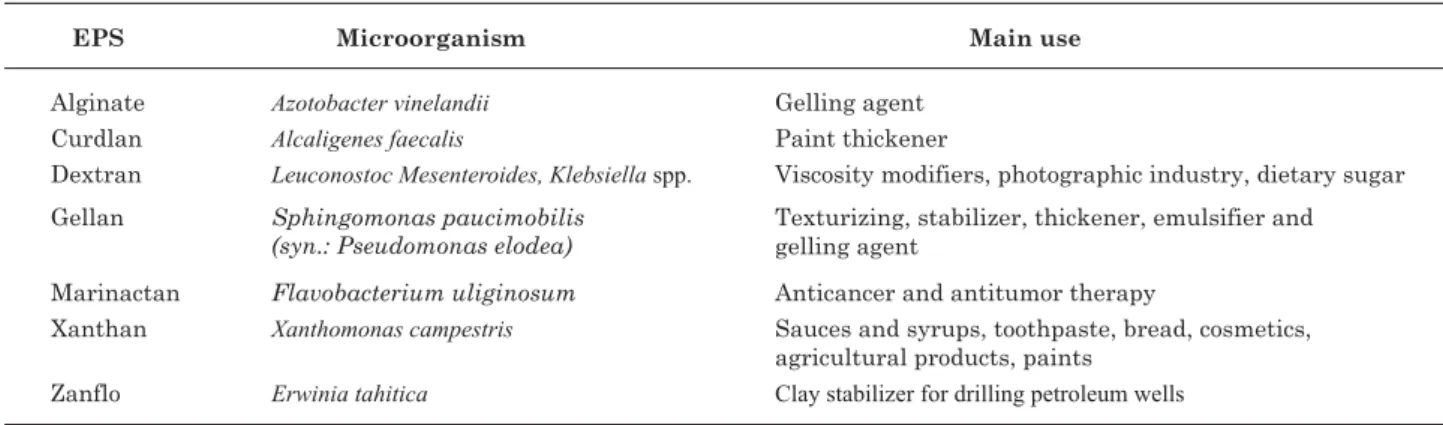
Microbial biopolymers vary greatly in their composition and consequently in their physical and chemical properties. Due to this wide diversity in both structure and physical properties (high viscosity, networks of intermolecular cohesive properties) the applications of these compounds is broad in the food, pharmaceutical, petroleum, cosmetic, textile, paint industry and agricultural products (Bryers, 1993).
Dextran, xanthan and gellan produced by the
bacteria Leuconostoc spp., Xanthomonas spp. and
Sphingmonas elodea respectively, are still among the few microbial polysaccharides marketed on a large scale, and these compounds are very important in the gum market. The structure of these polysaccharides is rather varied. Xanthan is composed of glucose, mannose and glucuronic acid at a ratio of 2:2:1. Dextran is a homopolysaccharide composed of glucose molecules, while gellan is a heteropolysaccharide consisting of glucuronic acid, glucose and rhamnose with glycerate and acetate groups in its structure. Economically, xanthan is the most important microbial polysaccharide, with a worldwide production of about 40 to 50 thousand tons/year and a value of about 270 million U.S. dollars annually. The annual demand is estimated to increase at a continuous rate of 5 to 10 % (Pradella, 2006). Table 2 shows the main examples of bacterial EPS applied in various industrial activities.
It is economically attractive to search for new polysaccharide-producing microorganisms. The production of large quantities is a challenge being met by several research groups, as microbial biopolymers can be produced in large quantities and fermentation offers the advantage of controlled production. This eliminates the problems found in the production of polymers by plants and algae, e.g., problems with harvesting, climate conditions or marine pollution (Sutherland, 2001).
The atmospheric N2 fixing bacteria (NFB) can be
found as both free-living organisms and in association or symbiosis (e.g. rhizobium-legumes). Studies on commercial EPS applications are more advanced for the free-living NFB, e.g., clairana produced by
Beijerinckia sp. (Moreira et al., 2003) and the alginate
produced by Azotobacter vinelandii (Garcia-Cruz et
al., 2008).
aggregation process is related to several factors, such as the physical properties, climatic conditions and biological activities in the soil (Materechera et al., 1994; Bezzate et al., 2000).
The action of microorganisms, notably fungi and bacteria, in the process of soil particle aggregation is principally related to the EPS production by these organisms (Alami et al., 2000). Microbial EPS can increase the adhesion of soil particles to plant roots and the mechanical stability of rhizospherical soils, besides increasing the level of water retention in this environment (Chenu & Roberson, 1996; Amellal et al., 1998).
The inoculation of wheat (Triticum durum L.) with
the associative bacterium Paenibacillus polymyxa,
selected by its ability to fix N2, resulted in a 57 %
increase of the soil mass that adhered to the roots and an increased frequency of aggregates with sizes between 0.2 and 2 mm due to EPS production (levan), which contributed to the aggregation of this soil (Gouzou et al., 1993; Bezzate et al., 2000). The same effect on wheat was also observed after inoculation with other associative species. Inoculation of wheat seedlings in soil with 24 % water content with
Pantoea aglomerans resulted in an increase in the
adhesion of soil particles to the roots: 140 mg of soil adhered to 1 mg of roots in the inoculated treatment compared to 90 mg of soil that adhered in the control treatment. There was also a significant increase in the macroporosity of the inoculated soil (diameters of
10 to 30 µm) compared to the uninoculated control
(Amellal et al., 1998).
The effect of inoculation of clay soils with the
diazotrophic cyanobacterium Nostoc spp. resulted in
an increased incidence of porosity in the inoculated soils (30 %) compared with the control soil without inoculation (5 %). Electron microscopy analysis allowed the visualization of the primary soil aggregation that resulted from the interaction of the secreted EPS with soil particles (Falchini et al., 1996). These cyanobacteria can establish symbiosis with species of fungi, bryophytes, gymnosperms, and high gum production on solid medium, and the
precipitation of EPS from strains of Mesorhizobium
plurifarium BR3804 and R. tropici CIAT899T,
recommended by MAPA (Ministério da Agricultura, Pecuária e Abastecimento) as inoculants for the species
Chamaecrista ensiformis and Phaseolus vulgaris,
respectively, demonstrating the high potential of these strains for the production of these biopolymers.
ROLE OF EPS IN SOIL AGGREGATION
Soil aggregation is essentially related to suitable physical conditions underlying plant growth. The
Figure 3. (a) Colonies of the M. plurifarium BR3804 strain, grown in 79 medium with bromothymol blue; (b) the biopolymer produced by M. plurifarium BR3804 after precipitation with ethanol (1.44 g dry weight EPS/L of medium) after 72 h of culture; (c) colonies of R. tropici CIAT899T strain, grown in 79 medium with
bromothymol blue; (d) biopolymer produced by R. tropici CIAT899T after precipitation with
ethanol (3.0 g dry weight EPS/L of medium) after 72 h of culture.
angiosperms or live freely in the soil. The EPS of
Nostoc ssp. contributes not only to the soil biochemical properties but also to soil fertility, once the EPS produced by this cyanobacterium increases the soil C pool as carbohydrates (Maqubela et al., 2009). Also, the water retained in the EPS matrix reduces evaporation losses and potentially increases the water-holding capacity of the soil (Mager, 2010).
Some studies relating the production of EPS by strains of rhizobia and soil aggregation have also been
described. Inoculation of a Rhizobium sp. strain into
Triticum durum L. plants significantly increased
the percentage of aggregates with a diameter of 1.6 to 2 mm, and the water stability in this fraction was 42 ± 5 % in the inoculated treatments compared with 30 ± 4 % in the control (Kaci et al., 2005). Another strain
of Rhizobium sp., promoting growth of Helianthus
annuus L. provided a significant increase in the
volume of macro pores (diameter from 12 to 60 µm) in
soil inoculated with this bacterium. Under water stress, the soil structure around the root system changed, which avoided negative effects of water deficit on the growth of the inoculated plants (Alami et al., 2000). In another study it was observed that EPS
synthesis in Rhizobium sp. YAS34 is also decisive for
the colonization of the basal part of the root system and that it increases the stability of root-adhering soil on Arabidopsis thaliana and Brassica napus roots (Santaella et al., 2008).
Conformational studies of the structure of EPS
from Burkholderia caribensis MWAP71 demonstrated
that this strain produces an EPS responsible for aggregation by the adsorption capacity to mineral surfaces and the adhesive properties of this biopolymer (Vanhaverbeke et al., 2003).
Although little attention has been paid to the influence of microorganisms in the process of soil aggregation, particularly to bacteria-producing EPS, microbial EPS are important biological factors that influence the soil structure formation. These compounds contribute to the stability and aggregation of particles and are potential agents for improving the structural quality of agricultural soil. Thus, the magnitude of such effects should be quantified, to evaluate the feasibility of its management for improving soil physical conditions.
FINAL CONSIDERATIONS
The BNF process based on the legume-Rhizobium
symbiosis leads to a high sustainability of agricultural systems. BNF increases soil fertility and organic matter levels and reduces the need for N fertilization, resulting in both economic and environmental benefits. Despite all data available in the literature about the possible roles of EPS in the symbiosis establishment and functioning, the exact role of these
compounds in the process is not yet completely understood, and further studies on the signaling mechanisms is required. Previous research of the role of EPS in nodulation and BNF based on the study of mutant strains for EPS production was focused
mainly on the genera Rhizobium and Sinorhizobium,
while the understanding of these processes in other species is scarce or absent. Thus, research and comparisons among the wide range of other genera are necessary.
Although there is evidence of strain- and species-specificity, EPS production by rhizobia is regulated by environmental conditions which, in some cases, increases the ability to adapt to various stress conditions. Thus, studies related to the role of EPS in the process of adaptation of these bacteria to various edaphic and climate conditions are particularly important, since EPS affect the survival and functionality of the rhizobia strains.
In recent years, the industrial demand for bacterial EPS (biopolymers) has grown significantly. These compounds are widely applicable in various fields, due to their diverse structural and physico-chemical properties. Bacterial EPS offer several advantages, such as the potential for controlled, high-speed production with higher yield and greater purity and consistency than alternative sources. Nevertheless, information on rhizobial EPS is not available, representing a wide range of unexploited possibilities. EPS also offer a potencial application in agriculture due to it adhesive properties and it ability to form gels that promote the adhesion of soil particles, forming stable aggregates that contribute to better plant growth and development. Although the role of bacterial EPS in soil aggregation is recognized, little information is available in the literature about the specific action of known bacteria and possible methods of management.
Considering that none of the α and β-rhizobia were
shown to be pathogenic so far, they can be generally characterized as an unexplored source of microbial EPS with great potential in industrial applications and as stabilizing soil agents. Furthermore, the role of these compounds in stress adaptation may be an important criterion for the selection of inoculant strains to raise plant productivity by BNF under different soil and climatic conditions. The biodiversity of rhizobia in tropical soils represents a vast and unexplored field calling for research in this area.
LITERATURE CITED
ALAMI, Y.; ACHOUAK, W.; MAROL, C. & HEULIN, T. Rhizosphere soil aggregation and plant growth promotion of sunflower by an exopolysaccharide-producing
AMEMURA, A.; HARADA, T.; ABE, M. & HIGASHI, S. Structural studies of the acidic polysaccharide from
Rhizobium trifolii 4S. Carbohydr. Res., 115:165-174, 1983.
AMELLAL, N.; BURTIN, G.; BARTOLI, F. & HEULIN, T. Colonization of wheat roots by an exopolysaccharide-producing Pantoea agglomerans strain and its effect on rhizosphere soil aggregation. Appl. Environ. Microbiol., 64:3740-3747, 1998.
AN, J.; CARLSON, R.W.; GLUSHKA, J. & STREETER, J.G. The structure of a novel polysaccharide produced by
Bradyrhizobium species within soybean nodules. Carbohydr. Res., 269:303-317, 1995.
BARBERI, A.; MOREIRA, F.M.S.; FLORENTINO, L.A. & RODRIGUES, M.I.D. Crescimento de Bradyrhizobium elkanii estirpeBR 29 em meios de cultivo com diferentes valores de pH inicial. Ci. Agrotec., 28:397-404, 2004. BATTISTI, L.; LARA, J.C. & LEIGH J.A. Specific
oligosaccharide form of the Rhizobium meliloti
exopolysaccharide promotes nodule invasion in alfalfa. Biochemistry, 89:5625-5629, 1992.
BEZZATE, S.; AYMERICH, S.; CHAMBERT, R.; CZARNES, S.; BERGE, O. & HEULIN, T. Disruption of Paenibacillus polymyxa levansucrase gene impairs its ability to aggregate soil in the wheat rizosphere. Environ. Microbiol., 2:333-342, 2000.
BIALEK, U.; SKORUPSKA, A.; YANG, A.; BISSELING, T. & van LAMMEREN, A.A.M. Disturbed gene expression and bacterial development in Trifoliumpratense root nodules induced by a Tn5 mutant of Rhizobium leguminosarum
bv. trifolii defective in exopolysaccharide synthesis. Planta, 197:184-192, 1995.
BREEDVELD, M.W.; CREMERS, H.C.; BATLEY, M.; POSTHUMUS, M.A.; ZEVENHUIZEN, L.P.; WIJFFELMAN, C.A. & ZEHNDER, A.J. Polysaccharide synthesis in relation to nodulation behavior of Rhizobium leguminosarum. J. Bacteriol., 175:750-757, 1993. BRYERS, J.D. The biotechnology of interfaces. J. Appl.
Bacteriol., 74:98S-109S, 1993.
BROUGHTON, W.J.; JABBOURI, S. & PERRET, X. Keys to symbiotic harmony. J. Bacteriol., 182:5641-5652, 2000. CANTER-CREMERS, H.C.J.; STEVENS, K.;
LUGTENGBERG, B.J.J.; WIJFFELMAN, C.A.; BATLEY, M.; REDMOND, J.W.; BREEDVELD, M. & ZEVENHUIZEN, L.P.T.M. Unusual structure of the exopolysaccharide of Rhizobium leguminosarum bv. viciae
strain 248. Carbohyd. Res.,218:185-200, 1991.
CHEN, W.X.; YAN, G.H. & LI, J.L. Numerical taxonomic study of fast-growing soybean rhizobia and a proposal that
Rhizobium fredii be assigned to Sinorhizobium gen. nov. Inter. J. Syst. Bacteriol., 38:392-397, 1988.
CHEN, W.; LAEVENS, S.; LEE, T.; COENYE, T.; VOS, P.; MERGEAY, M. & VANDAMME, P. Ralstonia taiwanensis sp. nov., isolated from root nodules of
Mimosa species and sputum of a cystic fibrosis patient. Intern. J. Syst. Evol. Microbiol., 51:1729-1735, 2001.
CHENG, H.P. & WALKER, C.G. Succinoglycan Production by
Rhizobium meliloti is regulated through the ExoS-ChvIt two-component regulatory system. J. Bacteriol., 180:20-26, 1998.
CHENU, C. & ROBERSON, E.B. Diffusion of glucose in microbial extracellular polysaccharide as affected by water potential. Soil Biol. Biochem., 28:877-884, 1996. CORZO, J.; LEÓN-BARRIOS, M.; HERNANDO-RICO, V. &
GUTIÉRREZ-NAVARRO, A.M. Precipitation of metallic cations by the acidic exopolysaccharides from
Bradyrhizobium japonicum and Bradyrhizobium
(Chamaecytisus) strain BGA-1. Appl. Environ. Microbiol., 60:4531-4536, 1994.
CUNNINGHAM, S.D. & MUNNS, D.N. Effects of rhizobial extracellular polysaccharide on pH and aluminum activity. Soil Sci. Soc. Am. J., 48:1276-1280, 1984.
DANGEARD, P.A. Recherches sur les tubercles radicaux des légumineuses. Botaniste, 16:1-275, 1926.
DE LAJUDIE, P.; WILLENS, A.; POT, B.; DEWETTINCK, D.; MAESTROJUAN, G.; NEYRA, M.; COLLINS, M.D. & DREYFUS, B. Polyphasic taxonomy of rhizobia: emendation of the genus Sinorhizobium and descripition of Sinorhizobium meliloti comb. Nov., Sinorhizobium saheli sp. nov. & Sinorhizobium teranga sp. nov. Inter. J. Syst. Bacteriol., 44:715-733, 1994.
DE LAJUDIE, P.; WILLENS, A.; NICK, G.; MOREIRA, F.; MOLOUBA, F.; HOSTE, B.; TORCK, N.; NEYRA, M.; COLLINS, M.D.; LINDSTROM, K.; DREYFUS, B. & GILLIS, M. Characterization of tropical tree rhizobia and description of Mesorhizobium plurifarium sp. nov. Inter. J. Syst. Bacteriol., 48:369-382, 1998.
D’HAEZE, W.; GLUSHKA, J.; DE RYCKE, R.; HOLSTERS, M. & CARLSON, R.W. Structural characterization of extracellular polysaccharides of Azorhizobium caulinodans and importance for nodule initiation on
Sesbania rostrata. Molec. Microbiol., 52:485-500, 2004. DE PHILIPPS, R. & VICENZINI, M. Exocelullar polyssacharides
from cyanobacteria and their possible applications. FEMS Microbiol. Rev., 22:151-175, 1998.
DELAVECHIA, C.; HAMPP, E.; FABIA, A. & CASTRO, S. Influence of pH and calcium on growth, polysacharide production and symbiotic association of Sinorhizobium meliloti SEMIA 116 with alfalfa roots. Biol. Fert. Soils, 38:110-114, 2003.
DÍAZ-MARRERO, A.R.; SANTAMARÍA, M.; HERNÁNDEZ, J.J. & CORZO, J. Coprecipitation of Th4+ and the purified extracellular polysaccharide produced by bacterium
Bradyrhizobium (Chamaecytisus) BGA-1. Environ. Biotechnol., 65:356-362, 2004.
DILWORTH, M.J.; RYNNE, F.G.; CASTELLI, J.M.; VIVAS-MARFISI, A.I. & GLENN, A.R. Survival and exopolysaccharide production in Sinorhizobium meliloti
DJORDJEVIC S.P.; CHEN, H.; BATLEY, M.; REDMOND J.W. & ROLFE B.G. Nitrogen fixation ability of Exopolysaccharide Synthesis Mutants of Rhizobium sp. strain NGR234 and Rhizobium trifolii is restored by the addition of homologous exopolysaccharides. J. Bacteriol., 169:53-60, 1987.
DREYFUS, B.; GARCIA, J.L. & GILLIS, M. Characterization of Azorhizobium caulinodans gen. nov., sp. nov., a stem-nodulating nitrogen-fixing bacterium isolated from
Sesbania rostrata. Inter. J. Syst. Bacteriol., 38:89-98, 1988. EAGLESHAM, A.R.J.; STOWERS, M.D.; MAINA, M.L.; GOLDMAN, B.J.; SINCLAIR, M.J. & AYANABA, A. Physiological and biochemical aspects of diversity of
Bradyrhizobium sp. (Vigna) from three West African soils. Soil Biol. Biochem., 19:575-581, 1987.
ELSHEIKH, E.A. E. & WOOD, M. Salt effects on survival and multiplication of chickpea and soybean rhizobia. Soil Biol. Biochem., 22:343-347, 1990.
FALCHINI, L.; SPARVOLI, E. & TOMASELLI, L. Effect of
Nostoc (cyanobacteria) inoculation on the structure and stability of clays soils. Biol. Fert. Soils, 23:346-352, 1996. FOSTER, L.J.R.; MOY, Y.P. & ROGERS, P.L. Metal binding capabilities of Rhizobium etli and its extracellular polymeric substances. Biotechnol. Lett., 22:1757-1760, 2000.
FRANK, B. Ueber dies pilzsymbiose der leguminosen. Berichte Deutschen Bot. Gesellschaft, 7:332-346, 1889.
FRAYSSE, N.; COURDEC, F. & POINSOT, V. Surface polysaccharide involvement in establishing the
Rhizobium-legume symbiosis. Eur. J. Biochem., 270:1365-1380, 2003.
FREITAS, A.D.S.; VIEIRA, C.L.; SANTOS, C.E.R.S.; STAMFORD, N.P. & LYRA, M.C.C.P. Caracterização de rizóbios isolados de jacatupé cultivado em solo salino do Estado de Pernambuco, Brasil. Bragantia, 66:497-504, 2007.
GARCIA-CRUZ, C.H.; FOGGETTI, U. & SILVA, A.N. Ácido algínico bacteriano: Aspectos tecnológicos, características e produção. Química Nova, 31:1800-1806, 2008. GIL-SERRANO, A.; SANCHEZ DEL JUNCO, A. &
TEJERO-MATEO, P. Structure of the extracellular polysaccharide secreted by Rhizobium leguminosarum var. phaseoli
CIAT 899. Carbohyd. Res., 204:103-107, 1990.
GLAZEBROOK, J. & WALKER, G.C. A novel exopolysaccharide can function in place of the Calcofluor-binding exopolysaccharide in nodulation of alfalfa by Rhizobium meliloti. Cell, 56:661-672, 1989.
GONZALEZ, J.E.; REUHS, B. & WALKER, G.C. Low molecular weight EPS II of Rhizobium meliloti allows nodule invasion in Medicago sativa. Proc. National Acad. Sci. USA, 93:8636-8641, 1996.
GONZALEZ, J.E.; SEMINO, C.E.; WANG, L.X.; CASTELLANO-TORRES, L.E. & WALKER, G.C. Biosynthetic control of molecular weight in the polymerization of the octasaccharide subunits of succinoglycan, a symbiotically important exopolysaccharide of Rhizobiummeliloti. Proc. National Acad. Sci. USA, 95:13477-13482, 1998.
GOUZOU, L.; BURTIN, G.; PHILIPPY, R.; BARTOLI, F. & HEULIN, T. Effect of inoculation with Bacillus polymyxa
on soil aggregation in the wheat rhizosphere: preliminary examination. Geoderma, 56:476-491, 1993.
GRAY, J.X.; ZHAN, H.J.; LEVERY, S.B.; BATTISTI, L.; ROLFE, B.G. & LEIGH, J.A. Heterologous exopolysaccharide production in Rhizobium sp. strain NGR234 and consequences for nodule development. J. Bacteriol., 173:3066-3077, 1991.
HALLACK, L.F.; PASSOS, D.S.; MATTOS, K.A.; AGRELLOS, O.A.; JONES, C.; MENDONÇA-PREVIATO, L.; PREVIATO, J.O. & TODESCHINI, A.R. Structural elucidation of the repeat unit in highly branched acid exopolysaccharides produced by nitrogen fixing
Burkholderia. Glycobiol., 20:338-347, 2010.
HAFEEZ, F.Y.; ASAD, S. & MALIK, K.A. The effect of high temperature on Vigna radiata nodulation and growth with different bradyrhizobial strains. Environ. Exper. Bot., 31:85-294, 1991.
HER, G.R.; GLAZEBROOK, J.; WALKER, G.C. & REINHOLD, V.N. Structural studies of a novel exopolysaccharide produced by a mutant of Rhizobium meliloti strain Rm1021.Carbohyd. Res., 198:305-312, 1990.
HISAMATSU, M.; NOMURA, S.; SHUTSRIRUNG, A.; OBATA, H.; TERANISHI, K.; YAMADA, T.; NUSWANTARA, S.; YAMASHITA, M. & MUROOKA, Y. Structural characterization of a new acidic exopolysaccharide and cyclic (L-2) P-glucan produced by Rhizobium huakuii
forming nodules on Astragalus sinicus. J. Ferment. Bioeng., 4:315-320, 1997.
HUBER, T.A.; AGARWAL, A.K. & KEISTER, D.L. Extracellular polysaccharide composition, ex plant nitrogenase activity, and DNA homology in Rhizobium japonicum, Plant Physiol., 158:1168-1171, 1984. JARVIS, B.D.W.; PANKHURST, C.E. & PATEL, J.J.
Rhizobium loti sp. nov. a new species of Legume Root Nodule Bacteria. Inter. J. Syst. Bacteriol., 32:378-380, 1982.
JARVIS, B.D.W.; van BERKUM, W.X.; CHEN, S.M.; NOUR, M.P.; FERNANDEZ, J.C.; CLEYET-MAREL, J.C. & GILLIS, M. Transfer of Rhizobium loti, Rhizobium mediterraneum and Rhizobium tiashanense to
Mesorhizobium gen. nov. Inter. J. Syst. Bacteriol., 47:895-898, 1997.
JORDAN, D.C. Transfer of Rhizobium japonicum Buchanan 1980 to Bradyrhizobium gen. nov., a genus of slow-growig, root nodule bacteria from leguminous plants. Inter. J. Syst. Bacteriol., 32:36-139, 1982.
JORDAN, D.C. Rhizobiaceae Conn 1938. In: KRIEG, N.R. & HOLT, J.D., eds. Bergey’s manual of systematic bacteriology. London, Willians and Wilkins, 1984. p.234-244.
JOURAND, P.; GIRAUD, E.; BENA, G.; SY, A.; WILLEMS, A.; GILLIS, M.; DREYFUS, B. & DE LAJUDIE, P.
KACI, Y.; HEYRAUD, A.; BARAKAT, M. & HEULIN, T. Isolation and identification of an EPS-producing
Rhizobium strain from arid soil (Algeria): Characterization of its EPS and the effect of inoculation on wheat rhizosphere soil structure. Res. Microbiol, 156:522-531, 2005.
KELLER, M.; ROXLAU, A.; WENG, W.M.; SCHMIDT, M.; QUANDT, J.; NIEHAUS, K.; JORDING, D.; ARNOLD, W. & PÜHLER, A. Molecular analysis of the Rhizobium meliloti mucR gene regulating the biosynthesis of the exopolysaccharides succinoglycan and galactoglucan. Molec. Plant Microbe Interac., 8:267-277, 1995.
KUYKENDALL, L.D.; SAXENA, B.; DEVINE, T.E. & UDELL, S.E. Genetic diversity in Bradyrhizobium japonicum
(Jordan 1982) and a proposal for Bradyrhizobium elkanii
sp. nov. Can. J. Microbiol., 38:501-505, 1992.
LAUS, M.C.; LOGMAN, T.J.; van BRUSSEL, A.A.; CARLSON, R.W.; AZADI, P.; GAO, M.Y. & KIJNE, J.W. Involvement of exo5 in production of surface polysaccharides in
Rhizobium leguminosarum and its role in nodulation of
Vicia sativa subsp. nigra.J. Bacteriol., 186:6617-6625, 2004. LAUS, M.C.; van BRUSSEL, A.A.N. & KIJNE, J.W. Role of Cellulose Fibrils and Exopolysaccharides of Rhizobium leguminosarum in attachment to and infection of Vicia sativa root hairs. Molec. Plant Microbe Interac, 18:533-538. 2005.
LEIGH, J.A.; SIGNER, E.R. & WALKER, G.C. Exopolysaccharide-deficient mutants of Rhizobium meliloti that form ineffective nodules. Genetics, 82:6231-6235, 1985.
LEPEK, C.V. & D’ANTUONO, A. Bacterial surface polysaccharides and their role in the rhizobia-legume association. Lotus Newslett., 35:93-105, 2005.
LIN, D.X.; WANG, W.T.; TANG, H.; HAN, T.X.; HE, Y.R.; GUAN, S.H. & CHEN, W.X. Shinella kummerowiae sp. nov., a symbiotic bacterium isolated from root nodules of the herbal legume Kummerowia stipulacea. Inter. J. Syst. Evol. Microbiol., 58:1409-1413, 2008.
LOUCH, H.A. & MILLER, K.J. Synthesis of a low-molecular-weight form of exopolysaccharide by Bradyrhizobium japonicum USDA 110. Appl. Environ. Microbiol., 67:1011-1014, 2001.
MACCIÓ, D.; FABRA, A. & CASTRO, S. Acidity and calcium interaction affect the growth of Bradyrhizobium sp. and attachment to peanut roots. Soil Biol. Biochem., 34:201-208, 2002.
MADIGAN, M.T.; MARTINKO, J.M. & PARKER, J. Microbiologia de Brock.10.ed. São Paulo, Prentice Hall, 2004. 608p.
MAGER, D.M. Carbohydrates in cyanobacterial soil crusts as a source of carbon in the Southwest Kalahari, Botswana. Soil Biol. Biochem., 42:313-318, 2010.
MAQUBELA, M.P.; MNKENI, P.N.S.; MALAM ISSA, O.; PARDO, M.T. & D’ACQUI, L.P. Nostoc cyanobacterial inoculation in South African agricultural soils enhances soil structure, fertility, and maize growth. Plant Soil, 315:79-92, 2009.
MATERECHERA, S.A.; KIRBY, J.; ALSTON, A.M. & DEXTER, A.R. Modification of soil aggregation by watering regime and roots growing through beds of large aggregates. Plant Soil, 160:57-66, 1994.
MATTOS, K.A.; JONES, C.; HEISE, N.; PREVIATO, J.O. & MENDONÇA- PREVIATO, L. Structure of an acidic exopolysaccharide produced by the diazotrophic endophytic bacterium Burkholderia brasiliensis. Eur. J. Biochem., 268:3174-3179, 2001.
MAZUR, A.; KRÓL, J.; MARCZAK, M. & SKORUPSKA, A. Membrane topology of PssT, the transmembrane protein component of the type I exopolysaccharide transport system in Rhizobium leguminosarum bv. trifolii strain TA1. J. Bacteriol., 185:2503-2511, 2003.
MELLO, F.A.F.; BRASIL SOBRINHO, M.O.C.; ARZOLLA, S.; SILVEIRA, R.I.; COBRA NETTO, A. & KIEHL, J.C. Fertilidade do solo. São Paulo, Nobel, 1983. 400p MENDRYGAL, K.E. & GONZALEZ, J.E. Environmental
regulation of exopolysaccharide production in
Sinorhizobium meliloti. J. Bacteriol., 182:599-606, 2000. MIGUEL, D.L. & MOREIRA, F.M.S. Influência do pH do meio de cultivo e da turfa no comportamento de estirpes de
Bradyrhizobium. R. Bras. C. Solo, 25:873-883, 2001. MOREIRA, A.N.; DEL PINO, F.A.B. & VENDRUSCOLO, C.T.
Estudo da produção de biopolímeros via enzimática através de inativação e lise celular e com células viáveis de Beijerinckia sp. 7070. Ci. Tecnol. Aliment., 23:300-305, 2003.
MOREIRA, F.M.S. & SIQUEIRA, J.O. Microbiologia e bioquímica do solo. Lavras, Universidade Federal de Lavras, 2006. 729p.
MORT, A.J. & BAUER, W.D. Composition of the capsular and extracellular polysaccharides of Rhizobium japonicum. Plant Physiol., 66:156-163, 1980.
MORT, A.J. & BAUER, W.D. Structure ofthe capsular and extracellular polysaccharides of Rhizobium japonicum
that bind soybean lectin. J. Biol. Chem., 25:1870-1875, 1982.
MOULIN, L.; MUNIVE, A.; DREYFUS, B. & BOIVIN-MASSON, C. Nodulation of legumes by members of the -subclass of proteobacteria. Nature, 411:948-950, 2001. NIEHAUS, K.; KAPP, D. & PUHLER, A. Plant defense and
delayed infection of alfalfa pseudonodules induced by an exopolysaccharide (EPSI-deficient) Rhizobium meliloti
mutant. Planta, 190:415-425, 1993.
O’NEILL, M.A.; DARVILL, A.G. & ALBERSHEIM, P. The degree of esterification and points of substitution by O-acetyl and O-(3-hydroxybutanoyl) groups in the acidic extracellular polysaccharides secreted by Rhizobium leguminosarum biovars viciae, trifolii, and phaseoli are not related to host range. J. Biol. Chem., 266:9549-9555, 1991.
PARNISKE, M.; SCHMIDT, P.E.; KOSCH, K. & MULLER, P. Plant defense response of host plants with determinate nodules induced by EPS defective exoB mutants of
Bradyrhizobium japonicum. Molec. Plant Microbe Interac, 7:631-638, 1994.
PELLOCK, B.J.; CHENG, H.P. & WALKER, G.C. Alfalfa root nodule invasion efficiency is dependent on Sinorhizobium meliloti polysaccharides. J. Bacteriol., 182:4310-4318, 2000.
PRADELLA, J.G.C. Biopolímeros e intermediários químicos. São Paulo, Centro de Tecnologia de Processos e Produtos/ Laboratório de Biotecnologia Industrial/LBI/CTPP, 2006. (Relatório Técnico, 84396-205)
PUVANESARAJAH, V.; SCHELL, F.M.; GERHOLD, D. & STACEY, G. Cell surface polysaccharides from
Bradyrhizobium japonicum and a non nodulating mutant. J. Bacteriol., 169:137-141, 1987.
REINHOLD, B.B.; CHAN, S.Y.; REUBER, T.L.; MARRA, A.; WALKER, G.C. & REINHOLD, V.N. Detailed structural characterization of succinoglycan, the major symbiotically important exopolysaccharide of Rhizobium meliloti strain Rm1021. J. Bacteriol., 176:1997-2002, 1994.
RIBEIRO, A.C.; GUIMARÃES, P.T.G. & ALVAREZ V., V.H. Recomendação para o uso de corretivos e fertilizantes em Minas Gerais: 5a Aproximação. Viçosa, MG,
Universidade Federal de Viçosa, 1999. 359p.
RINAUDI, L.V. & GONZÁLEZ, J.E. The low-molecular-weight fraction of exopolysaccharide II from Sinorhizobium meliloti is a crucial determinant of biofilm formation. J. Bacteriol., 191:7216-7224, 2009.
RIVAS, R.; VELÁZQUEZ, E.; WILLEMS,A.; VIZCAÍNO, N.; SUBBA-RAO, N.S.; MATEOS, P.F.; GILLIS, M.; DAZZO, F.B. & MARTINEZ-MOLINA, E. A new species of Devosia
that forms a unique nitrogen-fixing root-nodule symbiosis with the aquatic legume Neptunia natans (L.f) Druce. Appl. Environ. Microbiol., 68:5217-5222, 2002.
RIVAS, R.; WILLEMS, A.; SUBBA-RAO, N.S.; MATEOS, P.F.; DAZZO, F.B.; KROPPENSTEDT, R. M.; MARTINEZ-MOLINA, E.; GILLIS, M. & VIZCAÍNO, N. Description of
Devosia neptuniae sp. nov. that nodulates and fix nitrogen in symbiosis with Neptunia natans, an aquatic legume from India. Syst. Appl. Microbiol., 26:47-53, 2003. ROBERTSEN, B.K.; AMAN, P.; DARVILL, A.G.; MCNEIL, M. & ALBERSHEIM, P. Hostsymbiont interactions: The structure of acidic extracellular polysaccharides secreted by Rhizobium leguminosarum and Rhizobium trifolii. Plant Physiol., 67:389-400,1981.
SANTAELLA, C.; SCHUE, M.; BERGE, O.; HEULIN, T. & ACHOUAK, W. The exopolysaccharide of Rhizobium sp. YAS34 is not necessary for biofilm formation on
Arabidopsis thaliana and Brassica napus roots but contributes to root colonization. Environ. Microbiol., 10:2150-2163, 2008.
SANTAMARÍA, M.; DÍAZ-MARRERO, A.; HERNÁNDEZ, J.; GUTIÉRREZ-NAVARRO, A.M. & CORZO, J. Effect of thorium on the growth and capsule morphology of
Bradyrhizobium. Environ. Microbiol., 5:916-924, 2003.
SCHULZE, M.; KONDOROSI, E.; RATET, P.; BUIRE, M. & KONDOROSI, A. Cell and molecular biology of
Rhizobium-plant interaction. Inter. Rev. Cytol., 156:71-75, 1998.
SERRATO, R.V.; SASSAKI, G.L.; GORIN, P.A.J.; CRUZ, L.M.; PEDROSA, F.O.; CHOUDHURY, B.; CARLSON, R.W. & IACOMINI, M. Structural characterization of an acidic exoheteropolysaccharide produced by the nitrogen-fixing bacterium Burkholderia tropica. Carbohyd. Polym., 73:564-572, 2008.
SKORUPSKA, A.; BIALEK, U.; URBANIK-SYPNIEWSKA, T. & van LAMMEREN, A. Two types of nodules induced on Trifolium pratense by mutants of Rhizobium leguminosarum bv. trifolii deficient in exopolysaccharide production. J. Plant Physiol., 147:93-100, 1995.
SKORUPSKA, A.; JANCZAREK, M.; MARCZAK, M.; MAZUR, A. & KRÓL, J. Rhizobial exopolysaccharides: Genetic control and symbiotic functions. Microb. Cell Fact., 5:1-19, 2006.
SLAVEYKOVA, V.I.; PARTHASARATHY, N.; DEDIEU, K. & TOESCHER, D. Role of extracellular compounds in Cd-sequestration relative to Cd uptake by bacterium
Sinorhizobium meliloti. Environ. Pollut., 158:2561-2565, 2010.
SPAINK, H. P. Root nodulation and infection factors produced by rhizobial bacteria.Ann. Rev. Microbiol., 54:257-288, 2000.
SPRENT, J.I. Which steps are essential for the formation of functional legume nodules? New Phytol., 111:129-153, 1989.
SUTHERLAND, I.W. Microbial polysaccharides from Gram-negative bacteria. Inter. Dairy J., 11:663-674, 2001. SY, A.; GIRAUD, E.; JOURAND, P.; GARCIA, N.; WILLEMS,
A.; DE LAJUDIE, P.; PRIN, Y.; NEYRA, M.; GILLIS, M.; BOIVIN-MASSON, C. & DREYFUS, B. Methylotrophic
Methylobacterium bacteria nodulate and fix nitrogen in symbiosis with legumes. J. Bacteriol., 183:214-220, 2001. TRUJILLO, M.E.; WILLEMS, A.; ABRIL, A.; PLANCHUELO, A.M.; RIVAS, R.; LUDENA, D.; MATEOS, P.F.; MARTINEZ-MOLINA, E. & VELASQUEZ, E. Nodulation of Lupinus albus by Strains of Ochrobactrum lupine.
Appl. Environ. Microbiol., 71:1318-1327, 2005.
URZAINQUI A. & WALKER, G.C. Exogenous suppression of the symbiotic deficiencies of Rhizobium meliloti exo
mutants.J. Bacteriol., 174:3403-3406, 1992.
VALVERDE, A.; VELÁZQUEZ, E.; FERNÁNDEZ-SANTOS, F.; VIZCAÍNO, N.; RIVAS, R. & MATEOS, P.F.
Phylobacterium trifolli sp. nov. nodulating Trifolium and
Lupinus in Spanish soils. Inter. J. Syst. Bacteriol., 55:1985-1989, 2005.
VANHAVERBEKE, C.; HEYRAUD, A. & MAZEAU, K. Conformational analysis of the exopolysaccharide from
Burkholderia caribensis strain MWAP71: Impact on the interaction with soil. Biopolymers, 69:480-497, 2003. van WORKUM, W.A.T.; van SLAGEREN, S.; van BRUSSEL,
A.A.N. & KIJNE, J.W. Role of exopolysaccharides of
Rhizobium leguminosarum bv. viciae as host plant-specific molecules required for infection thread formation during nodulation of Vicia sativa. Molec Plant Microbe Interac., 11:1233-1241, 1998.
VANDAMME, P. & COEYNE, T. Taxonomy of the genus
Cupriavidus: A tale of lost and found. Inter. J. Syst. Evol. Microbiol., 54:2285-2289, 2004.
VARGAS, M.A.T.; PERES, J.R.R. & SUHET, A.R. Adubação nitrogenada, inoculação e épocas de calagem para a soja em um solo sob Cerrado. Pesq. Agropec. Bras., 8:1127-1132, 1982.
WANG, L.X.; WANG, Y.; PELLOCK, B.J. & WALKER, G.C. Structural characterization of the symbiotically important low-molecular-weight succinoglycan of Sinorhizobium meliloti. J. Bacteriol., 181:6788-6796, 1999.
WANG, P.; ZHONG, Z.; ZHOU, J.; CAI, T. & ZHU, J. Exopolysaccharide biosynthesis is important for
Mesorhizobium tianshanense: Plant host interaction . Arch. Microbiol., 189:525-530, 2008.
XAVIER, G.R.; MARTINS, L.M.V.; NEVES, M.C.P. & RUMJANEK, N.G. Edaphic factors as determinants for the distribution of intrinsic antibiotic resistance in a cowpea, rhizobia population. Biol. Fert. Soils, 27:386-392, 1998.
XAVIER, G.R.; MARTINS, L.M.; RUNJANEK, N.G. & NEVES, M.C.P. Tolerância de rizóbio de feijão-caupi à salinidade e à temperatura em condição in vitro. Caatinga, 20:1-9, 2007.
YOUNG, J.M.; KUYKENDALL, L.D.; MARTINEZ-ROMERO, E.; KERR, A. & SAWADA, H. A revision of Rhizobium
Frank, 1889, with an emended description of the genus, and the inclusion of all species of Agrobacterium Conn 1942 and Allorhizobium undicola de Lajudie et al., 1998 as new combinations: Rhizobium radiobacter, R. rhizogenes, R. rubi, R. undicola and R. vitis. Inter. J. Syst. Evol. Microbiol., 51:89-103, 2001.
YOUNG, J.M. The genus name Ensifer Casida 1982 takes priority over Sinorhizobium Chen et al. (1988) &
Sinorhizobium morelense Wang et al. 2002 is a junior synonym of Ensifer adhaerens Casida 1982. Is the combination “Sinorhizobium adhaerens” (Casida, 1982) Willens et al. 2002 legitimate? Request for an opinion. Int. J. Syst. Evol. Microbiol., 53:2107-2110, 2003. ZATOVSKAYA, T.V.; SHARYPOVA, L.A.; SELIVERSTOVA,
E.V. & SIMAROV, B.V. tolC mutant of Sinorhizobium meliloti strain CXM1-188 fails to establish effective symbiosis with alfalfa. Russ. J. Genet., 43:246-254, 2007. ZHAN, H.; LEVERY, S.B.; LEE, C.C. & LEIGH, J.A.A. Second Exopolysaccharide of Rhizobium meliloti Strain SU47 that Can Function in Root Nodule Invasion.P. Natl. Acad. Sci. USA, 86:3055-3059, 1989.
ZHAN, H.; LEE, C.C. & LEIGH, J.A. Induction of second exopolysaccharide (EPSb) in Rhizobium meliloti SU47 by low phosphate concentrations.J. Bacteriol., 173:7391-7394, 1991.