A Work Project, presented as part of the requirements for the Award of a Master Degree in Management from the NOVA - School of Business and Economics.
Chronic Obstructive Pulmonary Disease (COPD) and Emergency Departments: The Impact of Attributing a General Practitioner
Carolina de Sousa Letras Sales Saraiva, 30042
A Project carried out on the Master in Management Program, under the supervision of:
Professor Pedro Pita Barros
Chronic Obstructive Pulmonary Disease (COPD) and Emergency Departments: The Impact of Attributing a General Practitioner
Abstract
With an increasing prevalence of chronic diseases, people are experiencing more emergency episodes. Chronic Obstructive Pulmonary Disease (COPD) will be, by 2020, the third leading cause of death and its acute exacerbations will pose major challenges on primary and secondary health care management. This study uses a database comprising all emergency admissions between 2014 and 2015. A probit model is estimated to assess the impact of different factors on the probability of being a frequent user. Results show it increases (within COPD patients) for men, with 80+ years of age and an assigned General Practitioner. These patients are vulnerable and will need timely access to health care. Accordingly, the creation of health policies, such as the attribution of a general practitioner to these patients, is of crucial importance.
1. Introduction
In the 2015 to 2017 triennium, Portugal had an average life expectancy (ALE1) at birth of approximately 81 years-old for the population as a whole. In particular, men were expected to live 78 years on average and women obtained a value of 83 years for this measure (NIS, 2018). When in comparison to data described for the previous period, from 2014 to 2016, these values represent a gain of 1,6 months (0,13 years) in ALE for men and one month (0,08 years) in ALE for women (refer to Appendix 2 for more information). In the past, infectious diseases and its consequent epidemics represented the greatest threats to life of the population and were responsible for the highest number of deaths among it (Giddens, 2010). However, according to the author, huge advances in both medicine and pharmaceuticals have led to the improvement of living conditions, and to relegation of these diseases to a secondary role, offering the lead to chronic diseases (CD). As ALE increases, there is a major likelihood for greater Chronic Obstructive Pulmonary Disease (COPD) incidence, morbidity and consequent mortality (Wang, 2005). When combining Portugal’s ageing problem and the increase in CD prevalence, it can further be predicted an increase on the affluence to emergency departments (ED). This intensification might be due to higher sensitivity to health-related complications for chronically ill patients. Accordingly, it becomes crucial to investigate if the attribution of a general practitioner (GP) to patients with CD, and in this case with COPD, can impact the number of times these patients visit ED.
COPD is one of the most common CD, currently the fourth biggest cause of death worldwide, and in 2010 it was estimated to have an 11,7% prevalence globally, with more than 384 million expected cases (Adeloye, 2015). However, Rodrigues (2018) claimed it is still underdiagnosed in the population. It consists in a non-reversible yet preventable disease, that is progressive but treatable and portrayed by several symptoms and characteristics (GOLD, 2017). Those include
dyspnea (breathing difficulties), muscular fatigue (and intolerance to physical activities), coughing and sputum production, with consequent losses in quality-of-life (QoL) and elevated mortality rates (GOLD, 2017; Rodrigues, 2018). According to Peces-Barba (2008) and Associação Respira (2018), this prognostic originates from airflow obstruction associated with alveolar abnormalities due to smoking, the risk factor with principal justification for the development of the disease, and or significant exposure to other toxic particles. In fact, the disease was responsible for more than 3 million deaths in 2012 (equivalent to 6% of all deaths worldwide (GOLD, 2017)), and although the age adjusted mortality is decreasing for other leading causes of death, that is not the case for COPD (Pawels, 2001). Estimations forecast it will be the third leading cause of death by 2020, as cigarette smoking is growing among younger age groups and women (GOLD, 2017). In Portugal, Oliveira (2018-a) declared the burden of obstructive lung disease (BOLD) study by Bárbara (2013) estimated, not only the prevalence of COPD to be 14,2% in individuals with 40+ years just in Lisbon, but also the disease to be amply underdiagnosed (86,8%). In congruence, there is still a suboptimal management of the disease that needs to be tackled, including establishing a mandatory diagnostic by spirometry2.
Throughout their lives, patients with COPD gradually suffer from a decline in health-condition and consequent QoL, given the considerable symptom encumbrance (Gysels, 2008). Due to the challenging management of the disease, as it gains severity, acute exacerbations (AE) occur (up to four per patient, per year (Miravittles, 2004)), negatively influencing disease progression. In most of the cases, hospitalizations will be required (GOLD, 2017). Currently, the global strategy for the diagnosis, management and prevention of COPD (GOLD, 2017), defines an AE as “an acute worsening of respiratory symptoms that results in the need for additional therapy” (page 33). AE will affect the overall rate of decline in lung function, disease
severity, underlying co-morbidities, socio-economic costs and demands on family caregivers (Vestbo, 2013), and in consequence, patient QoL. Indeed, COPD progression is highly determined by degree of severity and AE frequency. In fact, Seneff (1995) stated that the risk of readmission increases in the next year, when COPD patients experience an AE, and a study by Osman (1997) has shown readmission rates after AE lead to poor levels of QoL for these patients. In accordance, Wilkinson (2004) defended early AE recognition to be critical, as it would allow early treatment, faster recovery, reduced hospitalization risk and better QoL. According to a review by Jeppesen (2012) on several studies, 25% of COPD patients seen in ED can be treated safely and successfully at home, with advantages of fewer readmissions and reduced mortality.
According to Oliveira (2018-b), approaches with or without the recurrence to medicines, specific pneumonia and influenza vaccination, immediate respiratory rehabilitation, the cessation of smoking habits and physical activity reinforcement, are delineated strategies for the prevention of COPD. Moreover, one can speculate that enriched and enhanced relationships with GP might possible help in the prevention and control of COPD and its AE.
According to Murtagh (2011), the vital attributes of a good GP, emerging from a survey conducted at St Vincent’s Hospital in Melbourne, were to care, be responsible, concerned, competent, knowledgeable, confident, sensible, diligent, and available. Marcinowicz (2013), also conducted a study where the author assesses the perceptions of the GP role in health promotion for an individual. In it, the patient stated the GP would have a part in the stimulating and preventing physical and mental skills of older patients, and in inspiring the development of social bonds of patients in their communities. The GP would also be a teacher in regard to problems like nutrition, sports, smoking, drinking and handling stress. Gowin (2010) stated GP consider the prevention of disease and incipient promotion of health to be crucial features of their work. However, they still report several barriers to the effectiveness of their profession,
including not enough time, insufficient monetary compensation and massive workload (Brotons, 2005). WHO (2008), says the increase in CD prevalence highlights the necessity for health systems to adjust to the needs of the population, and the report of the EXpert Panel on effective ways of investing in Health (ExPH, 2018) reaffirms the importance of discussing and delineating the role of primary health care (PHC). For both, the shift for outpatient care in an effective, socially productive and safe way, emphasizing PHC capabilities within health prevention, care, promotion, and cure jointly, must be assumed. Given so, it is recommended to focus on preventive health policies, improving and increasing capacity and expanding resolution in ambulatory care (where PHC is included). Thus, a proper follow-up of these individuals in an outpatient setting increases relevance in CD management. Such settings, are composed of PHC facilities at center of the health care system, leading to improvements in access, quality, and coordination between the different levels of care available in a community. In congruence, Atun (2016) defended that, when moving from a Secondary Health Care (SHC) centered system, to a preferentially centered on PHC, inefficiencies, admissions and hospitalizations of the first can be reduced by the efficiency of the second. In conclusion, internments are largely preventable as CD severity can be reduced with adequate management after diagnosis and prior to AE, making it possible to enhance better outcomes (Fromer, 2011). A better organized system should start with a regular follow up done by GP and end with a newly available palliative and supportive care for these patients (Bárbara, 2018).
The purpose of this study is to understand and evaluate if the attribution of a GP influences the number of times a COPD patient goes to the ED, regardless of the motive underlying his/her visit. As so, the aim is to analyze the number of ED visits, with emphasis on patients with COPD, and the role of the attributed GP, in Portugal. This work is organized in the following way: section 2 presents data and methodology, section 3 presents results and discussion, section 4 presents limitations and finally, section 5 presents final remarks.
2. Data & Methodology
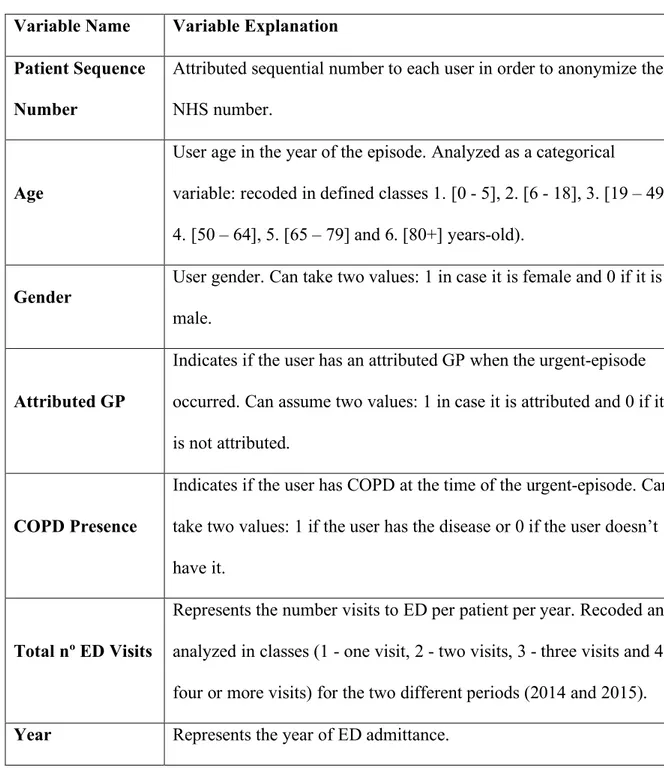
The main source of data was provided by ACSS. This database contains properly anonymized information in strict compliance with all applicable laws and rules for data protection, covering patients that visited ED at least once, in Portugal, for the period comprising 2014 and/or 2015. Table 1 shows the variables selected for inclusion on the empirical analysis.
Table 1: Variable Identification and Explanation. Variable Name Variable Explanation Patient Sequence
Number
Attributed sequential number to each user in order to anonymize their NHS number.
Age
User age in the year of the episode. Analyzed as a categorical
variable: recoded in defined classes 1. [0 - 5], 2. [6 - 18], 3. [19 – 49], 4. [50 – 64], 5. [65 – 79] and 6. [80+] years-old).
Gender
User gender. Can take two values: 1 in case it is female and 0 if it is male.
Attributed GP
Indicates if the user has an attributed GP when the urgent-episode occurred. Can assume two values: 1 in case it is attributed and 0 if it is not attributed.
COPD Presence
Indicates if the user has COPD at the time of the urgent-episode. Can take two values: 1 if the user has the disease or 0 if the user doesn’t have it.
Total nº ED Visits
Represents the number visits to ED per patient per year. Recoded and analyzed in classes (1 - one visit, 2 - two visits, 3 - three visits and 4 - four or more visits) for the two different periods (2014 and 2015). Year Represents the year of ED admittance.
COPD & GP
Posteriorly developed bi-variate variable, corresponding to patients having and attributed GP and COPD simultaneously.
Generated
Emergencies (GE)
Posteriorly developed variable corresponding to the percentage of emergencies generated, in volume, per group of patients.
The statistic software STATA (version 14) was utilized with the aim of collecting information on (1) the classification of patients in infrequent or frequent users (with a frequent user being one that visits an ED four or more times in a year), (2) the portray of this group in terms of demographic characteristics, and (3) how the attribution of a GP, the prevalence of COPD, or a mix between both, can affect the probability of being a frequent user. In this case, probit is the particular statistical method used. This model runs on the basis that, given a determined event of binary outcome, there may be several other events, that might predict its outcome. In a simple way, the outcome can be explained or predicted by other variables (IDRE, 2018). Given a patient that went to an ED at least once, what is his/her probability of being a frequent user? A probit model is estimated to provide an answer to this question.
To know the impact caused by the different independent variables on the probability of being a frequent ED user (the binary outcome variable), this project is based on data capturing the population that went to an ED for 2014 and/or 2015. In this study, the size of the population corresponded to 3 052 437 ED users for 2014, 3 064 574 ED users for 2015 and to a total of 6 117 011 ED users when analyzing the population for both years. Table 2 shows the distribution of the independent variables in both relative and absolute terms.
Table 2: Gender, Attributed General Practitioner, Chronic Obstructive Pulmonary Disease and Age-Group distribution among the population, per year, and respective Generated Emergencies percentage.
Nº Users % Users % GE 2014 2015 2014 2015 2014 2015 Gender Female 1 680 952 1 680 645 55,1 54,8 56,7 56,5 Male 1 371 485 1 383 929 44,9 45,2 43,3 43,5 Attributed GP Yes 2 639 248 2 659 108 86,5 86,8 86,4 87,4 No 413 189 405 466 13,5 13,2 13,6 12,6 COPD Yes 52 527 58 270 1,7 1,9 2,4 2,6 No 2 999 910 3 006 304 98,3 98,1 97,6 97,4 Age Groups (Years) 0 to 5 327 293 318 711 10,7 10,4 9,6 10,0 6 to 18 429 002 434 065 14,1 14,2 12,8 13,3 19 to 49 1 088 506 1 083 034 35,7 35,3 13,9 13,9 50 to 64 494 319 500 922 16,2 16,3 14,8 14,6 65 to 79 455 928 460 222 14,9 15,0 16,7 16,2 80 + 257 310 267 602 8,4 8,7 32,2 32,0
3. Results & Discussion
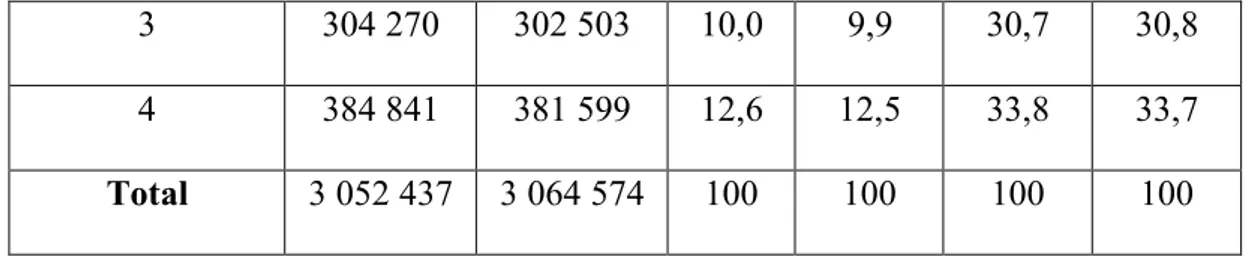
Table 3 shows user distribution and the correspondent GE percentage for each year, in accordance to their respective number of ED visits.
Table 3: Patient distribution according to their number of Emergency Department visits per year, and correspondent Generated Emergencies percentage.
Nº of ED Visits per Year Nº of Users % Users % GE 2014 2015 2014 2015 2014 2015 1 1 703 560 1 721 672 55,8 56,2 14,2 14,2 2 659 766 658 800 21,6 21,5 21,3 21,3
3 304 270 302 503 10,0 9,9 30,7 30,8
4 384 841 381 599 12,6 12,5 33,8 33,7
Total 3 052 437 3 064 574 100 100 100 100
When looking to Table 3, it is possible to see that more than half (>50%) of ED users only made one ED visit in a year, for both years (55,8% and 56,2% for 2014 and 2015 respectively). Moreover, frequent users correspond to 12,6% of the population under scrutiny for 2014 and 12,5% for 2015. However, when the focus lies on GE percentage, these values are not as small. In fact, the 12,6% and 12,5% frequent users are responsible for approximately 34% of GE for both 2014 and 2015, whereas the more than half ED users that only went once to an ED in a year, were responsible for 14,2% of GE. These results clearly demonstrate that there is a group of patients, the now known frequent users, utilizing the ED in an excessive manner and consequently creating a health care service disequilibrium.
Table 4 now shows coefficient and standard error results, for every estimated model. Moreover, it clearly highlights which results are statistically significant and which are not, as well as not applicable operations and reference group identification for each model. Graph 1 shows the resulting impact on the probability of being a frequent user, caused by the age variable and each of its specific age-groups.
Graph 1: Scatter plot on the impact, caused by each of the different age-groups, on the probability of being a frequent when analyzing the population in general.
Focusing on Model 1: Both Table 4 and Graph 1 indicate all age-groups have lower probabilities of being frequent users when compared against the reference group. This corresponds to the expected results on one side, as parents tend to be more cautious and preventive with younger children, and on the other side, contradicts expectations regarding highest values of ED usage by elder groups. The first probably happens because, within the reference group, patients cannot communicate their level of illness in a perfectly understandable manner, leading caregivers to visit an ED even if just for precaution. As so, this behavior cannot be of their responsibility, being adults the ones who make these decisions. Then, the results regarding elderly stop being contradictory if we exclude the children, once the 80+ age group comes in second place regarding the higher chance to be an ED frequent user. In fact, both results are in line with reality. The 0 to 5 years-old age-group, represents individuals who face higher environmental susceptibility to disease not only because their immune, reproductive, digestive and central-nervous systems are still developing, but also because their behaviors are more likely to put their health condition at risk (WHO, 2018). Moreover, although patients with
65 or more years of age are less likely to be frequent users when compared to children, they are still more likely to visit ED than all other age-groups. As we know, users in the extremes of the age bar, are typically the ones with a higher sensibility. Krieg (2016), stated individuals with 75 years of age or more have a higher tendency to frequently recur to an ED, which we can partly confirm by the results in this table. As so, these groups have higher tendencies to recur to health care, children with undeveloped systems and elders with increases in CD prevalence, such as COPD. Regarding gender, females have 2,2 percentage points increase in the probability of being frequent users when compared to males. In fact, Hansagi (2001) had already confirmed that, although the small difference, females would have a higher probability of being frequent ED users. Considering GP attribution, the analysis showed this variable not to be statistically significant, meaning the attribution of a GP did not affect the probability of being a frequent user, given the patient went at least once to an ED in 2014/2015. This result was unexpected, as there is a propensity to think a patient with an assigned GP will have a lower tendency to recur to an ED. As results do not support this premise, nor the contrary, there is no conclusion regarding the influence of the attribution of a GP caused on the probability of being a frequent user, when a patient has already been to the ED once. Focusing on COPD presence, having it positively impacts the probability of being a frequent user by 10 percentage points. As a respiratory tract illness that can, and typically leads to AE, COPD propitiates situations that drive users to ED in order to more promptly and efficiently solve these difficult situations (Higginson, 1989). When looking at the combined variable (having COPD & an attributed GP), the attribution of a GP to patients with COPD in the general population negatively impacts their probability of being frequent users by 1,1 percentage points. Although small, this result demonstrates that for at least 1,1% of COPD patients, the attribution of a GP can diminish the number of times they visit ED in a year. In translation, when compared to patients who suffer from COPD and don’t have an attributed GP, the ones who suffer from this disease and are
accompanied in PHC have a decrease of 1,1 percentage points in the probability of being frequent ED users. Finally, the year variable is measuring the influence caused by aspects that have changed from one year to the other, and have not been modelized. Model 1 shows that from one year to the other, a patient will have a lower probability of being a frequent user by 0,13 percentage points. Assuming the present is 2014, in 2015 a user will be less likely to be a frequent user by 0,13% due to these non-modelized aspects that changed from 2014 to 2015.
Focusing on Model 2: This analysis comprehended a sample including users having COPD in 2014 and not having an attributed GP for that same year but being attributed one in 2015. This resulted in a sample with 6 554 observations. In regard to age, the program excludes observations for the age-groups comprising individuals between 0 and 18 years of age, as they represent a group with rare COPD prevalence and consequent considerably small number of patients. As so, Model 2 comprehends an analysis conducted on a sample of 19 or more years-old patients that went at least once to an ED. Users between 65 and 79 years-years-old have a 4.9 percentage points increase in the probability of being frequent users, and individuals belonging to the 80+ years-old age-group have an increase in this probability by 10 percentage points. Both predicted in the literature, as these two age-groups comprise users more susceptible to complications of the disease (AE), and have higher sensibility to other co-morbidities (Guimarães, 2016). Consequently, they are more likely to experience emergency episodes and have higher tendencies to make ED visits (Krieg, 2016), when compared to individuals that also have COPD but belong to the reference group. Regarding gender, being female negatively impacts the probability of being frequent user by 2,3 percentage points. This result although contradicting the one for Model 1, comes into accordance with the literature. As stated by Bárbara (2013), when COPD affects the two genders, men are more likely to visit an ED than women as the disease also demonstrates higher prevalence among men. Model 2 also shows a
positive impact of 4,0 percentage points on the probability under analysis, for COPD patients that don’t have an attributed GP in 2014 and are attributed one in 2015. This was surprising, once it shows that having an attributed GP by 2015 actually increases the number of ED visits these patients do (when compared to patients suffering from the same disease and not having an attributed GP). As there is an inclination to consider the opposite, meaning a patient with an assigned GP will have a lower propensity to recur to an ED (Wang, 2005), three scenarios can be conjectured in order to justify this result: (1) these patients comprised the most severe cases of the disease in 2014 and as so, they were attributed a GP to help deal with the disease by 2015. However, this does not produce results in time for us to see a change in the influence of this attribution. The disease has already progressed to a high severity level and the GP needs to refer these patients from PHC to SHC anyway (Rowe, 2018); (2) these patients are not satisfied with PHC or have difficulties in accessing it and they have been trying to get this care through SHC anyway (Oliveira, 2006); (3) these frequent COPD users in SHC are likely to be frequent users in PHC as well (Hansagi, 2001). Thus, GP attribution to these patients does not influence their behavior in ED. However, there is no information available to make this distinction possible. In regard to year, the non-modelized aspects do not impact the probability of being a frequent user in a statistically significant way, meaning that from one year to the other, there were no significant (non-modelized) changes influencing this probability.
Focusing on Model 3: This model comprehends an analysis where the sample comprised users who didn’t suffer from any type of CD in 2014, didn’t have an attributed GP for that same year, but were attributed a GP in 2015. This separation resulted in a sample with 429 449 observations. In regard to age, Model 3 shows that, for patients with no chronic conditions, there is a decrease in ED usage for all age-groups, when patients were attributed a GP. Once more, these results are in accordance to the literature, showing GP attribution
produces an impact, reducing the number of times these patients visit ED. Regardless of age, this possibility for follow-up in PHC clearly impacts ED visit behavior. For all age-groups under analysis, the attribution of a GP lead to the reduction in ED usage in a statistically significant way. In terms of gender, being female positively impacts the probability under study by 3,2 percentage points, given both genders are freed of CD (also in accordance to previously stated information). Model 3 shows an increase of 0,9 percentage points in the probability of a patient without CD being a frequent user, when he/she doesn’t have an attributed GP in 2014 and is attributed one in 2015. Surprisingly, this result shows that having a GP by 2015 increases the number of ED visits these patients make, when compared to patients in the same conditions but without an assigned physician. Speculation can come in place once again, as these patients might comprise the most severe cases of the non-chronically-ill population in 2014 and as so, they were attributed a GP to help cooperate with these episodes in 2015. However, as for model 2, there is no information available to allow this analysis. Regarding year, non-modelized aspects impact the probability of being a frequent user and cause an increase on it by 4,7 percentage points, meaning that from one year to the other, there were changes, influencing this probability for non-CD-patients.
Focusing on Model 4: The model shows an analysis comprising users that have COPD and an assigned GP in 2014 but stop having a GP in 2015. Model 4 indicates results for a sample where the total number of observations was 4 950. Unfortunately, the impact caused by all the variables evaluated in Table 4 for Model 4, on the probability of being a frequent user, was found not to be statistically significant. This means none of the variables affect the probability of a COPD patient being a frequent user, when he/she has a GP in 2014 and loses it in 2015.
Focusing on Model 5: In this case, the model shows the impact on ED usage, caused by having and attributed GP in 2014 and losing it in 2015, in a population with no CD of any sort. This resulted in a sample with 240 956 observations. In regard to age, there are negative impacts in the probability of being a frequent user for all age-groups, which contradicts the results obtained for model 3. Here, the loss in PHC follow-up reduces de probability of these users being frequent ED visitors. This means that patients who lose their GP by 2015 end up visiting the ED less often. However, both results can be congruent if we speculate that this negative impact on the probability under analysis results from follow-up cessation for the healthier cases that do not need this accompaniment anymore. When analyzing gender, being a female positively impacts, by 3,0 percentage points, the probability of being a frequent ED user. Focusing on year, non-modelized aspects impact the probability of non-CD patients being frequent users, causing an increase of 0,6 percentage points on it, when they have an attributed GP in 2014 and lose it the next year. This means that from one year to the other, the loss of GP follow-up, positively influenced the probability of non-CD patients having to visit an ED.
4. Limitations
As in a considerable amount of studies conducted until today, there are potential limitations in this investigation requiring careful interpretation of the results. Data heterogeneity and the immense population size under consideration may have caused a bias of the results. Moreover, the inexistence of a variable expressing neither the motif, symptom or condition underlying ED admittance, nor the care pathway these patients had undergone before, might also have compromised a more thorough behavioral analysis of the COPD patients in question. In this sense, although it is known if the patients suffer from the disease, it is neither recognized if their ED visits were related with this fact, nor if their behavior before visiting an ED comprehended a visit to PHC. The creation of such variable would allow the precise
Furthermore, would permit the analysis of the characteristics enhancing or diminishing visit frequency. Finally, as there is no prior study, conducted in Portugal, with the same characteristics or the same purpose of investigation, the validity of the obtained results might also be constrained. Although the clear acknowledgement of these potential limitations, it is likely that these analyses are useful in the preliminary discovery of this research question, given the population size. In the future, it is crucial to include the prior health care path of the patient, and as already suggested by Aguiar (2016), the follow-up in PHC and ED visits as well. For this to be possible, it will be necessary to implement a system that allows the collection of data in these aspects of the NHS.
5. Final Remarks
The accomplishment of this study gains special relevance in the area of respiratory diseases due to the scarcity of studies on this subject in Portugal, the increasingly evident problem of attendance to ED, the difficulties in accessing health care, and the need to implement strategies that make services more efficient (all already mentioned by Aguiar (2016)). Focusing on a disease that is increasingly prevalent and debated, this study seeks to characterize patients with COPD by testing which factors, within a range of possibilities, contribute to frequent ED usage by these patients. In this context, and answering the focal question leading this project, it is possible to conclude what the profile of a COPD user who seeks an ED more often is, and more importantly, if GP attribution influences this behavior. After analysis and discussion of the obtained results, it is now feasible to indicate whether or not there is a correlation between the allocation of a GP and the frequency of ED visit by this group of users. In consequence, these patients could be the target of governmental health-related policies that could reduce their ED recurrence, given, for example, the opportunity to experience better follow-up in PHC.
Statistics show a COPD population that had at least one visit to the ED with 55 thousand patients on average (for each year), where women have a lower tendency to be frequent ED users and 59,7% patients are men. In fact, these results are supported by the literature, and the probit model estimations. From the results, women are more likely to be frequent users in the general and non-CD populations (positive impacts of 2,2 and 3,2/3,0 percentage points in this probability, respectively), whereas they are less likely to be frequent ED users within the COPD sample (negative impact of 2,3 percentage points in this probability). Regarding age-group analysis, among the general population, 0 to 5 years-old individuals are the ones visiting the ED more often. On the other extreme of the age bar, 80+ years-old patients are the second group to visit the ED more frequently. More importantly, as discussed for non-CD-populations, GP attribution clearly impacts age-group behavior towards ED usage, whether by diminishing the number of visits when a GP is attributed to these patients (Model 3 in Table 4) or reducing ED usage when GP accompaniment is lost (Model 4 in Table 4). Although causality is not understood in this project, speculation can come in place. As so, these two contradictory results might be explained with good follow-up for the most severe cases in PHC for the first case (Model 3 in Table 4), and no need for follow-up given the reach to a healthy patient status in the second (Model 4, Table 4). Nonetheless, both results further justify the need for studies on this matter. On the other hand, GP attribution in the COPD population has been shown to positively impact the probability of being a frequent user, causing an increase in ED usage by 4,0 percentage points (Model2 in Table 4). As a puzzling result, once it contradicts the expected one (better follow-up health care = lower propensity to visit ED), this outcome makes its underlying justifications relevant for further study. COPD patients already have a higher propensity to be frequent users, independently of their age, given they suffer from CD. It can now be conjectured these results are probably correlated with patient illness severity and associated co-morbidities. As reinforced by the literature, COPD prevalence and AE frequency
tends to increase with disease progression, which is typically related with age progression. Bering this in mind, COPD patients will have increasing needs for health care access as they age, and their disease progresses. However, causality is also not understood in this case, although several hypotheses have been formulated on section 4, Model 2.
In a succinct way, when patients suffer from COPD, it is possible to affirm that the impact on the probability of being a frequent user, caused by: (1) age, results in increased ED usage, especially for individuals with 80+ years-old; (2) gender, results in increased ED usage for men, as there is a higher prevalence of the disease among them, they are also more susceptible to be frequent ED users; (3) GP attribution, results in increased ED usage.
As the purpose of this study is to find if the attribution of a GP influences the number of times a COPD patient goes to the ED, regardless of the motive underlying his/her visit, an answer can now be provided. Truth is, GP attribution influences ED usage for COPD patients, even if the result is the opposite of expected (increases usage instead of reducing it). The reasons behind this behavior are still unclear, although some conjectures have been made on section 4, Model 2. Those include a possible inverted causality result, meaning that the coefficient of the variable regarding GP attribution captures high severity cases, having an attributed GP and going to the ED more often. In fact, this ends up producing a stronger effect than the one resulting from a good GP-patient follow-up.
In accordance, this study has provided important information to support further research studies exploring causality for COPD patients’ ED usage behavior. Moreover, it brings contributions towards the improvement of disease knowledge and treatment in PHC and SHC, as well as towards the increase of new innovative ways of efficiently improving life and health-related conditions for these patients by developing prevention, control and monitoring strategies for COPD patients. It is then suggested that all patients be early assigned a GP, with special emphasis on the allocation of these professionals to patients with greater vulnerability, although
further studies are needed to more precisely evaluate the potential impact of such measure. Indeed, on can speculate that early GP attribution to COPD patients, guaranteeing enriched and meaningful follow-up in PHC, might drive different results in ED usage behavior for these patients. Not only in this group, but throughout the population, this suggestion corresponds to a solution that is capable of providing special attention and easier access to health care, and better QoL for citizens “now” monitored in PHC, thus reducing the need to resort to SHC services.
Finally, and given not only the changes we have been experiencing, but also the ones yet to come, I would like to conclude on a personal thought: The time has come for us to develop
a perspective of life revolving around prevention medicine, as there is no doubt, the curable way of looking at it is already outdated.
6. References
Adeloye, D., Chua, S., Lee, C., Basquill, C., Papana, A., Theodoratou, E., Nair, H., Gasevic, D., Sridhar, D., Campbell, H., Chan, KY., Sheikh, A., Rudan, I., & Global Health Epidemiology Reference Group (GHERG). 2015. “Global and regional estimates of COPD prevalence: Systematic review and meta-analysis.” Journal of global health, 5(2): 020415. DOI: 10.7189/jogh.05-020415.
Aguiar, P. 2016. “Internamento vs Acompanhamento em Ambulatório na Doença Pulmonar Obstrutiva Crónica em Portugal Continental 2004-2014.” Master Dissertation. Universidade Nova de Lisboa - ENSP. Available at: http://hdl.handle.net/10362/19945.
Associação Respira. 2018. Available at: http://www.respira.pt/Default.aspx#/
Atun, R., Gurol-Urganci, I., Hone, T., Pell, L., Stokes, J., Habicht, T., Lukka, K., Raaper, E., & Habicht, J. 2016. “Shifting chronic disease management from hospitals to primary care in Estonian health system: analysis of national panel data.” Journal of global health, 6(2): 020701. DOI: 10.7189/jogh.06.020701. Bárbara, C. 2018. “Caminhando para o Futuro.” Highlights – News Farma Editions, 90: 4-5. Legal Deposit: 376668/14.
Bárbara, C., Rodrigues, F., Dias, H., Cardoso, J., Almeida, J. Matos M., Simão, P., Santos, M., Ferreira J., Gaspar, M., Gnatiuc, L., & Burney, P. 2013. “Chronic Obstructive Pulmonary Disease Prevalence in Lisbon, Portugal: The Burden of Obstructive Lung Disease Study.” Pulmonology Journal., 19(3): 96-105. DOI: 10.1016/j.rppneu.2012.11.004.
Brotons, C., Björkelund, C., Bulc, M., Ciurana, R., Godycki-Cwirko, M., Jurgova, E., Kloppe, P., Lionis, C., Mierzecki, A., Piñeiro, R., Pullerits, L., Sammut, MR., Sheehan, M., Tataradze, R., Thireos, EA., & Vuchak, J; EUROPREV network. 2005. “Prevention and health promotion in clinical practice: the views of general practitioners in Europe.” Preventive Medicine, 40(5): 595–601. DOI: 10.1016/j.ypmed.2004.07.020
(EXPH) EXpert Panel on effective ways of investing in Health. 2018. “Opinion on Assessing the impact
of digital transformation of health services.” Available at:
https://ec.europa.eu/health/expert_panel/sites/expertpanel/files/022_digitalisation_en.pdf
Fromer, L. 2011. “Implementing chronic care for COPD: planned visits, care coordination, and patient empowerment for improved outcomes.” International journal of chronic obstructive pulmonary
disease, 6: 605-14. DOI: 10.2147/COPD.S24692.
Giddens, A. 2010. “Sociologia”. 8th Edition, Lisboa: Fundação Calouste Gulbenkian.
Available at:
http://www.joinville.udesc.br/portal/professores/ivocosta/materiais/Anthony_Giddens_Sociologia.pdf. (GOLD) Global Initiative for Chronic Obstructive Lung Disease. 2017. “Global Strategy for the Diagnosis, Management, and Prevention of Chronic Obstructive Pulmonary Disease.” Available at:
https://goldcopd.org/wp-content/uploads/2017/11/GOLD-2018-v6.0-FINAL-revised-20-Nov_WMS.pdf.
Gowin, E., Pawlikowska, T., Horst-Sikorska, W., & Michalak, M. 2010. “British and Polish general practitioners’ opinions on the importance of preventive medicine.” Health Promotion International, 26(2): 171–176. DOI: 10.1093/heapro/daq047
Guimarães, M., Bugalho, A., Oliveira, A., Moita, J., & Marques, A. 2016. “COPD control: Can a consensus be found?” Pulmonology Journal, 22(3): 167-176. DOI: 10.1016/j.rppnen.2016.01.004.
Gysels, M., Higginson, IJ. 2008. “Access to services for patients with chronic obstructive pulmonary disease: the invisibility of breathlessness.” Journal of Pain and Symptom Management, 36(5): 451-460. DOI: 10.1016/j.jpainsymman.2007.11.008.
Hansagi, H., Olsson, M., Sjöberg, S., Tomson, Y., & Göransson, S. 2001. “Frequent use of the hospital emergency department is indicative of high use of other health care services.” Annals of
Emergency Medicine, 37(6): 561-567. DOI: 10.1067/mem.2001.111762
Higginson, I., & McCarthy, M. 1989. “Measuring symptoms in terminal cancer: are pain and dyspnea controlled?” Journal of the Royal Society of Medicine, 82(5): 264-267. PMCID: PMC1292128
(IDRE) Institute for Digital Research and Education, UCLA. 2018. “Probit Regression | STATA annotated output.” Available at: https://stats.idre.ucla.edu/stata/output/probit-regression/.
Jeppesen, E., Brurberg, K., Vist, G., Wedzicha, J., Wright, J., Greenstone, M., & Walters, J. 2012. “Hospital at home for acute exacerbations of chronic obstructive pulmonary disease.” Cochrane
Database of Systematic Reviews, 16(5): CD003573. DOI: 10.1002/14651858.CD003573.pub2.
Krieg, C., Hudon, C., Chouinard, M., & Dufour, I. 2016. “Individual predictors of frequent emergency department use: a scoping review.” BMC Health Services Research, 16(1): 594. DOI:10.1186/s12913-016-1852-1
Marcinowicz, L., Pawlikowska, T., Windak, A., & Chlabicz, S. 2013. “Perceptions of an older patient on the role of the family doctor in health promotion: a qualitative case study.” Journal of medical case
reports, 7, 57. DOI:10.1186/1752-1947-7-57
Miravittles, M., Ferrer, M., Pont, À., Zalacain, R., Alvarez-Sala, J., Masa, F., Verea, H., Murio, C., Ros, F., & Vidal, R.; for the IMPAC Study Group. 2004. “Effect of exacerbations on quality of life patients with chronic obstructive pulmonary disease: a 2 year follow up study.” Thorax, 59(5): 387-395. DOI: 10.1136/thx.2003.008730
Moore, V. 2012. “Spirometry: step by step.” Breathe, 8(3): 232-240. DOI: 10.1183/20734735.0021711. Murtagh, J. 2011. “Paradigms of family medicine: bridging traditions with new concepts; meeting the challenge of being the good doctor from 2011.” Asia Pacific Family Medicine, 10:9. DOI: 10.1186/1447-056X-10-9.
(NIS) National Institute of Statistics. 27 Tábuas de Mortalidade 2015-2017. 2018. Available at:
https://www.ine.pt/xportal/xmain?xpid=INE&xpgid=ine_destaques&DESTAQUESdest_boui=316114 635&DESTAQUEStema=55466&DESTAQUESmodo=2 (Accessed at 23rd October 2018).
Oliveira, A. 2018-a. “Integração dos Cuidados em DPOC Através de uma Rede de Espirometria.”
Highlights – News Farma Editions, 90: 14. Legal Deposit: 376668/14.
Oliveira, A., Munhá, J., Bugalho, A., Guimarães, M., & Marques, A., on behalf of GI DPOC – Grupo de Interesse na Doença Pulmonar Obstrutiva Crónica. 2018-b. “Identification and assessment of COPD exacerbations.” Pulmonology Journal, 24(1): 42-47. DOI: 10.1016/j.rppnen.2017.10.006
Oliveira, A. 2006. “Basic Emergency.” Acta Médica Portuguesa, 19(4): 269-273.
Osman, I., Godden, D., Friend, J., Legge, J., & Douglas, J. 1997. “Quality of life and hospital re-admission in patients with chronic obstructive pulmonary disease.” Thorax, 52(1): 67-71. PMID: 9039248.
Pawels, R., Buist, A., Calverley, P., Jenkins, C., & Hurd, S.; On behalf of the GOLD Scientific Committee. 2001. “Global strategy for the diagnosis, management, and prevention of chronic obstructive pulmonary disease. NHLBI/WHO Global Initiative for Chronic Obstructive Lung Disease (GOLD) Workshop summary.” American Journal of Respiratory and Critical Care Medicine, 163(5): 1256-1276. DOI: 10.1164/ajrccm.163.5.2101039.
Peces-Barba, G., Barberà, J., Agustí, À., Casanova, C., Casas, A., Izquierdo, J., Jardim, J., Varela, V., Monsó, E., Montemayor, T., & Viejo, J. 2008. “Guía Clínica SEPAR-ALAT de diagnóstico y tratamiento de la EPOC.” Archivos de Bronconeumología, 44(5): 271-281. DOI: 10.1016/S1579-2129(08)60043-9.
Rodrigues, F. 2018. “O Papel da Telerreabilitação Domiciliária na Integração dos Cuidados Prestados ao Doente com DPOC.” Highlights – News Farma Editions, 90: 9-11. Legal Deposit: 376668/14. Rowe, B., Villa-Roel, C., Bhutani, M., Couperthwaite, S., & Runham, N. 2018. “Exploring health care connections and transitions in care for patients presenting to emergency departments with acute wheezing illness.” Résumés scientifique, 20(1): S112. DOI: 10.1017/cem.2018.352
Seneff, M., Wagner, D., Wagner, R., Zimmerman, J., & Knaus, W. 1995. “Hospital and 1-year survival of patients admitted to intensive care units with acute exacerbation of chronic obstructive pulmonary disease.” JAMA Journal, 274(23): 1852–1857. DOI: 10.1001/jama.1995.03530230038027
Vestbo, J., Hurd, S., Augustí, A., Jones, P., Vogelmeier, C., Anzueto, A., Barnes, P., Fabbri, L., Martinez, F., Nishimura, M., Stockley, R., Sin, D., & Rodriguez-Roisin, R. 2013. “Global Strategy for the Diagnosis, Management, and Prevention of Chronic Obstructive Pulmonary Disease: GOLD Executive Summary.” ATS Journals, 187(4): 347-365. DOI: 10.1164/rccm.201204-0596PP.
Wang, Q., & Bourbeau, J. 2005. “Outcomes and health-related quality of life following hospitalization for an acute exacerbation of COPD.” Respirology Journal, 10(3): 334-340. DOI: 10.1111/j.1440-1843.2005.00718.x.
Wilkinson, T., Donaldson, G., Hurst, J., Seemungal, T., & Wedzicha, J. 2004. “Early therapy improves outcomes of exacerbations of chronic obstructive pulmonary disease.” American Journal
of Respiratory and Critical Care Medicine, 169(12): 1298-1303. DOI:
10.1164/rccm.200310-1443OC
(WHO) World Health Organization. 2018. “Air Pollution and Child Health.”
Available at: https://www.who.int/ceh/publications/Advance-copy-Oct24_18150_Air-Pollution-and-Child-Health-merged-compressed.pdf?ua=1.
World Health Organization (WHO). (2008). The World Health Report 2008 - primary Health Care (Now More Than Ever). The World Health Report. DOI: 10.12927/hcpol.2013.22778.
7. Appendices
Appendix 1 – Table 1. All abbreviations.
AE Acute Exacerbation(s). GP General Practitioner(s). ALE Average Life Expectancy. NHS National Health Service. BOLD Burden of Obstructive Lung Disease. NIS National Institute of Statistics.
CD Chronic Disease(s). PHC Primary Health Care.
COPD
Chronic Obstructive Pulmonary Disease.
QoL
Quality of Life
ED Emergency Department(s). SHC Secondary Health Care GE Generated Emergencies. WHO World Health Organization. GOLD Global Initiative for Chronic Obstructive Lung Disease.
Appendix 2 - Table 2. Portugal’s Average Life Expectancy (ALE) at birth from the 2012-2014 triennium to the 2015-2017 triennium (NIS, 2018).
Triennium
ALE (Years)
General Average Men Women
2012-2014 80,24 77,16 83,03
2013-2015 80,41 77,36 83,23
2014-2016 80,62 77,61 83,33
2015-2017 80,78 77,74 83,41
Appendices References:
(NIS) National Institute of Statistics. (2018). 27 Tábuas de Mortalidade – 2015-2017. Available at: