Maio de 2017
Working
Paper
452
How to neutralize the Dutch disease notwithstanding
the natural resources curse
TEXTO PARA DISCUSSÃO 452•MAIO DE 2017• 1
Os artigos dos Textos para Discussão da Escola de Economia de São Paulo da Fundação Getulio
Vargas são de inteira responsabilidade dos autores e não refletem necessariamente a opinião da
FGV-EESP. É permitida a reprodução total ou parcial dos artigos, desde que creditada a fonte. Escola de Economia de São Paulo da Fundação Getulio Vargas FGV-EESP
___________
Luiz Carlos Bresser-Pereira is emeritus professor of Getúlio Vargas Foundation. [email protected] www.bresserpereira.org.br
How to neutralize the Dutch disease
notwithstanding the natural resources curse
Luiz Carlos Bresser-Pereira
Paper to be presented to the Likhachev Science Conference, St. Petersburg University of Humanities and Social Sciences, St. Petersburg, May 18-20, 2017.
Summary: This paper discusses two closely related concepts – the Dutch disease and the
natural resource curse – and a third one, exchange rate populism, associated to the curse. The Dutch disease is a long-term overvaluation of the national currency that originates from the exports of commodities which originate Ricardian rents. The natural resource curse is the generalized rent-seeking that takes over a country that exports commodities. And exchange rate populism is a political practice of keeping the national currency overvalued, so to assure reelection to the politician. This paper shows that the curse and the populism will make difficult for a country to neutralize the Dutch disease, which blocks investment and growth, but argues that the fight against the natural resource curse and the exchange rate populism will be strengthened if the policymakers realize that there is a relatively simple policy that effectively neutralize the disease – a policy that was sketched almost ten years ago (Bresser-Pereira 2009), but remains hardly known by economists.
Key words: Dutch disease, natural resource curse, exchange rate populism, growth
This paper discusses two interrelated concepts– the Dutch disease and the natural resource curse, the first an economic, the second a political and institutional problem – and focus in the first one. The Dutch disease is a serious obstacle to industrialization and growth. Corden and Neary (1982, 1984) were the first to formalize it, but their model has proved insufficient to include this long-term overvaluation of the exchange rate in the core of development economics. It involved an economy with three sectors – the tradable commodity sector, the tradable non-commodity sector, and the non-tradable sector –, from which one could not deduce the policy to neutralize he major competitive disadvantage that, paradoxically, the countries benefited from abundant natural resources confront. Instead, economists have been attracted by the political problem – the rent-seeking involved in the natural resource curse. In 2009, Bresser-Pereira introduced a second model of the Dutch disease, which, instead of concentrating in the disequilibrium among the three sectors, focused directly in the long-term overvaluation of the exchange rate that it causes, and deduced from it a simple (but politically difficult to implement) neutralization policy. This model was improved in the following years and end up constituting a developmental macroeconomics where the exchange rate and the current-account deficit play a central role.
Ten years ago, two books discussed the Dutch disease and the natural resources curse –
Escaping the Resource Curse, by Macartan Humphreys, Jeffrey D. Sachs and Joseph Stiglitz,
eds. (2007), and Natural Resource: Neither Curse nor Destiny by Daniel Lederman and William F. Maloney, eds. (2007). This last one is radical on the matter. The two editors make clear in the introduction that there is not a natural resource curse or “the so called” Dutch disease. For them “several plausible indicators of the incidence of natural resource exports
2
seem to have a positive rather than a negative effect on subsequent economic growth. Put bluntly, there is no resource curse” (Lederman and Maloney 2007: 3).1 Differently, the first book acknowledges that the natural resource curse or the Dutch disease represents a serious problem, but the editors eventually emphasize the political-institutional pr oblem, possibly because the economic solutions that the three distinguished economists have to offer are not satisfying for themselves. In his chapter, Sachs (2007: 191) proposes some economic policies aiming to overcome the problem. His essential recommendation is that “oil earnings are invested in ways that enhance productivity, and thereby raise rather than lower production in the non-oil traded good”. He also considers the possibility of pegging the national currency to the dollar, but notes that pegging requires substantial foreign exchange reserves. And he gets near the solution of the problem when he views as a possibility to subside the production of manufactured goods that have a significant contribution to the technological sophistication of the economy, but he does not explore this possibility because subsides are not a real solution for a long-term and structural problem as is the Dutch disease.
In this paper, I will summarize the theory of determination of the exchange rate, the structural model of the Dutch disease, and the policy that neutralizes it, which I will refer as the new developmental model (NDM).2 My reference will be the book by Humphreys, Sachs
and Stiglitz. In its foreword, George Soros (2007: XI) remarks that the curse or the disease involves three problems, the currency appreciation (the disease), the high fluctuation of commodity prices, and the effect on political conditions (the curse). And asserts: “The first two are purely economic factors and have been studied extensively. It is the third factor that needs to be better understood”. I am not persuaded that he is right. We should not underestimate the third factor, but the open macroeconomics on the exchange rate and the current-account deficit is faltering. On the other hand, the rent-seeking if not shear corruption that characterizes many countries exporting commodities is highly detrimental to growth. And I agree with the distinguished political scientist, Terry Lynn Karl, who also signs a chapter in the book, who recently told me that the corruption associated with the rent-seeking is a major obstacle to the adoption of a policy to neutralize the Dutch disease. But I am deeply persuaded that if we have a better model explaining the disease, not only its terrible consequences will be better understood, but also the way to neutralize it will be something economically obvious that will open new venues to growth policymaking.
The determination of the exchange rate
I begin with a simple definition of the two problems. The natural resource curse is an essentially political-institutional problem; it is the generalized rent-seeking taking place in a country exporting commodities which involve Ricardian rents; it is the transformation of the state into a predator or an extractive state in which government economic and political elites are not oriented to production but to capture of rents that the state captures by imposing some tax on the exports of the commodity. Differently, the Dutch disease is an economic problem; it is the long-term overvaluation of the national currency that originates from the exports of commodities that, benefiting from abundant and cheap natural resource, are also a source of Ricardian rents, and, for that reason, they may be exported at a substantially more appreciated exchange rate than the one that the companies producing tradable non-commodity goods require to be competitive, although they utilize technology in the world state of the art. This competitive disadvantage blocks industrialization, or, if the country was previously industrialized, causes premature deindustrialization. As in the case of the natural resource curse, it is an economic problem that happens because such commodities benefit from Ricardian rents, and/or commodity booms, which allow the companies that produce and export
3
them to make a profit with an overvalued exchange rate that makes not competitive the producers of the manufactured goods that the country could potentially produce.
This NDM definition of the Dutch disease is different from Corden and Neary’s model already referred. This one emphasized the existence of three sectors in the economy, and the overvaluation of the national currency appeared because of the rise in the international prices of the commodities exported, which caused the increase in the domestic prices of the non-tradable sector and the fall in domestic prices of the non-tradable non-commodity sector. Thus, as Sachs (2007: 183) remarks, “the rise in the relative price of non-tradable goods to tradable goods (or equivalently, the fall in the relative price of the tradable goods) is termed a real exchange rate appreciation”. This is correct, but in this model the disease only occurs in the case of commodity booms, and, from the model it is difficult to deduce a policy to neutralize it.
The NDM focus in the exchange rate, and involves a general theory on it. The economic literature on the exchange rate assumes that it is determined by the supply and demand of foreign money to which it adds the purchasing power parity model. In the NDM, the exchange rate fluctuates according to the supply and demand of foreign money around a
value-equilibrium – named “current value-equilibrium” –, which may be defined as the exchange rate that
covers the costs plus reasonable profit rate of the companies that participate from the international market, and balances intertemporally the country’s current-account. This value-equilibrium changes as the comparative unit labor cost of the country varies and, secondarily, as the terms of trade of the country change in relation to a basket of foreign currencies.
When the Dutch disease is present, there is a second value-equilibrium – the “industrial equilibrium” –, which is defined as the exchange rate that makes competitive the non-commodity companies that utilize technology in the world state-of-the-art. What economics assumes is that the industrial equilibrium should be equal to the current equilibrium (what would make the industrial equilibrium unnecessary) when firms use the best technology and management practices available in the world. The tradable non-commodity companies would be necessarily competitive. But, when the country faces the Dutch disease, we must consider the two equilibriums. The Dutch disease is the difference between the two equilibriums; its severity is on this difference in relation to the industrial equilibrium.
In this model, the determination of the exchange rate price follows a historical tendency – the tendency to the cyclical and chronic (in the long-term) overvaluation of the exchange rate. Currency crises mark the end and the beginning of each cycle. When the country is hit by a financial crisis, the national currency devalues sharply, and becomes more devaluated than the industrial equilibrium. Once the crisis slows down, the currency began to appreciate again, crosses the industrial equilibrium, the current equilibrium, enters the realm of current-account deficits, and eventually reaches a bottom where it remains for several years. Given the overvalued currency, the foreign debt increases, or as the current-account deficit increases dangerously up to the point in which, suddenly, the international creditors lose confidence, stop the roll-over of the foreign debt, and a new currency crisis brakes down.
Two factors cause such appreciation: the Dutch disease and three habitual policies adopted by most developing countries. The Dutch disease brings down the exchange rate to the current equilibrium, because in a commodity exporter the exchange rate is basically determined by the international prices of the commodities. The three habitual and interrelated policies that appreciate further the national currency and lead the country to current-account deficits are the policy of growth with current-account deficits and foreign indebtedness, the use of the exchange rate as an anchor against inflation, and the central bank setting high the “level” around which it conducts its monetary policy to attract capitals or to control inflation.
4
Besides the value of the current and the industrial equilibrium and the variables behind them (the variations in the comparative unit labor cost) and besides the three habitual policies which affect the demand and supply of foreign money, there are other variables determining the exchange rate, mainly the variation in the terms of trade, major increases or falls in capital flows, introduction of capital controls, the monetary policy of the central bank, and the buying or selling reserves, but the main and systematic variables determining the exchange rate are the current value-equilibrium, the variations behind it (the Dutch disease and the variation of the comparative unit labor costs), and three habitual policies that impacting the demand and supply of foreign money, make the exchange rate to fluctuate around the value-equilibrium.3
The determination of the exchange rate gets completed with its close relation to the current-account. Other variables remaining constant, the higher the current-account deficit, the more appreciated will be the national currency. The exchange rate that balances the current-account is substantially more competitive than the exchange rate that balances a 3% of GDP current-account deficit. In this case the causal direction may be both ways. Factors that appreciate or depreciate the currency will affect the current-account, but the inverse takes place when the government adopts as policy “to grow with foreign savings”.
Figure 1: Current-account and exchange rate Figure 2: Determination of the exchange rate
Two figures resume the new developmental model of determination of the exchange rate. Figure 1 is just the linear relation between the current-account and the exchange rate. Figure 2 is the core figure showing the behavior of the cyclical behavior of the exchange rate price, and the behavior of the current and the industrial equilibriums. We have the two value-equilibriums and the exchange rate. The industrial equilibrium and the current equilibrium vary in time; the industrial equilibrium, mainly in consequence of changes in the comparative unit labor cost; the current equilibrium, mainly because of variations in the terms of trade. The exchange rate follows the tendency to the cyclical and chronic overvaluation.
Using the recent Brazilian experience as an example, the last cycle lasted from the 2002 to the 2014 crisis. In real reais, prices of the third quarter of 2016, the industrial equilibrium increased from R$ 3.80 to R$ 4.00 per dollar in consequence of the rise of the comparative unit labor cost of Brazil; the current equilibrium was around R$ 3,20 per dollar (meaning a Dutch disease of R$ 0.80 per dollar, or of 20%), except for the 2014 crisis, when my estimation is
5
that it almost reached R$ 4.00 per dollar and the Dutch disease zeroed due to the major fall in the prices of the commodity exported, mainly of iron and soy beans.
Exchange rate and growth
I am assuming the fundamental determinant of the growth rate is the investment rate: the public as well as the private investment rate – more the later than the former because private investment is supposed to represent between 75 and 80% of total investment. There are other variables on the supply side, as education, technical progress and good institutions, and on the side of demand, but investment in physical capital is the more important one. Technical progress exists mainly embodied in physical and human capital. Education and institutions are very important, but they don’t make a difference in the short-term. These variables assure a return on investment, but it is difficult to measure it, and its return is always in the long-term. Among them, institutions are mostly a celebrated value – particularly the guarantee of property rights and contracts –, but they are an endogenous variable that is simultaneously cause and consequence of growth. Instead, the investment rate – the public investment rate mainly in the infrastructure, and the private investment rate in all other sectors of the economy – are at the same time in the supply and in the demand sides, and have a direct relation to growth.
Considering this and the theory on the determination of the exchange rate just summarized, the exchange rate turns into a key variable in the investment function and, so, in growth theory. The reason for that is simple: the exchange rate is not only volatile; contrarily to what the other theories say, it doesn’t just change fast around the equilibrium. Instead, it remains substantially overvalued in each cycle, which has a duration of several years. Beginning with a financial crisis – usually a currency crisis – in which the exchange rate depreciates sharply, once it achieves a peak, it starts falling or appreciating gradually, reaches a kind of bottom, and remains around this bottom for some years – this bottom probably reflecting the minimum exchange rate that the more efficient exporters of commodities can stand.
Thus, when the company considers a new investment, it will probably make the calculation of its return having in mind such overvalued exchange rate, and, most likely, will not invest, or will just invest to keep the plant modern, not to expand production. When the exchange rate is just volatile, this leaves the business decision-makers insecure; when the exchange rate is overvalued in the long-term, he will just not invest. The exchange rate acts as a light switch that gives or refuses to the company access to the existing demand, be it international or domestic.
Neutralization of the Dutch disease
The Dutch disease is a problem as old as capitalism, international trade, and the existence of a relevant exchange rate. My understanding is that the main cause behind the decadence of Spain and Portugal was the Dutch disease that derived from the gold, the silver, and the sugar cane that they got from their colonies. Their currencies remained overvalued in the long-term, and turned industrialization and growth inviable. The neutralization of the Dutch disease is also an old practice, although it is known and defined only recently, from the 1980s. The fact that before the Corden and Neary model there was not a theory that explained it didn’t stop pragmatic and competent policymakers to neutralize it intuitively; but just in relation to the domestic market. To neutralize it also in relation to the foreign markets was rarer.
The Dutch disease is, by definition, a competitive disadvantage that the government must neutralize if it is interested in the well-functioning or markets. Much before economists knew
6
what was the Dutch disease, its neutralization in relation to the domestic market was made simply through the imposition of tariffs to the imports of manufactured goods. When the country imposes a 20% tariff on all imported manufactured goods, this is the same as to depreciate the currency in 20% in relation to imported manufactured goods. The tariff establishes a dual if not a multiple exchange rate regime. Many countries, instead of using tariffs, used directly dual or multiple exchange rate regimes. Liberal economists indicted import tariffs as “protectionism”, and developmental economists justified it, since Alexander Hamilton, with the infant industry argument. Actually, besides the infant industry argument, the neutralization of the Dutch disease also justifies high import tariffs, if the country is limited to assure to its competent companies access to the domestic market. When the country uses import tariffs to neutralize the Dutch disease, it is simply leveling the playing field. This is not protectionism.
When the country is beginning to industrialize and choses an import substitution strategy, the use of import tariffs is a legitimate way of eliminating the competitive disadvantage inherent to the Dutch disease, but this model is intrinsically limited as a growth strategy. In countries that adopted the import substitution strategy the growth rates fell whenever its benefits got exhausted. Others, like Brazil, having reached the exhaustion of this growth model, established, beginning in 1967, a major program of subsides to exports of manufactured goods. In this way, it completed the job, neutralizing the disease also in relation to foreign markets. And was successful. Exports of manufactured goods represented only 6% of total exports in 1965; in 1990 they reached its pick: 62%. Yet, in this year, weakened by ten years of foreign debt crisis, the country accepted liberalizing trade, believing that it was just eliminating protectionism. In fact, it was dismantling the mechanism of neutralization of the Dutch disease. From then on the country faced a major deindustrialization and low growth rates.
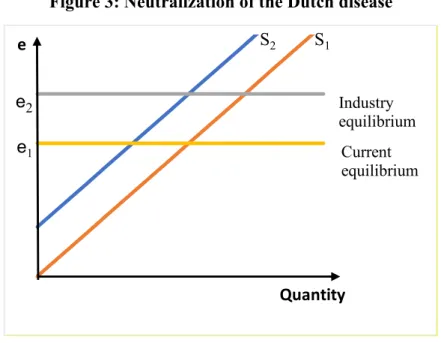
Figure 3: Neutralization of the Dutch disease
Multiple exchange rate regimes are not the best alternative to neutralize the Dutch disease. There is a simple policy that does the job without recurring to tariffs and subsides. It is a policy that derives directly from the New Developmental Model. It involves the imposition of a variable tax on the exports of the commodities that originate the disease that will vary according to the severity of the overvaluation. This one depends mainly on the variation of the commodity’s international price. When the prices increase, the tax will increase, and vice-versa. Giving a table of prices and percentage taxes for each main exported commodity, which
e Quantity 1 e 2 e Industry equilibrium Current equilibrium 2 S S1
7
in principle should be established in the law, the exporters will be assured a stable and satisfying profit rate. Note that, if the disease is not severe and the price falls very much, the percentage tax may be zero.
Why the tax or retention will neutralize the Dutch disease? Because it will increase the cost of production of the commodity, and, in consequence, the current equilibrium (the value-equilibrium determined by the commodities exported) will equalize the industrial value-equilibrium, and the market will duly lead the exchange rate price to fluctuate around the, now, unified equilibrium. Another way of reaching the same result is by considering the microeconomic consequence of the export tax. The tax will shift the supply curve of the commodity to the left, not in relation to its price that is given by international markets, but in relation to the exchange rate, and the value-equilibrium will be equalized following the industrial equilibrium. Figure 3 shows the neutralization of the Dutch disease considering the shift of the supply curve.
In our Brazilian example, a R$ 0.80 per dollar on the exports of the main commodities will neutralize the Dutch disease. In Argentina, in the major 2001 financial crisis, the government created a retention on the exports of commodities. It did that for fiscal reasons, not as a policy to neutralize the disease, but, although it was a fixed tax, it worked neutralizing the disease, reindustrialization took pace, and high growth rates were achieved, while the country experienced a surplus current-account. Yet, when inflation increased, the government decided to use the exchange rate as an anchor against it, the peso appreciated, the current-account zeroed, and the growth rates fell.
Winners and losers
Who will gain and who will lose? The price of the commodity will be determined mainly by the cost plus reasonable profit of the less efficient producer admitted in the market. Giving this price, before the tax, the countries that have a lower cost of production will be benefited by the corresponding rent (the difference between its cost of production and the cost of production of the least efficient producer admitted in the market), which will be captured by the producers that are more efficient than the marginal producer. Once the tax is imposed, the state will capture that rent, and the producers will be left only with the economic profit. But eventually they will pay nothing, because the national currency will depreciate due to the increase in the cost of production (or to the shift of the supply curve to the left), and what they paid in the form of taxes, they will receive back by a more devalued national currency.4 In the Brazilian case, he will pay R$ 0.80 per dollar exported, and receive back R$ 0.80 per dollar exported in terms of currency depreciation. Thus, the one that eventually pays for the tax is the population of the country, because in the day of the depreciation they will become poorer: they will be able to buy less tradable goods and services, whose relative price increased.
What to do with the new revenue? Its ideal destiny is the creation of a sovereign fund like the one that Norway has. The fund will not neutralize the disease (this is done by the tax), but it will avoid that the hard currency inflows will increase the supply of foreign money and appreciate back the national currency, it may do that, but it will have to buy reserves to neutralize the capital inflows – what will self-defeat the use of the money.
Thus, for the Dutch disease there is a solution. And for the natural resources curse – there is also a simple solution? Unhappily, no. This is a political and institutional problem with strong cultural attachments. It tends to be overcome as the country industrializes, turns capitalist, and turns democratic, but the fundamental challenge that human development faces is how to advance in these structural and political domains. It was not the purpose of this article
8
to discuss the natural resources curse, as it is not to discuss an additional political problem – exchange rate populism.
A second cause for the non-neutralization of the Dutch disease is economic populism. Not of the well-known fiscal populism that happens when the state or government gets involved in chronic pro-cyclical fiscal deficits, but what I call “exchange rate populism” – the nation-state or country expending more than it gets. Exchange rate populism is very attractive to politicians that want to be reelected. It increases the revenues of all (not only the wages of workers and the salaries of the middle class, but also the revenues of rentier capitalists on the form of interests, dividends and real state rents), and it makes everybody richer.
The fact that the neutralization of the Dutch disease involves a depreciation of the national currency makes this policy not attractive to politicians and to the people. This is one of the two reasons why countries face difficulty in imposing the required tax – exchange rate populism; the other is the natural resources curse. For both evils there is no simple solution, but we should not make depende the neutralization of the Dutch disease to “solving” them .
References
Bresser-Pereira, Luiz Carlos (2008) “The Dutch disease and its neutralization: a Ricardian approach” (2008) Brazilian Journal of Political Economy 28 (1): 47-71.
Bresser-Pereira, Luiz Carlos (2010) Globalization and Competition. New York: Cambridge University Press.
Bresser-Pereira, Luiz Carlos (2016) “Reflecting on new developmentalism and classical developmentalism”, Review of Keynesian Economics, 4 (3): 331-352. http://dx.doi.org/10.4337/roke.2016.03.07.
Bresser-Pereira, Luiz Carlos, José Luis Oreiro e Nelson Marconi (2016) Macroeconomia
Desenvolvimentista. Rio de Janeiro: Campus/Elsevier.
Humphreys, Macartan, Jeffrey D. Sachs & Joseph E. Stiglitz, eds. (2007) Escaping the
Resource Curse, New York: Columbia University Press.
Karl, Terry Lynn (1997) The Paradox of Plenty, Berkeley: The University of California Press. Karl, Terry Lynn (2007) “Ensuring fairness: The case for transparent fiscal social contracts”,
in Macartan Humphreys, Jeffrey D. Sachs and Joseph E. Stiglitz, eds. (2007): 256-285. Lederman, Daniel and William F. Maloney, eds. (2007) Natural Resource: Neither Curse nor
Destiny, Washington and Stanford: World Bank and Stanford University Press.
Sachs, Jeffrey D. (2007) “How to handle the macroeconomics of oil wealth”, In Humphreys, Macartan, Jeffrey D. Sachs & Joseph E. Stiglitz, eds. Escaping the Resource Curse, New York: Columbia University Press: 173-193.
Sachs, Jeffrey D. (2007) “How to handle the macroeconomics of oil wealth”, in Macartan Humphreys, Jeffrey D. Sachs and Joseph E. Stiglitz, eds. (2007):173-193.
Soros, George (2007) “Foreword to Escaping the Resource Trap, in Macartan Humphreys, Jeffrey D. Sachs and Joseph E. Stiglitz, eds. (2007): XI-XV.
9
1 Italics by the authors.
2 There is already a sizable literature on the NDM. I quote here Bresser-Pereira (2008) “The Dutch
disease and its neutralization: a Ricardian approach”; Bresser-Pereira (2010), Globalization and
Competition, a book of essays; Bresser-Pereira (2016), “Reflecting on new developmentalism and
classical developmentalism”, and Bresser-Pereira, Marconi and Oreiro (2016) Macroeconomia
Desenvolvimentista – a more complete version of the Developmental Macroeconomics, originally
published in English, by Routledge (2014).
3
When I say, I have a theory on the determination of the exchange rate, my counterpart often remarks that the exchange rate turned indeterminate due volume and unpredictability of capital flows. I agree that this is a difficulty, but, first, it is not a sufficient reason for giving up a theory on the theory of the exchange rate; second, in this model the capital flows are considered in one or the three habitual policies: the growth with current-account deficits to be financed by capital flows.
4 To be more precise, the producer-exporter will lose something or nothing with the tax depending on
our point of departure. If ther