Prevalence of Electrocardiographic Findings in Elderly Individuals:
The Sao Paulo Aging & Health Study
Liz A. Kawabata-Yoshihara
1, Isabela M. Benseñor
1,2, Vitor S. Kawabata
1, Paulo R. Menezes
1,2, Marcia Scazufca
2,
Paulo A. Lotufo
1,2Hospital Universitário - Universidade de São Paulo1; Faculdade de Medicina - Universidade de São Paulo2, São Paulo - Brazil
Abstract
Background: The determination of the prevalence of electrocardiographic alterations in the older age strata of the Brazilian population represents important information with clinical and epidemiological purpose.
Objective:To verify the prevalence rates of atrial fibrillation, enlarged Q/QS waves (Minnesota code 1.1-1.2) and left bundle branch block.
Methods: In a population-based study, 1,524 participants (921 women and 603 men) aged > 65 years and living in Sao Paulo, Brazil, were submitted to electrocardiographic assessment at rest as well as anthropometric and blood pressure measurements, in addition to fasting blood collection for the measurement of glycemia, total cholesterol and fractions.
Results: The age-adjusted prevalence for enlarged Q/QS waves was12.1% (men, 17.2%; women, 9.6%), 2.4% for atrial fibrillation (men 3.9%; women, 2.0%); and 3.1% for left bundle branch block (men, 3.1%; women, 3.8%). For atrial fibrillation (both sexes), enlarged Q/QS waves (men) and left bundle branch block (women) there was an increase in frequency according to the age stratum. After adjusted for age, sex, diabetes mellitus and dyslipidemia, the odds ratio among the frequencies of enlarged Q/QS waves; arterial hypertension was 2.4 (95% CI: 1.4 -3.9) being 5.1 (95%CI: 1.8 -14.4) for women and 1.7 (95%CI: 0.95-3.1] for men.
Conclusion: The comparison of these data with those from other studies showed a high prevalence of enlarged Q/ QS waves in this population, with a direct association with the prevalence of arterial hypertension. (Arq Bras Cardiol 2009; 93(6):602-607)
Key Words: Aged; electrocardiography; coronary disease; atrial fibrillation; bundle-branch block.
Mailing address: Paulo A. Lotufo •
Av Lineur Prestes, 2565 - Cidade Universitária - 05508-000 – São Paulo, SP - Brazil
E-mail: [email protected], [email protected]
Manuscript received September 18, 2008; revised manuscript received November 10, 2008; acepted January 06, 2009.
Introduction
The age limit for preventive cardiology measures has ceased to be considered, in view of the most recent guidelines1,2.
However, how to screen elderly people living in poor and deprived neighborhoods is a challenge for public health programs, mainly in societies with a fast demographic and epidemiologic transition. One example of this society is Brazil, where the proportion of people over 65 years oldincreased from 5.1 per cent in 1970 to 8.6 percent in 2000 and this proportion will be 18% in 20503. The epidemiologic transition
has happened too fast from infectious to chronic diseases and since the 1970s , the main cause of death have been cardiovascular diseases, mainly stroke. In 2005, two thirds of cardiovascular deaths occurred among people over 65 years old4. Eighty percent of the Brazilian population lives in
towns and the pace of urbanization was one of fastest in the world5. In the metropolitan areas as in the city of Sao Paulo,
the main Brazilian metropolitan area, elderly people living in deprived areas are mainly from rural origin. Migration and urbanization are both associated with an increased incidence of high blood pressure6 and the impact of hypertension among
people living in these neighborhoods in the city of Sao Paulo can be confirmed by the observed two-fold increased risk of death from stroke when compared to the affluent areas of the city7. It is important that all interventions be guided by
cost-effectiveness results. However there are controversies among public health policy makers about the priorities concerning cardiovascular prevention. One classical way is to always consider primary prevention as the priority8. In contrast,
an alternative way, considering reduced costs, is to target preventive measures for higher-risk population subsets at high-risk of cardiovascular disease9. The cardiovascular risk factor
screening approach [“high-risk strategy”] is restricted due to limitations of the classical risk score, such as the one from the Framingham Heart Study, for use in other populations. It underestimates the risk in participants from deprived population such as manual workers10.
the burden of cardiovascular disease in the population context. Since the introduction of the Minnesota Code11,
prevalence of coronary heart disease has been described by applying its rules, including the diagnosis of probable coronary heart disease, in which the presence of large Q waves on the ECG tapes is mandatory. Moreover, an electrocardiogram is useful to detect atrial fibrillation, one risk factor for stroke12 and left branch bundle block,
ahallmark of advanced hypertensive or coronary heart disease, or both13. However, recently the “Leyden
85-plus”, a prospective study comparing electrocardiogram and medical records as predictors of cardiovascular deaths in an affluent society did not support that routine ECG is effective in older people14.
The city of Sao Paulo presents one of the most striking social contrasts. Although it has a complex medical care system, many very low-income people live in the metropolitan area. It is a unique opportunity to perform new preventive medicine strategies, allying new medical technologies for people at high-risk of cardiovascular death, such as the elderly living in deprived areas. One possible consequence is a large secondary prevention cardiovascular program to be applied to low-income and middle-income countries15.
Methods
This was an ancillary study addressing electrocardiographic changes using a cross-sectional population-based design. This study enrolled residents of an economically deprived area of São Paulo, Brazil as part of a collaborative investigation about dementia among Brazil and Cuba, called “The Sao Paulo Aging & Health Study (SPAH)”. The main objectives of this study are to analyze environmental and genetic risk factors for dementia of genetically mixed populations in Brazil and Cuba. The SPAH design, methods and population characteristics are available elsewhere16.
Sample
The catchment areas were chosen from 66 predetermined census sectors in the area of Butantan, a neighborhood located in the Western side of the city of São Paulo, which has a very low-income population. The sample size calculation was based on the expected association between general dementia and individual racial admixture, the objective of the main study. All individuals aged 65 years and over who were residents in the chosen area were included.
Procedures
The duration of the study was a two-year period, from May 2003 to April 2005.
A group of interviewers trained to work in the present study carried out the recruitment and interviewing of the participants. All those aged 65 years and over who accepted to participate in the study were interviewed. This means that in households with two or more elderly individuals, all of them were invited to participate. All participants
were assessed for dementia, socioeconomic characteristics, lifestyle, and cardiovascular risk factors. Age was classified in four age strata: 65-69, 70-74, 75-79, and over 80 years. Educational level was classified according to the number of school years. Place of birth was classified as from the rural area, from another town rather than the city of São Paulo and those born in the city.
Interviews were carried out in the house of the participants by a trained staff. After this, a nurse visited the home to obtain anthropometric measures [weight, height, and blood pressure] and draw blood samples. Finally, patients were invited to perform a resting electrocardiogram at the hospital facility. For handicapped participants, the electrocardiogram was performed at home. Electrocardiogram technicians used a Dixtal EP-3 equipment [Sao Paulo, Brazil] to perform the 12-lead electrocardiogram. All tapes were reviewed by two independent cardiologists, who classified the ECG records as (1) normal/other changes; (2) atrial fibrillation; (3) left-bundle branch; (4) probable coronary heart disease according to the Minnesota Code [codes 1.1-1.2, large Q/ QS waves]. [11] When there was a disagreement between the two cardiologists, the opinion of a third cardiologist was requested.
The diagnosis of hypertension was considered when the subject was taking antihypertensive drugs or had at least one measurement of systolic blood pressure > 140 mmHg or diastolic blood pressure > 90 mmHg. All measurements were performed by nurses at the individuals’ homes using an automatic device (Omron). Diabetes was defined when the subject was using insulin and/or oral hypoglycemic drugs or had a fasting blood glucose > 126 mg/dl. Dyslipidemia was considered when the subject was taking statins or fibrates or the low-density-lipoprotein cholesterol [LDL] level was > 160 mg/dL. LDL was calculated using Friedewald equation [total cholesterol minus [high-density lipoprotein cholesterol plus 0.2 x triglycerides].
Data analysis
The establishment of the prevalence of electrocardiographic changes was carried out by age strata: 65-69 years, 70-74 years, 75-79, and over 80 years. The overall prevalence was adjusted for age, considering the age structure of the city of São Paulo, Brazil where the proportion of the population over 65 years is 7.5%.
Data entry was carried out twice using the program Epidata 3.0, and the validity check was carried out to identify and correct data entry errors. Data was analyzed using the software program SPSS 14.0. The Chi-square test was used to measure the association between socioeconomic and cardiovascular risk factors and electrocardiographic findings. Logistic regression was performed to verify confounding factors. A p value < 0.05 was considered statistically significant.
Results
In this cross-sectional study, addressing elderly people through systematic door knocking, 21,727 households were identified within the catchment-area boundaries, totaling
Kawabata-Yoshihara et al Electrocardiographic abnormalities in elderly individuals
Table 1 – General Characteristics of Men and Women in the Sample
Characteristics Women Men p-value
n = 921 [60.4] n = 603 [39.6]
Mean age and standard
deviation [years] 72.5 [6.4] 71.8 [6.1] 0.045 Age-strata, n [%]
65-69 383 [41.6] 278 [46.1] 0.32
70-74 243 [26.3] 152 [25.2]
75-79 172 [18.7] 97 [16.1]
≥ 80 124 [13.5] 76 [12.6]
Place of birth, n [%] 0.22
Rural 608 [66.2%] 393[65.3%]
town 215 [23.4%] 129[21.4%]
city 95 [10.3%] 80[13.3%]
School years, n [%] < 0.001
Illiterate 344 [37.4] 158 [26.2]
1-4.0 years 493 [53.5] 365 [60.5]
> 4.0 years 84 [9.1] 80 [13.3]
Hypertension*, n [%] 736 [81.1] 453 [77.0] 0.06
Diabetes†, n [%] 214 [24.0] 128 [22] 0.35
Dyslipidemia‡, n [%] 219 [23.3] 85 [13.6] < 0. 001 * systolic blood pressure > 140 mmHg or diastolic blood pressure > 90 mmHg or current use of antihypertensive drugs; † fasting blood glucose > 126 mg/dl or current use of insulin and/or oral hypoglycemic drugs; ‡ Low density cholesterol
fraction > 160 mg/dl or current use of statins or ibrates.
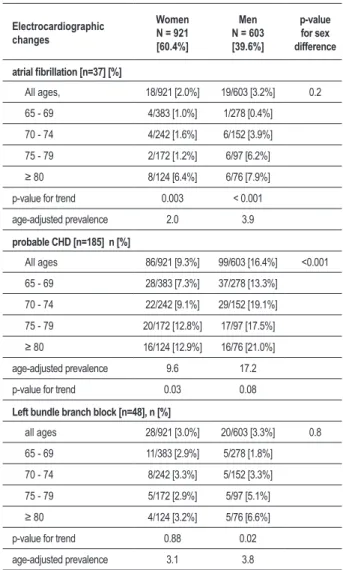
Table 2 – Prevalence of Atrial Fibrillation, Probable Coronary Heart Disease and Left Bundle-Branch Block in the Population according to Gender and Age-strata
Electrocardiographic changes
Women N = 921 [60.4%]
Men
N = 603 [39.6%]
p-value for sex difference
atrial ibrillation [n=37] [%]
All ages, 18/921 [2.0%] 19/603 [3.2%] 0.2
65 - 69 4/383 [1.0%] 1/278 [0.4%]
70 - 74 4/242 [1.6%] 6/152 [3.9%]
75 - 79 2/172 [1.2%] 6/97 [6.2%]
≥ 80 8/124 [6.4%] 6/76 [7.9%]
p-value for trend 0.003 < 0.001
age-adjusted prevalence 2.0 3.9
probable CHD [n=185] n [%]
All ages 86/921 [9.3%] 99/603 [16.4%] <0.001
65 - 69 28/383 [7.3%] 37/278 [13.3%]
70 - 74 22/242 [9.1%] 29/152 [19.1%]
75 - 79 20/172 [12.8%] 17/97 [17.5%]
≥ 80 16/124 [12.9%] 16/76 [21.0%]
age-adjusted prevalence 9.6 17.2
p-value for trend 0.03 0.08
Left bundle branch block [n=48], n [%]
all ages 28/921 [3.0%] 20/603 [3.3%] 0.8
65 - 69 11/383 [2.9%] 5/278 [1.8%]
70 - 74 8/242 [3.3%] 5/152 [3.3%]
75 - 79 5/172 [2.9%] 5/97 [5.1%]
≥ 80 4/124 [3.2%] 5/76 [6.6%]
p-value for trend 0.88 0.02
age-adjusted prevalence 3.1 3.8
2,266 people. Of them, 1,600 agreed to participate in this ancillary study. The electrocardiogram was performed during a second visit to the household, when it was verified that 46 individuals had moved, 21 had died, six had a permanent pacemaker and three had Parkinson’s disease with tremors. Therefore, 1.524 participants were submitted to an electrocardiogram.
Table 1 shows the sociodemographic characteristics of the studied population according to gender. Almost two-thirds of the sample consisted of women who were slightly older when compared to men. This population was not very old; less than one third of them were older than 75 years. Only 10% had been born in the city and two-thirds were rural migrants. The illiteracy rates were higher among women. High blood pressure was diagnosed in almost 80% of the sample; diabetes in one quarter and high LDL-cholesterol rates were diagnosed in one quarter of the women and one-sixth of the men.
The age-adjusted prevalence of atrial fibrillation in this population was 2.4%, being 2.0% in women and 3.9% in men. Prevalence of atrial fibrillation increased with age for both sexes. The presence of probable CHD, considering the frequency of Q/QS wave area, was 12.1% for both sexes, with a higher prevalence among men (17,2%) when compared to women (9.6%). Prevalence of left bundle-branch block was 3.1% with no difference between sexes.
The effect of age shown at table 2 was more evident in women for atrial fibrillation and probable CHD, and in men for atrial fibrillation and left block bundle branch.
Discussion
In this first Brazilian population-based study carried out to evaluate the prevalence of electrocardiographic changes among elderly people living in a poor neighborhood, the prevalence rates of probable coronary heart disease, left bundle branch block and atrial fibrillation were high, which allowed us to consider that cardiovascular prevention is an important topic of the public health agenda in Brazil.
T h e d e t e r m i n a t i o n o f p r e v a l e n c e r a t e s o f electrocardiographic abnormalities is crucial to implement preventive measures based on primary care clinics. Based on Bayes’ theorem, the intrinsic value of one test
is dependent on the findings in a general population. We chose “probable coronary heart disease” and left bundle branch block because they are associated to heart disease and atrial fibrillation is a risk factor for stroke. The majority of the studies on the prevalence of electrocardiographic changes have addressed middle-aged men17. However, our findings can be compared to other
surveys. The Cardiovascular Health Study (CHS) showed a lower prevalence of “probable coronary heart disease” in the baseline examination of the cohort. Among 5,150 people living in the US, aged 65 years and over, major Q/QS waves were found in 5.2% of them and more than half of the cases had not reported a previous myocardial infarction18. In Hong Kong, a sample of a
population-based study revealed a prevalence of probable CHD of 6% for men and 7% for women19. In the Netherlands,
the “Leyden 85-plus study” showed a probable CHD prevalence of 9% among a population aged 85 years20.
The findings of our study showed a higher prevalence of probable CHD when compared with an US American White and a Taiwan Chinese samples21. More recently, in
China, a cross-sectional study revealed a prevalence of 9.4% for men and 8.8% for women aged 60 to 69 years-old22. It is consistent with the inter-countries comparison
of cardiovascular diseases mortality rates showing that rates in Brazil are higher when compared to the USA and Asian countries4. The prevalence of atrial fibrillation in this
Brazilian elderly sample [2.0% in women, 3.9% in men, 2.4% in both sexes] was similar to data from Busselton, Australia, where the prevalence of atrial fibrillation was 2.3% among individuals older than 60 years23. However,
it was lower when compared to the baseline data of individuals aged 65 and over at from the American cohort study “The Cardiovascular Health Study” [4.8%, women; 6.2%, men]24, the Dutch cohort “The Rotterdan Study”
[7.5%, women; 9.7%, men]25, and the “Leyden 85-plus
study” (10%, aged 85 years)20. A comparison of 5-year age
strata with the American study “Anticoagulation and Risk Factors in Atrial Fibrillation [ATRIA] Study”26 showed lower
values in our sample. An explanation for these findings is a survival bias due to the higher proportion of premature deaths due to stroke and heart disease among individuals living in this deprived neighborhood. Another reason is the difference between our sample and others from countries where the epidemiological transition is more advanced. This assertive is based on data from the Framingham Heart Study that showed that atrial fibrillation is becoming more prevalent, increasing in men aged 65-84 years from 3.2% in 1968-1970 to 9.1% in 1987-198927.
The prevalence of left-bundle branch block correlates with age and with the presence of cardiovascular disease. It is likely that the deleterious role of such conduction disorders in the progression to heart failure has been underestimated, because left bundle branch block may have a role in ventricular asynchrony and cardiac remodeling28.
There have been few studies addressing the prevalence of bundle branch block and most of them showed frequencies similar to the ones obtained in our study29.
The higher prevalence of hypertension and its association Table 3 - Sociodemographic Characteristics and Cardiovascular
Risk Factor [percentage] according to Electrocardiographic Abnormalities Using Univariate Analyses
Atrial
ibrillation [n=37]
Probable
CHD [n=185]
Left
bundle-branch block [n=48] Sex, [%]
Male [n=603] 3,2 16,4 3,3
Female [n=921] 2,0 9,3 3,0
p-value 0,17 <0,001 0,17
Place of birth, [%]
Rural [n=1,001] 1,9 8,3 3,1
Town [n=344] 3,8 10,8 2,6
City [n=175] 2,3 9 4,6
p-value 0,14 0,27 0,48
School years, n[%]
Illiterate [n=502] 2,8 10,2 3,8
1 to 4 years [n=852] 2,6 13,6 3,0
4 years [n=164] 0,6 10,4 1,8
p-value 0,27 0,13 0,44
Hypertension *, [%]
No[n=307] 2,3 4,6 2,3
Yes[n=1,189] 3,3 10,1 3
p-value 0,32 <0,001 0,33
Diabetes †, n [%]
No[n=1,279] 2,5 8,6 3
Yes[n=245] 2,0 10,9 4,1
p-value 0,67 0,19 0,36
Dyslipidemia‡, [%]
No[n=1,220] 2,5 8,6 3
Yes[n=304] 2,0 10,6 3,9
p-value 0,56 0,25
CHD - Coronary Heart Disease; * systolic blood pressure > 140 mmHg or diastolic blood pressure > 90 mmHg or current use of antihypertensive drugs; † fasting blood glucose > 126 mg/dl or current use of insulin and/or oral hypoglycemic drugs; ‡ Low density cholesterol fraction > 160 mg/dl
or current use of statins or ibrates.
Kawabata-Yoshihara et al Electrocardiographic abnormalities in elderly individuals
References
1. De Backer G, Ambrosioni E, Borch-Johnsen K, Brotons C, Cifkova R, Dallongeville J, et al. European guidelines on cardiovascular disease prevention in clinical practice: Third Joint Task Force of European and other Societies on Cardiovascular Disease Prevention in Clinical Practice. Eur Heart J. 2003; 24: 1601-10.
2. Smith SC, Allen J, Blair SN, Bonow RO, Brass LM, Fonarow GC, et al. AHA/ ACC guidelines for secondary prevention for patients with coronary and other atherosclerotic vascular disease: 2006 update - Endorsed by the National Heart, Lung, and Blood Institute. Circulation. 2006; 113: 2363-72.
3. United Nations. Population Division Department of Economic and Social Affairs. World population ageing 1950-2050. New York; 2002.
4. Ministério da Saúde. Datasus: informações de saúde. [Acesso em 2008 jan 13]. Disponível em: http://www.datasus.gov.br
5. Carvalho JAM, Garcia RA. The aging process in the Brazilian population: a demographic approach. Cad Saúde Pública. 2003; 19: 725-33.
6. Steffen PR, Smith TB, Larson M, Butler L. Acculturation to Western society as a risk factor for high blood pressure: a meta-analytic review. Psychosom Med. 2006; 68:386-97.
7. Lotufo PA, Bensenor IM. Social exclusion and stroke mortality. Stroke. 2005; 36: 505-5.
8. Unal B, Critchley JA, Capewell S. Modelling the decline in coronary heart disease deaths in England and Wales, 1981-2000: comparing contributions from primary prevention and secondary prevention. BMJ. 2005; 331: 614-9.
9. Manuel DG, Lim J, Tanuseputro P, Anderson GM, Alter DA, Laupacis A, et al. Revisiting Rose: strategies for reducing coronary heart disease. BMJ. 2006; 332: 659-62.
10. Brindle PM, McConnachie A, Upton MN, Hart CL, Smith ED, Watt GCM. The accuracy of the Framingham risk-score in different socioeconomic groups: a
prospective study Br J Gen Pract. 2005; 55: 838-45.
11. Prineas R, Crow R, Blackburn H. The Minnesota code manual of electrocardiographic findings: standards and procedures for measurement and classification. Boston: J Wright; 1982.
12. Wolf PA, Abbott RD, Kannel WB. Atrial fibrillation as an independent risk factor for stroke: the Framingham study. Stroke. 1991; 22: 983-8.
13. Schneider JF, Thomas HE Jr, Sorlie P, Kreger BE, McNamara PM, Kannel WB. Comparative features of newly acquired left and right bundle-branch block in the general population: the Framingham study. Am J Cardiol. 1981; 47: 931-40.
14. De Ruijter W, Assendelft WJ, Macfarlane PW, Westendorp RG, Gussekloo J. The additional value of routine electrocardiograms in cardiovascular risk management of older people. Scand J Prim Health Care. 2008; 26: 147-53.
15. Lim SS, Gaziano TA, Gakidou E, Reddy KS, Farzadfar F, Lozano R, et al. Prevention of cardiovascular disease in high-risk individuals in low-income and middle-income countries: health effects and costs. Lancet. 2007; 370: 2054-62.
16. Scazufca M, Menezes PR, Vallada HP, Crepaldi AL, Pastor-Valero M, Coutinho LM, et al. High prevalence of dementia among older adults from poor socioeconomic backgrounds in São Paulo, Brazil. Int Psychogeriatr. 2008; 20 (2): 394-405.
17. Asheley, EA, Raxwal VK, Froelicher VF. The prevalence and prognostic significance of electrocardiographic abnormalities. Curr Probl Cardiol. 2000; 25 (1): 1-72.
18. Furberg CD, Manolio TA, Psaty BM, Bild DE, Borhani NO, Newman A, et al. Major electrocardiographic abnormalities in persons aged 65 years and older (the Cardiovascular Health Study). Cardiovascular Health Study Collaborative Research Group. Am J Cardiol. 1992; 69 (16): 1329-35.
with probable coronary heart disease in this sample is consistent with the burden of stroke mortality in Brazil. The highest stroke mortality rate observed in the Americas, mainly among women, is seen in Brazil30. The association of
hypertension and incident cardiovascular diseases is more pronounced in the Brazilian population than that described in other longitudinal studies performed elsewhere31.
This study had some limitations such as the lack of data about past medical history and the cross-sectional design. The results can be applied to a large segment of the Brazilian population of the same age and same socioeconomic status, as well as to other metropolitan areas of developing countries.
One next step is to verify the sensitivity and specificity of rest electrocardiogram in this population to adopt it as a screening tool. The findings of the “Leyden 85-plus”14,
regarding the superiority of medical records when compared to a routine electrocardiogram cannot be transported to a population with a lower socioeconomic status, such as the case of our sample.
The intervention proposal for this population is a large mass treatment with a four-drug regimen (aspirin, atenolol, captopril, lovastatin) for all patients with main electrocardiographic abnormalities. These medications have an affordable cost for the Brazilian Health System and they would postpone the incidence of heart failure and prevent
mortality. This proposal is supported by several recent studies addressing cardiovascular prevention in low and middle-income countries15,32.
Conclusion
Concluding , in this sample of elderly and low socioeconomic status individuals, the prevalence of coronary heart disease was higher, while the frequency of atrial fibrillation was lower, when compared to other countries.
Potential Conflict of Interest
No potential conflict of interest relevant to this article was reported.
Sources of Funding
This study was funded by FAPESP and Wellcome Trust.
Study Association
Kawabata-Yoshihara et al Electrocardiographic abnormalities in elderly individuals
19. Woo J, Ho SC, Lau J, Yuen YK, Chan SG, Masarei J. Cardiovascular symptoms, electrocardiographic abnormalities, and associated risk factors in an elderly Chinese population. Int J Cardiol. 1993; 42: 249-55.
20. De Ruijter W, Westendorp RG, MacFarlane PW, Jukema JW, Assendelft WJ, Gussekloo J. The routine electrocardiogram for cardiovascular risk stratification in old age: the Leiden 85-plus study. J Am Geriatr Soc. 2007; 55: 872-7
21. Wu C C , Ye h W T, C r o w R S , B a i C H , Pa n W H . C o m p a r i s o n o f electrocardiographic findings and associated risk factors between Taiwan Chinese and US White adults. Int J Cardiol. 2008; 128: 224-31.
22. Chen CH, Chuang JH, Kuo HS, Chang MS, Wang SP, Chou P. Prevalence of coronary heart disease in Kin-Chen, Kinmen. Int J Cardiol. 1996; 55: 87-95.
23. Lake FR, Cullen KJ, de Klerk NH, McCall MG, Rosman DL. Atrial fibrillation and mortality in an elderly population. Aust N Z J Med. 1989; 19: 321-6.
24. Furberg CD, Psaty BM, Manolio TA, Gardin JM, Smith VE, Rautaharju PM. Prevalence of atrial fibrillation in elderly subjects [the Cardiovascular Health Study]. Am J Cardiol. 1994; 74: 236-41.
25. Heeringa J, van der Kuip DA, Hofman A, Kors JA, va Herpen G, Stricker BH, et al. Prevalence, incidence and lifetime risk of atrial fibrillation: the Rotterdam study. Eur Heart J. 2006; 27: 949-53.
26. Go AS, Hylek EM, Phillips KA, Chang Y, Henault LE, Selby JV, et al. Prevalence of diagnosed atrial fibrillation in adults: national implications for rhythm management and stroke prevention: the AnTicoagulation and Risk Factors in Atrial Fibrillation [ATRIA] Study. JAMA. 2001; 285: 2370-5.
27. Kannel WB, Wolf PA, Benjamin EJ, Levy D. Prevalence, incidence, prognosis, and predisposing conditions for atrial fibrillation: population-based estimates. Am J Cardiol. 1998; 82 (8A): 2N-9N.
28. Zannad F, Huvelle E, Dickstein K, van Veldhuisen DJ, Stelbrink C, Keber L, et al. Left bundle-branch block as a risk for progression to heart failure. Eur J Heart Fail. 2007; 9: 7-14.
29. Eriksson P, Hansson PO, Eriksson H, Dellborg M. Bundle-branch block in a general male population: the study of men born 1913. Circulation. 1998; 98 (22): 2494-500.
30. Lotufo PA Stroke in Brazil: a neglected disease. Sao Paulo Med J. 2005; 123: 3-4.
31. Moraes RS, Fuchs FD, Moreira LB, Wieche M, Pereira GM, Fuchs SC. Risk factors for cardiovascular disease in a Brazilian population-based cohort study. Int J Cardiol. 2003; 90: 205-11.
32. Gaziano TA, Opie LH, Weinstein MC. Cardiovascular disease prevention with a multidrug regimen in the developing world: a cost-effectiveness analysis. Lancet. 2006; 368: 679-86.
Kawabata-Yoshihara et al Electrocardiographic abnormalities in elderly individuals