In silico
identification of known osmotic stress responsive genes
from
Arabidopsis
in soybean and
Medicago
Nina M. Soares-Cavalcanti
1, Luis C. Belarmino
1, Ederson A. Kido
1, Ana C. Wanderley-Nogueira
1,
João P. Bezerra-Neto
1, Rafaela Cavalcanti-Lira
1, Valesca Pandolfi
1, Alexandre L. Nepomuceno
2,
Ricardo V. Abdelnoor
2, Leandro C. Nascimento
3and Ana M. Benko-Iseppon
11
Departamento de Genética, Centro de Ciências Biológicas, Universidade Federal de Pernambuco,
Recife, PE, Brazil.
2Embrapa Soja, Londrina, PR, Brazil.
3Laboratório de Genômica e Expressão, Departamento de Genética, Evolução e Bioagentes,
Instituto de Biologia, Universidade Estadual de Campinas, Campinas, SP, Brazil.
Abstract
Plants experience various environmental stresses, but tolerance to these adverse conditions is a very complex phe-nomenon. The present research aimed to evaluate a set of genes involved in osmotic response, comparing soybean and medicago with the well-describedArabidopsis thaliana model plant. Based on 103 Arabidopsis proteins from 27 categories of osmotic stress response, comparative analyses against Genosoja andMedicago truncatula databases allowed the identification of 1,088 soybean and 1,210Medicago sequences. The analysis showed a high number of sequences and high diversity, comprising genes from all categories in both organisms. Genes with unknown function were among the most representative, followed by transcription factors, ion transport proteins, water channel, plant defense, protein degradation, cellular structure, organization & biogenesis and senescence. An analysis of se-quences with unknown function allowed the annotation of 174 soybean and 217Medicago sequences, most of them concerning transcription factors. However, for about 30% of the sequences no function could be attributed usingin silico procedures. The establishment of a gene set involved in osmotic stress responses in soybean and barrel medic will help to better understand the survival mechanisms for this type of stress condition in legumes.
Key words:osmotic stress, stress-responsive genes,Glycine max,Medicago truncatula.
Introduction
In the course of evolution, plants have acquired a myriad of developmental and metabolic strategies to cope with the adverse effects of environmental stresses during vegetative growth and reproduction (Parry et al., 2005), making stress tolerance a complex phenomenon.
Stress perception and the immediate induction of sig-nals that culminate in adaptive responses are key steps lead-ing to plant stress tolerance. Tolerance stress differences between genotypes or different developmental stages of a single genotype may arise from peculiarities in signal per-ception and transduction mechanisms (Chinnusamyet al., 2004). Under osmotic stress conditions diverse sets of phy-siological responses are activated, including metabolic and defense systems used to sustain growth and for survival.
The stress-inducible genes are classified into two major groups: one of them protects the plant directly against stresses, whereas the other regulates gene expression and signal transduction (Valliyodan and Nguyen, 2006).
Because plant tolerance against osmotic stress is a complex multigenic trait, a demand exists for genome wide analysis, including ‘omics’ approaches suitable for uncov-ering important gene sets involved in this important process (Hirayama and Shinozaki, 2010).
After the ‘sequencing era’, genetic information was then available for several non-model plants, including some legume species, a group that exhibits unique features, such as the ability to carry the nodulation process. Nitrogen fixation mediated by nodule activities abolishes the need for external nitrogen sources from fertilizers, while provid-ing the so-called ‘green manurprovid-ing’ that enriches the soil. Moreover, some legumes, such as soybean, barrel medic and cowpea, are important economic crops that provide hu-mans with food, livestock for feeding purposes, and indus-try with raw materials (Graham and Vance, 2003).
www.sbg.org.br
Send correspondence to Ana M. Benko-Iseppon Departamento de Genética, Centro de Ciências Biológicas, Universidade Federal de Pernambuco, Av. Prof. Morais Rego 1235, 50.670-420 Recife, PE, Brazil. E-mail: [email protected].
Soybean is an example of a non-model plant with plentiful transcriptome information available. Among avai-lable databases, the Genosoja platform connects public and restricted data, providing 60,747 unigenes (Nascimentoet al., 2012, this issue).
The identification of candidate genes in soybean and barrel medic will provide additional evidence of the re-sponse mechanisms for osmotic stresses in Fabaceae, yield-ing useful information for crop improvement. As osmotic stress cannot be solved solely via remedial land manage-ment, tolerant crops - able to maintain cellular turgor and osmotic balance - may contribute significantly to reduce this economic burden. The key to plant engineering for os-motic tolerance lies in the knowledge of the underlying mechanisms of plant adaptive responses (Hariadi et al., 2011).
In the present work the main categories of osmotic stress genes known fromA. thalianawere identified in the soybean (Genosoja Project) and barrel medic (M. Truncatuladatabase) transcriptomes through an in silico
approach, in order to contribute to a better understanding of the early molecular adaptation to osmotic (drought and sa-linity) stress in both leguminous plants.
Materials and Methods
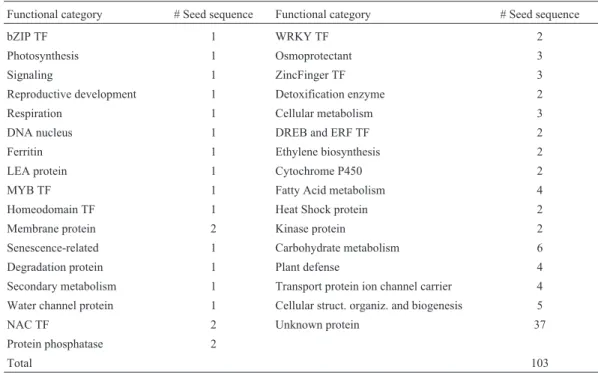
In a previous study based on 7,000Arabidopsis ge-nes, Sekiet al.(2002) identified 103 coding genes distrib-uted over 27 functional categories (Table 1) whose expres-sion increased more than five times in response to osmotic stress. The protein sequences of these stress-inducible
genes were obtained at the RIKEN Arabidopsis Full-Length Clone Database, and used as query sequences.
After this step, a local bank with the retrieved se-quences was generated in order to make searches for simi-lar sequences against the Genosoja platform (Nascimento
et al., 2012) and theM. truncatuladatabase (Quackenbush
et al., 2000) using the tBLASTn algorithm (Altschulet al., 1990) with a cut-off of 1e-05. The results were annotated in other local databank for further analyses and for compari-sons among studied organisms and literature information. In view of the different number of seed sequences per cate-gory, the results obtained from each category and organism were normalized. The soybean andMedicago genes with unknown function were submitted to the AutoFACT pro-gram (Koskiet al., 2005), and annotated according to the data available in the largest functional annotation data-banks (KEGG, COG, PFAM, SMART, nr). This step was performed in order to categorize these sequences and as-sign function to them, based on a comparative analysis.
Results and Discussion
The stress-inducible gene products were classified into two main groups: (I) those that are at the front line of defense, protecting the plant against adverse conditions and (II) those that regulate genic expression and signal trans-duction in the stress response (Sekiet al., 2003). The first group included proteins that probably act in the protection of plant cells from dehydration, such as the enzymes re-quired for the biosynthesis of various osmoprotectants, LEA proteins, antifreeze proteins, chaperones and detoxifi-cation enzymes. The second group included signaling
mol-316 Soares-Cavalcanti
Table 1- Functional categories procured and respective seed-sequence number. Abbreviation: TF = Transcription Factor.
Functional category # Seed sequence Functional category # Seed sequence
bZIP TF 1 WRKY TF 2
Photosynthesis 1 Osmoprotectant 3
Signaling 1 ZincFinger TF 3
Reproductive development 1 Detoxification enzyme 2
Respiration 1 Cellular metabolism 3
DNA nucleus 1 DREB and ERF TF 2
Ferritin 1 Ethylene biosynthesis 2
LEA protein 1 Cytochrome P450 2
MYB TF 1 Fatty Acid metabolism 4
Homeodomain TF 1 Heat Shock protein 2
Membrane protein 2 Kinase protein 2
Senescence-related 1 Carbohydrate metabolism 6
Degradation protein 1 Plant defense 4
Secondary metabolism 1 Transport protein ion channel carrier 4 Water channel protein 1 Cellular struct. organiz. and biogenesis 5
NAC TF 2 Unknown protein 37
Protein phosphatase 2
ecules such as transcription factors and protein kinases, among others (Sekiet al., 2003). Twenty-seven categories of these two groups classified according to Seki et al.
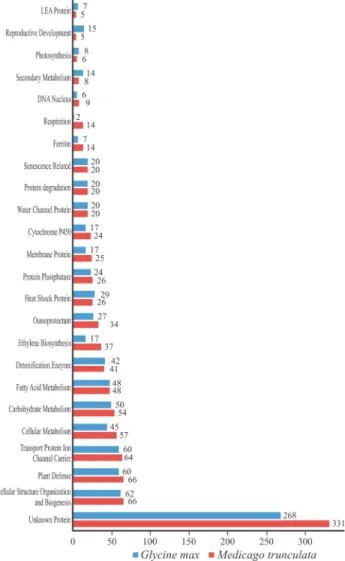
(2002) were analyzed, resulting in 1,088 (soybean) and 1,210 (Medicago) sequences (Table S1, supplementary ma-terial). In both genomes the ‘unknown protein’ category was the most representative (Figure 1), with 268 candidates for soybean and 331 forMedicago, followed by ‘cellular structure organization and biogenesis’, ‘plant defense’ and ‘transport protein ion channel carrier’ categories (Figure 1). The highest number of sequences for genes with ‘un-known function’ - a very common category in expression essays regarding osmotic stress response in plants – attract-ing great interest from researchers, since those genes repre-sent a clear source of new candidates for breeding purposes. Previous studies highlighted the importance of analyzing the role of stress-induced genes, not only for a further un-derstanding of the molecular mechanisms of stress toler-ance in higher plants, but also for improving crop perfor-mance using gene manipulation (Sekiet al., 2002).
Osmotic stress greatly affects cells both at the micro (i.e., membrane structure), and at the macro level (i.e.the physiology of the whole plant), with results that reflect the variety of responses involved in the acquisition of toler-ance. At the microcellular level, the activation of genes in the categories ‘cellular structure, organization and bio-genesis’ (soybean: 62;Medicago: 66) and ‘transport pro-tein ion channel carrier’ (soybean: 64;Medicago: 60) was observed, showing the importance of the maintenance of cellular structures and of the control of ion exchange with the environment.
Furthermore, we observed the activation of genes in the category ‘plant defense’ (soybean: 66;Medicago: 60), indicating the presence of a cross-talk process between pathways, a common mechanism in plants under stressful conditions. In addition to stress-specific adaptive re-sponses, plants also share responses that protect them from more than one type of stress (Sekiet al., 2002; DeFalcoet al., 2010; Nuruzzaman et al., 2010), a response also ob-served in cowpea, another Fabaceae member (Kidoet al., 2011).
Amongst the candidates of the second group of re-sponses, composed of genes involved in signal transduction and regulation of expression (203 in soybean and 190 in
Medicago; Figure 2), the category transcription factor (TF) was the most prevalent, representing up to 80% in soybean and 82% inMedicago(Figure 2). The high number of tran-scription factors suggests that trantran-scriptional regulation is an important mechanism in the signal transduction trig-gered by osmotic stresses in both legumes.
A surprising result was the absence of a bZIP repre-sentative in the soybean database, while inMedicagothis category was represented by three candidates (Figure 3). This transcription factor has been identified in many plants and is known to participate in various responsive pathways, including abiotic stress response.
Among the transcription factors, the DREB/ERF and Zinc-finger families had the highest number of sequences (Figure 3). This result was expected, since from more than 1,600 transcription factors encoded byA. thaliana, 9% are members of the DREB/ERF-like family (Dietz et al., 2010). Due to the versatility of functions that the zinc finger family may have, as well as the variety of their structural proteins, the obtained result was expected. According to
Figure 1- Main categories of Group I stress-inducible genes (protective molecules), indicating the number of orthologs identified inGlycine max
andMedicago truncatula.
Takatsuji (1998), plants seem to have adopted preexisting prototype zinc-finger motifs, generating new zinc-finger domains to adapt them to various regulatory processes. The zinc finger domain can be present in a number of transcrip-tion factors and play critical roles in interactranscrip-tions with other molecules. Mutations in some of the genes coding for zinc-finger proteins have been found to cause profound de-velopmental aberrations or defective responses to environ-mental cues (Takatsuji, 1998). Zinc finger proteins are required for key cellular processes including transcriptional regulation, development, pathogen defense, and stress re-sponses (Ciftci-Yilmaz and Mittler, 2008). A recent study of rice showed that the C2H2-type zinc finger family alone was represented by 189 members and demonstrated that at least 26 of them respond to different environmental stresses (Agarwalet al., 2007). Moreover, Gonget al.(2010), in a study on transcriptional regulation in drought-tolerant to-mato genotypes, also identified and characterized the zinc-finger family as the main activated group during the drought response.
It is important to note that the number of seed-sequences used in the search was different for each cate-gory; the ‘unknown protein’ category, for example, was represented by 37 sequences, while the ‘bZIP transcription factor’ category comprised a single sequence. Thus, it was expected that the more abundant orthologous categories would be those obtained through comparative searches with the categories composed of more query sequences.
As for the remainder, after normalizing the results, proportionally the most representative categories (7% each) were: ‘water channel proteins’, ‘protein degradation’ and ‘senescence-related’ (Figure 4). Without doubt, all catego-ries analyzed may contribute to an improvement in osmotic tolerance, although some functions are more relevant than others. Proteins associated with ion channels and water channels are essential in the acquisition of resistance in the presence of soluble salts and water shortages, the former controlling the entry and exit of ions such as Na+, which are
toxic in high concentrations, and the latter controlling water loss to the environment. Besides these proteins, those falling into the category ‘protein degradation’ are required for pro-tein turnover and recycling of essential amino acids, while ‘senescence-related’ genes are key components in the abiotic stress response, with genes controlling subcellular changes that lead to tolerance (Sekiet al., 2002).
318 Soares-Cavalcanti
Figure 3- Graphic representation of transcription factors identified inGlycine maxandMedicago truncatula.
While the normalized results evidenced similar amounts of data in the most representative categories for both organisms, in some categories there were significant variations in the number of sequences between both legu-minous species (Figure 4); this difference was even greater than 50% for the categories ‘Reproductive development’ (soybean: 1,395;Medicago: 465), ‘Ferritin’ (soybean: 651;
Medicago: 1,392), ‘Respiration’ (soybean: 186;Medicago: 1,302) and ‘Ethylene biosynthesis’ (soybean: 791;
Medicago: 1.721). Nevertheless, this variation may be re-lated to the conditions under which the data were generated and deposited, as well as to the number of sequences avail-able in the respective databases. Additionally, species-specific features could be responsible for these variations, to a lesser extent.
Regarding the category ‘Unknown Protein’, screened candidates from soybean (268) andMedicago(331) were subjected to the AutoFACT program in order to assign function to these sequences, allowing the recognition of the function of 174 and 217 sequences, respectively.
As a result, 42 and 57G. maxandM. truncatulawere categorized according to the COG (Cluster of Orthologous Groups) functional database in five categories (Table 2; Figure 5). Within each category, the annotation revealed that they present the same description as the matched se-quences deposited in the databank. For example, the ‘Ami-no acid transport and metabolism’ functional category was represented just by ‘Amino Acid Permease’ sequences
(Ta-Table 2- Sequence description annotated according to the COG (Cluster of Orthologous Groups) functional category inGlycine maxandMedicago truncatula.
COG functional category Sequence description Sequence amount
G. max M. truncatula
Amino acid transport and metabolism Amino acid permease 9 8
Carbohydrate transport and metabolism Beta-galactosidase 0 2
General function prediction only Patatin 4 17
Posttranslational modification, protein turnover, chaperones DnaJ-like protein 14 13 Signal transduction mechanisms Universal Stress Protein (USP) family protein 15 17
Total 42 57
Figure 5- Categorization of soybean andMedicago‘unknown category’ candidates based on COG (Cluster of Orthologous Groups) functional da-tabase.
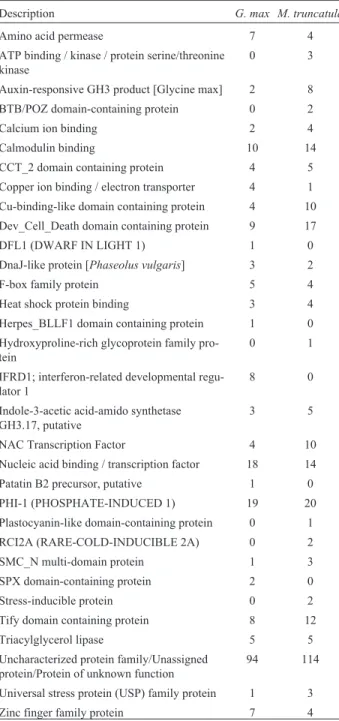
Table 3 - Description of sequences with unknown function after AutoFACT analysis.
Description G. max M. truncatula
Amino acid permease 7 4
ATP binding / kinase / protein serine/threonine kinase
0 3
Auxin-responsive GH3 product [Glycine max] 2 8 BTB/POZ domain-containing protein 0 2
Calcium ion binding 2 4
Calmodulin binding 10 14
CCT_2 domain containing protein 4 5 Copper ion binding / electron transporter 4 1 Cu-binding-like domain containing protein 4 10 Dev_Cell_Death domain containing protein 9 17
DFL1 (DWARF IN LIGHT 1) 1 0
DnaJ-like protein [Phaseolus vulgaris] 3 2
F-box family protein 5 4
Heat shock protein binding 3 4 Herpes_BLLF1 domain containing protein 1 0 Hydroxyproline-rich glycoprotein family
pro-tein
0 1
IFRD1; interferon-related developmental regu-lator 1
8 0
Indole-3-acetic acid-amido synthetase GH3.17, putative
3 5
NAC Transcription Factor 4 10 Nucleic acid binding / transcription factor 18 14 Patatin B2 precursor, putative 1 0 PHI-1 (PHOSPHATE-INDUCED 1) 19 20 Plastocyanin-like domain-containing protein 0 1 RCI2A (RARE-COLD-INDUCIBLE 2A) 0 2 SMC_N multi-domain protein 1 3 SPX domain-containing protein 2 0
Stress-inducible protein 0 2
Tify domain containing protein 8 12
Triacylglycerol lipase 5 5
Uncharacterized protein family/Unassigned protein/Protein of unknown function
94 114
ble 2). Two candidates ofMedicago, which were function-ally classified into the ‘Carbohydrate transport and metabolism’ category, were also annotated on the KEGG database as involved in the beta-galactosidase pathway (Galactose Metabolism Glycan Structure – degradation), (Table 2).
The remaining previously ‘unknown’ sequences were annotated as shown in Table 3. The analysis through AutoFACT allowed a function assignment to 132 and 160 soybean andMedicagosequences, respectively. In general, the highest number of sequences was categorized as tran-scription factors, essential genes participating in the transcriptional regulation of plants. Although it was possi-ble to record more than 65% of the sequences, 35% of ‘un-known’ soybean and 34% of ‘un‘un-known’ Medicago
sequences remained without their putative function identi-fied. These are relevant data to be worked out in future functional studies, since they may represent new genes not yet described and unique to legumes.
In conclusion, even in the absence of libraries re-stricted to osmotic stress in the Genosoja databank, this study indicated that most of the genes involved in the os-motic stress pathways were expressed by the non-stressed soybean andMedicagolibraries at least in a baseline way. The data also revealed that soybean andMedicago are a rich source of stress-responsive candidates, which can be also applied to improve soybean and other legumes. It also highlights the existence of significant diversity for most genes, useful for comparative physiological essays. The obtained data are available for gene-targeted functional evaluation using qRT-PCR, as well as other biotechnologi-cal approaches. The molecular differences detected be-tween the compared libraries will permit the identification of important candidates by additional approaches including PCR walking, as previously done for other crops (e.g.
Coemanset al., 2005).
The identified candidates are also being monitored in further expression assays carried out in the Genosoja project (considering contrasting combinations of tolerant and sus-ceptible plants under drought stress as compared with their negative control in a time frame) providing a more complete picture of genes involved in osmotic stress response and use-ful for breeding and biotechnological purposes.
Acknowledgments
The authors would like to thank CNPq (Conselho Nacional de Desenvolvimento Científico e Tecnológico), FACEPE (Fundação de Amparo à Ciência e Tecnologia do Estado de Pernambuco), and CAPES (Coordenação de Aperfeiçoamento de Pessoal de Nível Superior) for their fi-nancial support.
References
Agarwal P, Arora R, Ray S, Singh AK, Singh VP, Takatsuji H, Kapoor S and Tyagi AK (2007) Genome-wide identification of C(2)H(2) zinc-finger gene family in rice and their phylogeny and expression analysis. Plant Mol Biol 65:467-485.
Altschul SF, Gish W, Miller W, Myers EW and Lipman DJ (1990) Basic local alignment search tool.J Mol Biol215:403-410. Chinnusamy V, Schumaker K and Zhu J-K (2004) Molecular genetics
perspectives on cross-talk and specificity in abiotic stress sig-naling in plants. J Exp Bot 55:225-236.
Ciftci-Yilmaz S and Mittler R (2008) The zinc finger network of plants. Cell Mol Life Sci 65:1150-1160.
Coemans B, Matsumura H, Terauchi R, Remy S, Swennen R and Sági L (2005) SuperSAGE combined with PCR walking allows global gene expression profiling of banana (Musa acuminata), a non-model organism. Theor Appl Genet 111:1118-1126. DeFalco TA, Bender KW and Snedden WA (2010) Breaking the code:
Ca2+27 sensors in plant signalling. Biochem J 425:27-40. Dietz K-J, Vogel MO and Viehhauser A (2010) AP2/EREBP
tran-scription factors are part of gene regulatory networks and inte-grate metabolic, hormonal and environmental signals in stress acclimation and retrograde signalling. Protoplasma 245:3-14. Gong P, Zhang J, Li H, Yang C, Zhang C, Zhang X, Khurram Z,
Zhang Y, Wang T, Fei Z,et al.(2010) Transcriptional profiles of drought-responsive genes in modulating transcription signal transduction, and biochemical pathways in tomato. J Exp Bot 61:3563-3575.
Graham PH and Vance CP (2003) Legumes: Importance and con-straints to greater use. Plant Physiol 131:872-877.
Hariadi Y, Marandon K, Tian Y, Jacobsen S-E and Shabala S (2011) Ionic and osmotic relations in quinoa (Chenopodium quinoa Willd.) plants grown at various salinity levels. J Exp Bot 62:185-193.
Hirayama T and Shinozaki K (2010) Research on plant abiotic stress responses in the post-genome era: Past, present and future. Plant J 61:1041-1052.
Kido EA, Barbosa PK, Ferreira Neto JCR, Pandolfi V, Houllou-Kido LM, Crovella S and Benko-Iseppon AM (2011) Identification of plant protein kinases in response to abiotic and biotic stresses using SuperSAGE. Curr Prot Pept Sci 12:643-656.
Koski LB, Gray MW, Lang BF and Burger G (2005) AutoFACT: An Automatic Functional Annotation and Classification Tool. BMC Bioinformatics 16:151-161.
Nascimento LC, Costa GGL, Binneck E, Pereira GAG and Carazzolle MF (2012) A web-based bioinformatics interface applied to Genosoja Project: Databases and pipelines. Genet Mol Biol 35(suppl 1): 203-211.
Nuruzzaman M, Manimekalai R, Sharoni AM, Satoh K, Kondoh H, Ooka H and Kikuchi S (2010) Genome-wide analysis of NAC transcription factor family in rice. Gene 465:30-44.
Parry MAJ, Flexas J and Medrano H (2005) Prospects for crop pro-duction under drought: Research priorities and future direc-tions. Ann Appl Biol 147:211-226.
Quackenbush J, Liang F, Holt I, Pertea G and Upton J (2000) The TIGR Gene Indices: Reconstruction and representation of ex-pressed gene sequences. Nucleic Acids Res 28:141-145. Seki M, Narusaka M, Ishida J, Nanjo T, Fujita M, Oono Y, Kamiya A,
Nakajima M, Enju A, Sakurai T,et al.(2002) Monitoring the expression profiles of 7000 Arabidopsis genes under drought, cold and high-salinity stresses using a full-length cDNA microarray. Plant J 31:279-292.
Seki M, Kamei A, Yamaguchi-Shinozaki K and Shinozaki K (2003) Molecular responses to drought, salinity and frost: Common and different paths for plant protection. Curr Opin Plant Biol 14:194-199.
Takatsuji H (1998) Zinc-finger transcription factors in plants. Cell Mol Life Sci 54:582-596.
Valliyodan B and Nguyen HT (2006) Understanding regulatory net-works and engineering for enhanced drought tolerance in plants. Curr Opin Plant Biol 9:189-195.
Internet Resources
RIKEN Arabidopsis Full-Length Clone Database,
http://www.brc.riken.go.jp/lab/epd/catalog/cdnaclone.html (May, 2011)
Genosoja platform, http://bioinfo03.ibi.unicamp.br/soja/ (May, 2011)
Medicago truncatuladatabase, http://www.medicago.org/ (May, 2011)
Supplementary Material
The following online material is available for this ar-ticle:
Table S1 - Identified candidates among abiotic stress responsive gene categories in soybean and Medicago
genomes.
This material is available as part of the online article from http://www.scielo.br/gmb.
1
Table S1 - Identified candidates among abiotic stress responsive gene categories in soybean and Medicago genomes based on selected arabidopsis seed sequences, as well as number of other hits, e-value and score, against the respective database of Medicago truncatula (Mt) and Glycine max (Gm).
Arabidopsis Information Blast Result
Category Query
Sequence Best Hit Organism
Other
Hits E-value Score
bZIP Transcription
Factor At1g42990 Mt_bZIP_1 M. truncatula 2 7,00 e-12 67.4
Mt_Carb_Met_1 M. truncatula 7 0.0 959
At3g10740
Gm_Carb_Met_1 G. max 8 0.0 947
Gm_Carb_Met_2 G. max 7 6,00 e-121 430
At3g06500
Mt_Carb_Met_2 M. truncatula 6 0.0 788
Gm_Carb_Met_3 G. max 2 8,00 e-76 280
At3g60130
Mt_Carb_Met_3 M. truncatula 5 1,00 e-107 386
Gm_Carb_Met_4 G. max 3 1,00 e-166 582
At5g18670
Mt_Carb_Met_4 M. truncatula 3 8,00 e-141 496
Gm_Carb_Met_5 G. max 19 0.0 919
At3g04240
Mt_Carb_Met_5 M. truncatula 17 0.0 1166
Gm_Carb_Met_6 G. max 5 5,00 e-98 353
Carbohydrate Metabolism
At2g43820
Mt_Carb_Met_6 M. truncatula 10 2,00 e-106 382
Gm_Cell_Met_1 G. max 1 8,00 e-83 304
At3g53180
Mt_Cell_Met_1 M. truncatula 7 9,00 e-175 610
Gm_Cell_Met_2 G. max 4 2,00 e-60 229
At3g45300
Mt_Cell_Met_2 M. truncatula 7 6,00 e-153 536
Gm_Cell_Met_3 G. max 14 2,00 e-156 352
At2g39210
Mt_Cell_Met_3 M. truncatula 8 1,00 e-91 333
Gm_Cell_Met_4 G. max 2 3,00 e-91 331
At2g42970
Mt_Cell_Met_4 M. truncatula 11 7,00 e-145 510
Gm_Cell_Met_5 G. max 19 1,00 e-38 155
Cellular Metabolism
At1g68620
Mt_Cell_Met_5 M. truncatula 19 7,00 e-40 159
Gm_Cell_Stru_Org_Biog_1 G. max 16 4,00 e-110 394
At1g03220
Mt_Cell_Stru_Org_Biog_1 M. truncatula 19 4,00 e-145 510
Gm_Cell_Stru_Org_Biog_2 G. max 7 1,00 e-123 437
At3g10720
Mt_Cell_Stru_Org_Biog_2 M. truncatula 7 1,00 e-87 318
Gm_Cell_Stru_Org_Biog_3 G. max 16 1,00 e-47 184
At5g62350
Mt_Cell_Stru_Org_Biog_3 M. truncatula 18 9,00 e-47 182
Gm_Cell_Stru_Org_Biog_4 G. max 19 7,00 e-21 95.9
Cellular Structure Organization and
Biogenesis
At5g20230
Mt_Cell_Stru_Org_Biog_4 M. truncatula 18 1,00 e-22 102
Gm_Cytoch_P450_1 G. max 11 2,00 e-101 365
At2g34500
Mt_Cytoch_P450_1 M. truncatula 12 0.0 684
Gm_Cytoch_P450_2 G. max 4 2,00 e-85 311
Cytochrome P450
At3g26220
Mt_Cytoch_P450_2 M. truncatula 10 8,00 e-97 350
Gm_Detox_Enz_1 G. max 14 4,00 e-43 169
At2g31570
Mt_Detox_Enz_1 M. truncatula 17 9,00 e-40 157
Gm_Detox_Enz_2 G. max 19 4,00 e-51 196
Detoxification Enzyme
At2g29450
2
Mt_Detox_Enz_3 M. truncatula 2 1,00 e-95 346
Gm_DNA_Nuc_1 G. max 5 3,00 e-11 63.2
DNA Nucleus At2g18050
Mt_DNA_Nuc_1 M. truncatula 8 1,00 e-11 65.1
Gm_DREB_ERF_TF_1 G. max 19 2,00 e-41 164
At1g22190
Mt_DREB_ERF_TF_1 M. truncatula 18 2,00 e-37 152
Gm_DREB_ERF_TF_2 G. max 19 6,00 e-33 136
DREB/ERF Transcription
Factor At4g17500
Mt_DREB_ERF_TF_2 M. truncatula 19 2,00 e-52 202
Gm_Ethyl_Bios_1 G. max 7 1,00 e-112 402
At5g43450
Mt_Ethyl_Bios_1 M. truncatula 19 4,00 e-106 380
Gm_Ethyl_Bios_2 G. max 8 5,00 e-61 230
Ethylene Biosynthesis
At1g17020
Mt_Ethyl_Bios_2 M. truncatula 16 7,00 e-101 363
Gm_Fatty_Acid_Met_1 G. max 14 6,00 e-96 347
At1g73480
Mt_ Fatty_Acid_Met_1 M. truncatula 18 5,00 e-26 115
Gm_Fatty_Acid_Met_2 G. max 8 3,00 e-94 340
At4g09760
Mt_ Fatty_Acid_Met_2 M. truncatula 6 3,00 e-124 441
Gm_Fatty_Acid_Met_3 G. max 3 2,00 e-58 222
At1g73920
Mt_ Fatty_Acid_Met_3 M. truncatula 1 3,00 e-134 446
Gm_Fatty_Acid_Met_4 G. max 19 2,00 e-92 335
Fatty Acid Metabolism
At1g07720
Mt_ Fatty_Acid_Met_4 M. truncatula 19 8,00 e-168 586
Gm_Ferritin_1 G. max 6 1,00 e-85 311
Ferritin At5g01600
Mt_ Ferritin_1 M. truncatula 13 1,00 e-87 318
Gm_HSF_1 G. max 19 2,00 e-51 197
At3g46230
Mt_ HSF_1 M. truncatula 19 1,00 e-51 198
Gm_HSF_2 G. max 8 0.0 996
Heat Shock Protein
At1g16030
Mt_ HSF_2 M. truncatula 5 0.0 994
Gm_Homeodom_TF_1 G. max 19 8,00 e-88 320
Homeodomain Transcription
Factor
At2g35940
Mt_Homeodom_TF_1 M. truncatula 19 4,00 e-116 415
Gm_LEA_1 G. max 6 6,00 e-09 55.5
LEA Protein At4g02380
Mt_LEA_1 M. truncatula 4 2,00 e-07 50.4
Gm_Memb_Prot_1 G. max 7 1,00 e-116 415
At5g54170
Mt_Memb_Prot_1 M. truncatula 6 3,00 e-113 332
Gm_Memb_Prot_2 G. max 8 6,00 e-44 174
Membrane Protein
At1g30360
Mt_Memb_Prot_2 M. truncatula 17 0.0 855
Gm_MYB_TF_1 G. max 18 8,00 e-57 217
MYB Transcription
Factor
At1g01060
Mt_MYB_TF_1 M. truncatula 11 4,00 e-25 112
Gm_NAC_TF_1 G. max 10 1,00 e-89 325
At5g63790
Mt_NAC_TF_1 M. truncatula 11 4,00 e-91 330
Gm_NAC_TF_2 G. max 9 2,00 e-95 344
NAC Transcription Factor
At4g27410
Mt_NAC_TF_2 M. truncatula 10 2,00 e-94 341
Gm_Osmoprot_1 G. max 4 2,00 e-142 500
At2g47180
Mt_Osmoprot_1 M. truncatula 4 3,00 e-157 550
At1g09350 Gm_Osmoprot_2 G. max - 2,00 e-11 65.5
Gm_Osmoprot_3 G. max - 5,00 e-09 57.8
Osmoprotectant
At1g60470
3
Gm_Osmoprot_4 G. max 8 9,00 e-155 543
At3g57520
Mt_Osmoprot_3 M. truncatula 9 0.0 865
Gm_Osmoprot_5 G. max 10 0.0 1410
At5g20830
Mt_Osmoprot_4 M. truncatula 17 0.0 1384
Gm_Photosynt_1 G. max 7 6,00 e-143 504
Photosynthesis At4g15530
Mt_ Photosynt_1 M. truncatula 5 0.0 1102
Gm_Plant_Defen_1 G. max 19 6,00 e-86 313
At3g55430
Mt_Plant_Defen_1 M. truncatula 19 2,00 e-133 472
Gm_Plant_Defen_2 G. max 19 4,00 e-42 166
At4g13580
Mt_Plant_Defen_2 M. truncatula 19 1,00 e-67 252
Gm_Plant_Defen_3 G. max - 1,00 e-53 206
At2g40000
Mt_Plant_Defen_3 M. truncatula 5 9,00 e-130 459
Gm_Plant_Defen_4 G. max 18 6,00 e-109 389
Plant Defense
At5g06860
Mt_Plant_Defen_4 M. truncatula 19 2,00 e-100 362
Gm_Prot_Degrad_1 G. max 19 0.0 634
Protein degradation At1g47128
Mt_Prot_Degrad_1 M. truncatula 19 7,00 e-161 330
Gm_Prot_Kinase_1 G. max 15 7,00 e-166 309
At2g31880
Mt_Prot_Kinase_1 M. truncatula 14 9,00 e-114 407
Gm_Prot_Kinase_2 G. max 16 5,00 e-146 242
Protein Kinase
At5g25110
Mt_Prot_Kinase_2 M. truncatula 13 3,00 e-143 504
Gm_Prot_Phosphat_1 G. max 13 3,00 e-108 387
At4g26080
Mt_Prot_Phosphat_1 M. truncatula 13 7,00 e-98 353
Gm_Prot_Phosphat_1 G. max 9 1,00 e-50 196
Protein Phosphatase
At3g11410
Mt_Prot_Phosphat_1 M. truncatula 11 2,00 e-91 332
Gm_Reprod_Develop_1 G. max 14 3,00 e-162 566
At5g56750
Mt_Reprod_Develop_1 M. truncatula 4 5,00 e-74 274
Gm_Reprod_Develop_2 G. max 1 3,00 e-142 500
Reproductive Development
At3g22370
Mt_Reprod_Develop_2 M. truncatula 13 9,00 e-143 502
Gm_Second_Metabol_1 G. max 13 3,00 e-67 251
Secondary
Metabolism At2g38240 Mt_Second_Metabol_1 M. truncatula 7 1,00 e-125 445
Gm_Senesc_Relat_1 G. max 19 4,00 e-69 257
Senescence-Related At5g13170 Mt_Senesc_Relat_1 M. truncatula 19 1,00 e-74 275
Gm_Siganlling_1 G. max 7 8,00 e-57 215
Signalling At5g33380
Mt_Siganlling_1 M. truncatula 5 2,00 e-43 171
Gm_Transp_Prot_Ion_1 G. max 19 4,00 e-116 414
At1g58360
Mt_Transp_Prot_Ion_1 M. truncatula 19 1,00 e-180 629
At1g08930 Gm_Transp_Prot_Ion_2 G. max 19 3,00 e-81 298
Gm_Transp_Prot_Ion_3 G. max 5 5,00 e-93 337
At5g20380
Mt_Transp_Prot_Ion_2 M. truncatula 12 1,00 e-86 317
Gm_Transp_Prot_Ion_4 G. max 13 2,00 e-117 417
Transport Protein Ion Channel
Carrier
At2g22500
Mt_Transp_Prot_Ion_3 M. truncatula 10 1,00 e-112 402
Gm_Unknown_1 G. max 7 6,00 e-42 167
At5g22290
Mt_Unknown_1 M. truncatula 11 4,00 e-62 234
At1g11210 Mt_Unknown_2 M. truncatula - 8,00 e-11 64.3
Unknown Protein
4
Gm_Unknown_3 G. max - 9,00 e-34 140
At1g55280
Mt_Unknown_4 M. truncatula - 6,00 e-39 157
Gm_Unknown_4 G. max 5 2,00 e-20 95.5
At1g63720
Mt_Unknown_5 M. truncatula 1 2,00 e-28 122
Gm_Unknown_5 G. max 1 2,00 e-76 281
At1g69890
Mt_Unknown_6 M. truncatula 7 2,00 e-66 248
Gm_Unknown_6 G. max 1 4,00 e-16 80.5
At1g76600
Mt_Unknown_7 M. truncatula 2 1,00 e-14 75.9
Gm_Unknown_7 G. max 4 3,00 e-124 441
At2g26560
Mt_Unknown_8 M. truncatula 19 3,00 e-147 518
Gm_Unknown_8 G. max 1 2,00 e-39 160
At2g32240
Mt_Unknown_9 M. truncatula 2 2,00 e-67 254
Gm_Unknown_9 G. max 14 2,00 e-56 214
At2g38820
Mt_Unknown_10 M. truncatula 19 3,00 e-81 298
Gm_Unknown_10 G. max 15 1,00 e-61 233
At2g41190
Mt_Unknown_11 M. truncatula 11 6,00 e-50 154
Gm_Unknown_11 G. max 12 6,00 e-79 290
At3g17800
Mt_Unknown_12 M. truncatula 9 1,00 e-87 320
Gm_Unknown_12 G. max 13 3,00 e-106 380
At4g21570
Mt_Unknown_13 M. truncatula 4 4,00 e-58 202
Gm_Unknown_13 G. max 3 5,00 e-29 123
At4g25670
Mt_Unknown_14 M. truncatula 1 1,00 e-25 112
Gm_Unknown_14 G. max 7 7,00 e-20 94.0
At4g27520
Mt_Unknown_15 M. truncatula 12 3,00 e-30 129
Gm_Unknown_15 G. max 6 2,00 e-13 70.1
At4g30650
Mt_Unknown_16 M. truncatula 6 4,00 e-18 86.3
Gm_Unknown_16 G. max - 9,00 e-18 84.7
At4g38060
Mt_Unknown_17 M. truncatula 3 2,00 e-15 77.8
Gm_Unknown_17 G. max 1 8,00 e-10 58.2
At5g02020
Mt_Unknown_18 M. truncatula 3 2,00 e-07 50.8
Gm_Unknown_18 G. max 8 8,00 e-66 246
At5g42050
Mt_Unknown_19 M. truncatula 17 2,00 e-70 262
Gm_Unknown_19 G. max 1 3,00 e-60 197
At5g50100
Mt_Unknown_20 M. truncatula 1 2,00 e-46 181
Gm_Unknown_20 G. max 19 5,00 e-102 366
At3g61060
Mt_Unknown_21 M. truncatula 19 2,00 e-101 365
Gm_Unknown_21 G. max 5 0.0 510
At4g37390
Mt_Unknown_22 M. truncatula 12 0.0 754
Gm_Unknown_22 G. max 3 3,00 e-20 95.1
At5g630160
Mt_Unknown_23 M. truncatula 4 5,00 e-32 134
At5g43260 Mt_Unknown_24 M. truncatula 1 3,00 e-36 146
Gm_Unknown_23 G. max 1 4,00 e-11 63.5
At1g76650
Mt_Unknown_25 M. truncatula 5 6,00 e-25 109
5
Gm_Unknown_24 G. max 19 1,00 e-161 565
At2g40140
Mt_Unknown_27 M. truncatula 19 5,00 e-153 537
Gm_Unknown_25 G. max 20 1,00 e-28 121
At4g36040
Mt_Unknown_28 M. truncatula 19 2,00 e-26 114
Gm_Unknown_26 G. max 9 1,00 e-59 225
At4g33050
Mt_Unknown_29 M. truncatula 14 7,00 e-74 273
Gm_Unknown_27 G. max 18 3,00 e-87 317
At5g09440
Mt_Unknown_30 M. truncatula 19 2,00 e-79 291
Gm_Unknown_28 G. max 9 9,00 e-38 152
At1g19180
Mt_Unknown_31 M. truncatula 14 3,00 e-23 105
Gm_Unknown_29 G. max 1 4,00 e-11 64.3
At1g17380
Mt_Unknown_32 M. truncatula 1 7,00 e-14 74.3
Gm_Unknown_30 G. max 4 4,00 e-59 224
At1g02660
Mt_Unknown_33 M. truncatula 5 7,00 e-168 587
Gm_Unknown_31 G. max 2 6,00 e-66 245
At2g21620
Mt_Unknown_34 M. truncatula 1 2,00 e-65 244
Gm_Unknown_32 G. max 7 2,00 e-126 448
At1g27760
Mt_Unknown_35 M. truncatula 1 6,00 e-107 384
Gm_Unknown_33 G. max 4 3,00 e-77 285
At1g63010
Mt_Unknown_36 M. truncatula 3 8,00 e-89 324
Gm_Unknown_34 G. max 1 1,00 e-56 216
At2g41640
Mt_Unknown_37 M. truncatula 2 9,00 e-160 559
Gm_Unknown_35 G. max 14 5,00 e-67 249
At1g11360
Mt_Unknown_38 M. truncatula 19 1,00 e-59 225
Gm_Water_Chan_1 G. max 19 2,00 e-116 414
Water Channel
Protein At2g37180 Mt_Water_Chan_1 M. truncatula 19 3,00 e-115 410
Gm_WRKY_TF_1 G. max 10 4,00 e-65 244
At2g30250
Mt_WRKY_TF_1 M. truncatula 15 3,00 e-62 235
Gm_WRKY_TF_2 G. max 12 9,00 e-43 167
WRKY Transcription
Factor At5g13080
Mt_WRKY_TF_2 M. truncatula 8 1,00 e-40 161
Gm_ZF_TF_1 G. max 7 9,00 e-31 129
At2g19580
Mt_ZF_TF_1 M. truncatula 15 4,00 e-32 134
At5g59820 Gm_ZF_TF_2 G. max 11 1,00 e-24 107
Gm_ZF_TF_3 G. max 17 7,00 e-68 252
Zinc Finger Transcription
Factor
At2g31380