MicroRNAs play critical roles during plant development
and in response to abiotic stresses
Júlio César de Lima
1,2,4, Guilherme Loss-Morais
1and Rogerio Margis
1,3,41Laboratório de Genomas e Populações de Plantas, Centro de Biotecnologia,
Universidade Federal do Rio Grande do Sul, Porto Alegre, RS, Brazil.
2
Laboratório de Fisiologia Vegetal, Departamento de Botânica, Instituto de Biologia,
Universidade Federal do Rio Grande do Sul, Porto Alegre, RS, Brazil.
3Departamento de Biofísica, Instituto de Biologia, Universidade Federal do Rio Grande do Sul,
Porto Alegre, RS, Brazil.
4
Programa de Pósgraduação em Genética e Biologia Molecular,
Universidade Federal do Rio Grande do Sul, Porto Alegre, RS, Brazil.
Abstract
MicroRNAs (miRNAs) have been identified as key molecules in regulatory networks. The fine-tuning role of miRNAs in addition to the regulatory role of transcription factors has shown that molecular events during development are tightly regulated. In addition, several miRNAs play crucial roles in the response to abiotic stress induced by drought, salinity, low temperatures, and metals such as aluminium. Interestingly, several miRNAs have overlapping roles with regard to development, stress responses, and nutrient homeostasis. Moreover, in response to the same abiotic stresses, different expression patterns for some conserved miRNA families among different plant species revealed different metabolic adjustments. The use of deep sequencing technologies for the characterisation of miRNA fre-quency and the identification of new miRNAs adds complexity to regulatory networks in plants. In this review, we con-sider the regulatory role of miRNAs in plant development and abiotic stresses, as well as the impact of deep sequencing technologies on the generation of miRNA data.
Keywords: miRNAs, development, abiotic stress, nutrients, deep sequencing.
MicroRNAs, Their Synthesis and Processing
Gene transcription is a key mechanism regulated by transcription factors and also by distinct small RNAs of 21 to 24 nucleotide of length that can act at the transcriptional and post-transcriptional level (Jamalkandi and Masoudi-Nejad, 2009; Voinnet, 2009). In plants, the regulation of gene expression mediated by small RNAs initiates after the generation of double stranded RNAs and/or single strand RNAs that are folded into stem-loop/hairpin structures in the cells. These are recognized by RNase III-like enzymes called Dicer-Like (DCL), processed into small interfering RNAs, and loaded into protein complexes (RISC) to effec-tuate gene silencing after the recognition of different com-plementary target RNAs and or DNA. Distinct biochemical pathways generate different classes of small RNAs: short interfering RNAs (siRNAs), piwi-interacting RNAs
occur-ring exclusively in animals (piRNAs), trans-acting siRNAs
(TAS), naturally anti-sense siRNAs (NAT) and
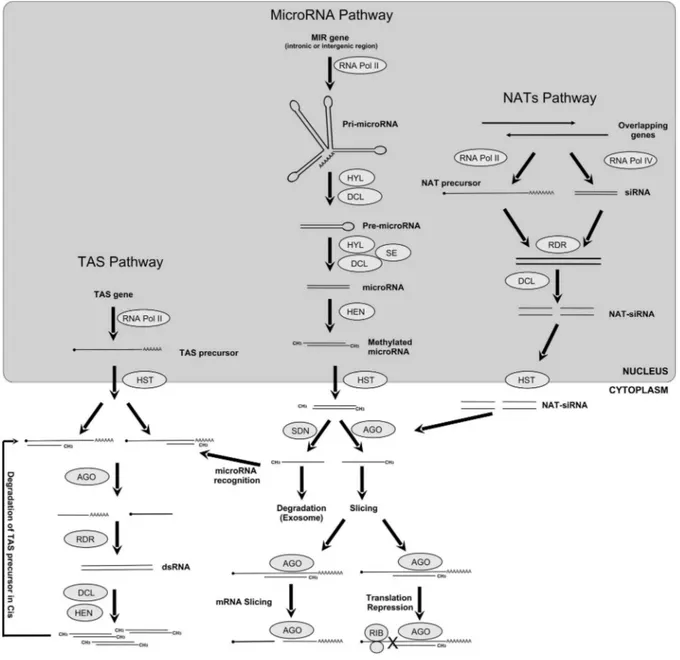
microRNAs (miRNAs) (Ramachandran and Chen, 2008; Chen, 2009; Jamalkandi and Masoudi-Nejad, 2009; Liu and Paroo, 2010). TAS pathway - RNA Pol II transcribes TAS genes into a TAS precursor, which is recognized by a complementary siRNA and sliced by Argonaute (AGO) proteins into small RNA which serves as a template for RNA Dependent RNA Polymerases (RDR) to make dsRNAs. This siRNA duplex originated by Dicer-Like di-rects cleavage of the TAS precursor incisor another target
mRNAs intrans. MicroRNA pathway: a MIR gene is
tran-scribed by RNA Pol II into a precursor pri-microRNA which is stabilized and cleaved by a protein complex com-posed of DCL and Hyponastic Leaves (HYL) into a pre-microRNA, which is further processed into a mature micro-RNA. The HUA Enhancer (HEN) methylates the resulting mature microRNA form in the 2’-hydroxy termini of both strands. This methylated mature form is exported to cyto-plasm through HASTY protein (HST).
Once in the cytoplasm, AGO proteins recognize the mature microRNA and direct it to the target gene. Later, the AGO can induce the slicing of mRNA target or repress the translation complex. The other microRNA strand is di-rected to the exosome and degraded by Small RNA De-grading Nuclease (SDN). Natural Acting Small RNAs (NAT) Pathway: overlapping genes can be transcribed by RNA Pol II, resulting in a NAT precursor complementary to an siRNA, which serves as a template to the RDR pro-teins. The DCL protein cleaves this double-stranded pre-cursor into dsRNAs, which are exported to the cytosol by HST protein. The NAT-siRNAs loaded into AGO com-plexes induce mRNA degradation in the same way as for
the microRNA pathway (Figure 1) (Voinnet, 2009; Krolet
al., 2010).
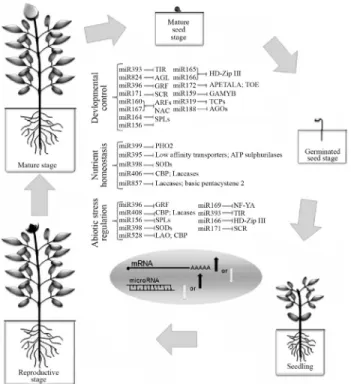
Although there are three major classes of small RNAs, miRNAs have been widely characterised in numer-ous biological conditions in plants. MiRNA genes origi-nated from inverted duplications and random sequences in the genome (Felippeset al., 2008; Voinnet, 2009). They are transcribed by RNA Pol II into long primary polyadenyl-ated RNA molecules and processed into mature miRNAs by Dicer-Like proteins (Parizottoet al., 2004). In plants, several biological experiments indicate that miRNAs play key roles during development and in response to environ-mental stresses (Figure 2) (Sunkar, 2010). The growing number of miRNAs has revealed the high complexity of genomes and biochemical and metabolic pathways in plants. Different miRNAs can act as regulators, from very early developmental phases to the reproductive phase (Chen, 2009). Although the study of the regulatory roles of miRNAs uncovered a new field in plant biology, the roles of several miRNAs remain to be discovered.
Here, in a concise review, the regulatory action of miRNAs in development and response to abiotic stress will be discussed. Briefly, the new sequencing technologies will also be addressed, as far as they apply to the characterisa-tion and identificacharacterisa-tion of new miRNAs.
miRNAs and Development in Plants
In plants, mutations in the genes involved in bioge-nesis and the regulatory roles of miRNAs produce strong effects on development. These effects demonstrate the cru-cial role of miRNAs in development (Ramachandran and Chen, 2008; Chen, 2009; Xieet al., 2010). The Argonaute
genes (AGO), especially the miR168a and
miR168b-regulatedAGO1, have a fundamental role in the
stabilisa-tion and regulatory acstabilisa-tion of other miRNAs (Vaucheretet
al., 2004). In Arabidopsis thaliana, due to overlapping functions among different members of the MIR168 family, mutations in the MIR168a gene did not affect plant devel-opment under normal growth conditions. (Vaucheret, 2009). Although some miRNA families are numerous, there are few examples in the literature that uncover func-tions for individual members in plants (Chen, 2009). One
good example is the TF (transcription factors) coding genes
No Apical Meristem (NAM-NAC) and cup-shaped
cotyle-don (CUC) that are regulated by the miR164 family in A. thaliana, which are important in root and shoot develop-ment (Bakeret al., 2005; Guoet al., 2005; Nikovicset al., 2006; Sieberet al., 2007; Ramanet al., 2008). Triple
mu-tants ofmiR164abc revealed that the genes athMIR164a
and athMIR164b partially overlap athMIR164c function during floral development, as the phenotype became more severe in the triple mutant (Sieberet al., 2007). Individual mutants for athMIR164a and athMIR164b result in plants with more roots, which diversify the functional role of the miR164 family (Guoet al., 2005). To allow for proper root development, the short root (SHR) and scarecrow like (SCR) proteins activate the MIRNA165a and MIR166b genes, which in turn negatively regulate the TF HD-ZipIII (Carlsbeckeret al., 2010). Theosaxrmutant rice plant in-sensitive for auxin revealed numerous miRNAs and com-plex regulatory signals involved in root development (Menget al., 2009).
It is already known that miR156 regulates the squa-mosa promoter binding- like (SPL) genes and that plants overexpressing miR156 are semi-dwarf, have altered numbers of leaves, and have longer vegetative phase (Xie et al., 2006; Wanget al., 2008; Zhanget al., 2011b). The down-regulated expression of miR156 from the juvenile to the adult phase is in contrast to the up-regulation of miR172, which is an important regulator of the floral
pat-terning genes such as APETALA2, TOE1 and TOE2
(Aukerman and Sakai, 2003; Wu et al., 2009; Zhu and
Helliwell, 2010). Interestingly, the dominant corngrass
(Cg1) mutant, which contains two tandem MIR156 genes,
showed an over-expression of miR156 in the meristem and lateral organs, and reduced levels of miR172, suggest-ing that the regulatory roles for these two miRNAs in the transition from the juvenile to the reproductive phase in maize and other plants is conserved (Chucket al., 2007). Recently, ablation of leaf primordia delayed the transition to the reproductive phase, revealing that transcriptional signals that modulate miR156 regulatory action were found to be crucial for phase change in plants (Yanget al., 2011). In maize, it was determined that the spatial
expres-sion of miR156, which regulates the TFZmTSH4, is
cru-cial for the establishment of the lateral meristems (Chuck et al., 2010). Strikingly, the posttranscriptional regulation ofOsSPL14by miR156 defines the rice plant architecture, with mutants displaying a reduced number of tillers and more branches in the panicles (Jiaoet al., 2010; Miuraet al., 2010). Throughout the different developmental stages of soybean seeds, 26 new miRNAs and their target genes were identified using deep sequencing and degradome ap-proaches (Songet al., 2011).
miR159-targeting members of the gibberelic acid MYB (GAMYB) family regulates seed germination and anther formation (Reyes and Chua, 2007). The overexpression of
miR159 and the inhibition of theMYBgene expression
de-layed flowering and caused male sterility (Millar and Gu-bler, 2005). In Arabidopsis plants,miR159abderegulation
of theGAMYB-like genes resulted in reduction of the cell
proliferation and programmed cell death (Alonso-Peralet
2008). Functional genes in the auxin signalling pathway (ARFs – auxin response factors) are miRNA targets.
Plants with miR160-resistant forms of theARF10,ARF16
andARF17genes showed pleiotropic effects in shoots and roots (Malloryet al., 2005; Liuet al., 2007). The overex-pression of miR160 resulted in plants with less sensitivity to giberelic acid during germination (Liuet al., 2007). In flowering, during stamens and gynoecium development,
miR167 has an important role when targetingARF6and
ARF8genes (Wuet al., 2006). The SCR family is targeted by miR171c to promote the proper development of auxil-iary meristems during branching (Wanget al., 2010). Cell
proliferation in A. thaliana is attenuated by the
upre-gulation of miR396, which downregulates the growth reg-ulating factor genes (GRF) that are crucial regulators in the cell cycle (Rodriguezet al., 2010). The occurrence of stomata, crucial for plant transpiration, depends partially
on miR824 targeting the agamous like 16 gene (AGL16)
(Kutteret al., 2007).
miRNAs in Response to Abiotic Stresses
In addition to the role of miRNAs in plant develop-ment, they are dramatically affected under abiotic stresses, where they regulate several coding genes in plants (Reyes et al., 2010; Sunkar, 2010). An understanding of how miRNAs act when they regulate gene expression and which coding genes are miRNA targets during stress responses, such as drought, salinity, metals, temperature and nutrient homeostasis, will help the generation of more tolerant plants (Sunkar, 2010).
The Regulatory Role of miRNAs in Plants
Under Drought, Salinity, Aluminum, and Low
Temperatures
It has been suggested that miR393 is one of the key miRNAs during stress responses because of its altered ex-pression inA. thaliana,Oryza sativa,Medicago truncatula, Phaseolus vulgarisand other plants under drought, salinity, low temperature, and aluminium stress conditions (Sunkar and Zhu, 2004; Zhaoet al., 2007; Liuet al., 2008; Arenas-Huerteroet al., 2009; Trindadeet al., 2010). However, the molecular evidence that miR393 regulates its targets in sev-eral environmental conditions remains to be considered.
Recently, Arabidopsisplants overexpressing osaMIR393
became more tolerant to salt excess, suggesting a regula-tory role in salinity tolerance (Gaoet al., 2011). It is known that miRNAs from the miR169 family respond differently to drought, salinity, low temperatures and aluminium in plants (Zhaoet al., 2007; Liuet al., 2008; Zhouet al., 2008; Zhaoet al., 2009). In response to salinity and drought stress in rice, the expression of the nuclear transcription factor YA (NF-YA) genes is modulated by members of the miR169 family (Zhaoet al., 2009). InA. thaliana, nf-ya plants and plants overexpressing miR169 are more sensi-tive to drought (Liet al., 2008). On the contrary in tomato, plants overexpressing miR169c, which targets a gene in-volved in the opening and closing of stomata, are more tol-erant to drought (Zhanget al., 2011a). A reduction in the expression of miR530a, miR1445, miR1446a-e and miR1447 inPopulus trichocarpawas detected in plants un-der drought and salinity, which is different from the miR1450 pattern of expression, downregulation under drought conditions and upregulation under high salinity (Luet al., 2008). InTriticum dicoccoides, the ancestor of cultivated wheat, the upregulation of miR1450 revealed an
inverse response when compared withPopulus trichocarpa
under drought conditions (Kantaret al., 2011). Although the gene MIR1450 is present in both monocot and dicots, the expression patterns suggest regulatory differences un-der drought (Luet al., 2008; Kantaret al., 2011). The for-mation of the superoxide anion O2-in response to stresses is converted into less toxic molecules by superoxide dismu-tases SOD1 and SOD2 proteins, whose mRNAs are
tar-geted by miR398 (Sunkaret al., 2006; Jagadeeswaranet
al., 2009; Trindadeet al., 2010; Kantaret al., 2011). The in-verse correlation between miRNAs miR156, miR166, miR171, miR408 and their targets were detected in barley plants under drought (Kantaret al., 2010). In different tis-sues from different developmental stages in rice plants un-der drought conditions in soil, miRNAs miR156, miR171
and miR408 were also detected (Zhou et al., 2010). In
Medicago truncatula, miR408 acts to regulate plantacyanin genes in response to drought (Trindadeet al., 2010). In acidic soils, the availability of aluminium in low pH condi-tions inhibits root growth, which affects plant development dramatically (Ryanet al., 2011). Comparingjaponicaand indicasubspecies, which differ in aluminium tolerance, we have characterised the expression of miRNAs in rice plants treated with aluminium. Using RT-qPCR, it was possible to detect sixteen differentially expressed miRNAs in rice roots, which reveals a complex miRNA response in rice un-der aluminium stress. The inverse regulation of miR528 and its targets L-ascorbate oxidase (L-AO) and copper ion binding protein genes was also observed. This finding cor-responds to the first report on the characterisation of the
miRNA response in plants under aluminium stress (Limaet
al., 2011).
miRNAs and Their Regulatory Role in the
Response to UV-B Radiation, Hypoxia, and
Oxidative Stress
The redox state of the cellular environment and the generation of ROS as a consequence of UV-B radiation and hypoxia reprograms plant responses due to eminent irre-versible damage (Blokhina and Fagerstedt, 2010; De Gara et al., 2010). The induction of different microRNAs in maize plants under low oxygen points to a diverse role of miRNAs in morphological and physiological adaptations in root cells and in sulphur and oxidative metabolism (Zhang et al., 2008). The repression of miR398 and the
upregu-lation of SOD proteins has a crucial role inArabidopsis
plants under oxidative stress (Sunkar et al., 2006). The downregulation of miR395 and the induction of miR398, as well as the respective inversion of expression of their
tar-gets in response to UV-B in Populus tremula, suggests
there are important differences in the stress-induced meta-bolic adjustments compared withArabidopsis (Jiaet al., 2009). By deep sequencing, the identification of miRNAs in rice plants under hydrogen peroxide treatment has broad-ened the roles for miRNAs in plants under oxidative stress. Targets of these hydrogen peroxide-responsive miRNAs are involved in different cellular responses and metabolic processes including transcriptional regulation, nutrient transport, auxin homeostasis, cell proliferation and pro-grammed cell death, which indicates the diversity of miRNAs function in plants’ responses under oxidative stress (Liet al., 2010a).
The Importance of miRNAs in Nutrient
Homeostasis
The uptake of nutrients is a compulsory requirement of plants, and the homeostasis of nutrients is critical for the
maintenance of growth and development (Giehl et al.,
2009; Yang and Finnegan, 2010). Sulphur is transported into the cell as sulphate and has a structural role in protein folding (Rausch and Wachter, 2005). Under sulphate defi-ciency, miR395 down-regulates low affinity transporters and ATP sulphurilases (Jones-Rhoades and Bartel, 2004). Interestingly, inArabidopsisroots, both the sulphate trans-porter AST68 and miR395 were induced. The spatial ex-pression patterns suggested that miR395 limits the expres-sion of its targets in the phloem cells (Kawashimaet al., 2009). Phosphate (Pi) homeostasis is under miR399 regula-tion. Under low cellular phosphate levels, Pi responsive gene (PHR1) activates miR399, which negatively regulates the phosphate 2 gene (PHO2), which has a role in protein degradation pathways (Bari et al., 2006). An alternative regulation in phosphate signalling is the expression of a non-coding RNA called IPS (Induced by Phosphate Starva-tion), which has a miR399 binding site with some mis-matches that impair IPS cleavage by miR399 under ideal phosphate conditions. The sequestration of miRNAs by IPS (target mimicry) blocks the down-regulation of PHO2 by miR399 (Franco-Zorrillaet al., 2007). Although target mi-micry needs further investigation in other plants, it is
func-tional and widespread in Arabidopsis (Todesco et al.,
2010). In addition, by deep sequencing, the detection of several miRNAs revealed a much more complex regulatory network in phosphate signalling (Hsiehet al., 2009; Guet al., 2010).
Metals like copper and iron are also essential micro-nutrients to plants. MiRNAs miR398, miR408 and miR857 are part of a signalling network that functions in the regula-tion of copper levels in plant cells. Under copper defi-ciency, these miRNAs were induced and negatively regulated their targets (Yamasakiet al., 2007; Burkheadet al., 2009). Several miRNAs were up-regulated in response
to low iron levels inArabidopsis(Kong and Yang, 2010).
Interestingly, a member of the miR854 family that is in-duced in plants under iron deficiency conditions is also conserved in animals, and its targets can be regulated via translation inhibition (Arteaga-Vazquezet al., 2006; Kong and Yang, 2010). In nutrient metabolism, miR169 regulates its targetNF-YAgenes, which have an important role in the balance of nitrogen in plants (Zhaoet al., 2011).
Next Generation Sequencing Technologies:
How to Deal with an Increasing Amount of
Data?
sev-eral orders of magnitude (Paszkiewicz and Studholme, 2010). A deep sequencing approach was successfully
ap-plied forde novosequencing of plant genomes (Imelfort
and Edwards, 2009), metagenomics studies in grapevines (Coetzee et al., 2010), sequencing of natural strains in
Arabidopsis (Ossowskiet al., 2008), RNA sequencing of
different tissues from soybean (Severinet al., 2010) and miRNA identification in many organisms. In addition, deep sequencing approaches applied to the characterisation of miRNA frequency and the identification of new miRNAs that regulate development and abiotic stress responses brought more complexity to regulatory networks in plants (Liet al., 2010a; Songet al., 2011). The growing number of miRNAs identified mainly by deep sequencing is increas-ing with sequence data in databases as miRBase (Kozo-mara and Griffiths-Jones, 2010) and the Plant MicroRNA Database (PMRD) (Zhanget al., 2010), a specific databank for plant miRNAs. This database allows for the retrieval of a target gene, promoter sequence, and expression profile for some miRNA genes. However, the rapid increase in molecular data in databases represents only the tip of the iceberg, and these data demand more laborious analyses for the identification of miRNA function.
Concluding Remarks and Future Perspectives
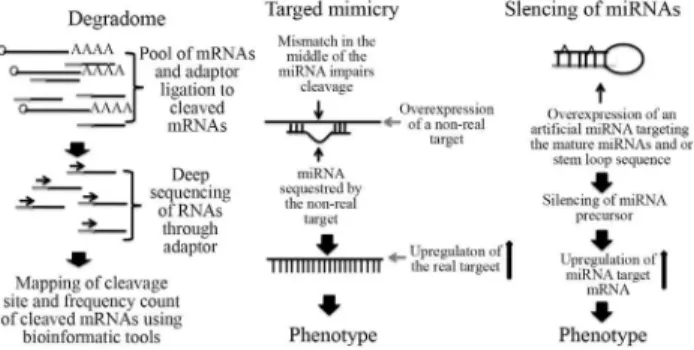
The regulatory role of miRNAs in plants is definitely a subject that will require much more investigation in plant biology. As presented in this review, several miRNAs have been determined to be involved in plant development and abiotic stress responses. They are positioned for the fine-tuning of distinct regulatory networks. In addition, the identification of new miRNAs and their targets adds more complexity to gene expression regulatory networks. The in-creasing number of miRNAs identified by deep sequenc-ing, in different and multiple experimental conditions, points to a need for further biological investigation. To address the question raised in the previous section we con-sider that the latest strategies for the understanding of indi-vidual miRNA function as miRNA target mimicry (Fran-co-Zorrilla et al., 2007), identification of miRNA target
genes by degradome approach (Germanet al., 2008; Liet
al., 2010b), and silencing of miRNAs (Eamens and Wang,
2011) are suitable molecular tools to unravel the functional role of the increasing number of miRNAs (Figure 3). Finally, since miRNAs regulate numerous transcription factors during development and in response to different stresses, high throughput analysis as RNA-seq (deep se-quencing of mRNAs), proteomics and metabolomics should be always considered as complementary approaches to investigate the global effects of the conservation and di-versity of miRNA responses in different biological condi-tions and in different plant species.
Acknowledgments
This work was supported by CNPq grant number 476005/2008-6 and 559636/2009-1. JCL received a PhD fellowship from CNPq, and RM a CNPq research grant number 307868/2011-7. GLM was awarded a PhD fellow-ship from CAPES.
References
Alonso-Peral MM, Li J, Li Y, Allen RS, Schnippenkoetter W, Ohms S, White RG and Millar AA (2010) The microRNA159-regulated GAMYB-like genes inhibit growth and promote programmed cell death inArabidopsis. Plant Physiol 154:757-771.
Arenas-Huertero C, Perez B, Rabanal F, Blanco-Melo D, De la Rosa C, Estrada-Navarrete G, Sanchez F, Covarrubias AA and Reyes JL (2009) Conserved and novel miRNAs in the legumePhaseolus vulgarisin response to stress. Plant Mol Biol 70:385-401.
Arteaga-Vazquez M, Caballero-Perez J and Vielle-Calzada JP (2006) A family of microRNAs present in plants and ani-mals. Plant Cell 18:3355-3369.
Aukerman MJ and Sakai H (2003) Regulation of flowering time and floral organ identity by a microRNA and its APE-TALA2-like target genes. Plant Cell 15:2730-2741. Baker CC, Sieber P, Wellmer F and Meyerowitz EM (2005) The
early extra petals1 mutant uncovers a role for microRNA miR164c in regulating petal number inArabidopsis. Curr Biol 15:303-315.
Bari R, Datt Pant B, Stitt M and Scheible WR (2006) PHO2, microRNA399, and PHR1 define a phosphate-signaling pathway in plants. Plant Physiol 141:988-999.
Blokhina O and Fagerstedt KV (2010) Oxidative metabolism, ROS and NO under oxygen deprivation. Plant Physiol Bio-chem 48:359-373.
Brautigam A and Gowik U (2010) What can next generation se-quencing do for you? Next generation sese-quencing as a valu-able tool in plant research. Plant Biol 12:831-841.
Burkhead JL, Reynolds KA, Abdel-Ghany SE, Cohu CM and Pilon M (2009) Copper homeostasis. New Phytol 182:799-816.
Carlsbecker A, Lee JY, Roberts CJ, Dettmer J, Lehesranta S, Zhou J, Lindgren O, Moreno-Risueno MA, Vaten A, Thita-madee S,et al.(2010) Cell signalling by microRNA165/6 directs gene dose-dependent root cell fate. Nature 465:316-321.
Chen X (2009) Small RNAs and their roles in plant development. Annu Rev Cell Dev Biol 25:21-44.
Chuck G, Cigan AM, Saeteurn K and Hake S (2007) The hetero-chronic maize mutant Corngrass1 results from overex-pression of a tandem microRNA. Nat Genet 39:544-549. Chuck G, Whipple C, Jackson D and Hake S (2010) The maize
SBP-box transcription factor encoded by tasselsheath4 regu-lates bract development and the establishment of meristem boundaries. Development 137:1243-1250.
Coetzee B, Freeborough MJ, Maree HJ, Celton JM, Rees DJ and Burger JT (2010) Deep sequencing analysis of viruses in-fecting grapevines: Virome of a vineyard. Virology 400:157-163.
De Gara L, Locato V, Dipierro S and de Pinto MC (2010) Redox homeostasis in plants. The challenge of living with endoge-nous oxygen production. Respir Physiol Neurobiol 173(Suppl):S13-19.
Eamens AL and Wang MB (2011) Alternate approaches to repress endogenous microRNA activity in Arabidopsis thaliana. Plant Sign Behav 6:349-359.
Felippes FF, Schneeberger K, Dezulian T, Huson DH and Weigel D (2008) Evolution of Arabidopsis thaliana microRNAs from random sequences. RNA 14:2455-2459.
Franco-Zorrilla JM, Valli A, Todesco M, Mateos I, Puga MI, Rubio-Somoza I, Leyva A, Weigel D, Garcia JA and Paz-Ares J (2007) Target mimicry provides a new mechanism for regulation of microRNA activity. Nat Genet 39:1033-1037.
Gao P, Bai X, Yang L, Lv D, Pan X, Li Y, Cai H, Ji W, Chen Q and Zhu Y (2011) osa-MIR393: A salinity- and alkaline stress-related microRNA gene. Mol Biol Rep 38:237-242. German MA, Pillay M, Jeong DH, Hetawal A, Luo S,
Janar-dhanan P, Kannan V, Rymarquis LA, Nobuta K, German R,
et al. (2008) Global identification of microRNA-target RNA pairs by parallel analysis of RNA ends. Nat Biotechnol 26:941-946.
Giehl RF, Meda AR and von Wiren N (2009) Moving up, down, and everywhere: Signaling of micronutrients in plants. Curr Opin Plant Biol 12:320-327.
Gu M, Xu K, Chen A, Zhu Y, Tang G and Xu G (2010) Expression analysis suggests potential roles of microRNAs for phos-phate and arbuscular mycorrhizal signaling in Solanum lycopersicum. Physiol Plant 138:226-237.
Guo HS, Xie Q, Fei JF and Chua NH (2005) MicroRNA directs mRNA cleavage of the transcription factor NAC1 to down-regulate auxin signals for arabidopsis lateral root develop-ment. Plant Cell 17:1376-1386.
Hsieh LC, Lin SI, Shih AC, Chen JW, Lin WY, Tseng CY, Li WH and Chiou TJ (2009) Uncovering small RNA-mediated
re-sponses to phosphate deficiency inArabidopsisby deep se-quencing. Plant Physiol 151:2120-2132.
Imelfort M and Edwards D (2009) De novo sequencing of plant genomes using second-generation technologies. Brief Bioinform 10:609-618.
Jagadeeswaran G, Saini A and Sunkar R (2009) Biotic and abiotic stress down-regulate miR398 expression in Arabidopsis. Planta 229:1009-1014.
Jamalkandi SA and Masoudi-Nejad A (2009) Reconstruction of
Arabidopsis thalianafully integrated small RNA pathway. Funct Integr Genomics 9:419-432.
Jia X, Ren L, Chen QJ, Li R and Tang G (2009) UV-B-responsive microRNAs inPopulus tremula. J Plant Physiol 166:2046-2057.
Jiao Y, Wang Y, Xue D, Wang J, Yan M, Liu G, Dong G, Zeng D, Lu Z, Zhu X, et al. (2010) Regulation of OsSPL14 by OsmiR156 defines ideal plant architecture in rice. Nat Genet 42:541-544.
Jones-Rhoades MW and Bartel DP (2004) Computational identi-fication of plant microRNAs and their targets, including a stress-induced miRNA. Mol Cell 14:787-799.
Kantar M, Lucas SJ and Budak H (2011) miRNA expression pat-terns ofTriticum dicoccoidesin response to shock drought stress. Planta 233:471-484.
Kantar M, Unver T and Budak H (2010) Regulation of barley miRNAs upon dehydration stress correlated with target gene expression. Funct Integr Genomics 10:493-507.
Kawashima CG, Yoshimoto N, Maruyama-Nakashita A, Tsu-chiya YN, Saito K, Takahashi H and Dalmay T (2009) Sul-phur starvation induces the expression of microRNA-395 and one of its target genes but in different cell types. Plant J 57:313-321.
Kong WW and Yang ZM (2010) Identification of iron-deficiency responsive microRNA genes and cis-elements in Arabi-dopsis. Plant Physiol Biochem 48:153-159.
Kozomara A and Griffiths-Jones S (2010) miRBase: Integrating microRNA annotation and deep-sequencing data. Nucleic Acids Res 39:D152-157.
Krol J, Loedige I and Filipowicz W (2010) The widespread regu-lation of microRNA biogenesis, function and decay. Nat Rev Genet 11:597-610.
Kutter C, Schob H, Stadler M, Meins Jr F and Si-Ammour A (2007) MicroRNA-mediated regulation of stomatal devel-opment inArabidopsis. Plant Cell 19:2417-2429.
Li WX, Oono Y, Zhu J, He XJ, Wu JM, Iida K, Lu XY, Cui X, Jin H and Zhu JK (2008) TheArabidopsisNFYA5 transcription factor is regulated transcriptionally and posttranscriptio-nally to promote drought resistance. Plant Cell 20:2238-2251.
Li T, Li H, Zhang YX and Liu JY (2010a) Identification and anal-ysis of seven H2O2-responsive miRNAs and 32 new miRNAs in the seedlings of rice (Oryza sativaL. ssp. in-dica). Nucleic Acids Res 39:2821-2833.
Li YF, Zheng Y, Addo-Quaye C, Zhang L, Saini A, Jagadees-waran G, Axtell MJ, Zhang W and Sunkar R (2010b) Transcriptome-wide identification of microRNA targets in rice. Plant J 62:742-759.
Liu HH, Tian X, Li YJ, Wu CA and Zheng CC (2008) Micro-array-based analysis of stress-regulated microRNAs in
Arabidopsis thaliana. RNA 14:836-843.
Liu PP, Montgomery TA, Fahlgren N, Kasschau KD, Nonogaki H and Carrington JC (2007) Repression of AUXIN RESPON-SE FACTOR10 by microRNA160 is critical for seed germi-nation and post-germigermi-nation stages. Plant J 52:133-146. Liu Q and Chen YQ (2009) Insights into the mechanism of plant
development: Interactions of miRNAs pathway with phyto-hormone response. Biochem Biophys Res Commun 384:1-5.
Liu Q and Paroo Z (2010) Biochemical principles of small RNA pathways. Annu Rev Biochem 79:295-319.
Liu Q, Zhang YC, Wang CY, Luo YC, Huang QJ, Chen SY, Zhou H, Qu LH and Chen YQ (2009) Expression analysis of phytohormone-regulated microRNAs in rice, implying their regulation roles in plant hormone signaling. FEBS Lett 583:723-728.
Lu S, Sun YH and Chiang VL (2008) Stress-responsive microRNAs in Populus. Plant J 55:131-151.
Mallory AC, Bartel DP and Bartel B (2005) MicroRNA-directed regulation ofArabidopsisAUXIN RESPONSE FACTOR17 is essential for proper development and modulates expres-sion of early auxin response genes. Plant Cell 17:1360-1375. Meng Y, Huang F, Shi Q, Cao J, Chen D, Zhang J, Ni J, Wu P and Chen M (2009) Genome-wide survey of rice microRNAs and microRNA-target pairs in the root of a novel auxin-resistant mutant. Planta 230:883-898.
Millar AA and Gubler F (2005) TheArabidopsisGAMYB-like genes, MYB33 and MYB65, are microRNA-regulated genes that redundantly facilitate anther development. Plant Cell 17:705-721.
Miura K, Ikeda M, Matsubara A, Song XJ, Ito M, Asano K, Matsuoka M, Kitano H and Ashikari M (2010) OsSPL14 promotes panicle branching and higher grain productivity in rice. Nat Genet 42:545-549.
Nikovics K, Blein T, Peaucelle A, Ishida T, Morin H, Aida M and Laufs P (2006) The balance between the MIR164A and CUC2 genes controls leaf margin serration inArabidopsis. Plant Cell 18:2929-2945.
Ossowski S, Schneeberger K, Clark RM, Lanz C, Warthmann N and Weigel D (2008) Sequencing of natural strains of Arabi-dopsis thaliana with short reads. Genome Res 18:2024-2033.
Parizotto EA, Dunoyer P, Rahm N, Himber C and Voinnet O (2004)In vivoinvestigation of the transcription, processing, endonucleolytic activity, and functional relevance of the spatial distribution of a plant miRNA. Genes Dev 18:2237-2242.
Paszkiewicz K and Studholme DJ (2010)De novoassembly of short sequence reads. Brief Bioinform 11:457-472. Ramachandran V and Chen X (2008) Small RNA metabolism in
Arabidopsis. Trends Plant Sci 13:368-374.
Raman S, Greb T, Peaucelle A, Blein T, Laufs P and Theres K (2008) Interplay of miR164, CUP-SHAPED COTYLEDON genes and LATERAL SUPPRESSOR controls axillary meristem formation inArabidopsis thaliana. Plant J 55:65-76.
Rausch T and Wachter A (2005) Sulfur metabolism: A versatile platform for launching defence operations. Trends Plant Sci 10:503-509.
Reyes JL, Arenas-Huertero C and Sunkar R (2010) Cloning of stress-responsive microRNAs and other small RNAs from plants. Methods Mol Biol 639:239-251.
Reyes JL and Chua NH (2007) ABA induction of miR159 con-trols transcript levels of two MYB factors during Arabi-dopsisseed germination. Plant J 49:592-606.
Rodriguez RE, Mecchia MA, Debernardi JM, Schommer C, Wei-gel D and Palatnik JF (2010) Control of cell proliferation in
Arabidopsis thalianaby microRNA miR396. Development 137:103-112.
Ryan PR, Tyerman SD, Sasaki T, Furuichi T, Yamamoto Y, Zhang WH and Delhaize E (2011) The identification of alu-minium-resistance genes provides opportunities for enhanc-ing crop production on acid soils. J Exp Bot 62:9-20. Schommer C, Palatnik JF, Aggarwal P, Chetelat A, Cubas P,
Farmer EE, Nath U and Weigel D (2008) Control of jasmo-nate biosynthesis and senescence by miR319 targets. PLoS Biology 6:e230.
Severin AJ, Woody JL, Bolon YT, Joseph B, Diers BW, Farmer AD, Muehlbauer GJ, Nelson RT, Grant D, Specht JE,et al.
(2010) RNA-Seq Atlas ofGlycine max: A guide to the soy-bean transcriptome. BMC Plant Biol 10:e160.
Sieber P, Wellmer F, Gheyselinck J, Riechmann JL and Meyero-witz EM (2007) Redundancy and specialization among plant microRNAs: Role of the MIR164 family in developmental robustness. Development 134:1051-1060.
Song QX, Liu YF, Hu XY, Zhang WK, Ma B, Chen SY and Zhang JS (2011) Identification of miRNAs and their target genes in developing soybean seeds by deep sequencing. BMC Plant Biol 11:e5.
Sunkar R (2010) MicroRNAs with macro-effects on plant stress responses. Semin Cell Dev Biol 21:805-811.
Sunkar R, Kapoor A and Zhu JK (2006) Posttranscriptional induc-tion of two Cu/Zn superoxide dismutase genes in Arabi-dopsis is mediated by downregulation of miR398 and important for oxidative stress tolerance. Plant Cell 18:2051-2065.
Sunkar R and Zhu JK (2004) Novel and stress-regulated microRNAs and other small RNAs fromArabidopsis. Plant Cell 16:2001-2019.
Todesco M, Rubio-Somoza I, Paz-Ares J and Weigel D (2010) A collection of target mimics for comprehensive analysis of microRNA function inArabidopsis thaliana.PLoS Genetics 6:e1001031.
Trindade I, Capitao C, Dalmay T, Fevereiro MP and Santos DM (2010) miR398 and miR408 are up-regulated in response to water deficit inMedicago truncatula.Planta 231:705-716. Vaucheret H (2009) AGO1 homeostasis involves differential
pro-duction of 21-nt and 22-nt miR168 species by MIR168a and MIR168b. PLoS One 4:e6442.
Vaucheret H, Vazquez F, Crete P and Bartel DP (2004) The action of ARGONAUTE1 in the miRNA pathway and its regula-tion by the miRNA pathway are crucial for plant develop-ment. Genes Dev 18:1187-1197.
Voinnet O (2009) Origin, biogenesis, and activity of plant microRNAs. Cell 136:669-687.
Wang JW, Schwab R, Czech B, Mica E and Weigel D (2008) Dual effects of miR156-targeted SPL genes and CYP78A5/KLUH on plastochron length and organ size in
Wang L, Mai YX, Zhang YC, Luo Q and Yang HQ (2010) MicroRNA171c-targeted SCL6-II, SCL6-III, and SCL6-IV genes regulate shoot branching in Arabidopsis. Mol Plant 3:794-806.
Wu G, Park MY, Conway SR, Wang JW, Weigel D and Poethig RS (2009) The sequential action of miR156 and miR172 regulates developmental timing in Arabidopsis. Cell 138:750-759.
Wu MF, Tian Q and Reed JW (2006)ArabidopsismicroRNA167 controls patterns of ARF6 and ARF8 expression, and regu-lates both female and male reproduction. Development 133:4211-4218.
Xie K, Wu C and Xiong L (2006) Genomic organization, differen-tial expression, and interaction of SQUAMOSA promoter-binding-like transcription factors and microRNA156 in rice. Plant Physiol 142:280-293.
Xie Z, Khanna K and Ruan S (2010) Expression of microRNAs and its regulation in plants. Semin Cell Dev Biol 21:790-797.
Yamasaki H, Abdel-Ghany SE, Cohu CM, Kobayashi Y, Shikanai T and Pilon M (2007) Regulation of copper homeostasis by micro-RNA inArabidopsis. J Biol Chem 282:16369-16378. Yang L, Conway SR and Poethig RS (2011) Vegetative phase
change is mediated by a leaf-derived signal that represses the transcription of miR156. Development 138:245-249. Yang XJ and Finnegan PM (2010) Regulation of phosphate
star-vation responses in higher plants. Ann Bot 105:513-526. Zhang X, Zou Z, Gong P, Zhang J, Ziaf K, Li H, Xiao F and Ye Z
(2011a) Over-expression of microRNA169 confers en-hanced drought tolerance to tomato. Biotechnol Lett 33:403-409.
Zhang X, Zou Z, Zhang J, Zhang Y, Han Q, Hu T, Xu X, Liu H, Li H and Ye Z (2011b) Over-expression of sly-miR156a in to-mato results in multiple vegetative and reproductive trait
al-terations and partial phenocopy of the sft mutant. FEBS Lett 585:435-439.
Zhang Z, Wei L, Zou X, Tao Y, Liu Z and Zheng Y (2008) Sub-mergence-responsive MicroRNAs are potentially involved in the regulation of morphological and metabolic adapta-tions in maize root cells. Ann Bot 102:509-519.
Zhang ZH, Yu JY, Li DF, Zhang ZY, Liu FX, Zhou X, Wang T, Ling Y and Su Z (2010) PMRD: Plant microRNA database. Nucleic Acids Res 38:D806-D813.
Zhao B, Ge L, Liang R, Li W, Ruan K, Lin H and Jin Y (2009) Members of miR-169 family are induced by high salinity and transiently inhibit the NF-YA transcription factor. BMC Mol Biol 10:e29.
Zhao BT, Liang RQ, Ge LF, Li W, Xiao HS, Lin HX, Ruan KC and Jin YX (2007) Identification of drought-induced microRNAs in rice. Biochem Biophys Res Commun 354:585-590.
Zhao M, Ding H, Zhu J, Zhang F and Li W (2011) Involvement of miR169 in the nitrogen-startvation responses in Arabi-dopsis. New Phytol 190:906-915.
Zhou L, Liu Y, Liu Z, Kong D, Duan M and Luo L (2010) Ge-nome-wide identification and analysis of drought-respon-sive microRNAs in Oryza sativa. J Exp Bot 61:4157-4168. Zhou X, Wang G, Sutoh K, Zhu JK and Zhang W (2008)
Identifi-cation of cold-inducible microRNAs in plants by trans-criptome analysis. Biochim Biophys Acta 1779:780-788. Zhu QH and Helliwell CA (2010) Regulation of flowering time
and floral patterning by miR172. J Exp Bot 62:487-495.