Clinical pharmacology of dobutamine and
dopamine in preterm neonates
Gian Maria Pacifici
University of Pisa, Medical School, Department of Translational Research and New Technologies in Medicine and Surgery, Section of Pharmacology, Pisa, Italy
Dobutamine is ab1selective stimulant.bReceptor agonists are used to stimulate the rate and the force of cardiac
contraction. The chronotropic effect is useful for the treatment of arrhythmias whereas the inotropic effect is useful to augment the myocardial contractility. Dobutamine is about four times as potent as dopamine in stimulating myocardial contractility in low concentrations and increases left ventricular output in the hypotensive preterm infants. Dobutamine possesses a center of asymmetry. The (2)-isomer of dobutamine is a potent agonist ofa1receptors and is capable of causing marked pressor responses. In contrast, (þ)-dobutamine is
a potent a1 receptor antagonist which can block the effects of (2)-dobutamine. Dobutamine is relatively
cardioselective at dosages used in clinical practice with its main action being on b1-adrenergic receptors.
Dobutamine and dopamine undergo intense metabolism in neonates where they are conjugated with sulphate and O-methylated. The clearance and the half-life of dobutamine and dopamine range over one order of magnitude in neonates. Dopamine is widely used to increase blood pressure, cardiac output, urine output and peripheral perfusion in neonates with shock and cardiac failure. Dopamine is more effective than dobutamine in the short-term treatment of systemic hypotension in preterm infants. High doses of dopamine cause vasoconstriction, increase systemic vascular resistance, and, eventually, decrease renal blood flow. Treatment with dobutamine is associated with a significantly greater increase in left ventricular output in the single study reporting that outcome. Dobutamine is indicated for the short-term treatment of cardiac decompensation.
KEYWORDS: dobutamine; dopamine; hypotension; metabolism; neonate; pharmacokinetics.
Pacifici GM. Clinical pharmacology of dobutamine and dopamine in preterm neonates. MEDICALEXPRESS. 2014;1(5):275-283.
Received for publication onJuly 10 2014;First review completed onAugust 1 2014;Accepted for publication onAugust 18 2014
B INTRODUCTION
bReceptor agonists may be used to stimulate the rate and
the force of cardiac contraction. The chronotropic effect is useful in the emergency treatment of arrhythmias such as torsades de pointes, bradycardia, or heart block. The inotropic effect is useful when it is desirable to augment
myocardial contractility.1 Dobutamine is a b
1 selective
stimulant2 which resembles dopamine structurally, but
possesses a bulky aromatic substituent on the amino
group.1The pharmacological effects of dobutamine are due
to direct interaction with b receptors. Its actions do not
appear to result from release of norepinephrine from sympathetic nerve endings, nor are they exerted by
dopamine receptors.2 Dobutamine is a b1 agonist like
dopamine, but in high doses itsb2effects can decrease rather
than increase peripheral resistance.3
Dobutamine is about four times as potent as dopamine in stimulating myocardial contractility in low concentration, and of proven value in increasing left ventricular output in the hypotensive preterm infants. It has less effect than
dopamine on blood pressure because it has little effect on
systematic vascular resistance.3Tachycardia may occur, and
increased pulmonary blood pressure leading to pulmonary
edema has been observed when the dose exceeds 15mg/kg
per min.3
This drug onset of action is 1 to 2 min after intravenous administration, with peak effect in 10 min. Dobutamine must be administered by continuous intravenous infusion because
of its rapid metabolism.4
Dobutamine possesses a center of asymmetry, and both enantiomeric forms are present in the mixture used clinically.
The (2)-isomer of dobutamine is a potent agonist at a1
receptors, and is capable of causing marked pressor
responses. In contrast, (þ)-dobutamine is a potent a1
receptor antagonist, which can block the effects of (2
)-dobutamine. The effects of these two isomers are mediated
bybreceptors.
Dobutamine is indicated for the short-term treatment of cardiac decompensation that may occur after cardiac surgery or in patients with congestive heart failure or acute myocardial infarction. Dobutamine increases cardiac output and stroke volume in such patients, usually without a
marked increase in heart rate.2
DOI:10.5935/MedicalExpress.2014.05.12
This drug seems to be better than dopamine at improving systemic blood flow. There is a growing consensus that cardiac output and systematic tissue perfusion usually
matter more than blood pressure.3 Blood pressure rises
significantly during the first week of life and then more slowly after that. The most likely value for a 6-day-old infant of 25 weeks’ gestation is 50 mm Hg, and most will have a
systolic pressure between 33 and 67 mm Hg.3
High doses of dopamine cause vasoconstriction, increase systemic vascular resistance, and, eventually, decrease renal blood flow. While a moderate dose increases myocardial contractility and cardiac output in adult and older children, a
dose of more than 10mg/kg per min can cause an increase in
systemic resistance, a fall in gut blood flow, and a reduction in cardiac output in the neonate, especially in the first days
of life.3
Dobutamine and dopamine are off-patent drugs prior-itized by the National Institute of Child Health and Human Development of USA Food and Drug Administration for further study under the Best Pharmaceuticals for Children
Act.6Both agents are used to manage cardiac insufficiency in
preterm neonates, and are subject to controversy among
neonatologists.6For the very-low-birthweight neonates, the
probability of treatment with dopamine or dobutamine varied almost 10-fold from 4.4% to 38.4% at 11 hospitals. Treatment with dopamine alone was more common than treatment with dobutamine alone. There was no difference in mortality between neonates treated with dopamine com-pared to those treated with dobutamine, but access to charts and clinical details are required to conduct a comparative effectiveness study.
B BIBLIOGRAPHIC SEARCH
The bibliographic search was performed using PubMed and EMBASE databases as search engines. The cutoff point was January 2014. The following key words were used: “dobutamine neonate”, “dobutamine metabolism neonate”, “dobutamine pharmacokinetics neonate”, “dobutamine therapy neonate”, “dopamine neonate”, “dopamine metab-olism neonate”, “dopamine pharmacokinetics neonate” and “dobutamine dopamine neonate”. The bibliography of each article was read carefully, and the selected articles were examined. In addition, the books “Neofax: a Manual of
Drugs Used in the Neonatal Care” by Young and Mangum4,
and the “Neonatal Formulary”3, were consulted. The
findings of the bibliographic search gave rise to 40 original articles, 8 review articles and 4 book chapters. The publication years of this matter ranged from 1982 to 2012.
B RESULTS
Dose and monitoring of dobutamine in infants
Young and Mangum4suggest starting with an intravenous
continuous infusion of 2mg/kg per min of dobutamine,
increasing to 25mg/kg while titrating the response. The
Neonatal Formulary3states that the right dose of
dobuta-mine needs to be individually assessed because the clearance of dobutamine is very variable in children. The Neonatal
Formulary3suggests starting with a continuous intravenous
infusion of dobutamine 10mg/kg per min. This dose is
adjusted as necessary after 20 min because of the drug’s variable half-life. A few infants may need twice as much drug. Ultrasound must be used to check the hemodynamic
response when using a dose of more than 10mg/kg per min.
Urine output and peripheral perfusion must be frequently assessed.
The heart rate and arterial blood pressure must be continuously monitored. The intravenous site must be
checked for signs of extravasation.4Dobutamine may cause
hypotension if the patient is hypovolemic. Tachycardia occurs at high dosage. Arrhythmias, hypertension, and cutaneous vasodilation increase myocardial oxygen
con-sumption. Tissue ischemia occurs with infiltration.4
Sulphation and methylation of dobutamine and dopamine in neonates and adult subjects
Berg and Padbury5 measured the simultaneous plasma
free and sulfoconjugated dobutamine and dopamine in urine and plasma of 47 stable critically ill neonates and children,
aged between 1 day to 17 years (mean^SD¼37^7
months). Nine infants received dopamine only, 27 infants received dobutamine only, and 11 infants received both simultaneously. The fractions of plasma dobutamine and
dopamine sulfoconjugated were 0.73^0.05 and 0.76^0.05,
respectively.5 Free dobutamine plasma clearance was not
different among patients receiving dobutamine and
dopa-mine versus patients receiving dobutadopa-mine only (83^13
versus 114^13 ml/kg per min.6).
Very little is known about the metabolism of dopamine in neonates. In adults, dopamine is metabolized rapidly by both monoamine oxidase and catechol-O-methyl transferase present in circulating blood to 3,4-dihydroxyphenyl acetic acid (DOPAC), homovanillic acid (HVA), and
3-methoxytyr-amine (for review see7). The few data published on the
metabolism of dopamine in neonates deal with the sulfation of this drug. Hepatic SULT1A3, the enzyme that sulphates dopamine, is expressed at high levels early in development, but decreases in late fetal/early neonatal life, and is
essentially absent from the adult liver.8 In the lung,
significant SULT1A3 activity is observed in the fetus, but neonatal levels are considerably lower. In the brain, the highest activity is observed in the choroid plexus for SULT1A1, with low and widespread activity for both
SULT1A1 and SUT1A3 in other brain regions.7
Plasma free and sulfoconjugated dopamine concentrations were not different in neonates and healthy adult volunteers. The percentage free to total dopamine recovered in urine
was 1.5^1.1%. These data suggest that the majority of
plasma dopamine is sulphated.9
Dobutamine is methylated by
catechol-O-methyltransfer-ase. Raxworthy et al.6 investigated dobutamine and
isoprenaline as substrates for purified pig-liver catechol-O-methyltransferase. The apparent first-order rate constant (Vmax/Km) was derived. Dobutamine was a 5-fold better
substrate for catechol-O-methyltransferase than
isoprenaline.
Yan et al.10 stated that the main catabolic fate of
In another investigation, Yan et al.11studied the in-vitro kinetics of dobutamine and dopamine as substrates and inhibitors of each other, i.e., the apparent Vmax and Km, and Ki, in crude preparation of human adult blood mononuclear cell catechol-O-methyltransferase. The Vmax for dopamine and dobutamine as substrates for ferase were 0.45 and 0.59 nmol of catechol-O-methyltrans-ferase product formed per mg of protein per min, whereas the values for Km were 0.44 and 0.05 mM, respectively. Dopamine and dobutamine were competitive inhibitors of each other in this reaction. The Ki for dopamine as an inhibitor of dobutamine methylation was 1.5 mM, whereas that for dobutamine as an inhibitor of dopamine methylation was 0.015 mM. The Ki for dopamine as an inhibitor of dobutamine is thus 100-fold lower than the Ki of dobutamine as an inhibitor of dopamine methylation.
Pharmacokinetics of dobutamine and dopamine in neonates
Free plasma dobutamine and dopamine clearances are
102^15 and 250^38 ml/kg/min, respectively (p,0.01).5
Linear regression analyses demonstrated relationships of the fraction of plasma dobutamine and dopamine
sulfoconju-gated to the respective free plasma clearances (r2¼0.30;
p,0.001, and r2¼0.29, p
,0.05, respectively).5
Infants with serum creatinine concentrations .2 mg/dl
had lower free plasma dobutamine and dopamine clearance
rates than those infants with serum creatinine levels,2 mg/
dl (6^1 versus 107^15, p,0.05 ml/kg/min for
dobuta-mine and 40^38 versus 270^39 ml/kg/min for
dopa-mine, respectively, p,0.05). Renal excretion is an important
determinant of the wide interindividual variability in
plasma free dobutamine and dopamine clearance rates.7
There is significant inter- and intra-individual variability in the dose of dopamine required to elicit cardiovascular responses of similar magnitude in preterm infants. Possible explanations for this phenomenon include the differences in
the metabolism of dopamine,11 – 13 the production of local
vaso-regulatory hormones, the state of expression14 and
down-regulation15 of cardiovascular adrenergic receptors,
and the differences in adrenal function.16,17
In adults, Leier et al.18found a linear relationship between
dobutamine dose and the resulting plasma concentration, and between the plasma concentration and the resulting hemodynamic response. The mean calculated threshold values (the minimum concentration necessary for a change
in cardiac output) were 39 ng/ml19and 33 ng/ml.20A higher
threshold value of 50 ng/ml was found for heart rate in
normal children and adolescents.20
Martinez et al.19 studied the pharmacokinetics and
pharmacodynamics of dobutamine in 13 critically ill neonates requiring inotropic support. Dobutamine was administered as a constant intravenous infusion in
increas-ing doses of 2.5, 5, and 7.5mg/kg per min. The plasma
dobutamine levels showed a progressive stepwise increase,
with mean levels of 21^3 ng/ml at the 2.5mg/kg per min
dose, 49^4 ng/ml at the 5mg/kg per min dose, and
68^4 ng/ml at the 7.5mg/kg per min dose. Of interest, the
actual infusion rate represented 74^3% (range: 39% to
108%) of the desired infusion rate when dobutamine concentration was measured in the infusate.
Dobutamine is a racemic mixture of enantiomers with a
complex mechanism of action.21,22The racemic mixture used
in clinical practice leads to myocardiala1-receptor-mediated
inotropic effects and increased blood pressure as well asb
-receptor mediated chronotropic effects and decreased
peripheral vascular resistance.23 This is in contrast to
dopamine, which is believed to act through an indirect action with increased norepinephrine release from cardiac
sympathetic nerves, as well as a direct action onb-adrenergic
and dopamine receptors of the renal and splanchnic
vasculature.24 – 26
During dobutamine infusion, there were significant increases in cardiac output measurements above infusion values. There was no statistically significant change in systolic or diastolic blood pressure, or of heart rate during infusion. The minimum plasma concentration necessary for
a change in cardiac output was 39^7 ng/ml. The plasma
clearance rate was 90^38 ml/kg per min. Plasma
catechol-amines levels were unchanged during dobutamine infusion.
The data by Martinez et al.19suggest that dobutamine is an
effective but limited inotropic agent in neonates. Dobuta-mine may be most beneficial when cardiogenic failure is presented.
Banner et al.27 evaluated a linear kinetic model for
dobutamine clearance in 12 patients aged between 2 days to 9 years. The infusion rates for dobutamine ranged from 2 to 15mg/kg per min. The serum concentrations of dobutamine varied from 6.4 to 347 ng/ml. A trend of increasing
concentration with dose was observed (p,0.001). Contrary
to the behaviour of a first-order model, the slope of this
relationship is significantly negative (p,0.001). The
concentration of dobutamine increased with the dose of this drug. The values for clearance varied from 32 to 625 ml/ kg per min. However, the relationship of clearance to steady-state concentration had a negative slope. Multiple analyses of variance on age, weight, and co-infused dopamine showed that these factors did not influence the relationship of clearance to steady-state. Analysis to show an underlying model failed to differentiate Michaelis-Menten from non-linear binding or mixed models on the basis of these data. These findings show that the pharmacokinetics of dobuta-mine do not appear to follow a simple linear model. Based on these data, neither age nor the added infusion of dopamine
affects the clearance of dobutamine. Banner et al.27state that
an appropriate model describing drug pharmacokinetics of dobutamine must be validated.
Schranz et al.28studied the pharmacokinetics of
dobuta-mine in 27 children and infants aged between 0.13 and 16.6 years. Seventeen patients received dobutamine for treatment of shock secondary to sepsis, while 10 patients received dobutamine for treatment of post-cardiac surgery. The duration of dobutamine infusion before sampling was
1.87^0.29 days (range: 0.2 to 5.5; median: 1 day). There
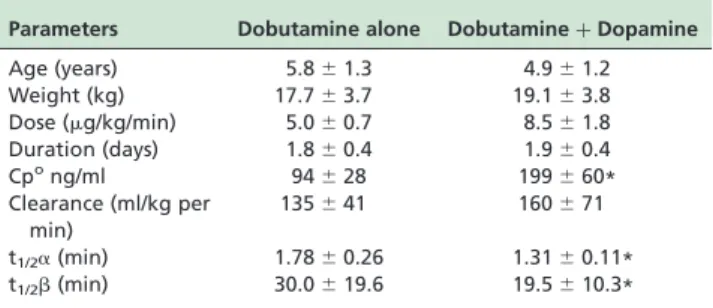
was considerable variation in the concentration-time profile among patients. The kinetic parameters are summarised in Tables 1 and 2.
parameters. It was found, however, that the concomitant administration of dopamine altered dobutamine pharmaco-kinetics, indicating the possible presence of a competitive component in dobutamine’s disposition. The kinetic par-ameters of these 10 patients are summarized in Table 2.
There was no correlation between clearance and dose of dobutamine. The steady-state levels are a linear function of
infusion rate for a given patient. Schranz et al.28normalized
the steady-state plasma concentrations to a 5mg/kg per min
dose to see whether there was a decrease in variability. Despite this, there was still a considerable variation of steady-state concentrations among patients (3.8 to 400 ng/ ml). Thus, the clearance rates for the patients ranged over
more than on order of magnitude (Table 1).28The volume of
distribution (Vd) showed a similarly large variability, as did
the AUC (Table 1). AUC, normalized to a dose of 5mg/kg per
min, also showed a large variability. Additionally, clearance was not correlated with blood urea nitrogen levels or plasma creatinine.
Dopamine pharmacokinetics were investigated in 14 critical newborn infants ranging from 27 to 43 weeks of
gestational age.38Dopamine was infused at the rate of 8mg/
kg per min. Steady-state plasma dopamine concentrations and plasma clearance rates were observed 20 min after infusion. Plasma dopamine concentration ranged from 0.5 ng/ml before infusion to almost 70 ng/ml at an infusion
rate of 4 to 8mg/kg per min. There was a linear correlation
between infusion rate and plasma dopamine concentration
(r¼0.68; p,0.001).
The clearance of dopamine varies widely in the pediatric population, depending on age. Its elimination half-life is approximately 2 min in fullterm infants, and may be as long
as 4-5 min in preterm infants.7 Due to immaturity of the
autonomic nervous system, the drug may produce some adverse respiratory responses at high doses in neonates, the most common being tachycardia and cardiac arrhythmias.
Dobutamine is relatively cardioselective at dosages used
in clinical practice, with its main action being on b1
-adrenergic receptors. Unlike dopamine, it does not have any effect on specific dopaminergic receptors. Dobutamine is used to increase cardiac output in infants with circulatory failure. Its elimination half-life is about 2 min in adults and older infants. In neonates, the half-life of dobutamine is
5.8^1.3 min (see Table 3).
Plasma dopamine clearance was determined in 27 acutely ill infants and children who were receiving a continuous
intravenous infusion of dopamine.30 Dopamine clearance
was 60.7^28.1 ml/kg per min. There was a negative
correlation between the patient age and dopamine clearance
(r¼-0.63; p,0.05), and dopamine clearance was nearly
twice as rapid in children younger than 2 years than it was in
older children (87.3^27.7 ml/kg per min versus
45.9^17.0 mg/kg per min; p,0.05). Conjugated bilirubin
exerted an age-independent effect on clearance of dopamine:
clearance was 44.8^28.6 ml/kg per min in children with
abnormal conjugated bilirubin (greater than or equal to
0.9 mg/dl) and 70^2.56 ml/kg/min in children with
normal conjugated bilirubin (less than 0.9 mg/dl). Clearance
was lowest (29.8^5.7 ml/kg per min) in the four children
who had both hepatic and renal dysfunction. Age is an important determinant of dopamine clearance, explaining, in part, the clinical observation that infants and young children require higher infusion rate.
In adults, dopamine follows a biphasic pattern, with an initial distribution phase (a-phase) of 1 min and a terminal
elimination phase (b-phase) of approximately 9 min. The
total body clearance is about 70 ml/kg per min when
administered at a rate of 2mg/kg/min, 75 ml/kg per min
when administered at a rate of 8mg/kg per min.37
In neonates, a log-linear relationship was shown to exist between plasma dopamine concentration and response. The
thresholds of the concentrations were 14^3.5 ng/ml for
increase in mean blood pressure, 18^4.5 ng/ml for increase
in systolic blood pressure, and 35.0^5.0 ng/ml for increase
in heart rate. The baseline dopamine plasma concentration
was 32.0^16.0 ng/ml, and rose to 70.0 ng/ml with rates of 4
and 8mg/kg per min.
Dopamine is frequently used in critically ill newborn
infants for treatment of shock and cardiac failure.29
Steady-state arterial plasma concentrations of dopamine were
Table 1 -Pharmacokinetic parameters for infused dobutamine in a heterogeneous population of critically ill children. Data are the mean^SEM.
Number of patients¼27
Duration (days)¼1.87^0.29 days (range 0.20 to 5.50 days) Dose (mg/kg per min)¼7.47^1.23 (range: 1.0 to 25.0mg/kg per min) Distribution phasea(min21)¼0.49
^0.07 (range: 0.20 to 1.09 min21)
Elimination phaseb(min21)¼0.060
^0.025 (range 0.010 to 0.152 min21)
t1/2a(min)¼1.65^0.20 (range: 0.64 to 3.01 min)
t1/2b(min)¼25.8^11.5 (range: 4.6 to 68.6)
Cpo(ng/ml)¼165
^42.1 (range: 3.79 to 696 min)
Cl (ml/kg per min)¼151.1^47.5 (range: 12.5 to 1319 ml/kg per min) Vd (l/kg)¼1.3^0.70 (0.09 to 5.64 l/kg)
AUC (ng.min/ml)¼386^125 (46.8 to 1277 ng.min/ml)
Table 2 -Pharmacokinetic parameters for patients from which a full concentration-time profile (post-infusion) was obtained. Figures are the mean^SEM.
Number of patients¼10
Dose (mg/kg per min)¼4.1^0.57 (range: 1.0 to 5.0mg/kg per min) Cpo¼77.12
^20.00 (range: 27.9 to 245 ng/ml)
Cl (ml/kg per min)¼65.66^14.08 (range: 20.4 to 180 ml/kg per min) t1/2a(min)¼1.69^0.21 (range: 0.64 to 3.00 min)
t1/2b(min)¼25.83^11.5 (range: 9.18 68.6 min)* Vd (l/kg)¼0.96^0.54 (0.09 to 5.64 l/kg)
Duration of the infusion (days)¼2.20^0.47 (range 1.0 to 5.0 days)
*Data for only 5 patients were available. Cpo ¼Concentration at steady state.
Table 3 -Pharmacokinetic parameters for patients on dobutamine alone versus patients receiving concomitant dopamine. Figures are the mean^SEM.
Parameters Dobutamine alone DobutamineþDopamine
Age (years) 5.8^1.3 4.9^1.2 Weight (kg) 17.7^3.7 19.1^3.8 Dose (mg/kg/min) 5.0^0.7 8.5^1.8 Duration (days) 1.8^0.4 1.9^0.4
Cpong/ml 94
^28 199^60*
Clearance (ml/kg per min)
135^41 160^71
t1/2a(min) 1.78^0.26 1.31^0.11*
t1/2b(min) 30.0^19.6 19.5^10.3*
measured in 11 seriously ill infants receiving dopamine
infusion at the rate of 5 to 20mg/kg per min, for presumed or
proven sepsis and hypotensive shock. Steady-state
concen-trations of dopamine ranged from 0.013 to 0.3mg/ml. Total
body clearance averaged 115 ml/kg/min. The apparent volume of distribution and the elimination half-life averaged
1.8 l/kg and 6.9 min, respectively.30 No relationship was
observed between dopamine pharmacokinetic parameters and gestational and postnatal ages or birthweight. Sub-stantial interindividual variation was seen in dopamine pharmacokinetics. Plasma concentrations could not be predicted accurately from its infusion rate. Marked variation in clearance explains, in part, the wide dose requirements of dopamine needed to elicit clinically response in critically ill newborn infants.
Padbury et al.12 compared the clinical responses with
plasma dopamine concentration and compared dopamine pharmacokinetics in 14 infants of different gestational ages (range: 27 to 42 weeks) or different clinical conditions. Dopamine infusion was increased stepwise from 1 to 2, or 2
to 4, or 4 to 8mg/kg per min. Plasma dopamine
concentration was compared with blood pressure, heart rate, and Doppler cardiac output. Plasma clearance rate was calculated from steady-state plasma concentrations and was
60^12 ml/kg per min at two lower dosages, and decreased
to 48^6 ml/kg per min at the highest dosage. The average
threshold for increases in mean arterial pressure was 50% below that for increases in cardiac heart rate. Improvements in arterial pressure were noted before, and at lower thresholds, than increases in heart rate. Serial echography data showed dose-dependent increases in cardiac output and stroke volume without significant changes in heart rate or systemic vascular resistance. Thresholds and plasma clearance values were similar in infants of 27 to 42 weeks, and birth weights 900 to 4300 g. Administration of dopamine at initial dosages lower than commonly recommended,
followed by incremental increase in dose, may be associated with improved left ventricular performance with avoidance of undesirable tachycardia and arrhythmias.
Effects of dobutamine and dopamine in the hypotension of neonates
Shock develops when oxygen delivery becomes
inadequate to satisfy tissue oxygen demand. Roze´ et al.29
performed a randomized double blind study in 20 hypotensive preterm infants to evaluate the hemodynamic response to dobutamine and dopamine. Initially, both drugs
were administered at 5mg/kg per min, and their dose was
increased up to 20mg/kg per min if mean arterial pressure
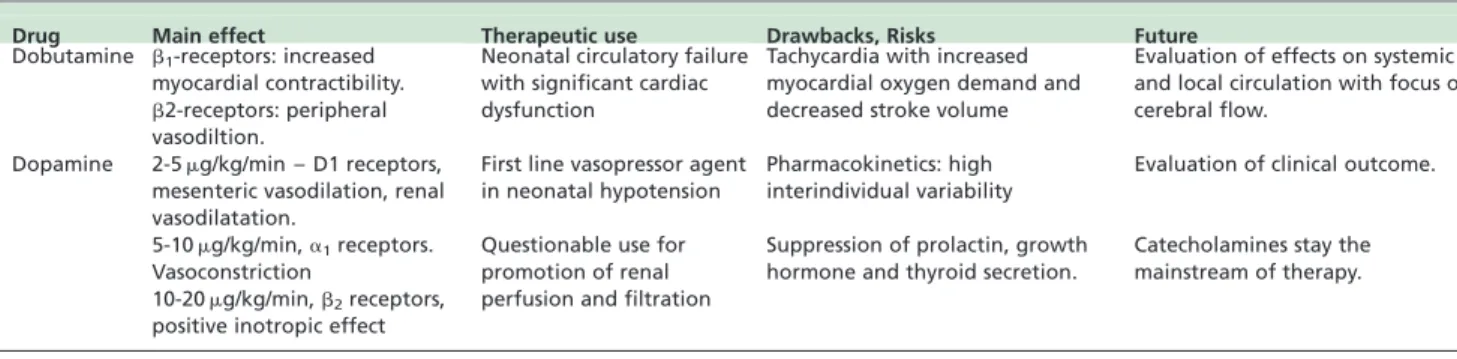
remained blow 31 mm Hg. The pharmacological and therapeutic profile of dobutamine and dopamine in neonates are summarised in Table 4.
Dobutamine does not stimulate the cardiovascular dopaminergic receptors (Table 5). In the most effective
dose range of 2 to 15mg/kg per min, dobutamine increases
cardiac output, mainly through the augmentation of stroke
volume.7,23In children with septic and cardiogenic shock, at
doses between 0.5 and 20mg/kg per min, dobutamine
caused increases in cardiac index and left ventricular strike
work index.21,30
The normal physiologic range for blood pressure is best defined by the presence of intact organ blood flow autoregulation. However, the lower and upper limits of this developmentally regulated physiological blood pressure range have not been determined in the preterm or term
infant.32,33,34 Instead, the “normal” blood pressure limits
have been defined as the gestational- and postnatal-age-dependent blood pressure values between the 10th and 90th percentiles. Thus, the decision to treat hypotensive non-acidosic preterm infants is based on arbitrary blood pressure limits without proven physiologic relevance.
Table 4 -Pharmacologic and therapeutic profile of dobutamine and dopamine in neonates.
Drug Main effect Therapeutic use Drawbacks, Risks Future
Dobutamine b1-receptors: increased
myocardial contractibility.
b2-receptors: peripheral vasodiltion.
Neonatal circulatory failure with significant cardiac dysfunction
Tachycardia with increased myocardial oxygen demand and decreased stroke volume
Evaluation of effects on systemic and local circulation with focus on cerebral flow.
Dopamine 2-5mg/kg/min – D1 receptors, mesenteric vasodilation, renal vasodilatation.
5-10mg/kg/min,a1receptors.
Vasoconstriction
10-20mg/kg/min,b2receptors,
positive inotropic effect
First line vasopressor agent in neonatal hypotension
Questionable use for promotion of renal perfusion and filtration
Pharmacokinetics: high interindividual variability
Suppression of prolactin, growth hormone and thyroid secretion.
Evaluation of clinical outcome.
Catecholamines stay the mainstream of therapy.
Table 5 -Adrenergic and dopaminergic receptor-dependent cardiovascular actions of dobutamine and dopamine.
Cardiac receptors Peripheral vascular receptors Agent a1* b1andb2* Dopamine a1/a2 b2 Dopamine
Dobutamine Increase contractility
Increase rate, conduction, contractility
No effect Modest peripheral vaso-constriction
Peripheral vasodilation
Vasodilation in renal, mesenteric, and coronary circulation
Dopamine** Increase contractility
Increase rate, conduction, contractility
Increase contractility
Peripheral vaso-constriction
Modest peripheral vasodilation
No effect
*The relative contribution of thea1andb1adrenergic receptors and the myocardial dopamine receptors to the increase in myocardial contractility in the
neonate is unknown.
3-O-methyldopamine, the major dobutamine metabolite,
is a relatively potent and highly selectivea1-adrenoreceptor
antagonist.23
Dopamine exerts direct beneficial renal30,31 and
endo-crine28actions in preterm infants. Via its epithelial effects in
the renal tubules, dopamine increases sodium, phosphorus,
and free water excretion.28,31
The beneficial and complex mechanisms of actions of dopamine and the pathophysiology of neonatal hypotension explain why dopamine has become the drug of choice in the
treatment of hypotensive preterm infants.28 Dopamine
should be started early at low to medium doses, and the dose escalated in a step-wise manner to achieve sustained
normalization of the blood pressure.28,31
Dobutamine is a frequently used positive inotropic in children. Isoproterenol increases heart and cardiac output but has no independent effect on renal blood flow. Dobutamine increases cardiac output with less chronotropic effect than isoproterenol but, unlike dopamine, does not have an independent effect on renal and mesenteric
profusion.7
It is possible to detect and treat low systemic and organ
blood flow in preterm infants in the first day after birth.37
Preterm infants are at risk of low systemic blood flow in the first day of life. Risk factors for low systemic blood flow include low gestational age, ventilation with higher mean airway pressure, large diameter ductus arteriosus, higher calculated systemic vascular response, and poor myocardial contractility. Blood pressure and clinical signs such as capillary refill times do not accurately detect infants with low systemic blood flow, and result in delayed treatment when treatment is targeted at hypotension. Although dobutamine is better at increasing systemic blood flow and dopamine is better at increasing blood pressure, neither has been shown to improve mortality or long-term outcomes.
The function of the newborn heart is characterized by a relatively high resting cardiac output with little contractile reserve, due to the presence of more non-contractile fibrous tissue, which results in high sensitivity to any increase in afterload. Newborn infants can increase their cardiac output by tachycardia, but severe tachycardia may result in decreased stroke volume. Inotropic drugs, such as dopamine or epinephrine increase afterload in the newborn, counter-acting the beneficial cardiac effect by a secondary fall in
cardiac output.33
Dobutamine is widely used for the treatment of acute
cardiac failure and hypotension in adults and children.34,35
As a sign of the efficacy of dobutamine on the left ventricular function, a significant decrease of left ventricular post-ejection pressure was measured within the first 20 min of dobutamine infusion. The reduction of post-ejection press-ure may reflect an increased preload, decreased after load, or
increased contractility, due to ab1-adrenergic effect on the
heart.36 An increased heart rate can be a compensatory
mechanism to improve cardiac output in cases with
myocardial dysfunction.37 Robel-Tilling et al.38 conclude
that dobutamine has an influence on the left ventricular function in sick preterm neonates with typical signs of myocardial dysfunction. Within 20 min after the start of a dobutamine infusion, a significant improvement in the hemodynamic situation was observed with progressively increased cardiac output.
In hypotensive states, oxygen supply to the gut is critical.39
Among high-risk patients, this is thought to play a major role
as an ischemic factor in the pathogenesis of necrotizing
enterocolitis.34 For dobutamine, a marked b
1-adrenergic
effect on the heart with inotropic effect is documented even
in moderate doses.37In contrast to dopamine, only a minor
a1-receptor stimulation leading to peripheral
vasoconstric-tion is observed.
The effect of dopamine is strongly dose dependent.
Moderate doses lead tob1-adrenergic effects, but in higher
doses, a2-adrenergic effects lead to increased systemic
vascular resistance and cardiac output decreases in preterm
infants.37 In addition to adrenergic receptors, a specific
dopaminergic receptor exists on splanchnic and renal vessels, which leads to vasodilation.
The hemodynamic effects of dobutamine or dopamine (10mg/kg per min) in 20 preterm infants with median gestational and postnatal ages of 28 weeks (range: 26 to 32 weeks) and 1 day (range: 2 hours to 17 days), respectively, who had protracted arterial hypotension refractory to volume therapy were studied. Hypotension was defined as
mean arterial pressure #10th percentile of normal values.
Mean arterial pressure increased during dobutamine and
dopamine therapy (p,0.05). Blood flow velocity increased.
None of the 20 infants studied developed necrotizing enterocolitis. Both dobutamine and dopamine increased
mean arterial blood pressure and heart rate.43
Trials comparing dobutamine and dopamine in preterm infants
Subhedar and Shaw40 compared the effectiveness and
safety of dopamine and dobutamine in the treatment of systemic hypotension in preterm infants. They conclude that dopamine is more effective than dobutamine in the short term treatment of systemic hypotension in preterm infants. However, in the absence of data confirming the long term benefit and safety of dopamine compared to dobutamine, no firm recommendations can be made regarding the choice of drug to treat hypotension.
There was no evidence of a significant difference between dopamine and dobutamine in terms of mortality, incidence of periventricular leukomalacia, or severe periventricular
hemorrhage.50 No adverse long-term neurodevelopment
outcome was observed. Subhedar and Shaw40conclude that
dopamine is more effective than dobutamine in the short-term treatment of systemic hypotension in preshort-term infants. There was no evidence of an effect on the incidence of adverse neuroradiological sequelae, or on the incidence of tachycardia. However, in the absence of data confirming long-term benefit and safety of dopamine compared to dobutamine, no firm recommendation can be made regarding the choice of drug to treat hypotension.
Osborn et al.44performed a randomized and double-blind
study in 42 very preterm infants during the first 24 hours of life to determine if dobutamine or dopamine result in greater improvements in systemic blood flow. The infants were
treated with 10mg/kg per min of dobutamine or dopamine.
Dobutamine resulted in a significantly greater increase in the blood flow in the superior vena cava than did dopamine
(mean, þ9.9 versus 23.2 ml/kg per min; p¼0.02).
Dopamine resulted in a significantly greater increase in blood pressure. Infants receiving dobutamine only at 24 hours had a greater right ventricular output than infants receiving dopamine (mean: 295 versus 167 ml/kg per min;
p,0.001). Forty percent failed to increase or maintain
No significant differences in mortality or morbidity were
found. Osborn et al.50conclude that dobutamine produced a
greater increase in blood flow than dopamine.
Klarr et al.45 compared the efficacy of dopamine and
dobutamine for the treatment of hypotension (mean arterial
blood pressure #30 mm Hg) in 63 hypotensive preterm
infants with a gestational age#34 weeks. All hypotensive
infants first received intravascular volume expansion.
Intravenous study drug infusions were initiated at 5mg/kg
per min and then increased in increments of 5mg/kg per min
at 20 min intervals until a mean arterial blood pressure
.30 mm Hg was attained and sustained for $30 min
(success) or a maximum rate of 20mg/kg per min was
reached without resolution of hypotension (failure). The study drug was administered by umbilical or peripheral vein. The treatment failure was 0 following dopamine and 5
(16%) following dobutamine (p¼0.028). Success was 30
(97%) following dopamine and 22 following dobutamine
(69%; p¼0.008). Heart rate .180 beats/min was 16%
(dopamine) and 22% (dobutamine, NS). These results show that dopamine was more successful than dobutamine, at commonly used infusion rates, in acutely increasing mean
blood pressure to.30 mm Hg in infants at#34 weeks of
gestation with respiratory distress syndrome. The apparent enhanced efficacy of dopamine in comparison with dobutamine may reflect underlying differences in mechan-isms of action, pharmacodynamics, other pharmacological properties, or undetected disparities between the two groups.
Miall-Allen et al.36 measured the mean arterial blood
pressure and heart rate in 12 hypotensive preterm infants given dopamine. A significant, although temporary, elevation in mean blood arterial pressure occurred in five
neonates in response to 5mg/kg per min, but an increase in
mean arterial blood pressure was found in all infants
(11^6 mm Hg; p,0.01) when the infusion rate was
doubled. Heart rate was unaffected except for an increase
of 22^12 beats/min (p,0.01) in the five showing
sustained mean blood arterial pressure elevation with
10mg/kg per min. Dobutamine failed to raise mean blood
arterial pressure in the 7 who relapsed, and refractory shock resulted. They conclude that time should not be wasted in
starting dopamine at less than 10mg/kg per min in
hypotensive preterm infants, as lower rates are unlikely to produce a response and delay may cause further compromise.
Greenough and Emery46 compared the efficacy of two
inotropic infusions in treating low arterial blood pressure in preterm infants. Forty infants with median gestational age of 27 weeks (range: 23 to 33 weeks) were studied. At trial entry, the infants, who all had a systolic arterial blood pressure ,40 mm Hg receiving a colloid infusion, were randomized to receive either a dopamine or dobutamine infusion. The
infusions were commenced at a rate of 5mg/kg per min and,
if necessary, this was increased over the 3 hour study period
to 15mg/kg per min. There was no significant difference in
the gestational or postnatal age or baseline arterial blood pressure of the infants who received dopamine or dobutamine. Three hours after commencing the infusion, the infants who received dopamine had a significantly higher systolic arterial blood pressure, a median of 39 mm Hg compared to a median of 34 mm Hg in the
dobutamine group (p,0.05). In addition, 10 infants who
received dopamine, but only 3 who received dobutamine,
had a systolic arterial blood pressure.40 mm Hg (p,0.05).
Greenough and Emery.46 conclude that dopamine rather
than dobutamine infusion is more efficient in improving the arterial blood pressure of preterm neonates.
Roze´ et al.29performed a randomized double blind study
to evaluate hemodynamic response to dobutamine and dopamine in 20 hypotensive preterm infants of less than 32 weeks of gestation. Neonates initially received dopamine or
dobutamine 5mg/kg per min. They found that dopamine is
more effective than dobutamine in raising and maintaining arterial blood pressure above 30 mm Hg; however, dopamine did not increase left ventricular output.
Filippi et al.42compared the endocrine effects of dopamine
and dobutamine in 35 hypotensive, very low birthweight infants who received dopamine or dobutamine. Hemody-namic variables and serum levels of thyroid stimulating hormone (TSH), total thyroxine (T4), prolactine and growth hormone were assessed during the first 72 hours of treatment and the first 72 hours after stopping treatment. Necessary cumulative and mean drug doses and maximum infusion required to normalise blood pressure were significantly higher in the dobutamine than in the dopamine group
(p,0.01). Suppression of TSH, T4 and prolactine was
observed in dopamine-treated newborns from 12 h of treatment onwards, whereas levels of growth hormone reduced significantly only at 12 hours and 36 hours of
treatment (p,0.01). TSH, T4 and prolactine rebound was
observed from the first day onwards after stopping dopamine. Dobutamine administration did not alter the profile of any of the hormones, and no rebound was
observed after stopping treatment. Filippi et al.42conclude
that dopamine and dobutamine both increase the systemic blood pressure, though dopamine is more effective. Dopamine reduces serum levels of TSH, T4 and prolactin in very low birthweight infants, but such suppression is quickly reversed after treatment is stopped.
B DISCUSSION
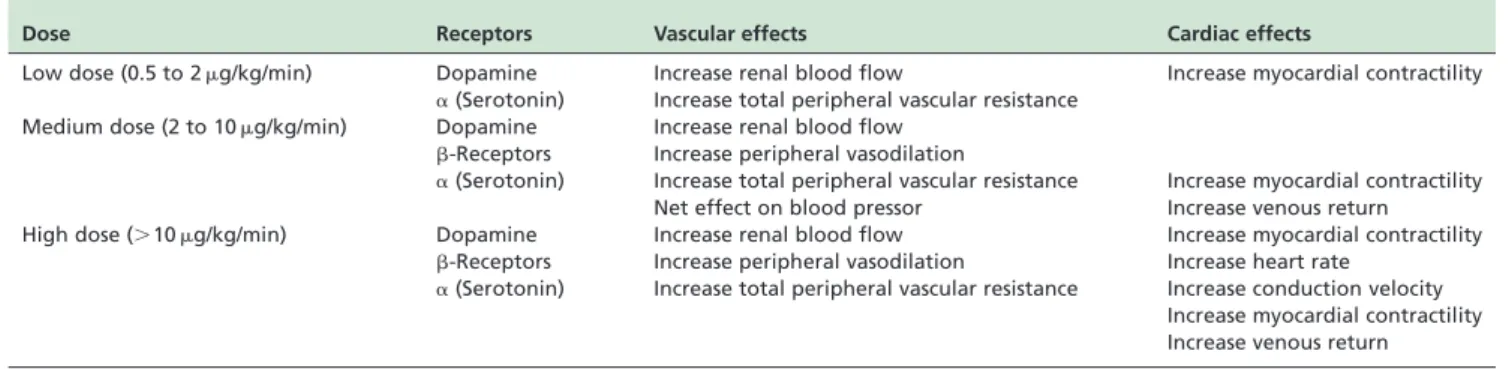
The adrenergic and dopaminergic receptor-dependent cardiovascular actions of dobutamine and dopamine are summarised in Table 6. Catecholamine agents are the most widely used drugs for the treatment of circulatory failure in newborn infants. Indeed, catecholamines were introduced to the care of critically ill neonates based on adult experience, using adult doses, without any clear evidence for their usefulness as regards clinical outcome. Blood pressure has long been used as a measure of therapeutic effectiveness, with no clear ranges established for critical organs. Today, systemic and local blood flow parameters should also be evaluated in order to establish goal-directed therapeutic guidelines for catecholamine therapy.
Dobutamine is a relatively cardioselective
sympathomi-metic amine with significantaandb-adrenoceptor-mediated
direct inotropic effects and limited chronotropic actions.25,33
Dobutamine administration is usually also associated with a
variable decrease in the total peripheral resistance.7,25,40
Dobutamine increases myocardial contractility exclusively through the direct stimulation of the myocardial adrenergic
receptors.45 Since myocardial norepinephrine stores are
immature and rapidly depleted in the neonate;33 and
dobutamine may decrease afterload,17,25,46 preterm
peripheral vascular resistance should be treated with dopamine alone.
In the majority of preterm infants, hypotension results from a decrease in the afterload with or without myocardial dysfunction. Dopamine is the initial drug of choice in the treatment of hypotensive preterm infants. Several random-ized, blinded, controlled clinical trials have documented the superiority of dopamine over dobutamine in this patient
population.40However, if signs of myocardial dysfunction
persist or develop during dopamine treatment, the addition of dobutamine is recommended. Dobutamine is the drug of choice in asphyxiated hypotensive preterm infants with myocardial dysfunction who present with elevated
periph-eral resistance.38
Dopamine is the sympathomimetic amine most frequently
used in the treatment of hypotension in preterm infants.44It
exerts its cardiovascular actions via the dose-dependent
stimulation of the cardiovascular dopaminergic, a and
b-adrenoceptors (see Tables 5 and 644). Dopamine affects all
three major determinants of cardiovascular function (pre-load, myocardial contractility and afterload). By decreasing
venous capacitance, dopamine augments preload.44
How-ever, the majority of its actions on raising blood pressure are due to the drug-induced increases in both myocardial
contractility13,40,44and peripheral vascular resistance
(after-load).13,40,44 with some of the a- and b-adrenergic
cardiovascular effects resulting from its partial conversion
to norepinephrine.13,40,44Through its selective renal vascular
effects, dopamine increases total blood flow33and
glomer-ular filtration rate.44,46 In preterm patients, the effect on
filtration rate occurs as early as 23 weeks of gestation. Dopamine does not appear to selectively increase the
mesenteric blood flow in the immature infant,33suggesting
the absence of a functional mature mesenteric dopaminergic vasodilator response in this patient population.
Dopamine is the most widely used catecholamine in hypotensive newborns when they fail to normalize blood pressure after fluid boluses. The so-called renal dose of dopamine is theoretically not expected to exert its dopaminergic renal vasodilator effect because of the aforementioned resistance to receptor stimulation. However, many neonatologists still use low dose dopamine therapy for infants with decreased urine flow rate in the belief that it improves renal perfusion. Dopamine is, however, able to
stimulate, in higher doses, vascular a1 receptors causing
vasoconstriction, and to a lesser extent myocardial b
-receptors. Thus, higher doses of dopamine increase vascular resistance and blood pressure, with an accompanying decrease in cardiac output. The pharmacokinetics of
dopamine show higher inter-individual variability, leading to highly variable clinical effectiveness in newborns. If dopamine is administered for several days, endocrine effects could be present, such as suppression of prolactin, growth hormone, and thyroxin secretion, which may
negatively influence early neurodevelopment.41,42
Dobutamine has the clear advantage over dopamine in
enhancing myocardial contractility by stimulating b1
receptors, albeit it clinically cannot always be translated into increased blood pressure. Dobutamine has also a
vasodilator effect mediated by b2 receptors. Moreover, it
could cause significant tachycardia with increased myocar-dial oxygen demand and decreased stroke volume. The expected net effect of dobutamine is an increased systemic and local blood flow, and not a significantly changing blood pressure.
Myocardial dysfunction is one of the most frequently encountered pathophysiologic backgrounds of hypotension in severely asphyxiated premature infants. However, in preterm neonates without postnatal asphyxia, myocardial
dysfunction can be observed without hypotension.44
B ACKNOWLEDGEMENTS
This work has been supported by the Ministry of the University and Scientific and Technologic Research (Rome, Italy). The author thanks Dr. Rosa Baviello and Dr. Ida Bertolini, of the Medical Library of the University of Pisa, for the prompt retrieving of the literature. A particular thanks to Dr. Vanna Pistotti, of the Library of the Institute for Pharmacological Research Mario Negri (Milan, Italy), who performed the bibliographic search with EMBASE.
B RESUMO
A dobutamina e´ um estimulante seletivob1. Agonistas de
receptores bsa˜o usados para estimular a taxa e a forca de
contraca˜o cardı´aca. O efeito cronotro´pico e´ u´til para o
tratamento de arritmias e o efeito inotro´pico e´ u´til para aumentar a contratilidade do mioca´rdio. A dobutamina e´ cerca de quatro vezes mais potente que a dopamina para estimular a contratilidade mioca´rdica em baixas
concen-traco˜es e o volume de ejeca˜o ventricular nos prematuros
hipotensos. A dobutamina possui um nu´cleo de assimetria.
O (2) – iso´mero da dobutamina e´ um agonista potente dos
receptores a1 e e´ capaz de provocar respostas pressoras
marcados. Em contraste, o isoˆmero (þ) – A dobutamina e´
um potente antagonista de dobutamina que pode bloquear os efeitos de (2)-dobutamina. A dobutamina e´ relativamente cardiosseletiva em dosagens utilizadas na pra´tica clı´nica; sua
aca˜o principal incide sobre os receptores b1-adrene´rgicos.
Table 6 -Cardiovascular actions of dopamine in preterm infants.
Dose Receptors Vascular effects Cardiac effects
Low dose (0.5 to 2mg/kg/min) Dopamine Increase renal blood flow Increase myocardial contractility
a(Serotonin) Increase total peripheral vascular resistance Medium dose (2 to 10mg/kg/min) Dopamine Increase renal blood flow
b-Receptors Increase peripheral vasodilation
a(Serotonin) Increase total peripheral vascular resistance Net effect on blood pressor
Increase myocardial contractility Increase venous return High dose (.10mg/kg/min) Dopamine
b-Receptors
a(Serotonin)
Increase renal blood flow Increase peripheral vasodilation
Increase total peripheral vascular resistance
Increase myocardial contractility Increase heart rate
A dobutamina e a dopamina sofrem intenso metabolismo em rece´m-nascidos, onde sa˜o conjugados com sulfato e
orto-metilados. A depuraca˜o e a meia-vida de dobutamina e
dopamina apresentam variaco˜es de uma ordem de grandeza
em rece´m-nascidos. A dopamina e´ amplamente utilizada para aumentar a pressa˜o arterial, o de´bito cardı´aco, a
produca˜o de urina e a perfusa˜o perife´rica em rece´m-nascidos
com choque e insuficieˆncia cardı´aca. A dopamina e´ mais eficaz do que a dobutamina no tratamento a curto prazo de hipotensa˜o sisteˆmica em prematuros. Altas doses de
dopamina causam vasoconstrica˜o, aumento da resisteˆncia
vascular sisteˆmica e, eventualmente, diminuem o fluxo sanguı´neo renal. O tratamento com dobutamina esta´ associada com um aumento significativamente maior na vaza˜o do ventrı´culo esquerdo no u´nico estudo relatando esse resultado. A dobutamina e´ indicada para o tratamento de
curto prazo da descompensaca˜o cardı´aca.
B REFERENCES
1. Westfall TC, Westfall DP. Adrenergic agonists and antagonists. In: Brunton L, Chabner B, Knollman B, editors. Goodman & Gilman’s, the Pharmacological basis of Therapeutics. 12th edition. New York: McGraw-Hill; 2011; p. 290.
2. Westfall TC, Westfall DP. Neurotransmission: The Autonomic and somatic Motor Nervous Systems. In: Brunton L, Chabner B, Knollman B, editors. Goodman & Gilman’s, the Pharmacological basis of Therapeutics. 12th edition. New York: McGraw-Hill; 2011; p. 206. 3. Neonatal Formulary. 6th edition, John Wiley & Sons, Limited European
Distribution Centre New Era Estate, Oldlands Way, Bognor Regis; UK. 4. Young TE, Mangum B. Neofax, A Manual of Drugs used in neonatal care.
23rd edition. Montvale 07645, New Jersey, USA: Thomson Reuters; 2010; p. 146-58.
5. Berg RA, Padbury JF. Sulfoconjugation and renal excretion contribute to the interpatient variation of exogenous catecholamine clearance in critically ill children. Crit Care Med. 1997;25(7):1247-51.
6. Raxworthy MJ, Youde IR, Gulliver PA. Catechol-O-methyltransferase: substrate-specificity and stereoselectivity for beta-adrenoceptor agents. Xenobiotica. 1986;16(1):47-6.
7. Bhatt-Mehta V, Nahata MC, McClead RE, Menke JA. Dopamine pharmacokinetics in critically ill newborn infants. Eur J Clin Pharmacol. 1991;40(6):593-7.
8. Richard K, Hume R, Kaptein E, Stanley EL, Visser TJ, Coughtrie MW. Sulfation of tyroid hormone and dopamine during human development: ontogeny of phenol sulfotransferases and arylsulfatase in liver, lung, and brain. J Clin Endocrinol Metab. 2001;86(6):2734-42.
9. Ratge D, Knoll E, Wisser H. Plasma free and conjugated catecholamines in clinical disorders. Life Sci. 1986;39(6):557-64.
10. Yan M, Webster LT Jr, Blumer JL. 3-O-methyldobutamine, a major metabolite of dobutamine in humans. Drug Metab Dispos. 2002;30(5): 519-24.
11. Yan M, Webster LT Jr, Blumer JL. Kinetic interactions of dopamine and dobutamine with human catechol-O-methyltransferase and monoamine oxidase in vitro. J Pharmacol Exp Ther. 2002;301(1):315-21.
12. Padbury JF, Agata Y, Baylen BG, Ludlow JK, Polk DH, Goldblatt E, et al. Dopamine pharmacokinetics in critically ill newborn infants. J Pediatr. 1987;110(2):293-8.
13. Seri I, Rudas G, Bors Z, Kanyicska B, Tulassay T. Effects of low-dose dopamine infusion on cardiovascular and renal functions, cerebral blood flow, and plasma catecholamine levels in sick preterm neonates. Pediatr Res. 1993;34(6):742-9.
14. Whitsett JA, Noguchi A, Moore JJ. Developmental aspects of alpha- and beta-adrenergic receptors. Semin Perinatol. 1982;6(2):125-41.
15. Hausdorff WP, Caron MG, Lefkowitz RJ. Turning off the signal: desensitization of beta-adrenergic receptor function. FASEB J. 1990;4(11):2881-9.
16. Korte C, Styne D, Merritt TA, Mayes D, Wertz A, Helbock HJ. Adrenocortical function in the very low birth weight infant: improved testing sensitivity and association with neonatal outcome. J Pediatr. 1996;128(2):257-63.
17. Watterberg KL, Gerdes JS, Gifford KL, Lin HM. Prophylaxis against early adrenal insufficiency to prevent chronic lung disease in premature infants. Pediatrics. 1999;104(6):1258-63.
18. Leier CV, Unverferth DV, Kates RE. The relationship between plasma dobutamine concentrations and cardiovascular responses in cardiac failure. Am J Med. 1979;66(2):238-42.
19. Martinez AM, Padbury JF, Thio S. Dobutamine pharmacokinetics and cardiovascular responses in critically ill neonates. Pediatrics. 1992;89(1):47-51.
20. Berg RA, Padbury JF, Donnerstein RL, Klewer SE, Hutter JJ Jr. Dobutamine pharmacokinetics and pharmacodynamics in normal children and adolescents. J Pharmacol Exp Ther. 1993;265(3):1232-8. 21. Ruffolo RR Jr, Messick K. Systemic hemodynamic effects of dopamine,
(þ/2)-dobutamine and the (þ)-and (2)-enantiomers of dobutamine in
anesthetized normotensive rats. Eur J Pharmacol. 1985;109(2):173-81. 22. Ruffolo RR Jr, Messick K. Effects of dopamine, (þ/2)-dobutamine and
the (þ)- and (2)-enantiomers of dobutamine on cardiac function in
pithed rats. J Pharmacol Exp Ther. 1985;235(3):558-65.
23. Ruffolo RR Jr. The pharmacology of dobutamine. Am J Med Sci. 1987;294(4):244-8.
24. Goldberg LI. Dopamine: clinical uses of an endogenous catecholamine. N Engl J Med. 1974;291(14):707-10.
25. Zaritsky A, Chernow B. Use of catecholamines in pediatrics. J Pediatr. 1984;105(3):341-50.
26. Keeley SR, Bohn DJ. The use of inotropic and afterload-reducing agents in neonates. Clin Perinatol. 1988;15(3):467-89.
27. Banner W Jr, Vernon DD, Minton SD, Dean JM. Nonlinear dobutamine pharmacokinetics in a pediatric population. Crit Care Med. 1991 Jul;19(7):871-3.
28. Schranz D, Stopfkuchen H, Ju¨ngst BK, Clemens R, Emmrich P. Hemodynamic effects of dobutamine in children with cardiovascular failure. Eur J Pediatr. 1982 Sep;139(1):4-7.
29. Roze´ JC, Tohier C, Maingueneau C, Lefe`vre M, Mouzard A. Response to dobutamine and dopamine in the hypotensive very preterm infant. Arch Dis Child. 1993;69(1 Spec No):59-63.
30. Kates RE, Leier CV. Dobutamine pharmacokinetics in severe heart failure. Clin Pharmacol Ther. 1978;24(5):537-41.
31. Banner W Jr, Vernon DD, Dean JM, Swenson E. Nonlinear dopamine pharmacokinetics in pediatric patients. J Pharmacol Exp Ther. 1989;249(1):131-3.
32. Seri I. Circulatory support of the sick preterm infant. Semin Neonatol. 2001;6(1):85-95.
33. Seri I, Abbasi S, Wood DC, Gerdes JS. Regional hemodynamic effects of dopamine in the sick preterm neonate. J Pediatr. 1998;133(6):728-34. 34. Seri I. Cardiovascular, renal, and endocrine actions of dopamine in
neonates and children. J Pediatr. 1995;126(3):333-44.
35. Driscoll DJ. Use of inotropic and chronotropic agents in neonates. Clin Perinatol. 1987;14(4):931-49.
36. Miall-Allen VM, Whitelaw AG. Response to dopamine and dobutamine in the preterm infant less than 30 weeks gestation. Crit Care Med. 1989;17(11):1166-9.
37. Osborn DA. Diagnosis and treatment of preterm transitional circulatory compromise. Early Hum Dev. 2005;81(5):413-22.
38. Robel-Tillig E, Knu¨pfer M, Pulzer F, Vogtmann C. Cardiovascular impact of dobutamine in neonates with myocardial dysfunction. Early Hum Dev. 2007;83(5):307-12.
39. Ruokonen E, Takala J, Kari A. Regional blood flow and oxygen transport in patients with the low cardiac output syndrome after cardiac surgery. Crit Care Med. 1993;21(9):1304-11.
40. Subhedar NV, Shaw NJ. Dopamine versus dobutamine for hypotensive preterm infants. Cochrane Database Syst Rev. 2003; CD001242 (3). 41. Barrington KJ. Hypotension and shock in the preterm infant. Semin Fetal
Neonatal Med. 2008;13(1):16-23.
42. Filippi L, Pezzati M, Poggi C, Rossi S, Cecchi A, Santoro C. Dopamine versus dobutamine in very low birthweight infants: endocrine effects. Arch Dis Child Fetal Neonatal Ed. 2007;92(5):F367-71.
43. Hentschel R, Hensel D, Brune T, Rabe H, Jorch G. Impact on blood pressure and intestinal perfusion of dobutamine or dopamine in hypotensive preterm infants. Biol Neonate. 1995;68(5):318-24.
44. Osborn D, Evans N, Kluckow M. Randomized trial of dobutamine versus dopamine in preterm infants with low systemic blood flow. J Pediatr. 2002 Feb;140(2):183-91.
45. Klarr JM, Faix RG, Pryce CJ, Bhatt-Mehta V. Randomized, blind trial of dopamine versus dobutamine for treatment of hypotension in preterm infants with respiratory distress syndrome. J Pediatr. 1994;125(1):117-22. 46. Greenough A, Emery EF. Effect of chronic lung disease on blood pressure