Uptake and Population-Level Impact of
Expedited Partner Therapy (EPT) on
Chlamydia trachomatis
and
Neisseria
gonorrhoeae
: The Washington State
Community-Level Randomized Trial of EPT
Matthew R. Golden1,2,3*, Roxanne P. Kerani1,3, Mark Stenger4, James P. Hughes1,5, Mark Aubin4, Cheryl Malinski1, King K. Holmes1,2,6
1Center for AIDS and STD, University of Washington, Seattle, Washington, United States of America, 2Department of Medicine, University of Washington, Seattle, Washington, United States of America, 3Public Health-Seattle & King County, Seattle, Washington, United States of America,4Washington State Department of Health, Olympia, Washington, United States of America,5Department of Biostatistics, University of Washington, Seattle, Washington, United States of America,6Department of Global Health, University of Washington, Seattle, Washington, United States of America
Abstract
Background
Expedited partner therapy (EPT), the practice of treating the sex partners of persons with sexually transmitted infections without their medical evaluation, increases partner treatment and decreases gonorrhea and chlamydia reinfection rates. We conducted a stepped-wedge, community-level randomized trial to determine whether a public health intervention promoting EPT could increase its use and decrease chlamydia test positivity and gonorrhea incidence in women.
Methods and Findings
The trial randomly assigned local health jurisdictions (LHJs) in Washington State, US, into four study waves. Waves instituted the intervention in randomly assigned order at intervals of 6–8 mo. Of the state’s 25 LHJs, 24 were eligible and 23 participated. Heterosexual indi-viduals with gonorrhea or chlamydial infection were eligible for the intervention. The study made free patient-delivered partner therapy (PDPT) available to clinicians, and provided public health partner services based on clinician referral. The main study outcomes were chlamydia test positivity among women ages 14–25 y in 219 sentinel clinics, and incidence of reported gonorrhea in women, both measured at the community level. Receipt of PDPT from clinicians was evaluated among randomly selected patients. 23 and 22 LHJs provided data on gonorrhea and chlamydia outcomes, respectively. The intervention OPEN ACCESS
Citation:Golden MR, Kerani RP, Stenger M, Hughes JP, Aubin M, Malinski C, et al. (2015) Uptake and Population-Level Impact of Expedited Partner Therapy (EPT) onChlamydia trachomatisand Neisseria gonorrhoeae: The Washington State Community-Level Randomized Trial of EPT. PLoS Med 12(1): e1001777. doi:10.1371/journal. pmed.1001777
Academic Editor:Nicola Low, University of Bern, SWITZERLAND
Received:May 2, 2014
Accepted:December 3, 2014
Published:January 15, 2015
Copyright:© 2015 Golden et al. This is an open access article distributed under the terms of the
Creative Commons Attribution License, which permits unrestricted use, distribution, and reproduction in any medium, provided the original author and source are credited.
increased the percentage of persons receiving PDPT from clinicians (from 18% to 34%, p<0.001) and the percentage receiving partner services (from 25% to 45%,p<0.001).
Chlamydia test positivity and gonorrhea incidence in women decreased over the study peri-od, from 8.2% to 6.5% and from 59.6 to 26.4 per 100,000, respectively. After adjusting for temporal trends, the intervention was associated with an approximately 10% reduction in both chlamydia positivity and gonorrhea incidence, though the confidence bounds on these outcomes both crossed one (chlamydia positivity prevalence ratio = 0.89, 95% CI 0.77–
1.04,p= 0.15; gonorrhea incidence rate ratio = 0.91, 95% CI .71–1.16,p= 0.45). Study find-ings were potentially limited by inadequate statistical power, by the institution of some as-pects of the study intervention outside of the research randomization sequence, and by the fact that LHJs did not constitute truly isolated sexual networks.
Conclusions
A public health intervention promoting the use of free PDPT substantially increased its use and may have resulted in decreased chlamydial and gonococcal infections at the
population level.
Trial Registration
ClinicalTrials.govNCT01665690
Introduction
Chlamydia trachomatisandNeisseria gonorrhoeaecause the two most commonly reported in-fections in the United States [1], and new approaches to preventing these sexually transmitted infections (STIs) are needed.
Increasing the number of exposed sex partners of persons with gonorrhea or chlamydial in-fection who receive treatment could decrease the incidence and prevalence of inin-fection. How-ever, few US health departments currently devote substantial resources to partner services for bacterial STIs other than syphilis, and over 80% of patients with gonorrhea or chlamydial infec-tion are left to notify their partners without assistance [2]. Randomized controlled trials con-ducted in the late 1990s and early 2000s found that expedited partner therapy (EPT)—the practice of treating the sex partners of persons with curable STIs without requiring the partners to first undergo a medical evaluation—increases partner treatment and decreases rates of rein-fection with gonorrhea or chlamydia [3–6]. In the wake of these trials, many US states made EPT legal, and the practice is now lawful in most of the country [7]. In most instances, EPT in-volves medical practitioners giving patients medication to give to their sex partners, a practice called patient-delivered partner therapy (PDPT).
Many physicians at least sometimes give patients medication to give to a sex partner [8–10], but relatively few persons with gonorrhea in the US currently receive PDPT [11], and the pro-portion of patients with chlamydial infection who receive PDPT is not well defined. Working in King County, Washington (WA), we previously reported that a population-based program could significantly increase medical providers’use of PDPT [12]. However, the scale of
PDPT promotion and evaluation in King County has been an exception, and most efforts to in-stitute and assess PDPT programs have focused on individual clinics or small groups of clinics
Funding:MRG, RPK, JPH, and KKH received funding from National Institute of Allergy and Infectious Diseases (R01AI068107,http://www.niaid. nih.gov). Pfizer pharmaceuticals provided free azithromycin for use in the study. The funders, including Pfizer Pharmaceuticals, had no role in study design, data collection and analysis, decision to publish, or preparation of the manuscript.
Competing Interests:Pfizer pharmaceuticals provided free azithromycin used in the study. MRG has received research support from Melinta pharmacueticals and Cempra pharmaceuticals for his participation as an investigator in trials of new drug treatments for gonorrhea. MRG has received a consulting fee from Melinta pharmaceuticals.
[13–16]. The feasibility of promoting EPT more widely and the intervention’s population-level effect are unknown.
We conducted a stepped-wedge, community-level randomized trial to test the hypothesis that a public health program could increase the population-level use of EPT, and through this effort decrease the prevalence of chlamydial infection and incidence of gonorrhea in women. Stepped-wedge trials are a type of cluster randomized trial in which clusters of clinics or com-munities receive an intervention in a randomly assigned order; outcome analyses then compare variance both between communities and within a community before and after the intervention. We have previously described this study design and its use in the context of this community-level trial [17]. The study employed cluster randomization in order to measure the population-level impact of our intervention, and used a stepped-wedge design because it allowed all areas of the state to eventually adopt the intervention, which promotes the use of EPT, a clinically beneficial intervention.
Methods
Ethics Statement
The University of Washington Institution Review Board approved study procedures. Local health officers in WA State agreed to their jurisdictions’participation in the trial. Because the trial did not enroll individuals as part of a study, persons receiving interventions through the study did not undergo a consent process.
Study Design and Participating Communities
Local health jurisdictions (LHJs)—administrative units that usually correspond to a single county—were the study’s unit of randomization and analysis. All WA State LHJs except King County were eligible to participate in the trial. We excluded King County because the study in-tervention was developed there and could not practically be discontinued and then restarted [18]. The trial initiated the study intervention in groups of LHJs (i.e., waves) at four time points (i.e., steps) separated by intervals of 6–8 mo between October 2007 and August 2009. A com-puter randomly assigned LHJs into the four waves, with randomization stratified by region and LHJ size. The allocation of LHJs into waves was concealed from state and local public health department staff and from all investigators except the study biostatistician until 1 mo before initiation of the intervention in each wave. No blinding was done after the study intervention was initiated.
Intervention
will be treated [19]. The letter also included information about how to obtain free PDPT to stock in their office or clinic, and how to prescribe free PDPT through local pharmacies.
In each LHJ, research team and public health staff members visited clinics and offices that had reported large numbers of cases of gonorrhea or chlamydial infection in the year prior to program initiation; these clinics were chosen in collaboration with local staff and were not de-fined using fixed criteria. During these visits, public health staff supplied clinics with PDPT packets and educated clinic staff and medical providers about the program.
Although all clinicians were eligible to receive free PDPT packs to stock in their offices or clinics, the study also developed a mechanism for medical providers to prescribe free PDPT packs through local commercial pharmacies. Only selected pharmacies stocked PDPT packs for use as part of the study. These pharmacies typically belonged to one of several large com-mercial chains. The study chose participating pharmacies in collaboration with local public health staff in each LHJ with the goal of assuring widespread access to PDPT packs. A total of 157 pharmacies participated in the study.
Additional efforts to promote PDPT use in intervention communities included annual ters to medical providers reporting at least one case of gonorrhea or chlamydial infection, let-ters to medical providers whose patients received partner services but not PDPT informing them about the program, information on STD case report forms outlining WA State’s PDPT guidelines and how to obtain free PDPT, discussions with clinic or office staff during telephone calls to complete incomplete case reports, and inclusion of information about PDPT in con-tinuing medical education trainings. The study also worked with the largest health mainte-nance organization in the state and with large family planning organizations to promote PDPT use. All medications for PDPT were distributed in premade packs that met state legal require-ments and included condoms, information about STIs, and a medication allergy warning in English and Spanish that asked recipients to call the study coordinator if they experienced an adverse drug reaction. All packs included 1 g of azithromycin; packs for gonorrhea also includ-ed a 400-mg dose of cefixime. Both minclud-edications were to be taken as a single dose.
The study sought to target the provision of partner services to persons at high risk for failing to ensure a partner’s treatment. Diagnosing medical providers and laboratories in WA State are required to report gonorrhea or chlamydial infection cases to the local and state public health department. Medical providers do this using a case report form. As part of the trial, we modified that form to ask providers to indicate whether they wanted the public health depart-ment to provide their patient with partner services. The form recommended that providers refer patients with any of the following risks for partner services: (1)>1 sex partner in the 60 d
prior to diagnosis, (2)1 sex partner in the prior 60 d whom the patient did not anticipate hav-ing sex with again, (3) the patient indicated he/she could not or would not notify a partner, or (4) the patient was a man who has sex with men. Prior studies have associated the first two of these factors with the failure of partners to receive treatment [12,18].
Partner services consisted of a structured interview that guided public health staff (usually disease intervention specialists) to define a partner treatment plan for a patient’s most recent partner and all partners from the prior 60 d. Staff providing partner services offered patients free PDPT to treat up to three partners, and offered to directly contact partners whom patients did not want to notify themselves. When contacting partners, staff advised them to seek medi-cal evaluation, but also offered them treatment without such an evaluation. Both patients and partners could obtain free PDPT through commercial pharmacies or via the mail. The study intervention did not include efforts to find index cases or partners through field investigations (e.g., going to persons’homes or places of work).
used to increase partner services in 2008 and 2009, a change beyond the control of the study. The study did not measure which LHJs increased the provision of partner services using new state funding. No public health department funds were used to purchase or promote the use of PDPT outside of the study’s randomization sequence.
Study Outcomes and Statistical Methods
The study’s two primary, prespecified outcomes measured for each LHJ were (1) chlamydia test positivity among women ages 14–25 y tested through Infertility Prevention Project (IPP) or Planned Parenthood of Western Washington clinics and (2) the incidence of reported gon-orrhea in women. Prespecified secondary outcomes included use of PDPT by medical provid-ers, adverse reactions, and recurrent gonorrhea and recurrent chlamydial infection; these last two outcomes will be presented in a separate report.
The study’s chlamydia positivity endpoint used results for all women ages 14–25 y tested for
C. trachomatisin IPP clinics, including tests performed in the Planned Parenthood of Western Washington laboratory, during five prespecified time periods (analysis intervals; 7/1/07–9/30/ 07, 3/1/08–5/31/08, 10/15/08–1/14/09, 5/1/09–7/31/09, 6/1/10–8/31/10). These intervals corre-spond to the last 3 mo of data in each intervention period (when the intervention should have reached maximal effect). The IPP was a national chlamydia testing program funded by the Centers for Disease Control and Prevention (CDC), and data from the IPP have previously been used to monitor chlamydial prevalence in young women [20–22]. During the study peri-od, IPP testing occurred in 219 clinics in WA State, including 98 family planning, women’s health, or reproductive health clinics; 36 community clinics; 29 STD or HIV testing clinics; 17 adolescent or school-based clinics; and 39 clinics of other types. In 2008, Planned Parent-hood of Western Washington began testing women with health insurance at a separate labora-tory, while continuing to send specimens from uninsured women to the IPP laboratory. Because this change could have altered the IPP population, the study included tests performed in both the Planned Parenthood of Western Washington and the IPP laboratories in the out-come analysis. (Throughout the paper we refer to the clinics providing chlamydia outout-come data as IPP clinics, which includes the Planned Parenthood of Western Washington laborato-ry.) All chlamydial testing was done using nucleic acid amplification tests.
The outcome analyses focused on women because men are not typically screened for STIs— meaning that no sentinel population of tested men existed in the state—and because reported STI incidence in men includes outcomes in both heterosexual men and men who have sex with men (MSM); CDC and WA State guidelines recommend against the use of EPT in MSM [23], and our study did not seek to increase EPT use in MSM. We elected to use chlamydia positivity in sentinel populations of women as our outcome because we did not believe that testing a ran-dom sample of the entire state population of young women would be feasible, and believed that positivity in a describable population would be a better outcome than incidence of reported in-fections, which reflects both testing patterns and true incidence. Because gonorrhea has be-come an infrequent infection in women in WA State, it was not possible to power the study to use gonorrhea positivity within IPP clinics as an outcome. As a result, we used the incidence of reported gonorrhea in women as our gonorrhea outcome.
anticipated 80% power to detect a prevalence ratio of 0.70 [17]. The effect size anticipated was consistent with preliminary mathematical modeling work undertaken in preparing the study grant application. The study gonorrhea outcome was the number of cases of gonorrhea re-ported among women in each participating LHJ in each prespecified time period. This analysis used a marginal Poisson regression model with covariates for intervention status and time peri-od, an offset for female population size within the LHJ, clustering by LHJ, and an exchangeable working correlation structure. Robust variances are reported. These analysis models were pre-specified. The study results also include a single post hoc analysis assessing the intervention’s impact on a combined gonorrhea and chlamydia endpoint. This analysis was similar to the analysis of gonorrhea but included two outcomes for each LHJ for each time period: (1) gonor-rhea cases, as described above, and (2) chlamydia cases from the IPP clinics with offset equal to the number of women tested in the LHJ during the analysis interval. The model included sepa-rate time trends for each disease but a common intervention effect. All analyses were carried out using Stata version 12.1 (StataCorp, College Station, Texas).
In order to assess the comparability of the population of women in which we evaluated our
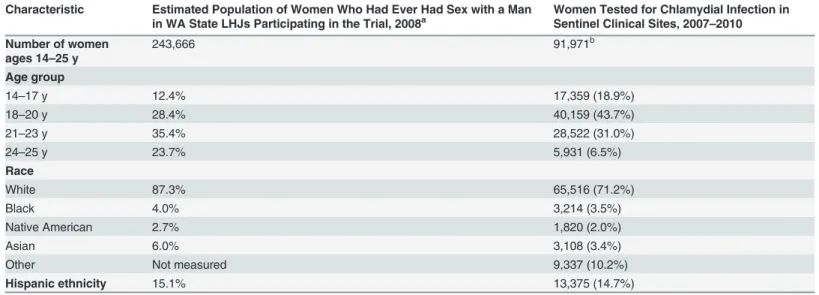
C. trachomatisoutcome to all sexually active women in the communities participating in the trial, we compared the age and race/ethnicity distributions of women tested in IPP clinics to US census data for women in the WA State LHJs included in the study. Because many younger women are not sexually active, and consequently would not be at risk for STIs or tested forC. trachomatis, we used US national data from the National Survey of Family Growth 2006–2010 [24] to define the proportion of women at each age who have ever had sex, and multiplied the number of women in each age group by that proportion to define the number of sexually active women in each age group in the state. The proportion of black versus white young women who were sexually active in the National Survey of Family Growth varied by only 3%, and therefore we did not adjust our statewide population estimate for race/ethnicity.
race/ethnicity, STI diagnosis, and, during the intervention period, whether providers referred patients for partner services. Confidence intervals for proportions were computed on the logit scale and backtransformed using standard methods for random samples, adjusting for the weighting. To estimate the proportion of persons who received PDPT from either their provid-er or from public health staff, we summed the estimated proportion receiving PDPT from med-ical providers with the directly measured proportion of all cases in patients who were not MSM who received PDPT from public health staff and who did not also receive PDPT from their medical provider.
Adverse drug reactions were ascertained based on calls to the study coordinator; informa-tion sheets included in each partner pack asked recipients to call the coordinator if they experi-enced a drug reaction. The study did not conduct follow-up interviews with patients to ascertain the effect of the intervention on partnership dissolution or intimate partner violence.
The trial’s sponsor did not require it to be registered in ClinicalTrials.gov, and the registra-tion website was not designed to accommodate informaregistra-tion on community-level trials that do not enroll individuals. Consequently, we did not register the trial prior to the study’s initiation. We did register the study in ClinicalTrials.gov after study initiation.
We are not aware of other ongoing community-level trials related to EPT, though several indi-vidual-level trials have evaluated the effect of EPT (ClinicalTrials.gov NCT01720654; [3–5,25,26]).
Results
Populations Participating in the Trial
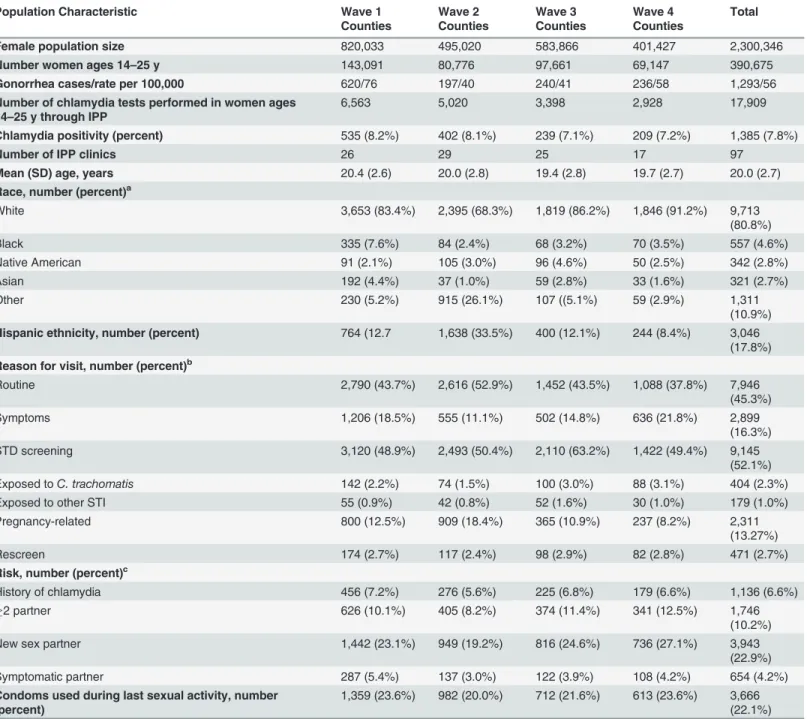
Of WA State’s 25 LHJs, 23 participated in the study (Figs.1and2).Table 1presents data from clinics participating in the WA State IPP program in the year prior to the start of the study; these clinics include all clinics in which we measured chlamydia positivity, one of our main
Figure 1. Study flow diagram.Modified for stepped-wedge design from suggested CONSORT criteria format for cluster randomized trials [47].+Numbers of
tests and cases presented as means with ranges.
study outcomes, and is stratified by study wave. Chlamydia outcome data were available at baseline and for each of the four steps for 22 of the 23 participating LHJs (one LHJ had no clin-ical site providing data).Table 2compares the age, race, and ethnicity of women tested for chlamydial infection in clinics participating in the IPP program with those of women ages 14–25 y in the areas of WA State participating in the study. Women tested at sentinel clinical sites were younger than the overall population of sexually active women in the areas served by the clinics. The study had data on the incidence of newly diagnosed and reported gonorrhea for all LHJs at each step.
Intervention Uptake
Between May 2007 and December 2010, participating LHJs reported 5,164 and 52,945 cases of gonorrhea and chlamydial infection, respectively, excluding cases in MSM. The percentage of
Figure 2. Washington State local health jurisdictions instituting an expedited partner therapy intervention in four temporally defined waves.
Table 1. Study population size and characteristics in local health jurisdictions in each study wave during the year prior to the intervention (October 2006–September 2007).
Population Characteristic Wave 1
Counties
Wave 2 Counties
Wave 3 Counties
Wave 4 Counties
Total
Female population size 820,033 495,020 583,866 401,427 2,300,346
Number women ages 14–25 y 143,091 80,776 97,661 69,147 390,675
Gonorrhea cases/rate per 100,000 620/76 197/40 240/41 236/58 1,293/56
Number of chlamydia tests performed in women ages 14–25 y through IPP
6,563 5,020 3,398 2,928 17,909
Chlamydia positivity (percent) 535 (8.2%) 402 (8.1%) 239 (7.1%) 209 (7.2%) 1,385 (7.8%)
Number of IPP clinics 26 29 25 17 97
Mean (SD) age, years 20.4 (2.6) 20.0 (2.8) 19.4 (2.8) 19.7 (2.7) 20.0 (2.7)
Race, number (percent)a
White 3,653 (83.4%) 2,395 (68.3%) 1,819 (86.2%) 1,846 (91.2%) 9,713
(80.8%)
Black 335 (7.6%) 84 (2.4%) 68 (3.2%) 70 (3.5%) 557 (4.6%)
Native American 91 (2.1%) 105 (3.0%) 96 (4.6%) 50 (2.5%) 342 (2.8%)
Asian 192 (4.4%) 37 (1.0%) 59 (2.8%) 33 (1.6%) 321 (2.7%)
Other 230 (5.2%) 915 (26.1%) 107 ((5.1%) 59 (2.9%) 1,311
(10.9%) Hispanic ethnicity, number (percent) 764 (12.7 1,638 (33.5%) 400 (12.1%) 244 (8.4%) 3,046
(17.8%) Reason for visit, number (percent)b
Routine 2,790 (43.7%) 2,616 (52.9%) 1,452 (43.5%) 1,088 (37.8%) 7,946
(45.3%)
Symptoms 1,206 (18.5%) 555 (11.1%) 502 (14.8%) 636 (21.8%) 2,899
(16.3%)
STD screening 3,120 (48.9%) 2,493 (50.4%) 2,110 (63.2%) 1,422 (49.4%) 9,145
(52.1%)
Exposed toC. trachomatis 142 (2.2%) 74 (1.5%) 100 (3.0%) 88 (3.1%) 404 (2.3%)
Exposed to other STI 55 (0.9%) 42 (0.8%) 52 (1.6%) 30 (1.0%) 179 (1.0%)
Pregnancy-related 800 (12.5%) 909 (18.4%) 365 (10.9%) 237 (8.2%) 2,311
(13.27%)
Rescreen 174 (2.7%) 117 (2.4%) 98 (2.9%) 82 (2.8%) 471 (2.7%)
Risk, number (percent)c
History of chlamydia 456 (7.2%) 276 (5.6%) 225 (6.8%) 179 (6.6%) 1,136 (6.6%)
2 partner 626 (10.1%) 405 (8.2%) 374 (11.4%) 341 (12.5%) 1,746
(10.2%)
New sex partner 1,442 (23.1%) 949 (19.2%) 816 (24.6%) 736 (27.1%) 3,943
(22.9%)
Symptomatic partner 287 (5.4%) 137 (3.0%) 122 (3.9%) 108 (4.2%) 654 (4.2%)
Condoms used during last sexual activity, number (percent)
1,359 (23.6%) 982 (20.0%) 712 (21.6%) 613 (23.6%) 3,666 (22.1%)
The population of each wave includes persons residing in the LHJs that initiated the study intervention as part of that wave.
an= 4,379, 3,508, 2,111, and 2,024 non-missing responses for race for waves 1
–4, respectively. Race and ethnicity defined based on medical provider report using a standardized reporting record.
bPatients could report more than one reason for visit.
cChlamydia diagnosis in prior year, and2 sex partners, a new sex partner, or a symptomatic partner in the prior 60 d.
SD, standard deviation.
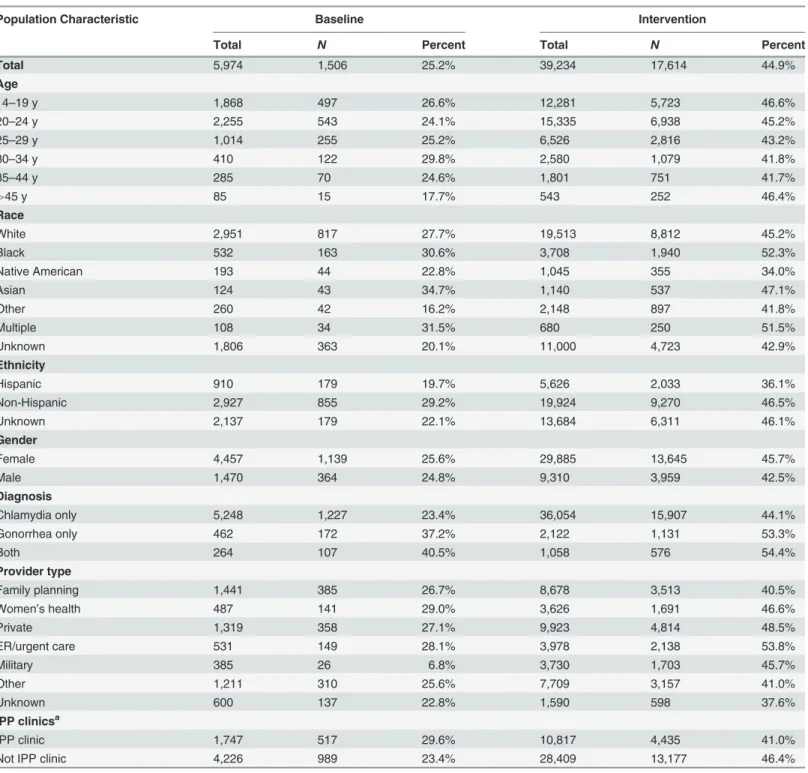
cases of gonorrhea or chlamydial infection in patients who were not MSM across all study waves who received partner services increased from 25.2% in the pre-intervention periods to 44.9% during the intervention periods (p<0.001), and this increase was evident in diverse
groups defined by demographic factors and sources of care (Fig. 3;Table 3). However, this in-crease was apparent only in the first two study waves that instituted the intervention, before the impact of new, unanticipated state funding for partner services was fully realized.
Table 2. Characteristics of women tested forC. trachomatisin clinics providing outcome data for the trial compared to all women in areas of WA State participating in the trial.
Characteristic Estimated Population of Women Who Had Ever Had Sex with a Man in WA State LHJs Participating in the Trial, 2008a
Women Tested for Chlamydial Infection in Sentinel Clinical Sites, 2007–2010 Number of women
ages 14–25 y
243,666 91,971b
Age group
14–17 y 12.4% 17,359 (18.9%)
18–20 y 28.4% 40,159 (43.7%)
21–23 y 35.4% 28,522 (31.0%)
24–25 y 23.7% 5,931 (6.5%)
Race
White 87.3% 65,516 (71.2%)
Black 4.0% 3,214 (3.5%)
Native American 2.7% 1,820 (2.0%)
Asian 6.0% 3,108 (3.4%)
Other Not measured 9,337 (10.2%)
Hispanic ethnicity 15.1% 13,375 (14.7%)
Data are percent or number (percent).
a
Estimates of sexually active women were calculated by defining the proportion of women at each age who have ever had sex in the US national data from the National Survey of Family Growth 2006–2010, and multiplying the number of women in each age group by that proportion.
b
De-duplicated; each woman contributes only one record. Data on race were missing for 9.7% of women tested in sentinel clinical sites.
doi:10.1371/journal.pmed.1001777.t002
Figure 3. Percentage of persons with gonorrhea or chlamydial infection who received components of the study intervention in periods before and during the study intervention, by study wave.Percentage of persons receiving (A) PDPT from their diagnosing clinician, (B) public health partner services, or (C) either PDPT or public health partner services.*The percentage of persons receiving partner services was directly measured and is not an estimate. Consequently, there are no confidence intervals on data for this outcome.
The study intervention significantly increased the use of PDPT by diagnosing medical pro-viders. As was the case for the increase in partner services, this increase occurred across sub-groups defined by demographic factors, STI diagnosis, and type of medical provider (Table 4). Over the study period, public health and research staff distributed 19,299 PDPT packs to 472
Table 3. Receipt of public health partner services within subgroups of patients during baseline and intervention periods.
Population Characteristic Baseline Intervention
Total N Percent Total N Percent
Total 5,974 1,506 25.2% 39,234 17,614 44.9%
Age
14–19 y 1,868 497 26.6% 12,281 5,723 46.6%
20–24 y 2,255 543 24.1% 15,335 6,938 45.2%
25–29 y 1,014 255 25.2% 6,526 2,816 43.2%
30–34 y 410 122 29.8% 2,580 1,079 41.8%
35–44 y 285 70 24.6% 1,801 751 41.7%
>45 y 85 15 17.7% 543 252 46.4%
Race
White 2,951 817 27.7% 19,513 8,812 45.2%
Black 532 163 30.6% 3,708 1,940 52.3%
Native American 193 44 22.8% 1,045 355 34.0%
Asian 124 43 34.7% 1,140 537 47.1%
Other 260 42 16.2% 2,148 897 41.8%
Multiple 108 34 31.5% 680 250 51.5%
Unknown 1,806 363 20.1% 11,000 4,723 42.9%
Ethnicity
Hispanic 910 179 19.7% 5,626 2,033 36.1%
Non-Hispanic 2,927 855 29.2% 19,924 9,270 46.5%
Unknown 2,137 179 22.1% 13,684 6,311 46.1%
Gender
Female 4,457 1,139 25.6% 29,885 13,645 45.7%
Male 1,470 364 24.8% 9,310 3,959 42.5%
Diagnosis
Chlamydia only 5,248 1,227 23.4% 36,054 15,907 44.1%
Gonorrhea only 462 172 37.2% 2,122 1,131 53.3%
Both 264 107 40.5% 1,058 576 54.4%
Provider type
Family planning 1,441 385 26.7% 8,678 3,513 40.5%
Women’s health 487 141 29.0% 3,626 1,691 46.6%
Private 1,319 358 27.1% 9,923 4,814 48.5%
ER/urgent care 531 149 28.1% 3,978 2,138 53.8%
Military 385 26 6.8% 3,730 1,703 45.7%
Other 1,211 310 25.6% 7,709 3,157 41.0%
Unknown 600 137 22.8% 1,590 598 37.6%
IPP clinicsa
IPP clinic 1,747 517 29.6% 10,817 4,435 41.0%
Not IPP clinic 4,226 989 23.4% 28,409 13,177 46.4%
aClinics that providedC. trachomatisoutcome data.
ER, emergency room.
Table 4. Medical providers’use of patient delivered partner therapy within subgroups of patients during baseline and intervention periods.
Population Characteristic Baseline Intervention
Total N Weighted Percenta 95% CIb Total N Weighted Percenta 95% CIb
Totalc 580 110 18.3% 15.3–21.7 4,701 1,598 34.0% 32.6–35.4
Age
14–19 y 199 41 20.5% 15.5–26.7 1,509 510 33.9% 31.5–36.3
20–24 y 205 41 19.1% 14.2–25.2 1,851 652 35.2% 33.0–37.4
25–29 y 95 13 13.0% 7.5–21.6 775 265 34.2% 31.0–37.6
30–34 y 50 10 19.2% 10.3–33.0 299 104 34.8% 32.2–37.5
35–44 y 22 3 12.9% 3.7–36.4 185 55 29.5% 23.2–36.6
>45 y 6 0 0% — 67 9 13.3% 6.9–24.0
Race
White 331 74 22.2% 18.0–27.0 2,465 913 37.3% 35.4–39.2
Black 55 6 10.0% 4.3–21.5 446 101 22.7% 19.0–26.8
Native American 14 4 29.0% 9.8–60.5 96 36 37.4% 28.2–47.6
Asian 18 2 10.8% 2.2–38.9 143 65 45.5% 37.4–53.8
Other 22 2 8.7% 1.9–32.3 255 120 47.0% 41.0–53.1
Multiple 16 3 17.7% 4.8–47.8 102 40 39.5% 30.4–49.4
Unknown 124 19 15.1% 9.7–22.7 1,194 323 27.0% 24.6–29.6
Ethnicity
Hispanic 140 31 21.5% 15.4–29.2 958 418 43.9% 40.7–47.1
Non-Hispanic 366 70 18.3% 14.7–22.5 3,343 1,074 32.0% 30.4–33.6
Unknown 74 9 12.4% 6.5–22.3 400 106 26.7% 22.6–31.2
Gender
Female 456 104 22.6% 19.0–26.6 3,704 1,437 39.2% 37.6–40.8
Male 124 6 4.7% 2.1–10.3 997 161 16.6% 14.4–19.0
Diagnosis
Chlamydia only 515 106 19.8% 16.6–23.4 4,333 1,523 35.2% 33.8–36.6
Gonorrhea only 55 2 3.6% 0.7–16.2 253 56 22.1% 18.4–26.4
Both 21 2 8.8% 1.8–33.3 115 19 16.0% 10.4–23.9
Provider type
Family planning 170 49 28.7% 22.3–36.1 1,198 640 53.5% 50.7–56.3
Women’s health 51 12 23.9% 13.9–37.9 454 212 47.4% 42.8–52.0
Private 113 16 13.7% 8.5–21.4 1,216 381 31.3% 28.8–34.0
ER/urgent care 49 3 5.4% 1.6–16.9 507 54 10.6% 8.2–13.6
Military 16 2 10.7% 2.0–41.8 329 47 14.3% 10.9–18.5
Other 120 16 12.2% 7.3–19.7 836 208 24.9% 22.0–28.0
Unknown 61 12 19.3% 11.1–31.5 161 56 35.3% 28.2–43.1
IPP clinicsd
IPP clinic 214 59 26.9% 21.4–33.2 1,457 728 49.9% 47.4–52.5
Not IPP clinic 366 51 13.4% 10.3–17.2 3,244 870 26.8% 25.3–28.4
aEstimated based on interviews with randomly sampled, interviewed patients.
bCon
fidence interval accounts for weighting; computed on logit scale and backtransformed.
cThe magnitude of the intervention effect did not vary signi
ficantly for any of the subgroups defined in the table.
dClinics that providedC. trachomatisoutcome data.
ER, emergency room.
different medical clinics, offices, and pharmacies. Pharmacies dispensed 7,110 PDPT packs. (The study measured medication dispensing only through pharmacies; the number of packs dispensed by medical provider offices was not measured.) Based on interviews with randomly selected patients, the percentage of patients receiving PDPT from their diagnosing provider in-creased from 18.3% in the pre-intervention periods to 34.0% during the intervention periods (p<0.001). Including PDPT prescribed by either medical providers or by public health staff
providing partner services, the estimated proportion of patients who received PDPT increased from 18.3% in the pre-intervention periods to 43.9% in the intervention periods. In 2010, the final year of the study, providers offered PDPT to an estimated 38.1% and 51.9% of all hetero-sexual individuals with gonorrhea and chlamydial infection, respectively, and 31.8% and 44.7% of patients received PDPT from either their medical provider or from public health staff pro-viding partner services. Among 1,670 persons randomly selected for study interviews who re-ported receiving PDPT from a medical provider during the intervention period, 1,550 (92.6%) stated that they gave a PDPT pack to at least one sex partner. Providers offered PDPT more fre-quently to patients who they did not refer for partner services than to those they did refer for such services (80.9% versus 29.3%p<0.001), and patients who did not receive partner services
were much more likely to receive PDPT from medical providers than those who received part-ner services (62.5% versus 12.0%,p<0.001). Persons referred for partner services were more
likely to have>1 sex partner or a partner they did not anticipate having sex with again in
the future, our criteria for referral for public health partner services (32.4% versus 20.1%,
p<0.001).
Effect of the Intervention on Chlamydia Positivity and Reported
Gonorrhea Incidence in Women, and Adverse Effects
Fig. 4shows patterns of chlamydia positivity and gonorrhea incidence overall (Fig. 4A) and in each wave of LHJs receiving the intervention (Fig. 4B), with red lines and open symbols repre-senting pre-intervention time periods, and black lines and solid symbols reprerepre-senting interven-tion time periods. Chlamydia positivity among women ages 14–25 y tested in IPP clinics in LHJs participating in the trial decreased over the study period from 8.2% to 6.5% (p<0.001),
while the annualized incidence of gonorrhea in women declined dramatically from 59.6 to 26.4 per 100,000 (p<0.001). After adjusting for temporal trends, the intervention was associated
with an approximately 10% reduction in both chlamydia positivity and gonorrhea incidence, though the confidence bounds on these outcomes both included one (Table 5). A post hoc analysis that combined the study’s two primary outcomes resulted in narrower confidence bounds, suggesting that the intervention was associated with at least a small population-level effect. The estimated coefficient of variation between LHJs for chlamydia positivity was 0.24 and for gonorrhea incidence was 0.40, close to the estimate used for the study’s initial power calculations (0.33).
No episodes of anaphylaxis or other major adverse drug reactions were reported to the study coordinator during the trial. The study did not record the number of instances of nausea or vomiting associated with study medications.
Discussion
ratios associated with the study intervention were consistent with the intervention resulting in an approximately 10% reduction in our population-level measures of gonorrhea and chlamydial infection in women.
We believe that the best interpretation of our findings is that our intervention likely resulted in a modest reduction in STI morbidity. Our study was powered to identify a 30% reduction in chlamydia positivity and gonorrhea incidence, effect sizes that substantially exceeded the 10% reduction observed. In a post hoc analysis that combined gonorrhea and chlamydia outcomes, the upper bound of the confidence interval was 1.01, suggesting that that our intervention like-ly had at least some small population-level effect. Of course, it is possible that our intervention was truly ineffective and that the decline in chlamydia test positivity and gonorrhea incidence observed during the study period was a consequence of a secular trend that was independent of our study. Rates of reported gonorrhea among women declined by 28% in California and 17% in Oregon during the study period, suggesting that a regional decrease in gonococcal incidence was occurring, though these declines were much smaller than the 53% decline observed in our study communities.
Several factors may have diminished our intervention’s impact, thereby decreasing our study’s statistical power. First, the intervention might not have reached a high enough propor-tion of people with gonorrhea or chlamydia, or might not have reached the persons most im-portant in STI transmission. Second, the intervention’s effect may have been attenuated as a result of the non-independence of STI transmission between LHJs. Insofar as residents of study communities had sex with partners from LHJs other than their own or obtained care in LHJs outside their own, interventions in early wave communities could have lowered rates of STIs in other areas, leading to a general decline in gonorrhea and chlamydial infection that was not in step with our community randomization sequence. We do not have data on what proportion of partnerships involve persons in different LHJs. Third, our intervention could have leaked into areas that were still awaiting its institution, thereby diminishing our intervention effect. We observed relatively high levels of PDPT use at baseline in wave 4 (22%), but there was no clear trend toward increasing use of PDPT outside of the trial, as evidenced by the low level of PDPT use at baseline in wave 3 LHJs (10%). Fourth, the state’s unanticipated increase in the provision of partner services outside of the study may have contributed to observed decreases in STIs. Because this increase in the provision of partner services did not occur in synchrony with the study’s randomization sequence, it may have diminished our study’s power to see an effect and the intervention’s effect size. Lastly, the fact that only 23 LHJs participated in the trial (compared to 24 in the design) and that the effective average (harmonic mean) sample size per cluster per time period was 107 (compared to 162 in the design) resulted in a modest reduction in power relative to that anticipated in our study design (67% versus 80%).
The relatively small population-level effect we observed is consistent with findings from a recent mathematical model that suggested that increasing partner treatment may have only a small impact on chlamydia and gonorrhea prevalence [27]. However, prior models have sug-gested the opposite conclusion [28,29], and no gonorrhea or chlamydia model has been vali-dated, making the predictive value of these models’findings uncertain.
Table 5. Association of the study intervention with chlamydia test positivity and reported gonorrhea incidence in women.
Study Outcome Prevalence/Rate Ratio (95% CI) p-Value
Chlamydia positivity in women ages 14–25 y 0.89 (0.77–1.04) 0.15 Reported gonorrhea incidence in women 0.91 (0.71–1.16) 0.45 Combined chlamydia positivity and gonorrhea incidence 0.90 (0.80–1.01) 0.06
Our study demonstrates that a public health program that provides widespread access to free PDPT can lead to very large increases in PDPT use. The CDC and numerous US states cur-rently have guidelines that include recommendations on the use of PDPT for gonorrhea and chlamydial infection [19,30–35]. The extent to which the intervention is used is not precisely known. A recent CDC study reported that only approximately 9.5% of persons diagnosed with gonorrhea in the US in 2010 received PDPT [11]. That study included MSM, a population in which PDPT is used less frequently and that we did not include in our study, and excluded from analysis persons whose partners were treated in the absence of PDPT, inflating estimates of PDPT use by an amount that is unknown. Despite these differences in study design, the use of PDPT for gonorrhea in WA State during our intervention period was clearly very much higher than that observed in any other area of the US for which data are available. How often medical providers outside of WA State use PDPT for chlamydial infection is not well defined. Studies surveying providers in the US have typically found that half or more report ever using PDPT, with 15%-50% reporting that they use it routinely, usually, or always [8–10]. However, the validity of these surveys is uncertain. To our knowledge, only one study including patients from more than a single clinic has evaluated PDPT use among persons with chlamydial infec-tion outside of WA State; it found that 19% of 743 women diagnosed with chlamydial infecinfec-tion in nine California family planning clinics in 2005–2006 received PDPT [13]. This number is somewhat lower than the baseline level of 29% PDPT use by WA State family planning provid-ers in our pre-intervention period, and well below the 53.5% observed following implementa-tion of our study intervenimplementa-tion.
We believe that our findings should promote increased efforts to expand the use of EPT. The effectiveness of EPT is supported by randomized trials demonstrating an individual-level benefit [3–6] and by a cost-effectiveness analysis [36]. Our study showed that a public health intervention could lead to a very large increase in PDPT use and, although not definitive, sug-gests that the increased use of EPT resulted in a modest decrease in population-level measures of gonorrhea and chlamydial infection in women. The goal of the trial, to definitively impact population-level measures of STIs over a relatively short period of time, was ambitious. Few data exist from community-level randomized trials, and the study designs are themselves ex-perimental. Although several community-level randomized trials have evaluated interventions to prevent STIs in lower income nations [37]—some of which observed population level effects [38–41]—to date, only one such trial has been completed in a high-income nation [42]. That study, which was conducted in the Netherlands to evaluate the effect of chlamydial screening, was not successful in increasing chlamydial screening (the study intervention) and did not demonstrate an effect on STI prevalence. There are no community-level trials demonstrating the population-level benefits of STI clinical care, STI screening, traditional partner services, or the promotion of condom use, all of which are mainstays of STI control in high-income na-tions. Thus, while community-level randomized trials are a good aspirational evidentiary stan-dard and additional trials of this type should ideally be undertaken, they are not currently a practical standard for defining which STI prevention interventions should be adopted.
the use of EPT could increase the transmission of gonorrhea overall, and under some instances might increase the transmission of gonococci with diminished susceptibility to oral third-gen-eration cephalosporins [46]. Randomized trials have found that EPT decreases the absolute risk of gonococcal reinfection by 9% or more [4,5]. Given this very large effect size, the current rarity of gonococci with diminished susceptibility to cefixime among heterosexual individuals in the US, and the potential deleterious effect of eliminating EPT on gonococcal transmission, we believe that, at least at present, public health authorities in the US should continue to pro-mote the use of EPT.
Our chlamydial outcome measure was based on test positivity in a sentinel population, and trends in that population may not have been representative of trends among all women in WA State. Women in IPP clinics were younger than the population of sexually active women ages 14–25 y in WA State overall, and it seems likely that the population in which we measured out-comes was at higher risk for STIs than the total population of women in the state. Also, the composition of the IPP population may have changed over time in ways that could have influ-enced the study outcome. Our analysis included random effects for LHJs and for clinics within LHJs to adjust for changes in the study population, but this adjustment may not have
completely eliminated confounding. Ideally, our trial would have measured chlamydial preva-lence in a random sample of women in each LHJ. However, such a design was not feasible given the resources available for the study.
Our measures of PDPT use by medical providers were based on surveys conducted with randomly selected patients being treated for gonorrhea or chlamydia, not all of whom were successfully interviewed. Although we weighted our estimates to adjust for nonresponse, our estimates could still be affected by bias if factors other than those used to weight the data affect-ed our response rate. While this limitation affects the precision of our estimates of PDPT use, the use of PDPT in WA State during the study period was several times higher than that ob-served in the US as a whole [11], strongly suggesting that our intervention had a large popula-tion-level effect on PDPT use.
In conclusion, we found that a public health program that promoted use of free PDPT sub-stantially increased clinicians’PDPT use. Although our trial did not definitively demonstrate that EPT decreases chlamydia test positivity or gonorrhea incidence, we did observe substantial population-level declines in both infections concurrent with the introduction of our interven-tion. WA State has continued to make free PDPT packs available statewide over the 3 y since our study ended, and the number of packs distributed in the state has remained relatively stable in the post-study period, demonstrating that a state-wide system of EPT provision is sustain-able. To our knowledge, no other US state or area outside of the US has developed a system similar to WA State’s. Given existing evidence and guidelines in support of EPT [3–5,23], we believe that continued and expanded use of the intervention is warranted, and that the design of our program can be a model for health departments seeking to increase EPT use.
Supporting Information
S1 Text. Study protocol.
(PDF)
S2 Text. Analysis plan.
(DOCX)
S3 Text. Ethics review documentation.
S4 Text. CONSORT checklist.
(DOC)
Acknowledgments
The authors thank Allison Moore, Angela Nunez, Anne Fleming, Fred Koch, Julie Simon, David Fine, the disease intervention specialists in WA State, and the pharmacy staff at Rite Aid, Fred Meyer, Safeway, Public Health - Seattle & King County, and Bartell Drugs pharma-cies for their work on this study.
Author Contributions
Conceived and designed the experiments: MRG RPK JPH KKH MS. Performed the experi-ments: MRG RPK JPH MS CM MA. Analyzed the data: JPH RPK. Contributed reagents/mate-rials/analysis tools: JPH RPK MS. Wrote the paper: MRG RPK MS JPH KKH MA CM Agree with manuscript results and conclusions: MRG RPK MS JPH KKH MA CM. Enrolled patients: MRG CM. All authors meet ICMJE criteria for authorship.
References
1. Centers for Disease Control and Prevention (2013) Sexually transmitted disease surveillance 2012. At-lanta: Centers for Disease Control and Prevention. PMID:25512673
2. Golden MR, Hogben M, Potterat JJ, Handsfield HH (2004) HIV partner notification in the United States: a national survey of program coverage and outcomes. Sex Transm Dis 31: 709–712. PMID:15608584 3. Schillinger JA, Kissinger P, Calvet H, Whittington WL, Ransom RL, et al. (2003) Patient-delivered
part-ner treatment with azithromycin to prevent repeated Chlamydia trachomatis infection among women: a randomized, controlled trial. Sex Transm Dis 30: 49–56. PMID:12514443
4. Golden MR, Whittington WL, Handsfield HH, Hughes JP, Stamm WE, et al. (2005) Effect of expedited treatment of sex partners on recurrent or persistent gonorrhea or chlamydial infection. N Engl J Med 352: 676–685. PMID:15716561
5. Kissinger P, Mohammed H, Richardson-Alston G, Leichliter JS, Taylor SN, et al. (2005) Patient-deliv-ered partner treatment for male urethritis: a randomized, controlled trial. Clin Infect Dis 41: 623–629. PMID:16080084
6. Ferreira A, Young T, Mathews C, Zunza M, Low N (2013) Strategies for partner notification for sexually transmitted infections, including HIV. Cochrane Database Syst Rev 10: CD002843. doi:10.1002/ 14651858.CD002843.pub2PMID:24092529
7. Centers for Disease Control and Prevention (2014) Legal status of expedited partner therapy (EPT). Atlanta: Centers for Disease Control and Prevention PMID:23859917
8. Hogben M, McCree DH, Golden MR (2005) Patient-delivered partner therapy for sexually transmitted diseases as practiced by U.S. physicians. Sex Transm Dis 32: 101–105. PMID:15668616
9. Guerry SL, Bauer HM, Packel L, Samuel M, Chow J, et al. (2005) Chlamydia screening and manage-ment practices of primary care physicians and nurse practitioners in California. J Gen Intern Med 20: 1102–1107. PMID:16423098
10. Rogers ME, Opdyke KM, Blank S, Schillinger JA (2006) Patient-delivered partner treatment and other partner management strategies for sexually transmitted diseases used by New York City healthcare providers. Sex Transm Dis 34: 88–92. PMID:16810120
11. Cramer R, Leichliter JS, Stenger MR, Loosier PS, Slive L, et al. (2013) The legal aspects of expedited partner therapy practice: do state laws and policies really matter? Sex Transm Dis 40: 657–662. doi: 10.1097/01.OLQ.0000431358.18959.d4PMID:23859917
12. Golden MR, Hughes JP, Brewer DD, Holmes KK, Whittington WL, et al. (2007) Evaluation of a popula-tion-based program of expedited partner therapy for gonorrhea and chlamydial infection. Sex Transm Dis 34: 598–603. PMID:17413683
14. Stephens SC, Bernstein KT, Katz MH, Philip SS, Klausner JD (2010) The effectiveness of patient-deliv-ered partner therapy and chlamydial and gonococcal reinfection in San Francisco. Sex Transm Dis 37: 525–529. doi:10.1097/OLQ.0b013e3181d8920fPMID:20502392
15. Mickiewicz T, Al-Tayyib A, Thrun M, Rietmeijer C (2012) Implementation and effectiveness of an expe-dited partner therapy program in an urban clinic. Sex Transm Dis 39: 923–929. doi:10.1097/OLQ. 0b013e3182756f20PMID:23169171
16. Kerns JL, Jones HE, Pressman EJ, Fratarelli LA, Garth J, et al. (2011) Implementation of expedited partner therapy among women with chlamydia infection at an urban family planning clinic. Sex Transm Dis 38: 722–726. doi:10.1097/OLQ.0b013e318214bb83PMID:21844724
17. Hussey MA, Hughes JP (2007) Design and analysis of stepped wedge cluster randomized trials. Contemp Clin Trials 28: 182–191. PMID:16829207
18. Golden MR, Whittington WL, Handsfield HH, Malinski C, Clark A, et al. (2001) Partner management for gonococcal and chlamydial infection: expansion of public health services to the private sector and ex-pedited sex partner treatment through a partnership with commercial pharmacies. Sex Transm Dis 28: 658–665. PMID:11677389
19. Washington State Department of Health (2005) Washington State provider guidelines for patient deliv-ered therapy. Olympia: Washington State Department of Health. PMID:15838410
20. Satterwhite CL, Grier L, Patzer R, Weinstock H, Howards PP, et al. (2011) Chlamydia positivity trends among women attending family planning clinics: United States, 2004–2008. Sex Transm Dis 38: 989–
994. doi:10.1097/OLQ.0b013e318225f7d7PMID:21992972
21. Centers for Disease Control and Prevention (2010) Sexually transmitted disease surveillance 2009. At-lanta: Centers for Disease Control and Prevention.
22. Fine D, Dicker L, Mosure D, Berman S (2008) Increasing chlamydia positivity in women screened in family planning clinics: do we know why? Sex Transm Dis 35: 47–52. PMID:17700377
23. Centers for Disease Control and Prevention (2009) CDC expert consultation on the effect of antiretrovi-ral therapy on risk of sexual transmission of HIV infection and superinfection. Atlanta: Centers for Dis-ease Control and Prevention.
24. Groves RM, Mosher WD, Lepkowski JM, Kirgis NG (2009) Planning and development of the continuous National Survey of Family Growth. Vital Health Stat 1: 1–64. PMID:20141029
25. Kissinger P, Schmidt N, Mohammed H, Leichliter JS, Gift TL, et al. (2006) Patient-delivered partner treatment for Trichomonas vaginalis infection: a randomized controlled trial. Sex Transm Dis 33: 445–
450. PMID:16531939
26. Cameron ST, Glasier A, Scott G, Young H, Melvin L, et al. (2009) Novel interventions to reduce re-infec-tion in women with chlamydia: a randomized controlled trial. Hum Reprod 24: 888–895. doi:10.1093/ humrep/den475PMID:19136481
27. Althaus CL, Turner KM, Mercer CH, Auguste P, Roberts TE, et al. (2014) Effectiveness and cost-effec-tiveness of traditional and new partner notification technologies for curable sexually transmitted infec-tions: observational study, systematic reviews and mathematical modelling. Health Technol Assess 18: 1–100. doi:10.3310/hta18020PMID:24411488
28. Kretzschmar M, van Duynhoven YT, Severijnen AJ (1996) Modeling prevention strategies for gonor-rhea and Chlamydia using stochastic network simulations. Am J Epidemiol 144: 306–317. PMID: 8686700
29. Hethcote H, Yorke J, Nold A (1982) Gonorrhea modeling. Math Biosci 58: 93–109.
30. US Department of Health and Human Services Public Health Service, Centers for Disease Control and Prevention National Center for HIV, STD, and TB Prevention (2006) Expedited partner therapy in the management of sexually transmitted diseases: review and guidance. Washington (District of Colum-bia): US Department of Health and Human Services.
31. New Mexico Department of Health (2007) New Mexico Department of Health guidelines for expedited partner treatment (EPT) of sexually transmitted diseases. Santa Fe: New Mexico Department of Health.
32. Minnesota Department of Health (2008) Expedited partner therapy (EPT) for Chlamydia trachomatis and Neisseria gonorrhoeae: guidance for medical providers in Minnesota. Minneapolis: Minnesota De-partment of Health. doi:10.1097/OLQ.0b013e31815b0158PMID:18166849
33. Bauer HM, Wohlfeiler D, Klausner JD, Guerry S, Gunn RA, et al. (2008) California guidelines for expe-dited partner therapy for Chlamydia trachomatis and Neisseria gonorrhoeae. Sex Transm Dis 35: 314–
319. doi:10.1097/OLQ.0b013e31815b0158PMID:18166849
35. Tennessee Department of Health (2013) Expedited STD management implementation guide. Nash-ville: Tennessee Department of Health.
36. Gift TL, Kissinger P, Mohammed H, Leichliter JS, Hogben M, et al. (2011) The cost and cost-effective-ness of expedited partner therapy compared with standard partner referral for the treatment of Chla-mydia or gonorrhea. Sex Transm Dis 38: 1067–1073. doi:10.1097/OLQ.0b013e31822e9192PMID: 21992986
37. Ng BE, Butler LM, Horvath T, Rutherford GW (2011) Population-based biomedical sexually transmitted infection control interventions for reducing HIV infection. Cochrane Database Syst Rev 2011: CD001220. doi:10.1002/14651858.CD001220.pub3PMID:21412869
38. Grosskurth H, Mosha F, Todd J, Mwijarubi E, Klokke A, et al. (1995) Impact of improved treatment of sexually transmitted diseases on HIV infection in rural Tanzania: randomised controlled trial. Lancet 346: 530–536. PMID:7658778
39. Kamali A, Quigley M, Nakiyingi J, Kinsman J, Kengeya-Kayondo J, et al. (2003) Syndromic manage-ment of sexually-transmitted infections and behaviour change interventions on transmission of HIV-1 in rural Uganda: a community randomised trial. Lancet 361: 645–652. PMID:12606175
40. Wawer MJ, Sewankambo NK, Serwadda D, Quinn TC, Paxton LA, et al. (1999) Control of sexually transmitted diseases for AIDS prevention in Uganda: a randomised community trial. Rakai Project Study Group. Lancet 353: 525–535. PMID:10028980
41. Garcia PJ, Holmes KK, Carcamo CP, Garnett GP, Hughes JP, et al. (2012) Prevention of sexually transmitted infections in urban communities (Peru PREVEN): a multicomponent community-randomised controlled trial. Lancet 379: 1120–1128. doi:10.1016/S0140-6736(11)61846-1PMID: 22341824
42. van den Broek IV, van Bergen JE, Brouwers EE, Fennema JS, Gotz HM, et al. (2012) Effectiveness of yearly, register based screening for chlamydia in the Netherlands: controlled trial with randomised stepped wedge implementation. BMJ 345: e4316. doi:10.1136/bmj.e4316PMID:22767614 43. Centers for Disease Control and Prevention (2012) Update to CDC’s sexually transmitted diseases
treatment guidelines, 2010: oral cephalosporins no longer a recommended treatment for gonococcal in-fections. MMWR Morb Mortal Wkly Rep 61: 590–594. PMID:22874837
44. Unemo M, European STI Guidelines Editorial Board (2012) The 2012 European guideline on the diag-nosis and treatment of gonorrhoea in adults recommends dual antimicrobial therapy. Euro Surveill 17: 20323. PMID:23231859
45. Centers for Disease Control and Prevention (2013) Guidance on the use of expedited partner therapy in the treatment of gonorrhea. Atlanta: Centers for Disease Control and Prevention. PMID:18987617 46. Golden MR, Barbee LA, Kerani R, Dombrowski JC (2014) Potential deleterious effects of promoting
the use of ceftriaxone in the treatment of Neisseria gonorrhoeae. Sex Transm Dis 41: 619–625. doi: 10.1097/OLQ.0000000000000174PMID:25211259
Editors
’
Summary
Background
Every day, more than 1 million people worldwide acquire a sexually transmitted infection (STI). STIs are viral, bacterial, or parasitic infections that pass between people during sexu-al activity (through semen, vaginsexu-al fluids, blood, or skin-to-skin contact). Two of the most common STIs—chlamydia and gonorrhea—are caused by bacteria (Chlamydia trachoma-tisandNeisseria gonorrhoeae, respectively). Chlamydia rarely has any symptoms, especial-ly in women, although some infected individuals experience pain when urinating or a discharge from the penis or vagina. The typical symptoms of gonorrhea (“the clap”) in-clude a thick green or yellow discharge from the vagina or penis and pain when urinating, but about 10% of infected men and half of infected women have no symptoms. Both these STIs are diagnosed by testing a urine sample or a genital swab and can be treated with anti-biotics. If left untreated, both infections can spread to other parts of the body and cause se-rious health problems including pelvic inflammatory disease (infection of the internal reproductive organs) and infertility in women.
Why Was This Study Done?
Condom use during sex reduces the risk of getting or passing on chlamydia or gonorrhea, but additional approaches are needed to reduce the incidence (the number of new cases in a population in a year) of these STIs. One promising approach is expedited partner thera-py (EPT)—treating the sex partners of people with a curable STI without requiring the partners to undergo a medical evaluation. EPT usually involves clinicians giving their pa-tients antibiotics to give to their sex partners (patient-delivered partner therapy, or PDPT). Although clinical trials of EPT have shown that the approach increases partner treatment and decreases gonorrhea and chlamydia reinfection rates, EPT has not been widely adopted in the US. In this stepped-wedge, community-level randomized trial, the researchers test whether a public health program can increase the population-level use of EPT and decrease the prevalence of chlamydial infection (the proportion of a population that has chlamydia) and the incidence of gonorrhea in women. A stepped-wedge random-ized trial sequentially and randomly rolls out an intervention to groups (clusters) of people and compares outcomes both between groups and within groups before and after
the intervention.
What Did the Researchers Do and Find?
among women in the state (gonorrhea infrequently infects women in Washington State, so the researchers needed to look at a larger population than women attending sentinel clinics to get reliable figures for their analysis) decreased from 59.6 per 100,000 to 26.4 per 100,000. After adjusting for temporal trends (changes in the incidence of STIs over time unrelated to the intervention) and running appropriate statistical models, the researchers estimated that the intervention was associated with an approximately 10% reduction in chlamydia positivity and gonorrhea incidence, although these results were statistically in-significant and may therefore be chance findings.
What Do These Findings Mean?
Some aspects of this trial may limit the accuracy and robustness of its findings. For exam-ple, during the study period, there was an increase in partner services outside the trial that might have contributed to the observed decreases in STIs and decreased the study's ability to find an effect associated with the study intervention. Nevertheless, these findings show that the implementation of a public health program promoting the provision of free PDPT substantially increased PDPT use by clinicians in Washington State. Moreover, although the trial did not definitively show that EPT decreased chlamydia test positivity or the inci-dence of gonorrhea, substantial population-level declines in both STIs occurred concur-rently with the introduction of the intervention. The researchers conclude that the continued use and expansion of EPT as a way to reduce the incidence of chlamydia and gonorrhea is warranted, and suggest that the public health intervention used in this trial provides a model for health departments seeking to increase EPT use.
Additional Information.
Please access these websites via the online version of this summary athttp://dx.doi.org/10. 1371/journal.pmed.1001777.
• The World Health Organization provides a fact sheet aboutsexually transmitted infections(in several languages)
• The US Centers for Disease Control and Prevention provides detailed information about sexually transmitted diseases,chlamydia,gonorrhea, andexpedited partner therapy (some information available in several languages)
• The UK National Health Service Choices website provides information aboutchlamydia (including some personal stories) andgonorrhea
• Healthtalkonline (a not-for-profit organization) providespersonal stories about sexually transmitted infections
• MedlinePlus provides links to further resources aboutsexually transmitted infections(in English and Spanish)
• More information about thistrialis available
![Figure 1. Study flow diagram. Modified for stepped-wedge design from suggested CONSORT criteria format for cluster randomized trials [47]](https://thumb-eu.123doks.com/thumbv2/123dok_br/18353645.353337/7.918.61.796.114.509/figure-diagram-modified-stepped-suggested-consort-criteria-randomized.webp)