AR
TIGO
AR
TICLE
1 Programa de Pós-Graduação em Ciências da Motricidade, Universidade Estadual Paulista “Júlio de Mesquita Filho” (UNESP). Avenida 24 A/1515, Bela Vista. 13506-900 Rio Claro SP Brasil. brunaturi@ hotmail.com 2 Departamento de Educação Física, UNESP. Presidente Prudente SP Brasil.
3 Departamento de Educação Física, UNESP. Bauru SP Brasil.
Low levels of physical activity and metabolic syndrome:
cross-sectional study in the Brazilian public health system
Baixos níveis de atividade física e síndrome metabólica: estudo
transversal com usuários do sistema público de saúde brasileiro
Resumo Este estudo investigou se baixos níveis de atividade física em diferentes domínios está associado a fatores de risco para a ocorrência da síndrome metabólica ou a síndrome metabólica em si. Nível de atividade física habitual foi ava-liada entre 963 participantes, com idade igual ou superior a 50 anos, usando o questionário de Baecke. Fatores de risco para síndrome metabólica seguiram as recomendações do “The IDF Consen-sus Worldwide Definition of the Metabolic Syn-drome”. Todos os participantes eram usuários do sistema público de saúde brasileiro. A prevalência de síndrome metabólica foi de 30.9%. Participan-tes com menores níveis de atividade física no lazer tiveram maiores chances de ocorrência de diabetes mellitus, hipercolesterolemia e síndrome metabó-lica. Ocorrência de hipertensão arterial foi asso-ciada com menores níveis de atividades esportivas. Foram encontradas altas taxas de indicadores de risco para a ocorrência da síndrome metabólica, assim como para doenças isoladas, como hiperten-são arterial, diabetes mellitus, hipercolesterolemia e obesidade. Menores engajamento com a prática de atividades físicas em diferentes domínios au-menta a prevalência de fatores de risco para a sín-drome metabólica.
Palavras-chave Atividade motora, Síndrome X Metabólica, Sistema Único de Saúde, Epidemio-logia
Abstract This study investigated whether low levels of physical activity in different domains is associated with risk factors for the occurrence of metabolic syndrome or metabolic syndrome it-self. Habitual physical activity level was assessed among 963 participants, aged 50 years old or more, using Baecke’s questionnaire. Risk factors for met-abolic syndrome followed the recommendations of “The IDF Consensus Worldwide Definition of the Metabolic Syndrome”. All the participants were users of the Brazilian Public Healthcare Sys-tem. The prevalence of metabolic syndrome was 30.9%. Participants with lower levels of physical activity in leisure-time had higher chances of occurrence of diabetes mellitus, hypercholester-olemia and metabolic syndrome. Occurrence of arterial hypertension was associated with lower levels of sports activities. It was found high rates of risk indicators for the occurrence of metabolic syndrome, as well as for diseases alone as hyper-tension, diabetes mellitus, hypercholesterolemia, and obesity. Lower involvement in physical activi-ty in different domains increases the prevalence of risk factors for metabolic syndrome.
Key words Motor activity, Metabolic Syndrome X, Unified Health System, Epidemiology
Bruna Camilo Turi 1
Jamile Sanches Codogno 2
Rômulo Araújo Fernandes 2
T
ur
Introduction
The metabolic syndrome (MetS) is a complex disorder represented by a cluster of metabol-ic abnormalities that are commonly associated with obesity, high blood pressure, dyslipidemia, hyperglycemia and hyperinsulinemia. Besides being defined by several interconnected factors, MetS increases by two to four times the risk of stroke, three to four times the risk of myocardial infarction, and twice the risk of dying from such an event compared with those without the syn-drome1. Thus, recognized worldwide as a major
public health and clinical problem by increasing risk of chronic diseases2, its prevention is
consid-ered a fundamental goal of public health. Global prevalence of MetS varies depending on the region and composition of the population studied3. In general, it’s estimated that
one-quar-ter of the world’s adult population has the MetS4.
In Brazil, studies have found lower prevalence, but no less alarming, ranging from 6.7%5 and
7.6%6. Thus, prevalence of MetS is different
ac-cording to regions and populations and also re-lated to several clinical definitions proposed and used in studies worldwide1.
Despite being characterized as a multifacto-rial disease, the main factors for the occurrence of MetS are genetic7, inflammatory8, dietary
pat-terns and lifestyle9, and the last two are
potential-ly modifiable. Compliance with the current rec-ommendations1, increasing the total volume of
moderate-intensity physical activity and to main-tain good cardiorespiratory and muscular fit-ness appears to markedly decrease the likelihood of developing the MetS, especially in high-risk groups10. However, studies on this subject are not
well explored in Brazilian population, especially among users of the public healthcare system.
Nevertheless, the aim of this study was to determine whether associations between risk factors for the occurrence of MetS / MetS itself and physical inactivity among adult users of the public healthcare system in Brazil.
Methods
Sample
This project was a cross-sectional study con-ducted from August 2010 to December 2010 in the city of Bauru (the most industrialized region of the country). Prior to implementation the
study was approved by the Ethics Committee Group from Universidade Estadual Paulista, Bau-ru campus (Process number 1046/46/01/10), and all subjects were asked to sign a standard writ-ten consent form. The sample size was estimated based on the percentage of Brazilian population that are covered only by the public health system (60%)11 and using parameters as 3.8% error
(ar-bitrary because there are no other similar stud-ies), 5% statistical significance and design effect of 50%. A sample size of 960 participants was es-timated to be representative (minimum of 192 in each Basic Healthcare Unit [BHU]). The city was stratified into five geographical regions (south, west, north, east and center) and the major BHU from each geographical region was selected.
As inclusion criteria were defined: i) age ≥ 50 years; ii) register for at least one year at the BHU; iii) have active registration of healthcare service (have performed at least one medical visit in the past six months). After that, a list with the num-ber of all medical records that reached the inclu-sion criteria above was made and a random selec-tion was performed until the minimum number of participants is reached. The final sample size was 963 participants.
Risk Factors for Metabolic Syndrome
MetS was defined as subjects who had pres-ence of any three of the five following risk fac-tors, as defined by Alberti et al.1: i) increased
aúd
e C
ole
tiv
a,
21(4):1043-1050,
2016
Habitual Physical Activity
The level of PA was estimated using the ques-tionnaire developed by Baecke et al.12, which
considers three domains of PA: Occupational PA, Sport practice, and Leisure-time PA. The PA level is calculated by specific equationsand is ex-pressed as a scores for each PA domain (higher score denotes higher PA) and the sum of all do-mains constitutes the overall PA. The sample was then divided into quartiles within each domain of PA and participants were classified into four groups13: Physically inactive (≤ P25), Moderately
Active (< P25 and ≥ P75) and Active (> P75).
Potential confounders
The following data were obtained through interviews and confirmed in medical records: (i) socio-demographic variables (sex, chronologi-cal age [structured as categorichronologi-cal variable: < 65 years-old and ≥ 65 years-old]); (ii) smoking hab-its [categorized as “yes” (current smokers inde-pendently of number of cigarettes per day) and “no” (former smokers or never smoked)]; (iii) economic status, assessed by a specific and previ-ously validated Brazilian questionnaire14, which
estimates the family income (dichotomized into either low or high income) and includes the level of formal education; (iv) abdominal obesity, ob-tained with values of waist circumference (80 cm for women and 94 for men)15; (v) general obesity
[body mass index (BMI)], calculated using mea-surements of weight and heightand obtained by dividing weight by squared height and defined as BMI ≥ 30 kg/m2 16; (vi) blood pressure was
measured in a seated position at rest and values lower than 130/85 mmHg for systolic (SBP) and diastolic blood pressure (DBP) were considered normal, respectively.
Statistical analyzes
Categorical variables were expressed as rates and compared by the chi-square test (Yates’s cor-rection was applied in 2x2 contingence tables). Significant associations detected by chi-square test were further analyzed by the binary logis-tic regression, which generated values of odds ratio (OR) and 95% confidence intervals (CIs). The association between the occurrence of the diseases and physically inactive domains was si-multaneously adjusted by potential confounders (Basic Health Care Units, age, sex, smoking habit, economic condition, increased waist
circumfer-ence, overweight, SBP and DBP). In all adjusted multivariable models, after inclusion of poten-tial confounders, the Hosmer-Lemeshow good-ness-of-fit test was used to determine how well the model fit the data (non-significant results indicate an adequate adjustment). All statistical analyses were performed by the software BioEstat (release 5.0) and statistical significance (p-value) was set at 0.05.
Results
This sample was composed of 963 patients from five BHU in Bauru – SP, being 26.6% male (n = 256) and 73.4% female (n = 707). Mean age was 65 ± 9 years (ranging from 50 to 96 years old). Re-gardless of the region of collection, the prevalent economic status in the sample was the low one, comprehending 83.2% of all of the assessed par-ticipants (n = 801). 13.2% of the parpar-ticipants re-ported to be current smokers (n = 127) and 33.7% were former smokers (n = 325). Mean score for occupational PA was 3.56 ± 1.71 (ranging from 0.63 to 9.38), for sport practice was 1.35 ± 0.55 (ranging from 0.75 to 3.82) and for leisure time PA was 2.88 ± 0.76 (ranging from 1.00 to 4.75).
There were high rates of AH (76.8% [74.1% to 79.5%]), DM (28.6% [25, 7% to 31.4%]), hyper-cholesterolemia (32.7% [29.7% to 35.6%]) and abdominal obesity (87.7% [85.7% to 89.8%]). The prevalence of MetS was 33.6% (30.66 to 36.63), with no significant difference between different economic status (low income: 33.3%; high income: 35.2%; p-value= 0.649).
Comparing sexes, there were no statistical differences between men and women regarding to all diseases, however, older people (over 65 years-old) had a higher incidence of AH when compared to younger participants (81.1% versus 73,4%, respectively [p-value = 0.006]); the same pattern was not observed for DM and hypercho-lesterolemia. On the other hand, participants with overweight / obesity and abdominal obesity had higher occurrence of all diseases analyzed.
T
ur
In the multivariate-adjusted model, it was possible to detect that participants with lower level of PA in leisure-time had a higher occur-rence of DM (OR = 1.79 [1.17-2.72]) and hyper-cholesterolemia (OR = 1.85 [1.24-2.76]) (Table 2), independent of sport practice and occupa-tional domain.
Finally, Table 3 has indicated that among participants with the lowest percentile of PA in leisure-time domain the occurrence of MetS was higher even after adjustments (OR = 1.48 [1.08-2.05]).
Discussion
This study aimed to examine associations be-tween the occurrence of risk factors for MetS / MetS itself and physical inactivity in different do-mains among adults users of the public health-care system in Brazil and found high rates of hy-pertension, DM, hypercholesterolemia, abdomi-nal obesity and MetS, which were also associated with lower levels of PA.
The prevalence rates of chronic diseases found in our study were higher than those found in other national studies. In our sample, 76.8% of
the participants were diagnosed with AH, 28.5% with DM, and 32.7% with hypercholesterolemia. Brazilian research assessing adults by telephone survey found that the frequency of self-reported AH was 52.1% for the age group of 55-64 years and 61.1% for the elderly17. Regarding DM,
re-cent and nationally representative data on adults show an increased rate of 3.3% in 1998 to 5.3% in 200818. Relating to hypercholesterolemia,
Na-scimento Neto19 found that 21.6% of the general
population showed altered cholesterol levels, be-ing 30% among those with 45 years old or more. The three diseases have common risk indicators, such as smoking habits, physical inactivity, un-healthy diet and harmful use of alcohol. In addi-tion, the current epidemic of obesity and the in-creased access to diagnostic tests are factors that explain most of this increase20.
The reason for the high prevalence rates of these diseases in our study may partly be ex-plained by the fact that the sample is composed of patients of BHU, sites with high concentra-tion of people with different chronic diseases. In connection with these results, the increased percentage of the population affected by chronic diseases could be better controlled if there were efficient programs related to health education,
PA Domains
Occupational Physically inactive Moderately Active Active
Sports
Physically inactive Moderately Active Active
Leisure-time Physically inactive Moderately Active Active
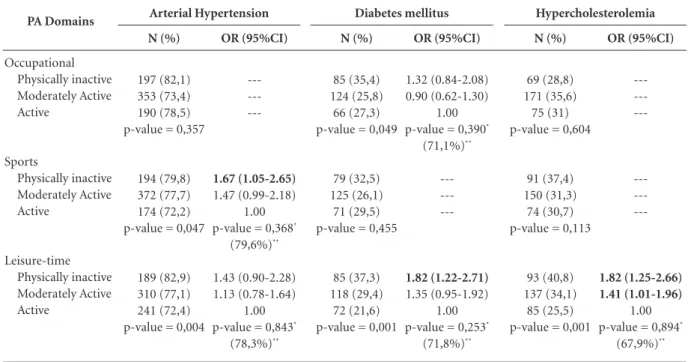
Table 1. Association between physical activity domains and chronic diseases (Brazil, n = 963).
Notes: OR = odds ratio; 95% CI = confidence interval of 95%; * = Hosmer-Lemeshow; ** = Percentage of how much the model can explain the behavior of the outcome; Models adjusted simultaneously for: BHU, sex, age, smoking, economic status, SBP, DBP, BMI and WC.
N (%)
197 (82,1) 353 (73,4) 190 (78,5) p-value = 0,357
194 (79,8) 372 (77,7) 174 (72,2) p-value = 0,047
189 (82,9) 310 (77,1) 241 (72,4) p-value = 0,004
OR (95%CI)
---1.67 (1.05-2.65) 1.47 (0.99-2.18)
1.00 p-value = 0,368*
(79,6%)**
1.43 (0.90-2.28) 1.13 (0.78-1.64)
1.00 p-value = 0,843*
(78,3%)**
Arterial Hypertension
N (%)
85 (35,4) 124 (25,8) 66 (27,3) p-value = 0,049
79 (32,5) 125 (26,1) 71 (29,5) p-value = 0,455
85 (37,3) 118 (29,4) 72 (21,6) p-value = 0,001
OR (95%CI)
1.32 (0.84-2.08) 0.90 (0.62-1.30)
1.00 p-value = 0,390*
(71,1%)**
---1.82 (1.22-2.71) 1.35 (0.95-1.92)
1.00 p-value = 0,253*
(71,8%)**
Diabetes mellitus
N (%)
69 (28,8) 171 (35,6) 75 (31) p-value = 0,604
91 (37,4) 150 (31,3) 74 (30,7) p-value = 0,113
93 (40,8) 137 (34,1) 85 (25,5) p-value = 0,001
OR (95%CI)
---1.82 (1.25-2.66) 1.41 (1.01-1.96)
1.00 p-value = 0,894*
(67,9%)**
aúd
e C
ole
tiv
a,
21(4):1043-1050,
2016
where strategies for food adequacy and changes in lifestyle could make a difference in preventing future complications and comorbidities, as well as the prospect of minimal economic impact to the health sector21.
Another important finding was the associ-ation between the occurrence of AH, DM and hypercholesterolemia with indicators of general and abdominal obesity, information extensively observed in Brazilian and worldwide
research-es22-25. In developing countries improving
econ-omy and social situation, there is an increase in prevalence rates of obesity and factors associated with MetS, and the main causes of this danger-ous association are increasing urbanization, nu-trition transition, insufficient PA and the easiness of access to and supply of goods and services26.
Another particular finding was the associa-tion between lower levels of PA in different do-mains and the diseases analyzed. After adjust-ment for potential confounders, lower level of PA in leisure-time was significantly associated with a higher prevalence of DM, hypercholesterolemia and MetS, while the lowest level of sports practice was associated with increased prevalence of AH.
These results are in accordance with Brazilian investigation, which found that physical inactiv-ity was associated with the occurrence of AH, hypercholesterolemia, obesity and clustering of chronic diseases, especially among men27.
Fur-thermore, relevant research conducted by Lee et al.28, which sought to evaluate the impact of
Domains
Occupational Physically inactive Moderately Active Active
Sports
Physically inactive Moderately Active Active
Leisure-time Physically inactive Moderately Active Active
Table 2. Multivariate association between physical activity domains and chronic diseases (Brazil, n = 963).
Notes: OR = odds ratio; 95% CI = confidence interval of 95%; * = Hosmer-Lemeshow; ** = Percentage of how much the model can explain the behavior of the outcome; Models including three domains of physical activity simultaneously and adjusted for: BHU, sex, age, smoking, economic status, SBP, DBP, BMI and WC.
Arterial Hypertension OR (95% CI)
0.98 (0.54-1.78) 0.68 (0.44-1.05)
1.00
1.58 (0.96-2.60) 1.41 (0.94-2.11)
1.00
1.20 (0.74-1.97) 1.05 (0.72-1.54)
1.00
p-value = 0,927* (79,7%)**
Diabetes mellitus OR (95% CI)
1.07 (0.65-1.78) 0.86 (0.58-1.26)
1.00
0.95 (0.61-1.47) 0.77 (0.53-1.12)
1.00
1.79 (1.17-2.72) 1.37 (0.95-1.95)
1.00
p-value = 0,817* (71,4%)**
Hypercholesterolemia OR (95% CI)
0.69 (0.42-1.13) 1.13 (0.79-1.61)
1.00
1.29 (0.85-1.96) 0.91 (0.63-1.29)
1.00
1.85 (1.24-2.76) 1.42 (1.02-1.99)
1.00
p-value = 0,532* (69%)**
Domains
Occupational Physically inactive Moderately Active Active
p-value Sports
Physically inactive Moderately Active Active
p-value Leisure-time
Physically inactive Moderately Active Active
p-value Overall
Physically inactive Moderately Active Active
p-value
Table 3. Multivariate association between physical activity domains and metabolic syndrome (Brazil, n = 963).
Notes: OR = odds ratio; 95% CI = confidence interval of 95%; * = Hosmer-Lemeshow; § = Model adjusted simultaneously for: BHU, sex, age, smoking, economic status, sports practice and occupational PA.
Chi square N (%)
79 (32.9) 166 (34.5) 79 (32.6) 0.948
85 (35) 161 (33.6) 78 (32.4) 0.543
85 (37.3) 148 (36.8) 91 (27.3) 0.008
78 (32.9) 170 (35) 76 (31.7) 0.771
Logistic Regression OR (95%CI)§
---1.48 (1.08 to 2.05) 1.56 (1.06 to 2.29)
1.00 p-valor = 0,183*
responsi-T
ur
ble for 7% of DM cases and 6% of heart disease, in addition to increased mortality rates and de-creased life expectancy.
Regarding to MetS, recently published me-ta-analysis showed that individuals with higher indicators of PA during leisure-time were 20% less likely to develop the syndrome compared to those with lower involvement in this domain of PA29. Additionally, Najafian et al.30 found
associ-ation between lower levels of PA and the occur-rence of the MetS, as well as to inverse relation-ship between duration of daily walking and MetS. Exploring the idea that exercise practice may confer tangible benefits for the prevention and reversal of risk factors for MetS, studies with dif-ferent protocols and intensity of exercises have been undertaken in recent years. Randomized controlled trial with adults found reduction of indicators that cause the MetS, as well as reduc-tion in visceral fat after one year of intervenreduc-tion with high intensity exercises31. Additionally,
Co-lombo et al.32 found significant improvements
in WC, BMI, SBP, DBP, and HDL-cholesterol in patients with MetS after twelve weeks of aerobic exercise program with moderate intensity.
Thus, population ageing and rates of obesity increasing lead to key questions: Can PA attenu-ates the weight gain associated with aging? Can PA prevent the occurrence of metabolic diseases in adults? Current guidelines recommend a daily of 60 minutes of moderate-intensity PA, plus at least two sessions per week of resistance training to ensure substantial and additional health bene-fits and weight loss33. Therefore, evidence suggests
that promotion of energy balance, changes in the distribution of body fat and increased muscle mass can to result in better metabolic control34.
As limitation we have the cross-sectional de-sign that does not allow cause-effect conclusions. In fact, a cohort study has been conducted with this sample and, in the future, it will be possible ratify or not our findings in a longitudinal design. In conclusion, the present study found high rates of risk factors associated to MetS, as well as for MetS itself and chronic diseases as AH, DM, hypercholesterolemia, and obesity. Furthermore, there was association between lower engagement in PA during leisure-time and higher occurrence of risk factors for MetS.
Collaborations
BC Turi worked collecting data, interpretation of results and paper writing; JS Codogno worked collecting data, interpretation of results and re-vising paper; RA Fernandes assisted with statisti-cal analysis, interpretation of results and revising paper; HL Monteiro guided the research project, analysis and interpretation of results and final re-vision of the paper.
Acknowledgments
aúd
e C
ole
tiv
a,
21(4):1043-1050,
2016
Associação Brasileira de Empresas de Pesquisa. Dados com base no Levantamento Sócio Econômico 2008 – IBOPE, 2010. [cited March 10th, 2010]. Available at: www.abep.com.br
Peixoto MRG, Benício MHD, Latorre MRDO, Jardim PCBV. Circunferência da cintura e índice de massa cor-poral como preditores da hipertensão arterial. Arq bras cardiol 2006; 87(4):462-470.
World Health Organization (WHO). Obesity, Prevent-ing and ManagPrevent-ing the Global Epidemic: Report of the WHO Consultation on Obesity. Geneva: WHO; 1998. [cited April 16th, 2010]. Available at: http://www.who. int/nutrition/publications/obesity_executive_summa-ry.pdf
Perez LG, Pratt M, Simoes EJ, de Moura L, Malta DC. Association between leisure-time physical activity and self-reported hypertension among Brazilian adults, 2008. Prev Chronic Dis 2013; 10:E172.
Viacava F. Acesso e uso de serviços de saúde pelos brasi-leiros, 2010. [cited June 29th, 2014]. Available at: http:// www4.ensp.fiocruz.br/radis/96/pdf/radis_96.pdf Nascimento Neto RM. Atlas Corações do Brasil. 2010. [cited June 27th, 2014]. Available at: http://www.saude. sp.gov.br/resources/profissional/acesso_rapido/gtae/ saude_ pessoa_idosa/atlas_190_1.pdf
Schmidt MI, Duncan BB, Azevedo e Silva G, Menezes AM, Monteiro CA, Barreto SM, Chor D, Menezes PR. Chronic non-communicable diseases in Brazil: burden and current challenges. Lancet 2011; 377(9781):1949-1961.
Monteiro CA, Moura EC, Jaime PC, Lucca A, Florin-do AA, FigueireFlorin-do ICR, Bernal R, Silva NN. Monito-ramento de fatores de risco para doenças crônicas por entrevistas telefônicas. Rev Saude Publica 2005; 39(1):47-57
Lloyd-Sherlock P, Beard J, Minicuci N, Ebrahim S, Chatterji S. Hypertension among older adults in low- and middle-income countries: prevalence, awareness and control. Int J Epidemiol 2014; 43(1):116-128. Klop B, Elte JW, Cabezas MC. Dyslipidemia in obesi-ty: mechanisms and potential targets. Nutrients 2013; 5(4):1218-1240.
Schmidt MI, Duncan BB, Hoffmann JF, Moura Ld, Malta DC, Carvalho RM. Prevalence of diabetes and hypertension based on self-reported morbidity survey, Brazil, 2006. Rev Saude Publica 2009; 43(Supl. 2):74-82. Kahn SE, Hull RL, Utzschneider KM. Mechanisms link-ing obesity to insulin resistance and type 2 diabetes.
Nature 2006; 444(7121):840-846.
Misra A, Khurana L. Obesity and the metabolic syn-drome in developing countries. J Clin Endocrinol Metab
2008; 93(11 Supl. 1):S9-30.
Garcia L MT, Silva KS, Del Duca GF, Costa FF, Nahas MV. Sedentary Behaviors, Leisure-Time Physical Inactivity, and Chronic Diseases in Brazilian Work-ers: A Cross Sectional Study. J Phys Act Health 2014; 11(8):1622-1634.
Lee IM, Shiroma EJ, Lobelo F, Puska P, Blair SN, Katzmarzyk PT; Lancet Physical Activity Series Work-ing Group. Effect of physical inactivity on major non-communicable diseases worldwide: an analysis of burden of disease and life expectancy. Lancet 2012; 380(9838):219-229.
14.
15.
16.
17.
18.
19.
20.
21.
22.
23.
24.
25.
26.
27.
28. References
Alberti KG, Eckel RH, Grundy SM, Zimmet PZ, Cl-eeman JI, Donato KA, Fruchart JC, James WP, Loria CM, Smith SC Jr; International Diabetes Federation Task Force on Epidemiology and Prevention; Hation-al Heart, Lung, and Blood Institute; American Heart Association; World Heart Federation; International Atherosclerosis Society; International Association for the Study of Obesity. Harmonizing the metabolic syn-drome: a joint interim statement of the International Diabetes Federation Task Force on Epidemiology and Prevention; National Heart, Lung, and Blood Institute; American Heart Association; World Heart Federation; International Atherosclerosis Society; and interna-tional association for the Study of Obesity. Circulation
2009; 120(6):1640-1645.
Wilson PW, D’Agostino RB, Parise H, Sullivan L, Meigs JB. Metabolic syndrome as a precursor of cardiovas-cular disease and type 2 diabetes mellitus. Circulation 112, 3066-3072, 2005.
Kolovou GD, Anagnostopoulou KK, Salpea KD, Mikhailidis DP. The prevalence of metabolic syndrome in various populations. Am J Med Sci 2007; 333(6):362-371.
International diabetes federation (IDF). The IDF con-sensus worldwide definition of the metabolic syndrome. Brussels: IDF; 2006
Silveira VM, Horta BL, Gigante DP, Azevedo Junior MR. Metabolic syndrome in the 1982 Pelotas cohort: effect of contemporary lifestyle and socioeconomic status. Arq Bras Endocrinol Metabol 2010; 54(4):390-397.
Barbieri MA, Bettiol H, Silva AA, Cardoso VC, Simoes VM, Gutierrez MR, Castro JA, Vianna ES, Foss MC, Dos Santos JE, Queiroz RG. Health in early adulthood: the contribution of the 1978/79 Ribeirao Preto birth cohort. Braz J Med Biol Res 2006; 39(8):1041-1055. Zhang JH, Li NF, Yan ZT, Zhang L, Wang HM, Guo YY, Ling Z. Association of genetic variations of PRDM16 with metabolic syndrome in a general Xinjiang Uygur population. Endocrine 2012; 41(3):539-541.
Yang T, Chu CH, Hsieh PC, Hsu CH, Chou YC, Yang SH, Bai CH, You SL, Hwang LC, Chung TC, Sun CA. C-reactive protein concentration as a significant cor-relate for metabolic syndrome: a Chinese popula-tion-based study. Endocrine 2013; 43(2):351-359. Tsai CH, Li TC, Lin CC, Tsay HS. Factor analysis of modifiable cardiovascular risk factors and prevalence of metabolic syndrome in adult Taiwanese. Endocrine
2011; 40(2):256-264.
Lakka TA, Laaksonen DE. Physical activity in preven-tion and treatment of the metabolic syndrome. Appl Physiol Nutr Metab 2007; 32(1):76-88.
Kilsztajn S, Rossbach A, Câmara MB, Carmo MSN. Serviços de saúde, gastos e envelhecimento da popula-ção brasileira. Rev Bras Estud Popul 2003; 20(1):93-108. Baecke JAH, Burema J, Frijters JER. A short question-naire for the measurement of habitual physical activ-ity in epidemiological studies. Am J Clin Nutr 1982; 36(5):936-942.
Codogno JS, Fernandes RA, Sarti FM, Freitas Junior IF, Monteiro HL. The burden of physical activity on type 2 diabetes public healthcare expenditures among adults: a retrospective study. BMC Public Health 2011; 11:275. 1.
2.
3.
4.
5.
6.
7.
8.
9.
10.
11.
12.
T
ur
He D, Xi B, Xue J, Huai P, Zhang M, Li J. Association between leisure time physical activity and metabolic syndrome: a meta-analysis of prospective cohort stud-ies. Endocrine 2013; 46(2):231-240.
Najafian J, Mohammadifard N, Naeini FF, Nouri F. Re-lation between usual daily walking time and metabolic syndrome. Niger Med J 2014; 55(1):29-33.
Dutheil F, Lac G, Lesourd B, Chapier R, Walther G, Vinet A, Sapin V, Verney J, Ouchchane L, Duclos M, Obert P, Courteix D. Different modalities of exercise to reduce visceral fat mass and cardiovascular risk in metabolic syndrome: the RESOLVE randomized trial.
Int J Cardiol 2013; 168(4):3634-3642.
Colombo CM, Macedo RM, Fernandes-Silva MM, Caporal AM, Stinghen AE, Costantini CR, Baena CP, Guarita-Souza LC, Faria-Neto JR. Short-term effects of moderate intensity physical activity in patients with metabolic syndrome. Einstein (São Paulo) 2013; 11(3):324-330.
Grundy SM, Hansen B, Smith Junior SC, Cleeman JI, Kahn RA. American Heart Association; National Heart, Lung, and Blood Institute; American Diabetes Associ-ation. Clinical management of metabolic syndrome: report of the American Heart Association/National Heart, Lung, and Blood Institute/American Diabetes Association conference on scientific issues related to management. Circulation 2004; 109(4):551-556 Strasser B. Physical activity in obesity and metabolic syndrome. Ann N Y Acad Sci 2013; 1281:141-159.
Artigo apresentado em 19/04/2015 Aprovado em 27/11/2015
Versão final apresentada em 29/11/2015 29.
30.
31.
32.
33.