Short-term efficacy and safety of low-intensity
extracorporeal shock wave therapy in erectile dysfunction:
a systematic review and meta-analysis
_______________________________________________
Zi-jun Zou
1, Liang-you Tang
1, Zhi-hong Liu
1, Jia-yu Liang
1, Ruo-chen Zhang
1, Yu-jie Wang
1, Yong-quan
Tang
1, Rui Gao
2, Yi-ping Lu
11 Department of Urology, Institute of Urology, West China Hospital, Sichuan University, Chengdu, Sichuan,
P.R. China; 2 Department of Urology, the First Affiliated Hospital of Fujian Medical University, Fuzhou,
Fujian, P.R. China
ABSTRACT
ARTICLE
INFO
______________________________________________________________ ______________________
Aim: The role of low-intensity extracorporeal shock wave therapy (LI-ESWT) in erec-tile dysfunction (ED) is not clearly determined. The purpose of this study is to investi-gate the short-term efficacy and safety of LI-ESWT for ED patients.
Materials and Methods: Relevant studies were searched in Medline, Embase, Cochrane Library, China National Knowledge Infrastructure (CNKI), WANFANG and VIP databas-es. Effective rate in terms of International Index of Erectile Function-Erectile Function Domain (IIEF-EF) and Erectile Hardness Score (EHS) at about 1month after LI-ESWT was extracted from eligible studies for meta-analysis to calculate risk ratio (RR) of effective treatment in ED patients treated by LI-ESWT compared to those receiving sham-treatment.
Results: Overall fifteen studies were included in the review, of which four randomized controlled trials (RCTs) were for meta-analysis. Effective treatment was 8.31 [95% con-fidence interval (CI): 3.88-17.78] times more effective in the LI-ESWT group (n=176) than in the sham-treatment group (n=101) at about 1 month after the intervention in terms of EHS, while it was 2.50 (95% CI: 0.74-8.45) times more in the treatment group (n=121) than in the control group (n=89) in terms of IIEF-EF. Nine-week protocol with energy density of 0.09mJ/mm2 and 1500 pluses seemed to have better therapeutic ef-fect than five-week protocol. No significant adverse event was reported.
Conclusion: LI-ESWT, as a noninvasive treatment, has potential short-term therapeutic effect on patients with organic ED irrespective of sensitivity to PDE5is. Owing to the limited number and quality of the studies, more large-scale, well-designed and long-term follow-up time studies are needed to confirm our analysis.
Keywords:
Erectile Dysfunction;
Therapeutics; Meta-Analysis as Topic
Int Braz J Urol. 2017; 43: 805-21
_____________________
Submitted for publication: April 26, 2016
_____________________
Accepted after revision: January 22, 2017
_____________________
Published as Ahead of Print: March 21, 2017
INTRODUCTION
Erectile dysfunction (ED) is a common male sexual dysfunction and oral phosphodies-terase type 5 inhibitor (PDE5i) is a first-line the-rapy (1). Although ameliorating erectile function
and surgical implantation of penile prostheses. Therefore, a novel treatment that improves EF in a noninvasive and enduring manner is required.
Shockwave is characterized by acoustic wave generating pressure impulses. It has been used widely in the field of medicine, where the role of shockwave therapy varies with the le-vel of energy intensity (2). Different from high- and medium-intensity shockwave with focused mechanical destructive and anti-inflammatory nature, low-intensity extracorporeal shock wave therapy (LI-ESWT) probably has angiogenic pro-perty based on resultant cell membrane micro-trauma and mechanical stress that are associated with the release of angiogenic factors (3) and recruitment of circulating endothelial progenitor cells (4). Therefore, LI-ESWT has been used for vasculogenic disease containing peripheral ar-tery disease (5), chronic wounds (6), and cardiac ischemic diseases (7).
Based on the potential stimulation of an-giogenesis and local vascularization (8), LI-ESWT was also used for vasculogenic ED and had con-siderable effectiveness in terms of sexual perfor-mance, penile blood flow and endothelial function (9-11). It will hopefully make up the defects in the treatment of ED given that 1) the potential proper-ty of altering spontaneous erectile function in an enduring and pathophysiological way (9); 2) rever-sing insensitivity to PDE5is (11). Meanwhile, penile LI-ESWT was proved to be safe during and after the treatment in the pilot studies (9-11).
Although underlying mechanism is still under investigation, LI-ESWT has been listed in the chapter of first-line therapy since 2013 Euro-pean Association of Urology (EAU) guidelines on male sexual dysfunction (1),supported by a se-ries of prospective trials containing randomized controlled trials (RCTs) (9-11). Nevertheless, de-fined recommendation cannot be given because current evidences are relatively limited. Recen-tly, two systematic reviews and meta-analyses (12, 13) on the topic were published. However, the result of the study by Lu et al. (12) was less convincing because significant heterogeneity existed among included studies with ED patients
red by including single-arm trials. Therefore, a systematic review and meta-analysis focusing on RCTs regarding LI-ESWT for organic ED without Peyronie’s disease (PD) and chronic pelvic pain (CPP) is essential.
MATERIALS AND METHODS
The systematic review and meta-analysis was performed following PRISMA criteria (14).
Criteria for study inclusion/exclusion
Studies, which contained RCT, single-arm trial and respective study, reporting LI-ESWT in the management of ED patients without PD and CPP, were included for this systematic review. If data re-garding effective and/or complication rate could be extracted, those included RCTs were further perfor-med for meta-analysis. In addition to eligible origi-nal articles, reviews in the field were also identified for further searching of reference lists to ensure the completeness of the literature search. Case reports, letters to the editor, conference abstract, comment and basic studies were excluded.
Two authors reviewed the included arti-cles independently. Disagreements were resolved by discussion and consensus. Duplicate publica-tions were excluded, and when different literatu-res discussed a same cohort, the most informati-ve one was used for further analysis.
Search strategy
Two authors independently searched Me-dline, Embase, Cochrane library and Chinese me-dical electronic databases including China Natio-nal Knowledge Infrastructure (CNKI), WANFANG and VIP by using one of “shockwave” and “shock wave” combined with one of “erectile dysfunc-tion” and “ED” as a search term with overall 4 combinations. English and Chinese literatures between January 2010 and December 2015 were included. The reference lists of eligible studies and relevant reviews were searched in case of possible missing articles.
for assessing risk of bias (15), which addresses sequence generation, allocation concealment, blinding, handling of incomplete data, and se-lective reporting. The quality of other studies was assessed by the Methodological Index for Non-randomized Studies (MINORS) (16) and global ideal score is 16 points for non-compa-rative study.
Data extraction
Data extraction was done by two au-thors independently, and disagreements were resolved by discussion. Titles and abstracts were used to screen for initial study inclusion. Full-text review was carried out on the remai-ning papers that matched inclusion/exclusion criteria. The same reviewers performed all data extraction including study characteristics and outcome data. A data-extraction form was used with variables containing author, publication year, type of study, country, LI-ESWT protocol, ED type, previous sensitivity of PDE5i, end-points, and outcomes.
In the meta-analysis, effect size (ES) was risk ratio (RR) of effective treatment in ED patients receiving LI-ESWT and sham treat-ment. International Index of Erectile Function--Erectile Function Domain (IIEF-EF) score and Erectile Hardness Score (EHS) were validated and most widely used in clinical trials to eva-luate erectile function. The numbers of total participants and effective ones measured with them were extracted from included literatures. Short-term effective treatment was defined as 5-point or greater improvement in the IIEF-EF between baseline and score at about 1 month after LI-ESWT or an increase in EHS from 2 or less at baseline to 3 or more at about 1 mon-th after mon-the intervention. The definitions were accepted because most participants and studies could be included. Adverse event outcome was also summarized and analyzed.
Statistical analysis
Random effects model was selected for the calculation of RR based on acknowledging heterogeneities in our samples with several
protocols of LI-ESWT and populations with different sensitivity of PDE5is. A chi-squared test was conducted for heterogeneity evalua-tion and p value less than 0.05 was conside-red to be statistically significant. I2 index was used to quantify between-study heterogeneity’s contribution to overall heterogeneity. Funnel plot was conducted for evaluation of publica-tion bias. Sensitivity analysis was conducted to explore the heterogeneity via excluding every study one by one. Subgroup analysis according to different protocols, energy densities and do-ses of LI-ESWT, the consistency of risk factors between the treatment and control group, and sensitivity to PDE5is, was conducted. Statistical calculation was conducted using Review Mana-ger (version 5.3) software.
RESULTS
Literature search results
The search process is shown in Figure-1. The first search yielded 572 potentially relevant studies, of which 386 were irrelevant and were excluded after reviewing their titles. Abstracts of the remaining 186 studies were considered for detailed evaluation. One hundred and sixty one studies were excluded in that stage due to reduplicate cohorts, and being letter to the edi-tor, case report, conference abstract and com-ment. No more eligible articles were found in search of the reference lists of 10 relevant re-views and the 15 original literatures.
va-Figure 1 - Flow diagram outlining search results and final included and excluded studies.
Records identified though database
searching (n=572)
Records after irrelevant ones removed
(n=186)
Records after screening abstracts
(n=15)
Full-text articles assessed for eligibility
(n=15)
Studies included in qualitative synthesis
(n=15)
Studies included in quantitative synthesis
(meta-analysis) (n=15)
One study was excluded for patients with post prostatectomy ED.
Two RCTs were excluded for lack of define and enough outcome in IIEF-EF and EHS.
Eight non-RCTs were excluded.
1. One hundred and sixty one records were excludade owing to comment, letter to editor, case report, reduplicate article, conference abstract and basic studies.
2. When the same group reported duplicated data in papers, the most informative one was chosen.
cuum erectile device for ED. With two RCTs (18, 21) withlack of sufficient data, overall 4 RCTs (10, 17, 25, 28) were included for quantitative synthesis.
The quality of the included studies
The risks of bias in two RCTswere con-sidered to be high owing to high dropout rate (25) and not performing blind method in perfor-mance (21). Three RCTs (10, 17, 28) had unclear risks of bias without details of randomization and/or blind method, and only one RCT was evaluated as being low risk of bias (18). Accor-ding to MINORS (16), all non-comparative stu-dies were 12 scores with lack of information of blind evaluation of endpoints and prospective calculation of the study size.
Evaluation of the effect of LI-ESWT on ED in terms of IIEF-EF and EHS, and its safety
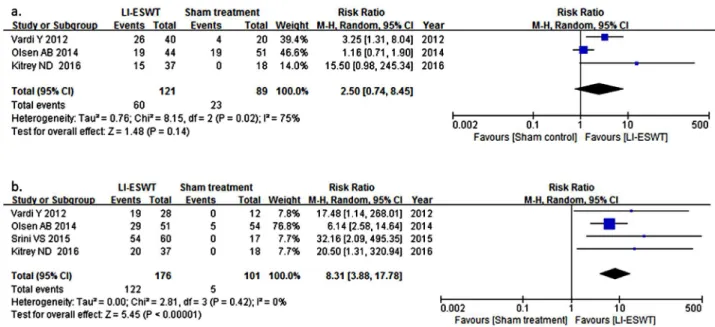
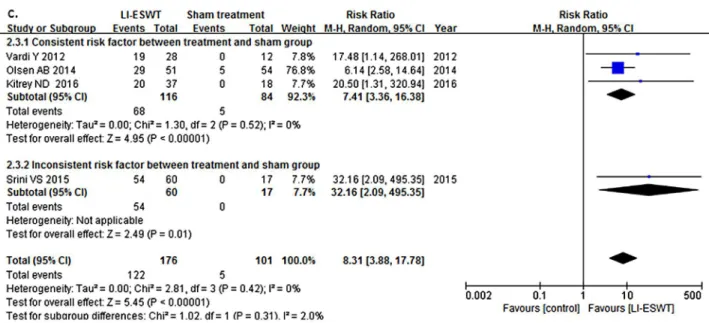
Three RCTs (10, 17, 28) comparing IIEF--EF-based effective rate (ER) in patients re-ceiving LI-ESWT (n=121) and sham treatment (n=89) were included for the calculation of RR. Effective treatment was 2.50 [95% confidence interval (CI): 0.74-8.54] times higher in the LI--ESWT group than in the sham-controlled group at about 1 month after last session and hetero-geneity may be substantial (p=0.02; I2: 75%). In terms of EHS, including 4 RCTs (10, 17, 25, 28) of 277 patients, RR is 8.31 with 95% CI ranging from 3.88 to 17.78 (p=0.42; I2: 0%), as seen in Figure-2. Funnel plot was asymmetrical sho-wing publication bias. Sensitivity analysis in IIEF-EF revealed that the study by Olsen et al. (17) influenced heterogeneity significantly and when the study was excluded, I2 and p value was 24% and 0.25, respectively, while RR was 4.40 (95%CI: 1.18-16.38). Sensitivity analysis indicated that the result was stable in EHS.
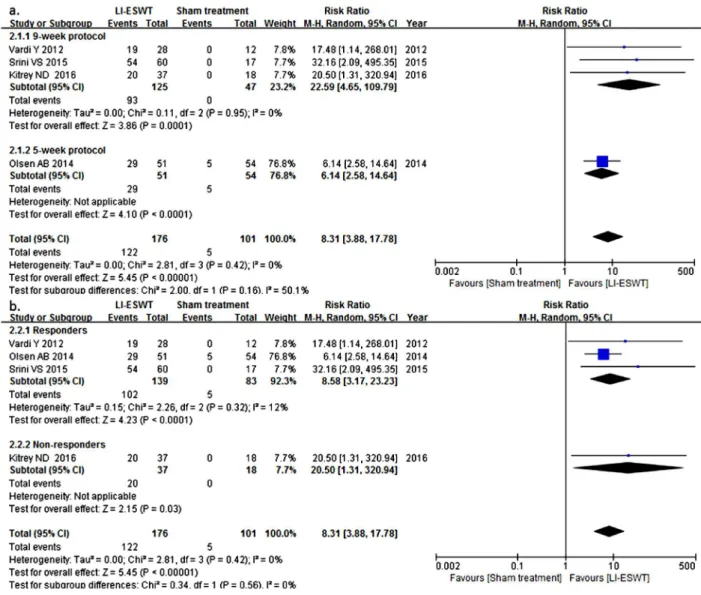
In subgroup analysis, as seen in Figures 3 and 4, it was showed that in EHS 9-week pro-tocol with energy density of 0.09mJ/mm2 and 1500 pluses (RR: 22.59; 95% CI: 4.65-109.79) was probably more effective than 5-week pro-tocol with energy density of 0.15mJ/mm2 and 3000 pulses (RR: 6.14; 95% CI: 2.58-14.64) based on possibly substantial between-group
heterogeneity, although the difference did not reach statistical significance. Similar result was observed in IIEF-EF with RR of 4.40 (95% CI: 1.18-16.38) in 9-week group and 1.16 (95% CI: 0.71-1.90) in 5-week group with the p value of subgroup differences being 0.06. In our analy-sis, LI-ESWT for PDE5i non-responders was more likely to contribute to effective treatment (RR: 15.50, 95% CI: 0.98-245.34, in IIEF-EF; RR: 20.50, 95% CI: 1.31-320.94, in EHS), than for responders (RR: 1.81, 95% CI: 0.64-5.11, in IIEF-EF; RR: 8.58, 95% CI: 3.17-23.23, in EHS), but difference was not statistically significant. To explain whether the consistency of risk fac-tors of ED, such as age, cardiac disease, diabe-tes mellitus (DM), et al., between treatment and control group influenced analysis outcome, we summarized the baseline characteristics of stu-dy population from the 4 RCTs (Table-3) and performed subgroup analysis according to con-sistency of risk factors. It was found that the outcome of studies with consistent risk factor was lower (RR: 7.41; 95% CI: 3.36-16.38), than that with inconsistent risk factors (RR: 32.16; 95% CI: 2.09-495.35), but it did not reach sta-tistical significance either (p=0.31).
There was no reported severe complica-tion, which needed medical intervention.
DISCUSSION
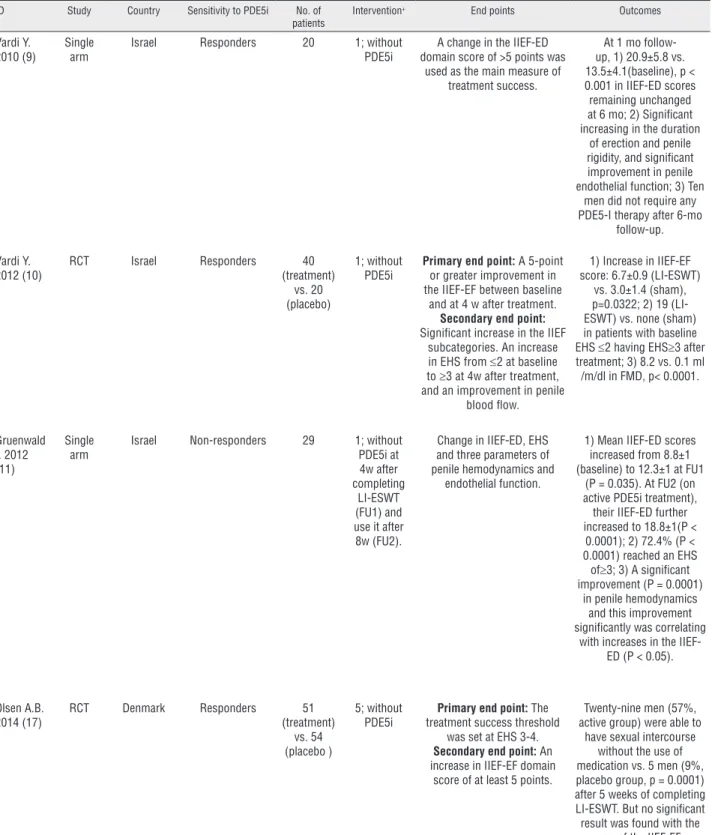
Table 1- Characteristics of the included studies in the systematic review.
ID Study Country Sensitivity to PDE5i No. of patients
Intervention+ End points Outcomes
Vardi Y. 2010 (9)
Single arm
Israel Responders 20 1; without
PDE5i
A change in the IIEF-ED domain score of >5 points was
used as the main measure of treatment success.
At 1 mo follow-up, 1) 20.9±5.8 vs. 13.5±4.1(baseline), p < 0.001 in IIEF-ED scores remaining unchanged at 6 mo; 2) Significant increasing in the duration
of erection and penile rigidity, and significant improvement in penile endothelial function; 3) Ten
men did not require any PDE5-I therapy after 6-mo
follow-up.
Vardi Y. 2012 (10)
RCT Israel Responders 40
(treatment) vs. 20 (placebo)
1; without PDE5i
Primary end point: A 5-point or greater improvement in the IIEF-EF between baseline
and at 4 w after treatment. Secondary end point: Significant increase in the IIEF
subcategories. An increase in EHS from ≤2 at baseline to ≥3 at 4w after treatment, and an improvement in penile
blood flow.
1) Increase in IIEF-EF score: 6.7±0.9 (LI-ESWT)
vs. 3.0±1.4 (sham), p=0.0322; 2) 19 (LI-ESWT) vs. none (sham) in patients with baseline EHS ≤2 having EHS≥3 after treatment; 3) 8.2 vs. 0.1 ml /m/dl in FMD, p< 0.0001.
Gruenwald I. 2012 (11)
Single arm
Israel Non-responders 29 1; without
PDE5i at 4w after completing
LI-ESWT (FU1) and use it after 8w (FU2).
Change in IIEF-ED, EHS and three parameters of penile hemodynamics and
endothelial function.
1) Mean IIEF-ED scores increased from 8.8±1 (baseline) to 12.3±1 at FU1
(P = 0.035). At FU2 (on active PDE5i treatment), their IIEF-ED further increased to 18.8±1(P <
0.0001); 2) 72.4% (P < 0.0001) reached an EHS of≥3; 3) A significant improvement (P = 0.0001)
in penile hemodynamics and this improvement significantly was correlating
with increases in the IIEF-ED (P < 0.05).
Olsen A.B. 2014 (17)
RCT Denmark Responders 51
(treatment) vs. 54 (placebo )
5; without PDE5i
Primary end point: The treatment success threshold
was set at EHS 3-4. Secondary end point: An increase in IIEF-EF domain
score of at least 5 points.
Twenty-nine men (57%, active group) were able to
have sexual intercourse without the use of medication vs. 5 men (9%, placebo group, p = 0.0001) after 5 weeks of completing LI-ESWT. But no significant result was found with the
Yee C.H. 2014 (18)
RCT China Unknown 30
(treatment) vs. 28 (placebo) 1; whether other modality being used was unknown.
Primary end point: The 13-week change from baseline for IIEF-ED score after one course of Li-ESWT. Secondary end point: The interval change of EHS and adverse events from
LI-ESWT therapy.
At 4w follow-up, 1) mean IIEF-ED score: 17.8±4.8 (LI-ESWT) vs. 15.8±6.1 (sham), p=0.156; 2) mean
EHS: 2.7±0.5 (LI-ESWT) and 2.4±0.9 (sham), p =
0.163.
Bechara A. 2015 (19)
Single arm
Argentina Non-responders 25 3; use PDE5i Whenever patients improved on all IIEF-6, SEP2 and SEP3 and to respond positively to
the GAQ at 3 months post-treatment.
60% (12/20) of the patients responded to the treatment.
Chung E. 2015 (20)
Single arm
Australia Failed or unsatisfactory outcome with oral PDE5i and/or vasoactive agents
30 4; Whether
other modality
being used was unknown.
Change in IIEF-5 and EDITS scores, and overall satisfaction
rate were recorded at 6 weeks and 4 months after completion
of LI-ESWT.
At 6 weeks and 4m, 60% of patients reported an improvement in IIEF-5 score by 5 points, 70%
improvement in EDITS Index score by > 50%. 67% of patients satisfied
(scoring 4 out of 5) and 80% would recommend the
therapy.
Qi T. 2015 (21)
RCT China Unknown 30
(LI-ESWT) vs. 30 (vacuum
erectile device)
7; unknown At 1 mo after LI-ESWT. 1) Cure: IIEF-5 score ≥ 22pts, or SEP, GAQ and EHS is 5, 2 and 4pts, respectively; 2) Relief:
when IIEF-5 score<22pts, a 5-point or greater improvement in the IIEF-5,
or SEP≥4pts, GAQ≥1pts, EHS≥3pts; 3) Fail: IIEF-5 score<21pts and improvement
score ≤4pts , SEP<3pts, GAQ=0pts, EHS<2pts.
The number of cured patient was 14 and the number of relief was 8. Effective rate was 73% (22/30) in LI-ESWT group.
Pelayo-Nieto M. 2015 (22)
Single arm
Mexico Unknown 15 3; unknown
medication history
In IIEF-EF, success of treatment was defined as an
increase of >2 points and >5 points in groups of mild and moderate, respectively. Results were evaluated by using IIEF, EHS, SEP, GAQ at 1 and 6 months after treatment.
The rate of success was 80%. 1) IIEF: 15 (11-18) pts at baseline vs. 20 (11-23) pts at 1 and 6 mo, p<0.013; 2) EHS: 2 (2-3) pts at baseline vs. 4 (2-4) pts at 1 mo, p<0.01; 3) SEP3: 7 patients at baseline
vs. 12 patients at 1 mo, p=0.0013.
Reisman Y. 2015 (23) Single arm Netherlands, et al Responders and Non-responders
58 2; without
PDE5i until 1 month post treatments.
Primary end point: An increase of IIEF-EF score from baseline to the third follow-up (6m post treatment)
according to the initial ED severity: >2-point increase for mild symptoms; >5 points for moderate symptoms; and >7 points for severe symptoms.
Ruffo A. 2015 (24)
Single arm
Italy Non-responders 31 2; without
PDE5i during treatment.
Primary end point: An increase of IIEF-EF score from baseline to 1 and 3 months after LI-ESWT. Secondary end point: Improvement in SEP2, 3 and
GAQ.
1) IIEF-EF: 16.54±6.35 (baseline) vs. 21.13±6.31
(1 mo), 21.03±6.38 (3 mo). 2) SEP2 (yes): 61% (baseline) vs. 86% (1mo),
89% (3 mo). 3) SEP3 (yes): 32% (baseline) vs. 58% (1mo), 62% (3 mo); all p<0.05. 4) GAQ: at 1 and 3 mo, difference is
not significant.
Srini V.S. 2015 (25)
RCT India Responders 60
(treatment) vs. 17 (placebo )
1; without PDE5i
Primary end point:≥5 points improvement in the
IIEF-EF between baseline and 1 mo (also 12 mo).
Secondary end point: Significant increase in the CGIC and an increase in EHS from ≤2 at baseline to ≥ 3 at
FU1 and FU5.
1) Increase in IIEF-EF: at 1 mo, 12.5 pts in LI-ESWT group vs. 1.4 pts in
control group; at 12 mo, 8.7 pts in LI-ESWT group vs. NA in control group. 2) Effective rate in EHS: 90% (1m), 83% (12m) vs. none (placebo group).
3) Data about CGIC were not provided. Hisasue S. 2016 (26) Single arm
Japan Unknown 56 1; use
PDE5i on-demand
after LI-ESWT.
Assessing the patients with SHIM, EHS, and MPCC at 1, 3 and 6 months after the
final LI-SWT.
64.2% patients showed improvement in SHIM
scores, and 57.1% patients achieved an EHS
3 or 4 without PDE5i within 6 months after LI-SWT. MPCC showed significant improvement in 64% patients from 1 month after treatment, maintaining it until 6
months. Frey A. 2016 (27) Single arm Denmark Postprostatectomy ED with unknown sensitivity to PDE5i
16 6; use of
erectogenic aids
Primary end point: Changes in IIEF-5 scores. Secondary
end point: A global satisfaction question ranging
from “very dissatisfied” to “very satisfied”.
The median change in IIEF-5 scores was +3.5 (range -1 to 8; p=0.0049)
and +1 (range -3 to 14; p=0.046); 11 and 7 patients reported being either satisfied or very satisfied at 1 mo follow up and 1 year follow up,
respectively.
Kitrey N.D. 2016 (28)
RCT Israel Non-responders 37
(treatment) vs. 18 (placebo ) 1; use PDE5i when evaluating results.
Main outcomes: 1) EHS was 3 or greater; 2) A change in IIEF-EF was greater than
7 points for severe ED and 5 points for moderate
ED. Secondary outcome: FMD penile time-flow AUC as an indicator of penile endothelial function and the
CGIC questionnaire. They were evaluated at 1 month after the end of treatment.
1) 54.1% (LIST) vs. none (sham) had EHS=3,
p<0.0001; 2) in IIEF-EF, 40.5% (LIST) vs. none (sham), p=0.001; 3) 56.3% of the patients treated with active LIST
after sham treatment achieved an erection hard
enough for penetration (p<0.005); 4) The change
in penile hemodynamic parameters was statistically significant; 5) According to CGIC, 56.8%
of patients (LIST) vs. 27.8% (sham)(p=0.051)
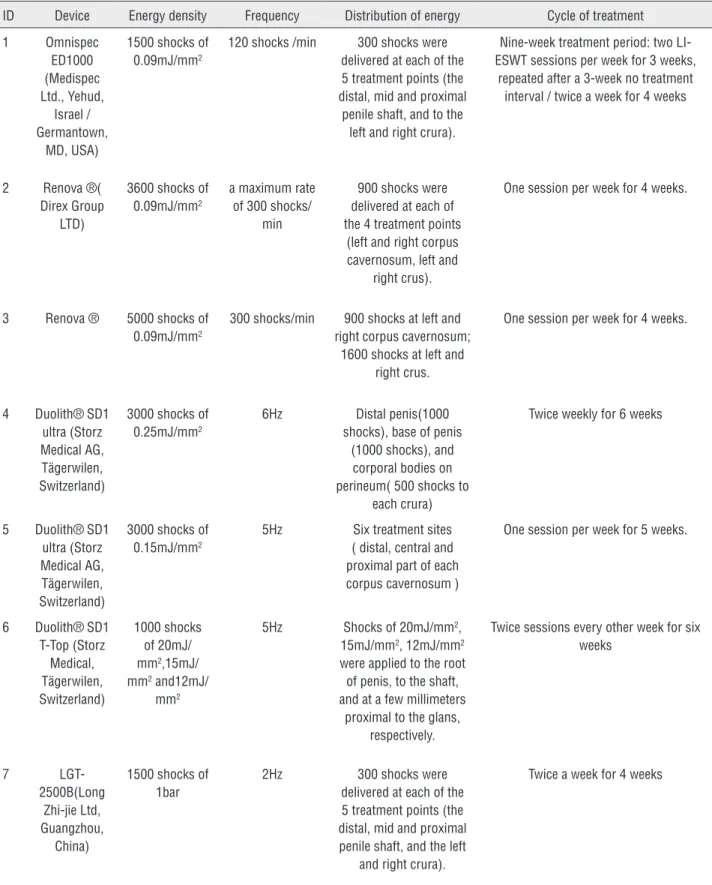
Table 2-The reported protocols of LI-ESWT in included studies.
ID Device Energy density Frequency Distribution of energy Cycle of treatment
1 Omnispec ED1000 (Medispec Ltd., Yehud,
Israel / Germantown,
MD, USA)
1500 shocks of 0.09mJ/mm2
120 shocks /min 300 shocks were delivered at each of the 5 treatment points (the distal, mid and proximal
penile shaft, and to the left and right crura).
Nine-week treatment period: two LI-ESWT sessions per week for 3 weeks,
repeated after a 3-week no treatment interval / twice a week for 4 weeks
2 Renova ®( Direx Group
LTD)
3600 shocks of 0.09mJ/mm2
a maximum rate of 300 shocks/
min
900 shocks were delivered at each of the 4 treatment points
(left and right corpus cavernosum, left and
right crus).
One session per week for 4 weeks.
3 Renova ® 5000 shocks of 0.09mJ/mm2
300 shocks/min 900 shocks at left and right corpus cavernosum;
1600 shocks at left and right crus.
One session per week for 4 weeks.
4 Duolith® SD1 ultra (Storz Medical AG, Tägerwilen, Switzerland)
3000 shocks of 0.25mJ/mm2
6Hz Distal penis(1000 shocks), base of penis
(1000 shocks), and corporal bodies on perineum( 500 shocks to
each crura)
Twice weekly for 6 weeks
5 Duolith® SD1 ultra (Storz Medical AG, Tägerwilen, Switzerland)
3000 shocks of 0.15mJ/mm2
5Hz Six treatment sites ( distal, central and proximal part of each corpus cavernosum )
One session per week for 5 weeks.
6 Duolith® SD1 T-Top (Storz
Medical, Tägerwilen, Switzerland)
1000 shocks of 20mJ/ mm2,15mJ/ mm2 and12mJ/
mm2
5Hz Shocks of 20mJ/mm2, 15mJ/mm2, 12mJ/mm2 were applied to the root of penis, to the shaft, and at a few millimeters
proximal to the glans, respectively.
Twice sessions every other week for six weeks
7
LGT-2500B(Long Zhi-jie Ltd, Guangzhou,
China)
1500 shocks of 1bar
2Hz 300 shocks were delivered at each of the 5 treatment points (the distal, mid and proximal penile shaft, and the left
and right crura).
Figure 2 - Forest plots of random effects model of risk ratio of effective treatment of LI-ESWT for ED in terms of International Index of Erectile Function-Erectile Function Domain (a) and Erectile Hardness Score (b).
cumulative analysis. In preclinical researches, it was revealed that LI-ESWT could induce angiogenesis, nerve regeneration, progenitor cell recruitment, endothelial functional improvement, tissue remodeling reverse, and microenviroment improvement to improve EF (29, 30). In addition, there was no adverse side effect reported. Overall, current evidences support LI-ESWT as a potential choice for ED clinically and preclinically.
Recently, two systematic reviews and meta-analyses (12, 13) on the topic were published and their conclusions were similar to ours. However, there were some limitations in their study designs. The study by Lu et al. (12) included seven RCTs on LI-ESWT for organic ED and ED associated with PD and CPP. Heterogeneity was evident pathologically and clinically among the three types of ED (31). Furthermore, a recent meta-analysis proved that PD-associated ED could not benefit from extracorporeal shockwave therapy (32). Therefore, the application possibility of cumulative results was reduced and subgroup analysis was not convincing enough when explaining the exact
ED according to pathogenesis when the efficacy of LI-ESWT was evaluated. The other study by Angulo et al. (13) included single arm trials with evidence level 2, inevitably lowering the quality of their meta-analysis. Our meta-analysis focused on RCTs regarding organic ED with similar inclusion/ exclusion criteria and excluded studies on CPP- and PD-associated disease. In our opinion, our design is the most reasonable among the three meta-analyses.
(18, 25), and favorable results of short protocols were also proven (22-24). Therefore, additional comparative studies among different protocols are demanded to create an optimal protocol.
Energy density (2) and dose (30) of shock wave therapy are considered to be relative to physiological effect. As regard to penile tissue, high energy level causes apoptosis and collagenization of corporal smooth muscle with consequently
(300 for each treatment site) seemed to be superior to 5-week protocol with energy density of 0.15mJ/ mm2 and 3000 pulses (500 for each site). However, an optimal energy density and number of pulses could not be further defined separately because of limited literature. In fact, no agreement exists
and dose applied in the field of ED with promising effect usually range from 0.09mJ/mm2 to 0.25mJ/ mm2 and 1500 to 5000 times (300-1600 shocks for each site) respectively. Direct comparative trials and more precise preclinical researches are essential to make optimal parameters.
Table 3 - Baseline characteristics of study population in 4 RCTs for meta-analysis.
Study Age[median(years), range]
EHS IIEF Diabetes Hypertension Heart disease Smoking Alcohol Lipids
Vardi 2012 (10)
58 (27-72) vs. 57 (35-77)#
≤2 IIEF-EF < 19 30 vs. 30%# ND 20 vs. 10%# ND NA ND
Olsen 2014 (17)
59 (41-80) vs. 60(37-79)
< 2 IIEF-EF < 20 18 vs. 13%# 33 vs. 37%# 4 vs. 11%# ND ND NA
Srini 2015 (25)
NA ≤2 IIEF-EF < 18 ND 22.11 vs. 5%
(p=0.0219)
3.16 vs. 25% (p=0.0003)
ND 23.16 vs. 47.5% (p=0.0074)
20 vs. 47.5% (p=0.0017) Kitrey 2016
(28)
60 (28-78) vs. 64 (29-81)#
≤2 IIEF-EF ≤ 12 56.8 vs. 72.2%#
ND 48.6 vs.
38.9%#
ND NA ND
The former is a LI-ESWT group and the latter is a controlled group in the blank. #: No significant differences between groups. ND: no significant differences. NA: not applicable.
vasoactive drugs and surgical implantation of penile prostheses, LI-ESWT is noninvasive and rehabilitative. Severe ED patients who didn’t respond to the first-line therapy of PDE5is could benefit from the treatment (11, 19, 20, 28). Our analysis revealed that non-responders, moderate to severe EDs with baseline IIEF-EF ≤12, appeared to have more possibility to benefit from LI-ESWT than responders with baseline IIEF-EF <20. Interestingly, the only RCT (18) with low risk of bias suggested that although improvement in IIEF-EF in the LI-ESWT group didn’t reach significant difference compared to the sham group as a whole, the former’s elevated IIEF-EF score was
significantly higher than the latter’s in subgroup analysis of severe ED patients with Sexual Health Inventory for Men (SHIM) score 5-7. Nevertheless, underlying association between the severity of ED and therapeutic impact of LI-ESWT is not clear and requires further investigation.
all included RCTs provided participant’s informa-tion regarding age and comorbidities, but there was no further investigation to determine the impact of age and comorbidities on the effect of LI-ESWT. In the study by Srini et al. (25), co-morbidities were inconsistent between the tre-atment and control group with higher incidence in the latter. Although RR appeared to be far higher in the Srini’s study than the other three studies (10, 17, 28) having consistent comorbi-dities between the treatment and control group, our analysis still cannot answer the question on whether comorbidities are associated with the effectiveness of LI-ESWT because the difference did not reach statistical significance. Therefore, RCTs with stratification of age and comorbidi-ties are needed to determine the impact of these factors on the effect of LI-ESWT for patients with ED.
Short-term effective treatment defined as “participant’s score increased by at least 5 points more than baseline in IIEF-EF, or a patient (baseline EHS ≤2 pts) with EHS ≥3 pts at about 1 month after LI-ESWT” was accep-ted because most participants and RCTs could be included for meta-analysis. Data about the change of IIEF-EF after treatment in the man-ner of mean and standard deviation, which were used in the other two meta-analyses, were available in only one (18) of the five RCTs (35). The minimal clinically important difference (MCID) of IIEF-EF is considered to be ideal to assess the true clinical efficacy of an interven-tion (36) and has been gradually used in the clinical trials about LI-ESWT for ED (23, 28). With more RCTs being published, meta-analysis on the topic using MCID as evaluation criteria is essential in the future.
The initial and optimal functional time of ESWT is still unclear. The effect of LI--ESWT appears to be time-dependent in clinical practice. In the studies using 9-week protocol, the majority of patients felt improvement in EF initially between the sixth and eighth ses-sion (10, 11). The efficacy reached peak at 4-6 weeks after all sessions, then declined (17, 20,
ars, most of whom were severe and diabetic ED patients (37). With aid of PDE5i, however, the peak effect could be showed at 6 months (23, 26). In the laboratory, it was identified previou-sly that shockwave-induced neovascularization was evident at 4 weeks after the treatment and persisted for 12 weeks with angiogenesis-rela-ted factors beginning to rise in 1 week, keeping high for 8 weeks, and then decline at 12 weeks (3, 38). Based on aforementioned clinical and preclinical results, it is rational to evaluate the short-term effect on ED at about one month af-ter LI-ESWT in the review.
There are few evidences on LI-ESWT for ED other than vasculogenic type. Nerve sparing prostatectomy ED could benefit from the method (27), while patients suffering from non-sparing nerve surgery probably not (20, 39). Nonetheless, it was revealed that LI-ESWT alone or combined with human adipose-derived stem cells (h-ADSCs) seemed to have ability to promote erectile func-tion recovery in a rat model of ED with bilateral pelvic nerve injury (40, 41).
1.18-were caused by a part of patients having some problems of understanding the questionnaires of IIEF-EF. Fourth, the quality and number of the eligible studies were relatively limited and none of the 4 RCT was elevated as low risk of bias. Meta-analysis on the basis of these RCTs likely influenced its reliability as level 1a evi-dence. Fifth, publication bias existed because of four factors: 1) only English and Chinese litera-tures were included; 2) other language, unpu-blished studies and conference abstracts were excluded; 3) inflated estimates by a flawed me-thodological design in smaller studies; 4) and/ or a lack of publication of small trials with op-posite outcomes. Sixth, objective measured re-sults, and middle- and long-term effects were unavailable in our meta-analysis due to lack of sufficient data.
CONCLUSIONS
In summary, LI-ESWT, as a noninvasive treatment, with potential short-term therapeutic effect on patients with organic ED irrespective of sensitivity to PDE5is. Owing to the limited number and quality of the studies, more large--scale, well-designed and long-term follow-up time studies are needed to confirm our analysis.
ACKNOWLEDGEMENTS
We thank Ms Zheng-yin Luo for the re-vision of manuscript. Ms Zheng-yin Luo with a major in English is from Law School, Guizhou Normal University, Guiyang, Guizhou, China. This work was supported by the Science and Technology Foundation of the Sichuan Provin-ce (2014JY0183 to Yi-ping Lu) and the Scien-ce and Technology Foundation of the Chengdu City (2014-HM01-00301-SF to Yi-ping Lu).
Zi-jun Zou and Liang-you Tang contri-buted equally to this work
CONFLICT OF INTEREST
None declared.
REFERENCES
1. Wespes E, Eardley I, Giuliano F, et al. Guidelines on male sexual dysfunction: Erectile dysfunction and premature ejaculation. The Netherlands: European Association of Urology; 2013. available at. <http://uroweb.org/wp-content/uploads/14_Male-Sexual-Dysfunction_LR.pdf> 2. Abu-Ghanem Y, Kitrey ND, Gruenwald I, Appel B, Vardi
Y. Penile low-intensity shock wave therapy: a promising novel modality for erectile dysfunction. Korean J Urol. 2014;55:295-9.
3. Wang CJ, Wang FS, Yang KD, Weng LH, Hsu CC, Huang CS, et al. Shock wave therapy induces neovascularization at the tendon-bone junction. A study in rabbits. J Orthop Res. 2003;21:984-9.
4. Aicher A, Heeschen C, Sasaki K, Urbich C, Zeiher AM, Dimmeler S. Low-energy shock wave for enhancing recruitment of endothelial progenitor cells: a new modality to increase efficacy of cell therapy in chronic hind limb ischemia. Circulation. 2006;114:2823-30.
5. Ciccone MM, Notarnicola A, Scicchitano P, Sassara M, Carbonara S, Maiorano M, et al. Shockwave therapy in patients with peripheral artery disease. Adv Ther. 2012;29:698-707. Erratum in: Adv Ther. 2012;29:923. 6. Omar MT, Alghadir A, Al-Wahhabi KK, Al-Askar AB.
Efficacy of shock wave therapy on chronic diabetic foot ulcer: a single-blinded randomized controlled clinical trial. Diabetes Res Clin Pract. 2014;106:548-54.
7. Zuozienė G, Laucevičius A, Leibowitz D. Extracorporeal shockwave myocardial revascularization improves clinical symptoms and left ventricular function in patients with refractory angina. Coron Artery Dis. 2012;23:62-7. 8. Wang CJ, Yang YJ, Huang CC. The effects of shockwave
on systemic concentrations of nitric oxide level, angiogenesis and osteogenesis factors in hip necrosis. Rheumatol Int. 2011;31:871-7.
9. Vardi Y, Appel B, Jacob G, Massarwi O, Gruenwald I. Can low-intensity extracorporeal shockwave therapy improve erectile function? A 6-month follow-up pilot study in patients with organic erectile dysfunction. Eur Urol. 2010;58:243-8.
10. Vardi Y, Appel B, Kilchevsky A, Gruenwald I. Does low intensity extracorporeal shock wave therapy have a physiological effect on erectile function? Short-term results of a randomized, double-blind, sham controlled study. J Urol. 2012;187:1769-75.
12. Lu Z, Lin G, Reed-Maldonado A, Wang C, Lee YC, Lue TF. Low-intensity Extracorporeal Shock Wave Treatment Improves Erectile Function: A Systematic Review and Meta-analysis. Eur Urol. 2017;71:223-233.
13. Angulo JC, Arance I, de Las Heras MM, Meilán E, Esquinas C, Andrés EM. Efficacy of low-intensity shock wave therapy for erectile dysfunction: A systematic review and meta-analysis. Actas Urol Esp. 2016. pii:S0210-480630117-6. 14. Moher D, Liberati A, Tetzlaff J, Altman DG; PRISMA Group.
Preferred reporting items for systematic reviews and meta-analyses: the PRISMA statement. BMJ. 2009;339:b2535. 15. Higgins JP, Altman DG, Gøtzsche PC, Jüni P, Moher
D, Oxman AD, et al. The Cochrane Collaboration’s tool for assessing risk of bias in randomised trials. BMJ. 2011;343:d5928.
16. Slim K, Nini E, Forestier D, Kwiatkowski F, Panis Y, Chipponi J. Methodological index for non-randomized studies (minors): development and validation of a new instrument. ANZ J Surg. 2003;73:712-6.
17. Olsen AB, Persiani M, Boie S, Hanna M, Lund L. Can low-intensity extracorporeal shockwave therapy improve erectile dysfunction? A prospective, randomized, double-blind, placebo-controlled study. Scand J Urol. 2015;49:329-33. 18. Yee CH, Chan ES, Hou SS, Ng CF. Extracorporeal
shockwave therapy in the treatment of erectile dysfunction: a prospective, randomized, double-blinded, placebo controlled study. Int J Urol. 2014;21:1041-5.
19. Bechara A, Casabé A, De Bonis W, Nazar J. [Effectiveness of low-intensity extracorporeal shock wave therapy on patients with Erectile Dysfunction (ED) who have failed to respond to PDE5i therapy. A pilot study]. Arch Esp Urol. 2015;68:152-60.
20. Chung E, Cartmill R. Evaluation of clinical efficacy, safety and patient satisfaction rate after low-intensity extracorporeal shockwave therapy for the treatment of male erectile dysfunction: an Australian first open-label single-arm prospective clinical trial. BJU Int. 2015;115 (Suppl 5):46-9.
21. Qi T, Wang B, Chen J. Comparison of clinical efficacy on penile erectile dysfunction between extracorporeal shock wave and vacuum erectile device: a randomized controlled clinical trial. J N Med. 2015; 46: 597-9.
22. Pelayo-Nieto M, Linden-Castro E, Alias-Melgar A, Espinosa-Pérez Grovas D, Carreño-de la Rosa F, Bertrand-Noriega F, et al. Linear shock wave therapy in the treatment of erectile dysfunction. Actas Urol Esp. 2015;39:456-9.
23. Reisman Y, Hind A, Varaneckas A, Motil I. Initial experience with linear focused shockwave treatment for erectile dysfunction: a 6-month follow-up pilot study. Int J Impot
24. Ruffo A, Capece M, Prezioso D, Romeo G, Illiano E, Romis L, et al. Safety and efficacy of low intensity shockwave (LISW) treatment in patients with erectile dysfunction. Int Braz J Urol. 2015;41:967-74.
25. Srini VS, Reddy RK, Shultz T, Denes B. Low intensity extracorporeal shockwave therapy for erectile dysfunction: a study in an Indian population. Can J Urol. 2015;22:7614-22.
26. Hisasue S, China T, Horiuchi A, Kimura M, Saito K, Isotani S, et al. Impact of aging and comorbidity on the efficacy of low-intensity shock wave therapy for erectile dysfunction. Int J Urol. 2016;23:80-4.
27. Frey A, Sønksen J, Fode M. Low-intensity extracorporeal shockwave therapy in the treatment of postprostatectomy erectile dysfunction: a pilot study. Scand J Urol. 2016;50:123-7.
28. Kitrey ND, Gruenwald I, Appel B, Shechter A, Massarwa O, Vardi Y. Penile Low Intensity Shock Wave Treatment is Able to Shift PDE5i Nonresponders to Responders: A Double-Blind, Sham Controlled Study. J Urol. 2016;195:1550-5. 29. Qiu X, Lin G, Xin Z, Ferretti L, Zhang H, Lue TF, et al. Effects of
low-energy shockwave therapy on the erectile function and tissue of a diabetic rat model. J Sex Med. 2013;10:738-46. 30. Liu J, Zhou F, Li GY, Wang L, Li HX, Bai GY, et al. Evaluation
of the effect of different doses of low energy shock wave therapy on the erectile function of streptozotocin (STZ)-induced diabetic rats. Int J Mol Sci. 2013;14:10661-73. 31. Zou ZJ, Liang JY, Lu YP. Re: Zhihua Lu, Guiting Lin,
Amanda Reed-Maldonado, Chunxi Wang, Yung-Chin Lee, Tom F. Lue. Low-intensity Extracorporeal Shock Wave Treatment Improves Erectile Function: A Systematic Review and Meta-analysis. Eur Urol 2017;71:223-33. Eur Urol. 2017;71:e57-e58.
32. Gao L, Qian S, Tang Z, Li J, Yuan J. A meta-analysis of extracorporeal shock wave therapy for Peyronie’s disease. Int J Impot Res. 2016;28:161-6.
33. Vardi Y, Appel B, Kitrey ND, et al. Additional shockwave treatment improves erectile function in patients with poor response to the standard shockwave protocol. Eur Urol Suppl. 2014; 13: e604.
34. Müller A, Akin-Olugbade Y, Deveci S, Donohue JF, Tal R, Kobylarz KA, et al. The impact of shock wave therapy at varied energy and dose levels on functional and structural changes in erectile tissue. Eur Urol. 2008;53:635-42. 35. Fode M, Albersen M. Re: Zhihua Lu, Guiting Lin, Amanda
36. Rosen RC, Allen KR, Ni X, Araujo AB. Minimal clinically important differences in the erectile function domain of the International Index of Erectile Function scale. Eur Urol. 2011;60:1010-6.
37. Vardi Y, Appel B, Kitrey N, et al. Low-intensity shockwave treatment for ED-long term follow up of 2 year. Eur Urol Suppl. 2014;13: e603.
38. Wang CJ, Huang HY, Pai CH. Shock wave-enhanced neovascularization at the tendon-bone junction: an experiment in dogs. J Foot Ankle Surg. 2002;41:16-22. 39. Inoue S, Kurimura Y, Sadahide K, et al. Low intensity
extracorporeal shock wave therapy for erectile dysfunction in ED patients: initial experience in Japan. J Sex Med. 2013;10: 224.
40. Li H, Matheu MP, Sun F, Wang L, Sanford MT, Ning H, et al. Low-energy Shock Wave Therapy Ameliorates Erectile Dysfunction in a Pelvic Neurovascular Injuries Rat Model. J Sex Med. 2016;13:22-32. Erratum in: J Sex Med. 2016;13:732.
41. Jeon SH, Shrestha KR, Kim RY, Jung AR, Park YH, Kwon O, et al. Combination Therapy Using Human Adipose-derived Stem Cells on the Cavernous Nerve and Low-energy Shockwaves on the Corpus Cavernosum in a Rat Model of Post-prostatectomy Erectile Dysfunction. Urology. 2016;88:226.e1-9.
_______________________ Correspondence address:
Rui Gao, MD, PhD Department of Urology The First Affiliated Hospital of Fujian Medical University,
20 Chazhong road, Fuzhou, Fujian 350005, P.R. China. Telephone: + 86 028 8542-2444