SUMMARY
Endometriosis is a benign gynecological disease characterized by the presence and growth of endometrial cells outside the uterus. Genetic, endocrine, immunological, and environmental factors have been suggested in its pathogenesis. A great number of studies have related genetic polymorphisms as a factor that contributes to the development of endometriosis. his review presents a detailed description of the contribution of genetic polymorphisms in genes that regulate vascular function and tissue remodeling in endo-metriosis (alpha 2-HS glycoprotein [AHSG], epidermal growth factor receptor [EGFR], vascular endothelial growth factor [VEGF], endostatin, plasminogen activator inhibi-tor 1 [PAI-1], angiotensin I-converting enzyme [ACE], and matrix metalloproteinases [MMPs]). Some polymorphisms of the VEGF (-460 C/T, +405 G/C, +936 C/T), PAI, MMP-1, 2, and 3 genes were widely studied, while polymorphisms of the AHSG, EGF, endostatin, and VEGF (-1154 G/A, -2578 A/C) genes were not. In this latter case, addi-tional studies are required to conirm the indings of the few studies that have analyzed these single nucleotide polymorphisms (SNPs). Additionally, studies that found a posi-tive or negaposi-tive association of SNP with endometriosis emphasize the relevance of stud-ies with a large number of control cases to conirm their indings. he haplotype analysis was performed only for the VEGF(-460, +405, -1154 and -2578), ACE (-240/2350) and MMP-1, 2, 3, and 9 genes, and in most of them, there was no association with endo-metriosis. Of the eight works that analyzed haplotypes of the VEGF gene, ive did not associate them with endometriosis. Haplotypes of ACE and MMP-2 genes were not as-sociated with endometriosis, while those of MMP-1, 3, and 9 genes were related to a high risk for the disease.
Keywords: Endometriosis; genetic polymorphisms; vascular endothelial growth factor; matrix metalloproteinases; plasminogen activator inhibitors; peptidyl dipeptidase A.
©2012 Elsevier Editora Ltda. All rights reserved.
Study conducted at Universidade Federal do Triângulo Mineiro, Uberaba, MG, Brazil
Submitted on: 12/13/2011
Approved on: 05/11/2012
Correspondence to: Alessandra Bernadete
Trovó de Marqui Instituto de Ciências Biológicas e Naturais Disciplina de Genética – Campus I Praça Manoel Terra, 330 38015-050 – Uberaba MG, Brazil [email protected]
Conflict of interest: None.
Genetic polymorphisms and endometriosis: contribution of genes that
regulate vascular function and tissue remodeling
ALESSANDRA BERNADETE TROVÓDE MARQUI
INTRODUCTION
Endometriosis is a complex gynecological condition characterized by endometrial tissue outside the uterus. Main clinical symptoms include dysmenorrhea, chronic pelvic pain, deep dyspareunia, infertility, and cyclic bow-el and urinary symptoms, such as pain or bleeding when defecating/urinating during the menstrual period1,2. A
study performed by Bellelis et al.3 showed that the main
complaint reported by patients with endometriosis was dysmenorrhea, with a prevalence of 62.2%. Nonetheless, when all symptoms reported were considered, chronic pelvic pain was the most prevalent symptom, followed by deep dyspareunia, reported by 56.8% and 54.7% of the patients, respectively. Infertility was reported by 39.8% of the 892 patients. A study aiming at understanding the Brazilian gynecological practices regarding the diagnosis of endometriosis showed early detection of endometrio-sis when the patient complained of infertility or chronic pelvic pain4. An interesting inding of this study was that
the time elapsed until indication of a diagnostic proce-dure was lower in case of doctors that had participated in congresses and lectures on gynecological endoscopy and endometriosis, thus evidencing that better-informed gynecologists detect the disease earlier4.
Endometriosis is similar to cancer, as the implanta-tion of endometrial cells requires neovascularizaimplanta-tion in order to establish, grow, and invade tissues. Additionally, theories on the etiopathogenesis of endometriosis in-volve growth factors and cytokines associated with the regulation of cell multiplication and neoangiogenesis that may act in carcinogenesis. It is estimated that 1% of endometriosis cases are related to cancer and, for some types of endometriosis, its benign nature has been questioned5,6.
Although the inal diagnosis of endometriosis re-quires needs a surgical intervention, videolaparoscopy, several indings in the physical, image, and laboratory ex-aminations can already predict, with a high degree of re-liability, that the patient has this disease. During this sur-gical procedure, it is possible to view lesions suggestive of the disease and to obtain a tissue sample for anatomo-pathological analysis and conirmation of the endometri-osis diagnendometri-osis7. he classiication used for endometriosis
is that of the American Society ofReproductive Medi-cine/ASRM, revised in 1996, which classiies this disease into four stages: minimal (stage I), mild (stage II), mod-erate (stage III), or severe (stage IV)8. Currently, the most
widespread treatments are surgery, ovarian suppression therapy, or the combination of both5,7.
he cause of endometriosis remains unknown. Nonetheless, there are evidences of immunological9,10,
environmental11, and genetic12-14 factors involved in its
pathogenesis.
Regarding the immune response, the role of cytokines in the development of endometriosis15 is emphasized;
high levels of many cytokines were found in patients with endometriosis16-18. he same group of researchers,
in independent works, assessed the levels of cytokines involved in immune response patterns h1 [interleukin (IL)-2, tumor necrosis factor (TNF)-alpha, and interferon (IFN)-gamma] and h2 (IL-4 and IL-10) in patients with endometriosis (n = 65) and in those without the disease (n = 33)16-18. Podgaec et al. noted an increase in the levels
of IFN-gamma and IL-10 in patients with endometriosis, evidencing the co-existence of both responses16.
How-ever, when considering the ratio between cytokine levels and these responses, there was a predominance of IL-4 and IL-10, thus relecting a potential change of the h2 immune response component. In the subsequent study, cytokine levels were associated with the clinical symp-toms of endometriosis18. Patients with endometriosis that
presented deep dyspareunia and infertility showed high levels of TNF-alpha and IL-2, respectively. hese cyto-kines are related to the h1 immune response, and al-most 70% of the patients that presented these results had severe endometriosis. he authors concluded that, when speciic clinical data are associated with a high produc-tion of certain cytokines, there is a h1 response pattern that may be related to severe endometriosis. he induc-tion of the h1 immune response was also reported by Fairbanks et al., who demonstrated high levels of IL-12 in patients with severe endometriosis17.
he contribution of environmental factors to the de-velopment of endometriosis was reviewed by Bellelis et al., who related the inluence of these factors, together with the diet, on the genesis of this disease¹¹. he authors conclud-ed that the mechanism by which dioxin and dioxin-like compounds (2,3,7,8-tetrachlorodibenzo-p-dioxin[TCDD]
and polychlorinated biphenyls [PCBs]) act and change the endometrial physiology is uncertain and speculative. hey also airm that there is insuicient evidence as to the use of speciic diets as preventive or even adjuvant factors in the treatment of endometriosis.
he genetic and hereditary basis for endometriosis was evidenced in the study by Bellelis et al.³, in which approximately 5.3% of the patients reported irst-degree family history of endometriosis. Familial aggregation, a high concordance rate among monozygotic twins, and a risk of 4% to 7% for irst-degree relatives support the contribution of genetic factors to the pathogenesis of this disease14. In this context, the identiication of genetic
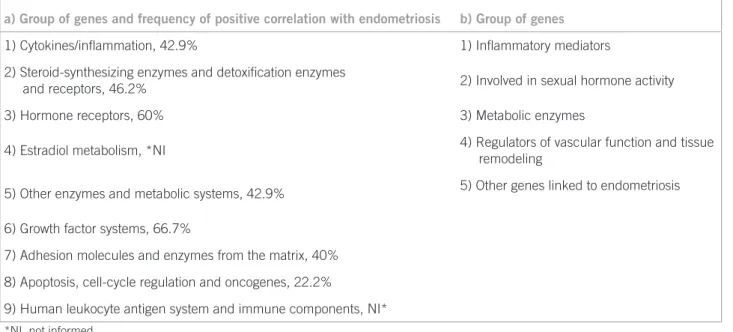
variants or single nucleotide polymorphisms (SNPs) sponsible for susceptibility to endometriosis has been re-searched in recent years19-21. Diferent classiications have
Box 1 – Classification of endometriosis susceptibility genes according to (a) Falconer et al.19 and (b) Tempfer et al.21
his bibliographic review presents a detailed descrip-tion of the contribudescrip-tion of genetic polymorphisms in genes regulating vascular function and tissue remodeling into the pathogenesis of endometriosis. Genes belonging to this category include: alpha 2-HS glycoprotein (AHSG), epidermal growth factor receptor (EGFR), vascular endo-thelial growth factor (VEGF), endostatin, plasminogen activator inhibitor 1 (PAI-1), angiotensin I-converting en-zyme (ACE), and matrix metalloproteinases (MMPs).
For this purpose, a bibliographic research was per-formed in PubMed, with no time limitation, using the fol-lowing terms (n = number of articles retrieved):
1 – endometriosis and AHSG polymorphisms (n = 1); 2 – endometriosis and EGFR polymorphisms (n = 2); 3 – endometriosis and VEGF polymorphisms (n = 19,
14 articles were selected for reading);
4 – endometriosis and endostatin polymorphisms (n = 1); 5 – endometriosis and PAI-1 polymorphisms (n = 6,
4 articles were selected for reading);
6 – endometriosis and ACE polymorphisms (n = 4); 7 – endometriosis and MMPs polymorphisms (n = 11,
9 articles were selected for reading).
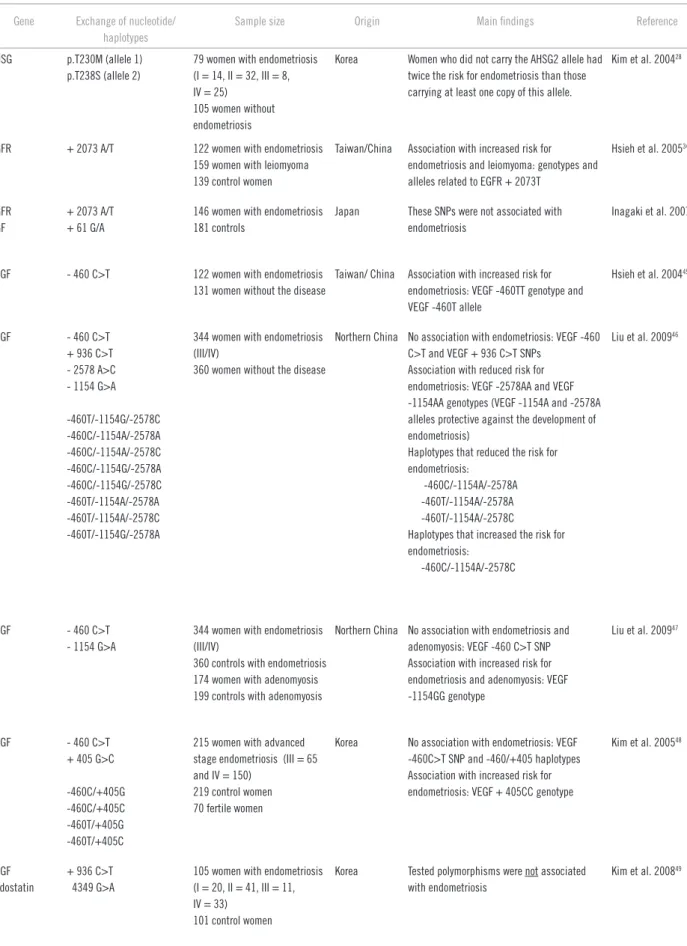
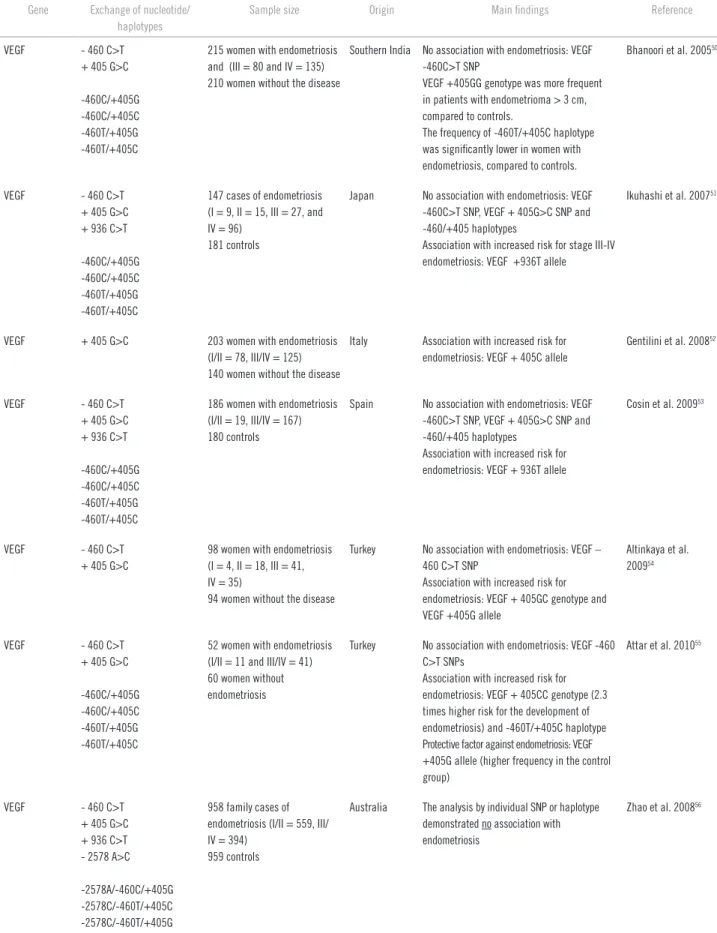
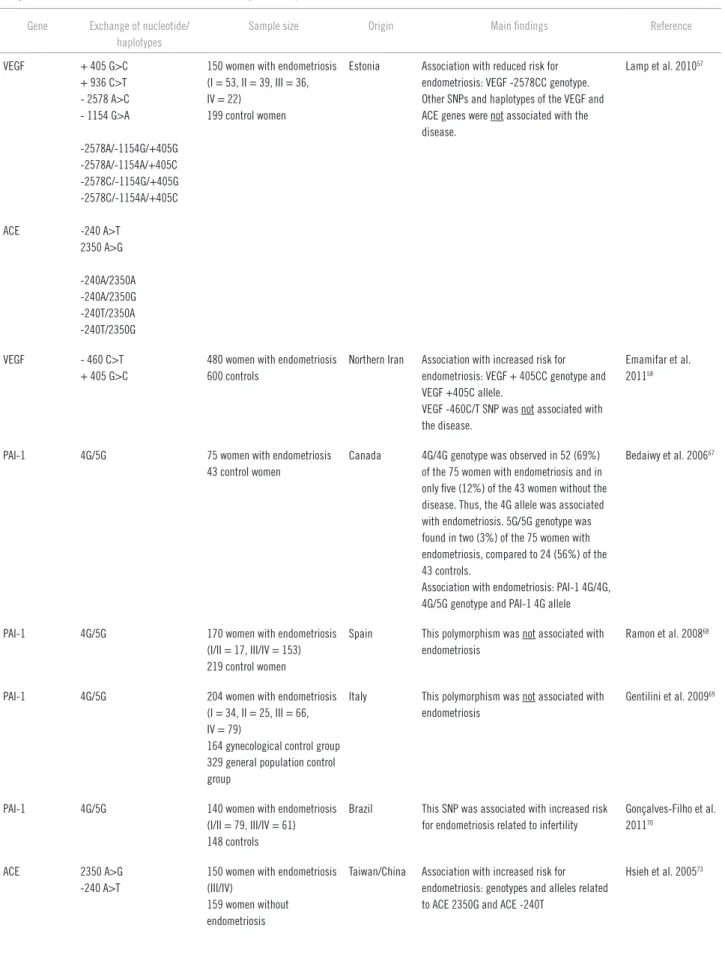
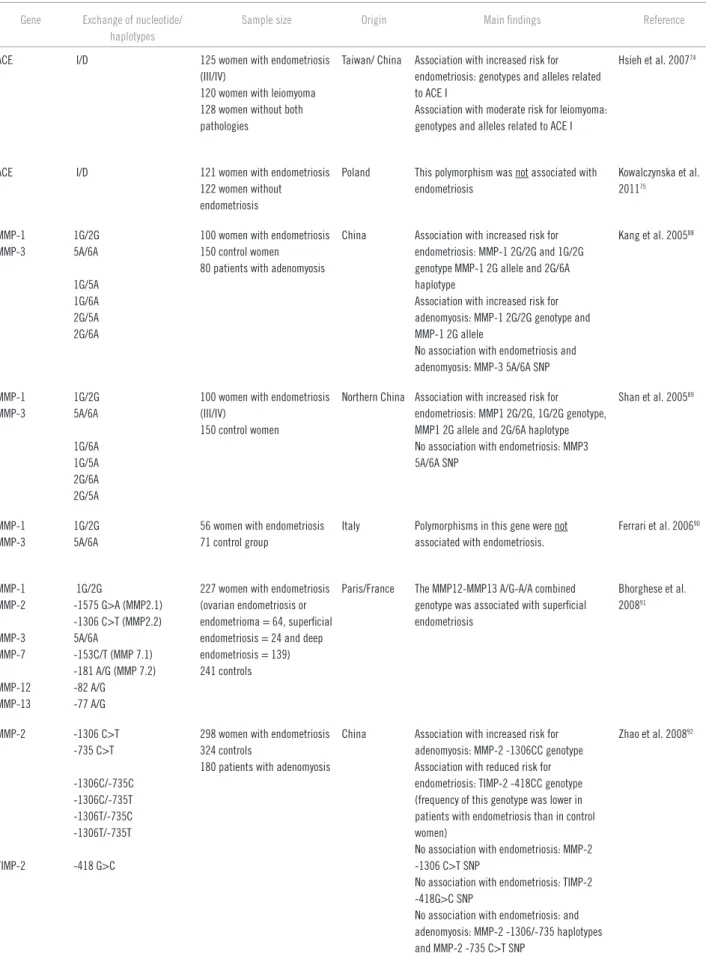
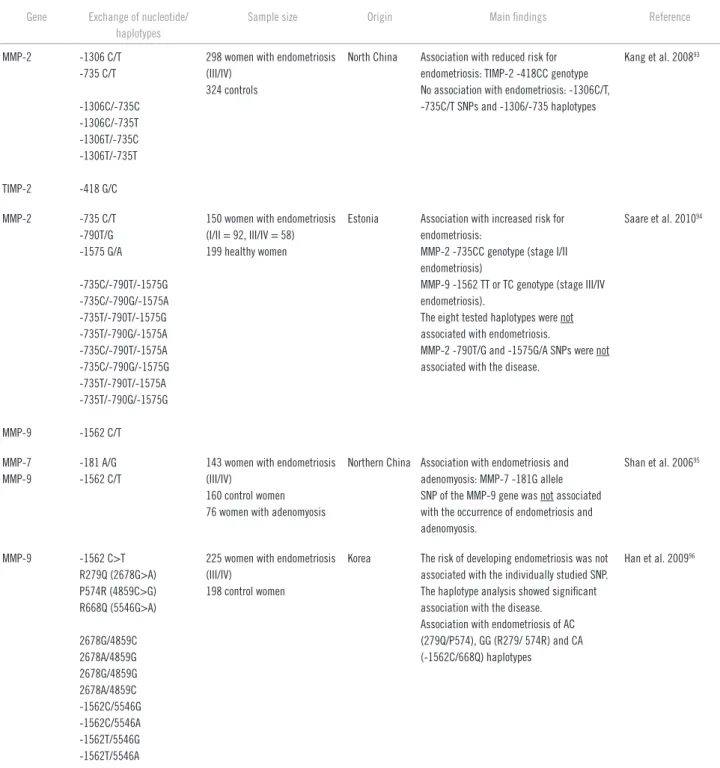
Articles were selected based on titles and summaries, and the full texts or summaries of those related to the topic were analyzed. An aggregate of 35 publications on poly-morphisms in these genes were included in this review. Table 1 summarizes the main results of these studies.
Excluded articles associated polymorphisms in these genes to other types of disease/sample (adenomyosis, pte-rygium, and placenta, n = 4), or endometriosis to poly-morphism in another gene (IL-10, n = 1), or were included in the review category (n = 3), or were published in Chi-nese and the abstract was not available (n = 1).
Articles addressing general information on endome-triosis or mentioned in the references of the studies re-trieved from PubMed were also researched due to their relevance to this review.
AHSG AND ENDOMETRIOSIS
The alpha-2 Heremans Schmid glycoprotein (AHSG) is a protein present in human plasma secreted by the liver. The AHSGgene appears in the endometrium of women with endometriosis, and these women showed high lev-els of AHSG in serum and peritoneal fluid, in addition to anti-AHSG antibodies22-24.
The AHSG gene is located at 3q27-2925 and consists
of seven exons and six introns26. Two polymorphisms,
termed AHSG1 and AHSG2, have been described and occur in exons 6 and 7, respectively. Allele 1 is charac-terized by a replacement of cytokine for thymine, i.e., the triplet ACG (threonine) at position 230 was modi-fied to ATG (methionine), resulting in the missense mutation p.T230M (rs4917). Allele 2 corresponds to a change from cytokine to guanine, with the respec-tive missense mutation at position 238 of the protein, from threonine (ACC) to serine (AGC), i.e., p.T238S (rs4918)27.
Considering the possibility of associating these SNPs to endometriosis, Kim et al.28 investigated these
polymorphisms in 79 Korean women with endometrio-sis and 105 women without the disease. They observed that those not carrying the AHSG2 allele had twice the risk of developing endometriosis than those with at least one copy of this allele, thus evidencing a positive association between endometriosis and polymorphisms in the AHSGgene in this population.
a) Group of genes and frequency of positive correlation with endometriosis b) Group of genes
1) Cytokines/inflammation, 42.9% 1) Inflammatory mediators
2) Steroid-synthesizing enzymes and detoxification enzymes
and receptors, 46.2% 2) Involved in sexual hormone activity
3) Hormone receptors, 60% 3) Metabolic enzymes
4) Estradiol metabolism, *NI 4) Regulators of vascular function and tissue
remodeling
5) Other enzymes and metabolic systems, 42.9% 5) Other genes linked to endometriosis
6) Growth factor systems, 66.7%
7) Adhesion molecules and enzymes from the matrix, 40%
8) Apoptosis, cell-cycle regulation and oncogenes, 22.2%
9) Human leukocyte antigen system and immune components, NI*
Table 1 – Summary of the articles that assessed polymorphisms in genes that regulate vascular function and tissue remodeling in endometriosis. In the sample size, women with endometriosis belonging to the study group followed the stage classification of the American Society for Reproductive Medicine – ASRM, 19968
(cont.) Gene Exchange of nucleotide/
haplotypes
Sample size Origin Main indings Reference
AHSG p.T230M (allele 1) p.T238S (allele 2)
79 women with endometriosis (I = 14, II = 32, III = 8, IV = 25)
105 women without endometriosis
Korea Women who did not carry the AHSG2 allele had twice the risk for endometriosis than those carrying at least one copy of this allele.
Kim et al. 200428
EGFR + 2073 A/T 122 women with endometriosis 159 women with leiomyoma 139 control women
Taiwan/China Association with increased risk for endometriosis and leiomyoma: genotypes and alleles related to EGFR + 2073T
Hsieh et al. 200534
EGFR EGF
+ 2073 A/T + 61 G/A
146 women with endometriosis 181 controls
Japan These SNPs were not associated with endometriosis
Inagaki et al. 200735
VEGF - 460 C>T 122 women with endometriosis 131 women without the disease
Taiwan/ China Association with increased risk for endometriosis: VEGF -460TT genotype and VEGF -460T allele
Hsieh et al. 200445
VEGF - 460 C>T + 936 C>T - 2578 A>C - 1154 G>A
-460T/-1154G/-2578C -460C/-1154A/-2578A -460C/-1154A/-2578C -460C/-1154G/-2578A -460C/-1154G/-2578C -460T/-1154A/-2578A -460T/-1154A/-2578C -460T/-1154G/-2578A
344 women with endometriosis (III/IV)
360 women without the disease
Northern China No association with endometriosis: VEGF -460 C>T and VEGF + 936 C>T SNPs
Association with reduced risk for endometriosis: VEGF -2578AA and VEGF -1154AA genotypes (VEGF -1154A and -2578A alleles protective against the development of endometriosis)
Haplotypes that reduced the risk for endometriosis:
-460C/-1154A/-2578A -460T/-1154A/-2578A -460T/-1154A/-2578C
Haplotypes that increased the risk for endometriosis:
-460C/-1154A/-2578C
Liu et al. 200946
VEGF - 460 C>T - 1154 G>A
344 women with endometriosis (III/IV)
360 controls with endometriosis 174 women with adenomyosis 199 controls with adenomyosis
Northern China No association with endometriosis and adenomyosis: VEGF -460 C>T SNP Association with increased risk for endometriosis and adenomyosis: VEGF -1154GG genotype
Liu et al. 200947
VEGF - 460 C>T + 405 G>C
-460C/+405G -460C/+405C -460T/+405G -460T/+405C
215 women with advanced stage endometriosis (III = 65 and IV = 150)
219 control women 70 fertile women
Korea No association with endometriosis: VEGF -460C>T SNP and -460/+405 haplotypes Association with increased risk for endometriosis: VEGF + 405CC genotype
Kim et al. 200548
VEGF endostatin
+ 936 C>T 4349 G>A
105 women with endometriosis (I = 20, II = 41, III = 11, IV = 33)
101 control women
Korea Tested polymorphisms were not associated with endometriosis
Table 1 – Summary of the articles that assessed polymorphisms in genes that regulate vascular function and tissue remodeling in endometriosis. In the sample size, women with endometriosis belonging to the study group followed the stage classification of the American Society for Reproductive Medicine – ASRM, 19968 (cont.)
(cont.) Gene Exchange of nucleotide/
haplotypes
Sample size Origin Main indings Reference
VEGF - 460 C>T + 405 G>C
-460C/+405G -460C/+405C -460T/+405G -460T/+405C
215 women with endometriosis and (III = 80 and IV = 135) 210 women without the disease
Southern India No association with endometriosis: VEGF -460C>T SNP
VEGF +405GG genotype was more frequent in patients with endometrioma > 3 cm, compared to controls.
The frequency of -460T/+405C haplotype was signiicantly lower in women with endometriosis, compared to controls.
Bhanoori et al. 200550
VEGF - 460 C>T + 405 G>C + 936 C>T
-460C/+405G -460C/+405C -460T/+405G -460T/+405C
147 cases of endometriosis (I = 9, II = 15, III = 27, and IV = 96)
181 controls
Japan No association with endometriosis: VEGF -460C>T SNP, VEGF + 405G>C SNP and -460/+405 haplotypes
Association with increased risk for stage III-IV endometriosis: VEGF +936T allele
Ikuhashi et al. 200751
VEGF + 405 G>C 203 women with endometriosis (I/II = 78, III/IV = 125) 140 women without the disease
Italy Association with increased risk for endometriosis: VEGF + 405C allele
Gentilini et al. 200852
VEGF - 460 C>T + 405 G>C + 936 C>T
-460C/+405G -460C/+405C -460T/+405G -460T/+405C
186 women with endometriosis (I/II = 19, III/IV = 167) 180 controls
Spain No association with endometriosis: VEGF -460C>T SNP, VEGF + 405G>C SNP and -460/+405 haplotypes
Association with increased risk for endometriosis: VEGF + 936T allele
Cosin et al. 200953
VEGF - 460 C>T + 405 G>C
98 women with endometriosis (I = 4, II = 18, III = 41, IV = 35)
94 women without the disease
Turkey No association with endometriosis: VEGF – 460 C>T SNP
Association with increased risk for endometriosis: VEGF + 405GC genotype and VEGF +405G allele
Altinkaya et al. 200954
VEGF - 460 C>T + 405 G>C
-460C/+405G -460C/+405C -460T/+405G -460T/+405C
52 women with endometriosis (I/II = 11 and III/IV = 41) 60 women without endometriosis
Turkey No association with endometriosis: VEGF -460 C>T SNPs
Association with increased risk for endometriosis: VEGF + 405CC genotype (2.3 times higher risk for the development of endometriosis) and -460T/+405C haplotype Protective factor against endometriosis: VEGF +405G allele (higher frequency in the control group)
Attar et al. 201055
VEGF - 460 C>T + 405 G>C + 936 C>T - 2578 A>C
-2578A/-460C/+405G -2578C/-460T/+405C -2578C/-460T/+405G
958 family cases of endometriosis (I/II = 559, III/ IV = 394)
959 controls
Australia The analysis by individual SNP or haplotype demonstrated no association with endometriosis
Table 1 – Summary of the articles that assessed polymorphisms in genes that regulate vascular function and tissue remodeling in endometriosis. In the sample size, women with endometriosis belonging to the study group followed the stage classification of the American Society for Reproductive Medicine – ASRM, 19968 (cont.)
(cont.) Gene Exchange of nucleotide/
haplotypes
Sample size Origin Main indings Reference
VEGF
ACE
+ 405 G>C + 936 C>T - 2578 A>C - 1154 G>A
-2578A/-1154G/+405G -2578A/-1154A/+405C -2578C/-1154G/+405G -2578C/-1154A/+405C
-240 A>T 2350 A>G
-240A/2350A -240A/2350G -240T/2350A -240T/2350G
150 women with endometriosis (I = 53, II = 39, III = 36, IV = 22)
199 control women
Estonia Association with reduced risk for endometriosis: VEGF -2578CC genotype. Other SNPs and haplotypes of the VEGF and ACE genes were not associated with the disease.
Lamp et al. 201057
VEGF - 460 C>T + 405 G>C
480 women with endometriosis 600 controls
Northern Iran Association with increased risk for endometriosis: VEGF + 405CC genotype and VEGF +405C allele.
VEGF -460C/T SNP was not associated with the disease.
Emamifar et al. 201158
PAI-1 4G/5G 75 women with endometriosis 43 control women
Canada 4G/4G genotype was observed in 52 (69%) of the 75 women with endometriosis and in only ive (12%) of the 43 women without the disease. Thus, the 4G allele was associated with endometriosis. 5G/5G genotype was found in two (3%) of the 75 women with endometriosis, compared to 24 (56%) of the 43 controls.
Association with endometriosis: PAI-1 4G/4G, 4G/5G genotype and PAI-1 4G allele
Bedaiwy et al. 200667
PAI-1 4G/5G 170 women with endometriosis (I/II = 17, III/IV = 153) 219 control women
Spain This polymorphism was not associated with endometriosis
Ramon et al. 200868
PAI-1 4G/5G 204 women with endometriosis (I = 34, II = 25, III = 66, IV = 79)
164 gynecological control group 329 general population control group
Italy This polymorphism was not associated with endometriosis
Gentilini et al. 200969
PAI-1 4G/5G 140 women with endometriosis (I/II = 79, III/IV = 61) 148 controls
Brazil This SNP was associated with increased risk for endometriosis related to infertility
Gonçalves-Filho et al. 201170
ACE 2350 A>G -240 A>T
150 women with endometriosis (III/IV)
159 women without endometriosis
Taiwan/China Association with increased risk for endometriosis: genotypes and alleles related to ACE 2350G and ACE -240T
Table 1 – Summary of the articles that assessed polymorphisms in genes that regulate vascular function and tissue remodeling in endometriosis. In the sample size, women with endometriosis belonging to the study group followed the stage classification of the American Society for Reproductive Medicine – ASRM, 19968 (cont.)
(cont.) Gene Exchange of nucleotide/
haplotypes
Sample size Origin Main indings Reference
ACE I/D 125 women with endometriosis (III/IV)
120 women with leiomyoma 128 women without both pathologies
Taiwan/ China Association with increased risk for endometriosis: genotypes and alleles related to ACE I
Association with moderate risk for leiomyoma: genotypes and alleles related to ACE I
Hsieh et al. 200774
ACE I/D 121 women with endometriosis 122 women without endometriosis
Poland This polymorphism was not associated with endometriosis
Kowalczynska et al. 201175
MMP-1 MMP-3
1G/2G 5A/6A
1G/5A 1G/6A 2G/5A 2G/6A
100 women with endometriosis 150 control women
80 patients with adenomyosis
China Association with increased risk for endometriosis: MMP-1 2G/2G and 1G/2G genotype MMP-1 2G allele and 2G/6A haplotype
Association with increased risk for adenomyosis: MMP-1 2G/2G genotype and MMP-1 2G allele
No association with endometriosis and adenomyosis: MMP-3 5A/6A SNP
Kang et al. 200588
MMP-1 MMP-3
1G/2G 5A/6A
1G/6A 1G/5A 2G/6A 2G/5A
100 women with endometriosis (III/IV)
150 control women
Northern China Association with increased risk for endometriosis: MMP1 2G/2G, 1G/2G genotype, MMP1 2G allele and 2G/6A haplotype No association with endometriosis: MMP3 5A/6A SNP
Shan et al. 200589
MMP-1 MMP-3
1G/2G 5A/6A
56 women with endometriosis 71 control group
Italy Polymorphisms in this gene were not associated with endometriosis.
Ferrari et al. 200690
MMP-1 MMP-2
MMP-3 MMP-7
MMP-12 MMP-13
1G/2G
-1575 G>A (MMP2.1) -1306 C>T (MMP2.2) 5A/6A
-153C/T (MMP 7.1) -181 A/G (MMP 7.2) -82 A/G
-77 A/G
227 women with endometriosis (ovarian endometriosis or endometrioma = 64, supericial endometriosis = 24 and deep endometriosis = 139) 241 controls
Paris/France The MMP12-MMP13 A/G-A/A combined genotype was associated with supericial endometriosis
Bhorghese et al. 200891
MMP-2
TIMP-2
-1306 C>T -735 C>T
-1306C/-735C -1306C/-735T -1306T/-735C -1306T/-735T
-418 G>C
298 women with endometriosis 324 controls
180 patients with adenomyosis
China Association with increased risk for adenomyosis: MMP-2 -1306CC genotype Association with reduced risk for endometriosis: TIMP-2 -418CC genotype (frequency of this genotype was lower in patients with endometriosis than in control women)
No association with endometriosis: MMP-2 -1306 C>T SNP
No association with endometriosis: TIMP-2 -418G>C SNP
No association with endometriosis: and adenomyosis: MMP-2 -1306/-735 haplotypes and MMP-2 -735 C>T SNP
Table 1 – Summary of the articles that assessed polymorphisms in genes that regulate vascular function and tissue remodeling in endometriosis. In the sample size, women with endometriosis belonging to the study group followed the stage classification of the American Society for Reproductive Medicine – ASRM, 19968 (cont.)
EGFR, VEGF, ENDOSTATINAND ENDOMETRIOSIS
Endometriosis shows characteristics similar to neoplasias, such as invasiveness and neovascularization, the latter considered an important phenomenon for the implanta-tion of endometrial cells in ectopic sites. hus, growth and other angiogenic factors, such as the VEGF and EGFR, could be related to the development of endometriosis29-32.
EGFR is a transmembrane glycoprotein that plays im-portant roles in controlling cell growth, diferentiation,
and motility. he EGFR gene is located at 7p12 and a poly-morphism characterized by exchange of base A for T at position 2073 of exon 21 has been observed33. his
modi-ication changes the stop codon (TGA) by synthesis of the amino acid cysteine (TGT). Aiming at assessing whether the EGFR +2073A/T SNP could be used as a susceptibility lag for endometriosis, Hsieh et al. assessed 122 Taiwanese women with this pathology and 139 controls, and associ-ated the TT and AT genotypes and the T allele to high risk Gene Exchange of nucleotide/
haplotypes
Sample size Origin Main indings Reference
MMP-2
TIMP-2
-1306 C/T -735 C/T
-1306C/-735C -1306C/-735T -1306T/-735C -1306T/-735T
-418 G/C
298 women with endometriosis (III/IV)
324 controls
North China Association with reduced risk for endometriosis: TIMP-2 -418CC genotype No association with endometriosis: -1306C/T, -735C/T SNPs and -1306/-735 haplotypes
Kang et al. 200893
MMP-2
MMP-9
-735 C/T -790T/G -1575 G/A
-735C/-790T/-1575G -735C/-790G/-1575A -735T/-790T/-1575G -735T/-790G/-1575A -735C/-790T/-1575A -735C/-790G/-1575G -735T/-790T/-1575A -735T/-790G/-1575G
-1562 C/T
150 women with endometriosis (I/II = 92, III/IV = 58) 199 healthy women
Estonia Association with increased risk for endometriosis:
MMP-2 -735CC genotype (stage I/II endometriosis)
MMP-9 -1562 TT or TC genotype (stage III/IV endometriosis).
The eight tested haplotypes were not associated with endometriosis.
MMP-2 -790T/G and -1575G/A SNPs were not associated with the disease.
Saare et al. 201094
MMP-7 MMP-9
-181 A/G -1562 C/T
143 women with endometriosis (III/IV)
160 control women 76 women with adenomyosis
Northern China Association with endometriosis and adenomyosis: MMP-7 -181G allele SNP of the MMP-9 gene was not associated with the occurrence of endometriosis and adenomyosis.
Shan et al. 200695
MMP-9 -1562 C>T R279Q (2678G>A) P574R (4859C>G) R668Q (5546G>A)
2678G/4859C 2678A/4859G 2678G/4859G 2678A/4859C -1562C/5546G -1562C/5546A -1562T/5546G -1562T/5546A
225 women with endometriosis (III/IV)
198 control women
Korea The risk of developing endometriosis was not associated with the individually studied SNP. The haplotype analysis showed signiicant association with the disease.
Association with endometriosis of AC (279Q/P574), GG (R279/ 574R) and CA (-1562C/668Q) haplotypes
for the disease34. However, subsequent studies did not
as-sociate this SNP to endometriosis in Japanese people35.
VEGF induces endothelial cell proliferation, migra-tion, diferentiamigra-tion, and formation of capillaries, which contribute to the pathogenesis and progression of endo-metriosis. Additionally, studies have shown high levels of VEGF in the peritoneal luid, serum, mRNA expression, and proteins of patients with endometriosis36-42. hese
data reinforce the role of VEGF in the pathogenesis of endometriosis.
he VEGFgeneis located at 6p21.343, consists of eight
exons, and shows alternative splicing, which is respon-sible for forming several proteins. At least 30 SNPs were described in this gene44. In order to determine a genetic
predisposition to endometriosis, some studies were devel-oped to investigate polymorphisms of the VEGF gene in women with endometriosis. hese studies were conducted in China45-47, Korea48,49, India50, Japan51, Italy52, Spain53,
Turkey54,55, Australia56, Estonia57, and Iran58. Assessed SNPs
were –460 C/T (rs833061), +405 G/C (also known as -634 G/C, rs2010963), +936 C/T (rs3025039), -1154 G/A (rs1570360), and -2578 A/C (rs699947).
–460 C/T polymorphism was researched in several studies45-48,50,51,53-56,58. Only the study of Hsieh et al.45
as-sociated the TT genotype and T allele to high risk for endometriosis.
With respect to +405 G/C polymorphism, no associa-tion between this SNP and endometriosis was reported by Ikuhashi et al.51, Zhao et al.56, Cosin et al.53, and Lamp et
al.57, but a signiicant association was reported in six other
studies48,50,52,54,55,58. However, these studies showed
conlict-ing results regardconlict-ing the relation between genotypes and alleles and endometriosis. Considering genotype and al-lele, Kim et al.48, Gentilini et al.52, Attar et al.55, and
Emami-far et al.58 associated +405 CC and therefore the C allele, to
endometriosis; Bhanoori et al.50 and Altinkaya et al.54
re-lated the +405 GG and +405 GC genotypes to the disease, respectively. hus, some works associated the C allele with endometriosis48,52,55,58, while other works associated the G
allele50,54 with the disease. A positive association between
endometriosis and SNP at position 405 became evident, suggesting an efective contribution of such polymor-phism to the pathogenesis of endometriosis. he discrep-ancy regarding the results of analysis of +405 G/C VEGF SNP among the published works could be explained by the diferent populations studied, whose ethnic diferences would explain the causes of these conlicting indings.
he studies by Ikushashi et al.51 and Cosin et al.53
inves-tigated the same polymorphisms (-460 C/T, +405 G/C and +936 C/T) in populations with diferent ethnic origins. Both reported a positive association with respect to VEGF 936 T allele in women with endometriosis, while other au-thors46,49,56,57 did not conirm this association.
-1154 G/A polymorphism was assessed by Liu et al.46,47
and by Lamp et al.57. Studies by the same group of
research-ers46,47 showed diferent results, as the AA genotype was
as-sociated with reduced risk for endometriosis46, and the GG
genotype was associated with high risk for the disease47.
Diferent alleles of the -2578 C/A SNP were associated with reduced risk for endometriosis. he A allele of this poly-morphism was reported to be protective in relation to the development of endometriosis46; Lamp et al.57 associated
this protection with the C allele. his polymorphism was not associated with endometriosis in a study by Zhao et al.56.
he study by Zhao et al.56 that assessed VEGF -460
C/T, +405 G/C, -2578 A/C, and +936 C/T SNPs (the latter also investigated by Kim et al.49), was the only study that
did not associate these SNPs with endometriosis. Despite the conlicting results regarding some SNPs, at least one polymorphism was associated with endometriosis in the abovementioned works.
he 4349 G/A polymorphism of the endostatin gene was assessed by Kim et al.49. Endostatin is a speciic
endog-enous anti-angiogenic factor derived from the proteolysis of type XVIII collagen, and it induces inhibition of endo-thelial cell proliferation, migration, and apoptosis. Studies have demonstrated the role of endostatin in endometriotic lesions in animal models59,60. his SNP was not related to
endometriosis, but the endostatin level in serum was nega-tively correlated with the development of this disease49.
In addition to the individual analysis of the VEGF gene per SNP, some studies carried out the research per haplotypes. he -460/+405 haplotype was not associated with endometriosis in the studies by Kim et al.48,
Ikush-ashi et al.51, and Cosin et al.53. he -460T/+405C haplotype
showed lower frequency in women with endometriosis50;
in another study, it was associated with high risk for this disease55. Other haplotypes not related to endometriosis
were -2578/-460/+40556 and -2578/-1154/+40557.
-460C/-1154A/-2578A, -460C/-1154A/-2578A, and -460T/-1154A/-2578C haplotypes were associated with reduced risk for endometriosis, while -460C/-1154A/-2578C was associated with high risk for the disease46. herefore, only
eight out of 14 studies that assessed the VEGF gene per-formed analyses per haplotype, with result of positive as-sociation with endometriosis in only three studies.
PAI-1 ANDENDOMETRIOSIS
he plasminogen activation system includes plasminogen activators and their inhibitors, which are involved in tis-sue degradation and remodeling under normal and patho-logical conditions. Two plasminogen activator inhibitors (PAIs), termed PAI-1 and PAI-2, regulate the plasminogen activation system61,62. he main PAI is PAI-1, also known
he PAI-1 gene, whose oicial symbol is SERPINE1, is located at 7q21.3-q22 and contains 9 exons. A guanine (G) insertion/deletion polymorphism in the promoter re-gion of the PAI-1gene at position -675, termed 4G/5G, has been described and is involved in regulating the syn-thesis of this inhibitor. In vitro studies have showed that
the 4G allele is associated with increased gene expression from its binding to an activator protein, while the 5G allele contains an additional binding site for the DNA-binding protein acting as a transcriptional repressor64-66.
Four studies were performed in women with endo-metriosis from Canada67, Spain68, Italy69, and Brazil70. A
positive association for PAI-1 4G/5G SNP was reported by Bedaiwy et al.67 and Gonçalves-Filho et al.70. According to
Bedaiwy et al., patients with 4G/5G and 4G/4G genotypes are 38 and 441 times more likely to have endometriosis than those with a 5G/5G genotype, respectively67. In this
study, 118 women were assessed (75 with endometriosis and 43 controls) and the 4G allele frequency was signii-cantly higher in those with endometriosis. Nonetheless, these indings were not replicated in two studies involv-ing a large number of patients and controls, one with 389 women (170 with endometriosis and 219 controls)68, and
the other with 204 women with endometriosis and 164 controls69. herefore, according to studies of Ramon et al.68
and Gentilini et al.69, the predisposition to endometriosis
did not involve the 4G/5G PAI-1 polymorphism.
ACE ANDENDOMETRIOSIS
he ACE catalyzes the conversion of angiotensin I to angiotensin II, a potent vasoconstrictor. hus, ACE ac-tivity is associated with angiogenesis, which plays a key role in the pathogenesis of endometriosis. he presence of angiotensin receptors in the endometrial tissue has been demonstrated. Angiotensin II in endometrial stro-mal cells was mediated via angiotensin I receptors71, and
could increase the intracellular calcium concentration by interaction with the angiotensin receptor in endome-trial stromal cells72. hese indings suggest a contribution
of ACE to the development of endometriosis and the endometrium.
he ACE gene is located at 17q23.3 and three SNPs were assessed to verify association with endometriosis: -240 A/T (promoter region – rs4291), 2350 A/G (altera-tion in exon 17, hr776hr – rs4343), and one inser(altera-tion/ deletion (I/D) of one Alu sequence (287 pb) in intron 16.
Hsieh et al.73 and Lamp et al.57 investigated
polymor-phisms at position 240 and 2350 and found conlicting results. In 2005, Hsieh et al. assessed 150 women with endometriosis and 159 controls from Taiwan/China73.
hey observed that genotypes and alleles related to ACE 2350G (heterozygous AG, homozygous GG, and G allele) and ACE-240T (heterozygous AT, homozygous TT, and
T allele) were associated with high susceptibility to en-dometriosis in this population. However, in 2010, Lamp et al. did not identify an association between these two SNPs and endometriosis in 150 women with endome-triosis and 199 controls from Estonia57. hese same
re-searchers investigated -240/2350 haplotypes and did not associate them with endometriosis.
Regarding polymorphism in the ACE I/D gene, the genotypes and alleles related to the ACE I were strongly associated with endometriosis in 125 patients with en-dometriosis and 128 controls74. However, Kowalczynska
et al.75 investigated this same SNP in 121 women with
endometriosis and 122 without endometriosis, and did not associate it to the disease. herefore, only studies in Taiwanese/Chinese subjects73,74 have demonstrated
positive associations of the ACE polymorphism at posi-tion 2350, 240, and ACE I/D with endometriosis. When such polymorphisms are assessed in people of other eth-nic origins, the results of positive association were not conirmed57,75.
MMPSANDENDOMETRIOSIS
MMPs belong to a large group of 23 proteases that regulate tissue remodeling by degrading the structural components of the extracellular matrix (ECM). MMPs also control ba-sic cellular functions (proliferation, diferentiation, mo-tility, apoptosis), as they regulate the ECM proteins that interact with cells76.
High levels of MMPs were found in ectopic endo-metrium when compared to eutopic endoendo-metrium in women with endometriosis. herefore, the overexpres-sion of MMPs may contribute to the development of endometriosis77-84.
Genetic polymorphisms located in the promoter re-gion of the MMPs genes could increase the levels of gene expression, and may be associated with genetic predisposi-tion to various diseases85-87.
hus, polymorphisms in the MMP-188-91,
MMP-291-94, MMP-388-91, MMP-791,95, MMP-994-96, MMP-1291,
MMP-1391, and TIMP-292,93 genes were investigated to
verify whether they contribute to the development of endometriosis.
An I/D of guanine in the promoter region of the MMP1 (-1607 1G/2G) (rs112925) gene was associated with increased risk for endometriosis in Chinese women according to Kang et al.88 and Shan et al.89. Both studies
showed a role of the 2G allele in the pathogenesis of endo-metriosis in 100 women with endoendo-metriosis and 150 con-trols. Polymorphisms in this gene were not associated with endometriosis in Italian90 and French91 women.
(rs243866). -735 C/T polymorphism was investigated by Zhao et al.92, Kang et al.93, and Saare et al.94. Only in the
study of Saare et al. was the -735CC genotype associated with increased risk for stage I-II endometriosis94. he
-790 T/G SNP investigated by Saare et al.94; the -1306 C/T
investigated by Zhao et al.92, Kang et al.93, and Bhorghese
et al.91; and the -1575 G/A analyzed by Bhorghese et al.91
and Saare et al.94 showed no signiicant association with
endometriosis.
No association with endometriosis was reported for the -1612 5A/6A and -1171 5A/6A SNPs of the MMP-3 gene88-91.
1G/6A, 1G/5A, 2G/6A, and 2G/5A haplotypes related to the MMP-1 and MMP-3 genes were investigated by Kang et al.88 and Shan et al.89. In both studies, the 2G/6A
haplotype was associated with increased risk for endome-triosis. For the -1306/-735 and -735/-790/-1575 haplotypes of the MMP-2 gene, no association with endometriosis was reported by Zhao et al92, Kang et al.93, and Saare et al.94.
Two polymorphisms in the promoter region of the MMP-7 gene (-153 C/T and -181 A/G) were investigated for association with endometriosis91,95. Only the G allele
of -the 181 A/G (rs1799750) SNP was associated with in-creased risk for endometriosis and adenomyosis in Chi-nese women95.
R279Q (2678G>A), P574R (4859C>G), R668Q (5546G>A), and -1562 C>T (rs3918242) polymorphisms of the MMP-9 gene were investigated by Han et al.96 and,
in the analysis of individual SNP, showed no association with endometriosis. However, the AC (279Q/P574), GG (R279/574R) and CA (-1562C/668Q) haplotypes were sig-niicantly associated with endometriosis. In his research, Han et al.96 concluded that haplotype analysis of the
MMP-9 gene was more informative than individual polymor-phism analysis. Regarding the -1562 C> T SNP that had been previously investigated by Shan et al.95, the result was
consistent with the study of Han et al.82. However, a study
by Saare et al.94 showed that the -1562 TT and TC
geno-types of the MMP-9 gene were associated with advanced stage endometriosis (III-IV).
he MMP-12 – MMP-13 A/GA/A combined genotype of MMP-12 and MMP-13 genes contributed to the devel-opment of supericial endometriosis in French women91.
Regarding the -418 G/C SNP of the TIMP-2 gene, the -418CC genotype was associated with reduced risk for en-dometriosis in the two studies92,93, and the C allele was a
protective factor against the development of endometrio-sis in Chinese women.
Regarding haplotype analysis, of nine studies on MMP genes, six assessed haplotypes, and a positive association between endometriosis and the haplotypes of MMP-1, 3, and 988,89,96 genes was reported, as well as a negative
asso-ciation for haplotypes of the MMP-292-94 gene.
FINALCONSIDERATIONS
In this review, a detailed description of the contribution of genetic polymorphisms in genes that regulate vascular function and tissue remodeling into the pathogenesis of endometriosis has been presented. Some polymorphisms of the VEGF (-460 C/T, +405 G/C, +936 C/T), PAI, MMP-1, 2, and 3 genes have been widely studied, while others of the AHSG, EGF, endostatin, and VEGF (-1154 G/A, -2578 A/C) genes were not. In the latter case, additional stud-ies are required to conirm the indings by the few studstud-ies that have analyzed these SNPs. Additionally, studies that found a positive or negative association of SNP with endo-metriosis emphasize the relevance of studies with a large number of control cases to conirm their indings. Hap-lotype analysis was carried out only for the VEGF (-460, +405, -1154 and -2578), ACE (-240/2350) and MMP-1, 2, 3 and 9 genes, and in most studies, there was no asso-ciation with endometriosis. Of the eight studies that ana-lyzed haplotypes of the VEGF gene, ive did not associate them with endometriosis. Haplotypes of ACE and MMP-2 genes were not associated with endometriosis, while those of MMP-1, 3, and 9 genes were related to a high risk for the disease. It is worth highlighting that studies involving polymorphisms are complex, since a genetic association, although valid for a speciic ethnic population, may not be relevant to individuals of another ethnicity.
REFERENCES
1. Giudice LC, Kao LC. Endometriosis. Lancet. 2004;364(9447):1789-99. 2. Bulun SE. Endometriosis. N Engl J Med. 2009;360(3):268-79.
3. Bellelis P, Dias JA Jr, Podgaec S, Gonzales M, Baracat EC, Abrão MS. Epide-miological and clinical aspects of pelvic endometriosis–a case series. Rev As-soc Med Bras. 2010;56(4):467-71.
4. Petta CA, Matos AM, Bahamondes L, Faúndes D. Current practice in the man-agement of symptoms of endometriosis: a survey of Brazilian gynecologists. Rev Assoc Med Bras. 2007;53(6):525-9.
5. Baldi A, Campioni M, Signorile PG. Endometriosis: pathogenesis, diagnosis, therapy and association with cancer (review). Oncol Rep. 2008;19(4):843-6. 6. Bassi MA, Podgaec S, Dias Júnior JA, Sobrado CW, D Amico Filho N,
Abrão MS. Bowel endometriosis: a benign disease?. Rev Assoc Med Bras. 2009;55(5):611-6.
7. Nácul AP, Spritzer PM. Current aspects on diagnosis and treatment of endo-metriosis. Rev Bras Ginecol Obstet. 2010;32(6):298-307.
8. Revised American Society for Reproductive Medicine classiication of endo-metriosis: 1996. Fertil Steril. 1997;67(5):817-21.
9. Mathur SP. Autoimmunity in endometriosis: relevance to infertility. Am J Re-prod Immunol. 2000;44(2):89-95.
10. Berkkanoglu M, Arici A. Immunology and endometriosis. Am J Reprod Im-munol. 2003;50(1):48-59.
11. Bellelis P, Podgaec S, Abrão MS. Environmental factors and endometriosis. Rev Assoc Med Bras. 2011;57(4):448-52.
12. Zondervan KT, Cardon LR, Kennedy SH. he genetic basis of endometriosis. Curr Opin Obstet Gynecol. 2001;13(3):309-14.
13. Bischof F, Simpson JL. Genetic basis of endometriosis. Ann N Y Acad Sci. 2004;1034:284-99.
14. Simpson JL, Bischof FZ, Kamat A, Buster JE, Carson SA. Genetics of endome-triosis. Obstet Gynecol Clin North Am. 2003;30(1):21-40.
15. Harada T, Iwabe T, Terakawa N. Role of cytokines in endometriosis. Fertil Steril. 2001;76(1):1-10.
16. Podgaec S, Abrao MS, Dias Jr JA, Rizzo LV, Oliveira RM, Baracat EC. Endo-metriosis: an inlammatory disease with a h2 immune response component. Hum Reprod. 2007;22(5):1373-9.
18. Podgaec S, Dias Junior JA, Chapron C, Oliveira RM, Baracat EC, Abrão MS. h1 and h2 immune responses related to pelvic endometriosis. Rev Assoc Med Bras. 2010;56(1):92-8.
19. Falconer H, D’Hooghe T, Fried G. Endometriosis and genetic polymorphisms. Obstet Gynecol Surv. 2007;62(9):616-28.
20. Montgomery GW, Nyholt DR, Zhao ZZ, Treloar SA, Painter JN, Missmer SA, et al. he search for genes contributing to endometriosis risk. Hum Reprod Update. 2008;14(5):447-57.
21. Tempfer CB, Simoni M, Destenaves B, Fauser BC. Functional genetic poly-morphisms and female reproductive disorders: part II - endometriosis. Hum Reprod Update. 2009;15(1):97-118.
22. Pillai S, Zhou GX, Arnaud P, Jiang H, Butler WJ, Zhang H. Antibodies to en-dometrial transferrin and alpha 2-Heremans Schmidt (HS) glycoprotein in patients with endometriosis. Am J Reprod Immunol. 1996;35(5):483-94. 23. Mathur SP, Holt VL, Lee JH, Jiang H, Rust PF. Levels of antibodies to
transfer-rin and alpha 2-HS glycoprotein in women with and without endometriosis. Am J Reprod Immunol. 1998;40(2):69-73.
24. Mathur SP, Lee JH, Jiang H, Arnaud P, Rust PF. Levels of transferring and alpha2-HS glycoprotein in women with and without endometriosis. Autoim-munity. 1999;29(2):121-7.
25. Magnuson VL, McCombs JL, Lee CC, Yang F, Bowman BH, McGill JR. Hu-man alpha 2-HS-glycoprotein localized to 3q27–q29 by in situ hybridization. Cytogenet Cell Genet.1988;47(1-2):72-4.
26. Osawa M, Umetsu K, Sato M, Ohki T, Yukawa N, Suzuki T et al. Struc-ture of the gene encoding human alpha 2-HS glycoprotein (AHSG). Gene. 1997;196(1-2):121-5.
27. Osawa M, Umetsu K, Ohki T, Nagasawa T, Suzuki T, Takeichi S. Molecular evidence for human alpha 2-HS glycoprotein (AHSG) polymorphism. Hum Genet. 1997;99(1):18-21.
28. Kim JG, Kim H, Ku SY, Kim SH, Choi YM, Moon SY. Association between human alpha 2-Heremans Schmidt glycoprotein (AHSG) polymorphism and endometriosis in Korean women. Fertil Steril. 2004;82(6):1497-500. 29. Deguchi M, Ishiko O, Sumi T, Yoshida H, Yamamoto K, Ogita S. Expression of
angiogenic factors in extrapelvic endometriosis. Oncol Rep. 2001;8(6):1317–9. 30. Taylor RN, Lebovic DI, Mueller MD. Angiogenic factors in endometriosis.
Ann NY Acad Sci. 2002;955:89-100; discussion 118, 396-406.
31. May K, Becker CM. Endometriosis and angiogenesis. Minerva Ginecol. 2008;60(3):245-54.
32. García Manero M, Olartecoechea B, Aubá M, Alcázar JL, López G. Angiogen-esis and endometriosis. Rev Med Univ Navarra. 2009;53(2):8-13.
33. Shintani S, Matsuo K, Crohin CC, McBride J, Tsuji T, Donof RB, et al. Intragen-ic mutation analysis of the human epidermal growth factor receptor (EGFR) gene in malignant human oral keratinocytes. Cancer Res 1999;59(16):4142-7. 34. Hsieh YY, Chang CC, Tsai FJ, Lin CC, Tsai CH. T homozygote and allele of epider-mal growth factor receptor 2073 gene polymorphism are associated with higher susceptibility to endometriosis and leiomyomas. Fertil Steril. 2005;83(3):796-9. 35. Inagaki M, Yoshida S, Kennedy S, Takemura N, Deguchi M, Ohara N, et al.
Association study between epidermal growth factor receptor and epidermal growth factor polymorphisms and endometriosis in a Japanese population. Gynecol Endocrinol. 2007;23(8):474-8.
36. McLaren J, Prentice A, Charnock-Jones DS, Smith SK. Vascular endothelial growth factor (VEGF) concentrations are elevated in peritoneal luid of wom-en with wom-endometriosis. Hum Reprod. 1996;11(1):220-3.
37. Donnez J, Smoes P, Gillerot S, Casanas-Roux F, Nisolle M. Vascular endothelial growth factor (VEGF) in endometriosis. Hum Reprod. 1998;13(6):1686-90. 38. Mahnke JL, Dawood MY, Huang JC. Vascular endothelial growth factor and
interleukin-6 in peritoneal luid of women with endometriosis. Fertil Steril. 2000;73(1):166-70.
39. Tan XJ, Lang JH, Liu DY, Shen K, Leng JH, Zhu L. Expression of vascular en-dothelial growth factor and thrombospondin-1 mRNA in patients with endo-metriosis. Fertil Steril. 2002;78(1):148-53.
40. Matalliotakis IM, Goumenou AG, Koumantakis GE, Neonaki MA, Koumantakis EE, Dionyssopoulou E, et al. Serum concentrations of growth factors in women with and without endometriosis: the action of anti-endome-triosis medicines. Int Immunopharmacol. 2003;3(1):81-9.
41. Gilabert-Estellés J, Ramón LA, España F, Gilabert J, Vila V, Réganon E, et al. Expression of angiogenic factors in endometriosis: relationship to ibrinolytic and metalloproteinase systems. Hum Reprod. 2007;22(8):2120-7.
42. Pupo-Nogueira A, de Oliveira RM, Petta CA, Podgaec S, Dias JA Jr, Abrao MS. Vascular endothelial growth factor concentrations in the serum and peritoneal luid of women with endometriosis. Int J Gynaecol Obstet. 2007;99(1):33-7.
43. Vincenti V, Cassano C, Rocchi M, Persico G. Assignment of the vascular endothelial growth factor gene to human chromosome 6p21.3. Circulation. 1996;93(8):1493-5.
44. Watson CJ, Webb NJ, Bottomley MJ, Brenchley PE. Identiication of polymor-phisms within the vascular endothelial growth factor (VEGF) gene: correla-tion with variacorrela-tion in VEGF protein produccorrela-tion. Cytokine. 2000;12(8):1232-5. 45. Hsieh YY, Chang CC, Tsai FJ, Yeh LS, Lin CC, Peng CT. T allele for VEGF
gene-460 polymorphism at the 5’-untranslated region: association with a higher susceptibility to endometriosis. J Reprod Med. 2004;49(6):468-72.
46. Liu Q, Li Y, Zhao J, Sun DL, Duan YN, Wang N, et al. Association of poly-morphisms -1154G/A and -2578C/A in the vascular endothelial growth factor gene with decreased risk of endometriosis in Chinese women. Hum Reprod. 2009;24(10):2660-6.
47. Liu Q, Li Y, Zhao J, Zhou RM, Wang N, Sun DL, et al. Association of single nucleotide polymorphisms in VEGF gene with the risk of endometriosis and adenomyosis. Zhonghua Yi Xue Yi Chuan Xue Za Zhi. 2009;26(2):165-9. 48. Kim SH, Choi YM, Choung SH, Jun JK, Kim JG, Moon SY. Vascular
endothe-lial growth factor gene +405 C/G polymorphism is associated with susceptibil-ity to advanced stage endometriosis. Hum Reprod. 2005;20(10):2904-8. 49. Kim JG, Kim JY, Jee BC, Suh CS, Kim SH, Choi YM. Association between
endo-metriosis and polymorphisms in endostatin and vascular endothelial growth factor and their serum levels in Korean women. Fertil Steril. 2008;89(1):243-5. 50. Bhanoori M, Arvind Babu K, Pavankumar Reddy NG, Lakshmi Rao K,
Zondervan K, Deenadayal M, et al. he vascular endothelial growth factor (VEGF) +405G>C 5’-untranslated region polymorphism and increased risk of endometriosis in South Indian women: a case control study. Hum Reprod. 2005;20(7):1844-9.
51. Ikuhashi Y, Yoshida S, Kennedy S, Zondervan K, Takemura N, Deguchi M, et al. Vascular endothelial growth factor +936 C/T polymorphism is associated with an increased risk of endometriosis in a Japanese population. Acta Obstet Gynecol Scand. 2007;86(11):1352-8.
52. Gentilini D, Somigliana E, Vigano P, Vignali M, Busacca M, Di Blasio AM. he vascular endothelial growth factor +405G>C polymorphism in endometriosis. Hum Reprod. 2008;23(1):211-5.
53. Cosín R, Gilabert-Estellés J, Ramón LA, España F, Gilabert J, Romeu A, et al. Vascular endothelial growth factor polymorphisms (-460C/T, +405G/C, and 936C/T) and endometriosis: their inluence on vascular endothelial growth factor expression. Fertil Steril. 2009;92(4):1214-20.
54. Altinkaya SO, Ugur M, Ceylaner G, Ozat M, Gungor T, Ceylaner S. Vascular endothelial growth factor +405 C/G polymorphism is highly associated with an increased risk of endometriosis in Turkish women. Arch Gynecol Obstet. 2011 Feb;283(2):267-72.
55. Attar R, Agachan B, Kuran SB, Toptas B, Eraltan IY, Attar E, et al. Genetic variants of vascular endothelial growth factor and risk for the development of endometriosis. In Vivo. 2010;24(3):297-301.
56. Zhao ZZ, Nyholt DR, homas S, Treloar SA, Montgomery GW. Polymor-phisms in the vascular endothelial growth factor gene and the risk of familial endometriosis. Mol Hum Reprod. 2008;14(9):531-8.
57. Lamp M, Saare M, Laisk T, Karro H, Kadastik U, Metspalu A, et al. Genetic variations in vascular endothelial growth factor but not in angiotensin I-con-verting enzyme genes are associated with endometriosis in Estonian women. Eur J Obstet Gynecol Reprod Biol. 2010;153(1):85-9.
58. Emamifar B, Salehi Z, Mehrafza M, Mashayekhi F. he vascular endothelial growth factor (VEGF) polymorphisms and the risk of endometriosis in north-ern Iran. Gynecol Endocrinol. 2012;28(6):447-60.
59. Becker CM, Sampson DA, Rupnick MA, Rohan RM, Efstathiou JA, Short SM, et al. Endostatin inhibits the growth of endometriotic lesions but does not af-fect fertility. Fertil Steril. 2005;84(Suppl 2):1144-55.
60. Becker CM, Sampson DA, Short SM, Javaherian K, Folkman J, D’Amato RJ. Short synthetic endostatin peptides inhibit endothelial migration in vitro and endometriosis in a mouse model. Fertil Steril. 2006;85(1):71-7.
61. Lijnen HR. Pathophysiology of the plasminogen/plasmin system. Int J Clin Lab Res 1996;26(1):1-6.
62. Gilabert-Estelles J, Castello R, Gilabert J, Ramon LA, Espana F, Romeu A, et al. Plasminogen activators and plasminogen activator inhibitors in endometrio-sis. Front Biosci. 2005;10:1162-76.
63. Harbeck N, Krüger A, Sinz S, Kates RE, homssen C, Schmitt M, et al. Clinical relevance of the plasminogen activator inhibitor type 1--a multifaceted proteo-lytic factor. Onkologie. 2001;24(3):238-44.
64. Dawson SJ, Wiman B, Hamsten A, Green F, Humphries S, Henney AM. he two allele sequences of a common polymorphism in the promoter of the plas-minogen activator inhibitor-1 (PAI-1) gene respond diferently to interleu-kin-1 in HepG2 cells. J Biol Chem. 1993;268(15):10739-45.
65. Eriksson P, Kallin B, Van’t Hoot FM, Bavenholm P, Hamsten A. Allele-speciic increase in basal transcription of the plasminogen-activator inhibitor 1 gene is as-sociated with myocardial infarction. Proc Natl Acad Sci USA. 1995;92(6):1851-5. 66. Grancha S, Estellés A, Tormo G, Falco C, Gilabert J, España F, et al. Plasmino-gen activator inhibitor-1 (PAI-1) promoter 4G/5G Plasmino-genotype and increased PAI-1 circulating levels in postmenopausal women with coronary artery dis-ease. hromb Haemost. 1999;81(4):516-21.
67. Bedaiwy MA, Falcone T, Mascha EJ, Casper RF. Genetic polymorphism in the ibrinolytic system and endometriosis. Obstet Gynecol. 2006;108(1):162-8. 68. Ramón LA, Gilabert-Estellés J, Cosín R, Gilabert J, España F, Castelló R,
et al. Plasminogen activator inhibitor-1 (PAI-1) 4G/5G polymorphism and en-dometriosis. Inluence of PAI-1 polymorphism on PAI-1 antigen and mRNA expression. hromb Res. 2008;122(6):854-60.
70. Gonçalves-Filho RP, Brandes A, Christofolini DM, Lerner TG, Bianco B, Barbosa CP. Plasminogen activator inhibitor-1 4G/5G polymorphism in in-fertile women with and without endometriosis. Acta Obstet Gynecol Scand. 2011;90(5):473-7.
71. Braileanu GT, Simasko SM, Speth RC, Daubert D, Hu J, Mirando MA. An-giotensin II increases intracellular calcium concentration in pig endometrial stromal cells through type 1 angiotensin receptors, but does not stimulate phospholipase C activity or prostaglandin F2alpha secretion. Reprod Fertil Dev. 2002;14(3-4):199-205.
72. Braileanu GT, Simasko SM, Hu J, Assiri A, Mirando MA. Efects of arginine- and lysine-vasopressin on phospholipase C activity, intracellular calcium concentration and prostaglandin F2alpha secretion in pig endometrial cells. Reproduction. 2001;121(4):605-12.
73. Hsieh YY, Chang CC, Tsai FJ, Hsu CM, Lin CC, Tsai CH. Angiotensin I-con-verting enzyme ACE 2350*G and ACE-240*T-related genotypes and alleles are associated with higher susceptibility to endometriosis. Mol Hum Reprod. 2005;11(1):11-4.
74. Hsieh YY, Lee CC, Chang CC, Wang YK, Yeh LS, Lin CS. Angiotensin I-converting enzyme insertion-related genotypes and allele are associated with higher susceptibility of endometriosis and leiomyoma. Mol Reprod Dev. 2007;74(7):808-14.
75. Kowalczyńska LJ, Tomasz F, Wojciechowski M, Mordalska A, Pogoda K, Malinowski A. ACE I/D polymorphism in Polish patients with endometriosis. Ginekol Pol. 2011;82(2):102-7.
76. Page-McCaw A, Ewald AJ, Werb Z. Matrix metalloproteinases and the regula-tion of tissue remodelling. Nat Rev Mol Cell Biol. 2007;8(3): 221–33. Review. 77. Kokorine I, Nisolle M, Donnez J, Eeckhout Y, Courtoy PJ, Marbaix E.
Expres-sion of interstitial collagenase (matrix metalloproteinase-1) is related to the activity of human endometriotic lesions. Fertil Steril. 1997;68(2):246-51. 78. Cox KE, Piva M, Sharpe-Timms KL. Diferential regulation of matrix
metal-loproteinase-3 gene expression in endometriotic lesions compared with endo-metrium. Biol Reprod. 2001;65(4):1297-303.
79. Chung HW, Lee JY, Moon HS, Hur SE, Park MH, Wen Y, Polan ML. Matrix metalloproteinase-2, membranous type 1 matrix metalloproteinase, and tissue inhibitor of metalloproteinase-2 expression in ectopic and eutopic endome-trium. Fertil Steril. 2002;78(4):787-95.
80. Szamatowicz J, Laudański P, Tomaszewska I. Matrix metalloproteinase-9 and tissue inhibitor of matrix metalloproteinase-1: a possible role in the pathogen-esis of endometriosis. Hum Reprod. 2002 Feb;17(2):284-8.
81. Gilabert-Estellés J, Estellés A, Gilabert J, Castelló R, España F, Falcó C, et al. Expression of several components of the plasminogen activator and matrix me-talloproteinase systems in endometriosis. Hum Reprod. 2003;18(7):1516-22. 82. Osteen KG, Yeaman GR, Bruner-Tran KL. Matrix metalloproteinases and
en-dometriosis. Semin Reprod Med. 2003;21(2):155–64.
83. Shaco-Levy R, Sharabi S, Benharroch D, Piura B, Sion-Vardy N. Matrix metal-loproteinases 2 and 9, E-cadherin, and beta-catenin expression in endome-triosis, low-grade endometrial carcinoma and non-neoplastic eutopic endo-metrium. Eur J Obst Gynecol Reprod Biol. 2008;139(2):226-32.
84. Di Carlo C, Bonifacio M, Tommaselli GA, Bifulco G, Guerra G, Nappi C. Me-talloproteinases, vascular endothelial growth factor, and angiopoietin 1 and 2 in eutopic and ectopic endometrium. Fertil Steril. 2009;91(6):2315-23. 85. Ye S. Polymorphism in matrix metalloproteinase gene promoters: implication
in regulation of gene expression and susceptibility of various diseases. Matrix Biol. 2000;19(7):623-9.
86. Vairaktaris E, Yapijakis C, Yiannopoulos A, Vassiliou S, Serefoglou Z, Vylliotis A, et al. Strong association of the tissue inhibitor of metalloprotein-ase- 2 polymorphism with an increased risk of oral squamous cell carcinoma in Europeans. Oncol Rep. 2007;17(4):963–8.
87. Decock J, Paridaens R, Ye S. Genetic polymorphisms of matrix metalloprotein-ases in lung, breast and colorectal cancer. Clin Genet. 2008;73(3):197-211. 88. Kang S, Wang Y, Zhang JH, Jin X, Fang SM, Li Y. Single nucleotide
polymor-phism in the matrix metalloproteinases promoter is associated with suscep-tibility to endometriosis and adenomyosis. Zhonghua Fu Chan Ke Za Zhi. 2005;40(9):601-4.
89. Shan K, Ying W, Jian-Hui Z, Wei G, Na W, Yan L. he function of the SNP in the MMP1 and MMP3 promoter in susceptibility to endometriosis in China. Mol Hum Reprod. 2005;11(6):423-7.
90. Ferrari MM, Biondi ML, Rossi G, Grijuela B, Gaita S, Perugino G, et al. Analy-sis of two polymorphisms in the promoter region of matrix metalloprotein-ase 1 and 3 genes in women with endometriosis. Acta Obstet Gynecol Scand. 2006;85(2):212-7.
91. Borghese B, Chiche JD, Vernerey D, Chenot C, Mir O, Bijaoui G, et al. Genetic polymorphisms of matrix metalloproteinase 12 and 13 genes are implicated in endometriosis progression. Hum Reprod. 2008;23(5):1207-13.
92. Zhao XW, Li Y, Wang N, Zhao J, Li XL, Liu Q, et al. Study on the association of SNPs of MMP-2 and TIMP-2 genes with the risk of endometriosis and adeno-myosis. Zhonghua Yi Xue Yi Chuan Xue Za Zhi. 2008;25(3):280-3. 93. Kang S, Zhao XW, Wang N, Chen SC, Zhou RM, Li Y. Association of
poly-morphisms of the MMP-2 and TIMP-2 genes with the risk of endometriosis in North Chinese women. Fertil Steril. 2008;90(5):2023-9.
94. Saare M, Lamp M, Kaart T, Karro H, Kadastik U, Metspalu A, et al. Polymor-phisms in MMP-2 and MMP-9 promoter regions are associated with endome-triosis. Fertil Steril. 2010;94(4):1560-3.
95. Shan K, Lian-Fu Z, Hui D, Wei G, Na W, Xia J, et al. Polymorphisms in the promoter regions of the matrix metalloproteinases-7, -9 and the risk of endo-metriosis and adenomyosis in China. Mol Hum Reprod. 2006;12(1):35-9. 96. Han YJ, Kim HN, Yoon JK, Yi SY, Moon HS, Ahn JJ, et al. Haplotype analysis